 |
| ||||||||||||||||||||||||||||||||||||||||||||||||||||||||||||||||||||||||||||||||||||||||||||||||||||||||||||||||||||||||||||||||||||||||||||||||
|
| ||||||||||||||||||||||||||||||||||||||||||||||||||||||||||||||||||||||||||||||||||||||||||||||||||||||||||||||||||||||||||||||||||||||||||||||||
1994
IIRR
The International Institute of Rural Reconstruction is a nonprofit, nongovernment organization that aims to improve the quality of lives of the rural poor in developing countries through rural reconstruction: a sustainable, integrated, people-centered development strategy generated through practical field experiences.
IIRR publications are not copyrighted. The Institute encourages the translation, adaptation and copying of materials for non-commercial use, providing an acknowledgement to IIRR is included.
Correct citation: IIRR 1994. Ethnoveterinary medicine in Asia: An information kit on traditional animal health care practices. 4 vols. International Institute of Rural Reconstruction, Silang, Cavite, Philippines.
Published 1994 by the International Institute of Rural Reconstruction Silang, Cavite 4118 Philippines
Printed in the Philippines
ISBN
0-942-717-627
|
| ||||||||||||||||||||||||||||||||||||||||||||||||||||||||||||||||||||||||||||||||||||||||||||||||||||||||||||||||||||||||||||||||||||||||||||||||
Collaborating organizations
Brot Bread for the World
fur die Welt P.O. Box 10 11
42
D-70010 Stuttgart, Germany
Heifer Project
INTERNATIONAL
1015 South Louisiana
P.O.
Box 808
Little Rock, Arkansas 72203, U.S.A.
THE WORLD BANK
Small Grants Program
1818 H Street,
N.W.
Washington, D.C. 20433
U.S.A.
German Appropriate
Technology
Exchange
Dag-Hammarskj�ld-Weg 1
P.O. Box 5180
65726 Eschborn, Germany
International Institute of Rural Reconstruction
Y.C. James
Yen Center
Silang, Cavite
4118
Philippines
|
| ||||||||||||||||||||||||||||||||||||||||||||||||||||||||||||||||||||||||||||||||||||||||||||||||||||||||||||||||||||||||||||||||||||||||||||||||
Participants and workshop staff
Participants
Nita Abena (Philippines)
Jayvir V. Anjaria (India)
Luka
Choemuen (Thailand)
Baldwin Dy (Philippines)
Mila Gracia Ejercito
(Philippines)
Tomas J. Fernandez, Jr. (Philippines)
Nitya S. Ghotge
(India)
Scott Killough (USA)
Vinai Klunsorn (Thailand)
Sivagurunathar
Kumaraswamy (Sri Lanka)
Chheng Heat Leao (Cambodia)
Carmencita Mateo
(Philippines)
Evelyn Mathias (Germany)
Constance McCorkle (USA)
Sommay
Mekhagnomdara (Laos)
Tri Budhi Murdiati (Indonesia)
H.D. Wasantha Piyadasa
(Sri Lanka)
Sagari R. Ramdas (India)
Piyasak Sukarnthapong
(Thailand)
Aem Wangklang (Thailand)
Medino A. Yebron (Philippines)
Translators
Montawadee Krutmechai
Winai Yothinsirikul
Steering committee and workshop management
Nita Abena
Mila Gracia Ejercito
Scott Killough
Evelyn
Mathias
(Workshop Coordinator)
Paul Mundy
Jim Oprecio
Jimmy
Ronquillo
Editors
David Abbass
Lyn Capistrano-Doren
Constance
McCorkle
Raylene Montes
Paul Mundy
Jimmy Ronquillo
Sheila
Siar
Desktop publishing
Carmenia May Magno
Jel Montoya
Angie Poblete
Artists
Florante C. Belardo
Ricardo E. Cantada
Peaches
Gamboa
Arnold Gardon
Ronie Ramacula
Bernie Remoquillo
Logistics
Lhai S. Kasala
Lorna Villaflor
Support
Thess Aquino
Carding Belenzo
Paulit Garcia
Gerry
Medina
Jel Montoya
Rollie
Ramos
|
| ||||||||||||||||||||||||||||||||||||||||||||||||||||||||||||||||||||||||||||||||||||||||||||||||||||||||||||||||||||||||||||||||||||||||||||||||
How to use this manual
This is one of four manuals on traditional animal health care practices (or "ethnoveterinary medicine") in tropical Asia. The manuals were compiled during a participatory workshop held at the International Institute of Rural Reconstruction in July 1994. The four manuals cover swine, poultry, ruminants (cattle, buffaloes, sheep and goats) and general information. For details, see the General information manual.
The topics in this manual have been broadly presented to include the whole spectrum of "conditions" which a field practitioner may encounter in the care and management of livestock.
Topics which describe a disease or condition present the following information:
Symptoms - key symptom(s) by which the disease can be identified.
Causes - primary cause(s) of the disease.
Prevention - appropriate preventive measure(s) to avoid disease onset.
Treatment - a detailed description of the treatment(s).
The treatments list the ingredients by their botanical (or Latin) name and a common English name. For some commonly known species (e.g., garlic, ginger, coconut, banana, guava), only the English name may appear in the text. The General information manual contains a complete list of plants named in the four manuals.
The treatments or remedies which require multiple ingredients are presented in a step-by-step "recipe" format which lists all ingredients to be used and describes how to prepare them. See the General information manual for details on how to prepare remedies such as fomentations, poultices and decoctions. Many remedies which require only a single ingredient are presented in tables. Each remedy is identified by the "*" mark; where several remedies are presented the choice of the remedy is left to the user.
After each treatment, the countries in tropical Asia where the treatment is practiced (as validated by the workshop group or through references) are presented in boldface parentheses. Immediately after the names of the countries is a series of numbers that reflect the validation criteria used in the workshop:
1. Workshop participants agreed that the treatment would be useful.2. Treatment is widely used in a region or a country (some remedies were also validated against practices from outside Asia).
3. Workshop participants had first-hand knowledge of the remedy's use on-farm.
4. Traditional healers are known to use the remedy.
5. The remedy is cited in the literature in one of two ways: (1) it is used to treat the same problem in humans or another animal species; or (2) this plant has proven pharmacological activity to treat the problem in question. For instance, laboratory tests have shown that Nicotiana tabacum (tobacco) leaf extract is effective against Staphylococcus aureus bacteria in vitro (Syat 1990). This tends to support the use of tobacco leaves in treating wounds.
6 The remedy has been scientifically validated as effective to treat the problem in the livestock species in question. Relevant references are given under the corresponding plant name in the Glossary of medicinal plants section in the General information manual.
Dosages and preparation methods in indigenous practice are often imprecise and vary widely between individuals and regions. The dosages and methods given are those that, according to the professional judgement and experience of the workshop participants, are most suitable, are easy to prepare and are likely to be effective. The workshop participants and IIRR have made every attempt to ensure that the remedies are effective and are not harmful. However, they cannot guarantee this or be held liable for problems arising from these practices.
Unless noted to the contrary, all dosage quantities for treatments are for single dosage applications, in other words, each treatment should be prepared at the time of application according to the quantities specified. Remedies for ruminants are generally stated in terms of dosages for adult cattle or buffaloes. It is important to use appropriate dosages: for instance, a dose for an adult cow could kill a goat; on the other hand, a dose suitable for a goat may have no effect on a cow.
Where possible, simple measurements (handful, cup, etc.) have been given for ease of use by field practitioners. The General information manual contains a guide to commonly used weights and measures. More detailed measurements (milliliters, etc.) are also given to allow a practitioner to be as precise as the particular conditions may allow.
@ This symbol highlights precautions to heed when using a treatment.
# This symbol highlights reminders.
* This symbol marks diseases that can affect humans.
All references used in this manual are listed in the References section in the General information manual.
|
| ||||||||||||||||||||||||||||||||||||||||||||||||||||||||||||||||||||||||||||||||||||||||||||||||||||||||||||||||||||||||||||||||||||||||||||||||
Lack of appetite
Symptoms
· Weight loss.
· Tiredness.
· Lack
of energy.
· Dullness and listlessness.
Causes
· Low quality feed.
· Overworked animal.
· Hot weather.
·
Irregular feeding time. Infectious diseases.
· Wounds.
·
Worms.
· Stomach trouble.
· Stress.
· Fever.
Prevention
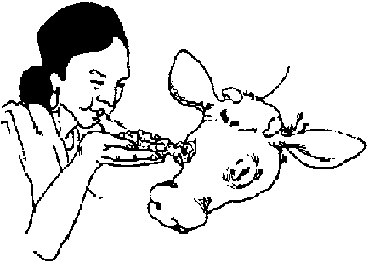
In the dry season, when the fodder quality is low, Thai farmers give this supplement as an appetizer.
1. Pound and grind together 5 kg mature Terminalia chebula fruits, 5 kg mature Phyllanthus emblica fruits and 600 g salt.
2. Put the mixture in a big container.
3. Pour 15 liters of bovine urine over the mixture.
4. Ferment (i.e., let stand) for 20 days.
5. Once fermented, drench the animal with 600 ml once a day until it regains its appetite. (Northeast Thailand 1,2,3,4)
Treatment
Use any of these practices.
· Gently rub the animal's tongue with a stick or an iron bar to stimulate salivation.
· Change the feed.
· Mix 500 ml juice of tamarind fruit pulp with 10 g dried Terminalia chebula fruit. Feed this to a large ruminant once a day until it regains appetite. For a small ruminant, use 200 ml tamarind pulp juice.
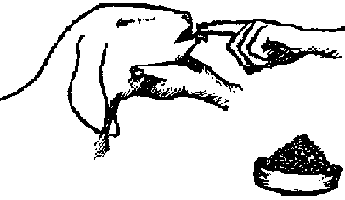
Animal's treatment
· Mix together 60 g each of powdered ginger, powdered fennel (Foeniculum vulgare) seeds, brown sugar and 20 g black salt. Take enough of the mixture on your finger and rub on the animal's tongue. Do this every day until the animal regains appetite. (India. 1, 2, 3, 4)
· Pound together 10 g salt and 10 g Trachyspermum ami seeds. Mix with 20 g molasses and feed to the animal twice a day for 2-3 days. (India. 1, 2, 3, 4)
· Grind together 10 g salt and 10 g Trachyspermum ami seeds. Mix with ¼. liter coconut water. Drench twice a day for 2-3 days. (India. 1, 2, 3, 4)
· Drench i/. liter buttermilk twice a day for 2 days. (India. 1, 2, 3, 4)
· Mix 1 tablespoon soy sauce, 100 ml water and 50 g shrimp paste. Feed the animal once a day for 3 days. (Indonesia. 1, 2)
To make the animal gain weight
Mix 1 handful each of fresh Tinospora a rumphii vine, Cassia siamea leaves and Morinda citrifolia leaves, the grated meat from 1 mature coconut and a handful of salt in 10 liters of water. Let stand for 2 nights. Feed about 1 liter of this mixture to the animal every other morning. After feeding, give lots of water. (Thailand. 1, 2)
To make the animal active
Pound and grind together 100 g Tinospora rumphii vine and 100 g galangal (Alpina galanga) roots. Mix with 200 g cooked rice. Make into a ball. Feed this to the animal once a day for 3 days. (Thailand. 1, 2)
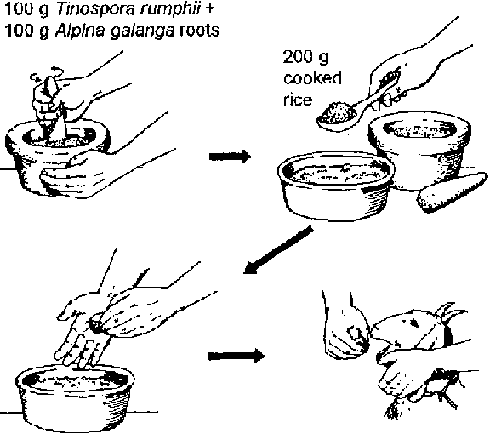
Cooking treatments for
animals
|
| ||||||||||||||||||||||||||||||||||||||||||||||||||||||||||||||||||||||||||||||||||||||||||||||||||||||||||||||||||||||||||||||||||||||||||||||||
Fever
Symptoms
· Body feels hot.
· Thirst: the animal drinks a lot of water.
· Animal does not urinate as much as usual.
· Hairs are raised.
· Appetite is decreased.
· Eyes are not shining (dull).
· Nose is dry.
Feel the animal's ear. If the ear is very hot, the animal
is
sick and needs treatment.

Detect fever by holding the base of
the ear.
Causes
Fever can occur during sudden changes in weather. Young animals are more susceptible.
Fever is caused mainly by viruses, bacteria or protozoa. It may also be due to sunstroke or poisoning. If the animal has any of the symptoms below, it may have one of the following diseases. Consider consulting a professional (a local expert development officer or veterinarian).
· Bloody, foul-smelling diarrhea
(possibly rinderpest).
· Difficulty in
breathing (pneumonia); if with snoring sound and bloat (hemorrhagic
septicemia)
· Lameness, difficulty in eating
(foot and-mouth disease)
· Very high fever,
swelling all over the body (anthrax).
·
Lameness, swelling of muscles in the thigh and shoulder (black
quarter).
· Swelling of udder
(mastitis)
· Red-colored urine
(babesiosis).
· Groaning and grunting when
moving, weakness, tiredness (lasts only 3 days) (ephemeral fever).
· Boils filled with water on body (pox).

Detecting fever
Prevention
· Provide clean drinking water.
Clean the surroundings.
· Provide fresh,
clean food. Protect animals against bad weather.
· To prevent sunstroke, do not tie or graze the animals
under the hot sun.
Treatments
Any of the following treatments will help to reduce the fever. The dosages below are for cattle and buffaloes. Use half of the quantities for sheep, goats and calves. Use one quarter of the amounts for lambs and kids. Continue giving the treatment to keep the fever under control.
· Mix about 10 g of Swertia chirata (whole plant) with 100 g of molasses to make a thick paste. Apply the paste to the tongue and the roof of the mouth twice a day. (India. 1, 2, 3, 5)
· Prepare a paste of the root of Picrorhiza kurrooa and molasses as above. Use the same amounts and in the same way as above. (India. 1, 2, 3, 5)
· Boil a handful of Tamarindus indica leaves and ¼ kg of fruit pulp in ½ bucket of water for 15 minutes. Collect the fluid and give to the animals as the only source of drinking water. (Indonesia. 1, 2)
· Boil a handful of Eucalyptus globules leaves in 1 liter of water for 15 minutes. Give 1 liter as a drench twice a day. (India. 1, 2, 3, 4)
· Boil a handful of fresh neem leaves in 1 liter of water for 15 minutes. Give this amount as a drench twice a day. (India. 1, 2, 3, 4)
· Boil two handfuls of Vitex negundo leaves for 15 minutes in 1 liter of water. Give 1-2 cups of the liquid 3 times a day as a drench. (India, Philippines. 1, 2)
· Sponge animal with vinegar all over the body as often as possible. (Philippines. 1, 2)
· Boil a handful of rambutan (Nephelium lappaceum) leaves and bark in 3 liters of water for 30 minutes. Give 1 liter 3 times a day as a drench.
· Boil ½ g of the bark or wood of stems or node of Gardenia jasminoide5 in 5 liters of water for 15 minutes. Drench 2 liters per day, twice a day for 5 days.

Sponge animal with
vinegar
|
| ||||||||||||||||||||||||||||||||||||||||||||||||||||||||||||||||||||||||||||||||||||||||||||||||||||||||||||||||||||||||||||||||||||||||||||||||
Coughs and colds
Coughs and colds are diseases of the lungs and the respiratory passage.
Symptoms
· Coughing.
· Sneezing.
· Watery
eyes.
· Watery discharge from the nose, which
later becomes yellow in color.
· Loss of
appetite.
· Body temperature is higher than
in a normal animal (fever).
· Difficulty in
breathing.

Symptoms of coughs and colds
Causes
· Moist conditions in the animal
housing because of poor lighting and ventilation.
· Overcrowding of animals.
· Allergic reactions.
· Lung parasites.
·
Breathing in dusty food particles.
·
Infectious diseases.
· Foreign particles,
irritants or oil in the respiratory passage.
Prevention
· Avoid overcrowding, feeding of dusty feeds and exposure to rain or bad weather, especially for young animals.
Treatment
Any of the following can be used to treat coughs and colds:
Fomentation
Fresh Adhatoda vasica leaves.
Fresh Moringa oleifera
(drumstick) leaves.
Fresh Gmelina arborea leaves.
Fresh Curcuma domestica
(whole plant with roots).
Chop 5 handfuls of each of the ingredients into small pieces. Mix the ingredients together and divide into 3 parts. Put each part into a plate-sized cloth and tie the cloth to make a pouch. Warm the pouches with steam. Put each warm pouch on the animal's chest for 20-30 minutes, until that pouch has cooled. Then replace it with another warm pouch. Keep the other two Douches warm to allow continuous treatment. Do this twice a day for 2 days. This is best done early in the morning and late in the afternoon. (Sri Lanka. 1, 2, 3, 4)

Boiling a treatment against coughs
and colds
· Apply 300 ml of Mimusops elonga seed oil all over the animal's body, especially on the chest. Keep the animal near the fire so that it is warm. Heat a gunny sack, towel or any absorbent cloth above the fire (not so near as to burn it). Put the sack over the chest of the animal and keep it there for 20-30 minutes. Repeat this twice a day for 2 days. (India Sri Lanka. 1, 2, 3, 4)

Apply the fire
· Mix 250 ml of vegetable oil with 50 g of camphor powder to make camphorated oil. Rub this on the chest. Do this continuously for 5 minutes or until you can feel the warmth of the chest. Do this twice a day for 2 days. (India. 1, 2, 3, 4, 5)
Oral treatment
The dosages given below are for adult cattle and buffaloes. Use one-third to half the dosage for sheep, goats and calves. Give the remedy for a maximum of 10 days or until symptoms disappear (unless the duration is stated below).
· Brassica integrifolia (raw
seed).
Garlic bulb.
Black pepper (Piper nigrum) seed.
Moringa oleifera
(stem bark).
Ginger rhizome.
Finely pound a handful of each of the ingredients, mix and make a small bolus. Put 4-5 bolus inside the animal's mouth twice a day for 3-4 days. Make sure the animal swallows the medicine. (Sri Lanka. 1, 2, 3, 4)
· Boil 2 handfuls of fresh leaves of Tamarindus indica with 1 liter of water for 5 minutes. Drench with 1 liter of the liquid, 3 times a day for 3 days. (Philippines. 1, 2)
· Pound 500 g of fresh Erythrina indica leaves and mix with 300-400 ml (I big glass) of water. Drench all of this amount twice a day for 2 days. (Indonesia. 1, 2)
· Mix 5 g of Curcuma domestica (dried rhizome) powder with just enough brown sugar to bind the powder. Feed this as a paste to the animal twice a day for 10 days. (India. 1, 2, 3, 4, 5)
· Mix 5 g of powder of each of the following ingredients:
Curcuma domestics (dried rhizome).
Ocimum sanctum or Ocimum
basilicum (dried leaves).
Adhatoda vasica (dried leaves).
Ginger (Zingiber
officinale/zerumbet) (dried rhizome).
Add 2 cups of water, mix and drench at once, 2 times a day for 10 days. (India. 1, 2, 3, 4, 5)
· Separately grind 1 whole dried plant of Glycyrrhiza glabra and dried leaves of Ocimum sanctum, Adhatoda vasica and Curcuma domestica rhizome. Take 10 g of each powder and mix them with enough brown sugar to bind the powder. Feed as a paste to the adult animal 2 times a day for 5-10 days. (India. 1, 2, 3)
· Mix 10-15 g of dried Alpinia galanga rhizome powder with a little brown sugar to make a paste. Feed as a paste or apply the paste to the tongue of the animal, twice a day for 5 days. (India. 1, 2, 3, 5)
· Grind 5-10 g of dried rhizome of Zingiber officinale or Zingiber zerumbet to powder. Mix with a small amount of brown sugar to make a paste. Feed this twice a day. (India. 1, 2, 3, 4, 5)
· Boil 10 g of either dried or fresh Adhatoda vasica leaves with 2 liters of water for ½ hour. Drench with 500 ml of the liquid twice a day for 10 days. (India. 1, 2, 3, 4, 5)
· Grind 5 - 10 g of dried Ocimum sanctum leaves to powder. Mix with a little brown sugar and apply paste to the tongue 2-3 times a day. (India. 1, 2, 3, 4, 5)
· Mix the juice of 1 lemon (Citrus medica) fruit with a pinch of salt and apply to the tongue of the animal twice a day. (Thailand. 1, 2, 3)
|
| ||||||||||||||||||||||||||||||||||||||||||||||||||||||||||||||||||||||||||||||||||||||||||||||||||||||||||||||||||||||||||||||||||||||||||||||||
Diarrhea
Symptoms
· Defecation more frequent than
normal.
· Loose feces that sometimes contain
blood, mucus or both.
· Dry skin.
· Hindquarters are soiled.
· Animal stops chewing cud.
· Animal has dull and sunken eyes and does not move
energetically.
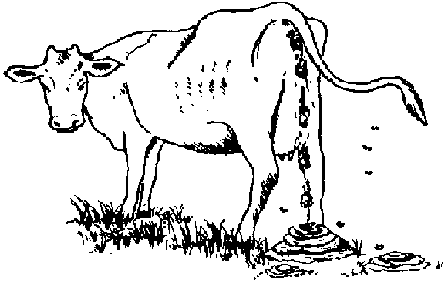
Diarrhea
Causes
· Sudden change in diet
(especially from dry fodder diet to green fodder).
· Intestinal parasites like amoeba.
· Bacterial and viral diseases.
· Contaminated water.
· Overeating.
Prevention
· Good hygiene and nutrition.
· Proper husbandry practices such as giving clean feed and water, keeping animal quarters and surroundings clean, etc.
· Do not graze the animal immediately after a rain or too early in the morning before the dew has dried.
· Do not provide drinking water immediately after giving legumes and green fodder as feed.
· Deworm the animals regularly. See Internal parasites, page 38.
· Vaccinate animals against rinderpest in areas where it is seasonally endemic.
@ Caution
· Watch out for rinderpest—bloody, foulsmelling, shooting diarrhea with high fever that affects many animals in the village. (See Infectious diseases).
· If there is chronic diarrhea with wasting away and no response to treatment, seek professional help.
Treatment
Provide a soft, pulpy diet to animals with diarrhea. It is necessary to make the animal drink extra liquid to replace the liquid lost in the diarrhea. Diarrhea that lasts for 2 to 3 days may cause dehydration. This can lead to shock and then death. It is, therefore, necessary to make the animal drink more liquid.
Use any of the following drenches. The dosages of the treatments given below are for adult cattle or buffaloes.
Use half the amounts for calves, goats and sheep. Further drenches are described in Dehydration, page 18.
· Dissolve 1 teaspoon of salt and 4 teaspoons of sugar in 1 liter of water. Drench 2-3 times a day as needed. Continue giving the treatment for as long as the diarrhea lasts. (India. 1, 2, 3, 4, 5)
· Boil 1 handful of tea leaves in 1 liter of water. Strain, and add ½ handful of ground ginger rhizome to the liquid. Drench twice a day for 3-4 days. (India. 1, 2, 3, 4, 5)
· Grind ½ handful of fresh ginger rhizome and ½ handful of bishop's weed (Trachyspermum ami) seeds. Add this mixture and a handful of tea leaves to 1 liter of water and boil. Cool. Drench half of the amount in the morning and half of the amount in the evening. Repeat the next day until the diarrhea stops. (India. 1, 2, 3, 4, 5)
· Give the water from cooked rice mixed with 1 g of dried ginger rhizome powder to the animal to drink. Repeat 2 times a day. Give half the quantity for sheep and goats. (India. 1, 2, 3, 4, 5)
· Drench 500 ml to 1000 ml of young coconut water twice a day until the diarrhea stops. (Philippines, Thailand. 1, 2, 3)
Some treatments to help stop diarrhea are described below. As before, use half the dosages given below for calves, sheep and goats. Continue the treatment for as long as the diarrhea lasts.
· Mix 1 handful each of bishop's weed (Trachyspermum ami) seeds, dried or fresh ginger rhizome and cumin
(Cuminum cyminum) seeds with ½ handful fenugreek (Trigonella foenum-graecum) seed powder. Mix with 50 g brown sugar to make bolus and feed by mouth twice a day for 2-3 days. (India. 1, 2, 3, 4)
· Boil ½ kg of fresh guava (Psidium guajava) leaves in 3 glasses of water. Drench twice a day. (Thailand. 1, 2, 3, 4, 5)
· Boil about 20 fresh star apple (Chrysophyllum cainito) leaves in 2 cups of water. Drench 3 times a day for 1-3 days. (Philippines. 1, 2, 3, 4)
· Grind coconut shell charcoal to a powder. Mix 1 cup with 500 ml of water. Drench 3 times a day for 3 days. (Philippines. 1, 2, 3, 4)
· Mix 5 to 10 crystals of potassium permanganate in 1 liter of water. Drench twice a day. (India. 1, 2, 3, 4)
· Drench the animal with any of the following ingredients in the amounts indicated, mixed in 300 to 400 ml of water: powdered chalk (4 g), kaolin earth (5 g), or potassium aluminum sulfate crystals (0.8 g).
· Crush 15 g each of the young fruits and roots of Momordica charantia to obtain the juice. Mix the juice into 1 liter of young coconut water and drench once a day for 3 days. (Philippines. 1, 2, 3, 4, 5)
· Prepare a decoction of 10 to 15 leaves of Psidium gunjava in 1 liter of water. Divide the liquid in 3 equal doses and give 3 doses per day for 5 days. (Philippines. 1, 2, 3, 4, 5)
Some further treatments to stop diarrhea are presented in the following table. All plant parts used in the treatments are dried and ground to powder form.
Mix the dosage indicated with 300 to 400 ml of water and drench with this amount twice a day for 3-5 days or as long as the diarrhea lasts.
|
Scientific name |
Common name |
Parts used |
Dosage |
|
Acacia catechu |
Catechu |
Sap lumps |
0.8 9 |
|
Aegale marmelos |
Bael fruit |
Dried, ripe fruit |
1.0 9 |
|
Cyperus rotundus |
Nut grass |
Dried roots |
1.0 9 |
|
Holarrhena antidysenterica |
Kurchi |
Dry seeds and bark |
3.0 9 |
|
Veronica anthelmentica |
Purple |
Dry seeds |
3.0 9 |
|
| ||||||||||||||||||||||||||||||||||||||||||||||||||||||||||||||||||||||||||||||||||||||||||||||||||||||||||||||||||||||||||||||||||||||||||||||||
Dehydration
When an animal loses more water than it is able to take in, its body will become dehydrated.

Dehydration
Symptoms
· Eyes are sunken.
· The skin is dry, wrinkles and is hard to
stretch.
· The animal is very thirsty and
very weak.
· The feces are dry.
· The animal suffers from constipation: there are less
feces than usual.
· It urinates less than
usual. The urine has a dark color.
An easy test for dehydration: Raise the skin on the neck between your finger and thumb. If the skin returns to the normal position only slowly, the animal is dehydrated.

Test for dehydration
Causes
· Diarrhea.
· Heat stress.
·
Insufficient drinking water.
· Diseases that
last a long time.
· Bleeding due to large
injuries.
· Diseases in the urinary
tract.
· Severe burns from fire or
chemicals.
· Inability to drink water:
something blocks the passage of food.
Prevention
· Always give the animal enough
drinking water.
· Grazing areas should be
near to a source of water.
· Ensure that the
immediate surrounding of the animal is clean.
· Avoid keeping the animal in the sun for a very long
time.
· Avoid any cause of diarrhea. See
Diarrhea, page 13.
Treatment
Before using any treatment, find out what causes the dehydration. See Diarrhea.
The dosages below are for adult cattle and buffaloes. Use one-third or half of this amount for calves, sheep or goats.
To replace the lost liquid in the body, use any of the following remedies:
· Drench the adult with 2-3 liters of young coconut water 23 times a day until symptoms have disappeared. Varieties of coconut with yellow nuts are preferable. (India, Sri Lanka, Philippines. 1, 2, 3, 4)· Mix 1 teaspoon of salt with 1 liter of the water left after washing rice (or the water left after cooking rice). Drench 1-3 liters of such a mixture 2-3 times a day until the symptoms disappear. (Indonesia. 1, 2)
· Take 1 handful of any kind of tea leaves and pour 2 liters of boiling water on them. Add a handful of sugar or brown sugar. Let it cool and drench all this mixture 2-3 times a day for 3 days. (India. 1, 2, 3)
· Take 1 handful of each of the following parts of Aegle marmelos: young fruit, leaves, flowers, root, stem and bark. Chop and put in 2 liters of water. Boil for ½ hour. Drench adult cattle and buffaloes with 1-2 liters twice a day for 2 days. Drench calves, sheep and goats with ½ liter of mixture twice a day for 2 days. (Sri Lanka. 1, 2,3, 4)
· Pound 10 fresh Mitragyna speciosa leaves and mix with 1 liter of water. Drench with the liquid 2-3 times a day until the symptoms disappear. (Thailand. 1, 2, 4)
· 1 kg Careya sphaerica bark.
1 kg Xylia kerii bark.
1 kg Sesbania grandiflora bark.
Boil the 3 types of bark together in 3 liters water. Drench the adult buffalo or cattle with 2-3 liters of the liquid 2-3 times a day for 4 days. (Thailand. 1, 2, 3, 4, 5)· Dissolve 2 teaspoons of salt, I/: teaspoon of baking soda (if available) and 4 teaspoons of sugar in 1 liter of water. Drench adult cattle and buffaloes with 2-3 liters of the solution 2-3 times a day. Drench calves, goats and sheep with ½-1 liter 2-3 times a day. Continue treatment until the symptoms disappear. (Thailand. 1, 2, 3)
|
| ||||||||||||||||||||||||||||||||||||||||||||||||||||||||||||||||||||||||||||||||||||||||||||||||||||||||||||||||||||||||||||||||||||||||||||||||
Bloat

Animals sometimes have too much gas
in their stomach. This is called bloat.
Symptoms
· The animal's abdomen is big on
the left side. It sounds like a drum when you tap it.
· Thick and foamy saliva.
· Loss of appetite.
· Animal stops eating or chewing.
· Fast breathing.
·
Restlessness.
· Kicks with hind legs.
Causes
Two main causes of bloat are the wrong type of feed and presence of infectious diseases. An animal may have bloat:
· After eating a lot of leguminous plants, young grass, or grass that has been extensively fertilized with nitrogen.· After sudden changes to certain types of feed ration.
· After eating ripe fruits and other foodstuffs that ferment easily.
· After eating poisonous plants or feed with chemical residues. .
· After drinking water contaminated with poisonous chemicals or waste materials.
· When something blocks off the passage of food.
· When it has constipation.
· After eating plastic or other foreign matter.
· Because of paralysis of the nerves.
· Because of infectious diseases such as hemorrhagic septicemia.
Bloat can occur in adult animals, especially cattle, when the weather changes, because this means a change from dry to wet feed.
Sudden bloat
Bloat that starts suddenly is very dangerous. It can kill the animal within a few hours if you do not treat it immediately. Watch for these symptoms:
· The animal lies down on the ground.
· The legs are stiff and spread out when standing. The animal refuses to move.
· When you look in its eyes, the pupil (the dark part of the eye) is partly or completly invisible
· Green discharge with chewed feed comes out of its nose and mouth.
If you see these symptoms, pierce the rumen immediately. Then consult an expert straight away.

Sudden bloat
Piercing the rumen
You will need a sharp knife (1 - 2 cm wide and 8 - 10 cm long) and a bamboo tube about 30 cm long (the length of a man's foot) and as wide as a man's thumb.
Wash these thoroughly with soap and clean water. Disinfect the knife by heating it over a fire and cool it before use. Hold the knife in one hand and the bamboo in the other. On the left side of the animal, stab the highest point of the swollen (bloated) part with the knife. Push the knife blade all the way into the hole. Remove the knife and immediately insert one end of the bamboo into the hole. Gas will come out through the tube. Release the gas for 30 minutes. Then, pour a mixture of 300 ml vegetable oil and 30 ml of turpentine oil into the bamboo tube. The mixture of oil will break up the bubbles in the rumen which cause the bloat and help prevent its recurrence. Remove the bamboo, and the wound will immediately close and heal on its own because the skin of the animal is tight. However, to avoid possible infection, you may apply powdered charcoal, fresh from the stove and cooled.

Piercing the rumen
Prevention
· Do not give water to the animals before or immediately after they have grazed on wet pasture.
· Put grasses that are wet in the sun for 2-3 hours before you give them to the animals.
· During the rainy season, feed the animal with dry fodder first before sending it onto wet pasture.
· If you are changing the feed ration, mix and feed half of the previous ration with half of the new ration on the first day. Increase the proportion of the new ration while decreasing that of the old ration for the next 2-3 days until you feed the new ration completely.
· Do not give too much feed that can cause bloat (such as clover and lucerne).
· Keep animals away from contaminated water sources.
Treatment
· If constipation is the cause of bloat, see Constipation.
If the bloat is not too serious, give any of the following remedies to facilitate the release of gas. The amounts given are for adult cattle or buffaloes. For calves, goats and sheep, use one-third or one-half of these amounts. If the bloat remains for more than 2 days even after treatment, seek professional help.
· Drench 300-500 ml of any of these oils: coconut oil, vegetable oil or peanut oil, once a day for 2-3 days. Repeat the treatment once after the bloat is gone. (India, Indonesia, Philippines, Sri Lanka, Thailand. 1, 2, 3, 4)
@ Caution
Drenching should be done carefully since the animal's rumen is already full of gas. The animal will refuse to swallow any liquid. Forcing the animal may result in the liquid ending up in the lungs rather than the stomach. To prevent this, give the fluid slowly. Observe if the animal swallows. If it does not, try to stimulate the tongue as you pour the liquid, or massage the rectum to stimulate belching.
· Mix 3 tablespoons or 30-40 ml of turpentine oil with any edible oil (see list in the previous remedy). For adult cattle and buffaloes, drench 2-3 cups for the first dose. Repeat for a second dose after 4-5 hours. Give the last dose the next day. (India. 1, 2)
· Give 200 ml of castor oil to an adult animal. Do this once only. If the bloat persists, use any of the other remedies. (India. 1, 2)
· Drench warm vinegar twice a day. For adult cattle or buffalo, use 1 ½ to 2 cups (½ liter) of vinegar. Force the animal to walk to help release the gas. (Cambodia. 1, 2, 3)
· Mix 1 tablespoon of detergent (washing powder) with ½ liter (1 ½-2 cups) of water. Drench once. (India. 1, 2, 3, 4, 5)
· In treating mild bloat, you can chop up 2 fresh banana leaves (for calves) or 3-5 leaves (for adult animals). Feed the chopped leaves 2-3 times a day for 2 days. (Philippines. 1, 2, 3, 4)
· 2 handfuls of fresh leaves of Acacia concinna. 3 tablespoons of dried seeds of Trachyspermum ami. 3 tablespoons of resin of Ferula assa-foetida.
Grind or pound these ingredients separately. Mix the powder together and add 50 g of brown sugar to make a bolus. Put into the mouth of the animal, twice a day for 2-3 days. (India)
· Mix 2 handfuls of pulp of ripe Tamarindus indica fruit in 1 cup of water. Extract and add the juice to 1-2 matchboxfuls of ground and dried Terminalia chebula fruit. Add 4 more cups of water. This makes enough liquid to dose an adult animal once. Drench the mixture to a sick animal twice a day for 2-3 days. (India. 1, 2, 3, 4, 5)
· Fresh or dried ginger rhizome. Resin of Ferula assa-foetida. Seeds of Peucadenum graveolens. Seeds of Trachyspermum ami. Fruit of Embelia ribes. Resin of Gardenia gummifera. Baking powder (sodium bicarbonate).
Take equal amounts of the ginger, Peucadenum graveolens seeds, Embelia ribes fruit and baking soda. Add l/4 of this amount of Ferula assa-foetida resin and half of the amount of baking soda. Mix all the ingredients and grind them to a powder. Mix 2 tablespoons of this powder with brown sugar and 300 ml water. Feed 2-3 times the first day. Repeat this dosage once a day for the next 2 days. (India)
After treatment
· Open the mouth of a healthy animal until you can fit your hand inside. Take the chewed cud and mix it with ½-1 liter (3-5 cups) of water. Drench the diseased animal. This helps the bloated animal digest feed. (India. 1, 2, 3)
· Put a rope the thickness of your thumb in the animal's mouth and tie it around the head. The animal will chew the rope. This will stimulate salivation and help release the gas. (Philippines. 1, 2, 3, 4)

Applying the treatment

After
treatment
|
| ||||||||||||||||||||||||||||||||||||||||||||||||||||||||||||||||||||||||||||||||||||||||||||||||||||||||||||||||||||||||||||||||||||||||||||||||
Constipation
Constipation or impaction usually occurs in the dry season. It can be remedied easily. However, if constipation persists for 4-5 days, it could lead to infection of the bowels.
Symptoms
· Straining while trying to pass
dung.
· No dung or urine found left by the
animal in the morning.
· Hard dung.

Constipation
Causes
· Low fiber feeds.
· Not enough drinking water.
· Illness.
·
Stress.
· Sudden change in diet.
Prevention
· Feed animals vegetables, green forages (like maize leaves, lucerne, alfalfa, elephant or guinea grass, etc.) and other high fiber foods.
· Give adequate water.
· Reduce sources of stress.
· Keep animal housing clean.
Treatment
Select any of the following treatments:
· Drench 500-750 ml vegetable oil (coconut, peanut, sesame, etc.) twice a day for 3 days. (All countries. 1, 2, 3, 4, 5)· Use any of these laxatives: castor oil, liquid paraffin oil, raw linseed oil. Drench 300-400 ml a day for 1-2 days. (All countries. 1, 2, 3, 4, 5)
· Take 300 g of ripe tamarind (Tamarindus indica) fruit. Remove covering, seeds and fiber. Boil in 1 liter of water. Cool. Give the resulting liquid to the animal by drenching once or twice a day. Do this for 1-2 days. (Laos, Thailand. 1, 2, 3, 4, 5)
· Feed as many fresh banana (Musa sp.) leaves as the animal can eat until it recovers. (Philippines. 1, 2, 3, 4)
· Feed 50-100 g of dried Aloe vera leaf pulp until the animal recovers. (Indonesia. 1, 5)
· Give 10 to 20 g of powdered henna (Lawsonia inermis) leaves with rock salt. (India, Indonesia 1, 5)
· Prepare decoction of a thumb-sized turmeric (Curcuma longa) rhizome in 1 liter of water. Let the animal drink the decoction once a day for 1-3 days. (Philippines, India. 1, 2, 3, 4)
· Grind ¼ kg of Aristolochia bracteata leaves. Mix with 50 g of molasses. Feed the animal in the morning, in the evening and again the next morning. (India. 1, 2, 3, 4, 5)
· Chop 1 banana (Musa sapientum var. Iatundan) blossom. Crush with rock salt. Add a little water. Feed this to the animal. (Philippines. 1, 2, 3, 4)

Treatment with banana
blossom
|
| ||||||||||||||||||||||||||||||||||||||||||||||||||||||||||||||||||||||||||||||||||||||||||||||||||||||||||||||||||||||||||||||||||||||||||||||||
Poisoning
Young calves and kids are curious and may eat poisonous plants. However, young or old, male and female animals, can be poisoned.

Poisoning
Symptoms
· Bloat.
· Abdominal pain.
·
Groaning.
· Kicking the abdomen.
· Diarrhea (in arsenic poisoning) .
· Constipation (in lead poisoning).
· Convulsions.
·
Salivation.
Causes
· Eating or licking toxic plants
or plants sprayed with pesticides.
· Licking
or drinking chemicals, pesticides, or paint containing lead.
Prevention
· Store chemicals away from
animals.
· Do not use lead-based paints,
especially where animals can lick.
· Do not
let animals eat sprayed weeds.
Treatment
Use any of the following treatments for adult cattle and buffaloes unless otherwise indicated. Use half the amount for small ruminants.
· Drench the cattle and buffaloes once with 1 liter paraffin oil or raw linseed oil or natural vegetable oil. (Thailand, India, Philippines, Sri Lanka. 1, 2, 3, 4)
· Drench young animals once with 100 g epsom salts (magnesium sulfate) mixed with 500 ml water. For an adult animal, use 500 g epsom salts with 500 ml water and drench once. (Thailand. 1, 2, 3)
· Pound 200 g Thunbergia laurifolia roots. Mix with 1 .5 liter of water used in washing rice. Drench every 30 minutes until signs of poisoning are gone. (Thailand. 1, 2, 3, 4)
· Drench with any of the following fluids:
- 1 liter of milk. (India. 1, 2, 3, 4, 5)
- 200 g charcoal powder mixed with 800 ml water. (India. 1, 2, 3, 4, 5)
- 1 liter of coconut water. (Cambodia. 1, 2, 3, 4)
Plants that can poison animals
Aleurites fordii
Poisonous part: Foliage and fruit.
Symptoms: Symptoms are not observed until 3-7 days after the
foliage has been consumed. Acute poisoning results in death in 3-4 days, while
chronic cases linger on for 18-25 days before death ensues. Common symptoms
include diarrhea which later becomes watery and profuse, lack of appetite,
cessation of rumination, listlessness, depression and unthriftiness. Chronic
cases may develop labored breathing, mucus discharge from the nose, salivation,
cracking of the skin of muzzle and progressive weight
loss.
Antidote/Treatment: Emollients (such as vegetable oil) and drugs should
be administered to relieve the inflammation in the digestive tract. Tempt the
animal with soft feeds to stimulate the appetite.
Amaranthus spp.
Poisonous part: Young shoots.
Symptoms: Abortion, reduction
of milk flow and sudden death.
Argeratum conyzoides
Poisonous part: All parts.
Symptoms: Congestion of small intestine, disturbed blood flow and heavy aromatic odor of skin and urine.
Cassia occidentalis
Poisonous part: Whole plant.
Symptoms: Dullness, high temperature, suppression of urine and slowing of breathing. Death occurs with coma after slight convulsion. Also groaning, great pain, coldness of extremities, weakness of the heart and slight stiffness of the limbs.
Chromolaena odorata
Poisonous part: Young leaves and shoots.
Symptoms: Weakness, bloating, diarrhea with blood, weight loss, muscle contractions and loss of consciousness.
Antidote/Treatment: Mix 6 eggs and 500 g sugar in 1 liter water. Drench at once. Give half the dose to small ruminants.
Crotolaria quinquefolia
Poisonous part: Leaves, stems, roots, seeds.
Symptoms: Low blood pressure, slow heart beat, depression, loss of appetite, bloody feces, drooling saliva, nasal discharge and finally death.
Derris elliptica
Poisonous part: Whole plant.
Symptoms: Dizziness, staggering and sudden death.
Excoecaria agallocha
Poisonous part: Gum.
Symptoms: Diarrhea and blindness.
Hypericum pulogense
Poisonous part: Whole plant.
Symptoms: Blisters and scabs around the mouth, eyes, ears, nose
and feet. In severe cases, difficulty in breathing, rapid pulse, foaming of the
mouth and finally death.
Antidote/Treatment: Affected animals should be kept
in the shade.
Lantana camara
Poisonous part: Leaves.
Symptoms: Staggering, weakness. Skin becomes hard, swollen,
cracked and painful. Sluggishness, partial paralysis and bloody diarrhea. Acute
poisoning may cause death within 3-4 days. Lantana also produces lesions and
symptoms of severe gastroenteritis.
Antidote/Treatment: Affected animals
should be kept under the shade. Skin lesions should be treated with healing
ointments. Give the animal a mixture of egg white and sugar.
Manihot esculenta, Cassava
Poisonous part: Fresh leaves and uncooked roots.
Symptoms: Bloat with frothing at the mouth, difficulty in breathing.
Antidote/Treatment:
- Pound 200 g Thunbergia laurifolia leaves with 1-5 liters of water from rice washing. Give 1.5 liters in l drench. Repeat dose every 30 minutes till cured.- Pound 2 handfuls of charcoal to powder. Add 500 ml water and drench once. Give half of the dose to small ruminants.
- Mix 4 eggs and 250 g brown sugar with 100 g tamarind soaked in 100 ml water to extract the juice. Drench once. Use half of the dose for small ruminants.
Melanorrhoea usitata
Poisonous part: Leaves.
Symptoms: Itching, leading to wounds and abscesses.
Antidote/Treatment: For adult cattle, take 2 kg fresh leaves and 1 kg bark of Tectona grandis. Prepare decoction in 10 liters water. Cool. Dip a clean cloth and rub on the itchy part until the itch is gone.
Nerium oleander
Poisonous part: Leaves.
Symptoms: Nausea, irregular heart beat, bloody diarrhea, respiratory paralysis and death.
Pteridium aquilimum, Bracken fern
Poisonous part: Fronds
Symptoms: Blood in urine. High fever, labored breathing, internal salivation, bleeding. Poisoning is often mistaken for anthrax and other infectious diseases of cattle. Also, unsteady gait, nervousness, congestion of visible mucus membrane and constipation; later staggering and dilated pupils. Antidote/Treatment: 500 ml of strong black tea or coffee as drench.
Solanum nigrum
Poisonous part: Leaves and fruits.
Symptoms: Paralysis, dilated pupils, vomiting, stimulation of nervous system followed by depression, craving for water, diarrhea, loss of appetite and extreme weakness. Antidote/Treatment: Affected animals should be given general heart and nerve stimulants.
Sorghum vulgare, Sorghum
Symptoms: Sudden bloat, salivation, difficult respiration, stretched body, death. Antidote/Treatment: Drench immediately with any vegetable oil. (Note: This remedy is not foolproof and is not validated.) This is only effective when drenching is done immediately, as death can occur within ½-1 hour.
|
| ||||||||||||||||||||||||||||||||||||||||||||||||||||||||||||||||||||||||||||||||||||||||||||||||||||||||||||||||||||||||||||||||||||||||||||||||
Internal parasites: Stomach and gut worms
Symptoms
· Animal is thin and looks
weak.
· Lack of appetite.
· Anemia. The first symptom is a pale color of the
skin, snout, nostrils and gums. The flesh is pale.
· Diarrhea.
·
Enlarged abdomen.
Cause
Various types of parasites living in the stomach and gut.
· Stomach worm (Mecistocirrus digitatus). Barber's pole worm or wire worm (Haemonchus contortus).
· Tapeworm (Taenia multiceps).
· Whipworm (Trichuris ovis).
· Hookworm (Bunostonum spp.).
· Roundworm (Ascaris lumbricoides, Strongylus spp.)

Life cycle of roundworms in cattle,
water buffalo and goats
Young and malnourished animals of both sexes are most susceptible to parasites. The problem is especially common in the rainy season. The animals may become dehydrated and die.
The parasites are transmitted when an animal eats grasses or drinks water contaminated with larvae. Less commonly, they can be spread from the mother to its offspring,.
Prevention
· Deworm the animal regularly. Use the herbal dewormers listed in the table. These dosages are for cattle and buffaloes. Use half these amounts for calves, sheep and goats.
· Rotate pasture. Do not use always the same pasture area to graze the animals. Rotation will help the grasses to rejuvenate and will protect the animals from infected grasses.
· Keep the animals and the surroundings clean.

Prevention
Treatment for internal parasites
|
Scientific |
Common Name |
Parts Used |
Preparation |
Dosage |
Application |
|
Areca catechu |
Betel nut |
Mature, air-dried nuts |
Pound nuts and mix in water. |
8-10 nuts |
Drench. Repeat after 2-3 weeks. (Indonesia, Laos. 1, 2, 3, 4, 5) |
|
Aristolochia bracteata |
Worm killer |
Fresh leaves |
Grind 2 handfuls of leaves and mix with 50 g of brown sugar and a little water and make a bolus. |
This is enough for 1 dose. Make a fresh batch for each of the following day. |
Administer once in the morning, again in the evening and repeat in the morning(India, Philippines. 1 , 2, 5) |
|
Carica papaya |
Papaya |
Air-dried ripe seeds |
Pound seeds and add a little water. |
3 g seeds per 1 kg body weight(or ½ kg seeds per small animal and 1 kg seeds per adult animal) |
Drench once a day for 6 days. (Indonesia, Philippines. 1, 2, 3, 4, 5) |
|
Note: Do not use this treatment for pregnant animals. | |||||
|
Chrysophyllum cainito |
Star apple |
Air-dried leaves |
Decoction of 2 parts of water for 1 part leaves. |
40 ml of liquid Drench. for every 30 kg of body weight. |
Repeat after 2-3 weeks. (China, Philippines. 1, 2, 3, 4, 5) |
|
Diospyros mollis |
Ebony |
Fruit |
-- Pound 600 9 ripe fruit with 80 9 salt and 700-800 ml water.
Filter the pounded mixture to get the liquid. |
Give as drench. |
250 ml of the solution to be given once only. Need not be repeated. (Thailand. 1, 2, 3, 4) |
|
Note: Do not use this treatment for pregnant animals and those with kidney disease. | |||||
|
Mimosa pudica |
Sensitive plant |
Air-dried mature leaves |
Decoction of 2 parts water for 1 part of leaves. Strain to get the vine. |
40 ml of liquid for every 30 kg body weight. |
Drench. Repeat after 2-3 weeks. (China, Philippines. 1,2, 3, 4, 5) |
|
Morinda citrifolia |
Indian mulberry |
Whole mature fruit |
Pound 1 mature fruit. Add 50 ml water and a little salt while pounding. |
1 fruit and water. |
Drench once a week for 3 weeks. (India, Philippines. 1) |
|
Punica granatum |
Pomegranate |
Fruit |
Pound 300 g ripe fruit and add 2 liters of water. Boil the mixture until the liquid is 700 ml. Collect the liquid and allow it to cool. |
Give as drench. |
700 ml for a mature buffalo and cattle. To be given once only. Need not be repeated. (Thailand. 1, 2, 3, 4) |
|
Note: Do not USE this treatment for pregnant animals. | |||||
|
Tamarindus indica |
Tamarind |
Ripe fruit pulp |
Pound 300 g pulp of tamarind and 150 g rhizome of ginger. Mix a pinch of salt to the mixture. |
Through the mouth. |
Give the whole treatment in one application. Need not be repeated. (Thailand. 1, 2, 3, 4, 5) |
|
Zingiber cassumunar |
Ginger |
Rhizome | |
| |
|
Tinospora rumphii |
|
Mature vine |
Decoction of 2 parts of water for 1 part vine. |
40 ml of liquid of for every 30 kg of body |
Drench. Repeat after 2-3 weeks. (China, Philippines. 1, 2, 3, 4, 5) |
|
| ||||||||||||||||||||||||||||||||||||||||||||||||||||||||||||||||||||||||||||||||||||||||||||||||||||||||||||||||||||||||||||||||||||||||||||||||
Liverflukes

Life cycle of liverfluke
Symptoms
· Anemia. The first symptom is a
pale color of the skin, snout, nostrils and gums. The flesh is pale.
· Gradual loss of weight.
· Repeated diarrhea.
· Swollen face ("bottle neck").
· Reduced milk production.
· Animal gets tired easily.
· Animal may die because of internal bleeding and
anemia.
Cause
Liverflukes are leaf-shaped worms that live in the animal's liver. They are spread by snails that live in the pasture. The liverfluke larvae stick to grasses and are eaten by the animals. The chances of infection are high if snails are common in the area.

Liverflukes
Animals of all ages can suffer from liverflukes. The disease is common in low-lying, waterlogged areas, rivers, streams and stagnant pools. It occurs in all seasons.
Prevention
· Deworm the animals at regular intervals, usually 3-4 times a year. Farmers in the Philippines use this remedy: Grind 8-10 mature nuts of Areca cafechu. Add ½- l liter of water. Give the mixture to the animal as drench in divided doses or part by part for 3 days. Repeat the medication after 3 weeks. (Philippines. 1, 2)
· Because animals may have liverflukes without showing any symptom, deworm all animals of a herd if liverflukes are found in an animal when it is slaughtered.
· Raise ducks to eat the snails.
· Improve the pasture. Cover stagnant pools with soil to prevent snails from breeding.
· Keep animals away from areas with many snails and from infested grasses.
· If the animal's condition does not improve a week after deworming, seek professional help.

Ducks
|
| ||||||||||||||||||||||||||||||||||||||||||||||||||||||||||||||||||||||||||||||||||||||||||||||||||||||||||||||||||||||||||||||||||||||||||||||||
Tick infestation
Ticks are external parasites, dark in color and 2-3 cm in size when full of blood. They attach themselves to the skin of animals and suck blood. Ticks can transmit serious diseases such as "tick fever."
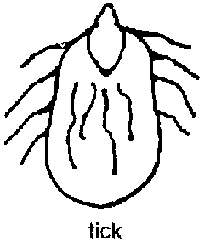
Tick
Direct damage
· Hundreds or thousands of ticks infesting an animal can result in anemia, loss of milk production, weight loss and death.
· Some species of ticks cause tick paralysis.
· Physical damage to the hide reduces its market value.
Symptoms
· The animal shows
discomfort.
· A large number of ticks may be
found in less hairy areas.
· The hide has red
patches (tick bite-marks).
· The animal keeps
scratching.
Human can be infested with ticks while handling the infected animal.
After sucking blood, an adult female tick falls from the animal to the ground. It lays eggs on the round, in sheltered places, under the stones and in cracks in the wall.
After this, the tick dies. The eggs hatch and develop into a new generation of ticks.
Prevention
· Remove weeds and bushes from
around animal housing.
· Clean the housing
regularly.
· Cut grasses on pasture areas
regularly.
· Avoid contact with infested
animals.
· Provide a daily supply of salt for
the animals to eat.
· Graze more than one
species of animals together.
· Allow birds to
eat the ticks. For instance, keep poultry in and around the animal housing.
(Laos)
· Bathe the animal in the sea whenever
possible, or bathe it with salt water.
·
Raise pest-repellent plants such as neem and marigold near the animal housing.
Treatment
· Carefully remove the ticks with your fingers. Pull the rear end of the tick upwards and then backwards towards its head. This will avoid leaving the head in the animal's skin. It will also keep the hide from being marred. After removing the ticks, burn them in a fire. Or, you can feed them to your poultry, as people do in Thailand and Laos. In the Philippines, they put the ticks in kerosene. (All countries. 1, 2, 3, 4)
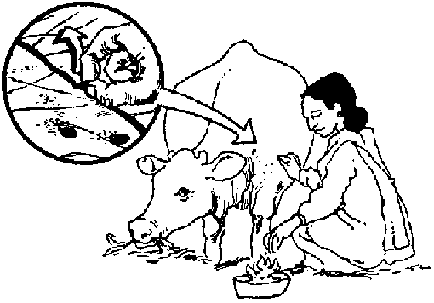
Pull the ticks from the animal's skin
and burn them.
· Treat with salt water. Regularly bathe the animal in the sea or rub the entire body with a mixture of 200 g of salt and 4 liters of water. (Philippines, Sri Lanka, Thailand. 1, 2, 3, 4)
· Boil 100 g of salt in 250 ml of coconut oil. Let it cool and apply all over the animal's body. (Sri Lanka. 1, 2, 3)
· Boil 10 g of camphor powder in 100 ml of coconut oil. Let it cool and apply all over the animal's body. (Sri Lanka, Thailand. 1, 2, 3)
· Mix 50 ml of coconut oil, 100 g of sulfur and 50 g of turmeric (Curcuma domestica). Boil and let it cool before applying all over the body. (Sri Lanka. 1, 2, 3)
· Soak 300 g of dried tobacco leaves in 1 liter of water. Add 1 tablespoon of salt. After 3 hours, use the tobacco leaf as a sponge and rub the liquid over infested areas. (Cambodia. 1, 2, 3, 4)
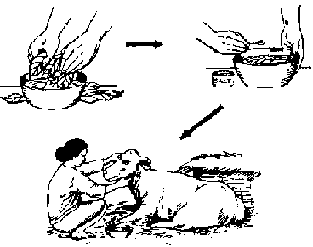
Treatment for ticks
Take 1 kg of Annorna squamosa (sugar apple) seeds, 1 kg of neem seeds and 200 g of tobacco leaves. Pound all the plant parts. Mix with 2 liters of water and soak for 24 hours. Rub the mixture all over the body. (Thailand. 1, 2, 3, 4, 5)
|
| ||||||||||||||||||||||||||||||||||||||||||||||||||||||||||||||||||||||||||||||||||||||||||||||||||||||||||||||||||||||||||||||||||||||||||||||||
Scabies (mange)
Symptoms
· Scabby patches on the skin,
especially on the head and neck, which cause itchiness.
· Animal scratches itself.
· Hair falls out.
·
Animal looks weak.

Scabies
Cause
Scabies is caused by tiny mites. It can affect all ruminants but is especially common in goats. The mites spread from one animal to another easily. Humans can also easily become infested. Scabies spreads by direct contact with the infected animal or any infected area or object.
Prevention
· Keep the animal, pen and
surroundings clean and dry.
· Isolate the
infected animal to protect the other animals from catching the
infection.
· Do not use infected animals for
breeding.
* Warning
Scabies is highly contagious to humans. Avoid touching the infected part of the animal, especially when applying a treatment.
Treatment
When applying one of the treatments below, use a brush or coconut husk to rub in the medication so it penetrates deep into the infected skin. Cover your hands with a plastic bag to protect them. After the treatment, clean your hands with soap and water.
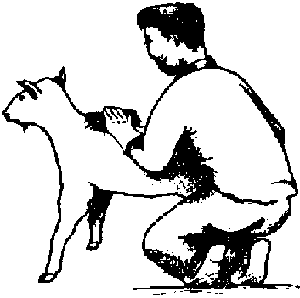
Applying treatment
The amount of ingredients needed to prepare the medication and the amount of medication to apply depends on the size of the infected area.
· Grind a handful of young or mature air-dried leaves of Melia azedarach or Cliricidia septum. Add a little water and continue grinding. Rub the mixture on the infected area daily. Repeat the medication until the infection is cured. (Indonesia, Philippines. 1, 2, 3, 4, 5)
· Burn a coconut shell and pound it into powder. Add just enough coconut oil to make a sticky paste. Rub the paste on the infected area once a day until the infection is cured. (Cambodia. 1, 2, 3, 4, 5)
· Mix powdered sulfur with just enough vegetable oil to make a sticky paste. Rub it on the infected area once a day until the infection is cured. (Thailand. 1, 2, 3, 4)
· Mix used engine oil and powdered sulfur (for every 100 ml of engine oil, use 30 g of sulfur). Rub the solution on the infected area once a day until the infection is cured. If you have no sulfur, you can use the engine oil alone. (Indonesia, Thailand. 1, 2, 3, 4, 5)
· Grind a handful of fresh or dried Cassia alata leaves. Add a little water to make a paste. Apply on the infected area daily until the infection is cured. (Laos. 1, 2, 4)
@ Caution
Do not use too much engine oil as this may burn the skin. For severe infections, do not apply oil to the whole body at the same time. Treat one-third of the body in the morning, one-third in the evening and the remaining third the following morning. Apply to the most affected area first, followed by the less affected area the next day, or if whole body is affected, apply part by part.
|
| ||||||||||||||||||||||||||||||||||||||||||||||||||||||||||||||||||||||||||||||||||||||||||||||||||||||||||||||||||||||||||||||||||||||||||||||||
Lice

Lice in ruminants is a result of bad
sanitation.
Symptoms
· Itchiness.
· Animals scratch or rub their bodies against trees or posts, their pens and other objects.
· In ruminants, lice eggs concentrate at the tip of the tail, the hair inside the ears and the hair around the eyes.
· However, in buffaloes, lice also spreads all over the body.
Prevention
· Keep animals clean by washing
them.
· Allow buffaloes to wallow every day.
(All countries. 1, 2, 3)
· Drive animals into
the sea once a month for about l/2 hour. (Philippines, Sri Lanka. 1, 2,
3)
· Shave the affected parts of buffaloes.
(Philippines. 1, 2, 3, 4)
Treatment
All of the preventive measures listed above can also be used as treatments. Or you can:

Lice (A)

Lice (B)
· Finely pound together 1 kg of tobacco leaves, 500 g of sugar apple (Annona squamosa) seeds and 500 g of neem (Azadirachta indica) leaves. Mix all the ingredients together in ½ liter of water. Stir until well mixed. Let stand for 1 hour. Then smear the mixture on the affected areas of the animal's body. After 8 hours, the lice will die. (Thailand. 1, 2, 3, 4)
· Mix powdered chalk, salt and soap with a little water and smear the paste on the affected parts.
|
| ||||||||||||||||||||||||||||||||||||||||||||||||||||||||||||||||||||||||||||||||||||||||||||||||||||||||||||||||||||||||||||||||||||||||||||||||
Fungus infections of the skin
* Warning
Fungus can affect people. Those who touch the infected part of the animal can become infected. The disease can also spread through the air.
Symptoms
· Hair falls out from the
infected area.
· The infected area is thick
and swollen.
Treatment
Be sure that the infected skin is clean and dry. Then apply one of the following remedies.
· Grind a handful of fresh or air-dried Cassia alata leaves. Make a paste with water or lemon juice. Apply the mixture on the infected skin using a brush or coconut husk. Do this every day until the infection has been cured. (Indonesia. 1. 2. 3. 5)
· Grind a handful of fresh or dried Cassia tora leaves or seeds. Make a paste with water and apply as above. (India. 1, 2, 3, 5)
· Grind the fresh rhizome of Alpinia galanga. The amount of the ingredient will depend on the size of the infected area. Add a little water and continue grinding. Rub the mixture on the infected skin using a brush or coconut husk. Do this at least once a day until the infection is cured. (Indonesia. 1, 2)
· Find a cut banana tree with the stem rotting. You will see water coming out of the stem. Take the water and rub this on the infected area. Do this every day until the infection is cured. (Thailand. 1, 2)
· Mix used engine oil with sulfur. The ratio should be 100 ml oil for every 30 g sulfur. Rub the solution on the infected area, using a piece of cloth. Do this every two days until the infection is cured. (India, Indonesia, Laos, Sri Lanka, Thailand. 1, 2, 3)
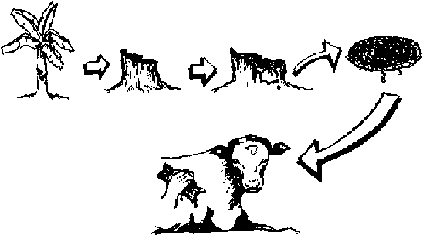
Treatment
|
| ||||||||||||||||||||||||||||||||||||||||||||||||||||||||||||||||||||||||||||||||||||||||||||||||||||||||||||||||||||||||||||||||||||||||||||||||
Infectious diseases
Anthrax
Symptoms
· High fever.
· Difficulty in breathing.
· Bleeding from ears, mouth, nose, anus and
vagina.
· Blood does not clot.
· Trembling and convulsive movements.
· Animal collapses and dies quickly.
Anthrax is spread by contact with infected materials.
Treatment
No treatment is recommended. Sick animals should be killed because of the danger to humans.
* Warning
Anthrax is highly infectious to people. Do not open up dead animals or use the meat. Burn the carcass or bury it in a deep pit (120 -150 cm).
Blackleg or black quarter
Symptoms
· Fever.
· Lameness.
·
Muscles swollen in the affected area. Air bubbles can he felt under the skin in
the swollen area.
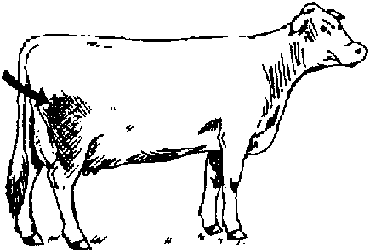
Blackleg or black quarter
Blackleg affects mostly cattle and water buffaloes. It can also attack sheep and goats. It usually affects well-nourished animals. It often occurs at the change from summer to the rainy season. It spreads by animals eating infected materials in the soil.
Treatment
No indigenous treatment is recorded.
Blue tongue
Symptoms
· Fever.
· Difficulty in breathing.
· Reddening of the muzzle, lips and ears.
· Ulcers and dead flesh inside the mouth.
If no complications occur, the disease takes a week. It often kills young animals.
Cause
A viral disease of sheep, cattle, goats, water buffaloes and wild ruminants. It is spread by biting insects.
Treatment
No indigenous treatment is recorded.
Brucellosis
Symptoms
· Abortion or retained placenta.
Spread by contact with aborted fetuses, placenta and uterine discharges.
* Warning
People can get infected through contact with infected materials such as afterbirth, aborted fetuses and milk. Boil milk before drinking. Make a fire on the place where the abortion occurred.
Prevention
Vaccination.
Treatment No treatment is recommended. Affected animals should be killed because of the danger to humans.
Caprine pleuropneumonia
Symptoms
· Infectious pneumonia in
goats.
· Rapid breathing and nasal discharge
with fever.
· Cough, weakness and loss of
appetite.
· Spread by contact or infected
materials in the air.
Treatment
To relieve symptoms, see Coughs and colds (page 8) and Fever (page 4).
Ecthyma
Symptoms
· Scabs around the mouth and on
the nose.
· Lack of appetite.
· Lameness.
· Weight
loss.
· Skin lesions on the lips, which later
may develop into scabs.
Disease occurs only in goats and sheep. Spread by contact with infected animals.
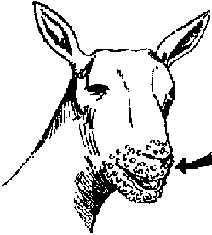
Ecthyma
Prevention
Isolate infected animals from the herd.
Treatment
No indigenous treatment is recorded.
Enterotoxemia
Symptoms
· Foul-smelling diarrhea with blood.
· Abdominal pain.
· Convulsions. Enterotoxemia causes many deaths in calves, kids and lambs. It is spread by contact with infected materials.
Treatment
· No indigenous treatment is recorded.
Ephemeral fever
Symptoms
· Fever.
· Stiffness and lameness.
· Shivering.
· Lack
of appetite.
· Tears in the eyes.
· Discharge from the nose.
· Drooling (salivation).
· Difficulty in breathing.
Affects cattle and water buffaloes. The disease is spread by mosquitoes as mechanical carriers. A sick animal usually recovers within a few days.
Treatment
These treatments are for the symptoms only.
· Reduce the fever (see Fever,
page 4).
· Complete rest.
Foot-and-mouth disease
Symptoms
· Blister-like sores and ulcers
on the udder, teats, feet and inside the mouth, nose and muzzle.
· Drooling and smacking of the lips.
· Fever.
· Lack of
appetite, refusal to eat.
· The disease lasts
only about a week but can take longer. It often kills young animals.
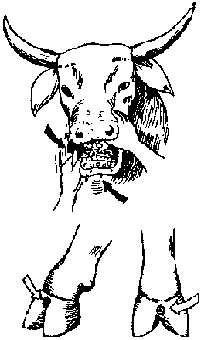
Foot-and-mouth disease
Cause
A highly contagious, viral infection of animals with cloven hoofs. The disease is spread by air, usually between animals that are close together. People may serve as mechanical carriers.
Treatment
No indigenous treatment to cure the disease is recorded. The remedies below are to treat the symptoms only.
· When the animals start to feel ill, give 12 bananas and 1 kg of Trigonella foenum-graecum leaves as feed for 45 days. (India. 1, 2, 4)
· For wound treatment, see Wounds.
Prevention
· Keep infected animals away
from other animals.
· Avoid contact with
infected animals.
· Clean and disinfect
housing. For disinfectants.
Hemorrhagic septicemia
Symptoms
· Swelling of the
neck.
· Inability to breath
properly.
· In the last stage of the disease,
the tongue sticks out because of difficulty in breathing.
· Fever.
· Discharge
from the nose.
· Cough.
· Lack of activity.
· Lack of appetite.
· Bloat.
The following can make animals more susceptible to hemorrhagic septicemia: transportation, stress, overwork and a sudden change in the weather.
Prevention
· Good sanitation and
hygiene.
· Good nutrition.
· Vaccination
Treatment
See Coughs and colds (page 8), Fever (page 4) and Lack of appetite (page 1). These treatments are for the symptoms only.
Paratuberculosis (Johne's disease)
Symptoms
· Gradual loss of
weight.
· Recurrent diarrhea.
Can affect cattle, water buffaloes, sheep and goats. Most cases occur in 2-6 year-old cattle. The disease is spread by contact with infected materials.
Prevention
· Clean and disinfect
housing.
· Rotate pasture.
Treatment
No indigenous treatment is recorded.
Rabies
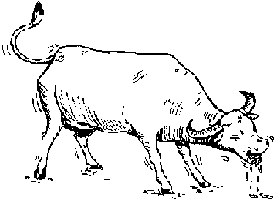
Rabies
Symptoms
· Animal becomes
aggressive.
· Bellowing.
· Frequent urination.
· Salivation.
·
Constipation.
· Animal is viciously
aggressive, running at and trying to bite any moving object.
· Convulsions.
·
Death. Spread by bites of infected animals.
Prevention
· Vaccination.
Treatment
Treatment is not recommended.
* Warning
Rabies can infect people and usually kills them. Avoid contact with animals that might have rabies. They should be killed immediately. See also section on dog bites in Wounds (page 80).
Rinderpest
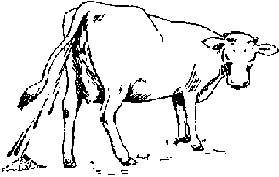
Rinderpest
Symptoms
· Very high fever.
· Nasal discharge.
·
Foul-smelling, shooting diarrhea that contains blood and mucus.
· Difficulty in breathing.
· Watery eyes. Dehydration.
· Bran-like lesions in the mouth and tongue.
· Animal cannot eat.
Cause
This is the most severe infectious disease in cattle and water buffaloes, but it can also affect other animals. It is spread by direct contact with infected animals. Many animals die.
Prevention
Vaccination is recommended.
Treatment
No indigenous treatment is recorded.
Tuberculosis
Symptoms
· Low, recurrent fever.
· Weakness.
· Lack of appetite.
· Progressive loss of weight despite good nutrition and care.
· Enlarged superficial lymph. You can feel them as swellings behind the ears and in front of the shoulders.
Prevention
· Keep housing clean. Provide
sufficient light and ventilation.
· Good
nutrition.
Treatment
Treatments are not recommended. Sick animals should be killed because of the danger to humans.
* Warning
People can catch tuberculosis by drinking milk from infected animals. Boil milk before drinking.
|
| ||||||||||||||||||||||||||||||||||||||||||||||||||||||||||||||||||||||||||||||||||||||||||||||||||||||||||||||||||||||||||||||||||||||||||||||||
Foot rot
Symptoms
· Inflamed foot.
· Pus between the two parts of the hoof
· The hoof smells bad.
· Parts of the flesh may die and turn black.
· The animal becomes lame.
· The animal does not put its weight on the foot.
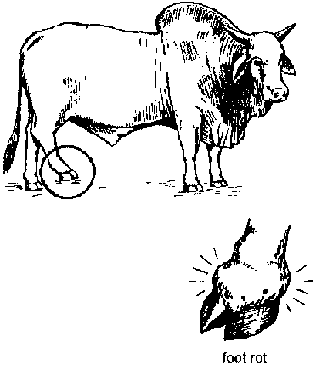
Foot rot
If you see sores in the mouth of animals with foot rot, the problem may be foot-and-mouth disease (see Infectious diseases, page 62).
Causes
· Bacteria, fungi.
· Animals that are kept in a wet place often suffer
from foot rot.
Prevention
· Keep animals in a dry place.
· Dig a shallow pit across the road where the herd of animals must pass on its way to and from the pasture. Fill this with water to make a mud-bath. Sprinkle any of the following disinfectants in the pit. Drive the animals through the pit twice each day. You can also put any of these disinfectants in the wet, muddy area near drinking troughs. (Northern and Western India)
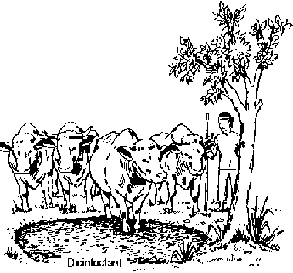
Prevention
Disinfectants:
· 2-3 liters of kerosene. (Cambodia. 1, 2)· 200-300 ml of any strong disinfectant, e.g., floor cleaning fluid, lime (calcium hydroxide) water. (Cambodia, India, Indonesia, Sri Lanka, Thailand. 1, 2, 3)
· 2-3 handfuls of copper sulfate dissolved in a bucket of water. (Sri Lanka)
· 3-5 kg of pounded fresh neem leaves.
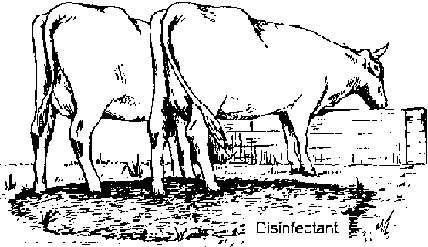
Disinfectants
Treatment
Wash the foot thoroughly with clean water, remove dead tissue and apply one of the following remedies. Move the animal to a dry place.
· Pound 3 handfuls of Pterocarpus macrocarpus bark together with 3 fistfuls of small pieces of Eupaiorium odoratum (fresh whole plant). Add 1-2 tablespoons of salt. Boil with enough water to make a paste. Apply on the rotten hoof 3 times a day for 7 days. (Thailand. 1. 2.3)
· Use the A-B-C treatment for wounds (see Wounds).
· Dig a small pit in clean, hot sand in a river bed or on the beach. Put the affected hoof in the pit and cover it up to the fetlock with hot sand. Keep it there for 10-20 minutes. The heat will help heal the wound. Do this once a day in the afternoon when the sand is hot, until the hoof is cured. (India. 1, 2, 3)
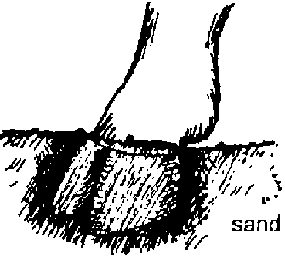
Treatment
· If you see maggots in the wound, take equal amounts of fresh Annona squamosa and neem leaves. Pound to make a paste (add a little water if necessary). Apply this to the wound twice a day for 2-3 days. Tie a cloth around the hoof to hold the paste in place. Keep the animal confined for this time. (For other treatments against maggots, see Wounds, page 78). (India. 1, 2)
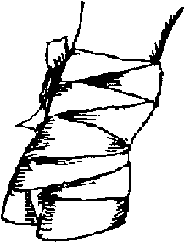
Treatment
2
|
| ||||||||||||||||||||||||||||||||||||||||||||||||||||||||||||||||||||||||||||||||||||||||||||||||||||||||||||||||||||||||||||||||||||||||||||||||
Eye diseases
Symptoms
Early stages
· Watery discharge from the
eye.
· Partly or totally closed
eye.
· Swollen eye.
· Eye is reddish.
Late stages
· Yellowish discharge from the
eye.
· The eye is covered with a thick,
whitish film.
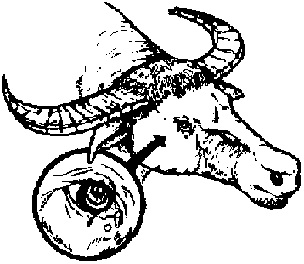
Eye diseases
Causes
· Attack in eye by
insects.
· Injuries to the eye.
· Infectious diseases such as pink eye.
· Vitamin A deficiency.
· Allergic reactions.
· Foreign bodies in the eye.
· Snake poison.
Prevention
· Feed green fodder to prevent
Vitamin A deficiency.
· Separate animal with
infectious eye diseases from the rest of the herd.
Treatment
Continue using any of these suggested remedies for 5 days unless the duration of treatment is stated. If symptoms persist after treatment, contact a professional (local expert, respected healer or veterinarian).
· Boil 2-3 handfuls of fresh Punica granatum leaves in 56 cups of water for 10 minutes. Wash the eye with the liquid twice a day for 3-4 days. (Sri Lanka. 1, 2, 3, 4)
· Squeeze a fresh stem of Euphorbia hirta Put 5-10 drops into the infected eye once a day. (Indonesia. 1, 2, 5)
· Wash the eye with Cocos nucifera (young coconut) water 2-3 times a day for 3-5 days. (lndonesia. 1, 2, 3)
· Boil 5 leaves of Piper betle (betel pepper) in 500 ml of water and cool. Use as an eye-wash twice a day for 35 days. (Indonesia. 1, 2, 3)
· Peel a mature Aloe vera leaf and extract the pulp. Apply the extract as an eye ointment 3 times a day for 3-5 days. (Philippines. 1, 2, 4)
· Boil a handful of Jasminum sambac flowers in a glass of water. Put 3-5 drops of the liquid in the affected eye 3 times a day for 3 days. (Philippines. 1, 2, 4)
· Pound a handful of Ocimum sanctum leaves. Squeeze the extract and apply 3-4 drops in the eye twice a day. (India. 1, 2, 3, 4, 5)
· Squeeze the juice of 10 fresh Coccinia grandis leaves. Apply 3-5 drops into the eye twice a day. (Thailand. 1, 2, 3, 4)
· Crush 1 medium-sized, dried Sapindus rarak fruit Put the powder in a small whisky or Coca-Cola bottle (200 ml) and fill ¾ of the bottle with rain water. Shake well and take the foam out. Blow the foam from your palm into the animal's eye twice a day for 4-5 days. (Thailand. 1, 2, 3, 5)
Treatment with Sapindus rarak
Treatment for keratitis or opacity of the eye
· Desmodium triflorum (fresh leaves). Acorus calamus (dried root). Curcuma domestica (fine powder of dried rhizome). Egg shell (very fine powder).
Grind the ingredients separately to very fine powder. Mix i/. teaspoonful of each of the ingredients and apply inside the upper eyelid once a day. (Sri Lanka. 1, 2)
|
| ||||||||||||||||||||||||||||||||||||||||||||||||||||||||||||||||||||||||||||||||||||||||||||||||||||||||||||||||||||||||||||||||||||||||||||||||
Wounds
Wounds can be caused by many things:
· Injuries from wire, nails, sharp objects or gunshots.
· Bruising, abrasions, trampling or crushing.
· Branding and other burns.
· Fights and bites.

Wound
Wounds heal by forming a scar. The scar starts to form in the first 3 days after the injury. The healing process is faster if the skin is brought together and if there is no infection.
Fresh wounds
Small wounds may heal by themselves. Tie the animal to a tree or keep it confined to prevent it from moving around and reopening the wound.
If the wound needs attention:
1. Stop any profuse bleeding (see Bleeding). Cauterize if necessary: heat an iron sickle in fire till red-hot and apply for 1-2 seconds on the wound.2. Clean dirt or other foreign bodies from the wound.
3. If possible, bring the skin together to close the wound. Hold the two edges together with a Band Aid, or stitch them together.
4 Protect the wound from dirt and flies using one of the remedies below.
5 Keep the animal quiet and restrained until the wound heals.
Old wounds
For old wounds that are severely contaminated, carefully clean the wound and trim away any dead tissue with a sharp knife or razor blade (trim until the flesh starts to bleed). Then use one of the treatments below.
If the wound is too serious to treat, seek the help of a professional or slaughter the animal.
Treatment
For any of the treatments below, tie a wide (7-10 cm) cloth around the wound if needed to keep the medicine in place.
· Pound 500 g of fresh Moringa oleifera (horseradish) leaves to make a paste. Apply as a poultice or smear on the wound daily until the wound heals. This stops bleeding and reduces swelling. (India, Philippines, Sri Lanka. 1, 2, 5)
· Pound 7 young fresh leaves of Eupatorium odoratum and mix with ½ teaspoon of salt (or fresh urine from the same animal). Apply on the wound once a day for 3 days. (Cambodia, Thailand. 1, 2, 3, 4)
· Ignite raw cotton wool and allow to burn until it is a black mass and the flame dies. Collect the black part. Put this on the wound and leave it there for 1 day. Replace it each day for 2-3 days. (India. 1, 2, 3)
· Pound 2-3 handfuls each of fresh neem and Ocimum sanctum leaves to make a paste. Apply as a poultice. Renew the poultice daily for 3-5 days or until the wound heals. (India. 1, 2, 3)
· For wounds that have stopped bleeding, apply vegetable cooking oil around the wound. Then apply wood ash on top of the oil. (Indonesia, Philippines, Thailand. 1, 2, 3)
· Boil 250 g of neem leaves in 2 liters of water. Allow to cool and use to clean the wound. (India, Sri Lanka. 1, 2)
· A-B-C (avocado-banaba-caimito) treatment for wounds. Collect equal amounts of fresh leaves of avocado (Persea Americana), banaba (Annona muricata) and star apple (caimito, Chrysophyllum cainito). Put in a pot with 10 times as much water as leaves. Boil for 10 minutes and allow to cool. Use a cloth dipped in the water to wash the wound. Do this twice a day until the wound is cured. This treatment can also be used for foot rot. (Philippines. 1, 2)
· Wound dressing powder
2 parts of neem leaves.
1 part of Ocimum sanctum leaves.
5
parts of jack (Artocarpus heterophyllus) leaf powder (or talc).
1 part of
Annona squamosa leaves.
Dry the leaves in the shade. Grind them together and sieve them to a fine powder. Sprinkle the powder on the wound two or three times a day. If the powder does not stick to the wound, mix this powder with coconut oil or other vegetable oil to make a paste Apply to the wound. (India. 1, 2, 3, 5)
· Grind fresh leaves and fresh flowers of Hibiscus rosasinensis and apply on the wound as a poultice. Replace each day for 3-5 days. (Cambodia, Indonesia. 1, 2)
· Grind fresh leaves of Ocimum sanctum and rhizome of turmeric together and apply on the wound as a poultice. (Thailand. 1, 2)
· Crush cloves of garlic and store them in vinegar together with chili (Capsicum frutescens) fruits. Take as many cloves as needed and apply them as a poultice. (Philippines. 1, 2)
· Pound the bark of Ficus hauli and apply to the wound. (Philippines. 1, 2)
Wounds with maggots
Use one of the following treatments to get rid of maggots infesting a wound.
· Pour the milky juice from Ficus bengalensis into the wound. After a while, the maggots will come out. Repeat once a day until no maggots remain. (India. 1, 2, 3)
· Pound fresh leaves of Annona squamosa into a paste and apply to the wound. (India, Sri Lanka. 1, 2, 3)
· 2 g of Michelia champaca
bark.
1g of strong chewing tobacco.
½ g of roasted rice.
150 g of
lime (calcium hydroxide).
Pound and mix these ingredients and apply to the wound. The lime will kill the maggots. lf Michelia bark and rice are not available, use the tobacco and lime only. (Thailand. 1, 2)
· 1 part of oil crushed from
Pongomia glabra seeds.
2 parts of sesame oil.
2 parts of ground, fresh
neem leaves.
Mix the ingredients and apply to the wound. This mixture soothes the wound, kills the maggots and drives away flies. (Sri Lanka. 1, 2)
Wounds or sores in the mouth and vagina
For wounds or sores in the mouth or vagina, use one of the following treatments.
· Mix 1 tablespoon of alum in ½ a liter of water. Apply to the wound. (India, Sri Lanka. 1, 2)
· Terminalia chebula seeds. Terminalia bellerica seeds. Phyllanthus emblica seeds. Glycyrrhiza glabra stem.
Take equal parts (100-200 g) of each of these ingredients. Grind and add a little water to make a paste. Apply on the mouth sores once a day. This treatment is also used to treat wounds and sores in the vagina (for instance, after difficult calving) and to treat sores from foot-and-mouth disease. (Sri Lanka. 1, 2, 5)
· Pterocarpus macrocarpus bark. Sesbania grandiflora bark. Xylia kerii bark. Careya sphaerica bark.
Make a decoction in water of 1.5 kg of each of the four types of bark. Apply on the mouth and feet. Used to treat sores from foot-and-mouth disease in cattle and swine. (Thailand. 1, 2, 3)
· Pound the solid sap from Acacia catechu into a powder. Sprinkle this on ulcers in the mouth twice a day for several days until the ulcer heals. (India, Sri Lanka. 1, 2, 3)
Dog bites
Bites of dogs and other animals may be infected with rabies. Rabies can spread to humans very easily and it usually kills infected people. If you know the dog has rabies, kill the dog and the animal it has bitten. Inform a veterinarian immediately.

Dog bites
If you are not sure whether the dog has rabies, cover your hand with a plastic bag and clean the wound thoroughly with soap and water without touching it directly. Then treat as for other wounds. An animal with rabies may not show symptoms for several months after being bitten. Watch it carefully and keep it isolated if possible. For symptoms of rabies, see Infectious diseases, page 65. If the animal shows signs of rabies, it should be slaughtered immediately. Do not use its meat for any purpose. Burn the carcass or bury it in a deep pit where it cannot be dug up by dogs.
Burns
· Mix lime (calcium hydroxide, used in chewing betel) with water. Take the water off from the top of the container. Mix equal amounts of this water and vegetable oil to make a white mixture (called "carron oil"). Apply profusely on the burn twice a day. This helps soothe the burn. (India. 1, 2, 3, 5)
· Apply the flesh of Aloe vera leaves to the burn. (Thailand)
· Apply vegetable oil on the burn. (Indonesia)
|
| ||||||||||||||||||||||||||||||||||||||||||||||||||||||||||||||||||||||||||||||||||||||||||||||||||||||||||||||||||||||||||||||||||||||||||||||||
Bleeding
Bleeding can be external or internal. External bleeding is
usually a result of wounds due to cuts, bruises, insect bites, ulcers, skin
parasites and foot-and-mouth disease infections. Internal bleeding is usually
caused by viruses, parasites and bacteria in the udder, uterus, digestive and
respiratory systems.
Blood in the milk indicates udder infection. Blood in the mucus from the nose may be due to respiratory tract infection.
Treatment
External bleeding
1. Stop the bleeding.
Try any one or more of the following ways to stop bleeding. If bleeding does not stop, apply a tourniquet.
· Crush fresh leaves of sweet basil (Ocimum basilicum) or holy basil (Ocimum sanctum) or neem (Azadirachta indica).
Apply the pulp to the wound using a tight bandage. Any clean cloth will do. (India. 1, 2, 3, 4, 5)
· Fill the wound completely with powdered turmeric (Curcuma domestica) rhizome. (India. 1, 2, 3, 4, 5)
· Apply alum crystals. (India, Sri Lanka. 1, 2, 3, 4, 5)
· Apply powdered tea leaves. (India. 1, 2, 3, 4, 5)
· Mix sugar and fresh grated ginger rhizome in equal proportions. Apply on a bandage or cloth and tie the cloth over the wound. (India. I, 2, 3, 4)
· Apply an ice pack. (India, Sri Lanka 1, 2, 3)
· Apply a decoction of 1 handful of Eugenia jambolana bark boiled in l liter of water. Wash the wound with the liquid and hold a clean cloth over it for a few minutes. (India. 1, 2, 3, 4, 5)
· Press the flowers of the palmyra tree (Borassus flabellifer) to the wound. Hold the flowers in place for a few minutes. (India. 1, 2, 3, 4)
· Crush blades of Cynodon dactylon grass. Apply the juice to the wounds. (India, Sri Lanka. 1, 2, 3, 4)
· Powder mango tree Mangifera indica) bark and place it on the wound. (India. 1, 2, 3, 4,5)
· Powder the bark of a banyan tree (Ficus bengalensis). Apply to the wound. (India. 1, 2, 3, 4, 5)
· Pound fresh leaves of Eupatorium odoratum Apply the pounded leaves to completely cover and fill the wound. (Thailand. 1, 2, 3, 4, 5)
Use of a tourniquet
If the wound on the legs or tail is large or continues to bleed, tie a tight bandage or clean cloth above the point of bleeding. Loosen the bandage every 20-30 hours to allow blood to reach the limb below (if you do not do this, the limb may turn black and the flesh may die). If the bleeding does not stop, seek professional help.
2. Once bleeding stops, clean the wound. Apply medicine. Suture if necessary. (See section on Wounds, page 75.)
3. If the wound has maggots, apply crushed fresh leaves of Annona squamosa. (For further remedies, see section on Wounds.) (All countries. 1, 2, 3, 4, 5)
Internal Bleeding
If blood is present in the milk or the mucus from the nose:
· See the treatment of udder infection in Udder infection.· Make a cut along the length of a banana and fill this with ½ teaspoon of camphor powder. Feed the banana to the animal twice a day for 3-4 days. (India, Sri Lanka. 1, 2, 3, 4)
Use blood coagulants such as Saraca indica bark, Actinopetris fennis, Jatropha curcas, Plumbago zeylanica or Terminalia arjuna.
|
Scientific name |
Parts used |
Preparation |
Dosage |
|
Actinopetris fennis |
Fresh leaves |
Use any of the plants. |
Drench 200 ml twice a day for 3-5 days. |
|
Jatropha curcas |
Fresh leaves |
Take 100 g of the plant part | |
|
Plumbago zeylanica |
Dry bark |
the plant part specified and | |
|
Terminalia arjuna |
Dry bark |
prepare a decoction in 1 liter of water. | |
|
| ||||||||||||||||||||||||||||||||||||||||||||||||||||||||||||||||||||||||||||||||||||||||||||||||||||||||||||||||||||||||||||||||||||||||||||||||
Snake bite
Symptoms
An animal bitten by a snake may show several signs:
· An animal that has just been bitten may bolt or jump suddenly.· You may notice a wound and a swollen area, usually on the leg or face. When the affected area is pressed, blood will seep from the base of the hairs.
· The animal appears anxious.
· It has muscle contractions.
· Its hair stands on end.
· The animal stands very tensely, with a curved back.
· The animal may bleed from the nostrils.
· Its urine may be red.
· In an acute case, the animal will die within 30 minutes.
Emergency treatments
· Apply a tourniquet above the wound (for leg bites only). See section on Bleeding (page 82) for how to use a tourniquet.
· Locate the bite marks, make a deep cut over the mark in line with the muscle tissue and let the wound bleed freely.
· Put your mouth to the wound and suck out the poison. Be sure to spit out the poison. (Caution: Do not do this if you have a wound or sore in your mouth.)
· Keep the animal still.
· In some countries, farmers apply red ants to the bite area.

Emergency treatments
Treatments
· Pound, press and strain the juice from a handful of leaves of Barleria lupulina, mix with 50 ml of whisky and give as a drench. Also, apply the ground leaf material directly to the wound (Thailand. 1, 2, 3, 4, 5)
· Pound and press the juice from 1 root (about 300 g) of Sansevieria sp. Mix the juice in 1 liter of water that has been used for washing rice. Give as a drench once only. The pounded rhizome of this plant, mixed with 1 liter of water, can also be used as a drench. (Thailand. 1, 2, 3, 4, 5)
· Rub the bite with an alum stone, lubricated with spit. Do this for 2-3 minutes. (1)
· Boil about 1 kg of Ochna serrulata (multiflora) root in 3 liters of water until only 2 liters remain. Cool and give the fluid as a drench. Once should be enough. (1)

Treatment for a snake
bite
|
| ||||||||||||||||||||||||||||||||||||||||||||||||||||||||||||||||||||||||||||||||||||||||||||||||||||||||||||||||||||||||||||||||||||||||||||||||
Sprains
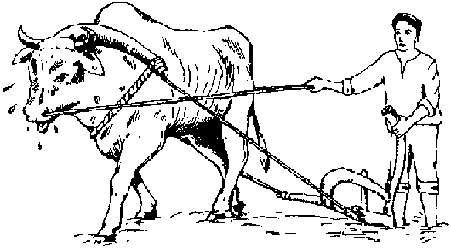
Sprains
Frequent causes of sprains in ruminants are accidents and falls, especially during plowing and pulling heavy carts. Sprains often occur if the animal is tired, overworked or in Door condition. Young animals used for draft work are particularly affected especially at the beginning of the plowing season when feed is scarce. Animals with poorly formed legs are also more likely to get sprains. Sprains are also a problem in hilly areas where the animal must walk up and down steep slopes.
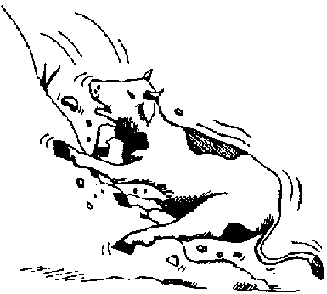
Falls

Symptoms
Symptoms
· The animal limps or has an
uneven gait.
· It lags behind the rest of the
flock or herd.
· It carries or drags the
affected leg.
· It does not put its full
weight on the leg.
· It has pain and pulls
its leg away when you try to examine it.
·
The affected joint may be swollen or inflamed.
Before treating the animal, make sure the problem is not:
· A fracture (see Simple surgical techniques in General information).
· Foot rot (see Foot rot).
Prevention
· Herd the animals carefully
during grazing to avoid accidents.
· Use
light, nimble animals (not large, crossbred cattle or large buffaloes) in hilly
areas.
· Do not use young, immature animals
for work.
· Feed animals well and keep them
in good condition.
· Do not overload animals.
Treatment
Herbal treatments
Use one of the herbal treatments below.
· Crush enough fresh leaves of Cymbopogon citratus to cover the affected part. Warm over a fire and wrap around the affected part. Tie on with a cloth and leave for 3-5 days. This remedy provides heat by stimulating the blood circulation. (Indonesia. 1, 2)
· Finely cut a handful of fresh comfrey (Symphytum officinale) leaves. Place on a piece of cloth, fold the cloth and boil in water for 5 minutes. Wring out the water and apply hot to the affected area. Be careful not to burn the skin of the animal. (Cambodia, Philippines, Thailand. 1, 2, 3, 4)
· Cissus quadrangularis (whole plant). Hoya ovalifolia leaves. Pathos secundens (whole plant). Turmeric (whole plant). Ficus racemosa leaves.
· Take a handful of each plant and chop together with 100 g of salt. Put the mixture on a cloth and heat it over a pot of boiling water. Tie the hot mixture around the affected area with a cloth. Repeat this treatment once every 2 days for 3-5 days. Be careful not to burn the skin of the animal. (India, Sri Lanka. 1, 2, 3, 4, 5)
· Grind enough Brassica nigra seeds to cover the affected area, together with enough water to make a paste. Apply on the affected part twice a day for 3-5 days. (India, Sri Lanka. 1, 2, 3, 4)
· Take a sufficient quantity of any of the medicinal plants in the table below to cover the affected area. Pound and add enough hot water to make a warm poultice. Apply it around the affected joint or area 2-3 times a day for 3-5 days. Tie a cloth around the area to support the joint and keep the poultice on if necessary.
Sprain treatments
|
Scientific name |
Common name |
Parts used |
|
Curcuma longa + |
Turmeric |
Dry/fresh turmeric rhizome, lemon juice |
|
Citrus bergamia + salt |
Lime | |
| |
Salt | |
|
Eucalyptus globulus |
Eucalyptus |
Fresh leaves |
|
Gaultheria fragrantissima |
Indian wintergreen |
Fresh leaves(India. 1, 2) |
|
Hibiscus rosa-sinensis |
Hibiscus |
Fresh leaves(Cambodia, India, 1, 2) |
|
Mentha arvensis |
Japanese mint |
Fresh leaves |
|
Mentha piperita |
Peppermint |
(India 1, 2) |
|
Vitex negundo |
Five-leaved chaste tree |
Fresh leaves |
|
Zingiber officinale |
Ginger |
Fresh rhizome |
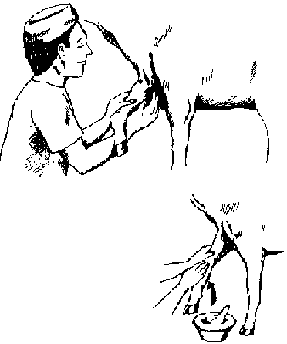
Where to apply the poultice
Applying heat
Warming the affected area helps heal the sprain. Use one of the following treatments.
· Mix ¼ matchboxful of camphor powder with 100 ml of vegetable oil. Apply on the affected part once a day for 3-5 days. Caution: Do not apply on skin that is grazed or broken. (India. 1, 2, 3, 4, 5)
· Put a handful of salt in a cloth, tie the cloth with string to make a small bag, heat and apply on the affected part. Repeat the treatment twice a day for 3-5 days. (India. 1, 2, 3, 4)
· Heat a piece of dry clay and apply it on the affected part. Repeat the treatment twice a day for 3-5 days. (Maharastra, India. l, 2, 3, 4)
Preventing the sprained limb from moving
Keep the animal confined to prevent it from moving too much. Do not send it out for grazing or use it for plowing or other work.
If the sprain has not improved within 5 days or so, take the animal to a specialized healer (vet or village healer).
Use one of the following treatments to warm the affected area and to prevent the limb from moving too much.
· Heat any vegetable oil and pour it over newspaper. Wrap the newspaper as a cast around the affected area. Do this every day for 3-5 days. (Philippines. 1, 2, 3, 4, 5)
· Tie a wide (7-10 cm) cloth firmly around the affected part. Make sure the cloth is not too tight so it does not stop the blood flow. (Throughout South and Southeast Asia. 1, 2, 3, 4, 5)
|
| ||||||||||||||||||||||||||||||||||||||||||||||||||||||||||||||||||||||||||||||||||||||||||||||||||||||||||||||||||||||||||||||||||||||||||||||||
Difficulty in urinating
Difficulty in urinating occurs mostly in males. especialiy bullocks and rams. Bullocks of prime plowing age of 5 -7 years are most affected. After 4-5 days, the bladder may rupture.

Difficulty in urinating
Symptoms
· The animal strains and
grunts.
· The coat is rough.
· The animal stops chewing cud.
· It is restless.
·
It gets up and sits down frequently.
· No or
only a few drops of urine may be seen on the bare soil where the animal has been
tied up.
· A peculiar smell comes from the
mouth after 34 days.
· The body temperature
may rise after 4-5 days.
Causes
· Blockage of the urinary tube
by stones that form in the bladder and urinary canal.
· Swelling of the urinary bladder.
· Kidney disease.
·
Swelling due to castration.
Prevention
· Give plenty of drinking water, especially during the dry season.
Treatment
Use one of the treatments below. The dosages given are for adult cattle and buffaloes. Use half of these amounts for calves, sheep and goats.
· Prepare a decoction of the whole plant of any or all of the following: 2 g of Tribulus terrestis, 3 g of Boerhaavia diffusa, 3 g of Cratueva nuravala, 2 g of Hyoscyamus niger, 3 g of Pavetta indica, 4 g of potassium nitrate, 4 g of sodium bicarbonate. Give cattle and buffaloes 200 ml of the decoction as a drench 2-3 times a day for 5-6 days as long as the problem lasts. For goats, sheep and calves, give 100 ml for every drenching. (India. 1, 3, 4, 5)
· Mix equal proportions of water and milk with a pinch of baking powder. Drench with 2 liters of this mixture or provide it as drinking water 2-3 times a day until recovery. (India. 1, 3, 4, 5)
· Drench with 1 liter of sugarcane juice 2-3 times a day until recovery. (Cambodia. 1, 2, 3, 4, 5)
· Boil 100 g of Orthosiphon spicata leaves in 1 liter of water. Cool, then drench. Repeat this treatment 2-3 times a day until recovery. (Indonesia. 1, 2, 3, 5)
@ Caution
· In case of complete or partial
blockage of the urinary tube, surgery is needed.
· Do not give the medicinal herbs mentioned above if
there is a complete
blockage
|
| ||||||||||||||||||||||||||||||||||||||||||||||||||||||||||||||||||||||||||||||||||||||||||||||||||||||||||||||||||||||||||||||||||||||||||||||||
Housing
Housing practices vary widely from place to place. In general, however, stock raisers do the following:
Protection
· People protect their animals from rain, sun, wind, cold, predators and thieves. For example: they may plant thorny bushes around the animal shed to keep predators and thieves away.
· They build a shed, house, barn or other structure to shelter the animals. Or sometimes, if people's homes are raised on stilts, they keep their livestock under the home.
· In many areas, farmers plant certain trees to provide shade near the livestock shed.
· They plant neem, eucalyptus or Ocimum sanctum around the shed to repel insects.
· They light smoky fires near or under the shed to drive away ticks, lice and insects.
· They do not plant mango, curry leaf (Murraya koenigii) or bamboo near the shed, as these species attract snakes and bats. For the same reason, they do not stock large amounts of firewood, hay or straw near the shed.
Space
· Farmers provide enough space for each animal to lie down and stand, turn around and defecate without the dung soiling itself or other animals.
· They avoid overcrowding.
· They provide adequate ventilation and light.
Feed and water
· People provide a container
with clean drinking water.
· In certain
areas, farmers build a small feeding manger to hold green or dry fodder.
Hygiene
· Traditionally in many areas, farmers slope the floor of the shed so the urine and dung can flow out. This helps keep the shed clean.
· They use straw from rice, wheat and other plants for bedding. They replace this regularly with fresh straw.
· The farmers clean away dung, urine and mud each morning.
· In some countries, they apply a layer of fresh mud on the floor of the shed.
· They may regularly sprinkle dry lime (calcium hydroxide) or powdered limestone on the floor 2-3 times a week as a disinfectant and to repel flies. Once a month, they wash the walls with limestone powder mixed with water.
· In India, farmers mix a handful of dung in a bucket of water and sprinkle this mixture on the floor. Over time, this produces a hard flooring that is easy to keep clean. It also keeps the ground even, so animals will not slip.
· They isolate or quarantine sick animals from other animals.
Some examples of ruminant housing
Housing types vary widely from place to place. Here are a few exemples.
Tribal areas of India
This shelter, built in the village near the owner's home, houses 10-20 animals. The roof is made of dried palmyra tree leaves (which are rainproof) or dried grasses. The posts are of bamboo, palmyra tree wood, teak, rose wood, or other strong wood. The floor is of mud. The animals are kept in the shed during the night and let out to graze in the forest during the day. The shed is cleaned and fresh mud is put on the floor before the animals return. The shed provides protection from the sun and rain, yet allows sufficient light and air to get in. It is very cool inside.

Tribal areas of India
Coastal areas of Andhra Pradesh, India.
This area is prone to cyclones and has very heavy rainfall (more than 1800 mm per year). The round, conical shape provides minimum resistance to cyclones and the sloping roof reaching almost to the ground prevents the roof from blowing away. This shelter can house 2-3 animals. It is usually located in the fields. The roof is made of palmyra tree leaves and the frame of palmyra wood. The floor is of mud. The shelter is cool in summer and warm in winter. However, it is dark inside and ventilation is sometimes inadequate. A container of water is placed inside, but there is no manger for fodder.

Coastal areas of Andhra Pradesh,
India.
Deccan (India) and Sri Lanka
This shed is attached to the owner's house and is made of bricks, mud, wood or stone. It houses 1-2 animals. The roof is of dried wild hemp stalks or other grasses. The floor is of mud or brick, and it slopes so mud, dung and urine flow out. A feeding manger and a container for water are built in The shed obviously is well-ventilated and cool.

Deccan (India) and Sri Lanka
Philippines
Many farmers in the Philippines and Laos keep their animals under the house, or in a room next to their own living area. The house is made of slatted bamboo and/or wood. The roof is thatched with local grasses. The animals body heat helps warm the house. Owners can give care to the animals very easily. However, pests and diseases such as mange, leishmaniasis and flies can spread from animals to humans. On the other hand, farmers in the Philippines say that—although the goats they keep under their houses have a strong and unpleasant odor—the smell helps keep mosquitoes away from the home.

Philippines
Gir Forest, Gujarat, Western India
Farmers in the Gir Forest build a circular, thorny fence of Acacia arabica branches. They keep their buffaloes inside during the night to protect them from lions and wolves. During the day, the buffaloes are let out to graze in the forest, where they seek shade under the trees: Farmers throughout India build a thorny fence or plant cacti around their own and their animals' housing to deter predators.

Gir Forest, Gujarat, Western India
Sri Lanka
Farmers build a corral of trees, logs and wire. The animals rest inside the enclosure in a shed made of wood or bamboo, roofed with grass or leaves. This shed is built at the top of the slope, so water and waste materials run out of it.

Sri Lanka
Sometimes, farmers tie their animals under a tree. In Thailand, they use a special bamboo spring on the tether. This prevents the rope from twisting and becoming tangled.

Throughout South and Southeast Asia
Indonesia, India, Sri Lanka and Thailand
Sheep and goat pens are often built on stilts. The floor is made of slatted wood or bamboo, so that the droppings and urine fall through. In India and Indonesia, there is a pit below to collect these valuable organic materials. The manure can be removed easily from beneath the pen for spreading in the fields. The roof is thatched with grass. The owners or their children cut grass from roadsides and field boundaries and put it in a manger attached to the pen for the animals to eat. Surplus grass can be stored at one end of the shed. This pen protects the animals from thieves and predators. It is clean and hygienic. In Indonesia and Sri Lanka, animals of different ages and sexes may be kept separate using dividers within the house. Pregnant animals and mothers with newborns are also separated from other animals.

Indonesia, India, Sri Lanka and
Thailand
Deccan, India
Semi-migratory shepherds use small branches to make moveable, collapsible fences. They erect these in the field to keep their goats and sheep in at night. The shepherd sleeps in the small shed in the center of the enclosure. During the day, the animals are released from the enclosure and allowed to graze. Outside, only animals that are too young to graze are kept inside the shed during the day with a shepherd who guards and feeds them.
The shepherd moves the enclosure around the field, so that the entire field is manured at night. The farmer pays the shepherd for this manure.

Deccan, India
Throughout India
Farmers build a thorny fence of Acacia arabica or Acacia farnesiana around their goat houses to deter thieves and predators. The house itself is round and made of bamboo, wood and mud. The roof is thatched with palmyra leaf or grass. The floor is of mud. Animals of all ages are housed together. Some farmers clean out the dung; others use the dung as bedding.

Throughout India

Various types of roofing materials

Various types of roofing
materials
|
| ||||||||||||||||||||||||||||||||||||||||||||||||||||||||||||||||||||||||||||||||||||||||||||||||||||||||||||||||||||||||||||||||||||||||||||||||
Feeding
Follow all these recommendations for improved feeding of ruminants.
· Make water freely accessible to the animals all the time. Or give them as much water as they can drink 3 times a day.
· Give plenty of roughages such as straw and fresh grasses. In addition to grazing, provide small quantities of roughage at regular intervals. Regularly renew the left-over feeds with clean, fresh feed. Cut fodder and carry it to animals that are confined.
· As much as possible, also give quality feeds such as tender, leafy grass, Gliricidia leaves, Leucaena leucocephala leaves, jackfruit leaves and fruits and household or kitchen waste. See the table below of feeds and their nutritive values.
· Gather and store enough rice straw for feeding. Keep it for feeding during the dry season when grass is scarce. Keep the straw in a dry, well-ventilated place to avoid fungus and rodents.
· Give concentrate regularly, especially to dairy animals and mothers suckling their young. To make concentrate, mix 500 g of coconut cake (or other cake) with 500 g of good quality rice bran. Add about 50 g each of crushed limestone and fish meal. Mix all these materials with 1 cup of molasses and add this preparation to the feed. Use half this amount for sheep and goats. (Philippines, Sri Lanka. 1, 2, 3, 5)
· Watch the animals carefully and continuously. Adjust the feed requirements to suit the growth and reproductive stage of the animals. See the table below for good, cheap, and readily available sources of feed. Use these specially for young, pregnant, lactating and working animals.
|
Feeds rich in protein |
Feeds rich in carbohydrates |
Feeds rich in minerals |
|
These help the animal grow faster and give more milk. They are also good for working animals and pregnant animals. |
These provide energy, especially for work animals. |
Minerals are especially important for animals that are pregnant, lactating or growing. |
|
Acacia arabica leaves |
Bagasse |
Acacia pods |
|
Acacia pods |
Broken rice |
All lentils and beans |
|
Banyan tree (Ficus bengalensis) leaves |
Brown sugar |
Bone meal |
|
Cassava leaves (dry) |
Cane molasses |
|
|
Centrosema spp. leaves | | |
|
Chickpea hulls |
Brown sugar |
Crop fertilizers(Caution: Use only small amounts.) |
|
Taro leaves |
Cassava chips |
Crushed shrimp and lobster shells |
|
Copra |
Castor leaves |
Fish meal |
|
Cottonseed cake |
Corn |
Limestone |
|
Cowpea beans |
Corn straw |
Oyster shells |
|
Cynodon dactylon grass |
Fresh coconut |
Rice bran |
|
Edible oil cakes |
Millet straw |
Salt |
|
Fish meal |
Millets | |
|
Fresh, green grass |
Groundnut cake |
|
|
Horsegram |
Pigeonpea leaves and pods | |
|
Khajri leaves |
Pineapple waste |
|
|
Launaea pinnatifida |
Rice leaves |
|
|
Legume leaves, pods and straw |
Rice straw | |
|
Lentil hulls |
Rice bran | |
|
Leptadenia reticulate leaves |
Saman pods | |
|
Leucaena |
Sorghum stalk (dry) |
|
|
leucocephala |
| |
|
leaves (dry) |
| |
|
Mango leaves |
Sorghum | |
|
Neem leaves |
Sugarcane tops |
|
|
Palm kernel meal |
Sweet sorghum |
|
|
Groundnut meal |
Wild hemp | |
|
Groundnut seed cake |
| |
|
Redgram | |
|
|
Rice bean | |
|
|
Rubber seed meal |
| |
|
Sesame seed cake |
| |
|
Soybean | |
|
|
Soybean meal |
| |
|
Sunflower meal |
| |
|
Wheat bran | |
|
|
| ||||||||||||||||||||||||||||||||||||||||||||||||||||||||||||||||||||||||||||||||||||||||||||||||||||||||||||||||||||||||||||||||||||||||||||||||
Mineral deficiency

Mineral deficiency
Symptoms
General
· Animal appears starved even
when fed abundantly.
· Animal loses
weight.
· Animal scratches the
ground.
· Loss of appetite.
Specific deficiencies
· Breeding
difficulties—repeated breeding is necessary (phosphorus and selenium
deficiency).
· Convulsion and staggering
(calcium and magnesium deficiency).
·
Black-coated animals appear to have brown hair (copper deficiency).
· Enlarged joint (calcium deficiency, in calves).
Causes
· Insufficient minerals
available to animals.
· Worm infestation.
Prevention
· Provide salt or mineral block for lick.
· Feed animals fresh grass and leaves.
· Supplement the animal's diet with high nutritive value plants such as sweet potato leaves and amaranth and feeds rich in minerals (see Feeding, page 108).
Treatment
Give any of the following treatments.
The dosages stated here are for adult cattle. For calves, goats and sheep, give half dosages. For further remedies, see Lack of appetite.
· Mix 5 liters of urine with 2-5 g yeast. Let stand for 24 hours. Dilute with 5 liters of water and give as drink to the animals. Do this daily until the animal regains appetite. (Cambodia. 1, 2, 3, 4)
· Mix 1 liter of palm toddy with ½ liter cattle urine. Drench the animal twice a day until it regains its appetite. (India. 1, 2, 4)
· Mix 1 part limestone powder to 1 part water. Sprinkle the mixture on the fodder ration. Do this daily for 3 days. (Philippines. 1, 2, 3, 4)
|
| ||||||||||||||||||||||||||||||||||||||||||||||||||||||||||||||||||||||||||||||||||||||||||||||||||||||||||||||||||||||||||||||||||||||||||||||||
Breeding
Detecting heat
Heat, or "estrus," is the period when the mature female animal is fertile and can be mated. Check the animals for heat when they are resting. Do this early in the morning and in the afternoon. Check again before the animal rests at night.
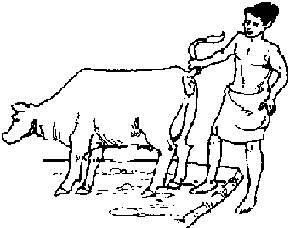
Detecting heat
Look carefully for the following signs of heat.
· The female stands still when she is mounted by another animal (male or female). You can see this happen if the female is untied and allowed to go freely with other animals.

The female stands still when she is
mounted by another animal (male or female).
· Clear mucus comes out of the
vulva. It often looks like a string hanging from the vulva.
· The vulva is moist and swollen.
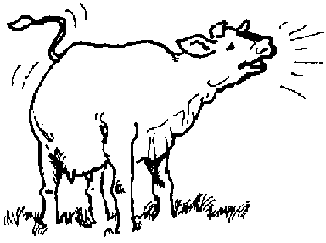
A cow in heat
· The animal is restless. A cow in heat bellows frequently. Sheep and goats waggle their tails constantly.
· Dairy animals are difficult to milk and production of milk decreases.
· Heat can be difficult to detect in buffaloes. Look for frequent urination. The only sure way to detect heat in buffaloes is to present a male to the female and see if he mounts her.
Breeding
When you see that the animal is in heat, mate it immediately. If the animal does not become pregnant on the first try, mate it twice within 12 hours at the next heat.
Some cows bleed from the vulva at the end of the heat period. This is a sign that the heat period has been missed so there is no point trying to mate her again until the next heat.
Lack of heat
Sometimes a female does not show any signs of heat even though she is not pregnant.
Causes
· Loss of weight due to poor
feeding.
· Overweight.
· Mineral deficiency.
· Intestinal worms.
· Chronic disease.
·
The animal has just given birth.
· The animal
is lactating heavily.
· Lack of contact with
male
Treatment
· Improve feeding, especially of mineral-rich feeds (see Feeding, page 108).
· Regularly deworm the animals (see Internal parasites, page 38).
· Allow the female to stay with a male animal. In Sri Lanka, some stock raisers keep an infertile but sexually active "teaser" male with their female animals to detect heat or to bring the females into heat.
If the female does not come into heat despite improved management, try one of the following treatments. The dosages are for adult cattle. Use half the dosages given below for sheep and goats.
· Crush 20 seeds from ripe fruits of Couropita guianensis (cannon ball). Mix the powder with 1 liter of water and drench the entire amount once a day for 15 days. Give half of this dose once a day for another 3 days and then ¼ of the dose each day for the next 3 days.
· Dry in the shade and then
powder 1 whole plant of Leptadenia reticulata (cork swallow). Put 20 g
(1
matchbox) of the powder on top of the animal's regular feed so she eats it with
the first mouthful. Or make a bolus of the powder in brown sugar and feed it to
the animal. Give this twice a day for 30 days.
If a male is not sexually active, treat it as follows.
· Rest the male animal and feed him with protein-rich feeds (see section on Feeding).
· Dry and pound: I whole plant of Sida cordifolia (country mallow), some mature seeds of Mucuna pruriens (cow-witch) and the roots of Asparagus racemosus. Take 20 g of each of the powdered ingredients and mix them with enough brown sugar to form a bolos. Feed to the animal twice a day for 15 days. (India. 1, 3, 4, 5)
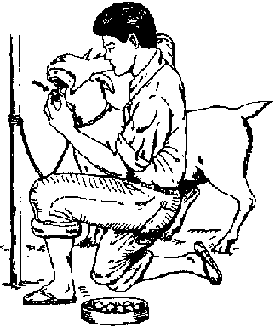
Treatment for males not sexually
active
|
| ||||||||||||||||||||||||||||||||||||||||||||||||||||||||||||||||||||||||||||||||||||||||||||||||||||||||||||||||||||||||||||||||||||||||||||||||
Pregnancy and birthing
Care during pregnancy
In India, pregnant animals are allowed to graze with the rest of the herd so that they get exercise and sufficient green fodder. However, towards the end of the pregnancy, the animals are confined and stall-fed. This reduces accidents and allows the farmer to keep a close eye on the pregnant animals. To avoid abortion, farmers do not feed cottonseed or rape seed to pregnant animals.
If animals are in danger of aborting, Indian stock raisers dry and powder whole plants of Leptadenia reticulata. They place about 20g of the powder twice a day on top of the concentrate ration of the pregnant animal so that the powder will be eaten first. They continue this treatment for 20-30 days.
In Thailand, farmers add 1 kg per day of rice to the feed of the pregnant animal 1 or 2 weeks before it is due to give birth. They also mix 1 kg of molasses with 10 ml of water and then sprinkle this onto the rice straw feed.
Birthing
You will know if an animal will have normal or abnormal delivery by observing the length of time before the newborn comes out. Normally, a newborn emerges within 6
hours after the water bag comes out. Once the water bag breaks, the birth normally occurs within 2 hours.
# Reminder
Do not interfere with the natural birthing process unless absolutely necessary!
Before giving any assistance to the mother, trim your fingernails very short. Thoroughly wash your arms and hands with soap and clean water. If possible, disinfect them with alcohol.
Inadequate uterine contractions
Symptoms

Birthing
· The water bag does not come out even after the cow has strained for 6 hours.
Treatment
1. Keep the animal comfortable and quiet.
2. Wash and remove the skin of a fresh Aloe vera leaf Rub it gently on the vulval lips, on the inside of the vagina and on the cervix.
3. If no change occurs within 3 to 6 hours, consult a veterinarian or anyone in the community experienced in attending to difficulties at birth in animals. (Sri Lanka. 1, 2, 3, 4)

Inadequate uterine contractions
Prolonged delivery
Symptoms
Six hours after the legs and head of the offspring have appeared, if delivery has not yet been completed, try the following. This technique is used by stockraisers throughout Asia and is similar to techniques used by Western veterinarians.
1. Disinfect a 1 meter-long rope by washing it in laundry detergent. Bath soap can be used, too.
2. Carefully tie each end of the rope a little above the hoof joint of each of the front legs of the baby animal.
3. Insert a clean stick about 30 cm in length through the loop.
4. Pull on the stick only when the mother pushes.
5. Pull the baby animal only towards the udder. Never pull it straight out or upwards.
6. Occasionally the hind legs come out first. Make sure that both are hind legs and not one front and one hind leg. If both are hind legs, tie the rope on in the same way as above and pull when the mother pushes.

Helping the mother's delivery
Retained placenta or "afterbirth"
If the placenta does not come out within 12 hours of birthing, try doing the following:
· Boil ½ kg of fresh bamboo shoots (Bambusa sp.) in 2 liters of water until the water is reduced to about half the amount. Cool the liquid and give the entire amount as a drench in one dose. (Sri Lanka. 1, 2, 3, 4)
If the afterbirth does not come out in the next 12 hours, get professional help. If help is not available, do the following. This is a technique commonly done by both traditional and modern veterinary doctors.
1. Clean your hands thoroughly and apply vegetable oil to them as a lubricant.
2. Cup one hand into a cone-shape.
3. Insert this hand into the vagina following along the length of the placenta and reaching as far as you can. Grasp the placenta.
4. Carefully separate the placenta from the uterus with your fingers and then take out as much as you can. The animal will deal with the placenta remaining inside the uterus in its natural way. It will not reduce the chances of the mother's bearing more offspring. The farmer can do this alone or with the help of a local livestock specialist. Make sure not to introduce any kind of infection into the vagina.

"Afterbirth"
@ Caution
Do not hang heavy weights on the membrane coming out of the vagina. This will be very harmful to the cow.
After removing the retained placenta, use one of the mixtures below to control bleeding from the uterus. These treatments will also help to contract the uterus.
Boil 200-300 g of Linum usifatissimum seeds in 1 liter of water until only half the water remains. Drench all this amount twice a day for 7 days. (India. 1, 3, 4, 5)
20g Zingiber officinale (ginger) rhizome.
30g Peucadenum
graveolens seeds.
30g Trachyspermum ami (bishop's weed) seeds.
30g
Trigonella foenumgraecum (fenugreek) seeds.
20g Nigella sativa (black cumin)
seeds. 20g Asparagus racemosus (asparagus) roots.
20g Bamhusa sp. (bamboo)
leaves.
10g Saraca indica (ashoka) tree bark.
10g Pedalium maurex bark.
Powder these ingredients and mix in 1 liter of water. Boil the mixture until only half the water is left. Give as a lukewarm drench 2 times a day for 7 days.
After drenching the decoction, mix the remaining pulp with Linum usitatissimum (linseed) seeds, molasses or brown sugar and feed it to the animal. (India. 1, 3, 4, 5)
· Make a decoction of 1 kg of guava (Psidium gunjava) leaves in 4 liters of water. Cool the liquid and then using a clean cloth, wash the vagina. (Philippines, Sri Lanka.1, 2, 3, 4, 5)
Vaginal bleeding
Continuous bleeding from the vagina after birth is generally due to injury to the vagina or uterus during birthing, whether by accident or mishandling.
Prevention
If assistance is given in deliveries, minimum force should be applied and care taken not to injure the vagina or uterus.
Treatment
· Take 50 g of fresh Acacia arabica bark and 50 g of dried sesame seeds. Powder separately and mix together with 50 g of brown sugar. Make a bolus and put into the mouth of an adult animal twice a day for 2-3 days or until the bleeding stops. Give half of the dosage to small animals. (India. 1, 2, 3)
Prolapse of the uterus
Sometimes the entire uterus comes out of the vulva after birth. It will look like a red, inflated inner tube of a car tire. If this happens, seek professional help. While waiting, do the following. Stockraisers in most Asian countries know of this technique.
1 If the animal is lying down, gently clean and wrap the uterus with a large, clean cloth. Be sure not to injure the uterus.

Prolapsed uterus
2. If the animal is standing, wrap the uterus with a large cloth. Raise the uterus up with another large cloth. Tie the cloth to the roof of the shed so the uterus is parallel to the ground. Firmly tie the animal to a post in such a way that it cannot move about.
To replace the uterus inside the abdomen, do the following:
1. Tie up the animal on a sloped surface as shown in the
picture. This sloping position will help the uterus stay in place.
2. Mix 2
tablespoons of alum powder or sugar in 2 liters of water. Apply this to the
surface of the uterus. This will make it shrink slightly.
3. Push the uterus
back in with your clean hands.

Tie up the animal on a sloped
4. When the uterus is replaced in the abdomen, press a rope in between the hind legs and over the tail and tie it up as shown in the picture. This will keep the vulval lips tight and supported for a few days. This will prevent the prolapse from occurring again.

Lateral view

Posterior
view
|
| ||||||||||||||||||||||||||||||||||||||||||||||||||||||||||||||||||||||||||||||||||||||||||||||||||||||||||||||||||||||||||||||||||||||||||||||||
Care of mother animals after birthing
Little should be done to interfere with the natural birthing process. The calf should be allowed to suckle the mother immediately. This helps expel the placenta or afterbirth.
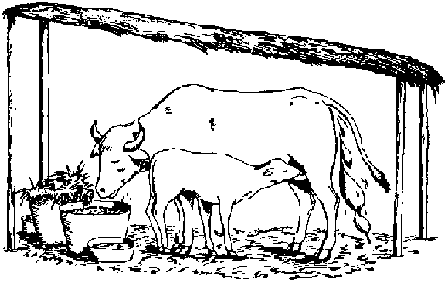
Figure
Feed for the mother after calving
Any of the following mixtures can be given to the mother immediately after calving. They act as a uterine tonic, help cleanse the uterus, expel the placenta and dispel gas from the rumen of the mother.
· Grains: Finger millet (Eleusine coracana) seeds. Sorghum (Sorghum vulgare) seeds. Millet (Pennisetum typhoideum) seeds. Wheat (Triticum aestivum). Rice (Oryza saliva).
Cook 1 kg of any of these grains with about twice as much water to make a gruel (porridge). Then take the following ingredients:
Cumin (Cuminum cyminum) seeds. Bishop's weed (Trachyspermum ami) seeds. Fennel (Foeniculum vulgare) seeds. Black pepper (Piper nigrum) seeds. Fenugreek (Trigonella foenum-graecum) seeds. Asafoetida (Ferula assa-foetida) gum.
Pound together 10 g of each of these ingredients with 50 g of brown sugar. Mix the powder into the gruel and cook. Feed the whole amount to the mother cow twice a day for 1 week after the birth. For sheep and goats, use half of these quantities. (India. 1, 2, 3, 4, 5)
· Asafoetida (Ferula assa-foetida) gum. Bishop's weed (Trachyspermum ami) seeds. Cloves of garlic. Brown sugar.
Grind together 50 g of each of these ingredients. Divide into 3 equal parts. Feed to the mother cow in the morning and evening and the following morning. Wait 1 day, then repeat the treatment once. Use half these amounts for goats and sheep. (India. 1, 2, 3, 4)
· Mix 3 teaspoons of fenugreek (Trigonella foenum graecum) seeds with 1 kg of cereal and ½ kg of brown sugar. Cook together with 2 liters of water. Give this amount once a day to milking cattle. Use half this amount for sheep and goats. (India. 1, 2, 3, 4)
Boil 500 g of linseed (Linum usitatissimum) seeds in 1-2 liters of water until half the water remains. Drench 500 ml of the liquid. Repeat once a day for 3 days. This helps the mother gain weight after birthing. For goats and sheep, use 200 g of seeds. (India. 1, 2, 3, 5)
· 2 thumb-sized dried ginger
rhizomes (20 g).
30 g (1 handful) Peucedenum graveolens dried seeds.
30 g
Trachyspermum ami (bishop's weed) dried seeds.
30 g Trigonella
foenum-graecum? (fenugreek) dried seeds.
20 g Nigella sativa (black cumin)
dried seeds.
20 g Asparagus racemosus (asparagus) dried roots.
20 g Bamboo
leaves (dried).
10 g Saraca indica (ashoka tree) dried bark.
10 g Pedalium
maurex dried leaf, stem or fruit.
These quantities are enough for 2 doses for a cow or buffalo (use half the dosage for a sheep or goat). Grind these ingredients together to make a powder. Boil in 1 liter of water until half of the water remains. Separate the liquid and give the liquid as a lukewarm drench twice a day for 710 days after the birth. (Northern and Western India. 1, 2, 3, 5)
· You can use the solid pulp left after preparing the remedy above. Mix it with 100-200 g brown sugar or 300-500 g of boiled linseed (Linum usitatissimum) seeds and feed it to the mother animal. (India. 1, 2, 3, 5)
Improved nutrition to increase milk production
Farmers feed the mother animals with green fodder, concentrates (such as rice bran, copra, molasses and groundnut cake) and other feed-stuffs that are rich in energy, protein, minerals and vitamins. Farmers in Indonesia give the water used to boil vegetables. This improved diet increases milk production.
The table at the end of this section contains examples of feed given to mother animals after birth. The quantities listed are for cows and buffaloes. Use half these quantities for sheep and goats.
Specific medicinal plants to increase milk production
These remedies stimulate milk production. See Decreased milk flow (page 141) for further remedies.
· Provide fresh leaves of Leptadenia reticulata as feed. (Throughout India. 1, 2, 3, 4, 5)
· Grind together 3-4 handfuls of fresh Leptadenia reticulata leaves, 10 seeds of black pepper (Piper nigrum) and 50 g of brown sugar. Feed this to a mother cow or buffalo 1-2 times a day until the milk production increases. Give half this amount to goats and sheep. (India. 1, 2, 3, 4, 5)
· Cut Launaea pinnatifida (pathri) grass and feed to the animal. Give as much as the animal will eat. (Maharashtra, India. 1, 2, 3, 4)
Examples of feed given to mother animals after birth
|
Scientific name |
Common name |
Part |
Dosage |
Application |
|
Moringa oleifera |
Drumstick |
Leaves |
As much as animal will eat |
Feed (India) |
|
Dolichos uniflorus |
Horsegram |
Seeds |
1 kg |
Soak in water overnight. Feed in the morning. (India) |
|
Ricinus communis |
Castor |
Fresh leaves |
3 handfuls |
Feed (India) |
|
Cocos nucifera |
Coconut |
Pulp of nut |
3-4 nuts |
Feed once a day(India, Indonesia) |
|
Crotolaria juncea |
Sun hemp |
Fresh leaves |
3-4 handfuls |
Feed 2-3 times a week(India) |
|
Glycine max |
Soybean |
Waste from making tofu (tahu, bean curd) |
3-4 handfuls |
Feed. |
| |
Eggs and honey |
|
10 eggs and ¼ kg honey |
Feed once a week for 1 or 2 weeks. (Indonesia) |
|
Manihot esculenta |
Cassava |
Roots |
As much as animal will eat |
Peel the skin, cut into pieces, air-dry for 3-4 days. Feed. |
|
Mangifera indica |
Mango |
Peels, ground kernels, leaves |
As much as animal will eat |
Feed. (India) |
| |
Copra, rice bran, copra meal, molasses(concentrates) | |
As much as animal will eat |
Feed either alone or mixed together. (India, Indonesia, Philippines) |
|
Sauropus androgynus |
Katuk (Indonesian) |
Leaves |
1 kg |
Boil leaves in 1 liter of water. Add 1 teaspoon of salt. Feed leaves and water every 2 days for 1 week. Continue as long as needed. This dosage is for sheep and goats. (Indonesia) |
|
Carica papaya |
Papaya |
Leaves |
2 leaves |
Boil leaves in water. Feed leaves and water every 2 days for 1 week. (Indonesia) |
|
Artocarpus heterophyllus |
Jackfruit |
Leaves |
5-10 kg per day |
Feed to animal with grass for 2-3 days. (Sri Lanka) |
|
Bassia latifolia |
Mahua |
Dried flowers |
1 fistful (50 g) |
Feed once a day. (India) |
|
| ||||||||||||||||||||||||||||||||||||||||||||||||||||||||||||||||||||||||||||||||||||||||||||||||||||||||||||||||||||||||||||||||||||||||||||||||
Care of newborn
Right after birth
Allow the mother to lick the newborn and clean it completely. This also helps to induce milk flow in the mother.

Right after birth
If the mother does not lick the newborn thoroughly or is too weak to lick, help clean the newborn. Dry it with a clean, rough cloth and remove any mucus from its nostrils. Rub this cloth on the hooves to remove their plastic-like coating.
If the newborn is not breathing properly, insert a clean finger into the mouth to remove all mucus. Use a rice straw to tickle the nostril to make the newborn sneeze. This expels the mucus blocking the breathing passage.

Expelling the mucus blocking the
breathing passage
Navel cord
You can choose any of the following practices to dry the navel cord. These practices also prevent bacterial infection and infestation by maggots.
· Apply a spoonful of turmeric powder to the navel. Apply urine from the mother animal onto the navel.· Pound 1 medium-sized bulb of garlic and apply it to the navel.
· Cover the navel with fresh, cooled kitchen ash.
· Apply vegetable oil to the navel and then cover it with wood ash.
Do not pull or irritate the navel cord unnecessarily. This could lead to hernia, a swelling in the navel region.
The mother's first milk
Within 2-4 hours, the newborn ruminant should suck the colostrum. This is the first milk from the mother. The colostrum contains antibodies that will provide resistance to diseases in the newborn's life.
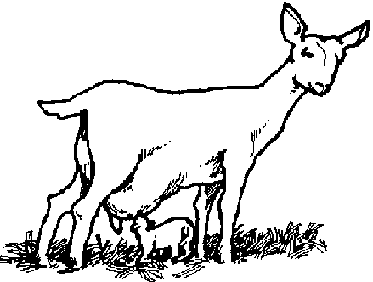
The mother's first milk
Reintroducing the newborn to its mother
Sometimes the mother refuses to accept her calf, kid or lamb. This usually happens when it is her first-born. In this case, you may try one of the following:
· Sprinkle milk on the nose of the mother and her newborn. Then, allow the mother to smell the newborn.· Rub the rear end of the newborn on its mother's nose.
· Rub the newborn with vinegar or with the mother's urine.
· For cattle and buffaloes, tie the hind legs and horns of the mother to prevent her from kicking or hitting the newborn. Allow the newborn to suckle for 15 minutes and then free the mother. You may need to do this for three succesive feedings, after which she usually will accept the newborn

Reintroducing the newborn to its
mother
Fostering
If the mother has died, try to introduce the newborn to another female which has recently given birth. If she refuses to foster the newborn, try any of the practices suggested for reintroducing the newborn to its mother. If this does not work, milk the lactating animal and feed the newborn, using a small cup. Or you can dip some cotton in some milk and allow the newborn to suck on it.
Housing
Keep the mother and its offspring separated from the rest of the herd to prevent other animals from hurting the newborn. Provide clean, dry bedding for the newborn. If the barn has a slatted floor, cover it with grass or other materials. Otherwise, the newborn may get its legs caught between the slats.
Feeding To stimulate the appetite of the newborn, place one of these mixtures on its tongue:
· A pinch of salt and ½ teaspoon of brown sugar. (India. 1, 2)· Half a teaspoon of brown sugar and ½ teaspoon of sweet soy sauce. (Indonesia. 1, 2) Some farmers do this for several days.
# Reminder
Do not intervene with the natural process of giving birth and early care by the mother unless absolutely necessary.
|
| ||||||||||||||||||||||||||||||||||||||||||||||||||||||||||||||||||||||||||||||||||||||||||||||||||||||||||||||||||||||||||||||||||||||||||||||||
Udder infection
Udder infection (mastitis) and sore teats are common in milking ruminants. Prime milkers are more prone to udder infection. Animals with long teats may easily get teat infections.

Udder infection
Symptoms
· Cracked teats.
· Wounds, tenderness, swelling.
· Hard, knob-like, painful udder.
· Animal does not permit milking.
· Small curdles occur in milk.
· Udder feels hot (in severe mastitis).
· Milk can become watery or pus-like.

Infections
Causes
· Milking with the thumb inside the fist, touching the teat (see diagram in Decreased milk flow, page 141).
· Effect of cow pox or foot-and-mouth disease.
· Bad hygiene, leading to infection.
· Rough milking.
· Not fully draining the udder during milking.
Prevention
· Practice good
hygiene.
· Use proper milking
methods.
· Completely drain the udder of milk
during milking.
· Inspect the herd
frequently.
Treatment
Sore teats
· Gather fresh leaves of Ocimum sanctum, Ocimum basilicum or neem. Crush the leaves to obtain 10 ml juice. Mix with 80-100 g of butter or edible oil. Apply on teats 23 times a day until fully recovered. (India. 1, 2, 3, 4, 5)
Mastitis
Use one of the following treatments.
· Gather 200 g each of fresh Ocimum sanctum (or Ocimum basilicum) and neem leaves. Boil in 500 ml of vegetable oil for 1 hour over a slow fire. Strain through a clean thick cloth. Store in a sterilized bottle.
After milking, inject 5 to 10 ml of this oil in affected quarters of the udder using a milk siphon. Do this twice a day until healed. (India. 1, 2, 3, 4)
· Massage the infected udder with lukewarm water. This helps especially in early cases to reduce the swelling. You can also add a handful of guava or neem leaves to the boiling water. (Philippines. 1, 2, 3, 4)
· Boil a bucket of water. Dip a thick cloth in the water while it is still hot. Wring out the excess water and hold the cloth on the udder. You can also add a handful of guava or neem leaves to the boiling water. (India. 1, 2, 3)
· Pound and boil equal amounts of Fumaria officinalis and Litsea sabifera leaves in enough water to make a paste. Add a pinch of baking powder. Apply the warm paste on the udder. (India. 1, 2, 3)
For initial stages of infection
· Grind together 1-2 ripe bananas, 2 tablespoons of powdered, dried turmeric rhizome and 1 teaspoon of salt. Give this mixture as feed in the morning and evening and again the following morning. (India. 1, 2.4)
@ Caution
· To prevent the infection from spreading, milk the healthy animals first, then the sick ones
· Practice full milking. Strip the udder completely.
· Wash your hands with soap before and after milking.
· Discard and destroy milk from infected udders.
· Use the siphon in the teat very carefully. If you have no siphon, use the end of a hollow feather. Boil it before using.
|
| ||||||||||||||||||||||||||||||||||||||||||||||||||||||||||||||||||||||||||||||||||||||||||||||||||||||||||||||||||||||||||||||||||||||||||||||||
Decreased milk flow
The milk flow from all types of ruminants may decrease for several reasons: for instance, disease or the loss of a calf or kid at birth. Some animals are also normally hard milkers. Decreased milk flow usually occurs in an animal's first three lactations.
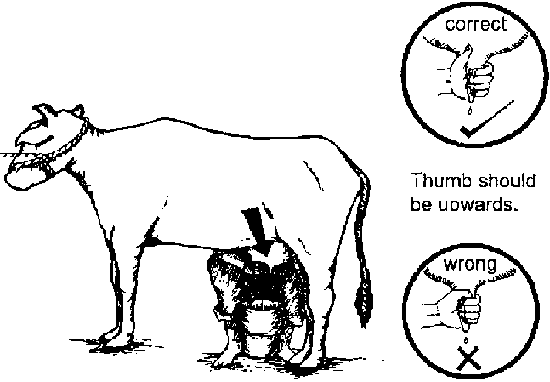
Decreased milk flow
Cows, goats and sheep normally give their maximum milk yield during their second and third lactations. Buffaloes give their highest yield in their third and fourth lactations.
Symptoms
· Animal produces less milk than
expected (for instance, compared to previous lactations).
· Milk is drawn with difficulty.
· Sudden drop in milk production.
Causes
· During or after
disease.
· Loss of calf or kid at birth. Hard
milkers.
Prevention
· Proper health care.
· Feed coconut cake or cotton seeds.
· Supplement the feed with grasses such as Andropogon annulatus (marvel grass), Panicum isachne and Cynodon dactylon.
· Supplement the feed with sugarcane (cane and tops).
Treatment
The dosages given below are for cows and buffaloes. Use half the dose for sheep and goats. Give any of the treatments for at least 15 days.
· Dry and powder 5 g of Breynia patens leaves or bark and 10 g of Leptadenia reticulata leaves or bark. Mix with 1 liter of water. Drench twice a day. (India. 1, 2, 3, 5)
· Dry and powder black cumin (Nigella saliva) seeds. Mix with 1 liter of water. Drench twice a day. (India. 1, 2, 3, 5)
· Feed the animal twice a day with 1-2 kg of chopped sugarcane leaves or 200-300 ml of sugarcane juice. (India. 1, 2, 3)
· Dry and powder 10 g musk mallow (Abelmoschus esculentus) seeds, roots or leaves (10 g is approximately 25 leaves). Mix with 1 liter of water and boil for ½ hour. Allow to cool. Drench twice a day. (India. 1, 2, 3)
· Feed the animal with 1 liter of water from cooking rice, flavored with a little salt. Do this for 20-30 days. (Thailand. 1, 2)
Use one of the following remedies. Use the amount given as a "top dressing": add it on top of the concentrate (such as rice bran, wheat husks, lentil husks, cotton seeds, groundnut oilcake) so the animal will eat it with the first mouthful. Do not mix it with the feed. These remedies are also used to prevent abortion during the first month of pregnancy, after the removal of retained placenta and to maintain the pregnancy in case of threatened abortion. Sometimes' they are tried to treat female infertility.
Dry the whole plant of Leptadenia reticulata (cork swallow) in the shade. Grind to a powder. Add 1 matchboxful (20 g) to the concentrate as a top dressing. Do this once a day for 15-30 days. The milk yield should increase after 4-5 days. (India. 1, 2, 3, 5)
· Dry the roots of Asparagus racemosus (asparagus) in the shade. Grind to a powder. Add 1 matchboxful (20 g) of the powder to the concentrate as top dressing. Do this once a day for 30 days. (India. 1, 2, 3, 5)
· The two remedies above can also be used in combination (20 g of Leptadenia + 10 g of Asparagus). (India. 1, 2, 3, 5)
· The following ingredients can also be added to the mixtures above: 10 g of dried, ground seeds of Nigella sativa (black cumin) or 10 g of dried, ground roots of Withania somnifera (winter cherry). (India. 1, 2, 3, 5)