 |
| ||||||||||||||||||||||||||||||||||||||||||||||||||||||||
|
| ||||||||||||||||||||||||||||||||||||||||||||||||||||||||
Soil - A Foundation for Sustainable Development
|
|
DIREKTION |

|
|
Deutsche Gesellschaft f�r |

Published by:
Deutsche Gesellschaft f�r Technische
Zusammenarbeit (GTZ), GmbH
Postfach 5180, D-65726 Eschborn, Germany
Division 45, Rural Development
Content and editing:
Sustainable Soil Management Project
Dr. Kurt G. Steiner
Concept:
GeoneX, Martin Moll
Text:
Martin Moll, Kurt G. Steiner, Karl Herweg
English translation:
John Cochrane
Layout:
Dominique Vernier
Photos:
GTZ, Martin Moll, Kurt Steiner;
Christoph Berg, CIP, Paul Egger,
ESA/Keystone, Karl Herweg,
Manfried Kriegl, Bernd Neugebauer,
Tages Anzeiger
Printed by:
Typo-Druck, D 64380 Ro�dorf
|
| ||||||||||||||||||||||||||||||||||||||||||||||||||||||||
Foreword
Food security and the conservation of natural resources are two key objectives of German and Swiss development cooperation. Soil forms a bridge between these objectives as is it the natural resource which provides the basis for food production. Unless soil productivity is maintained, it will not be possible to guarantee sustainable food security for a growing world population. At the same time, soils play an important role in maintaining biodiversity and protecting the climate.
Protecting soils is thus not only in the interests of crop and livestock farmers, but also of society as a whole. In spite of this, soils are being degraded around the globe through inappropriate use or lost through settlements and infrastructure development. This brochure identifies the scale and causes of soil degradation. It also shows that despite the complexity of the theme, there are promising strategies to protect soil resources, and that these strategies are also being successfully implemented in development cooperation.
The brochure is designed primarily for development organisations, but also for the public interested in development issues. It emphasises that the protection and sustainable management of soils is crucial not only for crop farmers, animal producers and foresters, but also for all of us. One particular target group of this brochure are experts in the fields of rural development, and agricultural and economic policy. They have to accept that land owners, crop farmers and pastoralists will only invest in long-term soil conservation if they are able to profit from these investments. This requires guaranteed use rights, access to markets and credits, and attractive producer prices. In brief, it requires conducive economic conditions and appropriate institutional support. A further significant requirement is that land users be enabled to articulate their aims and communicate their needs, in order to facilitate dialogue and a reconciliation of interests between actors at various decision-making levels.
Dr. H.-J. de Haas
Section for Agriculture,
Fisheries, Agricultural
Research,
Rural
Development and Anti-drugs
Measures
German Federal Ministry for
Economic Cooperation
and
Development (BMZ)
Paul Egger
Agriculture Division
Swiss Agency for
Development and
Cooperation (SDC)
Petra Mutlu
Division for Rural
Development
Deutsche Gesellschaft f�r
Technische Zusammenarbeit
(GTZ)
GmbH
|
| ||||||||||||||||||||||||||||||||||||||||||||||||||||||||
The “Brown Planet”
On satellite photos, the earth first showed up as the “blue planet”, displaying blue ocean surfaces and a shimmering bluish atmosphere. Pictures taken from a lower altitude, however, often show a “brown planet”, brown like freshly ploughed soil, brown like farmland left fallow, yet brown too like the deserts.
Viewed from these lofty heights, phrases like “down to earth” take on a new, global meaning. Because although it has often gone unnoticed, around the world soil is increasingly coming to be seen as a key resource which must be better utilised and conserved. As the world’s population continues to grow, global food security and economic viability will depend on the sustainable management of that resource.

Figure
The satellite perspective shows up the relative dimensions of the oceans, continents and geographical features. It makes visible the fact that the earth’s land masses cover only one-quarter of its surface, and that only 10% of the total area can be utilised for agriculture. The view from space has also taught us to see the earth as a single ecological system of astonishing and incredibly complexity. As the substrate of all terrestrial life, soil plays a special role within this system. It nourishes plants and animals, and forms the solid ground on which crop cultivation, livestock farming and forest management take place. It is the basis for survival of billions of people.
This vitally important resource, soil, covers the earth’s land masses like only a thin skin. Just as a human being’s skin is thin and sensitive, but at the same is a vitally important organ, the earth’s skin is also sensitive, yet vitally important for the survival of humans, plants and animals.
Modern civilisation, however, barely ever notices the soil with the human senses. We build houses and roads on it, and cover it with asphalt, gravel and railway lines. At most, we notice it as dirt on our hands to be washed off immediately.
A more contemporary perspective shows soil to be a resource of strategic significance that merits our full attention. It is already clear today that soil is becoming scarce; scarce, because we are becoming more numerous. Scarce too, because degradation, and poor management producing low yields, do not generate sufficient food security. Yet processes like erosion and soil impoverishment are not a natural inevitability. They can be influenced through coordinated measures, taken within the scope of development projects.
German and Swiss development cooperation have been addressing the theme of sustainable rural development, including the issue of more productive but sustainable soil management, over a period of years. In so doing it has acquired a wealth of experience. Promising techniques and strategies are available. This magazine presents those experiences, with the aim of making them available to development cooperation on a more focused and fruitful basis.

Figure

Figure
|
| ||||||||||||||||||||||||||||||||||||||||||||||||||||||||
Soil and People - Sharing in Mother Earth
Soil is a key resource in many respects. It forms the life base for billions of people, both rural and urban, who obtain food and income from the soil. In view of the continued growth in the world’s population, protecting this base constitutes a major challenge. Not only will more people need to be fed, but the many millions of people already afflicted by undernourishment and malnourishment will need to be better fed.
Furthermore, soil is the key production factor in crop and animal farming, and forestry, and is thus of supreme economic significance for the predominantly agriculture-based national economies of developing countries.
|
Dirt, soil and mother earth - a substrate for life In physical terms, soil is a mixture of weathered rock, dead plant matter and soil organisms. The mixture of small mineral and organic components also enables water to permeate, and be retained in the pores and in the organic components of a healthy soil. This prevents rapid evaporation, and allows plant roots to absorb moisture slowly. The thin layer of soil covering the earth’s land masses thus forms the substrate for all agricultural plant and animal production. |
In most developing countries, 80 to 90% of the population live from agriculture. For them, the soil is the basis of their livelihood, the basis of their day-to-day survival. 1.3 billion people live in poverty, of whom 0.8 million are undernourished. Most of these people live in rural areas, either from a small parcel of land or as farm labourers.
Although we imagine the tropics to be highly fertile, it is the poor, less high-yielding soils which predominate. The shortage of land forces many farmers to farm steep slopes, or cultivate fields in dry savannah zones with low and irregular precipitation. The rural poor in particular are forced onto the worst sites. Sustainable rural development and poverty reduction are thus also soil-related issues.
In the sub-Saharan African countries, agriculture ultimately absorbs around three-quarters of the working population. It accounts for 40% of the GDP of the low-income countries. For half of these countries, it generates on average 60% of export revenues: Soil is thus a key factor in national economies.
And a key factor in the nutrition of the world’s continuously expanding population. In 2025 the world will be inhabited by an anticipated 8 billion people. Food production will therefore need to expand by 40%. But even then, not all mouths will be properly fed. Because today, many people are already undernourished. Consequently, the increase in production would need to be even larger. Food security remains one of the major challenges faced by humanity.

The multiple functions of the
soil

Figure
|
Tanzania: Soil Erosion Control and Agroforestry Project, SECAP In the Usambara mountains of Tanzania, a healthy climate and fertile soils have led to a very high population density. This has led to increased utilisation, as well as exploitation, of soil resources. The negative results are increasing soil erosion, declining soil fertility and thus the destruction of the natural resource base on which hundreds of thousands of people are vitally dependent. Objectives and methods The aim of this GTZ-supported project is to introduce participatory methods to control erosion and promote soil fertility. Since 1993, a so-called “catchment approach” has been tested in several small watersheds. The catchment approach involves planning the control measures for the entire watershed with the participation of all riparians. Once the approach had been developed to practice-readiness and the extension workers correspondingly trained, the approach was implemented. By June 1998 it was being applied in 54 watersheds. Joint initial planning, annual definition of planning targets and binding agreement on the inputs to be provided by all riparians proved successful. Interventions The measures are implemented at three levels. At the farm level, work teams construct terraces and protective strips, and plant trees, on a mutual neighbourhood help basis. As a result, the soil absorbs more water. The water no longer runs off the surface, carrying soil with it. Consequently, more water is available to plants, and the compost, dung or mineral fertiliser applied is no longer washed away by the rain. Yields increase, and also become more secure. At the village level the project promotes the formation of self-help groups, including women’s groups. Schools are supported in incorporating the themes of natural resource protection and sustainable soil management into the curricula. At the district level, the staff of agricultural and forest services receive training in modern extension methods. The project supports the district committee for natural resources in planning natural resource management measures. |
|
| ||||||||||||||||||||||||||||||||||||||||||||||||||||||||
Soil - The Limits to Renewal
The soil is inseparable not only from human life, but
also from that of countless other terrestrial life forms. As the world’s
population has grown, the pressure to exploit soil resources has risen
continuously. However, there is barely any suitable land left that is not
already under agricultural use. The major challenge is therefore to increase
yields by managing existing agricultural land more productively, yet at the same
time sustainably. Above all, this calls for ecologically sound soil management.
Yet it will also require the substitution of withdrawn nutrients and degraded
organic matter with organic and mineral fertilisers.

World-wide soils are threatened by
degradation
Most countries are affected by soil degradation. This can manifest itself in a variety of ways. In the North, soil compaction results from heavy agricultural machinery and the accumulation of pollutants caused by industrial emissions. By contrast, in the South soil erosion and impoverishment result from inappropriate cropping methods.
The soil is vulnerable. One violent rainstorm can destroy what took centuries to build up. After the storm, torrential brown streams carry away fertile earth. Mud gushes out of the land. Yet new soil is formed only very slowly from the disintegration of rock, plant residues and soil organisms. Only fractions of a millimetre are created per annum by weathering. By contrast, erosion can destroy many centimetres over the same period.
Soil is a dynamic resource. It constantly seeks a new equilibrium. Ideally, the formation of fresh nutrients is roughly proportionate to withdrawal through plant growth. Plants and animals withdraw nutrients, which are replaced by dying matter. This can be seen particularly impressively in the rainforest. At the surface of the heavily weathered, nutrient-poor soils, a largely closed system of enormous biodiversity forms. Nutrient formation and withdrawal remain more or less in a state of equilibrium. Clearance of virgin forest interrupts this cycle of nutrient replenishment and withdrawal. Organic matter is rapidly degraded, the minerals released are leached out. The soil also increasingly loses its capacity to retain water. Fertility and productivity diminish.
The soil is subject to a diverse range of pressures. Only an estimated 11% of the earth’s surface is suitable for agricultural use. This area must satisfy the various basic needs of humankind. And as the world’s population grows, so too do those needs. Today, virtually all land suitable for agriculture is already being utilised for that purpose. Spare land has become scarce. Consequently, people the world over are increasingly starting to utilise steep slopes threatened by erosion, dry zones, and forest areas worthy of conservation. It is therefore necessary to manage existing agricultural land more productively and sustainably.

Poverty and natural resource
degradation - a vicious circle
Poverty prevents long-term planning. Lack of income makes it more difficult for small farmers to increase production by applying fertilisers or new cropping methods. Creeping soil degradation thus reduces the productivity of the soil, and once a certain point is reached the process becomes irreversible. Further impoverishment results, which in turn causes migration and armed conflicts. In other words, war is often also caused to some extent by a scarcity of land, water and vegetation resources. This is why poverty alleviation, food security and natural resource management are top-priority goals of international development cooperation. (Quelle: IBSRAM)
|
Soil degradation · Every year, inappropriate management destroys 5-7 million hectares of agricultural land. This is equivalent to 0.3 - 0.5% of total agricultural land, an area the size of Togo or Sierra Leone. · Soil degradation is reducing the world grain harvest by 1% per annum, i.e. 12.7 tons. · Those 12.7 million tons could ensure the survival of 63.5 million people. |
|
| ||||||||||||||||||||||||||||||||||||||||||||||||||||||||
The Ground is Disappearing Beneath our Feet
In development cooperation projects, soil degradation and
sustainable soil management are almost always key themes. Priority is attached
to immediately evident benefits such as improved nutrition situation, increased
household income, training, promotion of women, innovative organisational forms,
etc.. Having said that, many of these key aims of development cooperation
presuppose that the soils remain suitable for sustainable agriculture, whilst
their productivity is maintained and increased.
However, the productivity of soils is being jeopardised by widespread soil degradation. This process often goes unnoticed until it is well advanced and irreversible. Consequently, the threat to soils is usually underestimated, and countermeasures are implemented either with too little resolve, or not at all.
|
Some major disasters are caused by soil degradation: · A few decades ago, wind erosion and sandstorms forced hundreds of thousands of families to migrate from the Midwestern USA, then known as the “dust bowl”. · Over the last 20 years, overgrazing and over-exploitation in the West African Sahel region have allowed the desert to advance by 200 km, which has been a contributory factor in famines and mass death among agricultural animals. · In the ancient cultures of Ethiopia, centuries of inappropriate management of soil, water and vegetation left those resources in acute jeopardy. In conjunction with extreme climatic phases, this ultimately fostered the famines of the seventies and eighties. |

Figure
Soil undergoes change as a result of human economic activity such as cropping, grazing or forest harvesting. These changes are usually barely visible at first. The first clear signs are diminishing yields, and an increased susceptibility of crops to dryness. Once erosion rills and gullies appear, the soil is already badly damaged and can only be repaired with great difficulty.

Figure
Since many processes of soil degradation are slow and creeping, it is important that they be recognised early on. A number of indicators help serve this purpose. For instance, certain plants become discoloured in response to nutrient deficiency, or the number of earthworms declines. Experienced farmers recognise these signs.
This presents development cooperation with an opportunity. Because early recognition creates scope for countermeasures before the fertility of the soil, and thus the natural resource base on which the population vitally depend, suffer irreparable damage. It is possible to protect soils effectively, before dried-up wells and dead livestock force the rural population to migrate. The key to the problem is: think preventively and thus avoid damage.

Figure
|
Paraguay: Proyecto Conservaci�n de Suelos On tropical and subtropical soils, mechanical soil tillage such as ploughing is incompatible with the ideal of sustainable agriculture. Direct sowing, i.e. zero tillage, presents an alternative. This method reduces production costs, increases yields sustainably, and thus directly improves farm income. This approach is being put into practice in Paraguay. There, fields in the east of the country account for around 95% of agricultural production by value. The last forests are falling prey to massive clearance, designed to create new cropland. But the original soil fertility is quickly lost when the soils are exposed to the rain and the sun after ploughing. This is prevented by direct sowing, which involves sowing the seed directly into the ground, through a protective mulch layer. This method fosters adherence to a certain crop rotation regime producing sufficient biomass. At the same time, the mulch layer and green manuring suppress weed growth. Larger farms still apply herbicides, although on a much smaller scale, and small farms rely entirely on biological measures. Within 5 years, between 1992 and 1997, the area in the east of Paraguay under direct sowing management rose from 20,000 to 480,000 ha. GTZ made an important contribution to this... |
|
| ||||||||||||||||||||||||||||||||||||||||||||||||||||||||
Soil - a Global Actor
We still tend to see the soil as a local phenomenon. We
associate it with the human qualities of being loyal to the land, in touch with
one’s roots, and down-to-earth. In certain respects this is true, because
sustainable and productive soil management can only be put into practice
locally, on the land and on the farm. Nevertheless, we should not overlook the
fact that since the earth came into being, the soil has been one of the key
“global players”. It is a key factor in regional and global processes
in several respects.
Its condition, whether well maintained or degraded, influences the water balance. It is closely linked to the conservation of biodiversity. The condition of the soil is also a key factor influencing processes of desertification. And astonishing thought it may seem, the soil also plays a role in global climate change.
Many of these links have only fully come to light as a result of research programmes conducted in recent years. Knowledge is still limited, and needs to be further expanded. It is therefore hardly surprising that the links between the soil and global themes are often underestimated. Here, a reorientation in thinking is slow to emerge. Yet increasing numbers of people are calling for binding international agreements to protect the soil, like those which exist to protect the climate or biodiversity.
|
Niger: Tillab�ry Local Development Programme More than 50 years ago, the valley floors in the Tillab�ry-T�ra region were sparsely settled by sedentary pastoralists. Rapid population growth and long periods of drought took their toll on the fragile equilibrium of this system. Less and less land was left fallow and the cultivable land was extended to marginal zones. Today, the soil is bare and covered by a crust which is impermeable to water, preventing infiltration by rain water and thus aggravating periodic droughts. The Tillab�ry Local Development Programme, supported by the Swiss Agency for Development and Cooperation (SDC), assists the farmers of the region in setting the priorities and the framework for interventions by the programme themselves. Since chronic famine prevails in the region and food security is the greatest concern, the establishment of granaries was a first step towards better provision of millet. Further steps include the introduction of soil conservation measures, and application of organic and some mineral fertiliser to increase productivity. Diversification of crops, especially in the wetter valley bottoms, is designed to increase the level of self-sufficiency, and to alleviate the pressure on the marginal upland soils. As agricultural incomes are low, farmers intend to spend an increasingly significant portion of their time on off-farm income generation. Consequently, major interest is being focused on small-scale enterprise, artisanal activities and other sources of income. The programme is supporting these activities by assisting farmers in reviewing, planning and implementing small-scale projects that have emerged on the basis of the farmers’ own priorities. The programme sees itself as a catalyst, facilitating the emergence of groups and village associations, and offering support to actors in the realisation of activities on terms established by those actors. The first results are encouraging, as within only six months, more than 180 applications for support have been received by the various village offices set-up for that purpose. Parallel to these activities, the programme has stimulated a process of strategic thinking among the population. Topics covered include corridors for cattle, watering point management, school education, communication and conflict management.??? |
Soil degradation is usually not confined to a single parcel, but affects entire regions and large areas. Cumulative effects arise which are difficult to monitor.
The water balance provides one example. Precipitation percolates damaged soils to a lesser extent, and is barely stored there. It flows rapidly off the surface, and in so doing erodes the soil, causing sedimentation in artificial lakes, or siltation on roads and settlements. Further downstream in the plains, flooding increases - with the potential to cause enormous damage, as has occurred time and time again in Bangladesh.

Figure
Soil erosion is not the only problem. In dry regions where soil is not managed sustainably, desertification is advancing, caused by the simultaneous degradation of soil, vegetation cover and water balance. The potential agricultural utility of the affected areas suffers lasting damage. Periods of drought impact more severely on humans and animals. The damage can only be repaired in the long term, if at all. Reestablishing intact vegetation cover can take decades.

Figure
Soil degradation also affects the maintenance of biodiversity and climate protection, two further global tasks. If a region’s soil loses fertility and is also less able to retain water, the vegetation changes. Hardier plant species survive. Others die out, and with them the animals and organisms dependent on them. Biodiversity is reduced.

Figure
Soils also play a major role in the global carbon balance, because they are able to Store significant quantities of CO2. This is released into the atmosphere in the course of degradation processes, and exacerbates the greenhouse effect. As well as CO2, degraded soils also release significant quantities of the greenhouse gas methane.
|
| ||||||||||||||||||||||||||||||||||||||||||||||||||||||||
Utilising the Soil to Protect it
Techniques to protect soils against degradation processes such as erosion or fertility loss have been known of and applied for many years. They are often also an integral component of traditional forms of agriculture developed locally over many centuries. Usually this involves retaining scarce rain-water and storing it in the soil for crops.
Thus where soils are not adequately protected, this is not due to the lack of methods, but to the fact that applying those methods is too costly and time-consuming for farmers. Protective measures such as terracing or the planting of hedgerows and trees require a great deal of labour, and generate costs. These investments are only worthwhile if they lead to rising income, be it through higher yields or state subsidies. In other words, benefits and increases in income that are perceptible in the short term are key to the acceptance and dissemination of appropriate measures. A further precondition is that they be adapted to local circumstances and needs in close cooperation with the population.

Figure
Utilising the soil sustainably, yet at the same time productively, poses a major challenge. The Green Revolution of the seventies provides an instructive example. Because that attempt to reduce hunger through genetic and technological means produced not only improvements for the soil, but also undesired side-effects. Although high-yielding varieties are conducive to an increased grain yield, they at the same time produce a smaller quantity of harvest residues, and thus of livestock fodder. As a result, existing pasture is placed under increased pressure. Overgrazing and increasing soil erosion are often the outcome.
Just how much hunger and the destruction of natural resources go hand in hand was demonstrated by the major famine disasters in Biafra, in the Sahel, in Ethiopia and in India during the sixties to eighties. For a long time, a regional policy of hillside terracing and afforestation, usually within the scope of food-for-work programmes, was considered the approach of choice, until it became clear that farmers were not maintaining these terraces. This was due to the fact that, although hillside terraces do reduce erosion effectively, without farm manure and fertiliser they produce only little. They also take up land, and thus reduce yields.

Figure
Development cooperation responds to this problem with an alternative strategy for sustainability: The protection of soils must be linked to a sustainable increase in production. Only larger and above all secure yields will create a framework conducive to soil conservation measures being accepted on a permanent basis.
|
Nicaragua: Programa de Agricultura Sostenible en laderas en America Central (PASOLAC) In Central America, 80% of the surface are hillsides, where the major part of the basic food (maize and bean) is produced, mainly by small farmers. Population pressure, the actual patterns of land tenure and the decline of yields due to soil erosion forced farmers to expand the cultivated land towards forests and slopes not adequate for agricultural use. In the 80ies, when the degradation of natural resources on the hillsides received increasing public interest, different NGO’s and farmer associations started activities with the double purpose of improving productivity and to reducing soil erosion. But they worked in isolation and without any co-ordination. This was the moment, when PASOLAC started its work. The entry point was to improve practices that allow the small farmers to increase the productivity of their fields and to rise their income. But which are the local appropriate technologies? How can they be identified and validated? How should they be implemented? The answer to these key questions was found in improving coordination between the existing organisations. PASOLAC has formed a platform for the exchange of experience between the different organisations and has been acting as a hinge between research institutes and extension projects. In a first phase, PASOLAC elaborated studies, inventories and organised seminars. In the second phase of the project, interested organisations were invited to submit each year proposals for specific activities in the Held of identification and validation of adapted technologies, extension methods, training and inter-institutional coordination. Special attention has been paid to the participation of the farmers and the identification of their own knowledge. These proposals were reviewed together in planning workshops. As a result the area with soil protection measures increased within 3 years from 10% to 39% and the percentage of farmers applying these measures increased from 3% to 15%. This was due to the strengthening of the partner organisations, who could improve the identification and validation of locally appropriate soil conservation technologies, the extension methods, the training of their own staff and their impact evaluation methods. The model of collaboration turned out to be successful and has been extended from Nicaragua to Honduras and El Salvador in a third phase. |
|
| ||||||||||||||||||||||||||||||||||||||||||||||||||||||||
Terraces, Labranza M�nima, Za�
Over the millennia, countless land-use systems have been developed in all areas of the world. Productive utilisation and conservation of the soil is a core element of most systems. In addition, extraordinarily innovative and imaginative approaches are applied. Some can also be transferred to other areas.
So why has soil degradation reached the scale it has today, given that indigenous measures hold so much promise? Is this due to the rapid change in social and macroeconomic frameworks? The fact of the matter is that the population is growing quickly, markets and social conditions are changing rapidly, and information flows and modern technologies are also influencing the rural population. Increasingly, the prerequisites for traditional soil management methods are not in place: Longer fallow periods presuppose a greater availability of land, and therefore can no longer be accommodated. Children attending school and the migration of young men reduce the pool of available labour.
So what can be done to protect soils against degradation, and utilise them more productively and sustainably? A large number of tried and tested cropping and protection measures are available, and are being used in development cooperation projects. Yet they are only sustainably effective if accompanied by supplementary measures and tailored to local needs.
In other words, the answer cannot be solved by farmers alone. A large number of extraneous factors influence farm management decisions, including the availability of labour, marketing potentials, prices and land laws.
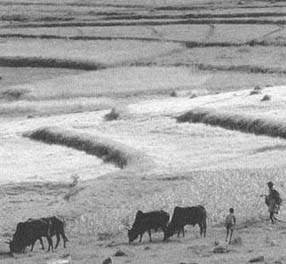
Hillside terraces
Traditionally, hillside terraces have been built in several densely-populated mountainous countries of Africa, Asia and Latin America. In the course of social change, however, these terraces have fallen increasingly into a state of neglect. They can reduce erosion effectively. In areas of low precipitation, they also retain scarce rainwater (allowing water harvesting). Building terraces is labour-intensive, however, and requires heavy investment. The terraces also need to be constantly maintained, and land is lost. Unless accompanied by soil amelioration measures, terracing generates barely any increase in yields. Its acceptance is therefore usually low.
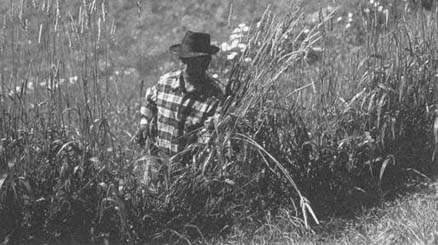
Grass strips
This method has been developed in several Andean countries. If grass strips perpendicular to the slope are left in place when ploughing, the earth carried away by rainfall is accumulated. In the course of time this results in terrace formation, which effectively prevents further erosion. This method does not require any additional labour, and the amount of land lost remains small. The grass on the strips can also be harvested. Acceptance is therefore usually high.
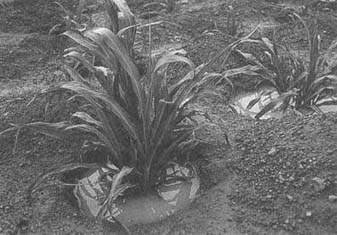
Tassa or Za�
Tassa or Za�, a traditional method in the Sahel region, are planting holes designed to suit conditions in dry zones. Rainwater is collected in them, enabling crops to survive prolonged dry periods. The application of organic fertilisers or covering with mulch matter improves water storage, and reduces losses. Using this method, even stony areas with little soil can be utilised for agriculture. Despite the high labour requirement, this method is still being employed, and has even been further disseminated within the scope of development projects.

Direct planting
Traditionally, this method has been applied in slash-and-burn agriculture. After burning, the soil is loose and weed-free, allowing direct planting. In permanent agriculture, the fallow is replaced by green manure, and the soil permanently covered with plant remains and harvest residues. The seed is sown directly through the cover into the soil, using special implements. Direct planting protects the soil effectively against erosion, reduces evaporation and promotes soil life. In Latin America, direct planting has been rapidly disseminated in recent years.
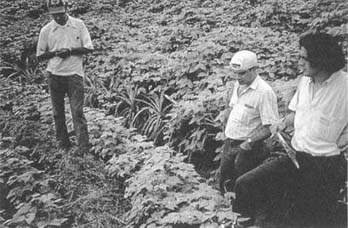
Labranza m�nima
Many small farms in Central America apply this method. The soil is turned only in small strips. The existing vegetation between the strips remains in place. Other measures applied in addition are crop rotation with leguminous crops, as well as compost and fertiliser application, and ground-covering with mulch. This prevents soil degradation, and promotes productivity. However, labranza m�nima requires sufficient land for the vegetation strips. A great deal of manual labour is also required. The method is therefore appropriate primarily for intensively managed small farms with high income at sloping sites.
|
| ||||||||||||||||||||||||||||||||||||||||||||||||||||||||
Promotion Strategies for Sustainable Soil Management
A large selection of proven strategies to promote sustainable soil management are available, drawn from the many years of experience acquired by development cooperation projects. Usually it is not purely technical solutions which are sought; the aim is rather to support crop farmers and pastoralists in helping themselves, through participatory methods. Project work also increasingly embraces not only the immediate farm context, but also the wider political, economic and social environment. This is because soil degradation is caused by a complex interaction of different factors. The earlier, technical approach to production is therefore inadequate, and has been replaced by holistic strategies. Consequently, there are no blueprints. The measures are geared to the respective local and regional conditions, and the actors’ interests.

Figure
Utilising soils sustainably but more intensively
Crop farmers and pastoralists are first and foremost producers, and not nature conservationists. Soil protection is not a production target, nor is it a profitable undertaking. Consequently, soil protection must be combined with additional measures to increase the agricultural productivity of the land. Only then do soil protection measures also become attractive to farmers.
Creating incentives and additional income
Soil protection means expenditure. The costs incurred by farms should be offset by profits than can be realised in the short term. One possibility is the cultivation of high-value products, such as vegetables or fruit. Furthermore, macroeconomic fiscal instruments such as tax and price policy, can make sustainable soil management more competitive. Off-farm jobs and income reduce the pressure on soil resources. At the same time, capital is formed for investment in soil conservation.
Creating conducive frameworks
Whether and how much labour and capital a farm invests in maintaining soil fertility is dependent on various factors. Farm management decisions are determined to a very large extent by factors extraneous to the farm itself, i.e. the economic, social, legal and policy frameworks. The key factors here are secure use rights, access to purchasing and sales markets, access to credits, and access to information. Whilst it is not the place of development cooperation to alter frameworks within a partner country, it can deliver advisory services to governments in that connection.
Promoting research and technological development
The process of constant change in the environment, and in economic and social conditions, creates new problems and calls for fresh solutions. Development cooperation therefore promotes international and national agricultural research, also in the field of sustainable land use. Particular importance is attached to land-user participation in the development of technologies. Both the planning of trials, and the evaluation of results, are conducted jointly with farmers. This is designed to ensure that research really does address the land users’ problems, and that those land users later go on to apply the developed technologies.

Figure
Strengthening land users’ self-responsibility
This can take place in several ways. The decentralisation of state structures, and thus the transfer of decision-making to the regional and local levels, gives land users more scope to influence decisions that affect them. One example of this is land-use planning at the local level. Another is projects being planned jointly with land users, to ensure that objectives correspond to their needs. Promoted projects aim to stimulate and help enable land users to help themselves.
Fostering land users’ management capabilities
Most new technologies place heavier demands on land users’ management capabilities. This applies just as much to the cultivation of green manures as to the efficient use of mineral fertilisers, or the maintenance of erosion control measures. It is therefore necessary that farmers have easier access to information and extension services.
|
A framework for soil protection Degraded soils are symptomatic of unhealthy general conditions. Yet general conditions can be influenced, and rendered more favourable through appropriate measures. Such measures can generate scope for action which enables land users to pursue more sustainable land management. Of the numerous factors conducive to sustainable soil management, some of the most important are: · Inputs such as agricultural implements, fertilisers and seed are available on acceptable terms. · The industrialised countries refrain from subsidising the export of food surpluses. |

Figure
|
| ||||||||||||||||||||||||||||||||||||||||||||||||||||||||
Soil - A Key Component of Development Cooperation
Sustainable land use is a focal point of development cooperation the world over cutting across different cultures, societies and cropping systems. The theme embraces highly diverse climatic and ecological conditions, ranging from semidesert to tropical rainforest. Focal regions are selected on the basis of ecological, social and economic criteria. Sustainable land use is always closely linked to other development-policy tasks such as rural development, poverty alleviation, food security or women in development.

Figure

Figure
Since the drought disasters of the seventies, the Sahel region has been a focus of development cooperation. One key objective has been to stabilise farming systems, and combat desertification. For example, attempts are made to tackle the root causes of poverty and hunger in countries such as Senegal, Mali, Burkina Faso, Niger and Chad.

Figure
Further focuses are the upland regions of East Africa, South-East Asia and the Andes of Latin America. In these regions, high population density and crop farming on steep slopes cause soil erosion and other forms of soil degradation. In these mostly poorly accessible regions, natural resource management is accompanied by equally important measures of rural development.

Figure
Development cooperation can also be appropriate in areas with fertile soils, however. A number of tropical and subtropical regions possess very good potentials for crop and animal farming. Yet high precipitation and temperatures cause rapid soil degradation. Maintaining fertile soils is an important aim of national and international development plans, since these soils can generate high yields if managed intensively and correctly.

Figure
|
| ||||||||||||||||||||||||||||||||||||||||||||||||||||||||
The Future
What does the future hold for the soil? For how long will the pressure on soil resources continue to increase? For how much longer will we be witnesses to the vicious circle of natural resource destruction, and the poverty and undernourishment of such large numbers of people? Will technical progress help solve the problems? Will it be possible, using biotechnology, to breed crop varieties that can still generate adequate yields at poor, degraded sites?
At present it remains extremely difficult to provide concrete answers to most of these questions. However, one fact will remain valid for a very long time to come: Ultimately, farmers themselves will decide whether measures produce positive, sustainable results. Will the terraces shown below continue to be levelled, or will they remain in place? This will depend largely on whether the labour required to maintain them is a profitable investment.
Growing conflicts over scarce resources
The strategic significance of soil will increase, and with it the risk of armed conflicts. Ominous signs of such developments are the wars in the Horn of Africa, and Central Africa (Rwanda, Burundi). Donor and partner countries will therefore need to make even greater efforts to protect scarce resources and increase soil productivity.
Soil protection through technical progress
Technical innovations enable farmers to till the soil on a more ecologically sound basis, and thus maintain and increase fertility. These innovations include conservation tillage or agriculture especially no - and minimum tillage technologies. These technologies will be adopted in primarily in situations where high labour and fuel costs make a reduction in production costs, coupled with the protection of soil resources, a sound economic option. They will also be adopted in regions where water causes soil erosion, and in semi-arid zones where low precipitation needs to be efficiently harnessed.
In dry regions, the use of organic substrates offers a further option for reducing wind erosion, and utilising low precipitation efficiently.
It is hoped that genetic engineering will deliver the means to breed varieties better adapted to acidic and nutrient-poor soils which are also drought-resistant.

Figure
Soil protection through more intensive utilisation
In the vicinity of expanding urban centres, the value of land is appreciating, thus making investment in the maintenance of soil productivity profitable. Easy access to inputs, and the utilisation of solid waste, or dung from chicken coops or pigsties, enable farmers to improve soil fertility. The harvested produce can be sold easily and at attractive prices on local consumer markets. Income generated through off-farm activity allows farmers to make investments in agriculture.
By contrast, in many densely-populated upland regions today the rising demand for land is already causing animal farming to diminish. This is leading to the collapse of traditional cropping systems, due to the growing scarcity of animal traction and farm manure. The result is a transition to a labour-intensive, horticulture-like form of small farming.

Figure
A return to traditional methods
In recent years, the failure of many imported methods has led to a return to traditional methods of soil conservation. This tendency will continue to increase, especially in marginal areas. The aim is not to reintroduce the old, but to blend old knowledge with new expertise, thus adapting it to the changed conditions. In arid zones, traditional methods can be revived and utilised more broadly for efficient water management (water harvesting) and the regeneration of degraded soils. In a number of areas in the Sahel region, such practices are already being successfully applied.
International soil convention
Soil is on the way to being declared an international protected good, analogous to the atmosphere and biodiversity. Governments are pledging to manage soils sustainably. Frameworks conducive to that end are being put in place. This applies both to soils used for forestry and agricultural purposes, and to infrastructure measures involving residential, industrial and traffic infrastructure. The “Convention to Combat Desertification” is just a first step in this direction, but soils in the humid tropics as well as in temperate climates needs to be protected, too.

Figure
|
| ||||||||||||||||||||||||||||||||||||||||||||||||||||||||
Information and Contacts
Addresses of projects focusing on the sustainable management of tropical soils, and GTZ and SDC contact persons.
Argentina
Control de la Desertificaci�n en la
Patagonia
Pedro Willi (contact person)
Casilla de Correo 277
8400 San
Carlos de Bariloche
Prov. Rio Negro
Argentina
Phone: +54-944-281
41
Fax: +54-944-281 41
E-mail: GTZBARI@intact.edu.ar
Burkina Faso
Patecore
Wolfgang von Reitzenstein
(contact person) s/c GTZ-SAP
B.P. 1485
Ouagadougou 01
Burkina
Faso
Phone: +226-45 71 43
Fax: +226-30 1 3 94
E-mail:
GTZ-Burkina@bf.gtz.de
Programme Sahel Burkinab�
PSB - Dori
Dr.
Hermann Grell (contact person) s/c GTZ-SAP
B.P. 1485
Ouagadougou
01
Burkina Faso
Phone: +22631 1672/73
Fax: +22631 0873
E-mail:
GTZ-Burkina@bf.gtz.de
Chad
Am�nagement des Oueds
Ouaddai/Biltine
Gerrit Brummelman (contact person)
GTZ-SAP
B.P.
99
Ab�ch�.
Chad
Phone: +235-69 81 12
Fax: +235-6981 78
E-mail:
gtz-pao@intnet.td
Colombia
Control de Erosi�n de la Cuenca del Rio
Checua
Georg Birbaumer (contact person)
Apartado A�reo
89.836
Bogota
Colombia
Phone: +57 1 281 35 06
Fax: +57 1
2749628
E-mail: CHECUA@impsat.net.co
Niger
Projet de D�veloppement Rural de Tahoua
(PDRT)
Hans Sagebiel (contact person)
B.P. 57
Tahoua
Niger
Phone:
+227 61 02 48/61 05 24
Fax: +227 61 02 31
E-mail: GTZ-Niger@ne.gtz.de
Paraguay
Proyecto Conservaci�n de Suelos
Rolf
Derpsch (contact person)
GTZ-Servicio Administraci�n de Proyectos
Adela
Speratti 1541 c/Av. Per�
C.C 1859
Asunci�n
Paraguay
Phone: +595 21
20 31 76 (GTZ-B�ro)
Fax: +595 21 21 38 86 (GTZ-B�ro)
E-mail:
RDerpsch@quanta.com.py
Senegal
GTZ-Gestion de Ressources Naturelles, Sine
Saloum
B.P. 205
Kaolack
Senegal
Phone: +221 94 13 781/94 13
800
Fax: +221 94 13 777
E-mail: GTZ-Senegal@sn.gtz.de
Tanzania
Soil Erosion Control and Agroforestry Project
(SECAP)
Luis Waldm�ller (contact person)
P.O. Box
72
Lusotho
Tanzania
Phone: GTZ-B�ro: 00255-51-1 1 65 04
E-Mail:
SECAP@ secap.africaonline.co.tz
Contact Persons at GTZ Head Office
GTZ
P.O. Box 5180
65726 Eschborn/Germany
E-mail:
forename.surname@gtz.de
https://www.gtz.de
Dr. Helmut Eger, Division 4547
sector: land-use
planning
region: Latin America
Karl-Peter Kirsch-Jung, Division 4547
sector:
desertification
region: Sahel
Dr. Michael Bosch, Division 4542
sector: agricultural
research
Dr. Kurt Steiner
Sustainable Soil Management
Project
https://www.gtz.de/soil-management
Swiss Coordination Offices with programs in soil management
Nepal
SDC-Coordination Office
P.O. Box 1
13
Kathmandu
Tel: +9771-524927
Fax: +9771-525358
E-mail:
kathmandu@sdc.net
Mali
Coop�ration Suisse
B.P. 2386
Bamako
Tel:
+223-21 32 05
Fax: +22321 81 79
E-mail: bamako@sdc.net
Niger
Coop�ration Suisse
B.P. 728
Niamey
Tel:
+227-73 39 16
Fax: +227-73 33 13
E-mail: niamey@sdc.net
Bolivia
COSUDE
Casilla 4679
La Paz
Tel:
+5912-34 01 68
Fax: +5912-37 50 42
E-mail: lapaz@sdc.net
Nicaragua
COSUDE
Apartado 166
De la Clinica las
Palmas
1c, abajo, mano izquierda
Managua
Tel: +505-26630 10
Fax:
+505-266 66 97
E-mail: managua@sdc.net
Contact Persons at SDC HEAD Office
Direktion f�r Entwicklung und
Zusammenarbeit
(DEZA)
Freiburgstrasse 1 30
CH-3003 Bern
E-mail:
forename.surname@deza.admin.ch
https://www.sdc-gov.ch
Paul Egger
sector: agricultural research
Dr. Peter Bieler
sector: land management, plant
protection,
extension
region: Africa
SDC Competence Centre for Sustainable Land Management:
Center
for Development and Environment (CDE)
Geographisches Institut
Universit�t
Bern
Hallerstrasse 12
CH-3012
Bern