 |
| ||||||||||||||||||||||||||||||||||||||||||||||||||||||||||||||||||||||||
TRAINING FOR DEVELOPMENT
Peace Corps
INFORMATION COLLECTION & EXCHANGE
TRAINING MANUAL NO. T-34
INFORMATION COLLECTION & EXCHANGE
Peace Corps' Information Collection & Exchange (ICE) was established so that the strategies and technologies developed by Peace Corps Volunteers, their co-workers. and their counterparts could be made available to the wide range of development organizations and individual workers who might find them useful. Training guides, curricula. lesson plans, project reports, manuals and other Peace Corps-generated materials developed in the field are collected and reviewed. Some are reprinted "as is!"; others provide a source of field based information for the production of manuals or for research in Particular program areas. Materials that you submit to ICE thus become part of the Peace Corps' larger contribution to development.
Information about ICE publications and services is available through:
|
The Peace Corps Internet Web Site address: https://www.peacecorps.gov Please note the new Peace Corps Mailing Address from July 1998 on is: ICE/ Peace Corps |
Add your experience to the ICE Resource Center. Send materials that you have prepared so that we can share them with others working in the development field. Your technical insights serve as the basis for the generation of ICE manuals, reprints, and resource packets, and also ensure that ICE is providing the most up-to-date, innovative problem-solving techniques and information available to you and your fellow development workers.
Peace Corps
A Training Manual on ORAL REHYDRATION THERAPY AND THE CONTROL OF DIARRHEAL DISEASES
Prepared for Peace Corps by
CHP INTERNATIONAL
Mari Clark
Mary Harvey
Kathleen
Nest
Marsha WIIburn
Oak Park, Illinois March, 1985
A Training Manual on
ORAL REHYDRATION THERAPY AND THE CONTROL
OF DIARRHEAL DISEASES
March 1985
Prepared for the Peace Corps by CHP International Inc. Contract No. PC-284-1011
Funded by the Office of Health Agency For International Development PASA No. BST-539-P-PC4042-00
This manual may be reproduced and/or translated in part or in full without payment or royalty. Please give Standard acknowledgement.
Available through:
|
The Peace Corps Internet Web Site address: https://www.peacecorps.gov Please note the new Peace Corps Mailing Address from July 1998 on is: ICE/ Peace Corps |
|
| ||||||||||||||||||||||||||||||||||||||||||||||||||||||||||||||||||||||||
Acknowledgements
It is only with the help and support of many people that we have been able to obtain the most current information on Diarrheal Disease Control programs, in particular Oral Rehydration Therapy. The authors gratefully acknowledge the following individuals who provided invaluable information, suggestions and critical comments:
Claudette Kaba - Health Specialist, Office of Training and Program Support (OTAPS), Peace Corps Washington
Colleen Conroy - OCCD Project Director, OTAPS, Peace Corps Washington
Robert Clay - Health Advisor, AID Office of Health
Carl Kendall - Health Advisor, AID Office of Health
Robert Hogan - Program Management Officer, WHO Diarrheal Disease Control Program
Eugenia Eng - Assistant Professor, University of North Carolina, School of Public Health at Chapel Hill
Kathy Parker - Health Education Specialist, International Health Program Office (IHPO), Centers for Disease Control (CDC)
Melinda Moore - Medical Epidemiologist, IHPO, CDC
CHP
International Staff
Special thanks are extended to the individuals at the following agencies that provided information, references, materials and visual aids:
Agency for International Development (AID), Offices of
Health
Academy for Educational Development (AED)
Program for International
Training in Health (INTRAH)
Pan American Health Organization
(PAHO)
Program for the Introduction of Contraceptive Technology
(PIACT)
Technologies for Primary Health Care (PRITECH)
United Nations
International Children's Education Fund (UNICEF)
Water and Sanitation for
Health Project (WASH)
World Health Organization (WHO)
Finally, and perhaps most importantly, we extend our sincere thanks to the Peace Corps Washington and APCD Staff, the trainers, and Volunteers in the Philippines, Nepal, Gabon, and Senegal who planned and participated in the field testing of the ORT Training Manual and who provided relevant feedback that we incorporated in the final writing of this manual:
Paulette Chapponlere - Consultant Trainer, Peace Corps,
Hal Collantes - ORT and Health Project Director, Peace Corps, Philippine
Pape Gage - Consultant Trainer, Peace Corps
Tom Leonhardt - Consultant Trainer, Peace Corps,
Suzanne Plopper - Consultant Trainer, Peace Corps
Sanu Kessari - Senior Administrator, Nursing Division, Ministry of Health, Nepal
Harl Pradan - Lecturer in Health Education, Institute of Medicine, Nepal
Padma Raj Rajmandari - Chlef, Training Section, Integrated Community Health Services Development Project, Ministry of Health, Nepal
Chiz Shrestha - Trainer/Consultant, Peace Corps, Nepal
Chiranjvl Thapa - Chief, Health Education Section Deportment Ministry of Health, Nepal
Phyllis Jones - ORT Program Technician, OTAPS, Washington
We hope that the efforts of everyone who participated in the development and testing of this manual and to those who will use it in the future, will lead toward the goal, as stated by Mr. M. Peter McPherson at the International Conference on Oral Rehydration Therapy, "of applying a simple and effective technology to one of the scourges of mankind which is holding tenaciously to societies in the developing countries of the world".
|
| ||||||||||||||||||||||||||||||||||||||||||||||||||||||||||||||||||||||||
Introduction
An estimated 500 million children in the developing world suffer from diarrhea three or four times a year. These frequent bouts of diarrhea aggravate malnourishment, increase health care costs, undermine the mental as well as physical development of the children affected, and place a greater burden on the parents and siblings who care for them. One out of every twenty children born into the developing world dies before reaching the age of five from dehydration resulting from diarrhea. The majority of these 5 million dehydration deaths could be prevented by the use of oral rehydration therapy (ORT), a relatively inexpensive solution that can be given in the home.
During the International Conference on Oral Rehydration Therapy (ICORT) in June 1983, top government officials and heads of mayor international health organizations made commitments to increase public access to oral rehydration therapy. One outcome of this meeting was an agreement between the United States Agency for International Development and the United States Peace Corps Washington Headquarters to Involve Peace Corps Volunteers in the promotion and Implementation of Oral Rehydration Therapy worldwide.
The Oral Rehydration Therapy Initiative, a collaborative effort between Peace Corps and AID aims to reduce child morbidity and mortality from diarrhea by promoting ORT at the village level.
The ORT Training Manual was developed to support this initiative with a generic training model designed to be adapted to country specific conditions and needs. The manual is intended for use in inservice training of Peace Corps Volunteers and their Counterparts, and can be adapted for preservice Peace Corps training, to develop the basic knowledge and skills in the broad areas of:
· Prevention and control of diarrheal diseases (CDD) in the context of primary health care activities.· Use of oral rehydration therapy (ORT) on a widespread basis in rural communities.
· Identification and referral of dehydration cases.
· Improvement of child nutrition through promotion of breastfeeding and nutritional foods during and after diarrhea.
· Health education project planning, implementation monitoring and evaluation with ORT and CDD.
If Volunteers and Counterparts will be working heavily in dehydration assessment and treatment, the training curriculum should be adapted to provide participants with more opportunities to practice skills in the community and local clinic under the supervision of qualified health workers. Sessions 5, 6, and 7 can easily be expanded to include additional hours for observation and hands-on practice with actual cases of dehydration.
Drafts of different parts of this training design were pretested in the Philippines, Nepal, Senegal, Gabon and Mauritania and the outcomes incorporated into this final draft. Guidance with regard to the technical content of the manual was provided by the Office of Health, United States Agency for International Development, the Centers for Disease Control and the World Health Organization.
|
| ||||||||||||||||||||||||||||||||||||||||||||||||||||||||||||||||||||||||
Approach to training
The approach to training used in this manual is based on principles of nonformal education and adult learning. The sessions provide a balance between structured learning and independent discovery.
working assumption is that training is a creative process which requires that participants take an active role in identifying their own needs and in implementing session activities. Trainers are expected to identify and use the talents and resources within the group and community and to practice skills that help to motivate others toward self-reliance.
The goal of the training is for participants to develop a working knowledge of ORT/CDD, and skills for applying that knowledge in a meaningful way, particularly in health education activities and training of other community health workers. Both the goal and the approach follow from the Peace Corps philosophy of providing a role model and working with others rather than for them.
The ORT Manual can be considered a modified "competency-based" training design. It aims to help Trainees attain and demonstrate knowledge and skills (I.e. competencies) in ORT and CDD that they can apply in the community. Competencies are expressed in behavioral training objectives which appear at the beginning of each module. These objectives were developed based on review and analysis of the tasks performed by Volunteers working in ORT and CDD in the context of Primary Health Care. Within modules, each session includes one to four learning objectives. For the purposes of this manual, a learning objective describes what the Trainee does along the way toward accomplishing the terminal behavioral objective.
At the beginning of the training, participants should examine all of the behavioral objectives to be achieved by the end. Session 1 includes an activity in which trainers and Trainees examine, clarify and modify training objectives and design to meet group expectations.
Within sessions, activities follow the experiential learning cycle. This learning model provides an effective way for Trainees to gain competencies and focuses on learner-centered adult education, emphasizing in particular:
- the trainer as facilitator of learning (rather than provider of information).- variety of educational methods to meet individual learning needs.
- learning goals, objectives, and activities which relate Trainees' previous knowledge and skills to those acquired during training, and application to the Job.
- Trainees' taking responsibility for their own learning.
- active participation of Trainees'
Experiential learning occurs when a person' (a) engages in an activity, (b) reviews the activity critically, (c) derives insight from the analysis, and (d) applies the result in a practical situation. When adapting the sessions from this manual to tit specific training situations, we recommend retaining all four of these steps. For example, if a session needs to be shortened, the trainer should modify the steps such that the Trainees' still experience, process, generalize and apply' cutting out the application step to shorten the session time is not a viable modification.
Some techniques used to actively involve learners are:
|
demonstration |
role play |
|
large group discussion |
simulation |
|
small group tasks |
case studies |
|
lecturettes |
slide shows |
|
community visits and interviews |
readings |
|
storytelling |
skills practice |
In facilitating learning, the trainer should create "learning environments" which are stimulating, relevant and effective. To the extent possible, the local community and resources should be utilized in conducting training.
For a fuller description of the experiential learning model and other valuable information on training design and delivery, please refer to A Trainers Resource Guide, Peace Corps and Session 19, Designing and Evaluating Health Education Sessions.
Basic Assumptions of the Manual
The ORT Manual reflects assumptions about the PCV as a development worker adapted from Peace Corps, The Role of the Volunteer in Development Manual:
Self Sufficiency:
Peace Corps Volunteers help others gain increasing self sufficiency.
Skill Transfer and Role Model:
PCVs are assigned a role in which the skills they possess are transferred to others, enabling local people to continue to solve problems.
Training as the Example:
We learn to train others the way we are trained. The sessions in this manual are designed to promote critical thinking, personal responsibility, active problem solving, and thorough analysis of information.
Problem Solving and Project Management
Volunteers are required to set goals, define tasks, and plan their day by day activities. Volunteers who are able to solve problems and manage themselves, possess a skill directly related to development work.
Gathering and Using Information
How information is gathered, sorted, filtered, verified, and put to use is critical to the process of understanding and defining development problems.
Role Definition:
Throughout the manual, focus is kept on the Volunteer's role in relation to ORT and CDD in the context of primary health care and development.
Organization of the ORT Training Manual
The ORT Manual is arranged in sections, called modules, which focus on interrelated health education and technical content areas. Each module begins with a set of behavioral objectives and contains a sequence of sessions which address the specific content area. The modular format allows the trainer to combine various modules and sessions as needed given training objectives, time limitations, and other program considerations.
It is important to note that these modules are not complete in themselves, They are based on modules in the Technical Health Training
Manual (THTM) and cross referenced to resources in the THTM. The cross-referencing feature is particularly useful in pre-service training and in providing elementary materials for Counterparts who may lack background in certain areas. (See "Using and Adapting the ORT Manual..)
The modules are:
1. Climate Setting and Assessment
2. Diarrhea, Dehydration and Rehydration
3. Diarrhea and Nutrition
4. Working with the Health System
5. Working with the Community
6. Community Health Education.
All sessions in the manual follow a consistent format which is briefly explained below. Sessions often have several purposes. For example, the activities may provide skill development on ORT and also provide participants with practice in nonformal education methods and materials development for teaching mothers, children and health workers about ORT. It is important for the trainer to study and understand the multipurpose design of a session before conducting it.
Session Format
Session Number
TITLE
TOTAL TIME
The total time scheduled for the session.
OVERVIEW
A brief statement on how the session relates to the overall training program, the activities in the session, and the expected learning outcomes.
OBJECTIVES
Statements of what is expected of participants in order to successfully complete the training course
RESOURCES
Printed materials needed for the session or useful for background information and available to Peace Corps stats and Volunteers through ICE
Handouts follow most sessions. Each handout is coded to the corresponding session and paginated Copies of handouts should be made in advance for distribution to trainees as specified in the session.
Trainer Attachments are also coded and follow some sessions. These are intended as resources for the trainer and are sometimes to be shared with participants who help with session preparation.
MATERIALS
Supplies and tools needed for the session.
PROCEDURE
A series of steps to follow in order to meet the objectives of the session.
Trainer Note
Notes to further explain the activities of the session. These include such things as alternatives, scheduling considerations, suggestions and further directions to the trainer.
Allowance is made for break time in each session. As the nodules and sessions ate modified, the trainer should always work in 5 minutes of break time for each hour of training and should decide when the actual breaks occur.
The nine-day, six-day, and four-day training schedules shown on the following pages indicate overall program design and suggested sequence of sessions for varying degrees of ORT/COD material mastery. All three schedules assume that participants will undertake ORT/ CDD activities in their host communities after the workshop so that they will further develop the knowledge and skills introduced in the training The schedules should therefore be used as references for developing workshops which meet the needs of particular training situations, but should not be perceived as completely sufficient without follow-up and the opportunity to use the skills taught.

SAMPLE FOUR-DAY SCHEDULE

SAMPLE SIX-DAY SCHEDULE

SAMPLE NINE-DAY SCHEDULE

SAMPLE NINE-DAY SCHEDULE (CONT. )
Use and Adaptation of the Manual
The manual was prepared as a model for design of training sessions which promote a logical flow of learning. It is not intended to be used without first adapting sessions to focus on country-specific CDD-related health problems and the learning needs of Trainees in their particular assignments. Thus, for example, role plays, character settings, problem situations and other aspects of training activities must be modified to fit local conditions. Information on National CDD policies, programs, and national and regional incidence of diarrhea should be provided during the training as well as a glossary of works and vocabulary for discussing ORT and other aspects of CDO in the local language.
In preparation for adapting the manual to meet specific training needs, the training should:
1. Identify host country health problems, needs and target groups to be addressed during training.
2. Collect country-specific health data and other relevant information, particularly for diarrheal diseases,
3. Determine the primary and secondary health functions which the Volunteer is being trained to perform (preferably utilizing a task analysis).
4. Determine the average level of health knowledge and skills of the group to be trained.
5. Outline desired training goals, objectives, content, activities and evaluation plan.
6. Determine resource needs and availability of resources (e.g. personnel, materials, facilities, and time).
7. Review existing training manuals, designs and materials to determine their adequacy for meeting training objectives.
8. Select, sequence, end adapt specific sessions to be used in the program.
9. Add to the training design:
- opening and closing activities (e.g. Ice breakers, end-of-training dinner).
- climate-setting (e.g. sharing expectations, setting the agenda).
- group process (e.g. feedback sessions).
10. Hake arrangements for participants to practice assessment of nutritional status and stages of dehydration under the supervision of a qualified healthworker after the workshop.
Point 10 requires special emphasis. During the short period of the workshop it is impossible for participants to master skills such as assessment of dehydration and nutritional assessment. Supervised practice with real children is an important part of the mastery of the ORT course material.
These steps are fairly standard for the design of any training program and can serve as a general guide. For a more detailed description of training design and organization, please read "The Trainers' Resource Guide" Peace Corps (ICE).
The following subsections provide ideas for how the manual can be adapted to suit different training situations.
Adaptations Based on Trainee Needs and Experience
The more skill, knowledge, and practical experience participants bring, the more effective and enriching are the small group activities that allow them to pool knowledge and resources to teach each other. The experiential nature of the sessions allows inservice Volunteers and Counterparts to draw on their experiences in the field. They begin with what they already know and apply it to the new learning task. The trainer can use the pretraining quesitonnaires, (Trainer Attachments 1A and 1B in Session 1) to assess entry level knowledge and skills and to become familiar with the Trainees' specific needs and expectations.
To assure that training activities address the practical needs and working conditions of the participants ask them to bring to the workshop: local utensils, treatments for diarrhea and visual aids they use.
Once the training is underway, every effort should be made to adapt training activities to provide experiences and "hands-on" skill practice in the local community (For example: participants can pretest visual aids with members of the surrounding community instead of among themselves in the classroom.)
When generalists and specialists or Trainees' with different Jobs (e.g. Health, water and sanitation, science teacher) are trained together, the trainer should modify sessions so that participants have opportunities to share their different skills and experiences. Through well-organized peer-learning and small group discussions, specialists can contribute their expertise to the generalist skill acquisition, while generalists can help broaden the community development perspective of specialists. Throughout the ORT Manual, specific reference is made to activities which represent opportunities for peer teaching.
Adaptations For Preservice Training Workshops Prior to preservice workshops, trainers can use questionnaires and interviews to identify technical skill levels, perceived needs and current project descriptions of the Trainees scheduled to participate.
During the design stage, the trainer should adjust the sessions so that the "starting point" is the PCV's recent training and U.S. experience. When possible, first and second year Volunteers can be invited to sessions to share experiences with the Trainees.
This manual cross references The Technical Health Training Manual (THTM) to make it easier for the Trainer to incorporate ORT/CDD sessions in a preservice training program. The THTM provides more elementary background in Community Organization and Analysis, and Health Education, it is assumed that participants in training programs using this manual have already developed and practiced skills la community analysis, community organization and health education, and the language spoken in their community for presence training. Participants may require assistance in the local language(s) from the language instructors and first and second year Volunteers to carry out activities gathering information in the community. The Trainer Notes and Resource Sections provide ample materials and suggestions for providing more elementary material or more specialized training.
Joint Volunteer-Counterpart Training
Providing inservice training to both Volunteers and their host-country Counterparts is an ideal training scenario for many Peace Corps programs. Such workshops, however, may present problems having to do with differences in culture, language, teaching and learning styles, and familiarity with the technical subject matter. It is particularly important to learn as much about the Trainees as possible in this situation so that the training design can be adjusted adequately and arrangements made for translation of handouts and charts.
Workshops for Volunteers and Counterparts should include a number of joint sessions in the areas of information-gathering, project planning, and skill practice end separate concurrent sessions in areas of "hard" technical information and theory. The training design may need to be modified for the Counterparts' sessions.
In planning for joint Volunteer-Counterpart training the following is suggested:
1. If possible, select a trainer who can speak the local language. If this is not feasible, have a bilingual/bicultural resource person assist in workshop design.
2. Use the services of a professional translator if the training will be conducted in two languages. Do not expect the trainer to have the skills of a translator.
3. Allow extra time during the training sessions for translation.
4. Encourage both Counterparts and Volunteers to increase their understanding of the way the other groups learn by working together in the training program. This is also a good opportunity for Volunteers to increase their vocabulary and skill in the local language.
5. Prepare both groups to be patient and with some repetition and translation during the training.
6. Prepare a vocabulary list of local words needed to talk about ORT and CDD.
Adaptations Based on the Size of the Training Group
The session and activities in tints manual are designed to accommodate training groups of approximately 20 participants. If you anticipate a significantly larger number of participants, consider dividing them into two subgroups, each with its own technical trainer. If the larger group cannot be broken into smaller groups, time allotments for many of the activities will have to be exceeded. This is especially true in sessions which include small group tasks followed by reporting back to the large group.
Adaptations Based on Previous Use of the Manual
The technical and educational information contained in this manual is current at the time of this writing. However, advancing technology means modification will be needed to keep the manual up-to-date. Trainers are encouraged to write notes in the margins of the manual where new information applies or on activity was changed and improved. Also note changes in the time required to conduct the sessions as the session times listed are only estimates.
Adaptations Based On Available Materials and Equipment
It is best to use materials and equipment during the training that participants will have available in their host communities. They may have access to more or less variety of materials and equipment than suggested in the model and sessions should be modified accordingly. For example, you might want to use a film instead of a reading or discussion of a picture because particular health films are available in the country. Or you may want to substitute drawings or photographs where slides are suggested if slides are not available. Encourage participants to locate possible sources of materials and equipment from various agencies in the country.
Case studies, examples, stories and pictures will need to be modified to make them more appropriate for the local situation. If the trainer is not an artist, it is possible that someone in the community who has artistic skills would enjoy helping him or her adapt materials or design new ones.
Resources
In order to allow for broad applicability in a variety of countries, the ORT Manual has been written generically and has been drawn from a variety of references. The complete collection of materials used in the sessions is listed in the Bibliography at the end of the manual. The primary technical resources are the Supervisory Skills Modules: Programs for Controlling Diarrheal Diseases and Guidelines for Training Community Health Workers in Nutrition, both from WHO. Technical materials from CDC, AID, WHO, and UNICEF have also served as sources of accurate information and case examples.
Primary resources for Module 5, Community Analysis and Organization and Module 6, Health Education are Community Culture and Care, Helping Health Workers Learn, Bridging the Gap, Teaching and Learning with Visual Aids, and Community Health Education in Developing Countries.
The references, handouts and trainer attachments included with each session should be considered the mayor resources for the actual training. All of these materials are either available to Peace Corps trainers and Volunteers through Information Collection and Exchange (ICE) or are attached to the sessions to which they pertain. ICE also provides an annotated listing of available health publications and an ORT resource packet.
If possible, participants in ORT Training Courses should receive: the ORT Resource Packet, Bridging the Gap, Helping Health Workers Learn and Community Health Education in Developing Countries.
In addition to assembling written materials, the trainer should visit local agencies and groups and international organizations to obtain a variety of visual aids and support materials for use by both trainers and Trainees during the program. Training staff should pay attention to the various items identified in each session under "Materials" and locate these at the beginning of the program. Many people find it helpful to photocopy and compile all of the handouts ahead of time to avoid last minute "crises" in preparations.
A final, but important note on reference materials' in the course of develop tog this manual, extensive review of published data has revealed significant variations in some technical information and recommendations, For example, there are several variations in the "correct" amounts of sugars and salt required for one liter of homemade sugar salt solution. In some cases these variations represent differences in technical perspective and in others, outdated information. As of the final revision of the manual, all technical information is based on the most current and accurate data and guidelines available from WHO and CDC. Great care has be taken to ensure the quality of the technical material included in sessions, handouts, trainer attachments and suggested readings. As with any technical document, however, the content will have to be revised and up-dated in accordance with conclusions drawn from the most recent research.
Trainers and other users of the manual should always check with Peace Corps as well as host country health ministries to revalidate or modify material to ensure that it is consistent with country health policy and programming, particularly in the area of measurements for Oral Rehydration Solutions and the effectiveness of home available solutions.
Staff Preparation
The ORT Manual includes detailed session procedures and explanatory trainer notes for the benefit of seasoned as well as less-experienced trainers; merely following the steps in the sessions, however, does not guarantee a successful program. The training staff who design and conduct the program outlined here should represent a balance of skill and experience in adult training methodology, experiential learning, and technical expertise in the subject matter. The staff should be flexible and able to "let go" so that the participants are encouraged to take an active role in their education,
In addition to trainers' background skills and expertise, program success depends on adequate preparation time. A "training of trainers" workshop should be scheduled before the program, to provide the stuff an opportunity to review the most up-to-date technical content, practice training skills and build a cohesive and supportive team.
During the preparation time, trainers should review and adapt the session designs, prepare lecturettes in their own words, and have a complete sense of exactly what each session is trying to accomplish. If at all possible, trainers should simulate or rehearse sessions in order to anticipate questions and gain a sense of session flow. AT least one member of the training team should have a technical health background. Local health professions can also act as resource persons and present some of the more technical health aspects of the training.
Evaluation
Before dealing with the "how to do it" aspect of evaluation, it is useful to discuss "why do it".
Evaluation is an integral part of every training program and should be designed from the start of planning. It should include an assessment of the conduct of the program (logistic and administrative organization, and presentation of activities) as well as of the outcomes (If the participants have accomplished the objectives). Evaluation is a learning process which allows both trainers and trainers to:
- Test the knowledge and skills acquired during the course;
- Analyze the effectiveness of the activities used;
- Judge the appropriateness of the educational material used;
- Give participants and trainers a chance to express their criticisms and suggestions.
Constant evaluation during training is as important as final evaluation. Comments, criticisms and suggestions can be solicited during periodic meetings, informal conversations at the day's end, or by way of a suggestion box in the conference hall. These inputs aid trainers in modifying the course as the need arises.
Evaluation Tools Included in the Manual
Several methods for assessing Trainee performance and evaluating
the training programs are incorporated into the manual. These include:
-
Pre-assessment forms for Volunteers and Counterparts.
- Behavioral objectives
for each nodule which state in measurable terms what the participants should be
able to do by the end of the segment of training. The trainer can use this to
assess participant performance and identify weaknesses in program contort or
process.
- A pre-test/post-test system which assesses the participants" acquisition of knowledge and, to some extent, attitude change. The pre-test is part of Session 1, General Assessment.- A final evaluation session including an evaluation tore (Session 2).
- Participant-led projects and presentations which assess learning and provide participants with the opportunity to immediately apply and practice what they have learned in a "safe" environment. These education events occur throughout the modules and enable Trainees to demonstrate both technical knowledge of primary health care and teaching skills.
It should be noted that all of these evaluation measures reveal either immediate reactions or changes in participants knowledge skills and attitudes. A more reliable judgement of program effectiveness can only be made in the field where participants perform their daily tasks. Questionnaires, supervisory visits and evaluation meetings, three to six months after the training, are means of gaining greater insight into the utility of the course and future training needs of Volunteers.
For more detailed information on evaluation, please refer to Demystifying Evaluation (Clark and McCaffery) and Helping Health Workers Learn.
|
| ||||||||||||||||||||||||||||||||||||||||||||||||||||||||||||||||||||||||||||||
Oral Rehydration Therapy and the Control of Diarrheal Diseases (Peace Corps, 1985, 566 p.)
Module One: Climate setting and assesment
Session 1 - Diarrhea dialogue: Assessing our knowledge, needs and skills
TOTAL TIME
2 hours
OVERVIEW
Participants in this training course bring different skills, experiences, knowledge and perspectives about diarrhea, oral rehydration and ways to prevent diarrhea. In this opening session, an icebreaker activity sets the climate for friendly group relations and enables individuals to share experiences and interests. Participants assess their knowledge of the training course content through a pretest. They also discuss country and community health problems related to diarrhea. Participants and trainers exchange expectations about the training course and review the training schedule.
OBJECTIVES
· To assess knowledge, skills and experience in diarrheal disease control, particularly oral rehydration therapy.
(Steps 1-4)· To describe the kinds and extent of the country's health problems related to diarrhea.
(Steps 3, 4)· To list expectations about the activities and outcomes of the training course.
(Steps 4, 5)
RESOURCES
Handouts:
- 1A Pre-Test
- 1B Training Objectives
- 1C Training Schedule (to be prepared by the Trainer)
Trainer) Attachment:
- 1A Pretraining Questionnaire for Volunteers
- 1B Pretraining Questionnaire for Counterparts of Trainees
- 1C Trainer) Pretest Guide
- 1D Pretest Answers
Materials
Newsprint, markers, pencils and notebooks for ail participants.
PROCEDURES
Trainer Note
Prior to the training, if communications allow, send out the pre-assessment forms:
- Trainer Attachment 1A (Pretraining Questionnaire for Volunteers).
- Trainer Attachment 1B (Pretraining Questionnaire for Counterparts or Trainees).
Use this information to adapt the training design to fit the needs and interests of the Trainees and the health problems on their worksites.
Send the adapted training schedule and objectives to the participants prior to the training, if possible. Adapt the pretest (Handout 1A) according to the training schedule and background of the participants.
Locate visual aids on ORT and arrange them in the training room before the training course. Also, set up a "library" of primary health care and ORT reference books and articles for use during the training.
Translate the pretest into the appropriate language for Counterparts.
Step 1 (30 Min)
Coming Together
Welcome the group and use an icebreaker to make sure everyone has a chance to greet and learn about each other. Ask each individual to briefly describe their work in their community and to share one recent health-related experience. Ask someone to record these experiences on newsprint. Note any similarities or differences in experiences as a reference for the range of backgrounds they are bringing to the training.
Trainer Note
If there are any counterparts in the group, make sure that the Volunteers who invited them introduce them in a culturally appropriate way. Make sure the group includes them in dialogue and discussion throughout the training.
See the Training of Trainers Module in Combatting Communicable Childhood Diseases Training Manual (Peace Corps) for more ideas about setting the climate for the training. See Helping Health Workers Learn, "Getting off to a Good Start," Chapter 4, pp. 4-14, for ideas about specific icebreaker activities.
The length of time required for the step will vary with the type of icebreaker selected and the number of participants.
Step 2 (10 Min)
Introducing the Pretest
Introduce and distribute Handout 1A (Pretest). Explain that it is an "outline" of the main concepts to be covered in the training on ORT and other aspects of the control of diarrheal diseases.
Ask participants to read through the pretest and allow time for questions. Tell them to write "don't known, whenever they cannot provide the information requested.
Trainer Note
Emphasize that the pretest is intended to enable individuals to assess their own skills and knowledge of diarrhea and ORT. Explain that they will receive the pretest answers at the end of the session in which each particular topic is covered. They can use the pretest as a basis to decide what they want and need to learn about ORT in this training. Suggest that at the end of each session they refer back to the pretest to make sure they have mastered the main concepts and to assess how well the training is covering the important topics.
Emphasize that they will also be learning and practicing skills needed to apply the concepts in community work.
Step 3 (20 min)
Knowledge Assesment
Give participants 20 minute to complete the pretest.
Trainer Note
If some of the Counterparts have difficulty in reading the vocabulary in the pretest, an alternative approach is to ask Volunteers to work together with their Counterparts to answer the questions
Step 4 (45 min)
Diarrhea Dialogue
Have small groups use the pretest experience as a starting point to discuss the following points:
- What local community-based experiences have you had with ORT or other aspects of control and prevention of diarrhea?- Did your experience help you answer the questions in the pretest?
- What are the mayor health problems related to diarrhea in your community?
- What skills are available in the group to deal with the problems?
- Do the topics outlined in the pretest address these problems?
- What do you expect to gain from this training program?
- What hopes and doubts do you have about this training program?
- What rules should we follow for working together as a group?
Ask each group to select one member as recorder. Ask the recorder to Jot down comments, questions, impressions and experiences on newsprint to share later with the entire group. Make it clear the answers to these questions should provide a list of resources, expectations and rules for working together as a group during the rest of this training program.
Trainer Note
See Helping Health Workers Learn, Chapter 4, pages 11-13, for further descriptions of how to discuss hopes, doubts and other important topics in the first few days of training.
While the participants may not have a clear idea of exactly what they want or need to know at this point in the training, the opportunity to discuss their ideas will force them to reflect on their needs and expectations.
For preservice training modify the discussion questions to draw on participants previous experiences and provide information about health problems in the host country.
Step 5 (20 Min)
Sharing Resources and Expectations
Reconvene the group and ask each recorder to report on their group's discussion, using the newsprint they prepared.
Summarize by comparing impressions and experiences focusing on the resources available within the group. Draw on any unique perceptions of Counterparts in the group.
Make a list of participants" expectations about what they want to learn, and working rules for dally life as a group. Discuss these and get a consensus on the working rules and ideas about ways to deal with the doubts.
Trainer Note
Be prepared to provide accurate information about diarrheal disease particularly in the host country.
Examples of "working rules" from previous training courses include:
- starting and finishing sessions on tire
- not smoking in the training room
- stating complaints when they arise; not waiting until the end of the course.
Step 5 (45 min)
Reviewing Objectives
Distribute and discuss Handout 1B (Training Objectives). Explain each objective briefly by relating it to practical tasks in teching the community about ORT. Compare the objectives with the list of expectations for the training.
Distribute Handout 1C, (Training Schedule) and note that participants will be developing a plan for a health education project during this training and designing and conducting one session within the project plan. Encourage them to work with their Counterpart or another Volunteer to identify a topic and begin exchanging ideas for a project.
If necessary, modify the objective and schedule to fit the expectations expressed in the previous step.
Summarize by reviewing the objectives, and schedule. Encourage participants to express what is going well and what needs to be improved throughout the training, particularly during the dally review at the end of each day.
Trainer Note
If some expectations are outside the scope of this training course, discuss why that is the case. Depending on the teaching and language skills of the participants, ask them to help in preparing for and conducting at least one session now so they that have ample time to prepare. Those with technical or health education background may want to facilitate a session on their own. Such opportunities provide practice and feedback on health education skills. Participant facilitated sessions do require more of the Trainer's time because it is important to work with participants, to assure that their sessions will provide the other Trainees). with the experience and information needed to accomplish the objectives of the training course. In training programs where Counterparts are participating, the facilitator also needs good language skills unless the Counterparts speak English.
See Helping Health Workers Learn, Chapter 4, page 14 for additional ideas about forming trainee "committees"
Handout 1A: Pre-test
Name..................................
I. DIARRHEA, DEHYDRATION AND REHYDRATION
1) Name two mayor causes of childhood diarrhea in your country. (Session 3)
2) Explain the primary way diarrheal disease are transmitted. (Session 3)
3) List four health practices that would prevent and/or control the spread of diarrhea. (Session 3)
4) Cite four signs of severe dehydration. (Session 4)
5) List the two most important things to do when a child has some dehydration. (Session 5)
6) Write the recipe for preparing home made sugar-salt solution. (Session 5)
7) List the two ingredients in ORS packets that are usually not found in other rehydration solutions and explain what purpose each of these ingredients serve. (Session 5)
II. NUTRITION AND DIARRHEA
1) Describe the appropriate diet for a one year old child during and after diarrhea. (Session 7)
2) Explain the meaning of "the vicious circle" of diarrhea and malnutrition. (Session 7).
3) Describe four signs indicating a child under two is at high risk for malnutrition and illness. (Session 8).
4) List three kinds of anthropometric measures used in growth monitoring. (Session B).
5) Describe four strategies for preventing malnutrition. (Session 9) .
III. WORKING WITH THE HEALTH SYSTEM
1) Explain the host country national recommendations for the use of ORS packets and home-made sugar-salt solution (or rice-flour water) in the treatment of diarrhea and dehydration (Session 10)
2) List two areas in which Peace Corps Volunteers can collaborate with Host Country National and or other international organizations in the implementation of CDD Programs. (Session 11)
3) Describe four tasks involved in monitoring. (Session 12)
4) Describe the host country's diarrheal disease surveillance system. (Session 12)
IV. WORKING WITH THE COMMUNITY
1) Explain two practices that villagers commonly use when their children have diarrhea. (Session 13)
2) Name two things that villagers believe are the causes of diarrhea. (Session 13)
3) State three techniques used to motivate communities in projects to prevent and control diarrhea. (Session 14)
4) Explain why identifying community leaders is an important step in the planning of your health projects. (Session 14)
V. COMMUNITY HEALTH EDUCATION
1) List five items to include in a health education project plan. (Session 15)
2) Cite three reasons for incorporating evaluation in your project plans. (Session 15)
3) List at least five nonformal education techniques that you can use in health education (Session 16)
4) Describe at least three criteria to use when selecting visual aids (Session 17)
5) Explain why it is important to pretest visual aids before using them with a large group. (Session 18)
6) List three reason for adapting visual aids. (Session 18)
7) List the four steps of the experiential learning cycle and give an example illustrating what you would do for each step. (Session 19)
Handout 1B: Training objectives
At the end of this training course, participants will be able to do the following:
· Describe and work in support of National ORT Programs that deal with the control of diarrheal diseases.· Teach and motivate community members to prevent diarrhea through sanitation and personal hygiene.
· Teach health workers to assess stages of dehydration and select the appropriate treatment plans using the WHO chart.
· Detect and refer dehydration cases requiring IV Therapy or other medical care to appropriate health facility.
· Teach mothers and health workers to correctly mix and feed their children two kinds of oral rehydration solution during diarrhea.
· Promote breastfeeding and nutritious feeding during and after diarrhea.
· Identify and work with one community to modify local health practices affecting diarrhea which have the highest priority for change.
· Plan, conduct and evaluate health education session on ORT using appropriate nonformal education techniques and visual aids.
· Monitor the preparation and use of ORT in the home following health education and monitor the prevalence of diarrhea in the community.
Trainer Attachment 1A: Pretraining questionnaire for volunteers
Name: .........................................
Program: .........................................
Site: .........................................
Province/Region: .........................................
Counterpart Name: .........................................
Relationship w/Counterpart (check): .........................................
.........................................1. Supervisor
.........................................2. Co-Worker
.........................................3. Other
(specify):
.........................................
.........................................
Purpose:
The purpose of this questionnaire is to find out the training needs of the PCVs and their familiarity with Oral Rehydration Therapy (ORT) and Health Education. Results will be used in finalizing the design for the Training program.
Instructions:
Please go over the following subject areas by circling the number that best describes your level of understanding or skill now, ranging from Very Insufficient to Very Sufficient

A. CONTENT AREAS FOR ORT/HEALTH ED

CONTENT AREAS FOR ORT/HEALTH ED (Continued)

CONTENT AREAS FOR ORT/HEALTH ED (Continued)
B. Learning Needs
Please write your answers in the space following the question,
1. What are the other skills/knowledge that you have in addition to those listed above:
2. What are your present projects and activities?
3. What problems have you encountered in educating the community about health!
4. What health education skills do you actually use in your work now!
5. What other health education skills do you need to learn and plan to use for the rest of your work in country?
6. What suggestions and comments can you give to make this in-service training most useful for you and your Counterpart?
Thank you for your cooperation. Kindly send this to (Trainer to specify address) together with the questionnaire from your Counterpart (Supervisor and/or co-worker) in this training on or before (Trainer to add date).
Trainer Attachment 1B: Pretraining questionnaire for counterparts
Name: .........................................
Position: .........................................
Site: .........................................
Province/Region: .........................................
Name of your Volunteer: .........................................
Relationship w/Volunteer (check): .........................................
.........................................1. Supervisor
.........................................2. Co-Worker
.........................................3. Other
(specify):
.........................................
.........................................
Purpose:
The main purpose of this questionnaire is to find out the training needs of the participants and their familiarity with oral rehydration therapy (ORT) and health education. Some information on your community's health conditions and the activities of our Volunteers are requested also. These will help make the training design as realistic and applicable as possible. Results will be used in finalizing the design for the Training program.
Instructions:
Please go over the following subject areas by circling the number that best describes your level of understanding or skill now, ranging from Very Insufficient to Very Sufficient

A. CONTENT AREAS FOR ORT/HEALTH ED

CONTENT AREAS FOR ORT/HEALTH ED (Continued)

CONTENT AREAS FOR ORT/HEALTH ED (Continued)
B. Health Problems and Projects
1. What are the leading causes of infant and children under five sickness in your area? List the top five causes in order of incidence
1. .........................................
2.
.........................................
3.
.........................................
4.
.........................................
5.
.........................................
2. What are the five mayor health problems in your areas What are the corresponding causes? (Example; problem is malnutrition; Cause/poverty, lack of health education).
A. Problems
1. .........................................
2.
.........................................
3.
.........................................
4.
.........................................
5.
.........................................
B. Corresponding Causes(s)
......................................... ......................................... ......................................... ......................................... ......................................... ......................................... ......................................... ......................................... ......................................... ......................................... ......................................... ......................................... ......................................... ......................................... ......................................... ......................................... ......................................... ......................................... ......................................... .........................................
3. What are your present programs, projects or activities related to the control and prevention of diarrheal diseases?
4. In which of these activities do you need your Volunteer's support!
Trainer Attachment 1C: Trainer pretest guide
The following 5 categories of topics are the basis for the ORT pretest:
I. Diarrhea, Diarrhea, and rehydration
II. Nutrition and Diarrhea
III. Working With The Health System
IV. Working With The Community
V. Community Health Education
Attached are the answers to the sample pretest (Handout 1A). The sessions in which the answers are addressed are listed on the pretest below in parenthesis for participants" future reference. Use or modify these questions as appropriate for your country. If you develop your own pretest, be sure it is no longer than 35 questions. Distribute it to participants as Handout 1A.
Trainer Attachment 1D: ORT Pretest answer sheet
I. Diarrhea, Dehydration and rehydration
1) These will vary with the county some suggested answers may include, dirty water, contaminated food, food practices, viruses, weaning.
2) Fecal-oral route
3) Use of latrines or proper disposal of excrete
Hand washing before eating and preparing food
Getting and
protecting a safe water source
Keeping foods very cold or very hot to prevent
growth of bacteria and other organisms
4) More than 10 liquid stools per day
No tears
Very fast and weak pulse
No urine for six hours
5) Give ORS
Continue breastfeeding or providing other liquids such as tea, lemon or orange juice, chicken broth etc.
6) Combine 1 teaspoon of salt and 8 teaspoons of sugar in 1 liter of water.
7) Potassium is usually not used in preparing home-made solution. Potassium is important because the body loses this substance and a minimum level is needed for the body to function. Sodium bicarbonate 'or trisodium citrate) is also found in ORS and helps prevents "acidosis", a condition that decreases the dehydrated child's appetite.
II. Nutrition and Diarrhea
1) Appropriate diet for a one year old child with diarrhea is to continue breastfeeding and give the child 1/4 - 1/2 cup of fluid after each loose stool. Give easily digested foods such as boiled rices, eggs and porridge and foods rich in potassium such as bananas or pineapple.
2) "The vicious circle" of diarrhea means that malnourished children appear to suffer more severe episodes of diarrhea than healthy children and diarrhea causes serious growth faltering.
3) Four signs indicating a child is at high risk for malnutrition and disease are:
- Child of a widow or divorced person
- Repeated bouts of diarrhea and/or illness in early months of life
- One of more than seven siblings
- Weight loss.
4) Three kinds of anthropometric measures are:
- Arm circumference
- Weight to age
- Weight to height or length.
5) Four strategies for preventing malnutrition are:
- Nutrition education
- Promotion of breastfeeding
- Use of nutritional weaning foods as a supplement to breastfeeding
- Monitoring growth and development.
III. Working With the Health System
1) This will vary with the country
2) This will vary with the country
3) The tasks involved in monitoring consist of:
- determining what to monitor
- determining how and when to monitor
- developing checklists for monitoring and
- after monitoring providing feed back
4) This will vary with the country
IV. Working With the Community
1) This will vary with the country
2) This will vary with the country
3) Members of a community can be motivated by:
- building on local self-help traditions
- starting with a project that will produce results quickly before going into more long term efforts.
- using teaching techniques that actively involve community members
4) Community leader contribute to the success of a project by:
- helping people in the community know and gain confidence in you .
- helping identify problems and resources in the community
- giving general information about the program and helping interpret it to the villagers.
V. Community Health Education
1) Items to include in health education project plans are:
- the objective (outcome you expect)
- the target group
- techniques and visual aids to use
- location and duration of the project
- resources needed (expertise, supplies, equipment etc.)
- when and how to evaluate the project
2) Evaluation should be included in your project to:
- measure how well your objectives are befog met
- assess the performance of the health education
- assess what the participants learned
3) Five examples of nonformal education techniques are:
- role play
- story telling
- large group discussion
- demonstration with skills practice field trips
4) Visual aids used should be
- culturally appropriate
- well designed (communicate the message)
- accomplish the objective it was designed for
5) It is important to pretest visual aids to understand whether they attract and hold the interest of the group and whether they communicate the intended message.
6) Visual aids should be adapted because:
- it is often easier to change well-tested educational materials from another country to suit local conditions then to start from scratch.- technical information requires few changes from one culture to another.
- it saves time and money
7) The steps of the experiential learning cycle are:
Experiencing (doing something)
Processing (Discussing
reaction and observations)
Generalizing (deciding what that experience tells
you about the real world)
Applying (planning more effective behavior)
These examples should be similar to the one in Session 19
Session 2 - Training program evaluation
TOTAL TIME
1-2 hours
OVERVIEW
A constructive evaluation is an important part of any well-designed training program. During this session, participants and trainers will determine how well the training achieved its stated objectives and how the program might be modified to serve the needs of people working on the control of diarrheal diseases, particularly oral rehydration therapy, more appropriately in the future. The group will complete an evaluation instrument and discuss problems and potential improvements.
OBJECTIVES
· To evaluate in writing and in discussion the effectiveness of the training program. (Steps 1, 3, 4)
· To check individual as well as group goal accomplishments during the training. (Step 2)
· To identify specific ways to improve the training design and program implementation. (Steps 3, 4)
RESOURCES
List of expectations from Session 1.
Handouts:
- 2A Training Program Evaluation
- 1A Pre-test (from Session 1)
- 1B Training Objectives (from Session 1)
MATERIALS
Newsprint, markers
PROCEDURE
Trainer Note
In Session 19 participants critiqued and used a session evaluation form Handout 19B (Session Assessment Sheet). You can use this throughout the course to assess the training course as planned and implemented in the field. Handout 2A (Training Evaluation is a final evaluation instrument to be used as described in this session.
Step 1 (20 min)
Written Evaluation of the Program
Post the list of expectations developed by the group during Session 1 (Diarrhea Dialogue). Review the session objectives and distribute copies of the Handout 2A (Training Evaluation to all participants, ask them to take 15 minutes to fill out the form. Explain that they will discuss the program afterwards.
Trainer Note
Ask participants to take out and refer to their copies of the Training Objectives and the Pre-test. These handouts were used in Session 1 to establish their entry level knowledge and expected outcomes at the start of the program, Now these sheets will help participants gauge their learning and skill development. If alternate forms were used during the initial objective-setting exercise, use them here. If participants also did dally or weekly evaluations of the course, refer back to those also.
Step 2 (15 min)
Individual Accomplishments
Have participants review their pre-tests from Session 1. In turn, ask each person to briefly comment on their personal accomplishments during the program.
Trainer Note
The idea in this step is to give each participant an opportunity to share accomplishments in the context of his or her particular Job and community.
Step 3 (15 min)
Identifying Problems in the Training
Have participants form small groups of four and list on newsprint two to three aspects of the program which have been problematic and possible suggestions for improvement. Encourage participants to be as specific as possible. As the groups finish the task, have them post the newsprint on the wall.
Step 4 (15 min)
Summary and Conclusions
Reconvene the group and review the newsprint suggestions with them. Ask someone to summarize the observations and suggestions for improvement which have resulted from the discussions. Have a participant record these on newsprint for use by the staff later. Circle those observations that seem to be generally agreed upon and most feasible for future training activities.
Close the session by asking the group to comment on how useful they found the written evaluation form and ask them to suggest other ways that program evaluations can be handled.
Alternate Step 4 (45 min.)
Fish Bowl Discussion
If more time is available for evaluation purposes the following sequence is offered as an alternative to Step 4. Have the group reconvene and occupy the chairs in the outer circle of the "fishbowl" ( see the Trainer Note for a description of the arrangement). Explain the "fishbowl" activity. (Ask if anyone has had experience with this activity; have them help with the explanation). The explanation should include the following points:
- Only three people at a time will be in the inner circle.- The role of each of the three people will be to discuss the posted observations and suggestions from Step 3.
- When someone from the outer circle wants to enter the discussion, they should quickly tap on the shoulder of someone in the inner circle and exchange places with that person.
Explain that the reason for using the fish bowl activity is to provide a structure for discussion and to encourage constructive feedback and suggestions.
Before beginning the discussion, have one of the participants scan the lists and point out common themes or parallels among the observations. Ask for three volunteers to move to the inner circle. Initiate the activity by responding to one of the posted problems.
After all major issues have been discussed, return to the original Step 4 (Summary and Conclusions), and modify it so participants have the chance to comment on the appropriateness of a "fishbowl" discussion for evaluation purposes.
Trainer Note
While the small groups are working in Step 3, arrange the chairs in the room for a fishbowl type of discussion as shown by the diagram below. Place three chairs in the middle of the room facing each other. Place all other chairs in a circle around the three inner chairs. Be sure the newsprint is posted where everyone can see it.

Chairs in circle
It is important that everyone feel free to express their thoughts. People should be encouraged to exchange places with someone and enter the discussion when they have something to soy. It is a good idea to have at least one member of the training staff remain in the discussion group "inside" the fish bowl.
Handout 2A: Training evaluation
We need your candid feedback on the training program so that we can make improvements in the design and provide the next group of participants with a richer experience. Please keep in mind the original Training Objectives.
|
| ||||||||||||||||||||||||||||||||||||||||||||||||||||||||||||||||||||||||||||||||||||||||||||||||||||||||||||||||||||||||||||||||||||||||||||||||||||||||||||||||||||||||||||||||||||||||||||||||||||||||||||
Oral Rehydration Therapy and the Control of Diarrheal Diseases (Peace Corps, 1985, 566 p.)
Module Two: Diarrhea, dehydration and rehydration
OVERVIEW
This module includes the basic technical core of oral rehydration therapy knowledge and skills. Session Three provides an overview of the prevention control of diarrhea. Sessions 4 and 5 include demonstration and practice in basic skills in dehydration assessment and preparing and using oral rehydration therapy. Session 6 discusses problems encountered in using ORT in the home.
OBJECTIVES
· To describe at least three mayor points on the route of transmission of diarrheal diseases.· To list at least four ways that sanitation and good hygiene can control and prevent the spread of diarrhea.
· To correctly assess three stages of dehydration using the WHO Treatment Chart and case studies,
· To determine appropriate treatment for the three stages of oral rehydration according to the WHO criteria stated in the Treatment of Diarrhea,
· To correctly prepare sugar-salt solution and mix ORS packets according to the WHO recommendations stated in the Treatment of Diarrhea,
· To list the four basic ingredients in ORS packets and explain the purpose that each serves as stated in Session 5.
· To accurately describe four problems commonly encountered in using ORT in the home and describe one culturally appropriate, feasible way to resolve each problem.
Cross reference with the Technical Health Training Manual:
Session 5 Primary Health Care
Session 42 Improving Health
Through Safe Water and a Clean
Community
Session 3 - Prevention and control of diarrheal diseases
TOTAL TIME
3 hours
OVERVIEW
In less technically developed countries diarrhea is one of the most common illnesses, and dehydration from diarrhea is one of the five leading causes of death in children under five. In addition, frequent bouts of diarrhea aggravate malnutrition. Most of these deaths could be prevented through oral rehydration therapy in the short term and through sanitation and hygiene efforts in the long term. In this session participants lock at the causes of diarrhea, how it is transmitted, and types of interventions that. can be used to prevent and control diarrhea as a part of primary health care efforts in the host country, Optional, mini-sessions on prevention techniques give participants a chance to improve skills in: latrine building and care; purifying and protecting water; and proper disposal of refuse.
OBJECTIVES
· To identify environmental; social and cultural factors that affect the occurrence of diarrheal diseases in the host country.
(Step 1, 2)· To explain how diarrheal diseases are transmitted.
(Step 3)· To identify ways to prevent and control diarrheal diseases in local communities.
(Step 4)
MATERIALS
Markers, newsprint, visual aids on prevention and control of diarrhea.
RESOURCES
Control of Communicable Diseases in Man. pp.: 78-82; 109-114; 147-151.
Water Treatment and Sanitation: Simple Methods of Treatment for Rural Areas
Technical Health Training Manual. Sessions: 5 (Primary Health Care); 8 (Factors Affecting Health); 42 (Improving Health Through Safe Water and a Cleaner Community).
Where There is ND Doctor. Chapter 12, pp. 131-145.
Community Culture and Care. pp. 206-210.
UNICEF Slides on the Global Impact of Diarrhea, Oral rehydration Therapy (ORT) for Childhood Diarrhea, (ORT Resource Packet)
Handouts:
- 3A Sanitation, Water Quality and the Spread of Disease
- 3B Common Causes of Diarrhea,
- 3C Methods of Controlling Enteric Diseases
- 3D Water Excreta Behavior and Diarrhea,
- 3E Primary Health Care Trainer Attachments:
- 3A The Global Impact of Diarrhea,
- 3B A Story About Diarrhea
- 3C Suggestions for Using The Picture Story
PROCEDURE
Trainer Note
This session builds upon the knowledge that participants acquired in basic training and their experience in the field, particularly the topics and skills covered in the Technical Health Training Manual, Sessions: 3 (Primary Health Care); 5 (Factors Affecting Health); and 42 (Improving Health Through Safe Water and a Cleaner Community). If participants lack this background, supplement this session with some of the activities or resource materials from those sessions.
In preparation for this session, adapt Trainer Attachment 3B (A Story About Diarrhea, to fit local conditions and characters. If time allows also adapt the pictures, using the tracing technique described in Session 18 (Adapting and Pretesting Health Education Materials).
Also prepare a lecturette on the global impact of diarrhea using Trainer Attachment 3A (The Global Impact of Diarrhea, and, if possible, slides or other visual aids, include information on the extent to which diarrhea is a problem in the host country. You may want to refer to the decrease in deaths associated with diarrhea in the U.S. after public health and sanitation measures were introduced, but prior to the introduction of antibiotics, These data make a strong case for the importance of preventive measures and home treatment to reduce deaths associated with diarrhea.
Locate and display visual aids on the prevention and control of diarrhea, particularly those aimed at teaching community people about oral rehydration therapy.
Step 1 (20 min.)
Introduction: the Global Impact of Diarrhea
Introduce the session by briefly reviewing the objectives and using the lecturette that you prepared on the global impact of diarrhea.
Trainer Note
The lecturette is a means to briefly give the participants a sense of where their work in ORT fits into similar work worldwide by Peace Corps programs as well as programs in other organizations. Some main points to include and discuss are:
- number of cases of illness and death resulting from diarrhea, and the resulting dehydration, worldwide and in the host country.- emphasize the fact that most of these deaths are preventable through oral rehydration therapy in the short term, and sanitation and hygiene in the long term.
- the prevention and control of diarrhea is part of primary health care.
Step 2 (30 min)
A Story About Diarrhea,
Tell the story that you adapted from Trainer Attachment 3B (A Story About Diarrhea, using the pictures, and following the suggest tons in Trainer Attachment 3C (Suggestions for Using the Picture Story).
Ask participants to discuses Why did Musu Die? and list the causes that they suggest.
Then ask: Could Musu's death have been presented? How? and list the interventions that they suggest.
Point to the circle of pictures that you made when you told the diarrhea story and ask participants to identify where in the circle they can intervene in their work in the community. As they offer suggestions, post the appropriate intervention pictures beside the pictures in the circle. (See Trainer Attachment 3C for an illustration of how to do this.)
Trainer Note
See the end of the Procedure Section for an alternative to this step. During the discussion make sure that participants give cultural, economic and social factors affecting the death of Musu as well as the environmental (sanitation) and biological (disease agents) factors. Be sure that participants also discuss which interventions they can actually do in their work in the community.
Step 3 (20 min.)
Discussing How Diarrhea is Transmitted
Make certain that participants understand how diarrhea is transmitted by asking them to use the diarrhea story to explain diarrhea transmission in simple terms that they could use in the community. Ask someone to use the pictures from the diarrhea story to explain how diarrhea is transmitted from one person to another through contaminated food, water and hands.
Distribute Handouts 3A (Sanitation Water Quality and the Spread of Diseases) and 3B (Common Causes of Diarrhea, as supplementary reading.
Trainer Note
Be sure to cover the following points in the discussion:
-
During diarrhea, stools are more frequent and contain more water than normal. In
most societies this is three or more watery stools a day. There are changes in
color and odor of the stool as well.
- A number of different disease agents
cause diarrhea (such as cholera, giardia). Handout 3B (Common Causes of
Diarrhea) summarizes some mayor causes, also Control of Communicable Diseases in
Man.
An example of one simple way to illustrate the spread of disease carried by feces is shown below:

Figure
Step 4 (30 min)
Preventing Diarrhea
Follow up the discussion of how diarrhea is transmitted with a discussion of how to prevent its transmission. Refer back to the interventions suggested in Step 1. Clarify the meaning of prevention and control. Discuss prevention in reference to actual conditions in communities where participants work. Some questions for discussion are:
- What and where are the primary sources of water in your community?- Could these sources contribute to diarrhea in your community?
- What do community people think is the cause of diarrhea?
- Whose job is it to fetch water? What implications does this have for its use? Could this contribute to the water's contamination?
- What happens during the dry season? Is there more diarrhea then?
- What demands are put on the water source? Is it good quality water? Are the people satisfied with the water quality?
- What latrine facilities are available now in your community?
- What are people's attitudes toward latrines?
- Who uses them? Why? Who doesn't use them? Why?
- How do people teach their children about personal hygiene, defecation, urination and hand washing? Is this different for male and female children?
Trainer Note
Be sure to discuss "control" and "prevention" as similar ideas; both are interventions that occur at different points in the cycle of the disease. Also make sure the following ideas are discussed:
- Prevention is important because once diarrhea occurs, the body is weakened and susceptible to malnutrition and future bouts of diarrhea.- Sanitation, disposal of excrete and good hygiene are primary preventive measures; that is, they stop the spread of diarrheal diseases at their sources of contamination. Make the point that in preventive work we want to get as close to eliminating the source of disease as we possibly can.
Step 5 (20 min)
Discussing Different Types of Interventions
Ask participants to look at the interventions that they suggested and divide them into the following categories:
- Interrupting the transmission of the disease (for example clean water; use of latrines).
- Strengthening the body's defenses (such as providing good nutrition).
- Therapy 'such as oral rehydration
Discuss the advantages and disadvantages of these different interventions particularly the short term and long term results that they offer.
Also discuss how these interventions are a part of primary health care, using the information on Handout 3E (Primary Health Care).
Discuss which interventions are most realistic for Volunteers and Counterparts, given the conditions in which they work.
Conclude the session by referring back to the objectives and training schedule to see where the participants will be developing skills in these areas.
Trainer Note
Tell the participants the following book is a good reference on the Prevention of Diarrheal Diseases. It is available through ICE.
Water Treatment and Sanitation: Simple Methods for Treatment for Rural Areas
The Water and Sanitation: for Health Project (WASH) is also a good source of materials.
Alternative Step 2 (30 min)
An alternative to using the picture story is to tell the story and lead a discussion of why Musu died. As people state reasons, list them on separate pieces of paper. Ask one person to take each reason. Have them pin the paper with the reason on it to the back of their shirt and form a circle, holding hands.
Ask each person to read their factor saying "I helped cause the death of Musu by (read the factor)." Ask the rest of the group what can be done to break this vicious cycle that killed Musu. Write each suggested intervention on another sheet of paper. Have one person (for each intervention) pin one paper to their shirt and break into the circle where their intervention is supposed to break the cycle. Lead a discussion following the suggestions in the Trainer Note at the end of Step 2.
Optional Step 4 (60 min)
Mini-sessions on Prevention Measures
Use Steps 2 and 3 from Session 42 (Improving Health Through Safe Water and a Cleaner Community) from the Technical Health Training Manual to plan prevention projects. If possible during the training course give participants an opportunity for practical experience such as building and cleaning a latrine and teaching community members to do so.
Trainer Note
The actual implementation of these control measures requires more time than allocated for the mini-sessions For example, latrine building requires several hours, depending on the soil and the number of diggers.
Handout 3A: Sanitation, water quality and the spread of disease

Figure 1. Spread of disease
Waterborne Diseases (Water Quality Related)
In the waterborne diseases, the microorganisms which cause the disease are swallowed with contaminated water. All but one, Guinea worm, are caused by organisms round in human excrete, the source of the contamination. The infective stage Or Guinea worm is not from fecal contamination, but is from a tiny larva that develops in a water-flea after the larva is discharged into the water. The larva comes from a blister on the skin of a person infected with the meter-long adult worm.
Cholera and typhoid fever are the waterborne diseases which are most feared because, when untreated, they have high death rates. However, the diarrheas and dysenteries are more important because Or the infant deaths and huge numbers Or illnesses they cause. In the developing countries, the diarrheas and dysenteries cause hundreds Or millions Or illnesses and millions Or infant deaths each year.
The basic transmission Or waterborne disease is person to person. The microorganisms for infected people contaminate water which is consumed by other people. Figure 1 shows a common way that water becomes contaminated. The contamination of water supplies occurs:
1. Where latrines and privies are located uphill from or very close to a water source such as a spring, stream, pond or well. Liquids carrying the organisms seep from the latrines into the water supply.
2. Where privy pits, soakage pits, or sewage absorption systems penetrate 'he water table of an aquifer located near the surface and shallow wells and springs whose water comes from the aquifer are contaminated.
3. Where wells and springs are unprotected so that surface run-off renters these water sources. The runoff after rainfall carries disease-causing organisms into the water source.
4. Where sanitation is poor. If people defecate on the ground or in bodies of water rather than in safe latrines or privies, disease-causing organisms can get into water supplies.
5. Where Guinea worm occurs, water 19 contaminated when the skin of an infected person with a blister caused by the worm is immersed in water and great numbers of larvae are released into the water. Some Or the larvae are eaten by tiny water fleas (Cyclops). The larvae in the water fleas grow, shed their skins, and become infective. hen a water flea containing an ineffective larva is drunk with water from the contaminated source, the little worm is transmitted to a new person where it grows to maturity under the skin.
Water-Washed Diseases (Water Quantity and Accessibility Related)
Water-Washed diseases are diseases whose transmission results from a lack of sufficient clean water for frequent bathing, hand washing before meals and after going to the toilet, and for washing clothes and household utensils. Several common diseases fall into this category. Shilgellosis (bacillary dysentery), salmonellosis (food poisoning), trachoma, and scabies are all diseases that can be passed by direct contact between people or by the direct contamination of food by dirty hands or flies. Figure 2 shows one way water-washed diseases are spread. The diseases in this group are transmitted:

Figure 2. Transmission of Water-Washed Diseases
1. When a water supply produces insufficient quantities to meet peoples' needs or when the water supply is located at a distance from the users. The availability of only small amounts of water makes the practice of good personal and household hygiene difficult, or even impossible.
2. When feces are not disposed Or in a sanitary way. Uncovered or unprotected latrines or stools passed on the ground are breeding places for flies and sources Or bacteria. Bacteria and viruses are passed from feces to people by flies, contaminated fingers and food. Food contamination with salmonella quickly grows great numbers of the bacteria. When eaten, the food causes food-poisoning diarrhea with life-threatening consequences, especially for small children.
3. When people are ignorant of the need for personal hygiene and, for whatever set Or reasons, either do not bathe frequently or use the same water and towels to wash more than one person, then trachoma and conjunctivitis are passed around within a family or other groups living together and scables get passed from the skin of one person to the skin of another.
Handout 3B: Common causes of diarrhea
This table gives the information that will help to identify, on clinical grounds along the most common agents of diarrhoea. It is greatly simplified. For example some agents produce a variety of clinical foods. Only agents of major importance world-wide have been included. In certain areas, at certain times, the picture may be quite different.
Try and find out what the important causes of diarrhoea are in your area.
Caution: There are a number of other conditions associated with diarrhoea such as infections outside the gut (e.g. measles and malaria), malnutrition, food intolerance etc. Remember to look for these and give specific treatment where appropriate.
If readers find this table useful, we may present other information in the same way in future issues of Diarrhoea Dialogue.
Please send us your comments on this clinician's guide.

Table
Handout 3C: Methods of controlling enteric diseases
Technical Note No. DIS. 2.M.4
Enteric diseases are those that affect the gastrointestinal tract of humans, They are caused by bacteria, parasites or viruses. The disease organisms are passed from infected people in their feces or urine. Others become infected when they take in the disease causing agents by eating soiled food or by drinking water contaminated with fecal matter. Enteric diseases are common throughout the world and, in most areas, some part of the population is always infected.
This technical note discusses measures which can be instituted to control the spread of enteric diseases. Special emphasis is given to basic preventive measures that should be taken to provide hygienic conditions in individual households and in the entire community.
Useful Definitions
DEHYDRATION - A condition in which the body loses more liquid than it takes in.
FECES - The waste from the body, moved out through the bowels.
PARASITE - Worms, insects or mites which live in or on animals or people.
STOOL - Human excrement, or a single bowel movement.
VIRUS - Germs smaller than bacteria which cause some infectious (easily spread) diseases.
Disease Transmission
The transmission of enteric diseases is by the fecal-oral route. The bacteria, parasites or viruses (germs) pass from the body of an infected person in excrete. The germs later enter the body of an uninfected person through the mouth. There are two main ways that germs can enter an uninfected person or re-enter the same person
· Through the water that people drink. In many situations, water supplies are contaminated by enteric disease germs. If a person drinks fecally contaminated water, he is likely to surfer from an enteric disease.· Through the consumption of food. Food can be contaminated by dirty hands or raw infected water, or by being exposed to fecally contaminated organic fertilizer or garden soil. Vegetables thus contaminated would only be safe to eat after befog cooked or sterilized. Flies can carry germs to food. Flies that light on and taste food can inoculate food with germs that are consumed with the food.
Table 1 lists the principal enteric diseases and their routes of transmission. Diarrhea is a mayor symptom of all enteric disease. Many types of germs can grow on food if it is not refrigerated. Cholera and typhoid fever are dangerous to people of all ages. Cholera is an especially dangerous enteric disease. Among children, enteric diseases are a mayor cause Or high mortality. Diarrhea is the leading killer of small children in most developing countries. It kills by dehydration.

Table 1. Principle Enteric Diseases and Their Common Transmission Routes
Controlling Enteric Diseases
The control of enteric diseases involves three important interrelated activities: a health education program, a safe water and sanitation program, and home treatment of patients. These three activities should be implemented simultaneously and continuously.
Health Education
Most enteric diseases result from poor sanitation and a lack of safe (good quality) water in the community. Effective health education is necessary to help people understand the connection between improved hygiene and improved health. Health education aimed at eliminating the enteric disease should include the following:
· Formation of a community sanitation committee to coordinate the various activities and work needed to attack the problem.· Participation of community groups. Teachers should be trained in the basics of disease transmission and prevention so that they can teach their students. Community groups, 4-H clubs, women's groups, other clubs, and the like should be active in health education.
· Development of audio-visual materials. Films, puppets, slides, songs, flashcards, and other methods can be used to make the problem and its solution clear to the members of the community. Students and clubs should be taught how to prepare their own audio-visual materials for demonstration.
· Implementation of specific education programs in clinics and hospitals.
Health education should start people thinking about the problem and create a desire to change their behavior to solve the problem. When people recognize the need to use a latrine and wash their hands, and understand the ways in which water is contaminated and the role of flies and other vectors in the spread of disease, they will be more willing to do something to change the situation.
Preventive Measures
Several measures can be taken to either remove sources of disease transmission or to prevent the sources from ever existing.
Latrines
· Build latrines at least 15m from any water supply or household. Be sure to site latrines so that they are downhill from any water source. Do not excavate pits into the water table. See Figure 1.

Figure 1. Proper Location of Privy
· Make sure that all latrines are sanitary. Ideally, the latrine should have a concrete floor. When not in use, the hole through the floor should be covered. Uncovered latrines permit the breeding of files which can carry disease agents from feces to food. See Figure 2.

Figure 2. Cover Latrine Openings Tightly
· Accustom people to use latrines. One of the biggest problems is getting young children to use a latrine. Parents may use it but allow their children to defecate on the ground. Latrine openings should be sized so that children do not fear falling in. For more information on latrine design and construction, read the appropriate technical notes on sanitation. See "How to Use Technical Notes," HR.G, for a full list of technical notes. If latrines are not used, water sources can easily be contaminated by surface run-off.

Figure 3. Proper Protection of Water Supplies
Water Supply
· Provide for a safe supply of water for the community. Read the appropriate technical notes on rural water supply. Protect all wells from the entrance of surface run-off. A wellhead and a pump should be installed in order to prevent contamination from entering the wells.· Cap springs to prevent their contamination from surface run-off. See Figure 3.
· Where wells and springs are not protected or where surface water sources are used, water should be treated. Individual or community treatment should be used depending on the situation. Boiling and chlorination are the most common methods. For information on water treatment methods, see "Methods of Water Treatment,''
RWS.3.M.
Hygiene
Personal and household cleanliness is important for preserving health. The following practices are essential for controlling the spread of enteric diseases. Figure 4 shows some of these practices.
· Always wash hands with soap and water before eating and after using the latrine.

Figure 4. Individual Preventive Measures
· Wash fruits and vegetables before eating them. Be sure to scrub those vegetables which grow in ground that may be infected.· Do not allow animals to enter the house.
· Store food in screened areas or in refrigerators and cover food with netting. These measures will keep flies away from food and help prevent she spread of disease.
· Keep the house clean by sweeping it daily.
· Require that food handlers are trained in personal hygiene and are Aware of the need to store and cook food correctly.
· Dispose of all garbage properly. Make sure that garbage does not accumulate in such a way that flies can breed in it,
· Eat well. Diseases such as dysentery are more dangerous to people suffering from malnutrition
Treatment Measures
At the same time that health education and preventive measures are being implemented, measures to treat patients with enteric diseases should be adopted. When diarrhea is present, liquid and salt are rapidly lost and must be restored to the body. Many children die from diarrhea or dysentery when they do not have enough water in their bodies. Persistently and frequently give liquids to a person with diarrhea. In severe cases in children, rehydration liquid should be given. Preparation of a rehydration drink: to a liter Or boiled water, add two tablespoons Or sugar, one-quarter teaspoon of salt, and one-quarter teaspoon of taking soda. Give the dehydrated person sips Or this drink every five minutes, day and night, until he begins to urinate normally. An adult needs at least 3 liters Or water each day while a child needs 1 liter. Table 2 lists foods that should and should not be eaten by a person with diarrhea.

Table 2. Foods for a Person with Diarrhea
Where diarrhea is very severe and looks like it will not stop, keep giving liquids to the patient and seek medical help immediately. Seek medical help when:
· Diarrhea lasts more than four days and is not getting better or more than one day in a small child with severe diarrhea.· A person is dehydrated and getting worse.
· A child vomits everything it drinks. .
· The child begins to have fits or its feet and face swell.
· The person was sick or malnourished before the diarrhea began.
· There is blood in the stool.
Under these conditions, a more serious enteric disease may be present in the system and some type of drug treatment will be necessary.
Handout 3D: Water, excrete, behaviour and diarrhoea
Improving only water quality or only latrines will have lime or no effect on the incidence of diarrhoeal disease. Richard Feachem discusses how only an integrated control pro" gramme can be effective in the long term.
Oral rehydration and other curative approaches to diarrhoea may have a great effect upon mortality, but they cannot significantly reduce transmission or the incidence of infection and disease. Most children may be kept alive by a comprehensive curative programme which makes simple therapy readily available in the village, but they will continue to be regularly reinfected. The main goal of diarrhoea programmes must therefore be control.
How is control to be achieved?
There are three basic approaches:
· interrupting transmission by the improvement of water supply, excrete disposal and hygiene· improving the general health of children by improved nutrition and reducing the incidence of other infections
· immunization.
In the long run control will be achieved by a combination of each of these approaches but it is significant that, in developed countries, and in wealthy communities in developing countries, control has been achieved by a combination of the first two alone.
Transmission
The classical view of diarrhoeal disease transmission, derived from studies of mayor urban common-source outbreaks, was that it is primarily associated with faecally contaminated drinking water - in other words it is water-borne. This view has been progressively modified as more and more information has come to light on the non-water-borne transmission of diarrhoeal diseases in both endemic and epidemic situations.
It now seems very probable that, among poor people in developing countries, most of the spread of organisms which cause diarrhoea is by faecal-oral routes that do not involve drinking contaminated water. All the main diarrhoea-causing pathogens are transmitted from anus to mouth and there are many opportunities for such transmission in a poor and crowded community.
Water-borne transmission is but one special case of faecal-oral transmission and most authorities would agree that a great deal of the transmission of rota-viruses, shigellae, enterotoxigenic E. coli and Entamoeba histolytica is by non-water-borne routes. There is less agreement on the transmission of cholera. Some suggest that cholera is largely waterborne everywhere; others that it is mainly water-borne in Bangladesh but not necessarily elsewhere. However, a third group maintain that it is not primarily water-borne anywhere.
Water quality
Water-borne transmission is reduced by improving water quality. Many people drink heavily contaminated water (containing up to 10² E. roll per 100 milliliters) from open wells, ponds or streams. Replacing these sources by piped water or protected wells will dramatically improve water quality and will therefore reduce water-borne transmission. However, some studies in Bangladesh, Guatemala, Lesotho, the United States of America and elsewhere hare found that such improvements failed to have a marked effect on diarrhoeal disease incidence. One possible explanation for these findings is that diarrhoeal diseases in the communities studied were mainly non-water-borne.
Water availability and water use if diarrhoea-causing pathogens are being transmitted by non-water-borne routes (es instance on hands, clothes and food) it is important to improve personal and domestic cleanliness. This is difficult, if not impossible, when the nearest water source is far from the house and the water must be laboriously carried in small containers. It is also difficult when there is a tap near the house which provides only an intermittent supply. Improved personal and domestic cleanliness depend upon an abundant supply of water (about 30- 40 litres per person daily) located near the house and available 24 hours a day for 365 days of the year. Improved cleanliness also depends on the correct use of the water once it is available, and this behavioural factor is discussed below and on page three.
Excreta disposal
The main diarrhoea-causing pathogens are shed in the faeces and therefore the hygienic disposal of human faeces is of the utmost importance. Each family must have access to a latrine which ail members use and keep clean. The latrine must be acceptable and attractive to the users. Some studies have shown that the construction of latrines does not necessarily reduce the incidence of diarrhoeal diseases. This is probably because the latrines were not used, not kept clean, or not used by the most important section of the community - the children.
Behaviour
The provision of good water supplies and latrines will achieve little unless people understand these new facilities, like them, maintain them and use them. Therefore ail water and excreta disposal projects must be accompanied by vigorous programmes of community education and must be planned and implemented in cooperation with the community The promotion of frequent hand washing may be especially effective
Focus on children
Children are not only the main sufferers from diarrhoea, they are also the main source of infection. Symptomatic and asymptomatic infection rates are highest in children and is their faeces which are most likely to spread infection to the rest of the family and neighbouring households. The defaecation and hygienic behaviour of children is the vital but neglected component of diarrhoeal disease control programmes.
For children under about four years the educational programmes must be directed at the parents, especially the mothers. For older children, education of both children and parents is important. The design of educational programmes to change child hygiene will vary enormously from community to community. However, in many cultures (including my own in England) parents often believe that the faeces of small children are fairly harmless. It would be relatively simple to design a programme to convey the message the stools of small children are dangerous.
An integrated approach
There is abundant evidence that improving only water quality or only latrines will has e little or no effect on the incidence of diarrhoeal disease. We must hope, and evidence exists to support this hope, that a combination of improved water qualify' increased water availability, hygienic and acceptable latrines, and vigorous and sustained educational programmes will be effective. The impact of such an integrated approach will clearly be different on different types of diarrhoea. For instance, cholera, typhoid and shigellosis may be substantially reduced whereas rotavirus diarrhoea is likely to be unresponsive.
Nevertheless the goal must be to design affordable and effective integrated programmes which will reduce overall diarrhoeal disease morbidity and mortality even before there has been any dramatic reduction in poverty. The most cost-effective mixes of water, sanitation and education arc yet to be defined and arc a major priority of the applied research component of the WHO Diarrhoeal Diseases Control Programme to be described in the next issue of Diarrhoea Dialogue.
Handout 3E: Primary health care
"Primary health care is essential health care based on practically, scientifically sound and socially acceptable methods and technology made university accessible to individuals and families in the community through their full participation and at a cost that the community and country can afford to maintain at every stage of their development in spirit of self-reliance and self-determination. It forms an integral part both of the country's health system, of which is the central function and main focusa, and of the overall social and economic development of the community. It is the first level of contact of the individuals, the family and community with the national health system bringing health care as close as possible to where people live and work, and constitutes the first element of a continuing health care process."
- from the Declaration of Alma-Ata
A 1975 recommendation by the UNICEF - World Health Organization (WHO) Joint Committee on Health Policy was the first major official recognition of the primary health care concept, which has been steadily gaining momentu in recent years. Primary health care was elevated to an even higher level of importance at the International Conference on Primary Health-Care, held in Alma-Ata, USSR, in September 1978, jointly sponsored by WHO and UNICEF. There, delegates from 140 nations and a variety of Non-Governmental Organizations unanimously approved the Declaration of Alma-Ata, calling for urgent and effective international and national action to develop and implement primary health care throughout the world, particularly in developing countries, aiming toward "an acceptable level of health for all the people of the world by the year 2000."
Community, Communication, and the Health Practitioner
by
Cecile De Sweemer
Like other development efforts, primary health care in developing countries depends heavily on communication, a dependence that is intensified both by primary care's special and by the importance of helth to other development efforts. Primary health care seeksto deliver promotive, preventive, and curative care for the most common diseases through the most cost-effective means. It aims directly at the reduction of morbidity and mortality, and, where the appropriate motivation exists, can be used to make related services such as family planning wide available. It thus contributes significantly to the aspect of development termed the "quality of life" and can have a strong impact on people's perception of their achievements in development.
Maurice King, in Medical Care in Developing Countries (Nairobi: Oxford University Press, 1966) suggests a number of principles on which primary health care should be based. These statements are as valid today as when they were formulated:
· Patients should be treated as close to their homes as possible in the smallest, cheapest, most humbly staffed, and most simply equiped unit that is capable of looking after them adequately...· Some form of medical care should be supplied to all people the same time.
· In respect of most of the common conditions there is little relationship between the cost and the size of a medical unit and its therapeutic efficiency.
· Medical care can be effective without being comprehensive...
· Medical services should be organized from the bottom up and not from the top down.
· The health needs of a community must be related to their wants.
The constant effort, in fact, is to get "the maximum return in human welfare from the limited money and skill available."
Primary health care projects around the world have found that the implementation of primary helath care hinges on the quality and quantity of communication. "Extension", "health education", and "community orientation" have all tried to capture the essence of the communication process. They are incomplete terms, as they seem to imply unilateral communication from the health services institutions to the people. The successful examples have gone far beyond this pattern, stimulating feedback from communities and recognizing in program design the importance of face-toface communication between community members.
Primary health care in developing countries consists only partially of the services to be performed for people in the curative and preventive realms. It also constitutes a major effort to reorient the helth-related behavior of the people by giving them new knowledge and new skills. Preventive and curative services derive part of their utility from their role in support of communication efforts to change health behavior.
For example, in most developing countries diarrhea is a major killer, particularly of small children. At least one-third of all early childhood deaths in Latin America are attributable to diarrhea. Diarrhea kills through dehydration and shock. If oral rehydration is started when the first abnormal bowel movement takes place, the chances of the diarrhea's becoming fatal are greatly reduced.
Curative services for diarrhea should thus be accompanied by a major educational effort to teach the mother of the sick child the procedures for preparing and administering simple water-salt-sugar solutions for oral rehydration. If these are taught to a mother when her child has a diarrheal problem, she has an enhanced eagerness to learn, and she gets immediate feedback on the practicability and utility of the new behavior. This not only encourages the learning process but also sets a precedent to encourage the mother to help teach the new health behavior. This not only encourages the learning process but also sets a precedent to encourage the mother to communicate the new information in turn. Such lateral communication is likely to cover more of the population more quickly and with a deeper impact than would ever be possible merely through the health practitioners themselves.
Trainer Attachment 3A: The global impact of diarrhea
Oral rehydration therapy
As the half-way point in the first year of life approaches, one of two evils begins to undermine the normal growth and weight-gain of tens of millions of the world's infants. The first is that the mother will not begin to give her baby other food in addition to breastmilk. The second is that she will.
From the age of five or six months, breastmilk alone is no longer sufficient to meet the needs of a growing child. If supplementary feeding is not now introduced, then growth slows down, weight-gain falters, and resistance falls. Not beginning to add supplementary foods at this time therefore pushes the child towards the edge of the vortex of malnutrition and infection. Yet in many countries, including India and Bangladesh, more than a third of all infants are still being exclusively breastfed even at the age of one year or more. At that point, malnutrition is the certain result.
If, on the other hand, supplementary foods are introduced at the age of five or six months, then the risk of infection and malnutrition is almost as great. For as a child is weaned from the breast on to other food and drink, so it is weaned into increasing contact with an outside environment which may well include unsafe water, contaminated foodstuffs, unhygienic sanitation and uncontrolled infection. Weaned or unweaned therefore, it is at this point - mid-way through that first year - that so many millions of young children slip into the downward spiral.
To keep a child growing normally, there is no question that the introduction of supplementary foods must begin at this time. So help for the mother - help in weaning her child safely - is the next obvious fulcrum against which leverage for improvements in child health and growth can be exerted.
For most infants in most pans of the developing world, the greatest danger of the weaning period is the danger of dehydration induced by diarrhoeal infections. A study in the villages of Guatemala, for example, has shown that the incidence of diarrhoea increased sharply in the second six months of life and rose to become twice as likely in the second year as in the first.
To protect the child from diarrhoeal infection is a task which no mother can accomplish alone. For it involves an armoury of deterrents - health and nutrition education, more and better weaning mixes, more hygienic preparation and storage of food, more water and safer sanitation, improved domestic and personal hygiene, and immunizations against diarrhoea-inducing infections like measles.
Action on all of these fronts is obviously necessary - and not just for the prevention of diarrhoea. But in the meantime, dehydration continues to claim the lives - and strike at the growth - of millions of children in almost all communities of the developing world. Mothers therefore need help now if they are to protect the health and growth of their children through the vulnerable years. Thanks to one of the simplest but most important breakthroughs in the history of science, that help may now be at hand.
Diarrhoea itself is so common in the developing world - with an estimated 500 million children suffering the infection three or four times a year - that most parents regard it as just a normal part of growing up (see Figure 1.11). Normally, the infection cures itself in a matter of days, but in about 10% of all cases, something starts to go seriously wrong.
Perhaps feeding stops - the natural reaction of most mothers when a child has diarrhoea. Perhaps the child just won't eat - the appetite depressed by infection. Or perhaps the child's powers of recovery are already at a low ebb. Whatever the cause, the infection persists and the fluids continue to drain from the body. soon, 5% of the child's bodyweight is lost. Even now, most children will recover- though their growth will have received another serious setback. But for some, the diarrhoea continues.
In a matter of hours now, the child's skin begins to lose its resilience and the thirst becomes unbearable? though the child may not have the energy to express it Without urgent treatment, 10% of body-weight is soon lost. Now shock sets in, and stupor. Blood pressure begins to drop. The pulse quickens. Within minutes the kidneys begin to malfunction. Acids build up m the body. Peripheral blood cells begin to collapse.
One our of every 20 children born into the developing world dies like this before reaching the age of five.
Until recently, the only effective treatment recommended for dehydration was the intravenous feeding of solutions administered by qualified personnel in medical institutions which were beyond the physical or financial reach of most mothers. Now, the great majority of those 5 million dehydration deaths could be prevented by another breakthrough in the child health revolution- the use of oral rehydration therapy (ORT).
Attempts had often been made to rehydrate patients by mouth - usually by making them drink solutions of salt and water. But diarrhoeal infections not only increase the loss of fluids and salts from the body, they also inhibit the absorption of salts and water through the intestinal wall. Nonetheless it was the addition of sugar to such a salt and water solution, in an attempt to make it more drinkable, which led to the accidental discovery of oral rehydration therapy. For it was shown that the absorption of sucrose was not affected by the infection. And the sucrose carries salt and water through with it.
So by using glucose as a Trojan Horse to smuggle salt and water through the intestinal wall, oral rehydration was suddenly made possible. Mixed in the right proportions, the sugar can increase the body's absorption of the salt and water by twenty-five times. And by administering enough of the solution to replace fluids lost to body during diarrhoea, dehydration can be prevented or corrected in almost all cases. In the remote Teknaf region of Bangladesh, for example, a three-year study of over 30,000 cases of diarrhoeal infection has shown that 95% could be successgully treated by ORT.
Oral rehydration salts can be made up locally in health centres (see panel p. 3). Or with the right kind of community education programme, an almost equally effective mix can be made by mothers using ordinary domestic sugar and salt - supplying potassium in the form of bananas, plantains or papaya. Alterantively, the right proportions of salt and sugar, with small quantities of potassium and bicarbonate (to correct metabolic acidosis), can be made up and pre-packed in factories at a cost of less than 10 cents.
Whatever kind of oral rehydration method is used, the two vital messages for parents are:
· Continue feeding even when your child has diarrhoea and...
· Begin replacing fluid losses by oral rehydration treatment as soon as the diarrhoea begins.
By this technology and these messages, most dehydration deaths can be prevented and growth can be maintained. Studies in the Philippines, for example, have shown that children treated with oral rehydration therapy during attacks of diarrhoea maintained monthly weight gain whereas children who did not have ORT available had lost weight as a result of diarrhoeal infections.
So much for the theory. Does ORT work in practice?
· In Guatemala, child deaths have been reduced by half among a population of 64,000 people in the eastern region of the country after 'health promoters' began teaching mothers how to use locally-made packets of oral rehydration salts (see panel p. 3).· In Egypt, child deaths in the Nile village of Berket Ghatas have been reduced by 50% whithin a year of a community-backed oral rehydration campaign (see panel p.11).
· In India, a population of 18,000 people in thirteen villages of the Punjab has seen its infant mortality rates from diarrhoeal infections halved by ORT in less than two years.
· In Costa Rica, child deaths from dehydration have dropped by more than 80% in hospitals since ORT was introduced and the hospital services have saved an estimated $3 million in the first year.
· In Egypt, thousands of mothers have reduced the overall pre-school death rate from Diarrhoeal diseases by 50% - using home-made salt and sugar solutions.
· In Bangladesh, community-based distribution of oral rehydration salts in the village of Shamlapur (population 7,000) resulted in 80% of diarrhoea cases being treated with ORT and a fall in the death rate to 0.5% of all cases as opposed to 2.4% in comparable villages.
· In India, death rates from diarrhoea in six village' fell to levels 80% lower than in nearby villages after health workers and community organizations began promoting locally-manufactured oral rehydration salts.
· In Honduras, the number of diarrhoea deaths among children under the age of two has been almost halved by the use of ORT. One year after the beginning of an education campaign-backed by intensive radio coverage - 95% of mothers knew how to make and administer the salts (see panel No. ).
· In Trinidad and Tobago, child deaths from diarrhoeal infection dropped by 60% in the General Hospital, Port of Spain, in the five years after ORT replaced intravenous feeding as the main treatment for dehydration.
· In Haiti, the diarrhoea death rate among children brought into the State University Hospital, Port-au-Prince, fell from 40% to 1% after ORT was introduced in 1980. Because the mothers themselves were taught ORT, each child benefited from intensive care' and earlier rehydration.
· In Bangladesh, 900 field-workers have taught 2.5 million women how to make ORT solutions from the salt and molasses available in every household. Follow-up surveys have shown that more than 90% of the mothers can prepare an effective mix and a significant number are now using it (see panel p. 29).
· In Nicaragua, 80,000 young literacy workers have carried the ORT message into thousands of households and 334 ORT units have been set up across the nation. From being the leading cause of child death in 1980, Diarrhoeal infection had dropped to fifth place by 1982. (see panel p. 21).
· In Jordan, 1,720 out of 1,732 cases of diarrhoea were successfully treated by ORT in the General Hospital of Amman.
· In one area of Turkey, the number of cases of Diarrhoeal inaction which had to be referred to fully qualified doctors has fallen from 34% to 4% since Assistant Nurse Midwives began taking oral rehydration salts into village homes and teaching their use.
Such examples demonstrate the potential of ORT. Both in preventing infant deaths and in preventing frequent setbacks to normal healthy growth, the technique could play a major part in a child health revolution And there are now signs that things are starting to move. Countries as diverse as Nicaragua, Haiti and Honduras have now launched ORT campaigns designed to put this breakthrough at the disposal of every family. In total, over 30 nations are now beginning ORT programmes and at least 20 are gearing up for large-scale factory production of oral dehydration "Its (see Figure 1.12). UNICEF itself is producing over 20 million sachets a year (or 87 nations and, together with the World Health Organization, we are assisting more than 20 countries to begin local manufacture. Brazil alone it preparing to produce 20 million sachets a year and Pakistan has stepped up its distribution of salts from one million sachets in 1982 to five million in 1983. In total, present annual production of oral rehydration gaits is running at around 80 million sachets a year as against the billion or more which would be needed if the sachets were to be made available to all children at risk.

Fig. 1.11 Child deaths from diarrhoeal infections
But shortage of the salts themselves need not prevent the rapid spread of ORT. For if parents have the knowledge and the confidence to mix sugar and salt and water in the right proportions, then an almost equally effective oral rehydration solution can be administered in the child's own home. Although not quite as good as the pre-packaged salts made according to the UNICEF and WHO recommended formula, this slight disadvantage is more than made up for if home preparation means that oral rehydration therapy can begin earlier. If the parents also know that they should keep on feeding the child throughout the illness and that the solution should be used to replace body losses as soon as the diarrhoea begins, then most of those 5 million child deaths per year could be prevented.
In all of this, the central challenge will remain the creation of support (or ORT among the health professionals, understanding within the community and confidence among mothers) (see panel p. 11). Several times, ORT campaigns have foundered because mothers who knew how to make an effective oral rehydrationmixture did not have the confidence to use it when the time came (see panel p.9). But once created, a parent's confidence in his or her own ability to bring about improvements in family health will probably not stop at ORT.

Fig. 1.12 Developing countries producing oral rehydration salts
The campaign to promote the knowledge and use of oral rehydration therapy was given a major boost in June of 1983 when experts and practitioners from all over the world convened at the International Conference on ORT in Washington D.C. to share recent experiences and plan future strategies. The Conference (sponsored by US AID, WHO, UNICEF, and the International Centre for Diarrhoeal Disease Research, Bangladesh) reached a consensus on all the fundamental points - that diarrhoea is a major killer and debilitator of children; that ORT is a safe, affordable and effective therapy; that the right basic chemical composition of the salts is generally agreed upon; and that the challenge now is how to put the new technology at the disposal of all who need it. 'Much progress has been made,' said Dr. Lincoln Chen in his summing up of the Conference's proceedings, 'much more needs to be done, and done soon. Oral rehydration therapy is increasingly capturing the imagination of the policy makers, the scientists, and the public.'
Meanwhile, further advances in the therapy itself are still being made. In the last two years, the International Centre for Diarrhoeal Research in Bangladesh (a pioneering institute which has been given substantial support by the United States Agency for International Development and by the United Nations Development Programme) has run successful field-trials with an oral rehydration solution based on ground-rice boiled into a thin soup with only a three-finger 'pinch' of salt added. Other creals - all of which contain the necessary glucose - could be used in the same way. Even cheaper and more available than sucrose or sugar-based solutions, these cereal-based salts have even less risk of side effects and shorten the duration of diarrhoeal infection. And even without the chicken or vegetables which can be added, they can help in the vital task of maintaining nutrition and protecting growth even through bouts of diarrhoeal infection.
Research is now needed to prove the viability of cereal-based salts and to find and test the combinations of locally available ingredients from which effective oral rehydration solutions can be made. But the more difficult challenge is to put what is already known at the disposal of millions of farmers who need it. And just as glucose and salt are two vital ingredients of the 'technological brekthrough', so support of the national community through all avilable means of communication and the rise of new kinds of local community through all available means of communication and the rise of new kinds of local community development workers are the two vital ingredients in the 'social breakthrough', so support of the national community through all avilable means of communication and the rise of new kinds of local community development workers are the two vital ingredients in the 'social breakthrough' which is as necessary as the salts themselves if ORT is to play its part in a child health revolution.
Nicaragua and Honduras: ORT cuds deaths
· Because child diarrhoea and the malnutrition that goes hand in hand with it were such deadly scourges in Nicaragua UNICEF's emergency assistance at the end of (he civil war in July 1979 was concentrated on oral rehydration Twenty-three oral rehydration units were established with trained staff distributing oral rehydration salts tree of charge and leaching mothers how to mix them at home The units soon showed their effectiveness. and the emergency effort rapidly turned into a priority national programme
The government used every available means to inform the public about oral rehydration All the mass media were co-opted. The campaign was splashed across billboards and leaflets comic books and posters were distributed nation-wide The 80 000 young workers of the mass literacy campaign carried the message to every part of the country along with the advice to continue feeding children during diarrhoea. Monthly reports from the oral rehydration units were widely circulated so as to dispel any doubts the medical profession might have
By 1982 there were 334 units in operation with a steady stream of child patients- more than 300 000 so far. And diarrhoea has taken from first to fifth place as a killer of Nicaragua's children
· In Honduras likewise diarrhoea has traditionally been the foremost cause of infant and child mortality and an intensive public information campaign has been mounted to combat it.
Radio was the principal channel for the Honduran campaign One 60-second radio spot - a song extolling the benefits of breastfeeding - quickly became a national hit; it was always followed by an announcement urging the use of Litrosol, a locally-packaged brand of oral rehydration salts. Other radio spots some of them humorous covered related topics such as the importance of hygiene in preparing a child's food.
Distributed simultaneously with the radio campaign was a large poster of a mother breastfeeding her child complete with rose laurel and the campaign emblem of a red heart Other eye catching posters gave instructions on why and how to use Litrosol
Mayors midwives and health workers were given stocks of Litrosol packers and they raised flags outside their homes displaying the red heart to identity them as dispensers of the salts
A year after the launching of the campaign the proportion of diarrhoea cases being treated with Litrosol rose from zero to 50%. Moreover 95% of women surveyed after a year knew about Litrosol and how to use it in the most heartening finding of all the death rate from diarrhoea in children under two fell by 40% within a year and a half.
Trainer Attachment 3B: A story about diarrhea

Picture One
This is the story of Thabo. Here is young Thabo when he was a happy, healthy child

Picture Two
One day Thabo's sister was helping her mother bring home drinking water from the river where others do the wash and bring animals to drink. She beg m feeling pains in her stomach.

Picture Three
She had diarrhea by the river in the tall grasses where other people did the same. Then she went back home and poured the water in the clay pot in the kitchen where it was stored uncovered for drinking, cooking, and washing dishes.

Picture Four
She poured out some of the water into a baby bottle to feed to her little brother Thabo. She did not wash her hands or the baby bottle before she gave it to Thabo.

Picture Five
The next day Thabo cried all day long and had diarrhea. Mother told Fatu, "babies always get diarrhea. Don't worry."

Picture Six
The next day Thabo still had diarrhea. His mother began to worry and decided that the only way to make him better was to stop giving him food.

Picture Seven
Thabo was very thirsty and cried for water but his mother did not give him water. She believed that water would make the diarrhea worse.

Picture Eight
Thabo became very weak and dry end still had diarrhea. His mother was very worried and she did not know what to do. When Thabo's father came home, he decided that the mother and baby should go to the clinic 10 kilometers away. He asked the local truck driver for a ride but the man demanded 100 francs and Thabo's father had only 50.

Picture Nine
Thabo's father tried to borrow money from his neighbor but the man had spent all his money on drink. He went to his boss Mr. Kola to ask for a loan. Mr. Kola refused, saying "you already owe 1000 francs from the last loan for Thabo's christening." Mr. Kola advised him " tell your wife to feed the family better so you and your children aren't so weak and thin.

Picture Ten
Five days later Thabo died. What caused Thabo's death! Could his death have been prevented?
Intervention Pictures

Figure

Figure

Figure

Figure

Figure

Figure
Trainer Attachment 3C: Suggestions for using the picture story
As you tell the story, hold up the appropriate picture. Then ask one of the participants to place it on the wall so that all the pictures form a circle going clockwise as shown below.

Figure
After the discussion of causes and interventions for diarrhea, ask participants to put the intervention pictures beside the pictures in the circle that the interventions affect, as shown below. Leave these pictures on the wall for reference in the next few sessions.

Figure
Session 4 - Dehydration assessment
TOTAL TIME
3 hours
OVERVIEW
Specific checklists and charts that summarize "what to look for" will help participants more accurately identify potential dehydration resulting from diarrhea. In this session participants identify the visual signs and symptoms of dehydration resulting from diarrhea. Using the WHO Diarrhea Treatment Chart, they assess the signs of dehydration presented in case studies and determine the appropriate treatment plan to follow for severity and degree of dehydration. There is an optional discussion of how to adapt the treatment chart for use with community health workers.
OBJECTIVES
· To identify the physical signs and symptoms of dehydration.
(Steps 1 and 2)· To use the WHO Diarrhea Treatment Chart to assess signs of dehydration and determine appropriate treatment plans.
(Steps 4-6)
RESOURCES
- Treatment of Diarrhoea (ORT Resource Packet)
- Helping Health Workers Learn, Chapter 24, pp. 18-19.
Trainer Attachments:
- 4A Pictures of children with Signs of Dehydration.
- 4B Guidelines for Presentation of the WHO Treatment chart.
- 4C Answers for Exercises
- 4D Creating a Case Study
- 4E Adaptation of the WHO Treatment Chart
MATERIALS
Slide projector, (WHO or UNICEF) slides and/or pictures of children with physical signs of dehydration; poster-size version of the WHO Diarrhea Treatment Chart; newsprint and markers, plastic bag, water, gourd or plastic baby, thermometer, weighing scales.
PROCEDURE
Trainer Note
Prior to this session, obtain photos such as those shown in Trainer Attachment 4A (Pictures of Children With Signs of Dehydration) or slides (UNICEF or WHO) of children who exhibit some of the following signs of dehydration:
- dry cracked lips
- slightly sunken eyes
- inelastic skin (pinched skin does not respond after two seconds)
- weight loss
- sunken fontenelle
- sad listless appearance
Post these pictures in the room prior to Step 1. Obtain a copy of the WHO poster-size Diarrhea Treatment Chart (available from either the WHO country coordinator or local UNICEF representative) or make one using the small version in Treatment of Diarrhoea Try to get copies of these materials in the local language. You may want to simplify the chart based on conditions in rural communities. For example, it may not be possible to take the temperature because thermometers may not be available.
Also make a vocabulary list of terms related to dehydration in the local language.
One or two days before this session, ask a participant with some health background, to help you prepare the presentation of the WHO Chart for Step 3. The information they should include in their presentation is found in The Treatment of Diarrhoea Suggested guidelines for this presentation are found in Trainer Attachment 4B.
Ask two participants to prepare a role play for Step 4 on assessing dehydration using the WHO chart. Have them read pages 8-10 of Treatment of Diarrhoea and use those in Exercise B as a bests for the role play. Work with them to make sure that they ask all the questions and do all the measures listed in the left column of the WHO chart. Provide props such as a doll, a thermometer, scales for weighing, chart for the health worker, local dress for the mother.
Ask two participants to prepare a role play for Step 7 on Selecting the Proper Treatment plan using the WHO chart. Have them review the case on pages 20-22 in Treatment of Diarrhoea and use it as the basis for their role play.
The WHO Supervisory Skills Module for CDD, entitled Treatment of Diarrhoea, included in the CRT resource packet, is the primary handout for this session.
Step 1 (10 min)
Dehydration Picture Gallery
Introduce the session by reviewing the objectives, and explaining that they will be doing a "picture gallery" activity. Point to the posted pictures, or show similar slides or photos. Ask the participants to examine the pictures or slides and to individually record the physical symptoms they observe without discussing their observations with others. Have participants describe how each child appears to feel (e.g., lethargic, inactive).
Step 2 (20 min.)
Discussion of Observations in Pictures
Hold up or show the pictures or slides of dehydrated children one at a time and ask the participants to share their recorded observations. Write their response on newsprint and post the appropriate picture next to it. Discuss the limitations of observations. Emphasize the need to ask questions, feel the child and take certain measurements.
Using the captions on the back of the pictures, review the signs and symptoms of dehydration.
Trainer Note
In reviewing the signs and symptoms of dehydration, also use a drawing such as the one below as a summary of all the key points. See the Treatment of Diarrhoea, pages 8-13 for a list of signs and symptoms.

Figure
Some of the participants observations may relate more to malnutrition, vitamin deficiencies and/or certain infectious diseases than to dehydration. While the children in the photos may indeed be suffering from these conditions, the purpose here is to concentrate on and discuss only the symptoms of dehydration. Sessions in Module 3 (Nutrition and Diarrhea) discuss the interrelationship between diarrhea and malnutrition.
Step 3 (15 min.)
Introducing the WHO Chart
Ask the preassigned person to assist you in introducing the chart. Post the large version of the WHO Chart. Refer to the photos from Step 1, during this presentation.
Step 4 (20 min.)
Using the WHO Chart to Assess Dehydration
Ask the two participants to perform the role play they prepared to demonstrate the use of the WHO chart to assess a "case".
Ask one of the participants to describe, step-by-step, what was done in the diagnosis of the dehydration case and questions the "health worker" asked the mother. Ask the rest of the group to add comments and corrections.
Ask participants to look at the chart in their copy of the
Treatment of Diarrhoea and decide and discuss:
- Were the questions on the
chart asked during the demonstration?
- What signs and symptoms were
mentioned (point to these on the chart)? What was the assessments Has it
correct?
Step 5 (20 min)
Practice Assessment of Diarrhea and Dehydration
Ask the participants to turn to page 28 of the manual Treatment of Diarrhoea. Have the participants form small groups and work through the exercises on pages 28-31 and write their answers on a sheet of paper. Suggest that they review the pictures of children with signs of dehydration to help them complete the assessment exercise more easily. Tell them to answer only the questions related to assessment and hold the questions on treatment until later in the session.
Step 6 (20 min.)
Comparison and Discussion of Assessments
Reconvene the group. Ask one small group to report and initiate discussion on each exercise, The reports should include explanations of how each group arrived at an assessment. Allow time for questions and discuss any differences of opinion or conflicting answers. Also discuss any difficulties encountered in using The WHO chart. Encourage participants to help each other solve these problems.
Trainer Note
Use Trainer Attachment 4C (Answers for Exercises) as a reference for the discussion of answers here and in Step B.
Steps 5 and 6 take considerably longer if translation into the local language is necessary or if Counterparts have difficulty reading. In these situations, assign only one case to each group.
If time is limited, you can go through the case assessments in a larger group discussion. Another option is to use the cases in the Treatment of Diarrhoea bock for self instruction. Have participants work individually and check their own answers as "home work". Provide an opportunity for questions and answers if you use this test option.
Step 7 (25 min)
Determining Proper Treatment for Diarrhea and Dehydration
Uncover and point to the treatment plan portion of the large WHO chart. Note that Treatment Plan A is used when there are no signs of dehydration; Plan B is used with mild dehydration and Plan C is used in the clinic for severe dehydration.
Ask the second pair of role players to do their performance by selecting a treatment plan and advising the mother how to care for the child.
Discuss the role play and ask a participant to summarize Treatment Plan A.
Describe one of the case examples and answers from Treatment of Diarrhoea (pages 2324) to illustrate and summarize Treatment Plan B.
TRAINER NOTE
For the case using Treatment Plan A, the following rules for home treatment should be stressed:
- Increase fluids- Continue feeding (food should be offered five to seven times a day).
- Lock for signs of dehydration.
- Give the sugar-salt or ORS solution (If available) every time the child has a loose stool and if the child vomits wait ten 10 minutes and then continue to give solution in small amounts.
- The mother should go to a clinic if diarrhea persists for longer than two days or at the first signs of dehydration.
Emphasize that Treatment Plan A is extremely important and that if begun at the first sign of diarrhea and mixed correctly this treatment may prevent dehydration.
The main points in Treatment Plan B are:
- The amount of ORS to give depends on the child's weight or age.
- The child's status should be reassessed after four to six hours of treatment.
- This plan should be followed if the child shows two or more signs of dehydration.
In both cases the participants should understand that the solutions should not be kept more than 12 hours. ´Also, that their role for the most part will be in explaining to mothers how to make and when to give sugar-salt solution and when children should be referred to health centers for treatment with ORS packets.
Emphasize that treatment Plan C is for health clinic use. Any cases with symptoms in column C should be referred to a clinic immediately.
Step 8 (20 min.)
Case Studies
Ask the participants to go back to the case studies from Steps 4 and 5 and work individually to answer the questions which refer to treatment using the WHO treatment charts and what they've learned from the previous step.
Give them 15 minutes then ask for volunteers to read their answers. Discuss any differences or difficulties the group encountered in using the chart.
Step 9 (10 min.)
Review of the Session
Ask a participant to summarize the main points they learned in this session.
Trainer Note
This summary should include the main things to "lock for" in assessing dehydration and when to refer children to health centers.
If possible, the participants should be taken IV a health center where they can observe health workers assessing children for diarrhea and dehydration and treating them. If possible; arrange for opportunities for- participants to practice assessing dehydration under the supervision of a qualified health worker. Practice with case studies and pictures is not adequate to master dehydration assessment.
In previous training courses it has been useful to provide additional case studies for practice in dehydration assessment. Trainer Attachment 4D (Creating Case Studies) can be used to develop other case studies similar to those in Treatment of Diarrhoea. You can present cases at the beginning of each day or turn them into role plays like the one used in Steps 4 and 7.
Optional Step (60 min)
Adapting The Chart For Local Use
As a final application of the material from this session, discuss the advantages and disadvantages of the WHO treatment chart as a teaching tool for community health workers and how to modify it for local use.
The discussion should include some of the following questions:
- What modifications are needed for use in training literate community health workers?
- What basic information is needed for dehydration assessment in this country?
- Can the chart be adapted for training non-literate community health workers? How?
Trainer Note
Explain that the WHO Treatment Chart was developed as a basic model for adaptation to specific country conditions. Stress the importance of retaining the most essential instructions when such adaptations are made. These are summarized in Trainer Attachment 4E (Adaptation of the WHO Treatment Chart).
Session 18 (Adapting and Pretesting Health Education Materials) has information on adapting materials for use with different target groups. There is also an activity on adapting the WHO chart.
Trainer Attachment 4A: Pictures of children with signs of dehydration
Sunken eyes, dry mouth (dry, cracked lips) sleepy
AGE: 18 MONTHS
Skin does not go back when pinched. No tears though baby is crying
AGE: 3 MONTHS
Sunken fontanelle
AGE: 18 MONTHS
Sunken Eyes, dry mouth and tongue
AGE: 2 YEARS
Floppy, severe undernutrition. Very sunken eyes.
Trainer Attachment 4B: Guidelines for presentation of the who diarrhea treatment chart
Explain the purpose of the Chart
- To show how to assess patients for signs of diarrhea and dehydration
- To serve as a reference for medical personnel.
Briefly review the kind of information included on the chart and the layout of the chart pointing to the parts of the chart as you mention them.
- What to ask about, look at, feel and measure are listed in the left column.- Across the top of the chart are three columns, A,B and C.
- Listed under A are symptoms indicating no dehydration.
- Listed under column B are symptoms indicating mild dehydration.
- Listed under column C are symptoms showing severe dehydration and other danger signs that require treatment at a clinic.
- Columns A, B. and C refer to treatment plans that you will discuss later in the training session.
Explain how the information on the chart relates to the earlier discussion of the signs and symptoms of dehydration. Briefly review and illustrate the following definitions of diarrhea and dehydration.
Diarrhea is a disease characterized by frequent passage of abnormally loose or watery stools.
Dehydration is loss of a large amount of water and salt from the body.
Use visual aids such as those shown below to illustrate these definitions.

For example. They can pick 2 flowers, put one in water, and keep the other without water. They will see that one lives while the other wilts and dies. Ask them why this happens.

Or the children can put a fruit like a plum or guava in the hot sun to see what happens to it.
Ask the children what they think happens to a baby when he dries out. Right! He loses weight and can become wrinkled.
Distinguish between chronic and acute diarrhea.
Acute Diarrhea is characterized by three or more abnormally loose or watery stools per day for three weeks or less and is caused by an infection of the bowel.
Chronic Diarrhea is characterized by diarrhea lasting more than three weeks and is caused by an infection of the bowel, undernutrition or by worms and other parasites.
- Explain that all children who show signs listed under Column D alone or in conjunction with signs from Columns A, B or C need to visit a health center for treatment with specific drugs as well as with oral rehydration solution.- If watches are available with second hands, have participants practice taking a pulse and timing respiration rates. Ask them to take their temperature under the arm and in the mouth and compare their readings, if thermometers are available in the community health center.
Close the step by mentioning the five things a person should do in his or her continued assessment of the child's condition.
- Ask the mother about the child's condition
- Look for signs indicating the child's condition
- Feel the child for skin elasticity, pulse rate and sunken fontanelle
- Weigh the child
- Take the child's temperature.
Trainer Attachment 4C: Answers for exercises
TREATMENT OF DIARRHOEA
Possible Answers to Exercise E
Case 1
a. Yes. Sione has the following signs of dehydration:
8 watery stools
some vomiting
a skin pinch which goes back slowly
a sunken fontanelle
eyes that are a little sunken
b. No. Sione is not severely dehydrated.
c. The health worker should select and follow Plan B - Treat Dehydration with ORS solution.
d. The child should be given 200 to 400 ml of ORS solution in the first 4 hours.
e. If the child vomits, wait 10 minutes. Then, give more ORS solution slowly in small amounts.
f. The child should be reassessed after 4 - 6 hours.
g. Since some of the signs of dehydration are still present, Treatment Plan B will still be followed. Sione should be given 200 to 400 ml of ORS solution for another 4 - 6 hours. He should be breastfed between the times he is receiving ORS solution. This procedure should be repeated until the signs of dehydration have gone.
h. Plan A should be selected because there are no longer signs of dehydration, and the health worker wants to ensure that further dehydration is prevented.
Case 2
a. Ana has only one sign of dehydration. She is thirstier than normal.
b. The health worker should select and follow Plan A to prevent dehydration.
c. The child should be given 100 - 200 ml (or 1/2 - 1 cup) of ORS solution after each diarrhoea stool.
d. Give increased amounts of locally available fluids such
as
_____________________________________________________
Feed the child as
much as she wants 5 to 7 times a day, especially foods that are easily digested
such as
_____________________________________________________
and those
containing potassium such
as
_____________________________________________________
e. Keep feeding the child and giving fluids. Also, watch for the signs of dehydration and bring the child to a health worker if they appear, or if the diarrhoea lasts another 2 days.
Case 3
a. Dano has the following signs of dehydrations
· more than 10 liquid stools a day
· quiet and floppy
· no urine for 6 hours
· dry eyes
· very sunken eyes
· very sunken fontanelle
· very fast pulse
b. There is severe dehydration.
c. Dano has a high fever of 40°C.
d. The health worker should prepare ORS solution for his mother to begin giving while taking Dano to the health centre (400 - 600 ml). m e solution should be given frequently in small amounts, such as by spoon.
e. The child should be given 150 ml (30 x 5) of IV fluid the first hour.
f. The child should be given 200 ml (40 x 5) of ORS during the next 3 hours.
g. Plan B should be selected and followed.
Trainer Attachment 4D: Creating a case study
Introduced by Joseph Naimoli and Elizabeth M. Edmands
Notes to the Trainer:
One way of teaching family health is through a case study. Case studies can focus on common situations that occur during the family life cycle. Case studies can also be used to teach students about factors to consider in uncommon situations. As a trainer, you can use the depth and richness of your experience to create your own case studies, which you can design for the specific group of health workers that you train, and which embrace the local customs, beliefs and practices in your setting. Creating a case study takes time, practice and skill, but you will find considerable satisfaction in what you can accomplish.
The general guidelines that follow provide a framework for you to create your own family health case study.
Guideline 1: determine specific objectives.
To begin, you must decide what you want the students to learn from the case study. It is assumed in family health case studies that the objectives extend beyond the teaching of clinical content to the broader concepts of concern and care.
Guideline 2: outline the content to be covered.
Collect information or recall the facts about cases you have known. Record this information. Decide what is missing. Determine whether to create some hypothetical "facts," or to purposely omit some information, such as the real names of a person or family.
Your outline should cover the broad categories to be included, but it need not be complete or detailed. Other content may suggest itself as you develop your case.
It is helpful to the reader to put in topical headings at appropriate points in the study. These headings also help to organize one's thoughts.
Guideline 3: develop the case study.
1. Focus on a family member in a community. The individual should have a problem and be identified by a title within the family (e.g., mother, son, grandfather).
Provide information about social, physical and personal history; age; appearance and personality; present signs and symptoms; and give beliefs and attitudes regarding current illness. Where appropriate, add occupation (current or previous).
A description of other family members is imperative - their relationship to the primary individual and their acute or chronic problems.
A description of the home and community is helpful: income, type of housing, sanitary facilities, food, resources, transportation and health personnel and facilities available. You may wish to have the students investigate some of these areas as part of the management of the case.
2. In writing up the case study, make a point of telling a story.
· Visualize potential settings based on your own practice and experience.· Explore the parts about which you are less certain. . Reflect the humor and the pathos gently, but recognize that it is there.
· Recognize also the relationship between anxiety and illness.
· Keep in mind the logic of the situation. For example, don't create a situation involving a 52 year-old mother with a 6-month-old child or a man with three years of school working as a teacher.
Write as vividly as you can. Use descriptive adjectives to help the reader envision a person or a situation. Strive to awaken the students' interest without losing sight of the seriousness or complexity of family problems.
3. Select a format that is suitable for your purposes. If you use the case study format presented in this Journal, then formulating questions will be one of the most thought-provoking tasks that you will face. For example: what are the critical thoughts on assessment? What ideas do you have to stimulate the students to think about nursing or midwifery management? Have you raised questions that promote problem-solving techniques?
4. Read the first draft of the case study carefully. Examine it for logic, relationships of people, facts, and sequence. Usually, some inconsistencies emerge. Correct them
5. It is important at this stage to obtain the reaction and critique of more than one colleague. Because reviewers will tend to visualize your case study a little differently, be sure they understand the objectives and points described in the preceding sections.
Guideline 4: test and revise the case study.
In writing their first case studies, most trainers prefer to test them on a small group of students. This is understandable ant has considerable merit. Always expect that there will be questions. Some things that seem perfectly clear to you will have no point of reference for the student. You may have used terminology that needs to be clarified; perhaps you have focused on complex issues that the student doe. not understand.
However, you have to be the final judge of what revisions are indicated. Change for the sake of change is seldom worth the effort. At the same time, be aware that the student is your best critic. If the case study is rejected as being too simple, too complex, not based on reality, or raising irrelevant questions, probably no learning will take place.
Remember also that case studies need to be re-evaluated after use on a larger scale: are the objectives being met, are students gaining anything from this method of teaching, how do they like this method of teaching?
Other reasons for re-evaluating and revising a given case study might include: new information about etiology, prevention, diagnoses and treatment and nursing care of a specific disease.
Other considerations:
· Some of the best case studies have been developed by a team whose members have specific expertise. Examples of some team compositions are: nurses from obstetrics/gynecology, pediatrics, psychiatry, and public health; nutritionists; social workers; and representatives from the fields of sociology and education.· Maintain a balance between information that is included and information that is omitted. There should be enough information to stimulate the students' thinking and to give them something to work with. At the same time, it is important to omit certain data so that students can identify that it is missing and needed.
· Observe all the principles of professional writing - clarity, accuracy, simplicity, and cohesiveness.
In addition to the above guidelines on how to write a case study, we present a new family health case study, "Stillbirth, " by Elizabeth M. Edmands, which we hope you will find appropriate and useful.
The preceding Braining tool is taken from A Manual of Case Studies in Family Health written during the African Health Training Institutions Project (AHTIP): University of North Carolina, Chapel Hill, N.C., USA.
Trainer Attachment 4E: Adaptation of the treatment chart
The following information is basic and should be included in even the simplest version of the chart.
1. Ask about: All information
2. Look at: Condition - well alert, sleepy, has fits.
3. Feel skin - pinch
4. Fever - burning
Treatment Plan A
1. Give homemade sugar salts solution after each loose stool 1/2 to 1 glass depending on age.
2. If child vomits wait 10 minutes and give a very small amount of liquid again.
3. Give other liquids (tea, breastmilk etc.) and other foods (multimix, carrot, soup, etc) 5 to 7 times a day.
4. Check for signs of dehydration, look, touch.
Treatment Plan B
1. Give solution made with ORS packets -
For children 6 months, give 1 to 4 glasses of pre mixed solution in 4 to 6 hours.
For children 6 to 12 months give 4 to 6 glasses
For children aged 18 months to 3 years give 6 to 8 glasses
2. Check for puffy eyelids. Stop giving until eyelids return to normal.
3. After 4 to 6 hour-e check dehydration status (skin, urine quantity, area of mouth is watery).
4. Give breastmilk or other liquid in between ORS.
5. If child vomits wait 10 minutes to give again.
6. After 12 hours make new solution.
Treatment Plan C
1. Send to health Center immediately.
Session 5 - Rehydration therapy
TOTAL TIME
4 hours
OVERVIEW
Effective treatment of dehydration requires the replenishment of salts, fluids, and nutrients to the body. Rehydration is necessary for all types of diarrhea. In Session 4 participants learned the signs and symptoms of diarrhea and dehydration that indicate the use of WHO Treatment Plan A (sugar and salt) to prevent dehydration, Plan B (ORS) to treat dehydration, and Plan C (IV or nasogastric tube) for severe dehydration and rapid Rehydration needs. In this session they develop a further understanding of the biological need for rehydration and the reasons for the effectiveness of ORS. Through hands on experience preparing solutions, participants explore the differences in ORT solutions. They also discuss the problems in preparing and giving ORT in the village.
OBJECTIVES
· To explain why oral rehydration is necessary for the prevention and/or treatment of moderate dehydration.
(Step 1)· To accurately 01x two kinds of oral rehydration solutions.
(Steps 2, 3)· To describe the components of two kinds of oral rehydration solutions and the appropriate use of each solution.
(Steps 1, 4)· To describe problems in preparing and giving ORT in the village.
(Steps 5, 6)
RESOURCES
"Oral rehydration Therapy for Childhood Diarrhea, "Population Reports, The Treatment of Diarrhea (WHO Supervisory Skills).
Handout:
- 5A ORT Preparation Worksheet
Trainer Attachments:
- 5A Materials and Equipment Needed for ORT Stations
- 5B Using Models to Show Why rehydration is important
- 5C Suggestions for a Lecturette on the Hows and Whys of ORS
- 5D Oral rehydration Therapy: The Scientific and Technical Basis
- 5E Storing and Maintaining Supplies of Oral rehydration Salts
- 5F Oral rehydration With Dirty Water?
- 5G A Pinch of Salt, A Handful of Molasses
- 5H Cautious Prescription
MATERIALS
Newsprint, markers, Read Trainer Attachment 5A for list of materials and equipment needed for practice stations. Read Trainer Attachment 5B for materials needed for using models.
PROCEDURE
Trainer Note
In strict adherence to WHO guidelines, Peace Corps advocates the use of only two types of ORS solutions-prepackaged and sugar-salt solutions- in Peace Corps projects and in this training program. As discussed in Session 4 and reviewed in this session, WHO Treatment Plans A and B outline the appropriate and effective use of these two solutions in ORT. Before this session, find out what recipes for oral rehydration solutions the government and bother agencies are busing. In some areas more than one agency may be encouraging the use of ORT with different recipes. Be prepared to discuss these differences and their potential for confusing the public.
Please note that research is currently being conducted on "rice powder" ORS. Ricepowder ORS substitutes rice powder (i.e., ground rice) for glucose, an essential component of the standard OR formula (Rice-powder ORS should not be confused with rice water. Rice water is the fluid drained from the rice after cooking. Since it generally contains very little salt and variable amounts of rice starch, rice water is considered unsuitable for active rehydration. It is not an oral rehydration solution.) Possible advantages & disadvantages of rice powder ORS are being studied but no conclusions can be drawn until further research is done.
Trainers should only emphasize rice powder ORS in countries where a definite policy and guidelines on this subject have been developed and operationalized by the MOH. Only in countries where definite policies exist should rice powder ORS be incorporated as an ORT approach. In such cases, the trainer has the responsibility of becoming familiar with exact MOH guidelines and explaining those to the participants through discussion and a handout.
The main purpose of this session is to provide actual experience in correctly preparing the two kinds of solutions. Be sure to allow ample time for practice.
This session requires considerable preparation. Recruit the help of several participants to set up the work stations (with the materials, equipment and task descriptions explained in Trainer Attachment 5A), prepare for the demonstration, and clean up afterwards.
Identify individuals in the group or training center who have had experience preparing and using ORT to act as resource persons during Step 3.
If possible invite a local health worker to participate and assist in this activity. He or she may be able to help you arrange to give the solutions mixed during the session to children in the community or clinic during Step 7.
Ask participants to bring commonly used utenslis from their community work site. Each solution must be mixed as accurately as possible. Predetermine the quantities and weights measured by locally available utensils so recipe mixing may be done precisely under local conditions. Use these utensils in your demonstrations. (See Oral rehydration Therapies for Childhood Diarrhea in the ORT resource packet.)
Ask a participant to help you prepare the demonstration described in Trainer Attachment 5B (Using Models to Explain Why rehydration is important) and the lecturette described in Trainer Attachment 5C (Suggestions for a Lecturette on the Hows and Whys of ORS.
If available, get copies of the WHO Treatment Chart in the local language. hive prepare a list of ORT terms in the local language with the assistance of Peace Corps language trainers.
Step 1 (20 min)
Demonstration and Discussion of Why Rehydration la important
Introduce this Session using the plastic bag, the gourd baby and the watered and wilted flowers to illustrate the need to rehydrate a child with diarrhea (as suggested in Trainer Attachment 5B).
Ask participants to describe Treatment Plan A on the WHO chart, which they discussed in Session 4 (Dehydration Assessment) and explain what this demonstration tells then about Plan A.
Briefly discuss the fluids available in village hoses that are already used or could be used during diarrhea to prevent dehydration (Including sugar salt solution). Also discuss any cultural beliefs that night help or hinder teaching mothers to give children liquids during diarrhea.
Trainer Note
The main point of this activity is to illustrate why rehydration is necessary during diarrhea in a clear simple way that can be used by participants with mothers in the village.
It also provides a way to reinforce and use their learning about Treatment Plan A in the WHO Chart. They should recognize that the plastic bog and other models provide an explanation of why plan
Is very important. Emphasize prevention of dehydration as a major goal for their health education efforts in ORT. Refer back to the circle of pictures that you made for the diarrhea story in Session 3 (Prevention and Control of Diarrhea Note that oral rehydration is one important intervention in the circle.
Step 2 (15 min)
Lecturette on the Hows and Whys of ORS
Point to the pictures showing the signs of dehydration that were introduced in Session 4. Ask someone to quickly summarize the signs of dehydration. Explain that these physical signs are caused by the loss of sodium, potassium and nutrients during diarrhea, in addition to the loss of water.
Present the lecturette that you prepared using Trainer Attachment SC (Suggestions for a Lecturette on the Hows and Whys of ORS). If possible use a simple diagram to illustrate the way that the body chemistry balance is affected by diarrhea.
Ask someone to describe Treatment Plan B on the HO chart. Discuss the ingredients in ORS and how they help the body regain its chemical balance. Ask someone to explain in their own words when they would give ORS to a child with diarrhea and what the ORS does for the child in comparison to sugar salt solution.
Briefly discuss how people in the village have responded to ORS packets (or are likely to respond it they have not been introduced to them). Build on the discussion of cultural beliefs regarding the acceptability of liquids (from Step 1).
Close this step by telling the participants that they will be spending the rest of the session preparing two different oral rehydration solutions' the kind that should be used at the first sign of diarrhea to prevent dehydration (sugar-salt) and the type used to treat mild dehydration (ORS).
Trainer Note
Prepare two sheets of newsprint with the recipes for ORS and for sugar-salt solution as stated in The Treatment of Diarrhea, pages 17 and 42.
During the group's discussion of these two recipes, make sure that the following points are covered:
- Potassium is an essential element in the body and is lost during diarrhea. A minimum level of potassium is needed for the body to function.- The amount of salt listed in the recipe 16 sufficient to replace sodium and water loss.
- Glucose is preferred to sucrose (table sugar) because it helps the body absorb liquid more quickly.
- Sodium bicarbonate helps prevent acidosis, a condition which decreases a dehydrated child's appetite.
- Mention that, as of 1985, the new WHO formula will replace bicarbonate of soda with trisodium citrate which has a longer shelf life and also appears to reduce stool volume.
- Home-made sugar-salt solution, made properly and used correctly along with other nutrients, can prevent dehydration but is not adequate treatment for dehydration because it lacks potassium in sufficient amounts to replenish body losses.
- OHS packets which are pre-measured and contain the added ingredients of potassium and bicarbonate of soda or trisodium citrate are important to use when treating mild cases of dehydration and can prevent the need for implementing Treatment Plan C, (IV or Nasogastric Therapy).
- None of these solutions should be kept longer than 24 hours. A fresh quantity should be mode daily.
For more technical background see Trainer Attachment 5D (Oral Rehydration Therapy: The Scientific and Technical Basis).
Step 3 (20 min.)
Preparing to Mix Oral Rehydration Solutions
Demonstrate how to mix the two kinds of oral rehydration solution. Have one or two people do return demonstrations and have the group critique their demonstration. Pass the solution around so that everyone has a chance to taste it.
Explain that everyone will be working in small groups at oral rehydration stations for the next hour. Each group will carry out the following tasks at each station:
- Read the instructions for preparing the solution at the station and take turns in mixing and tasting that particular solution.- Discuss and complete Handout 5A (The ORT Preparation Worksheet) prior to moving to the next station.
- Clean up the station before moving on to the next one.
Trainer Note
In doing the demonstration, make sure that you'
- Emphasize washing hands before you begin mixing the solutions.- Show all the utensils needed, using locally available items.
- Clearly state the ingredients and proportions, stressing the importance of being as accurate as possible.
- Emphasize that too much salt is dangerous to the child: too much aster makes the solution ineffective.
- Cover the solution when it is mixed.
- Explain how to store ORS packets. You can refer to Trainer Attachment 5E (Storing end Maintaining Supplies of Oral rehydration Salts) and page 19 in The Treatment of Diarrhoea.
An alternative approach is to do a correct demonstration then tell participants that you will be doing an incorrect demonstration and you want thee to tell you what you did wrong. This repetition helps them learn and remember the steps in mixing the solutions.
Step 4 (60 min)
Preparing Oral rehydration Solutions
Ask the group to fore small groups, move to the first station and begin preparing the solutions.
Trainer Note
During this step you should:
- Have resource persons who have mixed these solutions observe, correct and assist the participants with any problems or questions they nay have. Also tints person should make sure everyone uses proper hygienic techniques when mixing the solutions (e.g. washing their hands and all utensils before and after making the solution).- Make sure each station has adequate supplies and ingredients available for each new group.
- Assign each group the task of reporting on one solution. These reports should include information contained in Handout 5A (ORT Preparation Worksheet) and Incorporate Information from the WHO Diarrhea Treatment Chart as to how much solution should be given, when it should be given and what other fluids and foods should be given when the child is belay treated with their assigned solution.
Step 5 (30 min.)
Discussing The Use of Oral Rehydration Solutions in The Village
Reconvene the group and ask each small group to report on their experience at one of the stations. Have someone from each group record the answers on newsprint, using the format from Handout 5A (ORT Preparation Worksheet). Allow about 5 minutes for each work station report. Encourage comments and discussion after each presentation.
Ask participants to think about what they have learned and answer the following questions:
- Which treatment should be used when a child has diarrhea? Some signs of dehydration? severe dehydration? Why?- What problems do you foresee in preparation and use of ORS in the village? What about sugar salt solution?
- What can you do to overcome some of the problems encountered in teaching and encouraging people to prepare and use these solutions?
Trainer Note
Be sure to discuss the following kinds of problems:
- Lack of understanding in the village about the importance of accurate measuring.
- Lack of uniform measures.
- The use of too such salt or sugar.
- The cost or lack of availability of the ingredients.
- No ORS packets available at the local health post.
- Limited water supply and/or dirty water.
Make sure that everyone understands the difference between preventing and treating dehydration sad recognizes the need for the potassium and sodium bicarbonate or trisodium citrate (In the ORS packets) for treating dehydration.
Emphasize the importance of adapting the sugar-salt solution recipe to use locally available ingredients and to amounts appropriate for the utensils available for measuring.
Trainer Attachments 5F (Oral rehydration with Dirty Water?) and 5G (A Pinch of Salt, a Handful of Molasses) discuss some of these problems and describe ways to deal with thee.
Following this step you may want to use the optional step (Discussing Drugs Used to Treat Diarrhea).
Step 6 (45 min.)
Practice in ORT
Demonstrate how to give oral rehydration solution to an infant, Including what to do if the infant spits up the solution or is reluctant to take it. Have one of the participants do a return demonstration.
If possible, give all the participants an opportunity to give the solution to an infant or child during or after this session.
After they finish practicing, discuss problems encountered and ways To overcome them.
Step 7 (15 min.)
Session Summary
Ask the participants to summarize the key points that should be taught about rehydration solution preparation and administration in the communities and how they would do this.
Trainer Note
Information that they should include on how to educate community and family members about home treatment of diarrhea can be found in The WHO Supervisory Skills Module, "Treatment of Diarrhoea" pages 4-6.
Optional Step (15 min)
Discussing Drugs Used to Treat Diarrhea
Depending on the health background and task assignments of the participants, you nay want to use Trainer Attachment 5H (Cautious Prescription) and page 55 of Treatment of Diarrhoea to discuss the types of diarrheal diseases that do require drugs in addition to oral rehydration.
- What kinds of drugs are commonly used to treat diarrhea in this country?
- Why is this use of drugs dangerous?
- How can we overcome the idea that drugs are the best cure for any kind of diarrhea?
- What do people in your communities think about the power and/or danger of medicines?
- Who should decide whether a drug is needed to treat a case of diarrhea?
Trainer Note
Emphasize that drugs should be "cautious prescriptions.. They should be given cautiously and only when there is a clear indication (such as bloody stools and high fever) that the cause of the diarrhea is a disease that requires drug treatment. They should be prescribed by a qualified health worker. Drugs should never be given as a routine practice for treating diarrhea. A drug that is not needed can be harmful to the body in a variety of ways; giving the drug is likely to divert the mother's attention from oral rehydration, widespread use of drugs promotes the development of drug-resistant strains of diseases; and antibiotics are expensive.
You nay want to assign two people to visit a local pharmacy or store to ask about and get samples of drugs commonly used to treat diarrhea in the host country. You can ask them to report their findings at the beginning of this step.
Handout 5A: ORT preparation worksheet

Worksheet
Trainer Attachment 5A: Materials and equipment needed for ORT stations
Introduction
The set-up for Stations. 1 and 2 is' intended to permit participants to learn how to prepare two kinds of oral rehydration solutions under organized, clean conditions, wing local utensils and measures. Modify these preparations to fit government standards for ORT preparation.
If the training is conducted at a regional site near a community, you may want to arrange opportunities for participants to mix ORT solutions in local homes, under the supervision of someone skilled in mixing ORT.
Both Stations should have:
- soap and water for handwashing,
- clean water for mixing the solution,
- ladle or means of drawing water,
- hand towels,
- spoons or utensils for stirring,
- drinking glasses or cups for tasting solution.
- large (over 1 liter) container to use in stirring the solution
Station 1: Pre-packaged Solutions
- Proper size containers (usually over one liter but marked to give volume corresponding to exactly 1 liter) for mixing packets and water- Local containers that approximate 1 liter
- Enough Packets for all participants to mix the solution
Instructions
- Mix the solution in the marked container and pour it into the local container.- Note hoc closely the local container matches the volume of the marked container and what problems this could cause.
- Complete the ORT Preparation Worksheet (column one) this station.
Station 2: Homemade Solutions: Sugar and Salt
- Proper size local container and marked container for mixing.- Measuring spoons
- Plenty of salt and sugar (If baking soda is available and is part of the government standards for mixing ORT solutions, include it)
- Knife for leveling measurements
- Weighed, labeled correct amounts of ingredients fusing the WHO recommendations).
It the government standard measurements are the handful and the pinch, have participants compare the weighed amounts of ingredients with their own "handful" and "pinch." This reduces variation in measurement resulting from differences in hand size and perceptions of what constitutes a handful or a pinch. Be sure to include the weighed ingredients in your demonstration. Stress the importance of accurate measurement.
If locally available salt is very coarse, provide a means to grind it for more accurate measurement.
Instructions:
- Measure and mix the solution.- Compare your measured amounts with the samples of ingredients that were weighed exactly.
- Complete the ORT Preparation Worksheet (Column two). Give particular attention to " problems in solution preparation. and how they could affect the success of mixing ORT solutions in the home.
Trainer Attachment 5B: Using models to show why rehydration is important
Below are two examples of simple ways to present the idea of rehydration. See Helping Health Workers Learn, Chapter 24, pages 17-22 for additional ideas.
Plastic Beg Model
Take a clear plastic hag with no tear or bole in it. With a felt-tip pea (the kind with waterproof ink) draw a picture of a baby on it. Fill the bag with water; the picture of the baby will be full and well-rounded, like a healthy child. Now make a small hole la the lower part of tee bag with a pin. As water flows out, the bag and the picture will become wrinkled. This shows what happens to a child who has diarrhoea and becomes dehydrated.
Ask a trainee to pour water into the bag faster than it is flowing out of the hole. This shows what happens with oral rehydration; the picture of the baby will become normal again. Now seal the hole with a piece of tape or sticking plaster so that the water stops flowing out. This shows that the diarrhoea has stopped and no more rehydration is needed.

PLASTIC BAG MODEL TO DEMONSTRATE DEHYDRATION
Gourd Baby
To leam about dehydration. the children can conduct their own experiment by making a gourd baby' like this one:

Figure
How can dehydration from diarrhea be prevented?

Figure
Trainer Attachment 5C: Suggestions for a lecturette on the hows and whys of ORS
RESOURCES
- Oral Rehydration Therapy (ORT) For ChIIdhood Diarrhea (ORT Resource Packet. pp. 43-44.
- Trainer Attachment 5 (The Scientific Basis for Oral Rehydration Therapy)
IMPORTANT INFORMATION:
1. Diarrhea upsets the body's chemical balance and its' ability to process and absorb eater and nutrients.
When the child is healthy, the lining of his or her intestines transforms food into a tore that can be absorbed and transported by the blood stream to all parts of the body. These nutrients provide energy and enable growth. The blood stream is also the source of the minerals and water needed by the intestine to transform the food into a useable form. The intestine "borrows" and returns water and minerals as it processes food. This chemical balance is upset during diarrhea.
Diarrheal diseases affect the functions of the intestines. During diarrhea, the small intestine loses its ability to absorb water and essential minerals called electrolytes (sodium chloride, potassium, and bicarbonate). Minerals and water needed to process food leave the body in the child's stools, depleting the body's store of these vital elements and the nutrients they help process.
2. Water and electrolye loss cause the physical signs and symptoms recorded on the WHO Treatment Chart.
Fluid and mineral loss of greater than five percent, but less than ten percent of body weight generally causes a weak rapid pulse, loss of skin elasticity, low blood pressure, severe thirst, and other signs noted in Column B of the WHO Diarrhea Treatment Chart.
A loss of more than ten percent of the body weight results in shock, stupor, disrupted kidney function, acids build up in the blood (acidosis), peripheral blood vessels collapse, and death follows (see Treatment Plan C on the WHO chart.
3. Infants and small children are nor- susceptible to dehydration from diarrhea .
Infants and young children are particularly susceptable to dehydration from diarrhea, because of their small body weight For example, it a child who weighs ten kilograms loses one kilogram of water, ho or she has lost ten percent of the body weight and is severely dehydrated.
4. Oral Rehydration Salts (ORS) restore the body's chemical balance, and replaces the water lost.
Oral Rehydration with ORS (Oral Rehydration Salts) replaces the blood's electrolytes nearly as quickly as they are lost in the stool. This is due in large measure to the special ability of glucose to increase the absorption rate of sodium through the intestinal lining.
ORS includes all the essential electrolytes. Sugar and salt solution only has one of the three. This is why it is necessary to give ORS to a mildly dehydrated child.
Summarized below is the formula for the new trisodium citrate ORS. The ingredients for the other solutions are stated in The Treatment of Diarrhoea, p.17 and 42.

ORAL REHYDRATION SALTS (ORS) FORMULATION CONTAINING TRISODIUM CITRATE
SUMMARIZE by stating that Oral Rehydration Therapy is used to:
· Replace fluids
· Restore the chemical balance of the body.
ANALOGIES THAT HELP LEARNERS UNDERSTAND THESE CONCEPTS'
To give participants a more concrete sense of what it means to lose chemical balance, ask someone to stand on one foot and hold objects of equal weight in each hand. Then ask them to remain on one foot but hold both objects in one hand. Ask thee to tell the others hoe that feels to go from a balanced to an unbalanced situation. How well can they function in this states This can provide the basis for discussion.
To convey the idea that children are particularly vulnerable to dehydration from diarrhea, put the sane amount of water in a large cup and in a small cup. Ask participants to compare the cups. Use this as a basis for discussion.
Trainer Attachment 5D: Oral rehydration therapy: the scientific and technical basis
DR. NORBERT HIRSCHHORN
John Snow Public Health Group
Inc.
Boston, Massachusetts
Resident Technician
National Control of
Diarrheal Diseases Program
Egypt
When a child has diarrhea it loses body fluids - mainly essential minerals and water - and becomes dehydrated. So mix up some salts and sugar in water, and feed the solution to the child, as much as he/she will take until the child is no longer dehydrated, and diarrhea has slowed down or stopped. Make sure the child continues to take food or breast milk.
This is oral rehydration therapy, and it seems so simple (compared, say, to manipulation of genes or artificial hearts) that one may wonder what science has had to do with ORT, or why we need continue scientific studies on ORT. Many older physicians, nurses, or mothers have protested, "This is nothing new, we have been practicing ORT for years" Some of the great clinicians wrote about ORT thirty to forty years ago - Darrow, Harrison, Chatterjee. But this is precisely the point: they wrote about using ORT, but did not know how ORT works (nor to be fair, could they have them and so there was no further development or spread of their anecdotal experience until some decades later. Even today, when we fail to understand and use the scientific approach, we continue erroneous or wasteful methods of therapy; actually, this is the case in all fields of medicine and public health. Not everyone who practices ORT must be a scientist, but the spirit of inquiry and joy of discovery which suffuses science may be shared by all. The spirit of inquiry is present in five stages:
1. Observation - using all one's senses to capture events and think about them: it was noticed that children with dehydration drank the oral rehydration solution vigorously and greedily and, when nearly hydrated, slowed down and often went to sleep.
2. Measurement - taking one's observations and gauging some values on scales of time, length, amount, and degree: children who drank oral rehydration solution at will tended to drink close to what their initial deficit was, as measured by intake, output, and change in body weight.
3. Creative hypotheses - thinking through the implications of a measured observation and asking interesting questions: who can choose more closely the correct amount of fluid for rehydration, the dehydrated child or the physician?
4. Testing experimenting - within the ethical boundaries of conduct, designing, with proper statistical force and safeguards against bias, a test of the hypothesis: in certain situations, children freely drinking oral rehydration solution became hydrated faster and reached better fluid and mineral balance than those on intravenous solutions controlled by physicians.
5. Application - using the results of scientific testing for the widest possible benefit. It is as Jon Rohde and Robert Northrup have written, "taking science where the diarrhea is" Human information must be shared across all political and other boundaries.
The data and information I will present in this paper have gone through several of these five stages of scientific inquiry.
ORT developed from two streams of inquiry, if I may use a liquid metaphor. The first established what dehydration actually meant, how it related to the clinical picture of the dying child, and what was needed to reverse the situation. Believe it or not, this line of inquiry has taken nearly eighty years to come to satisfactory resolution. The second line, still ongoing, is the discovery of how the intestinal tract handles the movement of salts, nutrients, and water between the body and the outside world.
The picture of the dying child is hauntingly familiar. The baby has lost about 10% of its weight in fluid. This amounts to one liter of fluid in a ten-kilogram child, or about a quart in a twenty-two pound baby. Now the child has hollow, sunken eyes; its pulse is feeble or absent; its breathing is deep and rapid; the skin, when pinched, tends to remain dented and inelastic; the abdomen many be distended; urine has ceased to flow; the mouth is parched; the eyelids do not quite shut properly; there are no tears. Dry as the child may be, vomiting and watery diarrhea persist nearly to the end, and this stage may be reached in as little as ten to twenty hours after onset of illness.
Virtually all these signs are due to loss of salt, water, potassium, and sodium bicarbonate, all essential ingredients for life. Most of the loss is in the watery stool, and some, especially in the case of potassium, is from the urine. Regardless of the cause of diarrhea (rotavirus, cholera, E. coli, etc.) or whether in Baltimore or in Bengal, once the child reaches these clinical signs the amount of loss of water and minerals is roughly the same (Table 1) This is fortunate in a way, because the replacement therapy may be uniform and does not require us to know which specific microbe is doing the mischief. Incidentally, while the loss of potassium is of the same magnitude as that of sodium, the body stores of potassium are several times larger. So replacement of sodium is more urgent and also helps conserve potassium.
Although the extreme case I have portrayed is present in 1% to 2% of all bouts of diarrhea, it is sobering realize that with very few visible signs of dehydration beyond thirst, the child may have already lost 5% of body weight, halfway to death, in as little as five to ten hours. By the time parents become alarmed, there may be only a few hours left in which to find competent help. The majority of children who die, however, do linger for two to three days: they have received some fluid, probably of dubious value, by mouth or intravenously; the diarrhea may have slowed a little if various medicines are tried. But by this time the parents may have exhausted their money or the skills and resources of the local practitioner, and the nearest hospital is miles away. The child needs fluid therapy: effective, affordable, trustworthy, nearby.
But we learned about ORT only after we knew how to apply intravenous therapy. Beginning in the mid-1940s, diarrhea research centers in Dhaka, Calcutta, Manila, Cairo, Baltimore, and Taipei proved that intravenous solutions containing sodium chloride, potassium chloride, sodium bicarbonate (or lactate or acetate) in a well-determined combination could be given rapidly so that severely dehydrated children could, Lazarus-like, be resuscitated within two to four hours. Lives are saved by the use of a polyvalent solution, administered quickly with the correct proportion of ingredients. ORT is successful foremost because of this principle, first discovered for intravenous therapy. And we must still rely on intravenous fluids if the child is so severely dehydrated that it cannot drink at all. With this principal exception, what then makes ORT preferable to the intravenous route?
- It can be given by persons with little formal education, even in the home.
- It needs no sterile equipment.
- It is inexpensive (a boon, incidentally, even to well-equipped hospitals)
- It is safer and, under most circumstances, more effective.
- In a pinch, a less-effective formula can be prepared at home from table salt and table sugar (sucrose)
- It allows parents to participate in the care of their children.
- It is comforting to the child and to the parents.
Let us now consider the second stream of inquiry that led to the development of ORT: how the intestine handles salts and water
"What a piece of work is man," given form by skeleton, powered by muscles, coordinated and programmed by a chemical-electric skein of nerves and brain, nourished and defended by a red liquid distantly related to the primordial sea.
The intestine is but a hollow tube connected to the outside world at both ends, the core around which the rest of the body is wrapped. The intestine does many things, but its prime job is to take food, break it into basic molecules that are usable by the body's cells, and transport these molecules across the one-cell-thick lining that separates inside from out. To digest food, it seems necessary to increase the surface area of the tube by multiple folds on the surface of the tube and by fingerlike projections from these folds, called "villa," which carry multiple digestive enzymes at or near their surface. If the surface area is much reduced, as occurs in the disease called "spree," key nutrients and vitamins are not absorbed. It also seems necessary to suspend the particles in liquid and let digestive enzymes do their chemical work. The ultimate source of the digestive liquid is the blood stream, from which the intestine abstracts and secretes salty water free of blood or serum. Secretion of salts and water seems largely to be the function of the youngest cells in the lining, called the "crypt cells" end is controlled by a marvelously organized sequence of enzymes, minerals, and small chemical messengers which ´'know" just when to turn the flow on and off. Infectious agents which cause diarrhea are able to turn the cell mechanisms for secretion to a fixed "on" state until new cells replace the infected ones, usually in two to four days, or until the microbes and toxins are cleared out by the defense mechanisms of the body.
It has been estimated that the intestine of a healthy adult secretes one hundred liters - 264 U.S. gallons - or more of fluid each day; amazing, of course, but, given the total surface area of two million square centimeters (the size of a ballroom carpet seventy by thirty feet), one hundred liters represents but one drop per square centimeter per day Since the well nourished adult body contains only forty-five liters of fluid altogether and the adult would die if just seven to ten liters were permanently lost, there must be a rapid, certain mechanism to put the digestive fluid back into the bloodstream nearly as quickly as it is secreted. In what is surely one of the neater bits of engineering, the very molecules produced by the liquidy digestion are the ones that help transport the salts and water back across the intestinal cell, from there to return to the inner pools of body fluid. The molecules that work this way are principally glucose, the simple sugar derived from starch or table sugar; galactose, a component of milk-sugar; and amino acids and peptides, the products of protein digestion. Each of these molecules combines with sodium, probably in close to a one-to-one ratio, and these dyads cross the cell membrane, per haps by linking in a menage-a-trots to carrier protein molecules anchored in the membrane. Water is pulled along by osmosis, and other minerals (potassium, bicarbonate, more sodium) follow along, caught up in the stream, as it were. Most of this absorption appears to take place in the upper, more exposed regions of the villi, so that if there is extensive damage to villi from, say, viral diarrhea, oral rehydration may fail: failure occurs in about 5% to 10% of seriously ill children.
What is rather elegant about this system is that glucose, amino acids, and peptides seem to enter the cell linked to sodium, but each class of molecules joins with different carrier molecules or finds separate entrances specific to each. One predicts that if one adds an amino acid - glycine, say - to glucose in an oral rehydration solution, more fluid will be absorbed than if glucose or glycine are used alone. This is just what happens, and, as you shall hear shortly, this phenomenon promises a major advance in oral rehydration therapy. But for the moment, let us leave the alimentary canal and return to the child.
The formula for the oral rehydration solution was originally devised to combat epidemic outbreaks of cholera in which both adults and children are affected and where lifesaving intravenous fluids are scarce. The salts are packed in flat aluminum foil packets, paid for and stockpiled by UNICEF ready for shipment to any country on demand. The formula, often referred to as the "WHO formula,' was originally devised as a compromise between what adults needed and children could tolerate. The composition, however, is more inspired than that suggests (Table 2). The amount of salt is sufficient to replace sodium and water losses in severe de: hydration (Table 1), although adults may need to drink extra amounts. Glucose at 2% is optimal, as many studies suggest that water is best absorbed when glucose and sodium are in the ratio of one-to-one, and glucose does not exceed a concentration of 2 1/2%. Potassium deficit is only partially met by this formula because it is unsafe to completely replace losses so fast, but initial replacement must be started quickly (some suggest increasing the replacement rater Acidosis is corrected much faster with bicarbonate than without This formula has proved surprisingly versatile in the treatment of hundreds of thousands of children and adults, with documented success in #5% to 95% of cases, under the following range of situations:
- in persons who are able to drink;- in malnourished children and the well nourished;
- in bacterial and viral causes of dehydrating diarrhea;
- with serum sodium levels as low as 110 milliequivalents per liter to as high as 165 extremes immediately threatening to life;
- with severe derangement of the blood alkaline-acid balance to the acid side (a condition called acidosis);
- in tropical climates and Baltimore winless;
- with no visible dehydration up to loss of body fluid equivalent to 10% of body weight.
- with voluminous, continuing loss of diarrhea, up to 10 milliliters per kilogram body weight per hour.
Even vomiting does not bar success except in a few instances; in fact, vomiting decreases in direct proportion to the degree of rehydration with ORT what makes ORT so versatile, in addition to its balanced formula, is that most children drink as much oral rehydration solution as is offered up to nearly the amount of which they are deficient. When they are hydrated, or nearly so, they seem to lose their taste for the fluid, then they either fall asleep, or cry for food.
Crying for food: we must think of ORT as more than simply rehydration with a solution of salts and sugar. ORT also means restoration, quickly, of a normal diet. It is now well established that a principal cause of malnutrition in children of the Third World is repeated episodes of diarrhea. The reasons are several and interactive:
- children lose their appetite for food because of salt and water loss and acidosis;- children are often made to fast when they have diarrhea, sometimes for several days, because it is feared that food makes diarrhea worse;
- potassium loss may make muscle tone too weak for eating and digestion;
- when a child is ill, anxiety and restlessness burn up calories from the child's own stores of fat and protein (which may be already seriously depleted;
- diarrhea and fasting independently damage digestive enzymes in the intestinal tract, leading to malabsorption and loss of food that is eaten.
- with each serious bout of diarrhea, a child loses weight and may never catch up to its potential for growth and good nutrition.
In well-designed studies in the Philippines, Iran, Turkey, India and Panama, ORT appeared to protect against acute weight loss with an episode of diarrhea when the parent was also encouraged to continue to feed the child despite the diarrhea. Breast milk, soft foods and porridges, even fish and fruit and breads were advised. ORT restores a child's appetite u within a few hours, so suddenly this advice made sense to parents. The protective effect was most apparent in those already undernourished, and in those with repeated episodes of diarrhea and protection seemed to last several months. But of course no food, no protection.
We do not know, exactly how ORT works to protect nutrition, but we observe regularly that rapid restoration of fluid and mineral balance restores appetite. Potassium may play a key role here; there is also an intriguing possibility, based on studies of adults who go without food, that the glucose in ORT may help restore or protect intestinal digestive enzymes. The parent certainly finds (ceding the child more acceptable, and the child becomes more settled.
Oral rehydration therapy is, thus, two therapies: rehydration and continued feeding. ORT has already been proved to reduce mortality from diarrhea. It would be an amazing achievement if ORT could also reduce the prevalence of malnutrition.
This hope leads me to consider an impending development in ORT. Often, parents" and physicians' prime concern is to stop the diarrhea, and until they see otherwise, they do not believe that rehydration is the first order of business. ORT does not stop diarrhea, which generally runs its own course of a few days; we spend a lot of effort getting that point across. Perhaps we soon will have the means to slow stool loss even while rehydrating the child.
You will recall, back in the alimentary canal, that the different breakdown products, or metabolites, of digestion (sugars, peptides, amino acids) linked up to sodium and promoted salt and water absorption through different gates in the intestinal cell membrane. There is now sufficient evidence that if we combine these metabolites in a single oral solution, we not only rehydrate but can actually decrease the total loss of stool. Peptides and amino acids are particularly necessary in the combination because they act on absorption all along the small intestine, whereas the action of glucose is more confined to the upper portion. Absorption of peptides and amino acids are also far less susceptible than glucose to damage by diarrhea. So the next step is to develop an enriched ORT, one that combines salt, potassium, bicarbonate, glucose or a simple starch, and peptides or a simple protein. Here are some expected advantages of such a formula.
- Diarrhea is lessened.- With less diarrhea, there will be less waste of nutrients in regular food, and possible more protection of intestinal enzymes.
- Common local foods, already familiar to parents, may be adapted to form an enriched ORT.
Early studies with such a formula are encouraging. We look forward now to a burst of research to define its optimal composition, the range of severity of illness it can be used for, its advantages over the WHO solution and food given separately, its cost and distribution. We will need to consider, also, how we can enlist parents to prepare and use an enriched ORT at home.
Where does all this take us? From a global public health view, it is possible that ORT is nothing more than a palliative until research produces effective antidiarrheal vaccines. Now. sadly, for many children, ORT merely postpones death. Optimists among us hope ORT programs will enable people to trust other health services, such as family planning, to encourage better nutrition and hygienic practices, to improve the health worker's morale, and to help achieve "Health for All".
We hope these hopes prove true; they need testing. But little can be advanced, I believe, as long as nations fail to make human welfare the first priority.
This brings me full circle to the beginning of this paper.
The international agencies sponsoring this conference have done a lot for our children. They support research; they supply services and technicians; through a generous network of information they link scientists from Boston to community health workers in Bangladesh; but most of all they demonstrate that the global village exists: in helping our neighbor's child survive we establish our common humanity.
Table 1
AVERAGE WATER AND SALT LOSSES IN SEVERE DIARRHEA OF A 10-KILOGRAM CHILD BEFORE TREATMENT (milliequivalents)
|
|
Water |
Sodium |
Potassium |
Chloride |
|
Infant diarrhea |
1.1 L |
90 |
100 |
80 |
|
Baltimore | |
| | |
|
Child cholera |
1.0L |
120 |
70 |
100 |
|
(Calcutta) | |
| | |
Table 2
COMPOSITION OF THE "WHO FORMULA" FOR ORAL REHYDRATION SOLUTION
Grams per Liter Solution
|
Sodium Chloride |
3.5 |
|
Sodium Bicarbonate |
2.5 |
|
Potassium Chloride |
1.5 |
|
Glucose |
20 |
Chemical Concentration in Millimoles per Liter Solution
|
Sodium |
90 |
|
Chloride |
80 |
|
bicarbonate |
30 |
|
Potassium |
20 |
|
Glucose |
111 |
Trainer Attachment 5E: Storing and maintaing supplies of oral rehydration salts (ORS)
Whether a country is producing ORS locally or using UNICEF sachets, the product must be properly stored so that it remains effective from the time it is delivered to the central store to the moment it is used. Sodium bicarbonate causes decomposition of glucose in oral rehydration salt mixtures. High temperatures and humidity may accelerate this process and manufacturers must consoider these factors when preparing and packing ORS.
Storage
· Temperatures in buildings where ORS is stored should not exceed 30°C. Above this temperature the ORS may melt or turn brown. If this happens, it may be very difficult to dissolve and should not be used. If, however, it has only turned yellow, as long as it can be properly dissolved, it is still safe to use and effective.· Supplies of ORS should not be stored in buildings with galvanized roofs directly exposed to the sun whithout adequate ventilation. These rooms get very hot.
· Humidity in stores should not exceed 80 per cent. In higher humidity the ORS is likely to cake or turn solid. Increase ventilation and avoid standing water in or near storage rooms.
· As far as possible, stoorage areas should be cleared of insects and rodents.
· Packets should be packed so they are protected from puncturing by sharp objects.
· UNICEF recommend storing their ORS sachets in stacks of cartons approximately 1 to 1 1/2 metres high.
· A rotating system should be introduced so that the oldest ORS (identified by date and batch number) is used first. When in a hurry, avoid distributing the packets which are at the front of the top unless you are sure they are the oldest in the store.
· Regional storage areas should be located in places that will be convenient for subsequent distribution.
Regular inspection of packets
· Laminated foil ORS packets have an estimated shelf life of at least three years. Note the production date on the label. Packets of ORS must be checked regularly (every three months) to see if the quality is still acceptable. Open at least one packet in each batch to see if ORS is usable. Locally produced packets of ORS is usable. Locally produced packets of ORS are often packaged in plastic and will probably have shorter shelf life. It is especially important to check them regularly.· Check ORS packets in any boxes that appear to be damaged. Open at least one packet from the top, middle and bottom of the box to see if the ORS is still usable.
Keeping records at each point where ORS is received and delivered
· Records should show:
- the quantity, batch number or letter, and date received.
- the quantity and date issued (i.e. sent from one point in the distribution system to another).
- the amount currently in stock.
- stock level at which a new supply should be requested.
· Records should also indicate any problems (such as spoilage due to a leaking warehouse).· Supplies should be counted every three months and results compared with quantities shown in the recors.
· The evaluation of stock is an important factor in determining future quantities of ORS required.
If you are interested in further information on local production of ORS and quantity control, the following publications are available from the Programme Manager, CDD Programme, World Health Organization, 1211 Geneva 27, Switzerland.
· Guidelines for the production of oral rehydration salts.
· Good practices for the manufacture and quality control of drugs.
Trainer Attachment 5F: Oral rehydration with dirty water?
Many of you have asked about the use of dirty water in making up oral rehydration solution when clean water is unavailable. Richard Feachem suggests that the benefits of early replacement of water and electrolytes in acute diarrhoea far outweigh the possible risk of using contaminated water.
Mothers are encouraged so prepare oral rehydration fluid using only clean water. However, most people in rural areas of developing countries have no access to clean water and in some communities the only available water is heavily contaminated with faecal material. In these circumstances it is recommended that the water be boiled and allowed to cool before preparing the oral rehydration fluid. This is often impracticable - involving use of expensive fuel and delaying the start of treatment. If oral rehydration therapy becomes common place in villages it is certain that the ore's rehydration fluid will often be made up with water containing pathogens of faecal origin. Does this matter? The answer is we don't yet know but it probably doesn't.
The main questions
The dirty water used to make up the fluid may contain faecal viruses, bacteria and intestinal parasites. Of these only tile bacteria may multiply if conditions are right. Oral rehydration fluid is normally used for about 24 hours after it is prepared and therefore the two central questions are:
· can certain bacterial pathogens that ma' be present in water multiply in oral rehydration fluid stored in the home at 20-30°C· if they can, what is the effect of ingesting a large dose of bacterial pathogens on an intestine already colonized by the same pathogen or by another viral, bacterial or protozoal pathogen
Only multiplication (rather than enhanced survival) of a pathogenic bacterium in oral rehydration fluid is important, since only if multiplication takes place might the child receive a greater dose of the bacterium in the oral rehydration fluid than in plain water.
Laboratory experiments
The results of laboratory experiments are conflicting. Some have found a steady decline in the numbers of pathogens introduced into oral rehydration fluid. On the basis of these findings a WHO Scientific Working Group, concluded that "Escherichia coli, Vibrio cholerae, Salmonella and Shigella do not multiply in oral rehydration fluid and survive in declining numbers for up to 48 hours".
This is unlikely to be true in all circumstances and one recent study has shown that V. cholerae and entero-pathogenic and enterotoxigenic strains of E. cold increased in concentration by between 1 and 5 log10 units after 24 hours in oral rehydration fluid. However, all these experiments used oral rehydration fluid made up with distilled water, or with sterilized surface water and therefore failed to duplicate actual field conditions.
Gambian study
A more relevant study on the behaviour of wilds E. cold in oral rehydration fluid made up with well water has recently been reported from The Gambia.
The concentration of E. cold in well water alone fell slightly during 24 hours storage (2330° C). However, in well water plus oral rehydration salts the concentration increased by over 2 log10 units. The same study compared the response of children (three months to four years) receiving oral rehydration fluid made up with well water with those whose fluid was made up with sterile water. There was no difference in the incidence and duration of acute diarrhoeal attacks, or in the growth rates, between the two groups it was estimated that the E. cold ingested in stored oral rehydration fluid were at most 5 per cent of the E. cold regularly ingested in food eaten by these children in The Gambia.
A sound strategy
In conclusion, some bacteria may multiply in stored oral rehydration fluid. 'There is no evidence, however, that using contaminated fluid increases the incidence severity or duration of diarrhoea, and there is one study indicating that it does not.
A sound strategy, pending more field research, is to advise mothers to use the cleanest water available, to boil it where possible and not to keep the oral rehydration fluid more than 24 hours. To those who express concern at this approach it must be stressed that the proven benefits of water and electrolyte replacement early in acute diarrhoea far outweigh the possible risk of using contaminated water.
Trainer Attachment 5G: A pinch of salt' a handful of molasses...
Bangladesh
In remote Sulla, a deprived area of Sylhet district in Bangladesh, an epidemic of diarrhoea among young children prompted an emergency do-it-yourself solution. That "solution" - salt, water, molasses - has proved a saviour of children's lives. By MEHR KAMAL
Sulla, a low-lying tract in Bangladesh's Sylhet district, is one of the poorest areas in the world. Here, farmers wrest one rice crop a year out of tiny plots of land. Most people, however, are landless and find only seasonal employment as farm hands or as fishermen when the rain-swollen rivers spill over, converting the marshy area into a vast monsoon lake.
So remote and neglected is Sulla that few Bangladeshis have heard of it. In 19 72, when a local non-governmental organization, the Bangladesh Rural Advancement Commitee (BRAC), began rehabilitating destitute refugees returning home after the creation of Bangladesh, it chose Sulla as a base of operations because of its extreme deprivation.
But BRAC workers arriving there were immediately faced with another more urgent problem as a diarrhoea epidemic broke out and hundreds of children began to die of dehydration and malnutrition. With no health services or pharmacies to rely on for support. in dealing with the problem) they prepared oral rehydration solutions for the children with salt, molasses and water, all of which were available even in the poorest homes.
This simple treatment - approved by the International Centre for Diarrhoeal Disease Research in Bangladesh (ICDDRB), the world's leading institution for research on diarrhoeal diseases-and BRAC'S method of teaching mothers how to use it, are now generally recognized as the best hope for an early reduction in infant deaths in Bangladesh.
Of every 1,000 children born alive in the country, some 140 die before reaching their first birthday, approximately half of them from complications such as dehydration and severe malnutrition connected with diarrhoea. While not a serious problem in itself, since the body purges itself of most diarrhoeal infections without any medication, diarrhoea can be devasting to a small child because essential fluids, minerals and nutrients are sometimes expelled from the body in a day. In Bangladesh, most of the 17,000 children who lose their eye-sight every year do so because diarrhoea drains away their already meagre reserves of vitamin A.
The treatment for diarrhoea is simple. A solution of salt, glucose and electrolytes mixed with water and taken orally can help to reverse dehydration. In Bangladesh, the Government is packaging oral rehydration salts (ORS) at four national centres assisted by UNICEF. These are then distributed free through the health services, and commercially-produced ORS packets are sold in dispensaries.
The total national production of ORS is not enough to meet the need. But stepping up production would address only a small part of the problem of getting mothers to use ORS when they should. In one of the world's least developed countries, health services reach only 21 per cent of the people and the nine out of ten people who live in rural areas have no access to pharmacies because these exist only in urban or semi-urban areas.
In addition, only 14 per cent of Bangladeshi women are literate and thus able to read the instructions for mixing the solution. At prices ranging from a few cents to over one dollar a packet, the cost may also be prohibitive, since the annual GNP per capita is only US$110, and four out of every five people live below the official poverty line.
Overcoming the hurdles
In Sulla, BRAC devised a programme which overcame ail of these hurdles. Since the accurate measurement of ingredients is crucial to the success of the therapy, it chose the method that most rural South Asian women use in measuring ingredients for cooking: their fingers.
The only spoon available in many homes is a wooden ladle used for stirring and serving, and women judge the proportion of spices required by pinches and heaps. BRAC therefore suggested a three-finger pinch of salt and a handful! of molasses mixed with an appropriate quantity of water.
Next, BRAC concentrated on one of the most difficult aspects of the problem: a change in attitudes and ingrained habits. Many Bangladeshi women believe that diarrhoea is either an air-borne affliction or is caused by evil spirits. So they hide the problem until it becomes severe. Doctors at the ICDDRB say that, at this stage, death can be only hours away, particularly for under-nourished children. Dehydration is accelerated by the fact that most mothers deny their children food and water during diarrhoea in the hope that this will stop the runny stool.
BRAC devised a simple flip chart which explained the connection between diarrhoea and dehydration by likening a child suffering from diarrhoea to a pitcher of water with a hole in the bottom. Armed with these, a ream of seven girls, who received five days training in diarrhoea management, went from house to house in Sulla, stressing the importance of rehydration from the moment the first loose motion begins.
With ingredients provided by the mother, they demonstrated the proper way to prepare a solution in a utensil available in the home. At the end of the session, the inside of the container was scratched to mark the appropriate water level, and a discussion ensued on the prevention of diarrhoea.
Each team was preceded by male workers who talked to the men about diarrhoea, and the "doctor" who will come to teach mothers how to treat it. Such persuasion was crucial to gaining the confidence of the community and giving the female workers access to all families.
One of the workers, 23-year-old Rooma, says that while mothers almost always accept the treatment, persuading them to take appropriate steps to prevent diarrhoea is hard. She cites the case of Mumtaz Begum whom she has just visited.
Mumtaz is one of the very few rural Bangladeshis lucky enough to have access to both a tubewell and a latrine. Yet, ignorant of the connection between clean water and sanitation and her children's frequent diarrhoea, she uses neither. The tubewell water is rejected because its high mineral content gives it a "peculiar" taste and the latrine her brother constructed when he came home for a visit from Dubai is regarded as a quaint city facility.
When pressed to wash her hands frequently with soap, Mumtaz said that her husband who sells vegetables in the village earns only Taka 30, U.S. $1.20, a day. This, supplemented with occasional remittances from Dubai, is barely enough to buy food. At 20 cents a bar, soap is a luxury they cannot afford on a daily basis.
In Bangladesh, diarrhoea will continue to be a major health hazard as its prevention requires the installation of millions of new tubewells and latrines, as well as a massive health education effort designed to motivate people to use them. The BRAC method of oral rehydration therapy with its home-made solution and house-to-house instruction is therefore winning widespread support. The experiment begun in Sulla, was extended in 1980 to cover five districts. In October 1983, it will enter its second phase, covering another seven of the country's 20 districts by June 1986.
It will take time to wipe out the agony of diarrhoea in Bangladesh, a land where medical historians believe cholera was reported for lee first time ever in the seventeenth century. But random surveys of its own programme carried out by BRAC have shown very positive results. Three months after receiving initial instructions, some 90 per cent of mothers have been able to answer all questions about diarrhoea correctly, and approximately 82 per cent have been able to prepare accurate oral rehydration solutions. Mizanur Rehman Chaudhry, BRAC'S area manager in Sylhet, claims that, at the cost of Taka 7 (U.S. 29 cents) per mother trained, this could be the most cost effective health programme anywhere.
Trainer Attachment 5H: Cautious prescription
Professor Harold explains the clinical situations which justify the use of drugs in addition to oral rehydration therapy.
Two main groups of drugs are commonly prescribed in the treatment of diarrhoeal diseases:
· Antimicrobial drugs - which kill the responsible organism and so lessen the illness.
· Antidiarrhoeal drugs - which diminish the amount of fluid loss by various pharmacological mechanisms.
These two types of drugs are often combined and many preparations are marketed containing both antibiotics and antidiarrhoeal drugs. These combination drugs should never be used.
Only single drugs should be given and only where appropriate.
Antibiotics in bowel infections
For certain specific infections of the gut an appropriate antimicrobial drug is an important part of the treatment.
Shigella infection: in mild, transient diarrhoea caused by shigella, antibiotic treatment may be unnecessary as, for example, in mild Sonne or flexneri dysentery. Antibiotics are, however, an essential part of the treatment of severe bacillary dysentery especially in infants with persistent high fever. Choice is difficult because transferable drug resistance has become very common in these organisms and local knowledge of their drug susceptibility has to be taken into account. Ampicillin or co-trimoxazole are usually suitable (ampicilin 100 mg/kg/day in four divided doses for five days, or trimethoprim 10 mg and sulfamethoxazole 50 mg/kg/day in two divided doses for five days). Single dose treatment in adults with tetrad cycling (2.5g) is also very effective if the bacilli are known to be susceptible to this drug.
Campylobacter infection: Campylobacter jejuni may invade the bowel wall causing abdominal pain and mildly dysenteric stools. Most cases recover well without chemotherapy. Severe cases may be treated with erythromycin (40 mg/kg/day in three divided doses for five days) but its efficacy is unproved. A recent controlled trial showed no clinical benefit from erythromycin but treatment was not started until an average of six days from the onset of illness.
Cholera: Several antibiotics, particularly tetracycline, have been shown to shorten the duration of the disease and are therefore useful in the management of cholera patients. Tetracycline is given as 50 mg/kg/day in four divided doses for three days. Drug resistance is now being seen in areas where mass chemoprophylaxis has been carried out. Alternative drugs include furazolidine and chloramphenicol.
Enterotoxigenic and enteropathogenic E. coli: Relatively few clinical trials have been done on the effect of antibiotics in this group of bowel infections. Enterotoxigenic E. cold generally cause acute episodes of relatively brief duration, making antibiotics unnecessary. Because of the difficulty in identifying these organisms, there seems to be little justification at the moment for treating them with antibiotics. Similarly, for enteropathogenic E. coli, there is no clear evidence that antibiotics are beneficial
Salmonella infections: For the vast majority of acute diarrhoeal illnesses caused by nontyphoid Salmonella strains. antibiotics do not change the course of illness and may actually prolong the period during which stool cultures remain positive. Salmonella septicaemia. which may present in childhood as a combination of diarrhoea with systemic illness and fever requires antibiotic treatment. Ampicillin, chloromycetin, or co-trimoxazole may be used, depending on the sensitivity of the organism.
Amoebiasis and Giardiasis: Both these parasitic infections respond to several antimicrobial agents. Metronidazole is the first choice for either.
Antibiotics in bowel infections of unknown cause
The cause of many bowel infections is never identified, or the organism may be found after the acute illness is over. Antibiotics have no role in the treatment of the large group of viral diarrhoeas. It has sometimes been suggested that antibiotics should routinely be prescribed in case the illness turns out to be due to an infection for which antibiotic treatment is indicated.
This practice is to be avoided for several reasons:
· The giving of antibiotics may divert the attention of mother and nurse from the essential task of replacing water and electrolytes.· The widespread use of antimicrobials promotes the selection of antibiotic resistant strains and thus lessens the likelihood that the drugs will later be effective for those few patients who need them.
· Antibiotics are expensive.
The balance of factors therefore clearly lies against the blind use of antibiotics in diarrhoeal disease of unknown origin.
Other drugs in gastroenteritis
The most commonly used agents are kaolin and pectin in one or other of many available preparations, despite clinical trials proving lack of efficacy. Most children improve so quickly with fluid and electrolyte replacement that the use of 'constipating agents is unnecessary in acute diarrhoea.
Drugs such as opiates, diphenoxylate and loperamide which reduce bowel motility. although widely used, should never be given to children. By slowing peristalsis they make the situation worse - this has been seen in a number of children and in volunteers with shigellosis. These drugs also depress respiration and are an important cause of accidental poisoning in childhood
Research
Several research projects arc underway aiming to find drugs which will reduce the abnormal transport of fluid across the small bowel mucosa. For example, anti-inflammatory drugs (aspiring and indomethacin) may decrease the action of cholera and other toxins acting on the trowel. Bismuth subsalicylate, in large doses, has been beneficial in adults with travellers' diarrhoea.
Other substances have also been tried; for example, chlorpromazine, which probably inhibits adenylate cyclase, was shown to reduce diarrhoeal losses in cholera. However, since it may cause drowsiness in children and hence a decrease in fluid in lake. it is unsuitable for widespread use Attempts have also been made to prevent cholera toxin binding to the bowel wall, but these studies have not shown the method to be useful in practice.
None of these experimental drugs have reached a stage where they can be recommended for general use in patients with diarrhoea. If drugs which reduce intestinal secretion become better defined, and can be shown to be effective in field conditions against diarrhoea caused by 8 broad range of aetiologic agents, they will be useful adjuncts to therapy.
Conclusion
Oral rehydration therapy- remains the essential treatment and antibiotics arc useful only in the few clinical situations described.
Professor H.P. Lambert, Communicable Diseases Unit, St. George's Hospital-London UK.
Session 6 - Practicing ort in the village
TOTAL TIME
2 hours
OVERVIEW
In Session 13 (The Impact of Culture on Diarrhea) participants gathered and analyzed information on the local beliefs and practices regarding diarrhea. In so doing they indirectly began to realize some of the problems associated with implementing ORT in the village. In this session, participants consider the advantages and disadvantages of using ORT in the village. They explore ways to overcome some of the problems they may face in preparing the different types of rehydration solutions in village conditions, including inappropriate utensils, dirty water, unavailability of key solution ingredients, and so forth. The participants also practice teaching mothers to prepare and give ORT solution to their children.
OBJECTIVES
· To identify problems in mixing pre-packaged salts (ORS), Sugar-Salt Solution, and other home-available ingredients in village settings.
(Steps 1-3)· To demonstrate and teach technically correct and culturally appropriate methods of rehydration solution preparation and administration in the village.
(Step 3)· To list potential advantages and disadvantages of using ORT in the village.
(Step 4)
RESOURCES
Helping Health Workers Learn. Chap, 1, pp. 17 -25, and Chap. 27,
pp. 1-34.
"Oral Rehydration Therapy (ORT) for Children (ORT Resource Packet).
Trainer Attachment:
-6A Problem Situations: Ort in the Home
MATERIALS
Markers, newsprint.
PROCEDURE
Trainer Note
Use this session after participants have completed the activities in Session 13 (The Impact of Culture on Diarrhea), completed Session 5 (Rehydration Therapy) and Session 16 (Selecting and Using Nonformal Education Techniques).
Adapt the problem situations in Trainer Attachment 6A (Problem Situations: ORT in the Village) to fit the local situation.
If possible, arrange opportunities for participants to teach mothers to mix ORT solutions in homes or the local clinic, under the supervision of someone skilled in mixing them.
Step 1 (30 min.)
Sharing Problems and Discussing Solutions
Begin the session by explaining to the group that they will apply what they've learned to a village setting and deal with a number of problems often encountered in ORT programs at the village level.
Lead a large group discussion of problem situations encountered using ORT in communities in the host country. Adapt and use the problem situations found in Trainer Attachment 6A (Problem Situations: ORT in the Home).
For each problem situation: read it to the group, discuss the more specific questions stated at the end of each problem situation as well as some of the following questions:
- Are adequate containers for measuring and mixing available?
- Are necessary ingredients or alternates available?
- Is there an adequate water source?
- What is the mother's or caretaker's likely perception of the situation?
- What is your perception of the situation?
- Are there any health education opportunities regarding prevention of diarrhea or teaching about ORT?
- What is the most important health education message to communicate?
- What could your role be in the follow-up of this situation?
Finally, ask the group to determine:
- Which problems seem to be most common?- Which problems can be solved or reduced most immediately?
- How can they be solved?
- Which problems are inherent to the type of ORT used and which are specific to conditions in the country?
- Were the problems presented here realistic? If not, what other problems might be encountered?
Trainer Note
Be sure to discuss the following:
- Availability of substitutes for sugar and other ingredients.- Water quality, lack of fuel for boiling water, mothers' motivation to boll water.
- Hygiene including hand cleanliness and "kitchen" sanitation for preparing rehydration solutions.
- Inaccurate measures with which to prepare rehydration solutions, and implications of inaccurate measuring for the child.
Examples of some of the basic information the group should include in their answers to each problem situation is given at the end of the problem.
Step 2 (30 min)
Preparing Skits for Teaching Sessions on ORT in The Village
Divide into three groups. Assign one of the problem situations to each group. Tell them that they have 25 minutes to use the problem situation as the basis for planning a ten minute "skit" on how they would teach a mother and her family in that situation.
Trainer Note
For information on what to include when educating family members about home treatment of diarrhea, ask the group to read pages 4-6 in the WHO Supervisory Skills Module "Treatment of Diarrhea".
Step 3 (30 min)
Performing Skits on Teaching ORT in the Village
Ask each group to perform their skit After each skit discuss some of the following questions:
- What was the most important message that needed to be conveyed?
- Was that message conveyed?
- Was all the necessary information provided?
- Was the information accurate?
- Was it presented clearly?
- Was the mother or caretaker actively involved in the session?
- What was good about the teaching session and what could be improved?
After participants have reviewed the teaching sessions, ask someone to summarize the key points that should be taught about solution preparation and administration in the village, and the most effective ways to teach them.
Trainer Note
The main point of this critique and discussion of the teaching sessions is to ensure that participants recognize and can use the most effective techniques for teaching mothers important points about preparation and administration of ORT in the village.
Emphasize the importance of teaching mothers individually and following up to make sure that they have mastered the skills and know when to use them. They can read about the importance of this in "Oral Rehydration Therapy (ORT) for Children" in their ORT resource packet.
Some specific points about effective teaching in the village include:
- Learning by practice (rather than lecture)
- Making certain that the learner understands (by paraphrasing, demonstrating her understanding, etc.)
- Showing respect for the knowledge and skill of the learner
- Drawing on the experiences of the mother or caretaker during the learning session
- Presenting new skills and information in terms that make sense to the mother or caretaker.
Step 4 (15 min)
Discussion of Pros and Cons of Preparing ORT in the Home
Summarize and close the session by ask, participants to discuss the advantages and disadvantages of preparing ORT in the home, based on the teaching activities during this session, their findings in Session 13 (The Impact of Culture on Diarrhea) and their own experiences in the communities where they work. Have someone list these on newsprint.
Trainer Note
Some of the Advantages and disadvantages likely to come out of the discussion are:
Advantages
- Self reliance in health
- Lower cost health care
- Immediate initiation of treatment.
Disadvantages
- Danger of incorrect measurement and lethal or ineffective ORT.
- Requires careful instruction of Mothers to mix and use correctly
- Conflicting messages about using ORT can cause problems.
Trainer Attachment 6A: Problem situations - ORT in the home
The following problem situations are exaggerations of ones that Volunteers may encounter when trying to prepare Oral Rehydration Solutions in their villages. Each situation should be adapted to be culturally appropriate and then read to the participants. Based on their knowledge and experience to date, the group should describe how they would handle each situation given the ingredients available and their ingenuity. Each situation contains ingredients either for:
- preparing homemade sugar-salts solutions,
- using ORS packets
- providing simple nutritious foods and/or
- replenishing the liquids and nutrients lost during diarrhea but not correcting the electrolyte imbalance.
Problem Situation Number 1:
Situation Description: The child who is one year old had four to six loose stools yesterday. The mother had only one packet of ORS and mixed half of it on the first day of her child's diarrhea. She gave the ORS solution from a cup but the baby coughed and choked, and refused to drink. The mother is trying to wean the child from the breast and so is nursing only once a day. The child only wants to sleep and when awake is always reaching for the mother's breast.
Problem: What would you do if in the household you only found the following:
- a fresh but half empty packet of ORS
- water from a clean source
- rice powder
- a dirty one liter container
- salt
- large bulk tea
Answer: Follow treatment Plan B of the WHO Treatment Chart and the information for mixing ORS. If the child continues to have diarrhea after finishing the half liter solution of ORS and if it is used in the local culture give the child the rice powder solution. If the diarrhea persists for longer than two days and or the child shows more signs of dehydration, take him or her to the health center.
Problem Situation Number 2:
Situation Description: The older daughter (ago 7) has told you that both her younger brother and sister have had a runny tummy several times today. The mother is at the market selling bread. The children have diarrhea and cry a lot but appear to be fine. When you check their pulse you find it to be normal. Their skin goes back immediately after you pinch it and they are constantly asking to drink.
Problem: What would you do if in this household you found the following foods and materials:
- potatoes
- salt and molasses (or appropriate country specific sugar substitute)
- large mixing spoon
- water
- large gourd
Answers Follow treatment under Treatment Plan A of the WHO chart and include relevant information from the sessions on nutrition and how to mix sugar-salts solutions.
Problem Situation Number 3:
Situation Description: it is the rainy season and there is little food available. The roads to the health center are washed out. The mother is in the fields most of the time. When you pass by her house you find the woman at home worried because her two year old son has had diarrhea since yesterday. She asks you for some Western medicine to treat her son. You have been told never to give out the medicine from your Peace Corps kit.
Problem: What would you do and say to this mother if, in this household, you look around and find the following:
- sugar cubes
- dirty water in a bucket
- several small tea cups
- carrots and other vegetables and tubers
- small mortar and pestle.
Answer: This scenario should lead to a discussion of the pros and cons of treating children with medicine that is not readily available in that culture or village. If the child is not in danger of dehydration all the materials are there for preparing the sugar-salt solution and providing some nutritious food in between drinking the solution. Review Session 5 for the discussion of the pros and cons of using dirty water to prepare the solution, and Session 9 for information on preventing malnutrition.
|
| ||||||||||||||||||||||||||||||||||||||||||||||||||||||||||||||||||||||||||||||||||||||||||||||||||||||||||||||||||||||||||||||||||||||||||||||||||||||||||||||||||||||||||||||||||||||||||
Oral Rehydration Therapy and the Control of Diarrheal Diseases (Peace Corps, 1985, 566 p.)
Module Three: Nutrition and diarrhea
OVERVIEW
Sessions in this module focus on understanding the "vicious circle" of diarrhea and malnutrition and developing skills to break the circle through appropriate diet during and after diarrhea, growth monitoring, nutritional counseling and nutritional rehabilitation. Session 7 presents nutritional needs during and after diarrhea. Session 8 covers growth measurement and growth charting to identify children "at risk" for malnutrition and disease. Session 9 focuses on interventions to prevent malnutrition through health education.
OBJECTIVES
· To accurately list the appropriate kinds and amounts of foods for a child, or a specific age and weight, during and after diarrhea, following the WHO recommendations.· To counsel a mother appropriately about diet during and after diarrhea, using the rules for counseling stated in Session 7.
· To correctly identify at least five signs and symptoms of children at high risk for malnutrition and disease.
· To explain how to use and interpret anthropometric measures for the identification of high risk children according to the guidelines in Session 8.
· To describe at least four strategies for preventing malnutrition as stated in Session 9.
Cross reference with the Technical Health Training Manual:
Session 28 Foods and Nutrition
Session 29 Recognizing
Malnutrition
Session 30 Breastfeeding and Weaning
Session 31 Preventing
Malnutrition
Session 34 Well Baby
Care
Session 7 - Nutrition during and after diarrhea
TOTAL TIME
3 hours
OVERVIEW
Diarrhea and malnutrition are mayor causes of childhood illness and death in less developed countries. The interaction of diarrhea and malnutrition is complex and still not fully understood, Malnourished children appear to suffer more severe episodes of diarrhea than healthy children. Diarrhea, more than any other infection, causes serious growth faltering in many areas of the world. In this session participants learn about proper nutrition during and after diarrheal episodes by watching and discussing a demonstration of nutrition counseling in the home. They also discuss the importance of breastfeeding and supplementary weaning foods with particular attention to cultural attitudes toward feeding during diarrhea, Participants practice counseling mothers about foods to give a child during and after diarrhea.
OBJECTIVES
· To explain the concept of the "vicious circle" of diarrhea, malnutrition and illness. (Step 1)
· To describe appropriate foods to feed a child during and after diarrhea. (Steps 2-4)
· To counsel a mother about child nutrition during and after diarrhea. (Steps 5, 6)
MATERIALS
Markers, newsprint and posterboard
RESOURCES
- "Oral Rehydration Therapy (ORT) for Children," pp. 53-54. (ORT Resource Packet)
- Infant Nutrition in the Subtropics and Tropics, pp. 236-268
- Treatment of Diarrhoea pp. 4-6.
- Helping Health Workers Learn, Chap. 25
- Community Culture and Care, pp. 189-195, and Chap. 12.
- Technical Health Training Manual. Sessions 28 and 29. (Peace Corps)
Handouts:
- 7A The Diarrhoea Malnutrition Complex
- 7B Carry on Feeding
- 7C Breast to Family Diet
- 7D Persuading Children With Diarrhea to Eat
Trainer Attachments:
- 7A Problem Poster Activity
- 7B Nutrition Counseling Demonstration
- 7C Therapy Begins at Home
- 7D Enriched ORT
- 7E Sample Child Description and Recommended Diet
PROCEDURE
Trainer Note
It is assumed that participants have some knowledge of child nutrition and the conditions and beliefs that affect feeding practices and nutritional status in their communities. Use the resources listed above to supplement participants" knowledge if necessary.
Prepare the posters for Step 1 using Trainer Attachment 7A (Problem Poster Activity).
Invite a health worker(s) with skill in nutrition counseling to participate in this session during the nutrition counseling demonstration and practice. Ask two participants to help with the preparations for this demonstration. Trainer Attachment 7B (Nutrition Counseling Demonstration) offers suggestions for this activity.
Step 1 (25 min)
Recognizing the Vicious Circle of Diarrhea and Malnutrition
Introduce the session using Trainer Attachment 7A (Problem Poster Activity). Distribute Handout 7A (The Diarrhea Malnutrition Complex) as supplementary reading.
Step 2 (25 min)
Nutrition Counseling Demonstration
Present the demonstration of counseling about nutritional needs during and after diarrhea. After the demonstration discuss the following questions:
- Why is it important to continue feeding during and after diarrhea?
- Why is important to continue breastfeeding?
- What do you feed a child during diarrhea?
- What do you feed a child after diarrhea?
- What local cultural practices could help or hinder you in convincing mothers to continue feeding during diarrhea?
Distribute Handouts 7B (Carry on Feeding), 7C (Breast to Family Diet) and 7D (Persuading Children With Diarrhea to Eat) as supplementary reading.
Trainer Note
Emphasize availability and cultural acceptability of foods as important guidelines to what to feed a child during and after diarrhea. Trainer Attachment 7C (Therapy Begins at Home) and 7D (Enriched ORT), Treatment of Diarrhoea, pages 4-6, and "Oral Rehydration Therapy (ORT) for Children" pages 53-54, provide background for leading this discussion. Allow time for participants to ask questions about nutrition and diarrhea.
An alternative approach to this step is to ask a health worker to present a talk on nutritional needs during and after diarrhea.
Step 3 (20 min)
Recommending Appropriate Diets for Children With Diarrhea
Divide the group into three small groups ((depending on overall group size) and give each group one child description based on Trainer Attachment 7E (Sample ChIId Description and Recommended Diet). Ask each group to recommend an appropriate diet for the child assigned to then.
Their recommendations should include'
- A description of the diet.- Estimates of the cost of the food.
- Estimates of the required items to appropriately feed and care for the child in the manner they have described.
- An assessment of the cultural acceptability of the diet.
Tell the groups to they have 15 minutes to discuss the child description and record their recommendations on newsprint for large group sharing.
Trainer Note
Encourage the participants to be as detailed and exact as they can in describing the appropriate diet, including such information as' when the child should be fed, ho. much food. Also, encourage them to think about the practicality of their dietary suggestions, given food availability, food beliefs and preferences, who could be feeding the child (e.g., an older sister), other demands on their time, and so forth.
Step 3 (25 min)
Reporting on Nutritional Recommendations
Reconvene the group. Ask the small groups to present their nutritional recommendations following the format below. Allow about five minutes for each report. Be sure that each small group has a chance to report on one of their child descriptions.
- Ask the small group to read the child description aloud and post it.
- Ask them to post their nutritional suggestions below the description and explain why they recommend this particular diet.
After all the small groups have reported on one dietary recommendation each, have participants point out and discuss any recommendations which seem inappropriate or impractical.
Then ask the group to look at all the posted child descriptions and identify the child that is most likely to become seriously ill and possibly die. Ask them to explain this choice and predict what would happen if no nutritional interventions occurred. (If time allows, examine other cases similarly.)
Trainer Note
During the discussion, refer to the concept of the vicious circle of diarrhea and malnutrition.
Step 4 (20 min.)
Introducing the Counseling Activity
Facilitate a discussion of the techniques used during the nutrition counseling demonstration. Based on the discussion, make a list of "rules" for nutrition counseling. Ask someone to record this on newsprint for reference later in this step.
Divide into groups of three. Explain that the next activity will be practice in nutritional counseling and the format will be as follows:
- The group selects one of the child descriptions and recommendations from Step 3 and briefly discusses how to counsel the mother of this child.- Each person in a group selects one of the following roles: mother of a sick child, health worker, observer.
- The health worker does practice counseling with the mother. The observer assesses how well the practice applies the rules for counseling and correct information about diet during and after diarrhea.
- The mother and the health worker comment on how they felt about playing their roles and the effectiveness of the counseling.
- The observer critiques the counseling practice.
- Members of the group change roles and repeat the counseling scenario, applying what they learned from the first practice.
Trainer Note
The "rules for counseling listed should include the following points;
- Show a concerned and caring attitude.- Pay attention to building a good relationship.
- Listen carefully.
- Try to understand the problem as that person sees the problem (help them identify the problem; don't name it for them)
- Never persuade a person to accept your advice.
- Share information and resource ideas the person can use to solve the problem.
- Never share what the person tells you with others.
- Help people become aware of their feelings and cope with them (understand and accept a person's feelings; don't pity them).
Step 5 (45 min.)
Practice Counseling
Give participants time to carry out the activity. Circulate among the groups and contribute to the discussion and critique of the counseling.
Trainer Note
If possible, enlist the help of other Trainers or health counselors to help you facilitate the small group critique to assure that participants get adequate and accurate feedback on their counseling efforts
Step 6 (15 min)
Sharing Counseling Experiences
Reconvene the large group and have participants share problems encountered in counseling practice. Ask other participants to offer suggestions to overcome the problems. Close the session with a discussion of ways participants can apply what they have learned about diet during and after diarrhea and nutrition counseling techniques.
Handout 7A: The diarrhoea-malnutrition complex
The main mechanism by which diarrhoea leads to malnutrition is uncertain and few data exist to clarify the situation. Mike Rowland reports from a long-term study in The Gambia looking into this problem.
Diarrhoea and malnutrition are major causes of childhood morbidity and mortality in less-developed countries. the interaction between the two was highlighted during the early 1960's and an excellent account later published. The complex relationship is still not fully ater published. The complex relationship is still not fully understood but two generalizations appear valid.
Failure to thrive
Malnourished children (i.e. children who are failing to thrive) appear to suffer more severe episodes of diarrhoea than their better nourished counterparts and to excrete infective organisms for longer. This situation is complicated by the fact that impaired growth in many of these children may he largely due to the heavy burden of diarrhoea already experienced.
Diarrhoea more than any other infection causes serious growth-faltering in children in many areas of the world. It is significant that in the three continents where this has been well described all mothers in the study communities breastfed their children for long periods. The children would almost certainly have been worse off if fed otherwise but protection is not complete in most subjects nor does breastfeeding preclude serious morbidity in under-privileged communities.
Food shortage
Some workers feel that food shortage in the community plays a relatively minor role in early childhood growth-faltering and that if diarrhoea could be prevented near-normal growth could occur. The main mechanism by which diarrhoea leads to malnutrition is uncertain and few data exist to clarify the situation. Some suggest that anorexia is the main cause, others that malabsorption due to abnormalities of gut flora and function is a more likely explanation.
Seasonal variation
In The Gambia there is marked seasonal variation in growth and disease in young children and studies there have thrown some light on these problems.
At certain times of the year it appears that normal and even catch-up growth is possible on a traditional diet of locally grown food, provided the individual child suffers little diarrhoea. At other times of the year, however, growth is uniformly depressed whether or not diarrhoea occurs and this tends to be the case in the traditional "hungry season". Thus diarrhoea at different times appears to have an effect on growth of widely differing magnitude. Just as the aetiology may vary from season to season and also from one age-group to another, so may the nature and severity of the pathological processes which follow infection.
Malabsorption
In the Gambian community studied diarrhoea is certainly responsible for some reduction in complementary food intake in the weanling child (i.e. the child receiving troth breast milk and additional foods). hut so are a number of other infections which have little or no detectable effect on growth. Furthermore there tare indirect indications that some degree of intestinal malabsorption may be common in the young village children. On balance it appears that in this community at any rate malabsorption is more important than anorexia in explaining diarrhoea-induced growth-faltering.
Weanlings at risk
Whatever the mechanism it seems clear that the initiation of the weaning process, even when breastfeeding is continued for long periods afterwards, puts children at serious risk. This is supported by examination of the weaning foods used. In The gambia the earliest weaning foods are cereal gruels or paps. These are grossly inadequate nutritionally with approximately half the energy-density of breast milk and many of other nutrients are inadequate or totally lacking.
Furthermore it is these earliest foods which show the highest levels of bacterial contamination, both with faecal "marker" organisms and known gut pathogens. Local fuel shortages make it impossible for mothers to cook frequent meals for small children. Instead larger quantities are prepared and kept for long periods, when they may easily become contaminated.
A total approach
In this situation we cannot afford to neglect any health strategy including promotion and active support of the breastfeeding mother, the appropriately timed introduction of hygienically prepared, nutritious weaning foods, the general use of complete oral rehydration mixtures, and various aspects of environmental sanitation. In the course of treating children with diarrhoea, breastfeeding should be maintained and other foods withheld only if there appears to be clinically important intolerance (and not just malabsorption) to these foods.
We may hope for vaccines against a number of diarrhoeal agents in the near future but as title is known of the impact of various individual agents on growth in different communities it would be unwise to try to predict the efficacy of this stage is which, if any, organisms are part6icularly important in the diarrhoea-malnutrition complex; useful work is already being undertaken along these lines in Bangladesh.
Handout 7B: Carry on feeding
In communities where malnutrition la common, correct feeding is as important as rehydration for children who have diarrhoea We report on studies from Bangladesh illustrating this point.
A recent careful survey of young children in Bangladesh revealed that, on average, each child suffered 6.8 episodes of diarrhoea per year. Added up, this meant they had diarrhoea for 55 days or 15 per cent of the year). Such children will end up severely deprived of nourishment if they are starved all the time they have diarrhoea. Although digestion is less effective during diarrhoea, there is still a significant amount of absorption of nutrients. The Dhaka work has shown that, in children given as much ordinary food as they will take, the amount of protein absorbed is reduced to about 50 per cent, the amount of fats to 60 per cent and the amount of carbohydrate to 80 per cent. This fall in digestive efficiency varies to some extent with the cause and mechanism of the diarrhoea, but the figures show that, in spite of the disease, the children manage to absorb valuable amounts of essential nutrients.
Breastmilk - energy value
Another Bangladesh study compared the normal dietary intake of small children with diarrhoea with that of a group of matched controls. The energy intake of the ill children was reduced by 40 per cent, but among those children who were being breastfed; the energy intake from mother's milk showed very little decrease. This suggests that the loss of appetite is mainly associated with supplementary foods. Breast milk is therefore a particularly valuable nourishment for children with diarrhoea, especially among deprived communities where it may be the main source of high quality protein. Every effort ought to be made to continue breastfeeding during diarrhoea, not least because breastmilk supplies depend on the stimulus of sucking. If breastfeeding is interrupted every time diarrhoea occurs, there will soon be much less of this important food available for the child at the time of greatest need.
Which foods and when?
Despite recent studies, unanswered questions remain about what are the best foods to offer during diarrhoea and when to introduce them. In acute diarrhoea, most foods can be given safely and soon. In chronic diarrhoea, feeding may be more of a problem (ace Diarrhoea Dialogue 10 for Professor G. C. Cook's article on causes and control of chronic diarrhoea). Mother's milk is better tolerated than cow's milk and breastfeeding should continue during diarrhoea. Children with diarrhoea who are being bottlefed need to have the formula diluted with an equal volume of water while the diarrhoea continues.
The important point is to start giving small, frequent feeds of a familiar diet as soon as rehydration is complete, preferably mixed with a little extra vegetable oil to increase the energy content. Vitamin A supplementation is required in areas where xerophthalmia (night blindness) is common.
During convalescence after diarrhoea, children need extra food for 'catch-tip' growth. This can be given as nutritious snacks between meals or as an extra meal every day for several weeks.
Compiled by the Scientific Editors from information provided by A. and A. M. Molla, ICDDR, B, Dhaka, Bangladesh.
Handout 7C: Breast to family diet
Weanlings are particularly vulnerable to infection. Michael Gurney considers how this important time can be made safer and more beneficial for the baby.
Weaning does not refer only to the stopping of breastfeeding. It is the gradual process by which a baby becomes accustomed to semi-liquid and solid foods which increasingly complement breastfeeding. It is complete when the child is eating the regular family diet and breastfeeding has completely or nearly stopped. Phrases such as "the baby should be weaned at six months" can be very misleading.
Weaning is one of many changes that all take place together. The weanling child is becoming accustomed not only to new foods but to a new environment and to new physical and mental skills. He is very vulnerable to illness at this time.
When should weaning start?
The best way to wean varies according to the circumstances of each family. If a mother has to go out to work she may have to start giving extra foods earlier than is best for the baby, while continuing to breastfeed whenever she is at home. Where sanitation and cooking facilities are poor, she may be wise to start weaning foods later than is ideal.
In general, breastmilk is perfectly adequate until the baby is at least four to six months old, or weighs about seven kilograms. Other foods need to be introduced about this time to complement breast milk. They are unnecessary, and can be dangerous, if given earlier.
What makes a good weaning diet?
Texture: At first, the baby needs liquid foods. These become thicker until, by his first birthday, he is able to chew pieces of food. A good practice is to start with a porridge or pap containing the food ingredients mixed together into a creamy consistency.
Quantity: Babies have very small stomachs and are growing very fast. They need small amounts of foods which are rich in dietary energy. Little and often is the rule. At first weaning food is extra to breastfeeding; as time goes on it becomes the main food, and breastfeeding becomes less important. The frequency of feeding should increase rapidly until the baby is soon taking at least five meals a day plus breastmilk. Feeding should continue at this rate well into the baby's second year. Snacks, such as fruit, between meals are useful - as long as they are always clean.
Quality: Most weaning diets around the world are based on starchy staple foods such as rice, potatoes and cassava. This is fine as long as certain precautions are taken. Such staples are not nutritious enough in themselves. A porridge using the staple mixed with something extra is excellent. The best additions are peas and beans mashed with the skins removed; milk; meat (finely chopped) or other animal foods; plus dark green leafy vegetables or yellow-orange fruits such as papaya and mango. Suitable recipes and methods of preparing weaning mixes can be found and developed in most cultures.
Energy supplement: Many weaning porridges do not contain enough energy for the baby's needs. During cooking, the starch used in the porridge takes up water and becomes very bulky. Extra oil added to the porridge has two benefits: it adds energy (oil is very rich in calories); and the oil changes the consistency of the porridge, making it easier for the smallest babies to swallow. Oil should be incorporated in all weaning foods except where obesity is a problem.
Two other ways of reducing the bulkiness of weaning foods and making them better and easier for the infant are fermenting or roasting the staple grains. This is done in some parts of the world and can be of great benefit.
Economy: if people spend extra money to buy special weaning foods they are likely to give too little in order to make it last. Weaning foods made at home can be just as good as those bought from shops. In fact, some products sold for babies are very poor in nutritional quality. It is usually best to rely on foods available from the family pot.
Hygiene: Contaminated food is one of the most critical problems during the weaning period. In poor, unsanitary environments it is very difficult to avoid diarrhoea in young children. Breastfeeding provides a major protection against diarrhoea. Good hygiene is essential in preparing weaning foods and keeping them until the next feed. But it is difficult to feed a baby five or more uncontaminated meals a day, when the mother can only afford to light the kitchen fire once. Local technologies need to be used to resolve the problem.
Utensils: Bottles and rubber teats are difficult to keep clean. Moreover, in order for a weaning porridge to pass through the teat it has to be very dilute; therefore the baby risks not getting enough food. It is best to keep suckling from the breast, not the bottle. When food is mashed for a baby, avoid using sieves which are difficult to clean. A cup and spoon are suitable for giving weaning foods; this allows the mother to change the food from liquid to semisolid as the baby grows.
Breastfeeding: Breast milk is very nutritious and protects against infections. It also provides the close, loving contact that encourages secure development. As far as possible, breastfeeding should continue throughout the difficult process of weaning.
Dr Michael Gurney, Nutrition Unit, WHO, CH-1211 Geneva 27, Switzerland.
Handout 7D: Persuading children with diarrhoea to eat
Encouraging a child with diarrhoea to eat is a difficult and exhausting task for the mother. However, children should be encouraged to eat as early as possible during an attack.
Although rehydration is the most immediate and vital aspect of the management of diarrhoea, the giving of energy in some form of food is essential. In many parts of the world, people think it is necessary to starve children with diarrhoea. This is dangerous. Starving can start off malnutrition, or worsen it, making the child too weak to fight infection.
Extra meal
Food should be given to the child as soon as dehydration is corrected, any vomiting stops, and the appetite returns. Breast milk and other liquids (but not cows milk and infant forumla foods) should continue during oral rehydration. Once the diarrhoea has stopped, at least one extra meal should be given each day for a week if possible.
Small portions
Feed the child with small portions throughout the day. Do not force him to take too much food at a time. The composition of the food can be changed gradually until the child goes back to his normal solid diet. The motjher will know which food the child likes best and can further encourage his appetite by adding additional flavouring.
Every effort should be made to feed the children as there is evidence that even during diarrhoea as much as 60 per cent of nutrients are absorbed. In may developing countries, low-energy gruels from the basis of children's diets, and therefore the sick children has to eat much more to obtain sufficient calorie intakes. Try to give a child with diarrhoea a higher intake of energy foods (see Chart A). Mothers need to be shown how to use locally available foods to the best advantage to their children.
Other important points
· Try to prepare all food in a clean place, using clean pots and utensils.· Food should be eaten soon after it is cooked. If not, it should be thoroughly heated again before eating.
· Wash uncooked food in clean water before eating.
· To be sure a young child is getting enough food, try to give him a separate plate or dish. The dish should have a cover.
Trainer Attachment 7A: Problem poster activity
Setting:
A community meet-leg or woman's group meeting to discuss prevention of health problems.
Preparation:
- Prepare two large posters - one depicting a malnourished child and the other depicting a healthy child- Prepare two sets of small cards: one set has drawings of causes of malnutrition associated with diarrhea such as: a child with diarrhea defecating in the yard, a child refusing to eat during diarrhea, an unbalanced meal; a mother withholding food during diarrhea etc. The other set shows ways to prevent malnutrition resulting from diarrhea in children such as: feeding the child, a mother breast-feeding, using a latrine, washing hands etc.

Figure
- Tape the posters and cards on the wall or blackboard.
Procedure:
- Show the picture of the malnourished child and ask the participants, "how would you describe this child?.- Show the poster of the health child and ask, "How would you describe this child?."
- Place all the small cards on a table and ask for volunteers, one at a time, to select a small card and place it next to one of the large posters and explain why he or she is placing it there.
- Have the group discuss these answers. Use this as a basis to discuss the vicious circle of diarrhea and malnutrition.
- Ask someone to draw a diagram showing how diarrhea and malnutrition interact.
- Ask the participants what could be done to break the vicious circle of malnutrition and diarrhea in their communities.
- Have them discuss ways they could use this activity in their communities.
Trainer Attachment 7B: Nutrition counseling demonstration
Setting:
The home of a woman with a child suffering from diarrhea. It is the rainy season and the food supply is limited, consisting mainly of starchy foods.
Use Case two on page 29 of Treatment of Diarrhoea for additional details of the setting and the case.
The health worker
You heard about the case from a neighbor visiting the health post. and decided to make a home visit. You want to counsel the mother about what to feed her child during and after this bout of diarrhea, following the WHO recommendations stated in Treatment of Diarrhoea on pages 4-6. Emphasize locally available foods and recognize local food practices and beliefs. Take great care to follow the rules for good counseling listed in the Trainer Note following Step 4, because participants will be using this demonstration as a model for their own counseling practice later in the session. You show the mother how to prepare oral rehydration solution and supplementary food using ingredients available in the home. You ask her to do a return demonstration to show that she understands what you have shown her.
The Mother
You are very concerned about your child. You are a traditional woman and have always followed the traditional practice of withholding food and liquid from your children when they have diarrhea. Your family has little land and the food stores are getting low because it is the rainy season.
Props needed
Chairs, table, local dress for the mother and white coat or hat for the health worker, doll or blanket "baby." utensils and ingredients for preparing the food.
Trainer Attachment 7C: Therapy begins at home
Careful exploration in each society will be needed to determine the most scientifically appropriate, culturally acceptable, and affordable household fluid mixture with which to start therapy at home. Breast milk is, of course, an excellent solution. White its protective effects are well recognized, I wonder if we have really fully explored its potential in the therapy of diarrhea. Clean, nutritious, and widely available to the age group of highest risk, six to twenty-four months, we need only to find ways of further increasing quantity on demand. Increased frequency of suckling during illness has already been documented. The additional milk rehydrates and nourishes as well.
While we can give an unqualified endorsement to breast milk. further investigation of potential home solutions are needed before they can be widely recommended. The studies of rice starch have used finely ground flour carefully stirred into hot water to facilitate dissolution. Preparation requires time, patience, and fuel. The solution becomes undrinkable within six to eight hours. Other starch or liquid nutrient mixes are even less well studied. Nonetheless. I remain confident that appropriate home remedies are out there waiting to be discovered, more widely used, and integrated into our therapeutic schema. Rice water, carrot soup, broths, or others may provide effective, cheap, believable, and universal antidotes to the world's biggest killer
Of equal importance to rehydration, and even more often neglected, is attention to feeding during convalescence, that brief period of a few days following illness when a recovered child has an increased appetite and will take even more food than normal. The phenomenon of catch-up growth or growth spurt following illness has been well documented for cases of severe malnutrition, endocrine disorders, and overwhelming systemic infection. While it is not yet well understood, such increased growth rate is possible in the immediate days following acute illness, provided adequate additional food is available Growth two, three, or even four times normal can make up for weight losses incurred during illness and bang the child back to his normal growth curve. This requires frequent feeding with readily digested foods administered throughout she day, almost as if on a prescription. But the opportunity is a brief and fleeting one. The small food supplements provided in most nutrition programs are just not enough. From 150% to 200% of Recommended Daily Allowance for three to five days is needed to capitalize on this growth potential. It appears that targeted use of food supplements providing intensive feeding for only several days following diarrhea may be a major intervention strategy in the nutrition infection interaction Food is an integral part of the oral therapy strategy without it we accomplish little more than a delay in mortality With food comes the prospect of improved health and quality survival.
All of this depends on the critical understanding and willingness of mothers to treat every diarrhea episode in her child as important, with early and aggressive use of appropriate fluids and nutrients available to her in her home. i low do we reach the mother? How do we penetrate the ignorance and misinformation surrounding diarrhea? How do we work together?
First, it is our ignorance more than that of mothers that has led to failure, our ignorance of how they perceive illness and health. of causality and reasonable responses. Diarrhea is often not considered an illness, not life threatening but a healthy cleansing of the body Fluids cause more diarrhea; intestines need a rest; food cannot be digested; and so on. Only by understanding their concepts, beliefs. and practices can we tailor our communication approach to build upon what mothers know, a better understanding and acceptance of the whets and whys of diarrhea management Too often what we say just does not make sense.
Mothers, on the other hand. need to understand some facts, too: what diarrhea is, how it leads to malnutrition and occasionally death, why fluid and nutrients given by mouth save lives, how extra feeding for even a few days hastens recovery. We cannot expect blind acceptance of our instructions which, more often than not, fly in the face of every tradition and logical response they know. We need to listen to and understand each other
Second, is our attitude towards mothers. We must recognize each mother for what she is: the person most vitally concerned about her child's health, but, even more, a valued and important member of the health team. We must treat her as other health workers, informing her in an appropriate and respectful way. She must see for herself and learn by experience. as ail of us have done in this field. Our approach must therefore be a collegial one, addressed to her capacity, but constantly involving her in the active learning process. It is the mother who must treat her child, whether in the hospital, in the health renter, outpatient department, community or home. We must demonstrate in a patient and effective fashion the precise activities that we expect from her do assess, the we do during the training of any other health worker, her understanding and capability of accepting and carrying out this skills. Competency-based experiential training is the key. The classical approach of haranguing mothers in a crowded, noisy, hot waiting room with an unfocused and boring lecture is no substitute for the personal approach and demonstration of how the mother should handle diarrhea in the home.
Third, it may come as a surprise to many of us caught up in She enthusiasm for the role d mothers that fathers are often intimately involved in the decisions affecting childrearing, especially during illness. From the Bangladesh Rural Advancement Committee (BRAC) we will hear that although Bangladesh mothers could clearly recall the proper formula for mixing home sugar/salt solution, only following special efforts to inform fathers about early home rehydration was the treatment widely accepted and used. Let us not forget that in some societies men still have a role in decision making.
Fourth, is our approach to information dissemination Modern communication techniques are used throughout the developing world to sell useless and often even harmful products. These same techniques, in the hands of skilled professional marketing experts, can introduce behavioural change leading to widespread adoption of the home oral therapy strategy in The Gambia and Honduras, following well-established market research procedures, culturally sensitive messages were widely disseminated through a variety of mass media. Knowledge and use of oral rehydration rose from less than 3% of mothers to over SO% in one year.
Social marketing is a complex process, much more than a few billboards and a radio jingle. As professionals in health, we must appreciate the unique professional qualities required d our colleagues involved in mass marketing, calling upon experienced firms to assist us. Together we must start with a comprehensive understanding of presently held beliefs and practice in order to assure the communication strategy is believable and acceptable in a given cultural-context. We must be precise and clear about the product or message that we err trying to sell, building on what is known and believed and changing accepted approaches only when they are unequivocally harmful. We must neither belittle nor ignore traditional culture or wisdoms. We must present our product in a believable and attractive way, convincing people that the home approach to rehydration and nutritional therapy for diarrhea is in no way a second-class therapy, but is rather a first-class response to the biggest threat to health in the world. It is, in fact the only workable response, and its elements must be clearly understood by all. Weoveramplify - the must not overamplify - the ORT approach is a comprehensive home nutrition strategy Rehydration with appropriate nutrient mixes, early refeeding, and added attention to nutrition during, convalescence are all integral parts d the oral therapy message without which we can expect little more than attenuation of the deaths occurring from diarrhea.
We must be sure that we have a consistent message, one that is reinforced in a coordinated way at all levels d our system. Somehow we must demonstrate to our doctors and nurses that ORT is technically effective. We must bury this strange, unfounded, yet deep-rooted belief among, medical professionals, of resting the gut - resting gut rapidly atrophies, enzyme levels fall, absorption worsens. Yet in the so-called "advanced medical centers" of the United States, children continue to be exposed to the costly an< unnecessary risks of intravenous infusions, while intestinal mucosa atrophies under the strict doctors orders of NPO (Nothing, by Mouth Until the medical profession understands, accounts, and practices oral therapy, can we expect others to embrace it? Where these professionals have been bypassed, failure has been almost universal. From Haiti, Indonesia, Jamaica, Costa Rica, and others, we will hear the important role that doctors can and must play to make the "mother strategy" a success.
Trainer Attachment 7D: Enriched ORT
Bert Hirschhorn considers the nutritional value of oral rehydration therapy.
Mothers and doctors alike have long believed that to feed a child with diarrhoea makes the condition worse. Those who insisted that malnourished children ought not to he starved did so apologetically, accepting a lesser risk. Now we ate told that continued feeding is good even for the adequately nourished. Why such a change in advice? It was oral rehydration therapy (ORT) with the full formula that made this feeding possible. Contrast the considerations before and after ORT was introduced:
|
Before |
After |
|
1. A child with diarrhoea feels sick and loses its appetite |
1. ORT reduces nausea and vomiting and restores appetite*, partly through rapid correction of acidosis, hypotension and potassium losses |
|
2. Food, especially milk, increases diarrhoea through osmotic fluid loss due to incomplete digestion after damage to intestinal enzymes. |
2. Glucose-salt solution given as well as milk increases absorption and decreases osmotic fluid loss. |
|
3. If food is withheld, diarrhoea was thought to slow or stop. (This was only partly true, for diarrhoea results from intestinal secretion which occurs independently of the digestion of food.) |
3. With easy and rapid replacement of fluid loss by ORT, we are less concerned about stopping the diarrhoea immediately. Food is needed for recovery and to stimulate digestive juices and enzymes. |
So now we can feed during diarrhoea and protect children from under-nutrition, without apologies.
Another use for foods
In the course of clinical experience, however, another use for food has been suggested. As early as 1971, after initial rehydration of American Indian children suffering with diarrhoea, an artificial milk formula made up from starch, glucose, casein, with medium chain fats and electrolytes. could maintain fluid and electrolyte balance in spite of continuing losses. The formula was effective, despite being hypertonic and with a large imbalance between sodium and glucose concentrations, conditions normally causing more diarrhoea and fluid loss.
Modern understanding of intestinal physiology suggests that it was the addition of casein (milk protein) that made the difference. Casein is easily digested to tri- and di-peptides and amino acids. Each of these molecule types stimulates sodium and water absorption by pathways across the intestinal cell membrane which differ from pathways for glucose. Moreover, peptides, and amino acids are more easily digested than sugars if the intestine is damaged by diarrhoea or malnutrition children with kwashiorkor are known to have less diarrhoea or malnutrition when fed a glucose-starch-casein formula.
Combining electrolytes with foods
Several recent clinical teals of enriched oral rehydration fluids have combined a sugar and an amino acid (glucose and glycine), or starch and protein (rice powder and breastmilk) with electrolytes. In each study, stool output was actually reduced by about half and duration of diarrhoea shortened by one third. This is just what mothers and doctors have always wanted: a treatment that prevents dehydration, reduces stool output and, at the same time, provides the nourishment to hasten recovery. Certain foods, in an enriched ORT, may turn out to be superior to antisecretory drugs, and have the advantage of being found in the home and not in the pharmacy. Research on optimal food-electrolyte combinations is now underway.
Trainer Attachment 7E: Child description and recommended diet
Prior to this session, the trainer should develop three to four descriptions of infants or young children under five for Step 3.
Make certain that the infant and child descriptions you create are significantly different, particularly in age and nutritional cultural practices that would affect that age of individual. Also be sure the descriptions are related to diarrhea so that participants have the chance to practice developing appropriate diets for children susceptible to, suffering from, or recovering from diarrhea.
The descriptions must include the followings his/her name, age, ethnic group or religion (If appropriate), season of occurrence, any relevant medical or social history, physical appearance, current health condition (weight, height and body temperature are optional pieces of information for inclusion).
Use the example given below as a model for writing the children's descriptions:
Child Description for Nutritional Description Exercise
Hawa is a 1 1/2 year old girl. She is a Moslem. It is the middle of Ramadan this year. She is very thin except for her big belly. Her mother has Just had another baby whom she is breast feeding. Hawa has a five year old sister, Adama, with whom she shares food. Adama helps her mother care for the younger children and has told her mother that Hawa has had "poopoo" five times today.
Suggestions for a Diet for Hawa
After you have written the child descriptions you should also write expected answers for the dietary prescription of the children. These "prescriptions" should not be considered to be the only acceptable answers, but possible ones. Be sure to take seasonal variations of foods into account when writing the dietary prescription expected.
In suggesting a diet for Hawa the health worker should:
- Use the WHO or country specific diarrheal assessment and treatment chart to assess Hawa's diarrhea and select a treatment plan.- Take into account the host country's traditional feeding practices for an 18 month old child.
- With no further information available ( le. how many stools a day is normal for Hawa, is her pulse faster than normal, is she irritable etc.) other than the fact that she has five loose stools a day, the health worker should suggest that she be treated with ORS solution for rehydration and continue breastfeeding. When Hawa is rehydrated provide small amounts of multimix preparation.
It should be noted that the dietary prescription given for this example will vary from country to country depending on the availability of food and acceptability the child's age.
Session 8 - Recognizing malnutrition
TOTAL TIME
2 hours
OVERVIEW
In Session 7, participants discussed the "vicious circle" of diarrhea, malnutrition and disease leading from one to another, weakening and leading to death of the child if the circle is not broken. An important complement to prevention and control of diarrheal diseases is the identification and treatment of children who are at "high risk" for malnutrition and nutritional deficiencies. These weakened children are likewise susceptable to repeated cases of diarrhea and other illnesses. In this session, participants use pictures or slides to identify "symptoms" of malnutrition as well as the social indicators of "at risk" children. Later the group discusses growth measurement as a way of assessing children's nutritional status. In optional activities, participants practice weighing and measuring children and using and interpreting growth charts.
OBJECTIVES
· To recognize the signs and symptoms of children at high risk for malnutrition and diseases.
(Step 1)· To use and interpret the Road to Health Chart. (Steps 4, 5)
· To use and interpret the anthropometric measures for identifications of "at risk" children.
(Steps 3, 6, 7)
RESOURCES
- Pediatric Priorities in the Developing World (Chapter 9).
- Guidelines for Training Community Health Workers in Nutrition (Chapter 2)
- Helping Health Workers Learn (Chapter 25, pp. 7-23.)
- Technical Health Training Manual (Peace Corps)
Handouts:
- 8A Growth Chart (to be obtained from the country health system)
- 8B Weight For Height Chart
- 8C Weight For Age Chart
- 8D How To Measure Weight-for-Length
- 8E Recording Weight on a Growth Chart
- 8F Measures Recording Sheet
Trainers Attachments:
- 8A Comparison of Measures
- 8B Monitoring Growth
- 8C Growth Chart Exercise
MATERIALS
Slides or pictures of malnourished children, slide projector, newsprint, markers, scales, arm circumference tapes, dolls, tape measures or meter sticks, weight for length board (see Handout 8D for instructions).
PROCEDURE
Trainer Note
It is assumed that participants have a basic understanding of malnutrition and have seen actual cases in their communities. If they lack this background, use the Trainer Attachments in Session 29 (Recognizing Malnutrition) in the Technical Health Training Manual to provide additional background. There are also optional steps at the end of this session Procedure section which you can use as more practice for the techniques covered in this session. Participants should understand that this session is only an overview of these techniques. Participants need practice to master them.
Before the session, learn as much as possible about the prevalent nutritional deficiencies in the country and be prepared to discuss them thoroughly. Prepare a vocabulary list of words in the local language describing these conditions.
Make sure the slides or visual aids you prepare for Step 1 allow participants the opportunity to see and identify specific signs and symptoms of various kinds and stages of malnutrition and nutritional deficiencies that are common in the country.
Ask a local health worker and a participant who has had experience in weighing children and using growth charts to help you prepare and conduct the demonstrations in Steps 3 and 4 and the optional activities. In preparation for this use Handout 29A (How do you Measure Malnutrition?), from Session 29 (Recognizing Malnutrition), Technical Health Training Manual, and information from Helping Health Workers Learn, Chapter 25, pages 7-16.
Obtain copies of the growth chart used in the country's health system and arm circumference tapes for each participant,
Prepare large versions of the growth charts using local data or the information in Trainer Attachment 8B (Monitoring Growth). Be sure to use cases including bouts of diarrhea. Also prepare one large growth chart with no measurements recorded.
Arrange with parents to bring a few children, from local families or Peace Corps staff, to the session for demonstration and practice of the measurement techniques. You could combine this with a health education activity for parents and children. An alternative is to hold the session in a local health clinic that weighs and measures children.
Step 1 (15 min.)
Recognizing MaInutrition
Using pictures or slides, ask the participants to identify and discuss the physical signs of the various forms of malnutrition they have observed in their communities and name them if they can. Suggest that participants assess malnutrition starting at the head and working down to the feet of a child.
Conclude this step by stating that while the group has Just reviewed pictures that represent various signs of severe malnutrition, the primary focus of the session is to provide participants with the necessary skills and knowledge to identify children at risk of developing severe forms of maInutrition.
Trainer Note
The following points may be included in the discussion on signs and symptoms of malnutrition. You may also want to add others. General symptoms of malnutrition:
- Hair-lighter colored, sparse, falls out easily, breaks easily, loses its shine- Eyes-pale membranes (anemia); bubbly spot on white of eye indicates vitamin A deficiency
- Inner lower lip and tongue-pale membranes
- Upper arms-very thin
- Skin-patches of different color, very dry (these signs are easy to confuse with adverse environmental conditions or poor hygiene)
- Feet and ankles-swollen (edema): see if a mark remains after pushing finger in for a few seconds (also may see this in pregnant women)
(All the above signs are nonspecific and should not be used to diagnose malnutrition but to indicate that a problem may exist.)
Step 2 (15 min)
Identifying "At Risk" Children
Briefly explain what is meant by "at risk" children. Discuss the importance of monitoring their growth in terms of the effects that diarrhea and other diseases will have on their health status, if interviews are not taken early to prevent or treat these diseases.
Ask participants to recall situations they have observed in their communities where children were sick and malnourished. Ask them to think of physical signs and social conditions associated with these children. Brainstorm a list of social and physical signs that they could use to identify children at risk.
Have the group identify which of the risk factors from their list may be most significant in their communities.
Trainer Note
High-risk groups are usually children between the ages of six months and three years, and women who are pregnant or lactating. The following indicators which can be used to identify "at risk" children should be mentioned:
- Maternal weight below 43.5 kg.- All birth orders over seven - Breakdown of marriage or death of either parent - More than four sibling deaths
- Birth weights below 2.4 kg. for males and 2.3 kg. for females.
- Failure to gain 0.5 kg. a month in the first three months of life and 0.25 kg. In the second three months of life.
- Breast infections and difficulties in breast feeding.
- An episode of measles, whooping cough and severe repeated diarrhea in the early months of life.
Emphasize the importance of careful observation as well as taking physical measurements to assess the nutritional status of a child.
For specific details concerning these factors, refer to See How They Grow (Chapter 9) or Pediatric Priorities in the Developing World (Chapter 9). WHO Guidelines for Training Community Health Workers in Nutrition discusses in simple terms the relationship between diarrhea and dehydration.
Step 3 (50 min.)
Assessing Nutritional Status
Begin this step by facilitating a discussion of the relationship between growth and nutrition. Tell the participants that monitoring a child's growth is one way of assessing his or her health and nutritional status.
Demonstrate the use of the arm circumference band, weighing and measuring length and height by measuring several children from the local community or Peace Corps staff. Record their measurements on newsprint. Distribute Handout 8B (Weight for Height) and 8C (Weight for Age) and ask the participants to use these charts to interpret the recorded information.
Ask at least one participant to do a return demonstration of each technique. Use Trainer Attachment 8A (Comparison of Measures) to discuss some of the limits of and distinctions between the measures and to cite the advantages and disadvantages of having a few discrete measures with which to assess a child's nutritional status.
Distribute Handout 8D (How to Measure Weight for Length) for their future reference.
Trainer Note
Be sure participants recognize the difference between the levels of information provided and uses for the arm band, the weight-for-age and the weight-for-height (or length) measures.
When discussing age-for-weight, briefly mention various ways that the health worker can determine a child's age. Several methods that can be used are:
- birth certificate
- developing a local events calendar
- counting the number of teeth the child has, and
- noting other developmental characteristics to estimate age.
See Guidelines for Training Community Health Workers (WHO), pages 23-24 on Nutrition for further discussion of estimating age.
If possible, it is important to use the optional step (Assessing and Iinterpreting Nutritional Status) to give participants practice in these techniques.
Step 4 (30 min.)
Introducing the Growth Chart
Introduce this step by noting that because growth and health status are not static, monitoring of growth should be a continual process of weighing, observing and systematic recording. This permits the health worker or parent to detect early signs of growth failure and hence high risk for illness and death. Distribute a blank copy of Handout 8A (Growth Chart) to all the participants.
Show a large version of a growth chart from Trainer Attachment 88 (Monitoring Growth) or from charts used locally. Explain the chart to the participants by pointing to the parts of the chart as you discuss them and stating:
- A child's age in months is listed in a column at the left side of the chart; the months are filled in across the bottom of the chart.- The upper line on the chart shows the weight of well-fed children.
- The lower line indicates the area below which a child weighs less than they should for their age.
- The space between the line is the road to health and life.
- A child's growth curve should always be rising, if it isn't, this indicates that the child is in danger no matter where the child is on the chart.
Point to the place on the chart where the child had diarrhea and discuss the effect of diarrhea on growth.
Use the data collected in Step 3 or one of the exercises in Trainer Attachment 8C (Growth Chart Exercises) to demonstrate how to fill in the growth chart and interpret it. Use another exercise, and ask a participant to fill in the chart, with suggestions from the rest of the group. Ask the group to interpret the chart.
Distribute Handout 8E (Recording Weight on a Growth Chart) as a reference. Trainer Note
If time allows, it is important to use the optional step, "Using Growth Charts", after this step to give participants practice.
Step 4 (20 min.)
Discussing Problems and Applications of Measures For Assessing Nutritional Status
Ask the participants to review the growth chart and to list the different purposes that it can serve in preventing malnutrition associated with diarrhea. Ask for a volunteer to write their statements on newsprint.
Also discuss problems associated with using the various measurement techniques, interpreting the growth chart and teaching mothers to understand the chart. Close the session with a discussion of the possible uses of growth monitoring by participants to break the vicious circle of diarrhea, malnutrition and disease.
Trainer Note
Reemphasize the point made in Step 3 that measuring growth is a means to monitor nutritional status. Several purposes the chart serves include:
- Keeping pertinent and concise medical records on children during critical developmental stages,
- Encouraging mothers' ongoing involvement with an Under-Fives' clinic,
- Providing a quick visual means of monitoring a child's medical history for untrained workers,
- Charting a child's age and appropriate times for immunizations,
- Having a record of the health history for different health personnel if the child moves.
Some of the points that should be mentioned or discussed concerning the use and importance of the growth chart are:
- If a child is growing well he or she is probably healthy and adequately nourished. Months before a child has obvious signs of malnutrition, he or she will have stopped growing- Growth is measured in several ways and baby weight is the simplest.
- The health worker may have difficulty getting correct age from mother.
- The mother or health worker may have difficulty in accurately charting the weights. (e.g. Individuals may use January-December calendar rather than the child's birth calendar),
- Individuals can become so involved in completing the chart that they forget to look at the child, analyze the data or discuss the child's progress with the mother.
- Host Country Nationals may feel that the standards used in developing the growth lines are not appropriate for their population.
Make sure the group understands the relationship between growth and nutrition as well as the relationship between diarrhea and growth as discussed in Session 7 (Nutrition During and After Diarrhea).
Optional Step (90 min)
Assessing and Interpreting Nutritional Status
Tell participants they will be practicing measurement techniques in this activity. Form small groups of two or three persons, and distribute Handout 8F (Measures Recording Sheet). Demonstrate how to record information on the sheet. Stress the importance of recording each measurement immediately, to reduce errors in measurement. Encourage them to be as accurate as possible.
Assign specific groups to the work stations and have them take turns weighing children, measuring their height/length and measuring their arm circumference. Ask them to record these measurements on Handout 8F and talk with the parents to establish the children's ages and general health history.
When groups have finished measuring the children and recording the data, have them spend a few minutes discussing the individual measurements for the various children, referring to Handouts 8B (Weight For Height), 8C (Weight for Age Chart), and page 44, "Use of the Colored Arm Strip" in the Treatment of Diarrhoea. Thank the community members again for their help in the training program.
Reconvene the group and have each small group report on the information for the various children they measured. Ask a participant record this information on newsprint and compare the variations in measurements within the small groups with the variations among the small groups. Have the groups discuss any difficulties they may have had in doing the measurements. They should also briefly discuss the problems encountered and identify any additional information or skills they need.
End the activity by asking each participant a skill or attitude needed for monitoring growth.
Trainer Note
Prior to this activity, set up work stations with measuring and weighing equipment that is available in the local area.
This step will vary slightly depending on whether the trainer was able to arrange for local infants and children to come in to be measured or, preferably, to visit an Under-Fives Clinic. If children are coming in, the trainer should explain to the group that this is a real opportunity to do some nutrition counseling and to apply the health education information they have already learned. When the families arrive, the trainer should welcome them and thank them for helping the training effort. Explain the purpose of the measuring tasks and what procedures will follow. Avoid overwhelming any infant or child with many strangers at one time. Make sure the child is not measured by more than two small groups using the same techniques. You may wish to have participants assess children for other clinical signs and symptoms, (e.g. Vitamin A deficiency, anemia, etc.).
If time permits you may also wish to have participants discuss the accuracy of different local weighing and measuring tools or consider making of some of the measuring devices themselves in their sites. Helping Health Workers Learn (Chapter 16, pages 1-2) includes information on making simple measurement equipment. Handout 8D shows how to make a measuring board.
Optional Step (40 min.)
Using Growth Charts
Ask individuals to form pairs and spend 20 minutes filling in the charts using the information posted. Also ask them to interpret the health status of the child.
After 10 minutes ask one pair to present their assessment of the child's health.
After the presentation have the other participants add additional comments, evaluate the assessment and state whether they agree or disagree with the diagnosis and why.
Ask the group to discuss any difficulties they had in using the chart and to identify the benefit and drawbacks to using it as an assessment tool.
Trainer Note
For this activity use Trainer Attachment 8C (Growth Chart Exercise) or data from the local citric. Post this on the vail or duplicate the information for each person and have them plot it on Handout 8A (Growth Chart). Make a large version of a correctly filled in chart to use during the discussion.
Handout 8B: Weight for height (stature) for both boys and girls

Weight for height

Weight for height (continued)
DIRECTIONS FOR MEASURING CHILDREN WHO ARE 85 CM OR MORE IN HEIGHT

Measuring children
Step 1. Place the measuring board in a verticle position on a flat surface
Step 2. Have the mother (or assistant) remove any footwear or headgear on the child and lead the child to the measuring board.
Slap 3. Place the child so that the shoulder blades bullocks and heels are touching the vertical surface of the measuring board. The feet must be flat on the floor slightly apart teas and back straight and arms at sides. The shoulders must be relaxed and in contact with the measuring board The head usually is not in contact with the measuring board. Tell the child to stand "straight and tall" and look straight ahead
Slap 4. One assistant (the recorder) checks that the child elands flat fooled with the knees fully extended The shoulders and bullocks should be in line with the heels
Step 5. The movable headboard is then brought to test firmly on the crown of the child's head by the measurer while the head is held so that the child's eyes point straight ahead
Step 6. The measurer reads the measurement to the nearest 0.5 cm.
Step 7. The recorder then writes the measurement clearly on the form.
Step 8. The measurer then looks at the recorded value on the form to be sure that it is correct.
Handout 8C: Weight for age chart

WEIGHT-FOR-AGE LIST

WEIGHT-FOR-AGE LIST (Continued)
Handout 8D: How to measure weight-for-length

How to make a measuring board
Make a measuring board
You can make a measuring board like this:
1. Buy a meter-long measuring stick at a bookstore or hardware store.
2. Get a piece of plywood 1/2 to 1 cm thick. Cut it in 3 pieces:
- 15 cm x 15 cm (Headboard)
- 15 cm x 40 cm (Backboard)
- 15 cm x 20 cm (Footboard)
3. From another piece of wood, about 5 cm thick, cut a triangular block 15 cm x 6 cm.
4. Attach the meter stick, backboard, triangular block, and headboard as shown in the drawing. Use small screws. (The footboard stays separate and is not attached to the other pieces.)
5. Since the backboard will be rough (because of the meter stick and the screws), you can cover the backboard with a cloth, to make the children comfortable.
WEIGHT FOR LENGTH (Supine) FOR BOTH BOYS AND GIRLS

Weight for length

Weight for length (Continued)
DIRECTIONS FOR MEASURING CHILDREN WHO ARE LESS THAN 85 CM IN LENGTH

Measuring children
Step 1. The measuring board is placed horizontally on the ground or on a table
Step 2. With the help of one or two assistants place the baby barefoot and without head covering on the measuring board with the head against the fixed (non-movable) end
Step 3. An assistant holds the baby's head so that the eyes are pointed straight up and applies gentle traction to bring the top of the child's head info contact with the fixed end of the measuring board
Step 4. The measurer holds the child's knees together and pushes them down against the tabletop with one hand or forearm, fully extending the child. With the other hand the measurer slides the movable footboard to the child's feet until the heeds of both feet touch the footboard.
Slop 5. The measurer then immediately removes the child s feet from contacts fact with the footboard with one hand (to prevent the child born kicking and moving the footboard) while holding the footboard securely in place with the other hand.
Step 6. The measurer reads the measure meat to the nearest 0 5 cm.
Step 7. The recorder then writes the measurement clearly on the form
Step 8. The measurer then looks al the recorded value on The term to be sure that it is correct.
Handout 8E: Recording the weight on a growth chart

Fig. 8 An example of a growth line plotted on three weight measurements

Fig. 8 Second example
Recording weights on the growth chart
The weight of a child should be recorded on the chart according to the instructions given below.
1. Write the name, address, and other information about the child and the family on the back of the chart. It is important to do this at once to show whose record this is and to avoid recording one child's weight on another child's chart.
2. Write the month of birth in the box below the first vertical column (the first box which has thick lines around it). Near the box write the year of birth. This is September 1978 in the example shown in Fig. 7.
3. Note that there are 5 sets of 12 columns. Each set is for one year of the child's life. Beginning with the month of birth (see instruction 2), write out the following months of the year in the following boxes. When you reach January, write the year near that box exactly as you wrote the year of birth (see instruction 2) near the box for the month of birth.
4. Record the weight by putting a big dot on the line corresponding to that weight in kilograms. For example, if the weight of a child is 6 kg in a given month, find the horizontal line representing 6 kg and put a dot at the point on that line where it meets the column for the month in which the weight is being taken. This is January 1979 in the example shown in Fig. 7.
5. The position of the dot within a column can be adjusted. The purpose of this is to indicate when (early in the month, in the middle of the month, or late in the month) the child is being weighed. If the child is being weighed early in the month, put the dot towards the left side of the column. Put the dot in the middle of the column if the weight is being taken in the middle of the month. If the weight is being taken late in the month, put the dot towards the right side of the column.
The above instructions should be followed each time you record the weight on a chart. An example of a weight-chart showing 3 weights of a child taken on 3 different occasions is shown in Fig. 8. Notice that the three weight dots are joined by a line. This is the line of growth. It is very important.
Notice too, that the chart in Fig. 8 is for a different child from the one in Pig. 7. The child in Fig. 8 was first seen and weighed in September 1987 by the community health worker, who questioned the mother about when the child was born. The month of birth (June 1977) was written in the first box on the chart and the first weight record was placed in the fourth column (September).
Handout 8F: Measures recording sheet

Small group member's measures
Trainer Attachment 8A: Comparison of anthropometric measures

Comparison of anthropometric measures

Comparison of anthropometric measures (Continued)

Anthropometric indicators for children
Trainer Attachment 8B: Growth monitoring
The charts shown here are reproduced from the actual growth charts of individual children. Around the edges of the charts - and on the reverse side - there are panels of advice on other aspects of child's health- e.g. immunization records and reminders, advice on when and how to use oral rehydration therapy, and messages about breastfeeding and weaning.
The child who's growth is depicted on this chart made good progress, despite set-backs at the time of coming off the breast and after a bout of measles. Weight loss was not allowed to continue once it had been detected by the chart.

Chart 1
This child a boy also grew quite well for a year. But then measles, diarrhoea, bronchitis and whooping cough struck in quick succession. Wit no time for recovery inbetween each bout of illness and weight loss, the sheer frequency of the set-backs finally proved too much and the boy died half-way through his second year The cause of death was recorded as 'whooping cough' But as the chart shows the real cause was the combination of infection and malnutrition, each reinforcing the other

Chart 2
This child progressed well unlit coming off the breast al about 18 months of age. Soon afterwards, she developed measles and lost more than a quarter of her body weight Part of the weight loss was caused by dehydration. Without a growth chart, this serious setback might have gone un-noticed. As it was, extra feeding helped a satisfactory recovery and a rapid making-up of growth (original chart in Spanish)

Chart 3
Trainer Attachment 8C: Growth chart exercise
Give one of these examples or ones that you have collected from local records, to the group for plotting and interpretation. Make a large version of the correct form to shot. when participants complete the activity.
A girl was born in May 1976. Her name is Laxmi. She was weighed on different months following her birth. The weights in each of the months are given below.

Growth chart 1
The following weights are for Jose who is the first and only child of a couple who have been married 10 years. Jose has only been bottle fed. He was born in February of 1975.

Growth chart 2
Session 9 - Preventing malnutrition
TOTAL TIME
2 hours, 30 minutes
OVERVIEW
In the session on "Nutritional Needs During and after Diarrhea" participants discussed special nutritional problems faced by children with diarrhea and learned about appropriate feeding during and after diarrhea. In this session, participants focus on interventions for children "at risk" for malnutrition and disease. Participants examine the causes and conditions which underlie malnutrition, and use this understanding to develop specific health education plans for the prevention of malnutrition through efforts in the health center, the family and the community. The session includes optional activities on nutritional rehabilitation and preparing multimixes.
OBJECTIVES
· To recognize and describe the chain of events leading to malnutrition.
(Steps 1, 2)· To identify and discuss possible strategies for preventing malnutrition.
(Step 3)· To develop and present a health education plan that promotes good nutrition.
(Steps 4, 5)· To explain the basic principles and methodology of nutritional rehabilitation.
(Optional)· To prepare multimix weaning foods in the proper proportions.
(Optional)
RESOURCES
- Helping Health Workers Learn. Chapter 25
- Nutrition Rehabilitation , its Practical Application.
- Bridging the Gap
Handout:
- 19D Session Plan Worksheet (From Session 19)
- 9A Multimixes as Village Level Weaning Foods
Trainer Attachments:
- 9A Story of All
- 9B Case Studies
- 9C Nutritional Rehabilitation Centers
- 9D Guide for Multimix Preparation Stations
MATERIALS
Newsprint, markers, see Trainer Attachment 9D for materials needed to prepare multimixes.
PROCEDURE
Trainer Note
Participants should be asked to bring to this session information they gathered and analyzed during their visits to the community (Session 13 - The Impact of Diarrhea on Culture) and notes from other training sessions that you think would help them identify underlying factors which may affect a child's nutritional status.
Since they will also be asked to design a health education activity, this session should be used after Sessions 16 (Selecting and Using Nonformal Education Techniques) and 19 (Designing and Evaluating a Health Education Session.
Step 1 (15 min.)
Identifying the Conditions Which Underlie Malnutrition
To introduce the session, post and read the definition of "Causal Chain" and "Causal Web" stated in the Trainer Note below, to the group. Give a few examples to illustrate each concept. Ask the participants to discuss these concepts and ask any questions they have.
Tell the participants that in this step you will read them a story and they should listen and identify the causes (chains and webs) of hunger and nutrition mentioned in this story. After the story you will play a game and apply the concepts of chains and webs. Read the story adapted from Trainer Attachment 9A (Story of All).
Trainer Note
The definitions for "causal chain" and "causal web" are:
Causal Chain can be considered "a chain of events leading to disease or III health". It is a micro way of viewing a health problem. (Examples: bottle feeding, diarrhea, abrupt weaning)
Causal Web may be defined as "all the underlying factors contributing to and enhancing the disease sate". It looks at a health problem from a macro perspective. (Examples: poverty, inadequate medical care, population pressure.)
Step 2 (20 min.)
Processing The Story
Play the game called "Another One. as a way to stimulate discussion of the many related causes of hunger and nutrition. Mention that this is a training activity the participants can use at their work sites as well.
Tell the participants that you will ask them a question based on what they remember from the story that you have Just read. They are to give an answer to that question and then "another one" and "another one". Ask two participants to write the answers given under two headings "causal chains" and "causal webs". Assign one heeding to each recorder.
Play the game "Another One". After the participants have generated as many answers as they can, have the group review the lists as well as the information they obtained from previous sessions and their visits to the community and address these questions:
- Are the items listed under the correct headings"
- What are other causes or underlying factors that have not been considered? (Please list)
- Which of the factors listed are most relevant to your programs and community? (Please circle)
Trainer Note
The list of factors related to malnutrition may include:
|
Chain Factor |
Web Factors |
|
· Low birth weight |
· Inequitable food distribution |
|
· Bottle feeding |
· Insufficient food production |
|
· Abrupt weaning |
· Poor utilization of available food |
|
· Parasitic infections |
· Poverty |
|
· Lack of medical care |
· Infections compounding malnutrition |
|
· Lack of sufficient protein/calories in the diet |
· Inadequate medical care |
|
· Dehydration |
· Traditional beliefs/practices (e.g. food taboos) |
|
· Diarrhea |
· Population pressures |
|
· Measles |
· Poor climate for growing food |
|
· Malaria | |
|
· Wastage due to pests | |
|
· Low priority of health/nutrition | |
|
· Insufficient preservation of foods | |
Emphasize the concept of the vicious circle of diarrhea and malnutrition discussed in Session 7 (Nutrition During and After Diarrhea) also refer back to the larger causal circle discussed in Session 3, (Preventing and Controlling Diarrheal Diseases). Step 3 (20 min.)
Identifying Strategies for Preventing Malnutrition
Based on the list of factors the participants have identified as most relevant to their programs, ask the participants to identify:
- strategies for preventing malnutrition
- realistic ways PCV's could intervene in any of these factors to prevent malnutrition
- ways to involve mothers, local health workers, health officials, etc.
Trainer Note
Write the answers to some of the questions on newsprint as the participants state them. List the strategies for preventing malnutrition next to the list of causal factors. Some strategies for preventing malnutrition include:
- Nutrition education
- Promotion of breastfeeding
- Use of nutritional weaning foods as a supplement to breast feeding
- Gardening/small animal raising
- Adequate medical care, e.g. to treat parasitic infections
- Monitoring of child growth and development
- Pre-Natal Care
Discuss ways to combine teaching mothers about preventing both diarrhea and malnutrition.
Step 4 (45 min.)
Teaching Mothers About Feeding During and After Diarrhea
Ask the group to count off to form three groups. Distribute one of the case studies from Trainer Attachment 9B to each group and ask them to develop a plan (using the planning worksheet from Session 19) for a health education session that could prevent this situation in the future. Trainer Note
During this step tell the group that Chapter 25 of Helping Health Workers Learn provides useful ideas and methods for teaching nutrition. Also recommend Bridging the Gap.
Step 5 (45 min)
Reviewing Their Plans
Ask one member from each group to read their case study to the group, then present and explain the nutrition education plans they have developed for helping the community solve and or prevent this problem from reoccurring.
After each small group has finished their presentation ask the large group for their comments. Have the group focus on:
- The constraints they see in implementing this activity.
- The cultural appropriateness of the activity.
- The approach used (e.g., lecture, dialogue, discussion, participatory/experiential).
- The respect that the activity shows for people's knowledge and beliefs and practices.
- The extent to which community members will be involved in carrying out the activity.
Close the session by making plans to carry out one or more of these session plans during or after the Training course.
Optional Step 6 (60 min)
Nutritional Rehabilitation
Ask several participants to describe what is meant by Nutritional rehabilitation". Have participants discuss the idea of nutritional rehabilitation done in the home, or with mothers, groups and other modifications of the idea. Discuss feeding of a sick child and extra "catch-up" mea-is as part of nutritional rehabilitation. Have several participants discuss how proper use of weaning foods may be seen as nutritional rehabilitation.
Ask another participant to discuss the concept of Nutritional rehabilitation. Centers (NRCs) using Trainer Attachment 9C (Nutritional Rehabilitation Centers). Hold a discussion on the purposes, activities and need for an NRC in your area. If possible, arrange for a visit to a local rehabilitation. Center to observe and learn.
Specifically discuss the role of nutrition education and appropriate food preparation which NRCs serve and why this function is so important.
Ask participants to explain how most mothers learn about child development and good child nutrition in their host country and why some mothers might be at risk for not learning that kind of information. (Participants should dray on information from Session 13 (The Impact of Culture on Diarrhea) for this latter discussion as well as their own community experience).
Trainer Note
Use this step for health volunteers working in nutrition and Diarrheal disease control. You can also use it as a minisession for a few people with this interest.
The main purpose of nutritional rehabilitation. Is to educate the mother through her active participation in the care and rehabilitation. of her child. See Trainer Attachment 9C (Nutrition Rehabilitation Centers) for more background.
Discussion should include the role of NRCs as "parent education" centers and why this may be needed in the country. Such things as the new mobility of the family or change in the family structure, lack of formal parenting education (either in the form of general education, or the health system) to help replace the eroding traditional informal system of teaching child care/nutrition may be reasons why such places are important. The role of the "housemother" in most NRCs may also be discussed.
The main points they should observe and learn in the Nutritional rehabilitation. Center are:
- How are they organized (buildings, staff, equipment, supervision, record keeping).- Types of cases they treat (severe and uncomplicated PEM cases)
- Types of subjects or topics they teach (nutrition, meal planning, health household budgeting, gardening, home craft skills)
- The work schedule
- Follow-up practices in the home or community
If a visit to the Nutritional rehabilitation or Mothercraft Center is not possible, invite the supervisor of this type of center to discuss his or her program with the group. Whichever way you choose to conduct this step, please review Joan Koppet's book Nutrition Rehabilitation for good information on planning and operating a Nutritional rehabilitation. Center.
Optional Step 7 (60 min.)
Preparing Multimixes
Briefly review the concept of "multimixes". Demonstrate the preparation of multimixes using local foods. Distribute Handout 9A multimixes as Village Level Weaning Foods). Divide in three or more groups (depending on number of participants and stations set up) and have each group go to the stations for preparing multimix weaning focus as described in Trainer Attachment 9A Guide for Multimix Preparation Stations). Give the group 30 minutes to prepare and measure out appropriate portions of the mix. Have them refer to Handout 9A as they do this, and Jot down notes regarding information they would share with parents on Super porridges".
After participants finish preparing the multimix, discuss:
- cultural acceptability of multimix
- how they could use multimix in their teaching about nutrition after diarrhea,
Trainer Note
If participants have not learned to prepare multimixes in their previous training, and plan to do nutrition education along with ORT, use this step as a part of one session or as an extra mini session for those interested. Refer to The Technical Health Training Manual, Sessions 28 (Foods and Nutrition) and 30 (Breastfeeding and Weaning) for basic background on nutrition and child feeding requirements.
Multimixes (super porridges) are nutritionally sound, easy to prepare weaning foods made from ingredients that are already widely available and acceptable to the community. To the extent that this is not true of the prescribed recipes presented in Handout 9A, (Multimixes as Village Level Weaning Foods) modify the ingredients of the multimix for your area.
In the discussion be sure to note the possibility that in some cultures or groups in which separate items of family food contain the important different food elements (such as fish or oil, greens and rice) it may be irrelevant or distasteful to ask the mother to mix all these together.
You may want to invite local children to eat the multimix as prepared by participants in a nutrition education activity such as the one planned in Step 4.
Handout 9A: Multimixes as village level weaning foods
Components
1. The staple
The main source of calories in a village-level weaning food will be the local staple. If alternative staples are available in the particular community, the most nutritious should be used, with special regard to its protein content. In particular, if culturally acceptable, a cereal should be employed in preference to a tuber or plantain (Table 1).

Table 1: Approximate protein content and amino acid deficiency of main categories of vegetable foods used in multimixes
It is often insufficiently appreciated that if the staple is a tuber or plantain, it will itself be bulky. high in water and fibre, and a poor source even of calories, especially with · child's small capacity.
It may, therefore, be necessary to consider the feasibility of adding'. compact calories " to dishes. In West Africa, this has been carried out with red palm oil, and in East Africa, with other vegetable oils and with sugar. Another source of ready-to-eat, easily mashable " compact calories " is the avocado pear.
2. Legumes
Protein will almost certainly have to be derived mainly from legumes. Selection will depend not only on protein content, but also on local availability and cost, cooking properties and apparent digestibility, and cultural attitudes as to suitability for young children.
Because of their undoubted poor digestibility, it is important to see that legumes are well cooked and carefully prepared. For example, the skins should be removed from dried red beans (Phaseolus vulgaris) before cooking by soaking or scalding, or after cooking by sieving. Particular care is needed with the soya bean.
· Reprinted, with slight modifications, from Jelliffe (1967 C).
3. Animal proteins
In almost all places, animal protein is in very short supply, 60 that it is important to use it advantageously.
Firstly, attempts should be made to incorporate portions of all available animal proteins into the weaning food, These may include such widely used protein foods a. eggs, fish meat and cow's milk, but other more unfamiliar sources should be considered, such as acid milk preparations, village cheeses duck's eggs, fermented shrimp paste, edible insects, etc.
Secondly, if practicable, the available animal protein should be given throughout the day and eaten in small amounts intermixed with as many meals as possible.
4 Dark green leafy vegetables
These are often much too little wed by tropical communities, especially for infant feeding. They represent an excellent source of carotene, vitamin C, iron, and the vitamin, B complex, as well a, protein, whose amino acid composition complement that of staple foods
Principle of Multimixes
Most communities have by age-long experiment come to use foods in mixtures, so that their nutrients complement one another in fact, an important generalization in relation to human diets is that the wider the range of foods included and the greater the variety, the less the likelihood of nutritional deficiency
The best way of planning · nutritious, village-level weaning food is as a mixture of ingredients, designed to complement and mutually reinforce one another, in particular to ensure a simultaneous intake of the full range of essential amino acid' at the particular meal (see also p. 188)
With this principle in mind, three types of mixture can be considered All are built around the staple, with the addition of one, two or three other foods These are known a' double mixes, triple mixes and quadrimixes, respectively (Table 2)

Table 2 Village-level multimixes
1. Double mixes
These consist of the local staple (preferably a cereal grain, it more than one staple is used by the community), together with the most suitable legume, or animal protein, or dark green leafy vegetable.
Initially, a double mix containing 4 parts of staple to I part of legume can be used, with a gradual increase in the legume content until a 2:1 mixture is used.
In this mix, the essential amino acid lysine, deficient in the staple, is supplied by the legume, which is itself lacking in methionine, available from the staple (Table 1).
Traditional double mixes sometimes used for infant feeding in different parts of the world, include sweet potatoes with red beans (Rwanda) and rice with soya bean (Indonesia).
Alternatively, the staple can be directly reinforced with an animal protein, with its abundant surplus of essential amino acids. Examples include various cereal porridges with added egg or milk. Less satisfactorily, the staple can be mixed with dark green leafy vegetables.
3. Triple mixes
Sometimes it may be possible, if only for an occasional preparation to reinforce a " double mix" of staple and legume with small amount" of animal protein, thereby converting it into a " triple mix ".
This approach ensures that the child will be receiving calories, while the surplus essential amino acids from the animal protein will be available to complement and reinforce still further the essential amino acids of the vegetable protein mixture.
Typical examples of triple mixes used for infant feeding include plantain, pounded groundouts and egg in Buganda, East Africa, and a mixture made of soft boiled rice, Bengal gram (chickpea) and milk in India.
Alternatively, triple mixes may be prepared from a mixture of staple, dark green leafy vegetables and a small quantity of animal protein; or from staple, legume and dark green leafy vegetable.
3. Quadrimixes
It local food resources and local practices permit, the staple, legume and animal protein " triple mix" can be converted into a " quadrimix " by adding small quantities of dark green leafy vegetables, which are sources of vitamin A (beta-carotene) and vitamin C, as well as of protein and iron.
The nutritional value of the various weaning food mixes suggested increases the number of ingredients (Table 2). In planning mixtures, therefore, the aim should be to use the largest number of these ingredients, especially quadrimixes containing small quantities of animal protein, but double or triple mixes containing no animal protein may also be used, if need be.
Trainer Attachment 9A: Ali's story
All was a large healthy baby when born. His mother breastfed him whenever he gave his "hungry cry". By six months All had kits first tooth and seemed to be growing faster than his cousin, who was born 3 weeks before All. His mother was happy. Two of her four children had died during infancy, but tints time All looked quite healthy and happy. She was proud and content and continued to breastfeed Ali. On occasion she would give him a millet gruel. He seemed to like it, but she didn't have tine to make him a separate meal each day. She had a heavy schedule already; fetching water and wood, pounding millet, working in the fields, making single pot meals over the fire, going to the market, caring for her children, sweeping sand and chasing animals out of the house.
During the second half of All's first year, he didn't seem to grow and develop as fast. He had frequent bouts of diarrhea. He was given some of the left-over rice at times when Just breastfeeding didn't seem to satisfy him. All's mother did not know that he was now behind normal growth and development. When All was 9 months, his mother abruptly stopped breastfeeding him. She learned that she was pregnant again, and believed that a pregnant woman's milk was not good. So All was expected to eat from the communal bowl with the rest of the family. The food was spicy and Ali was not accustomed to anything but the rice. His mother watched sadly as ha became thin and miserable. He was frequently 111 with diarrhea and seemed to stop growing. This is what had happened to her other two children. She was sure he was going to die, but accepted it as her punishment for being too proud and content with All when he was an infant.
Trainer Attachment 9B: Case studies
Case Study #1
Food had never been abundant in the village of Afar, as it was in the desert and the main roads leading to the town were often covered with sand. Host of Taraba's large family were undernourished and frequently had runny tummy's. Her youngest child, Sari, was born small and seemed to be a slow learner. Taraba, being undernourished herself, had very little breastmilk to give her young child. Sari received goats milk and occasionally water mixed with a little dried milk and some porridge. Whenever Sari received the powdered milk mixture, she had a runny tummy and refused to eat. The local healer was away and Taraba had no money to take Sari to a clinic. Her husband's peanut crop had failed again because there was no rain and what he had stored to sell and feed the family was damaged by insects and rats. Her husband went into debt. What little food was available, kept the family alive and he had no surplus to pay for Sari to go the clinic.
Case Study #2
Kiku was a healthy baby. At 18 months she was still befog breastfed and receiving some supplementary food on occasion. At times, Kiku's mother (Aru) attended a clinic where Kiku was weighed and Aru given a soybean meal to prepare at home for Kiku. When Kiku. became sick with a cold and diarrhea, Aru immediately stopped feeding her, believing that food made the diarrhea worse. At first Aru did not take Kiku. to the clinic because it did not seem necessary, she would get better. But then Kiku. became worse. She developed a heavy cough and fever and was very weak from the illness and lack of food. By now Aru was too ashamed of her condition to take her to the clinic. She decided to go to a traditional healer instead.
Case Study #3
Jose was 2 1/2 years old when he returned from the hospital 40 miles away. He had suffered from a severe case of protein deficiency and stayed at the hospital for two months getting treatment. He was now at a weight appropriate to his age and in fairly good health, so he was allowed to go home. His family was happy to have him back home. His younger sister was now 10 months old and beginning to eat some of the family food too.
Jose quickly went back to the familiar pattern - of eating yens one day, rice the next. He was also back to the familiar environment with the pigs and goats wandering around the yard. It became his Job to chase them away from the cooking area. Jose soon had worms again, like all the other children. His belly was bloated and hard, he was either constipated or had diarrhea and frequently his mother saw worms in his poop. She didn't know where they came from or what damage they did to her son. After a few months, Jose began to show the signs of Kwashiorkor again, puffy looking ankles and hands, thin upper arms and he was always miserable and not hungry. His parents didn't know what to do - they couldn't afford to send him back to the hospital. Besides it didn't seem to cure him since the "disease" came back so fast.
Trainer Attachment 9C: Nutritional rehabilitation centers
H. DE LAUTURE, I. WONE, M. PERIER-SCHEER and C. PENOT
Introduction
More than 20% of Senegal's rural children aged 1 to 4 suffer from protein-calorie malnutrition (PCM). PCM in children results from poor, unbalanced or insufficient diets.
To correct these diets, nutritional rehabilitation centers (NRCs) have been established in the villages of Babak and Pambal, in the region of This. Children and mothers come to these centers for periods of up to three weeks. Mothers learn to use locally available food products, and to prepare well-balanced meals high in calories and proteins needed by children. In this manner, mothers can provide their children with 890-1,420 calories and 41-62 grams of protein daily.
Results of the teaching process are determined by observation of weight-curve records and of clinical symptoms in a child. In 72% of the cases on file, substantial weight gains have been noted, and in 75%, clinical symptoms have disappeared.
The centers have socioeconomic appeal as well, since a three-week NRC stay costs only 5,250 CFA (Communaut� Financi�re Africaine, carrying a current exchange rate of 300 CFA/$1), or about $18. This cost compares to 45,000 CFA - about $150 - for a 15-day hospital treatment period. Hospital treatment also lacks the educational aspect of the NRC method, which emphasizes self-sufficiency in food and encourages personal initiative.
This map shows the locations of the villages of Babak and Pambal where the nutritional rehabilitation centers have been established as part of existing health centers in the rural sectors of the province of This. Each village contains about 1,000 residents. The Babak center, a privately run Catholic station, operates three outlying posts, each supervised by a nun who is assisted by a midwife, assistant nurses and an office worker. The state health station at Pambal also operates a nearby medical outpost. Advanced cases of malnutrition which cannot be handled in the rural centers are treated in urban hospitals, such as in the Senegalese capital of Dakar.

Locations of the centers
Few Senegalese mothers are skilled in handling the dietary transition from nursing to adult food for their children who generally shift from the nursing stage to a regular diet between the ages of 18 and 30 months. While many mothers do provide supplementary nutrients - such as a millet semolina mash - to their children during the later nursing period, the practice rarely continues once nursing ends. The abrupt transition to an adult diet, which often lacks sufficient protein and calories for a child's needs, can result in protein-calorie malnutrition (PCM). At least 20% of Senegal's children aged i to 4 are affected by two broad types of PCM: marasmus, more common in rural areas, and kwashiorkor, usually found in urban areas. Complicating factors include the likelihood of infections and parasitosis, along with anemia and multiple deficiencies of minerals and vitamins A and B. Because these factors rarely occur independently, it is often difficult to determine which type of malnutrition is responsible for a child's condition. But the use of Simple indicators to detect malnutrition in its early stages can help prevent the degeneration of the disease and expedite its treatment in rural settings.
Rural treatment more effective
Malnutrition, a leading cause of illness and death among Senegal's children, has traditionally been treated in urban hospital settings. But a more inexpensive and often more effective treatment for many cases of malnutrition is emerging in rural health centers, such as the one at Babak, where Catholic nuns work with malnourished children and their mothers to treat the disease and to prevent its recurrence. These nutritional rehabilitation centers (NRCs) emphasize the importance of the mother's role in creating and maintaining a balanced diet for the child once treatment ends. An average NRC stay for mother and child costs about 1/10 that of a hospital stay, and appears to be more effective in preventing malnutrition once the mother and child return home. Because the NRCs in Babak and Pambal reflect the traditional' rural setting, they car serve as demonstration models for other centers in similar areas.
Preventing the recurrence of PCM in a child once treatment ends involves careful training of mothers in the use of locally available foods which contain sufficient calories and proteins for a child's nutritional needs. This aspect is particularly important since the Senegalese tend to reject "free" food offered by officials once treatment is over, preferring to use foodstuffs purchased or cultivated at home. While many high-nutrition foods are not generally consumed by children living in rural Senegal, items such as dried fish, cherry tomatoes, onions and peanut flour can be incorporated into a family diet at little additional cost. NRC workers stress the necessity of maintaining a balanced diet for children, using the traditional cooking techniques of the typical rural home during the mothers' stay at the center to reinforce continuation of that diet after treatment ends. Mothers are also taught better methods of selecting, cultivating and preserving foods in the home environment, along with specific recipes for use during the weaning period and other stages.
Depression a sign of malnutrition
The sad eyes of depression are often a sure sign of the onset of PCM in a young child, along with such physical symptoms as brittle hair, skin lesions, abnormally low weight, edema and digestive disorders. Malnourished children are generally sad and irritable, often refusing to play or respond to their surroundings. Smiles are rare among malnourished children. But successful treatment of the disease can restore the bright smile of infancy to a child's face, a small but important step toward the larger goal of preserving the vitality of the developing population in Senegal Because the NRC approach seems more effective, at least in studies thus far, in preventing a recurrence of PCM, it may become a widespread alternative to traditional hospitalization. Limited resources are available at present, but the success of the Babak and Pambal centers serves as a beacon in the treatment of PCM. Elimination of malnutrition as part of a larger economic development policy depends on community awareness, the NRC approach, aimed at establishing a permanent dialogue on both therapeutic and educational levels, is an efficient model for others to follow.
Examples of Recipes used in Nutritional rehabilitation Centers:
Chart 1: The "Gar" recipe
|
Nutrients in grams |
Quantity in grams |
Calories |
Proteins |
|
Millet semolina |
600 |
1,920 |
40 |
|
Dried fish |
285 |
598 |
120 |
|
Sorrel leaves (bissap) |
300 |
141 |
11 |
|
Cherry tomatoes |
1,200 |
252 |
12 |
|
Onions |
300 |
93 |
2 |
Note: This preparation contains 3,004 calories and 185 grams of protein, and provides 150 tablespoons of food. Its sharp taste reflects its high content of minerals (calcium, phosphorous and iron) and vitamins.
Chart 2: The "Lakh-Thiakhane" recipe
|
Nutrients in grams |
Quantity in grams |
Calories |
Protein |
|
Millet semolina |
900 |
2,880 |
60 |
|
Dried fish |
300 |
927 |
127 |
|
Cherry tomatoes |
150 |
31 |
1 |
|
Peanut semolina |
300 |
1,740 |
77 |
|
Bissap sorrel (fresh calyx) |
75 |
33 |
3 |
|
Niebes beans |
225 |
779 |
52 |
|
Onions |
75 |
23 |
0.5 |
**can be replaced by fresh fish or meat
Note: This preparation is Wolof, well known throughout Senegal. Easily and quickly digested, it is especially nutritious for a weaned child. It contains 6 413 calories and 321 grams of protein, and provides 147 tablespoons of food.
Chart 3: The "Natt" recipe
|
Nutrients in grams |
Quantity m grams |
Glories |
Protein |
|
Niebes beans |
1,000 |
3,460 |
233 |
|
Cherry tomatoes |
1, 150 |
241 |
12 |
|
Dried fish |
150 |
315 |
63 |
|
Onions |
275 |
85 |
2 |
|
Sorrel leaves (bissap) |
137 |
64 |
5 |
|
Peanut flour |
250 |
1,450 |
65 |
Note: This preparation is well-adapted to use during weaning because of its high content of protein, calcium and iron. It contains 5,615 calories and 380 grams of protein. It will prepare 51 tablespoons of food.
Chart 4. Diets using these recipes
|
Lunch |
Dinner |
Calories |
Protids |
% Proteidic Calories |
|
Natt |
Gar |
650 |
41 |
25 |
|
Gar |
Natt |
650 |
41 |
25 |
|
Natt |
Lakh |
770 |
45 |
23 |
|
Lakh |
Natt |
770 |
45 |
23 |
|
Natt |
Gar |
650 |
41 |
25 |
|
Gar |
Natt |
650 |
41 |
25 |
|
Natt |
Lakh |
770 |
45 |
23 |
Note: The nutritional needs of the child are best met by providing two main meals during the day - one at lunch, one at dinner - and two snacks, one in the morning and one in the afternoon. Maternal nursing should continue as a nutrient until weaning is completed, with a minimum of 500 grams of milk per day 1325 calories and 7.5 grams of protein. A least five tablespoons of each preparation in the diet are considered a minimum per meal.
Trainer Attachment 9D: Guide for multimix preparation stations
For session 9 the trainer should set up 2 or 3 work stations where participants can prepare the locally used recipe for multimix weaning foods.
Provide the raw ingredients for the mix which will likely include the following kinds of ingredients (after Handout 9A):
- a legume of some sort (e.g.: beans, peanuts, dahl, lentils, etc.)- the local staple (e.g.: cassava, rice, corn, maize, etc.) - a green leafy vegetable (greens, of some sort)
- a piece of dried fish, cooking oil or egg, etc.
Be sure the necessary utensils are provided for the proper preparation of these mixes. These may include a mortar and pestle, knives, spoons, mashers, strains/sieves, bowls, kettles, etc. Also be sure that a water source is available for washing raw ingredients if beginning "from scratch" and that other kitchen-like amenities are available.
Depending on the availability of a heat source for cooking these foods, or equipment to pound the fish, rice, etc. for use in the mixtures, participants may only be able to do part of the multimix preparation - either the beginning or the end. If this is the case, have either the finished product or raw ingredients there for them to see, taste, etc. explain any of the steps in the preparation of the multimix which they were unable to participate in and have them share their own experiences with preparation of these foods or similar foods to compensate for the lack of firsthand experience in this step.
|
| ||||||||||||||||||||||||||||||||||||||||||||||||||||||||||||||||||||||||||||||||||||||||||||||||||||||||||||||||||||||||||||||||||||||||||
Oral Rehydration Therapy and the Control of Diarrheal Diseases (Peace Corps, 1985, 566 p.)
Module Four: Working with the health system
OVERVIEW
This module addresses practical issues in coordinating Volunteers' project efforts with programs in the host country. Session 10 provides an overview of policies and programs on ORT as a part of CDD in the country. Session 11 focuses on pros and cons of collaboration between agencies and projects focused on ORT. Session 12 examines the national CDD surveillance system and ways Volunteers and Counterparts can contribute to that system.
OBJECTIVES
At the end of this module the participants will be able to:
· Explain the Host Country National's recommendations for the use of ORS packets and homemade oral rehydration solutions in the treatment of diarrhea and dehydration that were stated in Session 10.· List two areas identified in Session 11 in which Peace Corps Volunteers can collaborate with Host Country Nationals and/or other international organizations in the implementation of CDD programs.
· Describe the Host Country National Diarrheal disease surveillance system as explained in Session 12.
Cross reference with the Technical Health Training Manual:
Session 6 Health Care Delivery System
Session 9
Monitoring
Session 10 - National health policy and programs for controlling diarrheal diseases
TOTAL TIME
2 hours
OVERVIEW
To work effectively on ORT and related projects in the community, participants need to know where ORT fits within the health care Delivery system. To avoid teaching ORT messages that differ from those of national health workers, it is also essential to be familiar with government health policy regarding standards and program goals for ORT within CDD.
In this session participants explore national health policy and programs for ORT in a panel discussion with visitors from the Ministry of Health. They look at CDD activities in relation to an organizational chart of the health system and discuss where and how Volunteers and Counterparts could contribute to ORT and related projects. They also examine the referral system for severe cases of diarrhea and dehydration. In an open forum discussion with the visitors, they discuss concerns and issues about their roles in promoting oral rehydration therapy.
OBJECTIVES
· To explain national health policy on CDD and describe the standards and programs for ORT.
(Step 2)· To describe the organization, lines of authority and Diarrheal case referral system within the national health system.
(Step 2)· To identify the tasks and levels of the health system with which participants can work on ORT and related projects.
(Step 3)
RESOURCES
The Role of the Volunteer in Development bureaucratic Efficiency and Working with Counterparts
Handouts:
- 10A National CDD Policy (to be prepared by the Trainer
- 10B Organizational Chart of the National Health System (to be prepared by the Trainer
Trainer Attachment:
- 10A National Health Policy and Oral rehydration Therapy
MATERIALS
Newsprint and markers; any special materials requested by the panelists.
PROCEDURE
Trainer Note
This session will vary considerably depending on the locale of the training, the state of the ORT program in the country, availability of Ministry of Health officials, health problems or issues related to CDD in your country, etc.
Invite people from the Ministry of Healthworking on CDD programs. Describe the session objectives and format and ask each person to prepare a ten minute, nontechnical talk, giving an overview on one of the following topics:
- National health policy regarding ORT as a part of CDD. If there is no formal policy, ask them to describe CDD programs.- National and regional incidence of Diarrheal diseases and
- Priority health problems associated with diarrhea in the country.
- The place of CDD and ORT within the organization of the Health Care Delivery system .
- Standards regarding health education messages on ORT, especially instructions and measures for preparing ORT solutions.
- ORT projects in the country, including any collaboration with other agencies.
- The referral system for severe cases of diarrhea and dehydration.
Ask all the visitors to begin their presentation with a brief description of their role in CDD efforts in the country. Encourage them to show visual aids developed in their program and to bring any health education materials on ORT that they can distribute to the participants for use in the community.
Ask one of the participants with sufficient skill in the local language to act as moderator for the discussion. The moderator can take over the session after the introduction, or in Step 3 when the general discussion begins.
Another alternative is to invite one person from the Ministry of Health CDD division or Peace Corps Health Staff to present a lecturette addressing all the topics.
In settings where Trainees expect an opening ceremony for a training program, this session can easily serve that purpose. It also provides a means to involve host country health personnel in the training program and to encourage ongoing collaboration in ORT health education activities.
You may want to combine this session with Session 21 (Resources for Health Education on Controlling Diarrheal Diseases) by inviting guests from other organizations, arranging a display of resources, and increasing the time for the session.
Step 1 (15 min.)
Guest Panel and Participant introduction,
Introduce the panelists to the group and ask participants to introduce themselves and mention the programs and regions where they work.
Step 2 (50 min.)
Panelists' Presentations
Ask each panelist to give his or her presentation.
Trainer Note
Be sure everyone understands that there will be ample time for general questions after the presentations. Ask for one or two very specific questions after each presentation.
Step 3 (45 min)
Open Forum Discussion
After all panelists have finished their presentations, ask the moderator to lead an open forum for questions and answers.
Trainer Note
Ask the moderator to keep the pace moving during this discussion and to guard against any one panelist being called upon too much or too little.
Optional Step (30 min)
Informal Panelist Discussion
Have the moderator close the session by thanking the panelists and inviting them to continue exchanging ideas and perspectives informally over refreshments. Trainer Note
If you schedule the panel discussion late in the afternoon, you can close the session with a reception for the guests. This informal discussion time gives participants a chance to ask questions comfortably and develop further rapport with Ministry of Health officials.
Trainer Attachment 10A: National health policy and oral rehydration therapy
MR. ROBERT HOGAN
Diarrhoeal Disease Control Program
World
Health Organization
Geneva, Switzerland
The advisability of oral rehydration therapy in the treatment of diarrhea is no longer a controversial issue in many places. When compared with other competitive uses of health resources, the potential cost effectiveness of ORT, including the complete formula ORS, seems equally certain. Studies such as those described by Dr. Shepard document the economic advantages that this therapy bungs to particular countries These studies should also serve to influence the health policies and goals of countries.
Nearly all countries already have health policies and goals, however, and these can affect, either favorably or unfavorably, the likelihood that the advantages of ORT will actually be realized. 5 would like to describe briefly five policies, currently already accepted by large numbers of countries, which seem to me to imply the rapid acceptance and large- scale use of ORT. Next, I would like to mention two policy decisions which need to be made if ORT is to bring about the economic and social benefits which we all feel it promises. Third, I would like to indicate the elements which the World Health Organization feels should be included in a country's plan of operations.
Most developing countries, in their planning, documents, in their presentations at the World Health Assembly, and elsewhere, have adopted the following policies, among others: (a) emphasis on primary health care, (b) priority attention to child health, (c) greater community involvement in determining health goals and plans and in implementing health programs, (d) self-sufficiency, and (e) appropriate technology Rather than dismiss these as empty words or slogans, I feel these can be carefully enough defined so as to be meaningful policies, that is, guides to action.
If a country chooses to pursue primary health care as a matter of policy I take it that this means, among other things, that they have decided that health services should be given at the lowest organizational level possible. WHO and UNICEF, in their recently issued joint statement have suggested that ORT to prevent dehydration be given by family members themselves and that oral rehydration solution for the treatment of dehydration be given at first-level facilities. A policy to emphasize primary health care in a country with a serious diarrhea problem implies that ORT will be a part of such care
Many countries have decided that giving priority to the health problems of children is a desirable policy. While one might question whether such a priority, together with emphasis on the health of mothers, is advisable if it implies a certain neglect of the health of working-age men, this policy is widely accepted and implies that attention be given to those conditions which most seriously affect children. That diarrhea is a leading cause of childhood morbidity in every developing country of the world, and in most is the first or second cause of childhood mortality suggests that an emphasis on child health mean greater emphasis on diarrheal disease control and ORT.
If a country has decided that the priorities as content of its health programs will be decided in consultation with individual communities, than the fact that ORT can be introduced into all communities, even those with the least developed formal health structures, makes it a particularly attractive vehicle for the implementation of such a policy.
The policy of "self-sufficiency" involves primarily economic considerations. It says, "We will offer those health services which can be paid for with our own resources" if Dr. Shepard and others are correct that ORT is an excellent choice from an economic point of view, then its extensive use is clearly consistent with a policy of self-sufficiency.
"Appropriate technology" can be defined as analogous to self-sufficiency, but without direct involving cost considerations. A country which has a policy of emphasizing appropriate technology says, "We will offer those health service that can be effectively delivered with our country's technological capability." Both in terms of the production of ORS and, most importantly, terms of the technology required to deliver ORS it may well be a country's most attractive choice if the country is committed to a policy of appropriate technology.
Since so many countries already have these five policies, all of which seem to be highly consistent with the extensive use of ORT, why has its use not been more widespread? There are many reasons, but one maybe that countries need to consider adopting a few additional policies. Policies are clearly not the whole problem; implementation is probably more important. To the extent that policies determine what is to be implemented, however, they can be important.) I would like to suggest two broad policies which may be worth consideration: (1) emphasis on coverage, and (2) prioritization of health services in terms of their potential contribution to decreasing morbidity and mortality.
Coverage. A policy or commitment to offer services to as high a percentage as possible of the susceptible population needing that service would do at least two things. First, it would establish a long-term goal from which specific targets could be rationally determined. Second, it would facilitate subsequent evaluation of the extent to which such targets have been achieved.
Prioritization. If it is a country's policy to give priority attention to those conditions which are the leading causes of morbidity and mortality and those conditions for which feasible control programs can best be developed, then programs such as diarrheal disease control and expanding immunization and interventions such as ORT could be given greater emphasis. The determination of priorities is obviously a decision for individual countries to make. The recognition that the purpose of health programs is to reduce morbidity and mortality and that a rational process can be followed in assigning priorities could lead to acceptance of the prioritization process as a critical national health policy.
Once countries have established a sound policy basis, WHO has suggested that a well-formulated plan of operations is an essential step in the development of a program.' Such plans will often be part of a more general planning document including a variety of primary health care interventions, or they may constitute a separate document. In either case, we believe that a well-formulated plan of operations will include the following elements:
1. Objectives and targets. What will the program accomplish in terms of reducing diarrhea mortality and morbidity? How many children will have access to oral rehydration solution? How many childhood cases of diarrhea will actually be treated with ORS? To what extent will other services be available and used? (Targets should be specific, quantified, measurable, and realistic)
2. Strategies. How much emphasis will be given to each of the tour strategies recommended by WHO: case management, maternal and child care practices, environmental health practices, and epidemic control? Which specific aspect of each strategy will be emphasized (for example, "breastfeeding" in maternal and child health)?
3. Delivery systems and personnel. How will services actually be delivered? What will be the role of each of the potential providers of services? How will the providers be trained (who, when, where, what, by whom)?
4. Activities. For each strategy, what are the specific activities that health providers will need to carry out? What will be the output of each of these activities? (For example, in carrying out the case management strategy, health facility staff will need ORS and production facility staff will have to produce ORS. The output for receipt of ORS would be "x,' packets for each health facility, and the output for production would be "y" packets per year) What are the times and sequences involved in carrying out all the activities?
5. Evaluation. How can data from routine information systems, sentinel information systems, and special studies be used to assess the achievements of program targets? In what way will activities be monitored?
6. Budget. What will be the annual cost of the program? To what extent are the necessary resources available from the national budget? What other sources of funding can be developed?
As Dr. Merson noted, fifty-five countries have thus far developed well-formulated plans. We hope this number will double by 1989.
Sound policies and well-formulated plans in themselves are obviously not enough. They need to be implemented and then evaluated But if they are not sufficient we feel they are essential conditions for the successful realization of the dramatic potential offered by oral rehydration therapy.
Session 11 - Encouraging collaboration among services for treatment, control and prevention of diarrhea
TOTAL TIME
2 hours
OVERVIEW
Two main points of contact between Volunteers or Counterparts working on CDD with the various governmental and private organizational projects in this area are referrals and health education. Both require good communication between the various services involved. This session offers two alternatives in training experiences for participants. In settings where agency workers are available to participate, a round table discussion format provides a basis for sharing project goals, experiences and ways to collaborate more effectively diarrhea case referrals and health education. Where this is not possible, participants work in small groups on case studies that require them to state clearly who must work with whom to resolve a particular health problem.
OBJECTIVES
· To list the advantages and problems encountered in collaboration between services on CDD projects.
(Step 1)· To identify ways to collaborate with other services in CDD projects.
(Step 2)
RESOURCES
Handout:
- 11A Coordinating Activities
Trainer Attachment:
- 11A Discussion Guidelines on Collaboration- 11B Examples of Services and Organizations with Which Volunteers and Counterparts Can Collaborate
- 11C Case Studies
MATERIALS
Newsprint and markers, four sets of 10 by 15 centimeter cards numbered 0-9.
PROCEDURE
Trainer Note
Where possible, well in advance, invite a range of professionals representing private organizations as well as government projects in CDD. where appropriate this should include persons working with traditional practitioners (traditional birth attendants, herbalists, spiritual healers etc.) as well as traditional practitioners. Explain to them the objectives of the session and the points to be discussed. Ask each visitor to prepare a five minute opening statement about the activities of his or her service related to CCCD. Consult with the Peace Corps Office and local health officials to determine the composition of the round table. The nature of the points of discussion about collaboration will depend on the country situation.
Where such representatives are not available or it is not appropriate to bring Volunteers and Counterparts together with them, you con use the second alternative activity for this session. In that case, adapt Trainer Attachment 11C (Case Studies) to fit problem situations commonly encountered in the host country.
Make sure that this session builds on what participants learned in Session 10 (National Health Policies and Programs in CDD)
Alternative 1
Step 1 (35 min)
Round table Discussion on Collaboration in the Control and Prevention of Diarrheal diseases
Welcome the speakers, introduce them and seat them around the table. Briefly review the objective of the round table discussion. Ask each visitor to give a five-minute opening statement about the CDD activities of their organization.
Give participants an opportunity to ask questions based on the introductions.
Step 2 (45 min.)
Small Group Discussion of Problems
Divide participants into small group so that there is one group for each visitor. Ask each group to talk with one visitor about the following questions;
- What kinds of collaboration have you done with other services? What were the advantages? What were the disadvantages?- Have you encountered conflicting messages given to the public by other organizations about ORT!
- What can be done about such conflicting messages? What is the effect on the community!
- Have you encountered problems at any point in the referral system!
- What role can Volunteers and Counterparts play in facilitating collaboration at the community level?
Step 3 (30 min)
Sharing Smell Group Conclusions
Ask each group to briefly summarize their answers to these questions and discuss what practical steps can be taken to increase collaboration of services at the community level. Trainer Attachment 11A Discussion Guidelines on Collaboration) provides suggestions for facilitating this discussion. Close by thanking the visitors for participating in the session. Distribute Handout 11A (Coordinating Activities) as supplementary reading.
Trainer Note
You may want to schedule this activity so that you can serve refreshments for the visitors and allow additional time for participants to talk with them informally.
Alternative 2
Step 1 (20 min.)
Common Target Game
Ask four people to volunteer for this game. Have them sit in chairs at the front of the room. Give each person a set of cards numbered from 0-9. Make sure that the chairs are arranged so that they cannot see each other.
Explain that you will call out a number and the players should raise one of the numbered cards in their hand. You want the total of numbers on the cards that they raise to equal that number hut the players cannot look at each other or talk or consult with each other about what number to raise. If the total number raised corresponds to the number you requested, it is purely by chance.
Call out another number and tell the players that they can move their chairs so that they can see the cards that the others are raising.
Call out a third number and tell the players to move their chairs in a circle and discuss what numbers to raise, to cause the total asked for by the Trainer
Step 2 (30 min)
Processing the Common Target Game
Ask the game players to compare their experiences during the three times they raised numbers. How did they feel about working under the conditions required by the trainer? Which condition was easiest to work in and why?
Ask the observers of this game to comment on which conditions facilitated more efficient and effective action.
Use the game experience as a basis to discuss the advantages and disadvantages of collaboration between services for CDD projects, particularly in aspects of ORT.
Trainer Note
Trainer Attachments 11A Guidelines for Discussion on Collaboration) and 11B (Examples of Services and Organizations with which Volunteers and Counterparts can Collaborate) provide suggestions for guiding this discussion.
Step 3 (30 min.)
Case Study Activity
Divide participants into small groups. Use Trainer Attachment 11C (Case Studies to assign a different case study to each group. Explain that all of the cases require collaboration of one or more organizations or services. In each case the group should identify the problem in the case, the cause of the problem and decide who must work with whom to resolve the problem. They have 15 minutes to study their cases.
Step 4 (30 min)
Reports on Case Study Activity
Have each group report on its case. Summarize the information as shown in the Trainer Note. Close with a discussion of what was learned in the case study activity that can be applied in their work in the community. Distribute Handout 11A (Coordinating Activities) as supplementary reading.
Trainer Note
Fill out the following table on newsprint to summarize participants resorts:
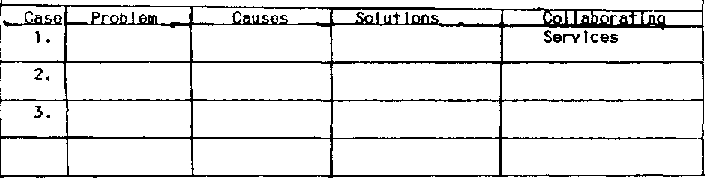
Trainer Note
Handout 11A: Coordinating activities
Coordination is bringing activities or groups of activities into proper relation with each other to make certain that everything that needs to be done is done and that no two people are trying to do the same job.
Coordination is the means of:
- distributing authority
- providing channels of communication, and
- arranging the work so that the right things are done..(what) in the right place ..(where) at the right time ..(when) in the right way ..(how) by the right people ..(by whom)
When an activity is coordinated, everything works well. A coordinated activity is orderly, harmonious, efficient, and successful
When an activity is not coordinated, it is liable to fail in its objective. An uncoordinated activity is disorderly, discordant, inefficient, unsuccessful.
Using organizational principles
To make coordination effective, eight well-recognized principles of organization Oust be applied:
a) Objective
Each group of tasks must have an objective that contributes to the objectives of the organization as a whole.
b) Definition
Each group of tasks must be clearly defined so that everyone knows exactly what the tasks are.
c) Command
Each group of tasks must have one person in charge, and all concerned must know who this person is
d) Responsibility
The person in charge is responsible for the performance of the people in his group.
e) Authority
Each person in charge of a group of tasks must have authority equal to his responsibility.
f) Span of control
No person in charge of groups of tasks should be expected to control more than six to ten other people.
g) Balance
The person in charge of several groups must see that the groups balance. For instance, case finding must not be 90 extensive that more cases of a disease are found than can be treated.
A coordinating check-list
A health worker responsible for an action, any action, will find it useful to apply the following check-list:
|
What is to be done? |
|
|
Where will this action take place? | |
|
When will this action take place? |
coordinating |
|
Which equipment is needed? |
the |
|
How will this action be arranged? |
activities |
|
Who will take part? |
coordinating |
|
Who will do what? |
the |
|
Who will lead? |
people |
|
Is all necessary information available? | |
|
Has the information been communicated? |
communication |
Example: Coordinating group-activity health education by using a coordinating check-list
1. What are the objectives of the group learning activity?
To encourage members of a community to participate in promoting health and health care, particularly regarding nutrition of pregnant women and young children. So follow up families who have attended the health centre and, with them, to organize a nutrition programme based on the use of local foods.
2. Information
The health centre serves five villages. She health markers, in consultation with village leaders, will identify one or two women in each village who will be responsible for inviting people to take pare in nutrition discussions and demonstrations.
3. WHEN will the groups meet?
Consult with the community to find out the most convenient time of day, when women are least busy. In the village of Bargong the women prefer the afternoon. The public health nurse-in-charge discusses the matter with the midwife and a rural health worker. They arrange to visit Bargong every Thursday afternoon for a month. Then they will organize similar meetings the following month in another village.
4. WHICH equipment and material is needed?
Transport: Provide bicycles for the midwife and the rural health worker. Local foods to be supplied by village group. Flannelgraph to supplement demonstration. Mercurochrome chloroquine - aspirin to treat minor ailments.
5 . HOW will the meeting be conducted?
Health workers will discuss child health problems with village women and invite suggestions regarding the content and conduct of the demonstrations.
The women will select the meeting place and between them will provide local foods and crooking utensils.
At the health centre the public health nurse will hold a 'mini-workshop' on nutrition each Monday afternoon with the midwife, the rural health worker, and others who are free to attend.
6. WHO will take part?
The women in the connrunity including the young girls; village leaders; and the primary health care worker if there is one in that village.
The public health nurse will support and help with the organization from the health centre (supplies, planinng the programme, etc.). The midwife will be in charge of the programme at the village, assisted by the rural health worker. The coordination in the village will be done by the leader of the women's group.
7. Communication
The village, woman leader will inform other villagers. The public health nurse will inform the midwife and the rural health worker about the organization and implementation of the programme and teach and support them as necessary. Other health workers will take part in discussions on the nutrition programme and be invited to suggest other topics for village group meetings. The district health service will be kept informed of the programme and its progress.
Figure
Trainer Attachment 11A: Discussion guidelines on collaboration
The discussion is likely to cover points such as the following:
The major problem is the lack of communication and coordination between fieldworkers from the different organizations.
Some of the advantages of coordinating activities between organizations include:
- combining resources to save time and money
- sharing information
- avoiding sending conflicting messages to the village
- avoiding project plans that conflict with one another
- designing projects that reinforce each other
Some of the factors which hinder cooperation between organization include:
- The headquarter of ministries or other institutions to which field workers are responsible may be unwilling to work together or unable because the lack organizational means to coordinate their efforts.- Fieldworkers may be from different backgrounds and religions or different in age or sex. For example, other fieldworkers may be reluctant to take advice from someone who is younger or the opposite sex.
- Duration of Jobs at a post may be too short to develop a working relationship with other fieldworkers in the area.
- Fieldworkers may be overworked and feel that coordination seems to be a waste of time in relation to other tasks that have to be performed.
Trainer Attachment 11B: Examples of services and organizations with which volunteers and counterparts can collaborate
1. Primary Schools, Secondary Schools.
2. Veterinary
Service
3. Agriculture Extension Service
4. Hygiene and Sanitation
Service
5. Rural Engineering Service
6. Public Works
7. Religious
Organizations
8. Administrative and Municipal Authorities
9. Social
Affairs
10. Community Development
11. Private Institutions: Health
Centers, Schools
12. Red Cross
13. Women's Groups
14. Traditional
Midwives,
Healers
Trainer Attachment 11C: Case studies
1. After a health education lesson, the women in your village say they are ready to take some of your advice: when their children have diarrhea they will continue feeding them and give them sugar-water solution diets. But, they don't have the means and are interested in a project which would help them earn some money. What can you do? What would be the possibilities of working with other services?
2. The primary school director and several teachers would like to develop a sanitation project in the community. The school children are available Thursday afternoons to help out. How are you going to get organized? Who would you call upon for help?
3. There is a CDD project in the region. The project team tries to make regular visits and provide supplies of ORS, but often there are problems: lack of communication between divisional headquarters and the villages to be visited, difficulties of transportation. Nonetheless, the people in your village worry about their children's health, and the rainy season is coming with increases in cases of diarrhea. What can be done?
4. One quarter of the village is noted for its poor hygiene. In addition, several from line agents have noticed that children from that area do not go to school. The front line agents would like to do something about these problems. How would you go about dealing with these problems?
5. During some home visits, nurses have noticed several malnourished children. What actions can be taken to help these children, and in collaboration with whom?
6. In a certain village, the Chief wants to improve the water points, but several surpass the technical skills of your personnel. How will you go about helping the chief get the help he need to fix up the water points?
7. A community development agent requests your assistance. A village where he works is quite far from a health center. Deaths from dehydration resulting from diarrhea is a serious problem. What do you propose?
Session 12 - Monitoring and follow up for controlling diarrheal diseases
TOTAL TIME
3 hours, 30 minutes
OVERVIEW
After health education activities on ORT, it is important to follow up with home visits to see if the mothers mix and use ORT correctly, and to assess the health status of the children who earlier had diarrhea. It is also important to keep records to monitor diarrhea cases. In this session health Volunteers and Counterparts discuss the national health data collection system and follow the path of a set of records from the village health post to the regional medical facility. They start a diarrhea diary which includes checklists of items to monitor, questions to ask, observations to make during home visits, and notes on how often to monitor.
OBJECTIVES
· To describe the National CDD Surveillance and Monitoring System.
(Step 1)· To describe the tasks involved in monitoring.
(Steps 2-4)· To develop a checklist for monitoring an ORT project in the community.
(Steps 4, 5, 7)· To resolve problem situations identified through Monitoring
(Step 6)
RESOURCES
Handouts:
- 12A The National Monitoring and Surveillance System for CDD (to be prepared by the Trainer
- 12B Monitoring Worksheet
- 12C Ways to Do Monitoring
- 12D Steps in Problem Solving
- 12E Problem Situations
Trainer Attachments:
- 12A Examples of items to Monitor
- 12B Home Visits
- 12C Useful Tool: Diary
- 12D Suggestions for a Diary on ORT/CCD
- 12E Sample Problem Solutions
MATERIALS
Newsprint markers, Monitoring forms used in the country.
PROCEDURE
Trainer Note
This session should be done near the end of the training course, after Session 15 (Planning and Evaluating Health Projects).
Prior to the session ask one of the groups that planned a project together to prepare a role play on monitoring using the checklist in Trainer Attachment 12A (Examples of Items to Monitor) and Trainer Attachment 12B (Home Visits).
Obtain information and any forms on the national CDD surveillance system and prepare a handout on that system. You can link this information-gathering to the background work that you do for Session 10 (National Policies and Programs on Controlling Diarrheal Diseases), particularly with regard to the referral system. You may want to invite a guest from the CDD section of the Ministry of Health to attend this session as a resource person and to present a short talk on the National CDD surveillance system or any record keeping that is done for CDD.
"Monitoring Performance" WHO Supervisory Skills in CDD offers a good background for conducting this session.
Step 1 (15 min)
Discussing National CDD Surveillance and Monitoring System
Present a lecturette on the National CDD surveillance and Monitoring system, or on record keeping for CDD if there is no formal system. Include a definition of monitoring (See the Trainer Note below). Also include the monitoring tasks that are required in the national system. Distribute and explain the forms used in record keeping for CDD, how they are distributed, analyzed and used. Give a dehydration case example tracing one child's record from a local clinic to regional headquarters.
Ask the participants to distinguish between monitoring nod evaluation and to state why and when these two processes should be done ( see Trainer Note below,.
Facilitate a discussion of how the Volunteers and Counterparts can and should fit into this system'
- What are the main purposes of Monitoring in the system?
- At what level can you be most effective in this system?
- What information collected by the national system is useful to collect in your community work?
Trainer Note
The definition of monitoring should include the notion of routine checking of work or performance which occurs within the context of a program or project implementation and which has as its aim the provision of information on progress. Evaluation of an activity or performance implies comparing actual work or usage of service to what was expected to be achieved. Refer also to Session 15 (Designing and Evaluating a Health Education Project for CDD) for more discussion of evaluation. Be sure to relate this specifically to the Diarrheal disease control activities in which Volunteers and Counterparts are participating, particularly those related to ORT.
If you invite a guest from the Ministry, ask that person to give a very brief overview of the system. If some of the participants are already familiar with the CDD surveillance system, ask them to present the lecturette and share specific experience in working with that system.
The following points should be made during the discussion of why monitoring and evaluation are done:
- To determine why the use of a service, the quality of health personnel performance, or the health of a person, increases or decreases.- To identify why targets/goals/objectives were or were not met.
- Do both monitoring and evaluation regularly.
Step 2 (15 min)
Determining What to Monitor
Tell the participants that for the rest of this session they will be examining the general tasks involved in monitoring. List the following on the board:
- Determining what to monitor,
- Determining how and when to monitor,
- Developing checklists for monitoring,
- Solving problems identified through monitoring, and
- Always providing feedback to mothers or health workers after monitoring.
Tell the participants that the first step in determining what to monitor consists of identifying the objectives for their project and planning the activities that they will do to achieve their objectives.
Write on newsprint examples of objectives and activities discussed in Session 15 (Planning and Evaluating a Health Education Project for CDD). Define the term "Indicator" and give an example based on the same objective (as shown in the Trainer Note below). Distribute Handout 12B, (Monitoring Worksheet). Ask each participant to fill in the chart using their own project objective and activities, adding indicators. Ask a few participants to share the indicators they listed. Critique the indicators and discuss how they decided what to monitor.
Trainer Note
Prior to this step you should write out four project objectives and list related activities for each one. Explain to the group that indicators are reference points that are observable, measurable behaviors or changes in health status or conditions that can be recorded and analyzed to assess progress towards accomplishing objectives .
You might find it useful to draw the following chart on newsprint and list a few examples of items to monitor for each project objective. This should assist the participants in their development of a list of indicators.
Step 3 (25 min)
Determining How and When to Monitor
Using the list of indicators developed in the previous step, ask participants to state different methods they could use to monitor their projects. They should also specify how often monitoring should be done.
Facilitate a short discussion of the kinds of information each method can provide and the limitations of these methods. Also discuss how Jo decide when and how often to monitor. Then have them write how and when to monitor on the monitoring worksheet that they used in the previous step. Distribute Handout 12C (Ways to Do Monitoring as a reference.
Trainer Note
Encourage participants to discuss information gathering techniques they have used themselves, including those used during this training course.
There are several monitoring methods and techniques from which to choose. You should obtain information on what, if any, methods are used in the national CDD program Present these country/program specific methods during this step. Also, the monitoring methods described below should be mentioned if the participants do not include them in their list:
- Keep a diary of community activities and practices affecting diarrhea.
- Observe health workers and mothers mixing ORT and feeding children.
- Talk with health workers/mothers.
- Review health post records on diarrhea.
- Talk with mothers at time of treatment and/or health education session.
- Make home visits.
It is assumed that participants have had practice in the use of some of these information gathering methods. If not, provide opportunities for supervised practice and feedback during or after the training course. Note the example in the Optional Step at the end of this session (Home Visit Simulation).
In deciding when or how often to monitor, you should consider the following questions:
- How critical is it that work be done correctly?
- is this an item that is often done incorrectly?
- What monitoring method will be used?
- How many items will be monitored?
- What time constraints exist, if any?
- What is the likelihood that the item may change from satisfactory to unsatisfactory over a period of time?
Step 4 (20 min.)
Developing A Checklist for Monitoring
Introduce this step by telling the participants that one simple
way to ensure that they are actually monitoring what they planned to monitor is
by developing a checklist of what to look for when you monitor. A checklist
helps them remember what to ask and what to observe in the community and how
often to do so. Tell them that checklists should be:
- brief, that is,
include only those items you consider it very important to monitor;
- easy to
use, that is, designed so you can record your assessments of each item quickly
and efficiently; and
- translated into simple local language so the person
using it does not have to struggle with translation during the home visit.
-
They should also include a section at the end where you can make written
comments, particularly about any other problems identified and recommendations.
Tell the group that their next task is to develop a sample checklist of things to remember to ask, observe and record during a home visit following up on a health education session on ORT. Select one person's project objective and selected indicators as an example to use for the large group discussion. Discuss the items to include on the checklist and come to a consensus on the indicators to use. Review the criteria for a good checklist and ask the group if they want to make any changes.
Trainer Note
See Trainer Attachment 12A (Examples of items to Monitor). You may want to present this information if the participants appear to be having difficulty. Remind the participants to recall the discussions on what, how and when to monitor while developing their checklist.
Step 5 (30 min)
Monitoring Role Play
Ask the preassigned pair to conduct the monitoring role play. Ask the rest of the group to observe how the role players use the checklist during the home visit.
First debrief the role players:
Ask the Health Worker:
- What difficulties did you encounter in actually using your checklist as a guide to gathering information
- in what ways did it help?
Ask the Mother.
- How did you feel about the questions the health worker asked you?
Then ask the Observers 5
- How effective was the home visit in gathering monitoring data?
- Did the health worker provide additional health education and answers to questions?
- Why is this follow up on health education activities important?
What other information should be collected in follow up home visits?
- What other kinds of information gathering should be used to supplement home visits?
Trainer Note
Emphasize the importance of follow up and giving mothers and health workers feedback.
Home visits and other information gathering activities enable the health worker to assess the effectiveness of health education activities (such as teaching mothers to mix oral rehydration solutions), to see if additional health care or health education is needed, and to correct immediately any misunderstandings or mistakes resulting from the health education activity. It also provides more general information about people's beliefs, knowledge and practices, and helps assess the nutritional status of other children in the home.
Step 6 (15 min)
Introducing the Diarrhea Diary
Suggest that the checklists the participants Just developed can be combined with their observations on beliefs and practices recorded in Session 13 (The Impact of Culture on Diarrhea). The checklist provides a good start for a diarrhea diary which they can use as a simple, effective record-keeping tool for monitoring,
Facilitate a discussion of the kinds of information such a diary should contain, including qualitative and some quantitative information about conditions in the village affecting Diarrheal diseases, health education activities, follow-up and outcomes. Trainer Attachments 12C (Useful Tools: Diaries) and 12D (Suggestions for a Diary on ORT/CDD) offer some suggestions for applications of the diary.
Also discuss ways that keeping such a diary could help them in their work and help others working with them.
Trainer Note
See Trainer Attachment 12D (Suggestions for a Diary on ORT/CDD). Such a diary provides a valuable record of a project's progress that can be used by others continuing that project or developing other similar projects. The diary provides a simple but systematic way to organize Monitoring and evaluation information This organization makes it easier to locate information needed to plan and make decisions. In countries where there are regional or national diarrheal disease control programs, such descriptive community level data is extremely valuable for program planning.
Step 7 (30 min)
Problem Situation Assignment
introduce this step by telling the participants that a normal outcome of monitoring is the identification of problems which need attention. Part of the monitoring process includes stating the problem and identifying and implementing a reasonable solution. The purpose of this step is to provide them with a technique for doing this.
Distribute Handout 12C (Steps in Problem-Solving) to the group. Briefly review the steps.
Divide into small groups. Distribute Handout 12D (Problem Situations) and assign one problem to each group. Give the groups 15 minutes to work out some possible actions to take in these situations, following the problem solving steps in Handout 12C (Steps in Problem Solving).
Step 8 (30 min)
Sharing Solutions to Monitoring Problems
When the groups report have them read each problem, write it at the top of a page of newsprint, and list the suggested solutions. Discuss how realistic the solutions are.
Step 9 (10 min.)
Summary Discussion
Conclude this session by asking a few of the participants to describe;
- How they can use Monitoring in their CDD work in the community.
- How they plan to carry out this monitoring along with their other tasks.
- How they will use the information they collected to improve their CDD/ORT activities in the community and contribute to national or regional programs.
Trainer Note
The participants should understand by the end of this session that information obtained from monitoring has several uses:
- to assist decision making, especially in the short-term, for increased project effectiveness.
- to provide objective means of gathering information that can be used to inform a health worker or others involved in the program of work that is being done well and should continue, as well as ways to improve their work. In other words, it is a means for providing useful "feedback".
Optional Step (30 min.)
Home Visit Simulations
Participants plan and practice a home visit in groups of 4. Two people play the roles of mother and health worker for the home visit and the other two observe and give feedback after the "home visit".
After the first role players finish, the people who were observers play the roles of the mother and health worker and receive feedback from the other group members. Trainer Note
Observe each group during this activity and contribute to the feedback portion. If participants already have some experience in conducting home visits, you may want to arrange opportunities to do home visits in the community, working with the local health worker, extension officer or school teacher, depending on interests and ongoing projects.
Handout 12B: Monitoring worksheet
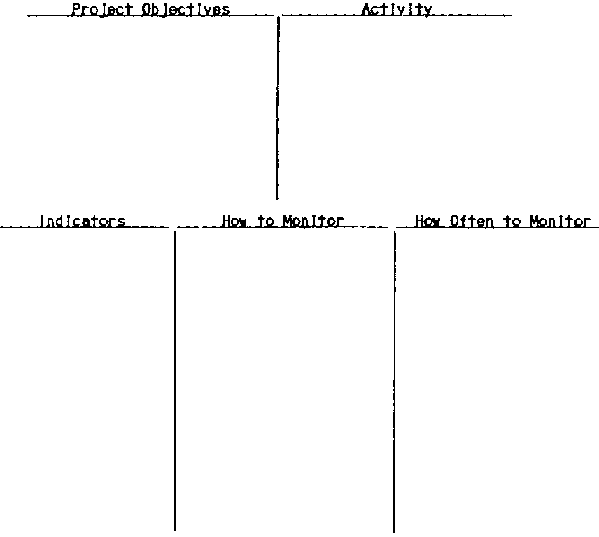
Worksheet
Handout 12C: Ways to do monitoring
How you monitor an item to determine if it is being done correctly will depend on the availability of time, records, and your role in a CDD project or program. There are several monitoring methods to choose from. Some of these methods are described below.
1. Talk. with Mothers at Time of Treatment. Talking with mothers at the time of treatment (or listening to health workers as they talk with mothers) will help you determine if mothers understand the instructions given to them. For example, to determine if mothers uncle stand the information about feeding, you can ask a few of them how they will feed their children during and after diarrhea.
2. Make Home Visits. Visiting the homes of patients who have received services to observe them and to talk with their mothers will help you determine if the patients were treated correctly, whether instructions given at the time of treatment are being followed, and what the mother plans to do the next time her child suffers from the disease. You can also observe conditions of the children and the surroundings of the home.
3. Observe Mothers and Health Workers. An effective monitoring method is to observe mothers and health workers as they actually DO their task in the setting in which the task is done. For example, you can observe a health worker treating a child who has diarrhea to see if the child is being treated properly. You can observe another mixing ORS to see if he or she mixes it properly. It is important the people know you are not observing them to criticize their skill but to help them improve it.
4. Talk with Mothers and Health Workers. Talking with mothers and health workers will help you identify what they know and what they think about preventing and treating diarrhea. If you have identified problems' talk to them to find out causes of these problems and to get ideas on how to solve them. Talking with health workers will also allow you to compliment them on tasks being done especially well.
5. Review Records. This monitoring method is often used because the records kept by community health workers and health facilities are usually available it generally does not take a lot of time to review records. To obtain the necessary information from records, however, the records must be properly designed and completed. Some types of information that can be obtained from record review are whether patients are befog sent to the appropriate referral facility or whether the medicines being administered to patients are appropriate for their conditions. Some types of information that cannot be obtained from record review are how well certain treatment procedures are befog done, or what mothers are being told.

Figure
Handout 12D: Steps in problem solving
Given evidence that a performance problem exists:
1. Determine if the problem is important to solve.
· How urgent is it?
· How serious is it?
· Is the problem getting better or worse?
· Are several problems related to each others
2. Describe the problem.
· Where does the problem occur?
· With whom does the problem occur?
· Whom does the problem affect?
· When and how often does the problem occur?
· When did the problem start occurring?
3. Identify possible causes of the problem.
· Lack of skill or knowledge
· Lack of motivation
· Obstacles
4. Identify reasonable solutions to the problem.
Handout 12E: Problem situations
Adapt the following situations to the local setting, Add other problems common in the host country.
1. You have found through monitoring health post attendance that mothers are not using services because there are only male health workers, and in their culture there are taboos about seeking treatment for themselves and their children.
2. As you have become acquainted with your community you have learned that the only health facility with ORS packets cannot be reached easily by public transport.
3. You have learned from your home visits that the health workers assigned to teach ORT are not giving mothers an opportunity to practice mixing, and many mothers can't mix the solution correctly.
4. From talking with mothers and health workers, you are learning that health workers have been diagnosing cases of mild and severe dehydration incorrectly and are not doing village follow-up. The result has been unnecessary use of intravenous solution and two deaths from unnoticed severe dehydration.
5. Your observations of sanitation around the community suggest that the health committees clean-up campaign did little to change poor sanitation practices despite great enthusiasm expressed by community members.
6. From talking with mothers in the community you find they are reluctant to use ORT because they find mixing the solution very difficult using the equipment available in their homes. They fear they will mix it incorrectly and kill their children.
Trainer Attachment 12A: Examples of items to monitor
Mothers Understanding of Diarrhea
· Understanding of causes and risks of dehydration
· Understanding of signs and symptoms of dehydration
· Understanding of prevention of dehydration at home
· Understanding of how to prepare and give ORS
· Understanding of feeding during and after diarrhea
Outcomes
· Recovery, referral for further treatment, or death
· Feeding practices of mothers during and after diarrhea
· Practice of measures for prevention of diarrhea
· Mothers satisfaction with service
Activities of Health Workers
· Assessment of dehydration
· Preparation of ORS
· Provision of treatment
· Instructions to mothers on what to do at home
· Recording of treatment on patient records
Note that the list includes examples of items to monitor for diarrhea treatment. You may wish to modify this list for your own use depending on how much time you will be able to devote to monitoring and your role in the diarrheal diseases control program. Remember that you will not always have to look at all the items on your lists every time you monitor.
Trainer Attachment 12B: Home visits
By making home visits, the health worker can better understand -the behaviour of the family, living conditions and factors affecting its health. The visit is an opportunity to collect the necessary information to plan future health education, for the finally and the communitty.
During the home visits, the health worker should be aware of the relationships between environmental influences end family health. He or she should constantly work toward greeter understanding of the causes of family health problems. Gettng to know the family better will make it possible, in the long run, to bring about changes in harmful health practices and encourage helpful ones.
Objectives of Home Visiting
Home visits differ from ordinary social calls in that they pursue specific objectives. Home visits in community health are usually conducted with view to:
- Discovering the conditions in which the family lives and identifying how these conditions effect their health, particularly of diarrhea.- Promoting family health by providing family members with health education adapted to their needs and appropriate to their levels of growth and development:
- Monitoring the use of skills learned in health education, for example, observing mothers mix and give ORS to children with diarrhea.
- Showing the mother or other relative how to administer health care needed by another family member (for instance mixing ORT solution).
- Reffering the family to appropriate specialized services (for example, reffering cases of dehydration to the health worker).
How to Make a Home Visit
The five essential steps of a home visit are:
1. Preparation
2. Introduction
3. Working
4. Closing
5. Evaluation and Planning
Step 1: Preparation
When there is limited time for home visiting, he or she should give priority to the (a) pregnant women and new mothers, and (b) infants and preschool-aged children. These are high risk groups for illness and death.
First determine objectives for the visit. Is the only goal of a particular visit to see if a mother learned to mix and give ORT properly during a recent health education session, or is there some other purpose! To help clarify the objective of a planned visit, ask : What do I hope to achieve? How will I accomplish my objectives? How will I approach the problems about which I will be visiting the family?
Review information related to the objectives of the visit. For example before visiting a woman with a child with diarrhea, review you notes based on previous visits. Be prepared to give advice and correctly answer any questions that may be raised. For example, why it is important to give liquids and food during diarrhea.
It is also a good idea to pick out and get together ahead of time any educational materials, such as pictures, brochures or charts to use during the visit.
Arrange the date of the visit with the family ahead of time.
Step 2: Introduction
Exchange the customary greetings and make initial observations. This is the best time to explain the purpose of the visit to the family.
Step 3: Working
Gradually request information answer questions and discuss the problem with the family. Teach the family whatever they need to know about the subject.
Gather new observations during each visit to the family. Watch how they behave when they are sick and when they are well. Observe and record the steps they take to stay healthy and to avoid illness. Try to detect problems before it is too late, such as lags in the children's growth and development. Observation will indicate what the family does or does not do to keep its house and compound clean.
Notice and respond to the nonverbal messages from members of the family such as smiles, nods, gestures of either interest or indifference, bored or angry looks, nervous tics, etc. Listen while people present their problems and respond with empathy or sympathy. Respect their periods of silence. Discuss things at their speed without rushing them or being brusque.
Step 4: Closing
At the close of the visit, summarize what has been discussed in order to point out the progress that has been made. After the summary, draw up a plan of action to be undertaken with the family. For the example cited above, help the mother decide which days are most appropriate for her to attend the clinic, making sure that she knows the clinic schedule and the services which are available. Make sure that all the family's questions have been answered. If returning for a second visit, arrange the next visit before leaving the family. Always record your observations immediately after a home visit, to avoid forgetting important points.
Step 5: Evaluation and Planning
During the home visit, the healthworker collects information, hold discussions with members of the family on their health problems and does health teaching. Has the visit successful?
To answer this questions, evaluate both the content of the visit and the approach used. Ask some of the following questions:
- Have I attained the objective for which I visited the family?- What happened during my discussion with the family which distracted us from the purpose of the visit?
- Did I pay enough attention to the priority needs of the family?
- Did I adapt my teaching to the family's level of understanding?
- Did my attitude encourage a friendly exchange of ideas with the family?
- Did I impose my views on the family members instead of moving at their speed to encourage them to change their beliefs and taboos?
- Did my approach create an atmosphere of trust within which the family could express its feelings and health problems without hesitation or fears
This information gained in the home visit provides the basis for planning future health education activities to help the family members improve their health. Analyze the information and try to discover the cause-effect relationships between the family's surroundings and practices and their health status. Use all tints information to develop objectives for future visits and health education activities in the community.
Trainer Attachment 12C: Useful tool: diary
Definition:
Diaries are records of events that occur over time. They record how the events happened, the problems that occurred, and peoples' feelings and thoughts about what transpired. Diaries can be kept by individuals, groups, or communities; they can focus on a narrow topic, such as rice planting and harvesting, or on wider aspects of community life, such as community development efforts.
Diaries are a unique source of data in that they record activities as well as personal reflections on those activities.
Now It's Used:
Diaries need to be introduced early in the life of a project, and participants may require some training to use them effectively. It may be useful to review samples of other diaries. Participants may also want to meet after they've made a few entries to discuss what makes a valued entry and problems they may have encountered. Diaries can be kept in blank notebooks, or packets of forms, or even on cassette tapes for participants with minimal literacy skills. Guidelines should be set to determine what is to be included in the diaries and how often entries are to be made.
The data from diaries can be compiled in one of two ways. First, an outside evaluator c an collect the diaries at specific times and review them. Second, participants themselves can meet to share their entries and discuss their themes and perceptions. The questions of who will have access to the diaries and how the information will be used should be determined from the outset. Some participants may be unwilling to present parts of their diaries to an outsider or even to another community member.
Diaries have been used creatively in some development programs. For instance, in Bolivia, farmers kept "technical agricultural diaries' to record how they carried out crop and livestock tasks (see Hatch. 1981) The information in these diaries wag considered so valuable by agriculturalists that it is being compiled into a ' people's text book."
Thus, the diary material is useful for a number of purposes: tracking the life of project activities; identifying major turning points or problem areas; noting changes and accomplishments; getting a picture of individual satisfactions and dissatisfactions - even promoting learning among community members or between communities.
Pros, Cons, Other Issues:
PROS:
· Combined focus both on project contents (what happens) and process (how it happens)
· Creative - reinforces writing and analysis skills.
· Enables participants to be the first users of the evaluation data.
CONS:
· Generally, requires writing skill (though participants may dictate entries to schoolage children or use A cassette tape instead of a notebook).· Generates a large amount of data, making compilation and analysis a challenge.
Participatory Applications:
Diaries are useful evaluation tools because participants control the data that is gathered. recorded and shared. Therefore, the approach described for using diaries is highly participatory. If trust is promoted among community members or between community members sod an outsider, the data from their diaries will often be more comprehensive than if it had been gathered through interviews or questionnaires.
Groups and communities can also keep diaries collectively. Individuals can male entries in turn. or groups can discuss together what to include. Such collective diaries, in addition to presenting a composite view of project activities. become a means of self-reflection for groups and contribute to building solidarity.
Trainer Attachment 12D: Suggestions for a diary on ORT/CDD
What to include
This will depend very much on the work of the participants.
Descriptive Section
- Description of local beliefs, practices and knowledge about diarrhea causes and treatment.- See Handout 13A (A Sample Diarrhea Questionnaire) for a list of questions. This section can be done as a running dally, weekly, diary written in narrative. It can also be organized by specific topics to cover in each entry, based on the checklist.
Record Section
- Checklists and notes made during home visits in the community- Any Ministry of Health forms related to Diarrheal disease control that the participant uses in his or her regular work.
How to Make Entries
- The Volunteer and Counterpart may want to share the same diary for their project.
- Set a schedule for making entries ( dally, after activities, weekly).
- Record the information in a standard way.
How to Use the Diary
The information in the diary can be used to:
- Monitor the progress of the project over time.
- Check on skill in mixing ORT, assessing dehydration using growth charts etc.
- Provide background for future volunteers and counterparts working on the project or similar projects.
Trainer Attachment 12E: Sample problem solution
Problem:
When monitoring the community health loader, the health worker in Bornu Health Area found that the community health worker had been referring children with some dehydration to a clinic, without giving the child's other complete follow-up instruction on what to do at home.
1. Importance of Solving the Problem
To help determine the importance of solving the problem, the health worker asked the questions in Section 1 of the Problem-Solving Checklist. Conclusions are summarized below.
· The problem is a serious one which should be resolved soon. If mothers are not given complete instructions on what to do at home, their children may become dehydrated again Also, the next time their children get diarrhea, mothers may not be able to prevent them, from becoming dehydrated by providing early treatment at home.· If mothers are not shown how to use the ORS packets the community health leader gives them, they may not use them at all or may use them improperly. As a result, their children will not get the best care. Mothers may soon distrust the health leader or her treatment methods and may decide not to seek health care from her at all.
2. Describe the Problem
To help him describe the problem, the health worker asked the questions in Section 2 of the Problem-Solving Checklist. The conclusions were the following:
· The problem is occurring with this community health leader only.· The problem affects children, mothers, and health leader.
· The problem occurs every time the community health leader treats children with moderate or no dehydration (Treatment Plans A and B).
· The community health leader volunteered and was trained two months earlier. The health worker was not sure, but believes the problems have been occurring since that time.
3. Identify Possible Causes and Reasonable Solutions to the Problem The health worker investigate to determine possible causes. For each cause he found, he identified a solution.
· Lack of Skill and Knowledge
The community health leader may not know all the follow-up instructions to give to mothers. The emphasis in her training was on Preparing and giving ORT.
The health worker should praise the health leader for correctly assessing the dehydration status of patients, and for correctly preparing and giving treatment with ORS solution. He could also explain to the health leader that it is necessary to teach these things to mothers.
The health worker could provide training on the Job. He or she could demonstrate for the community health leader how to explain to mothers the importance of increased fluids and continued feeding during and after diarrhea, ho. to explain to mothers other ways to prevent diarrhea, how to teach others to prepare ORS solution at hone, and hoe to show mothers the amount of ORS solution to give after each stool.
After observing the health worker the health leader could practice giving these instructions herself, the supervisor could encourage and praise the instructions the health leader gives well and help her improve any that she lives incorrectly.
· Lack of motivation
The cause of the problem is not a lack of motivation
· Obstacles
The cause of the problem is not an obstacle
|
| ||||||||||||||||||||||||||||||||||||||||||||||||||||||||||||||||||||||||||||||||||||||||||||||||||||||||||||||||||
Oral Rehydration Therapy and the Control of Diarrheal Diseases (Peace Corps, 1985, 566 p.)
Module Five: Working with the community
OVERVIEW
This module provides a review of basic skills in community development applied to diarrhea and associated health problems. Session 13 leads participants into the community to learn about cultural practices related to diarrhea. Session 14 reviews skills in community organization that can be applied in promoting ORT in the community.
OBJECTIVES
· To correctly use a questionnaire to identify at least six local beliefs and practices that affect the occurrence and treatment of diarrhea, using the guidelines stated in Session 13.· To identify and prioritize helpful and harmful practices affecting the occurrence of diarrhea in the community, in terms of which should be modified or reinforced through health education activities, following the criteria stated in Session 13.
· To describe three techniques to use in motivating community members to participate in projects to prevent and control diarrheal diseases, following the criteria stated in Session 14.
Cross reference with the Technical Health Training Manual:
Module 3: Community Analysis and Organization
Session 7: The
Role of The Volunteer
Session 8: Factors Affecting
Health
Session 13 - The impact of culture on diarrhea
TOTAL TIME
4 hours
OVERVIEW
An understanding of local knowledge, beliefs and practices associated with diarrhea is critical to any work done as a part of CDD. During this session, participants reflect on their own perceptions of diarrhea-what causes it and how to treat it. Then, using a questionnaire, they go out into the local community to gather information about local perception and treatment of diarrhea. When they return, participants analyze the data to identify practices which are helpful and harmful, and discuss how they might begin CDD and ORT projects that build on the traditional health care beliefs and practices in the culture.
OBJECTIVES
· To gather information on local knowledge, beliefs, and practices associated with the causes and treatment of diarrhea.
(Steps 2- 4)· To identify helpful and harmful local beliefs and practices that affect diarrhea and have highest priority for change or encouragement.
(Step 4)· To compare the local traditional approach to diarrhea treatment with the Western medical approach.
(Steps 1-4)
RESOURCES
Community, Culture and Care, pp. 173-242 Helping Health Workers Learn, Chapters 7 and 14
Handouts:
- 13A Sample Diarrhea Questionnaire
- 13B Methods for Gathering information
- 13C Identifying Helpful and Harmful Practices
- 13D Role of Traditional Healing in Diarrheal Diseases Control
MATERIALS
Newsprint, markers and any herbs or other items associated with the treatment of diarrhea you may want to show the group (optional).
PROCEDURE
Trainer Note
Before the session, try to find out as much as you can about local beliefs and practices for the treatment of diarrhea. Also collect any herbal remedies and evidence of other cures to show participants. Use this information during Step 4 to help participants validate what they learned from their interviews with local community members and provide additional content to the session.
Nave someone translate Handout 13A (Sample Diarrhea Questionnaire) in the language used in the local area. Make any necessary arrangements for the community visit for interviews and observations. Some possible kinds of arrangements include' permission from local officials and families, as well as transportation.
It is assumed that participants have already had training and experience in how to gather information. For preservice training or other situations where participants lack these skills use Sessions 10-13 in the Technical Health Training Manual to provide the background needed.
Step 1 (20 min)
Cross-Cultural Perspective On Diarrhea
Open the session by explaining that they will be gathering information about local knowledge, beliefs and practices related to diarrhea. To do this effectively it is helpful to begin by looking at their own beliefs and practices as well as their assumptions about local beliefs and practices.
Ask participants to recall the last time they had diarrhea. Write the following questions on newsprint and ask them to write their answers on a sheet of paper.
- How did you explain the cause of that diarrhea?
- What did you do treat the diarrhea?
- From whom did you seek advice or care?
- What did you do to prevent future episodes of diarrhea?
Ask a few participants to share their answers with the group.
Now ask participants to:
- Assume the identity of a local woman,
- Think in terms of her cultural, religious and social background,
- Consider how she would feel and react to having a baby with recurrent diarrhea, - Answer the same questions as above but from her perspective.
Have the participants write these answers beneath their initial answers. Encourage the group to use their imagination and guess if they don't know the answers.
Ask a few participants to share their answers with the group and briefly discuss how different or similar the perspectives appear to be both between cultures and among individuals. Discuss how those differences could affect CDD projects in their communities.
Step 2 (20 min)
Introducing and Adapting the Diarrhea Questionnaire
Explain to participants that during the next 90 minutes they will visit members of the local community and gather information related to the local knowledge, beliefs and practices about the causes and treatment of diarrhea. Distribute Handout 13A (Sample Diarrhea questionnaire, and ask participants to look it over.
Ask the group to discuss and delete, odd to, or modify the questions in the sample questionnaire so that they reflect the local situation.
When the questionnaire la ready, ask participants to pair off. Have each pair interview and address their questions to at least two different people or families in the community and, if possible, borrow or collect any stems associated with diarrhea treatment they may encounter during the visit (items such ass utensils, containers, herbs or medicines used in treatment or ORS solution substitutes found in the home).
Before participants leave, ask them to briefly review Handout 13B (Methods for Gathering information and ask any questions they have about how to gather the information
Trainer Note
You may want to spend some time reviewing the vocabulary needed for collecting information about diarrhea.
You may want to have participants use pictures such as those in Trainer Attachment 3B (A Story About Diarrhea from Session 3) along with their questions to make the interview more concrete and more interesting.
If a visit to the local community is impossible, an alternative is to invite in 3-5 community members to act as cultural resources. Divide participants into small groups and assign a community member to each one. Have each group do some parts or all of the diarrhea questionnaire and collect as much information as possible about local beliefs and practices.
You may want to add questions about nutrition and sanitation depending on the interests of the group.
For preservice training it may be necessary to enlist the help of first or second year volunteers to accompany participants during the visits and help out with the interviews (but not to conduct the interviews for the Trainees).
For inservice training, it is effective to have Volunteers pair off with their counterpart for this activity.
Step 3 (90 min)
Information Gather log in the Community
Have the participants conduct the interviews in the community. If appropriate, suggest specific places to visit and/or people to talk with to find the information.
Trainer Note
If this session is done at the end of the day, you might consider giving participants the evening to do their interviews and information gathering. Then, the next morning, you can reconvene and complete the remaining steps in the session.
Because visits to homes in the community are likely to stimulate interest and questions about ORT, you may want to ask participants to be prepared to tell a picture story about ORT at the end of the interview
Step 4 (20 min.)
Processing the Community Visit
When the participants return from their visit, reconvene the group and ask two or three pairs to report on what they learned from asking questions and any other general information on cultural beliefs and practices, Ask the others to add to what these pairs report.
Ask participants to compare and discuss the differences between their own approach to the treatment of diarrhea from Step 1, the traditional, country-specific perceptions also from Step 1, and the points of view encountered during the interviews
Step 5 (30 min.)
Identifying Harmful and Helpful Practices
Affecting Diarrhea
Divide participants into four or five small groups, Distribute Handout 13C (Identifying Helpful and Harmful Practices) and give the following instructions to explain how to fill in the sheet:
- Identify practices that affect diarrhea.- Indicate whether they are harmful, or helpful and who in the community does these things,
- Examine the harmful practices and identify those which you feel you cannot change. Briefly explain why you cannot change them.
- Rank the remaining harmful Practices in terms of priority for change. Take into account, severity of effect on health and ease of changing the behavior. Explain your ranking.
- For the Practices with the highest priority far change, describe ways you might motivate people to adopt healthier practices building on existing beliefs, practices and values in the community.
- Examine the helpful practices and list ways to encourage people to continue them.
- Describe the people or groups with whom you could first work to motivate people to change harmful practices and continue helpful ones.
Ask the groups to answer each of the questions as thoroughly as they can using the information collected from the questionnaire and interviews. Where appropriate, provide any additional information you may have on local beliefs and practices related to diarrhea to help the group complete the task.
Step 6 (30 min.)
Reporting on Small Group Analysis
Ask one group to report their answers. Have the other groups add additional answers
When the questions are answered, have the Trainees). focus on their conclusions about which behaviors are considered to be important to change first. Have them comment on why they arrived at these conclusions, how their perceptions may differ from their communities, and how they would attempt to resolve such differences.
Trainer Note
This discussion should address the fact that different people in the community have different knowledge, practices and degrees of influence over others. Because it is necessary to recognize these differences in their later work on planning health education projects and deciding with whom to work, it is important to emphasize these differences here. This point will be discussed more in Session 14 (Working with the Community).
Also make certain that participants recognize the difference between knowledge and actual practice. People in their communities and they themselves may know what to do, but may not always do it. Note that people must take into account many things in deciding what actions to take, For example lack of money or social pressures can lead to actions harmful to children's health even though individuals or families "know better".
Step 7 (10 min)
Identifying Nays to Learn More About Local Beliefs and Practices
To close the session, ask participants to briefly discuss their experience of interviewing people about their beliefs and practices - What was easy about the interaction? What was hard? Have them discuss and list in their notebooks other ways to gather and validate information about cultural beliefs and practices in the treatment of diarrhea and how they can use that information to make their health education for CDD, particularly ORT, more effective. Finally, distribute Handout 13D (The Role of Traditional Healing in Diarrheal Diseases Control) for supplementary reading.
Trainer Note
You may want to recommend additional general reading in Community Culture and Care (Traditional and Modern Health Systems) pp. 173-242.)
Handout 13D (The Role of Traditional Healing in Diarrheal Disease Control) discusses a number of Brazilian cultural beliefs and practices related to diarrhea. Because there are many similarities in traditions associated with diarrhea cross-culturally, much of the information may be directly applicable to your local culture.
Handout 13A: Sample diarrhea questionnaire
Date ___________________________
Location ___________________________
Name of Person interviewed ______________________________________________________
Occupation ____________________________________________________________________
Number of Children ___________________________ Age ___________________________
1. When did your child last have diarrhea?
2. What names do people use for diarrhea?
3. How did your child get diarrhea?
4. Do children in the village die from diarrhea?
5. Do you know a child that has died from diarrhea?
6. What did you do when your child last had diarrhea? Why did you do this?
7. Do you give liquids to your child when he or she has diarrhea? Why? What liquids? How ouch?
8. Do you give food to your child when he or she has diarrhea? Why? What foods?
9. Do you continue breast feeding when your child has diarrhea? The same, more or less than usual?
10. Who in your community helps you when your child has diarrhea? (*Probe: Can the traditional healer help? Can the community health worker? Your mother? etc.)
11. Are there particular medicines that you give your child when he or she has diarrhea? What medicines? Where do you get them?
12. Does hand washing help prevent diarrhea? Can anything help prevent diarrhea?
13. Observe and ask what utensils can be used to measure water, salt and sugar (for oral rehydration).
14. Observe and note sanitation around and inside the home.
15. Observe and note the physical condition of the child in the home. Look for signs of malnourishment or dehydration.
Handout 13B: Methods for gathering information
Who Should Gather Information?
Involve community people when you can.
How to Get Started
Look and listen before asking and acting.
Explore the
community's attitude toward "being studied.
Find out if you should follow any
special rules of protocol.
Put human relations before getting answers
Ask
questions that set people thinking in a positive way.
General Methods You Might Use
In-depth interviews
Simple surveys
Observations
Case
studies
Find a close confident - someone who may help you bridge the gap between cultures.
Be cautious in choosing a close confidant - is he or she still in touch with the local culture.!
Find other informants:
Get to know local leaders, residents who are widely
respected
Talk with those considered "wise" within the community
Talk with
the "ordinary" workers and community people
Get to know the patients, the
recipients of care
Talk with the critics of the system
Learn through informal conversations
Just sit and talk over a cup of coffee or a calabash of millett
beer
Learn from gossip
Be alert to jokes and their meanings
Listen to
stories and learn from them
Learn about the system by asking how to solve
problems
Learn through observing
Participate in community activities
Go out and see what it's
really like
Learn by looking at what's going on around you
How to Ask Questions
Explore peoples' attitudes toward questioning
Check your
questions before starting out
Learn how to interview within the local
area
Learn when to ask questions and when not to ask them
Learn what
questions to ask, and which ones not to ask
Adapt your questions to the
culture
Some Typical Problems in Gaining information or "Why You May Have Difficulty in Getting the 'Truth".
People may not trust you yet
Respondents may wish to tell you
what they think you want to hear
You nay be asking the wrong people
People
may have difficulty in reflecting on what is second nature to them
What a
respondent says might be altered during translation
You own characteristics
nay influence the response
Your respondents may mistake the "ideal" for the
"real"
Beware of the Pitfalls of Making Stereotypes and Generalizations
Consider the Effects of Your Information Gathering on the Community
Consider whether your findings will make any real
difference
Develop methods that can be used by local personnel or community
members when you
leave.
Handout 13C: Identifying helpful and harmful practices
1. Who does things that increase the problem of diarrhea? Can we change these practices through health education? Why? or How? Which Practices have the greatest priority for change?
|
Harmful Practices |
Who does This? |
Can We Change the Practice? How? |
| |
· |
· |
| |
· |
· |
| |
· |
· |
| |
· |
· |
2. Who does what things that help reduce the problems of diarrhea? What are some reasons for these Practice? How can we encourage people to continue these Practices
|
Harmful Practices |
Who does This? |
Can We Change the Practice? How? |
| |
· |
· |
| |
· |
· |
| |
· |
· |
| |
· |
· |
3. What groups and individuals can we work with in the community to help people change harmful behavior and encourage helpful behavior? Why? and How?
|
Groups and Individuals |
Why and How They Can Help |
| |
· |
| |
· |
| |
· |
| |
· |
4. Summarize your conclusions on a large sheet of newsprint so you can share them with the other groups.
Handout 13D: Role of traditional healing in diarrheal diseases control
DR. MARILYN NATIONS
Assistant Professor of Internal
Medicine/Anthropology
University of Virgina Medical School
Division of
Geographic Medicine
Charlottesville, VA
In northeastern Brazil, infant mortality from diarrhea and dehydration is an among the highest in Latin America. It is estimated that 159 out of 1,000 children born in urban northeast Brazil die before their first birthday, with diarrhea as the primary or contributing cause of death in 54% of the cases. And, because unrecorded early deaths are common. particularly in rural areas of Brazil, actual childhood fatalities most certainly climb even higher. Regardless of which statistics are cited, it is fair to say that in this arid region gastrointestinal illnesses take an enormous toll on infant lives, resulting in immeasurable losses for poor Brazilian families.
Faced with the serious and direct threat diarrhea and dehydration pose for infant survival, it is not surprising that natures throughout the world have evolved their own locally adapted healing systems to help them combat this major child health problem. I will first discuss the elaborate traditional rnedicine system in northeastern Brazil as it relates specifically to enteric diseases. Next, I will show how these longstanding indigenous health approaches are rapidly changing, sormetimes for the worse, with the recent widespread introduction of biomedicine in northeastern Brazil. Finally, I will discuss the implications of traditional healing for the delivery of primary medical services, particularly oral rehydration therapy and related diarrheal diseases control interventions.
This exercise is important if we are to increase the understanding between the people who struggle with diarrheal illness and death on the one hand, and health proffesionals who aim to treat and prevent it on the other. Confronted with data that document the existence of radically different view points pertaining to childhood illness, we can appreciate restore fully the important role human culture plays in shaping the diarrheal episode. That other health ideas and healing ways exist and are embraced by countless poor families living in rural and serve urban areas in developing countries will hopefully aid health profession to move beyond their own explanatory models of disease, including enteric infections. This awareness hopefully will stimulate a reassessment of the limitations and strengths of the biomedical approach to diarrheal diseases and lead to the development of culture-sensitive approaches to control which skillfully articulate the biomedical and popular spheres of care.
Methods
The research was carried out from July 1979 to June 1980 with a three-month follow-up in 1981 in Pacatuba, a rural town with a population of about 7,000 in the Brazilian northeast, about thirty-two kilometers from Fortaleza, the state capital. Field observations were occasionally extended beyond Pacatuba; I accompanied village mothers and their sick children to the Marieta Calas Rehydration Center and to a number of hospitals located in the capital when neccesary. When I utilized quantitativer methods, such as formal questionnaires, medicinal plant collection and botanical identification, and recording of diarrheal illness episodes in children, I relied most heavily upon qualitative anthropological techniques including participant-observation and informal, open-ended interviews with key informants, particularly traditional healers. To the extent possible, I participated actively in the lives of village families in order to understand what diarrhea meant to them. I saw, in a sense, childhood diarrhea and death through the eyes of a village mother by participating fully in the women's sphere of village life. I learned by involving myself and my family directly in the lives of Brazilian peasants plagued by this ubiquitous threat.
The role of traditional medicine in diarrheal diseases
Diarrhea is an illness of poverty in Pacatuba; it flourishes among the poorest village families with low incornes, faulty nutrition, poor living conditions, and inadequate clean water supplies. Their infants, ages seven to twelve months; are at highest risk for both the most total days and episodes of diarrhea, which climbs on average to a staggering fifty days, or over nine episodes, per person per year. To cure their ailing children, poor village parents in northeast Brazil for hundreds of years have relied solely on their own folk medical wisdom. Ancestors borrowed many of these healing ways from Dutch and Portugese colonizers and the West African slaves they captured and brought with them. Other medical beliefs and practices evolved as direct responses to specific illnesses and environmental conditions in Pacatuba. Through trial and error experimentation, people developed their own explanations about the causes of illness, diagnostic techniques, therapeutic practices, a pharmacopeia, preventive strategies, and carefully selected healers to assist them with major health problems, such as diarrhea and dehydration. Enhanced childhood survival, perhaps, reinforced the continued use, generation after generation, of a large number of these popular medical practices.
Traditionally at least three types of indigenous healers treated children with enteric infections: the rezdaira or rezador (prayers); the raizeiro (herbalist); and the Mae de Santo (voodoo healer). These "doctors of the poor", however, differ significantly in their training, powers, and healing ways. Rezadeiras (-dors), the most common type of lay healer in Pacatuba, are deeply religious women and men who are endowed with the power to heal from God, a special healing force that they inherit either directly from the deity or from an elderly folk healer shortly before his/her death. Because most rezadeiras are illiterate, they must learn healing skills not from books, but from their mothers. fathers, or elderly neighbors; they imitate a practicing healer with whom they associate, watching, reciting prayers, and learning, to prepare home remedies under the expert eye of their mentor. Unlike rezadeiras, who rely primarily on god-given healing powers, the raizeiros de-emphasize the supernatural role in illness. As herbalists, they cure with chemical substances extracted from medicinal plants and, more recently, with modern pharmaceuticals. The Mae de Santo head of the religious sect, Umbanda - a voodoo-like religious synchronization of ancient African, Brazilian, and Catholic belief - is distinguished from the other traditional healers in several important ways. As a spirit medium, she has direct contact while in trance with supernatural beings from whom she receives the power to heal. This voodoo healer, unlike the prayers or herbalists, also has the power to cause harm in the form of sickness and even death. Because of her tremendous supernatural power, flirtation with the underworld, and demands for food and money offering, she is feared, respected, kept at a social distance, and often unacceptable to more pious clients.
These healers' skills are in particular demand by village parents, since according to popular thought diarrhea and dehydration are symptoms of a number of folk-defined illnesses including evil eve (guebranto mau olhado) fright disease (susto) spirit intrusion (sombra, encosto) intestinal heat (quintura do intestino) and fallen fontanelle (caido da mohera). An envious glance at a beautiful child by neighbors. friends. or strangers; a sudden, unexpected fright from, say, a passing train or barking dog; intrusion of a dead person's spirit into a child's body; heat that accumulates inside the intestine and upsets the hot-cold humoral equilibrium can all result in diarrhea just as a fall or blow on the head is believed to cause the child's fontanelle to sink into its skull. a signal of grave illness and almost certain death.
Healers and parents arrive as a definitive diagnosis by recalling recent social events believed to trigger diarrhea and noting the child's symptoms and the consistency, color and smell of his stool.
The course of treatment, although quite foreign to most Western medical professionals, follows logically from this popular diagnosis: the appropriate healer is sought among available alternatives, standard confirmatory techniques are used; and, finally, rituals and treatment are directed at ameliorating the folk-assigned cause of illness. The evil eve. for instance, is drawn out of the child's body by passing three leaves over the victim's body whit' praying. The evil enters the large, fragile leaves. which will quickly; and the rezadeira, careful not to spill their evil contents, flings them out an open window. The evil disease forces, including diarrhea, are thought to disappear with the leaves, leaving the child's body "clean" and disease-free. In the case of fright disease, the header must lift and realign the dislocated internal body parts that have fallen out of place with a sudden start in order to stop the diarrhea. This the healer does by reciting a verse and then lifting the infant's buttocks and hitting them lightly three times. When a child has been possessed by a spirit, the healer must talk to and negotiate with the spirit an acceptable payment of food, candles, or money in order to appease it and coax it out of the child's body. For intestinal heat. the healer (often the herbalist or parent) must re- establish the child's humoral balance by counteracting :he excessive heat with "cold" remedies, foods, or baths, and in extreme cases the "heat" must be flushed out of the body by frequent purges - therapies based on the Greek Principle of Opposition described by Hippocrates. Lastly, to effect a cure for a sunken fontanelle, the healer attempts to raise it to its original position by holding the child upside down by its ankles and tapping the stoles of its feet or by pulling the infant's hair upward and pushing on the hard palate.
To prevent childhood illness, specific prayers, amulets, and behavioral strategies were advised for each folk illness But the best protection against infant diarrhea was the traditional pattern of prolonged breastfeeding. Mothers almost always initiated the vital flow of milk without complication shortly after birth. After establishing a milk supply, they continued nursing - the only source of the infant's nutrition - for about the first six to twelve months of life. Even after this, village mothers supplied a significant but diminishing amount of breastmilk for several more years. That breastfeeding played a critical role for infant health in Pacatuba's past is evident from the number of folk medical practice evolved, such as the forty-day resting-in period (resquardo) high caloric and protein-rich postpartum diets, and wide use of plant galactagogues to stimulate milk flow, to insure that mothers not only initiated but continued lactating.
Prolonged breastfeeding did not, of course, sweet all infant diarrhea; the sources of infection were everywhere. Parents in Pacatuba, like members of other peasant communities, were able to draw upon an extensive herbal pharmacopeia in time of illness. Local healers identified some twenty-one plant remedies they retinely used to treat childhood diarrhea, of which fifteen were identified by Brazilian botanists. A computerized search revealed that of these fifteen, eleven have been recognized by medical researchers as specific to some aspect of gastroenteritis. Specifically, these plants possess amebacidal, anticholinergic, antihelminthic, antibacterial, or antiviral qualities and perhaps, in the case of coconut water act as an oral rehydration.
The impact of modern medicine on traditional practices.
The traditional health beliefs and practices described above, however, are not static; they are being rapidly modified as modernization sweeps through Brazil and biomedicine makes in-roads into the northeast. Western-style hospitals, rehydration centers, medical schools, and special clinics increasingly provide health care in major cities and, to a more limited extent, in rural communities, such as Pacatuba. Clearly, rural families stand to profit from modern medical miracles: antibiotics that cure tuberculosis, meningitis, and pneumonia, and vaccinations that prevent polio, diphtheria, and measles. However, modern medicine's effect on the rural poor is paradoxical. While sophisticated technology exists; it is often ill-adapted to rural conditions inaccessible, and unable to effectively treat diarrhea, Pacatuba's commonest childhood illment. Moreover, beneficial traditional medical strategies are often not recognized until they have been completely undermined.
For example, despite increasing numbers of modern health professionals in the northeast, they remain concentrated in distant cities, are expensive and often are removed socially from the culture of their poor rural patients. Instead, we learned from analysis of forty illness episodes that diarrhea in poor homes continues to be resolved for the most part, using local resources. Mothers were the first to diagnose and treat their children with a wide variety of herbal remedies shortly after symptoms appeared only a mean of 0.6 days into the episode; the mother then administered over-the-counter pharmaceuticals, on hand or borrowed. After 1.2 days, families consulted traditional healers. Shortly after beginning of the local ceremony. 2.7 days after onset, parents consulted pharmacy attendants to purchase additional drugs. But not until over eight days elapsed, when dehydration was obvious, did a small number of families consult local physicians; rehydration centers and hospitals, if resorted to at all, were not sought until 9.6 and 12.5 days, respectively, when the chances of severe dehydration are marked. That traditional healers continue to play a significant role in the early management of diarrhea! illnesses, even in the face of modern medicine, became apparent in our subsequent study of sixty-two infants admitted to an intravenous rehydration center in Fortaleza: 57 (91.9%) infants had already been treated by indigenous healers for a number of folk illnesses prior to admission. Moreover using standard microbiological culture and bioassay methods, we determined that these common folk illnesses treated by healers were associated with enteric pathogens such as enterotoxigenic E. coli (ST and LT) (24.5%), rotavirus (10.5%), Campobacter fetus subsp. jejuni (3.5%), and Entamoeba histolytica (1.8%).
Besides the introduction of new healers, modern disease etiologies such as "enterite" and "microbes" are occasionally referred to by village mothers, yet the poorest parents continue to define diarrhea in folk-disease terms and believe that the underlying cause, often supernatural, must be tended by indigenous healers. By no means, however, does this belief keep them from simultaneously seeking help from doctors for the same or different problems. Similarly, the traditional practice of prolonged breastfeeding is being dramatically replaced by bottle-feeding; we have reported sharp declines in both the total numbers of Pacatuba's women initiating breastfeeding and the length of time they lactate, trends most apparent among wealthier village women, but also occurring among the poorest women since 1964. This modification of traditional preventive wisdom has had a significant detrimental impact on children's health, since we have also shown that a bottlefed infant in Pacatuba suffers twelve times more days of diarrhea than an exclusively breastfed infant. Finally, parents are increasingly looking away from their sweetened herbal teas for therapy towards an almost limitless number of modern "anti-diarrheal" drugs. These include antibiotics like chloramphenicol and tetracycline, cathartics, antimotility agents, and pectin-containing antidiarrheals, the majority of which have been judged by the World Health Organization to be ineffective, unindicated, or, indeed, harmful.
Implications for diarrheal diseases control programs
These insights from Pacatuba impressed on our minds two important facts. First, whether health professionals recognize it or not, villagers do not exist in a health care vacuum. Quite the contrary: they have their own health care system, based on tradition, with deeply ingrained and culturally shared illnesses. beliefs, and practices relating to enteric diseases. Secondly, village parents nowadays no longer solely depend on folk-healing ways, but are eclectic in their help-seeking, behavior and readily integrate biomedicine when needed. As a consequence of these discoveries, we became convinced that what was needed was an innovative approach to diarrhea! diseases control, a health delivery strategy that would build on the strengths of the existing indigenous system while at the same time incorporating effective modern therapy.
Fortunately, there now exists a simple, safe, inexpensive, and effective medical therapy to treat diarrhea, regardless of its specific etiology: oral rehydration therapy. By simply drinking a solution of water sugar, and salts to replace the water and salt lost by the body during diarrhea, countless lives can be saved from diarrhea and dehydration. Although the solution advocated by WHO is judged most effective in rehydrating children, even simple table salt and sugar or cereal-based solutions made from rice water— readily available in rural village homes—are effective rehydrants. Despite the overwhelming acclaims for ORT in reducing infant mortality, getting the solution and methods to poor families most in need remains a major problem.
Our answer to the problem of accessibility has been to design an alternative oral rehydration program that mobilizes traditional healers, integrates ORT into the traditional healing ceremonies, and builds referral networks that link healers to communitybased hospital care for children judged to be at high risk. By spoon-feeding ORT as a supplement to medicinal teas and in the context of healing rituals, healers working together with and instructing village mothers can treat most diarrhea without ever resorting to outside help. When properly approached, we have found healers interested in ORT or any modern method that works, as long; as it can be easily incorporated without destroying their own medical tradition. Government officials have also given their tentative support, pending evaluation, to this lay-healing initiative on the grounds that the quality of health care would not be compromised when incorporated into the national health care delivery system.
While collaboration with traditional healers for the delivery of ORT and other primary health care services presents several problems, such as their practice of potentially harmful folk treatments (also present in modern diarrheal management), low literacy, and resistance from medical professionals, to name a few, we believe these can be overcome with creative approaches. The advantages of recognizing traditional healers as ideal providers of village-based ORT far outweigh these problems. from our viewpoint: they are already there, provide good coverage of poor children, are sought early in the course of illness; are trusted by village mothers; speak the same illness language; recognize clinical symptoms associated with diarrhea and dehydration even though they may call them by different names; and prepare accurate ORT, a skill we attribute to their life-long experience in preparing traditional remedies. In addition, indigenous practitioners follow up children during the three- to nine-day healing ritual and, perhaps most important, strongly advocate preventive breastfeeding.
In conclusion, if we take seriously the challenge of providing basic health care to all people within the next twenty years, it is time we look beyond hospital-based strategies to creative new delivery schemes. Traditional healers have been recognized by numerous social scientists to be critical providers of health care for many so-called hard-to-reach populations. And a number of international agencies, such as WHO. have also recently recognized their important contributions to world health: USAID and The World Rural Medical Association issued policy statements in favor of delivery strategies that incorporate traditional healers in 1979 and 1980, respectively. An alternative traditional healer-centered program, at least in the case of diarrhea! diseases control, offers great potential for the delivery of care that not only reaches poor families, but is also medically sound and culturally appropriate.
REFERENCES
1. Dra. Maria Auxiliadora de Sousa, Professor of Social Medicine, Federal University of CeEara, Fortaleza, Brazil, personal communication, June 9, 1983
2. Puffer, P. R., Serrano, C. V. Patterns of mortality in children. Washington, D.C.: PAHO No. 262, 19,'3.
3. Kleinman, A, Eisenberg, L., Good, B. "Culture, illness and care: clinical lessons from anthropologic and cross-cultural research." Ann.lnt.Med. 8 (1978):251 -8.
4. Shields, D. S.; Kirchhoff, L. O.; Sauer, K. T. Nations, M. K.; Araujo, J. G.; de Sousa, M. A.; Guerrant, R. L. Prosoective studies of diarrheal illnesses in Northeast Brazil: patterns of disease, etiologies and risk factors. Presented at ICAAC Meetings, Miami Beach, Florida, October 1982.
5. Chadwick, J., Mann, W.N., eds. The Medical Works of Hippocrates: A New Translation from the Original Greek Made Especially for English Readers by the Collaboration of John Chadwick M.A.. and W. N. Mann, MCI Oxford: Blackwell Scientific Publications, 1950.
6. Nations, M. K. Illness of the child: the cultural context of childhood diarrhea in Northeast Brazil. Berkeley, California: Department of Anthropology, 1982 (dissertation).
Session 14 - Working with the community to prevent and control diarrheal diseases
TOTAL TIME
3 hours
OVERVIEW
Knowing and involving the community Is necessary for effective health education for Diarrheal disease control Integrated with primary health care. In Session 13 (impact of Culture on Diarrhea participants learned abut and analyzed community beliefs, practices and knowledge related to diarrhea. In this session participants Identify techniques to use to Involve the community In CDD projects. They discuss techniques for working with local leaders and organizations as well as ways of ensuring women's Involvement In project decisions. They practice these techniques In role plays dealing with problem situations In community health work.
OBJECTIVES
· To Identify techniques for Involving and motivating the community In projects to control Diarrheal diseases.
(Steps 1-5)· To practice techniques for Involving and motivating the community In problem situations.
(Steps 4, 5)
RESOURCES
Bridging the Gap
Community Culture and Care. Chapters 5 and
6. "Community Involvement" (WHO Supervisory Skills)
Helping Health Workers
Learn, Chapter 6, pp.11-24, Chapter 26 pp.16-34.
Community Health Education
In Developing Countries, (Peace Corps) pp.13-16.
The Role of the Volunteer in
Development (Peace Corps)
Third World Women: Understanding Their Role In
Development {Peace Corps)
Handouts:
- 14A Questions to Ask About Involving the Community In a Health Project
- 14B Skills for Development Facilitators
- 14C A Checklist for Use In Identifying Participatory Components of Projects.
- 14D Helping the People to Organize
- 14E Meetings
- 14F Problem Situations (to be developed by the trainer)
- 14G Ways to Involve Women In Health Projects
Trainer Attachments:
- 14A Factors Affecting Participation In Rural Development Projects.
- 14B Examples of Problem Situations
MATERIALS
Newsprint and markers
PROCEDURE
Trainer Note
If participants" background In community development and community organization Is weak, ask them to read the following sections In Helping Health Workers Learn: Chapter 6, pages 11-20 (Community Dynamics and Participation) and chapter 26, pages 16-34 (Paulo Freire's Method of Conscientization). Also distribute Handout 14D (Helping the Community to Organize) for reading before the session. Suggest that they think about the following questions as they read:
- Why Is It important to Involve the community In health projects?
- What are the best cays to Involve communities In projects?
- What problems could make It difficult to Involve communities?
Get help from a participant to adapt the problems In Trainer Attachment 14B (Examples of Problem Situations to fit the settings In which participants work.
Step 1 (20 min)
Factors That Help or Hinder Behavior Change
Introduce the session by explaining that the group will be looking at ways to work with the community to improve, prevent, and control diarrheal diseases and increase community self reliance. The first step is to look at reasons why people might be resistent to change.
Ask everyone to hold up one hand. Ask them to put their hand down if they cannot answer yes to one of the following questions:
- I always use a latrine.
- I always wash my hands with soap and water before and after I eat or prepare food.
- When I am sick I always do what the doctor or nurse tells me to do.
- I always drink plenty of liquids when I have diarrhea rather than taking something to stop it up.
- I always cover food to protect it from flies.
Ask participants to think about and discuss why they behave in ways that they know are harmful to their health.
List their reasons on newsprint and ask them to discuss questions such as the following:
- What keeps you from changing behavior that you know is harmful to your health?- What kinds of questions do you ask when you are considering changing a habit?
- What conditions could help you change these habits?
- Do people in the community ask themselves the same kinds of questions before changing habits or deciding to participate in a health project?
- What keeps them from changing harmful habits?
- What conditions could help them change harmful habits?
Trainer Note
Some of the reasons for continuing habits harmful to health that you can expect from the discussion are:
- They do not perceive themselves as susceptible to any illness or accident.
- They do not realize the severity of the ilness
- The new behavior does not fit their social or cultural norms
- They prefer to use their resources In different ways.
- Friends or family would be angry or upset if they changed the old behavior
Be sure to make the point that people's behavior Is influenced by many factors, not Just knowledge alone. Social Influence, resources, attitudes, and perceptions also Influence behavior. You may want to refer to Trainer Attachment 14A (Factors Affecting Community Participation In Health Projects) for specific examples of factors.
Some of the questions people ask before changing a habit or adopting a new practice that should come out of the discussion are:
- What will I gain from this change?
- How soon will I enjoy this benefit?
- What can I lose from making the change?
- What kinds of economic resources, knowledge and skill are needed to make the change?
- How much of my time will It take - Will It conflict with other more Important activities?
- Will I get as much out of the change as my neighbor, my spouse, others?
Step 2 (20 min.)
Discussing Ways to Involve the Community
Ask participants to share some experiences, successes and failures they have had In Involving people on their community projects.
Use these shared experiences as a basis to discuss the following questions:
- Why Is It Important to Involve the community In planning and carrying out a health project?
- In what ways can community members participate In a health projects?
- What questions should we ask when deciding how to Involve the community In health projects?
- What techniques can we use to motivate community members to participate In projects?
Distribute Handouts 14A (Questions to Ask About How to involve the Community In Health Projects), 14B (Skills for Development facilitators) and 14C (A Cheeklist for Use In Identifying Participatory Components of Projects) as a review of skills covered in preservice training and as sources of valuable tips on bow to involve the community In health projects at all stages and how to assess to participate at each stage.
Trainer Note
Important points about community involvement that can be raised this discussion include:
- If people participate in a project they will be more interested in helping themselves in the future and less dependent on outside experts and resources (encourages self reliance).- They will be more committed to taking the action necessary to carry out the project.
- Until people recognize and understand a problem they will not be interested in solving it
- Local knowledge and expertise should be included in the project planning so that the way the project is carried out will be better adapted to local needs.
Some important points to bring up in the discussion of ways to involve the community include:
- Continue learning about the community.- Communicate clearly.
- Listen carefully to what people have to say.
- Estabilsh trust and credibility In the community.
- Gain the support of community leaders who can mobilize resources (money people and materials).
- Develop community cooperation and leadership at the village level such as establishing a health committee
- Start with a project villagers want even if it does not appear most relevant to improving health.
- Start with a project that will produce results quickly before going Into more long-tern efforts.
- Build on local self-help traditions, organizations, beliefs, customs and religious values.
- Practice what you preach (provide a good role model).
- Use teaching techniques that actively Involve community members {active discussion with open-ended questions, role play drama, peer teaching),
Also recommend Chapters 5 (The Family) and 6 (Politics) in Community Culture and Care as basic background on social organization in the community.
Step 3 (20 min)
Finding and Working With Local Leaders and Organizations
Ask two or three participants to share what they have learned about local leaders and organizations from their own experiences in the communities where they are working. Use this experience to lead a discussion on how to identify and work with local leaders, and organizations, including information from Handout 14D (Helping the People Organize).
Some discussion questions to ask are:
- How do you discover local formal and nonformal leaders?- Does a leader necessarily represent everyone in the community?
- How can leaders and organizations contribute to the success of a project? How can they create problems?
- How do you motivate leaders and groups to participate in a health project?
- When and how should you organize a special committee for a project?
Trainer Note
The answers to the discussion questions are covered in Handout 14D (Helping the Community to Organize).
If the training is conducted in a facility with access to the local community, you may want to arrange opportunities for participants to meet with willing community leaders such as health workers and school teachers, as a part of planning the health education session they will conduct at the end of the training course.
If you decide not to use the Optional Step (involving Women in Community Projects), bring out some of those discussion questions in this step and refer to the example of the negative results when women were excluded from a project in Tonga, described in Handout 14D. Also distribute Handout 14G (Hays to Involve Women in Health Projects). Emphasize the great importance of involving women in water and sanitation projects.
Tell the participants that they will now practice some of these techniques for working with leaders and organizations. Distribute Handout 14E (Meetings) as an additional reference.
Step 4 (45 min)
Dealing With Problem Situations in Community
Health Work
Have the group divide into four small groups. Give participants Handout 14F (Problem Situations) developed by you and ask the groups to discuss each of the four situations. Ask them to spend no more than five minutes discussing each problem situation, identifying the problem, and deciding what techniques to use to try to solve it. Assign one of the situations to each group. Give them 25 minutes to prepare a 10 minute role play, demonstrating the group's solution to the problem.
Trainer Note
Ask one person in each group to serve as facilitator for the group. Ask another to be recorder. Explain that this activity will enable them to practice some of the techniques they have discussed during this session. Encourage them to use the handouts and ideas from the earlier discussions to develop their role plays. Circulate among the groups while they are working and answer any questions.
An alternative is to ask participants to list problems they have encountered and have not been able to solve. Assign these problems to the groups.
Step 5 (60 min.)
Presentation of Community Organization Solutions
Reconvene the forge group and have each small group present
their skit illustrating their solution to the problem. Discuss each role play
using some of the following questions to guide the discussion:
- What was the mayor problem in this situation?
- What community involvement techniques were used? Were they appropriate?
- in what ways did the group involve the community?
- What are the mayor strengths of the solution?
- How could the solution be improved?
- Did the activities during the session prepare you for dealing with the problem situations?
- Will you be able to apply any of these solutions in your own future work?
Close the session by discussing ways that participants could involve local community members in the health education sessions they will be conducting at the end of the training course.
Optional Step (30 min)
Involving Women in Community Projects
Ask a few people to share what they learned about opportunities and barriers to the participation of women in development projects in their local community. List the information from men and women separately.
Have participants look at the potentials and the barriers and discuss ways to involve women in health projects in this community. Distribute Handout 14G (Nays to involve Women in Health Projects) as a reference.
Trainer Note
If the participants will be focusing on Women in Development projects or have not covered Women in Development thoroughly in their other training you may cant to include this step after Step 3. You will find valuable resource material in Third World Women:
Understanding Their Role in Development, particularly the article by Judith Hermanson on "Women in Development: Defining an Approach", in Module V-8.
Use Handout 14G (Ways to Involve Women in Health Projects) to guide the discussion of ways to involve women and distribute it as a reference.
Be sure to make the point that the way to involve women in projects varies with the cultural and social setting. There is no one way to involve women in projects. The approach must be community specific.
Handout 14A: Questions to ask about involving the community in a project
Leader support
Who are the important formal and nonformal leaders in the
community?
Are there particular leaders that deal with health-related
problems?
Should any of these leaders be contacted for permission before
attempting to involve the community in a health-related project?
How could
the leaders help involve the community?
Organizations, Groups, Individual Support
What individuals, groups, and organizations in the community
would probably be interested in health-related activities? Why?
Are there any
individuals, groups, etc. that might be opposed to efforts in this area?
Why?
Are there any groups that might not have access to the benefits of the
project?
Human Resources
What individuals, groups or organizations might have skills that would be useful in a health project?
Local Patterns of Communication
What types of social situations are most appropriate for
exchanging what types of information?
How does the information spread in a
community or group? (that is, between which people and in what ways?) Two
different patterns are illustrated below:

Figure
What local gestures, sayings, clothing styles, and other
traditions are used in sharing information or entertainment?
What objects,
pictures or language are restricted or forbidden?
How do people teach
children how to behave properly and to perform tasks?
What are the possible
means of communication that could be used to involve people in the development
of a project?
What means of communication are traditionally used for various
types of messages?
Would use of these traditional means of communication be
appropriate when trying to get people involved in a project?
Local Patterns of Cooperation
Do community groups traditionally work together on community
projects? If so, how do they organize to work together? If not, why not?
Are
there alternative ways to tackle problems in the
community?
Handout 14B: Skills for development facilitators
Basic Skills
Throughout the stages of community development, the facilitator should:
1. Demonstrate an understanding of non-formal education through the use of:
· a variety of communication techniques.
· problem-solving activities.
· methods that motivate others to actively participate in the education process.
2. Stimulate planning and project implementation through the use of local skill, knowledge and resources during:
· needs assessment and planning.
· health education activities.
· follow-up.
· project review.
3. Use on-going methods of evaluation of community involvement.
Taking the First Steps
When the facilitator starts working with a community or group, he or she should:
1. Understand and be able to express his or hers
· motivation.
· expectations of the experience.
· strengths and weaknesses.
· role as a facilitator.
· Individual values.
2. Be sensitive and able to identify:
· expectations of the local community or group.
· local culture and resources, including customs, values, knowledge and ways of life.
3. Communicate in ways that demonstrate:
· active listening and observation skills.
· an ability to filter information
· skill in working cooperatively and in collaboration with others.
· an understanding of the participatory approach to development.
· on ability to promote local self-reliance, integrity and well being.
4. Use appropriate on-going techniques for evaluating community
Involvement.
Establishing a Dialogue
In the next stage of involvement, the facilitator should:
1. Demonstrate skills in facilitation and organization that include:
· an ability to work with existing local social structures and groups.
· stimulating active local participation.
· motivating others to contribute their skills and knowledge.
· planning and facilitating meetings, when appropriate.
· sharing techniques for effective problem solving, team building and negotiating.
2. Be able to examine analyze and prioritize issues, concerns and needs within the local context.
3. Understand and be able to discuss development issues in relation to local problems and strategies for change.
4. Continue to develop skills in interpersonal communications, including:
· encouragement of local leadership, when appropriate.
· building trust and confidence.
· consultation (e.g., active listening, conferring and feedback).
5. Continuation of community involvement.
Planning with the Community
In planning for active community participation, the facilitator should'
1. Collaborate with the local community or group to identify'
· health needs
· resources
· goals and objectives
· potential problems or limiting factors
2. Assist in the establishment of:
· project criteria
· plan of action
· methods of project evaluation
· relationships with appropriate organizations and agencies to form a supportive network,
3. Clarity the kind and extent of his or her involvement in the project.
4. Continue evaluation.
Evaluating the Process
In order to learn frog, and improve upon the experience of working with a community or other group, the facilitator should:
1. Work with community leaders to develop and use appropriate
evaluation criteria and techniques
2. Use a continuing process of evaluation to'
· review the level of local participation.
· review methods and approaches used during development work.
· assess the level of local self-reliance and well-being.
· generalize and apply the knowledge gained to increase the extent and benefits of community involvement in health projects.
Handout 14C: A checklist for use in identifying participatory components of projects
The following checklist can be used to assess project proposals as well as for project monitoring and evaluation.
|
A |
Highly participative |
|
B |
Participative |
|
C |
Somewhat participative |
|
D |
Non-participative |
|
E |
Authoritarian |
1. Project planning process:
|
- through initial open discussions with the community of its problems and how to solve them |
A |
|
- through a discussion of the project proposal with opinion leaders from the community |
B |
|
- through discussions with government/nongovernment organizations at district/block/project level |
C |
|
- project thrust from the outside without discussion |
D |
|
- project imposed in absolute disregard of community's wishes |
E |
2. Identification of the needs:
|
- by the people themselves |
A |
|
- by local opinion leaders |
B |
|
- by a government agency |
C |
|
- by a centrally sponsored scheme |
D |
|
- by fiat |
E |
3. Extent of resource mobilization for the project:
|
- by the community |
A |
|
- by the community and others |
B |
|
- through matching contributions |
C |
|
- through massive external assistance |
D |
|
- with no contribution from the community |
E |
4. Identification of project workers:
|
- by the community with its own criteria |
A |
|
- by the community with imposed criteria |
B |
|
- appointment of local persons by outside implementing agency |
C |
|
- appointment of outsiders |
D |
5. Development of social and/or technical skills:
|
- through short, local pre-service training, followed by regular, on-the-job, in-service training, in parallel with the training of trainers from within the community |
A |
|
- through short, local pre-service training, followed by regular, on-the-job, in-service training |
B |
|
- through pre-service training within the district/town followed by some in-service training |
C |
|
- through pre-service training in a remote institution without any follow-up in-service training |
D |
|
- no training or training in an unfamiliar language |
E |
6. Project implementation:
|
- under community control (especially the remuneration of project workers) |
A |
|
- under community supervision |
B |
|
- with some community involvement |
C |
|
- with no community involvement |
D |
7. Periodic evaluation/monitoring of progress:
|
- by the community |
A |
|
- some evaluation by the community |
B |
|
- outsiders' evaluation with results reported to the target community |
C |
|
- outsiders' evaluation not reported to target community |
D |
|
- no evaluation |
E |
This checklist needs not only initial but also continuous refining in the light of the growing understanding of the concept of community participation and its implications. It should be shared with those formulating and/or submitting project proposals-which means that there must be some common understanding of the conceptual framework of community participation between all those concerned with project formulation and implementation.
There are in addition certain general points to be looked for in assessing projects:
· Does the institution move out into the villages instead of expelling people to come to it?
· Is the project working with primary institutions?
· Has the government given its stamp of approval to agencies at the local level involved in the project?
· Does the project work with women?
· Is there a specific methodology suggested for community involvement?
· Does it include a specific methodology for involving people in monitoring/evaluation?
· Does an infrastructure exist for an exchange of information at the local level?
· Is there an acknowledgement of possible conflict areas by the project?
Handout 14D: Helping the people to organize
Now that you have some basic information about the community, the next step ~ to broaden your contact with the leaders of the community. Involve the local leaders as soon as possible in the project. Who are the leaders? Why are they important? How do you find them? What can they do to help?
Who are the leaders?
Anyone in the community may be a leader. A person is a leader when his or her ideas or actions influence others or he/she helps to get things done that the people want done. He/she is accepted by the people as a person of wisdom and sound judgement and one whose advice has been valuable in the past. He/she might be wealthy and powerful, or a person known to be very religious. Different people may be leaders in different areas such as agriculture, religion, politics or health. The leaders you are interested in should have some influence over people's actions which are related to their health.
Why are leaders important?
Community leaders usually make decisions that result in success or failure of a project. They are trusted and the people of the community will work with them more quickly than with you. If this is to be the community's program you must count on community leaders to take some responsibility for its success. You are the spark plug and the source of assistance. You can help bring together the other resources needed for improved community health. But the project will not be a success unless members of the community participate; their participation is usually decided by community leaders. The people to work with are those respected by the community and who are willing to learn and work.
Two kinds of local leaders
1. Formal leaders: Are generally paid for what they do. Projects sometimes fail or move slowly because these people were overlooked during the planning stage. Consult them often and request their advice and assistance. Gain their cooperation. Examples of formal leaders are:
- Political appointees (mayor, party representatives)
- Government officials (police, national guard)
- Village chief
- Religious leaders
- School teachers
- Heads of organizations
2. Informal leaden: May receive no money for what they do and have no official authority. They come from the local community and often have more influence than formal leaders. They are not necessarily the person' with the best houses or the best pieces of land, but they are liked, trusted and respected by their neighbors and are willing to help. A woman may be a leader in respect to the need for a better water supply while her neighbor may mainly influence vegetable gardening.
How do you discover the informal leaders?
The first step is to consider the responses you received when asking villagers "Where would you go for help if you have a health problem?" Other questions you might use are:
"Who are the important people in the community?""Whose opinion do you respect?"
"Whose advice do you follow?"
"Who is wise?"
"Who settles arguments within or between families?"
"Whom do you think people would go to for advice when their children have fever? To organize a special trip or event?"
You will probably find that the people named are those with leadership qualities and that the named will differ according to the problem to be solved.
However, leaders may not be the persons who show the greatest interest at the beginning of a project.
You may not uncover obvious enthusiasm to help others, but people who express interest, friendliness, and willingness to work, or people whose name was mentioned often by neighbors, may be your key to potential leaders. In your quest to discover local leaders, do not bypass those who appear to be against your work. Give them special attention and try to win their support and cooperation.
Example of a local leader: the birth attendant
Birth attendants are the most widely distributed of any category of health-related person. The reason for this is that women usually wish some assistance at the time of delivery and they are unable to travel far or to wait long for some one to reach them when they go into labor. The birth attendant is also working at a time which is especially appropriate for maternal and child health education. Unfortunately, birth attendants are often untrained, but they are often very influential with mothers.
Identifying and working with local birth attendants can be very effective in health education. In fact, in some poor communities the entire standard of health, sanitation, infant and childhood death rates and family planning have been revolutionized primarily through the work of birth attendants.
What can leaders do for the community?
If an effort is made to give leaders a thorough understanding of how health problems affect community well-being and how these problem. can be solved, they can contribute immeasurably to better understanding among the people. They can also become a powerful motivating force for community unity and action. Through their own acceptance of improved health methods and practices, they become a motivating force for change.
But, care must be used when deciding which leaders are the influential ones related to the specific community problem. In Tonga, an enviornmental sanitation project was initiated after preliminary planning with the community leaders. In Tongan society the women rank higher than the men according to traditional Tongan Kinship systems; the men however, are the heads of the households. The organization of the project was based on the men's support, and, at the request of the men, the women were not involved in the planning. The health workers left the decisions about methods of work to the male leaders but conducted the evaluation themselves. The project failed.
When a second project was planned in another Tongan community, an analysis was made of why the first one failed. The conclusion was that both the male and female leaders should have been involved. Both groups were given full control of the activities under guidance of the health worker. The villagers were left to themselves to make the decisions and suggestions supported by the majority were encouraged and used. Evaluation of the second project showed that every goal was achieved.
Project success can be achieved through the efforts of the villagers themselves, providing the right approach is used in promoting the active participation of the most influential community groups and leaders.
Here are some other ways leaders can contribute to the success of a project:
1. Bring people to meetings.
2. Arrange for and meeting places.
3. Help reach more people by telling others.
4. Help people in the community know you and gain confidence in you.
5. Give general information about the program and help interpret it to the people.
6. Help identify problems and resources in the community.
7. Help plan and organize programs and community activities.
8. Help plan and organize any services which might be provided.
9. Give simple demonstrations.
10. Conduct meeting.
11. Lead youth groups and various individual projects.
12. Interest others in becoming leaders.
13. Help neighbors learn skills
14. Share information with neighbors.
15. Serve as an officer in an organization or chairman of a committee.
How can these potential resources of the community be mobilized? In discussions with leaders, what have you discovered that is important to them? Maybe it is the protection of children's health. Maybe it is convenience, privacy, or cleanliness? Maybe they are moved by competition - "Other communities are solving their health problems." They might express pride in their community "We have done so many other things in this village, but this problem remains." Capitalize on these motivations. Use them to guide you towards a better understanding of the people of the community.
The Health Committee
A health program must have some kind of organized group to make it work. The family, the church and the school all have primary purposes other than health. They can take part in the health program, but their separate efforts probably will not be able to make it work. Often, a health committee is organized which involves community leaders and other representatives of community life.
There are many ways to form a committee. Remember the reactions of the people you have talked to in the community. Who was interested in the health situation? Who was hopeful? Which people were recommended as leaders? Talk with these people. Suggest a meeting of the group of them.
In the meeting, discuss the purpose of organizing a committee; let them decide to make an organized attempt to solve community health problems.
In a small village in Nigeria, after a preliminary survey of the community, the village chief was approached and the suggestion for the formation of a health committee was made to him. He liked the idea and was requested to invite other influential members of the community, including women.
The chief requested that the objective of the meeting be presented by the health worker. The worker invited the members to go out on an inspection tour so that all would have a part in determining what their needs and problems were. This they did and it served as a starting point for the meeting. Both male and female members desired urgent solutions to the problems they discovered during the tour. The chief was elected chairman for a village health committee and a teacher was chosen as secretary. Decisions were made in that meeting about plans for solving some of the problems found.)
The community members must become involved from the beginning in the decision-making and planning for the community. To make changes, they must commit themselves. They may need to see health improvement projects of other communities. Suggest a field trip (or this purpose. They learn as they go along and will be better able to manage their own projects.
A separate health committee may not be the best choice for some communities. If an existing local committee or other structure appears to be an effective means for improving community health, then perhaps this group could add health to its other concerns.
Purposes of a health committee
A health committee can serve several purposes:
1. To discuss health problems and discover felt needs.
2. To plan ways to reach goals and objectives that promote new, sound health practices and attitudes.
3. To implement plans and organize projects.
4. To receive and consider new information about health and development of possible interest, and convey this to the community.
5. To encourage all members to gain skills and confidence in working in a group so that the work in the community will not depend on any one person.
For suggestions on planning and conducting a meeting, see Chapter V. Records of proceedings at each meeting should be kept and read at succeeding meetings and matters arising from them should be discussed. These records can always be referred to by any new member so that he/she can acquaint him/herself with the progress and history of the committee's work.
Members of the committee are usually elected, but its formal make-up will differ from one country to another, often from one village to another. The important thing is that you keep abreast of the committee's work and progress. Usually you will be invited to attend the meetings, and may even be chosen as a member. Because your position in the village is temporary, it may be best to decline any offer to be an officer. You are a resource person - one who assists and supplies information and guidance. Participate, hut do not become totally responsible.
After the creation of a Health Committee, initial projects should be simple in nature and should not demand a long period of time. Refer to the next chapter for further discussion of this point. The building of a latrine for a dispensary or school could be completed after only a few work days and would impress upon the Committee - and the community - what they are capable of doing. If a complicated project such as a water system or construction of a health post were chosen first, the problems of materials, technical assistance and the duration of the project would probably discourage the people and have a crippling effect on the Health Committee. More difficult projects can be attempted after the Committee has had some success with simpler projects.
Once a health committee or committees exist and have begun their work, they should always have a problem that they are currently working on. If committees remain stagnant for a period of time, they become ineffective and will cease to exist other than in name. There should also be lines of communication between the local health centers and the Health Committee to ensure recognition and cooperation between the two.
In summary, health committees can accomplish many things to improve community health if they represent key groups in the community, communicate and cooperate with other community workers, committees and institutions, are well-organized, and if they plan projects based on community needs and interests. Your role is to assist the committees in doing these things. The next two chapters will discuss steps in planning, implementing and evaluating a community health project.
Handout 14E: Meetings
There ore different kinds of meetings. Some involve general participation in the discussion and in making decisions (committee meetings, board meetings, public meetings on issue of concern to the community). Others, like the annual assembly of on association, use a few speakers who address a largely passive audience. In health education we are concerned with the first type of meetings.
Purpose
Meetings are held to gather information share ideas, make decisions and make plans to solve problems. Meetings are different from group discussions. A group discussion is free and informal. Meetings tend to be held for a special reason and are more organized. They have, for example, appointed or elected leaders. Meetings are an important part of successful self-help projects.
In meetings held by organizations and associations, 20 to 50 persons may come together. Community leaders may have small meetings where 5 to 10 persons take decisions about community needs. On the other hand, the whole community can come together in a meeting to learn about problems and express their views.
Planning a Meeting
Need - it is important that the members of the organization or the community see the need for a meeting. Does the problem require a meeting, or can it be handled easily by one or two members? The decision to hold a meeting should be made by the group members or community leaders themselves.
Time and Place - Many organized groups have regular times and places for their meetings. The village heads may meet once a week at the Chief's house. The neighborhood council may meet monthly in the community hall. The tailors' guild may meet every two months at a school or mosque.
Make use of regular meetings to solve problems and lay out plans for action. If a special meeting is necessary, have the leaders of the group decide on a suitable time and place that will be convenient for all.
Announcing the Meeting - Each group or organization has a way of informing members about meetings. This may be by posters, town criers or word of mouth. The group should make the announcement itself.
Word of mouth is often the best way to announce meetings in a village or small neighborhood. The need for the meeting can be announced by the leader to the people who cork closely with him. These people then spread the word to others who in turn tell others and so on.
Announcements will spread more quickly and reliably if a system is established to facilitate communication. In such a system, each member of the group has the responsibility of contacting certain people. The leader will contact tour or five people to announce the meeting, Each of these people knows the names of five other people whom he or she will contact. These people in turn will contact others.
One way to do this is to look at the different sections of the village or neighborhood. There should be someone in each section for the leader to contact first. If Mr. A is away when the leader tries to contact him, Mr. F could then fill in for Mr. A.
Meetings should be announced several days in advance to give people time to prepare. But do not announce the meeting too far in advance, people may forget.
Setting an Agenda - An Agenda is a list of topics or issues that will be discussed at the meeting. This should be planned carefully. People will lose interest if they come to a meeting where no one knows what is supposed to happen.
It the group already has leaders, see them some days before the meeting. Discuss the agenda. There may be issues remaining from the last meeting that must be discussed first. There may also be new topics to add. An agenda should not be too long. Ideally, it should include only one or two important topics. A long agenda means a long meeting. After one hour people start to get tired. After two hours they start to leave. If people leave before the work is finished, the group may not be able to solve its problems.
Also a long agenda may force people to make quick decisions which they may regret later. When the agenda has been agreed upon, look at the topics. What information will the group need to be able to discuss the topics carefully? If a women's group wants to meet to discuss ways of improving family nutrition through better kitchen gardens, they will need information on types of vegetables and grains with high nutritional value that grow well in local soil, their costs and effects. Some of the group leaders should volunteer to find out this information You can guide them to where to look. Do not do it all by yourself. It is useful for people to learn how to find information and resources.
When the meeting is announced, also tell people briefly what will be on the agenda. This will help them prepare. Members can look for information themselves. They can begin to think of ideas to be put before the meeting.
Leadership - Most organizations, associations and councils have their own leaders. These arc the people who should be in charge of the meeting. You will have already given them encouragement and suggestions during the planning of the agenda.
You should speak when the leaders ask you to folk, and occasionally give other comments. Be sure that the other group members hove the opportunity to speck their minds fully.
Participation - Participation in the meeting depends on the culture of the community. In some places leaders do most of the talking. In other , every member speaks. Encourage the kind of participation that is acceptable to the people. You can add comments like these to encourage more people to talk.
"It would be useful if we could hear more about this dirty water problem from the people who live near the stream.""This problem of diarrhea worries us all. I am sure those members with small children must have some experiences to share with us."
Make Issues Clear - Before the meeting can reach intelligent decisions, everyone must understand the problems and suggested solutions. Comments like these can helps
"Is everyone clear about how much money this project will require?""Does anyone want us to explain again how this ORS works?"
"Does everyone understand what will be the responsibility of the community and of the sponsoring agency in implementing this project?"
Reaching Decisions
- Here are four ways in which decisions can be made in meetings:- the group as a whole discusses on issue; after some time the leader or another member may say, "I think that we all agree to take this action. Does everyone feel tints way?" At this point anyone can object; if there are objections, then discussion continues until there is a final sense of agreement; this is called consensus decision-making.
- an issue can be placed before the group and members are asked to vote on whether they accept or reject the idea; action is taken on the idea that the largest number of people prefer;
- the leader listens carefully; when he or she senses that everyone is in agreement he or she announces a decision;
- the leader alone nay decide on what he or she thinks is best and announce that his or her decision stands for the whole group,
The first two methods are very similar. In both cases a decision is not taken until there is general agreement in the group. This may take longer than voting or the leader deciding for the group but it encourages participation. When everyone is in agreement, action is very likely to follow.
Taking Action
The purpose of a meeting is to decide on plans that will help solve a group or community problem. Simply put, the group must:
- set objectives (desired results);
- decide on strategies (ways to solve the problem);
- find resources;
- set a timetable for action;
- share tasks among individual members or small groups of members (committees);
- meet regularly to review progress and make improvements or changes in the plan as necessary.
Handout 14G: Ways to involve women in health projects
· Asking, listening and observing to identify women's needs.· Identifying women's roles, opportunities and problems.
· Identifying cultural, social, family and other patterns which affect women positively and negatively.
· Getting womens' help in assessing the potential positive and negative effects of projects on women and children, particularly the likelihood of access to project benefits.
· Involving women in the decision-making aspects of project planning, implementation and evaluation. Encourage participation of women in village meetings when development projects are discussed; if socially unacceptable for women to attend with men hold meetings for women to discuss development project.
· Identifying, Training and working with women leaders and supportive men.
· Identifying and using local organizations traditionally supportive of women.
· Training and encouraging women counterparts to act as communication channels for information and resources generally controlled by men.
· Providing training and other programs or activities to improve the quality of life of rural women in traditional roles, (such as increasing status, income, income generating activities, social rewards).
· Helping government, other developers and community people understand and support the important role women can play in development.
· Sharing information and analyzing failures and successes of projects directed to women's needs.
Trainer Attachment 14A: Factors affecting participation in rural development projects

Table

Table (continued)
Trainer Attachment 14B: Examples of problem situations
Adapt the following example situations to fit the problems most encountered in the host country.
1. The local traditional healer is highly respected and cleared by members of the community. Health workers in the past have treated her disrespectfully, referring to her as a "dangerous quack." As a result, she has discouraged families from giving ORS to their children, saying it will poison them. Many of her herbal cures are effective, but many local children get diarrhea and die from dehydration that could be prevented by ORT. What should the new Volunteer and Counterpart do in this situation?
2. Community elites have dominated decision-making in previous development projects and, as a result have gained the greatest benefits from the projects. The traditional village structure is very hierarchical; all the major decisions are made by the village council which consists of elite males exclusively. The Volunteer and Counterpart want to work with the communittee to develop a water and sanitation project with a strong emphasis on communittee participation and health education, based on needs expressed by many individual farmers. What is the best approach in this situation?
3. The community recently had a bad experience with a development project intended to increase grain production through new seeds. The seeds were free but they were not well suited to the local soil and the crop yield was very poor. Many people had to sell some of their other crops and goods to buy grain last year. They were not willing to take chances with any government schemes again. The village has no latrines and many problems with intestinal diseases. The Volunteer end Counterpart would like to start a community project to properly construct and use latrines. What is the best approach in this situation?
4. Many children in local communities die each year from dehydration resulting from diarrhea. A very strong traditional health belief is that a baby with diarrhea is "hot" and it will "break" if you give it something "cold" like water. They continue breastfeeding during diarrhea because breast milk is "warm". The community water source is very dirty. Sugar is not available in the community. Salt is available but it is quite expensive and cash is scarce in the community. The local school teacher, Volunteer and Counterpart are concerned about this situation. What can they do?
5. The local community health worker (CHW) feels that the best way to do health education to improve community health practices is to inform people what they should be doing and why that will make thee healthier. The main techniques and materials used by this person include' talks during community meetings and in the school, posters in the market and other meeting places, and a display in the school which the CHW put up single-handedly. The health worker is very discouraged because all these efforts have had little impact on community health practices. The CHW has asked the Volunteer to make an attractive visual aid for the next talk so it will be more effective. What can the Volunteer or Counterpart do to help the CHW?
6. A Volunteer or Counterpart visits their sick friend, one Volunteer, in a neighboring village. They find that their friend is setting a poor example of hygiene practices' food is kept uncovered, the yard is cluttered, he or she does not usually wash their hands before handling food because water is scarce, he or she has not gotten around to building a latrine yet. What is one best action to take in this situation?
|
| ||||||||||||||||||||||||||||||||||||||||||||||||||||||||||||||||||||||||||||||||||||||||||||||||||||||||||||||||||||||||||||||||||||||||||||||||||||||||||||||||||||||||||||||||||||||||||||||||||||||||||||||||||||||||||||||||||||||||||||||||||||||||||||||||||||||||||||||||||||||||||||||||||||||||||||||||||||||||||||||||||||||||||||||||||||||||||||||||||||||||||||||||||||||||||||||||
Oral Rehydration Therapy and the Control of Diarrheal Diseases (Peace Corps, 1985, 566 p.)
Module Six: Community health education
OVERVIEW
This module provides activities in basic skill development in project and session planning and the use of nonformal education techniques and visual aids. Session 15 provides a framework for planning and evaluating health education projects. Session 16 offers experience in using several nonformal education techniques. Session 17 focuses on how to select and use visual aids, leading into Session 18 on adapting and pretesting health education materials.
OBJECTIVES
At the end of this module, the participants will be able to:
· Develop and critique a plan for a health education project that follows the guidelines stated in Session 15.
· Correctly select and use appropriate techniques of storytelling, using pictures to stimulate discussion and demonstration for specific health education objectives and a particular target group, following the guidelines given in Session 16.
· Adapt a health visual aid using tracing and/ or drawing so that it meets the six designs criteria stated in Session 18 and applies the cultural considerations stated in Sessions 17 and 18.
· Plan, conduct and evaluate a health education session that follows the four steps of the experiential learning cycle and meets the criteria for a good learning experience as described in Session 19.
Cross reference with the Technical Health Training Manual:
Module 4: Health Education.
Session 15 - Planning and evaluating health education projects in ort for controlling diarrheal diseases
TOTAL TIME
3 hours
OVERVIEW
Skill in planning and evaluating health education is important for the success of any project for controlling diarrheal diseases. Ongoing monitoring and evaluation provide a means to improve activities during and after a project and can increase community involvement in a project in Session 13 participants analyzed local health practices that affect diarrhea. In Session 14 they explored ways to work with the community to change harmful practices and encourage helpful ones. In this session Volunteers work with their Counterparts to plan a health education project on ORT, or a related aspect of CDD, that applies the ideas developed in these two earlier sessions. They identify a specific health problem related to diarrhea, set objectives, assess resources and constraints and discuss how to evaluate the project
OBJECTIVES
· To set observable, relevant, feasible objectives for a health education project related to ORT. ( Step 1)· To develop and critique a plan for a community health education project in ORT). (Steps 1-2, 4-6)
· To explain when and how to monitor and evaluate a health education project (Step 3)
RESOURCES
Bridging the Gap Part IV
Demystifying Evaluation
Helping
Health Workers Learn. Chapter 9, pp. 12-22
On Being in Charge. pp.
268-310
Health Education. In Developing Countries. pp. 19-33
"The Planning
Dialogue in the Community" Contact
Handouts:
- 15A Planning a Community Health project
- 15B Example of project Evaluation
- 15C Health Education Planning Worksheet
Trainer Attachments:
- 15A The Bamboo Bridge Activity
- 15B Important Concepts for Evaluation
- 15C Guide to the Health Education Planning Worksheet
MATERIALS
Newsprint and markers. See Trainer Attachment 15A for the list of materials needed for the bamboo bridge activity
PROCEDURE
Trainer Note
Prior to the session, distribute Handout 15A as a review of how to plan a project Participants can review evaluation in Helping
Health Yorkers Learn (particularly pages 9-12 through 9-22). It is assumed that participants will have had some experience in planning, carrying out and evaluating a project in some area that they can apply to ORT in this session. If they lack such a background, refer to Sessions 19 (Identifying and Analyzing Priority Health Problems) 20 (Writing Objectives for Health Education. and 21 (Planning and Evaluating a Health Education. project in the Technical Health Training Manual for more basic activities to use to develop these skills.
Assign several participants the teak of facilitating the Bamboo Bridge activity in Steps 1 and 2. Give thee Trainer Attachment 15A as a guide to their preparation of this step.
Review Session 9 (Monitoring) so that you can link this session to it.
Prepare a large version of the Health Education. Planning Worksheet (Handout 15C) to use during discussion in Step S. If you discuss the time and task chart, (shown in the Trainer Note at the end of Step 4) make a large version of that as well.
Step 1 (60 min)
Be boo Bridge Activity
Introduce the session objectives and emphasize the importance of planning with the community in an organized way to control diarrheal diseases and improve health. Explain that the activity they are about to do is one technique they can use in planning with their communities. Ask the preassigned participants to facilitate the bamboo bridge activity based on Trainer Attachment 15A (The Bamboo Bridge Activity), using the information about helpful and harmful practices analyzed in Session 13 (the impact of Culture on Diarrhea).
Trainer Note
Make certain that participants state a problem rather than a solutions to the problem (for example, "many cases of diarrhea" as the problem rather than the "need for latrines").
Make sure that their objectives are measurable, relevant and feasible, as discussed in Handout 15A.
If they have difficulties with either of these aspects of planning, use the first two steps of Session 20 (Writing Objectives for Health Education. In the Technical Health Training Manual to work on these important skills.
Step 2 (20 min)
Processing the Activity, At the end of the activity ask participants:
- What did you learn about project planning from this activity?
- Could you use this activity in the community?
Step 3 (20 min)
Discussion of How to Evaluate Projects
Ask participants how they would evaluate the project they Just planned during the bamboo bridge activity. List their suggestions and ask them to discuss how they decided what to evaluate and how they would use the evaluation.
Distribute Handout 15B (Example of Project Evaluation). Review the sources of information, tools to gather information, who participates and when, for at least one of the key questions listed. Ask for an example of another key question, and have the group discuss and give the same kind of information as for the first example. Ask someone to record the ideas as they are suggested.
Trainer Note
See Trainer Attachment 15B (Important Concepts for Evaluation) for basic points to review with participants. Emphasize the importance of basing evaluation on the Project objectives and how you and others will use the evaluation results.
Make sure that participants have a clear idea of what you mean by "monitoring" and "evaluation". Explain that monitoring provides ongoing information about Project progress, checking whether the activities carried out are creating the conditions to accomplish the objectives. Evaluation of outcome refers to whether or not the objectives for a session or Project were accomplished. When speaking very broadly about evaluation, monitoring can be described as part of the overall evaluation process. Link this session to Session 12 (Monitoring and Follow up for CDD), particularly the use of the information in their diary ( Step 7) for project planning, and the use of monitoring to make sure a Project is progressing as planned.
Be sure participants understand the need to evaluate every part of a total Project loot Just the activities) to be able to pinpoint strengths and weaknesses and make appropriate modifications. The discussion in this session should focus on the evaluation of a hole Project in Session 19 (Designing and Evaluating a Health Education Session) participants concentrate on how to design and evaluate one specific health education session within the whole Project
Step 4 (20 min.)
Reviewing the Planning Worksheet
Distribute Handout 15C (Health Education Project Planning Worksheet). Use Trainer Attachment 15C (Guide to the Health Education Planning Worksheet) and the large version of the worksheet that you prepared as a basis to discuss the worksheet. Go through each item and giving an example of the kind of information required. Refer back to the bamboo bridge activity to tie the planning sheet to their experience and examples discussed during the activity.
Trainer Note
You can use Handout 15A (Planning a Community Health Project) to assist you in guiding the discussion of this assignment and answering questions. For useful background reading sees
Bridging the Gap, Part IV (Planning and Evaluating with the Community), and "The Planning Dialogue in the Community" Contact 43.
Step 5 (30 min)
Planning Practice
Have the group divide into pairs. Explain that they will be corking together for rest of this session and during Sessions 19 and 21 to plan a health education Project and design and present a health education session on ORT or some other aspect of the control of diarrheal diseases..
Ask each group to identify one priority health problem and develop one health education objective to use as the basis for developing a health education Project plan using Handout 15C (Health Education Project Planning Worksheet). Encourage them to select a Project that they can use in their work in the community. Tell them this is Just the first draft. They will be giving each other suggestions and revising the plan during this session and throughout the remainder of the health education sessions.
Trainer Note
Ask individuals to pair up according to location of their assigned host communities so that they can continue to work together on this and other projects otter the training. Also, arrange to have the final health education Project plans duplicated so that each trainee can have a set.
Make yourself available as a resource but not as a guide as they develop their projects. Encourage thee to seek suggestions from the community as well as from peers.
Step 6 (45 min)
Reports and Group Critique of Plans
Reconvene the large group and ask a each pair to briefly describe their health education Project plans. After each presentation ask the rest of the group to consider hoe well the group has answered the questions on the planning worksheet. Ask them to offer suggestions of ways to improve the plan. Encourage them to point out what is good about the plan.
Close the session by telling them that the next two sessions will build skills and knowledge for designing activities to accomplish the Project objective.
Trainer Note
If the group is large you may need to limit the number of reports. One alternative is to arrange for each pair to meet with you or other trainers to review the drafts of the Project plans. Time can be set aside during the training session for these conferences. Allow at least ten minutes for each conference. Recruit help from other trainers so conferences can be held concurrently.
Optional Step (15 min)
Organizing to Carry Out a Project
If time allows, include a discussion of how to organize resources to implement the project. you can show a time task chart such as the one in the Trainer Note and ask someone who has used this type of chart before to give an example and show how to use the chart for organizing materials, people and tasks over time.
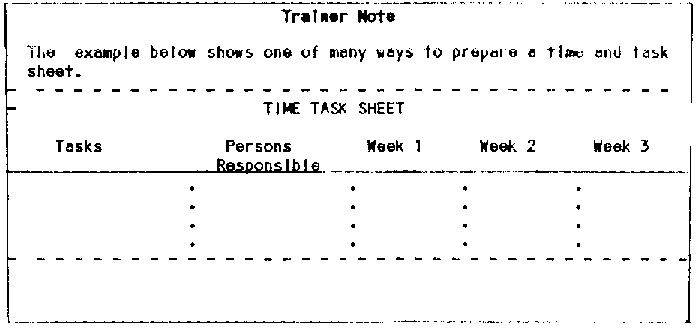
Trainer Note
Handout 15A: Planning a community health project
Among the most important ideas for anyone involved in community work in health education is to be acquainted with as many aspects of community life and its people as possible. The purpose of gathering this information is to help the health or other community worker have a fuller understanding of some Or the problems of the community and some limitations on the solutions to these problems.
Once the community members and the community worker come to a joint understanding and desire to work on a project, a sequence of steps should be followed in planning the project. Each step will be discussed separately in this chapter. The four steps are:
Step 1: Define the problem: it is important to involve the community and focus on their needs.
Step 2: Choose a goal and objectives: These should be measurable so that evaluation is made possible; they should relate to the problem; and they should be possible to achieve.
Step 3: Assess the resources and barriers to the project: This will involve finding the necessary materials; skills, people and funds; and investigating possible obstacles to the success of the project. The importance of doing this before carrying out the project is to make the plan for action realistic.
Step 4: Carry out and evaluate the project: An outline should be made of the specific activities aimed at reaching the goal. Because evaluation is an on-going process and takes place throughout the life of the project, both topics are covered together.
Step 1: Defining the Health Problem
The first requirement in bringing about change is for people to agree that there is a problem and that something should be done about it. The challenge is to avoid simply looking for things which the people do which are unhealthful. Search for the meaning of existing practices. For example' you may find that the community women use the banks of the river or pond for toilets and you may try to convince the community to build and use household privies. This effort could easily fail if a new means is not provided for the women to meet and chat each morning, such as at a protected well site.
To say that there is a health problem is a very general statement which covers many specific situations. In order to plan your work, to set goals and to go into action, you must be able to define the specific problem on which you wish to work.
To help you define it and involve the community in doing so, talk with the local leaders and villagers. Use a questioning approach in an attempt to find out how they view the health situation. Start from the general and work down to the specific problems you have in mind. For example, if you found a very unsanitary environment in your survey of the community you might contact the leaders and proceed as follows:
1. "What kinds of things need to be done in this village?"
2. "What are the illnesses most common in this village?"
3. "What do people die of, mainly?" "Are there many children under 5 years old dying? If so, what from?"
4. "Do they have diarrhea, dysentery, cholera, typhoid, worms in this village?" "What causes these illnesses?"
5. "Are there any latrines in the village?" "What do people use?"
6. "Has any thought been given to building latrines?"
7. "Why would some people refuse to use them?"
8. "If these diseases could largely be stopped if the people themselves decided they wanted to, would people in the village want to plan together to do away with diarrhea, dysentery, cholera, worms, etc.?"
The problems you have already uncovered in the formal village survey can be compared with the views expressed informally through this type of questioning. In fact, much of the essential information may have already been gathered while you were first getting acquainted with the community.
The place for further problem identification and definition is with the Health Committee. Here are a few steps to help the Committee define specific health problems.
· What is the nature of the problem? What is the problem situation, behavior or condition?· What is the extent of the problem? How bad is the situation? How significant is the problem in terms of the community?
· Whom does the problem affect? What groups or individuals are affected?
· What are the size, the characteristics and the nature of the "target" group?
· Where does the problem occur? What geographic area is affected? What is its size and nature?
· How long has the problem existed? Is it improving or not?
· How much would people be willing to contribute in work, money, land for a well, sand for concrete, labor, etc.?
SETTING A PROJECT GOAL AND OBJECTIVES
People can agree that a problem exists and is important and still not solve it. This can happen even if everyone agrees that something should be done. People must agree on what they will do about a problem.
A project will not succeed unless it has goals which are based on the problems agreed upon and defined by community representatives. The goals for a project are taken from the important health problem identified in the community. For example, it the problem identified was too many people sick from amoebiasis, the goal would be to reduce the occurrence of amoebiasis in the community.
From the goals of the project objectives, a Plan of Action, and evaluation methods will be developed and will allow you to assess a change. For example. merely to say "To improve sanitary conditions" leaves you no means with which to determine your achievements. If you had said "To install 35 latrines" you would then have some means of objective evaluation.
In completed form, an objective correctly written might appear like this:
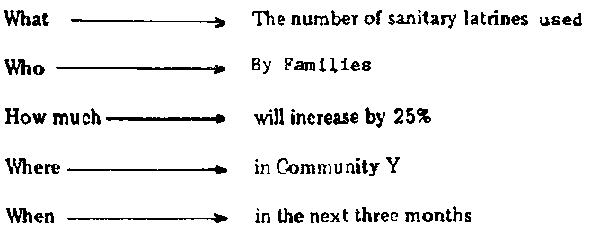
Figure
You will note that this objective teas been written in behavioral terms, i.e., privies will be used. Obviously, just having such facilities can be misleading. You can also write educational goals in teens of the numbers of people who will understand or believe certain things. Once you have some baseline data, you can also measure increases in healthful attitudes or behavior.
Two further points in relation to defining the goal and current writing objectives must be taken into consideration. First, they must be related to the problem at hand. For instance, if the current problem under consideration is an unsanitary environment, then the promotion of the construction of a school would not be a goal relevant to the problem. That is, achievement of the goal would have little, if any, effect on the problem.
A final point is that the goal be possible to achieve. There should be a reasonable chance for success. If, for example, the community cries for the assignment of a doctor to their village and you know that the priorities are for preventing disease and that there is a great shortage of available doctors then why attempt it? Point out these facts to the leaders and consider more realistic goals. I! the goal is impossible to achieve from the outset, then embarking upon the project will only lead to failure and lose for you the trust and cooperation of the community you worked 60 hard to pin. Consider your resources end obstacles. Be realistic Start with goals which can be achieved.
It is true that many goals take longer to reach than others, but this alone should not be grounds for dropping them. "Long-term goals" may take as long as the years or longer to achieve. Usually, on the path toward reaching them, you will find several sub-goals or "short-term goals". These are the stepping stones to a larger coal; they can be considered projects in themselves.
For example, the problem encountered may be the high rate Or tuberculosis cases to the community. The long-term goal might be a decrease in the morbidity rate (number of cases). But there are several approaches: treatment of existing cases, prevention of new ones, or education about the disease. Any one of these could be considered a short-term goal. Short-term goals are usually more specific and, as their name implies, involve projects of short-term duration. So, remember. Whether it be a long-term goal or a short-term goal, the goal and its objectives must be:
1. Measurable
2. Relevant
3. Possible to achieve
Now that the community has identified and defined a problem and has set goals, what do you want the outcome of your efforts to be? The answers to the following questions will allow you to get the objectives which must be achieved in order to accomplish your goal. Each objective should describe specific changes that must be achieved to accomplish the goal of the project:
· What do you want to change?
· How much change do you want?
· For whom or for what do you want the change?
· Where do you wish the change to occur?
· When? By what time or date?
All of these questions must be answered at the outset of the plan for change so that you will be able to check your progress along the way. These objectives must be measurable. At times, you may find that your initial goals do not coincide with the priorities of the community. Your own analysis or that of health officials may indicate that improved sanitation is most needed but the community may feel that they should first improve their road so that they can market their produce. You may need to convince your own supervisor that helping to meet the community'. foals will make it easier for them to try to improve their environment. Perhaps the community will agree to set aside money resulting from their marketing for sanitation.
Step 3(a): Assessing Barriers to Changes in Health Behavior
This will involve investigating possible obstacles to the success of the project. The importance of doing this before carrying out the project is to make the plan for action more realistic.
As you have been getting acquainted in your community, you may have seen some evidence of poor health. You have observed that:
· many children are thin and small and have big bellies;
· the people live mostly on rice;
· few families have chickens, pigs, rabbits or goats for food;
· there is a year-round growing season, but few families grow vegetables;
· the only available milk is purchased;
· there is some fruit in the market, but it is expensive.
You have talked with the leaders and the people in the village about the problems of illness, fatigue, and deaths of young children. They show interest in doing something about it. You ask a group of leaders and a few parents to meet to discuss the problem and ways to solve it. In your meetings, you lead the people to discuss why the problems exist.
You and the group decide that there are not enough of the (gods needed for good health and the villagers do not know about these foods. What are the obstacles, habits and attitudes that now keep people from growing green and yellow vegetables? Possibly the following items are found:
· lack of knowledge, information or experience
· no suitable seed
· seeds not easily available
· trouble with insects
· not enough water
· no real interest
· traditions and beliefs which hinder the acceptance of these food items
· lack of shared community resources such as irrigation pump
· no banking resources
· high debts
Obstacles or barriers to health education exist in all communities and relate to many things. There may be interest in things other than health (for example, roads, schools, agriculture). Usually, a community has seen little change as to its health status that is, whether the general health level is high or is low. They have nothing to compare their predicament with, and hence do not see it as a predicament at all. Therefore, when health competes with such paramount demands as: earning a living; providing shelter, food and clothing; bringing up a family; it may be far down on the community's list of priorities. If the community is satisfied, on the whole, with its state of health, changes in behavior will be resisted mainly because to make these changes, the people will be inconvenienced. Long distances, to travel for medical care, long waiting periods, even painful experiences such as an injection, could also be barriers to change in the community. They may want other help, though, such as freedom from bedbugs or opportunity to space children. Such needs create opportunities.
Many cultural traditions, practices and beliefs in every society are related to health and may also be barriers to change methods of child feeding. The following are examples: the usual length of breast-feeding; when the first foods are introduced and their nature; whether milk or its products are customarily employed; the traditional use of other protein sources, especially legumes, eggs, fish; the commonness of such "prestige" practices as: bottle feeding, the use of carbonated beverages and over-milled flour; and the dietary practices of women during pregnancy, lactation and after giving birth.
These practices may be passed on from one generation to the next. Until acceptance of a change is complete, the return to traditional or popular practices will occur due to the strong need of the individual to be accepted by his/her social group.
Other barriers to health education could result from differences in languages. Perhaps there is an indigenous dialect in the area that you don't know. Find an interpreter and, if possible, train him or her so that he or she can work directly with the people. Remember, the translator is an "insider" and therefore more readily trusted and accepted by the community.
Closely related to the language barrier is the communication problem caused by illiteracy or low educational levels. The concepts of modern hygiene, for example, may have no meaning to a people who have never been exposed to facts related to the cell, microbes and the use of the microscope. In this case, the importance of knowing what the community knows becomes evident.
Other things to keep in mind when considering problems and setting goals are: the economic ability of the people (do they have the money, time resources, with which to take action?) and the community attitudes towards solving the problems. If their attitudes are negative, a definite barrier to change exists. How does the community tee) about other government programs and workers?
Step 3(b): Assessing Apparent and Potential Resource
What are some of the resources you can use in your work with the community? Each situation offers different possibilities, but do not forget that you are a very important resource person in the area where you work. To function efficiently then, it is important that you know as much about your community as possible. What has been the history of its involvement in health issues in the past? You may have to dig deep to find a cohesive force, but all communities work together in some form.
The term "community" implies a sense of togetherness and, it you try, you will probably find that neighbors have helped each other in the past, even though it may not have been on a large scale. Perhaps one family helped another to build a house, or to take a sick child to the hospital. Perhaps the local church has a youth group which convenes and raises funds for various projects. Look; you will find potential resources.
What organizations or agencies exist? What are their activities and interests? Many communities have official (governmental), voluntary (private), professional, religious and civic groups. What are they doing? Are they interested in health? What approach do they use? Can you work together, one complementing the other?
Are there any extension workers other than yourself in the community? Find out and introduce yourself and what you are doing. Perhaps you can work together toward a common goal rather than fragment efforts and duplicate work.
Get to know the background, skills and strengths of those in communication with the community. These could be the teachers, the traditional healer, the merchants, the religious leaders, the heads of community organizations and clubs. Also available are the people involved with your specific project your staff. There are those people working in various government and private agencies at local, national and sometimes international levels. Get to know what goes on in the local government and national ministries, who is available for contact, and what other agencies they can suggest as sources of further information and support. Acquaint yourself with the existences and services of the agencies and organizations in the country where you work. If possible, visit these agencies and take with you a leader from the community.
What kinds of supplies, materials and equipment will be necessary for the health plan? A vaccination campaign will need vaccine, possibly some means to keep it cold, needles and syringes, a place to sterilize equipment' paper on which to keep records, a means to publicize the campaign, a place to work, etc. To build latrines, you will need to know the geography of the area, where wood, sand, gravel and cement are available, etc. How can your project adapt to the available materials?
What will you need for educational supplies? Does a mass-information system exist? (radio, TV, newspapers) Where will you get paper, crayons, tape, tacks, projector, film? Can you make a bulletin board, blackboard, dip chart? Decide what you need and investigate your resource agencies, the school' and people. Who can be responsible other than yourself? Look for talent within the community. Utilize relevant materials already in use. Make your own only when necessary so that time and efforts are not wasted.
How will you maintain your supplies? Will you need a place to work? In almost every project, some monetary source must be available. Where can you get money? Can funds be raised? How? Who will organize a tuna raising project? Who will handle the money? These are all very important questions because trust can be lost if funds are mismanaged.
In Nicaragua, funds to build a community clinic were raised by the local Health Committee. The officers volunteered their time and visited the various merchants in the surrounding communities, asking for donated items. Such things as pots and pans, soap, fabrics, paint, food and toys were obtained and made as prizes to the winner of various community contests and games set up by the Committee. The contestants purchased a ticket for the contest at minimal fee and nearly everyone participated. A local leader who manufactured beds donated a bed for a raffle. The provisional clinic collected a voluntary fee for injections All of these are possibilities for fund-raising projects, but remember to plan who will be responsible for care-guarding the funds and who will make the decisions about their use raising them.
You are not working alone in this investigation of resources Talk with the leaders, your supervisor, heads of community organizations. Get suggestions. Experiment. Publicize. But, most important, work together.
Step 4(a): Developing and Implementing a Project Plan
You have reamed to know the people of the village and how they live. You have probably already helped them with some of their simple problems. You may have given some demonstrations and talked over village problems with the people. The Health Committee has identified a problem, defined a goal, and written objectives; barriers and resources have been assessed. Planning ahead to know what to do, when to do it, and how it should be done is essential in any kind of work.
"But why is a planned program needed?" A plan of work is a picture or "map" of what to do. If you and a friend started walking down a road, you would need to know which way to go in order to get to your destination. There could be several different roads leading to the same place, but perhaps one has advantages over the others. You need to decide between you which one to follow. A planned program is a guide to help the community get where it wants to go.
The importance of planning cannot be stressed too strongly. There must be joint planning on common problems by all of the interested groups. Attempts at cooperation too often fail because one person or one organization decides on a plan to be followed and then tries to get the others to follow a plan they did not help design.
If there is joint planning on a common problem, all are working toward the same goal. Independent action causes competition of the sort that is fatal to the success of a health plan because it can lead to competition for the attention and actions of the people, and create wasteful demands on limited resources.
The people must participate in each step. They need to decide just what to accomplish and what their targets are. When the people have agreed on their goals, they must decide how they are going to reach them. Sometimes it is harder for people to agree on how to do something than to decide to do it. Sometimes, each person thinks his or her own way better.
The leaders may need help in deciding what will happen if they do it one way and what will happen if they do it another. Which will be better for the people? Does one cost more than the other? They must set priorities and decide on which is the better way for their community at this time. Deliberate involvement of as large a number of people as possible is good because it means that many more people know and understand the problem. All those who participate learn something. Men, women, children, young people, old people, merchants, housewives, speakers, farmers; all have some skill which can be utilized in carrying out a community health program.
The community leaders or the Health Committee must make the plan. This plan may have many parts. It will need a time schedule. What should be done first, and what comes next? How much time is needed for each job so that each will be done at the right time?
The planners must find out what is needed to do the job, who can do it, how much it will cost, and many other things. They must find the time, the people, the money, the equipment and anything else that is needed. Educational methods for each stage of the plan should be selected as part of the plan. See Chapters V and VI.
Once the steps to be taken have been defined, the Health Committee or planning group must decide who will be responsible for each step. For some jobs, workers will need special skills and equipment. Other jobs can be done by village people with no prior training. There will be many things to do: planning for equipment, arranging meetings, explaining procedures.
Everyone must feel that he/she has a chance to help. Doing the job is the actual step for which you have been planning, be it building a road, planting vegetable gardens, or vaccinating against measles. This step will give the community members a great measure of satisfaction and will draw the group more closely together.
To summarize, when planning a project with the community, the Health Committee or other community planning group will need to write down a Plan of Action. This is the "map." it will serve as a guide and will help in implementing and evaluating the project and planning another one.
Step 4(b): Evaluating the Project
Don't stop yet - evaluate! Planning never ends, so, each time a project or step of the program is completed, the Committee should look back over what has been done to be sure that things are going as they should. This is called evaluation and is an ongoing, continuous process - just like planning. You must evaluate past efforts to plan for changes.
Develop a means for evaluation when defining the goal and writing up a Plan for Action. Keep in mind your community survey and any responses from questionnaires and statistics you might have collected as possible sources of information for evaluation.
Following each step or activity, ask questions such as:
· How well did we do?
· Did the plans work?
· Why did we succeed? or
· Why did we fail?
· What should we be doing now?
· What do we do next?
· If we made mistakes, can we keep from making them again?
Encourage the community members to begin to evaluate the project shortly alter its initiation. Are people using the latrines that have been installed? Are they keeping up their vegetable gardens and eating the harvest? Are the children really going to school? Did the group for whom you intended your activities come?
After each phase of the project is over, you must follow-up to determine how successful it has been. At the end, ask yourself all of these questions again. Did you get the job done? What can be done to make your efforts more successful?
Possible kinds of measurements you might use to evaluate your project, if planned from the beginning, are:
1. Quantity or amount
a) How many persons were reached?
b) How many posters, pamphlets, home visits were made?
2. Quality - What do the people think?
a) the leaders?
b) the participants, villagers?
c) other health workers?
d) the pupils?
3. Changes in knowledge shown by: a) questioning b) requests for opinions
4. Changes in attitude
a) Community support for the program.b) Requests for further cooperation by the Health Department.
c) Less opposition by groups in the village who had previously been against the project. d) Public opinion poll
5. Changes in behavior, such as:
a) Increase in visits to the clinic or health worker
b) Improved habits and conditions noted at the school
c) Increase in the number of children immunized
d) Increase in the sale of milk, meat, vegetables or other good foods
e) Increase in the number of pregnant women seeking early prenatal care
f) Increase in the number of births that occur in the hospital or with the trained midwife
g) Increase in the number of infants under medical supervision
h) increase in the number of women who breast teed their babies
i) installation of sanitary facilities (latrines, garbage pits)
6. Changes in health status as shown in
a ) Child growth
b) Numbers of sick people (as shown in a survey)
c) Number of deaths as reported in public health statistics
d) Improvement in health as shown in individual cases
e) Reduced accident rate
f) Reduced exclusion from school due to illness, lack of clothing or poor hygiene
In the case of evaluating an educational approach, you will find it difficult to measure the results. The mere dying of lessons or demonstrations and the ability of the people to repeat them are surely not the only measure. Behavior change is the goal, yet these changes are not easily evaluated immediately since they may occur slowly over a long period of time.
As always, throughout your work with the community, it will be necessary to record your observations. This is & form of written record which you've already done during your community investigation. You should discuss the importance of record keeping with the Health Committee.
Evaluating the progress of complex activities such as public health is never simple, but it can be made easier by clearly defining the project's objectives early and relating your evaluation plan directly to those objectives. With careful planning, evaluative data will help to assure that the project is better managed, and that those who support the work, and particularly members of the community, will feel confident in the progress being made.
Handout 15B: Example of project evaluation
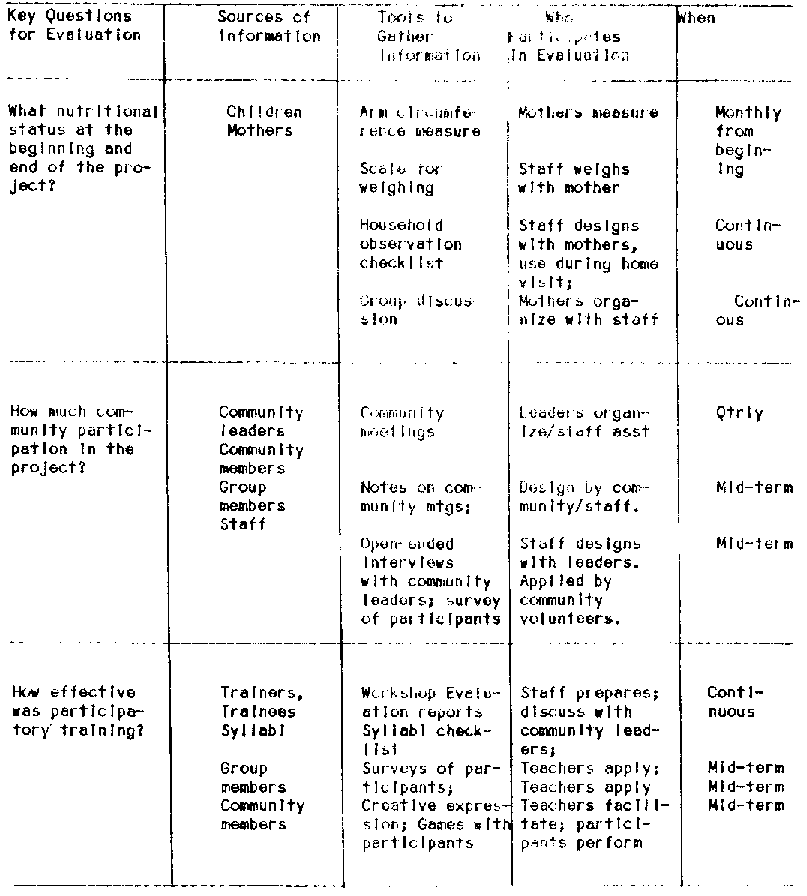
Example of project evaluation
Handout 15C: Health education project planning worksheet
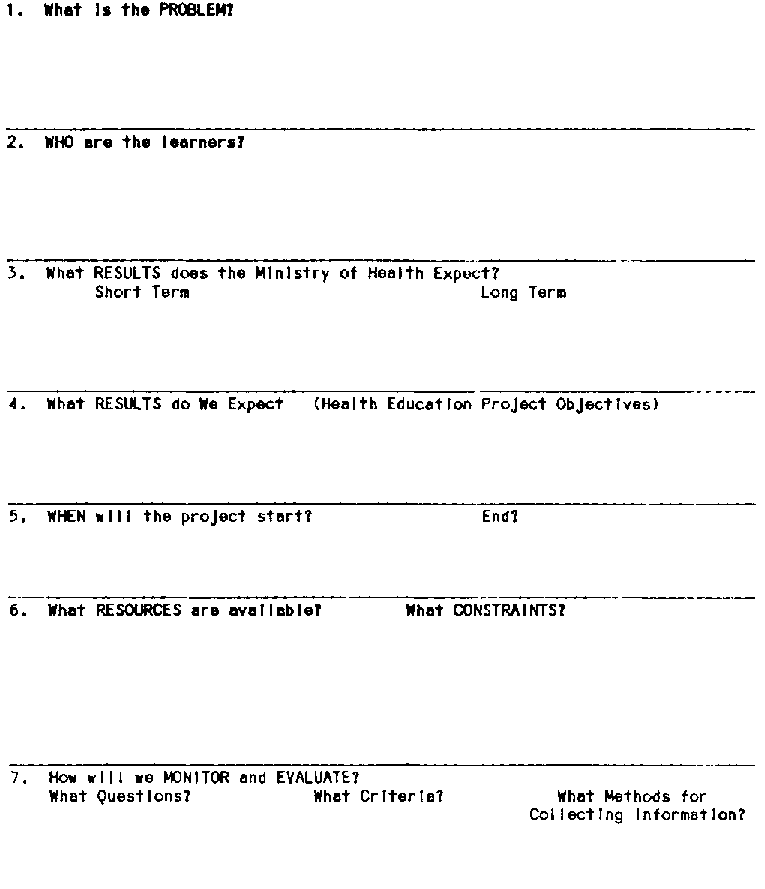
Health education project planning worksheet
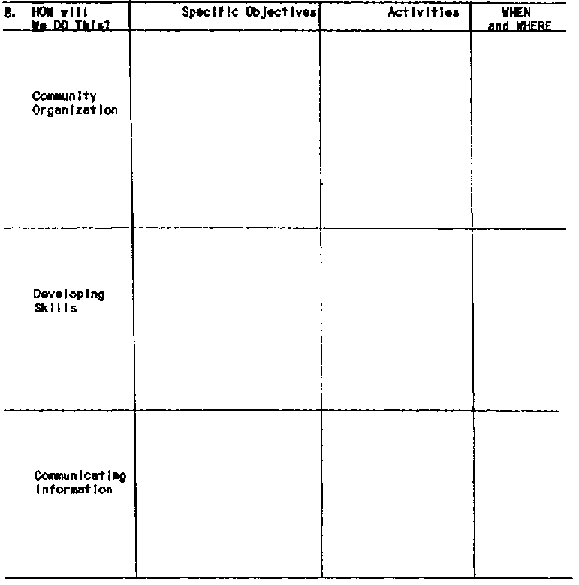
Health education project planning worksheet (continued)
Trainer Attachment 15A: The bamboo bridge activity
Materials to Prepare:
- a forge flannel board or chalkboard- two large blank posters
- 60 cm. of yarn or string
- several long strips of colored paper 160 cat by 2 cm.)
- tour long strips of paper (24cm. by 8 cm.), one labeled "Steps", one labeled "Barriers" and one labeled "Community Effort," and the other labeled "Resources"
- 12-15 paper labels (24 cm. by 8 cm.)
- several numbered paper cutouts to represent bare feet,
- glue cotton or sandpaper on the back of the labels so they will stick to the flannel board. Use tape to hold labels on a chalkboard.
1. Before the session prepare a poster illustrating the problem that your group identified during Session 19 (Identifying and Analyzing Priority Health Problems) and another picture illustrating your the objective that you developed in Session 20 (Writing Health Education Objectives). Label the pictures shown below.
2. Invite the community members who attended Session 19 to visit this session if possible . Arrange a translator if necessary.
3. Put up the posters and hang the string between the two posters. Attach the "Community Effort" label in the middle of the string.
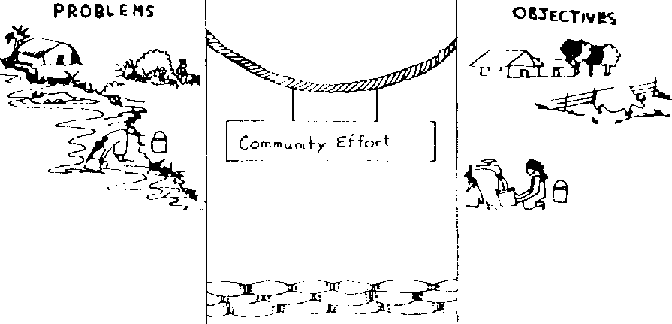
Community Effort
4. Greet the group and explain that they will be participating in a simulation of a community gathering to review problems, goals, resources and develop a plan of action for attaining the objectives. Briefly review how your group came up with the problems and the objectives. Ask the other participants to imagine that they are members of the community participating in a real town meeting.
5. Discuss potential barriers. Write the name of each barrier on a label and place it under the "Barriers" label, under the problem poster, as shown below.
6. Discuss available resources. Write the name of each resource, such as "village leadership,. on a label and place it under the "Resources" label between the problems and objectives posters as shown below.
7. Ask the group, "what is the first small step using these resources, that you can take toward solving your problem and accomplishing your objectives Write their answer on a label and put it under "steps".
8. Place paper foot number one at the left side of the bridge, pointed toward the objective. Continue to discuss a step-by-step plan of action. Add each step to the "step" list and put another foot on the bridge.
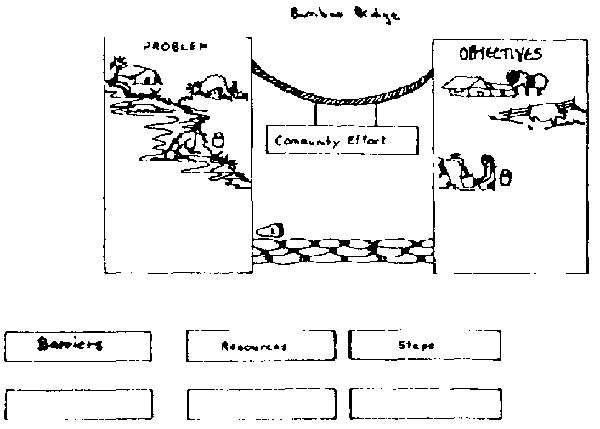
Bamboo Bridge
9. Ask members of the group to summarize what they accomplished in. the meeting and set a time to meet again to continue discussing the Project
Trainer Attachment 15B: Important concepts for evaluation
Several Uses
Make sure participants understand that evaluation can serve a number of purposes including:
- Measuring how well the objectives were accomplished.
- Assessing the performance of the health educator.
- Assessing what participants learned.
- Assessing the cost effectiveness of the Project or activity.
- Assessing community participation.
Qualitative vs Quantitative Evaluation
If time allows, have the group briefly discuss the difference between quantitative and qualitative evaluation. Emphasize the importance of using both to balance out the weaknesses and strengths of each type.
Quantitative evaluation is generally done using survey research with a large sample of people in the target groups for a particular activity or project. Statistical techniques are used to adjust for errors in data collection. Alone, quantitative data offer limited insights into the perceptions and social context of the people toward whom the health education Project is directed. Qualitative evaluation aims to describe in greater depth the perceptions and social context of a few individuals in the target group. While this approach runs the danger of providing information that does not reflect the views of the entire population, it provides rich cultural detail that can make it easier to interpret survey data.
Qualitative
"Concerned with understanding human behavior from the actor's
frame reference"
Naturalistic and controlled
observation
Subjective
Close to the data, the "insider"
perspectives
Process-oriented
Valid: "rich" data Assumes a dynamic reality
Quantitative
"Seeks the facts or causes of social phenomena with little
regard for the subjective states of individuals"
Obtrusive and controlled
measurement
Objective Removed from the data; the "outsider"
perspective
Outcome-oriented Reliable "hard" data
Assumes a stable reality
(Chart on "Qualitative vs Quantitative Evaluation From: American Council of Voluntary Agencies in Foreign Service. Evaluation Sourcebook p.8.)
Trainer Attachment 15C: Guide to the health education project planning worksheet
The following points will help you explain the questions on the planning worksheet:
- What is the PROBLEM? (what aspect of the current situation is harmful to health and well-being).- WHO are the learners? (for whom is the health education Project intended? What do they know and feel and do about the problem? What do they already know, feel and do?)
- How will individual learners , groups end communities be involved in formulating and carrying out the Project
- WHAT RESULTS does the Ministry of Health expect? What results do you expect? (What changes in health do you expect? what do the participants need to know, do or feel to accomplish this?)
- WHEN, WHERE and fur HOW LONG will you conduct this project? How will you do this'
- What RESOURCES are available to carry out the Project (whet supplies, people with special skills and knowledge, equipment etc).
- What CONSTRAINTS could limit the success of the Project
- How will you EVALUATE , during and after, both the Project and the techniques? (did you accomplish your objectives? How will you provide follow-up help and information
- HOW will you do this?
- What main kinds of health education activities will you use? ( what combinations of teaching, skills and communicating information, community organization discussion groups, home visits, displays, school health education, community health campaigns, forming a health committee, town meetings)
- What techniques and materials will you use? (what nonformal education techniques and visual aids are most effective for the types of learning specified in the objectives and the time available for the activities?)
Session 16 - Selecting and using non-formal education techniques to promote the control of diarrheal diseases
TOTAL TIME
3 hours
OVERVIEW
Selecting and using appropriate nonformal education techniques is an effective way to involve the community in health education projects and is essential for successful health education sessions on the control of diarrheal diseases. Nonformal education techniques can be used in community problem identification, health education, and evaluation. In this session participants discuss a variety of techniques and materials used in this and earlier sessions of this training. They practice using techniques such as drama, discussion and demonstration particularly for teaching about ORT. They also review educational and cultural considerations in the selection of techniques and materials for health education in their communities.
OBJECTIVES
· To practice use of drama, storytelling, song, discussion and demonstration for health education on ODD. (Steps 1-3)· To list educational and cultural criteria for selecting nonformal education techniques . (Steps 4, 5)
RESOURCES
- Bridging the Gap Parts II and III.
- Helping Health Workers Learn
- Appropriate Technology for Health: Health
- Education Methods and Materials
- Audiovisual/Communications Teaching Aids Resource Packet P-8.
- From the Field: Participatory Activities
- Working With Villagers
- Teaching and Learning With Visual Aids, Unit 5
Handouts:
- 16A Training Techniques
- 16B Using Pictures to Stimulate Discussion
- 16C Guidelines for Discussions
- 16D Guidelines for Demonstrations
Trainer Attachments:
- 16A Can Puppets be Effective Communicators?
- 16B Love Him and Make Him Learn
- 16C Some thoughts on the Use of Nonformal Education in The Real World
MATERIALS
Newsprint and markers , pictures, equipment, materials, for demonstration.
PROCEDURE
Trainer Note
Before this session ask participants to look through Chapters Two and five of Helping Health Workers Learn, and Parts II and III of Bridging the Gap for ideas about new ways to use non-formal education techniques and materials. Ask them to think about the techniques used in this training thus far as well as those they have used themselves in their work and list a few of the techniques that they found particularly useful.
The best way to teach nonformal education techniques is to model their use and to give participants as many opportunities as possible during the training to practice organizing and conducting non formal education activities. Refer to the technical sessions in this manual for practice session topics.
Participants will be leading different parts of this session and practicing several techniques Ask these activity leaders to practice before the session and to state the objective and what group of people they are aiming to teach.
An alternative is to conduct these activities in the community if you can make arrangements and if participants feel comfortable enough with "live" audiences and have adequate language skills. You could also invite members of the community to participate in the session. If at all possible, have at least one host country staff member present to give his/her perspective on the use of NFE techniques in the local communities.
Ask two participants to read and adapt one of the stories in Helping
Health Workers Learn, Chapter 13 page 6, or adapt a local story to communicate a health message, and read the rest of chapter 13 so that they can lead the story, drama and song activity in step 1. Encourage them to locate props for use in the drama portion of the activity. Ask someone to make up a song (or use one in Helping Health Workers Learn) about the main health messages in the story to sing to a local tune. Depending on the interests of the group, you may want to offer role play and puppets as alternatives to the story-drama. Helping
Health Workers Learn and Bridging the Gap are also good sources for these techniques Read Trainer Attachments 16A (Can Puppets be Effective Communicators?) and 16B (Love Him and Make Hime Learn) for case examples of the use of songs and folk drama with puppets in Jamaica and Sri Lanka.
For Step 2, ask two participants to use Handout 16B (Using Pictures to Stimulate Discussion), Handout 16C (Guidelines for Discussion) and Bridging the Gap to select and prepare to lead a discussion using pictures, with one or more of the techniques shown.
For Step 3, ask someone to prepare to demonstrate a procedure such as mixing ORS Solution, using the guidelines for demonstrations ( Handout 16D).
During Steps 1, 2, and 3, it is important to follow the NFE activities/techniques with a brief discussion of how it may be used effectively in the field. Allow at least 10 minutes at the end of each of these steps for the processing.
Step 1 (40 min.)
Teaching Health Through Stories, Song and Drama
Have the leaders for this activity tell the story, ask someone to repeat the story and ask others to comment on how well the person retold it. Then members of the group should act out the story and discuss what they learned from the story that could apply in their community. Sing a song as well about the main health messages in the story.
After the drama and discussion, process the activity by discussing drama, storytelling and song as health education techniques. Encourage participants to apply their own past experiences as well as the activity Just completed and their reading of Helping Health Workers Learn,
Some of the questions to discuss includes
- For what purposes
can you use storytelling, songs and drama?
- What ore the advantages and
limitations of storytelling, songs and drama as health education
techniques?
- Why is it important to combine discussion with storytelling and
drama?
- in what ways court you use aroma, stories and songs in teaching
about ORT in the communities where you work?
Trainer Note
In discussing this and the following techniques it is helpful to summarize participants' comments on a chart such as the following:
|
Technique |
When used |
Pros |
Cons |
Preparations needed |
Also relate the selection of the technique to the session objective, noting that some techniques are better than others for particular kinds of objectives such as: problem identification, skill learning, problem solving, evaluation and other kinds of learning experiences.
Give the activity leaders an opportunity to receive feedback on
how well they facilitated the activity by asking questions such as:
- What
was good about the way the leaders conducted this activity?
- What could be
improved the next time they do this kind of an activity?
Step 2 (30 min.)
Stimulating Discussion By Using Pictures
Hove the participants who prepared for this step demonstrate the use of pictures to stimulate discussion. Encourage them to involve the group as actively as possible and to summarize at the end of the activity other ways that pictures can be used to stimulate discussion of community problems, to assess ongoing projects, or emphasize the need for particular actions such as sanitation measures.
After they finish, lead a discussion of the use of pictures with discussion activities. Ask participants:
- What does the use of pictures contribute to discussions?
- For WHAT purposes could you use pictures and discussion in the communities where you work!
- When do you use discussions in general?.
- What examples of good discussion techniques were used in the presentations?
Trainer Note
Use Handout 16C (Guidelines for Discussions) to guide the discussion. Give the handout to trainees as a reference.
Step 3 (60 min)
Learning By Doing Through Demonstrations
Turn the session over to the person who prepared the demonstration. Make certain that he or she:
- Asks one of the participants to repeat the demonstration.
- Follows with a group critique of the return demonstration.
- Gives all the participants a chance to practice the skill.
At the end of the demonstration activity, lead a discussion on the use of demonstration in health education. Use some of the following questions to guide the discussion:
- in what situations is it best to select demonstration as a health education technique?
- What steps do you follow to prepare and present a good demonstration?
- What are the main advantages and disadvantages of demonstration as a health education technique?
- How can you use demonstrations for health education activities in CDD, particularly ORT?
Trainer Note
Too often people assume that all that is needed for a demonstration is the equipment. Use Handout 16 D Guidelines for Demonstrations to focus the discussion on how to prepare and conduct good demonstrations. Distribute the handout for future reference.
In the discussion of demonstrations, make certain that the following points are discussed :
- It is important to prepare and organize all the materials before the demonstration.- Proceed slowly step-by-step.
- Make certain that everyone can see the demonstration
- Give the participants a chance to practice the procedure or task. Practice is essential to master the hands on skills and perform them effectively.
- Praise correct performance and remedy errors in a pleasant way.
Step 4 (15 min.)
Selecting Non-formal Education Techniques
Have participants discuss what they have learned about selecting non-formal education techniques from this and other sessions. Ask them to state some rules of thumb for selection of techniques. You may want to distribute Handout 16A (Training Techniques) to use during the discussion. Ask someone to summarize the rules on a sheet of newsprint.
Trainer Note
Basic questions to ask in selecting techniques includes
- WHO are the learners?- WHAT do you expect them to be able to do by the end of the activity!
- How can you best INVOLVE THE LEARNERS in the activity?
- What is the PROBLEM? Different kinds of problems require different kinds of interventions, and different types of techniques. For example:
|
Trainer Note | ||
|
Problem Technique |
Type of Action Needed |
Possible Health Education |
|
Lack of knowledge |
information radio, newspapers |
posters, talks, displays, |
|
Influence of others |
support counselling |
discussion groups, clubs |
|
Lack of skill |
training games, practice |
demonstrations, case study |
|
Lack of resources linking with outside resources |
community organization |
community surveys meetings, committees |
|
Conflict of values |
clarification of values |
role play, stories drama, games |
Step 5 (20 min)
Cultural Considerations in Selecting Nonformal Education techniques
Ask everyone to take five minutes to recall and list what they have learned about ways that people communicate in the communities where they work. These lists should include non-verbal as well as verbal communication. Some of the kinds of information they might consider are
- What types of social situations are most appropriate for exchanging what types of information- What local gestures, sayings, clothing styles, and other traditions are used in sharing information or entertainment?
- What objects, pictures or language are restricted to religious events?
- How do people teach children how to behave properly and to perform tasks?
Have participants briefly discuss ways that local communication styles differ significantly from their own and give examples from their experiences. Ask them to discuss ways the communication patterns, cultural practices and differences that they Just discussed would affect their selection of nonformal techniques and materials.
Some questions for discussion are:
- Would the techniques and materials used in this ant earlier sessions work in the local community? Why or why not?- How could they adopt some of those techniques and materials to make them more effective in this setting'
- What local traditions can be incorporated in nonformal education? Which should be avoided?
- When might it be inappropriate to use non-formal education techniques in the community?
Have them add these cultural considerations to their list of rules of thumb for selecting training methods and materials and post it for reference in inter sessions.
Trainer Note
For preservice Training, this step should be coordinated with cross-cultural training. It may be necessary to provide some of the answers to these questions. If any host country staff members are participating in the session, ask them to give their perspectives during the discussion in this step.
Some points that should come out of the discussion include;
- Different life experiences and customs that affect the ways in which people share information such as:- Who should talk with whom,
- what topics different types of people should talk about.
- acceptable styles of interaction (direct or indirect conversation, quiet or loud voice, gestures, distance).
Remind the participants that rules for sharing information are learned as a part of growing up in a culture. You may want to raise some of the political and economic issues discussed in Trainer Attachment 16C (Some Thoughts on the Use of Nonformal Education
Handout 16A: Training techniques
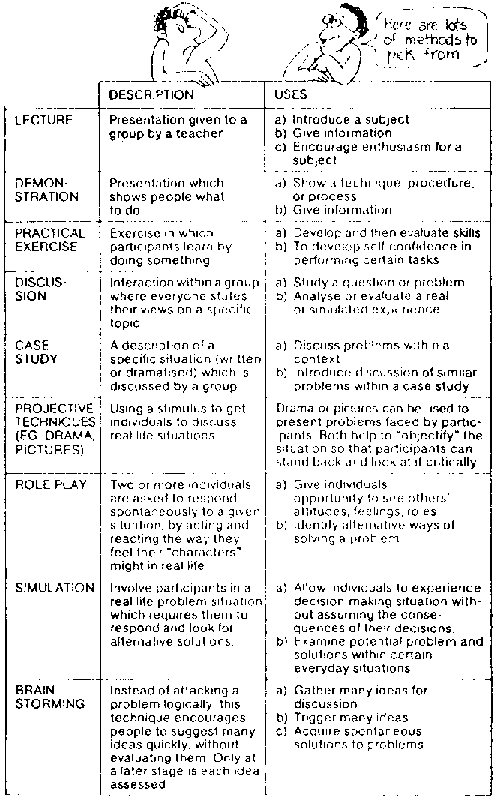
Training techniques
Handout 16B: Using pictures to stimulate discussion
There are many ways to use pictures with discussions. A few are listed below. You will find more Ideas in Helping Health Workers Learn and Bridging the Gap.
Problem Picture
Show a picture illustrating general health problems in the community as a non-threatening way to identify local problems and discuss what can be done about them. picture such as the one below, and ask people.
- What is happening here?
- What are the reasons this is happening?
- Could this happen where you live?
- What could we do together about these problems?
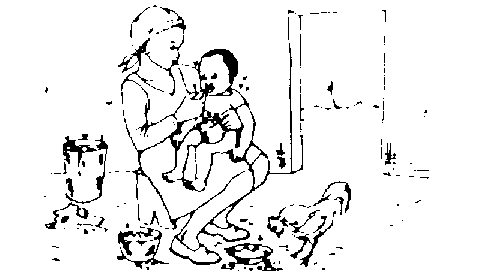
Figure
Comparative Pictures
Two pictures, such as the ones below can be used to contrast desirable and undesirable situations, or harmful and beneficial practices. This provides a way to help communities analyze why health problems exist and consider specific alternatives.
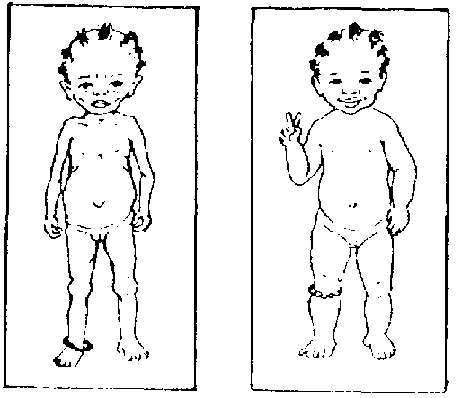
Figure
Picture Story with a Gap
This is a story about a health problem in the community that ends with the problem solved. The part of the story that explains the way that the problem was solved is created by community members. This involves them in analysis of their own situation and helps thee to set goals.
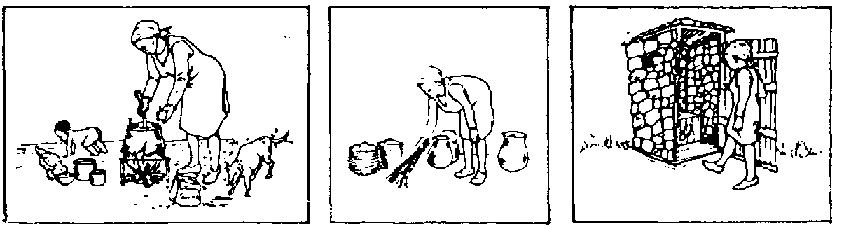
Figure
A Picture Series
A picture series can be used by a health educator to tell a health story. Given to Villagers the pictures provide a way to express their feelings, concerns and ideas by creating their own picture story.
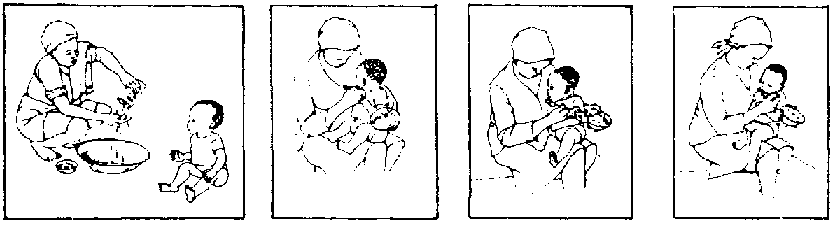
Figure
Pictures Drawn By Community Members
Drawing pictures of community health problems, goals and is a way that community members can express themselves and examine their perceptions, needs and options.
Figure
Handout 16C: Guidelines for using group discussion
Prepare
- Decide on your objective for the discussion.
- Prepare some open questions you can ask to start the discussion.
- Collect the visual Aids you will use to begin the discussion.
- Practice using the visual aids if this is necessary.
- Find out as much as you can about the participants.
- Look at the place where the discussion will take place.
- Arrange the seating to increase interaction.
Conduct the Discussion
- Start on time.- Try to make the group feel at ease.
- State your general purpose of the discussion. (It is assumed the you have specific learning objectives and this techniques is appropriate.) Ask if it fits their needs.
- Ask participants what are their objectives and explain how they will be covered in the discussion.
- Introduce the topic clearly and concisely.
- Explain the discussion procedures and define its limits. Encourage participation by all members.
- Control the over-talkative member.
- Draw out the shy member.
- Don't allow one or more members to monopolize.
- Deal tactfully with irrelevant contributions.
- Avoid personal arguments.
- Keep the discussion moving.
- Keep the discussion on the subject.
- Summarize frequently.
- Use audio-visual Aids if available.
- The best discussion is often one in which the trainer talks only about 20 percent of the time.
Summarize the Discussion
- Review the highlights of the discussion
- Review the conclusions which have been reached.
- Make clear what has been accomplished by the discussion.
- Restate any minority viewpoint.
- Get agreement for any action proposed.
Evaluate
- Watch learners during the discussion to be sure that they remain interested, and not bored and restless.- Ask learners how well they think the objective of the discussion was accomplished.
- How well do you feel the objective of the discussion was met?
Handout 16D: Guidelines for demonstration
Types of Demonstrations
Method Demonstration: shows how to carry out a skill and explains each step as it is performed.
Result Demonstration: promotes interest and acceptance of a new practice by showing the actual results (benefits).
Method-Result Demonstration: combines the what why when how of an improved practice with physical proof of the benefits.
Conducting Demonstrations
Prepare
- Make certain the topic is timely and relevant.- List al' the steps of the procedure
- Collect and organize all the materials that you will need. Use the same kinds of equipment and materials that your learners will be using.
- Practice the demonstration, perferably in front of friends who also know how to perform the task. Get their feedback on your language, credibility and how easily it is to understand you. If you have difficulty with the language, you may want to use an interpreter.
- Arrange the place where you will give the demonstration so that everyone can see what you are doing.
Demonstrate the Procedure
- Make the demonstration as short and simple as possible.- Establish rapport with the audience before starting the actual demonstration. You might want to talk with them informally before the session.
- Introduce yourself and state the topic of the demonstration. Immediately explain its relevance to the audience.
- Show the procedure slowly, one step at a time and explain each step as you finish it.
- Involve your learners in the demonstration as much as possible. Some questions you can ask are:
- What should I do next?
- Why is it necessary to do it this way rather than another way?
Make certain that everyone can see the demonstration. Encourage questions and stop to answer questions.
Review the Procedure
- Ask one of the participants to repeat the procedure while the others watch to see it they do it properly, and critique the performance when it is finished.- Give everyone an opportunity to practice the skill.
- Praise correct performance and correct errors pleasantly.
- You nay want to prepare a handout that summarizes the steps of the procedure in words and/or pictures as is appropriate for your learners.
Evaluate
- Can the learners repeat the procedure correctly?- Could everyone see all the steps of the procedure!
- Did learners' questions suggest that the demonstration was confusing in any way!
- If possible arrange to follow up with another group session or home visits to make certain that the participants remember how to perform the procedure correctly and actually use it in their work or homes.
Suggestions for Demonstration Topics
- How to mix ORS solution ( see Session 5, Oral Rehydration Therapy).
- How to make and use a gourd baby for teaching about oral
- Rehydration (see Helping Health Workers Learn).
- How to mix weaning food (see Session 8, Preventing Malnutrition)
- How to assess health status of an infant using a measuring strip (see Helping Health Workers Learn and Session 7, Recognizing Malnutrition)
Trainer Attachment 16A: Can puppets be effective communicators?
Can Puppets Be Effective Communicators?
Primary Health Care and Community Development through Folk Media - An Experiment in the Colombo Slums by Carol Aloysiua
It is a new experiment that is being tried out to spread the message of Primary Health Care (PHC) to a population that knows very little about health and sanitation."
This novel Programme Support Communications approach, using traditional art forms to convey health messages to the target population, is aimed at supporting an on going slum upgrading project-line Environmental Health and Community Development Protect launched three years ago between the government of Sri Lanka and UNICEF This is the first time that such a communication project has been formulated to be earned out systematically and comprehensively in Sri Lanka.
A ten-member Committee has now been set up of representatives of government departments such as Colombo Municipal Council, Common Amenities Board, and the Urban Development Authority, to monitor the protect which will officially be inaugurated under the name Jana Udava (Awakening of the People).
Can drama he considered an effective medium of raising the overall quality of life of a people living well below the poverty line? Can an inanimate object such as a puppet be cast into the role of a communicator of health messages?
Simon, who is the UNICEF Consultant in this novel experiment, gives a positive reply to these questions. "Drama helps to put across any kind of message, especially to an uneducated audience, in a far more tangible and meaningful way than any discussion or film show can' But why Folk Drama? Why not a more modern form of drama? "because" he explains, "this kind of drama belongs to the kind of people our messages are directed to and can be understood and appreciated by them. As for using puppets for this purpose it was just an experiment canted out to coincide with the traditional puppet shows staged at Vesak. The fact that it was a huge success proves that Puppets can be effective Communicators."
The two puppet shows staged on Vesak day this year were based on the Jataka tales revolving around the life of Lord Buddha. The unique quality about them was that this was the first time that these religious stories were re-written in a modern context to give an insight into the living conditions and innumerable problems of the shanty population in Sri Lanka.
Patachara, the first play, was based on the popular religious tale of an unfortunate woman who fails from society and is finally saved by the Lord Buddha in the re-interpretation of this story, a rich girl falls in love with her chauffeur and ends up in a slum similar to the shanty garden in which the play was staged. She endures trials similar to those of the slum folk in that garden. The script poignantly describes the extreme poverty and hardships she endures, and the deaths of several of her children through numerous diseases which frequently occur in use shanties due to ignorance and poor sanitation Finally she turns to prostitution to earn a living Contracting a venereal disease she nearly ends her life but is saved by a Buddhist nun who helps her to enter the order and find peace of mind.
Throughout the play attention is focussed on the common problems of the Garden population - their dire poverty, malnutrition, the unsanitary living conditions, their lack of education, ignorance of basic health care, and the almost total lack of opportunities to better themselves it also draws attention to the constant exploitation of these unfortunate people by the society around them.
Kisa Gothami, the second play, revolves around the story of a mother who is unable to reconcile herself to the death of her child until she is finally shown the truth by the Lord Buddha, when he sends her out to find a house in her village where no young child has died. She returns with the sad knowledge that every mother in her village had endured the same tragedy.
In the re-interpreted version of this popular Vesak play, the authors sought to highlight the prevalence of child mortality and morbidity among the slum population.
The fact that the plays had been ret written by members of the target audience, who had also been responsible for the entire production, was considered most encouraging since this voluntary gesture of the garden population indicated that an awareness had been created.
The plays had taken only three weeks of intensive preparation. Within that brief period, the UNICEF consultant was able to gather together the most talented youth of the garden and its immediate neighbours, guide them in writing the scripts, let them introduce their own ideas and problems into the plays, and then show them how to assemble the puppets and manipulate them
This team of dramatists in the making not only prepared excellent scripts complete with the taped voices of about 25 persons in the garden who voiced the different characters in the plays, they also assembled the stage and the sets
Trainer Attachment 16B: Love him and mek him learn
"Love him and mek him learn"
Children in school are a captive audience. In the parish of St. Thomas, Jamaica, they are being taught how to help bring up their own younger brothers and sisters. Parents, teachers, and children are responding well.
S. Thomas has long been regarded as one of the parishes in Jamaica most susceptible to poor health and the outbreak of disease. Many families live in extreme poverty with poor standards of housing, and face other environmental problems which affect the physical and mental development of their children.
Since February 1982 a joint programme involving UNICEF, the Ministries of Health and Education, and the Tropical Metabolism Research Unit (TMRU) of the University of the West Indies, has been making inroads into those conditions. Primary school children are at the heart of the programme, taking pan as change agents in a teaching approach which departs from the usual primary school tradition.
Jennifer Knight, the Project Director, describes the results after one year as "very encouraging: we are getting there slowly but surely." e story of the St. Thomas project is, in very large part. the result of her hard work and dedication. Indeed, her indetatigable enthusiasm seems finally to be attracting the attention of the Ministry of Education, with which the programme's long-term prospects rest. According to Jennifer Knight: "Our long term goals are to integrate child health and development, and improve parenting skills throughout the country."
The project is based on the assumption that all aspects of children's development social, emotional, intellectual, health and growth are strongly influenced by their environment, including the quality of child in St. Thomas, parents of very poor children do not have the right knowledge about hygiene and child feeding. They also fail to appreciate the importance of play. So children often fail to develop to their physical and mental best. In addition. health and social services are often inadequate at present, particularly in remote rural areas.
According to Jennifer Knight, the St. Thomas project took a new approach to solving these problems by using primary school children initially, the programme involved seven primary schools in the western part of the parish and later extended to the eastern side, gradually encompassing all the primary schools in the parish. The children were taught basic child rearing practices, focussing on hygiene, child-feeding and child development.
Another objective is to help the school children become good parents in their turn, and to improve the care received at present by younger siblings. Even the parents' knowledge and skills can be improved by their children. And the programme also seeks to improve teachers' knowledge.
The idea is to use the educational services to promote the health of the community.
Children themselves are agents of change in most Caribbean countries, primary school education is free. Schools have in the main only been used for traditional educational purposes. However, primary schools are a natural channel for services aimed at improving the health and development of young children. They present a captive audience of older children who can be used as agents of change. Large families usually have children whose ages are spread over a wide range, and older children are expected to share in the care of the younger ones in addition, Jamaica recently introduced compulsory education, which has helped to improve school attendance. Teachers are very respected members of the community.
Initially, working with children in Grade IV (9-11 years old), the programme concentrated on teaching three main topics: young child nutrition; promoting a healthy and safe environment, and child development.
Two weekly workshops were conducted with 14 teachers from grade levels four and five, for one school year. Teachers were given detailed lesson plans with ideas and activities. They were encouraged to develop these and to discuss the children's response to the lessons. Modifications were made to ensure that lessons were easily understood and enjoyable. Much discussion took place on health problems, and measures they could use to solve them.
The approach stressed participatory activities for the children rather than didactic teaching, stimulating the children's interest, and motivating them to take home child health messages to their parents and to look after their younger brothers and sisters more competently.
A series of songs and jingles was compiled, using folklore music and the Jamaican dialect, emphasizing all the important child health and development themes. Pictures were designed, which the children coloured and took home. Mindful that the reading level of both the parents and the children was poor, the messages were largely pictoral although a few simple words were added.
Jennifer Knight reports that the project implementors found a higher level of illiteracy in the schools than anticipated but encountered a wide range of abilities among the children. Accordingly, only very basic child health and development messages were used in the curriculum, focussing on preventive activities.
Food for growth
In the first semester, children were taught about the importance of food for the young child's growth, especially in the early years when children grow rapidly. The following lines from one of the songs sharpen the point
"When de baby reach four months old
There are things you should be told
Give the thick porridge from a spoon
and dish
And den you will get all that you wish..."
The values of breast-feeding the child at the right time was also emphasized. The chorus of the same song brings out the message:
"She get di breastmilk
(day and night)
She get it for a year
(oh yes)
She never get sick
(oh no)."
They were taught when to introduce porridge, how to serve food to the young and when to introduce the baby to the family pot:
"She can eat foods from de pot
(at six months)
All de vegetables fruit and meat
(one, one)
All de mashed foods, fish and peas
(oh yes)
Mek sure dem all nice and clean
(ooh yes)."
In the second semester, the children were taught how to make their environment a safe and healthy place to live in. These lessons emphasized that germs caused diseases; that certain insects and animals carry them; and showed how mosquitoes can be controlled.
Jingles also focussed on personal hygiene and proper food preparation:
"Germs like dirt
And garbage too
Germs will make you sick
Keep germs out
Germs like food
Dirty hands too."
Trainer Attachment 16C: Some thoughts on the use of non-formal education in the real world
Susan Emrich
In recent years there has been a great deal of interest in the use of non-formal techniques of education for training of health and development workers. The term is often ill-defined and misunderstood, but in practice it usually means the use of techniques that encourage active participation of the members of a group in learning through a process of identification of a real problem, examination of the problem as a group and discovery of possible actions the group can take to solve the problem. The "something" being learned is frequently a piece of information or a technical skill, but the non-forma) method of problem solving is learned at the same time.
Non-formal education used as a technique to teach more or less technical skills has its applications, but in practice it walks an unsteady line between its origins in philosophies of education as liberation or political consciousness raising, and conventional schooling. The outcome of the use of these techniques depends greatly on the composition of the group, the orientation of the group leader, and the surrounding social-political climate.
The use of non-formal techniques, when they work at all, quickly breaks down the formal teacher-student relationship and establishes a relationship of equality and mutual responsibility for learning. This seems to be an obvious and desirable step, but in the context of political or racial repression it is literally explosive. The simple fact of treating oppressed people with respect, listening, and providing a place where they can work together is a much stronger message than whatever the topic of the class was supposed to be. This is especially true of groups with no schooling.
Groups of unschooled peasants make very little separation between perceiving the solution to a problem and the action to implement the solution. They may be slow to become convinced, but they are very quick to move on to concrete action, and that is where they come into conflict with the constraints of the prevailing social-political system. More sophisticated groups, on the other hand, can work through a non-formal exercise very smoothly and come to all the right conclusions, but they are much less likely to carry their conclusions into action, and so are less likely to come into conflict with the harder realities of their situation.
The group leader who uses non-formal techniques may find that the techniques lead him into territory he hadn't planned to explore or to conclusions that weren't part of his private curriculum. This style of learning is a group process that may be very difficult for the leader to control. The following are a few examples among many from personal experience.
An Indian health promoter was trying out a new teaching aid with group of Indian women. The material was a set of pictures about prenatal care. She showed the first picture to the group. It was a dull enough picture of a white coated male doctor, talking to a pregnant Indian woman. The promoter asked what the group saw in the picture. The replies came hesitantly at first, then in an angry flood: "He's scolding her., "He says she came too late., "He's telling her she has to go to his private clinic and pay a lot of money", "He doesn't want to touch her", "She is sad and wants to go home", "She can't understand his Spanish..
At this point the promoter had a choice between talking about the reality or continuing the fiction of talking about prenatal care which in practice is inaccessible to most people because of inadequate facilities, corruption and racist attitudes.
Another time . was teaching nutrition to a group of health promoters in a part of the country that is notorious for low wages. There were some very poor-looking people in the group including a young man whose skin and hair showed signs of vitamin deficiencies. I used a market game to teach price comparisons and the nutritional value of foods. Each person "buys" the foods he thinks best with the amount of money that he normally has to spend in a day for food. The foods can be real or pictures but they must be common, local and not expensive. The group evaluates each person's buying to decide how well they did with the money they had. The game went well with a lot of good natured Joking and a minimum of technical information from me. When we got to the young man he said that he could not buy any of those common foods and in fact had not bought them for years. He was earning $.60 per day for plantation labor and had no other resources His first two children had died of kwashiorkor and the third was born small and soon died. He said that his wife had stopped menstruating even though she wasn't pregnant and he wanted to know what nutritional advice I could give him for her. I had to say that there was no nutritional advice I could give him but that he and his wife should get away from that plantation and look for something else before they starved to death. Then another young man said the only real answer is to change the system that creates such poverty. I said yes but that was outside the limits of what I could allow the group to discuss in an open public meeting. The class broke up after that: most had learned a little nutrition and all felt bitter and frustrated at the young promoter's situation, and at my refusal to talk about it which they saw as hypocrisy.
In both of these examples the intrinsic power of the educational method combined with the reality of the people had overwhelmed the intended contents or subject matter. Nonformal education cannot be easily separated out into techniques for training on the one hand, and political awareness on the other. This is probably true of education in genera' but the particular power of non-formal education is that it is a collective process which promotes cohesion and cooperation within a group. The group as a whole discovers their problems, reaches conclusions and desires actions, which have a greater or lesser political impact. The same number of people reaching the same conclusions one at a time in isolation, if that were possible, would not have the impact or visibility of a group, and would not be able to carry their conclusions into action. Because of the things that the group is able to accomplish they become visible and may become targets for political repression.
Successful health education is especially likely to lead to visible action. One of the goals of health education is to get people to give up their magical view of disease causation for an understanding of cause and effect, and the use of non-formal group techniques is quite effective in this respect. However, the fact that most of the people have a magical view of disease is one of the corner-stones of the social-political system as a whole. If through successful health education people come to accept a cause and effect explanation of disease they will start to feel the need for actions that the system is in no way willing to allow, and for services that the system can't or won't provide. In fact the magical view of disease causation can be seen as an adaptation of the culture to a situation of extreme helplessness maintained over a long period of time. It may be the only way for the people to avoid frustrating and dangerous conflict with the system. When a health worker is effective at helping people to discover cause and effect relationships and abandon their magical view of disease he himself becomes identified as a leader and becomes highly visible.
The health or development promoter often uses techniques that he has been taught to use in the relative safety of an officially approved course, given by government workers or foreign volunteers. In this setting he is protected by the status of an institution which has at least tacit support of the authorities; and by the composition of the group which will most likely be made up of schooled people who are used to playing with ideas and will not be inclined to take direct action of any sort. When he uses the same techniques with the illiterate peasants of the village all of these conditions change and he may be put in a very vulnerable position.
When non-formal techniques are used as a political tool, the group leader presumably knows where he is going and how to protect himself, but when they are used for other ends, the leader is often quite naive about the implications of what he is doing. If the attitude of the promoter is at times naive. the attitude of the agencies is more than naive: it is irresponsible. Both government and private agencies set up and finance programs to train promoters with very narrow, short-term goals in mind. Training in non-formal education is a means to the end of having X number of latrines installed within Y number of months, or some percentage increase or decrease in malnutrition.
But the use of non-formal education and the formation of cohesive, active groups in the community will not just go away once the latrines are built. People who learn how to analyze what is wrong with their water system are quite likely to move on next to what is wrong with their political system. And while the agency may have prepared people very well to deal with the water system, they probably did nothing to prepare them to deal with the political system. The agencies and the people who work for them should be willing to admit that their project, whatever it is, exists within an historical context and will inevitably influence that history. In the context of social-political change, there simply are no neutral actions. They should also realize that the people they train will become active participants in historical processes and need preparation for political understanding and action at least as much as they need preparation in technical matters. To fail to do this is irresponsible and in really bad times comes to resemble a form of human sacrifice.
Session 17 - Selecting and using visual aids to promote CDD
TOTAL TIME
3 hours
OVERVIEW
Pictures and other visual aids make communication and learning about diarrheal diseases control easier and more interesting by translating abstract ideas into more concrete familiar forms that relate to the experience of the learners. In Session 16 (Selecting and Using Nonformal Education Techniques) participants practiced combining visual aids with nonformal techniques. In this session they focus on visual aids, looking at different ways that they can use these aids in health education to promote the control of diarrheal diseases, particularly through ORT. They review cultural, educational and design criteria for selecting visual aids. They use these criteria to select visual aids for health education sessions in the project plans developed in Session 15 (Planning a Health Education Project on CDD).
OBJECTIVES
· To describe ways that visual aids can be used to help learning and understanding.
(Step 1, 2)· To select appropriate visual aids to promote activities to control diarrheal diseases, using criteria stated during the session.
(Steps 3-5)
RESOURCES
- Teaching and Learning With Visual Aids
- Audiovisual/Communications Teaching Aids Teaching Aids Resource Packet P8
- Helping Health Workers Learn, Chapter 11
- Bridging the Gap
- On the People's Wavelengths Communications for Social Change, (UNICEF News 114/4)
Handouts:
- 17A Ways Visual Aids Help People Learn and Remember
- 17B Why Pictures Fall to Convey Ideas
- 17C Design Considerations
- 17D Using Pictures to Communicate Effectively
Trainer Attachments
- 17A Why Use Visual Aids?
- 17B Villagers Teaching Us to Teach them
- 17C Examples of Teaching Situations
MATERIALS
Examples of as many different kinds of visual aids as possible. Newsprint, markers, pencils, paper.
PROCEDURE
Trainer Note
Prior to the session ask participants to look through Chapter 11 of Helping Health Workers Learn (Making and Using Teaching aids. and identify at least one new use of visual aids. that they would like to try out during this training course.
Ask three participants to work with you to prepare and demonstrate effective uses of visual aids. In the demonstration focus one creative uses of visual aids; appropriate selection of visual aids. and showing skill in the actual handling of the material, such as timing (when to show a visual) and making sure it can be seen.
Prior to the training, ask participants to bring visual aids. that they have developed and used. Also ask a few people to locate examples of different kinds of visual aids. on topics related to the control of diarrheal diseases and to arrange or display them in the training room. Include in the display all the visual aids. used in the training program thusfar. Assign this task enough in advance to enable them to visit local agencies to collect or borrow visual aids. If the location of the training site is too far from such agencies, collect these materials yourself prior to the training. Get as many locally designed and produced materials as possible and, where available, get multiple copies to give to the participants for their health education activities.
If you plan to use the Optional Step on Selecting Nell Designed Pictures (located at the end of the Procedure section) ask two people to help you find or prepare visual aids. that illustrate the design considerations shown in Handout 17C (Design Considerations). Ask for one good and one bad example for each consideration.
Trainer Attachment 17A Includes a short activity that you can use to introduce this session if time allows.
Step 1 (60 min)
Ways Visual Aids Help People Learn and Remember
Introduce the session by reviewing the objectives and pointing out the display of visual aids. With the help of the participants who prepared with you, demonstrate at least three different uses of visual aids. for specific teaching situations dealing with the control of diarrheal diseases. For each demonstration, state the objective, and describe the target group. After each one, discuss questions such as the following:
- What did you like best about the ways visual aids. were used here?
- What did you like least?
- What different ways could you use this visual aid?
- Has the timing (when the visual aids were used in the session) and handling skillful and effective?
After all the demonstrations are finished, facilitate a discussion using the following kinds of questions:
- What kinds of information are best communicated using visual aids?
- How can visual aids. strengthen nonformal education techniques?
- Can visual aids. stand on their own for communicating health messages?
- What are some examples of effective use of visual aids. during this training program? How have you used visual aids.
Trainer Note
You may want to begin this session with the activity described in Trainer Attachment 17A (Why Use Visual Aids?).
Be sure that you demonstrate the use of visual aids. when they are needed and not Just added because someone wants to use a visual aid. The visual aids. should be appropriate for the objectives, the learners, and communicate effectively (applying the Design Considerations in Handout 17C). Do short, focused demonstrations.
Include combinations of visual aids and nonformal education techniques to increase the participation of the learners, to identify and solve problems, evaluate projects and learning-by-doing as well as communicating health informations. Handout 17A (Nays Visual Aids Help People Learn and Remember) and Helping Health Workers Learn offer many ideas.
The outcome of the discussion should be answers to the questions: - Why use visual aids? When should I use visual aids?
You can also write and discuss this Chinese proverb: "I hear I forget' I see I remember; if I do it I know it".
Step 2 (15 min)
Gallery Tour of Visual aids.
Give participants 15 minutes to make a "gallery tour" of the visual aids. arranged in the display. Ask then to choose a partner for the "tour" . Have the partners discuss ways to use these materials in their work in controlling diarrheal diseases and share creative ways that they have used visual aids. In the past. Encourage them to pick up the visual aids. and think about the ideas for using visual aids. that they read about in Helping Health
Workers Learn. At the end of tints activity give them Handout 17A (Ways Visual Aids Help People Learn and Remember) as a reference.
Step 3 (20 min)
Selecting Visual Aids for the Local Community
Briefly summarize and discuss Trainer Attachment 17B (Villagers Teaching Us to Teach Thea) or a similar example to highlight the importance of involving the community in selecting (or developing) and using pictures for health education.
Ask the participants to agree on three or four main criteria to use in selecting visual aids. Ask someone to summarize these on newsprint for future use. After the discussion Distribute Handout 17B (Why Pictures Fall to Convey Ideas) as a reference,
Trainer Note
Some of ideas that should come out of the discussion include:
- Consider local beliefs, customs, design preferences, meaning associated with colors, and familiar things such as clothing, houses, and household goods.- Use a variety of visual aids. when possible.
- Use the real thing rather than a picture whenever possible. - Select media that involve the learners in the session.
- Involve the learners in selecting and making visual aids.
The following are the most important criteria for selecting visual aids.
- Skills, knowledge, attitudes, or organization stated in your health education objectives are accomplished more effectively and easily using visual aids.- The visual aid is culturally appropriate.
- The visual aid is well-designed; it communicates the intended message clearly and simply.
- The visual aid works well with the health education techniques that you have chosen.
If participants have a special interest in developing visual aids. you may want to use the Optional Step on Selecting Nell Designed Visual Aids after Step 3.
Step 4 (30 min.)
Practice Selecting Visual Aids
Divide into the pairs that developed project plans. Ask each pair to apply what they have Just learned about cultural and design considerations for visual aids and techniques, along with their project objectives, to decide and discuss how they would select visual aids for their target group for one health education session in that project.
Ask them to select visual aids if appropriate, from those displayed in the room and be prepared to explain their choice to the other groups. If the visual aids in the room are inappropriate, ask them to suggest what, if any, visual aids they plan to make for the session and explain why they need them.
Trainer Guide
It you find that participants need some practice in selecting visual aids before starting their own sessions, divide them into three or more groups and assign teaching situations such as those described in Trainer Attachment 17C (Examples of Teaching Situations). Have each group select visual aids and nonformal education techniques for the asssigned situations and present the session to the other groups. Allow additional time for this alternative.
Step 5 (40 min.)
Sharing Visual Aids Selections
Reconvene the large group. Ask each small group to describe their project objective, target group and the session during which they will use the visual aids. Then have them show the visual aids selected and explain why they were chosen.
After each report have the others assess the criteria used to select the visual Aids and how well the visual aids fit the criteria. Encourage suggestions for other possible combinations of nonformal education techniques and visual aids for each session. At the end of the discussion distribute Handout 17D (Using Pictures to Communicate Effectively) as supplementary reading.
Close the session by explaining that they will be applying these skills in selecting and using visual aids in Session 19 (Designing and Evaluating Health Education Sessions) and in their final project presentations (Session 22).
Optional Step (20 min)
Selecting Well Designed Visual Aids
Show the group the pairs of pictures prepared earlier to illustrate the design considerations in Handout 17C (Design Considerations). For each pair of pictures, ask the group which picture is better? When they decide, ask them what makes one picture better than the other. Ask someone to make up a simple rule for choosing well-designed visual aids based on each comparison.
Distribute Handout 17C (Design Considerations) as a summary. Briefly discuss how the list on the wall is similar to the list of considerations in the handout.
Trainer Note
Use this optional step after Step 3.
The outcome of the discussion should be a list of rules about what makes a visual aid communicate well. Hake sure that the points on Handout 17C (Design Considerations) come out in the discussion.
Emphasize the importance of simplicity. Note that the most common error in visual Aids is including too much information. A good guideline is to include only one main idea in a picture. Also make it clear that the rule of thumb, "Use simple visual messages", does not assume a simple minded target audience. Nor does it imply omitting important information. Instead it means to identify what is necessary, as opposed to "nice" to know and to present that information step-by-step, one idea at a time.
If participants have already covered these concepts in preservice or other training, simplify this step as follows. Ask one of the participants to summarize what makes a visual aid communicate effectively. Have them demonstrate by comparing a picture that communicates effectively with one that does not, pointing to the parts of the pictures that illustrate their "rules of thumb" for communicating with pictures.
Handout 17A: Ways visual aids help people learn and remember
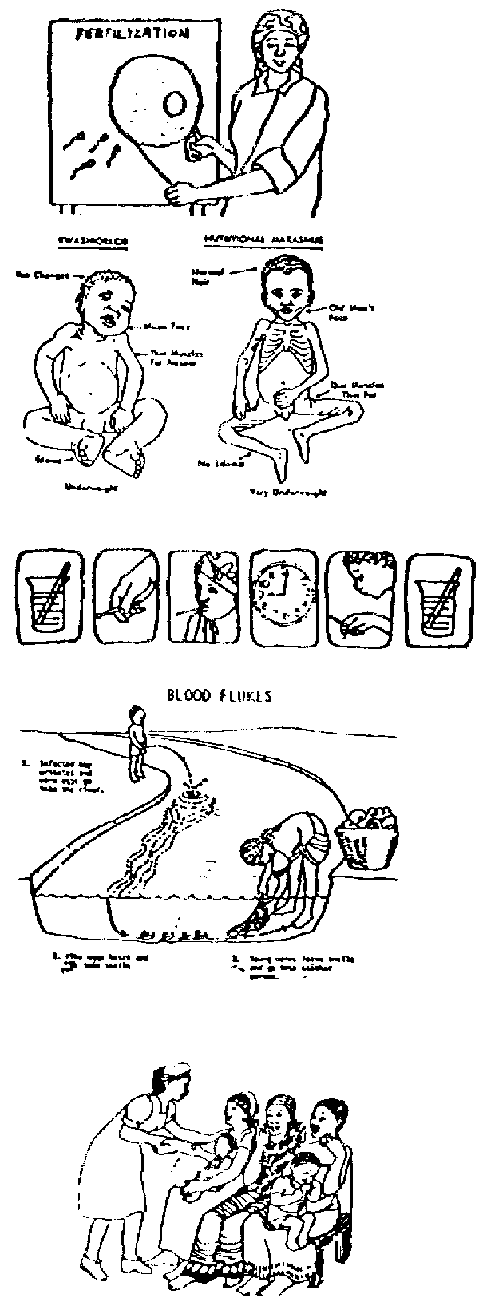
Figures 1-5
1. Visual aids can make something small look larger. A large picture of the inner ear can help students study the small parts. A drawing or poster of an egg and sperm help learners understand what these things look like. Because the pictures are much larger than real life. learners can study thee carefully.
2. Visual aids help us compare the similarities and differences between two things. Show your earners pictures of two similar objects side by side, and they can loot at the pictures and identify which things are the same and which are different.
The illustration here shows the drawings one nursing school instructor uses to teach her students about the differences in appearance of children with kwashiorkor and children with marasmus. She uses the pictures to help them learn the basic information, and then takes them to the clinic to see real children with these conditions.
3. Visual aids are an excellent wag to show the steps to follow in doing a task. Mr. Kamwengu, a nurse tutor, uses a series of pictures like the ones here to teach his students how to take temperatures.
4. Pictures can show how something changes or grows, One picture can show all the changes which take place. These kinds of pictures are good for showing how something happens. The example here shows how blood flukes spread schistosomiasis.
5. Visual aids can help learning by providing a basis for discussion. Most of the time, you want to be sure that everyone who looks at your visual aid will understand the same message. But sometimes it is valuable to use a visual aid which can be interpreted in more than one way.
You could use this picture as the bests for a discussion by asking, "What do you think this picture is about?". Often this is the only question you will need to ask. To keep the discussion going, you might ask other questions such as the ones below.
- Who are these peoples
- What is happening in the picture?
- How do the people feel about it?
You can use other pictures like this one to start discussions in which the learners explore their own needs, feelings, attitudes, and expectations. For learners who will be doing any counseling, this knowledge and discussion of their prejudices and feelings is very important.
Pictures like this are also useful in community health word. A group discussion helps you learn quickly how the villagers feel about many things, and what problems need to be solved in the community.
Discussing their interpretations of pictures encourages people to observe, think and question carefully and critically.
Figure 6
6. You can also use visual aids to review or test Your learners to see if they really understand. After instruction, you can ask learners to identify or explain parts of a picture or other visual aid.
Flannelboards are very good for this kind of review, and learners seem to enjoy the activity. The community health worker in the picture here uses a folded blanket wrapped around a piece of wood as a flannelboard. She has been teaching the village women about nutrition, using the flannelboard as she talked about food groups. Afterward, she asks her learners to come up and place each food in its proper group on the board.
Figure 7
7. Visual aids can provide information when the trainer cannot be present. You cannot a ways be present when someone needs to ask you about something. Sometimes you have other work you must do or you must be somewhere else.
For example, Mrs. Macalou directs a community health clinic. She has one nurse's aid working for her full time. Mrs. Macalou needed to make time to see more clients at the clinic.
Mrs. Macalou made a poster to put over the table where clients check into the clinic. The poster shows the steps her aide should go through in taking a client's history and recording the person's complaint.
Now when her aide comes to work, she can help Mrs. Macalou by seeing all of the clients first. If Mrs. Macalou must be out of the clinic, the aide can still record the client's history and complaint.
Mrs. Macalou can come back to the clinic look at the histories, and decide quickly which patients need to be seen first.
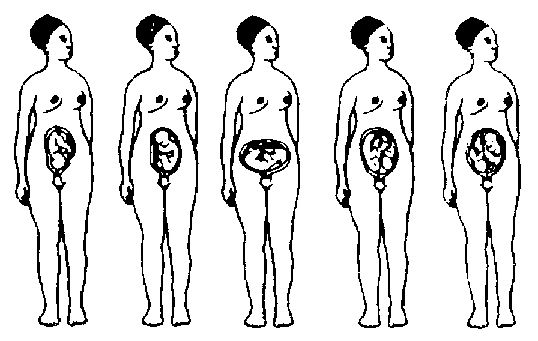
Figure 8
8. Visual aids can show people something they can't see in real life. The section on how visual Aids can make small things look larger mentioned that visual aids help learners see things such as cells, which are impossible to see unless you use a microscope because they are too small.
Sometimes it is impossible to see things in real life for other reasons as well.
Sometimes a visual aid is useful to show something that cannot be seen because it is inside the body.
Mrs. Hasan is a community health worker. She uses diagrams like the ones here to teach traditional birth attendants about the different positions the baby can have in the womb.
She discusses the pictures with the traditional birth attendants. Then she shows them how to feel the womb of a pregnant woman for the baby's head and buttocks.
You can also use visual aids to show your learners things which are impossible to visit in real life. You can show them pictures of an activity- in a village which is too far away for them to visit. The nurse in the picture here has used drawings to make a display which she can use in clinic presentations.
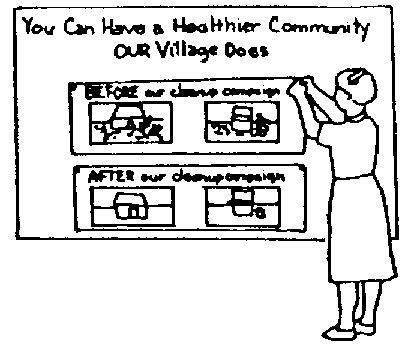
Figure
Some other examples of how visual Aids can show us things that are impossible to see in real life are:
- a nursing instructor uses a series of pictures when explaining the growth of the fetus
- a nurse/midlife uses a paper cut-out held against her body to show mothers what the womb looks like and where it is located in the body.
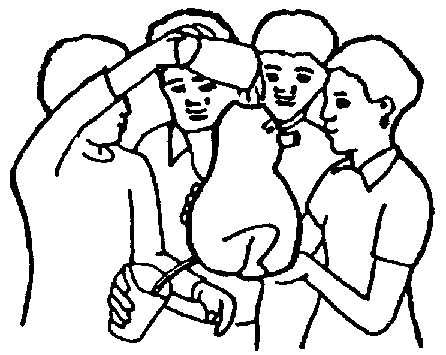
Figure 9
9. Making their own visual Aids is very useful in helping learners discover solutions to problems. When learners make their own Aids and Discover the answers for themselves, learning becomes an adventure. When people are having fun learning, they remember what they learn.
Mothers and children can learn about diarrhea and dehydration by making their own "baby". from clay, tin cans, plastic bottles, or gourds. They can experiment with the principle of rehydration by pouring water into the "baby" and mending the different holes with "food."
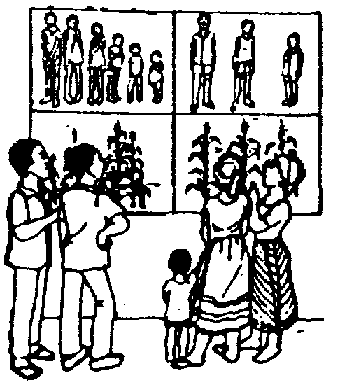
Figure 10
10. Visual Aids can make a difficult idea easier to understand. they do this by showing familiar people and things which illustrate the idea.
For example, suppose a nurse is counselling a family about the benefits of child spacing. She tells the family how child spacing means better health for the mother and for the children. But this is a new idea to the family. It is difficult to understand, because they do not know any other families who use child-spacing.
So the nurse shows the family some pictures which compare child spacing to the spacing of crops. Then the family begins to understand, They know from their experience that crops grow better if they are not planted too close together.
Handout 17B: Why pictures fail to convey ideas
1. Villagers who are not used to looking at pictures mar find it difficult to see what objects are shown in the picture.
"Reading" pictures is easier than reading words, but people have to learn to "read" pictures. This picture, intended to show how oral rehydration fluid is made at home, was shown to 410 villagers. Only 69 of them realized it was a picture of hands putting something into a pot. Ninety-nine others could see the hands but could not suggest what they might be doing. And the rest of the villagers (242 people) did not see the hands at all-82 of them thought it was a picture of flowers or a plant.
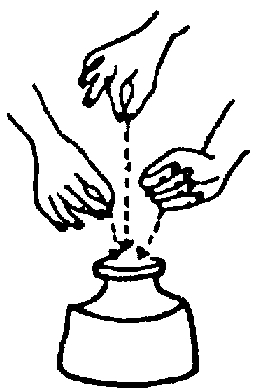
Figure
2. Villagers do not expect to receive ideas from pictures, and must be taught that pictures can instruct.
Staff members of the Honduran project, PROCOMSI, wanted to develop a set of visual instructions to remind mothers how to prepare a solution of oral rehydration salts from a packet. The question was whether the instructions would work without teaching. The mothers were handed the packet of salts with the visual instructions facing up.
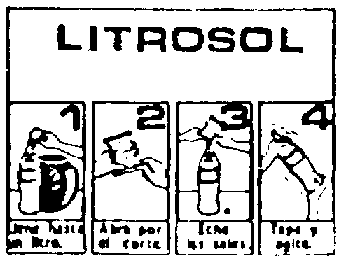
Litrosol
None of the mothers perceived the series of drawings as "instructions." They seemed to think that the pictures were simply a product label. Several women tried to read the written instructions printed on the back of the packet but were able to understand only a few words. After no more than fifteen seconds of looking at the packet. most mothers opened it and began mixing the salts in water which was available near the test site.
A later stage of the test consisted of pointing out to the mothers that the visuals were intended to convey information and "teaching". them what the series of drawings meant. This proved very easy, and mothers understood almost instantly.
3. Villagers tend to "read" pictures very literally. That is even if they recognize the objects or people represented in the picture, they may not attempt to see any link between the objects, or any meaning behind the picture.
4. Villagers do not necessarily look at a series of pictures from left to kit, or assume that there is any connection between the pictures in a series.
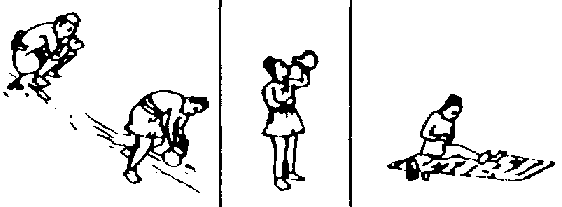
Figure
This series of drawings is intended to show one way in which diarrheal diseases are spread. It was tested in the Nepal study.
Less than half of the 410 villagers in the study looked at these pictures in order from left to right (37% of them looked at the middle picture first.) Hardly any of the villagers appeared to think that the pictures were related to each other.
Visually "illiterate" people do not "fill" in missing steps. Each message or step must be conveyed with another picture.
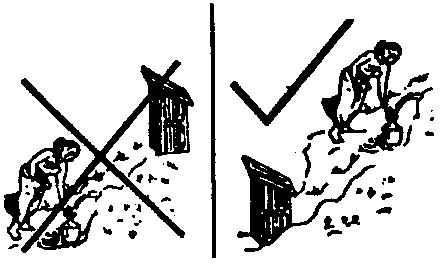
Figure
5. Pictures which try to convey ideas or instructions often use symbols which are not understood by villagers.
For instance, villagers may never have learned that a check mark can mean "right" or "good" and an "X" stands for "wrong" or "bad." Thus, symbols such as these are often misunderstood or simply ignored.
6. Symbols which represent A concept in one culture do not necessarily convey the same idea to another group of people.
Visual perception varies greatly from culture to culture. Finding the right picture to transmit an idea is usually harder and more complicated than picking the right word.
For example, in looking for a visual symbol to represent "menstruation," PIACT designers tried a number of symbols: in Mexico, a Kotex (brand of sanitary napkins) box was originally tested but proved to be a satisfactory symbol only among urban women; a drawing of a roll of cotton was more successful in suggesting menstruation. In Bangladesh, a red spot at the back of A woman's sari was widely recognized to represent menstruation; in the Philippines, a red dot at the front of a woman's dress along with a calendar showing a date encircled were found to convey the idea.
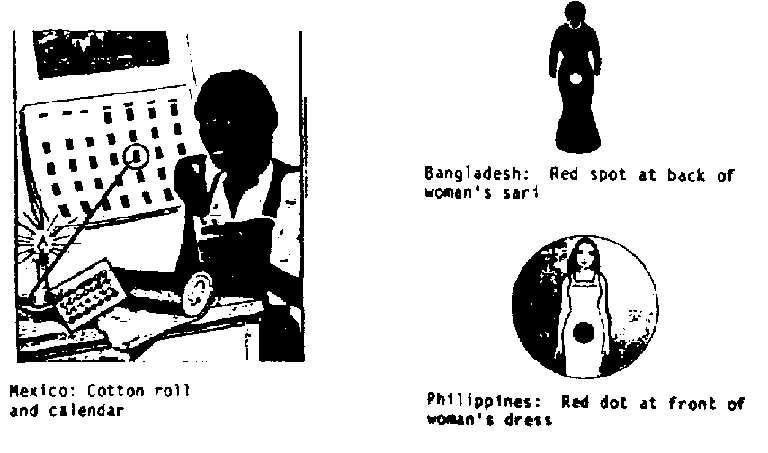
Bangladesh, Mexico, Phillipines
Handout 17C: Design considerations
1. Are the Pictures and Words easy to see?
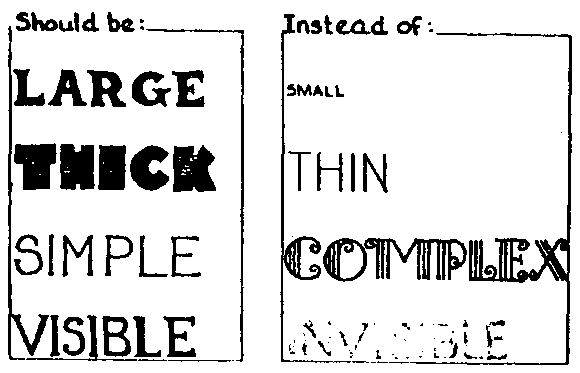
Figure
2. Are the pictures and words easy to understand?
a) are unfamiliar words or graphic symbols used?
Figureb) are all figures and objects in the same scale?
Figurec) are full figures shown before showing parts of figures?
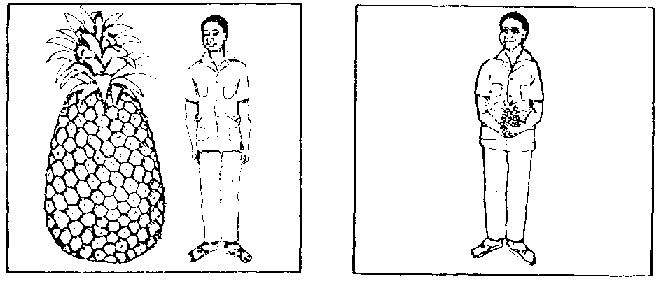
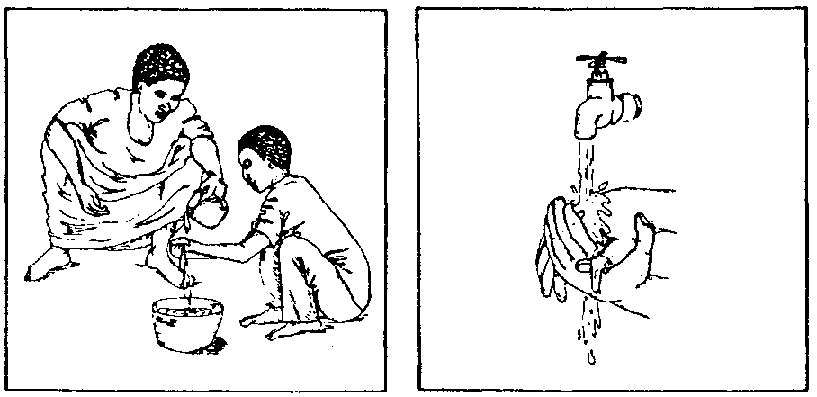
Figure
3. Is the information presented clearly and simply?
a) are there any unnecessary details?
Figureb) is there one main idea for each picture?
Figure
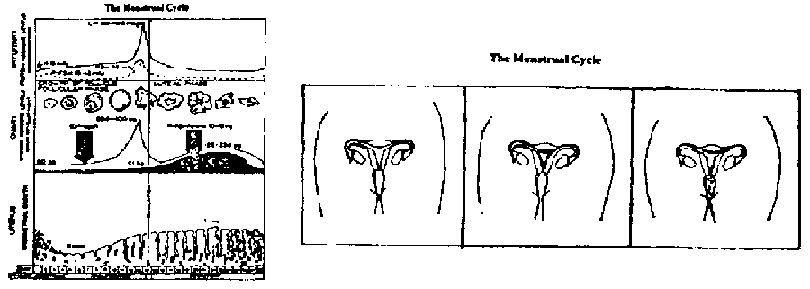
4. Is each picture well organized?
a) does the picture fill the space?
Figureb) is there a white margin around the outside of the picture?
Figurec) if words are necessary, is it clear what words go with what pictures?
Figure

5. Does each picture direct the viewer's attention to important information? Examples of ways to do this include:
a) use of contrast to emphasize important information
Figureb) making the most important thing the center of attention
Figure

6. Is the picture interesting to the people for whom it is intended?
- are the figures and objects in the picture based on the experience of the viewers ?
- does the design and style fit local ideas about what is attractive?
- is the topic considered important?
Handout 17D: Using pictures to communicate effectively
DEVELOPMENT OF VISUAL MESSAGES REQUIRES SKILL
· The design and testing of nonverbal materials are more complicated and require much more time than the development of comparable verbal materials. Simple does not mean easy.
KEEP PICTURES SIMPLE
· Keep pictures as simple as possible. It is better to show a family planning clinic set against a plain background than against a city street. A crowded street will only detract from the message befog conveyed.· Though excessive, unnecessary detail interferes with understanding the message, the comprehension may also be reduced by deletion of all detail.
· Each picture and each page should have a single, sharp meaning. Putting multiple messages on one page will be confusing.
· A single page of a booklet should not include too many objects. It is better to have many drawings with one or two objects in thee than to try to put many things in one drawing.
· Comprehension of the picture is higher when a person's whole body, rather than Just some part of it, is portrayed.
THE MORE REALISTIC, THE BETTER
· for maximum comprehension, pictorial symbols should be as realistic as possible.· Pictures of objects, people, and actions should loot like the objects, people and actions in the specific area where the pictures will be used. Such things as different styles of dress easily lead villagers to assume that a picture does not refer to their own village or their own life.
· Material produced for national distribution may not be equally appropriate for all regions of the country, since there are usually variations in styles and customs from one part of the country to another.
PICTURES WILL BE "READ" LITERALLY
· Remember that villagers will be likely to interpret your drawings very literally. For example, if you draw something larger than it is in real life (such as drawing a fly six inches high) people can assume you really mean it to be an impossibly enormous fly, or they may thins it is a strange kind of bird.
COLOR
· if the material befog prepared will use more than one color ink, the color choices should be pretested in the same way the illustrations are tested. Keep in mind that certain colors have different meanings in different societies. Choose colors whose meaning in the culture corresponds to the ideas you wish to convey. Using color will also add to the production cost. Tests have shown that color does not, by itself, improve comprehension.
PEOPLE MAY NOT FOLLOW INTENDED SEQUENCE
· People who have not learned to read or write do not necessarily look at pictures in the order intended. It often proves helpful, as messages are being tested, to ask several groups of people to arrange the individual messages into a sequence that seems most logical to them.· If a poster, wallchart, packet instruction or booklet consists of a series of pictures, numbering the pictures may indicate to the villagers the order in which the pictures should be "read." However, the Honduran tests of the visual instructions for mixing oral rehydration salts showed that this technique does not always word. The placing of the numbers inside the box with the drawings led some mothers to assume that the numbers referred to the number of packets to mix, rather than the sequence of instructions to follow
PICTURES ALONE ARE NOT ENOUGH
· Do not expect villagers to learn a lot from the drawings alone. Use drawings to capture the villagers' attention, to reinforce what you say, and to give the. an image to remember, but always give a clear and full oral explanation of your subject in addition to showing the drawings.· Rural people need to be told explicity that "pictures will show you how to mix the salts", or to "look at the pictures and follow the directions."
· People helping villagers to understand the message of pictures and posters should explain the meaning of conventional signs and symbols used by the artist. It is likely that if this is consistently done over a period in any given village, the villagers will learn to "read" the messages the pictures are trying to convey. Longitudinal tests in Honduras showed that rural women did not easily forget a symbol once learned.
· Not all kinds of technical information can be transferred primarily through illustrations. Pictures can probably be used to teach someone how to change a tractor tire, but it is doubtful they can be used to teach a person to drive that tractor.
THE AUDIENCE DECIDES WHAT PICTURES WORK BEST
· The intended audiences should have the final say about the content, illustrations and sequences that are used. Administrators and others indirectly connected with the project usually will have an abundance of suggestions for revisions, or state that they do not understand the message. But, the materials were not designed for this group!
Trainer Attachment 17A: Why use visual aids?
TITLE:
WHY USE VISUAL AIDS?
TIME:
20 minutes
OBJECTIVE:
Learners will recognize and state that visual aids are sometimes necessary for a clear understanding of new information.
MATERIALS NEEDED:
Pencils and paper for each participant.
Picture of the aardvark (or other animal or object to be described in activity). If you have more than 1520 participants, you will need a larger drawing. See Unit 2 for ways to enlarge pictures.
INSTRUCTIONS:
1. Be sure everyone has pencil and paper.
2. Explain that this activity is like a game that will lead to a discussion of teaching. Explain that you will be asking people to draw an animal based on a description from an encyclopedia which you will read to them 2 times. Emphasize that it doesn't matter how well they draw. Ask them to think about their reactions to the activity as they do it.
3. Read the description slowly and clearly. Do not worry if people express confusion. Ask your learners to draw whatever kind of picture the words suggest to them.
If learners want to hear the description again, read it to them again.
Tell them they have 5 minutes to complete the drawing. Let them work on the drawing for 5 minutes.
4. Ask learners how they feel about doing this activity. List some of their responses on the chalkboard to refer to later. Some of the responses you can expect are: "not clear," "not enough information," "I got lost after the first sentence."
5. Ask a few people to guess what kind of animal they have been drawing. Show participants the picture of the aardvark. Reread the description, pointing to each part of the picture as it is described.
6. Ask people to summarize what they have learned from this activity. They should state some version of the objective for this activity. If they have difficulty, give them a hint such as:
What has this shown you about learning new information with words and pictures?.
7. Ask learners to imagine they are nursing students and an instructor has just given them a verbal description of how an IUD is inserted, but has not shown them what the IUD or the inserter looks like! Point to the list of frustrations expressed while they tried to draw the animal. Ask them how they can apply what they have learned in this activity to their own work.
8. Summarize the activity by stating the objective ("You have stated that visual aids . . . ."). Repeat their list of frustrations noting the similarity with frustrations often stated by students.
POSSIBLE ADAPTATIONS:
1. The aardvark seems to work well. But you may want to use another example that will be more interesting to your learners. Choose any description of an animal or object that is confusing when described only with words.
2. If time allows, in instruction 5 above, you may want to have learners post their pictures after they guess what animal it is, but before you show the aardvark picture.
3. This activity can be combined with part of activity 3, THINGS WE HAVE LEARNED THROUGH PICTURES). After instruction 7 above, have the large group do steps 1-3 of Activity 3.
"The body is stout, with arched back; the limbs are short and stout, armed with strong, blunt claws; the ears long; the tail thick at the base and tapering gradually. The elongated head is set on a short, thick neck, and at the end of the snout is a disc in which the nostrils open. The mouth is small and tubular, furnished with a very long, thin tongue".
Figure
Trainer Attachment 17B: Villagers teaching us to teach them
Tanzania
Handing the camera over to non-literate village women to photograph familiar village activities yielded interesting discoveries about the way rural people see things, and how they learn.
The photographer squints through the viewfinder, then motions to the woman holding the baby to dunk it in the bath. The baby shrieks. "Click!"
The scene might evoke familiar memories. But here in this Tanzanian village, there is a difference: the subject is a village woman, and so is the photographer. But even more novel than the scene was the assignment the photographer had undertaken: she was taking pictures of a familiar village activity of her own choosing in order to use the result to teach others how that activity could most easily and economically be performed.
The use of graphic illustrations in communicating ideas about development has been extensively researched. The central purpose of much of this research has been to understand how non-literate rural people respond to visual aids such as drawings, photographs. slide sets, and posters. My goal was similarly to enhance that understanding but to do so in a manner that gave the people themselves virtual control of the material that had to be produced and assessed. So I decided to hand over the tool - the camera to the villagers so that they could film their own activity. Their choice of perspective, 'editing' and the subject "frame" would, I felt, yield significant indications of the way they perceived things visually.
Over a two-year period in Peru and then Tanzania, two hundred delegated villagers cooperated enthusiastically in the exercise. Each learned how to use an instant picture camera, then took and explained their picture series on how to hoe, to harvest. to cook, to feed the baby, and many other everyday activities. And it became apparent very quickly how invaluable a tool in village education pictures can be. Again and again I saw photographs spark the interest of villagers and provide them with detailed images of both familiar and unfamiliar things and places.
In the process I learnt a great deal about the effective use of picture series amongst villagers, especially women, and as well about why villagers were sometimes left confused about the overall story or message of the pictures and films made by "experts". Particularly confusing have been "how-to" films designed to communicate new skills in essential activities. So putting the camera in the hands of villagers was a move hack to the basics, to find out how villagers related to their own productive work on the visual plane.
The picture series taken by the villagers could be roughly grouped into two categories. In the first group, the emphasis was on the action; each step was shown in a separate picture. The photographers in this grouping were mostly men. And they were men who lived in villages near major roads or in shanty-towns near urban centres.
Pictures taken by women, and by men in more isolated villages, were very different. Their pictures emphasized people doing the work, not each step of how the work was performed. Large blocks of activity were often shown in a single picture.
These photographers conceived of a "how-to" picture series in a very broad sense. They showed people travelling to work, working, resting, and often drinking. The emphasis was on "how we work", not a step-by-step presentation of an activity. It was a style of communicating with pictures that was descriptive, personal and "whole, reflecting how villagers taught and learned from one another in their daily lives.
"Why-to" and not just "How-to"
This provided insight into what kind of picture series would be needed to introduce new ideas into village areas. For men in the first grouping, conventional "how-to" pictures, with each step shown in a separate picture, were likely to work. But for nearly all village women, and for men in isolated villages, picture series would need to follow certain guidelines:
- The narration, or written description, that accompanied the pictures would be very important. Pictures in themselves would convey lime without highlighting what was seen in the image and why it was important.- A picture series could not be expected to teach villagers how to perform a specific activity. This could only be done by someone on the spot. "How-to" picture series were unlikely to work.
- Picture series could be very successful in encouraging villagers to adopt new ideas, ranging from improved cropping techniques to better diets for babies. Instead of a "howto" series, these would be "why-to" pictures.
- A "why-to" picture series would need to be presented in a descriptive, person-to-person, style
- The picture series would need to present experience, not merely information. This would mean showing something which actually happened in a village and worked.
I struggled with different ways to carry out these guidelines. I found it was difficult to script a picture series that would speak on a person-to-person basis to villagers. The problem was the enormous gap between the actual situation of villagers and my own situation-or indeed that of any highly-trained communications worker living in an urban centre.
Eventually, I found the best way was to involve villagers directly in the planning and production of picture series.
My method was to choose a village where a development idea had been successfully applied, and then to select a group of villagers and ask them to tell with pictures why they had adopted the idea. They planned the story-line and composed the pictures; I shot them. The narration was written jointly and recorded by the villagers. The final product became a testimonial from one village group to other village groups on why they adopted a particular idea, ranging from ox-ploughs to sanitary latrines.
The final step was to create an effective method of using picture series in villages. I settled on a slide series with a recorded narration as a format. I then designed a means of distribution which depended on the villagers themselves. This was an audio-visual kit which can be carried on the back of a bicycle and includes a 12-volt projector and a cassette recorder, both powered by generators fined to the bicycle. It requires no petrol and no batteries. The advantage of this small kit is that it can be left in the village for weeks at a time. A village worker, paid on a part-time basis, can show the picture and answer questions. Many small showings can be scheduled at times which are convenient for the people in the village.
Reporting on concrete results
As a result of producing these picture series with villagers, I found that I also developed a new attitude toward the role of communication workers in development. I began to see specialists in development communications primarily as journalists, not producers. The first requirement of a successful picture series, I found, was a successful village project on which to base it.
This would mean, for instance, that to educate village women about a balanced diet, the first step would be to find a village where this has actually happened. This might be a village where a co-operatives had started to raise chickens and a group of women had planted beans. Should a setback have occurred, such as the treasurer running off with the money, this would also be portrayed in the picture series, along with the remedial action taken. The essential characteristic of the village selected for the series would be that the results of the project were visible. Picture series for villagers are effective only if they are based on actual occurrences, not merely on advocacy or promotion.
What this means is that communications workers must be effective journalists if they are to be effective educators. Before snapping the first picture or drawing the first storyboard, they must be able le. see how a project is operating in the field. Only then will they be able to make audio-visual or other aids which present concrete, realistic options likely to motivate villagers to reassess their own practices in favour of more productive alternatives.
Trainer Attachment 17C: Examples of a teaching situations
In all three of the following sample teaching situations, the participants will use the WHO chart information to develop a short (15 minute) presentation using a visual aid. They will prepare a simple visual aid using the guidelines from the earlier part of this Session as well as their own experience and imagination. Encourage the to use the "real thing" when possible and to avoid making a picture Just for the sake of having a picture to use. The sample situations intentionally identify three different audiences for the messages (1) health workers, (2) community members in a group, and (3) individuals.
This will provide a basis for comparison when the groups present their events. Recommend looking at Helping Health Workers Learn for additional ideas for their sessions.
Situation 1: Staff Development for Health Workers
You are working in a community health clinic. The clinic health workers have asked you to do a 15 minute staff development session on how to distinguish between dehydration that requires ORS and the most severe dehydration that requires referral for IV or nasogastric tube treatment. The staff has knowledge of ORT and is familiar with the WHO chart but some people have had difficulty reading the chart and using it.
Situation 2: Child-to-Child Activity
You are a PCV health worker in a community with no health center and many children suffering from diarrhea and dehydration. Children care for their younger brothers and sisters most of the day while mothers and fathers work in the fields. You have decided to use the child-to-child approach to reduce deaths from dehydration. Develop a 5 minute activity for children that helps them learn when a child or baby needs the "special drink". Be sure to see Helping Health Workers Learn, for ideas such as the gourd baby and songs.
Situation 3: Teaching e Mother During a Home Visit
You have worked with a group of mothers during a health education session in the clinic. They learned to mix oral rehydration solution using local ingredients. They also learned when and how much of the solution to give to a child with diarrhea. You want to make certain in your home visit that the mother understands when a child is showing signs of dehydration so she will bring the child to the clinic for care. You prepare a visual aid and plan the methods that you will use in working with her during the home visit.
Session 18 - adapting and pretesting health education materials on ORT for controlling diarrheal diseases
TOTAL TIME
4 hours
OVERVIEW
Often the visual aids and other health education materials needed for a particular health education session do not exist or those available are not appropriate for the learners. Using the simple tracing techniques practiced in this session, participants adapt visual Aids on, ORT or related CDD topics, to fit local needs. They also discuss adapting written or spoken health messages. After identifying or developing health education materials they try them out with people in the local community similar to the target group for whom the materials are intended. This pretest assures that the materials convey the intended message and interest the learners. It also provides another way to learn more about the community.
OBJECTIVES
· To use tracing and sketching to adapt a visual aid on a CDD topic for use in the local community.
(Steps 1-3)· To pretest the adapted visual aid with members of the local community.
(Steps 4-6)
RESOURCES
- Teaching and Learning With Visual Aids pp. 191-197 and 223-254.
- Audiovisual/Communication Teaching aids Resource Packet (Peace Corps)
- Bridging the Gag
- Breast Feeding and Weaning Resource Packet (Peace Corps)
- Visual aids on Sanitation for Africa (Peace Corps)
- Healthing Health Workers Learn Chapter 12
Handouts:
- 18A Spreading Good Ideas
- 18B Child to Child Health Booklet
- 18C Visual Aids: Do They Help or Hinder?
- 18D Pretest Report Form
Trainer Attachments:
- 18A Rainy Season Feeding Messages
- 18B Tracing Techniques to Adapt Visual Aids
- 18C How to Pretest
- 18D Role Play on Pretesting
MATERIALS
Newsprint and markers, pictures to adapt, paper for drawing, thin paper for tracing, pencils, paint or crayons, props for the role play.
PROCEDURE
Trainer Note
Before the session ask someone to prepare a 15-minute activity using Trainer Attachment 18A (Rainy Season Feeding Messages). The main emphasis should be why and how adaptation of the messages was done in the case described.
Prior to the session ask someone to prepare and present tracing and sketching techniques for adapting visual Aids using Trainer Attachment 18A (Tracing Techniques for Adapting Visual aids and Handout 16D (Guidelines for Demonstrations). It some participants are interested in drawing, try to organize peer teaching by one of the participants with drawing skills, using Helping Health Workers Learn, Chapter 12 (Learning to Make and Use Pictures). Pictures are provided for the adaptation practice, during Step 3, in Handout 16B (Child to Child Health Booklet). You may prefer to substitute other visual Aids Breastfeeding and Weaning (Resource Packet P 12) or Visual aids on Sanitation for Africa include many pictures that could be used in this activity and are available through ICE.
Ask two or three people to prepare to do a ten-minute role play demonstrating pretesting. Work with them as they practice the techniques described in Handout 18A (Visual Aids: Do They Help or Hinder?) Trainer Attachment 18C (How to Pretest) and develop the roles in Trainer Attachment 18D (Role Play on Pretesting Pictures), to make certain that the role play will demonstrate correct pretesting techniques.
Invite several people from the local community (or local people who work in the training center) to visit the session for 30 minutes (during step 4) to give their opinions about some visual aids Also try to arrange for separate rooms to conduct the pretest interviews, so that the groups do not distract each other. Or, if you use the child to child materials face Handout 18B, arrange for pretesting and health education activities in the local school.
Step 1 (20 min)
Discussion on Adapting Visual aids
Introduce the session using ideas from Handout 18A (Spreading Good Ideas). Ask the pre-assigned person to facilitate the activity he or she prepared using Trainer Attachment 18A (Rainy Season Feeding Messages). The activity should include a discussion of questions such as :
- What aspects of pictures are likely to require adaptation?
- What changes in spoken or written messages accompanying the pictures are most often needed?
- How do you decide when and what to adapt?
Distribute copies of the visual Aids that you have selected for participants to adapt, such as Handout 18B (Child to Child Health Booklet). Give them a chance to look at this material then discuss what specific adaptations they should make so they can use this material in their communities.
Distribute Handout 18A (Spreading Good Ideas) as supplementary reading.
Trainer Note
If possible, show some examples of pictures that have been adapted and describe why and how they were adapted. The example below was taken from a counseling book developed for use in the United States and adapted for use in West Africa by changing the facial features and clothing.
Figure
Some of the points that should come out of the discussion include:
- changing clothing, hairstyle, facial features, gestures to resemble local people
- changing objects, houses, scenery to resemble the local area.
- changing or omitting words and symbols that are unfamiliar.
- avoiding colors that have negative or religious meaning or are unrealistic.
- simplifying pictures that are too technical or show too much information at one time.
Refer to the discussion of cultural considerations in Session 17 (Selecting and Using Visual Aids). Suggest that participants refer to Handouts 17B (Why Pictures Fall to Communicate) and 17D (Using Pictures to Communicate Effectively) for additional ideas about adapting health education materials.
Step 2 (35 min.)
Demonstration on Using Tracing to Adapt
Visual Aids
Ask the pre-selected person to demonstrate how to use tracing to adapt visual Aids The demonstrator should assign the group a tracing exercise like those in Trainer Attachment 18B (Tracing Techniques for Adapting Visual Aids to provide practice on this technique. The trainer and the demonstrator should move around the group and help anyone having difficulty.
Trainer Note
An effective way to introduce the tracing demonstration is to show the group a picture that you traced and claim that you drew the picture in five minutes. When they ask how you became such a great artist you explain that you "cheated." that is you traced the picture from a photograph and modified it slightly.
When demonstrating tracing it is important to note that you have to decide how much detail to copy from the original picture as is explained in Trainer Attachment 18B (Tracing Techniques for Adapting Visual aids Also urge Trainees to clip or tape the tracing paper to the picture that they are copying so that the paper does not move around while they are drawing.
People usually vary a great deal in how quickly they trace and sketch. Have additional exercises for those who finish early. For example they can try out other drawing techniques shown in Helping
Health Workers Learn, Chapter 12.
Step 3 (60 min.)
Practice Adapting Visual Aids
Ask each person to adapt the visual aid, that you handed out earlier, for a specific group of learners in the co m unity and for a specific health education objective.
Advise participants to begin by roughly sketching or making notes on the changes that they want to make in the visual aid before they begin tracing and sketching the final version. Give thee time to work on the assignment. Hove around the room and assist anyone who is having difficulty.
Trainer Note
If you use Handout 18A (Child to Child Health Booklet) for the adaptation practice, you can assign different parts of the booklet to different people to adapt and pretest. By the end of the session participants will have a complete booklet adapted for use in child to child activities in their communities.
Step 4 (25 min.)
Pretesting Role Play
Ask the three participants to present the pretesting role play that they prepared before the session. Ask participants to watch carefully hoe the role players conduct the pretest so that they will be able to pretest their own visual Aids later in the session. After the role play, lead a discussion on how to pretest materials. Ask participants to develop a list of steps to follow. Ask someone to write the steps on newsprint. Suggest that everyone copy the list for use later in the session.
Trainer Note
If possible, do the demonstration of pretesting with community members instead of the role play. If you used Handout 18 (Child to Child Health Booklet) for the adaptation practice, demonstrate and later have participants pretest these materials with children in the local school.
Use your reading of Trainer Attachment 18C (How to Pretest) as a guide for the discussion. Ask participants to recall the techniques they practiced in Session 11 (Methods for Learning About the Community).
Some of the important points that should appear on the list include:
- Greet the person or persons appropriately.- Introduce yourself and explain that you are trying out new materials.
- Make the person feel at ease in your company, ask about the family, ask about village matters, crops, or the weather, etc.
- Ask open questions about the picture, such as "what is happening in tints picture?" "Is there anything that you do not like about this picture?"
- Encourage people to talk. Assure them that this is not a test. There is no right answer. You want to know what they think about the picture.
- Let people touch the materials if they want to.
- Ask probing questions if you get vague answers to your questions, or phrase the question in a different way.
- Work in pairs if possible so that one person can accurately record the responses while the other holds the conversation with the community member.
- Explain that you are recording because you think their opinion is important to improve the picture and you don't want to forget what they have said.
- Stop recording if the person objects or seems to be nervous about it.
- Thank the person for his or her help ( or the group in a focused group interview).
Step 5 (45 min.)
Pretesting Materials with Community Members
Distribute Handout 18D (Pretest Report Form) and give participants a chance to lock at it, ask questions, and modify the form. Divide the participants into four groups that will work together in pretesting. Give the groups five minutes to select one or two of the visual aid adaptations to use in this activity. Explain that they will be reporting the results of the pretest to the other groups.
When doing pretest, one member of the small group should verve as interviewer and another as recorder, while the others observe. Have the groups pretest the adaptation first, then the original visual aid. Each group should try out these materials with at least two visitors. Trainer Note
If time allows, arrange to have the participants pretest the visual aid in the community. Ask each group to pretest their poster with two different people similar to those for whom it is intended.
If the pretesting takes place in the training center, arrange separate rooms for each of the groups to conduct their interviews or have them work in different corners of the room so that they do not distract each other.
Spend some time with each of the groups but do not interfere with the interview. Note some good interviewing techniques and interesting outcomes that you can mention during the discussion of the pretests.
After participants have worked with one community visitor for 15 minutes, have them rotate and spend the last 15 minutes interviewing different second visitor.
If the participants adapted the child to child health booklet, try to arrange for pretesting in the local school. If possible, combine the pretest with a health education activity for the children on one of the topics in the booklet. Another option is to ask the children to adapt the pictures with their own drawings, working with the participants.
Step 6 (40 min.)
Discussion of the Pretesting Experience
Ask each group to give a brief report on what they learned from the pretesting interview. Lead a large group discussion of questions such as the following:
- What did you learn about how well the visual aid communicated the intended massage?- What did you learn about how interesting the visual aid was to the community members?
- How did your ideas about what needed to be adapted in the original poster compare with those of community members?
- What else did you learn about the community through conducting the pretest?
- What did you find that was important that you didn't expect from pretesting the posters
- What other kinds of media, messages and techniques could be pretested in a similar way!
Trainer Note
It some participants are involved in radio health education, they may prefer to try out spot announcements instead of a picture. Others may want to try out a song or a puppet show.
Encourage participants to make the proposed changes in their visual aids if possible allow time for this and arrange a place on the wall for a gallery of visual aid adaptations.
If the group adapted the child to child booklet, arrange for a chance for some participants to return to try out the adapted booklet with the children,
Handout 18A: Spreading good ideas: adapting illustrated materials
by Joan Haffey and Ann Jimerson
It is often much easier to change well-tested educational materials from another country to suit local conditions than it is to "start from scratch." However, adapting means changing. not duplicating. Ample care must be taken to include messages specific to the needs of the new audience and not just to ensure that images such as clothes and surroundings are appropriate. The examples that follow demonstrate some of the advantages of starting with successful materials, and point to the need to pretest all materials in the new setting. The samples are from pictorial booklets for semiliterate and illiterate audiences, and demonstrate the need for clear visual illustrations. The same guidelines apply to the adaptation of any materials that rely on visual images to relay or reinforce information.
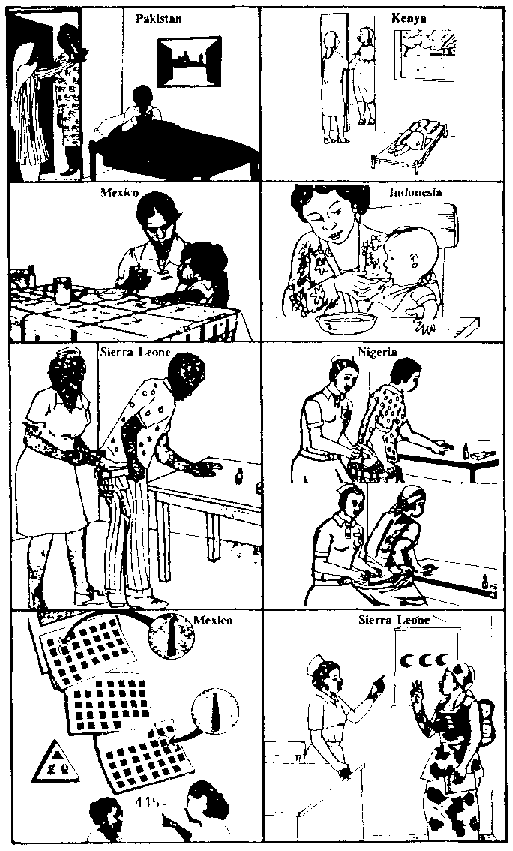
Figure
Reasons for Adapting Materials
· Proven ideas work well
A major advantage of adapting materials is being able to lest ideas that have proven useful elsewhere. This Pakistani drawing, which tells pregnant women to avoid visiting those who may have a contagious illness, had to be revised six times before it was clearly understood by the illiterate Pakistani target group. A Kenyan adaptation of this same message and drawing was well understood during the first pretest.
· Technical information requires few changes
The instructions for correctly using a particular technology or product often are the same worldwide. Existing educational materials dealing with technical information usually provide a good selection of points, readily adaptable for local use. For instance, the message "Continue feeding a child who has diarrhea" is the same for Mexico and indonesia, a similarity reflected in these visuals
· Time and money are saved
A Nigerian project saved both time and money by using this Sierra Leonean drawing of a man receiving an injection to cure a sexually transmitted disease. The drawing was easily understood. The final version for Yoruba speakers in Nigeria is quite similar except an illustration of the wife receiving an injection was added to the same page.
Reasons for Testing Materials
· Misunderstood messages
Symbols are culture specific and often need to be changed to convey an identical message For example, although the message
"Come to receive an injection every three months" is the same in Mexico and Sierra Leone, the symbols that prove effective in conveying this message to illiterates differ considerably for these cultures Thus. existing materials should only be used as preliminary drafts for the development of your own visuals.
Two other considerations when testing materials fat a new audience are:
· Special informational needs,
Efforts should be made to determine the specific informational needs of the audience so that appropriate messages can be included in the adapted materials. For example, in a culture where false rumors regarding a contraceptive method abound, messages that counteract those rumors should be added.
· Cultural sensitivities
If cultural sensitivities are ignored in selecting visuals, it could be detrimental to a program. Pictures that are acceptable in one culture may be offensive in another. Only by testing drawings and photos with the target audience and with the authorities who will distribute the materials, can you be assured that the visuals are acceptable and will be used.
When assembling illustrated materials, it is important to give credit to those from whom you have borrowed ideas or actual illustrations. People are justifiably proud of effective educational materials they have produced. You should always ask for permission to use them, whether or not the materials are copyrighted. You will find most people are pleased to see their ideas or visuals widely used.
The examples used in this article were taken from booklets developed with the assistance from the Program for the Introduction and Adaptation of Contraceptive Technology and the Program for Appropriate Technology in Health (PIACT/PATH), by: Programa pare la introducci�n y Adaptaci�n de Teenolog�a Apropiada (PIATA), Mexico; PIACT Bangladesh; Yayasan Kusuma Buana, Indonesia; Sierra Leone Home Economics Association and Planned Parenthood of Sierra Leone; Aga Khan Central Health Board for Pakistan; Maendeleo ya Wanawake, Kenya; and the Ministry of Health and Planned Parenthood Federation of Nigeria. The Johns Hopkins University/Population Communication Services (JHU/PCS) assisted with the development of Nigerian materials. The U.S. Agency for International Development has supported many of these efforts.
Because of differing needs, countries may require assistance to undertake an adaptation project. PIACT/PATH and JHU/PCS will provide assistance in this process upon request. PIACT/ PATH work with heal groups to design and adapt pictorial materials on health and family planning topics for illiterates and semiliterates. Inquiries for information or assistance should be sent to: PIACT/PATH, 1235 23rd St., N. W., Suite 420, Washington, D.C. 20037. U.S.A.
The Population Communication Services Project at The Johns Hopkins University offers technical assistance in developing or adapting communication materials for family planning programs in developing countries. Single copies of sample family planning materials are available from the Media/Materials Collection. When requesting samples please specify audience, family planning topic, and type of materials media desired. Send requests to: Population Communication Services, The Johns Hopkins University, 624 North Broadway, Baltimore, Maryland 21205, U.S.A. a
Joan Haffey is Associate Program Officer for PIACT/PATH, She horde a Master's Degree in Public Health from the University of Michigan and has worked be Honduras, Pakistan, Peru, the Sudan, and Kenya.
Ann Jimerson is Media/Materials Coordinator for JHU/PCS. She has worked in educational materials development and communication training in Honduras, Coda Rica, Brazil, Colombia, Panama. and Washington, D.C.
Handout 18B: Child to child health booklet
Figure
Foreword
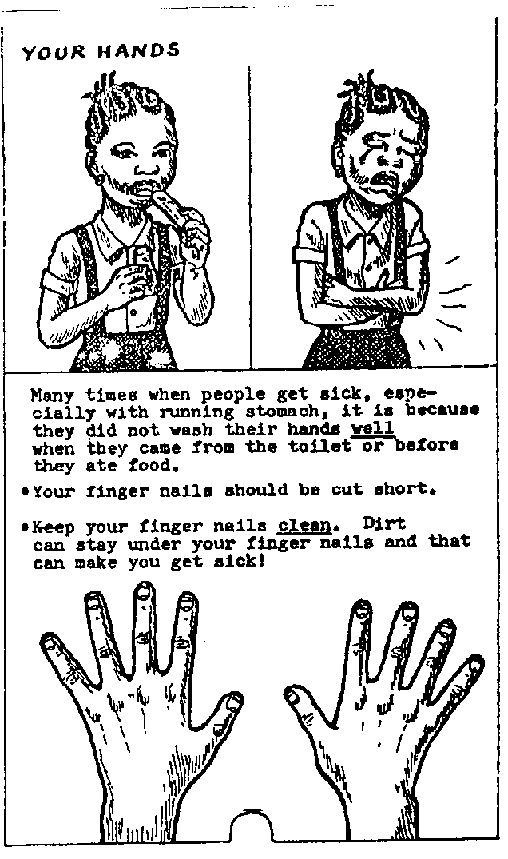
Figure
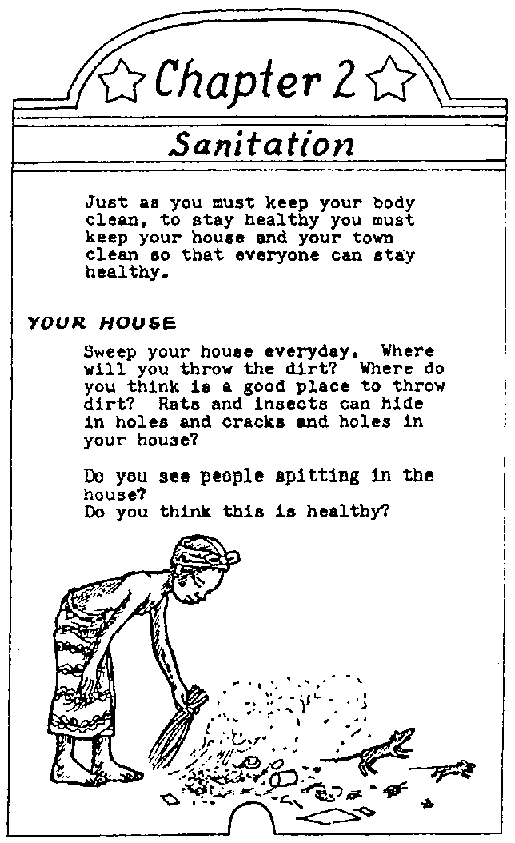
Chapter 2 - Sanitation
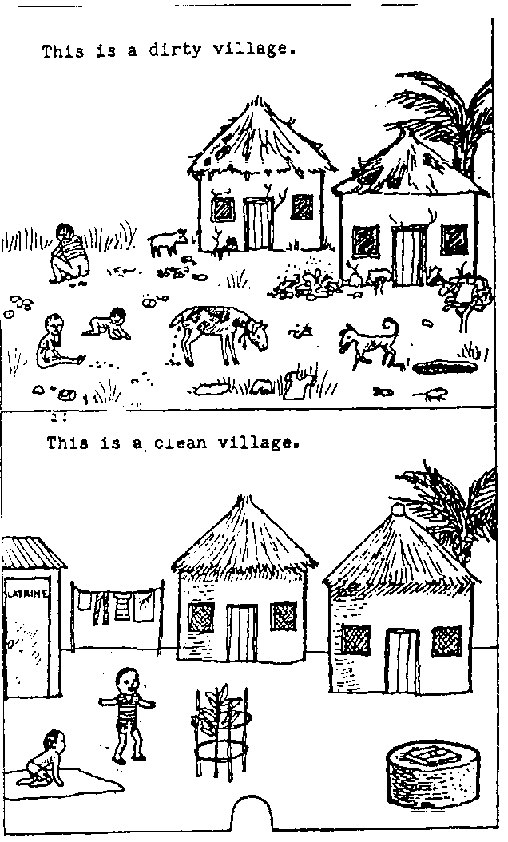
Figure
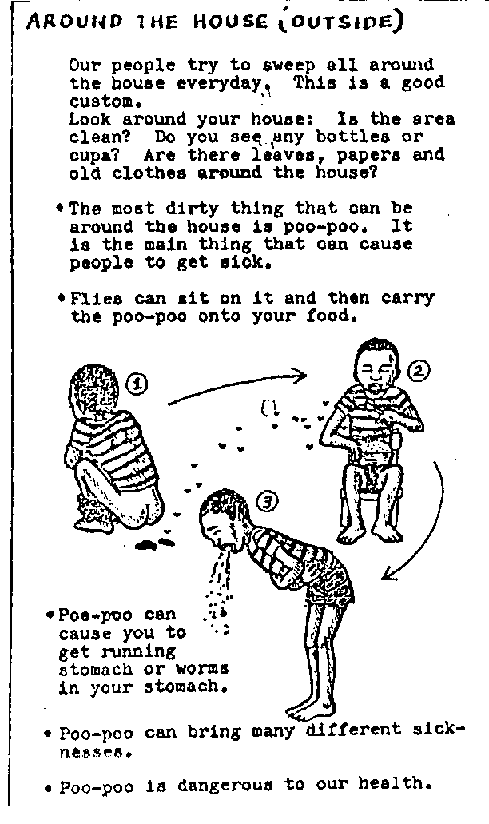
Around the house
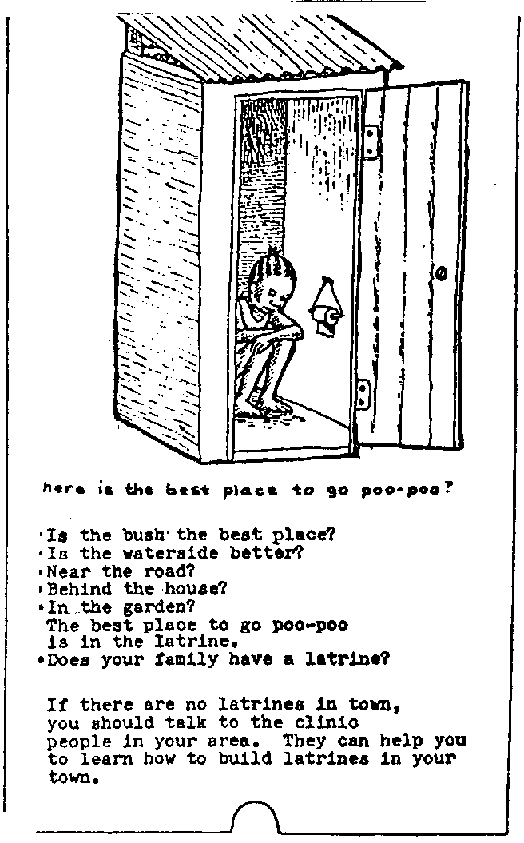
Figure
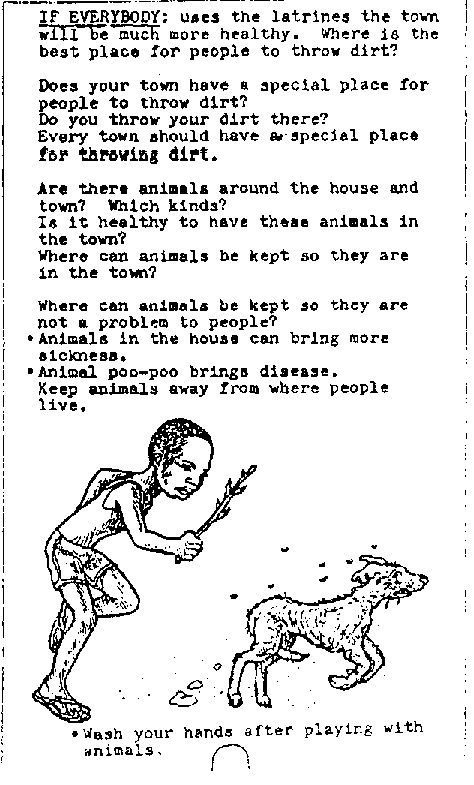
Figure
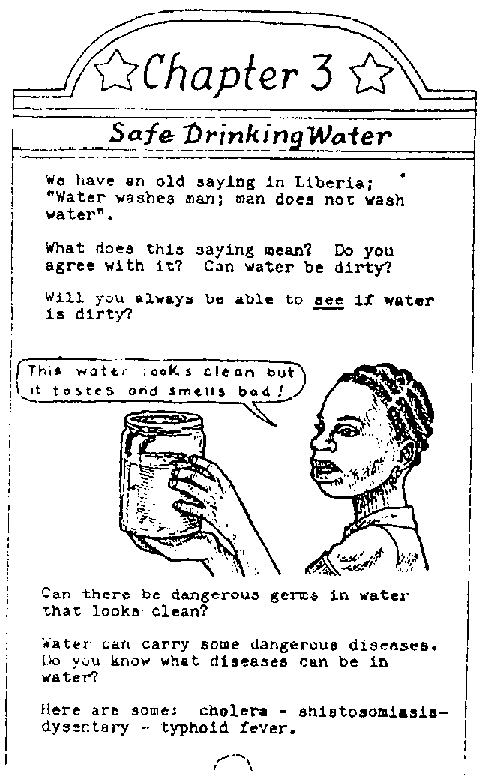
Chapter 2 - Safe drinking water
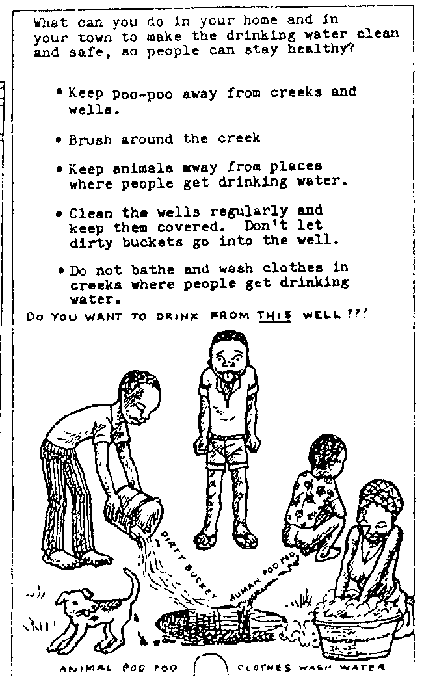
Figure
Figure
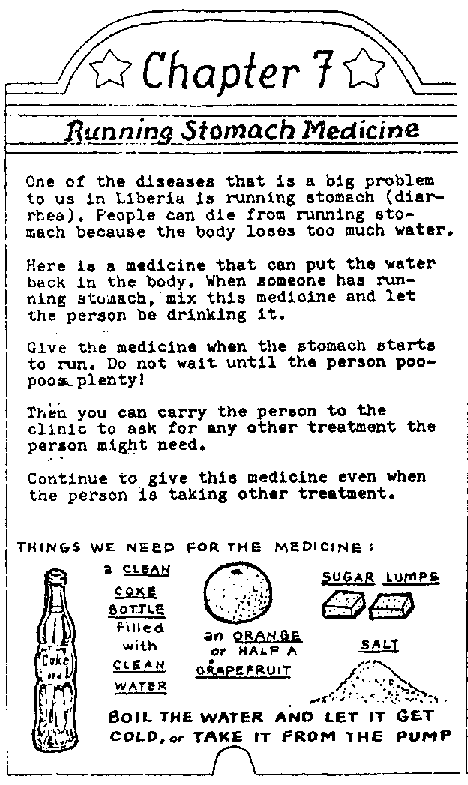
Chapter 7 - Running Stomach Medicine
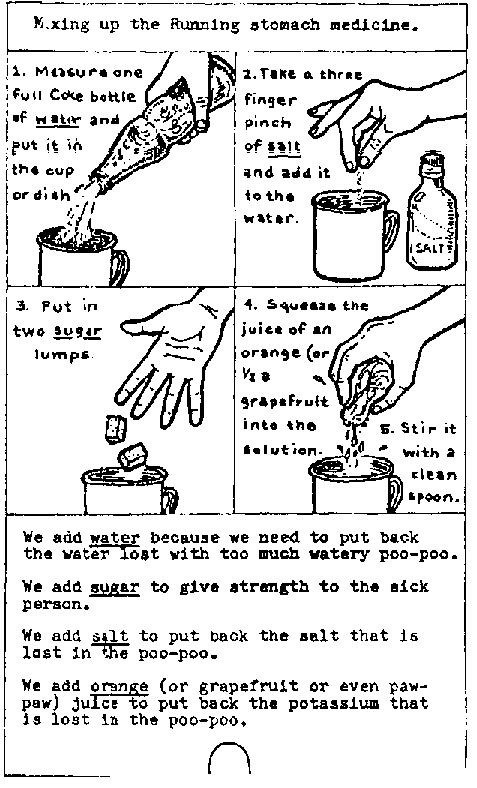
Figure
Handout 18C: Visual aids: do they help or hinder?
In India, not too long ago, an artist created a beautifully colored set of drawings to encourage women in the local dairy associations to make silage. When the materials were later used with a group of village women, this audience looked at a drawing showing the size of a silage pit. The women were asked. "How many carloads of green fodder will fill this pit?" Following much discussion, they replied, "Thirty." Then the women were asked it they, or anyone they had heard of. had collected or could collect 30 cartloads of green fodder for silage. They laughed and said. "Of course not!" This set of visuals was not effective because the technology it encouraged was not appropriate to the environment where it was being promoted.
Many things prevent educational materials from being appropriate. Perhaps the people who develop the materials are not working at the community level. Or maybe they are not working closely with others who are working there. They may not be familiar with the way, their intended audience lives, thinks and speaks. Therefore. these developers do not know how to prepare the materials so that they will be understood by the people they are trying to reach.
They may produce drawings or photographs showing urban people, even though the target audience is made up of rural people. The language used with the visual may be too sophisticated or too technical for the audience to understand.
It is important that we find out is a visual aid does what its name suggests: aids the audience in learning. Or does it actualls hinder learning? For example, in the situation with the visuals for silage, not only was the idea inappropriate but the visuals confused the audience. In one drawing, the person shown was as tall as the silage pit was wide. But in a drawing of the same silage pit a few pictures later, this person was like a small child in comparison to the size of the silage pit.
Another example of confusion and
mistaken meaning comes from Southeast Asia. A poster set about oral hygiene showed only women and children. Therefore, some of the audience concluded that men do not get cavities!
Testing is A Necessary Step
How can we insure that our visual materials wilt be effective? No matter how sensitive we are to the needs of our audience. or how our audience sees and hears things, we can still mane mistakes. That is why testing and evaluation of educational materials is so important.
The examples above show us that preparing effective visuals is not an easy task. The audience may not have the experience to relate to the ideas promoted in a visual. If the people who created it are nor well acquainted with their viewers a visual may not be prepared so that the audience can understand it. Some visuals may suggest to
a particular audience something far different from what the developers had in mind. Or visual materials simply may leave the viewers confused!
This issue of World Neighbors in Action tells us how we ran use simple techniques which will help us to test either materials we have made or materials made by others. Only by learning how to test our materials and making revision, m them will we be sure that the materials we develop are really appropriate.
How Do We Prepare For Testing?
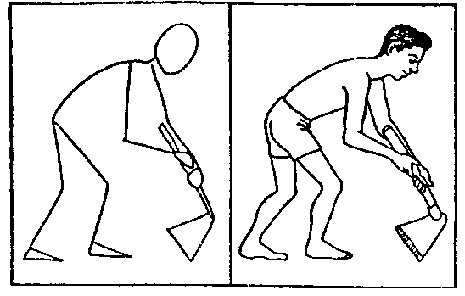
Figure
It is important to decide exactly what it is that we want to test before we begin the testing procedure. The materials we test should resemble as closely as possible what we expect the final product to look like. If the finished visual is going to be a series of detailed drawings, we do not want to do our field test wing stick figures. If the visuals are going to be in color, it is probably not advisable to have our test visuals in black and white.
Because we may be using some of the same pictures in the final version of the visual, they should be protected during the testing. If photographs can be reprinted, we do not need to take too many precautions to protect them. However, it is wise to cover our drawings with plastic sheeting. This covering will protect the drawings, but they will still be highly visible.
Ii is often best to test different things at different times. If we are only testing the appropriateness of an idea simple drawings may be best. If we know that the idea is appropriate, we may need to use finished art and only lest for sequence or language.
How Do We Choose Our Testing Audience?
Too frequently, our testing is done with the wrong audience. It is not enough to test ideas or materials with a group of associates. Our colleagues may have some useful ideas, but they will not and cannot be rooking et the materials through the same eyes and with the same thoughts as a villager. If the target audience of the finished visual is to be women, we must not test the materials with groups of men.
We must always bear in mind that the people in our testing audiences are doing us a favor. Their time is valuable, so we should arrange for a testing time which will fit their schedule. They should have enough time to look closely at the materials. We must also allow ample time for our audience to respond.
We must be sure that our viewers know how important their opinions are to the testers. It is often helpful to tell them: "These materials which we are testing with you may be useful to other audiences. We need your help in making that decision. If you do not tell us what you really think. we may produce materials that will be of no use at all. This wastes not only time, but also money.
What Things Are We Testing For?
There are many different things which determine how the people in an audience respond to visual aids and what they understand from these materials. Before testing, it is helpful to make a list of all the things that we should look for. We may not be testing all of these things during the same presentation, but each one should be tested fur at some time You may wish to make additions to the suggested questions which follow.
1. Can the audience understand the pictures?
2. Can the audience understand the language?
3. Is the subject matter socially acceptable?
4. Is the size of the visual aid appropriate?
5. If analogies are used do they work well?
6. Is the presentation so long that it is boring?
Three Methods of Testing
Of the many different ways to test materials, we have found that three methods are most useful. We must always be prepared to ask the audience questions, and we should have some way to record their answer. It is good to hew present a person besides the tester who takes notes of what the audience says.
METHOD ONE
Whether the visuals we are testing are projected or non-proiected a good way to test what the audience actually sees is to show them only one picture at a time. While each picture is being show!" we ask the audience, "What do you see?
We must avoid making remarks which "lead" or influence the audience to see something we want them to see. Afterall, we want to find out what they see in a particular picture, not what we see. We must not make comments like "That's right" or "That's wrong." Instead, we can thank each person for the idea, then repeat it and ask someone else for an opinion. After all the people who wish to express their ideas have done so, the purpose of this method of testing will be accomplished.
Using this method, we do not say any of the dialogue which would normally accompany the picture. Our purpose in this kind or test is to see if the visuals alone are understood.
METHOD TWO
The second method of testing is to use the pictures and the story together. At the conclusion of presenting the story and the pictures, we ask the audience a series of questions, and we record their responses on paper.
The questions should be "open-ended." This kind of question asks people to fell what they think about the material, and does not hint at what the answer might be. The audience should be able to answer these questions without saying only "yes" or "no." Some of the questions we might ask are:
1. What is the story about?
2. What did you learn from the
story?
3. Which pictures helped you to understand the story? Why were they
helpful?
4. How would you change the pictures to make the story easier to
understand?
METHOD THREE
One of the most interesting ways to test our visual materials is to ask a small group of audience members to thoroughly examine and discuss some pictures. After discussion of the drawings, the group makes up and tells a story using these pictures. The tester is simply an observer.
Not only does this method of testing show us how the audience tells stories, but it gives us the actual words they will use. After the group members have told us their story, we should ask them if there are additional pictures which would be useful in better telling the story These suggestions from the testing audience can be valuable when we later revise the material. They can help us to identify the "missing links" which, if omitted, can prevent the target audience from understanding the message of the visual. Very of often we find that educational visuals developed in this way are dome of our most useful materials.
It will be helpful to try each of the three methods described below. One method may be more useful than another with different materials or different audiences. Sometimes the best way of testing is to combine the different methods. It is a good idea, perhaps even necessary, to test the methods of testing.
Completed Visuals Reflect Results of Testing
If we have done a good job of testing our materials, there will be revisions to make. Sometimes the changes are simple, and sometimes they are complicated. As we gain experience in developing visual aids, we will do a better job of preparing both the original visuals and script. This usually means that testing will show fewer changes have to be made when we produce the completed visual. Let's look at example' from materials developed in programs with which World Neighbors works. Understandable Pictures
These two drawings are from a flipchart series developed in West Africa. The series is used to help upgrade the skills of traditional birth attendants. At left is the first drawing of a mother with her dead child. It was used to introduce the idea of women who are at risk of losing their next child. But the audience thought the child wrapped in a shroud was a yam! On the right we see the revision. When the shrouded baby was being placed in a coffin, the audience understood.
Socially Acceptable Visuals

Figure
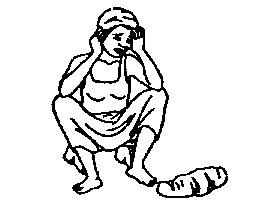
Figure
In these two photographs, we see a revision which was made because of a social or cultural problem. Note that the little girl is using her left hand to eel her food in the picture on the left. In many areas of the world, eating with the left hand is socially unacceptable because the left hand is associated with latrine practices. For this reason, it was necessary to change the photograph to the way it appears on the right. In this photo, we see the girl eating with her right hand.
Accurate Transfer of Message
Sometimes a photograph or drawing does not convey the intended message to the target audience. To illustrate the advice that a farmer should spray with pesticides only when he feels well, the photograph of the sick man on the left was used. During field testing in Honduras, the audience of farmers agreed that this precaution was better pictured by a farmer who felt well enough to play with his son. As a result of field testing, the photograph at right was used in the completed visual.
Handout 18D: Pretest report form
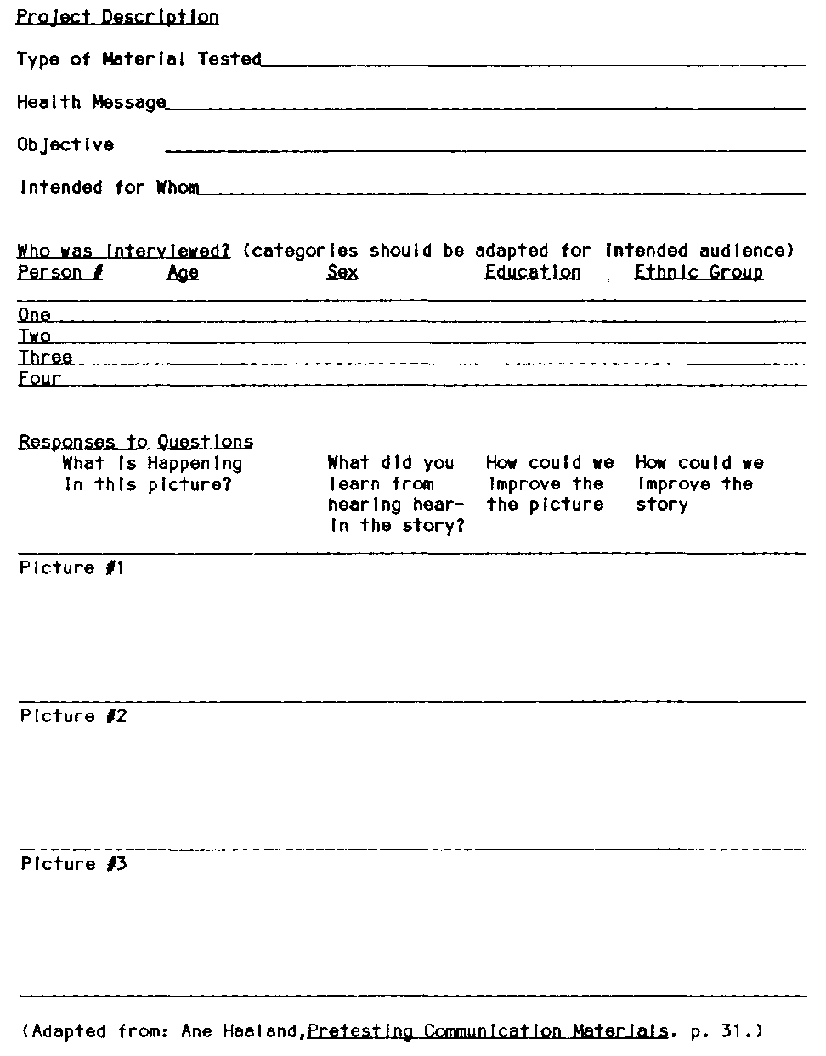
Pretest report form
Trainer Attachment 18A: Rainy season feeding messages
The Academy for Educational Development is a nonprofit service organization active in many areas of education. Under contract to the Offices of Health and Education, Science and Technology Bureau (ST/H, STIED), United States Agency for International Development, the Academy is assisting the Ministries of Health in Honduras and The Gambia to develop comprehensive public education campaigns on prevention and treatment of infant diarrhea. The campaigns combine broadcast radio, simple print material, and health worker instruction in an effort to provide practical information to rural women.
FIRST-YEAR MESSAGES
Following its developmental investigation of diarrhea-related beliefs and practices among rural Gambian mothers, the Mass Media for Infant Health Project identified a core set of messages to address to this primary audience during the first year (1982) or the project's educational campaign.
Organized around the concept of a "special diet for diarrhea," the campaign promoted a threefold response to a bout of diarrhea: (1) preventive oral rehydrations using a homemixed sugar-salt solution; (2) continuation of breast-feeding; and (3) feeding of solid foods both during and after the bout and extra food once the bout has subsided. This latter feeding message was designed to address the nutritional problem of wasting that occurs among Gambian children-the most worrisome aspect of the chronic diarrhea they suffer during the rainy season and to counter the practice common among Gambian women of reverting from solid foods to watery gruels of little nutritional value in feeding their sick children.
Such nutrition advice is widely recognized as an integral part of the treatment of diarrhea. WHO's Programme for the Control of Diarrhoeal Diseases, for example, states the following:
"In the management of acute diarrhoea it is essential to repair whatever nutritional deficit arises and to maintain nutrition during the diarrhoea illness. This deficit results from reduced food intake due to anorexia and withholding of food, and from nutrient loss due to vomiting and malabsorption. There is no physiological basis for "resting" the bowel during or following acute diarrhoea. In fact, fasting has been shown to reduce further the ability of the small intestine to absorb a variety of nutrients. Even during acute diarrhoea, 60% of the normal absorption of nutrients occurs. This is particularly true for fats and oils, which can provide a large amount of energy for the quantity eaten. Greater weight gain her been documented in infants given a liberal dietary intake during diarrhoea when compared with others on e more restricted intake."(A Manual for the Treatment of Acute Diarrhoea, WHO/CDD/SER/8O.2, p.11)
EVALUATION RESULTS
In early 1983, the Mass Media Projects implementation team conducted a formative evaluation for the purpose of assessing the progress of its campaign to date and to guide the development of second-year messages. At about the same time, Stanford University, which is conducting a separate but concurrent impact evaluation of the project, produced its initial set of data on the learning and adoption among Gambian mothers of the campaign's key messages.
Both evaluations indicated the same pattern of response to the "diet for diarrhea" messages: while as many as half of the Gambia's rural women appeared to have learned the campaign's formula for mixing sugar-salt solution and begun using it, fewer than a third had adopted the "give solid foods" message. To cite the Stanford data:
"64% of the women interviewed in December 1982 knew the entire sugar-salt solution formula correctly.... The proportion giving sugar-salt solution has risen 450% during the course of the campaign (from 20.6% to 89.3% of those mothers who treat their child themselves).... The use of solids, starting at a very low level (13.6%) has more than doubled (to 29.5%), but 70% of these women still do not offer solids to their children during diarrhoea."(Mass Media Project Evaluation Unit,
Quarterly Report #6, February 28, 1983) INTERPRETATION OF RESULTS
Several explanations for this discrepancy were considered, including the obvious possibility that the ORT messages had been better been given because they had received much greater exposure during the first year. Indeed, the peak of the campaign's first-year activity was a highly publicized national educational lottery over Radio Gambia in which 150,000 handbills illustrating the sugar-salt solution formula were distributed and prizes were awarded on the basis of knowledge of the formula and how to administer it.
Another plausible interpretation was that the solid foods message was too crudely formulated. "Give solid foods during diarrhea" was very possibly contraindicated in the minds of many mothers by the anorexia children often suffer during diarrhea: a sick child may be reluctant to take any kind of food, let alone solid foods. The message also obviously did not apply to an unweaned child.
Project staff thus decided to reformulate the campaign feeding messages and to make feeding the primary focus of the 1983 rainy season phase of the campaign, just as oral rehydration had been the first year.
REVISED FEEDING MESSAGES
The list of revised feeding messages is as follows:
· Continue breast-feeding· Give sugar-salt solution to prevent dehydration and to restore appetite. Remember the 3/8/1 formula. (3 Julpearl bottles of water, 8 Julpearl cape of sugar, and 1 cap of salt.)
· Try to give the child small, frequent feeds even if he has little appetite.
· Add some sugar or milk to the child's pap at the time of feeding to increase its palatability.
· Once the child's appetite has returned, give solid foods like nyankatango (mbahal), nyelengo (nyeleng) futo (chere), and mani fajiring· (malo bunye bahal) to restore weight and power.
· Oil, sugar, milk, and pounded groundouts add extra power to foods. Add some of these to the child's food to increase its power.
· Give an extra meal to the child for at least two days after the diarrhea has ended, and keep giving extra food until his weight and power are fully restored.
CHANGES IN EMPHASIS
These revised messages reflect the following changes in emphasis from the project's first-year messages:
1) We are differentiating between feeding 8 child during diarrhea and feeding after diarrhea, and now promote solid foods during the latter phase.
Rather than telling mothers to give solid foods to their child at a time when he or she may have little or no appetite, we are now acknowledging the difficulty a mother may have in feeding her sick child and giving several practical suggestions for encouraging the child to eat something. These include giving small, frequent feeds and adding sugar or milk to the pap, which the mother is most likely giving to improve its flavor and increase its energy value. Mothers are also encouraged to continue breast-feeding their sick child, which a very high majority of Gambian mothers already do.
Solid foods are then encouraged as an important and appropriate "catch-up diet" once the child is getting better and recovering his appetite.
2) Solid foods are promoted as a source of power (strength) and weight gain for a child.
A slogan was developed in the Mandinka and Wolof languages for use in both radio programs and graphic materials which says, "When your baby is recovering from diarrhea, give him solid foods to restore his power!" We are continuing to contrast powerful solid foods with weak watery paps. This message builds on our finding that JOBS of weight and strength are among those symptoms of diarrhoea most commonly identified and cited by Gambian mothers as a concern.
3) Full restoration of weight and power is also the guideline we are emphasizing for how long to give extra food to a child recovering from diarrhea.
We made this decision after failing to agree on a specific number of extra days or meals to recommend that would be neither too few as to be ineffectual or too many as to seem unrealistic in The Gambian context. WHO, for example, recommends an extra meal every day for at least a week but we felt this recommendation would be rejected as unrealistic by Gambian rural women who spend most of the day during the rainy season working in the fields away from their children, many of whom suffer diarrhea almost continuously at this time of year. We also felt confident, as stated earlier, that most Gambian mothers are very sensitive to their child's weight gain and loss, perhaps because a high percentage of them regularly attend an MCH clinic where their children's weights are charted on a Road-to-Health Card.
Our final decision was to advise mothers to give an extra meal to the child for at least 2 days after a bout of diarrhea and, more importantly, to continue giving extra solid foods until his weight and strength are fully restored.
4) We are recommending a number of specific local dishes which are particularly energy-rich.
These dishes include the following rice and millet dishes, for which, the Mandinka name is given first, followed by the Wolof (Descriptions of dishes and energy values are extracted from G.J. Hudson, P.M.V. John, and A.A. Paul, "Variation in the Composition of Gambian Foods: The Importance of Water in Relation to Energy and Protein Content," Ecology of Food sad Nutrition, 1980, Vol. 10, W. 9-17.)
· mani-fajiringo/malo bunye bahal: dehusked rice is boiled sometimes after preliminary steaming, and then the water content is reduced by a final steaming Fajiringo is usually served with the groundnut sauce durango.· futo/chere: finely powdered flour is steamed twice, almost to dryness. Futo is eaten with added water or a thin sauce, dajiwo often the water in which fish has been cooked.
· nyakatango/mbahal: fajiringo that has been cooked once is steamed with groundnuts, and often fish are cooked on top of it.
· nyelengo/nyeleng: dehusked, whole cereal is steamed. This food is usually served with a sauce made from groundnuts and leaves.
These dishes were recommend on the basis of their high energy content. All of them have a gross energy content in the range of 125-200 kcal/100g., expressed on a fresh weight basis, depending on which sauces or other ingredients are added to the dish. This compares very favorably to the rice or millet paps which mothers commonly feed their infants which are about 88% water and have energy contents in the range of 35-60 kcal/100g.
5) In addition to these recommendations of specific dishes, we also are promoting a number of food ingredients that will enrich the energy value of a child's food.
These ingredients include sugar, milk, oil, and groundnuts. In addition to being desirable ingredients in a catch up diet for a child who has been sick, promotion of these foods also represents an attempt to redress the imbalance in the nutrition education for most Gambian mothers have received in the past which has concentrated almost entirely on relatively expensive protein tools such as meat and eggs.
FOOD HYGIENE
The advisability of adding a message or messages on food hygiene also was discussed at great length in the process of reformulating the feeding messages, especially because contaminated food is believed to he the greatest sourer of bacterial infection for Gambian infants and because some of our new feeding recommendations-e.g., adding sugar to pap - could conceivably exacerbate this problem by making an even better medium for bacterial growth.
There was general consensus that the best food hygiene message would be: "Cook your baby's food fresh each time he or she is fed." Field staff at the MRC research station in Keneba report that many Keneba mothers do indeed prepare their child's meal fresh each time. They admit, however, that this result has been obtained only after many years of MRC presence and educational activity in Keneba. Elsewhere in The Gambia, the common practice is still for a mother to prepare a batch of rice or millet pap for her baby in the morning and then store it in a bowl or thermos flask for use throughout the day. We concluded that it would be unrealistic to expect mothers to act on a "prepare fresh each time" message, especially during the rainy season when many women are in the fields all day long, and that other food hygiene messages needed more understanding of current local hygiene practices than we presently had.
In our current phase, then, we have restricted food hygiene messages to emphasizing in the case of adding sugar or milk to, pap, that this should be done at the time of feeding rather than when the pap is originally made, so as to deter further bacterial growth.
Trainer Attachment 18B: Tracing techniques to adapt visual aids
Many health care trainers know that visual aids can ease new information easier to understand. Unfortunately, visual aids which (It the needs of your learners are not always available.
You can use tracing techniques to make visual aids which do not require many materials or any special skills in drawing. Magazines, books, posters, and many other materials contain photographs and drawings which can be used to make visual aids for health training and public health education.
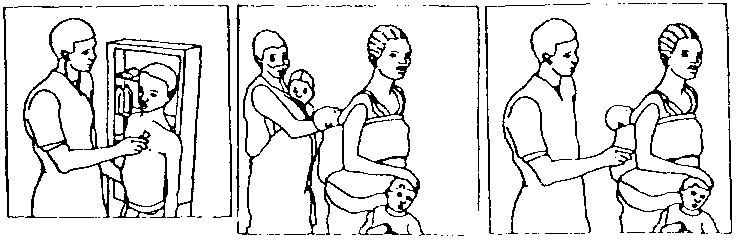
Figure
For example, a health worker in a rural clinic may need a poster on child spacing that shows a family with two or three children who are obviously happy and healthy. The only available and suitable pictures show only larger groups of people. By using tracing techniques, the health worker can make the needed poster by combining tracings of individuals from different pictures to create a family group, as shown below.
There are two activities on tracing: one to practice simple tracing and one to practice transferring a picture using carbon. The skills taught in these two activities will be necessary to do other activities in this unit, so we recommend that You do both of them.
You may want to demonstrate all of the skills before beginning the activities. The skills which need to be demonstrated are:
1. Simple tracing
2. Tracing using a light source
3. Making your own carbon paper
4. Transferring a picture to another piece of paper using the carbon transfer technique
S. Outlining the figures in black and coloring them in, using available coloring materials.
See Unit S. Demonstrations, for tips on giving a good demonstration.
Share the following information with your participants before beginning the activities.
Before using one of the tracing or transfer techniques that you will learn, decide which pictures to trace and how much detail to copy from those pictures to communicate your message. The amount of detail can range from only an outline of the shape of the picture to a very detailed drawing.
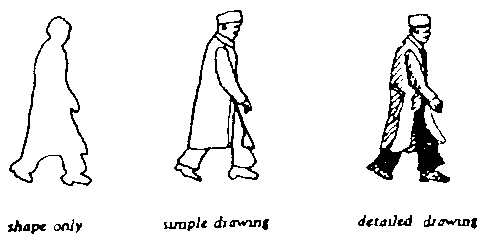
Figure
The basic shape of an object can communicate what it is if the object has a distinctive shape and if the group you are teaching is familiar with the object. for example, the round shape of an orange also looks like a ball. More detail is needed for people to be able to tell it is an orange. The basic outline shape of a pineapple can communicate the idea of a pineapple, if the group is familiar with pineapples.

Shape
More detail provides more information about the real object or person the tracing represents. Too much detail can be distracting. the person looking at the picture may pay more attention to the background or details of costumes than to the central subject.
It is important to try out your drawings with the people for whom the drawing is intended. You should choose shapes. simple drawings, or detailed drawings carefully based on the idea you want to show and the group of people you want to teach.
EVALUATION:
After each activity, ask your learners to:
1. Compare their traced drawing with the original picture. Old they trace enough of the person or objects to communicate what it is? Did they copy too many details so that the drawing is cluttered and confusing or possibly distracting?
2. Show the drawing to a few people from the group with which they plan to use it or to people with similar background and interests. Ask them what they see. If these people are confused in any way by the picture, ask them why. Make changes in the picture until it does communicate your message.
TITLE: SIMPLE TRACING TECHNIQUE
1. Choose a picture from a magazine, poster, or some other source, or use the enlarged drawing of the picture below included at the and of this activity.
2. Place a piece of thin paper (paper you can see through) over the picture. Use paper clips or pins to hold the 2 pieces together. Do not use tape because it may damage the original picture.
Figure
3. If you cannot see the through the paper, hold both pieces against a light source such as window or on an overhead projector,
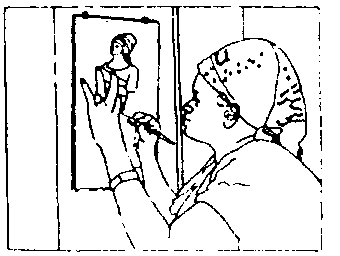
Figure
4. Using a pencil, carefully trace the parts of the picture you wish to use. Use only as much detail as you think is needed. In the example, you may wish to copy only the part of the picture that shows the woman and baby.
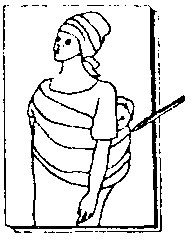
Figure
5. you can finish the drawing on the thin paper by covering your pencil lines with ink, paint, crayon, or colored marking pens. Erase any pencil marks not covered by color or ink. The figures will show up better if you outline them with black and then color inside the black lines.
TITLE: CARBON TRANSFER TECHNIQUE
To use the tracing technique explained in Activity I you need to use thin white paper so that the picture will show through the paper. The thin paper will not last a very long time, so you may want to transfer your tracing to a thicker piece of paper, such as drawing paper. This activity explains how to transfer your tracing from one piece of paper to another.
1. Trace any picture on thin, white paper. you can use the tracing you made for Activity 1.
2. Use a piece of carbon paper or make your own, like this:
Cover the back of your tracing with pencil lead by using the side of a soft-lead pencil. You can use a piece of charcoal from your kitchen fire, if pencils are scarce. You could also rub the pencil lead onto a separate piece of paper and use it like you would use carbon paper.
Figure
3. Place the paper with carbon (bought or made) on top of a sheet drawing paper. The carbon side should be touching the drawing paper.
4. If you are using a separate piece of carbon paper, place your tracing on to, of the carbon paper.
5. Fasten the 2 or 3 pieces of paper together with paper clips or pins.
6. Trace over the lines of the drawing using a soft-lead pencil with a fairly sharp point. As you trace the lines, the pressure of the pencil will transfer the picture onto the drawing paper.
7. You can complete your drawing by using pen and ink. crayons, pales, or colored markers to color the visual aid. Remember to outline the lines in black and then to color inside the lines.
8. Erase any carbon or pencil line that is not covered.
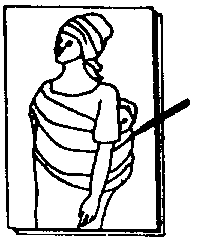
Figure
SKETCHING AND TRACING SKILLS
Sometimes the techniques introduced in the TRACING activities are not enough. Tour learners may have found the pictures they need but they need to put the. together in a new way. They may need to change or adapt figures, for example, they may have found a good photograph of a woman, but she is dressed in city clothing and they need a picture of a woman dressed in rural clothing. They may have found a drawing of a happy, smiling child, but they need a picture of a crying child.
These SKETCHING AND TRACING activities show your learners how to make simple changes in pictures so that they can adapt the to their needs. Learners will practice combining treeing skills with some new sketching skills. They will be able to make greater use of the pictures they find if they can adapt thee to fit the specific needs.
In this example, the tracing techniques have been used to drew the basic shapes and lines of the people. Small changes have been made to adapt the photograph for use as the poster. These changes were made by sketching. A sketch is a rough drawing that represents the main features of an object, a person, or a scene. By completing these activities, you will be able to combine your skill in tracing with a new skill in sketching to adapt pictures for visual aids.
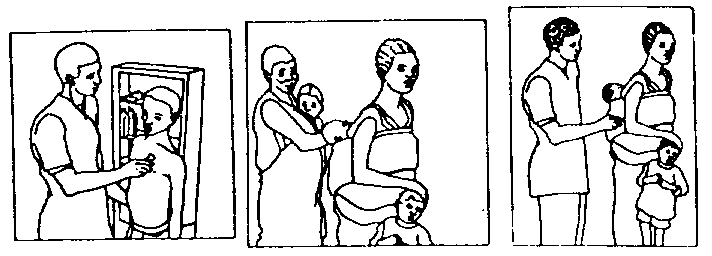
Drawing 1
MATERIALS NEEDED FOR ALL ACTIVITIES:
Thin, white paper
Pencil
Eraser
Ruler or straight
edge
Tape
Pictures trainer and learners need are listed for each activity
TITLE: ADAPTING CLOTHING
1. Use the "Space Your Family" poster (drawing 1).
2. Trace the poster on thin, white paper, using one of the tracing techniques. (Do not forget to trace the lines that mark the edge or "space" for the poster. A ruler or a straight edge will be helpful.)
3. Make the changes listed below by sketching. To sketch, lightly draw in new lines for the needed changes and erase lines you no longer need. You will probably not make a perfect drawing the first time you try. Just keep sketching and erasing until the changes are made. Remember, as with most skills, practice makes perfect.
Changes to make in the woman:
a. Add a scarf to the woman's head. Think about how a scarf looks. Lightly sketch the lines of the scarf on the woman's head. Erase and draw again until it looks like a scarf. Erase the woman's hair that cannot be seen under the scarf.b. Change the woman's dress so that it covers her shoulders. Again. lightly sketch the new lines to your tracing to extend the woman's dress over her shoulders .
4. Show your drawing to a friend and ask for suggestions for improving it. fry to make the changes by your friend's suggestions.
There is no one right drawing. You may have added short sleeves or long sleeves. The neckline of the dress may be a round opening or it may have a collar. The scarf may be tied at the neck or on top of the head. It may cover all of the woman's hair or it may leave some hair showing. Here are some examples of how your drawing may foul.
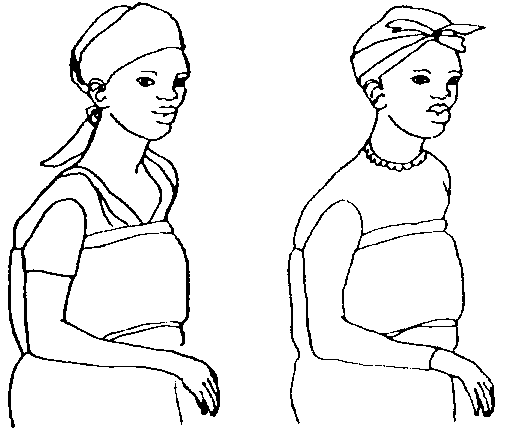
Drawing 2
TITLE: ADAPTING OBJECTS AND HUMAN POSITIONS
1. Use the picture of the family et mealtime. (drawing 3).
2. Trace as much of the woman as is possible.
3. Change the pot or dish she is holding to a woven basket. The basket can be of any size or shape you want to make it as long as it still fits into the woman's hands. You can use the lines of the pot or dish to begin the shape of the basket. Add lines to make the gasket look like it is made of woven grass.
4. Continue the lines of the woman's dress so that it reaches to her feet.
Drawing 3
5. Your drawing now shows a woman who is standing and holding d basket.
6. Change the drawing so that the woman is taking a step forward.
7. Ask someone to take a step forward and to hold the position. Look for the answers to these questions:
a. How would her dress look if she is taking a step forward instead of standing still? If she is stepping forward, the leg in front will have a bended knee.
b. How much of the woman's feet will show below the dress?
c. What position will her feet be in if she is taking a step forward? The foot that is stepping forward will be flat on the ground. She heel of the other foot will be slightly off the ground.
8. Lightly sketch new lines onto your tracing to show the ocean taking a step. Erase and resketch until you have made the necessary changes. Erase the lines you no longer need.
Drawing 4
9. Show your drawing to a friend and ask for suggestions for improving it.
There is no one way to make these changes in the drawing. Here is one possible adaptation. Notice how the shape of the dress is changed to show where the bended knee would be. Notice also the position of the feet.
TITLE: ADAPTING FACIAL EXPRESSIONS AND FEATURES
INSTRUCTIONS:
1. Use the picture of the couple in drawing 5.
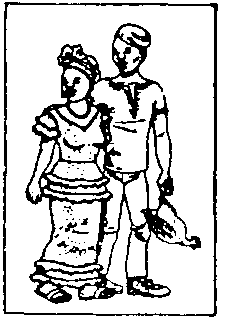
Drawing 5
2. Trace the man and woman.
3. Change the expressions on their faces so that they look worried or unhappy.
4. Ask someone to make a worried or unhappy face. Look for the answers to these questions:
a. What parts of people's faces move when they change their expressions?b. How do people's mouths look when they are worried or unhappy? Are their lips open or closed? Do the corners of their mouths point up, down, or not move ?
c. How do people's eyes look when they are worried or unhappy? Are they wide opens Slightly closed?
d. How do people's eyebrows look? How does the shape of the eyebrows change when someone is worried or unhappy?
e. How do people's foreheads change when they are worried or unhappy?
5. Begin making changes on the pictures. Start with one part of the face. Use the lines which are already in your tracing. For example, start with the eyebrows. Lightly sketch new lines for the eyebrows to show worry or unhappiness. Erase unnecessary lines. 60 on to another part of the face and continue the changes.
Your new expressions will look something like this:
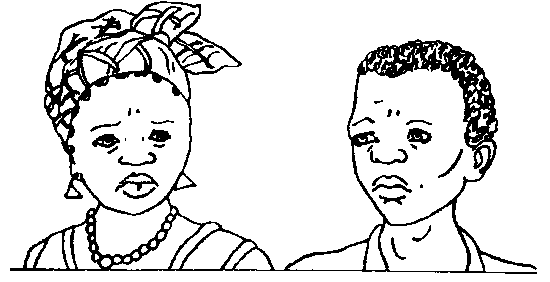
Drawing 6
6. Can you identify the 3 facial expressions in drawing 7. Notice the differences in the eyebrows, eyes, and mouths.
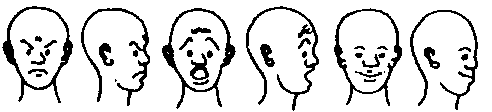
Drawing 7
7. Facial features can also be adapted so that the people look more like the ones in your area. You will need to pay special attention to the shapes of the forehead, noses, and lips. Look at the examples in drawing 8. Which facial features look most like the people in your area?

Drawing 8
8. Change the facial features of the man in drawing 9 to another type.
Drawing 9
9. Trace the man's face onto a piece of paper.
10. Change his facial features to one of the other types of facial feature' shown in drawing 8. To do this, you will need to change the shape and length of his forehead and the shape of his nose and mouth.
Tour new drawing will look something like one of these
Drawing 10
TITLE: MAKING A COMPLETE VISUAL AID THROUGH ADAPTATIONS
1. Use the full-body tracings you have already made of drawing 5 (the man and woman).
2. Add the little boy in Drawing 11 to the tracing of Drawing 5 so that the child is holding his father's hand.
Drawing 5 & 11
To do this, you must change the direction in which the little boy is teeing and change the position of his are so that his hand will reach his father's. (You could change the father's are instead of the boy's but that would be more difficult.)
3. Step one: Change the little boy so that he is facing his father.
a. Trace the drawing of the little boy onto e separate sheet of thin white paper.b. Turn the treeing over so that the clean side of the paper is facing you.
c. Use either the carbon transfer technique or a windows light source to make another tracing of the little boy onto another sheet of paper. (See TRACING for how to do the carbon transfer technique and how to use a window as a light source for tracing).
You should now have a tracing of the little boy facing in the direction of his father.
4, Step two: Add the little boy to the drawing of the mother and father.
a. Put the paper on which you have traced the little boy under the paper which has the tracing of the mother end thee tether.b. Move the tracing of the little boy around until he is in the correct position to hold kits father's hand. Be sure that he is not stepping on his father's foot! The little boy's feet should be at the same level as his father's.
c. tape the corners of the two pieces of paper to either a table top, e window, or another herd surface. The tape will prevent the tracings from moving out of place.
d. You will see that the little boy's arm is raised too high to meet his father's hand. (See Drawing 12.) You will need to change either the position of the little boy's arm or the position of his father's are. the little boy's are will be easier to change because you will have to move it less than the father's am.
e. Lightly sketch the new position for the child's arm so that his hand is inside his father's hand. Sketch and erase until you have the child's are in the correct position.
5. Step three: Sketch the fingers to the father's hand so that it looks like he is holding the child's hand.
You should now have a new picture of a man, woman, and child! it will probably loot something like this:
Drawing 12
Drawing 13
TITLE: TRACING AND SKETCHING TO CHANGE THE SIZE OF A PICTURE
Sometimes you may find 2 pictures to combine to use in a teaching or training session, but they are not exactly the same size. You will have to make 1 of the pictures either slightly larger or slightly smaller than the other.
The simplest way to make a picture slightly larger or smaller is to follow the outline of the picture at a larger or smaller size.
1. To make a picture slightly larger place a piece of thin, white paper over the picture end attach it with paper clips. Decide how much larger you want it to be. (Remember that this technique will only work for pictures that need to be slightly larger.) you can judge the larger size and on the thin, white paper. If you want to be more exact, you can use a ruler or a piece of wood with the distance marked on it.
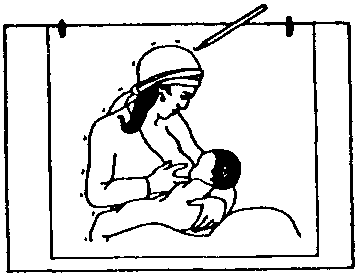
Figure
2. At the distance you have decided on, trace outside of the original lines of the picture until you have traced the entire outline.
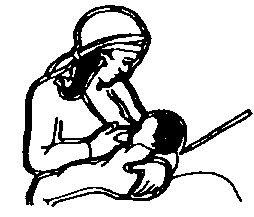
Figure
3. If your picture has detailed lines within the person or object, such as facial features, you will have to estimate where the lines should bc located in relation to the outline you have already drawn. Look carefully at the original picture estimate where the lines within the figure should go and mark them on your thin paper.
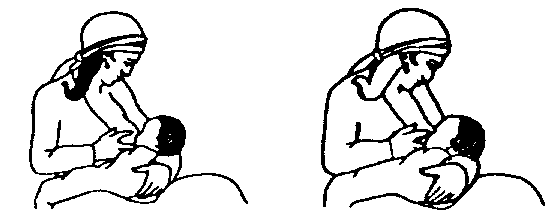
Figure
4. Compare your larger copy to the original picture. Erase the lines that are incorrectly placed. Sketch new ones until they are correctly placed in the drawing.
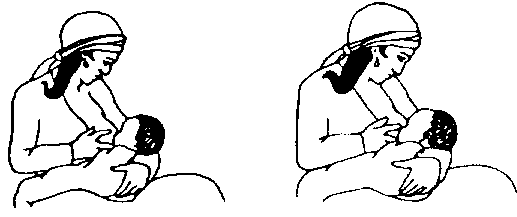
Figure
5. To make a picture slightly smaller, follow steps 1-4, but trace inside the outline of the original picture at the distance you decide upon.
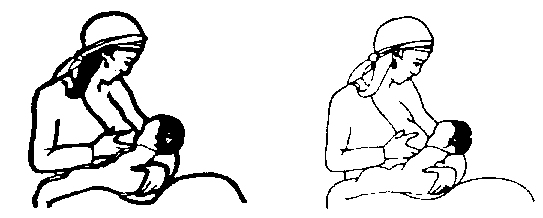
Figure
Trainer Attachment 18C: How to pretest
This chapter deals with the practical side of pretesting - what you have to do before going to the field, when you are in the field and when you return.
Study this chapter carefully before you go to the field. Remember, the most important learning takes place in the field, and the best way to become a good pretester is to get a lot of experience. The section in this chapter may help you analyze why you do not always succeed in your pretesting.
1. PREPARATION BEFORE GOING TO THE FIELD
For each of the communication materials you are going to test, you need to know with whom you are going to test (target audience), and what you want to find out (the objectives of the materials).
The target audience can be mothers, fathers, grandparents, children or health workers, etc., or several of these groups.
Then, you need to know what kind of effect the materials are expected to have on the audience: is it supposed to inform people, instruct there in a skill, motivate them, or anything else?
Most of the time, the materials will be designed to be used by an extension worker. He or she will explain the pictures to the audience. Thus, when your pretesting concentrates on the pictures only, you are putting them to a tough test. However, the better the pictures are at conveying a message by themselves, the more effective they will be is teaching tools. When the extension worker explains the topic, the audience can then give all their attention to the teaching, rather than trying to find out what the objects in the picture are.
When you know the intended effect of the materials on the audience, you can formulate your questions. It is important to be clear about what you are trying to find out . For example, if you have a poster with a picture of a mother feeding her child vegetables and rice, construct the questions so that the interviewer does not stop until he or she has got the right answer, or has found that the respondend does not understand the picture fully. If the first question is "What do you see in this picture", and the respondent says "A mother with a child", the pretester has to know that he or she has to ask more questions. This may seem very elementary, but it is surprising how many pretesters stop at just that single question, because nobody has told them the purpose of the picture.
Decide how you are going to record the answers - will you use a fixed questionnaire, or basic instructions and discussions with the pretesters before they go to the field? This decision will be based on how experienced your pretesters are.
The beet way to find out what works and what does not, is by trying out various methods. The rest of this chapter will give you some ideas to experiment with.
How long does it take to pretest? This depends on how much material you have to pretest, and how many people you are testing with (see Chapter, p.42). Experience shows that it takes approximately 10-20 minutes to test a single poster with a respondent; a series of 10 pictures (e.g. a flipchart) will take about a. hour.
Figure
When estimating the time, allow time for finding respondents, establishing rapport and for refusals. A lot of time may be wasted trying to talk with people who in the end do not want to be interviewed, but are curious about what the pretesters are doing. You will have a better idea of how to calculate the time after conducting and observing some tests with different kinds of materials in the field.
Some examples of how to determine the purpose of the picture, or what it is intended to convey:
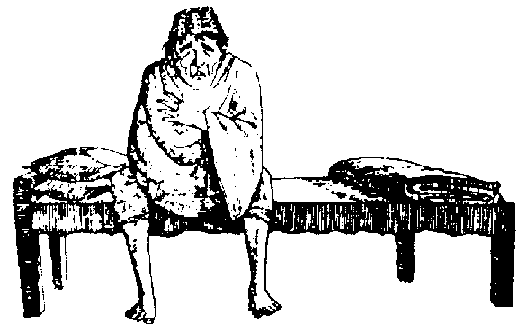
This picture intends to convey: Sick man, sitting on a bed, suffering from fever.
This series of pictures of a malnourished child should convey the following meaning: A very malnourished child, about two years old (1), being fed soft food by her mother (2) and becoming well again (3). (From the health education poster series, Nepal).
2. IN THE FIELD
This section will give you advice on interviewing techniques, and on the possible effect of your attitudes and behavior on the results of your work.
In the field, the first step is to contact the local leaders and explain what you are doing, and why. Explain that you are testing the materials, not the villagers. Also explain that you want the villagers' suggestions for improving the materials.
The local leaders can be helpful in suggesting where in the village you should go to find the kind of people you have decided to interview. Often, a villager leader will suggest that he should accompany you to help in your work. In most cases, this is not a good idea. Tactfully refuse his offer. When leaders cone to join in pretesting, they will often "take over. and try to "help. a respondent who does not understand your communication materials. m e village leader will want his people to appear "good" and "intelligent", by giving the correct answers to your questions. Villagers, and especially village mothers, also have a tendency to become reticent if the local leader is present - they may also be nervous to make mistakes in front of their leader.
These reasons cannot be explained to the leader - find some other way to dissuade him from joining you. Say that your pretesters become nervous if there are people watching them, and experience from other places has shown that you get better results on your own. If he is really interested in your work, offer to cone and tell him what you found out when you have finished testing.
Sometimes the leader will insist on accompanying you and then proceed to disturb interviews and make the testing useless. In such cases, carry out a few interviews, and then leave the village. It might upset your schedule, but there in nothing to be done about it, but to find another village for your pretesting.
A. INTERVIEW TECHNIQUES
a) Establish the social setting
Where you ask the questions is almost as important as how you ask them. Try to find a place where you will not be disturbed by other people. This is difficult in a village situation where everybody will be curious about what you are doing. However, most respondents will feel inhibited in a crowd. You will also have trouble with other people "helping" the one who is being interviewed. It is worth some time and effort finding the best place for the interview.
If you sit down in a public place, or even outside a person's house, you will most certainly have & problem. The same will happen if you interview women in the market place or by the water tap. Such places are fine for group interviews. For individual interviews the inside of a house or in the backyard is beat.
However, always be careful to observe the local customs. In some places, it is not acceptable for a male interviewer to be alone with an unchaperoned female respondent. In such cases, an acceptable way out is to interview a pair of women. It is better to get two women to interview, than let a woman's husband or father-in-law be present at the pretesting. A female interviewer will not have this problem. Therefore, train both male and female pretesters and share the work between them. A woman will have an easier time testing nutrition materials with mothers, while male pretesters will have more credibility with farmers.
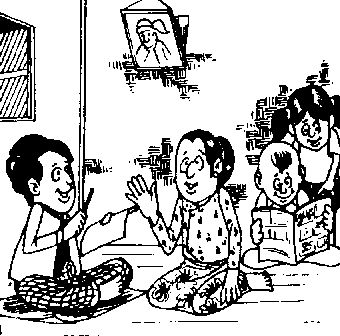
Figure
Children can often be difficult to deal with, even if you manage to establish a reasonably private setting. One way to deal with older children is to carry some comic books to lend them while you do your pretesting. Another strategy is to carry paper and coloured pens.
Some people insist on watching the interview, regardless of your plea for privacy. You can often persuade them to stay away by telling them you will interview them afterwards, and that they cannot watch this interview if their testing is to be valid. This approach can be used even if the person wanting to be interviewed is not actually in your target audience. interview him or her briefly - to satisfy them.
b) Introduction: Establish rapport
The introduction to the pretesting interview is very important as it will set the tone for the discussion with your respondent by motivating him or her to give you their time and opinions about your communication materials.
Motivate them so that they see the need and usefulness of what you are asking them to do. If you ask them to agree to the interview for the purpose of helping you and your project, some might agree out of politeness. However, if you can make them feel that you are asking them because they are the "experts" on the subject you are testing they know e.g. what their babies suffer from and how they could learn new techniques, they may listen to you more attentively. If you can also make them see how their suggestions can improve the materials so that the materials become good teaching tools to help them and their neighbours learn more easily, they will moat probably agree to be interviewed, and take an interest in the teak as well. Your guideline should be: Most villagers relate to things and people that are close to them in distance and life-style. If you want them to cooperate, you have to relate to those things rather than to concepts and projects outside their experience.
Even where people cannot relate to your project directly, say who you are, whom you work for, and what your project is doing (briefly). Invite the respondent to ask questions. Many people are curious about things you may not even have considered an issue, and will not ask unless invited to do so. Very often, you will learn interesting things about what people think and their concerns when you ask them to bring forward their questions.
A word of caution is called for here: Be careful not to make promises and raise expectations about what will be done by your project for people in this village. It is often tempting to make pula promises, thinking this will ensure better cooperation from the villagers. However, such false promises (even if they are well intentioned) will make people more sceptical to development, and probably prevent their cooperation with the next pretester or researcher who comes to this village.
The normal "small-talk" also has its place in the introduction - do not spout a monologue. Ask about the family, about village matters, about the weather, etc. depending on the situation and the person you are talking with. Be friendly to the children - especially if you are trying to get a mother's cooperation
This part of the introduction is important - it will make the respondent feel that you are really interested in talking with him or her, and that you have come to their house because they are exactly the kind of person you are looking for. If they are to receive that "message" from you, you have to let them talk, too.
You should avoid sensitive or potentially sensitive issues at this stage, e.g. questions like "do you read and write", unless such information is essential to whether or not you are going to interview the person. If this information is necessary, explain why you are asking the question.
An example of an introduction co-old be something like: "Good morning, I am .......... from the, project in Rangoon. We are trying to improve the health of people in your village, and in many other villages like this in the country. We have developed some teaching materials for health workers. Are you interested in looking at them?.. (the mother says yes, she is)... We do not know if these materials we have made are suitable for this village, and if you and your neighbours will like them. Therefore we have come to ask your opinion about these materials, and to learn how you think they could be changed so people here in the village will like and understand them better. If the materials are easy to understand, the health workers can use them to discuss health problems with people like you and advise on how to deal with the problem.
Would you have time to discuss these materials with us? ... the woman asks .. why me? She says she does not know anything, cannot read and write, ask someone else.
"We want to talk with you because you are a mother, and care for the children in the family of the time. It is important that you and other mothers here like the materials and understand them. It does not matter that you cannot read and write. Look at the pictures and tell us what you see there - that is all you have to do." (... the mother is now convinced that you really want to talk with her, and not with educated women only. Talk with them about the family, ask if any of the children are sick, etc., if the mother has any questions. After an introduction like this, which may take 10-20 minutes, you are ready to start your interview).
c) Let people touch the materials
if you want people to respond freely, let them do what they want with the materials (except tearing them up..). Let people touch and hold them. Do not behave like a school teacher keeping the children's fingers off the precious posters. Communication materials for field testing should be in a rough state - and tattered by the time you have finished testing. Make one or two photo copies for spare copies it the materials get rough handling.
Don't treat your respondents like children. Remember you are testing the materials, not the people if you want good results, treat people with respect
d) Encourage people to talk
Try to "step into the shoes" of the villagers you are interviewing. This entails a different way of looking at time, for instance. Put the city pace behind you, be patient, and accept that the interview may take a long time. It is better to take time and get one good interview than to hurry and get five bad ones.
Most people will never have bean asked to comment on educational pictures before, and what you may interpret as lack of understanding or reticence, may be just hesitation in the face of a now situation. Make them feel unhurried. Let them know that it is perfectly normal to have trouble with the materials.
Some golden rules in pretesting: Never make your respondent feel stupid. Do not argue with or contradict what the respondent says. Do not interrupt. Let the respondent talk. And do not let the. feel they have said something wrong.
Do not Judge people - you are there to ask them how they interpret your materials. If they say that a house looks like a cow, that's OK. Ask them to point to the picture and explain what they see, and how they see it. If you laugh at them, and they feel that they have said something wrong, you may not get another word out of them, and lose your chance of finding out why there is a problem with the materials.
Be neutral - encourage people to talk, to expand on their statements, to explain how they see things and why they see it this way. Do not show your feelings and opinions - it is their feelings and opinions you are after. This is a real and it requires sensitivity and tact.
When pretesting, resist the temptation to teach. You are collecting information, and if you do a good job, it will help those whose job it is to teach. many pretesters fall into the temptation of teaching. Remember that teaching new health practices is not something you do in ten minutes in the middle of an interview, in a village where nobody knows you or has a reason to trust you.
However, this is of course, like most of the "rules" in this manual, just a rule of thumb. If you are in a house, interviewing a mother on a flipchart about rehydration solution, and you see that her child has diarrhoea, you can of course ask her if she thinks it may be an idea to try it on the child. However, this discussion should be held after you have finished testing the pictures in your flipchart. Sometimes the mother will also ask questions herself, because what she has seen in the visual is relevant to the situation in her house. In such cases discuss it with her, but also bear in mind your limitations: you are leaving. Try to put her in touch with the local health worker, or ask her where she goes for medical help for her children. If you sense that she is not going to seek the health worker, and that the child indeed needs help, or follow-up on what you have taught the mother, make the health worker aware of the situation, if possible. These situations are tricky, though, as you can end up spending most of your time helping the sick children rather than testing materials. Always try to balance, and most important - bear in mind the long term solution as well. You might be giving more help by alerting the right people to the situation, than by trying to deal with it yourself, and forgetting about your pretesting.
The better you know your task, techniques and materials, the more you will be able to act naturally and to concentrate on the respondent and his or her reaction and feelings - both stated and unstated.
If it appears that your respondent is not cooperative, or that he or she does not understand the question, start again with an easier question. Always start with something easy to give people confidence, and then proceed gradually to the difficult questions.
e) Take a few materials only
When pretesting, it is advisable to take only one or two different materials. If you take too many, you will have difficulties keeping the reactions separate. Try not to test more than one material per respondent, unless it is a very simple one (e.g. a poster with one picture). In Nepal and some African countries, it was found that the attention span of illiterate people is approximately ten pictures. Their attention is very good for the first five, and acceptable up to ten, but after that it drops rapidly. Thus, a flipchart or flashcard should normally have no more than ten pictures, preferably less. So if you are testing two different flashcards with illiterate people, it may be a good idea to test only one of them with each respondent.
f) Different types of questions
There are two main types of questions people usually ask in interviews: Open-ended, and leading questions. Pretesting uses open-ended questions, with only few exceptions. The way you ask the question will determine the answer. Become familiar with the different types of questions, and "listen" to yourself when you are conducting the interview.
Many inexperienced interviewers tend to ask leading questions, because these are easier to get answers to. The more training and experience a protester has, the easier it will be to deal with open-ended questions, and thus get better results.
Open-ended questions are asked to get people to express what they think, without providing a lead or clue to what the answer might be.
Examples of open-ended questions that can be asked for this picture (and most other pictures):
- What do you see in this picture?
- What do you think this is (or could be)?
- How do you think this person feels (if the respondent has identified the person already)?
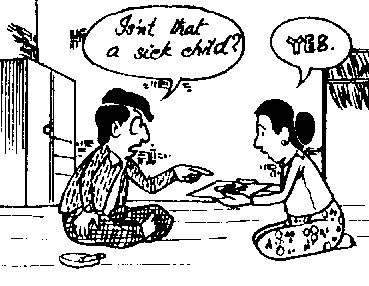
Figure
It is very common when asking for information to pose questions like "Do you think this is a healthy woman?" or "Do you think this is a village?" The danger in asking such questions, is that one cannot discover what the respondent thinks. The respondent has been led to the answer we want them to give - usually a confirmation of our own opinion about the picture. Questions like this are called leading questions. Avoid such questions.
Leading questions can normally be answered by "yes" or "no". Examples: Do you think this man is working? Do you like this picture? Do you think this man suffers from goitre?
Another type of leading questions limits the respondent two options, neither of which are the respondent's.
Examples: is this woman healthy or sick? Is this a friend or a road? Is this family rich or poor?
Leading questions should be avoided in pretesting.
To collect useful information for improving communication materials, ask open-ended questions most of the time. This is difficult. People you interview will most often be unfamiliar with being interviewed, and also with the kind of materials you are discussing with them. Therefore, they may hesitate to answer at first. It is very tempting to ask leading questions to "fill the gaps", instead of waiting for them to answer. It is also possible that they have simply not understood. the question, bet do not want to ask you to repeat it.
Each situation has to be tackled on a case by case basis, but some general suggestions can be made: Ask "leading" questions that have nothing to do with the actual information you are seeking, just to loosen up the situation. For instance, you can ask "Have you seen anything like this before?" which may also give you a clue as to whether or not the respondent recognizes the situation as having something to do with him or her, or with the vi' rage. If he or she has not seen anything like the picture, their answer is going to be pure guesswork.
Another rephrasing of the usual "What do you see in this picture?- is "What do you think this could be?- or "what do you think this looks like?- if a respondent has not understood the question, try to rephrase it until you are sure that he or she has understood. This is especially important for sensitive or threatening issues as respondents tend to react defensively in the beginning, and may hear something different from what you meant to ask.
An example from Nepal: A survey was conducted to find out how much women knew about abortion. They were asked "Have you heard about abortion?- However, when the results (which showed that only 5% said "yes" to the question) were checked by people in whom the women had confidence, it turned out that most of them had heard the question as "Have you had an abortion?", which is illegal in Nepal. Almost everybody (98%) had heard about abortion, which is common knowledge and practice among villagers. (From "The use and misuse of social science research in Nepal", by G. Campbell, L. Stone and R. Shrestha.)
g) Probing - or follow-up questions
Sometimes it is necessary to ask several questions about a picture before a satisfactory interpretation - or lack of such of the picture can be obtained.
Probing essentially continues the posing of open ended questions and follows up on respondents' responses. An example will illustrate how it can be done.
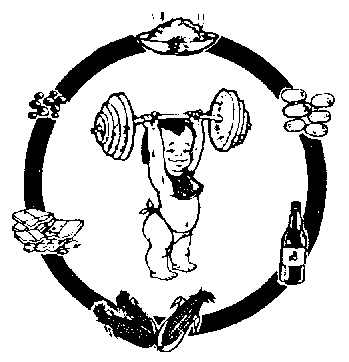
Figure
You nave a picture of a child lifting pair of weights, encircled by different kinds of foods that will make him strong. An acceptable interpretation of this picture could be e.g. "If your child eats rice, vegetables, potatoes, sweets and fruit-Juice, he will be strong." The interview with probing:
Interviewer: What do you see in this picture? Respondent: (hesitates).. I don't quite know. I see a child; I think.
I: That is fine. How is the child?
R: He looks very fat. He is smiling.
I: OK. Do you see anything else?
R: There is a bottle...
I: What is in the bottle?
R: I don't know. Water, maybe.
I: OK. Anything else?
R: Those round things... are they eggs or potatoes?
I: Well, what do they look like to you?
R: I think they could be eggs.
I: Fine. Do you see anything else?
R: There are some bricks, and some small black spots.
I: What do you think the black spots could be?
R: I don't know. Stones, maybe. What are they?
I: Well, I can't know either. Just tell me what they look like to you.
R: I think they are stones.
I: OK. Anything else?
R: Yes, there is a plate of rice. And some corn.
I: That is fine. Now, looking at all these parts together, what does the picture mean to you?
R: it is a child and some food around it. The child is too small to lift those kind of weights. Why are they put there?
I: I don't know. Maybe the artist was trying to show something.
R: Well, I don't know what he is trying to show. I can see those vegetables and eggs and the rice, and a child lifting weights. What else is there to see? Everybody knows that children don't lift such weights.
I: Yes, that is probably right. Now, let us go on to the next picture...
A good interviewer who knows what he is after (i e he or she has defined carefully the objective of the communication materials), can continue to ask questions like this until he or she gets to the "heart" of the matter. Since every respondent will answer in different ways, it is difficult to construct a questionnaire that gives guidelines on what to ask, and at the same time gives you freedom to probe in the way described above - depending on what the respondent says.
Good probing is difficult in the beginning, but it is essentially just a matter of knowing how to do it, and then getting the experience.
h) Giving clues
What is the acceptable level of help to a respondent who has trouble with a picture? This is a difficult question, but in testing promotion materials that are supposed to work on their own (e.g. a poster on breast-feeding that will be placed in offices and shops), you should not give any clues - or only very minimal ones. If you are testing teaching materials, it is different, because these will be explained by extension workers to the audience. Thus, the picture is not expected to work on its own.
Thus, when testing teaching materials, you can help people to some extent, e.g. by pointing to the different parts and asking specific questions (see picture). The questions are still open-ended.
You can also ask questions about whether there is a connection between the different parts of the picture, and ask them to describe this connection and what it may possibly mean.
However, give as few clues as possible. The idea is to be neutral, and encourage the respondent to tell it as they see it. If a respondent is completely "lost", though, you should give him or her some clue to get started. The respondent may not know what you expect him to say and do, despite your explanation. This problem will increase when you go to remote villages that have not had much exposure to visuals of any kind.
When you give clues, always note (or have your recorder or co-worker note) that a clue was given. This makes it easier to analyse. If 50% of the respondents needed clues before they could interpret the picture, you most probably will have to make a new and clearer picture.
i) Thanking the respondent for his/her time
Always let a respondent know that he or she has been of help. Tell him or her again what you are going to use the information for, and how his/her response will help to improve the materials. Never abuse people's time or their willingness to help. Think about future researchers who may come to the same place later. Researchers are getting a poor reputation in many developing countries for coming into a community, taking people's time, and never giving anything back. The villagers never hear or see the results of those long hours they invested in answering questions. After a few such experiences, people are not very willing to give you - or other researchers - their time. In this matter as in health prevention is better than cure.
j) Recording
Pretesters should work in pairs, it at all possible. One person to conduct the interview, the other to write down the questions and the answers. The most important thing is to record the answers properly, but if the questions are also written down, this can be a good tool to improve the interviewer's techniques. Also, by writing down the questions, you will get a better idea of how much you can trust the results of the interview if several leading questions were asked, and sensitive issues were raised at an early stage, the results of the interview have to be analyzed very carefully. The answers may not be valid. If only answers were recorded, these mistakes may be difficult to detect. Your analysis of the results may thus be based on wrong information.
If the artist who has developed the communication materials is also pretesting, he should be the recorder rather than the interviewer. Experience has shown that it is difficult for an artist to detach himself from his product, and conduct a good pretest. It is very common for an artist to get impatient with those who do not understand pictures. He will learn more from watching and listening the first few times. Later, when he discovers that he can become a better educational artist if he learns how people actually see his pictures, he can pretest his own materials.
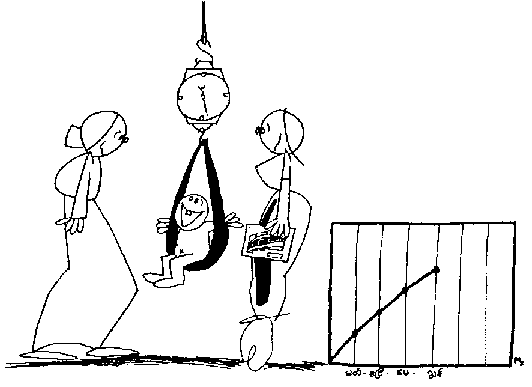
Picture
Example of giving clues (see picture):
Interviewer: What do you see in this picture?
Respondent: I don't know. Is that a table? (pointing to the right hand corner, supposed to show a growth chart).
I: Well, it could be a table. Do you see anything else?
R: A big clock, I think.
I: Anything else?
R: Some blobs, funny shapes.
I: (pointing to one of the nurses) What could this be?
R: Well, it is not a person, even though it looks like one.
I: Why could it not be a person?
R: it has got no legs.
I: How about this one - and this one (pointing to the other nurse, and the baby in the weight).
R: They look more like people. But not quite. We don't have any people like that in our village.
...(and the interview continues)...
Pointing to things will often focus people's attention, and they can slowly make out the whole picture after identifying all the different parts. However, one should not take for granted that they will put the things together even if they identify the parts correctly - in places like Nepal, for instance, many people do not put the different parts together (see chapter on how people interpret pictures). Find out what the situation is in your locality - for different groups with different kinds of background.
Trainer Attachment 18D: Role play on pretesting pictures
Photographs and pictures most be pre-tested and modified to make certain that they communicate the intended message. Pre-testing con be fairly simple. You can ask a number of people (similar in interests and background to those that you want to reach) to explain what they think is happening in the picture or photograph. Another way to pre-test pictures is through focused group discussion where several people look at the pictures and discuss what's happen tug in the picture. It is helpful to work in teams so that one person con make notes on the suggestions while the other person asks questions.
First show the picture and ask:
- What is happening in this picture?
Then tell or show the text of the story that goes with the pictures picture and ask:
- What did you learn from hearing or reading the story?
Finally ask:
- How could we improve the picture?
- How could we improve the story?
Pre-testing Role Play Instructions
The role players should create a scene for the role play based on their own experience. They should also create the characters. The viewer role should be a character like someone in their communities with whom they want to communicate through pictures as well as words. The pre-tester role should be a PCV or a counterpart. The pre-tester should ask all the questions listed above, while the recorder completes the pretest torn. The role players should follow the pretesting guidelines summarized in the Trainers Note at the end of Step 1.
Session 19: Designing and evaluating health education sessions on ORT for CDD
TOTAL TIME
4 hours
OVERVIEW
Each health education session in a project must be carefully designed for particular learners and objectives to ensure that the session contributes to overall project objectives. In this training session, a role play provides the basis to discuss ways that adults learn best and how to use the experiential learning cycle to design sessions. Participants critique the design of a session before dividing into small groups to design their own sessions which they will practice in Session 22 (Practicing and Evaluating Health Education Sessions). They also discuss creative ways to evaluate health education sessions and how to organize preparations for a session such as materials and facilities.
OBJECTIVES
· To describe three parts of a health education session and hoc to sequence them. (Steps 13)· To critique the design of a health education session. (Step 4)
· To design a plan for one health education session that follows the experiential learning cycle. (Step 5)
· To organize preparations for a health education session. (Step 6)
Resources
- Bridging the Gap. pp. 86-100
- Helping Health Workers Learn , Chapter 1 pp 26-27,
- Chapter 5, pp. 1-2; Chapter 9, pp. 12-22.
- Teaching and Learning With Visual Aids (INTRAH) Unit 5
- Audiovisual Communication Handbook (In Resource Packet P-8 on Audiovisual/Communication Teaching Aids).
Handouts:
- 19A The Experiential Learning Cycle
- 19B Session Design Assessment
- 19C Guidelines for Session Presentations
- 19D Session Plan Worksheet
- 19E Evaluation of Practice Session
- 19F Session Preparations Checklist
Trainer Attachments
- 19A Role Ploy on Nays Adults Learn Best
- 19B Deciding When to Use Experiential Learning
- 19C Sample Session Plan
MATERIALS
Newsprint and markers, visual aids for role play, prepared large version of experiential learning cycle.
PROCEDURE
Trainer Note You nay want to read the following sections in Helping Health
Workers Learn : Appropriate and Inappropriate Teaching, Chapter 1 pages 26-27; Planning a Class, Chapter 5, pages 1-6 and 10-12. In Bridging the Gap see Planning Village Learning Experiences, pages 86-100 as well as the evaluation reading assigned to participants.
Ask two people to prepare for the health educator roles in the role play described in Trainer Attachment 19A (Role Play on How People Learn Best). Work with them to make certain that they clearly demonstrate the contrast between two roles. Also make certain that the facilitator role player includes opening (climate-setting) and closing (closure) activities in the session.
Ask someone to make a large version of the experiential learning diagram shown in Handout 19A (The Experiential Learning Cycle). Ask the person to think of another example of problem solving in dally life, illustrating the four steps in the cycle, to use to explain the cycle to the rest of the group, Work with kilo or her to make certain that they understand the steps and select a good example to illustrate them,
After this session give participants time to revise their plans and practice their sessions. Make yourself available as a resource person. Ask other trainers to assist as resource persons as well. Prepare a list of suggestions for session topics and a sign-up sheet for practice times.
Step 1 (40 min)
Role Plays on Bays Adults Learn Best
Introduce this step by explaining that the group will be looking at ways that adults learn best and applying those ideas to design a health education session.
Ask the preassigned people to conduct the role plays. Have the group analyze each role play, and ask questions such as the following:
- How did you feel as a learner (community member) in this situation? as a health educator!
- What experiences made it difficult to learn?
- What experiences made you eager to learn?
- What kinds of learning experiences are best for community health education?
- Based on this discussion, develop two lists' "Ways I Learn Best" and "Ways I Learn Least". Discuss which kinds of learning experiences cork best in the community and the health center.
Trainer Note
See the final trainer note in this session for an alternative way to do this and the next three steps.
Few of the conditions that help and hinder learning that should come out of the discussion include:
Ways I Learn Best
I have a say about what
I need and want to learn
I learn practical useful skills
I play an active role (I learn by doing)
Teacher respects my knowledge and experience
Ways I Learn Least
Teacher tells me what I need to learn
I Learn ideas, concepts with no practical use
I play a passive role (I listen only)
Teacher dominates, talks down to me.
You can use the following stick figures to summarize the discussion:

dialogue approach;
expert (top-down) approach
Step 2 (30 min)
Applying the Experiential Learning Cycle
Ask the pre-assigned person to post the diagram of the Experiential learning cycle and give their example. Introduce the cycle as a way to design health education sessions based on how adults learn in dally life, that is, through experience, reflection and decision and action in solving problems. Distribute Handout 19A (The Experiential Learning Cycle).
Ask participants to think about the role play that they Just observed and match the activities of both health educators with the steps in the Experiential Learning Cycle. Discuss and write their responses on the diagram. Refer to Handout 19A to guide them if they have difficulty in this task. Briefly compare the two approaches to community health education. Discuss how they could affect the success of a health education project in a community.
Also discuss the advantages, disadvantages of experiential learning and when to use it in community health education (using Trainer Attachment B. Deciding When to Use Experiential Learning). Ask participants to give examples of specific learning situations to illustrate their comments.
Trainer Note
Make sure that the discussion of advantages and disadvantages of experiential learning includes:
Disadvantages
- takes a long time to prepare and conduct.
- villagers cannot dialogue about topics that are unfamillar.
- requires more skill in working with groups than does lecture discussion.
Advantages:
- based on the knowledge and experience of the learner.- permits active participation and "hands-on" experience for everyone involved, thus facilitating skill learning.
- encourages villagers to share their problems and work together to identify viable solutions.
- enables the health worker to learn more about the community or group.
Use Trainer Attachment 19B (Deciding When to Use Experiential Learning) to lead the discussion of when to use this type of experiential learning.
Step 3 (25 min)
Anatomy of a Health Education Session
Explain to the group that they have Just examined the main body of the health education session - conducting it using the experiential cycle. The other two parts of a session are opening and closing. Evaluation happens during the conducting and closing parts of a session.
Ask them to describe what kind of opening and closing activities they saw in the role plays. What did the health educator accomplish? What kind of evaluation occurred during and after the session? What other kinds of evaluation can be used? Ask them to give other examples of opening, closing and creative evaluation activities from other sessions in this training, and from their reading of Helping Health Workers Learn.
Trainer Note
The outcome of this discussion should be similar to the following points:
- The opening makes people feel comfortable working together as a group with the health educator. It stimulates interest in the session, provides a rationale for the activity and gives participants an opportunity to raise additional concerns and ask questions about the objectives of the session. If the session follows previous session, the opening also links the session to what has gone before it.- The closing briefly summarizes the events of the session, links back to the objectives to see if these were accomplished and wraps up the session with a sense of completion. If the session is part of a series, the closing also links the session to future sessions.
Be sure that the participants discuss some specific examples of ways to open and close sessions.
Encourage the use of creative and active evaluation techniques such as those discussed in the pre-assigned reading in Helping Health
Workers Learn.
Step 4 (30 min.)
Session Critique
Ask participants to summarize the objective and activities for one of the health education sessions that they Just reviewed. List these.
Distribute Handout 19 B (Session Design Assessment Sheet). Read through the form with them and alloy time to discuss and modify the questions. Ask the participants to fill in the sheet to provide a basis for the group discussion and critique of the sessions.
Trainer Note
As an outcome of the critique, emphasize the need to ask the following questions when designing a health education sessions
- WHO are the learners? (for whom is the session intended? What do they know about the topic of the session? What are their current beliefs and practices regarding this topic? What do they want to learn?)- WHAT RESULTS do you and your Counterparts expect? (What are the objectives for the session? What changes do you expect in knowledge, skill or attitudes as a result of the session? How will this session help accomplish the objectives of the larger health education project?)
- WHEN, WHERE and for HOW LONG will you conduct this session?
- What TECHNIQUES and MATERIALS will you use? (what nonformal education techniques and visual aids are most effective for the types of learning specified in the objectives and the time available for the activities? How experiential should the session be?)
- Does the session include all the necessary parts? (opening, conducting, closing).
- How will you and the learners EVALUATE the session? ( how will you learn what worked well and what needs improving before the next session?)
Emphasize the importance of working with community members and local health workers to answer these questions, and develop the session.
If time allows, you may want to critique another session from the present training to make sure that participants relate the discussion of session design and evaluation to their own experience as participants in this training course.
Step 5 (40 min)
Small Group Planning Activity
Explain to the participants that they will be applying what they have learned in this and previous sessions to design and conduct a health education session with the partner with whom they worked to develop a project plan. Tell them that you will give them some worksheets to help thee plan and practice for this activity, and then they will spend the rest of this session planning and preparing. Tell them that you and the other trainers who hove agreed to help will be available to answer questions and listen to ideas during the planning time. Distribute Handout 19C (Guidelines for Session Preparation) and review each point with the group. Allow time for questions.
Distribute Handout 19D (Session Plan Worksheet). Note that this includes the kinds of questions that they have Just listed in their discussion, asking who, what, where, when etc. You nay want to give the example from Trainer Attachment 19C (Sample Session Plan) to illustrate what kinds and how much information to include on their worksheet. Allow tine for questions and an opportunity to modify the worksheet.
Post and discuss a list of ideas for topics for the practice sessions. Also post a sign-up sheet for session times. Ask participants to sign up, listing their topics and names. An alternative is to write times on slips of paper, fold them, and have each pair draw one from someone's hand or a hat.
Step 6 (20 min.)
Discussing How To Prepare for a Session
Distribute Handout 19E (Evaluation of Practice Session). Discuss the evaluation criteria, modify if necessary and suggest that participants use these guidelines as they plan and prepare for their sessions, particularly the criteria for effective facilitation.
Distribute Handout 19F (Preparations Checklist). Explain that this is one of many ways to plan hoe to carry out a health education session. Ask participants to share any examples from their experience. Discuss the form and modify it if necessary. Encourage participants to use the forms to prepare for their own sessions.
Close the group work part of the session by asking one or two people to describe how they plan to use what they learned in this session to design their own session.
Trainer Note
You may want to enlist the help of a few participants to prepare a list of suggestions for session topics using the problems and projects identified in other sessions. Use the technical modules in this manual, such as Session 4 (Dehydration Assessment), Session 5 (ORT) and Session 6 (Nutrition During and After Diarrhea) as a source of technical content and ideas for session topics.
You may want to encourage groups to select different topics so that there will be a variety of activities developed for everyone to try out in their host communities. You will probably want to arrange to have the final health education session plans duplicated so that each Trainee can have the full set of session.
Re-emphasize the importance of community involvement in designing community learning experiences. It is preferable to ask participants to do some preliminary information gathering on health problems, practices and attitudes before they attend the training course. For preservice training, community involvement may be limited to conversations with the host family in a live-in situation or talking with housekeepers, cooks, and other project staff.
Possible Adaptations for This Session
An alternative requiring less time but loss effective than role play activity used in Step 1, is to ask participants to think about one of their best and one of their worst experiences as learners. Ask thee to discuss what conditions made these two experiences good or bad. Hake two lists of their comments with the following headings "ways we learn best" and "ways we learn least".
It is important to keep in mind that this adaptation affects Steps 2, 3, and 4 as well. You will need to use one of these session in the training as a basis for participants to complete those steps. You can refer back to the last session in the training and ask participants to summarize the objectives and activities before they identify the experiential learning cycle steps (Step 2). Identify the parts of the session (Step 3) and critique the session (Seep 4).
Handout 19A: The experiential learning cycle
The Experiential learning cycle is loosed on the way that people gain new skills or information and solve problems through daily experiences ("experiencing"). Interpret those experiences ("processing"), draw generalizations from them ("generalizing"), and determine how to make use of the learning in dally life ("applying").
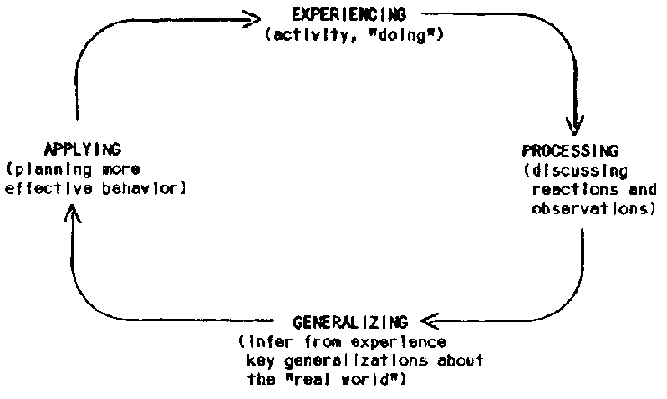
The experiential learning cycle
EXAMPLE from daily life
Experiencing: A woman vetches her sick child revived by ORS given first by the health worker and then by her after the health worker taught her how to mix and give it.
Processing: The woman thinks about the recovery of her child, how difficult it was to pay for the packets and to remember how to mix it. She also thinks about the child who died last year of the same sickness. She discusses these thoughts with her sister.
Generalizing: The two ladles conclude that the ORS drink is well worth the cost and effort because it can save their children's lives,
Applying: They plan to go the clinic and get ORS packets again the next time their children have that sickness. Using the ORS packets again will be another experience, starting the cycle over again.
Handout 19B: Session assessment sheet
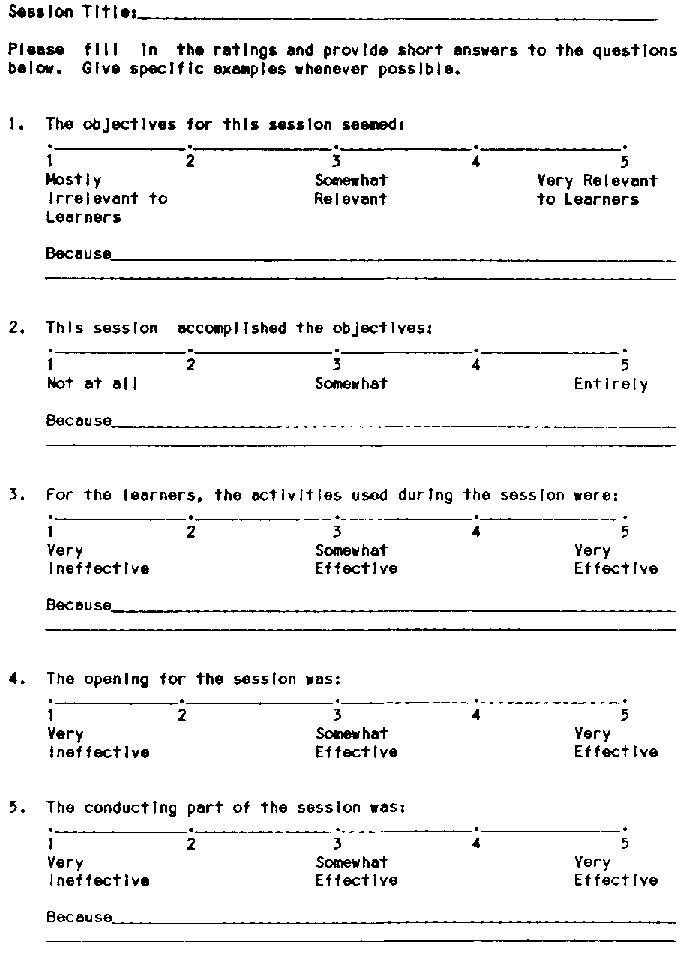
Sheet
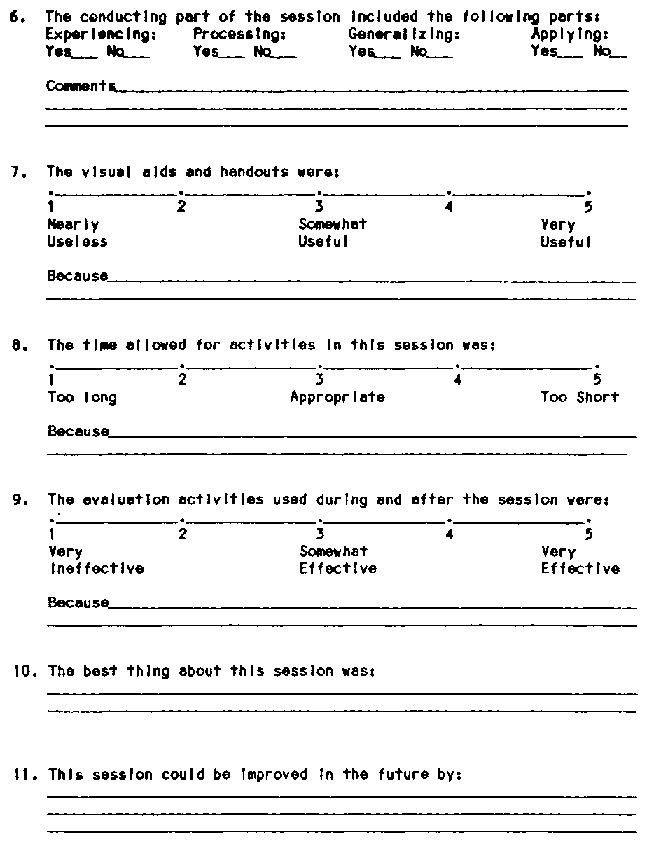
Sheet (continued)
Handout 19C: Guidelines for session presentations
· Choose a content area that is relevant for you and your group, based on your analysis of health problems, the session should contribute to the objectives of the project that you planned.· The session should be practical' it should reflect a real community situation and offer a model for activities that you can use in the future.
· The session is for "doing" not Just talking about what you plan to do. The rest of the group and staff members will be your participants. Hence, we will not "hear" about your designed session, we will experience it as your group.
· Work out a brief activity that you can complete in 20 minutes. (Don't end up rationalizing, "If I'd had more time....."). To give everyone an equal opportunity we will stop your activity when your allotted time is over.
· Prepare a session plan that can be reproduced for distribution to everyone later. Use Handout 19D (Session Plan Worksheet)
· At the beginning of your session, set the stage by explaining the health education situation for which you designed the session, Prepare a large version of the session plan to use to introduce your session. B. sure to explain how this session will contribute to your larger project objectives.
· Make the activities as creative as possible while keeping in mind that methods and materials must be culturally appropriate.
· Use the handouts and ideas from discussions throughout the training sessions and explore new ways of combining materials and techniques.
· Use your co-participants, trainers and local community people as resources during the planning and preparation time. "Bounce" your ideas off others.
Handout 19D: Session plan worksheet
WHO are the learners?
WHAT is the OBJECTIVE of the Session?
WHERE will the session take place?
WHEN will it take place?
HOW will you conduct the Session?
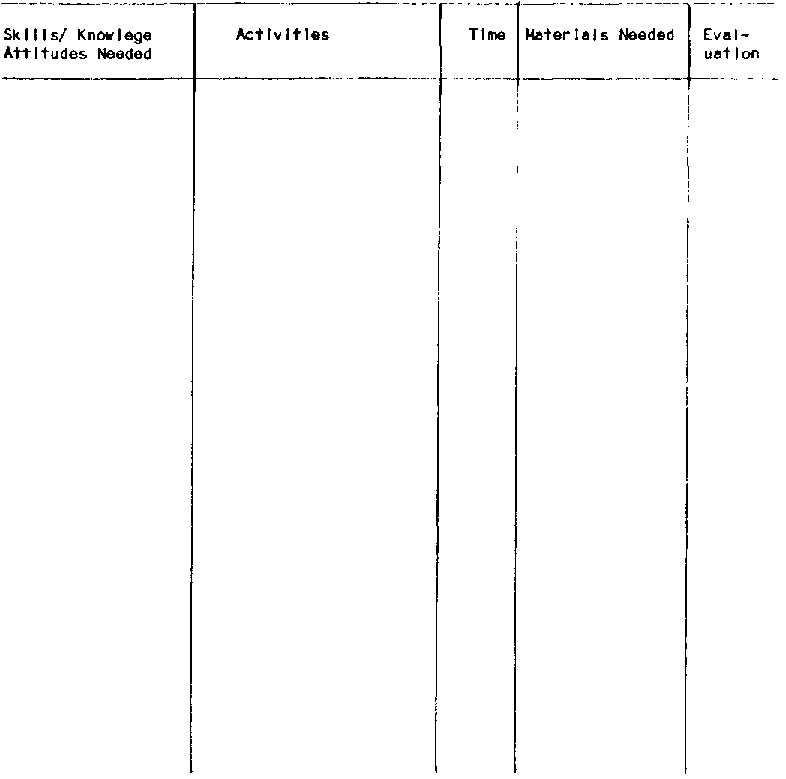
Session plan worksheet
Handout 19E: Evaluation of practice session
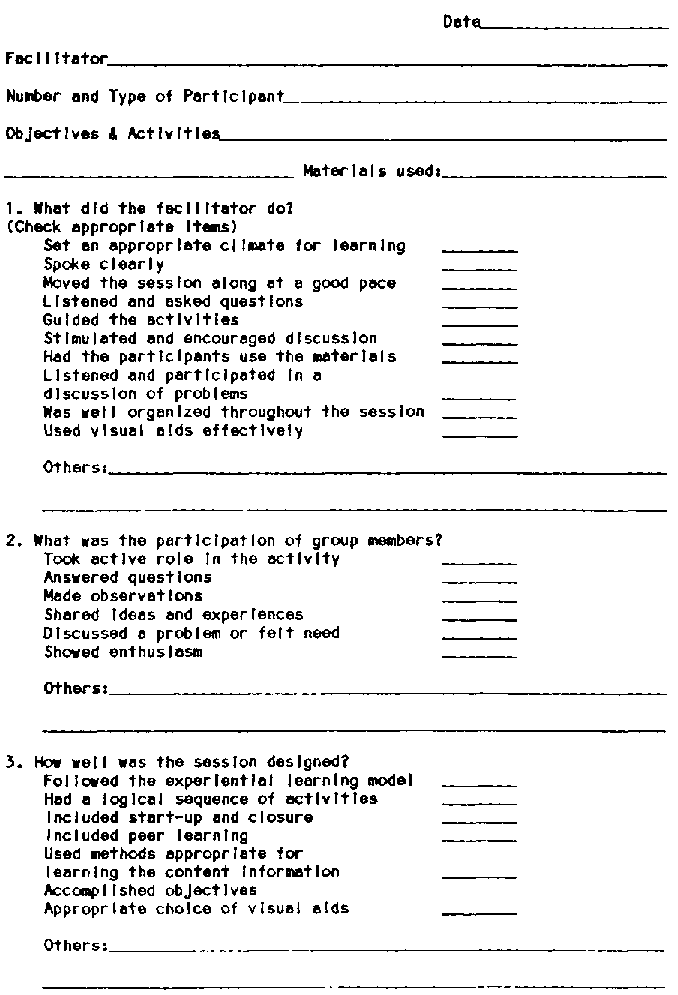
Evaluation of practice session
Handout 9F: Session preparations checklist
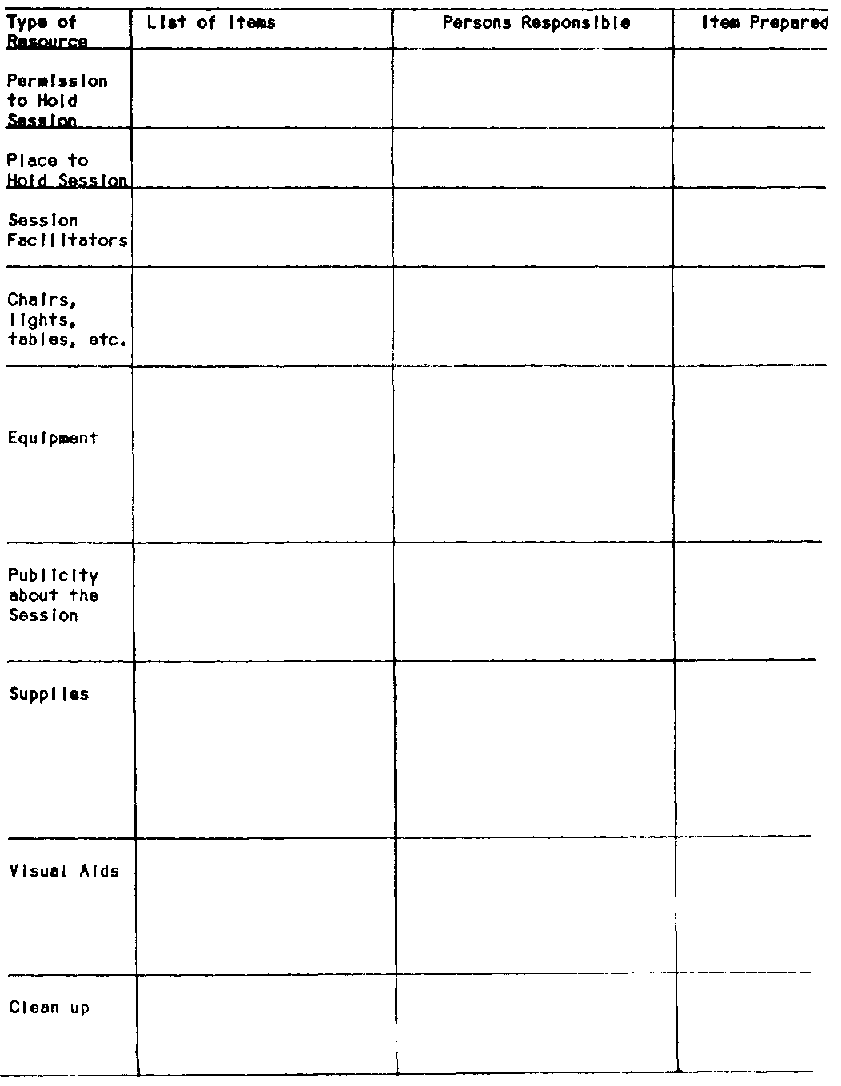
Session preparations checklist
Trainer Attachment 19A: Role play on ways people learn best
Purposes
This role play provides a concrete immediate experience to use as a basis to identify the baste elements to include in designing good health education sessions. Because several steps of the session rely on the role play as a focus of discussion, it is particularly important to work with the role players prior to the session and make certain that they are prepared to include all the necessary aspects of their roles.
The Setting:
A rural community in the country where participants have been assigned. Villagers have little income, little education and generally poor sanitation. Their experience with health educators to date has been that the educators tell the villagers what to do to improve the health in the community but discourage any suggestions from villagers about needs and solutions.
Health Educator One, The Expert
This role shows the top down approach to health education. The role player's actions should reflect the following outlook.
- the health educator knows what is good for the villagers- The villagers are considered ignorant
- The information flows from the health educator to the village
- The health educator provides answers, solutions to village problems
- According to this health educator ," a villager who refuses to follow recommended practices is like a sick man. You have to force him to eat and he will thank you when he becomes better. "
- The health educator assumes knowledge can be poured into adult learners like a tea cup.
- Villagers must be manipulated to change behaviors to accomplish government health goals.
Health Educator Two, The Facilitator
This role illustrates the community dialogue approach to health education. The role player's actions should reflect the following outlook.
- The health educator assumes that villagers know something about health and have reasons for their practices based on experience.- The health educator shares knowledge
- The health educator helps villagers identify and critically reflect on problems on their own
- The health educator shows the relevance of what is known to what is belay learned.
Both role players may wont to refer to Helping Health Workers Learn Chapter 1 pages 1-3, 17-23 for ideas about acting out their roles.
Ask the participant who plays the facilitator role to include an opening and closing in the session (as described in Step 3). Also ask that person to use one of the evaluation techniques shown in Helping
Health Workers Learn, chapter 9, pages 12-21. The Villagers
Ask the rest of the participants to play the role of the villagers using the description of the setting as a guide.
Sample Health Message
Ask the role players to present one short simple health message, preferably using pictures. For example, the expert could present the message: "continue feeding your child during diarrhea" as a command, showing pictures of a mother withholding food and the child dying from dehydration and malnutrition, compared with a mother feeding the child and the child getting better. The facilitator could use the same pictures to stimulate discussion about what is happening in the two different homes depicted there, This would lead to discussion of similarities with situations in the local community and help the community identify priority problems and to decide what action to take.
Trainer Attachment 19B: Deciding when to use experiential learning
The following questions provide guidelines for deciding when to use experiential learning and when to blend it with more lecture-oriented learning for a particular situation.
1. How will the learner use what is learned? If the learner needs to apply what they learn to solve problems or do something, a more experiential approach is needed. If the learner only needs to remember the information, a more lecture-oriented approach can be used. Example:
If the learner needs to correctly mix oral rehydration salts, demonstration and supervised practice are needed. If the learner wants to know about why ORS works, a talk with visual aids and discussion could be effective.
2. How often will the learner use what has been learned? The more often they will use it, the more experiential the learning should be.
Example:
If health workers will be recording children's
height and weight on a growth chart dally, they need a demonstration, and
supervised practice to learn how to do this. If health workers assist the head
nurse once a year in preparing figures for the annual disease surveillance
report, a talk reviewing the report form followed by a question and answer
period will orient the nurses to the surveillance report task.
3. Will the learner need to adapt what is learned to different situations or use the learning as is? It flexible use of learning is necessary, a more experiential approach is needed. A healthworker who needs to be able to counsel different women in different ways about family planning methods needs to practice counseling in a situation where she can get feedback from others. A health worker can learn how to complete a standardized medical history form through a brief talk, demonstrating how to complete the form and a handbook that overviews the information needed for each answer on the form.
4. Is the learning likely to be disconcerting or confusing to the learner? If yes, a more experiential learning activity is required. Deciding what will be disconcerting and confusing requires knowing the community well.
Example:
In a community that already accepts the importance
of breastfeeding during diarrhea but resists the idea of continuing feeding of
children that have been weaned when they have diarrhea, the latter topic could
require a more participatory approach such as using a series of pictures to
stimulate discussion about the dangers of malnutrition associated with diarrhea
and demonstrations and practice preparing multimixes and other nutritious foods.
5. Is the learning completely new, foreign possibly requiring unlearning things previously learned? If yes, then more experiential learning is needed.
Example:
In many communities the idea of giving a baby
liquids during bouts of diarrhea goes against traditional practices of
withholding water to stop diarrhea. A participatory technique, such as having
mothers or children dray a "baby" on a plastic bag or a gourd and poke a hole in
it, and pour in eater as a basis to discuss what happens to the baby if you
don't continue giving it water, can help people "unlearn" the practice of
withholding water. If breastfeeding is commonly continued when an infant is
sick, it is usually sufficient to praise the mother and encourage her to
continue this practice.
6. Add other examples from your own experience and encourage participants to add some as well.
Trainer Attachment 19C: Sample session plan
Mrs. Malinga is a nurse in charge of a family health clinic in a rural district. She supervises six traditional birth attendants (TBAs) who work and live in the communities surrounding the clinic Every two weeks the TBAs walk to the clinic and meet Mrs. Malinga to turn in their records of the mothers they have visited and the clinic referrals they have made. Mrs. Malinga also uses this day for in-service training or discussion sessions with the group of TBAs. By the time the TBAs arrive at the clinic fend discuss their visits and referral records with Mrs. Malinga, they only have about 2 hours left for the in-service training sessions. Then they must leave if they vent to reach home again before dark.
Over the past few months, the TBAs have helped Mrs. Malinga make up stories stories and pictures to use during the home visits to teach mothers about infant nutrition during diarrhea. Mrs. Malinga and the TBA's field tested the pictures with the mothers in the community. They and drew and colored the final series of pictures on heavy cards . This week, Mrs. Malinga is planning a session for the TBAs on how to use the picture series with the three health stories.
Below is Mrs. Malinga's session plan.
WHO ARE THE LEARNERS? - Six traditional birth attendants
WHAT is the OBJECTIVE of the Session? - To effectively use the sets of pictures they have developed as a basis for storytelling with mothers during home visits.
WHERE will it take place? - in the clinic
WHEN will it take place? - During the regular reporting visit of the TBAs.
HOW will you conduct the session?
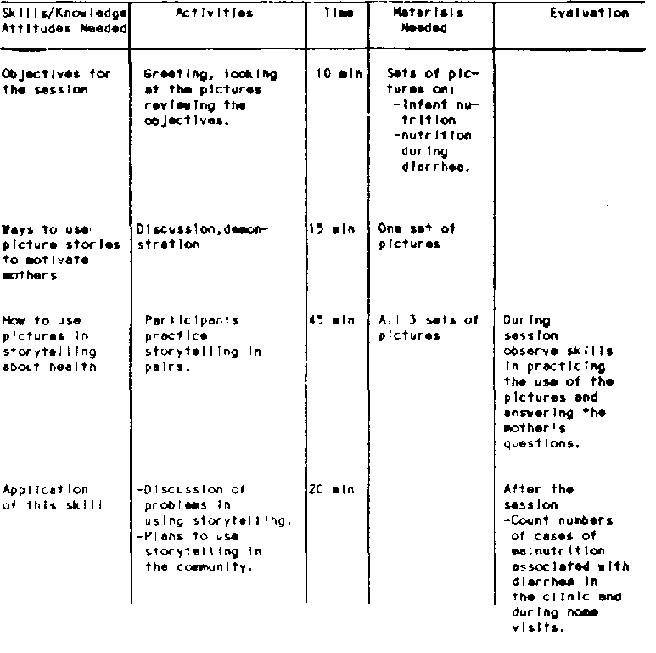
Session plan
Session 20 - Health campaigns for oral rehydration and prevention of diarrhea
TOTAL TIME:
1 hour
OVERVIEW
National health campaigns often use social marketing techniques borrowed from advertising to motivate the public to adopt healthier practices such as the use of ORT during diarrhea. Successful campaigns have combined these media messages with person-to-person health education activities to increase knowledge and skills and assure continuation of newly adopted health practices. In tints session participants examine successful campaigns on oral rehydration therapy and sanitation for disease prevention. They identify ways they can use ideas from these campaigns for health education in the local community. They also plan a mint-campaign for ORT at the community level using simple low cost visual aids.
OBJECTIVES
· To identify ways to use ideas and techniques from national ORT campaigns at the community level.
(Steps 1, 2)· To plan a mini-campaign for the community level using low-cost locally available materials.
(Steps 3, 4)
RESOURCES
Handouts:
- 20A Delivering the Goods
- 20B Radio Learning Group Campaign
- 20C To Drink or Not to Drink
- 20D Educational Mini-campaigns
- 20E Pakistan: ORT Promotion Trainer Attachments:
- 20A Educating the Public About Oral Rehydration Therapy
MATERIALS Newsprint, markers, examples of health promotional materials
PROCEDURE
Trainer Note
Prior to this session, ask participants to locate and bring examples of promotional materials from the local area (such as ads for foods and other products). Find out about health promotion projects in the host country and if possible borrow the materials they have developed. If radio is used for health promotion, ask one of the volunteers to tape a session.
You may want to substitute descriptions of local projects for one of the readings on promotional projects, Handouts 20B (Promoting ORT) and 20B (Radio Learning groups).
Before the session, divide participants into two groups. Give each group one of the handouts on health promotion projects listed above (20A and 208) or others describing projects in the host country. Ask each group to read the article and prepare to summarize it for the rest of the group.
- What message does this item conveys
- Is it effective? What makes it effective?
- How can we apply this approach to promote health behavior?
- What are the limitations of this kind of massage?
Step 2 (20 min)
Comparing Health Campaigns
Ask each group to give a five minute presentation summarizing the health campaign that they read about the evening before. Remind then to give their answers to the questions in Handout 20A (Guidelines for Readings). Follow the presentations with a large group discussion of questions such as the followings
- What were the goals of the project?
- What were the target groups?
- Were community members involved? How?
- What kinds of materials and techniques were used?
- What ideas from these projects could you use in your work?
Trainer Note
Depending on the tasks and interest of the participants, you may want to distribute Handouts 20B (Delivering the Goods), 20B (Radion Learning Group Campaign), and 20C (To Drink or Not to Drink) to some or all of the participants. Handout 20C provides useful highlights on the use of so-call marketing techniques for health promotion.
Trainer Attachment 20A (Educating the Public About Oral Rehydration Therapy) provides more background on the project described in Handout 20B.
If there is an ongoing health campaign in the host country, encourage participants to think about ways that they could contribute the national or regional campaigns in the host country, and ways they can benefit from the posters, radio programs and other messages and materials generated by the campaign.
Also encourage them to think of creative ways that they can use some of the ideas and techniques from large health campaigns to improve their health education activities at the community level.
Step 3 (35 min)
Planning Mini-Campaigns for the Community
Distribute Handout 20D (Educational Mini-Campaigns) and 20E (Pakistan: ORT Promotion). Give them an opportunity to look over the handouts and ask questions.
Divide participants into small groups sot ask each groups to use the ideas from the national campaigns just discussed, the guidelines for mini-campaigns and ideas for ORT messages just received to develop a rough plan for a community level mini-campaign on ORT.
List on newsprint the following information that should be included in their plans:
- campaign objectives
- description of the target groups
- time frame for campaign
- messages to be promoted media to be used (including person-to-person)
- list of required resources, including training for people who will assist in the campaign.
Step 4 (35 min)
Sharing mini-Campaign Plans
Ask each group to report on their plan for a mini-campaign. Have the rest of the group critique the plans using the criteria established in Session 15 (Planning and Evaluating a Health Education Project for CDD). Summarize by asking participants to share one idea they learned in this session that they plan to use when they return to their communities.
Handout 20A: Delivering the goods
Many communities are still unaware of the benefits of ORT. The Ministries of Health in Honduras and The Gambia have taken up the challenge and are promoting ORT through an integrated educational campaign. William Smith reports on this exciting initiative.
Since 1981. a widespread educational programme - the Mass Media and Health Practices Project" - has been underway in Honduras and The Gambia, showing thousands of villagers how to recognize the signs of dehydration and to prepare and give oral rehydration therapy (ORT) correctly at home. These two countries were chosen because of their contrasting cultures and environments, to make it easier for techniques developed to be used in other countries later on. By combining specially designed radio programmes, simple graphic materials and targeted advice for health workers, the governments of both countries are using mass media to improve the delivery of ORT services, showing that semi-literate communities can be taught to mix and give ORT safely.
Unique approach
In both Honduras and The Gambia, village attitudes, beliefs and practices guided the project design. Mixing trials, home observations, focus groups and individual interviewing helped select the key audiences and define the most effective educational messages. Each country has developed its own unique approach to ORT delivery and village education. In Honduras, the government is providing locally produced oral rehydration salts called Litrosol for both home and clinical use.
In The Gambia, packets arc available at health centres but a simple sugar and salt solution is also promoted for home use because it is too costly to make the packets available in every home. The Gambian medical and health departments developed a standard formula for this home-administered solution, using a local soft drink (Julpearl) bottle and cap for measurements. One litre of fluid is made up from three Julpearl bottles of water, eight caps of sugar and one cap of salt. The correct way of preparing and giving the solution was broadcast to mothers on Radio Gambia (the national radio station). Printed material was distributed to reinforce the message and health workers talked with mothers to make sure they had understood.
Radio
Radio is an important aspect of the Mass Media Project in both countries because it reaches more people, more quickly and more often than any other medium being used. It has four particular purposes:
1. Convincing rural people that diarrhoea is a serious problem.
2. Teaching and reminding them how to mix the oral rehydration solution.
3. Answering common questions identified during village visits.
4. Leading people to sources of additional help
In both Honduras and The Gambia, many people own radios so these can be used effectively for public education. The Mass Media Project's radio broadcasts in The Gambia are chatty and informal conforming with popular programming style there. The broadcasts answer health questions quickly and accurately and open a dialogue with mothers. The Gambian government has provided free time for hundreds of diarrhoea-related messages on Radio Gambia.
In Honduras, the project took advantage of a large network of commercial radio stations. The radio spots were short and catchy and intended to compete with high quality commercial advertisements. The featured spot, a 60 second song, became a nationally popular tune. Follow-up announcements emphasized child care during diarrhoea encouraged administration of Litrosol and stressed the importance of continuing breastfeeding during diarrhoea.
Graphics
The graphics used by the Mass Media Project to illustrate the health messages are simple and clear. The main materials interact directly with the radio messages and health workers to teach the important skills of mixing and giving oral rehydration solution at village level. This is particularly important in The Gambia because rural women are unfamiliar with printed material of any kind and need help with interpreting pictures. It was necessary, for example, to develop an appropriate visual way of showing the difference between sugar and salt and illustrating the Julpearl bottle and cap needed for correct measurement. A colourful 8" x 11" poster was developed which shows the bottle and cap being used to mix the rehydration solution. The "mixing pictures" of sugar, salt, and water are colour coded and linked to explanations given over the radio.
In Honduras, early field research indicated that mothers associated child care with loving images. This attitude was shown visually by a large red heart surrounding a picture of a breastfeeding woman. The heart was also later associated with Litrosol and a young family added to the picture to reinforce the role of the husband in giving ORT.
Integration of communication techniques
The project's radio programmes strengthened the visual symbols in both countries through special jingles and romantic songs about motherhood, as well as providing basic information.
In Honduras. for example, the programme told mothers where to get Litrosol, how to mix it in the proper volume of water and how to measure it in containers easily found everywhere. Radio was also used to identify a special network of health workers and village contacts - red heart ladies - who had been trained to mix Litrosol. Some 1,200 red heart ladies flew a red
heart flag above their homes to attract village women to this local resource. The integration of the different methods of communication is a key feature of the Mass Media project.
Happy baby lottery
To encourage more Gambian mothers to participate in the project and to maximize the integration of radio, printed material and input by health workers, a national contest was launched to popularize the home. administered rehydration solution. Known as the Happy baby lottery the contest helped to begin the distribution of some 200,000 "mixing pictures" to mothers throughout the country. Radio Gambia broadcast repeated programmes to rural mothers on how to use the posters as entry tickets for the contest. The programmes also taught mothers how to interpret the mixing instruction on the poster. Health workers were trained to use the posters to teach mothers how to mix the formula as well as giving UNICEF ORS packets to severely dehydrated children in rural clinics.
Village contests
Distribution of the posters was followed by a month of 72 village contests. Every week, the radio announced the names of 18 villages to be visited by a judge wearing a 'happy baby' T-shirt. To enter the contest, mothers went to the nearest village displaying a happy baby flag and, if they mixed the solution correctly, won a prize - either a plastic litre cup or a bar of locally made soap. These prizes were chosen because they were appealing, locally available, inexpensive and consistent with project goals. The cup, for example, is a common container for drinking water and a convenient one litre measure for the sugar and salt solution.
The response to the lottery was enthusiastic. More than 11,000 mothers attended the village contests. Over 6,500 entered the mixing competition, while hundreds more watched, listened and learned the new advice on treating diarrhoea. Winning mothers' names were included in a later draw for 15 radio-cassette players. A single community prize of rice and sugar was given each week for the village turning out the most mothers for
the contest. Radio was used regularly to publicize the winners and to reinforce the mixing formula. The lottery ended when the Gambian president's wile drew and announced the names of the Brand prize winners in a special radio broadcast
The lottery is only one part of the Gambian government's use of mass media to fight infant diarrhoea. Special happy baby flag ladies, like those in Honduras, have been trained to give mixing advice to village women. Regular radio broadcasts include traditional songs, drama and popular personalities to explain the dangers of dehydration and to stress the importance of breastfeeding during diarrhoea.
Conclusion
There has been an encouraging acceptance of ORT in both countries. During the first 12 months of she project in Honduras, half of the mothers reached were using Litrosol. In The Gambia, after eight months of the campaign, half of the mothers reported using the recommended sugar and salt solution to treat diarrhoea. An extensive three year evaluation is continuing in both countries.
Three elements have been critical to the success of the project:
1. Education and an effective delivery system. An effective delivery system for the UNICEF packets and instructions on the sugar/salt mixing were combined with practical and widespread education on how to use the new remedy.
2. Flexibility Regular information from the field was used to make changes in methods and materials so that mothers' questions could be quickly answered.
3. Rural beliefs and traditions formed the basis for the educational campaign.
Resources are available to provide modest assistance to other countries interested in developing a mass media programme of this sort Much has yet to be learned, but a systematic use of mass media integrating radio, print and dialogue between health workers and mothers can significantly improve the outreach of many health education programmes.
Further information on the project available from Dr William Smith, Vice- president, Academy for Educational Development, 1414 Twenty-second Street, NW, Washington DC 20037, USA.
Handout 20B: Radio learning group campaign
What is a Radio Learning Group Campaign?
Figure
· A topic of national importance to very large numbers of voluntary participants who are organised in radio learning groups of 5-20 people with most groups meeting solely for the purpose of the campaign.· Each group has a trained group leader who leads the group in listening to the campaign radio broadcast and in studying the supporting printed materials.
· Both the broadcast and materials cover only a limited amount of information.
· Groups meet twice a week over e brief period of about 5 weeks.
· In each meeting the RLGs discuss, comment on and ask questions about what they have studied which they send to the centre on a report form to be analysed by Government and used to guide policy matters.
· A large sample of their questions is answered on the radio.
· RLGs may decide on an action task an appropriate to their needs.
When to use an RLG Campaign- and when not to
An RLG campaign otters an effective way of getting a limited amount of important information, quite cheaply, to a very large number of people at the same time. The method can be used for careful consultation among large numbers of people; it can be used, too, to bring about action. So it is an important and useful non-formal education tool. But it cannot be used in all situations and we have limited our use of it to situations where
a) we had a message of truly national importance
b) which could fit the RLG method
c) the subject matter was interesting enough to provoke discussion
d) there were people competent to plan and run the campaign
e) there was sufficient money.
f) there was plenty of time to prepare
There are all sorts of situations when you should not use the RLG campaign method. For instance, where
a) the message concerned has local rather than national significance
b) the audience is specific rather than general
c) there are good reasons for deciding that a long-term educational programme is needed
d) where there are major concerns of a sort that cannot be handled in a mass campaign.
Botswana has run two large RLG campaigns, one in 1973 and another in 1976. The organizers of these campaigns borrowed from RLG experience developed in Tanzania, who had benefitted in turn from work done with radio term forums in Canada, India, Ghana and elsewhere. Some information and a bibliography about this related experience is set out in the appendices.
Examples of RLG campaigns already run successfully are:
|
Plan |
Popularisation of the National Development Botswana and Tanzania |
|
Explanation of the General Election |
Tanzania |
|
National Health and Hygiene |
Tanzania |
|
Tenth Anniversary of Independence |
Tanzania |
|
Public Consultation on a mayor proposed policy |
Botswana |
|
Civic Education |
Botswana |
Task 1 - A Brief Overview of the Campaign
Figure
Aims:
to promote a more hygienic environment through promoting
1. sate water
2. latrines
3. rubbish disposal
4. clean handling of food
Target audience
- 100,000 adults in 7,000 RLGs
- as a secondary audience, all school children. migrant labourers
Method
a) 10 Radio Programmes broadcast over five weeks to the RLGs
b) Each RLG will have a trained group leader.
c) RLGs will use study materials in the 10 study sessions.
d) They will discuss the content of each session, take practical action on it where appropriate and report on their study/action sessions to the Campaign organisers.
Costs - a donor is needed to tuna the project as follows
|
fieldwork and training |
60,000 |
|
materials |
80,000 |
|
consultation |
25,000 |
|
evaluation |
10,000 |
|
miscellaneous |
25 000 |
|
total US-$ |
200,000 |
Staffing
Most tasks will be handled by staff presently working in existing agencies. This represents the national contribution to the campaign. The major additional staffing will be the Campaign Coordinator and supporting staff.
Figure
Table
What happens at a typical RLG meeting. The person in charge is the Group Leader and these are the steps carried out at each meeting.
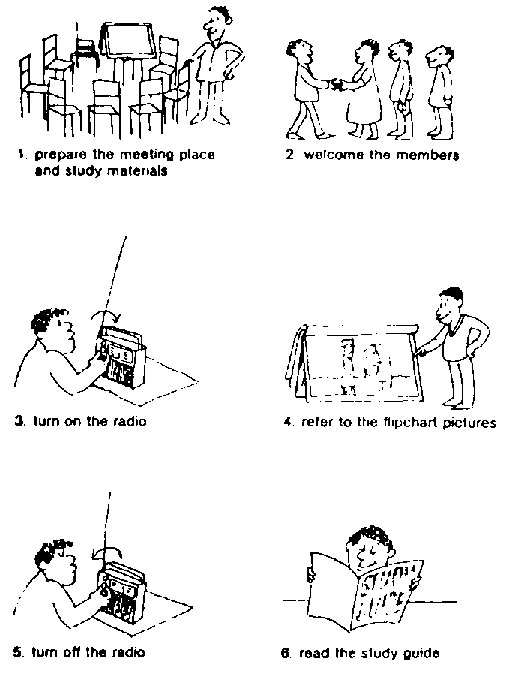
Figures 1-6
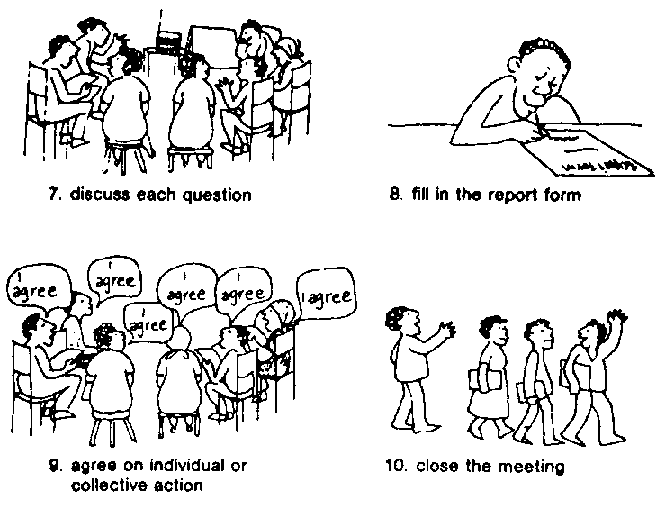
Figures 7-10
The materials must lit together
All the parts of the package must fit together. This means that for each unit
a) the radio, flip chart and study guide share a consistent message
b) there are references in one part of the package to other parts for instance, the radio narration may include sentences such as
· turn to illustration 9A which shows ..............
· in the study guide you will read ......................
· one question we ask you to discuss is ..........................

Figure
Handout 20C: To drink or not to drink
Jon Rohde discusses the importance of mothers' attitudes towards drinking in the setting up of an effective oral rehydration programme.
While the scientific community continues its debate on the ideal composition, packaging and delivery of oral rehydration solution, many mothers continue to withhold fluid from children with diarrhoea. And why not? They know that when a child with diarrhoea is given extra fluid to conk he passes yet more liquid messy stools. This is true even with the most modern rehydration mixtures. Although oral rehydration does save lives, its widespread use will be determined by complex cultural and social factors which are little influenced by scientific advances. We must understand the beliefs conditioning response to diarrhoea before an effective strategy can be developed to promote oral rehydration.
Local beliefs
Until now, a scientific approach has been used to market ORT, based on three main points:
· diarrhoea is an illness
· it may be dangerous or even fatal
· one effective modern remedy exists that can be drunk to overcome this danger.
Social marketing, however, has to start with the consumer in marketing oral rehydration we must first understand the attitudes of the mother and design our product accordingly interviews with 254 mothers in a rural Javanese community revealed that:
· diarrhoea is not considered an illness but 3 normal occurrence in the young child's life.· it is surely not dangerous, for all young children suffer multiple episodes of diarrhoea and most of them continue to live in reasonably good health.
· appropriate medicine and visits to a health centre are not considered necessary for a condition which is not accepted as one of ill health.
Seen in this light, it is hardly suprising that our scientific arguments for OR have little relevance in rural Java
Marketing a message
The usual health education approach is to change the knowledge and attitudes of target groups, whereas effective marketing strategy is based on the present values and practices of the consumer. Such a strategy should avoid challenging traditional beliefs as far as possible - only questioning them where they are definitely incompatible with the marketing objectives.
We must be absolutely clear about the product we are marketing, precisely what do we want the consumer to do? It is drinking in response to diarrhoea that is the key element of oral rehydration. We do not necessarily need to change the concept of what diarrhoea is or even the fact that it is potentially dangerous. Once the concept of drinking is accepted in the society then it is relatively easy to discuss what is the best drink in the circumstances.
Strategy
Different concepts of diarrhoea drawn from several cultures suggest a variety of marketing possibilities. The health profession has tied its marketing strategy for ORT exclusively to the last example on the chart. However, a majority of health workers interviewed in Indonesia subscribed to views one, two or three in preference to seven, despite an extensive re-education campaign by the Ministry of Health over the past five cars it is obvious therefore that we must follow the example of the extensive "jamu" (Javanese traditional herbal medicines) industry more closely if we are to develop a succesful strategy.
Local Belief
1 Diarrhoea is a cleansing of the body.
2 The body dehydrates
and loses strength during diarrhoea.
3 Diarrhoea is a normal part of growing
up
4 Diarrhoea is a hot illness.
5 Athletes drink extra fluid to replace
salt and water lost in Sweat.
6 Diarrhoea is an old and traditionally known
condition of imbalance in life forces
7 Diarrhoea is a disease.
Possible Marketing Message
1 Drink to replenish water the cleansing element of the
body
2 Let the body drink to give strength.
3 It is time to provide a
tonic - extra fluid-to strengthen the child's developing body.
4 Respond with
a cold conk
5 Diarrhoea also causes loss of body salts and fluid. Let your
child regain strength through drinking.
6 There are many useful traditional
remedies for diarrhoea.
7 Lives can be saved with the newest remedy - oral
rehydration
Communication
The message should be communicated to mothers by as many means as possible. Using the mass media is one obvious way to achieve this, but health planners have rarely maximised the potential. The . . . that refreshes means Coca Cola all over the world - has any health message ever been as widely popularized?
Successful communication implies reaching decision makers at all levels; this can sometimes be best achieved through young people. In 1918, a village household survey in central Java revealed a universal withholding of fluid from children with diarrhoea. Six months later, after primary school teachers had given simple lessons on preparing and giving home-made sugar-salt solution, 80 per cent of the heads of these same households advised drinking extra fluid for diarrhoea.
Availability and impact
It is vital that ORS is widely available before we attempt to market it and that the campaign reaches as many people as possible. While the effectiveness of oral rehydration in treating diarrhoea cannot be questioned, its promotion through the formal health system is likely to reach only a small number of people. But a broad campaign accepted by mothers at all levels of society to give extra drinking water to children with diarrhoea could in itself lead to a reduction in dehydration and deaths from diarrhoea.
Measuring
Once the idea of drinking more becomes acceptable, the most appropriate fluid must be chosen depending on cost, availability and the physical state of the child. The next step may be to provide home-made sugar-salt solution as a technical improvement on plain water. Finger pinches of salt, various hand or finger measures of sugar and a variety of local containers such as gourds, coconut shells and tin cans have been tried for standard water volume. Teaspoons, bottle caps, match boxes and drink bottles, even polythene bags have all undergone field trials for accuracy and acceptability in measuring the necessary quantities of sugar, salt and water. Success depends not only on the measuring technique used, but also on training and the existing socio-cultural conditions. Given even the most successful strategy for home made solutions there is legitimate concern that mistakes in preparing such a solution may offset some of the beneficial effects of the improved rehydration mixtures.
Plastic spoon
A further refinement is to provide a more reliable way to make rehydration solution such as the two-ended spoon. This was pioneered in Indonesia and shown to be used properly i.. the vast majority of mothers there. The cheap plastic spoon may perhaps serve as a reminder and a stimulus to the mother to provide fluid in both the right composition and quantity to her child, starting with the earliest sign of diarrhoea. The spoon can carry the important message not only of how to make the fluid, how much to give, but the importance of referral to the formal health system if diarrhoea continues for more than 24 hours. Wholesale distribution of such spoons must obviously be accompanied by clear instructions as to their use.
Packets
Village health posts can supply pack aged ORS. Mothers initiate rehydration at home knowing that ORS is available nearby if diarrhoea continues. As demand increases it may become feasible to expect each household to have its own supply of ORS - although this would be determined by finance, logistic support and shelf life of the packets. Health workers ate taught to recognize simple signs of dehydration or failure of ORT, assuring rapid refferal to the health centre or district hospital for serious cases. All children however would receive fluid to drink from the first sign of diarrhoea.
Conclusion
The attitudes and beliefs of the mother are crucial to the successful use of ORT. Only through sympathetic understanding of her attitude towards diarrhoea can we develop an appropriate, acceptable and effective strategy that can rely on her active support. What to drink and how to make it are of minor importance until mothers firmly believe that for diarrhoea their children should drink more.
Handout 20D: Educational mini-campaigns
Mini-campaign organized and conducted at the health center or at other levels can be an effective way of focusing time, effort and resources on a health problem of particular importance to the people in a given area. A mini-campaign may be defined as an intense educational activity that has the following characteristics:
- A small number of specific, well-defined objectives that are decided upon jointly by health workers and community people, that is, a statement of how many of what types of people should be doing something they are not doing before the campaign- A well-defined target population
- A well-defined timeframe, for example, 3 or 4 months. There is a beginning date and an ending date
- Emphasis on one overall theme and a carefully selected :et of messages, all of which are transmitted through a variety of different media in a coordinated manner radio, posters, T-shirts, song contests. All types of activities should emphasize the same messages at the same time.
Detailed planning is the key to the success of mini-campaigns. Deciding with community members that a mini-campaign is desirable because they feel a particular problem is really important. and working with them to define objectives and prepare for the campaign is an important educational experience for all those involved. Careful planning of campaign activities is required to assure relevance, comprehension and attractiveness of messages and the way they are presented. It is also important to plan the use of various media so that messages are appropriately sequenced and so that media support each other.
You will need to assure that all the health workers and other development agents who will be working with communities to organize mini-campaigns know how to go about planning and implementing them. They also must be fully knowledgeable about the technical aspects of the topics and messages of the-mini-campaign.
Handout 20E: Pakistan: ORT promotion
based on documents provided by David Mason, UNICEF-- Islamabad A national campaign to popularize Oral Rehydration Therapy (ORT) in Pakistan was discussed at length at a recent ORT promotion workshop. The workshop formulated advocacy motivation, promotion, and training plans. The following are messages on diarrhoea control and ORT promotion developed at the workshop.
Messages for Community Education
1. If not treated immediately, diarrhoea can be dangerous. Your child can die from diarrhoea.
2. If your- child passes three or more loose watery stools in a day, he has diarrhoea.
3. Diarrhoea is dangerous. Much water is lost. Diarrhoea brings malnutrition.
Sometimes a child with diarrhoea starts vomiting. This speeds up water loss, and the danger is greater.
5. When your child has diarrhoea give Elaj-e-Julab (ORS). Give it every few minutes. Give it as much as he wants
6. Elaj-e-Julab called Nimkol is available free from all health facilities. Or you can buy Elaj-e-Julab.
7. To prepare Elaj-e-Julab, pour four glasses of drinking water into a pot and add a small packet of Nimkol. For a large packet, take one seer of water. This can be used for 24 hours.
8. If Elaj-e-Julab is not available, it can be prepared at home. Put two scoops of sugar and two pinches (using three fingers) of salt into one seer of drinking water. Lemon or orange juice can also be added
9. If your baby's eyes are sunken, his mouth, tongue, and eyes dry, and his skin when pinched does not go back quickly, he has lost too muck water. These are signs of danger.
10. When you set the danger signs, rush your child to the health centre
11. Take your child to the health centre if he has diarrhoea and you cannot feet his pulse. Take him if he keeps vomiting. Take him if he absolutely refuses to drink. Always try to feed Elaj-e-Julab on the way there.
12. If diarrhoea is only mild, keep on giving Elaj-eJulab to your baby at regular intervals. Tea, rice water, or herb water is also good for diarrhoea.
13. During diarrhoea, keep on breastfeeding.
14. Do not stop feeding your child when he has diarrhoea.
15. When your child starts getting better, encourage him to take semi-solid foods, even if he does not want to. Dahi, khitchri, and mashed banana are good.
16. Breastfeeding is the best way to protect a baby against diarrhoea.
17. To prevent diarrhoea, always feed your child with a cup and spoon, never with a bottle. Bottle-feeding causes diarrhoea.
18. Wash your hands before preparing food or feeding your baby. Wash your child's hands before he eats.
19. Cover your food to protect it from flies and dirt. Your baby's food must be kept clean or he will get diarrhoea.
20. Keep your home clean, especially the floor. Your children play on the floor and will get diarrhoea from dirt there.
21. Build a latrine if you can. Let the whole family use it.
22. Have your child immunized against the worst diseases. You must go three times. immunization is free.
23. Your baby should weighed regularly to ensure that his health is progressing satisfactorily after sickness.
24. Thousands of Pakistani children die from diarrhoea. Look after your baby. Give him Elaj-e-Julab when he has diarrhoea.
Basic Messages for National ORT Campaign
1. Diarrhoea can kill.
2. Elaj-e-Lulab is the best treatment.
3. If it is not available, make it yourself.
4. For mild diarrhoea, give drinks freely.
5. Continue breastfeeding and giving other foods.
6. If diarrhoea is very bad, or continues for two or three days, see a health worker.
Trainer Attachment 20A: Educating the public about oral rehydration therapy
DR. WILLIAM A. SMITH
Vice President and Associate Director International Division
Academy for Educational Development Washington, DC
"To obtain maximum benefit in many areas, oral rehydration must be made available in villages where there are no trained health professionals. The anticipated advantages of such programs are expected to justify the risks, but programs without medical supervision have not yet been carefully monitored for complications or results to determine how the solutions are actually used."Letter: Journal of Pediatrics, 1983, Drs. Harrison, Finberg, Harper, and Sack.
The central concern of the medical community has shifted front the clinical efficacy of oral rehydration therapy towards tile practical risks of using ORT in unsupervised settings. These risks are clear.
- Super concentrated solutions of oral rehydration salts are dangerous.
- Diluted solutions of ORS are ineffective.
- Too little of ORS is ineffective.
- Too rapid administration of ORS can induce vomiting.
- ORS given alone for long periods without other liquids and foods can be dangerous.
A number of questions must be addressed:
- Will mothers learn, remember, and use the right mixing, proportions?- Do mothers have an adequate volume measure available? Can they, in fact' determine what a liter is?
- Do mothers have the time and patience to give an ORS solution slowly over twenty-four hours to a sick child, given all the other demands on their time and energy?
- Will mothers give up traditional practices like purging which are counterproductive?
- Will mothers breastfeed during episodes of diarrhea and give other liquids?
- How do we teach mothers - hundreds of thousands of mothers - the new skills and attitudes associated with proper use of ORT in unsupervised settings?
Interestingly, these questions are not medical ones. They are educational and they are sociological. They move ORT out of the laboratory, out of the clinic, and even out of the small pilot study, and place it squarely in the arena of social and behavioral change.
Fortunately, we now have two large-scale and comprehensive programs of public communication to promote oral rehydration therapy - one in Honduras and one in The Gambia - which help answer some of these questions. USAID, through its Offices of Education and Health in the Bureau for Science and Technology, has supported not only a comprehensive public education campaign in ORT in each country' but also has financed a scientific evaluation of both programs, looking at changes in rural attitudes, knowledge, behavior and health status. The programs do nut yet answer all our questions, but they do contribute significantly to our understanding of widespread ORT promotion.
In both countries. the Ministries of Health are developing a campaign which combines radio, specialized print materials, and health worker training to deliver information on home treatment of infant diarrhea, including the proper preparation and administration of ORT in Honduras, the government is promoting a locally produced WHO-formula packet called Litrosol. In The Gambia, the government is promoting a sugar/salt (S/S) rehydration regimen as a standard for village-based prevention of dehydration, with UNICEF packets used at fixed health facilities for cases of moderate dehydration. The goal in both countries is to have mothers use ORT early in an episode of diarrhea and to seek help if needed. Other critical messages pertain to breastfeeding, weaning, food preparation, personal hygiene, and sanitation practices Figure 1 illustrates the level of campaign activity in each country during the first year
Early results of the evaluation, which is being conducted by Stanford University's Institute for Communication Research, are encouraging. The Stanford studs includes a panel study of some 750 to 800 mothers, implemented in waves over a two-year period. The panel study is supported in both countries by a prepost mortality, and health worker study. In Honduras. an ethnographic study has been added. Results in Honduras show that, after one year, 48% of the audience reported using Litrosol to treat diarrhoea at least once. During the same period, recognition of Litrosol as a diarrheal remedy went from 0% to 93% of the population. Of those reporting to use Litrosol, 94% used a full liter of H2O; 95.7% used all the packet to make the mixture; 59.7% gave the whole liter to the child; 36% discarded the leftover solution; and 9% used Litrosol for the full three days (most used it for one to two days only Results in The Gambia show that, after eight months of campaigning, 66% of mothers knew the correct 8-1-3 water/sugar/salt (WSS) formula. Forty-seven percent of mothers reported using WSS formula to treat their child's diarrhea.
More answers are nonetheless needed. Will mothers continue to use ORT? What age child is being treated with ORT? If the mothers are making mistakes, what kinds of mistakes are most common? What continued inputs will be necessary to sustain these levels of use? These and other questions are being examined now but the project staff feels that several lessons can now be drawn from the experiences in these two countries that will help planners or similar programs elsewhere.
Some Lessons
Lesson # 1: Coverage, timeliness, and credibility - you need all three.
If the goal is to produce widespread use of ORT in unsupervised settings, then three factors are critical: coverage, timeliness, and credibility. Coverage is the ability to reach many, people quickly, and it is best achieved through the media in most countries, this means radio. Timeliness, or the availability of specific mixing and administration reminders at the moment they are needed, is best accomplished by print and graphic material - specifically, a packet label and a one-page graphic flyer. Credibility or the acceptance of ORT by patients, is best achieved through the full support and use of ORT by recognized health professionals in the country -physicians, nurses, and health workers.
Lesson #2: Have a plan which includes everything. You can't have a piecemeal program.
To bring these three elements together, a comprehensive plan is needed. It must include:
- an adequate supply and distribution system for oral rehydration solution- an explicit linkage between what health providers, radio, and print media tell the public - a single set of simple. non-contradictory messages on how to mix ORS, how to give ORS, and how to know when ORS is not working
- a training program for health providers which emphasizes ORS teaching skills as well as ORT administration
- a radio broadcast schedule timed to reach specific audiences
- a series of simple print reminders of key skills that accompany each packet.
Lesson #3: Base the plan on field research.
An effective plan must be based on field research of existing audience practices and beliefs A few key questions that need to be answered in this research are:
- How will mothers mix the solution? What containers are available?- Where can mothers obtain packets if they can't get to a health center?
- Whose advice do mothers take about diarrhea ?
- What do mothers want a remedy for - the loose stool. appetite loss, weakness; what do they most worry about when a child has diarrhea?
- What are mothers doing now - purging, giving teas, withholding food, etc. - and why do they feel these are appropriate methods?
- What type of print material would be most valued and used - pictures, words?
- Why do mothers listen to radio, whom do they trust as radio announcers?
There are many other questions which also need answers but these key areas will trigger responses critical to developing a sound plan
Lesson #4: Correct the plan as required - keep it flexible.
Monitoring the campaign is essential. Regular visits to villages, watching how ORT is being used or misused, systematic interviews with health workers anti mothers will expose weaknesses impossible to predict otherwise Once discovered, correct these mistakes; do not try to argue them away Mistakes are normal, almost inevitable, and they can be corrected if they are admitted.
Lesson #5: Emphasize simplicity
Avoid the temptation to complicate matters. Make the advice to mothers simple - use only a few print materials; do not ask health workers to do much more than they are already doing, and repeat a few good radio programs over and over rather than making dozens of new ones.
Some background considerations
The Mass Media and Health Practices program is part of a growing genre of health education activities referred to as public education or public communication campaign. The public communication campaign is an approach to popular education that attempts. in a predefined period of time, to change a particular set of behaviors in a large-scale target audience with regard to a specified problem. During the past two decades, dozens of campaigns on topics as varied as forest fires, mental retardation, energy conservation, smoking, alcoholism littering, seat belts, venereal disease, malaria, breastfeeding, latrine construction, population control, and infant diarrhea have attempted to inform, motivate and often to change the behavior of a wide audience in a short time.
Not all of these experiences have been positive, indeed, many have been disappointing.
In a recent review of public education, entitled Public Communication Campaigns, Dr. Ronald Rice concludes.
After the early belief in the power of the media to persuade any audience faded, communication researchers are generally pessimistic about the probable success of such campaigns. But the mood of communication researchers has, for the most part, changed, as indicated by the title of the journal article, 'Some Reasons Why Information Campaigns Can Succeed.
This change in mood is a result of two factors. First, we now have several documented successes. Second, we have a growing realization that public education is no "quick fix," but rather a useful, if complex and not well understood, new tool of popular education. Gradually the concept of campaign is giving way to the idea of regular, operational programming built upon the concepts of careful message definition, integrated delivery system and midcourse monitoring and correction.
Experience with public education for health is extensive. In the population control area, for example, at least half a dozen projects with three years' experience or more have improved contraceptive availability, increased sales of contraceptive products, spread knowledge, and stimulated wider use of the methods promoted, at a cost below that of most traditional programs.
The success of a public education approach depends upon its ability to provide a sufficiently large number of people with practical and important new information. It must make an impact on the consciousness of the intended audience by rising above the everyday clutter of advice and suggestions to become an important new priority in their lives. It must change what people do as well as what they think and believe. This cannot be achieved by the mere repetition of simple slogans, :he mass exhortation to do the right thing, or the indiscriminate use of mass media alone. It requires a sensitive under standing of how people are affected by specific health problems, articulate crafting of useful and practical educational messages, and a coordinated distribution network that reaches each individual through various channels simultaneously.
The program structure being proposed here (see Figure 2) reflects the importance of these elements as applied to a health problem. It includes a preprogram planning and development phase, an instructional intervention, and an ongoing monitoring; and evaluation system with clear results in knowledge, attitudes. and behavior.
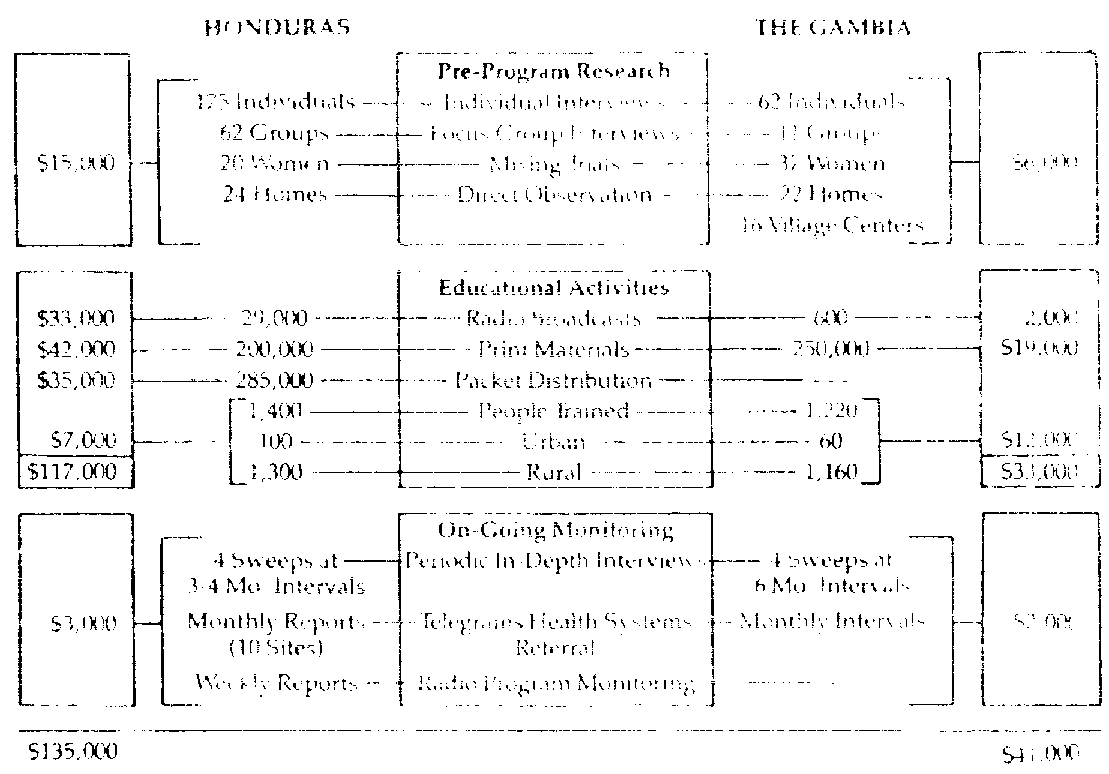
Figure
The planning and development stage emphasizes the collection of critical information needed to prepare an effective program design. This in formation answers important questions, such as (a) Who in the total population should he selected as the principal audience? (b) What communication channels are most critical for these people? (c) What behaviors should be advocated? (d) What resources are needed to conduct the program? The final program planning, including budget and resource requirements, is based upon the results of this investigation.
In order to reach large numbers of people, mass media, particularly broadcast media like television and radio, should play a central role. A woman hearing health messages on radio should also hear the same advice from a health worker, receive printed information from her child's school, participate in a community health fair, and see related posters.
The public communication campaign is divided into discrete cycles. Each cycle covers the same basic information, but with slightly different approaches. These cyclical changes reduce audience fatigue and permit a renewal of audience involvement. From an administrative perspective, the cycle approach is important because it permits program planners to design segments of the program sequentially. They do not need to design the entire program at once. This means they can work with fewer production facilities over a longer period of time; more importantly, they can incorporate results of the earlier phases into the planning of later phases. In essence, it permits the planner to make important iterative changes in educational strategy.
These changes must be made in response to information on the acceptance and efficacy of project activities. It is the purpose of the monitoring and evaluation component to ensure that this information be available at relevant and timely intervals. A monitoring system which permits the random sampling of select segments of the audience will be developed. Planners will know: (a) how a microcosm of their intended audience feels about the advice they are receiving; (b) whether they are taking that advice; and (c) what obstacles they are encountering. These monitoring devices can also point out important logistics problems, such as a breakdown in delivery of printed matter or use of inappropriate broadcast times to meet audience needs. This type of ongoing evaluation is essential in making corrective changes in future cycles, as well as for providing program administrators with a clear idea of their overall potential success.
Public education has traditionally been operated as a program - a single intensive effort focused on a critical problem and limited in time. This is less a fundamental characteristic than a coincidence of historical precedent. Indeed, the cyclical nature of many public education themes, the seasonal nature of disease, agricultural topics and nutritional cycles - argues for comprehensive annual programming of multiple themes, carefully integrating and varying the intensity of different messages. Additionally, the fact that public education addresses different audience segments permits multiple programs to be managed simultaneously Finally, the changing characteristics of audiences over time, the increasing sophistication of messages, and constantly changing constraints argue for a consistent programming strategy like public education which incorporates regular audience reviews and feedback as part of the fundamental instructional structure. In these ways, public education can rise above the tradition of the national mobilization programs of the 1960s and 1970s and become a regular operational tool which maximizes the use of mass media by tematically focusing on selected themes integrated with equally powerful print and face-to-face delivery systems. In this way, public education earl represent an important new tool in a growing army of effective education alternatives and a particularly important tool in the challenge to reach thousands of rural mothers with practical, yet safe advice on how to use ORT in unsupervised settings.
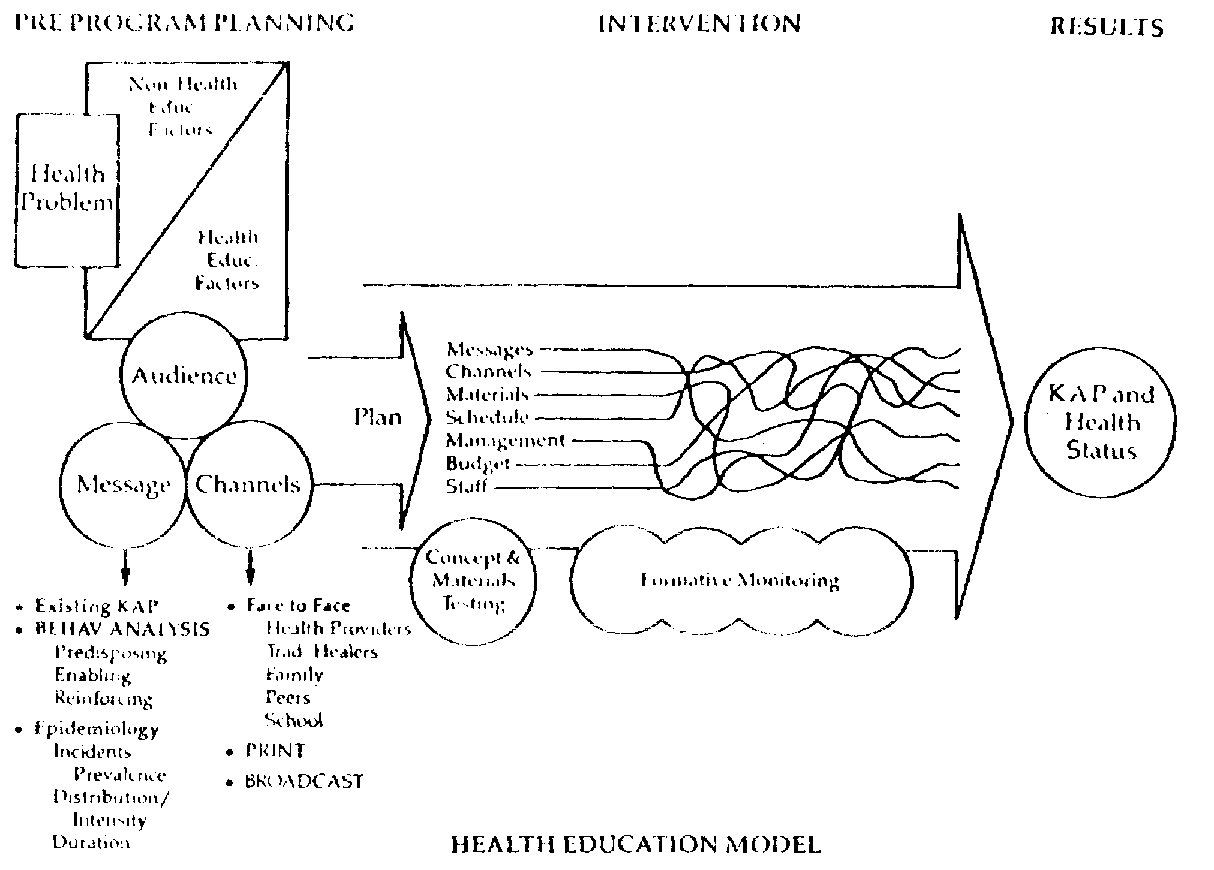
Figure 2 - HEALTH EDUCATION MODEL
Session 21 - Resources for health education on controlling diarrheal diseases
TOTAL TIME
1 hour
OVERVIEW
It is important for participants to be aware of and use materials and assistance available from local agencies working on the control of diarrheal diseases. This session begins with identification of human and physical resources in the capital and regional centers of the country. Participants discuss when and how to link people in their communities with these resources. They also explore ways they can continue to exchange information and project success stories after they return to their posts.
OBJECTIVES
· To identify individuals, organizations, and other sources of materials, equipment and assistance for health education, on CDD, particularly ORT, in the host country.
(Step 1)· To describe when and how to link community members with resource agencies.
(Step 2)· To develop a means for participants to continue exchanging information after the training program on ORT/CDD.
(Step 3)
RESOURCES
Community Health Education in Developing Countries. (Peace Corps) pp. 179-186.
Handouts:
- 21A List of Organizations With Resources for Health Education (to be developed by the Trainer- 21B Filling the information Gap
- 21C Networking
Trainer Attachment:
- 21A Linking the Community with Outside Resources
MATERIALS
Newsprint, markers, examples of resources available from local organizations.
PROCEDURE
Trainer Note
Prior to this session compile a list of individuals and organizations that hove resources on health education on CDD, particularly ORT. Ask some of the participants to help you with the list and in collecting examples of materials available from those places. Many tines you will find someone in one of the organizations who has already compiled a list that you can expand. Be sure to include the name of the organization, the name of a person to contact there, what is available, and what is necessary (such 85 a letter of request) to get or borrow those items.
Invite a few people from organizations with resources to visit the training session to discuss and demonstrate their resource . Ask one of the participants to arrange the e resources in a display in the training room. Also invite Peace Corps staff, particularly for the discussion of exchanging information (Step ,).
If the local Peace Corps office circulates a regular newsletter to Volunteers, bring copies of the newsletter as a possible resource for information exchange after the training.
For inservice training, invite e fee first and second year Volunteers to share their experiences during this session
Step 1 (20 min)
Identifying Resources
Introduce the session objectives and the visitors. Distribute Handouts 21A (List of Organizations With Resources for Health Education) and 21B (Filling the information Gap). Ask participants and visitors to add to the list. Ask the participants to describe some of their experiences getting and using resources from these agencies. Give the participants time to ask questions.
Trainer Note
If it is possible to invite representatives from resource agencies, follow the session format used in session 10 (Encouraging Collaboration Among Services for Treatment, Control and Prevention of Diarrhea). Depending on the health background and work of the participants and the duration of the training, this session could be combined with Session 10,
This discussion should also stimulate thinking about ways available materials con be used in community health education on CDD, particularly ORT.
Step 2 (20 min)
Linking the Community with Outside Resources
Tell one of the stories in Trainer Attachment 21A (Linking the Community with Outside Resources). Also ask the Participants to share some of their own stories. Use some of the following questions to discuss ways the story offers lessons for them.
- What are some of the things that the health Volunteer could hove done to make a better link between the community and the resource agency?- What ore some of the disadvantages of linking people in the community with outside resources? What are the advantages?
Trainer Note
The main points that should come out in the discussion are:
- Don't get a resource for people if they can get it themselves. Encourage self-reliance.
- Don't get outside resources if the resources exist within the community.
Rather than doing all the work for the community, the Volunteer in the story could have provided information about resources like the information in the list in Handout 21A (List of Organizations with Resources for Health Education on ORT/CDD).
Step 3 (20 min)
Discussing Bays to Exchange Ideas
Spend 10 minutes brainstorming all the possible ways for participants to continue exchanging ideas and information after they go out to their posts.
Have the group review the list and pick the activity most likely to succeed. Make a list of tasks to be done to set up a means of exchanging information. Ask for volunteers for specific Jobs. Have the. set dates for completing the tasks. Distribute Handout 21C (Networking) as supplementary reading.
Trainer Note
Participants in other workshops have suggested ideas such as the following: a newsletter, a column in an existing newsletter where they can share project successes and failures, visiting each others sites and helping out with large projects, exchanging visual aids made locally, having a conference every six months after the training to exchange ideas and learn more about health care.
Handout 21B: Filling the information gap
Poor understanding about diarrhoea does not atop at the village boundary. There is a need for increased information about diarrhoeal disease prevention and control at all levels. We consider some ways in which this could be achieved.
A frequent complaint from readers to Diarrhoea Dialogue over the past two years concerns the lack of other information about diarrhoeal disease prevention and control. Many people whether at local or national level - are unaware of information and help that may already be available. For example, middle level health workers may despair of being able to develop teaching materials because of lack of resources, when assistance could be found if they knew where to look for it.
At national level, staff within health ministries may be interested in starting a national diarrhoeal disease control programme and wonder how to do this. Perhaps they are unaware that the World Health Organization (WHO) runs training courses specifically to train national programme managers.
What information?
In the first eight issues of Diarrhoea Dialogue we have focused on a wide range of topics including:
· oral rehydration therapy
· mothers' attitudes to diarrhoea
· health education and diarrhoea e environmental health
· diarrhoea and nutrition
· aetiology
· drug therapy
There is no shortage of information on most aspects of these topics but it is either:
- not reaching the people who most need it or
- reaching them in a poorly presented way that is difficult to understand.
Therefore, through no fault of their own, people may not understand why it is important to:
· give oral rehydration therapy as soon as diarrhoea starts
· continue to breastfeed children with diarrhoea
· keep faeces away from drinking water
· handle all foods with care especially weaning foods.
Emphasizing key points
People obviously need to be kept in touch with new developments in the diarrhoea field - but we should remember that much existing useful information still has to be adequately circulated. This is one of the main reasons why Diarrhoea Dialogue was started, so that as well as providing updates on research, it could also serve this purpose.
There are key areas where information is still very scarce. Certainly, not enough information exists that actually puts diarrhoeal diseases into an overall context rather than just considering single aspects of the problem Another area which needs to be developed is how to find out what community attitudes are to diarrhoea so that more appropriate programmes can be developed. We consider simple survey techniques on pages six and seven of this issue.
Which levels?
People need to know whom they can contact both within their own country and outside, if necessary, either to obtain information or to develop their own materials. Interest must be stimulated at a central level so that requests from other pans of the country for help in developing materials can be responded to
How might this approach work at different levels?
Internationally: organizations such as WHO, UNICEF, the International Centre for Diarrhoeal Disease Research, Bangladesh (ICDDR,B) and the Ross Institute of Tropical Hygiene (see full listing opposite) can offer help in a variety of ways. For example:
· As mentioned above, WHO runs training courses for national diarrhoeal disease control programme managers. and supports and encourages proposals for field and operational research that will lead to more information about aspects of diarrhoeal diseases in the community.· The Ross Institute will shortly be publishing two wall charts (one aimed at senior and the other at middle level health staff) which give 'at a glance information about the causes of diarrhoea, therapy, transmission routes, epidemiology and control measures etc. We will include more details about the charts in Diarrhoea Dialogue 10.
· UNICEF's Project Support Communications (PSC) staff in them country offices can help with the organization of workshops on the development and production of health education materials.
Nationally: managers of national diarrhoeal disease control programmes, senior paediatricians and public health staff need to promote the importance of information on all aspects of diarrhoeal disease control
They can pass on the key messages themselves when teaching people at district level.
District: middle level staff can spread information down to community level through training They can adapt to local conditions more general national suggestions for diarrhoeal disease control programmes.
This information exchange between the different levels must be two-way and regular. Staff in charge of planning programmes at national level must have regular input from all parts of the country to be able to run a diarrhoeal disease control programme effectively.
What presentation?
If information/training programmes are aimed only at local people this will have little effect in the long term. Middle and senior level stealth staff must also be involved Obviously materials appropriate for use by senior level staff need a different presentation Nevertheless, the messages conveyed may not be that different Poor understanding about diarrhoeal disease control and prevention does not stop at the village level. On the contrary, it is often found throughout
the health infrastructure. Wherever health staff are being trained, there should be consistent information about diarrhoeal diseases may seem an obvious requirement given the high infant mortality rates caused by diarrhoeal diseases in many countries, but it still does not happen in many places.
There arc various useful formats for presenting information depending on the level of the target audience and whether the material is to be used for teaching or general information. To list a few:
The organizations listed on this page may be able to give you suggestions about developing these and other materials.
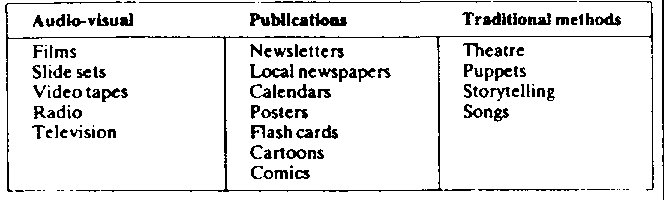
Table
Diarrhoea Dialogue
Over the past two years, Diarrhoea Dialogue has tried to fill part of the information gap. The newsletter is aimed at a very broad audience (we now send English copies to over 12,000 individuals and organizations in 95 countries and also have French and Spanish editions which reach a further 9,000 people). Although this means that we can never satisfy everyone all of the time, the advantage is that many people who would otherwise receive no information at all can now expect something regularly. It also means that we receive a wide range of information from you. Many of the ideas in Diarrhoea Dialogue are now contributed by readers so the publication has developed into the two-way dialogue that was always intended.
Our readership reflects the principles put forward in this article in that it includes health staff working at all levels. We hope that some of you reading this may be able to use the information given here to increase awareness about diarrhoeal diseases in your village, district or country. Please share your views and experiences with other readers through Diarrhoea Dialogue.
Denise Ayres
Some of the organizations involved in the spread of information on diarrhoeal diseases:
· Appropriate Health Resources and Technologies Action Group Ltd 85 Marylebone High Street London WIM 3DE United Kingdom· Diarrhoeal Diseases Control Programme World Health Organization 1211 Geneva 27 Switzerland
· International Centre for Diarrhoeal Disease Research, Bangladesh PO Box 128 Dacca 2 Bangladesh
· International Childrens Centre Chateau de Longchamp Carrefour de Longchamp Bois do Boulogne 75016 Pans France
· International Development Research Centre PO Box 8500 Ottawa Canada K1G 3H9
· Ross Institute of Tropical Hygiene London School of Hygiene and Tropical Medicine Keppel Street London WC1E 7HT United Kingdom
· Water and Environmental Sanitation Team Programme Development and Planning Division UNICEF 866 UN Plaza Room A415 New York, NY 10017 USA
· Water and Sanitation for Health Project 1611 N. Kent Street Room 1002 Arlington Virginia 22204 USA
Other sources of information on development of health education materials:
· British Council Media Group 10 Spring Gardens London SW1A 2BN United Kingdom British Life Assurance Trust Centre for Health and Medical Education BMA House, Tavistock Square London WC1H 9JP United Kingdom Bureau d'Etudes et de Recherches pour la Promotion de la Sant� B.P. 1977 Kangu-Mayombe Zaire· Hesperian Foundation Box 1692 Palo Alto, CA 94302 USA
· PIACT de Mexico Shakespeare No. 27 Mexico 5, DF Mexico
· Teaching Aids at Low Cost Tropical Child Health Unit Institute of Child Health 30 Guilford Street London WC1N 1EH United Kingdom
· UNICEF Development Education (officer Office for Europe Palais des Nations 1211 Geneva 10 Switzerland Voluntary Health Association of India C-14 Community Centre Safdarjung Development Area New Delhi 110 016 India
Handout 21C: Networking
Networking
Networks within the broad area of "development" are numerous and wide-ranging in teems of their geographical and subject interests. There are many that are well-established and have access to financial, material and human resources that you should know about . These networks can be divided into the broad categories of:
Types of development networks
Within the five categories, there is a great deal of cross-over, and becoming familiar with one network often leads to familiarity with others. In this way they all become potential sources of: (1) information; (2) technical assistance and training; (3) professional development; (4) wide-ranging support, sometimes in a financial sense, sometimes in the form of advice or valuable referrals.
NETWORKING CAN BE:
· formal, with a definite organisational structure and a well-planned, well-financed programme of action; or· informal, a coming together of women to share mutual interests and concerns, meeting when the need arises and lacking a structure or mode of operation; it can be,
· unseen and invisible;
· conscious or unconscious.
NETWORKING CAN BE:
· personal, to achieve personal growth and development objectives;
· political, to mobilize action around a specific issue; or
· professional, to link people with similar professional interests.
NETWORKING CAN BE:
· international, joining, women from different regions of the world)· regional, based on problems unique to a particular region;
· national, bringing women together based on concerns unique to conditions in that country, such as legal or economic problems;
· local, links women within a community for action on a specific issue of local concern.
NETWORKING CAN BE:
· individual, putting one person in touch with another person with similar interests, these people may have similar professional skills, or they may have different skills which are complementary and necessary for resolving a problem; or· institutional, among organizations which have agreed to join forces in resolving a common problem.
How can you start making contact?
Trainer Attachment 21A: Linking the community with outside resources
Story Number One: Debra and the Nell Project
Debra, a health Volunteer, was eager to help the community solve the problem of lack of reliable clean water. She volunteered to go to the capital city to search for help from the Ministry of Public Works. The official et the ministry gays Debra plans for digging the well. He promised to help with costs and supplies if the villagers dug the well according to the plan.
The villagers were happy with Debra's report about the official's promise to help. With her assistance they organized a work schedule and began digging the well according to the plans. Before they reached half the depth required by The plan they struck water and could not dig any farther.
Debra returned to the ministry and found the official. He was no longer helpful. Instead he said he could not give any help now because the villagers did not dig the well according to the plan.
Debra returned to the village and reported the bad news to the villagers. They became angry and accused her of lying to them about the official's first offer of help. Debra did not know what to do next. The villagers were no longer willing to work on projects to improve community health.
Story Number Two: David and the Health Post Project
David, a health volunteer, talked with the village health committee about the health needs of the community. The committee members said that nearly everyone in the village wanted a health post because the nearest post was a four hours walk away. They insisted that if they could get the money to buy supplies, the villagers would provide the labor to build the health post. David promised to help. He went to the Ministry of Public Works and found the section that gives loans for village construction projects, de got the request forms for the loan and helped the health committee fill them out. Then he returned Jo the ministry and collected the loan for the committee.
Before the time to repay the loan came, David's completed his second year as a Volunteer and returned to the United States. When the loan was due the health committee did not understand how to repay the money. Only David knew about the resources in the ministry. Finally an angry official from he ministry collected the money. The village did not complete the health post because they needed more supplies and did not want to deal with the angry official to get another loan.
Session 22 - Practicing and evaluation health education sessions
TOTAL TIME
3 hours
OVERVIEW
It is always helpful to try out a planned session with a group willing to offer suggestions about what is good about the activity and what could be improved. Peer critiques also are a means of sharing ideas and approaches that can be used by all the participants when they return to their work sites. Conducting health education sessions also gives participants a sense of accomplishment and a moons to assess what they have learned about health education in the post few cloys. Finally, it provides practice in giving constructive criticism. In this session, co-facilitators present their project plans end conduct the health education session that they planned earlier in the training. Following each session the participants evaluate their peers' work.
OBJECTIVES
· To conduct a 20 minute health education session, working in pairs. (Step 1, 2)
· To evaluate the health education session using criteria established during the training course. (Step 2)
RESOURCES
As determined by participants.
Handouts:
- 19C Guidelines for Practice Sessions
- 19C Evaluation of Practice Session (both from Session 19)
MATERIALS
As determined by participants.
PROCEDURE
Trainer Note
Prior to this session, emphasize the importance of practicing before carrying out the session. Also urge participants to organize the materials needed for the session so they can reach them easily when they need them during the session.
You may want to invite some community members to attend the presentations to have a more realistic try out of the session. Even more effective is to conduct the activities in the community, if participants have the necessary language skills. If participants pretested materials in the school, some may vent to return there to do health education. Arrangements could be made with local officials to include a health education session in a community meeting. Participants with a health training could teach local health workers about ORT or dehydration. One trainer and as many participants as possible should attend all the sessions held in the community so that they can provide feedback later. Although this approach to the presentations requires considerably more arrangements by the trainer and the participants, it is much more rewarding for them and for the local community.
Try to "let go" and give participants as much freedom as possible to set the overall tone and present these activities. You may vent to ask someone to act as moderator for the session.
It is usually best to appoint a timekeeper so that none of the activities run over the time allocated. It is also helpful to the presenters to know when they have only five minutes left in their session.
Unless the group is small, it will be necessary to schedule two concurrent sessions with at least one trainer observing each session.
Step 1 (15 min.)
Setting up the Format for Practice Sessions
Assemble the group and explain the procedure for the practice sessions. Each pair of participants will conduct their 20 minute session according to the schedule posted on the wall. Immediately afterwards, the trainer will facilitate a 15 minute evaluation of the session among all participants and staff.
Ask each group to begin their session with a brief review of their health education project plan and explain where their practice session fits into that overall plan. Ask them to post large versions of their project plans and session plans. Remind them to explain how they plan to evaluate the session.
Distribute several copies of Handout 19E (Evaluation of Practice Session) to each participant. (Each person should have as many copies as there are practice sessions.)
Step 2 (1 hr 30 min)
Facilitating and Evaluating Practice Sessions
Have participants conduct their sessions. After each one, facilitate a 15 minute evaluation of the session. Encourage discussion of ways the session could be adapted for different situations.
Trainer Note
The following is a suggested procedure for the evaluation of
each session'
- The pair who facilitated the session begin the process with
self-evaluations.
- The participants then provide commentary identifying
effective and ineffective aspects of the session and giving suggestions for
improvement.
- As appropriate, the trainer provides feedback in areas not yet
mentioned by, participants and gives his or her response to what has already
been said,
Step 3 (25 min)
Applying New Ideas to the Field
Ask the group to reflect on the new ideas and information they gained during the practice sessions. Have them briefly discuss how they might use or adept the new session strategy for specific opportunities and situations in the field.
Trainer Note
Display the visual aids and plans produced for these activities. If possible, duplicate the plans for each project and session so that each participant has a copy of all the plans.
Depending on the schedule and the setting, you may want to hold a closing reception at the end of the training and invite people working on CDD programs in the country. In many settings Counterparts and Volunteers appreciate receiving certificates at the end of a training course.
|
| ||||||||||||||||||||||||||||||||||||||||||||||||||||||||||||||||||||||||
Bibliography
Aarons, Audrey and Hawes, Hugh. Child to Child. London: MacMillan Press Ltd., August 1979.
Abbatt, F. R. Teaching for Better Learning: A Guide for Techears of Primary Health Care Staff. Geneva: World Health Organization, 1980.
Academy for Educational Development. After Twelve Months of Broadcasting: A Status Report on the Project in Honduras and The Gambia. Washington, D.C.: 1984.
Academy for Educational Development. Proceedings of the International Conference on Oral Rehydration Therapy (ICORT). Washington, D.C.: Agency for International Development, 1983.
AHRTAG. Diarrhea Dialogue. Issues 1-15. London, Dakar: Ahrtag, 1981-1984.
American Home Economics Association international. The Family Planning Project, Working With Villagers. Washington D.C.: Peace Corps, 1983.
American Public Health Association. " Community Participation." Primary Halth Care Issues Series. Washington, D.C.: International Health Programs, 1983.
American Public Health Association. Community Health Education in Developing Countries. Washington, D.C.: Peace, September 1978.
Appropriate Technology for Health. Health Education Methods and Materials.
Appropriate Technologies for Development. Breastfeeding/Weaning. Washington, D.C.: Peace Corps.
Benenson, Abram S., ed. Control of Communicable Diseases in Man. Washington, D.C.: The American Public Health Association, 1980.
Brownlee, Ann T. Community, Culture, and Care: A Cross Cultural Guide for Health Workers. St. Louis: The C.V. Mosby Company, 1978.
CARE. Nutrition Planning in the Developing World. Washington, D.C.: U.S. Agency for International Development, 1976.
Cameron, Mbrgaret and Hofvander, Yngve. Manual On Feeding Infants and Young Children. New York: United Nations Caloric Advisory Group, 1976.
Centers for Disease Control. CCCD Draft Training Mbdules. Atlanta: Unpublished. 1985.
Centers for Disease Control. "Delivery of Services: Diarrhea and Dehydration". Training Course for Instructors in Combatting Childhood Communicable Diseases. Draft. Atlanta: CDC, 1984.
Chen, Lincoln, and Scrimshaw, N., ed. Diarrhea and Malnutrition. New York and London: Plenum Press, 1983.
CHP International. SmaII Scale Beekeeping for Development Workers. Washington, D.C.: Peace Corps, 1983.
Christian Medical Commission World Council of Churches. "Health, the Human Factor: Readings in Health, Development and Community Participation." CONTACT. Spell Series Number 3. Geneva, Switzerland: 1980.
Clark, Noreen and MkCaffery, James. Demystifying Evaluation. New York: World Education, 1979.
Cohen, John and Uphoff, Norman. Rural Development Participation: Concepts and Measures for Project Design, Implementation and Evaluation. New York: Cornell University, 1977.
Colgate, Susan et. al. The Nurse and Community Health in Africa. Yauonde: Editions Cle', 1975.
Cox, J. Lamar, Wileman, Ralph and Toley, Raymond. Pretesting and Revising Instructional Materials for Hater Supply and Sanitation Programs. HASH Technical Report No. 24. Washington, D.C.: WASH, lg84.
Crone, Catherine D., and St. John Hunter, Carman. From the Field; Tested Participatory Activities for Trainers. New York: World Education, 1980.
Crowley, David, Etherlagton, Aian and Kidd, Ross. Mass Media Manual; HCY to Run a Radio Learning Group Campaign. Bonn: Friedrich-Ebert-Stiflung, 1981.
Eshuls, Jan and Manschot, Peter. Communicable Diseases: A Manual for Rural Health Workers. Nairobi: African Medical and Research Foundation, 1978.
The Farallones Institute Rural Center and CHP International, Inc.
Training Manual in Appropriate Community Technology: An Integrated Approach for Training Development Facilitators. Washington, D. C.: Peace Corps, 1982.
Fiat, Paris. Field Programme Management: Food and Nutrition Course Bock Rome: FAO.
Gibbons, Gayle and Griffiths, Marcia. Program Activities for Improving
Weaning Practices. Geneva: World Federation of Public Health Association, 1984.
Gralicher, Phillip. A Manual for Basic Assessment of Nutrition Status in Potential Crisis Situations. Atlanta: CDC, 1981.
Green, Lawrence W., Kreuter, Marshall W., et. al. Health Education
Planning; A Diagnostic Approach. Palo Alto: Mayfleld Publishing Company, 1980.
GriffIths, Marcoa. Growth Monitoring and Care. Washington, D.C.: APHA, 1981.
Griffiths, Marcoa and Avila de Halls, Patricia. International Nutrition Communication Service Consultant Report Series: Dominican Republic. Newton: Education Development Center, Inc., 1984.
GulIbert, J. J.. Educational Handbook for Health Personnel Geneva: World Health Organization, 1981.
Haaland, Ane. Pretesting Communication Materials with Special Emphasis on Child Health and Nutrition Education. Rangoon: UNICEF.
Haffey, Joan and Jimerson, Ann. "Spreading Good Ideas: Adapting Illustrated Materials." Development Communication Report. No. 48. Washington, D. C.: U. S. Agency for International Development, Plater 1985.
Hesperian Foundation. Health Education Training Model. Washington, D.C.: Peace Corps, 1983.
Hilton, David. Health Teaching for West Africa: Stories, Drama and Song. Wheaton, Illinois: MAP International, 1980.
Ingalls, John D.. A Trainers Guide to Andragogy. Waltham: Data Education, Inc., 1973.
INTRAH. Teaching and Learning with Visual Aids: A Resource Manual for Family Planning Trainers and Health Workers in Africa and the Middle East. Chapel Hiii: Program for International Training in Health, 1984.
Isely, Raymond B., and Parker, Kathleen A. Application of Health Education to Water SuppIy And Sanitation Projects In Africa. BASH Technical Report No. 15. Washington, D.C.: WASH, October, 1982.
Joseph, Fitzroy. Protein Calorie Malnutrition. Chapel Hiii: University of North Carolina.
Jelilffe, Derrick B. Child Nutrition In Developing Countcles: A Handbook for Field Workers. Washington, D.C.: U. S. Agency for International Development, 1969.
Jelilffe, Derrick B. Infant Nutrition In the Subtropics and Tropics. Geneva: World Health Organization.
Kldd, Ross and Colletta, Nat, ed. Tradition for Development: Indigenous
Structures and Folk Media In Non-Formal Education. Berlin: German Foundation for International Development and International Council for Adult Education, 1980.
King, Maurice, ed. Medical Gare In Developing Countries: A Symposium from Makere. London: Oxford University Press, 1977.
King, Maurice, King, Felicity, and Martodipoero, Soebagyo. Primary Child
Gore Bock One: A Manual for health Workers. Oxford: Oxford University Press, 1978.
King, Maurice; King, Felicity; and Martodipoero, Soebagyo. Nutrition for Developing Countries. Nairobi: Oxford University Press, 1972.
Knight, Jennifer. "Love Him and Mek Him Learn." New York: UNICEF, Issue 119/1984.
Koppert, Joan. Nutrition Rehabilitation, Its Practical Approach. London: Tri-Med Bock Ltd., 1977.
Liberian Ministry of Health In-Service Education Division. "Caring for Children With Diarrhea." 2nd Edition. Monrovia, Liberia.
Mandel, P. E., ed. "Community Participation and Sanitation." Assignment Children, Vol. 45/46. Geneva: UNICEF, Spring, 1979.
Mandel, P. E., ed. "Breastfeeding and Health." Assignment Children, Vol. 55/56. Geneva: UNICEF, 19B1.
Mandel, P. E., ed. "Community Participation Assignment Children, Vol. 59/60. Geneva: UNICEF, Spring 1982.
Mann, H. T. and Williamson, Water Treatment and Sanitation. London: Intermediate Technology Publications Ltd., 1979.
Mausner, Judith S., and Bahn, Anita K. Epidemlology; An Introductory (ext. Philadelphia: W.B. Saunders Company, lg74.
MEDEX. Primary Health Care Series. Honolulu: John A. Burns School of Medicine, 1983.
McMbhon, Rosemary, Barton; Elizabeth, and Plot, Maurice. On Being In Charged A Guide for Middle-Level Management in Primary Health Care. Geneva: World Health Organization, t980.
Morley, David. Paediatric Priorities In the Developing World. London: Butterworths, 1973.
Morley, David and Woodland, Margaret. See How They Grow. London: MacMillian Press, Ltd., 1981.
National Council for International Health. The Training and Support of Primary Health Care Workers. Washington, D.C.: National Council for International Health, September, 1981.
Parker, Robert L. "Oral Fluid Therapy in Diarrhea and Dehydration: Current Concepts and Practical Considerations." ICORT Proceedings. Washington, D. C.: U.S. Agency for International Development, 1983.
PATH. Health Technology Directlons, Assessing Nutritional Status. Seattle: PATH, Third Quarter, 1983.
Peace Corps. Cross-Cultural Training for Peace Corps Volunteers. Washington, D. C.: Peace Corps, 1981.
Peace Corps. Inservice Workshop Model. Washington, D. C.: Peace Corps, 1981.
Peace Corps. The Role of the Volunteer In Development. Washington, D. C.: Peace Corps, 1981.
Peace Corps. Third World Women: Understanding Their Role In Development. Washington, D. C.: Peace Corps, t981.
Peace Corps. Systematic Project Design: A Handbook for Volunteers. Washington, D. C.: Peace Corps, 1982.
Peace Corps. Personal Health Training Manual. Washington, D. C.: Peace Corps, 1982.
Peace Corps. Audio-Visual/Communications Teaching Aids Packet Supplementary Materials. Peace Corps Information Collection and Exchange Packet p-8, September, 1982.
Peace Corps. Bureaucratic Effectiveness and Working With Counterparts. Washington, D. C.: Peace Corps, 1983.
Peace Corps. Technical Health Training Manual. Washington, D.C.: Peace Corps, 1985.
Population Communication Servies. The Male Responsibility Programs. Baltimore: Johns Hopkins University, 1984.
Population Information Servies. "After Contraception: Dispelling Rumors About Later Childbearing." Population Reports. Sept.-Oct. 1984.
Population Information Servies. coral Rehydration Therapy for ChiIdhood diarrhea." Population Reboots. No. 12. Nov.-Dec. 1980.
Rifkin, Susan B., ed. "Health: The Human Factor." Readings in Health, Development and Community Participation. Geneva: The Christian Medical Commission World Council of Churches, June, 1980.
Ritchie, Jean. Manual on Child Development Family Life Nutrition. Rome: FAO.
Romanucci-Ross, Lola, et. al. The Anthropology of Medicine; From Culture to Method. New York: Freezer Publishers, 1983.
Save the Children. Bridging the Gap: A Participatory Approach to Health and Nutrition Education. Westport: Save the Children, May, 1982.
Srinivasan, Lyra. "Workshop Ideas for Family Planning Education." New York: World Education, 1975.
Srinivasan, Lyra. Perspectives on Nonformal Adult Learning. Boston: World Education, Inc., 1974.
UNICEF News. Issue 114/1982/4, New York: UNICEF, 1982.
UNICEF News. Issue 118/1983/4, New York: UNICEF, 1982.
UNICEF. "On the People's Wavelength: Communications for Social Change." Issue 114. New York: UNICEF, 1982
UNICEF. "Communicating With Pictures." Nepal: UNICEF.
UNICEF. "Community Participation: Current Issues and Lessons Learned." from Assignment Children. 59/60. 1982
United Nations. Manual on Child Development and Family Nutrition. African Training and Research Center for Women. Economic Commission for Africa and FAO. Addis Abbaba: 1978.
U. S. Department of Health and Human Services. "Pretesting In Health Communication: Methods, Examples and Resources for Improving Health Messages and Materials." Public Health Services. National Institute of Health HIM Publication No. 83-1493. Bethesda, MD: 1982.
Vella, Jane Kathryn. Learning to Listen: A Guide to Methods of Adult Nonformal Education. Amherst: Center for International Educational Education, 1979.
WASH. The Role of Participants and Beneficiaries In Water Supply and Sanitation Programs. Technical Report No.11. Washington, D. C.: WASH, December, 1981.
WASH. Application of Health Education To Water Supply and Sanitation Projects In Africa. Technical Report 15. Washington, D. C.: WASH, t982.
WASH. A Workshop Design For Latrine Construction. Technical Report No. 25. Washington, D.C.: U.S. Agency for International Development.
Water For the World. Technical Notes. Dis. 1.m.1, Dis 1.m.2., Dis. 2.m.1, 01s. 2.m.5. Washington, D. C.: U.S. Agency for International Development.
Werner, David and Bower, Bill. Healing Health Workers Learn. Palo Alto: The Hesperian Foundation, 1982.
Wileman, Ralph E. Exercises In Visual Thinking. New York: Hastings House, 1980.
Williams and Jelliffe. Maternal and Child Health; Delivering the Services.
World Education. "Special Issue on Evaluation." World Education Reports. No. 15. New York: 1980.
World Education. From The Field. New York: World Education, 1980.
World Federation of Public Health Associations. "Training Community Health Workers; Information for Action Issues Pager. Washington, D. C.: World Federation of Public Health Associations, July, 1983.
World Health Organization. WHO Supervisory Skills: "Treatment of Diarrhea." Geneva: World Health Organization, 1983.
World Health Organization. WHO Supervisory Skills: "Monitoring Performance." Geneva: World Health Organization, 1983.
World Health Organization. New Policies for Health Education In Primary Health Care: Report on Technical Discussion. Thirty-sixth World Assembly (A 36/Technical Discussion /4). Geneva: World Health Organization. May 13, 1983.
World Health Organization. Community Involvement. Geneva: World Health Organization.
World Health Organization. Examples of Health Education Materials. Geneva: World Health Organization, 1982.
World Health Organization. New Approaches to Health Education In Primary Health Care. World Health Organization Technical Report Series 690. Geneva: World Health Organization, 1983.
World Health Organization. Guidelines for Training Community Health Workers In Nutrition. Geneva: World Health Organization, 1981.
World Health Organization. Manual For The Planning and Evaluation of National Diarrhoeal Diseases Control programmes. (WHO/CDD/SER180.1)
World Health Organization. Guidelines for the Trainers of Community Health Workers on the Treatment and Prevention of Acute Diarrhoea. (WHO/CDD/SER/80.1)
World Health Organization. "Health Education Methods and Materials in Primary Health Care." Appropriate TechnoIogy for Health. Newsletter 10, Geneva: World Health Organzation. December, 1981.
World Health Organization. Diarrhoeal Disease Control; Examples of Health Education Materials. Geneva: World Health Organization, 1982.
World Health Organization. Draft Materials on Health Education, Geneva: World Health Organization, unpublished.
World Health Organization. The Primary Health Worker. Geneva: World Health Organization, 1977.
WorId Health Organization. Health Education in an Immunization Program. Geneva: World Health Organization, 1984.
World Health Organization. "Oral Rehydration Salts (ORS) Formulation Containing Trisodium Citrate." Diarrheal Disease Control Programme. Geneva: World Health Organization, 1984.
WHO/UNICEF. "Primary Health Care." International Conference on Primary Health Care. Geneva-New York: 1978
WHO/UNICEF. "Joint Meeting on Infarct and Young ChiId Feeding." World Health Forum. Geneva: World Health Organization, 1981.
Zeitlin, Marlan F., and Formacion, Candelaria S.. Nutrition Intervention in Developing Countries, Study II Nutrition Education. Cambridge: Oeigeschlager, Gunn & Hain, 1981.
Since 1961 when the Peace Corps was created, more than 80,000 U.S. citizens have served as Volunteers in developing countries, living and working among the people of the Third World as colleagues and co-workers. Today 6000 PCVs are involved in programs designed to help strengthen local capacity to address such fundamental concerns as food production, water supply, energy development, nutrition and health education and reforestation.
Peace Corps overseas offices:
BELIZE P.O. Box 4B7 Belize City
BENIN BP 971 Cotonou
BOTSWANA P.O. Box 93 Gaborone
BURKINA FASO BP 537-Samandin Ouagadougou
BURUNDI c/o American Embassy Bujumbura
CAMEROON BP 817 Yaounde
CENTRAL AFRICAN REPUBLIC BP 1080 Bangui
COSTA RICA Apartado Postal 1266 San Jose
DOMINICAN REPUBLIC Apartado Postal 1412 Santo Domingo
EASTERN CARIBBEAN Including: Antigua, Barbados, Grenada, Montserrat, St. KittsNevis, St. Lucia, St. Vincent, Dominica "Erin Court. Bishops Court Hill P.O. Box 696-C Bridgetown, Barbados
ECUADOR Casilla 635-A Quito FIJI P.O. Box 1094 Suva
GABON BP 2098 Libreville
GAMBIA The P.O. Box 582 Banjul
GHANA P.O. Box 5796 Accra (North)
GUATEMALA 6a Avenida 1-46 Zone 2 Guatemala
HAITI c/o American Embassy Port-au-Prince
HONDURAS Apartado Postal C-51 Tegucigalpa
JAMAICA Musgrove Avenue Kingston 10
KENYA P.O. Box 3051 Nairobi
LESOTHO P.O. Box 554 Maseru
LIBERIA Box 707 Monrovia
MALANI Box 208 Lilongwe
MALI BP 85 Box 564
MAURITANIA BP 222 Nouakchott
MICRONESIA P.O. Box 9 Kolonia, Ponape F. S. M. 96941
MOROCCO 1. Zanquat Benzerte Rabat
NEPAL P.O. Box 613 Kathmandu
NIGER BP 10537 Niamey
PAPUA NEW GUINEA P.O. Box 1790 Boroko Port Moresby
PARAGUAY c/o American Embassy Asuncion
PHILIPPINES P.O. Box 7013 Manila
RWANDA c/o American Embassy Kigall SENEGAL BP 254 Dakar
SEYCHELLES BP 697 Victoria
SIERRA LEONE Private Mail Beg Freetown
SOLOMON ISLANDS P.O. Box 547 Honiara
SRI LANKA 50/5 Siripa Road Colombo 5, Sri Lanka
SUDAN Djodi Deutsch Administrator/PCV's c/o American Embassy Khartoum
SWAZILAND P.O. Box 362 Mbabane
TANZANIA lox 9123 Dar es Salaam
THAILAND 42 Soi Somprasong 2 Petchburi Road Bangkok 4
TOGO BP 3194 Lome
TONGA BP 147 Nuku'Alofa
TUNISIA BP 96 1002 Tunis-Belvedere Tunis
WESTERN SAMOA Private Mail Bag Apia
YEMEN P.O. Box 1151 Sana'a
ZAIRE BP 697 Kinshasa