 |
| ||||||||||||||||||||||||||||||||||||||||||||||||||||


|
| ||||||||||||||||||||||||||||||||||||||||||||||||||||
Report of an Ad Hoc Panel of the Advisory Committee on
Technology Innovation
Board on Science and Technology for International
Development
Office of International Affairs
National Research Council
NATIONAL ACADEMY PRESS
Washington, D.C. 1983
National
Academy Press, 2101 Constitution Avenue, NW, Washington, DC
20418
|
| ||||||||||||||||||||||||||||||||||||||||||||||||||||
Acknowledgments
NOTICE: The project that is the subject of the report was approved by the Governing Board of the National Research Council, whose members are drawn from the councils of the National Academy of Sciences, the National Academy of Engineering, and the Institute of Medicine. The members of the committee responsible for the report were chosen for their special competence and with regard for appropriate balance.
This report has been reviewed by a group other than the authors according to procedures approved by a Report Review Committee consisting of members of the National Academy of Sciences, the National Academy of Engineering, and the Institute of Medicine.
The National Research Council was established by the National Academy of Sciences in 1916 to associate the broad community of science and technology with the Academy's purposes of furthering knowledge and of advising the federal government. The council operates in accordance with general policies determined by the Academy under the authority of its congressional charter of 1863, which establishes the Academy as a private, nonprofit, self-governing membership corporation. The council has become the principal operating agency of both the National Academy of Sciences and the National Academy of Engineering in the conduct of their services to the government' the public, and the scientific and engineering communities. It is administered jointly by both Academies and the Institute of Medicine. The National Academy of Engineering and the Institute of Medicine were established in 1964 and 1970, respectively, under the charter of the National Academy of Sciences.
This report has been prepared by an ad hoc advisory panel of the Advisory Committee on Technology Innovation, Board on Science and Technology for International Development, Office of International Affairs, National Research Council, for the Bureau for Science and Technology, Agency for International Development, Washington, D.C., under Contract No. AID-C-1433 and the Office of the Science Advisor, under Grant No. DAN-5538-G-SS-1023-00.
Library of Congress Catalog Card Number 82-062536
International Standard Book Number 0-309-03386-1
Copyright © 1983 by the National Academy of Sciences
No part of this book may be reproduced by any mechanical' photographic, or electronic process, or in the form of a photographic recording, nor may it be stored in a retrieval system, transmitted, or otherwise copied for public or private use, without written permission from the publisher, except for the purposes of official use by the United States Government.
Printed in the United States of America
PANEL ON ALCOHOL FULES
ELMER L. GADEN, JR., Department of Chemical Engineering, University of Virginia, Charlottesville, Virginia, USA, Chairman
JAMES W. BLACK, Government of New South Wales (Australia), New York, New York, USA
VARY COATES, Dames and Moore, Washington, D.C., USA
ROGER PAUL HUMBERT, Consultant, Los Gatos, California, USA
JAMES L. KELLER, Union Oil Company of California, Brea, California, USA
HARINDER S. KOHLI, The World Bank, Washington, D.C., USA
EDWARD S. EIPINSKI, Battelle-Columbus Laboratories, Columbus, Ohio, USA
MARY MANDELS, US Army Natick Research and Development Command, Natick, Massachusetts, USA
JOSE MICCOLIS, Technikos Corporation, Washington, D.C., USA
PAUL R. MIDDAUGH, Northwest Pacific Energy Company, Inc., Pasco, Washington, USA
DANIEL . O'NEIL, European Research Institute of Ireland, Limerick, Ireland
BARRETT PULLMAN, Mechanical Engineering Department, University of Santa Clara, Santa Clara, California, USA
THOMAS B. REED, Solar Energy Research Institute, Golden, Colorado, USA
LAWRENCE A. WILSON, Department of Crop Science, University of the West Indies, St.Augustine, Trinidad
VICTOR YANG, Promon Engenharia, S.A., Sao Paulo, Brazil
BOSTID STUDY STAFF
M. G. C. McDONALD DOW, Associate Director
E. GRIFFIN SHAY, Professional Associate
F. R. RUSKIN, Editor
HERTHA HANU, Administrative Secretary
|
| ||||||||||||||||||||||||||||||||||||||||||||||||||||
Preface
Alcohol fermentation technology, used in almost every society, is among the oldest of man's deliberate transformations of organic substances. Although best known as potable spirits, ethanol was also commonly used in lamps and in internal combustion engines in the late 19th and early 20th centuries. After World War II, the availability of a cheap, plentiful petroleum supply for transportation needs displaced alcohol fuels, except for certain specialized uses such as racing-fuel mixtures. The current worldwide revival of interest in alcohol fuels reflects the rise of petroleum prices to a level that may make alcohol fuels competitive.
Brazil has adopted a national policy of using ethanol mixed at a level of about 20 percent with gasoline. The government has also encouraged the development and manufacture of automobiles designed to run on straight alcohol; some 700,000 such automobiles are already in use in Brazil. In the United States, the use of alcohol in gasoline-ethanol mixtures, known as "gasohol," is subsidized. And in many developing countries, government and industry are considering the use of locally produced alcohol fuels to reduce the burden of foreign exchange payments for petroleum products; some have already begun constructing facilities to produce alcohol fuels from indigenous materials.
Governments or entrepreneurs planning to substitute alcohol for petroleum fuels must weigh diverse considerations. On the positive side, the production and use of alcohol fuels can result in:
· Increased national security and; self-sufficiency because of lessened dependence on other countries
· A better balance of trade
· Increased employment, particularly in rural areas
· A basis for enhanced technical sophistication
· An expanded chemical industry
· An improved urban environment because of fewer engine emissions
· An improved agricultural base, if the fuel program is organized to increase rural productivity.
Possible negative factors include:
· Use of food staples to produce energy
· Diversion of scarce resources such as capital, technical capacity, water, or land from more urgent uses
· A degraded rural environment owing to misuse of land or water pollution from alcohol by-products.
This report summarizes information on alcohol fuel technologies for planners, investors, and technical assistance agencies in developing countries. Although the information is primarily aimed at the nontechnical reader, it does include some details of the technologies; references are included for those who wish more specialized information.
|
| ||||||||||||||||||||||||||||||||||||||||||||||||||||
Overview
Petroleum-based fuels gained their long-dominant position as energy sources for two reasons: ease of use and low cost. Engines are demonstrably simpler to design and operate with liquid or gaseous fuels than with solid fuels. As the economic attraction of petroleum fuels disappears, their motivity - the power to cause motion - is being sought from other sources.
Although petroleum prices have declined in recent periods of high production and slack demand, their long-term trend is inevitably upward. Moreover, since crude oil production and distribution is subject to disruption by political events, and, since energy consumption in developing countries is increasing at a faster rate than in industrialized countries, alternative indigenous sources of energy such as alcohol fuels are particularly worthy of consideration.
The growth and conversion of various plant species to fuels can represent an alternative to petroleum use in many tropical countries. The production of alcohol fuels from such biomass, however, is only one of many options available to energy planners. Gaseous, solid, and other liquid fuels can be obtained from biomass by both simpler and more complex technologies than those used for alcohol production.
For the various energy-from-biomass alternatives (including alcohols), the supporting technologies range from developmental to proven. In most cases, however, factors beyond the technology will control the choice and approach. Knowledge of current and future energy needs and of actual and potential resources is the only basis for planing a sound biomass energy program.
GLOBAL INTEREST IN ALCOHOL FUELS
A number of countries are pioneering the large-scale use of alcohol fuels. In Brazil, for instance, a country that imported more than 80 percent of its petroleum in 1979, a combination of factors - including the availability of land and labor, a need for liquid fuels, and a strong base in sugarcane production - has coalesced into an ambitious alcohol fuels program. Although Brazil has used alcohol-gasoline blends since the 1930s, this early effort was designed to stabilize sugar and molasses markets. Alcohol-use levels were tied to world sugar prices. Today the goal is energy self-sufficiency, spurred by world oil prices.
All of Brazil's 7 million cars are now running on 17 percent alcohol blends. Further, about 700,000 cars use alcohol alone, and, beginning in 1980, 10 percent of all new cars produced in Brazil were required by law to be powered by straight alcohol. Brazil's success in reducing dependence on foreign oil was recently summarized by Petrobras (the Brazilian National Oil Company) and is shown in Table 1. Brazil hopes to eliminate petroleum imports by the year 2000.
In Costa Rica, a 240,000-liter-per-day distillery to produce alcohol from sugarcane has been installed. The alcohol is expected to replace about 15 percent of Costa Rica's gasoline.
Another sugar-rich country, the Philippines, is installing a large scale alcohol distillery on Luzon and is planning additional distilleries there and in Negros. Until 1978, when oil was discovered on one of their southern islands, the Philippines were totally dependent on imported petroleum.
In Argentina, 90 percent self-sufficient in petroleum, 3,500,000 tons of sugarcane were diverted to alcohol production in 1978. Additional distilleries are being planned and built to produce alcohol for fuel use.
TABLE 1 Brazilian Consumption and External Dependence on Petroleum
|
Period |
Brazilian Production of Internal Consumption barrels per day) |
Petroleum, Gas, and Alcohol |
External Imports |
Dependence on Petroleum percent) |
|
July 1979 |
1,225,000 |
211,000 |
1,014,000 |
82.8 |
|
July 1980 |
1,197,000 |
253,000 |
944,000 |
78.9 |
|
July 1981 |
1,093,000 |
255,000 |
838,000 |
76.7 |
|
July 1982 |
1,064,000 |
341,000 |
723,000 |
68.0 |
SOURCE: Petrobras.
South Africa, a pioneer in the conversion of coal to liquid fuel, is currently considering a project that would produce 800,000 tons of alcohol per year from biomass.
In Sudan, Kenya, Indonesia, Papua New Guinea, and Thailand, alcohol fuel projects are in progress. Clearly, the production and use of alcohol fuels is growing rapidly throughout the world.
THE TWO FUEL ALCOHOLS
Ethanol and methanol are the two alcohols commonly considered for fuel use. Ethanol (ethyl alcohol, grain alcohol) is produced by yeast fermentation of hexose sugars (such as those derived from cereal grains, sugarcane, or sugar beet) and subsequent separation from the aqueous solution by distillation. Simple distillation processes can yield a product containing up to 95 percent alcohol; additional treatment is required to give completely water-free ethanol.
Methanol can be produced from cellulose products such as wood or crop residues by gasification. At present, almost all commercial methanol is made from natural gas.
Ethanol, the alcohol consumed in beers, wines, and liquors, is also used as a solvent. Methanol is widely used as a starting material for making other chemicals. It is relatively toxic.
USES OF ALCOHOL FUELS
The best-known fuel use for alcohol is as a substitute for gasoline. Up to 20 percent of ethanol can be used in gasoline without engine modification. For blending, however, the ethanol must be anhydrous; otherwise, a water-containing layer can separate from the mixture, causing erratic engine performance. The 95 percent form of ethanol (the constant-boiling mixture of alcohol and water obtained in simple distillation) can be used directly in modified engines (Figure 1). Methanol can be used at levels up to 15 percent in gasoline and 100 percent in modified gasoline engines.
Alcohol fuels cannot be used as easily in diesel engines because they do not readily combustion the diesel system. The alcohols must either be mixed with relatively expensive substances (such as amyl nitrate) to promote combustion or aspirated into the diesel fuel through a special device in the air intake. No wholly satisfactory means of using alcohol fuels in diesel engines has yet been devised for widespread use. Attention has been focused on vegetable oils as technically simpler substitutes for the diesel fraction of crude oil.
Alcohols can also be used in heating and lighting, in simple wick lamps or heaters, or in pressure stoves and lanterns. They are clean, comparatively safe fuels and have the advantage over petroleum fuels of being miscible with water, which makes accidental fires easier to control.
FIXED AND VARIABLE PRODUCTION COSTS
Certain costs of producing alcohol fuels are inherent in the process and relatively constant: these are likely to be the same for all largescale high-technology plants regardless of whether the plant is operating in a developing or an industrialized country. Under most conditions, economy of scale will mean that alcohol produced in smallerscale plants will be more expensive. This is particularly true for methanol, for which no satisfactory small-scale plant has yet proved economical. Capital investment costs per gallon per year ("annual gallon") are approximately U.S. $1.50 to $2 for ethanol and slightly lower for methanol, roughly $1.20 per annual gallon.
Raw materials comprise between 60 and 70 percent of the total cost of producing ethanol, manufacturing costs approximately 20 percent, and return on investment makes up the remainder. For methanol, the cost of potential raw materials is lower, but plant investment costs are significantly higher and larger volumes of raw materials are required.
The implications are that organization of efficient raw material production and delivery are crucial to a cost-effective production system for either alcohol.
TYPE AND SUPPLY OF RAW MATERIALS
The traditional raw materials for ethanol production are sugarcane (Figure 2), cereal grains (principally maize, barley, and rice), grapes, and some root crops (cassava, sugar beet, and potato). Potentially, any source of hexose sugars can be used. Table 2 indicates a range of average yields per hectare of various raw materials and the corresponding average amounts of ethanol that may be produced by reasonably efficient processes.
Research on raw materials has taken two broad avenues: first, research aimed at increasing the efficiency of producing fermentable hexoses from lignocellulose, the most ubiquitous and cheapest raw material; and second, identifying new plant sources that could be used for their sugar content, such as high-yielding varieties of palm (nipa, caryota), grasses, and fruits. The limitation with plant sources other than sugarcane and sweet sorghum, which supply their own fuel (bagasse) for distillation - is that most of them, including grains, sugar beet, cassava, and fruits, require a separate fuel supply.
Anticipating an economic process for converting lignocellulose directly or indirectly to alcohol in the near future, several developing countries have established pilot-scale fuel-alcohol plants, and planted sources of the biomass that will ultimately be needed as feedstock. This enables the inevitable problems of managing a renewable energy technology infrastructure to be worked out while the technology is being developed, rather than delaying its use once it becomes available. Should the application of the technology be delayed, the trees can be employed for gasification, charcoal production, or other fuel uses.
TABLE 2 Yields of Raw Materials Used in Ethanol Production
| |
Yield |
Ethanol |
Ethanol |
|
Crop |
(ton/ha/yr) |
(liters/ton) |
(liters/ha/yr) |
|
Sugarcane |
50-90 |
70-90 |
3,500-8,000 |
|
Sweet sorghum |
45-80 |
60-80 |
1,750-5,300 |
|
Sugar beet |
15-50 |
90 |
1,350-5,500 |
|
Fodder beet |
100-200 |
90 |
4,400-9,350 |
|
Wheat |
1.5-2.1 |
340 |
510-714 |
|
Barley |
1.2-2.5 |
250 |
300-625 |
|
Rice |
2.5-5.0 |
430 |
1,075-2,150 |
|
Maize |
1.7-5.4 |
360 |
600-1,944 |
|
Sorghum |
1.0-3.7 |
350 |
350-1,295 |
|
Irish potatoes |
10-25 |
110 |
1,110-2,750 |
|
Cassava |
10-65 |
170 |
1,700-11,050 |
|
Sweet potatoes |
8-50 |
167 |
1,336-8,350 |
|
Grapes |
10-25 |
130 |
1,300-3,250 |
|
Nipa palm | |
|
2,300-8,000 |
|
Sago palm | |
|
1,350 |
a These figures are derived from many sources and are
included only as indications of possible yields, depending on widely varied
conditions.
NOTE: About 300 kg of molasses is produced for each ton of sugar.
One ton of molasses can be converted to 245 liters of ethanol.
BIOMASS PLANTING AND AGRICULTURAL PRODUCTION
A widely feared social consequence of large-scale alcohol fuel production is the diversion of food crops, or the land on which they are grown, for alcohol production, with the wealthy sector satisfying its thirst for liquid fuels at the expense of food staples for the poor. A corollary of this argument is that expanding acreage to produce crops for alcohol will lead to accelerated soil erosion and depletion, or that widespread monocultural crop production will make large areas vulnerable to devastation by diseases or pests.
Proponents of alcohol fuels argue that these need not be inevitable consequences, and that, in fact, alcohol fuel production from agricultural products can help agriculture. They point out that agricultural productivity per hectare is woefully low in many developing countries because of the lack of price incentives and the shortage or high cost of fuel to mechanize production and move crops to market. Linking food and fuel production could, if properly managed, provide impetus to productivity without necessarily bringing additional acreage into production. With the markets, price incentives, and tight management required by this kind of agroindustry, much higher levels of productivity could supply both food and fuel biomass needs and could revitalize rural areas. The increased crop productivity could then be used to sustain future population growth, with fuels increasingly produced from nonfood sources such as fuelwood plantations on soils unsuitable for staple crops, or multipurpose trees grown in agroforestry systems.
For sugar-producing countries affected by erratic world market prices, fuel alcohol production can provide an outlet for excess sugar production as it has done in the past. It can offer a breathing space for planning agricultural alternatives at the same time that it is providing greater self-sufficiency in energy; establishing alternative applications for existing crops (such as fuel alcohol production from sugarcane) is usually easier than switching to new crops.
The key to overall economic improvement through alcohol production is the availability of capital and management, both of which are in desperately short supply in most developing countries. However, when petroleum prices rise again, there will be increasing attention to the feasibility of local production, and the possibility of using fuel production to benefit agriculture should not be overlooked.
ALCOHOL FUEL PRODUCTION DRAWBACKS
There are limitations that must be faced before ethanol can be considered as a potential large-scale fuel source for every gallon of ethanol produced, there are 10-15 gallons of stillage residue to be disposed of; large amounts of cooling water are required, both for the fermentation and for the distillation; ethanol is traditionally handled as a potable substance, with production regulations and standards that reflect this use rather than its use as fuel.
Methanol has a slightly different set of limitations. Its manufacture from biomass is not as readily understood as that for ethanol, and the capital equipment is more complex and expensive. Methanol is poisonous and more corrosive to handle and use than ethanol and requires replacement of some of the construction materials in existing engines and storage facilities.
Nevertheless, the technologies are available, and ethanol and methanol are inherently no more - and in some ways less - difficult fuels to handle than their petroleum-based counterparts.
SELECTED READINGS
Alcohol Production - General
Abelson, P.H.1982. Fuels from biomass (Interciencia Symposium). Interciencia 7(4): 225- 228.
Barnard, G.W. 1981. Liquid Fuel Production from Biomass in the Developing Countries. Master's Thesis. Imperial College of Science and Technology, University of London, London, England.
Bungay, H.R. 1983. Commercializing biomass conversion. Environmental Science and Technology 17(1):24A-31A.
Bungay, H.R. 1982. Biomass refining. Science 218:643-646.
Coombs, J. 1980. Ethanol-the process and the technology for production of liquid transport fuel. In: Energy from Biomass. International Conference at the Brighton Centre, November 4-7, 1980, Brighton, England.
Del Rosario, EJ. 1981. Alcohol Fermentation Technology. Paper prepared for a Short Course on Solar Power Technology-Philippine Scenario. Center for Nonconventional Energy Development, Diliman, Quezon City, Philippines.
Faber, M.D. 1981. Production of ethanol from renewable resources: an assessment. Development in Industrial Microbiology 22:11 1-119.
GDC, Inc. 1981. Alternative Fuels for Use in Internal Combustion Engines. World Bank Energy Department Paper No. 4. Washington, D.C., USA.
Huff, G.F. 1981. Ethanol from biomass. In: Alternative Sources of Energy, edited by J.T.Manassah. Academic Press, New York, New York, USA.
Solar Energy Information Data Bank. 1981. Ethanol Fuels: Use,
Production, and Economics.
Solar Energy Research Institute, Golden, Colorado,
USA.
Trevelyan, W.E. 1975. Renewable fuels: ethanol produced by fermentation. Tropical Science 17(1): 1 -13.
Wickson, EJ. 1981. Monohydnc Akohols: Manufacture, Applications, and Chemistry. ACS Symposium Series, Vol. 159. American Chemical Society, Washington, D.C., USA.
World Bank. 1980. Alcohol Production from Biomas in the Developing Countries. World Bank, Washington, D.C., USA.
Country Reports
Anonymous. 1981. Indonesia follows a plant policy for fuel. New Scientist February 5:341.
Anonymous. 1981. Islands looking to new fuel sources (Fiji and Papua New Guinea). Pacific Islands Monthly July:57-59.
Anonymous. 1982. Alcohol power for Kenya. New African 178:51.
Anonymous. 1982. Sweden charts out 3-year $19-million biomass fuel development program. Synfuels January 15:6.
Bejraputra, K. 1979. Prospects of developing power alcohol industry in Thailand. In: Workshop on Fermentation Alcohol for Use as Fuel and Chemical Feedstock in Developing Countries, March 26-30, 1979. Vienna, Austria.
Belardo, A. 1980. Alcohol research and development outlook for Puerto Rico. In: Symposium on Fuels and Feedstoch from Tropical Biomas, November 24-25, 1980. Caribe Hilton Hotel, San Juan, Puerto Rico.
Blocksidge, T. 1980. Sugar in Petrol. The Sunday Mail, March 30. Salisbury, Rhodesia.
Dutkiewicz, R.K. 1980. Scenarios for alcohol fuels (South Africa). In: IV International Symposium on Alcohol Fuels Technology. Guaraja, Sao Paulo, Brazil.
Elias, A.R. 1980. Sudan experience in using alcohol as automotive fuel. In: IV International Symposium on Alcohol Fuels Technology. Guaruja, Sao Paulo, Brazil.
Fonseca, E. 1980. Alcohol fuels in Portugal. In: IV International Symposium on Alcohol Fuels Technology. Guaruja, Sao Paulo, Brazil.
Guelder, O.L. 1980. Technical and economical aspects of ethanol as an automotive fuel for Turkey. In: IV International Symposium on Alcohol Fuels Technology. Guaruja, Sao Paulo, Brazil.
Gupta, R.K., and Ahluwalia, J.S. 1980. Utilization of ethanol in Indian cars, scooters, motorcycles and tractors. In: IV International Symposium on Alcohol Fuels Technology. Guaruja, Sao Paulo, Brazil.
Holligan, PJ. 1980. Biomass Fuel Production in the United States, Brazil and South Africa: A Report on a Stud, Tour. Department of Agriculture, New South Vales, Australia.
Institute of Energy Economics. 1981. Some considerations on alcohol fuels in the Republic of Indonesia. Pp. 177-279 in: The Alcohol Fuels from Energy Farming, edited by H. Shozawa and Y. Hara. Institute of Energy Economics, Tokyo, Japan.
Karan, R. 1979. Cane molasses fermentation alcohol industry in Fiji. In: Workshop on Fermentation Alcohol for Use as Fuel and Chemical Feedstoch in Developing Countries, March 26-30, 1979. Vienna, Austria.
Lloyd, A. 1981. France turns to alcohol for fuel. New Scientist January 22:197.
Morgan, C. 1981. Developing a power alcohol industry: how the Philippines plans to do it. Agribusiness Worldwide 2(4):16-24.
National Research Council, Board on Science and Technology for International Development. 1981. Workshop on Ethanol an Alternative Source of Fuels. National Academy Press, Washington, D.C., USA.
New Zealand Energy Research and Development Committee. 1980. The Potential I of If energy Farming for Transport Fuels in New Zealand. New Zealand Energy Research and Development Committee, University of Auckland, Auckland, New Zealand.
Petterson, E. 1980. Introduction of Alternative Motor Fuels: Report from Swedish Commission of Oil Substitution. Stockholm, Sweden.
Sangster, I. 1979. The potential of sugar cane derived alcohol as a fuel in Jamaica. In: Workshop on Fermentation Alcohol for Use as Fuel and Chemical Feedstock in Developing Countries, March 26-30, 1979. Vienna, Austria.
Stewart, G.A., Gartside, G., Gifford, R.M., Nix, H.A., Rawlins, W.H.M., and Siemon, J.R. 1979. Liquid fuel production from agriculture and forestry in Australia: resume of a survey of the national potential. Search 10(11):382-387.
Titchener, A.L., and Walker, B.V. 1980. Alcohol fuels in New Zealand's energy future. In: IV International Symposium on Alcohol Fuels Technology. Guaruja, Sao Paulo, Brazil.
Vergara, W., and Pimentel, D. 1979. Fuels from biomass: comparative study of the potential in five countries: the United States, Brazil, India, Sudan, and Sweden. In: Advances in Energy Systems and Technology, Vol. 1, edited by P.L. Auer. Academic Press, New York, New York, USA.
Vicharangsan, T. 1980. Thailand's experience with hydrated ethyl alcohol-gasoline blended motor fuel. In: IV International Symposium on Alcohol Fuels Technology. Guaruja, Sao Paulo, Brazil.
Wonder, B., and Simpson, D. 1982. Economics of large-scale and on-farm production of fuel from crops in Australia. Energy in Agriculture 1:155-170.
|
| ||||||||||||||||||||||||||||||||||||||||||||||||||||
1 Production and Use
Among the lower alcohols, the two prime candidates for replacing petroleum fuels are methanol and ethanol. Although both are now manufactured largely from petroleum sources, processes for their production from biomass are available.
Butanol, a four-carbon alcohol, can also be produced from nonpetroleum sources. It is, however, a less likely contender for broad use as a fuel because of its comparatively high cost.
In Table 3, some characteristics of these alcohols are compared with those of gasoline and diesel oil. Several differences are obvious:
· Alcohols are essentially pure chemicals, boiling at one temperature, while the petroleum fuels are mixtures of many different chemicals with wide boiling ranges.
· Alcohols contain oxygen, whereas the petroleum fuels do not.
· Heating values for the alcohols are significantly lower than for the petroleum fuels.
Each of these differences has its consequences in the use of the fuels. The wide boiling range of gasoline is an advantage; the lower boiling components are sufficiently volatile to allow engine starting even at low temperatures. Unmodified engines powered by pure methanol or ethanol will not start below 10°-15°C.
The presence of oxygen in the alcohols gives them compatibility with water. Neither gasoline nor diesel fuel has any significant solubility in water, but methanol and ethanol are completely miscible with it. These two alcohols have an affinity for water sufficient to draw it from the air, a characteristic that can cause problems in their unprotected use and storage.
TABLE 3 Liquid Fuel Characteristics
| |
Fuel | ||||
|
Characteristic |
Gasoline |
Diesel |
Methanol |
Ethanol |
Butanol |
|
Formula |
C4-C12 |
C14C20 |
CH3OH |
CH3CH2OH |
CH3CH2CH2CH2OH |
| |
hydrocarbons |
hydrocarbons |
| | |
|
Boiling point |
| | |
| |
|
°C |
32-210 |
204-343 |
65 |
78 |
118 |
|
°F |
90-410 |
400-650 |
149 |
173 |
244 |
|
Lower heating valuea | | | | | |
|
MJ/kg |
44.5 |
43.0 |
19.6 |
26.9 |
33.1 |
|
Btu/gal |
114,800 |
140,000 |
55,610 |
76,100 |
96,100 |
a Lower heating value = heat of combustion at 25° C and constant pressure to form H2O (gas) and CO2 (gas).
TABLE 4 Alcohol and Hydrocarbon Heating Values
|
Fuel |
Formula |
Lower Heating Value |
|
Methanol |
CH3OH |
19.6 |
|
Methane |
CH4 |
50.0 |
|
Ethanol |
CH3CH2OH |
26.9 |
|
Ethane |
CH3CH3 |
47.5 |
The energy produced when any of these fuels are burned depends on the heat-generating reaction of oxygen with carbon and hydrogen Since the alcohols already contain oxygen, their heating values are less than their parent oxygen-free hydrocarbons. Table 4 illustrates this point for methanol and ethanol.
The oxygen content of the alcohols means that less air is required for their combustion. Compared with gasoline, methanol requires only 44 percent as much air for combustion and ethanol only 66 percent as much.
Each of these differences affects the ways in which alcohol fuels can be used or substituted for petroleum fuels.
PRODUCTION OF ALCOHOL FUELS
Ethanol, methanol, and butanol can all be produced from biomass. The manufacturing methods used, however, are quite different for each and are described below.
Ethanol
One of mankind's first biochemical activities was the preparation of wine. The earliest records of many societies describe the fermentation of grains and fruit juices for beverages. In time, the technique of distillation was developed to increase the ethanol concentration, and ultimately almost pure ethanol was produced.
Currently, both fermentative and synthetic methods are used to produce ethanol. The primary synthetic route is the catalytic hydrolysis of ethylene derived from petroleum:
CH2 = CH2 + H2O --->
CH3CH2OH
ethylene........water....®........ethanol
Synthetic ethanol plants range in size from 40 million liters to 450 million liters per year.
A wide variety of crops have been used for the production of ethanol by fermentation. These include sugar-containing raw materials such as sugarcane; starch-containing raw materials such as cassava, potatoes, maize, and barley; and cellulosic materials such as wood and crop residues.
For crops like sugarcane, sugar beet, and sweet sorghum, the juice is expressed and fermented directly. The primary sugars converted to ethanol are glucose and fructose (from sucrose):
C2H12O6
---->2CH3CH2OH +
2CO2
glucose..................ethanol.......... carbon dioxide
Starch-containing crops must be pretreated with acid or enzymes to convert their starch to glucose. Enzymatic pretreatment of potato starch and various grain starches is routinely practiced in alcoholic beverage manufacture.
Like starch, cellulose is a polymeric form of glucose, but cellulose containing raw materials are not as readily degraded to glucose, principally because of cellulose crystallinity and the naturally occurring binding material, lignin, which gives wood its structural strength. Since cellulose comprises almost 50 percent of all biomass, it is an almost universally available, renewable, and inexpensive raw material. Throughout the world, a great deal of research is under way to find economic ways to convert cellulose to glucose. Although there are wood-to-glucose acid process plants operating in the Soviet Union, data on economics are unavailable.
The technologies for producing ethanol from sugar and starch are well known and widely practiced. In contrast to methanol production, small-scale ethanol manufacture (I ton per day) from sugars or starches (but not from cellulose) is feasible.
A process for converting cassava to 95 percent alcohol is shown in Figure 3. Typically, the raw material is ground to a paste, slurried in water, and heated. Enzymes are then added to convert the starch to sugars. The mix is transferred to a fermentation tower, and nutrients and yeast cultures added. The yeasts convert the sugars to ethanol and carbon dioxide. Fermentation are usually run to give a 10-15 percent ethanol concentration. In addition, solids consisting of yeast cells, undissolved or unconverted starch, and fiber and protein from the raw material are present.
Generally, this complete mix is passed down through a stripping column, counter current to steam. A solution of approximately 50 percent ethanol in water is taken from the top of the column and the spent solids from the bottom.
The alcohol stream is next distilled, first to give a 95:5 ethanol: water mix and, if required, redistilled with a water-entraining agent such as benzene or cyclohexane to give anhydrous ethanol.

Figure 3. Conversion of cassava to 95
percent alcohol.
Methanol
The original process for the production of methanol was from the dry distillation (pyrolysis) of wood. The process was expensive, the yields poor (about 30 kg per ton of hardwood), and the product impure. Synthetic methods have completely replaced this route to methanol. Current processes use synthesis gas, a mixture of carbon monoxide (CO) and hydrogen (H2) usually derived from natural gas.
This mixture is reacted under pressure at high temperatures to yield methanol:
CO.............. + 2H2
---->CH3OH
carbon..........
hydrogen..........methanol
monoxide
Although natural gas is the predominant source of carbon monoxide and hydrogen for this reaction, it is possible to generate this mixture from coal, wood (including wood wastes), peat, or urban solid wastes, although no commercial plants use this process. Several countries, however, including Australia, Brazil, Canada, the United States, and New Zealand, have done extensive engineering and economic studies on wood-to-methanol processes.
A drawback to any biomass-to-methanol scheme is the size of the plant required and, therefore, the amount of raw materials needed to keep it operating. The minimum practical plant size (about 200 tons per day of methanol) requires about 500 tons per day of ovendry wood or equivalent biomass. Such volumes of biomass are not usually available at a given site without extensive gathering and transportation costs.
Whether biomass, natural gas, coal, or peat are used as a source of carbon monoxide and hydrogen, the final reaction is the same. The gases are mixed and compressed to 50-100 atmospheres and reacted over a catalyst at about 250°C.
The methanol-containing gases leaving the converter are cooled to condense the methanol and the unreacted gases are recycled. The methanol is then purified by distillation. Only a small amount of byproducts are obtained, including dimethyl ether and higher alcohols.
Butanol-Acetone
Butanol-acetone mixtures can also be produced by fermentation of starch- and sugar-containing raw materials. At one time second only to ethanol production by fermentation, the commercial use of the butanol-acetone process diminished sharply with the increased availability of petroleum raw materials.
The process, based on molasses, is still used in South Africa. In a 90,000-liter fermenter, about 5,850 kg of sugars yield approximately the following amounts:
|
Butanol |
1,050 kg |
|
Acetone |
525 kg |
|
Ethanol |
175 kg |
|
CO2 |
2,900 kg |
|
H2 |
117 kg |
Unlike ethanol fermentations, which can yield a 10-15 percent product concentration, the butanol-acetone fermentation gives only about a 2 percent product concentration because the organism used, Clostridium acetobutylicum, cannot tolerate higher levels of the products. Recovery of the butanol and acetone is therefore more energy intensive. Clostridial fermentations are also more susceptible to bacteriophage contamination, requiring scrupulous plant hygiene.
If some of the innovative techniques for ethanol concentration that are currently in development could be applied to butanol-acetone, the process could gain greater use. In addition, clostridial fermentations will be particularly useful for the conversion of sugars from cellulose hydrolysis. In this process, both C5 and C6 sugars are produced. While organisms used for ethanol production can utilize only the C6 sugars, clostridia can convert both C5 and C6 sugars.
ENERGY VALUES
For any biomass-to-fuel project to be viable, the energy in the fuel produced (and the attendant by-products) should exceed the nonrenewable energy required to produce and convert the biomass.
Energy inputs can be divided into those needed for crop production and those needed for crop conversion. Crop production includes the energy required for machinery, fertilizer, herbicides, and insecticides involved in culture, harvest, and transportation of the biomass. Crop conversion involves the energy consumed in equipment manufacture and the chemical or biochemical processes, separations, and purifications required to generate the fuel.
One calculation of the distribution of energy required in crop production for ethanol is summarized in Table 5.
Clearly, the machinery, transportation, and fertilizer components are controlling factors for crop production energy.
Total energy requirements for both production and conversion to ethanol for these same crops are shown in Table 6.
Although each of these crops shows a positive energy return, many other factors must be considered. These include the amount of water required for high crop yields, the length of growing and harvesting seasons, the practicality of storage, capital and processing costs, and the potential for yield improvements. Energy balances alone do not provide the basis for investment decisions. The reasons for using alcohol fuels may include increasing rural employment and stimulating agricultural development as well as replacing imported petroleum fuels.
Energy form and versatility are also important. No amount of wind energy, for example, will help propel a farmer's tractor. Electricity probably has the most versatile range of applications, and liquid fuels are usually more readily transported, stored, and used than solid or gaseous fuels.
The Brazilian national oil company, Petrobras, has a 60,000-literper-day cassava-to-ethanol plant in Minas Gerais. This plant, in its first 3 years of operation, produced alcohol on a stop-and-go basis, since deliveries of cassava were not sufficient to keep the plant in operation. A technical team in Brazil concluded that cassava alcohol would only be economic if the cassava were plantation grown and mechanically harvested. The cost of collecting cassava from small growers is probably too expensive.
TABLE 5 Approximate Distribution of Total Energy Required in Ethanol Crop Production (Percent)
|
Crop |
Machinery and Transportation |
Manual Fertilizer |
Labor |
Seed |
Insecticides and Herbicides |
|
Sugarcane |
63 |
28 |
3 |
5 |
1 |
|
Cassava |
59 |
29 |
5 |
5 |
2 |
|
Sweet sorghum |
63 |
33 |
1 |
0.5 |
3 |
SOURCE: DaSilva et al., 1978.
TABLE 6 Energy Balance for Ethanol Production
| |
Alcohol |
Energy (Mcal/ha/yr) | |||||
| |
Crop Yield, |
Produced, |
Expended |
Produced | |||
|
Crop |
tons/ha/yr |
liter/ha/yr |
Agricultural |
Industrial |
Alcohol |
Residue |
Balance |
|
Sugarcane |
54 |
3,564 |
4,138 |
10,814 |
18,747 |
17,500 |
+21,345 |
|
Cassava |
14.5 |
2,523 |
2,573 |
8,883 |
13,271 |
- |
+ 1,815 |
|
Sweet sorghum |
62.5 |
5,165 |
8,021 |
16,500 |
27,168 |
19,110 |
+21,757 |
SOURCE: DaSilva et al., 1978.
USES IN TRANSPORTATION
The use of alcohol and alcohol-gasoline blends in motor transport is almost as old as the automobile itself. In England before 1900, an internal combustion engine was designed to run on ethanol. Alcohol powered vehicles were common in Europe during World Wars I and II. Alcohols, particularly ethanol, have been used in many other countries as motor fuel.
Considerable applied research on the use of alcohols and alcoholgasoline blends is being conducted both by major automobile manufacturers and government agencies in the United States, Europe, the Philippines, arid Brazil. Past experience shows that few performance problems are encountered with blends of up to about 20 percent alcohol in gasoline. The most efficient use of straight methanol or ethanol requires significant engine modification, including replacement of alcohol-sensitive components. Problems of retrofitting cars to use alcohol fuel and the cost and subsidy of the fuel production have been the subject of intense debate in the Brazilian press.
Automobiles will operate satisfactorily on alcohol-gasoline blends or on pure methanol and ethanol. Currently, the cost per mile traveled is higher than gasoline using these alternatives, but benefits in terms of balance of payments, local employment generation, and use of renewable resources must be included in decision making.
OTHER FUEL USES
Cooking and Lighting
Ethanol and methanol can be used for cooking and lighting. A variety of simple stoves are commercially available or can be easily fabricated for use with alcohols. The flame is clean, relatively smoke- and odorfree, easily controlled, and readily ignited and extinguished.
For lighting, neither alcohol has a luminous flame when burned with a wick. This can be overcome by adding a small amount of an illuminant such as kerosine, vegetable oil, or animal fat. Use of alcohols in thorium mantle lamps is also a possibility.
Utility Boiler Fuel
In Brazil, Jones has examined the use of ethanol as a utility boiler fuel. Because the Brazilian government is committed to purchase all ethanol produced, its use as a boiler fuel could be an equalizing factor in balancing increasing production with automotive use; electrical generation is an alternative that avoids the necessity of new storage facilities for temporary surpluses.
Further, oil-fired boiler conversion costs for ethanol are modes compared with those required for coal or charcoal, and ethanol ha a low atmospheric pollution factor.
The boiler used in the Brazilian trial was a 135-MW unit in the Piratininga Power Station in Sao Paulo. After atomizing tests, burne modifications, and combustion trials, boiler load tests were conducted A maximum load of 110 MW was reached. This limit was impose by the capacity of the fuel pump, however, rather than any inherer problem with ethanol use. Flue gas analysis showed traces (1.8 ppm of aldehydes, but lower levels of nitrogen oxides than would be found foul fuel oil.
Duhl and Boylan tested methanol and fuel oil in a utility boiled designed for use with natural gas. The test was conducted at the' Patterson Station of the New Orleans Public Service Company in, boiler delivering steam to a 50-MW generator. Methanol use resulted in a loss of boiler efficiency of about 3 percent compared with nature gas, while maintaining the rated load and final steam temperature Nitrogen oxide emissions from methanol were less than those from natural gas and much less than those from fuel oil.
Von Kleinsmid et al. have compared methanol and distillate fuel use in gas turbines for Southern California Edison. A 26-MW gas turbine was run for 523 hours using methanol, and a second turbine' using distillate fuel was run in parallel. Lower nitrogen oxide emis signs as well as fewer internal deposits were found with methanol.
Fuel Cells
Methanol has also been used in fuel cells, devices in which the chemical energy of the fuel is converted directly to electrical power. Fuel cell are capable of high efficiencies because they are not limited to the efficiency of the Carnot Cycle, as are heat engines. Fuel cells, however are still in the development stage. If proved practicable they could provide a significant market for methanol.
SOLVENT AND CHEMICAL PRODUCTION
Johnston has outlined some of the uses of ethanol as a solvent and as a basic building block for chemical production, the potential for these uses is included here because it affects ethanol's cost and avail ability for fuel use.
About half of the ethanol sold in the United States is used as a solvent. Printing inks, shellacs, varnishes, nitrocellulose coatings, cosmetics, pharmaceuticals, and foods all utilize ethanol in varying amounts. Paints, brake fluids, lubricants, herbicides, pesticides, and explosives all consume ethanol at some point in their manufacture.
For use as a chemical building block, ethanol can be readily dehydrated to ethylene. By using a fixed or fluidized catalyst bed at about 300°C, a yield of 85-90 percent can be obtained-about 1.7-2.0 tons of ethanol per ton of ethylene are required. Some of the simple derivatives of ethylene are shown in Table 7. Ethanol has also been used to produce acetaldehyde, which is a precursor for acetic acid, acetic anhydride, butanol, DDT, ethylhexanol, and butadiene. The bulk of Indian production of several of these chemicals is now based on ethanol. In Brazil, facilities are being planned to produce lowdensity polyethylene and vinyl acetate from ethanol.
Palsson and coworkers have suggested that the raw materials and technology exist for basing a major fraction of the United States chemical industry on four biomass-derived fermentation products: ethanol, isopropanol, butanol, and 2,3 butanediol. The route for introduction of these fermentation products is through their dehydration to olefins. Existing processing facilities can then be used to convert these olefins to other commercial chemicals. Figure 4 illustrates some of the possible routes and chemicals. Figure 5 compares the costs of ethanol, ethylene, and butanol from sugar and petroleum.
TABLE 7 Ethylene Derivatives and Uses
|
Reaction |
Product |
Uses |
|
Polymerization |
Polyethylene |
Plastics |
|
Oxidation |
Ethylene oxide |
Intermediate for solvents, |
| | |
plastics, surfactants, synthetic |
| | |
fibers, textile chemicals, |
| | |
corrosion inhibitors |
|
Chlorination |
Ethylene dichloride |
Intermediate for plastics, |
| | |
lacquers, explosives, rubber |
CONCLUSION
Ethanol and methanol can both be produced from biomass and can be used as transportation fuels as well as for heating, lighting, and electricity generation.
In addition, both alcohols can be used as chemical intermediates. Ethanol is particularly versatile. It can be used to produce a wide variety of chemical derivatives, including solvents, plastics, and detergents.

Figure 4. Some of many possible
chemical and biochemical derivatives of glucose.

Figure 5. Break-even costs between
petrochemistry.
REFERENCES AND SELECTED READINGS
Alcohol Fuels for Motor Vehicles
General
Goodrich, R.S. 1980. Alcohol cars in Brazil's future: a technological forecast. In: IV International Symposium on Alcohol Fuels Technology. Guaruja, Sao Paulo, Brazil.
Joyce, C. 1981. Can aircraft fly on alcohol? New Scientist September 24:790-793.
Keller, J.L. 1979. Alcohols as motor fuel? Hydrocarbon Processing May:127-138.
Klass, D.L. 1980. Alcohol fuels for motor vehicles: an overview. Energy Topics: A Periodic Supplement to Institute of Gas Technology Highlights. Institute of Gas Technology, Chicago, Illinois, USA.
Leng, I.J. 1980. Fuel systems for alcohols - corrosion and allied problems. In: IV International Symposium on Alcohol Fuels Technology. Guaruja, Sao Paulo, Brazil.
LePori, W.A., and Davison, R.R. 1980. Ethanol as a fuel for internal combustion engines - spark ignition and diesel. In: Proceedings of the Alcohol-Fuel Symposium, July 12, 1980. Texas A&M University, College Station, Texas, USA.
McCallum, P.W., Timbario, TJ., Bechtold, R.L., and Ecklund, E.E. 1982. Alcohol fuels for highway vehicles. Chemical Engineering Progress August 1982:52-59.
Pleeth, SJ.W. 1949. Alcohol: A Fuel for Internal Combustion Engines. Chapman & Hall, Ltd., London, United Kingdom.
Schrock, M.D.1980. Using alcohol in engines. In: Proceedings of the AlcoholFuel Workshop. Sponsored by the Great Plains Agricultural Council Energy Committee, Kansas State University, Manhattan, Kansas, USA.
Seiffert, U. 1979. Mid-Term Prospects for the Use of Alcohols as Motor Vehicle Fuels. In: III International Symposium on Alcohol Fuels Technology. Asilomar, California, USA.
U.S. Department of Energy. 1980. Internal Combustion Engines for Alcohol Motor Fuels: A Compilation of Background Technical Information. National Technical Information Center, Washington, D.C., USA.
U.S. Department of Energy, Assistant Secretary for Conservation and Solar Energy, Office of Transportation Programs. 1981. Alternative Fuels Utilization Report. U.S. Department of Energy, Washington, D.C., USA.
VITA. 1980. Converting gas and diesel engines to use alcohol fuel. In: Energy Fact Sheet. Volunteers in Technical Assistance, Mt. Rainier, Maryland, USA.
Wiebe, R., and Nowakowska, J. 1949. The Technical Literature of Agncultural Motor Fuels, Including Physical and Chemical Properties, Engine Performance, Economics, Patenk, and Books. U.S. Department of Agriculture, Washington, D.C., USA.
Spark Ignition
American Petroleum Institute. 1971. Use of Alcohol in Motor Gasoline-A Review. American Petroleum Institute, Washington, D.C., USA.
Anonymous. 1982. New engine revives plans for alcohol fuel. New Scientist October 14:96.
Deardorff, T. 1979. Operation of a Spark-Ignition Engine With a Range of Ethanol and Water Mixtures. Agricultural Engineering Department, Iowa State University, Ames, Iowa, USA.
Hill, R. 1980. Alcohol fuels can they replace gasoline? Popular Science March:25, 28, 30, 32, 34.
Hunt, D.R. 1980. Alcohol in a spark ignition engine. In: Proceedings of the Alcohol Fuel Workshop. Sponsored by the Great Plains Agricultural Council Energy Committee, Kansas State University, Manhattan, Kansas, USA.
Kirik, M. 1981. Conversion of engines to run on fuel alcohol. Gasohol USA 3(6):17-20, 42.
McCormack, M.C., Overbey, J.K., and Pefley, R.K. 1979. Hardware/Software Strategies for Fuel Economy Optimization With Exhaust Emission Constraints in Methanol Fueled Automobiles. In: III International Symposium on Alcohol Fuels Technology. Asilomar, California, USA.
Ministry of Energy, Philippines. 1979. Alco-Tipid: A Gasoline-Saving Device. Center for Nonconventional Energy Development, Fort Bonifacio, Metro Manila, Philippines.
Pinto, F.B.P. 1980. Aspects of the design, development and production of ethanol powered passenger car engines. In: IV International Symposium on Alcohol Fuels Technology. Guaruja, Sao Paulo, Brazil.
Rajan, S. 1979. Factors Influencing Cold Starting of Engines Operating on Alcohol FueL In: III International Symposium on Alcohol Fuels Technology. Asilomar, California, USA.
Sladek, T.A. 1978. Ethanol motor fuels and "gasohol." Mineral Industries Bulletin, Colorado School of Mines 1978:1-16.
Vann, L.G., Jr., and MacDonald, J.T. 1979. Alcohol Blend Use in Stratified Charge Engines. In: III International Symposium on Alcohol Fuels Technology. Asilomar, California, USA.
Compression Ignition
Bacon, D.M., Bacon, N., Moncrieff, I.D., and Walker, K.L.1980. The effects of biomass fuels on diesel engine combustion performance. In: IV International Symposium on Alcohol Fuels Technology. Guaruja, Sao Paulo, Brazil.
Boruff, P.A., Schwab, A.W., Goering, C.E., and Pryde, E.H. 1982. Evaluation of diesel fuel-ethanol microemulsions. Transactions of, the American Society of Agricultural Engineers 25(1):47-53.
Cruz, J.M., Ogunlowo, A.S., Chancellor, W.J., and Goss, J.R. 1980. Biomass-based Fuels for Diesel Engines. Paper prepared for the Pacific Regional Annual Meeting, American Society of Agricultural Engineers, Hilo Lagoon Hotel, Hilo, Hawaii, March 18-20, 1980.AmericanSocietyo fAgricultural Engineers, St.Joseph, Michigan, USA.
Fahlander, S., and Walde, N. 1980. Ethanol fuels with ignition improver for turbocharged diesel engines. In: IV International Symposium on Alcohol Fuels Technology. Guaruja, Sao Paulo, Brazil.
Goering, C.E. 1980. Ethanol and diesel fuel. In: Proceedings of the Alcohol Fuel Workshop. Sponsored by the Great Plains Agricultural Council Energy Committee, Kansas State University, Manhattan, Kansas, USA.
Hunt, D.R. 1980. Converting a diesel engine to run on alcohol. Agricultural Engineering December 1980.
Kaufman, K.R. 1980. Carbureting alcohol into diesel engines. In: Proceedings of the Alcohol Fuel Workshop. Sponsored by the Great Plains Agricultural Council Energy Committee, Kansas State University, Manhattan, Kansas, USA.
Mori, M. 1980. Ethanol blended fuels for diesel engines. In: IV International Symposium on Alcohol Fuels Technology,. Guaruja, Sao Paulo, Brazil.
Moses, C.A., Ryan, T.W. and Likos, W.E. 1980. Experiments with alcohol/diesel fuel blends in compression-ignition engines. In: IV International Symposium on Alcohol Fuels Technology. Guaruja, Sao Paulo, Brazil.
Pischinger, G., Clymans, F., and Fernandes, F. 1980. Consumption data and considerations on three approaches to diesel-oil substitution. In: IV International Symposium on Alcohol Fuels Technology. Guaruja, Sao Paulo, Brazil.
Singh, A.K., Pundir, B.P., and Singh, A. 1980. A fuel system for dual-fuel operation of an automotive diesel. In: IV International Symposium on Alcohol Fuels Technology. Guaruja, Sao Paulo, Brazil.
Starke, K.W. 1980. Ethanol: an alternative fuel for diesel engines. In: IV International Symposium on Alcohol Fuels Technology. Guaruja, Sao Paulo, Brazil.
Sugiyama, H. 1980. Utilization of alcohol as a fuel in diesel engines. In: IV International Symposium on Alcohol Fuels Technology. Guaruja, Sao Paulo, Brazil.
Wrage, K.E., and Goering, C.E. 1979. Technical feasibility of diesohol. Agricultural Engineering October:34-36.
Butanol-Acetone
Noon, R. 1982. Power-grade butanol. Chemtech 12:681-683.
Spivey, MJ. 1978. The acetone/butanol/ethanol fermentation. Process Biochemistry 13:24,25.
Walton, M.T., and Martin, J.L. 1979. Production of butanol-acetone by fermentation. Pp. 187-209 in: Microbial Technology, Vol. I, edited by H. J. Peppler and D. Perlman. Academic Press, New York, New York, USA.
Weizmann, C. 1919. U.S. Patent 1,315,585.
Energy Balance
Chambers, R.S., Herendeen, R.A.,Joyce,J.J., and Penner, P.S. 1979. Gasohol: does it or doesn't it produce positive net energy? Science 206:789-795.
Da Silva, J.G., Serra, G.E., Moreira, J.R., Concalves, J.C., and Goldemberg, J. 1978. Energy balance for ethyl alcohol production from crops. Science 201:903-906.
Harding, J. 1981. Ethanol's balance sheet. Soft Energy Notes 3(6):18-19, 21.
Hopkinson, G.S., and Day, J.W. 1980. Net energy analysis of alcohol production from sugarcane. Science 207:302-303.
Hyman, E.L. 1980. Net energy analysis and the theory of value: is it a new paradigm for a planned economic system? Journal of Environmental Systems 9(4):313-314.
Jenkins, D.M., McClure, T.A., and Reddy, T.S. 1979. Net Energy Analysis of Alcohol Fuels. American Petroleum Institute, Washington, D.C., USA.
Khan, A.S., and Fox, P.W. 1982. Net energy analyses of ethanol production from sugarcane in northeast Brazil. Biomass 2(3):213-222.
Leppanen, O., Denslow, J., and Ronkainen, P. 1980. Energy consumption in the distillation of fuel alcohol. In: IV International Symposium on Alcohol Fuels Technology. Guaruja, Sao Paulo, Brazil.
Lewis, C.W. 1980. Energy consideration of biofuels production. Pp. 209-226 in: Biochemical and Photosynthetic Aspects of Energy Production, edited by A.G. San Pietro and A. Gordon. Academic Press, New York, New York, USA.
Lewis, C.W. 1977. Fuels from biomass-energy outlay versus energy returns: a critical appraisal. Energy 2:241-248.
Perez-Blanco, H., and Hannon, B. 1982. Net energy analysis of methanol and ethanol production. Energy, 7:267-280.
TRW, Inc. 1980. Energy Balances in the Production and End-Usc of Alcohols Derived From Biomass. NTIS, Springfield, Virginia, USA.
U.S. Department of Energy. 1980. Report of the Energy Research Advisory Board on Gasohol. Department of Energy, Washington, D.C., USA.
Wayman, M., Lora, J., and Gulginas, E. 1979. Material and energy balance in the production of ethanol from wood. In: Chemistry for Energy, edited by M. Tomlinson. ACS Symposium Series 90. American Chemical Society, Washington, D.C., USA.
Weisz, P.B., and Marshall, J.F.1979. High-grade fuels from biomass farming: potentials and constraints. Science 206:24-29.
Wettstein, P., and De Vos, J. 1980. The net energy balance of ethanol production from wood. In: IV International Symposium on Alcohol Fuels Technology. Guaruja, Sao Paulo, Brazil.
Wettstein, P., and Domeisen, N.1981. Production of ethanol from wood: energy balance of the process starting with weak acid hydrolysis. Paper presented at the First International Energy Agency Conference on New Energy Conservation Technologies and Their Commercialization, April 6-10, 1981, Berlin, Germany. International Energy Agency, Paris, France.
Other Uses for Alcohols
American Petroleum Institute. 1976. Alcohols in non-automotive fuel uses. In: Alcohols: A Technical Assessment of Their Application as Fuels. American Petroleum Institute, Washington, D.C., USA.
Anonymous. 1982. Ethanol fuel cells seen as promising for transportation, cogeneration. Synfuels June 18:6.
Duhl, R.W., and Boylan, J.W. 1976. Use of Methanol as a Boiler Fuel. Symposium of the Swedish Academy of Engineering Sciences, March 23, 1976, Stockholm, Sweden.
Johnston, PJ. 1979. Ethanol-an alternative to its use as fuel. In: Workshop on Fermentation Alcohol for Use as Fuel and Chemical Feedstock in Developing Countries. Vienna, Austria.
Jones, E.C. 1980. The utilization of ethanol as a fuel in utility size boilers. In: IV International Symposium on Alcohol Fuels Technology. Guaruja, Sao Paulo, Brazil.
Palsson, B.O., Fathi-Afshar, S., Rudd, D.F., Lightfoot, E.N. 1981. Biomass as a source of chemical feedstocks: an economic evaluation. Science 213:513-517.
Pearson, R.K., and Hirschfeld, T.B.1980. Minimally refined biomass fuels: an economic shortcut. In: IV International Symposiumon Alcohol Fuels Technology. Guaruja, Sao Paulo, Brazil.
Salazar M., H. 1980. Ethanol: One of the Most Important Renewable Raw Materials for Chemicals. Paper prepared for the Inter-American Seminar/Workshop on Materials for the Future: Renewable Resources, November 18-21, 1980, Kingston,Jamaica.
Von Kleinsmid, W.H., Schreiber, H., and Klapatch, R.D. 1981. Methanol combustion in a 26-MW gas turbine. Gas Turbine Conference, March 9-12,1981, Houston,Texas, USA.
|
| ||||||||||||||||||||||||||||||||||||||||||||||||||||
2 Biomass Sources
A vast number of cellulose-, starch-, and sugar-containing plants can be converted to ethanol. For all of these potential raw materials, the production of alcohol by fermentation involves the following steps:
1. Growth, harvest, and delivery of the raw material to an alcohol plant.
2. Pretreatment or conversion of the raw material to a substrate suitable for fermentation to ethanol. This requires little effort when sugar-containing materials such as sugarcane are used; starchy materials need to be cooked to gelatinize the starch, which then must be hydrolyzed to sugars by enzymes. For cellulose-containing raw materials, a more difficult chemical or enzymatic hydrolysis is required.
3. Fermentation of the substrate to alcohol and purification by distillation.
4. Treatment of the fermentation residue to reduce pollution and to recover by-products for use as feed, fertilizer, or energy.
Raw material cost is the major factor in production economics, constituting 60-70 percent of ethanol-manufacturing costs. Year-round availability of raw materials is also highly desirable for alcohol production, whether from crops with a long harvest season, multiple crops with overlapping harvest seasons, or storable crops. There is little value in building an alcohol plant unless it can be operated at full capacity for most of the year. Molasses, most cellulose-based raw materials, and- various grains can be stored without spontaneous degradation, but many agricultural products or wastes cannot. For example, a vast quantity of coconut water, which contains about 2 percent fermentable sugar, is discarded in coconut processing because it is difficult to collect and store this biologically labile waste. Coconut water can be concentrated to a kind of molasses, but the heat required exceeds the caloric value of the alcohol that could be produced from the molasses. Waste fruit and other spoiled or surplus produce are often excellent substrates for alcohol production, but their availability is usually seasonal. In many banana-producing countries, however, significant quantities of culled bananas are available year-round at central locations. In Ecuador, for example, it has been estimated that the yearly volume of waste bananas equals 68,000 tons of fermentable carbohydrate. These bananas, currently dumped, burned, or used as pig feed, could be used for conversion to ethanol.
Raw materials from sugar-, starch-, and cellulose-containing plants will be discussed in turn.
SUGAR CONTAINING RAW MATERIALS
Sugarcane is one of the best candidates for the production of alcohol fuel. It has the considerable advantage of a long history of cultivation and processing, and bagasse from the cane provides more than ertough boiler fuel for a distillery (Figure 6). Moreover, high cane yields- more than 200 tons per ha annually under experimental growing conditions-augur well for improvement of current average yields (50 tons per ha annually) in many parts of the world. For the production of ethanol, either the juice directly extracted from the cane or the residual molasses from sugar refining may be used. When all of the juice expressed from the cane is converted to ethanol, yields of about 70-90 liters per ton of cane are obtained.
When molasses is used to produce ethanol, the yield is about 245 liters of alcohol per ton of molasses. (For each ton of refined sugar manufactured, about 300 kg of molasses are obtained.)
Sugar beet (Beta vulgaris), a temperate crop of little interest to tropical developing countries, is included here for comparison. Beet yields in good growing areas of northern Europe and the United States average 45-50 tons per ha, and the average sucrose content is about 14 percent. The crop requires good, well-drained soil and 500-700 mm of well-distributed rainfall. The harvested plants are processed by cutting off the stem, leaves, and top and bottom parts of the fleshy root, usually mechanically with rotating discs. The middle, sugar containing part of the root is then pulped mechanically and the sucrose extracted. The tops and extracted pulp are valuable sources of animal feed. Fodder beet is the name given to many varieties of beet with lower sugar content than sugar beets that have traditionally been grown for animal feed because of their high yields. They are now receiving attention for their potential as a combined energy and animal feed crop.
Sweet sorghum (Sorghum bicolor) has been grown mainly as a forage crop, but the relatively high amounts of syrup contained in the stalk have encouraged its investigation as a source of fermentable sugar and starch. Because the syrup contains both sucrose and starch, processing for sugar is more complicated and less economic than with sugarcane or beet. However, this limitation need not apply to alcohol fermentation. The plant's potentially high yields (45-80 tons per ha) and adaptability to a variety of soil and climate conditions have made it the subject of recent research attention.
Nipa palm (Nipa fruticans) is a tree 3-4 m tall that grows abundantly in estuarine swamps in Sumatra, Malaya, Sabah, Papua New Guinea, and elsewhere in Southeast Asia and the Pacific (Figure 7). Its sap contains about 15 percent sugar, which can be collected from the mature fruit stalk after cutting off the fruit head. Carefully done, this can be repeated over an extended period, and considerable quantities of sap can be obtained. Pratt et al. report yields of 401 liters per tree per season, which they project as 30,000 liters of juice per hectar. each year. Cultivated palms may produce as much as 0.46 liters per tree per day, equivalent to nearly 8,000 liters of alcohol per acetic each year.
The sap begins fermenting (because of wild yeasts) as soon as it tapped, and, if is not used quickly, fermentation will proceed to acetic acid. This autofermentation could be an advantage in small-scale pro" ceasing, since no additional yeast is needed. The main disadvantages of nipa are the inaccessibility of its wild stands and the difficulty of working large areas of the swampy terrain the plant prefers. Cultivated stands may require heavy clay soils in land that would otherwise be suitable for rice.
STARCH-CONTAINING CROPS
The starch-containing plants from which alcohol has been made are cassava, sweet potatoes, Irish potatoes, yams and edible aroids, and the cereal grains.
Cassava (Manihot esculenta), a New World plant that has been introduced into many tropical countries, is a staple food for several hundreds of millions of people. Cassava roots contain a high proportion of starch, and it is possible to obtain relatively high yields of 40-50 tons per ha without expensive fertilizer or supplementary irrigation on soils unsuitable for growing more demanding crops, such as maize. Although production levels under traditional farming systems are around 10 tons per ha, research into improved varieties and cultural practices has shown that annual yields of 80-100 tons are theoretically possible (Figure 8).
The plant is resistant to pests and can be stored in the ground for several months after maturity until it is needed. Once harvested, the storage life of the root - which is not a storage organ capable of dormancy - is limited, and in many countries it is processed for storage by chipping or flaking and drying. Large amounts of dried cassava are exported to Europe from Thailand and other countries as a source of carbohydrate for animal feed. These characteristics make it an excellent smallholder crop and one of the most promising sources of starch for alcohol fuel. Also, the foliage can be used for animal feed (and human food in some cultures). The main advantage of cassava and other starchy root crops over sugarcane is the high content of fermentable material, which can yield higher amounts of alcohol per hectare. The disadvantages are that an additional step is required to convert the starch to sugar, and the plants yield little combustible residue so that fuel must be provided to heat the still or produce the steam for recovering the ethanol from the fermentation mash.
Sweet potatoes (Ipomoea batatas) are similar to cassava in their high yields of fermentable starch per hectare. They require better soil and water supply than cassava, but have a wider range of latitude and altitude and being a prostrate plant can withstand windy conditions. Their productivity is lower than cassava, but they have a much shorter growing season, and two or three crops can be produced per year. Large-scale production of sweet potatoes for alcohol production is being planned in Indonesia.
Irish potatoes (Solanum tuberosum) are a temperate or highland
tropical crop requiring low temperatures for effective deposition of starch.
Yields are lower than those of other tropical root crops, but the high food
value of potatoes makes them important staples.
Yams (Dioscorea spp.) are
grown in limited areas of the tropics, particularly in the humid parts of West
Africa and the Caribbean. The plants require good, well-drained soil and ample
and well-distributed rainfall. They are labor intensive, requiring not only
tilling and weeding but also staking to support their vines, all of which
increases the costs of production. They can produce as much as 90 tons per ha
freshweight. But yams are highly prized food, and current production falls short
of demand. It is unlikely that they will ever compete with cassava or sweet
potatoes for fuel alcohol purposes.
Taro (Colocasia esculenta) and tannia (Xanthosoma sagzttifolium), two edible aroids, are widely grown as starchy food staples in sites such as drainage ditches, where the root development of other crops is impaired by the lack of oxygen caused by waterlogging. These conditions, and their demand for food use, are likely to limit the potential of these plants as fuel alcohol substrates.
OTHER STARCH-CONTAINING TROPICAL PLANTS
Sago (Metroxylon sagu and Metroxylon rumphii) is the common name of two species of palm trees found widely in Southeast Asia that deposit about 20 percent by weight of starch in their trunks as food for the reproductive phase of their lives. McCann estimates that about 15 boles could be harvested per year per hectare, yielding about 150 kg of starch each, with a potential yield of around 1,350 liters of ethanol per hectare per year.
Sago palms reproduce vegetatively by suckers, which can easily be used in cultivation of the plants. Research in Indonesia and elsewhere is being undertaken to investigate the full potential of these plants.
The false banana, ensete (Musa ensete), is a food staple of southwestern Ethiopia and northern Uganda. Like the sago palm, it accumulates large quantities of starch in the bole, which the inhabitants of these areas ferment for a number of days in pits before consuming it
Although the potential of sago and ensete for large-scale fuel production is not clear, they may have important local applications,
CEREAL GRAINS
Wheat, maize, rice, rye, and barley are widely used to produce potable alcoholic beers, wines, and spirits, and indeed the cereal grains contribute most of the nongrape alcoholic beverages around the world. The starch in the grain is typically broken down to component sugars, first by a process of malting in which the grain is soaked in water to germinate so that the enzyme maltase is produced and the starch broken down to the disaccharide maltose. The grain "malt" is then dried and can be stored before grinding for fermentation.
The per-hectare productivity of these grains for fuel alcohol is quite low compared with other possible substrates; however, if present restrictions imposed by the requirements of commercial alcohol beverage producers are removed, high-starch-yielding varieties could be produced. The economic viability of grain fuel alcohol production is likely to depend on the income from by-product use, which is likely to be much less in developing countries than in industrialized countries with large modern animal feeding industries.
CELLULOSE-CONTAINING MATERIALS
No alcohol is commercially produced by fermenting cellulose, although this is the subject of intensive research efforts. A limited amount of methanol is produced from cellulose by destructive distillation in some developing countries.
Two types of cellulose materials are potentially available in large quantities for alcohol production, should this technology prove practical on a large scale: cellulose-containing agricultural wastes (such as straws, cotton stalks, and other crop wastes) and sawmill wastes and wood grown either specifically for fuel purposes or for multipurpose use. These two types of fuel feedstock have been described in recent NRC publications: Food, Fuel, and Fertilizer from Organic Wastes and Firewood Crops: Shrub and Tree Species for Energy Production. Recent interest in fast-growing trees for fuel has provided an incentive for research on growth characteristics and yields on various soils at different levels of rainfall. Some species show spectacular yields under optimal conditions, Eucalyptus grand is in Sao Paulo State averages nearly 50 tons per ha of air-dry wood annually, and this level is also achieved with Gmelina arborea (though it is used mainly for pulpwood) in Amazonia and with Leucaena leucocephala in the Philippines. With active selection programs and better understanding of the role of soil microorganisms and nutrients, as well as the moisture regime, yields of 100 tons per ha of air-dry wood are being confidently predicted. This technology for growing fuelwood in the tropics (combined with practical methods of fermenting the cellulose to ethanol) could revolutionize the liquid fuel supply potential of tropical countries, whose high sunlight intensity gives them a comparative advantage over temperate regions. Eucalyptus can be grown in 4-5 year rotations, compared with 15-20 year rotations typical of temperate deciduous and evergreen forests.
Cellulose-containing raw materials should contain 50-60 percent hydrolyzable polysaccharides, preferably high in hexoses so that a 4050 percent yield of fermentable sugars can be attained.
Ethanol production from sugar-based raw materials is well known and widely used. With regard to starch-based raw materials, although the conversion of most cereal starches to ethanol is common practice, many tropical starches have not yet been thoroughly evaluated. Commercially practical methods for converting cellulose to ethanol are not yet available.
Methanol from biomass requires the refinement of existing techniques for converting coal or natural gas. The use of biomass in this application will demand the establishment of extensive, well-organized plantations.
Lignocellulose feedstocks such as wood, grasses, and crop residues contain cellulose, hemicellulose, and lignin. The proportions of these components vary among lignocellulose materials. Typical ranges are:
|
Cellulose |
35-50 percent |
|
Hemicellulose |
20-30 percent |
|
Lignin |
20-25 percent |
The removal of hemicellulose and its hydrolysis to 5-carbon sugars is relatively easy. Hemicellulose from biomass is currently the principal source of the chemical furfural, a feedstock for the preparation of dyes, lacquers, and synthetic resins. Although hemicellulose is not now used as a source of ethanol, this conversion can probably be achieved without great difficulty.
Cellulose, however, is embedded with lignin, which inhibits biological attack. Thus, chemical or mechanical pretreatment is used to separate the lignin from the cellulose to facilitate cellulose hydrolysis.
Mechanical pretreatments include ball-milling, two-roll milling, and steam explosion. Chemical pretreatments include acid, alkali, and solvent disruption of the lignin-cellulose complex. Biological treatment has also been tested.
REFERENCES AND SELECTED READINGS
Adams, M.R 1978. Small-scale vinegar production from bananas.
Tropical Science 20(1):11 19.
Anonymous. 1981. Ethanol from sago palms.
Pacific Islands Monthly 52(2):62.
Anonymous. 1981. Mechanised system lifts constraints on cassava production. International Agricultural Development June:20-21.
Anonymous. 1981. New genes promise a sweet future for cassava. New Scientist September 3:599.
Anonymous. 1982. Plant will convert whey to fuel-grade ethanol. Chemical and Engineering News September 13:7.
Bhat, P.K., end Sngh, M.B.D.1975. Alcohol from coffee Journal of Coffeoe Research 5(3/4):71-72.
Calvin, M. 1983. New sources for fuel and materials. Science 219:24-26.
Cock, H. 1982. Cassava: a basic energy source in the tropics. Science 218:755-762.
De Menezes, TJ.B. 1978. Saccharification of cassava for ethyl alcohol production. Process Biochemistry September:24-26.
Del Rosario, EJ., Ontiveros, C.R., and Ortiz, P.F. 1980. Acid saccharification and alcohol fermentation of coconut endosperm (aqueous process) residue and sugarcane bagasse. Philippine Agriculture 63:291-302.
Del Rosario, EJ. 1981. Alcohol from the fibrous residue of coconut meat. Modern Agriculture and Industry - Asia. December:4-6.
Food and Agriculture Organization of the United Nations.1980. Energy Cropping Versus Agricultural Production. FAO, Rome, Italy.
Gabrielson, E. 1982. Cattail Rhizome Derived Alcohol. Final report. Contract FG0281AF92016. Available from NTIS, Springfield, Virginia, USA.
Humbert, R.P. 1980. The growing of sugar cane for energy. Sugar Journal 43(1):1925.
Maldonado, O., Rolz, C., and de Cabrera, S. S. 1975. Wine and vinegar production from tropical fruits. Journal of Food Science 40:262-267.
Marzola, D.L., and Bartholemew, D.P. 1979. Photosynthetic pathway and biomass energy production. Science 205:555-559.
McCann, DJ. 1980. Village-Based Fuel Ethanol Plants. APACE Research Centre, Rotherwood, Australia.
McClure, T.A., and Scantland, D.A. 1979. Can sweet sorghum supply food, fiber, feed, fiber and fuel? Sugar Journal 41(10):37-41.
Meissner, J. 1982. Sugar crop: the Jerusalem artichoke. Renewable Energy News 4(11) :1.
Pratt, D.S., Thurlow, L.W., Williams, R.R., and Gibbs, H.D. 1913. The nipa palm as a commercial source of sugar. The Philippine Journal of Science 8(6):377-398.
Saxon, E.C. 1981. Tuberous legumes: preliminary evaluation of tropical Australian and introduced species as fuel crops. Economic Botany 35(2):163-173.
Stanton, W.R., and Flach, M. 1979. Sago: The Equatorial Swamp as a Natural Resource. Martinus Nijhoff, The Hague, Netherlands.
Wilson, L.A. 1979. An Overview of the Potential of Tropical Root Crops for Use as Sources of Biomass for Alcohol Fuels. Paper prepared for the U.S. National Academy of Sciences Panel on the Potential for Alcohol Fuels in Developing Countries, December 3-5, 1979. National Academy of Sciences, Washington, D.C., USA.
|
| ||||||||||||||||||||||||||||||||||||||||||||||||||||
3 Ethanol Production
The preparation of ethanol from cellulose-, starch-, and sugar-containing raw materials involves the following general steps:
1. Pretreatment-the physical or chemical conversion of the raw material to a hydrolyzable substrate.
2. Hydrolysis-the enzymatic reaction that converts the starch or cellulose to sugars.
3. Yeast fermentation-the conversion of sugars to ethanol and carbon dioxide.
4. Purification-the separation of ethanol from the by-products and wastes.
Pretreatment for cellulose-containing raw materials will be considered first, followed by the simpler preparation of starch-containing raw materials. For sugar-containing raw materials, only extraction or dilution is required. Fermentation and purification (steps 3 and 4) are identical for all three types of source materials.
PRETREATMENT OF CELLULOSE FOR ENZYMATIC HYDROLYSIS
For acid hydrolysis, wood chips are adequate, but for enzymatic hydrolysis, some chemical or physical pretreatment will usually be required to achieve a reasonable rate and extent of hydrolysis. The objectives of pretreatment are to reduce crystallinity and to increase available surface by maximum destruction of fiber structure and interaction between the cellulose molecules. This can be accomplished by dissolving cellulose in cadoxen, cuprammonium, or strong acid and then reprecipitating and washing. However, because of economic and pollution control constraints, the solvent must be recovered (4-5 grams of solvent are required to dissolve 1 gram of cellulose), and this is a formidable operation. Furthermore, it is much easier to dissolve pure cellulose than to extract cellulose from lignocellulose. Extraction by dilute acid, with some removal of hemicellulose or swelling in dilute alkali' is more economical, but the product then requires washing or pH adjustment before exposure to enzymes. Partial removal of lignin by white rot fungi is a slow process and would entail some loss or degradation of the original carbohydrate. Steam explosion by the Iotech process is effective for hardwoods and agricultural residues, but less so for softwoods and municipal wastes. Ball or attrition milling and two-roll compression milling are effective for many substrates and provide a product of high bulk density, permitting use of 20-30 percent slurries in the saccharification reactor. This is important if concentrated sugar solutions are to be produced.
Chemical Pretreatment
Considerable attention has been given to agents that will cause swelling of the cellulose and disrupt the crystalline structure. There are two ways in which this occurs:
1. Intercrystalline swelling, because of uptake of water between the crystal units, which causes a reversible volume change of up to about 30 percent.
2. Intracrystalline swelling, which involves penetration of the crystalline structure and can lead to unlimited swelling or complete solution of the cellulose.
Sodium hydroxide, amines, and anhydrous ammonia have been used for intercrystalline swelling; in Europe, during World War II, high concentrations (70-75 percent) of sulfuric acid or fuming hydrochloric acid and metal chelate solvents were used for intracrystalline swelling. Current chemical processes include alkali treatment and treatment with sulfur dioxide.
Alkali Treatment
This has been used for many years as a means of improving the texture of cellulose textiles (mercerization) and to improve the nutritive value of forage and forest residues for feeding ruminants. The treatment of cellulose-containing residues with low concentrations of alkali makes them considerably more susceptible to enzymatic and microbiological conversion and is particularly important to the alcoholic fermentation of these materials.
Steeping various straws in 1.5 percent sodium hydroxide for 24 hours can increase their ruminant digestibility from an initial 30-40 percent to 60-70 percent. This process was patented by Beckmann and used extensively in Europe during World Wars I and II. To avoid loss of soluble sugars during the washing stage of this process, in which the excess alkali is removed, a "dry" process was developed by Wilson and Pigden. The straw is treated with 20 percent alkali and, after standing, is neutralized with acetic acid or simply by mixing with silage (which contains lactic acid). This technique has also been applied to wood residues, resulting in increased rumen digestibility for some woods but not for others. The increase in digestibility is related to the lignin content. Straws and hardwood residues, with lignin contents generally less than 26 percent, respond to the treatment, while softwood residues, with lignin contents higher than 26 percent, do not.
Aqueous and anhydrous ammonia have also been used to increase digestibility, though in general the enhancement is less than that of the sodium hydroxide treatment.
Commercial procedures are based on lignin removal through the selective action of chemical pulping and bleaching agents. However, these processes are not sufficiently selective, and much of the carbohydrate is lost along with the lignin, reducing the yield and decreasing the amount of substrate for enzymatic conversion.
Sulfur Dioxide Treatment
Disruption of lignin-cellulose bonds by treating moist wood with gaseous sulfur dioxide under pressure at 120° C for 2-3 hours appears to offer potential for large-scale processing, though the economics are as yet uncertain. This method increases digestibility to around 60 percent.
Physical Pretreatment
Irradiation, milling, and simple heating have also been used to break down lignocellulose. Electron radiation and ball milling are particularly effective in increasing the rate of hydrolysis and yield of sugar under dilute acid saccharification conditions. They have the advantage of yielding a high bulk density of cellulose without the need for washing. However, they are both relatively high technologies that require considerable energy and have not yet been developed commercially.
The best pretreatments currently available may be:
· High pressure and high temperature steam. Stake Technology and Iotech, both in Canada, have pretreatment processes that produce animal feed from straws or hardwoods by steam treatment.
· Dilute alkali treatment (the Beckmann process). The material is treated with 1 percent sodium hydroxide at 45° C for 3 hours - very effective for straw or bagasse.
· Concentrated alkali treatment. Straw is treated with 20 percent sodium hydroxide and the residual caustic neutralized rather than washed out.
Any procedure that increases the digestibility of cellulose for animals is also a good pretreatment for enzymic hydrolysis. This may also be a stepping-stone to the use of treated cellulose for ethanol production - it can be used for animal feeding until such time as conversion of cellulose to ethanol is feasible under local conditions. Then, if large quantities of ethanol are being produced by fermentation processes, the stillage residues can be dewatered and used as animal feed.
SACCHARIFICATION OF CELLULOSE
Saccharification is the process by which the pretreated cellulosic substrate is converted to a sugar solution, which in turn can be used as a substrate for a yeast alcoholic fermentation.
The saccharification process can be carried out chemically (by dilute acid hydrolysis) or by enzymic hydrolysis. As explained earlier, dilute acid hydrolysis is very effective in breaking the glycosidic linkages between component hexoses, but it also breaks down the sugar hexose units. As a result, the product's acidity must be neutralized, and the amount of sugar is less than quantitative because of sugar degradation.
Acid Hydrolysis
The yield of sugar depends on the relative rates of two reactions that occur when cellulosic materials are treated with dilute acid:
cellulosic material --k1-->sugar
.................sugar--k2-->breakdown products
In simple batch processes, the rates of reactions k1 and and k2 are approximately equal, so that maximum yields are limited and the hydrolyzate contains as much breakdown products as contaminants. For starch, which is amorphous, the rate of hydrolysis is much faster than degradation, and sugar yields approach the theoretical level. Lignin has apparently little effect on the rate, as most woods hydrolyze faster than cotton or ramie. Crystallinity of the cellulose is thus the governing factor in dilute acid hydrolysis.
Enzymatic Hydrolysis
Pretreated substrate, neutralized to approximately pH 4.8, is mixed with enzymes at the required level of activity (Figure 9). In commercial fermentation, the highest substrate concentrations that can be stirred (10 percent or more) are used, and the mixture is incubated at 4550° C and pH 4.5-4.8. The enzymes are destroyed by even brief exposure to high temperatures (60° C or greater), or by a pH below 3.0 or above 8.0.
The costs of both pretreatment and saccharification are functions of scale; for systems in which mechanical or chemical pretreatment is followed by fermentation, large-volume operation would be attractive in industrialized countries as a means of reducing unit costs. It may, however, be possible to have comparatively cheap methods at the other end of the scale. One such simple process has been developed by Toyama et al. (Figure 10).
Mixed chopped, pretreated substrate, such as alkali-treated straw, bagasse, or sawdust (adjusted to pH 4.0) is mixed with either crumbled Trichoderma koji (solid culture), preferably made from the same substrate as the saccharification substrate, or with commercial cellulase in a Shocho jar - a large ceramic jar with a narrow neck to keep out air and prevent contamination. (Shocho is a sweet potato liquor.) The substrate can be in a very thick slurry, since once it is mixed well it will not be stirred. Citric acid (0.5 percent) is added as a preservative and the jar stored at 45° C. In 5-6 days this should yield 15-20 percent sugar syrup.
FUTURE OF CELLULOSE FERMENTATION TECHNOLOGY
In its current state, cellulose fermentation technology - except perhaps for limited, small-scale applications such as the Toyamakoji method of saccharification -has little likelihood of contributing to the production of alcohol fuels in the immediate future. The processes are either too complex or expensive, or require too much acid and alkali or energy for pretreatment, to be able to compete with other potential sources. However, given the increasing need for liquid fuels other than petroleum, the development of cheap and reliable saccharification technologies is necessary and will undoubtedly be achieved. The research and development will be better done in the industrialized countries, and the developing world should monitor progress and take advantage of improvements.

Figure 9. The filter paper assay
method is used to determine the ability of enzymes to degrade cellulose.

Figure 10. Simplified saccharification
process of cellulosic substrates with cellulase. (N. Toyama)
In the meantime, it would be wise for developing country governments and technical assistance agencies to anticipate the development of cheap and practical saccharification, and perhaps direct fermentation, of lignocelluloses to ethanol. The availability of this technology to produce relatively cheap ethanol will have profound economic and social implications for many countries. Operating a pilot plant based on current technology and planting fast-growing species of trees for biomass (such as leucaena or eucalyptus) as potential sources of renewable lignocellulose feedstock will enable organizational and management requirements to be identified in practice. The result will be smoother adoption of the new technology as it becomes available.
SMALL-SCALE ETHANOL PRODUCTION
Despite much interest and discussion, there is very little information on small-scale alcohol production. Although various universities, government and private research institutes, and entrepreneurs have designed, built, and tested (and in some cases sold) small units, unbiased information on technical or economic performance is rare.
For some rural areas, small-scale ethanol production units may be viable if local demands for fuel can be balanced against raw material availability. With smaller units, problems of growing, harvesting, and transporting raw materials and product distribution are minimized. Waste utilization or disposal may also be simplified (Figure 11).
Some small-scale units, discussed below, have been proposed or developed in Brazil, Australia, and the United States.
Brazil: Farm-Size Units
In Brazil, the Instituto de Pesquisas Tecnologicas (Sao Paulo) has developed an alcohol facility for the production of 25,000-50,000 liters per year from sugarcane. With this volume, the fuel needs of a small farm with an electrical generator, a truck, and a tractor could be met. The plant is designed to be operated by farm labor and to produce alcohol at an acceptable cost with a low investment. To meet these requirements, a simple design using construction materials found in rural areas was employed. Wood stave distillation columns packed with pieces of bamboo and ferrocement storage tanks were developed. A prototype plant was built and is shown in Figure 12.
The use of cassava is also being evaluated in an intermediate-sized distillery in northeast Brazil (Figure 13).
Australia: Village-Level Units
In Australia, APACE Research, Ltd., has designed two types of villagelevel alcohol plants-one using conventional distillation and the other solar distillation.
Wood-Fired Distillation
The first design is suggested for use with cassava or with other starchy crops. This wood-fired unit uses a single 5,000-liter stainless steel tank for hydrolysis, fermentation, and distillation. The tank is mounted in firebricks or stones over an enclosed, flued firebox (Figure 14).
During operation, the tank is charged with 2,500 liters of water and brought to a boil. About 2.5 tons of 5-10 mm cassava chips are added, along with 700 cc of bacterial amylase, and the mix simmered for 2 hours. The temperature is then allowed to drop to 70° C, after which 1.6 liters of amyloglucosidase and 6 kg of sulfuric acid are added and the mixture well stirred and allowed to cool to 30° C. At this point, yeast and nutrients are added, and the mash is allowed to ferment for about 2 days. When fermentation is complete, the fire is restarted and the mixture brought to a boil.
The mixture may be distilled to provide solely fuel-grade ethanol (95 percent) for engine use or to provide partly fuel-grade and partly crude ethanol (75 percent) by adjusting the distillation conditions. The crude ethanol would be used for heating and lighting. Either 450 liters of 95 percent alcohol or 225 liters of 95 percent alcohol and 285 liters of 75 percent alcohol may be produced.
Solar Distillation
The second Australian design incorporates a solar distillation unit and a fiberglass fermentation tank. It is proposed for use with sugar based raw materials, which do not require the heating necessary to saccharify cassava starch. With this unit, sugarcane juice is fermented in a 5,000-liter fiberglass tank and the alcohol recovered in a solar still.

Figure 14. A simple wood-fired
fermenter-still combination. (D. J. McCann)
The still resembles a flat plate solar collector and uses a chromium black copper surface to absorb solar energy into the alcohol solution. When the sun heats the unit to a predetermined temperature, a small pump starts and draws a vacuum of 300 mm in the vessel. Feed is then automatically admitted through a solenoid valve, which opens and closes according to the temperature in the still. The vapors are condensed in a modified truck radiator. At night the unit closes down automatically and restarts on the next sunny day.
Prototype units have been built in modules of 3 m2; each module can produce about 10 liters of alcohol per day. All controls are preset and require no intervention.
This solar unit is more complex than the wood-fired unit, but easier to operate. Once fermentation is complete, the filtered product is transferred to a storage vessel for feeding to the still. Using four 3-m2 distillation units, this storage tank would be automatically emptied over about 10 days. The labor required to produce 450 liters of alcohol from sugar fermentation is estimated to be only about 2 manhours.
U.S. Small-Scale Units
The U.S. National Alcohol Fuels Commission has published information on small-scale units using maize or milo as starting materials (Figure 15).
One producer, Apple Agri-Sales (Indiana), uses ground maize. For a typical batch, 360 kg of ground maize are added to 780 liters of 65° C water containing bacterial amylase. The mix is then boiled and stirred for 30-40 minutes to begin starch hydrolysis. The mash is then cooled to 60° C by adding water, and the pH is adjusted to 4.3. The saccharification enzyme is added, and the mash is mixed for 30 minutes. Additional water is added, to bring the total to about 4.5 liters per kilogram of maize and the mix brought to 32° C using internal cooling coils.
About 0.5 kg of yeast is added and mixed in for an hour, after which the mash is left to ferment. Temperature is maintained between 30° C and 36° C using internal cooling coils and intermittent mixing. After about 60 hours, the alcohol concentration reaches 8-10 percent.
When fermentation is complete, the batch is distilled through a 3-m column (14 cm internal diameter) packed with metal turnings. About 135-140 liters of 180, proof alcohol are obtained over a 7-8 hour distillation.
The stillage is filtered with the solids retained for animal feed and the liquid discharged to a drain field. About 28-32 kg of solids at about 28 percent protein is obtained per 100 kg of maize.
NEW TECHNOLOGY
Developing technologies that may decrease the cost of ethanol production can be considered in terms of pretreatment, fermentation, alcohol recovery, by-product recovery, and waste treatment.

Figure 15. A small-scale unit designed
to produce about 140 liters per batch. (National Center for Appropriate
Technology, Butte, Montana)
Pretreatment
Much of the research on ethanol processes is aimed at improving pretreatment for lignocellulose feedstocks to enhance the efficiency and reduce the cost of their hydrolysis to sugars.
Some of the processes currently being examined are discussed below.
Purdue Process
Tsao has developed a unique process for hydrolyzing crop residues and wood. Hemicellulose is first removed with dilute acid and then the cellulose and lignin are dissolved in concentrated sulfuric acid. The cellulose and lignin are then precipitated from the acid by addition of methanol. Since the precipitated cellulose is in an amorphous form, it is readily hydrolyzed by the appropriate enzymes.
University of Pennsilvania - General Electic Process
In this process, wood chips are first heated in alkaline aqueous butanol to separate the hemicellulose, cellulose, and lignin. The hemicellulose dissolves in the aqueous phase, the lignin dissolves in the butanol, and the cellulose remains undissolved.
The degraded hemicellulose can be fermented to additional butanol or converted to the sweetener xylitol. The lignin-butanol fraction can be cooled to separate the lignin or used as a fuel. The cellulose can be washed and hydrolyzed to glucose for fermentation to ethanol.
Natick Process
The Natick process, outlined in Figure 16, consists of five steps:
1. Selection of an abundant and inexpensive cellulosic substrate such as municipal waste or aspen chips.
2. Pretreatment of this substrate to enhance its enzyme susceptibility, preferably by ball-milling or two-roll compression milling.
3. Production of active cellulase. As a result of screening thousands of organisms over the past 40 years, the Natick group has selected Trichoderma reesei as the best source of active cellulase.
4. Utilization of the cellulase and �-glucosidase to saccharify cellulose yields 5-15 percent glucose syrups in continuous hydrolysis or 10-30 percent glucose syrups in batch hydrolysis.
5. Fermentation of the resulting glucose syrups to ethanol with Candida or Saccharomyces yeasts.

Figure 16. Enzymatic saccharification
of waste cellulose. (Natick Laboratories)
All steps of the Natick process have been carried out at 200-400 liters, pilot-plant scale (Figure 17), and a complete description and economic analysis is available from the Natick laboratory.
Iotech Process
In this process, wood chips are exposed to high-pressure steam for several seconds, followed by explosive decompression.
At the Georgia Institute of Technology, samples of untreated and steam-exploded poplar chips were extracted with water and solvents. Results indicated a fivefold increase in ethanol extractables in the steam-exploded chips over the untreated samples - from about 5 percent to about 25 percent. Since lignin is the major component in the extractables, this steam treatment may facilitate degradation of the remaining cellulose.
Phenolic Delignification
Researchers at Battelle-Geneva Laboratories are constructing a pilot plant to test phenols as delignification solvents. The pilot unit will be installed at the San Marco Distilleries in Ferrara, Italy, and will use straw as a raw material. About 1 ton of straw per hour will be separated into cellulose, hemicellulose (recovered as a pentose solution), and lignin. The cellulose will be hydrolyzed into glucose for fermentation to ethanol; the pentose solution will be tested as a source for the production of single-cell protein; and the lignin will be burned for energy. The lignin will also be evaluated as a raw material for adhesives and as a feedstock for phenol production.
Biological Pretreatment
The production of more digestible animal feeds from straw through biological conversion has been accomplished by preferential modification of lignin. Biodelignification studies of wheat straw using the white-rot fungus Pleurotus ostreatus have been reported by Detroy et al. As part of this work, the cellulose content of wheat straw and the susceptibility of this cellulose to enzymatic hydrolysis was tracked during a 50-day fermentation with P. ostreatus.
During the first 20 days, the fungus utilized soluble nutrients, lignin, cellulose, and hemicellulose and yielded a residue with only slightly greater susceptibility to cellulose attack than untreated wheat straw. After 30 days, however, the available cellulose doubled, and, after 50 days, the conversion of cellulose to glucose in the residue increased fivefold. Biological modification of wheat straw, coupled with cellulose hydrolysis, resulted in a 72-percent conversion of the cellulose component to glucose without milling or other physical preparation.
Fermentation by Nonconventional Organisms
Various nonconventional organisms have been tested to reduce costs or improve yields in the fermentation step. Processing changes have included solid-phase fermentation, continuous fermentation, vacuum fermentation, and extractive fermentation.
Considerable attention is being given to the possibility of selecting, manipulating, or modifying genes by recombinant DNA techniques to produce organisms or enzymes that will convert cellulose or starch directly to ethanol or other alcohols - for example, Zymomonas strains - so that the process can be carried out in one step. Another example is Clostridium thermocellulum, a thermophilic anaerobe that can utilize cellulose (MIT process). Other clostridia have the capability to ferment sugars to produce ethanol, butanol, isopropanol, acetic acid, acetone, and similar products, and perhaps the genes responsible for these properties can be incorporated into organisms that can produce alcohols directly from cellulose. Mutation to increase yields, alcohol tolerance, and thermotolerance (which would allow the alcohol to be removed as vapor at, say, 70° C) would be an important part of this development.
Economics could also be improved through use of microorganisms with competitive advantages over Saccharornyces spp. Cheaper substrates such as waste cellulose could become major sources of ethanol if satisfactory cellulolytic microorganisms can be developed. As bacteria generally have shorter doubling times and may be easier than yeasts to manipulate genetically, new candidates for use may arise from this class.
Probably the most interesting bacteria for this application are Zymomonas mobilis and Clostridium thermocellum. Rogers et al. at the University of New South Wales have examined the kinetics of alcohol production by Z. mobilis and found that in comparison with Saccaromyces carlsbergensis, Z. mobilis had specific ethanol productivities several times greater than the yeast. Moreover, Zymomonas grows anaerobically and may provide less susceptibility to contamination.
Work with Clostridium thermocellum by Wang et al. at the Massachusetts Institute of Technology indicates that the direct production of ethanol and acetic acid from cellulosic biomass is possible. A strain capable of tolerating 5 percent ethanol has been isolated. Ljungdahl and Wiegel at the University of Georgia have isolated new strains of anaerobic bacteria from hot springs. These organisms have optimum growth at about 70° C with doubling times of 2-3 hours at this temperature. Because they can be used to convert glucose to ethanol at high temperatures, they may allow new methods of continuous fermentation.
At Cornell University, Wilson and Bellamy have genetically modified Escherichia cold by implanting a gene - taken from a thermophilic bacterium - that codes for cellulase production. Although other researchers have implanted a cellulase-producing gene in E.coli the gene used at Cornell operates at 65° C, almost twice the temperature of previous work.
Fermentation Processing Changes
Solid-Phase Fermentation
In this type of fermentation the starch or sugar crop is pulped and fermented without prior extraction. This process is exemplified by sake production from rice, kao-liang from sorghum, and, more recently, ethanol from pulped sugar beet.
For sake production, steamed polished rice is successively saccharified and fermented in the mash state. The 20-25 day process results in a dense mass with up to 20 percent ethanol (see Rose, p. 424-425).
In kao-liang production, sorghum grains are steamed, inoculated, and fermented at about a 50 percent moisture content. When conversion is complete, the mass is steam distilled to produce the liquor.
From work on sugar beet, Kirby and Mardon at CSIRO (Australia) suggest that solid-phase fermentation may be the most economical approach for 1-5, million-liter-per-year ethanol plants. In the CSIRO process, sugar beets are chopped into 3-mm pieces, adjusted to pH 4.5 with sulfuric acid, and inoculated with Saccharomyces cerevisiae. The pulp is allowed to ferment anaerobically at 25°-30° C for 10-16 hours and then pressed to remove the fiber. The press juice is centrifuged to separate and recycle the yeast. The juice, which contains about 9.5 percent ethanol, is distilled. Ethanol yields of up to 92 percent of theoretical yields have been obtained.
The Australian wine industry has also used solid-phase fermentation for ethanol production. Tarac Industries ferments grape mare (the residue of skins, seeds, and stems after pressing, containing about 5 percent residual sugar) in open heaps for 3-4 days. The fermented mare is then distilled to recover ethanol.
Continuous Fermentation
Barford et al. at the University of Sydney (Australia) have examined tower fermentation for converting sugars to ethanol. In this process, the fermentable substrate is pumped upward through a column containing high concentrations (70-90 g per liter) of flocculated yeast (Figure 18). Residence times of 3-6 hours are required for 15 percent sugar solutions; for 20 percent sugar solutions, residence times of 812 hours are needed for complete conversion to alcohol. Continuous runs of up to 14 weeks have been made without deterioration in performance.
The advantages of tower fermenters lie in their simplicity of construction and operation. No agitation is needed to keep yeast cells in suspension, nor are external yeast separation and recycling facilities needed to achieve the high cell populations necessary for high fermentation rates.
Wick has tested a new vessel design for continuous fermentation of grape juice and glucose solutions. With this vessel, shaped like an inverted right triangle, the substrate enters at the bottom and, through force of flow and gas evolution, creates a rolling turbulence that disperses and suspends the yeast (Figure 19). With a retention time of 4 hours, no loss of yeast activity or contamination problems were encountered during a continuous 52-day run.
Rosen has described a commercial continuous fermentation unit (Figure 20) used in Denmark for the conversion of molasses to alcohol. Two stirred cylindrical fermenters are used in series, each with a capacity of 170 m³. Once started, 6,000 kg per hour of molasses (diluted to 22,O00 liters) is charged to the system. Residence time in each fermenter is 10,5 hours.

Figure 18. In a tower fermenter, the
substrate is pumped upward through a column containing high concentrations of
flocculated yeast. Fermentation times are reduced with no loss of conversion
efficiency. (J. Barford)
Chibata, at the Tanabe Seiyaku Co. in Osaka, Japan, has described a system in which yeast cells are immobilized in a carrageenan gel in a packed column. A 20-percent glucose solution is fed continuously to the base of the column, and as the solution moves upward, the glucose is converted to ethanol and carbon dioxide. With a 2.5-hour residence time, the effluent from the top of the column contains about 10 percent ethanol. Continuous runs have been made for 3 months without loss of the yeast's activity.
Vacuum Fermentation
Studies on vacuum fermentation have been conducted in Great Britain, the United States, and elsewhere. Work by the W. S. Atkins Group at Manchester University has centered on reducing energy use and fermentation time through vacuum fermentation of concentrated sub strafes with high yeast levels. Substrates such as molasses and sac charified cassava are fed directly to the fermenter, and a portion of the fermenting mass is recirculated through a flash separator to remove alcohol as it is formed.

Figure 19. Profile view of the
experimental unit showing the flow patterns maintained during fermentation. (E.
Wick)

Figure 20. Continuous fermentation
system. (K. Rosen)
Work on vacuum fermentation by Ramalingham and Finn at Cornell University indicates that a threefold higher sugar concentration can be fermented in one-third of the time needed in a conventional process.
Preliminary process studies by Cysewski and Wilke at the University of California indicate that ethanol plant capital costs for vacuum operation may be reduced up to 71 percent over batch processing.
Extractive Fermentation
Rolz at ICAITI (Guatemala) has developed an extractive fermentation system based on sugarcane. In this process, whole cane from the fields is cleaned and cut, with the foliage retained for fuel use. The cane is then chipped and placed in a fermenter, where water and yeast are added. The sucrose from the cane is extracted and fermented simultaneously in the same equipment. When the fermentation is finished, the extracted chips are separated and the solution is charged to a batch of fresh chips. After this second fermentation, the solution (containing about 5 percent ethanol) is distilled to recover the alcohol.
Alcohol Recovery
In examining the energy consumption of alternative recovery systems, Vergara has summarized the status and efficiency of several approaches as shown in Table 8.
Other possibilities for low-energy alcohol recovery include the use of reverse osmosis, molecular sieves, solvent extraction, and supercritical carbon dioxide.
In studies comparing these techniques at Battelle Pacific Northwest Laboratories (USA), a solvent extraction method looks most promising. In this process, a proprietary solvent mixture is contacted with the ethanol-water mix derived from fermentation and extracts the ethanol. This is done under slight pressure, so that when the pressure is subsequently reduced, the bulk of the solvent flashes off and is recovered for reuse.
Battelle also examined a carbon dioxide extraction process developed by Arthur D. Little (USA) in which liquid CO2 is used to extract ethanol and then depressurized to flash off the CO2. Results of these tests are compared with other conventional and nonconventional techniques in Table 9.
TABLE 8 Energy Efficiency of Alternative Distillation Systems
|
System |
Energy Used |
Status |
|
Live steam |
4.5-5.0 |
Commercial |
|
Reboiler, feed preheating, optimization |
3.5 |
Commercial |
|
Vacuum fermentation, atmospheric | | |
|
distillation |
3.7 |
Pilot |
|
Differential pressure fermentation, | |
|
|
atmospheric distillation |
3.6 |
Pilot |
|
Differential pressure fermentation, vacuum | |
|
|
distillation |
1.6 |
Laboratory |
|
Atmospheric distillation, CaO dehydration |
1.3 |
Laboratory |
|
Atmospheric distillation, cellulose | |
|
|
dehydration |
1.0 |
Laboratory |
An alternative to the final distillation step used to produce anhydrous alcohol has been examined by Maiorella at the University of California. Using the process developed by the Mobil Oil Corporation for the conversion of methanol to gasoline, 85 percent ethanol is first partially converted to ethylene and ethyl ether and then catatyfically converted to a synthetic gasoline. The reactions and conceptual design are shown in Figures 21 and 22.
By-Product Recovery and Waste Treatment
The principal by-products in ethanol production are carbon dioxide, fusel oils, and stillage.
Carbon Dioxide
This gas is produced during the fermentation step and is usually vented to the atmosphere. In most cases, recovery of carbon dioxide and its compression for use as a solid refrigerant ("dry ice") or use in promoting growth in controlled environment agriculture (greenhouses) is uneconomic: about 575 kg of carbon dioxide are produced for each 1,000 liters of ethanol.
TABLE 9 Energy Requirements of Ethanol Separation Processes
| |
Ethanol (%) |
|
Energy | |
|
Type of Separation |
Initial |
Final |
Process |
Needed Btu/gal) |
|
Complete |
10 |
100 |
Conventional distillation |
27,400a |
| |
10 |
100 |
CO2 extraction |
8,000- |
| | | | |
10,000b |
| |
10 |
100 |
Solvent extraction |
3,600 |
| |
10 |
100 |
Vacuum distillation |
37,000c |
|
To azeotrope |
10 |
95 |
Conventional distillation |
18,000 |
| |
10 |
95 |
Vapor recompression |
6,400b |
| |
10 |
95 |
Multi-effect vacuum |
7,200d |
|
Azeotropic to complete |
95 |
100 |
Conventional distillation |
9,400 |
| |
95 |
100 |
Dehydration by adsorption |
1,200e |
| |
9 5 |
100 |
Low-temperature gasoline blending |
3,000f |
| |
95 |
100 |
Molecular sieve |
4,700- |
| | | | |
6,270 |
|
Other |
5 |
10 |
Reverse osmosis |
500 |
a Sum of distillation to azeotrope and azeotropic
distillation
b Thermal energy required for process mechanical
energy
c Single-column distillation
d Three-column
distillation
e For drying with CaO
f Azeotrope
blended with gasoline and cooled to - 30° C
SOURCE: Battelle-Northwest,
Richland, Washington, USA.

Figure 21. Ethanol can be converted
to gasoline components by a route similar to one used for methanol to gasoline.
(B. Maiorella)

Figure 22. Conceptual design of a
two-stage system to convert ethanol to gasoline hydrocarbons. (B. Maiorella)
Fusel Oils
These are higher boiling coproducts of ethanol produced during fermentation. They consist mainly of 5-carbon alcohols and glycerin and may be recovered during distillation. If the ethanol is destined for fuel use, however, fusel oils may be left in the mixture to act as a denaturant. About 4 liters of fusel oil are produced for each 1,000 liters of ethanol.
Stillage
This is the liquid residue remaining after the ethanol is distilled from the fermentation mix, which can represent a major disposal problem. Stillage is produced at about 10-15 times the volume of alcohol produced and contains about 10 percent solids. Potential uses for stillage include crop application, animal or fish feed, and biogas generation.
Since the nutrients in stillage are at a fairly low level (1 percent N, 0.2 percent P, 1.5 percent K), land application is justifiable only in areas within a few kilometers of the distillery. In Brazil, for example, there are many distilleries close to plantations, and land use of stillage in these situations seems effective. The stillage is applied from fiberglass tank trucks to fields that have been recently harvested; it is used in gravity irrigation systems and applied undiluted to sugarcane by means of giant sprinklers (Figure 23). There are no long-term studies on possible adverse effects of salt accumulation from continued use of stillage.

Figure 24. Schematic flow diagram of a
stillage treatment plant. (Thailand Institute of Scientific and Technological
Research)
For use in animal feeding, stillage can be evaporated to about 50 percent solids and mixed with feed concentrates; this partially dried residue is currently selling for $50 a ton in the United States and Europe. Unless solar drying is used, however, evaporation can be costly, and the value of stillage as feed depends on the availability of alternative feeds. In many developing countries there is little demand for compounded feeds.
The Bacardi Corporation has developed an anaerobic treatment system for the stillage from their 389,000-liter-per-day rum distillery in Catano, Puerto Rico. This facility includes a 2.7-million-liter holding tank for the stillage and a 12.6-million-liter anaerobic reactor. This anaerobic tank is packed with plastic sheeting, which provides a surface area of hundreds of thousands of square meters for the active microorganisms to attach themselves to and grow on. The unit treats about 1.2 million liters per day of stillage and yields about 20,600 cubic meters per day of biogas. The treated stillage is released to the ocean, and the biogas is burned to heat the boilers in the distillery.
The Thailand Institute of Scientific and Technological Research has also developed an anaerobic stillage treatment plant. Scaled to process 100 m³ per day of stillage, the design was based on pollution problems experienced by small distilleries in Thailand (Figure 24).
REFERENCES AND SELECTED READINGS
New Technology
Anonymous. 1982. Catalyst converts methanol to dry ethanol. Chemical and Engineering News September 20:41-42.
Anonymous. 1982. Simple system converts ethanol to gasoline. Chemical and Engineering News August 9:6.
Anonymous. 1983. E. cold engineered to digest cellulose. Chemical and Engineering News March 14:25.
Anonymous. 1983. Pilot plant to upgrade biomass. Chemical and Engineering News January 17:30.
Arcuri, EJ. 1982. Continuous ethanol production and cell growth in an immobilized-cell bioreactor employing Zymomonas mobilis. Biotechnology and Bioengineering 24:595:604.
Atkins Planning. 1980. Market Opportunities in the Exploitation of Fermentation Alcohol as a Liquid Fuel and Chemical Feedstock. A joint study for Rolls-Royce, Ltd., and W. S. Atkins Group, Ltd. Epsom, Surrey, England.
Black, C. 1980. Distillation modeling of ethanol recovery and dehydration processes for ethanol and gasohol. Chemical Engineering Progress September:78-85.
Card, J.C., and Farrell, L.M. 1982. Separation of Alcohol-Water Mixures Using Salts.
Order Number DE 82013346. NTIS, Springfield, Virginia, USA.
Chibata, I., and Tosa, T. 1981. Use of immobilized cells. Annual Review of Biophysics and Bioengineering 10:197-216.
Cysewski, G.R., and Wilke, C.R. 1978. Process design and economic studies of alternative fermentation methods for the production of ethanol. Biotechnology and Bioengineering 20:1421-1444.
DeYoung, H.G. 1982. Ethanol from biomass: the quest for efficiency. High Technology 2(1):61-67.
Durand, G., and Navarro, J.M. 1978. Immobilized microbial cells. Process Biochemistry 13(9): 14-23.
Eakin, D.E., Donovan, J.M., Cysewsky, G.R., Petty, S.E., and Maxham, J.V. 1981. Preliminary Evaluation of Alternative Ethanol/Water Separation Processes. Prepared for the U.S. Department of Energy under Contract DE-AC06-76RLO 1830. Pacific Northwest Laboratory, Richland, Washington, USA.
Emert, G. H , Katzen, R., Fredrickson, R. E., Kaupisch, K.F. 1 980 . Gasohol/biomass developments: economic update of the Gulf cellulose alcohol process. Chemical Engineering Progress September:47-52.
Glassett, J., and Rankin, J. 1981. Ethanol dehydration. Gasohol USA 3(4): 13-14.
Hsie, M.C., and Su, Y.C. 1980. Improvement of alcohol fermentation. In: lV International Symposium on Alcohol Fuels Technology. Guaruja, Sao Paulo, Brazil.
Kirby, K.D., and Mardon, CJ. 1980. Solid phase fermentation for intermediate scale ethanol production. In: IV International Symposium on Alcohol Fuels Technology. Guaruja, Sao Paulo, Brazil.
Ladisch, M.R., and Dyck, K. 1979. Dehydration of ethanol: new approach gives positive energy balance. Science 205:898-900.
Lee, K.J., Skotnicki, M.L., Tribe, D.E.,and Rogers, P.L.1981. The effect of temperature on the kinetics of ethanol production by strains of Zymomonas mobilis. Biotechnology Letters 3(6):291-296.
Ljungdahl, L.G., and Wiegel, J. 1979. Ethanol Fermentation Using Anaerobic Thermophilic Bacteria. Department of Biochemistry, University of Georgia, Athens, Georgia, USA.
Maiorella, B.L. 1982. Fermentation alcohol: better to convert to fuel. Hydrocarbon Processing August 1982:95-97.
Minier, M., and Goma, G. 1980. Ethanol production by extractive fermentation. In: International Conference on Energy from Biomass, 4-7 November 1980. Brighton, England.
Priegnitz, J.W. 1982. Process for the separation of water from ethanol (absorptive separation on corn meal). June 8, 1982. U.S. Patent 4,333,740.
Prince, I.G., and McCann, DJ. 1978. The continuous fermentation of starches and sugars to ethyl alcohol. In: Alcohol Fuels. A conference held at the Sebel Town House, Sydney, Australia. Institution of Chemical Engineers, N.S.W. Group, University of Sydney, Australia.
Prouty, J.L. 1980. The impact of differing raw materials and alternate fermentation methods on process designs for the production of fuel grade ethanol. In: IV International Symposium on Alcohol Fuels Technology. Guaruja, Sao Paulo, Brazil.
Ramalingham, A., and Finn, R.K. 1977. The Vacuferm process: a new approach to fermentation alcohol. Biotechnology and Bioengineering 19:583-589.
Rogers, P.L., Lee, KJ., and Tribe, D.E. 1980. The Zymomonas process for fermentation alcohol. Fuel Ethanol Research and Development Workshop, February 4-5, 1980, Canberra, Australia.
Rogers, P.L., Lee, KJ., Skotnick, M.L., and Tribe, D.E. 1981. Ethanol fermentation by highly productive strains of Zymomonas mobilis Pp. 189-194 in: Advances in Biotechnology, Vol. II, M. Moo-Young and C.W. Robinson. Pergamon Press, New York, New York, USA.
Rolz, C. 1980. New technology to ferment sugar cane directly: the ex-ferm process. Process Biochemistry 15(6):2-6.
Rose, A.H. 1977. Alcoholic Beverages. Academic Press, New York, New York, USA.
Rosen, K. 1978. Continuous production of alcohol. Process Biochemistry May:25-26.
Schwartz, D.M. 1980. Direct application of solar energy to alcohol fuel production. In: IV International Symposium on Alcohol Fuels Technology. Guaruja, Sao Brazil.
Thomas, D.M.S., Barford,J.P., Prince, R.G.H. 1980.Pilot Plant Design for the Assessment of Alcohol Production by Continuous Tower Fermentation. Department of Chemical Engineering, University of Sydney, Sydney, Australia.
Tsao, G.T. 1979. Selective solvent extraction in utilization of stored solar energy in cellulosic biomass. Third Annual Biomass Energy Systems Conference, June 5-7, 1979, Golden, Colorado, USA.
Ueda, S., and Koba, Y. 1980. Alcohol fermentation of raw starch without cooking by using black-koji amylase. Journal of Fermentation Technoloy 58(3):237-242.
Vergara, W. 1979. Continuous Vaccuum Thermophilic Fermentation for the production of Alcohol Using Clostridium Thermocellum. Department of Agricultural Engineering, Cornell University, Ithaca, New York, USA.
Vergara, W. 1980. Improving the scenario for ethanol production: the new ethanol producers. In: IV International Symposium on Alcohol Fuels Technology. Guaruja, Sao Paulo, Brazil.
Wada, M., Kato, J., and Chibata, I. 1980. Continuous production of ethanol using immobilized growing yeast cells. European Jurnal of Applied.Microbiology and Biotechnology 10(4):275-287.
Wang, D.I.C., Biocic, I., Fang, H.Y., and Want, S.D. 1979. Direact microbial conversion of cellulosic biomass to ethanol. Third Annual Biomass Energy Systems Conference, June 5-7, 1979, Golden, Colorado, USA.
Wick, E. 1980. New Vessel Design for Rapid, Continuous Fermentation. Science and Education Administration, U.S. Department of Agricubure, Washington, D.C., USA.
Small-Scale Production
Anonymous. 1980. Small-scale ethanol production. Energy Fact Sheet 8. Volunteers in Technical Assistance, Mt. Rainier, Maryland, USA.
Anonymous. 1981. Brazil plans to include micro distillers in national alcohol program. Synfuels December 4:5.
Badger, P.C., Pile, R.S., and Waddell, E.L.1981. Farmstead production of fuel alcohol. Proceedings of the Annual Meeting of the American Section of the International Solar Energy Society 4(1):40-44.
Berglund, G.R., and Richardson, J.G. 1982. Design for a small-scale fuel alcohol plant. Chemical Engineering Progress August 1982:60-67.
Bruschke, H. 1979. Plant for ethanol production. In: Chemical Technology for Developing Countries, edited by A. A. C. M. Beenackers. Nigerian Society of Chemical Engineers, Zaria, Nigeria.
Buchele, W.F. 1977. Design of a Farm Distillery. Iowa State University, Ames, Iowa, USA.
Chambers, R.S. 1979. The Small Fuel-Alcohol Distillery: General Description and Economic Feasibility Workbook. ACR Process Corporation, Westfield, New Jersey, USA.
Chen, T.H., and Day, D.L. 1980. Feedlot Biogas as Process Fuel for Farm Alcohol Plants. Paper prepared for the International Symposium on Biogas, Microalgae and Livestock Wastes, Taipei, Taiwan.
Hollingan, PJ. 1980. On Farm Fuel Production. Department of Agriculture, New South Wales, Australia.
Lightsey, G.R., and Kadir, O. n.d. Use of Plastic Construction Materials in Small-Scale Fuel Alcohol Production. Department of Chemical Engineering, Mississippi State University, Mississippi State, Mississippi, USA.
Lockeretz, W. 1982. On-farm alcohol production: economic considerations and implications for farm management. Energy in Agriculture 1:171-184.
McCann, D.J. 1980. Village-Based Fuel Ethanol Plants. APACE Research Centre, Rotherwood, Australia.
Nellis, M. 1979. Making It on the Farm: Alcohol Fuel Is the Road to Independence. American Agriculture News. Iredell, Texas, USA.
Ozkan, H.E., Chaplin,J., and Marley, SJ. 1981. Farm scale alcohol production. The Iowa State University ethanol distillery. Order number DE 82903916. NTIS, Springfield, Virginia, USA.
Sklar, S. 1980. Small-Scale Ethanol Production and Economics. Paper prepared for the Social Economic Impact Analysis Seminar, BioEnergy '80, April 24, 1980, Atlanta, Georgia. National Center for Appropriate Technology, Washington, D.C., USA.
Solar Energy Information Data Bank. 1980. Fuel from Farms. A Guide to Small-Scale Ethanol Production. Solar Energy Research Institute, Golden, Colorado, USA.
Tentscher, W. 1982. Ethanol Production by Direct Fermentation of Sugar Cane in Small-Scale Plants with Respect to Appropriate Technology. Paper prepared for the V International Alcohol Fuel Symposium, May 13-18,1982, Auckland, New Zealand. Zealand.
Thimsen, D. 1982. Building a farm-scale fuel ethanol plant. Minnesota Agricultural Experiment Station Misc. Report 181: 1 -4.
U.S. National Alcohol Fuels Commission 1980. Fuel Alcohol on the Farm: A Primer on Production and Use. U.S. National Alcohol Fuels Commission, Washington, D.C., USA.
Villen, R.A. 1980. Microusinas pare producao de alcool etilico. In: TV Internaiional Symposium on Alcohol Fuels Technology. Guaruja, Sao Paulo, Brazil.
Cellulose Conversion
Anonymous. 1979. Continuous cellulose-to-glucose process. Chemical and Engineering News 57(41):19-24.
Anonymous. 1981. New Zealand government approves syn-gasoline plant using Mobil process. Synfuels October 2:8.
Anonymous. 1982. HF key to improved cellulose-cracking process. Chemical and Engineering News February 1.22-23.
Anonymous.1982. Wood-to-alcohol costs pegged. Chemical and Engineering News March 1:19.
Beckmann, E. 1922. British Patent 151,229.
Buchholz, K., Puls, J., Godelmann, B., and Dietrichs, H.H. 1980/81. Hydrolysis of cellulosic wastes. Process Biochemistry 16(1):37-43.
Detroy, R.W., Cunningham, R.L., Bothast, R.J., Bagby, M.O., and Herman, A. 1982. Bioconversion of wheat-straw cellulose/hemicellulose to ethanol by Saccharomyces uva rum and Pachysolen tannophilus. Biotechnology and Bioengineering 24:1105-1113.
Gaden, E.L., Mandels, M.H., Reese, E.T., and Spano, L.A. 1976. Enzymatic Conuersion of Cellulosic Materials: Technology and Applications. Symposium No. 6 of Biotechnology and Bioengineering. John Wiley & Sons, New York, New York, USA.
Ghose, T.K. 1981. Cellulosic conversion. In: Advances in Food Producing Systems for Arid and Semiarid Lands, edited by J.T. Manassah and E.J. Briskey. Academic Press, Inc., New York, New York, USA.
Ghose, T.K., and Ghose, P. 1978. Bioconversion of cellulosic substances. Journal of Applied Chemical Biotechnology 28.309-320.
Guha, B.K., and Titchener, A.L. 1981. Acid Hydrolysis of Wood. New Zealand Energy Research and Development Committee, University of Auckland, Private Bag, Auckland, New Zealand.
Higgins, FJ., and Ho, G.E. 1982. Hydrolysis of cellulose using HCI: a comparison between liquid phase and gaseous phase processes. Agricultural Wastes 4:97-116.
Higginson, B., and Thornton, R.H. 1980. Automotive Fuels from Cellulose Materials. New Zealand Energy Research and Development Committee, University of Auckland, Private Bag, Auckland, New Zealand.
Jenkins, D.M., and Reddy, T.S. 1979. Report to U.S. Department of Energy on Economic Evaluation of the MIT Process for Manviacture of Ethanol. Battelle, Columbus Laboratories, Columbus, Ohio, USA.
Klimoua, Z.K. et al. 1977. Hydrolysis of the hemicelluloses of plant raw material for the production of yeast. Gidroliznaya: Lesolhimichcskaya Promyshlennost 6:26-28.
Krieger, J. 1982. Process yields marketable biomass fractions. Chemical and Engineering News News 31-28.
Ladisch, M.R. 1979. Fermentable sugars from cellulosic residues. Process Biochemisty 14(1)21-25.
Lamport, D.T.A., Smith, G., Mohrick, S., Hawley, M.C., Chapman, R., and Selke, S. 1980. HF Saccharification: The Key to Ethanol from Wood. Paper prepared for the International Conference on Energy from Biomass, Brighton, England.
Lyons, T.P. 1981. Cellulose as a raw material. Gasohol USA 3(2):14-28.
Mandels, M. 1981. Cellulases. In: Annual Reports on Fermentation Processes, Vol. 5. Academic Press, New York, New York, USA.
Mandels, M., and Andreotti, R.E. 1978. Problems and challenges in the cellulose to cellulase fermentation. Process Biochemistry 13(5):6-14.
Mednick, R.L., Weiss, L.H., and Xippolitas, E.G. 1982. Ethanol from Cellulosics. Chemical Engineering Progress August 1982:68-73.
Mendelsohn, H..R., and Wettstein, P. 1981. Ethanol from wood. Chemical Engineering June 15:62-65.
Mort, AJ., and Parker, S.F. 1980. Use of Ankydrous HF Solvolysis in Conversion of Biomass to Glucose. Paper prepared for the First SERI International Workshop on Biotechnology for the Production of Chemicals/Fuels from Biomass, Vail, Colorado. Solar Energy Research Institute, Golden, Colorado, USA.
National Research Council. 1976. The Potential of Lignocellulosic Materials for the Production of Chemicals, Fuels, and Energy. A Panel Report for the Committee on Renewable Resources for Industrial Materials, Board on Agriculture and Renewable Resources, Commission on Natural Resources, National Research Council. National Academy of Sciences, Washington, D.C., USA.
Nuclear Assurance Corporation. 1981. Feasibility Study of the Commercial Production of Ethanol from Wood. U.S. Department of Energy, Office of Alcohol Fuels, Washington, D.C., USA.
O'Neil, DJ., Colcord, A.R., Bery, M.K., Roberts, R.S., and Sondhi, D.K. 1979. Alcohol Fermentation Process Development Unit. Paper prepared for the 72nd Annual Meeting, American Institute of Chemical Engineers, 25-29 November 1979, San Francisco, California, USA.
Roberts, R.S., Sondhi, D.K., Bery, M.K., Colcord, A.R., and O'Neil, DJ. 1980. Process optimization for saccharification of cellulose by acid hydrolysis. In: Second Symposium on Biotechnology in Energy Production and Conservation, edited by C.D. Scott. John Wiley & Sons, New York, New York, USA.
Saeman, J.F. 1981. Key factors in the hydrolysis of cellulose. In: Biomass as a Nonfossil Fuel Source, edited by D.L. Klass. ACS Symposium Series 144. American Chemical Society, Washington, D.C., USA.
Spano, L., Tassinari, T., Ryu, D.D.Y., Allen, A., and Mandels, M. 1979. Enzymatic Hydrolysis of Cellulose to Fermentable Sugar for Production of Ethanol. Presented at the 29th Canadian Chemical Engineering Conference, Sarnia, Ontario, Canada.
Taylor, John D. 1980. Continuous Autohydrolysis, a Key Step in the Economic Conversion of Forest and Crop Residues into Ethanol. Paper prepared for the Energy from Biomass Conference, Brighton, England.
Toyama, N., Ogawa, K., and Toyama, H. 1979. Production of Sugar from Cellulose with Trichoderma Cellulase. Applied Microbiology Laboratory, Department of Agricultural Chemistry, Faculty of Agriculture, Miyazaki University, Miyasaki 880, Japan.
U.S. Army.1981. Enzymatic Hydrolysis of Cellulose to Glucose: A Report on the Natick Program. United States Army, Natick Research and Development Command, Natick, Massachusetts, USA.
Wayman, M. 1980. Alcohol from cellulosics: the autohydrolysis-extraction process. In: IV International Symposium on Alcohol Fuels Technology. Guaruja, Sao Paulo, Brazil.
Wilke, C.R., Yang, R.D., Sciamanna, A.S., Freitas, R.P. 1978. Raw Materials Evaluation and Process Development Studies for Conversion of Biomass to Sugars and Ethanol. Paper prepared for the Second Annual Symposium on Fuels from Biomass, June 20-22, 1978. Rensselaer Polytechnic Institute, Troy, New York, USA.
Wilson, R.K., and Pigden, WJ. 1964. Effect of a sodium hydroxide treatment on the utilization of wheat straw and poplar wood by rumen microorganisms. Canadian Journal of Animal Science 44:122.
Waste Treatment
Anonymous. 1976. Stillage treatment with by-products recovery. Centro de Tecnologia Promon Newsletter 1(2):3.
Bruce,J., and Hawrylyshyn, G. 1981. A bonanza for Brazil's fish-alcohol swill is fine food. Work Environment Report 7(14): 1-2.
Fridman, H.L. 1982. Bacardi makes the most of 'molto,' turns waste to fuel. San Juan Star Thursday, April 22, 1982.
Kohler, A.A., and Pagan-Font, F.A. 1978. Evaluation of rum distillation wastes, pharmaceutical wastes and chicken feed for rearing Tilapia aurea in Puerto Rico. Aquaculture 14:339-347.
National Research Council. 1981. Feeding Value of Ethanol Production By-Products. National Academy Press, Washington, D.C., USA.
Sang, S.L., et al. 1980. Some notes on studies of alcohol slops treatment in Taiwan. In: IV International Symposium on Alcohol Fuels Technology. Guaruja, Sao Paulo, Brazil.
Yoshizawa, K. 1978. Treatment of waste-water discharges from a Sake brewery using yeast. Journal of Fermentation Technology 56(4):389-395.
|
| ||||||||||||||||||||||||||||||||||||||||||||||||||||
4 Methanol Production
Methanol was first produced as a by-product in the manufacture of charcoal through the destructive distillation of wood, with yields of 12-24 liters per ton of wood. Most methanol today is produced from natural gas. In principle, many carbon-containing materials may be substituted for natural gas as starting materials. These include (in addition to wood) coal, lignite, and even municipal wastes. Each of these raw materials, however, must first be converted to syngas; for this step, each alternative feedstock requires process modifications that increase capital investment costs over those required for natural gas.
Descriptions follow of the processes for converting natural gas and wood to methanol.
METHANOL FROM NATURAL GAS
The production of methanol through the conversion of natural gas to syngas is used in conventional methanol plants throughout the world. Typically' natural gas-primarily methane-is catalytically reacted with steam and carbon dioxide to yield hydrogen and carbon monoxide in a ratio of 2:1.
3CH4 + ........2H2O + ....CO2
----> 8H2...............+ 4CO
methane...... water......
carbon............ hydrogen ®
carbon
.................................
dioxide.............................. monoxide
This gas mixture (syngas) is then compressed and converted to methanol:
8H2...............+ 4CO ---->
4CH3OH
hydrogen.........
carbon...............methanol
.....................monoxide
METHANOL FROM WOOD
The production of methanol through the conversion of wood to syngas is being examined in several countries. In terms of converting carbon to methanol, wood is inherently less efficient than natural gas. The initial gasification step in producing syngas from wood yields a mixture of CO and H2 deficient in hydrogen; to bring the ratio of H2 to CO to 2:1, part of the CO is reacted with steam to yield additional hydrogen:
CO......... + H2O ----> CO2............
+ H2
carbon...... water............ carbon............
hydrogen
monoxide...........................dioxide
This carbon dioxide is then removed from the process stream and discarded. Approximately 50 percent of the carbon in the wood entering the process is nonproductively released to the atmosphere. This also means that 50 percent of all the forestry and transport activities to provide the wood to the plant are wasted. About 2.25 kg of natural gas are required to produce 4 liters of methanol as opposed to about 9 kg of dry wood.
Figure 25 shows the sequence of operation suggested by Hokanson and Rowell for the production of methanol from wood.
Suggested Steps for Wood Conversion Gasification
In the first step, wood is charged at the top of the reactor and ash discharged from the bottom. Air and steam are charged near the base of the reactor.
The sequence of reactions occurring in wood gasification are as follows:
Drying (100° - 200°C)
Moist wood and heat ---->
Dry wood and water vapor
Pyrolysis (200°-500°C)
Dry wood and
heat ----> Char + CO + CO2 + H2 +CH4+ + tars
and pyroligenous acids
Gasification (500°C+)
Char + O2 +
H2O... ----> CO + H2 + CO2
The raw gas typically contains hydrogen (18 percent), carbon monoxide (22.8 percent), carbon dioxide (9.2 percent), methane (2.5 percent), other hydrocarbons (0.9 percent), oxygen (0.5 percent), and nitrogen (45.8 percent).
Gas Purification and Shift Conversion
The raw gas is then purified to remove all but hydrogen and carbon monoxide. This mix is reacted to convert part of the CO to H2 So that the final mixture contains a 2:1 ratio of H2 to CO. In this conversion, additional CO2 is formed and must be removed before methanol synthesis.
In detail, the raw gas from the reactor passes through a scrubber (2) cooling the gas to about 32° C and removing tars and acid.
The gas is then compressed to about 100 psig (3) and treated in two stages to remove carbon dioxide. In the first stage (4), a hot potassium carbonate solution reduces the CO2 content to about 300 ppm. In the second stage (5), monoethanolamine (MEA) is used to reduce the CO2 content to about 50 ppm.
The gas then passes through a cryogenic system (6), which removes the residual CO2 and water vapor, plus methane and other hydrocarbons and finally nitrogen.
The purified gas is a mixture of hydrogen (approximately 44 percent) and carbon monoxide (approximately 56 percent). It requires further processing to provide the 2:1 ratio of H2 to CO needed to produce methanol.
Following cryogenic purification, the gas is compressed (7) to 400 psig for shift conversion. Part of the CO reacts with water vapor in the presence of an iron catalyst to form additional hydrogen (8) so that the exit gas contains a 2:1 ratio of H2 to CO.
Since the shift reaction (equation 3) also produces CO2, it is necessary to rescrub the gas with a potassium carbonate absorption system (9).

Figure 25. Methanol synthesis from
wood waste. Process steps: (1) partial oxidation of wood waste, (2) clean and
cool crude gas, (3) compress to 100 psig, (4) remove residual carbon dioxide
formed in shift, (6) remove nitrogen and hydrocarbons, (7) compress to 400 psig,
(8) shift gas to two parts hydrogen and one part carbon monoxide, (9) remove
carbon dioxide formed in shift, (10) compress to 2,500 psig, (11) convert
hydrogen and carbon monoxide to methanol, (12) refine crude methanol into
specification grade product. (A. Hokanson and R. Rowell)
Methanol Synthesis
The syngas is then compressed (10) to 2,000-4,000 psig and passed into the methanol synthesis reactor ( 1 1). In the reactor, approximately 95 percent of the gas is converted to methanol over a zinc-chromium catalyst. The unreacted gasses are separated and recycled and the methanol purified by distillation (12).
Processing Alternatives
Other investigators have examined alternative methods in the conversion of wood to methanol.
Earl describes a process in which oxygen instead of air is used in the gasification step. This requires an air separation plant at the beginning of the process, but eliminates the cryogenic step described by Hokanson and Rowell.
Mundo and Wehner suggest that locating a wood-to-methanol plant at a hydroelectric site would have several advantages. Electrolytic oxygen could be used in gasification and electrolytic hydrogen could be used to adjust the H2:CO ratio for syngas production instead of shifting carbon monoxide. Location at a dam might also allow less expensive water transport for wood.
Osler, reporting on methanol production options in Canada, compares simple gasification of wood with hybrid systems that also utilize hydrogen or methane. To produce 1 ton of methanol, either 2.33 tons of wood or 0.9 tons of wood with 0.12 tons of hydrogen or 0.4 tons of wood with 867 cubic meters of natural gas would be required.
Arbo describes a process in which low-grade coal is briquetted with cellulosic wastes and gasified as a possible first step for methanol production.
Rooker details the requirements for methanol production from Brazilian eucalyptus wood. For a 2,000-ton-per-day methanol facility, the total plant investment would be $275 million.
Haider covers methanol production considerations, including thermodynamics, catalysis, and kinetics, as well as a description of the low-, medium-, and high-pressure processes for converting syngas to methanol.
Laboratory studies at Battelle-Northwest have defined conditions and catalyst systems for the steam gasification of wood to synthesis gas. These results have been used by Davy-McKee, Inc., to prepare a conceptual plant design for methanol production from wood. Capital and operating costs for methanol plants with annual capacities of about 2.5, 10, and 100 million gallons have been projected and are shown in Table 10.
TABLE 10 Methanol Production Costsa
| |
Methanol | ||
|
Operational Characteristics |
(in millions of gallons per year) |
Production |
Level |
| |
2.50 |
9.91 |
98.81 |
|
Wood capacity (dry tons per day) |
50 |
200 |
2,000 |
|
Capital required (millions of dollars) |
16.4 |
41.2 |
145.6 |
|
Annual operating costs (millions of dollars) |
2.9 |
7.8 |
36.9 |
|
Methanol cost (dollars per gallon) | | | |
|
Utility financing |
1.99 |
1.30 |
.55 |
|
Private financing |
2.62 |
1.70 |
.69 |
a Based on wood at $20 per dry ton.
SOURCE: Batelle-Northwest, Richland, Washington, USA.
International Harvester is developing a small-scale methanol plant that would be factory built in major modules and then transported to the production site. Because of the savings made possible by producing identical units in quantity in a factory, a package plant could produce methanol for the same price as a plant 15 times its size built by on-site construction. Capital costs of about $0.25 per annual liter are projected for plants with capacities of 25-30 million liters per year. Such plants would utilize 100-150 dry tons of wood per day.
The Energy Transition Corporation of Santa Fe, New Mexico, is planning a peat-to-methanol project in North Carolina. A gasifier developed by Koppers Co. and Babcock and Wilcox is expected to convert approximately 700,000 tons per year of peat to 250 million liters of methanol.
Sweden's Board for Energy Source Development has spent $4.5 million to build and test a pilot plant that can convert 12 dry tons per day of peat or wood (via syngas) to about 10,000 liters of methanol.
REFERENCES AND SELECTED READINGS
Methanol Production
Anonymous. 1979. Brazil out to show methanol grows on trees. Chemical Week March 14:38.
Anonymous. 1981. EEC approves $2.6-million program to produce
methanol from
wood. Synfuels December 4:5.
Anonymous. 1981. Methanol boom will require new technology. Chemical and Engineering News October 5:32-33.
Anonymous. 1982. Sweden's cool new plant. International Agricultural Development September:3.
Arbo, J.C. 1980. Energy from Biomass: The Simplex Process for
the Gasification of Coal and
Forest Pulp. New York State Energy Research and
Development Authority, Albany, New York, USA.
Earl, W.B. 1978. Methanol from wood in New Zealand. Alcohol Fuels Conference, August 9-11, 1978, Sydney, Australia.
Frank, M.E. 1982. Methanol: emerging uses, new syntheses. Chemtech 12:358-362.
Green, L.A. 1977. Methanol: A Selective Cross-Disciplinary, Bibliography. Prepared for U.S. Energy Research and Development Administration under contract No. W-7405-Eng48. Lawrence Livermore Laboratory, University of California, Livermore, California, USA.
Haider, G. 1977. Methanol production from organic waste. In: Fuels from IV Waste, edited by L.L. Anderson and D.A. Tillman. Academic Press, New York, New York, USA.
Hokanson, A.E., and Rowell, R.M. 1977. Methanol from Wood Waste: A Technical and Economic Study. USDA Forest Service General Technical Report FPL 12. Department of Agriculture, Forest Products Laboratory, P.O. Box 5130, Madison, Wisconsin, USA
Klier, K., Herman, R.G., Kobylinski, T.P. 1977. Methanol Synthesis: Catalysts and Mechanism Sinclair Lab., Gulf Research and Development Co., Pittsburgh, Pennsylvania, USA. Available from NTIS (Order #PB-288318).
Konig, A., Menrad, H., Lee, W., and Bernhardt, W. 1978. Alternativkraftstoff methanol: Auswahlkriterien and Stand der Forschung. Erdol and Kohle-Erdgas-Petrochemic 31(8):360-367.
Linder, C., and Reimert, R. 1982. Gasification of wood in the circulating fluidized bed methanol production route. Pp. 115-125 in: Energy from Biomass, edited by W. Palz and G. Grassi. D. Reidel Publishing Company, Dordrecht, Holland.
Lowenheim, F.A., and Moran, M.K. 1975. Methyl alcohol. Pp. 524-529 in: Faith, Keyes, and Clark's Industial Chemicals, 4th edition. John Wiley & Sons, New York, New York, USA.
Mitchell, D.H., Mudge, L.K., Robertus, RJ., Weber, S.L., and Sealock, Jr., LJ. 1980. Gasohol/biomass developments: methane/methanol by catalytic gasification of biomass. Chemical Engineering Progress September:53-57.
Mundo, KJ., and Wehner, H. 1979. Production of methanol From wood: processes foresting and economics. Third International Symposium on Alcohol Fuels Technology, May 28, 1979, Asilomar, California. Available from NTIS (Order #CONF-790520).
Osler, C.F. 1979. Canadian Scenario for Methanol Fuel. Third International Symposium on Alcohol Fuels Technology, May 28, 1979, Asilomar, California. Available from NTIS (Order #CONF-790520).
Pasternak, A. 1977. Methyl alcohol-a potential fuel for transportation. In: Energy Technology Handbook, edited by D.M. Considine. McGraw-Hill Book Company, New York, New York, USA.
Reed, T;B., Grabowski, M., and Markson, M. 1981. Synthesis Gas from Biomass: Operating Data on a One Ton/Day Oxygen Gasifier. Paper presented at the 13th Thermochemical Conversion Contractors' Meeting, Arlington, Virginia, October 27-29, 1981. To be issued as SERI/PR-234-1455.
Reed, T.B., and Lerner, R.M. 1973. Methanol: a versatile fuel for immediate use. Science 182(4119):1299-1304.
Rooker, J.H. 1980. Methanol via Wood Gasification. Paper presented at the Energy from Biomass and Wastes IV Symposium, January 21, 1980, Lake Buena Vista, Florida. Institute of Gas Technology, Chicago, Illinois, USA.
Seattle Office of Management and Budget. 1974. Feasibiliy Study: Conversion of Sol*' Waste to Methanol or Ammonia. Mathematical Sciences Northwest, Bellevue, Washington, D.C., USA. Available from NTIS (Order #PB-255-449).
Wentworth, T.O., and Othmer, D.F. 1982. Producing methanol for fuels. Chemical Engineering Progress August:29-35.
World Bank. 1982. Emerging Energy, and Chemical Applications of Methanol: Opportunities for Developing Countries. World Bank, Washington, D.C., USA.
Yang, V. 1980. Wood Gasification for Methanol Production. M.S. Thesis, Massachusetts Institute of Technology, Cambridge, Massachusetts, USA.
|
| ||||||||||||||||||||||||||||||||||||||||||||||||||||
5 Social, Economic, and Environmental Implications
The technical options associated with an alcohol fuel program must be coupled with organizational strategies that will ensure maximum social benefits. Substituting fuel crops for food crops in a marginally self-sufficient country, for example, could result merely in importing food instead of fuel. A small-scale production facility in a rural area will have a significantly different impact than a single large unit in an urban location, in terms of employment generation, transportation, environmental consequences, and overall economic effects. An awareness of the options, and a careful assessment of the impact of each, can provide a powerful planning and screening tool.
GENERAL CONSIDERATIONS
Alcohols have been made and used by man for thousands of years. Their use as fuels, while never large scale, was almost totally replaced by fractions of crude oil when these derivatives were cheaper than almost any other form of energy, including the lower alcohols. The interest in alcohol fuels for developing countries is almost entirely a result of the reversal of this situation, and alcohol fuels are therefore seen almost exclusively as a substitute for imported crude oil. However, the variety of energy uses for petroleum products cannot be replaced simply by alcohol fuels. This has implications for the choice of alcohol-producing technologies and ultimately for the social, economic, and environmental consequences. The advantages and limitations of alcohol fuels as opposed to alternatives (such as producer gas and vegetable oils) must be weighed, and the choices must be defined before the impacts can be assessed.
SUBSTITUTION OF ALCOHOL FUELS FOR CRUDE OIL
Alcohol fuels are attractive alternatives to some petroleum derivatives. Their use entails a minimum of adjustment to many engines now designed to run on petroleum fuels, and the whole fuel distributive network could readily be adapted to alcohol fuels. Indeed, in Brazil the replacement of gasoline in new automobiles designed to burn 95 percent ethanol was accomplished simply by distributing it through retail pumps previously used to dispense high-octane gasoline.
However, only 40-45 percent of crude oil, the "light distillate" fraction, yields gasoline in refining. The other 55-60 percent, the "middle and heavy distillate" fractions, yield mainly diesel oil and fuel oil, respectively, along with a variety of petrochemicals. Although the composition of crude oil from different sources may vary and yield different proportions of these three fractions on processing, the effect of this variability on the proportions is limited. It is also possible to alter the relative proportions of the fractions yielded in the refining process (to increase the proportion of diesel at the expense of fuel oil, for example), but without extensive and expensive further chemical treatment the effect is relatively minor. It is a convenient oversimplification to consider the proportions of the three fuel fractions yielded as a constant ratio of approximately 45:30:10.
As a result, substitution of imported crude oil requires alternative sources for all three fractions (since it is normally much cheaper to import crude oil and refine it locally than to import specific fractions). Figure 26 shows potential sources of substitutes for the three crude oil fractions used as fuels.
Light Distillate
Light distillate substitutes have been produced from renewable sources in several ways, mainly, as we have seen, from alcohol fuels.
An alternative substitute is found in the wood-gas-powered engines redeveloped in Europe and Asia during World War II. A firebox with smoldering wood or charcoal is interposed between incoming air and the unmodified auto-engine manifold so that a mixture of combustible gases is produced. These gases include a high proportion of carbon monoxide, which is sufficiently flammable to power the engine at only slightly less output than gasoline.
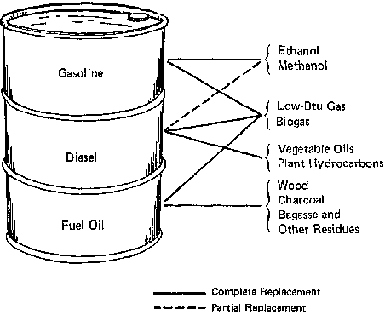
Figure 26. Oil substitution options.
Both these petroleum substitutes require large amounts of biomass. If 1 hectare of sugarcane is assumed to produce 3,600 liters of alcohol, this can provide the average driver with 10 liters daily (enough for 23,000 km per year at 6.4 km per liter); figures for current experimental producer gas powered automobiles in the Philippines are typically 8 km per kg of charcoal. An average 20,000 km driven annually would require 2.5 tons of charcoal, which would require upwards of 0.25 ha per year of trees, depending on species and location.
Middle Distillate
The middle distillate fraction can be replaced by alcohol fuels, but because of the compression-ignition character of diesel engines, this is not as simple as with spark-ignition engines. The simplest technique is to enhance the ignition of the alcohol fuel by adding about 20 percent of amyl nitrate, but this is a costly addition.
Another method of replacing part of the diesel fuel with alcohol is to aspirate alcohol into the air intake of the engine. Various devices that will do this are available commercially. Savings of diesel fuel of up to 35 percent are claimed, and the alcohol need not be pure, as it must be with gasohol; a 50:50 ethanol-water mixture (such as is obtained in the first distillation of yeast-fermented mash) is reported to work satisfactorily. Aspiration is reported to work particularly well in turbocharged diesel engines.
The most promising option for replacing diesel fuel with alcohol is by major engine modification, such as providing spark-assisted ignition and providing additional lubrication, which the diesel oil normally supplies. Some engine manufacturers are working on this.
An entirely different substitute that avoids these particular problems is light vegetable oil, such as soybean, sunflower, coconut, or peanut oil. Provided these oils are used in relatively warm conditions where their viscosity is low, they may replace large proportions of diesel fuel. Typically, an engine is fitted with a device that permits it to be started on the diesel fuel and then switched over to vegetable oil or to a diesel-vegetable oil mixture. The efficiency of combustion and fuel consumption is comparable to pure diesel. This must be carefully monitored, however, because residues can build up and cause the engine to seize.
In many countries engineers are experimenting with methods to overcome high viscosity of vegetable oils and their tendency to leave coke deposits on the injector nozzles and in the cylinders. One promising approach involves transesterification of the vegetable oil with methanol; the reaction mixture can have a viscosity closer to diesel oil. Noting that coconut oil or its simple derivatives have been used alone or in blends with diesel oil in engines ranging from 6 to 350 horsepower, Solly suggests that coconut oil is a practical and economic fuel in many areas of the Pacific at present. He states that a plant to produce 32 liters of coconut oil per hour from 50 kg of copra costs about $20,000.
In the Philippines the United Guardian company is planning a $12million plant to produce 10 million gallons per year of coconut methyl esters for partial use as diesel oil substitutes. The Luzon project is scheduled to begin operation in early 1984.
As with light distillate, huge areas of crops would be required to provide the vegetable oils for any appreciable quantity of diesel fuel substitute. The highest average yield of oilseed in large quantity is palm oil, with typical maximum yields under plantation conditions of around 4 tons per hectare. This is about 2,200 liters per hectare, which is somewhat less than the amount of fuel produced by a hectare of sugarcane. On the other hand, its extraction is less complicated and energy-consuming, because the oil has only to be pressed or solvent-extracted from the seed.
In an analysis of the potential for biomass fuels in vehicle engines, Jones and Chatterjee compared the investments required to replace 1,000 barrels per day of petroleum fuels with ethanol, methanol, or vehicle-mounted gasifiers. The total investment required for the gasifiers was only 10-20 percent of that required for the production of the alcohols.
Heavy Distillate
Heavy distillate is the fuel oil fraction of crude oil that is commonly burned to generate electricity and to power large ships. In developing countries, its main use is in electrical generation and industry. It can be replaced by a wide variety of solid fuels, including wood and charcoal; pyrolytic char; rice hulls (several generating plants in Thailand are fueled this way); coconut hulls; dried bagasse; and compressed and dried municipal garbage.
SOCIAL AND ECONOMIC EFFECTS
One concern in replacing crude oil fractions by fuels produced from renewable sources is that unless such efforts are carefully administered, the rich may divert resources from the poor. In Brazil, for example, as the demand for alcohol increased, land in Sao Paulo State had to be zoned to prevent food-producing land from being converted to grow sugarcane. Otherwise the cost of food would have increased because of increased transportation costs. The Brazilian federal government also limits land to be used for sugarcane production and plans to evaluate the potential for wood-to-alcohol production.
When the price of gasoline increases, the incentive to replace considerable quantities with alcohol will increase; however, grain alcohol prices will then also rise as farmers' costs rise. In effect, the competition of petroleum prices may cause grain prices to rise as more and more is used to make alcohol at increasing prices. Less grain will be available for export, and the price of the exports will be higher for the importing country. The price of food for grain-short countries will thus be higher.
It is argued that in the United States alcohol could be produced from cornstarch in corn that is now being fed to animals (mainly to fatten cattle) with the dried stillage residues fed to the animals after the alcohol has been produced from the starch. The other nutrients would remain, the material would be more fibrous, and the animals would produce leaner meat, which is healthier for the consumer. However, cattle gain weight, and thereby value, more quickly and profitably on whole corn than on stillage residues. Further, the stillage residues are contained in a volume of liquid 10-15 times the amount of alcohol produced, and the costs of handling, drying, and transporting this product are considerable. In Brazil the stillage residues (vina�a) from sugarcane fermentation are returned directly to the canefields to conserve nutrients and avoid the environmental effects of other types of disposal.
The potential saving of nutrients by feeding stillage residues to farm animals is not as relevant in developing countries as it is in the United States and Europe. There are few facilities in developing countries for intensive feeding of animals; in many countries, animals are scavengers, obtaining their food wherever it can be found. Scavenging animals do not produce nearly as much meat, milk, or eggs as their well-fed counterparts. Nevertheless, they do not compete for human food. Although poultry and dairy projects have been set up in many places, poultry and milking cows are least able to obtain the required level of nutrition from alcohol crop stillage residues, only small amounts of which can be used in their rations.
The Brazilian decision to develop eucalyptus as a future source of ethanol can have far-reaching effects; growing fuelwood plantations on poor soils will reduce the competition for food-producing land, help to reduce erosion, and support decentralized energy production, encouraging creation of industry in rural areas and stemming the growth of industrial areas.
GRAIN AND ALCOHOL FUEL
Although there are many ingenious ways in which increased demand for alcohols can be met from nonfood sources in temperate regions, most of these are still experimental or uneconomic compared with the proven, large-scale technology of grain alcohol production. However, large-scale ethanol production is likely to lead to a shortage of grain stocks at reasonable prices on the world market.
This situation may require regulation to limit the amount of grain that can be converted to alcohol and to encourage, by tax incentives or other means, alcohol production from nonfood sources. Regulation might also stimulate research into more efficient, cost-effective ways to make alcohol from nonfood sources, such as cellulose.
In the developing countries, the situation is more complex, since the elements essential for a successful alcohol fuel program-capital, land to produce biomass, management for the technology-are likely to be in relatively short supply. Use of personal automobiles, however, is proportionally much lower than in industrialized countries so that an alcohol production program can meet the fuel demand, and most developing countries have a climate suitable for year-round growth of biomass. There is a need to inventory and analyze possible sources of fuel alcohols in specific countries to determine the potential conflicts with food supplies and the economics of producing alcohol fuels. Policies can then be based on this kind of comprehensive analysis.
VEGETABLE OILS AND DIESEL FUEL
Potential conflicts also are possible in the use of vegetable oils for diesel fuel. Global production of all vegetable oils is estimated at about 40 million tons per year or roughly 10 kg per head for the world population. Much of the oil produced remains at the farm and village level for cooking, where it is an important source of vitamins and unsaturated fatty acids in the diet; the remainder enters the market mainly for industrial and pharmaceutical uses for hardening into margarine and soaps and for cooking oil.
World production is viewed as insufficient for current needs, though maldistribution creates periodic surpluses in some locations; prices are wildly unstable compared with other commodities. The most common oil, soybean oil, is currently in good supply, and with a market price of $400 per ton, or about 40 cents per liter. Production costs are linked to energy costs, so the price tends to rise with increasing energy costs. Yields per hectare are low compared with sugarcane or eucalyptus sources for alcohol fuels. The highest yielding oilseed is palm oil at around 4 tons per ha and coconut oil is second with a potential of up to 2 tons per ha. Other oilseeds are much lower yielding (Table 11), though they are annual crops, whereas the palms are perennial tree crops that require about 5 years to begin to bear fruit. The area required to support vegetable fuel oil production will thus tend to be greater than for the equivalent production of fuel alcohol.
It is therefore unlikely in the near future that a large portion of diesel consumption in developing countries will be replaced with vegetable oil. It is more likely that in unusual circumstances in industrialized countries-such as a temporary glut of vegetable oil-a certain amount of oil could be diverted to fuel use, particularly where lowered crude oil refinement might have led to a relatively high demand for diesel fuel compared with alcohol-substituted light distillate.
TABLE 11 Edible Vegetable Oil Production Worldwide
|
Commodity |
Productiona |
Yieldsb |
Price Range |
| |
(in millions of tons) |
(kg/ha) |
(dollars per ton) |
|
Palm oil |
6.474 |
1,000-4,000 |
364-431 |
|
Cottonseed |
3.349 |
140-190 |
368-496 |
|
Sunflower |
5.911 |
140-800 |
468-551 |
|
Soybean |
14.601 |
90-360 |
378-406 |
|
Peanut |
2.931 |
175-750 |
469-545 |
|
Rapeseed |
4.659 |
360-600 |
385 |
|
Coconut |
3.180 |
600-1,600 |
417-461 |
a USDA forecast for 1982/83.
b Yields
vary widely depending on crop variety, soil, and season; these figures have been
gathered from the literature as indications of the range of yield reported,
rather than definitive values.
SOURCE: Foreign Agriculture Circular, Oilseeds and Products FOP 1-83, Foreign Agricultural Service, United States Department of Agriculture, January 1983.
Heavy distillate-fuel oil substitution is likely to have less direct impact on food production, since biomass sources, wood, and charcoal can be grown on marginal land unsuitable for most food crops.
A number of arguments have been advanced to counter the position that increasing fuel alcohol consumption in developing countries will inevitably lead to reduced food availability, rising food prices, and the rich fueling vehicles at the expense of the food supply of the poor.
In many developing countries, particularly in Africa, food crop yields are very low. Among the contributory factors are lack of market incentives, poor management, lack of delivery systems for high-yielding varieties and the fertilizers and pesticides that comprise the packages of "green revolution" technology, and weak research and extension infrastructures. Yields could be doubled or even tripled, with adequate incentives - without additional costly fertilizer and pesticides-in properly managed rotation systems. With added technical inputs, yields comparable to those obtained anywhere can be achieved, though it is true that lowland tropical soils are difficult to manage under sustained high-yielding annual food crop production other than paddy rice. Nevertheless, the potential for considerable expansion of crop production exists without costly inputs and without expanding acreage. These arguments include the point that fuel alcohol production, suitably organized, could provide a critical stimulus for agriculture. Fuel alcohol production could provide incentives for increasing production and farmers' incomes, as well as for upgrading the infrastructure and availability of services to farmers. It could also supply fuel to support farm mechanization and the use of equipment for which petroleum fuels are unavailable or too costly. In this way, both food and fuel requirements could be met. Plantation crops such as oil palm could meet diesel fuel needs and increase farmers' incomes, while also serving to stabilize the humid tropical soils. Developing countries could thereby enhance their productivity and take advantage of their more favorable photosynthesis location.
BIOMASS PRODUCTION
In considering the production of biomass for conversion to alcohol fuel, potential impacts should be assessed on two levels: at the plantation level, in which the biomass for alcohol production utilizes most or all of the land area; or on a smaller scale in which crop production for alcohol is subsidiary to the production of other crops or to other kinds of agricultural enterprise. In each system there are economic and social considerations and direct environmental effects.
Plantation Production
Land Ownership
Among the first considerations that affect the production of biomass for alcohol fuels in the commercial plantation sphere are the availability and ownership of large tracts of land. The consequences of bringing land into use or converting it from other uses to biomass production will obviously have to be weighed in terms of capital required and of alternative capital uses. The question of whether to encourage the private sector to develop land for this purpose or to do it through government investment depends on the political philosophy of those making the decision and the social structure of the area in question. In this context, the traditional size of farms and the organization of land use and labor will be important factors.
Labor
Possibly the most important consideration in a decision to produce alcohol fuels on a large scale is the potential competition of alcohol substrates for arable land on which food would otherwise be produced, along with the labor and other inputs, such as fertilizer and pesticides, that would be diverted to this purpose from food production. Governments will be faced with the need to control land use where market forces, in response to the profitability of alcohol, might displace food production in favor of large mechanized plantations.
Economies of Scale
In certain cases there may be difficult trade-off decisions, for example, where fuel is needed to support agricultural development or where questions of scale arise-whether it would be more in the national interest to forego the large plantation in favor of dispersed, smallscale production for local use, even at the higher cost of less-efficient technology. A decision in favor of less economic, small-scale production may, however, imply a permanent subsidy, as Eckhaus has argued. More cost-effective technology will tend to edge out the less efficient.
Capital Demand
Like large-scale biomass production, large fermentation and distillation alcohol plants are more energy-efficient than small plants and more cost-effective in terms of liters of alcohol produced per unit of investment. However, this does not necessarily imply that large-scale plants are more desirable. The level of capital investment required, not only for the plant itself, but for crop land, housing, and other services for employees, may be in competition with other major national undertakings (a hydroelectric plant and dam, for example; or a major road to provide access to markets). High interest rates may make large loans uneconomic.
In this context, however, there may be other possibilities that would support the large plantation choice. In many tropical countries in the last decade, the high price of sugar on the world market encouraged the construction of sugar mills that, as the price of sugar fell, became unprofitable and were closed down. These could be valuable assets to alcohol production, in terms of both money and time that would otherwise be needed for construction. Smaller sugar mills no longer economic for sugar production may be economic for alcohol production. A 100,000 liter-per-day distillery requires only 60 tons of cane per hour, operating on a 24-hour basis.
Employment
The potential competition of large-scale alcohol production for foodproducing land, along with the employment or displacement of food-producing farmers, has been noted. There is, however, a wider employment consideration: the extent to which a large-scale alcohol plant will attract industries to the area by the presence of the plant and its fuel, and the opportunities for utilizing its by-products, as well as the extent to which it will create employment by supplying goods and services to the entire community. The location of the plant and the scale and range of its production (for example, simple alcohol plus animal feed by-products or a complex alcohol-based synthetic chemical industry) will have a profound effect on employment levels and on the kinds of jobs created. Choices about fuel alcohol production will also affect the composition and distribution of society, stemming or encouraging urban drift and concentrating or dispersing economic activity.
Environmental Consequences
Plantation crop production may affect the environment through the use of chemical fertilizer, including the effects of energy used to produce the fertilizer itself and other consequences of its production, such as thermal or chemical pollution. Secondary considerations are more subtle and long range. They include loss of topsoil-which regenerates very slowly - owing to production of crops. They also include the loss of wilderness, of uncultivated land that serves as both an aesthetic and genetic resource, where wild plants, animals, birds, and microorganisms can maintain the original (or less-modified) ecology of the area. This is important for natural regeneration of species and for providing a reservoir of genes that may subsequently be needed for disease control or other biological purposes.
At present, unused land is lying fallow and regaining some natural fertility; the grass or legume cover is slowing erosion, when compared with the net loss of topsoil on cropped land (which amounts to many tons per hectare per year, depending on the crop). Ingraham estimates that soil loss due to erosion in developing countries is nearly twice as great as his estimate of 27 tons per ha per year in the United States. Pimentel et al. calculated that it may take 100 years to replace one year's loss of topsoil from land on which cereal grains are raised in the United States, and it is evident that soil losses in the tropics will require much longer to replace because the more even climate breaks down rock into soil more slowly than in temperate zones where freezing is an important factor.
Small-Scale Production
Economic and Social Impact
Small-scale production involves less capital and land investment; however, more investment is required in the system for collecting feedstock to be processed at a central point (such as crop residues from a group of farmers to be used by a village or town distillery). Smallscale production may also increase the price of food or feed by diverting traditional foodstuffs for use in alcohol production. In part, the animal feed may be replaced by stillage residues; human food may be replaced through the use of cash obtained from the sale of alcohol. One result may be the increasing monetarization of the rural economy. The net effect may be greater in a subsistence rural area because of the disproportionately large infusion of cash even where relatively small amounts of alcohol are produced, as compared with cash brought into a pert-urban area by a large-scale production plant.
Environmental Impact
Small-scale production may have the effect of bringing marginal land into production. Logistically, recycling of waste may be simpler. It may also lead to fermentable uses of wastes and residues that otherwise are normally local environmental nuisances.
CONVERSION PROCESSES
Economic and Social Impact
The fermentation and distillation plant will create new employment profiles in the society, diverting skilled manpower to new areas, and depriving other areas of this resource. In both urban or rural situations it will generate new jobs or sources of income. The plant will also require a source of capital proportional to its scale. This capital, whether raised locally or abroad, will create secondary economic effects. Further, the licensing and regulation of dispersed production will necessitate its own bureaucracy, with the associated costs.
Environmental Effects
There are likely to be negligible direct emission pollution effects unless coal or oil is used to heat the still. Stillage residues will constitute the major pollutant, and their further use is an important consideration. They can contribute to thermal and water pollution; eutrophication of ponds and streams from the organic matter in the liquid effluent is a constant hazard. The solid residues can be used for animal feed but can create environmental problems if not properly handled. Hira et al. have examined the air, water, solid waste, and occupational safes, and health problems that might arise at biomass-based ethanol and methanol production facilities.
USE OF ALCOHOL FUELS
Large-Scale Utilization
Large-scale production and use of alcohol fuels in the short term will be for transportation rather than for industrial conversion. This use will place alcohol fuels in direct competition with petroleum fuels, and the impacts are likely to be beneficial. They will include additional employment and diminished need for imported oil in nonproducing countries. In those countries that produce oil, widespread use of alcohol fuel will free petroleum products for export or for processing as industrial feedstocks.
Direct environmental factors are also likely to be favorable. The emission characteristics from internal combustion engines are given by Pullman.
The main environmental impact of large-scale utilization of alcohol fuels is likely to be an increase in aldehydes in the atmosphere, but this should be more than offset by a reduction in other emitted pollutants.
With respect to direct pollution by the fuels themselves, spilled alcohol is likely to be much less hazardous than oil or gasoline spills in all but the most extreme cases; alcohol spills at sea could affect on marine life more severely than petroleum because alcohol is miscible with water.
Small-Scale Utilization
Small-scale uses include powering farm equipment and fishing boats, heating and cooking, and small-scale power generation.
The economic and social impacts are likely to be varied and
farreaching. In areas where these technologies are used, they may lead to
monetary economics as opposed to barter, which, in turn, will have an effect in
changing the role of women by reducing the need to gather fuel. It may also
change the roles of the family members and villagers who process food and feed
and who thresh and mill grain or perform other tasks. To the extent that
small-scale use of alcohol involves income generation and income use, it has the
potential for changing many of the traditional home and village leisure and
cultural activities. Availability of alcohol fuels opens up possibilities for
cooperative uses of electricity to power radios or television. This can increase
political involvement through greater awareness of local, national, and world
events. On the negative side, there will also be increased possibilities for
abuse of alcohol-intoxication, poisoning, and increased fire hazards.
Many
factors will contribute to the local and national impact of alcohol fuel
technology. The way in which the technology is used should be planned with
considerable awareness of the consequences.
REFERENCES AND SELECTED READINGS
American Society of Agricultural Engineers. 1982. Vegetable Oil Fuels. ASAE, St. Joseph, Michigan, USA.
Anonymous. 1983. United Guardian to build coconut-to-diesel and chemicals plant in Luzon. Synfuel February 4:7.
Barzelay, M., and Pearson, S.R. 1982. The efficiency of producing alcohol for energy in Brazil. Economic Development and Cultural Change 31:131-144.
Branco, G.M., and de Toledo, M.P. 1980. Brazilian evolution of alcohol on automotive use and its air pollution concerns. In: IV International Symposium or' Alcohol Fuels Technology. Guaruja, Sao Paulo, Brazil.
Brown, L.R. 1980. Food or fuel: new competition for the world's cropland. Interciencia 5(6):365-372.
Caron, D. 1980. Social impacts associated with the implementation of Brazil's proalcohol program. In: IV International Symposium on Alcohol Fuels Technology. Guaruja, Sao Paulo, Brazil.
Eckhaus, R. 1977. Appropriate Technologies for Developing Countries. Board on Science and Technology for International Development, National Research Council, Washington, D.C., USA.
Hira, A.U., et al. 1983. Alcohol fuels from biomass. Environmental Science and Technology 17(5):202A-213A.
Ingraham, E.W. 1975. A Query into the Quarter Century. Wright-Ingraham Institute, Colorado Springs, Colorado, USA.
Jones, J.L., and Chatterjee, A.K. 1980. Preliminary analysis of the potential for developing nations to use biomass fuels in vehicle engines. Pp. 689-704 in: Thermal Conversion of Solid Wastes and Biomass, edited by J.L.Jones and S.P. Radding. American Chemical Society, Washington, D.C., USA.
Kovarik, B. 1981. Fuel Alcohol: Energy and Environment in a Hungry World. Earthscan Publication, London, England.
La Rovere, E.L. 1980. Consequences of the Brazilian alcohol plan. Ecodevelopment News 13: 14-22.
Madeley, J. 1981. Ethanol production runs into environmental difficulties. Mazingira 5(3) :42-51.
Nemir, A.S. 1980. Possible impact on human food supplies as a result of worldwide alcohol production from sugar crops. Sugar Journal 42(12):13-16.
Pelin, E.R. 1980. Impact of Brazil's proalcohol on land prices and crop substitutions. In: IV International Symposium on Alcohol Fuels Technology. Guaruja, Sao Paulo, Brazil.
Pimentel, D., et al. 1981. Environmental and Social Costs of Biomass Energy. Cornell University Agricultural Experiment Station, New York State College of Agriculture and Life Sciences, Ithaca, New York, USA.
Pimentel, D., Terhune, E.C., Dyson-Hudson, R., Rochereau, S., Samis, P., Smith, E. Denman, D., Reifschneider, D., and Shepard, M. 1976. Land degradation: effect on food and energy resources: Science 194:149-155.
Pullman, J.B. 1979. Alcohol Fuel Impacts upon Energy Conservation and Air Quality Paper prepared for Specialty Conference on Transportation and the 1977 Clean Air Act Amendments. American Society of Civil Engineers, Urban Transportation Division, San Francisco, California, USA.
Saint, W.S. 1982. Farming for energy: social options under Brazil's National Alcoho Programme. World Development 10(3):223-238.
Solly, R.K. 1982. Utilization of coconut oil as a fuel for petroleum diesel and kerosense substitution. University of the South Pacific, P.O. Box 1168, Suva, Fiji.
Webb, S.B. 1982. Social cost of alcohol-fuel subsidies. Order number DE 8202 1187. NTIS, Springfield, Virginia, USA.
|
| ||||||||||||||||||||||||||||||||||||||||||||||||||||
6 Conclusions and Recommendations
CONCLUSIONS
The potential for alcohol fuels in developing countries must be considered as part of a general biomass-use strategy that is, in turn, subverted by a broader energy supply and demand strategy. When sugarcane is the feedstock, for example, the changing world demand for sweeteners, as well as the possible need for diversification or integrated crop use, should be studied. The final strategies will necessarily reflect the needs, values, and conditions of the individual nations, regions, and societies that develop them.
Technical Aspects of Alcohol Fuel Production and Use
1. The technical capability exists to substitute the lower alcohols, methanol and ethanol, completely or in substantial part for all types of liquid fuels currently derived from petroleum.
2. The potential for substituting alcohol fuels for those based on petroleum is especially significant in transportation. Gasoline engines are currently available in some countries that may be operated efficiently on pure alcohol fuels. Conventional gasoline engines can operate satisfactorily on mixtures of alcohol and gasoline; in most cases, this can be done without any modification of the engine or fuel system. For diesel engines; available technology appears to permit the substitution of part, but not all, of the petroleum-based fuel with alcohol.
3. It is technically feasible to substitute alcohols for petroleum based fuels in all stationary applications such as heating, lighting cooking, and power generation. For these applications, however, some modification of currently available equipment will generally be required.
4. The technical capability exists in almost all countries to produce ethanol from a broad spectrum of renewable biomass resources, specifically from many varieties of plants and from agricultural, food processing, and urban wastes. The components in these raw material' from which ethanol may be produced are sugars, starches, cellulose, and hemicelluloses.
Technology for converting sugars to ethanol is well established and widely available for use on both large and medium scales. Commercial conversion of starches from cereal grains to alcohol is also well established and widely practiced. The starchy raw materials most prevalent in developing countries, such as cassava, taro, sago, yams, and sweet potatoes, differ somewhat from cereal grains, and there is little experience in their conversion on a commercial scale. The technology for converting cellulose to ethanol is either relatively new or limited in scope. Large-scale application is unlikely for 5 to 10 years.
5. The technical capability to produce methanol from biomass, though demonstrated, is not well developed. Current technology for methanol is based on fossil sources such as natural gas, coal, lignite, or peat. Gasification of biomass to produce methanol will require extensive commitments for land and capital.
6. A variety of technology developments now in progress may markedly affect the future viability of schemes for producing alcohol fuels from renewable resources. Significant among these are:
· New techniques for raw material preparation, biological conversion, and product separation
· Development of "appropriate intermediate" technology approaches, permitting the production of alcohol fuels on a modest scale from locally available resources to meet local needs
· Opportunities for the exploitation of integrated systems; for example, coproduction of food or feed and fuels, or the utilization of wastes from one process as the raw material for another (such as the production of biogas from the liquid and solid wastes from ethanol production)
7. Alcohol fuels cannot substitute for the entire range of products from petroleum refining, the diesel fuel fraction is the most difficult to replace. Thus the ability to reduce oil importation may depend in part on the ability to satisfy requirements for diesel fuel through other alternative fuels, such as vegetable oils.
8. In many situations, alcohol fuels may be the most convenient alternative to gasoline, but on a small scale there may be other energy sources that require less capital, organization, and management. These could include low-Btu gas from biomass gasification to fuel internal combustion engines, direct combustion of biomass to power steam engines, or mini-hydro-powered electric motors. These parallel technologies will influence the use of alcohol fuels and should be considered as part of the national and local energy strategies.
Biomass Availability
The availability of large amounts of biomass in many developing countries or of unused land capable of producing it suggests the possibility of substituting biomass-based alcohols for petroleum fuels in these areas. In evaluating the prospects for such substitutions, it is imperative to assess the quantity of biomass actually available and its seasonally and then to relate this both to the area's overall liquid fuel requirements and to the needs of specific use sectors (public and private transportation, shipping, and industry) and regions (rural and urban areas, for example).
Economic Implications
1. The economic consequences that can ensue from adopting biomass-based alcohol fuels must be carefully analyzed; for example, positive indirect-economic factors associated with the replacement of imported petroleum by a home-based fuel industry as opposed to the possible negative effects on food prices and energy costs in different sectors.
2. Economic consequences will also vary, depending on the raw material selected and the utilization strategy employed. For example, the partial use of alcohols as chemical feedstocks or for export will have different local impacts than a pure fuel substitution policy.
Environmental Implications
1. The environmental implications of a biomass-based alcohol fuel strategy are far-reaching but little understood. They range from the extremely damaging, such as deforestation to produce the wood needed for a cellulose-based alcohol industry, to beneficial, such as improved forest management practices leading to higher productivity with better ecological balance and forest "health." The energy plantation approach to biomass production raises questions about vulnerability to pests, water requirements, and pollution by runoff.
2. Processes for converting biomass to alcohols can generate substantial amounts of liquid and, in some cases, solid wastes. Their utilization or disposal without environmental injury must be accounted for in the overall plan.
3. The substitution of alcohols for petroleum-based vehicle fuels can effect air quality. Although evidence suggests that the overall results may be beneficial, experience with alcohol fuels is too limited to permit unequivocal conclusions. Again, the climatic, industrial, and social conditions in a given area must be considered when evaluating the potential effects of widespread alcohol fuel use.
Social Impacts
The most critical social effects are likely to result from the way in which production of alcohol fuels benefits those involved. It is frequently assumed that the urban elite will benefit at the expense of the poor when good land is put into production of grain, sugarcane, or cassava for alcohol. It is, however, also possible that a fuel alcohol program could provide rural jobs and a stimulus for improving agriculture and rural amenities, with farmers' incomes rising and production increased as a result. In this case, social inequity might be reduced through decentralized industrialization of the rural areas as they, rather than urban centers, become the source of development opportunity. The adoption of a biomass-based alcohol fuel policy will have other social impacts, depending on which of these two extremes tends to predominate, and will particularly affect land use and ownership.
Time Scale
Depending to some extent on the feedstock used, a substantial interval will follow any decision to implement a biomass-based alcohol fuel program before results will be observed. Although alcohol from a distillery annexed to an existing sugar mill could be produced fairly quickly, such a program requires the integration of many segments of the economy that are not regularly coordinated: agricultural production, fuel production and marketing, and possibly, chemical manufacture.
RECOMMENDATIONS
To enhance the overall potential for biomass-based alcohol fuels and the prospects for specific projects, the following recommendations are offered:
1. Developing countries must develop or expand their own capabilities to monitor and audit their energy needs, assess their biomass resources, weigh competing requirements, define fuel markets, and evaluate the technologies needed to convert local resources into fuel to meet local needs. These countries should also identify and evaluate, to the extent possible, all potential impacts-economic, environmental, and social-arising from the implementation of a biomass-based alcohol fuel strategy.
2. The development of commercial processes for converting cellulose and hemicelluloses to ethanol should be vigorously pursued. Technology for converting noncereal starches to ethanol should be demonstrated on a scale sufficient to ensure successful commercial application.
3. Research on fuels and chemicals from lignin and other biomass components should be intensified.
4. Existing technology for methanol production from biomass should be reviewed and evaluated in the context of some of the more promising biomass sources in developing countries.
5. Simplified technology and equipment suited to needs of individual developing countries should be designed and tested. Special emphasis should be given to intermediate-scale production units for the conversion of locally available resources to meet local fuel needs.
6. Greater research attention should be given to the prospects for integrated systems approaches to biomass-based fuel production.
7. Research on raising local biomass yields to levels approaching world averages should also be encouraged. Consideration should be given to plant varieties better suited to fuel production. Where monoculture is anticipated, resistance to plant pathogens must be examined. The use of natural fertilizers, including recycling wastes from the conversion step and similar opportunities for reducing energy consumption, must be given research emphasis.
8. Evaluation of vehicle engines specifically designed for alcohol fuels should continue. In this context, the substitution of alcohols for diesel fuels requires much more development than alcohol substitutes for gasoline.
|
| ||||||||||||||||||||||||||||||||||||||||||||||||||||
Advisory Committee on Technology Innovation
HUGH POPENOE, Director, International Programs in Agriculture, University of Florida, Gainesville, Florida, Chairman
Members
WILLIAM BRADLEY, Consultant, New Hope, Pennsylvania
HAROLD DREGNE, Director, International Center for Arid and Semi-Arid Land Studies, Texas Tech University, Lubbock, Texas (member through 1981)
ELMER L.GADEN,JR., Department of Chemical Engineering, University of Virginia, Charlottesville, Virginia
CARL N.HODGES, Director, Environmental Research Laboratory, Tucson, Arizona
CYRUS MCKELL, Native Plants, Inc., Salt Lake City, Utah
FRAN�OlS MERGEN, Pinchot Professor of Forestry, School of Forestry and Environmental Studies, Yale University, New Haven, Connecticut (member through 1982)
DONALD L. PLUCKNETT, Consultative Group on International Agricultural Research, Washington, D.C.
THEODORE SUDIA, Deputy Science Advisor to the Secretary of Interior, Department of Interior, Washington, D.C.
|
| ||||||||||||||||||||||||||||||||||||||||||||||||||||
Board on Science and Technology for International Development
GEORGE BUGLIARELLO, President, Polytechnic Institute of New York, Brooklyn, New York, Chairman
Members
SAMUEL P. ASPER, Educational Commission for Foreign Medical Graduates, Philadelphia, Pennsylvania
DAVID BELL, Department of Population Sciences, Harvard School of Public Health, Boston, Massachusetts
LEONARD BERRY, Professor, Graduate School of Geography, Clark University, Worcester, Massachusetts
ERNEST J. BRISKEY, Dean, School of Agriculture, Oregon State University, Corvallis, Oregon
HARRISON S. BROWN, Director, Resources Systems Institute, East-West Center, Honolulu, Hawaii
ROBERT H. BURRIS, Department of Biochemistry, University of Wisconsin, Madison, Wisconsin
CLAUDIA JEAN CARR, Associate Professor, Conservation and Resource Studies, University of California at Berkeley, Berkeley, California
NATE FIELDS, Director, Developing Markets, Control Data Corporation, Minneapolis, Minnesota
ROLAND J. FUCHS, Chairman, Department of Geography, University of Hawaii at Manoa, Honolulu, Hawaii
ELMER L. CADEN, JR., Department of Chemical Engineering, University of Virginia, Charlottesville, Virginia
JOHN HOWARD GIBBONS, Director, U.S. Congress, Office of Technology Assessment, Washington, D.C.
N. BRUCE HANNAY, Foreign Secretary, National Academy of Engineering, Washington, D.C.
WILLIAM HUGHES, Director, Engineering Energy Laboratory, Oklahoma State University, Stillwater, Oklahoma
WILLIAM A. W. KREBS, Vice President, Arthur D. Little, Inc., Acorn Park, Cambridge, Massachusetts
GEORGE I. LYTHCOTT, University of Wisconsin, School of Medicine, Madison, Wisconsin
JANICE E. PERLMAN, Executive Director, Committee for a New New York, New York City Partnership, New York, New York
HUGH POPENOE, Director, International Programs in Agriculture, University of Florida, Gainesville, Florida
FREDERICK C. ROBBINS, President, Institute of Medicine, National Academy of Sciences, Washington, D.C.
WALTER A. ROSENBLITH, Foreign Secretary, National Academy of Sciences, Washington, D.C.
FREDERICK SEITZ, President Emeritus, The Rockefeller University, New York, New York
RALPH HERBERT SMUCKLER, Dean of International Studies and Programs, Michigan State University, East Lansing, Michigan
GILBERT F. WHITE, Institute of Behavioral Science, University of Colorado, Boulder, Colorado
BILL C. WRIGHT, Assistant Dean for International Programs, Oklahoma State University, Stillwater, Oklahoma
JOHN C. HURLEY, Director
MICHAEL C. C. McDONALD DOW, Associate Director/Studies
MICHAEL P. GREENE, Associate Director/Research Grants