 |
| ||||||||||||||||||||||||||||||||||||||||||||||||||||||||||||||||||||||||||||||||||||||||||||||||||||||||


|
| ||||||||||||||||||||||||||||||||||||||||||||||||||||||||||||||||||||||||||||||||||||||||||||||||||||||||
Information
Peace Corps
Information Collection & Exchange
R0089
Peace Corps' Information Collection & Exchange (ICE) was established so that the strategies and technologies developed by Peace Corps Volunteers, their co-workers, and their counterparts could be made available to the wide range of development organization and individual workers who might find them useful. Training guides, curricula, lesson plans, project reports, manuals and other Peace Corps-generated materials developed in the field are collected and reviewed. Some are reprinted "as is"; others provide a source of field based information for the production of manuals or for research in particular program areas. Materials that you submit to the Information Collection & Exchange thus become part of the Peace Corps' larger contribution to development.
Information about ICE publications and services is available through:
|
The Peace Corps Internet Web Site address: https://www.peacecorps.gov Please note the new Peace Corps Mailing Address from July 1998 on is: ICE/ Peace Corps |
Add your experience to the ICE Resource Center. Send materials that you've prepared so that we can share them with others working in the development field. Your technical insights serve as the basis for the generation of ICE manuals, reprints and resource packets, and also ensure that ICE is providing the most updated, innovative problem-solving techniques and information available to you and your fellow development workers.
United States
Environmental Protection Agency
Office of Pesticide
Programs (TS-766C)
Washington DC 20460
April 1985
EPA
Reprinted with Permission by Peace Corps
Information
Collection & Exchange
August 1994
R0089
|
| ||||||||||||||||||||||||||||||||||||||||||||||||||||||||||||||||||||||||||||||||||||||||||||||||||||||||
Acknowledgements
This publication was funded by the U.S. Environment Protection Agency through an interagency agreement with the U.S. Department of Agriculture Extension Service and was produced by the Florida Cooperative Extension Service at the University of Florida in Gainesville, Florida. Use of this information should conform with U.S. EPA and USDA policy and procedures.
|
Authors: |
Bonnie Poli, Coordinator |
| |
Farmworker Pesticide Safety Program |
| |
Sam S. Fluker, Professor |
| |
Pesticide Information Coordinator |
|
Illustrator: |
Jane Medley |
|
| ||||||||||||||||||||||||||||||||||||||||||||||||||||||||||||||||||||||||||||||||||||||||||||||||||||||||
Reconocimientos
Los fondos para esta publicaci�n vinieron de la Agencia para la Protecci�n del Ambiente del govierno federal de los Estados Unidos por medio de un acuerdo entre agencias con el Departamento de Servicio para la Extensi�n de la Agricultura, la publicaci�n fue producida por el Servicio de Extensi�n Cooperativa de la Florida en la Universidad de la Florida en Gainesville, Florida. El uso de esta informaci�n cumple con la pol�tica y los procedimientos de la U.S. EPA y el USDA.
|
Autores: |
Bonnie Poli, Coordinadora |
| |
Programa para el Uso Seguro de Pesticidas para los Trabajadores del Campo |
|
|
Sam S. Fluker, Profesor |
| |
Coordinador de informaci�n de Pesticidas |
|
Dise�o Gr�fico: |
Jane Medley |
|
| ||||||||||||||||||||||||||||||||||||||||||||||||||||||||||||||||||||||||||||||||||||||||||||||||||||||||
Preface
This manual was developed as a supplemental guide to the Farmworkers Pesticide Safety Training slide-tape program. The manual provides basic pesticide safety information for farmworkers including: pesticide label information, protective clothing, recognizing signs and symptoms of pesticide poisoning and first aid information.
For additional copies of this manual or information on the Pesticide Safety slide-tape program contact:
Occupational Safety Branch (H7506C)
Office Of Pesticide
Programs
U.S. Environmental Protection Agency
401 M Street,
SW
Washington, DC. 20460
(703) 557-7666

Pesticides are used to kill pests
Pesticides are used to kill pests. Because pesticides are poisonous, they can also injure and kill people. Understanding about pesticides and how they can harm you and others can help prevent pesticide accidents.
The following pages will cover safety rules and information which will help you be safe from pesticide accidents at work and at home.

Know the three paths poisons use to
enter the body
Know the three paths poisons use to enter the body. You can breath in pesticide fumes or dust. Your skin will absorb pesticides and you can accidentally swallow pesticides.
|
| ||||||||||||||||||||||||||||||||||||||||||||||||||||||||||||||||||||||||||||||||||||||||||||||||||||||||
Prefacio
Este manual se desarroll� como gu�a adicional al programa de diapositivos de Entrenamiento para el Uso Seguro de Pesticidas. El manual provee informaci�n b�sica para el uso seguro de pesticidas para los trabajadores del campo, incluyendo informaci�n sobre las etiquetas de los pesticidas, sobre la ropa protectora, sobre c�mo reconocer las se�as y los s�ntomas de envenenamiento por pesticidas y sobre los primeros auxilios.
Para adquirir copias adicionales de este manual o del programa de diapositivos escriba o llame a:
Occupational Safety Branch (H7506C)
Office Of Pesticide
Programs
U.S. Environmental Protection Agency
401 M Street,
SW
Washington, DC. 20460
(703) 557-7666
Los pesticidas (venenos) se usan para
matar a los insectos malos o da�inos, para las cosechas
Los pesticidas (venenos) se usan para matar a los insectos malos o da�inos, para las cosechas. Tambi�n estos les pueden hacer da�o a usted o matarle. Teniendo conocimientos acerca de los pesticidas y como ellos pueden hacerle da�o a usted y a otras personas, usted puede evitar, o prevenir accidentes con ellos.
Las siguientes paginas cubrir�n informaci�n de c�mo seguir las reglas para estar seguro de que usted no tenga peligro cuando use los pesticidas (venenos) ya sea en su casa o en el trabajo.
Conozca las tres (3) avenidas por
donde los pesticidas pueden entrar en su cuerpo, o como su cuerpo puede
absorberlos
Conozca las tres (3) avenidas por donde los pesticidas pueden entrar en su cuerpo, o como su cuerpo puede absorberlos. Usted puede inhalar el pesticida en forma de gases o en polvo. Su piel tambien puede absorverlo o usted puede tragarlo accidentalmente.
|
| ||||||||||||||||||||||||||||||||||||||||||||||||||||||||||||||||||||||||||||||||||||||||||||||||||||||||
Signs and symptoms of pesticide poisoning

Signs and symptoms of pesticide
poisoning
The most common signs of poisoning are sleepiness, headache, dizziness, a lot of sweating, not seeing clearly, throwing up, muscle pain, stomach ache and cramps.
If you have been poisoned by a pesticide you will normally have three or more of the above signs. The signs will usually occur while you are at work or later that same day.
|
| ||||||||||||||||||||||||||||||||||||||||||||||||||||||||||||||||||||||||||||||||||||||||||||||||||||||||
Se�ales de envenenamiento con pesticidas
Se�ales de envenenamiento con
pesticidas
Las se�ales mas comunes que usted puede reconocer en el envenenamiento de pesticida son las siguientes: si se siente con mucho sue�o, tiene dolor de cabeza muy fuerte, se siente mareado, suda mucho, tiene la vista nublada, empieza a vomitar, tiene calambre y dolores musculares y dolor de est�mago con calambres.
Si por casualidad usted se envenena con pesticida, normalmente usted tendra tres (3) o m�s de las se�ales anteriormente mencionadas. Estas se�ales aparecer�n cuando usted est� en el trabajo o m�s tarde ese mismo dia.
|
| ||||||||||||||||||||||||||||||||||||||||||||||||||||||||||||||||||||||||||||||||||||||||||||||||||||||||
Very serious symptoms

Very serious symptoms
Trouble breathing, drooling from the mouth and nose, the pupil in the center of the eye is very small and passing out are signs of a very serious poisoning, that could cause death. If a person has signs like these get medical help immediately.
|
| ||||||||||||||||||||||||||||||||||||||||||||||||||||||||||||||||||||||||||||||||||||||||||||||||||||||||
Sintomas peligrosos
Sintomas peligrosos
Si Ud. no puede respirar bien, est� babeando por la boca y la nariz, las pupilas en el medio de los ojos se ponen muy peque�as y Ud. se desmaya, �stos son s�ntomas que pueden causar la muerte. Si Ud. ve a alguna persona con estos s�ntomas busque ayuda m�dica inmediatamente, ya sea en la oficina de un m�dico o el sal�n de emergencia en el hospital.
|
| ||||||||||||||||||||||||||||||||||||||||||||||||||||||||||||||||||||||||||||||||||||||||||||||||||||||||
First aid: What to do in case of an accident

EXPOSED TO PESTICIDE SPRAY OR DRIFT.
While at work You could be poisoned by getting pesticide un Your skin.
Pesticides could drift or accidentally be sprayed on you.

Stop pesticide poisoning by rinsing
the pesticide off your skin and clothes. Use a nearby water supply such as a
lake, field tank or irrigation ditch.

As soon as possible, take a shower
with soap and water. Remember to shampoo your hair.

After showering, put on clean clothes
and wash the sprayed clothes before wearing them again.

OVERCOME BY PESTICIDE FUMES. Inhaling
the fumes of some pesticides can cause pesticide poisoning.

If a person is overcome by pesticide
fumes get the victim in fresh air. If you cannot do this in one breath, then you
will need breathing equipment. Don't become the second victim.

Check the victim for breathing. If
the victim is not breathing give artificial respiration. If you are unable to
give artificial respiration call the emergency medical service or find help.

If you gave artificial respiration to
the victim call the doctor as soon as the victim is breathing easy again.

SWALLOWING A PESTICIDE. Swallowing a
pesticide can cause poisoning or death. If a pesticide is swallowed, give the
victim water to drink, if conscious. This will dilute the poison.

If you have the label of the
pesticide and can get to a telephone immediately, call the doctor. Generally the
doctor will not be able to give directions over the phone unless he knows what
has poisoned the victim.

If you are unable to get medical help
immediately, follow the first aid directions on the label. Then take the victim
to an emergency medical facility. Some labels do not have first aid information,
in this case you can only take the victim to medical help.

PESTICIDES IN YOUR EYES. Eye damage
can happen in a few minutes from some types of pesticide. Eye membranes absorb
pesticides faster than any other part of the body.

Rinse your eyes immediately with
clean water or an eye wash from a first aid kit for 15 minutes. Never use eye
drops such as Visine or Murine.

Go see a doctor if eye irritation
occurs.

Some pesticides can cause skin rashes
or burn your skin
Some pesticides can cause skin rashes or burn your skin. Your skin could become red, itch and water blisters may form. Eye redness and soreness can be caused by splashing a pesticide in your eye or rubbing your eyes with a sleeve or hand that has pesticide on it.
Skin rashes and eye irritation can become serious injuries and should be treated by a doctor,

If you have signs of pesticide
poisoning, you should get medical help
If you have signs of pesticide poisoning, you should get medical help. Take the pesticide label of name on the label to the doctor, health clinic or emergency room.
|
| ||||||||||||||||||||||||||||||||||||||||||||||||||||||||||||||||||||||||||||||||||||||||||||||||||||||||
Primeros auxilios: Que puede hacer en caso de un accidente
EXPUESTO AL ROCIO O A LA CORRIENTE
DEL PESTICIDA. Mientras est� trabajando usted podr�a ser envenenado con el
pesticida por la piel. Usted puede envenenarse con un roc�o accidental o si le
cae pesticida arrastrado por una corriente de viento.
Para detener el envenenamiento del
pesticida, enju�guese la piel y la ropa. Use cualquier agua cercana; por
ejemplo, un lago. un tanque de campo, o una zanja de irrigaci�n.
Tan pronto sea posible, b��ese con
jab�n y agua.
Despu�s del ba�o. p�ngase ropa limpia
y lave la ropa rociada con pesticida antes de usarla nuevamente.
VICTIMA DE LOS VAPORES DEL PESTICIDA.
Inhalar los vapores de algunos pesticidas puede causar envenenamiento.
Si una persona es apoderada por los
vapores del pesticida, lleve a la v�ctima al aire libre. Si no puede hacer esto
con un solo respiro entonces necesitar� el equipo respirador. No sea usted otra
v�ctima.
Revise la respiraci�n de la v�ctima.
Si no esta respirando, debe aplicar respiraci�n artificial. Si usted no puede
aplicar respiraci�n artificial. llame al servicio medico de emergencia
Si usted ha aplicado respiraci�n
artificial, llame al m�dico tan pronto la v�ctima este respirando f�cilmente.
AL TRAGAR UN PESTICIDA. Tragar un
pesticida puede causar envenenamiento o muerte. Si traga un pesticida, dele a la
v�ctima agua para beber, si est� consciente. Esto diluir� el veneno.
Si tiene la etiqueta del pesticida y
puede utilizar un tel�fono inmediatamente, llame al m�dico. Generalmente el
m�dico no podr� dar instrucciones por tel�fono sin saber qu� ha envenenado a la
v�ctima.
Si no puede obtener ayuda m�dica
inmediatamente siga las medidas de primeros auxilios en la etiqueta. Despu�s
lleve a la v�ctima a un centro m�dico de emergencia Algunas etiquetas no indican
medidas de primeros auxilios: en tal caso solamente se puede llevar a la v�ctima
a ayuda m�dica.
PESTICIDAS EN LOS OJOS. Algunos
pesticidas pueden causar da�o a los ojos en solamente pocos minutos. Las
membranas de los ojos absorben los pesticidas m�s r�pidamente que ninguna otra
parte del cuerpo.
Enjuague los ojos inmediatamente con
agua limpia o con un enjuague de un estuche de primeros auxilios por 15 minutos.
Nunca use gotas para los ojos como Visine or Murine.
Vea a un m�dico si tiene irritaci�n
en el ojo
Algunos pesticidas causan erupci�n de
la piel, o queman su piel
Algunos pesticidas causan erupci�n de la piel, o queman su piel. La piel se le puede poner roja, le puede dar mucha picaz�n, o se le pueden formar ampollas de agua. Los ojos se les pueden poner rojos si le cae el pesticida en los ojos o si Ud. se pasa las manos o la manga que tienen pesticidas por los ojos.
La erupci�n de la piel, o la irritaci�n de los ojos puede ser muy seria, por eso Ud. debe de irse a tratar con un m�dico inmediatamente.
Si Ud. tiene algunos de los s�ntomas
de estar envenenado con alg�n pesticida, Ud. debe buscar ayuda m�dica enseguida
Si Ud. tiene algunos de los s�ntomas de estar envenenado con alg�n pesticida, Ud. debe buscar ayuda m�dica enseguida. Lleve la etiqueta o el nombre del pesticida al m�dico a la cl�nica o al sol�n de emergencia.
|
| ||||||||||||||||||||||||||||||||||||||||||||||||||||||||||||||||||||||||||||||||||||||||||||||||||||||||
Residues
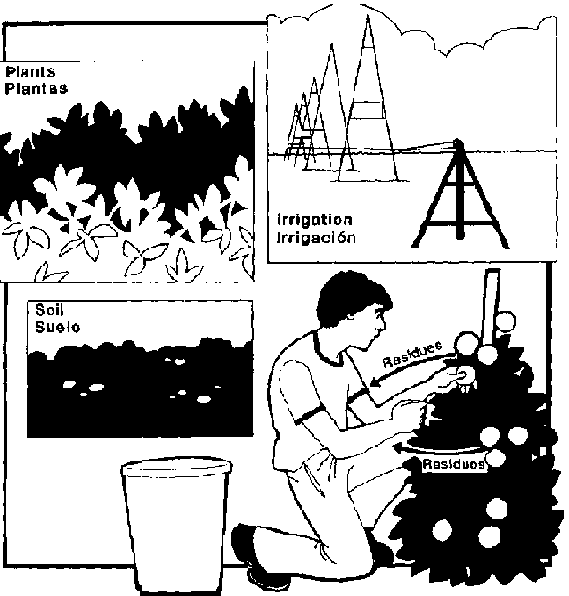
Residues
Pesticide residues are small amounts of pesticide that can remain in fields after the fields have been treated with a pesticide. Pesticide residues can be on plants, in soil and sometimes on irrigation systems used to apply pesticides.
|
| ||||||||||||||||||||||||||||||||||||||||||||||||||||||||||||||||||||||||||||||||||||||||||||||||||||||||
Residuos
Residuos
Los residuos de los pesticidas son cantidades muy peque�as de pesticidas que pueden permanecer en el campo despu�s que el campo ha sido rociado con los pesticidas, Residuos de pesticidas se pueden encontrar en las plantas, en las frutas, en los vegetales, en la tierra y algunas veces estas part�culas se encuentran en el sistema de irrigaci�n.
|
| ||||||||||||||||||||||||||||||||||||||||||||||||||||||||||||||||||||||||||||||||||||||||||||||||||||||||
Work clothes

Work clothes
Pesticide residues can not always be seen so you should cover as much of your skin as possible. This will help prevent skin rashes or poisoning. Wear long sleeve shirts and long legged pants, a hat and cover your feet with socks and shoes or boots, and gloves that can be properly cleaned.
|
| ||||||||||||||||||||||||||||||||||||||||||||||||||||||||||||||||||||||||||||||||||||||||||||||||||||||||
Ropa de trabajo
Ropa de trabajo
Los residuos de los pesticidas no siempre se pueden ver, asi que Ud. debe de protegerse con ropa apropiada para el trabajo. Esto le ayudara a prevenir erupci�n en la piel. Cubra todas las partes de su piel que Ud. pueda. Est� seguro de usar camisa de mangas largas y pantalones largos, un sombrero y c�brase los pies con calcetines, zapatos o botas, y guantes que se puedan limpiar apropiadamente.
|
| ||||||||||||||||||||||||||||||||||||||||||||||||||||||||||||||||||||||||||||||||||||||||||||||||||||||||
Do's: Safe pesticide practices

Cover your skin when working-long
sleeves, pants, hat, socks & shoes or boots, and gloves that can be properly
cleaned.

Wash hands and face with soap and
water before eating, drinking, smoking or going to the bathroom.
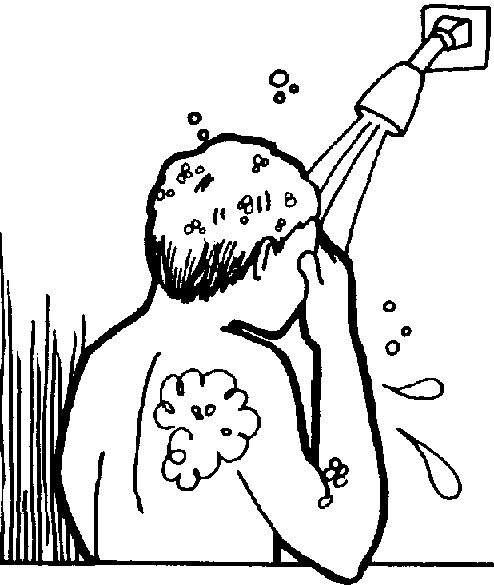
Wash with soap and water and shampoo
your hair after work each day.

Wash fruits and vegetables from the
field before eating.

Cover your children's skin if they
are with you at work.

Put pesticides up in an area safe
from children.

Wash your work clothes with detergent
and hot water before wearing them again.

Wash your clothes separately
from other laundry.

Wash your hands and arms after
putting work clothes into the washing
machine.
|
| ||||||||||||||||||||||||||||||||||||||||||||||||||||||||||||||||||||||||||||||||||||||||||||||||||||||||
Haga lo siguiente
Est� seguro que toda su piel est�
cubierta cuando Ud. est� trabajando - use camisa de mangas largas, pantalones,
calcetines, y zapotas o botas, y guantes que se puedan limpiar apropiadamente.
L�vese las manos y la cara con jab�n
y agua antes de beber, comer, fumar o ir al ba�o.
L�vese el pelo, y la cabeza con
jab�n, agua y champ�, cada d�a despu�s del trabajo.
Lave las frutas y vegetales del campo
antes de comerlas.
Vista a sus hijos de manera que toda
su piel est� cubierta si Ud. los lleva al campo para trabajar o para que est�n
con usted.
Ponga todos los pesticidas, en un
lugar alto y seguro donde los ni�os no puedan alcanzarlos.
Lave su ropa de trabajo con
detergente y agua caliente antes de usar la por segunda vez.
Lave su ropa de trabajo separadamente
(no con su otra ropa).
L�vese las manos y los brazos despu�s
de poner la ropa de trabajo en la
lavadora.
|
| ||||||||||||||||||||||||||||||||||||||||||||||||||||||||||||||||||||||||||||||||||||||||||||||||||||||||
Dont's: Unsafe pesticide practices

Don't enter a field to work that has
been posted with a
re-entry sign.

Don't smoke when working in treated
fields or handling pesticides.

Do not use water in drainage ditches
or any irrigation system for drinking or washing food. The water could have
pesticides in it.

Don't work in a field if pesticide is
falling on you, leave the field.

Don't carry lunch and drinks into a
sprayed field.

Do not put pesticides in unmarked
containers or food and drink bottles or jars.

Never take pesticide containers home
for use around the house. They are unsafe.

Don't burn pesticide bags for fuel.
They can give off poisonous
fumes.
|
| ||||||||||||||||||||||||||||||||||||||||||||||||||||||||||||||||||||||||||||||||||||||||||||||||||||||||
No haga esto
No entre en un campo que est� marcado
con una serial ("re-entry").
No fume cuando Ud. est� trabajando en
un campo que ha sido tratado con pesticida.
No use agua de ning�n canal o sistema
de irrigaci�n para tomar, o para lavar alg�n alimento, el agua puede contener
pesticida.
No trabaje en un campo si lo est�n
rociando con pesticida, salga del campo inmediatamente.
No lleve el almuerzo, o ninguna otra
cosa de comer o de tomar a un campo que ha sido rociado con pesticida.
No ponga pesticida en un envase o una
botella que no est� marcada con su nombre ni ponga comida ni algo de tomar en
vasijas que no est�n marcadas.
Nunca lleve los envases vac�os de
pesticida para usarlos en su casa. Esto es muy peligroso.
No queme los sacos de pesticidas para
combustible. Al quemarse dan gases que son
venenosos.
|
| ||||||||||||||||||||||||||||||||||||||||||||||||||||||||||||||||||||||||||||||||||||||||||||||||||||||||
The label

The label
This section will help you understand what information is on a pesticide label. The label tells how to use the pesticide safely and correctly. It is a written law for the pesticide.

When you first look at a label you
will see the Brand Name
When you first look at a label you will see the Brand Name. It is important to know the name of pesticide in case you or someone else is poisoned by the pesticide. You should take the label or the BRAND NAME to the doctor.

One of these words DANGER, WARNING, or
CAUTION will be on the front of the pesticide label
One of these words DANGER, WARNING, or CAUTION will be on the front of the pesticide label. They are called signal words because they signal to you how poisonous a pesticide is if swallowed, inhaled or absorbed into your skin.

The signal word DANGER is used on
highly poisonous pesticides
The signal word DANGER is used on highly poisonous pesticides. It would take only a few drops to one teaspoon to kill an adult. When DANGER is used, there will also be a skull and crossbones on the label and the word POISON printed in red.

WARNING is the signal word used for
pesticides that are moderately poisonous
WARNING is the signal word used for pesticides that are moderately poisonous. It would take between one and three teaspoons to kill an adult. Pesticides that are less poisonous are marked with CAUTION. These pesticides are still poisonous though, as little as one ounce to one pint could kill an adult.

Most pesticide labels will have first
aid directions to follow in case of an accident
Most pesticide labels will have first aid directions to follow in case of an accident. If an accident should happen get medical help immediately. If medical help is not available follow the first aid directions on the label.

All labels have a DIRECTIONS FOR USE
section that tells you how to mix and apply the pesticide safely
All labels have a DIRECTIONS FOR USE section that tells you how to mix and apply the pesticide safely. This section also tells you what crops, animals or arcas the pesticide can be used on safely. The PRECAUTIONARY STATEMENT section on the label gives safety information to help prevent accidents to yourself, others and damage to the environment .
|
| ||||||||||||||||||||||||||||||||||||||||||||||||||||||||||||||||||||||||||||||||||||||||||||||||||||||||
La etiqueta
La etiqueta
Esta parte le ayudar� a Ud. a aprender y entender el tipo de informaci�n que se halla en la etiqueta de cualquier pesticida. La etiqueta le indica manera de usar cuidadosamente y correctamente el pesticida. Es la ley escrita para cada pesticida.
Cuando usted mira la etiqueta lo
primero que ver� es el nombre del pesticida
Cuando usted mira la etiqueta lo primero que ver� es el nombre del pesticida. Es muy importante saber el nombre del pesticida, en caso que usted o alguna persona se envenene con el pesticida. Ud. debe llevar la etiqueta o el nombre del pesticida al m�dico.
Una de estas palabras se encontrar�n
en la etiqueta del pesticida. PELIGRO, AVISO, PRECAUCION
Una de estas palabras se encontrar�n en la etiqueta del pesticida. PELIGRO, AVISO, PRECAUCION. Estas son palabras se�ales porque nos indican la cantidad de veneno que contiene el pesticida, si usted se lo traga, lo inhala al respirar o lo absorbe por la piel.
La palabra se�al PELIGRO se usa con el
pesticida que le puede hacer m�s da�o a Ud.
La palabra se�al PELIGRO se usa con el pesticida que le puede hacer m�s da�o a Ud. Solamente algunas gotas o una cucharadita puede matar a un adulto, Cuando la palabra PELIGRO se usa, tambi�n tendr� una caravela con los huesos cruzados en la etiqueta y la palabra VENENO escrita con tinta roja.
AVISO es la palabra se�al que se usa
para los pesticidas que tienen veneno moderadamente
AVISO es la palabra se�al que se usa para los pesticidas que tienen veneno moderadamente. Un adulto tendr�a que tomarse de una (1) a tres (3) cucharaditas para morir. Pesticidas que son menos venenosos est�n marcados con las palabras PRECAUCION. Estos pesticidas a�n son venenosos porque una cantidad peque�a como de una onza a una pinta puede matar a un adulto.
La mayor�a de las etiquetas tendr�n
instrucciones para dar primeros auxilios en caso que Ud. tenga un accidente
La mayor�a de las etiquetas tendr�n instrucciones para dar primeros auxilios en caso que Ud. tenga un accidente. Si ocurre alg�n accidente busque ayuda medica inmediatamente. Si Ud. no puede obtener ayuda m�dica inmediatamente, siga la direcci�n de los primeros auxilios hasta que pueda llegar a un m�dico.
Todas las etiquetas tienen DIRECCIONES
para el uso de los pesticidas, y tienen instrucciones para mezclar y aplicar los
pesticidas cuidadosamente.
Todas las etiquetas tienen DIRECCIONES para el uso de los pesticidas, y tienen instrucciones para mezclar y aplicar los pesticidas cuidadosamente. Esta secci�n tambi�n le indica en qu� tipo de cosechas, en qu� ciase de animales o en qu� areas puede usarse el pesticida sin peligros. La FRASE DE PRECAUCION que se encuentra en la etiqueta le da a Ud. informaci�n para seguir correctamente el uso del pesticida sin peligro, o prevenir accidentes o da�ar al medio ambiente.
|
| ||||||||||||||||||||||||||||||||||||||||||||||||||||||||||||||||||||||||||||||||||||||||||||||||||||||||
Re-entry period

Re-entry period
Some pesticides are very poisonous when they are first applied to a crop. A certain amount of time must pass before it is safe to go into the field. This waiting time is called the re-entry period. You should be given a written or spoken warning not to go into the field without special protective clothing until the re-entry period is up. If you must enter a field before the re-entry period is up, it is recommended you wear the same amount of protective clothing and equipment that the pesticide ground applicator is required to wear.
|
| ||||||||||||||||||||||||||||||||||||||||||||||||||||||||||||||||||||||||||||||||||||||||||||||||||||||||
El tiempo de reingreso
El tiempo de reingreso
Inmediatament despu�s de aplicar un pesticida a cualquier cosecha �sta es muy venenoso. Hay que dejar pasar alg�n tiempo antes de entrar al campo otra vez. Este periodo que hay que esparar se llama periodo de re-entrar (re-entry). Hay que darle a Ud. permiso por escrito o verbalmente antes de poder entrar en el campo otra vez, a no ser que lleve Ud. ropa protectora o que se haya vencido el tiempo necesario para volver a entrar despu�s que el campo haya sido rociado, Si por necesidad Ud. tiene que entrar al campo antes de que el tiempo de re-entrar se haya vencido se recomienda que Ud. se ponga el mismo tipo de ropa y que use el mismo equipo que se le requiere a la persona que hace la aplicaci�n del pesticida en tierra.
|
| ||||||||||||||||||||||||||||||||||||||||||||||||||||||||||||||||||||||||||||||||||||||||||||||||||||||||
Worker protection standards

You are to be given a written or
spoken warning, by word or posted, of pesticide dangers when fields are to be
treated or have already been treated.
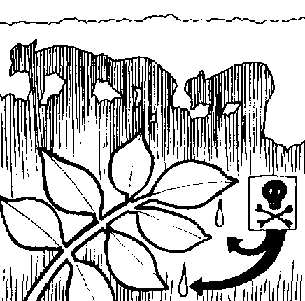
You should not enter a treated field
unless the pesticide dust has settled or the plants are dry from the spray, or
unless you are wearing protective clothing and equipment.

You should not enter a field before
the safe re-entry time without protective clothing.
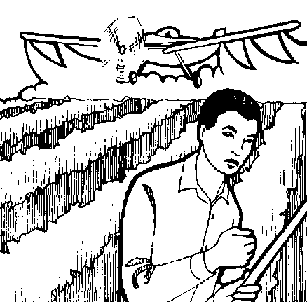
You are not to be in a field that is
being sprayed or where pesticide can drift on
you.
|
| ||||||||||||||||||||||||||||||||||||||||||||||||||||||||||||||||||||||||||||||||||||||||||||||||||||||||
Las reglas para la protecci�n de todos los trabajadores
Se le tiene que dar a Ud. aviso por
escrito u oralmente de los peligros de los pesticidas, si un campo ha sido
tratado o rociado o si se va a hacer en el futuro.
Ud. no debe entrar en un campo que ha
sido rociado con pesticidas a no ser que el polvo ya se haya pegado a las
plantas y que est�n secas del rocio a no ser que Ud. lleve ropa protectora.
Ud. no debe entrar en un campo que se
haya rociado antes de que la se�al de re-entrar ya est� puesta, a no ser que Ud.
tenga puesta su ropa protectora.
Usted no debe estar en un campo que
se est� rociando o en un lugar donde el viento lleve el pesticida.
The United States Government through a federal law has directed the Environmental Protection Agency to set standards for pesticide handling and use. The pictures on the opposite page explain standards which have been set for all farmworkers.
If you would like more information on pesticide safety, health effects, labels and use of pesticides:
CALL TOLL FREE
1-800-858-7378 or contact:
Occupational
Safety Branch (H7506C)
Office Of Pesticide Programs
U.S. Environmental
Protection Agency
401 M Street, SW
Washington, DC. 20460
(703) 557-7666
El gobierno de Los Estados Unidos a trav�s de una ley Federal ha dirigido a la Agencia de la protecci�n del medio ambiente a que ponga standards pare el uso y el manejo de los pesticidas. La fotos que se les ense�aron anteriormente explican los standards que han sido fijados pare todos los trabajadores.
Si Ud. desea mas informaci�n acerca del uso seguro de los pesticidas, los efectos que tienen en la salud, y las etiquetas, Ud. puede llamar a este tel�fono gratis: 1-800-858-7378.
EPA REGIONAL OFFICES
Region 1 (MA, CT, RI, NH, VT. ME)
Environmental Protection
Agency
John F. Kennedy Federal Building
Boston, Massachusetts
02203
Office of Public Affairs
(617) 565 3424
Pesticides Office
(617) 565-3273
Region 2 (NY, NJ, PR, VI)
Environmental Protection
Agency
Woodbridge Avenue, Building 10
Edison, New Jersey 08837
Office of Public Affairs
(212) 264-2515
Pesticides Office
(201) 321-6765
Region 3 (PA, MD, VA. WV, DE)
Environmental Protection
Agency
841 Chestnut Street
Philadelphia, Pennsylvania 19107
Office of Public Affairs
(215) 597-9370
Pesticides Office
(215) 597-8598
Region 4 (GA. NC. SC. AL, MS, KY, FL, TN)
Environmental
Protection Agency
345 Courtland Street. N.E.
Atlanta, Georgia 30365
Office of Public Affairs
(404) 347-3004
Pesticides Office
(404) 347-3222
Region 5 (IL, MI, MN, IN, OH, WI)
Environmental Protection
Agency
777 West Jackson Blvd.
Chicago, Illinois 60604-3707
Office of Public Affairs
(312) 353-2073
Pesticides Office
(312) 3533808
Region 6 (TX, OK, AR, LA. NM)
Environmental Protection
Agency
1445 Ross Avenue
Dallas. Texas 75202
Office of Public Affairs
(214) 655-2200
Pesticides Office
(214) 655-7235
Region 7 (MO, KS, IA, NB)
Environmental Protection Agency
726 Minnesota Avenue
Kansas City. Missouri 66101
Office of Public Affairs
(913) 236 2803
Pesticides Office
(913) 236-2835
Region 8 (CO. MT, ND, SD. UT, WY)
Environmental Protection
Agency
999 18th Street
Suite 1300
Denver. Colorado 80202
Office of Public Affairs
(303) 293-1692
Pesticides Office
(303) 293-1730
Region 9 (CA, NV, AZ, HI, GU)
Environmental
Protection Agency
75 Hawthrone Street
San Francisco,
California 94105
Office of Public Affairs
(415) 744-1500
Pesticides Office
(415) 744-1087
Region 10 (WA. OR, ID, AK)
Environmental Protection Agency
1200 Sixth Avenue
Seattle, Washington 98101
Office of Public Affairs
(206) 442-1465
Pesticides Office
(206)
442-1198