 |
| ||||||||||||||||||||||||||||||||||||||||||||||||||||||||||||||||||||||||||||||||||||||||||||||||||||||||||||||||||||||||||||||||||||||||||||||||||||||||||||||||||||||||||||||||||||||||||||||||||||||||||||||||||||||||||||||||||||||||||||||||||||||||||||||||||||||||||||||


|
| ||||||||||||||||||||||||||||||||||||||||||||||||||||||||||||||||||||||||||||||||||||||||||||||||||||||||||||||||||||||||||||||||||||||||||||||||||||||||||||||||||||||||||||||||||||||||||||||||||||||||
Daisy E. Kay revised by E. G. B. Gooding
Tropical Development and Research Institute
127 Clerkenwell
Road, London EC1R 5DB
Overseas Development
Administration
|
| ||||||||||||||||||||||||||||||||||||||||||||||||||||||||||||||||||||||||||||||||||||||||||||||||||||||||||||||||||||||||||||||||||||||||||||||||||||||||||||||||||||||||||||||||||||||||||||||||||||||||
Acknowledgments
Daisy E. Kay revised by E. G. B. Gooding
Tropical Development and Research Institute
127 Clerkenwell
Road, London EC1R 5DB
Overseas Development Administration
This report was produced by the Tropical Development and Research Institute (formed by the amalgamation of the Tropical Products Institute and the Centre for Overseas Pest Research) a British Government organization, funded by the Overseas Development Administration, which provides technical assistance to developing countries. The Institute specialises in post-harvest problems and pest and vector management.
Short extracts of material from this digest may be reproduced in any non-advertising, non-profit context provided that the source is acknowledged as follows:
Kay, D. E. (revised by Gooding, E. G. B.) (1987) Crop and Product Digest
No. 2-Root Crops, Second Edition. London: Tropical Development and Research Institute, xv & 380 pp.
Permission for commercial reproduction should, however, be sought from the Head, Publications, Publicity and Public Relations Section, Tropical Development and Research Institute, College House, Wrights Lane, London W8 5SJ, England.
First edition 1973
Price £13.50
No charge is made for single copies of this publication sent to governmental and educational establishments, research institutions and nonprofit making organizations working in countries eligible for British Aid. Free copies cannot normally be addressed to individuals by name but only under their official titles.
Tropical Development and Research Institute ISBN: 0 85954 200-9
|
| ||||||||||||||||||||||||||||||||||||||||||||||||||||||||||||||||||||||||||||||||||||||||||||||||||||||||||||||||||||||||||||||||||||||||||||||||||||||||||||||||||||||||||||||||||||||||||||||||||||||||
Preface
This digest is a complete revision and updating of TPI Crop and Product Digest No. 2, which was published in 1973, and is an attempt to present in a concise form basic data relating to the production and utilisation of most of the root crops of economic importance to countries in the tropics. For quick reference the data are arranged under standard headings and include particulars of growth requirements, planting and harvesting procedures, yield, products and their uses, processing techniques, comments on production and trade, and a bibliography for each crop.
The digest does not claim to be exhaustive or comprehensive. The aim is to provide a ready reference tool, for use particularly by non-specialists, and especially by practical workers in the developing countries concerned with advancing the rural economy. However, it is hoped that in addition it will provide a starting point for specialists and researchers working on these crops or their products.
The reviser has received valuable assistance from many persons and organisations during the preparation of this digest. In particular, he wishes to thank the Librarian and Library staff of TDRI who made available a wide range of services, including a computer search of the main agricultural and food processing data bases, and many other members of the TDRI staff, in particular the late Mrs Daisy Kay and the late Mr D. G. Coursey. Special thanks are due to Drs J. C. Caygill, A. K. Thompson and June Rickard who 'vetted' the manuscript, and to many others who provided advice and assistance on specialist matters. Scientific and technical information was obtained from several organizations, including the Royal Botanic Gardens at Kew and at Edinburgh; the Botany Department of the British Museum (Natural History); the University of Hawaii; the University of Idaho, USA; the University of Puerto Rico; the Soybean Center, California, USA; several branches of the United States Department of Agriculture; the Directorate of Agricultural Research, Wageningen, the Netherlands; the Department of Primary Industries, Queensland, Australia; the Central Potato Research Institute, India; the Bangladesh Agricultural Research Institute; the International Potato Center, Lima, Peru; the Caribbean Agricultural Research and Development Institute, Barbados. In addition to production and trade statistics obtainable within TDRI, information was provided by ULG Consultants Ltd. Warwick, UK; Geest Produce Marketing, Spalding, UK; Montego Imports and Exports Ltd. Toronto, Canada; the Barbados Agricultural Society; the Central Marketing Agency,
Trinidad; and a number of individuals concerned in the marketing of tropical root crops. Without the help of these, and of many others, the task of updating this digest would not have been possible.
Reference to trade names of agricultural chemicals, etc. implies no endorsement of the efficacy of these products nor any criticism of competing products not mentioned.
|
| ||||||||||||||||||||||||||||||||||||||||||||||||||||||||||||||||||||||||||||||||||||||||||||||||||||||||||||||||||||||||||||||||||||||||||||||||||||||||||||||||||||||||||||||||||||||||||||||||||||||||
Introduction
The term 'root crops' is applied to plants which produce subterranean structures that may be used for human or animal food. They are normally perennating organs, storing plant nutrients through a resting period (dry season or winter) which are used in the regrowth of the plant when growing conditions are again favourable. The word 'root' is often a misnomer, as in many cases the storage organ may be morphologically a modified stem, eg a swollen rhizome or corm, or a tuber such as a potato, rather than a swollen root as in carrot or sweet potato. All these swollen underground organs are commonly spoken of as 'tubers'.
Root crops are the second most important source of carbohydrates in the world's food: FAO figures for world production in 1981 showed 1,661 million tonnes of cereals and 561 million tonnes of root crops. The tropical world, however, where root crops are proportionally much more important, produced 82 million tonnes of root crops and only 42 million tonnes of cereals. In many tropical countries where rice is not grown they are the staple diet. In general, protein content is low, but some, for example Solanum tuberosum (potato) and Dioscorea spp. (yam), provide significant amounts of certain vitamins.
The following pages briefly describe 42 root crops, the most important of which are Manihot esculenta (cassava), Solanum tuberosum (potato), Ipomoea batatas (sweet potato), Colocasia esculenta (taro), Xanthosoma spp. (tannia) and Dioscorea spp. (yam). Many others are of only minor or local importance, but have been included to make this compilation as comprehensive as possible.
Each crop is listed alphabetically under its first common name, followed by local names. In the index of 'trivial' names (Appendix E) these local names are cross-referenced to the first common name. Selected literature references are given, but are not exhaustive; some crops, eg Manihot esculenta (cassava) have been the subject of so much study that lengthy bibliographies for them have been published, and such bibliographies are included in the relevant lists of references.
Data about each crop are arranged under the following headings:
Common names
Widely used English names are given, the first being printed in capitals and being used for the alphabetical arrangement of the entries and for cross-referencing.
Botanical name; Family
Nomenclature closely follows the Index Kewensis and its Supplements
Other names
Most plants have a wide range of local names, and many of these are listed, with the country or language to which they normally apply being appended in parentheses. Less common English names are given without the country being indicated.
Botany
A short description of the plant, its form and habit, varietal differences and systematics where appropriate is given.
Origin and distribution
Brief particulars of the origin and distribution of the crop are given.
Cultivation conditions
The main climatic regions in which it is possible to cultivate the plant are given in accordance with van Royen and Bengtson. The climates of the world are divisible into tropical, subtropical, intermediate or temperate and polar types.
Tropical climates have an average annual temperature of above 25°C, no month having an average temperature below 18°C. Subtropical climates have short, mild winters and long growing seasons. There is a period of 1-2 months when freezing temperatures may occur, though the average temperature of the coldest month is above 6°C. The summer temperatures may be as high as those of the tropical climate. Intermediate or temperate climates, ie those between subtropical and polar, have cold winters and warm to hot summers. They vary from areas where the winters are short to those where they are long and severe. All intermediate climates have a season of frost as well as a frost-free season.
The humid tropical climates are tropical rainforest, tropical monsoon, and tropical savanna. The tropical rainforest has no pronounced or prolonged dry season, an annual rainfall of 200-400 cm or more, a relative humidity of around 80 per cent and a high and uniform temperature with annual means ranging from 25 to 26.5°C with little seasonal variation. The tropical monsoon climate exhibits marked daily and seasonal temperature changes, has an annual rainfall of 100-200 cm with abundant rainfall during the wet season, alternating with a period of drought lasting 4-6 months or longer. The tropical savanna climate has a rainfall often exceeding 100 cm annually, well spread over 120-190 days, with a prolonged drought often lasting 6-7 months. The climate is hot with a moderate range of temperature. The dry tropical climates are subdivided into semi-arid or steppe type and arid or desert type. In the areas of tropical steppe climate the rainfall is occasional, though seasonal and commonly averages 20-50 cm or more annually; the temperature is variable but high at all seasons. The desert climate has a rainfall usually averaging less than 20 cm per annum, and a daytime relative humidity (RH) commonly less than 50 per cent.
The subtropical climate is subdivided into dry subtropical or Mediterranean and humid subtropical. The former has an average annual rainfall generally below 75 cm, in some places below 50 cm, with most of the rainfall occurring during the cool season. In some regions there is a moderate amount of summer rainfall, while others may be nearly rainless during this period. There are about 6-8 months with an average temperature below 18°C. In humid subtropical regions the rainfall averages above 75 cm per annum, with no pronounced dry season. There are generally 4-6 months with an average temperature below 18°C. In both types of subtropical climate frost may occur during the coldest period.
Humid intermediate climate has an annual rainfall which ranges from 50 cm in the drier parts to 200 cm in the more rainy sections. Dry intermediate climates have an annual rainfall which is commonly less than 50 cm. They may be subdivided into middle latitude steppe and middle latitude desert; the former having an annual rainfall of 15-50 cm and the latter less than 15 cm per annum.
Plant growth requirements are arranged under the main headings of temperature, rainfall and soil, with additional factors such as altitude and day-length noted where they are crucial. The possibility of growth under irrigation is mentioned when describing rainfall requirements and any positive evidence concerning the effects of fertilisers is included in the information on soil. The main climatic zones in which the root crops listed are generally grown are shown in Appendix A.
Planting procedures
Information concerning the type or types of planting material is given, with brief mention of their relative merits, and with special emphasis on the preferred type, where more than one type of planting material is available. The usual methods of planting are given, together with details of field spacing and, where applicable, seed rate.
Pests and diseases
The most serious pests and diseases attacking the crop in various growing regions are noted, along with methods of control. (A list of the pesticides referred to in the digest is given in Appendix C.)
Growth period
An approximate average or range of time lengths from planting to harvesting is quoted.
Harvesting and handling
The most common and best methods of harvesting, handling and storage are briefly indicated.
Primary product
The part of the plant for which the crop is primarily grown and the form in which it is commonly marketed are given. Normally one form only has been selected and this is shown at the beginning of the heading; this form will be used as the basis for quantitative data given in subsequent headings, unless otherwise stated. In some cases where there are other main products, eg seeds or pods, these are noted separately.
Yield
A good average yield of the primary product is given. Yields obtained in different regions or circumstances may be separately quoted.
Main use
The main use or uses of the primary product are given.
Subsidiary uses
Additional uses of the primary product are entered under this heading.
Secondary and waste products
Useful by-products resulting from the processing of the primary product or prepared from other parts of the plant are listed, together with their uses, etc. Major waste products which result from primary or secondary product processing are noted, with possible outlets where applicable.
Special features
Information is given on the chemical components of importance in the plant, and the main nutrients of the edible portion are listed wherever possible. The percentage composition often varies widely according to the variety, locality, conditions of growth, etc. so 'typical' figures are quoted, taken from the most reliable source available, eg FAO Food Composition Tables, recent papers, etc. Only a few publications quote ranges of high and low values; workers in the nutritional field are advised to seek local information for the food in question. Fibre and protein represent 'crude' fibre and 'crude' protein (N x6.25) respectively, unless otherwise stated.
In addition, the presence of constituents that may call for special treatments, eg toxins, are indicated, and also of those that may have value as drugs, antibiotics, etc.
Processing
The main processing operations through which the primary product may have to pass in order to produce a final marketable commodity, are listed. In certain circumstances, similar information may also be given for secondary products.
Production and trade
There is very little statistical information available regarding the production and trade of many of the individual root crops included in this digest, largely because most root crop production in the tropics is in smallholder units. Moreover, the major part of the production is consumed locally, since tropical root crops, owing to their high water content and perishability, have not assumed any great significance in international trade. Where information is available, details are provided of: (i) the estimated average world production of the crop; (ii) the output of the major producing countries; (iii) shipments from the major exporting countries; and (iv) shipments to the major importing countries. In some cases only very fragmentary information is available, in others none. In view of the extreme variations in exchange rates, commodity prices and general economic instability of recent years, prices have not been included as any such figures could be misleading.
Major influences
Any factors which might have a significant influence on the future supply of and demand for the commodity are mentioned under this heading.
Particular attention is paid to possible competition from synthetic materials and other substitutes.
Bibliography
Textbooks, technical bulletins, research reports, papers given at recent symposia, articles in technical periodicals and bibliographies are cited. For some root crops literature is scant, but for many it is extensive, and the bibliographies for each individual crop are selective and by no means exhaustive. Emphasis has been given to material published between 1972 and 1982.
|
| ||||||||||||||||||||||||||||||||||||||||||||||||||||||||||||||||||||||||||||||||||||||||||||||||||||||||||||||||||||||||||||||||||||||||||||||||||||||||||||||||||||||||||||||||||||||||||||||||||||||||
Abbreviations
|
a |
annum |
|
Abs. |
Abstract acet. |
|
val. |
acetyl value |
|
°C |
degrees Celsius |
|
cm |
centimetre |
|
cm2 |
square centimetre |
|
cv. |
cultivar |
|
eg |
for example |
|
etc |
and so on |
|
°F |
degrees Fahrenheit |
|
FAO |
Food and Agriculture Organization of the United Nations |
|
FYM |
farmyard manure |
|
g |
gram |
|
ha |
hectare |
|
HCN |
hydrogen cyanide |
|
ie |
that is |
|
iod. val. |
iodine value |
|
IU |
international unit |
|
Jr. |
Junior |
|
K |
potassium |
|
kg |
kilogram |
|
km |
kilometre |
|
krad |
kilorad |
|
I |
litre |
|
m |
metre |
|
m2 |
square metre |
|
m3 |
cubic metre |
|
mg |
milligram |
|
mm |
millimetre |
|
N |
nitrogen |
|
na |
not available |
|
ND |
refractive index |
|
No. |
number |
|
NPK |
nitrogen: phosphorus: potassium |
|
P |
phosphorus |
|
pH |
hydrogen ion concentration |
|
Poll val. |
Polenske value |
|
pp. |
pages |
|
ppm |
parts per million |
|
RH |
relative humidity |
|
RM val. |
Reichert-Meissl value |
|
S |
sulphur |
|
sap. val. |
saponification value |
|
SG |
specific gravity |
|
sp./spp. |
Species |
|
ssp. |
Subspecies |
|
syn. |
Synonym |
|
t |
tonne |
|
TPS |
true potato seed |
|
TS |
total solids |
|
unsap. |
unsaponifiable matter |
|
val. |
Value |
|
var. |
variety |
|
wt |
weight |
|
Geographic and langauge abbreviations used | |
|
Afr. |
Africa |
|
Am. |
America |
|
Ang. |
Angola |
|
Ant. |
Antilles |
|
Ar. |
Arabic |
|
Arg. |
Argentina |
|
Bangl. |
Bangladesh |
|
Barb. |
Barbados |
|
Beng. |
Bengal |
|
Boll |
Bolivia |
|
Bom. |
Bombay |
|
Braz. |
Brazil |
|
C. |
Central |
|
Cam. |
Cameroon |
|
Camb. |
Cambodia |
|
Carib. |
Caribbean |
|
Col. |
Colombia |
|
C. Rica |
Costa Rica |
|
Cur. |
Curacao |
|
Cy. |
Cyprus |
|
E. |
East |
|
EC |
European Community |
|
Ecu. |
Ecuador |
|
Eth. |
Ethiopia |
|
Fr. |
France |
|
Gab. |
Gabon |
|
Gam. |
Gambia |
|
Ger. |
Germany |
|
Gh. |
Ghana |
|
Gren. |
Grenada |
|
Guat. |
Guatemala |
|
Guin. |
Guinea |
|
Guy. |
Guyana |
|
Haw. |
Hawaii |
|
Hind. |
Hindustani |
|
Ind. |
India |
|
Indon. |
Indonesia |
|
Ir. |
Iran |
|
Is. |
Island(s) |
|
It. |
Italy |
|
Jam. |
Jamaica |
|
Kiri. |
Kiribati |
|
Lat. Am. |
Latin America |
|
Madag. |
Madagascar |
|
Mall |
Malaysia |
|
Mar. Is. |
Marshall Islands |
|
Mart. |
Martinique |
|
Maur. |
Mauritius |
|
Mex. |
Mexico |
|
Mol. |
Moluccas |
|
N. |
North or New |
|
N. Guin. |
New Guinea |
|
Nether. |
Netherlands |
|
N. Cal. |
New Caledonia |
|
Nig. |
Nigeria |
|
N.Z. |
New Zealand |
|
P. Rico |
Puerto Rico |
|
Pacif. |
Pacific |
|
Pak. |
Pakistan |
|
Philipp. |
Philippines |
|
Polyn. |
Polynesia |
|
Pon. |
Ponape |
|
Port. |
Portugal |
|
Salv. |
El Salvador |
|
S. |
South |
|
Sam. |
Samoa |
|
Sen. |
Senegal |
|
Sol. Is. |
Solomon Islands |
|
Sp. |
Spain |
|
Sri. La. |
Sri Lanka |
|
St. |
Saint |
|
Sud. |
Sudan |
|
Sur. |
Surinam |
|
Swah. |
Swahili |
|
Tah. |
Tahiti |
|
Tam. |
Tamil |
|
Tanz. |
Tanzania |
|
Thai. |
Thailand |
|
Trin. |
Trinidad |
|
Tuv. |
Tuvalu |
|
Ug. |
Uganda |
|
USA |
United States of America |
|
Venez. |
Venezuela |
|
Viet. |
Vietnam |
|
W. |
West |
|
W.l. |
West Indies |
|
Zar. |
Zaire |
|
| ||||||||||||||||||||||||||||||||||||||||||||||||||||||||||||||||||||||||||||||||||||||||||||||||||||||||||||||||||||||||||||||||||||||||||||||||||||||||||||||||||||||||||||||||||||||||||||||||||||||||
African yam bean (Sphenostylis stenocarpa)
Common names
AFRICAN YAM BEAN, Wild yam bean.
Botanical name
Sphenostylis stenocarpa (Hochst. Ex A. Rich.) Harms syn. Sphenostylis ornata A. Chev.
Family
Leguminosae, sub-family Papilionoideae.
Other names
Akitereku (W. Afr.); Diegemtenguere (Mali); Girigiri (W. Afr.); Haricot igname (Fr.); Kotonosu (W. Afr.): Kulege (W. Afr.); Norouko (Sud.); Okpu dudu (W. Afr.); Pempo (W. Afr.); Pomme deterre du Mossi (Fr.); Roya (Sud.); Sese (W. Afr.); Yam pea.
Botany
A vigorous, herbaceous, climbing vine, reaching 1.5-2 m in height, with trifoliate leaves, the leaflets being up to 14 cm in length and 5 cm broad. The conspicuous flowers are mauvish-pink, purple or greenish-white in colour, about 2.5 cm in length and borne on stout axilliary peduncles. The glabrous seed pods are linear, flat, with both margins raised, 25-30 cm long and 1-1.5 cm broad, containing 20-30 seeds which may be ellipsoid, rounded or truncated, and show considerable variation in size and colour; the largest are usually about I cm long and 0.7 cm wide. Seed colour may vary from creamy-white or brownish-yellow to dark brown, sometimes with black marbling, and there appear to be a number of 'types' according to seed colour. The plant produces small spindle-shaped tubers, about 5-7.5 cm long. There is some evidence that yields of seeds and tubers are inversely related.
Origin and distribution
The African yam bean originated in Ethiopia. Both wild and cultivated types now occur in tropical Africa as far south as Zimbabwe, throughout West Africa from Guinea to southern Nigeria, being especially common in the latter and in Togo and the Ivory Coast, and in East Africa from northern Ethiopia (Eritrea) to Mozambique, including Tanzania and Zanzibar.
Cultivation conditions
Small-scale cultivation is practiced throughout tropical Africa: the plant is especially suited to lowland conditions, though it can be grown up to 1800 m. Climates ranging from savannah to rainforest are tolerated provided there is a combination of adequate rainfall (100 cm or more during the growing season) and reasonably good drainage. It is often planted along with yams and beans, using the same stakes as the yam for support, though sometimes left to trail on the ground. It is sometimes stated that plants perform better when interplanted than when grown alone.
Planting procedure
Material-both seeds and tubers can be used for propagation; planting is usually at the start of the rainy season.
Method-planting is done by hand, often two seeds to a hole (or
one tuber).
Field spacing-varies considerably, often according to the crop
with which they have been interplanted. One spacing quoted is 45 cm apart
alternated with yam in 120 cm rows.
Pests and diseases
Fungal diseases reported are powdery mildew (due to Oidium sp.), which is parasitised by Cincinnobolus cesati; leaf spot (caused by Phoma sp.) and stem rust (caused by Aecidium sp.). Virus mosaics have also been reported. Pests have not been defined in detail but include Orthopterous and Lepidopterous insects. Leaf rolling caterpillars and leaf miners have been described as causing serious damage to the foliage, and thrips damage the flowers. Nematodes may attack the root system leading to reduction in yield.
Growth period
The tubers are ready for harvesting 5-10 months after planting.
Harvesting and handling
The crop is dug by hand usually towards the end of the dry season.
Primary product
Tubers-these are small and spindle-shaped, externally rather similar to sweet potatoes, usually about 5-7.5 cm long and weighing on average 50-150 g, although under favourable conditions they can weigh up to 300 g. The flesh is white and watery.
Yield
On a basis of 24 200 plants/ha, yield has been calculated at 1 452-2 904 kg/ha, depending upon variety. (Seed yield on the same basis ranged from 3 461-3 872 kg/ha.)
Main use
The tubers are cooked and eaten in the same manner as potatoes, which they resemble in flavour.
Secondary and waste products
The seeds also are eaten, but must be soaked in water for about 12 hours before being cooked. They are said to cause giddiness if eaten in excess, but to cure drunkenness when mixed with water.
Special features
Tubers-the tubers are rich in starch and protein. Dry matter is approximately 35 per cent, of which starch is about 80 per cent and protein about 14 per cent, ranging from 12.5 to 19 per cent for six varieties; however, some analyses have indicated that the non-protein nitrogen can be 50 per cent of the crude protein nitrogen.
Seeds-analytical figures for the seeds showed dry matter about 90.5 per cent; the dry matter composition was: protein 24-28 per cent; fat 1.5-2 per cent; total carbohydrate 74.1 per cent; fibre 5.2-5.7 per cent; ash 2.8-3.2 per cent; calcium 61 mg/100 g; phosphorus 437 mg/100 g. The amino acid content of the protein was very similar to that of soya bean, though rather higher in histidine and iso-leucine. The energy content of the seeds per 100 g dry matter was 1,640 kJ.
The plants have beautiful flowers and are grown as ornamentals in European and other countries.
Major influences
The tubers of African yam bean are regarded as an important source of starch and protein in tropical Africa, and the plant is potentially important also as a food legume. It appears likely to remain a valuable constituent of African peasant agriculture.
Bibliography
BOIS, D. 1927. Les plantes alimentaires, chez tous les peuples et � travers les ages, pp. 163-164. Paris, France: P. Lechevalier, 596 pp.
BUSSON, F. 1967. Plantes alimentaires de l'ouest Africain, �tude botanique, biologique et chimique, pp. 245; 247-248; 252; 254-255. Marseille, France: Leconte, 568 pp.
DALZIEL, J. M. 1948. The useful plants of West tropical Africa, pp. 261- 262. London: The Crown Agents for the Colonies, 612 pp.
DUKE, J. A., OKIGBO, B. N. and REED, C. F. 1977. Sphenostylis stenocarpa (Hochst ex A. Rich) Harms. Tropical Grain Legume Bulletin, 10, 4-6.
EVANS, I M. and BOULTER, D. 1974. Amino acid composition of seed meals of yam bean (Sphenostylis stenocarpa) and Lima bean (Phaseolus lunatus). Journal of the Science of Food and Agriculture, 25, 919-922.
EVANS, I. M., BOULTER, D., EAGLESHAM, A. R. J. and DART, P. J. 1977. Protein content and protein quality of tuberous roots of some legumes determined by chemical methods. Qualitas Plantarum. Plant Foods for Human Nutrition, 27, 275-28S.
EZUEH, M. I. 1977. Cultivation and utilization of minor food
legumes in Nigeria. Tropical Grain Legume Bulletin, 10, 28-32.
GREENWAY, P.
J. 1944. Origins of some East African food plants. East African Agricultural
Journal, 10, 38.
IRVINE, F. R. 1949. Indigenous food plants of West Africa. Economic Botany, 3, 442.
OKIGBO, B. N. 1973. Introducing the yam bean Sphenostylis stenocarpa (Hochst. ex. A. Rich) Harms. Proceedings of the 1st International Institute of Tropical Agriculture Grain Legume Improvement Workshop (Nigeria, 1973), pp. 224-238. Ibadan, Nigeria: IITA, 325 pp.
SCHNELL, R. 1957. Plantes alimentaires et vie agricole de l'Afrique Noire, p. 169. Paris, France: Larose, 223 pp.
|
| ||||||||||||||||||||||||||||||||||||||||||||||||||||||||||||||||||||||||||||||||||||||||||||||||||||||||||||||||||||||||||||||||||||||||||||||||||||||||||||||||||||||||||||||||||||||||||||||||||||||||
A�u (Tropaeolum tuberosum)
Common name
A�U.
Botanical name
Tropaeolum tuberosum Ruiz and Pav.
Family
Tropaeolaceae.
Other names
Cubio (Col.); Isa�o, Isa�u (Bol., Peru, Arg.); Mashua (Peru, Bol.); Navi�s, Navo (Col.); Ysa�o (S. Am.).
Botany
A herbaceous climber, resembling the garden nasturtium to which
it is closely related, although it is more compact and has smaller flowers. The
stems are green or reddish-green and the leaves show a considerable variation in
form, but are normally 5-20 cm long, peltate, with 3-5 lobes.
The flowers
have long peduncles 10-19 cm long; the red calyx forms a spur, sometimes two,
and there is considerable variation in the size and shape of the orange petals.
The tubers are conical or ellipsoid in shape, generally deeply furrowed, each
furrow containing a bud. Over 100 clones are recognised and some authorities
consider that two separate species should be recognised: Colombian species,
characterised by long deeply furrowed white tubers or white with pink extremes,
and numerous rootless; and Peruvian/Bolivian species, with yellow tubers, often
with dots and lines on them and without rootless. Chemical examination and
cytological evidence have both suggested that there are two distinct types and
subspecies status has been suggested, namely T. tuberosum ssp. tuberosum and T.
tuberosum ssp. silvestre.
Origin and distribution
The a�u is native to the high Andes of South America and is confined to this area where it is cultivated in the Andean valleys of Peru and Bolivia.
Cultivation conditions
This crop requires cool and moist conditions and is tolerant of frost; it is normally grown at altitudes of 3 000 m or above, frequently in rotation with ullucu. It is considered to require approximately 12 hours day-length for successful growth.
Planting procedure
Material-a�u is propagated vegetatively from tubers. Method-a�u
is usually cultivated in small plots on terraces on hillsides; for good yields
it must be kept free from weeds and earthed up.
Field spacing-planting is
usually in rows 70-100 cm apart with 40-70 cm between the plants.
Growth period
The tubers reach maturity in approximately 7 months.
Harvesting and handling
The tubers are dug by hand and are reported to keep better in the fresh state than the other Andean tuber crops, oca and ullucu, with a storage life at ambient temperatures of up to 6 months.
Primary product
Tubers-a�u produces small conical or ellipsoidal tubers approximately 5-15 cm long and 3-6 cm wide, with a wide range of colouring which can vary from dirty-white or yellow to red or purple. In the fresh state they have a disagreeable odour.
Yield
Yields are reported to lie between 20 and 30 t/ha.
Main use
A�u tubers are eaten boiled as a vegetable and are said to resemble turnips. In some communities at high altitudes in the Andes, where potatoes and other tubers cannot be grown, a�u is the staple foodstuff.
Subsidiary uses
It has been suggested that a�u could be grown for use as a feedingstuff for pigs. In some areas the tubers are valued for their medicinal properties and are used in the treatment of kidney and liver diseases, sores on the skin, and head lice. Traditionally, they are regarded as having anti-aphrodisiacal properties. Planting among other crops is reported to bring protection against nematodes.
Special features
Published figures give the composition of the edible portion of the tubers as: energy 218 kJ/100 g; water 86 per cent; protein 1.6 per cent; fat 0.6 per cent; carbohydrate 11 per cent; fibre 0.8 per cent; ash 7 per cent; calcium 7 mg/100 g; iron 1.2 mg/100 g; phosphorus 42 mg/100 g; vitamin A 0.015 mg/100 g; thiamine 0.06 mg/100 g; riboflavin 0.08 mg/100 g; niacin 0.6 mg/100 g; ascorbic acid 67 mg/100 g. The exceptionally high ascorbic acid content is noteworthy.
The plant contains isothiocyanates and thiourea; differences in composition correspond with the cultivated form and wild form and a division into two subspecies, Tropaeolum tuberosum ssp. tuberosum and T. tuberosum ssp. silvestre, has been proposed.
The traditional medicinal uses have been examined:
(i) Effect on reproduction: no effect was found on the male capability of impregnating females, though animals fed extracts of the plant showed a 45 per cent drop of testosterone/dihydrotestosterone in their blood; a similar effect in man would be expected to reduce libido.
(ii) Antibiotic activity: both subspecies contain p-methoxybenzyl glucosinolate, and both show strong antibiotic activity against Candida albicans, Escherichia cold and Staphylococcus albus.
(iii) Kidney diseases: isothiocyanates are diuretic.
(iv) Nematicidal effect: this has been demonstrated and is believed to be due to isothiocyanates.
(v) Head lice: similarly, it is believed that isothiocyanates are effective against head lice.
Production and trade
Little information has been recorded; Peru is stated to have approximately 4 000 ha under cultivation.
Major considerations A�u is reported to be grown rather less than formerly, but continues to be an important crop, especially for remote Indian communities where its medicinal value and food value both find favour. A germplasm collection is being made, to be maintained at Cusco and Puna in Peru.
Bibliography
BATEMAN, J. V. 1961. Una prueba exploratoria de la alimentaci�n
usando
Tropaeolum tuberosum. Turrialba, 11, 98-100.
GIBBS, P. E., MARSHALL, D. and BRUNTON, D. 1978. Studies on the cytology of Oxalis tuberosa and Tropaeolum tuberosum. Notes from the Royal Botanic Gardens, Edinburgh, 37, 215-220.
HODGE, W. H. 1951. Three native tuber foods of the high Andes. Economic Botany, 5, 185-201.
JOHNS, T., KITTS, W. D., NEWSOME, F. and TOWERS, G. H. N. 1982. Anti-reproductive and other medicinal effects of Tropaeolum tuberosum. Journal of Ethnopharmacology, 5, 149- 161.
JOHNS, T. and TOWERS, G. H. N. 1981. Isothiocyanates and thioureas in enzyme hydrolysis of Tropaeolum tuberosum. Phytochemistry, 20, 2687-2689.
LEON, J. 1964. Plantas alimenticas andinas. Instituto Interamericano de Ciencias Agricolas, Zona Andina, Lima, Peru, Bolet�n T�cnico, No. 6, pp. 31 -36.
LEON, J. 1967. Andean tuber and root crops: origin and variability. Proceedings of the International Symposium on Tropical Root Crops (Trinidad, 1967) (Tai, E. A., Charles, W. B., Haynes, P. H., Iton, E. F. and Leslie, K. A., eds), Vol. 1, Section 1, pp. 118-123. St. Augustine, Trinidad: University of the West Indies (2 vole).
LEON, J. 1977. Origin, evolution and early dispersal of root and tuber crops. Proceedings of the 4th Symposium of the International Society for Tropical Root Crops (Colombia, 1976), IDRC-080e (Cock, J., MacIntyre, R. and Graham, M., eds), pp. 20-36. Ottawa, Canada: International Development Research Centre, 277 pp.
MONTALDO, A. 1972. Mashua. Cultivo de ra�ces y tub�rculos tropicales, pp. 235-236. Lima, Peru: Instituto Interamericano de Ciencias Agricolas de la OEA, 284 pp.
TAPIA, M. E. 1980. Collecting in the Andes. Plant Genetic Resources Newsletter No. 40, pp. 20-22. Rome, Italy: Food and Agriculture Organization of the United Nations, 39 pp.
TAYLOR, W. A. 1918. Inventory of seeds and plants imported by the Office of Foreign Seed and Plant Introduction during the period from July I to September 30, 1915. United States Department of Agriculture, Bureau of Plant Industry Inventory, No. 44, pp. 6-7; 49. Washington, DC: Government Printing Office, 71 pp.
TOWNSEND, J. 1964. Unexploited crops in Bolivia. World Crops, 16, 67-68.
|
| ||||||||||||||||||||||||||||||||||||||||||||||||||||||||||||||||||||||||||||||||||||||||||||||||||||||||||||||||||||||||||||||||||||||||||||||||||||||||||||||||||||||||||||||||||||||||||||||||||||||||
Arracacha (Arracacia xanthorrhiza)
Common names
ARRACACHA, Peruvian carrot, Peruvian parsnip.
Botanical name
Arracacia xanthorrhiza Bancroft syn. A. esculenta DC.
Family
Umbelliferae.
Other names
Apio (criollo) (Venez., P. Rico); Arrecate (Lat. Am.); Batata baroa, Mandioquinha salsa (Braz.); Pomme de terre c�leri (Fr.); Racacha, Virrac� (Peru); Zanhoria blanca (Ecu.).
Botany
A stout semi-caulescent herb, somewhat resembling celery but one of the largest of the cultivated umbellifers. Its coarse stems and leaves usually attain a height of 0.6-1.2 m, and the leaves are dark green or purple. The flowers are small, typical of the family, and usually purplish or yellow, but seldom seen because the crop is harvested before flowering. The subterranean portion of the plant is a compound structure consisting of a large, more or less cylindrical rootstock, indistinctly marked with a number of horizontal nodose rings, and with a coarse central core: from this root stock 6-10 irregularly spindle-shaped secondary tubers arise as off-shoots.
These are smooth skinned and resemble parsnips in texture, colour and odour. The crown of the rootstock gives rise to a number of shoots which arise from enveloping sheaths to form the stems and leaves. Three main varieties are recognised depending upon the colour of the flesh of the roots-white, yellow or purple-but several cultivars have been developed.
Origin and distribution
Arracacha originated in the Andes in Peru, Ecuador and Colombia but cultivation has now spread to Venezuela, parts of Brazil, Puerto Rico, Mexico and to parts of Africa.
Cultivation conditions
Temperature-for optimum results an equable temperature of 15-20°C throughout the year is required. In Colombia, for example, high yields are obtained in the Andes, where the annual mean temperature is 16°C; in savanna areas where the mean temperature is slightly lower, about 14°C, the vegetative cycle is lengthened. Some varieties are sensitive to frost and are grown only at the lower altitudes but those adapted to the higher altitudes are resistant to occasional light frost.
Rainfall-arracacha requires a moderate, evenly-distributed rainfall of at least 60 cm but preferably 100 cm, and if the natural rainfall is insufficient it should be supplemented by irrigation.
Soil-deep, fertile, well-drained sandy soils with a pH of about 5-5.5 are ideal, and the application of a 12:24:12 or 10:30:10 complete (NPK) fertiliser at the rate of 500-600 kg/ha has been recommended. The application of phosphorus has been found to increase yields considerably, while heavy applications of nitrogen have an adverse effect.
Altitude-arracacha yields a crop at elevations above about 600 m in the northern Andes: in Colombia it grows best at elevations between 1 800 and 2 600 m; in Brazil it is successfully grown in the state of Sao Paulo at altitudes of 1 000-1 200 m.
Day-length-there is some evidence that arracacha requires short day-lengths in order to produce economic yields.
Planting procedure
Material-although it is possible to obtain fertile seed with a good rate of germination, arracacha is traditionally propagated vegetatively by the use of offsets or shoots produced on the crown of the main rootstock. Only the basal portion of the shoot actually possessing a bud with leaves is used; this is cut to a piece 2-3 cm in length and the leaves are cut off to 10-20 cm above their points of attachment to the stem. After the offset is detached from the rootstock, the basal end is cut several times to stimulate sprouting of the shoot, and to ensure that secondary roots begin to form and are well-distributed laterally on the primary rootstock. After the offsets are cut they are left to dry for 2-3 days before planting. It is important to use only material from virus-free stock.
Method-arracacha is cultivated in a manner similar to potatoes, with which it is often interplanted. Although it may be grown throughout the year, the main crop is usually planted at the beginning of the rains in April and September. The normal procedure is for the offsets to be put in holes along furrows, with fertiliser placed in each hole before planting. Often the offset is positioned in such a way that the basal portion is covered and the shoot is left slightly above the soil level, but in some parts of the Andes the traditional method is to cover the offsets completely to a depth of 2-3 times their own length. After planting, the rows are mulched with trash and kept earthed up and free from weeds. Subsequent hand-weeding is usually carried out 2 months after planting and again after 5 months, but in Colombia the use of the herbicide linuron at the rate of 0.75 kg/ha has been found to give excellent control over broad-leaved weeds if applied 40-50 days after planting.
Field spacing-the furrows are normally about I m apart with 50-60 cm between the plants.
Seed rate-approximately 16 700-20 000 offsets are required to plant one hectare.
Pests and diseases
Among the pests reported to attack arracacha are the flea beetles Epitrix spp. and Systena s-littera, the swallow-tail butterfly Papilio polyxenes and the moths Automeris spp., whose larvae feed on the foliage, the leafhopper Erythrogonia quadriguttata, the tree-hopper Amastris simillima, the mole cricket Tridaclylus minutus, the scarab beetle Ancognatha scarabeoides, spider mites Tetranychus spp., nematodes, in particular Pratylenchus penetrans which may cause necrosis of the whole plant, and slugs.
Diseases include those caused by Cercospora spp., Cercosporidium depressum, Septoria apii, and Gloeosporium sp. The last is the most serious, though control can be effected by copper-based fungicides or thiabendazole. A bacterial necrosis, first appearing as yellow leaves and stunted growth, is caused by Erwinia amylovora. The disease is transmitted by infected buds of diseased plants used in planting, or the organism may penetrate from the soil into the root system. Two viruses-arracacha virus A and arracacha virus B-have been identified as causing yellow mosaic symptoms and poor growth. Neither appears to be transmitted by vector and spread is apparently by infected planting material. A strain of virus B has been found in oca (Oxalis tuberosa). The only known control measure for the bacterial and virus infections is avoidance of infected planting material. The symptoms are easily recognised in the growing crop and therefore rogueing can greatly minimise this danger.
Growth period
The secondary tubers usually mature in about 10-14 months after planting; sometimes an early harvest of immature roots is taken after 4-8 months.
Harvesting and handling
The crop is judged to be mature when the leaves begin to yellow and production of new shoots ceases. Some growers accelerate the onset of maturity by breaking the petioles, often by twisting or doubling them over. Harvesting is usually accomplished by digging up the whole plant, detaching the offsets for the next crop, and collecting the tubers and main rootstocks. Harvesting cannot be delayed, because if the roots are left in the ground they become fibrous and tough, and develop a strong unpleasant flavour. After harvesting, the tubers have a very short storage life, and in Colombia were considered unmarketable after 3-4 days at 25°C and 40 per cent RH. However, after storage at 10°C and 90 per cent RH, or at 3°C and unspecified humidity for about I month, the roots maintained good condition. Irradiation with doses of 10-11 head has also been found to extend the storage life. Deterioration of the tubers is due mainly to fungal and bacterial rots and desiccation, and it has been shown that wrapping of individual tubers in plastic cling or shrink film of low moisture penetrability within 24 hours after harvest extended shelf-life to 7 days or more at 17-20°C and 68-70 per cent RH, and was economically advantageous for tubers that were to be marketed.
Primary product
Tubers-the edible secondary tubers are the primary product and under good cultural conditions each plant can produce 6-10 tubers, weighing 2-3 kg. These tubers have a delicate flavour and a crisp texture, and the flesh may be white, creamy-yellow or purple, depending upon the cultivar; in many areas the yellow tubers are preferred.
Yield
Yields range from about 3 to 18 t/ha, depending mainly upon growing conditions, and in Colombia the best yields are obtained at altitudes of over 2 000 m in the northern Andes.
Main use
The secondary tubers are used as a source of carbohydrate, boiled, fried or as a constituent of stews, eg along with cassava in the Colombian sancocho. They are regarded in Venezuela as especially important for children because of their easy digestibility.
Subsidiary uses
The tubers and main rootstock can be used as a source of an easily digestible starch, suitable for the preparation of invalid and baby foods.
Secondary and waste products
The coarse main rootstocks and mature leaves are used for livestock feeding; they have a higher protein content that alfalfa. In certain Andean communities the tubers are used in traditional medicine. The young blanched stems are utilised as a salad ingredient or as a vegetable.
Special features
Analyses of the edible portion of Colombian tubers (the lateral swollen roots) have been published as: water 71.9-73 per cent; protein 0.8-1.1 per cent; fat 0.1-0.2 per cent; carbohydrate 24.9 per cent; fibre 0.6-0.8 per cent; ash 1.6 per cent; calcium 24 mg/100 g; iron 0.7 mg/100 g; phosphorus 65 mg/100 g; vitamin A 20-60 IU/100 g (in yellow cultivars); thiamine 0.04-0.06 mg/100 g; riboflavin 0.03-0.04 mg/100 g; niacin 2.7-3.4 mg/100 g; ascorbic acid 15-28 mg/100 g.
The starch, which is similar in many respects to that of cassava, is easily digestible and is also suitable for laundry use. The grains are usually spherical or ovoid, ranging from 5 to 27 microns, averaging 14 microns.
Production and trade
Little statistical information is available although production was reported to be increasing in Colombia: average 1960-64, 111 000 t/a; average 1965-67, 123 000 t/a. For 1977 no figures of total production were available but 123 000 t was stated to have reached the markets.
Major influences
Arracacha has been an important staple carbohydrate foodstuff in parts of South America for at least 300 years and today forms an important and popular item of diet, particularly amongst children, but because of its short shelf-life it has been relatively high-priced. However, recent work appears to have demonstrated that the shelf-life can be extended. It is expected to prove a valuable root crop if introduced into other high altitude areas of the tropics, and a considerable amount of research is currently being undertaken, in particular on the development of new cultivars and in breeding: a germplasm bank has been established at Campinas in Argentina.
Bibliography
ABEELE, M. van den and VANDENPUT, R. 1956. La pomme de terre c�leri.
Les principales cultures du Congo beige, 3rd edn, p. 869. Bruxelles, Belgium: Direction de l'Agriculture, des For�ts et de l'�levage, 932 pp.
ANON. 1975. Arracacha. Underexploited tropical plants with promising economic value, pp. 29-32. Washington DC: National Academy of Sciences, 188 pp.
BRICE�O VERGARA, A. 1975. Resultados preliminares de la introduccion de material clonal de apio criollo (Arracacia xanthorrhiza Banc.) en los Andes venezolanos. Agronom�a Tropical, 25, 31 -37.
BRITO, O. and ARISMENDI, L. G. 1983. Agro-socio-economy of production and commerce of Arracacia xanthorrhiza in Sucre state, Venezuela. Abstracts of the 6th Symposium of the International Society for Tropical Root Crops (Peru, 1983), p. 6. Lima, Peru: International Potato Center, 113 pp.
CAMINO A., J. M. and D�AZ POLANCO, C. 1972. Identificaci�n de una bacteriosis en apio (Arracacia xanthorrhiza). Agronom�a Tropical, 22, 563-567.
CZYHRINCIW, N. 1969. Consideraciones sobre industrializacion du ra�ces y tub�rculos tropicales. Revista del Facultad de Agronomia, Universidad Central de Venezuela, 5, 108-117.
CZYHRINCIW, N. and JAFFE, W. 1951. Modificaciones qu�micas durante la conservaci�n de tub�rculos y ra�ces. Archivos Venezolanos de Nutricion, 2, 49-67.
D�AZ POLANCO, C. and CAMINO A., J. M. 1976. Una nueva forma de Fusarium solani, patogeno del apio (Arracacia xanthorrhiza) en Venezuela. Agronom�a Tropical, 26, 353-358.
GRUBBEN, G. J. H. 1977. Other warm weather vegetables. Tropical vegetables and their genetic resources, pp. 111-115. Rome, Italy: International Board for Plant Genetic Resources, 197 pp.
HIGUITIA MU�OZ, F. 1968. El cultivo de la arracacha en la sabana de Bogot�. Agricultura Tropical, 24, 139-146.
HIGUITIA MU�OZ, F. 1969. [Comparative yield of nine varieties of Arracacia xanthorrhiza.] Agricultura Tropical, 25, 566-570. (Field Crop Abstracts, 24, 1015).
HODGE, W. H. 1954. The edible arracacha, a little known root crop of the Andes. Economic Botany, 8, 195-221.
JONES, R. A. C. and KENTEN, R. H. 1978. Arracacha virus A, a newly recognised virus infecting arracacha (Arracacia xanthorrhiza; Umbelliferae) in the Peruvian Andes. Annals of Applied Biology, 90, 85-91.
JONES, R. A. C. and KENTEN, R. H. 1981. A strain of arracacha virus B infecting oca (Oxalis tuberosa: Oxalidaceae) in the Peruvian Andes. Phytopathologische Zeitschrift, 100 (1), 88-95.
KENTEN, R. H. and JONES, R. A. C. 1979. Arracacha virus B, a second isometric virus infecting arracacha (Arracacia xanthorrhiza; Umbelliferae) in the Peruvian Andes. Annals of Applied Biology, 93, 31-36.
KROLL, R. 1956. Pomme de terre c�leri. Les cultures potag�res au Congo be/ge. Tract 22, p. 114. Bruxelles, Belgium: Direction de ['Agriculture, des For�ts et de l'�levage, 131 pp.
L�ON, J. 1964. Plantas alimenticias andinas. Instituto Interamericano de Ciencias Agricolas, Zona Andina, Lima, Peru, Bolet�n T�cnico, No. 6, pp. 51 -56.
L�ON, J. 1967. Andean tuber and root crops: origin and variability. Proceedings of the International Symposium on Tropical Root Crops (Trinidad, 1967) (Tai, E. A., Charles, W. B., Haynes, P. H., Iton, E. F. and Leslie, K. A., eds), Vol. 1, Section 1, pp. 118-123. St. Augustine, Trinidad: University of the West Indies (2 vole).
L�ON, J. 1977. Origin, evolution and early dispersal of root and tuber crops. Proceedings of the 4th Symposium of the International Society for Tropical Root Crops (Colombia, 1976), IDRC-080e (Cock, J., MacIntyre, R. and Graham, M., eds), pp. 20-36. Ottawa, Canada: International Development Research Centre, 277 pp.
L'HEUREUX, L. and BASTIN, R. 1936. �tude de deux f�cules pr�par�es � la station exp�rimentale de Kisozi. Bulletin Agricole du Congo beige, 27, 270-281.
MONTALDO, A. 1972. Arracacha. Cultivo de ra�ces y tub�rculos tropicales, pp. 137-143. Lima, Peru: Instituto Interamericano de Ciencias Agricolas de la OEA, 284 pp.
MONTEIRO, A. R. 1980. Pratylenchus penetrans as a cause of necrosis in Arracacia xantizorrhiza in Brazil. Piracicaba, S.P. Brasil Sociedade Brasileira de Nematologia, pp. 59-63.
PEREZ-ARBELAEZ, E. 1956. Plantas utiles de Colombia, pp. 732-733. Madrid, Spain: Sucesores de Rivadeneyra (S.A.), 831 pp.
REVETTI, L. M. 1967. Gamma irradiation of Arracacia xanthorrhiza, a Venezuelan nutritious vegetable. Food Irradiation, 8, 41-43.
SILVA, J. R. da, GARCIA BLANCO, H., NORMANHA, E. S. and FRERE, E. S. 1966. Effeito de doses crescentes de nitrog�nio, f�sforo e pot�ssio s�bre a producao de ra�zes de mandioquinha-salsa. Bragantia, 25, 365-369.
SILVA, J. R. da and NORMANHA, E. S. 1963. Cultura da mandioquinhasalsa ou batata-baroa. Agron�mico, 15 (11-12), 11-19.
THOMPSON, A. K. 1980. Reduction of losses during the marketing of arracacha (Arracacia xanthorrhiza). Acta Horticulturae, 116, 55-60.
ZAPATA, G. M. A. and PARDO, C. V. M. 1974. Studies on bacterial wilt of arracacha caused by Erwinia sp. Revista de la Facultad Nacional de Agronomia, Medellin, 29 (1), 39-42.
|
| ||||||||||||||||||||||||||||||||||||||||||||||||||||||||||||||||||||||||||||||||||||||||||||||||||||||||||||||||||||||||||||||||||||||||||||||||||||||||||||||||||||||||||||||||||||||||||||||||||||||||
Arrowhead (Sagittaria sagittifolia)
Common name
ARROWHEAD.
Botanical name
Sagittaria sagittifolia L.
Family
Aponogetonaceae.
Other names
Beea beea (Mal.); Chee-koo (China); Chotakut (Ind.); Duck potato, Echtes (Ger.); Fl�che d'eau, Fl�chi�re (Fr.); G�uai-g�uai (Philipp.); Kuwai (Japan); Muy�-muy� (Ind.); Pfeilkraut (Ger.); Pijkruid (Nether.); Sagittaire (Fr.); Swamp or Swan potato, T'zu ku (China).
Botany
A perennial robust, aquatic plant, from 0.6 to 1.2 m tall, with smooth, broad sagittate leaves, raised above the water level, as is the erect inflorescence, which is long-peduncled, glabrous, racemose, simple or branched. The flowers are whorled, usually white, sometimes with a purple spotted base. The carpers are flat and crowded into a globular head. Each plant produces 4-6 small subterranean tuberous rhizomes at the base of the erect stem.
Origin and distribution
The arrowhead is believed to be a native of the more temperate parts of China but has now spread to tropical and subtropical parts of Asia. A closely related species, S. latifolia Willd., is native to North America, and there may be some confusion between the species in the literature. Arrowhead is an aquatic plant and is found growing wild or in a semi-wild state in the marshes and lakes of China, Japan, India, Malaysia, the Philippines and certain islands in the Pacific.
Cultivation conditions
The plant will thrive in wet or marshy places in a range of climates from tropical to warm temperate. Where cultivation is undertaken it is often similar to that used for rice.
Planting procedure
Material-propagation is vegetative using pieces of corm with an axilliary bud.
Method-arrowhead is easily established. In some countries the field preparation is similar to that used for rice or lowland tarot This involves ploughing, discing and harrowing to level the surface and providing a well-puddled soil suitable for flooding, into which the pieces of corm are set by hand at a depth of about 20 cm.
Growth period
The corms mature in about 6-7 months.
Harvesting and handling
The corms are dug by hand.
Primary product
Corms-the starchy corms are hard, with a globular base and an acute apex, approximately 5 cm in diameter, covered with whitish or bluish-white scales, which quickly wither to expose creamy-white or buff flesh, which exudes a milky juice when cut. Each corm weighs about 15-30 g.
Main use
The corms are used as a starchy vegetable after boiling and are a constituent of several Japanese and Chinese meat dishes. In the USA they were formerly much used by Indians, but apparently are now seldom employed as human food in that country, except by some ethnic minorities.
Subsidiary uses
The tubers are sometimes employed as a source of starch in China, or for pig-feed. The plant has also been used medicinally for skin diseases and in childbirth.
Secondary and waste products
The young leaves are sometimes eaten as a green vegetable and are also used for medicinal purposes in China.
Special features
The composition of the edible portion of the corms has been published as: energy 448 kJ/100 g; water 70.6 per cent; protein 5 per cent; fat 0.3 per cent; carbohydrate 22.4 per cent; fibre 0.9 per cent; calcium 13 mg/100 g; iron 2.6 mg/100 g; phosphorus 165 mg/100 g; potassium 729 mg/100 g; thiamine 0.16 mg/100 g; riboflavin 0.04 mg/100 g; niacin 1.4 mg/100 g; ascorbic acid 5 mg/100 g.
The carbohydrate consists mainly of starch with about 2 per cent of sucrose. The starch grains are large, round, oval or rounded-angular, with a diameter of up to 30-36 microns. An anti-inflammatory principle, sagittariol, occurs in the plant.
Bibliography
CHUNG, H. L. and RIPPERTON, J. C. 1929. Utilization and composition of oriental vegetables in Hawaii. United States Department of Agriculture, Hawaii Agricultural Experiment Station Bulletin, No. 60, 45-46.
LERMAN, M. H. 1980. Arrowhead or duck potato. Minnesota Horticulturist, 108 (7), 207.
OCHSE, J. J. 1931. Sagittaria sagittifolia L. Vegetables of the Dutch East Indies, pp. 8-10. Buitenzorg-Java: Archipel Drukkerij, 1005 pp.
PORTERFIELD, W. M. 1940. The arrowhead as a food among the Chinese. Journal of the New York Botanic Garden, 41, 45-47.
PORTERFIELD, W. M. (Jr.) 1951. The principal Chinese vegetable foods and food plants of Chinatown markets. Economic Botany, 5, 16-18.
SHARMA, S. C., TANDON, J. S. and DHAR, M. M. 1975. Sagittariol; a new diterpene from Sagittaria sagittifolia. Phytochemistry, 14, 1055-1057.
SHERMAN, H. E. and WANG, C. T. 1929. Chemical analyses of thirty-seven oriental foods. Philippine Journal of Science, 38, 69-79.
|
| ||||||||||||||||||||||||||||||||||||||||||||||||||||||||||||||||||||||||||||||||||||||||||||||||||||||||||||||||||||||||||||||||||||||||||||||||||||||||||||||||||||||||||||||||||||||||||||||||||||||||
Arrowroot (Maranta arundinacea)
Common names
ARROWROOT, Bermuda arrowroot, St. Vincent arrowroot, West Indian arrowroot.
Botanical name
Maranta arundinacea L.
Family
Marantaceae.
Other names
Aloro (Philipp.); Amaranta (P. Rico); Araru (Philipp.); Ararut (Beng.); Araruta (Braz.); Aroro (Philipp.); Arraroet (Cur.); Arruruz (Fr.); Aru-aru (Braz.); Car� maco (S. Am.); Envers blanco (Ant.); Guate (gallina) (Venez.); Hoangting (Viet.); Kuzuukon (Japan); Marantale (S. Am.); Mouchasse (St. Lucia); Pfeilwurz (Ger.); Pijlwortel (Nether.); Sag� (Cur.); Sag� belanda (Mal.); Sag� bribri (C. Rica); Sal� (S. Am.); Uraro (Philipp.); Yuquilla (S. Am.).
Botany
An erect, herbaceous, dichotomously branched perennial, 60-180 cm high, with large, fleshy, cylindrical, obovoid subterranean rhizomes, large lanceolate leaves and white flowers arranged in twin clusters, which very rarely produce red seeds. Two main cultivars are recognised in St. Vincent: 'Creole', which has long thin rhizomes, which spread more widely and penetrate more deeply into the soil and 'Banana', which has shorter, thicker, less fibrous rhizomes, produced near the soil surface. The latter is more easily adapted to mechanical harvesting. There are, however, many other cultivars, twenty-two of which were reported to be growing in a Philippine germplasm nursery.
Origin and distribution
Arrowroot is indigenous to tropical America and has long been cultivated in the West Indies, particularly St. Vincent, which produces about 95 per cent of the world's commercial supply. Cultivation has spread to many other tropical countries, including Brazil, India, Sri Lanka, Indonesia and the Philippines.
Cultivation conditions
Temperature-arrowroot is a tropical plant that grows best at temperatures of 20-30°C.
Rainfall-a minimum annual rainfall of 95-150 cm is required, but a sufficient water supply in the soil throughout the growing period of the plant is of primary importance, and optimum yields are only obtained where the rainfall is evenly distributed throughout the year or where the dry season is of short duration.
Soil-arrowroot requires deep, well-drained, slightly acid, loam soils for the best results. Badly-drained and heavy clay soils are unsuitable. When grown on light soils, a degree of shade has been found beneficial. The sandy loam soils of St. Vincent, containing minerals of volcanic origin, have proved admirably suitable for arrowroot cultivation. Fertilising is important. It is recommended that on the St. Vincent soils the crop should receive an 8:5:14 NPK mixture at the rate of 900 kg/ha, 14 weeks after planting.
Altitude-arrowroot normally grows from sea level up to about 900 m but does particularly well near the sea at elevations of 60-90 m.
Planting procedure
Material-arrowroot is normally propagated from 'bits' which are small pieces of rhizomes 4-7 cm in length, with buds on them. In parts of Asia the 'bits' are sometimes treated with smoke to aid germination. Suckers are also used occasionally for propagation.
Method-planting usually starts at the beginning of the rainy season, after the soil has been thoroughly ploughed and harrowed to obtain a fine filth (forking may be necessary on steep terrain where mechanisation is not possible). Holes about 8 - 15 cm deep are made and the pieces of rhizome are dropped in and covered with soil. The crop must be kept clean-weeded during the first 3 or 4 months and the flowers removed as they appear. Pre-emergence applications of 2,4-D, MCPA, monuron and diuron at the rate of 1.7 kg/ha have been recommended for weed control.
In St. Vincent, where cultivation usually follows a 5-7 year rotation, small pieces of the rhizomes are usually left in the ground at harvest to produce the root crop.
Field spacing-an average spacing of 75 x 37.5 cm is recommended.
Seed rate-approximately 3 000-3 500 kg of 'bits' are required to plant one hectare.
Pests and diseases
Arrowroot is not normally subject to serious attacks by pests or diseases. In St. Vincent the only pest of any importance is the leaf roller, Calopodes ethlius, which has proved resistant to many common insecticides but has been controlled by deltamethrin. In Brazil and Venezuela, the crop is attacked occasionally by Ascia monuste orseis, Neocurtilla hexedactyla and Scapteriscus vicinus. In parts of the Caribbean, particularly in wet districts, arrowroot sometimes suffers from a rot caused by Rosellinia bunodes. Two leaf blights, caused by Rhizoctonia solani and Pellicularia filamentosa, are reported to infect arrowroot in India. A condition known as 'cigar roots', in which the rhizomes become elongated and very fibrous, has also been reported from the Caribbean but is thought to be due to nutritional deficiencies.
Growth period
The rhizomes mature in 10-11 months.
Harvesting and handling
The rhizomes are ready for harvesting when the leaves begin to wilt and die down. At this stage the plants are usually dug up by hand and the rhizomes separated from the leafy stem. In St. Vincent a modified potato spinner has been used with limited success to harvest 'Banana' arrowroot. The rhizomes are normally left in the ground until required for processing. Once harvested, deterioration is rapid and the 'Banana' cultivar must be processed within 2 days and the 'Creole' within 7 days.
Primary product
Rhizomes - these are fleshy, cylindrical, covered with regular scales, and grow to approximately 2.5 cm thick and 20-45 cm long.
Yield
Yields of rhizomes normally average about 12.5 t/ha, although under favourable conditions yields as high as 31 t/ha have been recorded. In St. Vincent the normal commercial yield of starch at the factories is 8-16 per cent. Average production of starch per hectare is 2 500 kg, though farmers using improved methods recommended by the St. Vincent Ministry of Agriculture have reported average yields of 3 700 kg (up to 5 600 kg at the maximum).
Main use
The rhizomes are used for the production of a very fine, easily-digested starch, which appears on world markets as a dry white powder known as arrowroot starch. It is valued as a foodstuff, particularly for infants and invalids, and is used in biscuits, cakes and puddings.
Subsidiary uses
Arrowroot starch possesses demulcent properties and is sometimes used in the treatment of disorders of the intestine. It may also be employed in the preparation of barium meals and in the manufacture of tablets where rapid disintegration is desirable. The starch is also used as a base for face powders, in the preparation of certain specialised glues and, more recently, in the manufacture of carbonless paper for computers.
Secondary and waste products
(i) The rhizomes are sometimes eaten boiled or roasted.
(ii) In the West Indies the pounded rhizomes may be used for poulticing wounds and ulcers.
(iii) The plant leaves are occasionally used as local packing material.
(iv) The fibrous material, known as 'bittie', which remains after the extraction of the starch can be used as cattle feed or manure. Typical analyses of 'bittie' from 'Creole' rhizomes are: water 12.5 per cent; protein 3.7 per cent; fat 0.3 per cent; starch 64 per cent; fibre 14 per cent; ash 2.2 per cent. Analyses of 'bittie' from 'Banana' rhizomes give: water 11.9 per cent; protein 2.3 per cent; fat 0.3 per cent; starch 50.4 per cent; fibre 14.8 per cent; ash 2.6 per cent.
Special features
Arrowroot starch is one of the purest forms of natural carbohydrate and has a high maximum viscosity, although this is adversely affected by the salinity of the processing water.
Typical analyses of 'Creole' rhizomes are: water 69.1 per cent; protein I per cent; fat 0.1 per cent; starch 21.7 per cent; fibre 1.3 per cent; ash 1.4 per cent.
Typical analyses of 'Banana' rhizomes are: water 72 per cent; protein 2.2 per cent; fat 0.1 per cent; starch 19.4 per cent; fibre 0.6 per cent; ash 1.3 per cent.
Arrowroot starch is composed of simple oval grains 15-70 microns in length; the 'Banana' type has a slightly higher proportion of large grains than 'Creole'. Commercial good-quality arrowroot starch should be pure white, clean and free from specks, and have a moisture content of not more than 18.5 per cent, with low ash and fibre content, an initial pH of 4.5-7 and a maximum viscosity of between 512 and 640 Brabender units, according to the grade.
Processing
Small-scale
(i) The rhizomes are washed and the skin scales carefully peeled from the white fleshy core, otherwise they impart a bitter taste to the final product.
(ii) The peeled rhizomes are washed again and grated into a coarse pulp.
(iii) The pulp is mixed with a large quantity of clean water and the mixture passed over a series of sieves to separate the fibre.
(iv) The liquid is allowed to stand and the starch to settle out on long tables.
(v) The starch is removed from the tables, mixed with more water and resettled overnight.
(vi) The lumps of starch are placed on racks to air-dry, a process which can take from 4 to 14 days according to the weather; slow drying can result in the material becoming discoloured.
(vii) After drying, the lumps of starch are pulverised and prepared for marketing in different grades according to viscosity ratings. The pulverised starch is packed in moisture-proof bags.
Large-scale
Most of the St. Vincent factories operate on a combination of the small scale and large-scale techniques.
(i) On arrival at the factory the rhizomes are first thoroughly washed in special tanks.
(ii) They are then cut into small pieces, rasped and crushed into a pulp.
(iii) The pulp is passed in a continuous flow of water into a series of three vibratory sieves.
(iv) The starch milk then passes to the separator.
(v) The residues remaining on the sieves are crushed and sieved twice more to effect the maximum extraction of starch. The resultant starch milk is passed to the separator.
(vi) The separator divides the starch from the water within 4 minutes and it is next mixed with fresh water, passed through a fine sieve of 120 mesh wire cloth and re-centrifuged.
(vii) The starch is then mixed with fresh water, treated with sulphurous acid and fed into settling tanks.
(viii) After the starch has settled, the supernatant liquid is
run off and the upper layers of sediment are washed away by vigorous hosing to
remove as much as possible of the residual fibrous tissue.
(ix) The starch is
then dried in low temperature driers at 55-60°C for 2-3 hours, to a
moisture content of approximately 17 per cent or slightly less.
(x) When dry, the starch is pulverised as in the small-scale processing procedure.
Production and trade
Production - St. Vincent accounts for the major proportion of the world's output of arrowroot, but for several years it has been grown to a moderate extent in Brazil, mainly in the Otujai valley, Santa Catarina. Arrowroot starch facilities are known to exist in China. Following an exceptionally heavy crop resulting in 4 000 t of unsold stock, production in St. Vincent declined steadily and might have collapsed entirely, but in recent years there has been renewed interest, particularly from buyers in the USA where arrowroot starch is used in the manufacture of carbonless paper for computers.
Production in St. Vincent during the period 1960-80 was: 1960, 2 952 1964, 5 400 t; 1968, 1 272 t; 1972, 784 t; 1976, 740 t; 1980, 630 t.
Current production in each of St. Vincent and Brazil is less than I 000 t/a.
Trade - Exports - St. Vincent: 1961-65 average, 2 939 t/a; 1966-69, 2 097 t/a; 1972, 842 t; 1974, 930 t; 1976, 720 t; 1978, 810 t. Brazil: 1961-65 average, 159 t/a; 1966-69, 139 t/a The export market in 1983 was about I 000 t/a.
Imports - most countries do not show arrowroot separately. Imports of 'arrowroot' starch, which includes sago (ie cassava) starch and flour, into the USA, were reported as: 1961-65 average, 2 158 t/a; 1966-70, 1 492 t/a.
Major influences
The demand for arrowroot starch tends to be limited by its high price compared with other starches and the fact that its manufacture requires large quantities of very pure water. In St. Vincent, recent attempts to increase production to meet the increased demand from the USA for arrowroot starch for use in the manufacture of carbonless paper for computers have been handicapped by the shortage and cost of labour to harvest the crop, and there is an urgent need to mechanise field production. Even so, as arrowroot starch is sold entirely on the basis of its 'special properties', and recent developments in starch technology have produced cheaper substitutes, eg fractionated wheat starch, market competition is becoming more severe and a decline rather than an increase in demand seems likely.
Bibliography
ANON. 1972. Arrowroot computer demand. West Indies Chronicle, 87, 149.
ANON. 1973. West Indies Chronicle, Supplement 36.
BARTOLINI,
P. U. 1979. The obscure arrowroot (Maranta arundinacea L.). A promising food
crop in the Philippines. Visca Vista, 2 (7), 10-12.
BOLT, A. 1962. Monopoly island - arrowroot. World Crops, 14, 386-388.
BRIANT, A. K. 1933. Maladies affecting arrowroot in St. Vincent. Tropical Agriculture, Trinidad, 10, 183- 188.
BROWNE, G. and LEWIS, A. 1981. St. Vincent: Pest and pesticide management. Pest and Pesticide Management in the Caribbean: Seminar and Workshop on Pest and Pesticide Management in the Caribbean (Barbados, 1980) (Gooding, E. G. B., ed.), Vol. III Country Papers, pp. 170-177. Bridgetown, Barbados: Consortium for International Crop Protection, 204 pp.
HAARER, A. E. 1956. St. Vincent's arrowroot industry. Commonwealth Producer, 135- 136.
JONES, S. F. 1983. The world market for starch and starch products with particular reference to cassava (tapioca) starch. Report of the Tropical Development and Research Institute, G173. London: TDRI, viii+98 pp.
KASASIAN, L. 1971. Root crops: Maranta arundinacea (arrowroot). Weed control in the tropics, p. 159. London: Leonard Hill, 307 pp.
KEMPTON, J. H. 1955. Our arrowroot comes from the Windward Islands. Foreign Agriculture, 19, 167-168.
KERR, R. W. 1950. Manufacture of tapioca and arrowroot starches. Chemistry and industry of starch, 2nd edn, pp. 97-98. New York: Academic Press Inc., 719 pp.
LAMERS, Th. C. W. 1937. Note sur l'arrowroot et l'industrie de sa f�cule. Comptes-Rendus, 5th Congr�s international technique et chimique des industries agricoles (Sh�veningue, 1937), Vol. 2, pp. 268-274. Naarden, Netherlands: Commission Nationale des Industries Agricoles des Pays-gas, 964 pp.
LAWTON, O. 1956. New West Indian arrowroot factory. Food, 25 (10), 368-372.
LE FRANC, E. 1980. St. Vincent. Small Farming in the Less Developed Countries of the Commonwealth Caribbean, pp. 58-92. Weir's Agricultural Consulting Services, Jamaica: Caribbean Development Bank, Barbados.
L�ON, J. 1977. Origin, evolution and early dispersal of root and tuber crops. Proceedings of the 4th Symposium of the International Society for Tropical Root Crops (Colombia, 1976), IDRC-080e (Cock, J., Maclntyre, R. and Graham, M., eds), pp. 20-36. Ottawa, Canada: International Development Research Centre, 277 pp.
MAITI, S., CHANDRA, S. and SAHAMBI, H. S. 1980. A new leaf blight (identified as Rhizoctonia solani) of arrowroot (Maranta arundinacea) and turmeric (Curcuma longa) in Meghalaya. Indian Phytopathology, 33, 492-493.
MARTIN, C. I. 1967. The arrowroot industry in St. Vincent; a case study of a unique root crop industry. Proceedings of the International Symposium on Tropical Root Crops (Trinidad, 1967) (Tai, E. A., Charles, W. B., Haynes, P. H., Iton, E. F. and Leslie, K. A., eds), Vol. 2, Section V, pp. 125-139. St. Augustine, Trinidad: University of the West Indies (2 vole).
MONTALDO, A. 1972. Arrurruz. Cultivo de ra�ces y tub�rculos tropicales, pp. 204-209. Lima, Peru: Instituto Interamericano de Ciencias Agricolas de la OEA, 284 pp.
PANDARAKALAM, J. C. 1956. The plant that yields the arrowroot. Indian Farming, 6 (5), 43; 45.
PURSEGLOVE, J. W. 1972. Maranta arundinacea L. Arrowroot. Tropical crops: Monocotyledons 2, pp. 336-342. London: Longman Group Ltd, 607 pp. (2 vole).
RAYMOND, W. D. and SQUIRES, J. A. 1956. The effect of Antiguan well water on the quality of starch extracted from arrowroot rhizomes. Colonial Plant and Animal Products, 6, 42-52.
RAYMOND, W. D. and SQUARES, J. 1959. Sources of starch in colonial territories. II: Arrowroot (Maranta arundinacea Linn). Tropical Science, 1, 182-188.
ROCHIN, R. I. and NUCKTON, C. F. 1980. The arrowroot industry of St. Vincent: at a crossroads. Agribusiness Worldwide, Oct./Nov., 20-26.
SILVA, J. R. da and MONTEIRO, D. A. 1968. [Cultivation of industrial arrowroot. I Agronomico Campinas, 20, 11 -21. (Field Crop Abstracts, 24, 3930).
SPLITTSOESSER, W. E. 1977. Protein quality and quantity of tropical roots and tubers. Hortscience, 12, 294-297.
VIBAR, T. and MONTEMAYOR, Z. 1932. Arrowroot (Maranta arundinacea L.), its possibilities in the Philippines. Phi/ippine Journal of Agriculture, 3, 65-69.
|
| ||||||||||||||||||||||||||||||||||||||||||||||||||||||||||||||||||||||||||||||||||||||||||||||||||||||||||||||||||||||||||||||||||||||||||||||||||||||||||||||||||||||||||||||||||||||||||||||||||||||||
Cassava (Manihot esculenta)
Common names
CASSAVA, Manihot, Manioc, Tapioca, Tapioka.
Botanical name
Manihot esculenta Crantz syn. M. utilissima Pohl.
Family
Euphorbiaceae.
Other names
Aipi, Aipim ubi (Braz.); Bafifanapaka (Madag.); Brazilian arrowroot, Cassadal� (Afr.); Cassave (Nether.); Caxcamot� (Guat.); Cu san tau (Viet.); Delhazo (Madag.); Guacamote (Mex.); Kamoteng kahoy (Philipp.); Kasp� (Indon.); Kelala (Ind.); Ketalla (Braz.); Khoaimi (Viet.); Kute (agbeli) (Togo); Macaxeira, Mandioca (Braz.); Mandioko (Gam.); Manoco (P. Rico); Mayaca (Zar.); Obikajoe (Indon.); Ramu (Lat. Am.); San (Viet.); Tentu neskok (Philipp.); Ubi kayu (Mal.); Ubi singkong (Indon.); Yautia, Yuca (S. Am.).
Botany
Cassava is a perennial shrub, with latex in all its parts, which produces enlarged tuberous roots. There are over 100 cultivars and there is great variation in the form of the plant. The height ranges from about 1 to 3 m or more. The stems are usually slender and glabrous, with leaves borne near the apex; the lower parts of the stems have nodes made conspicuous by prominent leaf scars. Branching is variable; some cultivars branch near the base and are spreading in form, others are erect and branch nearer the apex. Stems vary in colour, being grey or silvery, green, greenish-yellow, reddish-brown, or streaked with purple. The leaves, which are spirally arranged with phyllotaxis 2/5, have petioles 5-30 cm long, usually longer than the blades; the blades are deeply palmately divided with 5-7 (occasionally 3-9) lobes, each 4-20 cm long and 1-6 cm wide, obovatelanceolate, pointed and with entire margins. They vary in colour from green to reddish; the petiole and midrib may be deep red. Older leaves are shed leaving the prominent leaf scars mentioned above. The flowers are borne in axillary racemes near the ends of branches, and are monoecious, pale yellow or red, 1-1.5 cm in diameter. The fruit is a six-winged capsule with 3 ellipsoidal seeds each about 12 mm long. Root tubers develop by a process of secondary thickening as swellings on adventitious roots a short distance from the stem.
Great variation is shown in the number, shape and size of the tubers and the angle at which they penetrate the ground. There are usually 5-10 tubers per plant, cylindrical or tapering, 3-15 cm in diameter and 15-100 cm long, occasionally longer. Hydrocyanic glycoside is present in varying quantity. Cassava clones are often classified by taste as 'sweet' or 'bitter', but - contrary to the commonly stated notion - this does not always reflect a direct relationship with the cyanogenic glycoside content of the root. The two types have sometimes been regarded as different species, the former being called M. esculenta and the latter M. palmata or M. dulcis. This division is clearly not tenable. Further, the toxicity of a cultivar varies according to environmental growth conditions. However, in any one location it is possible to find some cultivars 'bitter' and some 'sweet', so that a local separation between bitter and sweet can often be made.
Origin and distribution
Manihot esculenta is not known in the wild state. Some 98 species of the genus Manihot have been found in the western hemisphere, and it appears that M. esculenta must have arisen by mutation or hybridisation, the probable centre being southern Mexico/Guatemala or north-eastern Brazil, or both. It was early domesticated and was cultivated in Peru 4 000 and in Mexico 2 000 years ago. It was subsequently spread throughout Central and tropical South America, and was taken by the Portuguese to Africa in the 16th century. Its spread in Africa was slow until the end of the 19th and first half of the 20th century, but Africa now produces almost 40 per cent of the world's total. The crop has become important throughout the tropics, under a wide range of conditions of climate and soil, with West Africa, Brazil, Indonesia and Thailand being major producers.
Cultivation conditions
Temperature - the optimum temperature range for cassava is 25-30°C, and the approximate boundaries for its culture are latitudes 30°N and 30°S. The minimum temperature for its growth is 18°C and yields are reduced above 30°C. It cannot withstand freezing and must have a minimum of 300 frost-free days.
Rainfall - a well-distributed annual rainfall of 100-150 cm is regarded as ideal, but the crop can be successfully grown in areas with rainfall ranging from 50 to 250 cm. Occasionally (eg in Kerala, India), with rainfall of less than 75 cm it is irrigated. Except at planting cassava can withstand prolonged periods of drought and is therefore a useful crop in areas of low or uncertain rainfall.
Soil - light sandy loams of medium fertility give the best results, but cultivars can be grown successfully on soils ranging from stiff marine clays with a pH of 8-9, to sands or loose laterites with a pH of 5-5.5. When grown on clay soils, the plant produces stem and leaf growth at the expense of the roots and many cultivars give poor yields. Saline and swampy soils are unsuitable. Cassava can tolerate soils of low fertility, especially if the feeder roots can penetrate to depths of 40-60 cm; deep cultivation before planting is therefore recommended.
Although it responds well to fertilisation, cassava will grow on relatively infertile soils which are unsuitable for other crops. However, it removes considerable quantities of nutrients from the soil; published figures indicate that for a crop of 25 t/ha of roots the following quantities of nutrients are absorbed: nitrogen 53.5 kg; phosphorus 26.3 kg; potassium 105 kg; calcium 17.2 kg and magnesium 9.75 kg. Thus continuous growing of cassava on improverished soils leads to even more severe soil deficiencies. Potassium is often the limiting factor. Proper fertilising practice will depend upon the soil in question (and on other limiting factors, such as rainfall) but a general basic recommendation is to use about 500 kg/ha of a 12:12:18 complete (NPK) fertiliser. FYM at 20-30 t/ha augmented with 500 kg/ha of rock phosphate and 300 kg/ha of muriate of potash has given good results in Madagascar with average yield of roots about 40 t/ha.
Altitude - cassava can be grown from sea level up to about 1 000 m in equatorial regions, though at the highest altitudes growth is slow and yields are reduced.
Day-length - cassava is a short-day plant and less productive of tuberous roots in day-lengths greater than 10-12 hours; it is, therefore, most productive when grown in areas between latitudes 15°N and 15°S, though some cultivars will tolerate longer days and extend the limits to 30°N and 30°S.
Planting procedure
Material - seed is difficult to germinate and is used only for breeding work. In any case it is necessary to use vegetative material to propagate cultivars and stem cuttings (sticks) are used. For hand planting, sticks about 20-30 cm long, 2.5-3.75 cm thick and with at least 5 buds, taken from stems 8-18 months old are recommended. It is essential that virus-free material be selected and treatment of the cuttings with a mixture of fungicides and insecticides (eg maneb + propineb + copper oxychloride + malathion) has been advised. The sticks can be stored for up to 8 weeks in cool, well-ventilated conditions except when harvested under rainy conditions, when storage is normally reduced to 7-10 days. For mechanical planting shorter sticks, 15-20 cm long, are used.
Method - most cassava is still planted by hand, though mechanisation is increasing. Planting is normally at the start of the rainy season, often in flat fields, though planting on ridges is desirable in wet regions. The sticks may be cut obliquely or at right angles to the axis, and planted vertically or at an angle, with half their length in the soil, or flat below the surface at a depth of about 10 cm. When sticks are planted vertically or inclined, tubers form only at the extreme end of the cut, forming a slanted cluster often of irregular size; when a stick is cut at right angles and planted vertically, the roots are evenly distributed around the circumference and are more uniform in size. Horizontally-planted sticks produce tubers at each node, but lodging of the aerial part is increased and yields reduced. With vertical or inclined planting the roots penetrate more deeply and tubers may be formed at intervals along the planted portion, but in areas of low rainfall desiccation of the cuttings may occur. After 8-12 weeks the plants are usually earthed up to encourage tuber formation.
In smallholdings cassava is frequently grown in mixed cultivations, eg among vegetables, bananas, yams or sweet potatoes, or intercropped with rubber and coconuts: it has been shown that financial gains can be made by certain mixed cultivation systems when compared with monoculture of cassava. When interplanted with coconuts a ground cover of the legume Stylosanthes sp. (stylo) has led to a substantial increase in yield.
Mechanisation of planting (and of the complete production system) is practiced on a large scale in Brazil, parts of Africa and elsewhere. Several types of machine have been developed or modified from vegetable planters: some plant the cuttings vertically or at an angle, others plant the cuttings horizontally in a trench which the machine then covers. The rate of planting can be up to 3-4 ha/day. Sprouting usually takes place in about a week with only about a 5 per cent failure rate: new cuttings are substituted within a month.
Weed control is extremely important, the timing and frequency depending upon local conditions, but, assuming planting was in a clean field, the first weeding should normally be 2-3 weeks after sprouting, followed by three or four weedings during the following 4-6 months. Chemical control gives excellent results: pre-emergence application of, for example, linuron or diuron with subsequent application of shielded sprays of paraquat, has proved successful.
Field spacing - the plant density preferred varies greatly from country to country and within countries, and is affected by cultivar, soil conditions, local customs, and the use to which the roots will be put: a range of between 3 000 and 20 000 plants/ha is quoted for cassava for direct eating (the closer spacing is used on the more infertile soils) but 7 000 to 10 000 plants/ha is the more usual range. If other factors remain constant, closer spacing gives higher yields but smaller roots, and is thus favoured for mechanical harvesting of tubers to be used for processing. In parts of Brazil, with certain cultivars, 30 000 plants/ha are used. High densities of planting, however, tend to encourage certain fungal diseases.
Seed rate - planting is usually at 90 cm intervals in rows 90-120 cm apart. With tows 120 cm apart and 90 cm spacing along the row, the plant density would be approximately 9,250/ha.
Pests and diseases
Pests - root knot nematodes (Meloidogyne spp.) are common but seldom of economic importance except when cassava is intercropped with good hosts for the nematode, eg egg plant (Solanum melongena) or Hibiscus sabdariffa. Pratylenchus sp., Helicotylenchus erythrinae, Rotylenchus reniformis and a few other species have been found in cassava but are considered of little importance.
A number of insects may cause defoliation. In Africa the grasshopper Zonocerus variegatus may be serious; control is by destruction of the egglaying sites or by fenitrothion. Cassava hornworm (Erinnyis ello) may attack the crop in the Americas and Caribbean; biological control is best, by Bacillus thuringiensis sprays, by the egg parasite Trichogromma fasciatum, or by the predatory wasp Polistes canadensis. Leaf cutting ants, Atta sp. and Acromyrmex sp., can cause severe defoliation; poisoned bait is the recommended control. In South America the cassava lacebug (Vatiga manihotae) may cause early defoliation; fenitrothion will control the pest, but will not be economic unless the attack is severe. Among borers in South America, the shootflies, Silba pendula and Carpolonchaea chalybea, burrow into the growing point at the start of the rainy season; resistant cultivars are recommended. Control of larvae may be with diazinon, dimethoate or other chemicals. Stems may be attacked by the weevil borers, Coelosternus spp.; cutting off the infected branches is recommended for control. Scale insects are reported to cause damage especially in areas subject to drought. These include the cassava stem mussel scale (Aonidomytilus albus), the white peach scale (Pseudaulacaspis pentagona), and the black scale (Parasaissetia nigra); oil emulsion plus malathion is recommended for control. Spider mites, Mononychellus tanajoa and Tetranychus cinnabarinus, sometimes affect the crop; mitetolerant cultivars have been developed and M. tanajoa is attacked by predaceous mites and staphylinid beetles, so that chemical control should not be necessary. However, control can be obtained by a number of acaricides. In some areas rodents, baboons, monkeys and wild pigs are reported to cause severe damage, and smallholders sometimes plant bitter cassava around their areas of sweet cassava to discourage such predators.
Diseases - cassava is subject to several virus diseases. In Africa, the most important is African mosaic or curly leaf disease (manihot virus), transmitted by a white fly (Bemisia sp.). No host plant is known for this virus. A virus producing similar effects, Asian mosaic, occurs in India; Cucumis sativus (cucumber) is reported to be a host. In northern South America another mosaic, also causing chlorosis and leaf curl, has several hosts, eg other species of Manihot, some Chenopodiaceae and some Malvaceae. Recommended control measures include the removal and destruction of diseased plants, the use of healthy planting material of resistant cultivars, and the control of vectors and host plants where these are known.
Of the fungal diseases the most important are leaf spots caused by Cercospora henningsii and C. caribaea. These may be controlled by copper fungicides, thiophanate or benomyl, but chemical methods are unlikely to be economic and the use of resistant cultivars is recommended, and measures to reduce the humidity in the stand, eg wider spacing. Phyllosticra sp. also causes leaf-spotting; no specific control has been reported except the possible use of resistant material. Uromyces spp. cause rusts of leaves and stems but do not appear to be of serious economic importance. Stem rots on stored planting material can cause loss of viability. Glomerella sp., Botryodiplodia theobromae and some Basidiomycetes and Ascomycetes are causative agents. Control involves careful selection and handling to avoid wounding, and storage under not excessively humid conditions. 'Seed treatment' fungicides, eg captan+carbendazim, mancozeb and chloroneb, are among those recommended. Root rots include those caused by Phytophthora spp., Rigidoporus lignosus (white rot, white thread), Rosellinia necatrix (black rot), Corticium rolfsii, and a number of others of lesser importance. Control is by cultural practices, including drainage, early harvest, crop rotation, the removal of crop debris, and planting of healthy material. The most important bacterial disease is cassava bacterial blight, caused by Xanthosoma manihotis, which appears as leaf spotting and blight, wilting, die-back, gum exudation and vascular necrosis throughout the plant; resistant cultivars are available. Other bacterial diseases, but of less importance, are bacterial stem rot (Erwinia cassavae) and Agrobacterium sp. (bacterial stem gall).
A package of integrated pest control has been advocated for cassava. The first objective is to ensure healthy and resistant plants by good soil preparation and good drainage, the use of robust sticks taken from well-lignified stems, free from disease and undamaged, dipped in fungicide (captan + benomyl) before planting, correct planting practices, including wide spacing between plants, good weed control and fertilising. Weed control is important not only to avoid all competition with the crop, but also to avoid the appearance of plants that may be hosts to cassava pests. Disease- and pest-resistant cultivars should be used where possible. As monoculture is the usual practice different cultivars should be planted together or in adjacent plots, to provide different degrees of susceptibility (or resistance) within the planted areas. Regular inspections should be made so that appropriate pest control may be applied at an early stage when necessary. Natural biological control is important and chemicals should be used only when absolutely necessary. After harvest all plant residues should be removed. Continuous planting of adjacent areas should be avoided as this gives the opportunity for pests to have uninterrupted access to plants at their most susceptible age.
Growth period
Generally cassava reaches maturity in 9-24 months, according to the cultivar, climate and soil conditions. A few quick-growing cultivars can be harvested in 6-7 months, but good yields are normally only obtained after 9-12 months. When used as a vegetable the tubers are normally harvested within 12 months, otherwise they become very fibrous.
Harvesting and handling
The exact time, in terms of months after planting, when the tubers are ready for harvesting depends very much on the cultivar and growth conditions. Delays in harvesting do not seriously affect tuber quality or yield. The plants are normally topped, ie the above ground parts removed by hand, using a machete, or by machine, eg pushed down by a heavy screen mounted on the front of a tractor. The roots may then be dug by hand, but machine harvesting is being increasingly employed. A number of devices are used, from simple 'ridge breakers' which expose the roots and leave them to be picked up by hand, to relatively sophisticated equipment somewhat resembling potato harvesters. Damage to tubers is still a problem with mechanical harvesting, but smaller tubers are more easily lifted and less liable to damage. For this reason mechanical harvesting is particularly suitable for tubers to be used for processing, where small tubers are satisfactory, and a greater degree of damage can be tolerated.
After harvesting, cassava tubers deteriorate rapidly. There are two distinct types of deterioration which occur during storage, one physiological and the other due to microorganisms. Physiological deterioration, which begins to appear within three days, is essentially a humidity-sensitive wound response with increases in enzyme activity leading to the production of phenols including catechins and leucoanthocyanidins which in the later stages of discoloration polymerise to form condensed tannins. Visible signs of discoloration are at first blue, becoming brown, and initially generally appear in the peripheral vascular bundles and spread to adjacent parenchyma. Physiological deterioration appears to be connected with enzyme activity and some measure of control has been obtained by holding the roots at low temperature, or storing in air with low oxygen levels or in carbon dioxide. Mechanical damage to the roots also permits the entry of microorganisms, causing rapidly-spreading internal rotting. Storage under conditions that favour wound healing, such as packing in moisture-absorbent material, has been reported to minimise physiological deterioration and invasion by pathogens to give a storage life of 4 or more weeks. Pre-pruning of aerial portions of the plant 2-3 weeks before harvesting has also been shown to minimise physiological deterioration in the tubers Coating with a fungicidal wax is stated to extend the storage life up to 1-2 months under ambient conditions in the tropics, while holding undamaged tubers at 0-2°C and 85-90 per cent RH is reported as satisfactory for periods of about 4 weeks.
Primary product
Tubers - these are dark coloured, fleshy and cylindrical, varying a great deal in size and form, with a starch content of 20-40 per cent. Each plant normally yields 5-10 tubers, usually 30-45 cm long, with a diameter of 5-15 cm and weighing 0.9-2.3 kg. The peel accounts for 10-20 per cent of the tuber and consists of an outer corky rind and an inner part which separates the peel from the flesh of the roots.
Yield
Yields vary greatly according to cultivar, soil, climate, age at harvesting, etc. Average yields in t/ha for 1984 were quoted as follows: world 9.1; Central America and the Caribbean 5.6; Africa 6.8; Oceania 10.7; South America 11.6; Asia 12. Of the major producers Thailand had the highest average yield, 15 t/ha, though a very minor producer, the Cook Islands, is reported to have averaged 32.5 t/ha. In fact average yields on a world basis changed little during the decade 1974-84; that for 1974-76 was 8.8 t/ha and for 1984 the figure was 9.1. Yields of smallholdings normally range from 5 to 15 t/ha under normal conditions but can drop to 3 t/ha on poor soils without fertilisation. On plantations yields of 30-40 t/ha are normal and with selected high-yielding cultivars can exceed 50 t/ha. Under poor soil conditions appropriate fertilising can triple or quadruple yields.
Main use
Cassava is the staple food of the poorer section of the population of many tropical countries, and has been estimated to provide 37, 12 and 7 per cent of the energy in the diet of the tropical areas of Africa, America and Asia respectively. The fresh peeled tubers are eaten as a vegetable after boiling or roasting. They are often boiled and pounded into a paste and added to soups and stews ('fufu' in Nigeria). As the fresh tubers deteriorate rapidly they are often preserved in the form of sun-dried chips ('kokonte' in West Africa) and consumed after cooking or being ground into a flour. The principal form in which cassava is eaten in West Africa is as a fermented meal known as 'gari', while in Central and South America a product, 'farinha de manioca' which is similar to 'gari' except that much less fermentation occurs during its preparation, is very popular. In the Philippines 'landang' or 'cassava rice' is prepared and retains much of the original small quantity of protein.
Subsidiary uses
Starch - a substantial industrial outlet for cassava is in the manufacture of starch for use in the foodstuff, textile and paper industries, the manufacture of plywood and veneer, adhesives, glucose and dextrin. Minor industrial applications include use in the manufacture of explosives, dyes, drugs, chemicals, carpets and linoleum, the production of alcohol and the coagulation of rubber latex.
Dried cassava roots - increasing quantities of dried cassava roots are being used for livestock feeding, particularly in the EC countries. Formerly, they entered international trade in the form of chips, made by slicing the roots and then sun drying, but these have almost completely been supplanted by pellets made by grinding the dried chips and compressing the powder into portions approximately 2 cm long and I cm in diameter. These pellets are used as a carbohydrate source in animal feed rations, particularly for pigs
Tapioca - made from cassava starch and used for the preparation of puddings and in infant and invalid foods. In Thailand tapioca is known as sago, which can lead to confusion with true sago starch obtained from the sago palm, Metroxylon sagu.
Cassava flour - the flour is used in the preparation of bread, biscuits and confectionery and in products such as macaroni, spaghetti and rice substitutes, also as an adulterant of cereal flour and in the production of adhesives.
Glucose - which is produced from cassava in Kerala (southern India).
Secondary and waste products
Cassava meal - about 10-20 per cent residue is left after the extraction of starch and tapioca, and this can be used as a livestock feed, or as a raw material for the production of adhesives. The approximate composition (dry matter) is: protein 5.3 per cent; fat 0.1 per cent; starch 56 per cent; fibre 35.9 per cent; ash 2.7 per cent.
Leaves - young leaves are eaten in some areas of Africa as a vegetable. Mature leaves, which have a protein content of 5-7 per cent, can be used for animal feeding and are sometimes dried and ground into a meal. They have a high lysine content.
Stems - the possibility of utilising cassava stems for the manufacture of particle board has recently been investigated.
Juice - the juice expressed from the tubers during starch
production is sometimes concentrated and spices added to obtain a sauce, known
as 'cassari po' or 'cassareep' in the West Indies and 'tucupi' in
Brazil.
Miscellaneous - the tubers may be stored as silage and used for
animal feeding. In some countries fermented beers are prepared on a small scale.
In Brazil, alcohol has been produced directly from cassava roots, through malt
saccharification and immediate fermentation, but cane sugar alcohol can now be
produced more cheaply.
Special features
The typical range of composition for the edible portion of the tubers is: energy 607 kJ/100 g; water 62-65 per cent; protein 0.7-2.6 per cent; fat 0.2-0.5 per cent; total carbohydrate 32-35 per cent; fibre 0.8-1.3 per cent; ash 0.3-1.3 per cent; calcium 33 mg/100 g; iron 0.7 mg/100 g; thiamine 0.06 mg/100 g; riboflavin 0.03 mg/lOOg; niacin 0.6 mg/100 g; ascorbic acid 20-30 mg/100 g; vitamin B 10 IU/100 g.
The principal amino acids present in the protein are arginine, histidine, isoleucine, leucine and Iysine. Owing to the low protein content the disease Kwashiorkor is prevalent in areas where cassava is the main staple item of diet. A method of enriching the protein by innoculation of cassava flour paste with Rhizopus or other suitable fungi has recently been developed and the protein content can be increased to about 3.25 per cent.
Cassava roots contain the glycoside linamarin which is converted into HCN by the enzyme linamarase. HCN contents can vary from 10 to 490 mg/kg, being highest in roots grown on soils of low fertility, particularly if there is a potassium deficiency, and also in the first year's growth and in the dry season. It is usually highest in the rind and in the fibrous core at the centre, but considerable variation can occur between various parts of the same tuber. For edible purposes cultivars with a high starch and protein content and a low HCN content are preferred. For starch manufacture cultivars with a high starch content are favoured and HCN content is of less importance. As all cultivars contain some cyanogenic glycoside all are toxic in some degree and 'chronic cassava toxicity' is recognised in populations in which cassava is a major portion of the diet, particularly in Africa, as goitre and tropical ataxic neuropathy. In severe cases cassava can cause respiratory difficulties and occasionally death. Detoxification of bitter cassava is normally practiced. Peeling and cooking gives a partial detoxification, but soaking of roots for long periods, repeated boiling in changes of water, soaking after comminution, and fermentation or fermentation followed by heat treatment, are all used. However, there appears to be no evidence that animals develop toxicity symptoms from continuous intake of cassava or cassava forage.
Cassava starch granules are of various shapes, round, truncated, etc, and vary in size from 5 to 35 microns (average 15-17 microns). The amylose content is about 17 per cent compared with 22 per cent for potato starch and 27 per cent for maize starch. The approximate composition of commercial samples is: moisture 9-18 per cent; protein 0.31-1 per cent; fat 0.1-0.4 per cent; starch (and a little fibre, etc) 81-89 per cent; ash 0.1-0.8 per cent. Good quality starch should be absolutely free from specks and have a pure white colour, a pH of 4.7-5.3, a moisture content of 10-13.5 per cent, and an ash content of less than 0.2 per cent.
Processing
Starch production
(i) The mature roots are first washed to remove dirt and loose soil.
(ii) In small-scale operations the roots are then peeled by hand to remove the skin and cortex; on a factory scale only the outer skin is removed, since when processing large quantities of roots it becomes economic to recover the starch from the cortex although it only contains about 50 per cent of that in the core of the root.
(iii) The roots are next sliced and put through a rasping or grating machine to produce a slurry or pulp.
(iv) The slurry is then sieved to separate the fibrous tissue from the starch milk; considerable quantities of clean water are used at this stage in order to ensure efficient separation of the starch granules from the slurry.
(v) The starch milk is collected and left in settling tanks for at least 6 hours, when the starch sinks to the bottom and the liquid is drained away.
(vi) The surface layer of the starch mass is usually a yellowish-green colour and contains impurities and is therefore scraped off, leaving a creamy-white mass below, which is stirred vigorously with water and then left to settle. This washing and settling process is repeated once or twice more until the starch is judged to be sufficiently pure.
(vii) The starch cake is dried, either by spreading it out in trays in the sun or in factories in hot-air driers.
(viii) Finally, the hard lumps of starch are crushed into a powder and sieved.
It should be pointed out that, because the cells of cassava roots are relatively tough, the grinding process must be efficient in order to liberate all the starch granules and to obtain a commercial extraction rate of approximately 20-25 per cent of the raw material.
Tapioca - tapioca consists of pieces of partially-gelatinised cassava starch and can be prepared in the form of flakes, seeds and pearls. In the preparation of tapioca flakes, the moist starch, prepared as above, is rubbed through a sieve of about 8 mesh/cm to give a coarse ground moist flour, and partially gelatinised by cooking for about 2 minutes in iron pans previously smeared with oil. The flakes of tapioca are then dried at about 50°C to a moisture content of approximately 12 per cent. In the preparation of tapioca seeds or pearls, the sieved damp starch is made into globules by shaking in cloth bags or by the use of mechanically-operated granulators. The globules are then graded according to size and gelatinised by roasting them for about 15 minutes in hot pans smeared with coconut oil. They are finally dried in a hot-air drier at 40-50°C for about 1.5-2 hours; the yield of tapioca from fresh tubers is usually about 25 per cent.
Production and trade
Production - world output increased on average 2 per cent/a for the period 1974-84, reaching nearly 129 million tonnes of roots (corresponding to about 46 million tonnes of grain equivalent). The largest increases were in Laos, Thailand, the Philippines and Vietnam, but Brazil showed a decline. A slight fall in 1982 was mainly the result of lower production from Thailand. In Africa, supplies still fell short of the food requirements of the population. In the Far East consumption increased in China, Indonesia and the Philippines. World wide, about 65 per cent of the production is consumed direct as human food and about 30 per cent is consumed or processed as animal feed, of which about half is exported (see next section). About 4 per cent is converted into starch and other industrial products and rather less than I per cent into ethanol, mostly in Brazil.
For production data in the more important producing countries see Table 1.
Trade - because fresh cassava deteriorates rapidly only a very small quantity of fresh roots is traded internationally, mainly to immigrant populations. However, substantial quantities of processed roots (chips and pellets) and cassava starch are traded; world trade in 1981 is estimated to have exceeded 17 million tonnes in root equivalent, compared with 14.7 million tonnes in 1980. Tables 2 and 3 show gross imports and exports for the major cassava trading countries. Exports from China, Indonesia and Thailand rose substantially, with Thailand providing nearly all the 5.5 million tonnes to the EC permitted by a 'voluntary' agreement which reduces this quota to 5 million tonnes for 1983 and 1984, and 4.5 million tonnes for 1985 and 1986. With present EC policies, the market for cassava as animal feed seems unlikely to develop further, nor does there appear to be much likelihood of increased demand elsewhere: 1981 may represent a peak year for trade in this commodity, with relative stability or a slight decline in the forseeable future.
Only about 4 per cent of world starch production moves in trade and most of this is cassava starch: the major importers are Japan, the USA and Taiwan. However, in the USA home-produced maize starch is taking the place of cassava starch and in Japan the domestic starch industry is highly protected by quotas and tariffs, with the result that there has been a decline in imports of cassava starch in these countries. Only in Taiwan has there been an increase. Table 4 shows production of cassava starch and
Table 5 imports by by the importing countries It is believed that in developed countries the decline in demand will continue and that while, for a time, demand in developing countries may increase, locally-produced starches will eventually reduce imports.

Table 1: Cassava: Area and production
in selected countries

Table 2: Cassava: Exports from
selected countries ('000 t root equivalent)

Table 3: Cassava: Imports by selected
countries ('000 t root equivalent)
North America and Japan take most of their cassava imports in the form of starch and tapioca; pellets for animal feed predominate in the European and Soviet Union imports. na not available.

Table 4: Cassava starch: Production
in selected areas ('000 t)

Table 5: Cassava starch: Imports to
major markets ('000 t)
Major influences
Cassava produces more starch per hectare under relatively dry conditions than any other known crop. Production is likely to increase in semi-arid areas of the tropics, especially where the land is level and machinery can be used, and it may replace to some extent yams, aroids and sweet potatoes in local diets. Increasing urbanisation in the tropics is likely to lead to an increase in plantation production particularly where there is a need to supply local processing units. This will result in the increasing mechanisation of crop production, although mechanical harvesting still poses problems.
The overall prospects for any significant increase in international trade in cassava products is limited at present price levels. Any future increase in cassava production will therefore need to be utilised primarily in the producing countries themselves.
Bibliography
ACENA, B. and PUNO, G. D. 1955. A study of the use of cassava in the beer industry. Philippine Journal of Agriculture, 20, 1-13.
ADRIAN, J. and PEYROT, F. 1971. Possible use of the cassava leaf (Manihot utilissima) in human nutrition. Qualitas Plantarum: Plant Foods for Human Nutrition, 2 (2), 61-65.
AKINRELE, I. A. 1967. Nutrient enrichment of gari. West African Journal of Biological and Applied Chemistry, 10 (1), 19-23.
ANON. 1972. The mechanised production of gari. Food Manufacture, 47, 62-63.
ARRAUDEAU, M. 1967. Cassava in the Malagasy Republic. Proceedings of the International Symposium on Tropical Root Crops (Trinidad, 1967) (Tai, E. A., Charles, W. B., Haynes, P. H., Iton, E. F. and Leslie, K. A., eds), Vol. 1, Section 111, pp. 180-184. St. Augustine, Trinidad: University of the West Indies (2 vole).
AYRES, J. C. 1972. Manioc. Food Technology, 26 (4), 128-132; 134; 136; 138.
BALAGOPAL, C., VIJAYAGOPAL, K. and HRISHI, N. 1982. Bioconversion of cassava - a potential source of energy in India. Proceedings of the 5th International Symposium on Tropical Root and Tuber Crops (Philippines, 1979), pp. 339-344. Los Ba�os, Laguna, Philippines: Philippine Council for Agriculture and Resources Research, 720 pp.
BEENY, J. M. 1969. Mechanisation for tapioca. Incorporated Society of Planters, Proceedings of Conference on Crop Diversification (Malaysia) (Blencowe, E. K. and Blencowe, J. W., eds), pp. 167-180. Kuala Lumpur, Malaysia: Yau Seng Press, 300 pp.
BELLOTTI, A. C., REYES, J. A., ARIAS, B. and VARGAS, O. 1982. Insectos y acaros de la yuca y su control. Yuca, Investigaci�n, Producci�n y Utilisaci�n (Dominguez, C. E., ed.), pp. 367-391. Cali, Colombia: Centro Internacional de Agricultura Tropical, 659 pp.
BELLOTTI, A. C., VARGAS, O., PE�A, J. E. and ARIAS, B. 1982. Perdidas en rendimiento en yuca causadas por insectos y acaros. Yuca, Investigaci�n, Producci�n y Utilisaci�n (Dominguez, C. E., ed.), pp. 393-408. Cali, Colombia: Centro Internacional de Agricultura Tropical, 659 pp.
BEST, R. and GOMEZ, G. 1982. Procesamiento de las raices de yuca pare alimentaci�n animal. Yuca, Investigaci�n, Producci�n y Utilisaci�n (Dominguez, C. E. ed.), pp. 513-538. Cali, Colombia: Centro Internacional de Agricultura Tropical, 659 pp.
BOLHUIS, G. G. 1966. influence of length of illumination period on root formation in cassava. Netherlands Journal of Agricultural Science, 14, 251-254.
BRAMBILLA, J., HELFGOTT, S. and RUIZ, V. 1983. Integrated weed control in cassava. Abstracts of the 6th Symposium of the International Society for Tropical Root Crops (Peru, 1983), p. 24. Lima, Peru: International Potato Center, 113 pp.
BROOK, E. J., STANTON, W. R. and WALLBRIDGE, A. 1969. Fermentation methods for protein enrichment of cassava. Biotechnology and Bioengineering, I I, 1271 - 1284.
BRUIJN, G. H. de. 1971. �tude de caract�re cyanog�n�tique du
manioc (Manihot esculenta Crantz). [A study on the cyanogenetic character of
cassava.] Thesis with English summary, pp. 124-128. Mendelingen
Landbouwhogeschool, Wageningen, 71-13. Wageningen, Netherlands: H. Veenman and
Zonen, N. V., 140 pp.
CARIBBEAN FOOD AND NUTRITION INSTITUTE. 1974. Food
composition tables for use in the English-speaking Caribbean. Kingston, Jamaica:
CFNI, 115 pp.
CEDILLO, V. G. 1952. Cassava rice or landang. Philippine Agriculturist, 35, 434-440.
CENTRE FOR OVERSEAS PEST RESEARCH. 1978. Pest control in tropical root crops. PANS Manual, No. 4. London: COPR, 235 pp.
CHADHA, Y. R. 1961. Sources of starch in Commonwealth territories. III: Cassava. Tropical Science, 3, 101-113.
CHAN SEAK KHEN. 1969. Notes on the growing of cassava at Serdang. Incorporated Society of Planters, Proceedings of Conference on Crop Diversification (Malaysia) (Blencowe, E. K. and Blencowe, J. W., eds), pp. 139-148. Kuala Lumpur, Malaysia: Yau Seng Press, 300 pp.
COCK, J. H., CASTRO, M. A. and CESAR TORO, J. 1978. Agronomic implications of mechanical harvesting. Cassava Harvesting and Processing: Proceedings of a workshop held at CIAT (Colombia, 1978), IDRC-114e (Weber, E. J., Cock, J. H. and Chouinard, A., eds), pp. 60-65. Ottawa, Canada: International Development Research Centre, 84 pp.
COOKE, R. D. and COURSEY, D. G. 1981. Cassava: a major cyanide-containing food crop. Cyanide in biology (Vennesland, B., Conn, E. E., Knowles, C. J., West, J. and Wissing, F., eds), pp. 93-114. New York: Academic Press, 548 pp.
COURSEY, D. G. and HAYNES, P. H. 1970. Root crops and their potential as food in the tropics. World Crops, 22, 261-265.
DINA, J. A. AND AKINRELE, I. A. 1970. An economic feasibility study for the establishment of a glucose industry in Nigeria. Federal Institute of Industrial Research, Nigeria, Technical Memorandum, No. 25, 28 pp.
DOKU, E. V. 1969. Cassava in Ghana. Accra, Ghana: Universities Press, 44 pp.
DOLL, J. D., PIEDRAHITA, C. and LEIHNER, D. E. 1982. Metodos de control de malezas en yuca (Manihot esculenta Crantz). Yuca, Investigaci�n, Producci�n y Utilisaci�n (Dominguez, C. E., ed.), pp. 241-249. Cali, Colombia: Centro Internacional de Agricultura Tropical, 659 pp.
FLAWS, L. J. and PALMER, E. R. 1968. The production of particle board from cassava stalks. Report of the Tropical Products Institute, G34. London: TPI, 3 pp.
FOOD AND AGRICULTURE ORGANIZATION OF THE UNITED NATIONS. 1982. Cassava. Commodity Review and Outlook 1982, pp. 52-55. Rome, Italy: FAO, 128 pp.
FOOD AND AGRICULTURE ORGANIZATION OF THE UNITED NATIONS. 1983. Cassava. Production Yearbook 1982, pp. 128-129. Rome: FAO, 320 pp.
FR�HLICH, G. and RODEWALD, W. 1970. Cassava. Pests and diseases of tropical crops and their control, pp. 173-176. Oxford: Pergamon Press, 371 pp.
GHOSH, B. N. 1967. Recent developments in the manufacture of starch from cassava roots in Uganda. Proceedings of the International Symposium on Tropical Root Crops (Trinidad, 1967) (Tai, E. A., Charles, W. B., Haynes, P. H., Iton, E. F. and Leslie, K. A., eds), Vol. 2, Section VI, pp. 37-47. St. Augustine, Trinidad: University of the West Indies (2 vole).
G�MEZ, G. G., CAMACHO, C. AND MANER, J. H. 1977. Utilization of cassava-based diets in swine feeding. Proceedings of the 4th Symposium of the International Society for Tropical Root Crops (Colombia, 1976), IDRC-080e (Cock, J., Maclntyre, R. and Graham, M., eds), pp. 262-266. Ottawa, Canada: International Development Research Centre, 277 pp.
GRACE, M. 1971. Processing of cassava. Food and Agriculture Organization of the United Nations Agricultural Services Bulletin, No. 8. Rome, Italy: FAO, 124 pp.
HAMID, K. and JALALUDIN, S. 1972. The utilisation of tapioca in rations for laying poultry. Malaysian Agricultural Research, I (1), 48-53.
HARRIS, N. V. and DOGGRELL, L. M. 1984. Developing cassava as an industrial crop in Australia. (Abstract). Proceedings of the 6th Symposium of the International Society for Tropical Root Crops (Peru, 1983), p. 431. Lima, Peru: International Potato Center, 672 pp.
HORTON, D., LYNAM, J. AND KNIPSCHEER, H. 1984. Root crops in developing countries - an economic appraisal. Proceedings of the 6th Symposium of the International Society for Tropical Root Crops (Peru, 1983), pp. 9-39. Lima, Peru: International Potato Center, 672 pp.
HOWELER, R. H. 1982. Nutrici�n mineral y fertilisaci�n de la yuca. Yuca, Investigaci�n, Producci�n y Utilisaci�n (Dominguez, C.E., ed.), pp. 317-357. Cali, Colombia: Centro Internacional de Agricultura Tropical, 659 pp.
INGRAM, J. S. 1970. Selected bibliography on cassava (Manihot esculenta Crantz). Report of the Tropical Products Institute, G51. London: TPI, 35 pp.
INGRAM, J. S. and HUMPHRIES, J. R. O. 1972. Cassava storage: a review. Tropical Science, 14, 131-148.
JACOB, A. and UEXKULL, H von. 1960. Cassava. Fertiliser use: Nutrition and manuring of tropical crops, pp. 151-157. Hannover, Germany: Verlagsgesellschaft f�r Acherbau mbH, 617 pp.
JARMAI, S. 1968. A new fast method for the production of kokonte. Ghana Journal of Agricultural Science, I (1), 59-63.
JENNINGS, D. L. 1970. Cassava in Africa. Field Crop Abstracts, 23, 271 -278.
JOHNSON, R. M. and RAYMOND, W. D. 1965. The chemical composition of some tropical food plants. IV: Manioc. Tropical Science, 7, 109-115.
JONES, S. F. 1983. The world market for starch and starch products with particular reference to cassava (tapioca) starch. Report of the Tropical Development and Research Institute, G173. London: TDRI, viii+98 pp.
JONES, W. O. 1959. Manioc in Africa. Stanford, California: Stanford University Press, 315 pp.
KASASIAN, L. 1971. Root crops: Manihot esculenta (cassava, manioc). Weed control in the tropics, p. 159. London: Leonard Hill, 307 pp.
KOENS, A. J. and BOLHUIS, G. G. 1948. Knolgewassen: cassava. De Landbouw in den Indische Archipel. [Agriculture in the Indonesian Archipelago.] (Hall, C. J. J. van and Koppel, C. van de, eds), Vol. 2a, pp. 166-200. The Hague, Netherlands: NVUW van Hoeve, 905 pp.
KROCHMAL, A. 1966. Labour input and mechanisation of cassava. World Crops, 18 (3), 28-30.
KROCHMAL, A. 1969. Propagation of cassava. World Crops, 21, 193-195.
LEE KOK CHOO, T. and HUTAGALUNG, R. I. 1972. Nutritional value of tapioca leaf (Manihot utilissima) for swine. Malaysian Agricultural Research, 1(1), 38-47.
LEIHNER, D. E., THUNG, H., COCK, J. H. and LYMAN, J. K. 1982. Cosecha mechanica de la yuca, dos equipos diferentes. Yuca, Investigaci�n, Producci�n y Utilisaci�n, (Dominguez, C. E., ed.), pp. 359-364. Cali, Colombia: Centro Internacional de Agricultura Tropical, 659 pp.
LEIHNER, D. E., THUNG, H., COCK, J. H. AND LYMAN, J. K. 1982. Producci�n de yuca in cultivos multiples. Yuca, Investigaci�n, Producci�n y Utilisaci�n (Dominguez, C. E., ed.), pp. 261-315. Cali, Colombia: Centro International de Agricultura Tropical, 659 pp.
L�ON, J. 1977. Origin, evolution and early dispersal of root and tuber crops. Proceedings of the 4th Symposium of the International Society for Tropical Root Crops (Colombia, 1976), IDRC-080e (Cock, J., MacIntyre, R. and Graham, M., eds), pp. 20-36. Ottawa, Canada: International Development Research Centre, 277 pp.
LOZANO, J. C. and BELLOTTI, A. C. 1982. Control integrado de enfermedades y pestes en la yuca. Yuca, Investigaci�n, Producci�n y Utilisaci�n (Dominguez, C. E" ed.), pp. 463-473. Cali, Colombia: Centro Internacional de Agricultura Tropical, 659 pp.
LOZANO, J. C. and BOOTH, R. H. 1982. Enfermedades de la yuca. Yuca, Investigaci�n, Producci�n y Utilisaci�n (Dominguez, C. E., ed.), pp. 421-461. Cali, Colombia: Centro Internacional de Agricultura Tropical, 659 pp.
LOZANO, J. C., HERSHEY, C. H., BELLOTTI, A. and ZEIGLER, R. 1984. A comprehensive breeding approach to pest and disease problems of cassava. Proceedings of the 6th Symposium of the International Society for Tropical Root Crops (Peru, 1983), pp. 315-320. Lima, Peru: International Potato Center, 672 pp.
LOZANO, J. C., TORO, J. C., CASTRO, A. and BELLOTTI, A. C. 1982. Selecci�n y preparaci�n de estacas de yuca pare siembra. Yuca, Investigaci�n, Producci�n y Utilisaci�n (Dominguez, C. E., ed.), pp. 209-229. Cali, Colombia: Centro Internacional de Agricultura Tropical, 659 pp.
LULOFS, R. B. 1969. A study of methods and costs for commercial planting of tapioca in Kedah. Incorporated Society of Planters, Proceedings of Conference on Crop Diversification (Malaysia) (Blencowe, E. K. and Blencowe, J. W., eds), pp. 149-166. Kuala Lumpur, Malaysia: Yau Seng Press, 300 pp.
MAHENDRANATHAN, T. 1971. Potential of tapioca (Manihot utilissima Pohl) as a livestock feed - a review. Malaysian Agricultural Journal, 48 (1), 77-89.
MANER, J. N., BUITRAGO, J. and JIMENEZ, I. 1967. Utilization of yuca in swine feeding. Proceedings of the International Symposium on Tropical Root Crops (Trinidad, 1967) (Tai, E. A., Charles, W. B., Haynes, P. H., Iton, E. F. and Leslie, K. A., eds), Vol. 2, Section VI, pp. 62-71. St. Augustine, Trinidad: University of the West Indies (2 vole).
MARTIN, F. W. 1970. Cassava in the world of tomorrow. Tropical Root and Tuber Crops Tomorrow: Proceedings of the 2nd International Symposium on Tropical Root and Tuber Crops (Hawaii, 1970) (Plucknett, D. L., ed.), Vol. I, pp. 53-58. Honolulu, Hawaii: College of Tropical Agriculture, University of Hawaii, 171 pp. (2 vole).
MCFARLANE, J. A. 1982. Cassava storage. Part 2: Storage of dried cassava products. Tropical Science, 24, 205-236.
MONTALDO, A. 1967. Bibliograf�a de ra�ces y tub�rculos
tropicales. Revista del Facultad Agronomico, Universidad Central de Venezuela,
13, 152-270; 515-516; 528-533; 543-545.
MONTALDO, A. 1972. Yuca o Mandioca.
Cultivo de ra�ces y tub�rculos tropicales, pp. 51 - 136. Lima, Peru: Instituto
Interamericano de Ciencias Agricolas de la OEA, 284 pp
NARTEY, F. 1978. Manihot esculenta (cassava). Cyanogenesis, ultrastructure and seed germination. Copenhagen, Denmark: Munksgaard: 262 pp.
NESTEL, B. and MACINTYRE, R. (eds). 1973. Chronic cassava toxicity:
Proceedings of an interdisciplinary workshop (London, 1973), IDRC-010e. Ottawa, Canada: International Development Research Centre, 162 pp.
NITIS, I. M. and SUARNA, M. 1977. Undersowing cassava with stylo grown under coconut. Proceedings of the 4th Symposium of the International
Society for Tropical Root Crops (Colombia, 1976), IDRC-080e (Cock, J., MacIntyre, R. and Graham, M., eds), pp. 98-103. Ottawa, Canada: International Development Research Centre, 277 pp.
NWEKE, F. I. 1981. Consumption patterns and their implications for research and production in tropical Africa. Tropical Root Crops: Research Strategies for the 1980s: Proceedings of the 1st Triennial Root Crops Symposium of the international Society for Tropical Root Crops - Africa Branch (Nigeria, 1980), IDRC-163e (Terry, E. R., Oduro, K. A. and Caveness, F., eds), pp. 88-94. Ottawa, Canada: International Development Research Centre, 279 pp.
OKE, D. L. 1968. Cassava as food in Nigeria. World Review of Nutrition and Dietetics, 9, 227-250.
PHILLIPS, T. P. 1973. Cassava utilisation and potential markets, IDRC-020e. Ottawa, Canada: International Development Research Centre, 182 pp.
PRAMANIK, A. 1971. Prospects for tapioca cultivation and pelletisation in Malaysia. Planter, Kuala Lumpur, 47 (543), 240-246.
PURSEGLOVE, J. W. 1968. Manihot Mill. Tropical crops: Dicotyledons 1, pp. 171-180. London: Longmans, Green and Co. Ltd, 332 pp.
RICKARD, J. E. 1985. Physiological deterioration of cassava roots. Journal of the Science of Food and Agriculture, 36, 167-176.
RICKARD, J. E. and COURSEY, D. G. 1981. Cassava storage. Part 1: Storage of fresh cassava roots. Tropical Science, 23, 1-32.
ROBERTS, A. T., TAYLOR, H. and MARGAI, M. 1983. Gari processing in Sierra Leone: an economic appraisal. Abstracts of the 6th Symposium of the International Society for Tropical Root Crops (Peru, 1983), p. 58. Lima, Peru: International Potato Center, 113 pp.
ROGERS, D. J. 1965. Some botanical and ethnological considerations of Manihot esculenta. Economic Botany, 19, 369-377.
ROGERS, D. J. and APPAN, S. G. 1973. Manihot, Manihotoides (Euphorbiaceae). Flora Neotropica, Monograph, No. 13, New York: Hafner Press, 272 pp.
SINGH, K. K. and MATHUR, P. B. 1953. Cold storage of tapioca roots. Bulletin of the Central Food Technological Research Institute (Mysore), 2, 181-182.
STRASSER, J., ABBOTT, J. A. and BATTEY, R. F. 1970. Process enriches cassava with protein. Food Engineering, 42 (5), 112; 114-116.
SUBRAMANYAM, H. and MATHUR, P. B. 1956. Effect of a fungicidal wax coating on the storage behaviour of tapioca roots. Bulletin of the Central Food Technological Research Institute (Mysore), 5, 110-111.
TERRY, E. R. and HAHN, S. K. 1982. Increasing and stabilizing cassava and sweet-potato productivity by disease resistance and crop hygiene. Root crops in Eastern Africa: Proceedings of a Workshop (Rwanda, 198O), IDRC-177e, pp. 47-52. Ottawa, Canada: International Development Research Centre, 128 pp. (Plant Breeding Abstracts, 53, 2340).
THAMPAN, A. K. 1979. Cassava. Trichur, Kerala, India: Kerala Agricultural University, 242 pp.
TORO, J. C. and ATTLEE, C. B. 1982. Practicas agronomicas pare la producci�n de yuca; una revisi�n de la literature. Yuca, Investigaci�n, Producci�n y Utilisaci�n (Dominguez, C. E., ed.), pp. 367-391. Cali, Colombia: Centro Internacional de Agricultura Tropical, 659 pp.
VARGHESE, G., THAMBIRAJAH, J. J. and WONG, F. M. 1977. Protein enrichment of cassava by fermentation with microfungi and the role of natural nitrogenous supplements. Proceedings of the 4th Symposium of the International Society for Tropical Root Crops (Colombia, 1976), IDRC-080e (Cock, J., MacIntyre, R. and Graham, M., eds), pp. 250-255. Ottawa, Canada: International Development Research Centre, 277 pp.
WALTERS, P. R. 1983. Cassava's markets - where next? World Crops, 35, 130-134.
WILLIAMS, C. N. 1972. Growth and productivity of tapioca (Manihot utilissima): crop ratio, spacing and yield. Experimental Agriculture, 8, 15-23.
|
| ||||||||||||||||||||||||||||||||||||||||||||||||||||||||||||||||||||||||||||||||||||||||||||||||||||||||||||||||||||||||||||||||||||||||||||||||||||||||||||||||||||||||||||||||||||||||||||||||||||||||
Chavar (Hitchenia caulina)
Common name
CHAVAR
Botanical name
Hitchenia caulina (Grah.) Baker syn. Curcuma caulina (Grah.).
Family
Zingiberaceae.
Other names
Arrowroot lily, Chowar, Indian arrowroot'.
Botany
A tuberous herb with a leafy stem, 0.9-1.2 m high, with oblong-lanceolate, fibrous leaves 30-50 cm long and 7.5-10 cm broad. The yellow flowers, which possess a long peduncle, are borne on a central spike.
Origin and distribution
The plant is native to India and is found mainly growing wild on the table land of the Mahabaleshwar plateau and neighbouring regions in forest areas with high annual rainfall.
Cultivation conditions
Hot moist conditions are essential: rainfall of upwards of 500 cm per annum characterises its natural habitat, though it may be grown on the banks of irrigation canals.
Planting procedure
Chavar is easily propagated by tuber cuttings, which are planted in raked soil at the beginning of the monsoon, frequently in arecanut plantations and on the banks of rivers and irrigation channels. It is often planted very densely to prevent soil erosion, in some areas up to 50 000 plants per hectare.
Growth period
For maximum yields of starch a 2 year rotation should be practiced and the tubers harvested when they are 20-24 months old.
Harvesting and handling
The tubers are dug by hand.
Primary product
Tubers - these are normally the size of an orange with white flesh and covered with fibrous roots.
Main use
The tubers yield a white edible starch, which has sometimes been used as a substitute for arrowroot starch.
Secondary and waste products
It has been suggested that the leaves could be used for papermaking.
Special features
The tubers have a starch content of 10.9-18.3 per cent (fresh weight basis). On average the tubers yield about 13 per cent of starch, 60 per cent of which is of superior quality and very similar to that of arrowroot.
Processing
The harvested tubers are washed and the fibrous roots removed, after which the cleaned tubers are grated and the resultant pulp washed thoroughly, sieved and then re-washed, and the starch allowed to settle out. It is then sun-dried.
Major influences
Although formerly used locally as a source of 'arrowroot starch', nowadays it is not normally economic to prepare starch commercially from chavar, but the crop can yield a high quality starch, and it could be of value in high rainforest areas to prevent soil erosion.
Bibliography
KHAIRNAR, M. S. 1945. Hitchenia caulina (Chavar) as a source of arrow root. Indian Forester, 71, 126-127.
SASTRI, B. N. (ed.). 1959. Hitchenia. The wealth of India: Raw materials, Vol. 5 (H-K), PP. 101-102. New Delhi, India: Council for Scientific and Industrial Research, 332 pp.
|
| ||||||||||||||||||||||||||||||||||||||||||||||||||||||||||||||||||||||||||||||||||||||||||||||||||||||||||||||||||||||||||||||||||||||||||||||||||||||||||||||||||||||||||||||||||||||||||||||||||||||||
Chinese water chestnut (Eleocharis dulcis)
Common names
CHINESE WATER CHESTNUT, Matai, Waternut.
Botanical name
Eleocharis dulcis (Burm. f.) Trin. Ex Hensch. var. tuberosa (Schult.) Koyama syn. E. tuberosa Schult.
Family
Cyperaceae.
Other names
Ap�lid, Buslig (Philipp.); Cabezas de negrito (Sp.); Ch�taigne d'eau (Fr.); Chikai, Dekang (Indon.); Kalangub (Philipp.); Kohekohe (Haw.); Mati (China); Nilaga (Philipp.); O-kuroguwai (Japan); O-yu, Peci (China); Pipi-wai (Haw.); Pi't'si (China); Potok (Philipp.); Po-tsai (China); Sibosibolasan (Philipp.); Tek�, Teki-tik� (Indon.); Wu-yu (China).
Botany
A variable, annual, stout, tufted, aquatic, sedge plant, characterised by its lack of leaves, their photosynthetic activity having been transferred to the numerous upright tubular septate stems, 50-100 per plant, which normally reach a height of 0.9-1.5 m. Inflorescences containing about 50 insignificant flowers are produced at the top of these stems. The female (pistillate) flowers appear when the stem tips reach 15 cm above the water and are followed later by the male (staminate) flowers. Tiny 'seeds', in fact achenes, are produced but are of no economic importance. Two types of subterranean rhizomes are produced. Rhizomes spread from the base of the plant: the first appear 6-8 weeks after planting, grow horizontally under the surface of the soil, and then turn upwards to form suckers and ultimately daughter plants; others, starting somewhat later, bend down and produce corms at the tip (one per rhizome), about 12 cm below the soil surface. The young corms are white, becoming scaly and brown when mature, subglobose, somewhat flattened, 1-4 cm across.
Two very distinct forms of E. dulcis are recognised. One is a wild form, which generally grows in stagnant water, produces very small, very dark skinned, almost black secondary corms and is sometimes referred to in the literature as E. plantaginea or E. plantaginoides. The second form occurs only under cultivation and produces larger, sweeter, secondary corms and was originally described as a separate species. E. tuberosa.
Origin and distribution
Eleocharis dulcis grows wild in many parts of India, South-East Asia and Polynesia. It was first cultivated in South-East China in humid monsoon areas and is now also grown commercially in Japan, Hong Kong, the Philippines, Hawaii and other Pacific islands, India and the southern USA.
Cultivation conditions
Temperature - a long warm growing season is required, with at least 220 frost-free days, and a soil temperature of 14-15.5°C is necessary for germination of the corms.
Rainfall - the plant is aquatic and thrives in areas where there are well-controlled irrigation facilities giving a continuous supply of water throughout the year.
Soils - for optimum yields a rich clay or peaty soil with a pH of 6.9-7.3 is required; slightly more acid soils may be successfully neutralised with limestone. It has been shown that this crop has a high uptake of certain nutrients; in experiments in which corm production was approximately 4 700 kg/ha the uptake in kg/ha was nitrogen 108, calcium 6.9, magnesium 37.5, though requirements for phosphorus and potassium are relatively low. In the USA the application of a high grade complete fertiliser (including magnesium) at a total rate of 2.5 t/ha, one third or one half before planting, another third 8-10 weeks after planting, and the balance just prior to the development of the corms, has been recommended.
Altitude - the crop may be grown at altitudes from sea level up to 1 200 m.
Planting procedure
Material - small corms are used.
Method - the corms may be planted directly into the field or, usually in the more temperate climates, started in protected nursery beds and hand transplanted when the top growth is 20-30 cm high. If planted direct in the field, the corms are planted in rows in holes 10-12.5 cm deep. This is often done manually with a hand trowel, but in larger plantings in the USA, the furrows are opened with a plough or courter and the corms dropped in at intervals of 75 cm and then covered with a covering plough or hiller. After planting the fields are flooded for 24 hours and then allowed to drain naturally; as soon as top growth reaches 20-30 cm the fields are again flooded and the water level kept to at least 10-12.5 cm throughout the growing season. Weeds are not usually a problem provided the soil has been well-tilled just before planting. In the USA the use of preemergence herbicides has been tried with success: 2,4-D amine at 1.9 kg/ha gave good weed control and was effective for 3 months.
Field spacing - in the USA a spacing of 75 x 75 cm has been recommended. In China a triangular spacing of 45-60 cm and 45 cm between plants is common practice.
Seed rate - approximately 500 kg of corms are used to plant one hectare.
Pests and diseases
Chinese water chestnuts are not normally subject to serious attacks from pests and diseases, though when grown on acid soils, ph 5.5, the plants may be attacked by a stem fungus, Cylindrosporium spp. In Florida, the most serious insect pest is the billbug, Calendra cariosa, and the crop is also attacked by a stem nematode, Ditylenchus spp. and by the awl nematode, Dolichodorus heterocephalus. In the Philippines, the crop is sometimes attacked by a grasshopper, Aiolopus thalassinus, but this pest has been effectively controlled by spraying with 2 per cent aldrin. Rodents, especially rats, can cause considerable crop losses at harvest, unless effectively controlled.
Growth period
Chinese water chestnuts require a long warm growing season and the corms usually reach maturity in about 7-8 months; in many areas of China this is after the first frost has killed the green culms.
Harvesting and handling
Harvesting normally takes place after the culms have turned brown or been killed off by frost and by this time the corms have acquired a characteristic deep chestnut-brown colour. In most areas irrigation is stopped at least 3-4 weeks before harvest so that the ground dries, and the corms are carefully dug out by hand to avoid bruising. In the USA, in the harvesting of small plots, the soil is carefully lifted on to a 0.9 cm wire mesh screen and worked over with rubber pads or paddles, when about 98 per cent of the corms are left on the screen. These are picked off and dropped into water to clean them. In larger plantings a small plough is used which turns a furrow to a depth of approximately 15 cm. The furrow is then raked with a potato rake having rubber-covered prongs. The corms are carefully picked out by hand, washed thoroughly, and all damaged ones removed before they are air-dried, preferably in the shade. Harvesting may be delayed, since the corms do not deteriorate in the soil provided that there are no severe frosts.
In the USA commercial supplies of the dried corms are usually packed in 64-litre moisture-proof containers, which are sealed but not airtight. They can be kept satisfactorily at temperatures between -1 and 4°C for up to 6 months; at a temperature of about 14°C sprouting occurs.
Primary product
Corms - the edible starchy corms have a dark chestnut-brown coloured outer skin and are usually rounded or onion-shaped and from I to 4 cm in diameter. The wild forms are usually the smallest and in general only corms 3 cm or more in diameter are commercially acceptable. The flesh is crisp and white with a characteristic flavour.
Yield
Yields in China are reported to average 20-40 t/ha and in the USA 28 t/ha.
Main use
Chinese water chestnuts are eaten as a vegetable either fresh or cooked and are an important ingredient of many Chinese food dishes. They are said to smell like sweet corn when boiled.
Subsidiary uses
Certain cultivars are sometimes used for the preparation of starch, while very small corms are useful for poultry feed.
Secondary and waste products
In China the corms are used in traditional medicine. The dry stems can be used for cattle feed, mulching, as a packing material for horticultural products and for making baskets, mats, etc.
Special features
The corms show considerable variation in composition; an approximate analysis of the edible portion of fresh Chinese corms has been given as: moisture 77.29 per cent; protein 1.53 per cent; fat 0.15 per cent; nitrogen-free extract 18.9 per cent; reducing sugars 1.94 per cent; sucrose 6.35 per cent; starch 7.34 per cent; fibre 0.94 per cent; ash 1.19 per cent; calcium 2-10 mg/100 g; iron 0.43-0.6 mg/100 g; phosphorus 52.2-65 mg/100 g; thiamine 0.24 mg/100 g; riboflavin 0.007 mg/100 g; niacin 0.94 mg/100 g; ascorbic acid 9.2 mg/100 g.
The starch is similar to that obtained from sweet potatoes or cassava and has large grains up to 27 microns in length which may be rounded, have regular geometric shapes or be completely irregular. The juice extracted from the corms has been shown to contain an antibiotic principle, designated puchiin.
Processing
Canning - the corms are first washed and peeled, usually by hand, and then processed in a manner similar to potatoes. The recommended processing times are 30 minutes for No. 2 cans, 35 minutes for No. 2 1/2 and 45 minutes for No. 10 at 115°C, after an initial heating before sealing to 60°C.
Quick freezing - the washed, peeled corms are blanched for 4 minutes in steam at 99-100°C in single layers on wire mesh trays; they are then cooled immediately in an air-blast, packed into cans and frozen in a blast freezer at - 32°C then held at - 18°C for periods up to 12 months.
Starch - in China starch is sometimes extracted from the corms by a very primitive method. The corms are washed, then crushed, and the resultant starchy mass put in a fine bamboo basket which is set in a filter cloth and hung over a wood fire. The basket is then placed in a pan, water added, and the contents thoroughly stirred for 15 minutes. Three parts of starch milk are collected; the first contains the largest proportion of starch and is set aside to allow the starch to separate out, the rest of the starch milk being re-used to wash more pulp. After about 5 hours the starch has separated out and is collected and dried in the sun on bamboo trays.
Production and trade
There is considerable trade in Chinese water chestnuts in Asia, and prior to the embargo on imports from China into the USA shipments averaged about I 000 tonnes a year. These have been partially replaced by domestic production in the southern states, eg Florida, but the demand is reported to be increasing.
Major influences
There is a growing demand for this speciality foodstuff, particularly in the USA, but the high cost of manual harvesting and the fact that the corms must be stored at low temperature to suppress sprouting are factors handicapping the commercial development of the Chinese water chestnut. It has been stated to be one of the more important crops that will thrive under Philippine conditions and is cultivated on a large scale in Laguna and Mindro (Luzon) and in Davon (Mindanao).
Bibliography
ANON. 1968. Citrus Magazine, 31(12), 15.
BATOON, M. P. 1965. There is money in growing Chinese water chestnut. Plant Industry Digest, 28(4-6), 6-7; 28.
CHEN, S. L., CHENG, B. L., CHENG, W. K. and TANG, P. S. 1945. An antibiotic substance in the Chinese water chestnut Eleocharis tuberosa. Nature, London, 156, 234.
CLOS, E. C. 1956. Nueva hortaliza pare el pais Heleocharis dulcis. [A new vegetable for Argentina, Eleocharis dulcis.] IDIA (100), 23-24.
EZUMAH, H. 1970. Miscellaneous tuberous crops of Hawaii. Tropical Root and Tuber Crops Tomorrow: Proceedings of the 2nd International Symposium on Tropical Root and Tuber Crops (Hawaii, 1970) (Plucknett, D. L., ed.), Vol. 1, pp. 166-171. Honolulu, Hawaii: College of Tropical Agriculture, University of Hawaii, 171 pp. (2 vole).
GROFF, G. W. 1950. The introduction into the United States and the culture of Eleocharis dulcis, the matai of China. Proceedings of the Florida State Horticultural Society, 63, 262-265.
HODGE, W. H. 1956. Chinese water chestnut or matai, a paddy crop of China. Economic Botany, 10, 49 - 65.
HODGE, W. H. and BISSET, D. A. 1955. The Chinese water chestnut. United States Department of Agriculture Circular, No. 956, 16 pp.
INTENGAN, C. Ll., CONCEPCION, I., SALUD, R. D., MANALO, J., DEL ROSARIO, I., GOMEZ, R., ARZAGA, V. and ALEJO, L. G. 1954. Composition of Philippine foods, II. Philippine Journal of Science, 83, 187-216.
L�ON, J. 1977. Origin, evolution and early dispersal of root and tuber crops. Proceedings of the 4th Symposium of the International Society for Tropical Root Crops (Colombia, 1976), IDRC-080e (Cock, J., MacIntyre, R. and Graham, M., eds), pp. 20-36. Ottawa, Canada: International Development Research Centre, 277 pp.
MCCORD, C. L. (Jr.) and LOYACANO, H. A. (Jr.). 1978. Removal and utilization of nutrients by Chinese waterchestnut in catfish ponds. Aquaculture, 13, 143-155.
MONTALDO, A. 1972. Pi't'si. Cultivo de ra�ces y tub�rculos tropicales, pp. 243. Lima, Peru: Instituto Interamericano de Ciencias Agricolas de la OEA, 284 pp.
NEUMANN, H. J., SHEPHERD, A. D., BOGGS, M. M. and HARRIS, J. G. 1966. Frozen Chinese water chestnuts: blanching, storage and quality. Food Technology, Champaign, 20, 1491 - 1494.
OSTOSAPAR and MERCADO, B. T. 1976. Morphology and anatomy of Eleocharis dulcis (Basur. f.) Trin. Kalikasan, 5 (3), 332-340.
RIGO, H. T. de. 1964. Pre- and post-emergence chemical weed control in Chinese water chestnut. Proceedings of the 17th Southern Weed Conference (Florida), pp. 333-336. (Horticultural Abstracts, 35, 3733.) (Weed Abstracts, 13, 1361).
RIGO, H. T. de and WINTERS, H. F. 1964. Effects of storage temperatures on physiological and chemical changes in Chinese water chestnut corms. Proceedings of the American Society for Horticultural Science, 85, 521 -525.
RIGO, H. T. de and WINTERS, H. F. 1968. Nutritional studies with Chinese water chestnuts. Proceedings of the American Society for Horticultural Science, 92, 394-399.
SASTRI, B. N. (ed.). 1952. Eleocharis. The wealth of India: Raw materials, Vol. 3 (D-E), pp. 142-143. New Delhi, India: Council for Scientific and Industrial Research, 236 pp.
SHEPHERD, A. D. and NEUMANN, H. J. 1958. New processed vegetables may diversify agriculture and diet: Chinese water chestnut. Chemurgic Digest, 17(11), 4-5.
TARJAN, A. C. 1952. Awl nematode injury on Chinese water chestnuts. Phytopathology, 42, 114.
TEODORO, G. N. and ABAYA, F. Q. 1939. Notes on the preliminary culture trial with Chinese water chestnuts (Eleocharis tuberosa Schultes). Philippine Journal of Agriculture, 10, 397-402.
TWIGG, B. A., STARK, F. C. and KRAMER, A. 1957. Cultural studies with matai (Chinese water chestnut). Proceedings of the American Society for Horticultural Science, 70, 266-272.
YU KING KEY. 1960. A trial culture of the Chinese water chestnut (E/eocharis dulcis) at the Araneta University experimental ground. Araneta Journal of Agriculture, 7, 116-128.
|
| ||||||||||||||||||||||||||||||||||||||||||||||||||||||||||||||||||||||||||||||||||||||||||||||||||||||||||||||||||||||||||||||||||||||||||||||||||||||||||||||||||||||||||||||||||||||||||||||||||||||||
Chufa (Cyperus esculentus)
Common names
CHUFA, Earth nut, Tiger nut, Yellow nutsedge
Botanical name
Cyperus esculentus L.
Family
Cyperaceae.
Other names
Amande de terre (Fr.); Aya (Nig.); Chichoda (Ind.); Earth or ground almond, Enensa (Nig.); Erdmandel (Ger.); Imumu (Nig.); Kaseru (Ind.); Motha (Beng.); Omu (Nig.); Rush nut; Souchet comestible (Fr.); Zulu nut.
Botany
An erect perennial, grass-like sedge, usually 30-90 cm high, with long narrow dark-green leaves arranged in three rows around the triangular stem. The plant develops as a series of shoots, bulbs and stem tubers connected by brown wiry rhizomes which are strengthened by lignification of the inner cortex. Tubers are small, 1-2 cm in diameter, and are borne at intervals along the rhizomes. Basal bulbs grow from rhizome tips, producing shoot growth and new plants. The plant, when growing wild, is extremely difficult to eradicate and is stated to be the fifteenth worst weed in the world.
Origin and distribution
Chufa is thought to have originated in the Mediterranean area and western Asia but has spread (mainly as a weed) to many parts of the world. It will grow in a very wide range of climatic conditions, and occurs in the tropics, subtropics and warm temperate regions and is cultivated in several countries.
Cultivation conditions
Temperature - although the plant can be grown in relatively cool climates, optimum yields are obtained with moderately high temperatures throughout the growing season.
Rainfall - a moderate well-distributed rainfall is required for optimum yields. Although chufas are fairly drought resistant, commercial crops receive copious and repeated irrigation during the dry summer season (eg in Valencia, Spain) in order to ensure maximum yields.
Soil - maximum yield is obtained in light sandy loams of pH 5.5-6.5, but chufas can be grown on any well-drained soil. Alluvial sands containing relatively high quantities of manganese, sulphur, calcium, magnesium and boron are particularly suitable. They can be grown on saline soils in coastal areas and are of use in reclaiming such areas. There is little information on the precise fertiliser requirements of chufas but nitrogen is often limiting under natural conditions. The application of a 6:6:8 complete (NPK) fertiliser at the rate of I 000 kg/ha has been recommended. In many areas growers give a heavy dressing of FYM, if available, and wood ash, before or immediately after planting. In Florida, however, the crop has been found to respond very erratically to applications of fertilisers.
Planting procedure
Material - tubers are used for propagation.
Method - the tubers are soaked in water for 24-36 hours and then planted, either by hand or drill. Sprouting can be stimulated by treatment with ethylene at 3-10 ppm in air or by ethephon (ethrel) at 10-100 ppm in water.
Field spacing - spacing is extremely variable according to the soil conditions, local cultural methods and the purpose for which the crop is grown. Reports from Florida indicate that when grown for pig feed, chufas are usually drilled in rows 60-90 cm apart, with either 30 cm or 15 cm between the plants. Reports from other countries refer to tubers frequently being planted at 10 cm intervals along rows 60 cm apart. With spacing in the row of 10x60 cm a single tuber is placed in a hole and covered with 2.5-4 cm of soil, with IS x 60 cm spacing two tubers are used and at 30 x 60 cm, four tubers are used.
Seed rate - chufa tubers vary in size so that it is difficult to give even an approximate seeding rate; 16-22 kg/ha has been reported but calculations suggest that over 500 kg may be required when spacing is close and medium-sized tubers are used.
Pests and diseases
In Florida the negro bug, Thyreocoris pulicaria, has been reported to damage the crop; the larvae develop inside the tubers. Proper crop rotation is the best means of control. Chufas are seldom seriously affected by diseases.
Growth period
Chufas normally take 3-4 months to reach maturity.
Harvesting and handling
The tubers are ready for harvesting when the plants begin to die back; they are usually dug by hand or by running a small lifting plough under them. In Florida groundnut harvesters are sometimes used. The entire plant is laid on the soil and allowed to dry for 1-3 days before the tubers are separated for storage in thin layers in sheds. Tubers for human consumption are washed in running water and then dried either in the sun or artificially, after which they are graded and stored.
Primary product
Tubers - tubers are normally 1.5-2 cm in length, with a maximum diameter of approximately 1-2 cm. They have very thin skins and the flesh is slightly yellowish-white in newly-formed tubers, but darkens with increasing maturity; the flavour is sweet and nutty.
Yield
On sandy soils the yields of tubers are reported to average
800-900 kg/ha, although in Spain, with large-scale cultivation, yields as high
as 8 000
14 000 kg/ha are reported.
Main use
The tubers are used as a foodstuff, particularly in Africa, where they are an important food crop with certain tribes. They may be eaten raw, baked as a vegetable, roasted like groundnuts or grated and used to make icecream, sherbets or a milky beverage which is known as 'horchata' in Spain and Latin American countries. In Spain the major proportion of the crop (approximately 1000 t) is used in this manner, and horchata continues to be a popular beverage, in spite of severe competition from carbonated drinks.
Subsidiary uses
Animal feeding - chufas can be used for animal feed and are grown as pig feed in parts of the southern USA.
Confectionery - chufas are sometimes used in certain types of confectionery, often as a substitute for almonds.
Coffee and cocoa adulterant - the ground tubers are sometimes used as a substitute or adulterant of coffee and cocoa.
Secondary and waste products
Oil - the tubers contain 20-28 per cent of a yellow non-drying pleasantly flavoured oil, similar to olive or sweet almond oil. It is used in Spain and Italy for culinary purposes and for the manufacture of soap.
Starch - chufa tubers are potentially a rich source of starch which may be extracted after the oil has been removed from the tubers.
Flour - the tubers can be ground to produce a nutritious flour, which can be used mixed with wheat flour in baking. It has the following composition: protein 3.4 per cent; fat 27 per cent; starch 38 per cent; ash 2.5 per cent.
Alcohol - chufa tubers can be used for the production of alcohol by fermentation. In Sicily, a cultivar with a very high sucrose content is grown and used commercially for this purpose.
Leaves - it has been suggested that the leaves of the chufa could be utilised for papermaking; simple digestion with soda lye will give a yield of 35-40 per cent of a deep-yellow coloured pulp.
Special features
Tubers - chufa tubers are rich in both starch and oil. They are variable in composition: the dry matter of fresh tubers is from about 70 per cent to about 90 per cent. Average analytical figures of the dry matter have been quoted as: residual moisture 9.3 per cent; protein 8.6 per cent; fat 21.8 per cent; carbohydrate 48 per cent; ash 1.7 per cent; magnesium 0.1 mg/100 g; phosphorus 211.5 mg/100 g; potassium 0.5 mg/100 g.
The carbohydrate consists of 33.4 g starch and 14.6 g total sugars. Quinones occur and have been used as an aid to the classification of the genus Cyperus.
Starch - chufa starch has the following approximate composition: moisture 9 per cent; nitrogenous material 0.3 per cent, fat traces; starch 89.8 per cent; cellulose 0.3 per cent; ash 0.5 per cent. It is a white flavourless product and when heated in water forms a transparent gelatinous paste.
Oil - the oil has the following characteristics: SG (15°C) 0.917-0.924; ND (20°C) 1.4680; sap. val. 190-194; iod. val. 74-89; acetyl val. 4.5-12; RM val. 0.2; Poll val. 0.3; unsap. 0.6 per cent. The oil consists of 17-18 per cent saturated acids of which 12 per cent is palmitic and 5 per cent stearic; of the unsaturated fatty acids present, 75 per cent is oleic acid and 6 per cent linoleic, though this varies to some extent with growing conditions and from cooler areas the proportions have been reported as 67.5 per cent and 15.2 per cent respectively, with a corresponding increase in the iodine value. Chufa oil is resistant to oxidative changes and it has been suggested that it could be added to oils such as coconut oil to retard rancidity.
Processing
Horchata, the milky white beverage, is prepared as follows:
(i) The tubers are left to soak in water for 12 hours and then thoroughly washed to remove adhering soil, etc.
(ii) The clean swollen tubers are ground in a crusher and the resultant paste stirred with water and passed through a 25 mesh sieve.
(iii) The residues left on the sieve are stirred with water twice more and the milky liquid obtained added to that from (ii).
(iv) The liquids from (ii) and (iii) are passed through a 100 mesh sieve and the residues pressed to obtain maximum extraction.
(v) Sucrose is then added to the extract at the rate of 150 g/litre and the product is bottled and kept at 0-5°C.
In general, about I kg of chufas will produce 5.5 litres of horchata.
A typical analysis of horchata is: total solids 22.8 per cent; fat 2.6 per cent; starch 2.4 per cent; sucrose 2.1 per cent; reducing sugars 0.03 per cent; ash 0.24 per cent; vitamin B 0.02 mg/100 g; ascorbic acid 0.27 mg/100 g. The pH is approximately 7 and Brix 18.3°.
When prepared on a commercial scale and stored at 0.5°C horchata quickly ferments and has a storage life of only 48 hours; for this reason attempts have been made to produce a more stable commercial product, eg by the production of frozen concentrates or using infra-red radiation. Pasteurisation before bottling is stated to extend the storage life of the chilled product to about four weeks without adverse effect on flavour.
Freeze drying is a promising (though costly) technique, which, with the incorporation of the antioxidant EDTA (ethylenediaminetetracetate) and packaging in nitrogen, gives a product of excellent quality with a storage life of four months at 37°C or about one year at 25°C. Spray drying has also been investigated.
Major influences
Although most of the literature on chufa is concerned with its eradication as a weed, there is continuing interest in the plant as a food and as a drink in the form of horchata. Certain vegetarian organisations have promoted chufa tubers as a complete food, in spite of the fact that their protein content is relatively low and their high cellulose content is nutritionally detrimental.
Bibliography
ABDEL-AKHER, M. and NICHALINOS, A. N. 1963. Separation and purification of starch from chufa nut tubers (Cyperus esculentus). Die Starke, 15, 329-334.
ALLAN, R. D., WELLS, R. J., CORRELL, R. L. and MACLEOD, J. K. 1978. The presence of quinones in the genus Cyperus as an aid to classification. Phytochemistry, 17, 263-266.
AMARGOS, J. L. 1946. El cultivo de la chufa. Revista de Agricultura, Habana, 29, 77-79; 82.
BARBER, S. 1981. Recent contributions to research in the Valencia region on local products in food science and technology. Revista de Agroqu�mica y Tecnolog�a de Alimentos, 21, 175-184
BARKO, J. W. and SMART, R. H. 1979. The nutritional ecology of Cyperus esculentus, an emergent aquatic plant grown on different sediments. Aquatic Botany, 6(1), 13-28.
BLAIM, K. 1955. Charakterystyka chemiczna bulwek migdala ziemnego, Cyperus esculentus L. [Chemical characterisation of the tubers of the earth almond.] Przemysl Spozywczy, 9, 328-330. (English summary p. 330). (Food Science Abstracts, 28, 1901).
CHEEOWSKI, J. AND LEONCZUK, K. 1978. [Evaluation of usefulness of Cyperus esculentus for processing.] Przemysl Spozywczy, 32, 468-469.
CHOUDHURY, J. K. 1961. Essential oil-bearing plants of India: a review of the monocotyledons. Indian Perfumer, 5(2), 87.
DANGUGUWA, A. A. 1963. Cultivation of tiger nuts (Cyperus esculentus) by some tribes in Bauchi. Samaru Agricultural Newsletter, 5, 86-87.
GAD, A. M. and OSMAN, F. A. 1961. Chemical constituents of the Egyptian chufa. Journal of Chemistry of the United Arab Republic, 4, 119-131.
GARCIA OLMEDO, R., VALLS PALLES, C. and DIAZ MARQUINA, A. 1979. [Study of the oil of Cyperus esculentus tubers. I. fatty acid composition.] Anales de Bromatologia, 31, 339-347. [II. Unsaponifiable oils.] Anales de Bromatologia, 31, 348-356.
GOODING, E. G. B. 1962. The storage behaviour of dehydrated foods. Recent Advances in Food Science: Papers read at the Residential Summer Course (C/asgow, 1960) (Hawthorn, J. and Leitch, J. M., eds), Vol. 2, Processing, pp. 22-40. London: Butterworths, 317 pp.
IRVINE, J. R. 1969. Chufa. West African agriculture, 3rd edn, Vol. 2, West African crops, p. 187. London: Oxford University Press, 272 pp.
JACKSON, E. K., JANGAARD, N. O. and JAMES, A. L. 1971. The stimulation of nutsedge tuber sprouting with ethylene. Plant Physiology, 47, Abstract 87.
KILLINGER, G. B. and STOKES, W. E. 1946. Chufas in Florida. University of Florida Agricultural Experiment Station Bulletin, No. 419, 16 pp.
LAFUENTE, B. and ALONSO, I. 1965. Quality of horchata concentrate as influenced by storage temperature. Food Science and Technology: Proceedings of the 1st International Congress of Food Science and Technology (London, 1962) (Leitch, J. M., ed.), Vol. IV, pp. 679-686. New York: Gordon and Breach Science Publishers, 809 pp. (5 vole).
LAFUENTE, B., ALONSO, I. and LOPEZ, J. J. 1965. Pasteurizaci�n de la horchata con radiaciones infrarrojas. [Pasteurisation of horchata by infrared radiation.] Revista de Agroqu�mica y Tecnologia de Alimentos, 5, 92-98.
LOCASCIO, S. J. and COOLS, W. G. 1979. World's worst weed pests (Cyperus rotundus, Cyperus esculentus) can be stopped. Sunshine State Agricultural Research Report, V, 23(1), 6-7.
MATTHIESSEN, R. L. and STOLLER, C. W. 1978. Tuber composition in yellow nutsedge (Cyperus esculentus) and variants. Weed Research, 18, 373-377.
MENSIER, P. H. 1957. Cyperus esculentus. Dictionnaire des huiles v�g�tales, pp. 203-204. Paris: P. Lechevalier, 763 pp.
MOKADY, Sh. and DOLEV, A. 1970. Nutritional evaluation of tubers of Cyperus esculentus L. Journal of the Science of Food and Agriculture, 21, 211-214.
NAVARRO, J. L., SCHWARTZ, M., GASQUE, F., ALBEROLA, J., PEREZ, R. and LAFUENTE, B. 1983. Evoluci�n de las caracter�sticas analiticas de la chufa (Cyperus esculentus L.) a lo largo del periodo de recolecci�n. Revista de Agroqu�mica y Tecnolog�a de Alimentos, 23, 387-394.
NAVARRO, J. L., SCHWARTZ, M., GASQUE, F., ALBEROLA, J., PEREZ, R. and LAFUENTE, B. 1984. Influencia de la �poca de recolecci�n de la chufa (Cyperus esculentus L.) sobre las caracter�sticas analiticas y sensoriales de la horchata. Revista de Agroqu�mica y Tecnolog�a de Alimentos, 24, 199-208.
PIERAERTS, J. 1921. Le souchet comestible: Donn�es botaniques, chimiques, culturales et commerciales. L'Agronomie Coloniale, 6(37), 18-30; (47), 152-156.
PIERAERTS, J. 1923. Le souchet comestible. L'Agronomie Coloniale, 9(67), 7-21.
PINAGA, F., LAFUENTE, B. and PRIMO, E. 1975. Horchata en polvo III. Estudio de la estabilidad en el almaceniamento de la horchata liofilizada. Revista de Agroquimica y Tecnolog�a de Alimentos, 15, 374-382.
PRIMO, E. and LAFUENTE, B. 1965. This is horcata. Food Science and Technology: Proceedings of the 1st international Congress of Food Science and Technology (London, 1962) (Leitch, J. M., ed.), Vol. IV, pp. 687-691. New York: Gordon and Breach Science Publishers, 809 pp. (5 vole).
SCHWARTZ, M., COSTELL, E. and GASQUE, F. 1984. Efecto de los tratamientos de estabilizaci�n de la horchata de chufa (Cyperus esculentus L.) sobre su color y su viscosidad. Revista de Agroqu�mica y Tecnolog�a de Alimentos, 24, 271 -277.
SCHWARTZ, M., VILA, R., GASQUE, F., NAVARRO, J. L. and LAFUENTE, B. 1982. Mejora de la estabilidad de la horchata de chufas por tratamientos t�rmicos. Revista de Agroqu�mica y Tecnolog�a de Alimentos, 22, 531-538.
STAMPA, G. 1932. The edible cyperus and its industrial uses. International Review of Agriculture, (7), T259-270.
WILLIAMS, R. D. 1982. Growth and reproduction of Cyperus esculentus L. and Cyperus rotundus L. Weed Research, 22, 149-154.
WILLS, G. D., HOAGLAND, R. E. and PAUL, R. N. 1980. Anatomy of yellow nutsedge (Cyperus esculentus). Weed Science, 28, 432-437.
WILLS, J. B. 1962. Tigernut (Cyperus esculentus L.). Agriculture and land use in Ghana (Wills, J. B., ed.), p. 378. London: Oxford University Press for Ghana Ministry of Food and Agriculture, 504 pp.
WINTER, H. 1957. Die Proteine der Erdmandel (Cyperus esculentus). [The proteins of the earth almond.] Zeitschrift fur Lebensmittel-Untersuchung und -Forschung, 105, 200-206. (Food Science Abstracts, 29, 2604).
|
| ||||||||||||||||||||||||||||||||||||||||||||||||||||||||||||||||||||||||||||||||||||||||||||||||||||||||||||||||||||||||||||||||||||||||||||||||||||||||||||||||||||||||||||||||||||||||||||||||||||||||
East Indian arrowroot (Tacca leontopetaloides)
Common names
EAST INDIAN ARROWROOT, Fiji arrowroot, Indian arrowroot', Polynesian arrowroot, Tacca, Tahiti arrowroot, Williams arrowroot.
Botanical name
Tacca leontopetaloides (L.) Kuntze syn. T. pinnatifida Forst., T. involucrata Schum. and Thonn.
Family
Taccaceae.
Other names
Kabitsa (Madag.); Katjandong (Indon.); Loki (Polyn.); Lukeh (Mal.); Makmok, Mokmok (Mar. Is.); Masoa (Sam.); Pia (Haw.); Tavolo(s), Tavolo-kabija (Madag.); Vitian (Tah.); Yabia, Yabyaban (Philipp.).
Botany
East Indian arrowroot is a perennial herb with a tuberous rhizome, from which a single petiole, 60-90 cm long arises, bearing deeply lobed leaf blades consisting of three main segments, each further divided in a pinnate manner; the blades are about 30 cm across. The inflorescence is borne on a long stalk, also arising from the basal tuber, and is terminated by an umber of small green flowers surrounded by six or more bracts each about 3-4 cm long and numerous thread-like purplish inner bracts. The fruit is an ovoid, smooth, yellowish berry, about 3.5 cm long, with six ribs. Two distinct types have been reported from the Pacific Islands, one producing a single large tuber, the other with a number of smaller (potato-sized) tubers.
Origin and distribution
East Indian arrowroot was introduced into the Pacific Islands from its origin in South-East Asia very early, and was subsequently introduced throughout tropical Asia, tropical Africa and tropical Australia. Its importance has declined; it is not cultivated in Africa and only sporadically elsewhere, though it has persisted throughout its range of early distribution in a wild state.
Cultivation conditions
Tacca leontopetaloides is a tropical plant but there is little precise information on its cultural requirements, though it appears to thrive best on low-lying (up to 200 m), friable soils, particularly near the seashore; weeding is important and partial shade is beneficial.
Planting procedure
Material - propagation is by division of the small tuberous rhizomes which form at the base of the plant and often remain in the soil when the larger ones are harvested.
Field spacing - the tubers are often planted about 15 cm deep at a distance of 45 cm in rows 75-90 cm apart.
Pests and diseases
Few diseases or insect attacks have been recorded from cultivations of East Indian arrowroot as a reserve food crop in the Pacific.
Growth period
In Hawaii, the leaves appear in the early spring and the crop is mature by the end of the summer, approximately 8 months from planting, though under some conditions the crop can take up to 10 1/2 months to reach maturity.
Harvesting and handling
The tuberous rhizomes are ready for harvesting when the leaves begin to wither and fall. They are dug and sometimes stored in pits, but are liable to sprout.
Primary product
Tuberous rhizomes - most plants produce many starchy tubers, similar in appearance to potatoes, usually 10-15 cm in diameter, but they can reach 30 cm on rich soils. They normally weigh from 70 to 340 g but can reach 1 kg. The tubers have eyes, a pale-yellow skin and dull-whitish flesh, and are usually bitter and almost inedible when raw.
Main use
The tubers were in the past a staple foodstuff in Polynesia, and in the 19th century were used as a source of starch rather similar to that of arrowroot, often given in the treatment of dysentery and for feeding infants. In Tahiti, they are used to make 'poi' ('poke' in the Cook Islands), a traditional food which consists of a mixture of fruit pulp and starch, flavoured with vanilla and lemon and cooked in an oven.
Subsidiary uses
Wild plants are regarded as a famine food in parts of West Africa.
Secondary and waste products
In the 19th century the leaves were marketed in Europe for the manufacture of hats.
Special features
The tubers contain 20-30 per cent of starch which can be easily extracted in a pure state and was formerly marketed in Europe and used in the Philippines for breadmaking. An analysis of Tahitian tubers has been given as: water 60.59 per cent; skin 2.5 per cent; starch 30.6 per cent; fibre 6.3 per cent.
An analysis of African tubers on a dry weight basis has been given as: protein 5.1 per cent; ether extract 0.2 per cent; carbohydrate 89.4 per cent; cellulose 2.1 per cent; fibre 8.8 per cent; ash 3.2 per cent; calcium 0.27 per cent; phosphorus 0.2 per cent.
The principal amino acids present in the protein are arginine,
glutamic and aspartic acids, leucine, Iysine and valine.
The starch obtained
from the tubers is very white and similar in many respects to that of cassava or
arrowroot; the grains are simple polyhedrons or semi-hemispheres, with diameters
ranging from 8 to 40 microns, average 20 microns. In addition, the tubers
contain about 2.2 per cent of a bitter extract, and a bitter principle taccalin
has been isolated from the dried tubers.
Processing
Starch - the tubers are peeled, grated, and the resultant pulp washed in water several times, finally in a sieve or cloth. The aqueous starch solution is collected and the starch grains allowed to settle out, collected and dried in the sun.
Major influences
The demand for East Indian arrowroot starch has never been high and there seems no prospect of its expansion in the future. In Tahiti it has been largely replaced by cassava starch in the preparation of 'poi'.
Bibliography
ALLEN, R. N. 1929. Photomicrographs of Philippine starches.
Philippine
Journal of Science, 38, 251-252.
BATES, W. N. 1963. Root crops. Mechanization of tropical crops, pp. 268-279. London: Temple Press Books, 410 pp.
BURKILL, I. H. 1935. Tacca pinnotifida. A dictionary of the economic products of the Malay peninsula. Vol. II (I-Z), pp. 2118-2119. London: The Crown Agents for the Colonies, 2402 pp.
BUSSON, F. 1965. Taccac�es. Plantes alimentaires de l'ouest Africain: �tude botanique, biologique et chimique, pp. 436-438. Marseille, France: L'Imprimerie Leconte, 568 pp.
EZUMAH, H. 1970. Miscellaneous tuberous crops of Hawaii. Tropical Root and Tuber Crops Tomorrow: Proceedings of the 2nd International Symposium on Tropical Root and Tuber Crops (Hawaii, 1970) (Plucknett, D. L., ed.), Vol. I, pp. 166-171. Honolulu, Hawaii: College of Tropical Agriculture, University of Hawaii, 171 pp. (2 vole).
HAUDICOURT, A. 1942. Les tacca, plantes utiles. R�vue Botanique Appliqu�e et d'Agriculture Tropicale, 22, 76-81.
JUMELLE, H. 1910. Les plantes � arrowroot et � f�cules similaires Tacca pinnatifida. Encyclop�die scientifique: Les plantes � tubercules alimentaires, pp. 243-249. Paris: O. Doin et firs, 372 pp.
MASSAL, E. and BARRAU, J. 1956. Polynesian arrowroot. Food plants of the south sea islands. South Pacific Commission Technical Paper, No. 94, pp. 11-12. Noumea, New Caledonia: South Pacific Commission, 51 pp.
MONTALDO, A. 1972. Pia. Cultivo de ra�ces y tub�rculos tropicales, pp. 254-256. Lima, Peru: Instituto Interamericano de Ciencias Agricolas de la OEA, 284 pp.
PURSEGLOVE, J. W. 1972. Taccaceae. Tropical crops: Monocotyledons 2, pp. 517-518. London: Longman Group Ltd, 607 pp. (2 vols).
RAKOTO-RATSIMAMANGA, A., BOITEAU, P. and MOUTON, M. 1968. Elements de pharmacop�e malagasy, amidons: amidon de Tacca pinnatifida Forst. Bulletin de Madagascar, 18 (268), 735-736.
SPROAT, M. N. 1968. A guide to subsistence agriculture in Micronesia. Agricultural Extension Bulletin, No. 9. Saipan, Mariana Islands, Trust Territory of the Pacific Islands: Division of Agriculture, Department of Resources and Development, 142 pp.
STONE, E. L. 1951. Polynesian arrowroot, 'Makmok'. The agriculture of Arno Atoll, Marshall Islands. Atoll Research Bulletin, No. 6, pp. 24-25. Washington, DC: Pacific Science Board, 46 pp.
WILDEMAN, E. de. 1906. Tacca pinnatifida. Plantes utiles ou int�ressantes du Congo, Vol. 2, pp. 148-151. Bruxelles, Belgium: Veuve Monnom, 268 pp.
|
| ||||||||||||||||||||||||||||||||||||||||||||||||||||||||||||||||||||||||||||||||||||||||||||||||||||||||||||||||||||||||||||||||||||||||||||||||||||||||||||||||||||||||||||||||||||||||||||||||||||||||
Elephant yam (Amorphophallus spp.)
Common names
ELEPHANT YAM, Elephant bread, Elephant foot yam, Suran, Sweet yam.
Botanical name
Amorphophallus spp.
Family
Araceae.
Other names
Anto (Philipp.); Arsaghna, Balukund (Ind.); Chena (Mal.); Daga (Fiji); Ilis-ilis, Kand godda (Indon.); Karak-kavanai (Tamil); Karnai kilangu (Mal.); Kidaran (Ind.); Koe (Polyn.); Konjac, Konniaku, Konnyaku (Japan); Mo-yu (China); Ol (Assam); Ol kuchu (Bangl.); Oroy, Po�gapong, Pu�gapung (Philipp.); Sooweg (Indon.); Suron (Fiji); Tamari (Sol. Is.); Telinga potato (Ind.); Teve (Tah.); Tigi (Philipp.); Waloor (Indon.); Zaminkund (Ind.).
Botany
A robust herbaceous plant, with an erect solitary stem usually 1-2.5 m in height and bearing at the top one or two tripartite leaves, each part of which is deeply dissected into numerous segments. Towards the end of the plant's cycle (usually 4-6 years) a large terminal inflorescence is produced, consisting of a short stalk and spathe and a spadix, which emits a malodorous smell, reminiscent of rotten meat. The corms are large globose depressed tubers, usually dull-yellow or brownish-yellow in colour, and these produce 5-10 cormels at the end of each growing season.
The genus Amorphophallus consists of about 90 species, but the most important and widespread in the tropics is Amorphophallus paeoniifolius (Dennst.) Nicolson (syn. A. campanulatus Decne) and according to some authorities this exists in two forms, the wild one, var. sylvestris, recognisable by its rough petioles, while the cultivated form, var. hortensis, has much smoother petioles. In Indonesia two closely related species A. oncophyllus Prain and A. variabilis Bl. occur and are utilised. In addition, A. konjac C. Koch (syn. A. rivieri Durien var. konjac (C. Koch) Engler) is cultivated and utilised in Japan and the warmer parts of China, and is also referred to as elephant yam in these areas.
Origin and distribution
The genus is indigenous to tropical Asia and Africa and A. paeoniifolius is found widely distributed in thickets and secondary growth forests at low and medium altitudes in the Philippines, Malaysia, Indonesia, Sri Lanka and the South-East Asia subcontinent. A. konjac originated in the Vietnam-southern China region and was introduced into Japan in the 10th century.
Cultivation conditions
A. poeoniifolius is a tropical and subtropical crop and requires an average temperature of 25-35°C, preferably fairly equable during its growing period. The rainfall should be evenly distributed and between 100 and 150 cm, although the plant can be grown with a rainfall as low as 65 cm provided irrigation facilities are available. Warm humid conditions favour leaf growth and dry conditions favour the development of the corms. A. konjac requires cooler conditions with temperatures in the range 18-30°C, and is normally grown between latitudes 34°N and 43°N.
For optimum yields, deep loamy soils worked to a fine filth are necessary, preferably not alkaline. Good drainage is essential as the crop cannot stand waterlogging and heavy clays are therefore unsuitable. In India, it has been recommended that the crop should receive 25 t/ha of FYM, in addition to nitrogen 40 kg/ha, phosphorus 40 kg/ha and potassium 80 kg/ha. If no FYM is used additional nitrogen is advised, about 50 kg/ha in July and again in August for a fourth year crop.
Planting procedure
Material - both A. paeoniifolius and A. konjac are propagated from small corms (cormels) or buds produced below ground from the base of the shoot; in A. paeoniifolius the cormels appear during the fourth year but in A. konjac they appear in the second or third year. A weight of 100-120 g per piece is usual for planting. Both species have a dormancy period of 2-3 months. A crop may be obtained in one year from A. paeoniifolius if a four year old corm is cut into sections, each of which weighs 1-1.2 kg and carries at least one cormel and planted. Viable seeds have been produced experimentally and may be used for breeding work.
Method - the soil should be well tilled. Frequently planting is on the flat, after paddy culture, but planting on ridges is also common. The corms are usually planted 10-15 cm deep. The crop often receives little cultural atten tion, although mulching or shading during the first 3-5 weeks of growth, followed by weeding and earthing up, is recommended. In India it is often grown mixed with other crops, such as arecanuts (Areca catechu), ginger (Zingiber officinale), methi (Trigonella foenum-graecum), cluster bean (Cyamopsis tetragonoloba) and bananas (Musa sp.). In parts of India, eg Bombay, the corms are usually dug at the end of each growing season, stored and then replanted, but in other areas, such as Japan, where A. konjac is grown, the corms are left in the ground for the whole growth cycle. It is essential for the corms of both species of Amorphophallus to be allowed a period of natural dormancy of 2-3 months. Amorphophallus has been recommended for intercropping with coconuts.
Field spacing - trials in India using cut pieces of four year old corms gave the highest yield per hectare when planted at 90x 120 cm. With seed pieces a spacing of 60x 120 cm has been recommended if accompanied by fertilisers.
Seed rate - approximately 1 600-2 000 kg/ha of corms or buds are required: when cut pieces of four year old corms are used the rate is about 10 000 kg/ha.
Pests and diseases
Reports from India indicate foot rot (caused by Rhizoctonia solani) as a serious problem. Drenching the soil around affected plants at monthly intervals with 0.2 per cent captan or 0.1 per cent quintozene was highly effective and led to almost double the tuber yields of untreated plants. Little has been reported from elsewhere.
Growth period
The growth cycle of the corms normally takes about 8-12 months but the tubers are small and unmarketable after only one season and 3-4 seasons are required for an economic crop, except when planted from four year old corms as described.
Harvesting and handling
The corms are dug by hand when the leaves begin to wither and die, and weigh from 3 to 9 kg, depending upon the number of growing seasons. They are usually carefully cleaned and are stored in heaps preferably in well-ventilated sheds. Corms of A. paeoniifolius can lose as much as 25 per cent of their initial weight in the first month of storage, but can be successfully stored at 10°C for several months. Alternatively, they may be left in the ground until required, with a little irrigation if necessary. Corms dipped for I minute in a 4 per cent fungicidal emulsion can be stored at room temperature for about 2 months with minimal loss of weight or sprouting. In Japan corms of A. konjac that are to be replanted must be protected in store from low winter temperatures, since it has been found that if they are subjected to temperatures of - 5°C germination is affected.
Primary product
Corms - the depressed globose corms often have a diameter of 30 cm or more, and under good cultural conditions can weigh 7-9 kg by the fourth season.
Yield
In India the average yield ranges between 12 and 22 t/ha; as an intercrop with coconuts 13 t/ha. However, under experimental conditions over 60 t/ha has been reported, and 36 t/ha in mixed cropping.
Main use
The corms and cormels of A. paeoniifolius are usually boiled or baked and eaten as a vegetable: in Japan A. konjac is mainly eaten as konnyaku, a gel-like food with an elastic texture made from konjac mannan flour (see Processing). The small one year old corms of A. konjac are considered to be a delicacy. Wild forms must be soaked in water for some time before cooking, and boiled for a lengthy period in order to remove the bitterness.
Subsidiary uses
In the Philippines, the corms are sometimes boiled and fed to pigs. They may be used as a source of starch and alcohol and have been used to prepare a flour for breadmaking. In Indonesia, the species A. onchophyllus is used to produce flour for industrial purposes, and the Japanese species A. konjac is used as a commercial source of mannose. A glucomannan from species of Amorphophallus has been proposed for thickening food products such as ice cream or mayonnaise.
The konjac mannan flour from A. konjac is used to make paste that does not separate when frozen and thawed, and is not eaten by insects. It is also employed in the manufacture of paper, and in textiles it is used in the same manner as starch. Cotton and other fabrics are waterproofed by coatings based on konjac mannan flour. Cosmetics such as those for chapped skin, beauty creams and hair pomades may contain the flour.
Secondary and waste products
The young petioles and leaf blades may be boiled and eaten as a vegetable which is reported to resemble asparagus. Older, tougher petioles are used for livestock feeding, while the corms are reported to be used for medicinal purposes in parts of India.
Special features
The composition of the edible portion of the corms of A. paeoniifolius has been reported as: energy 330 kJ/100 g (approx); water 72-79 per cent; protein 1.7-5.1 per cent; fat 0.2-0.4 per cent; carbohydrate 18-24 per cent; fibre 0.�-0.8 per cent; ash 0.7-1.3 per cent; calcium 50-56 mg/100 g; iron 0.6-1.4 mg/100 g; phosphorus 20-53 mg/100 g; vitamin A 434 IU/100 g; thiamine 0.04-0.06 mg/100 g; riboflavin 0.05-0.08 mg/100 g; niacin 0.07-0.075 mg/100 g; ascorbic acid trace-3 mg/100 g. Most of the carbohydrate is starch (75-80 per cent); the starch granules vary in shape and size (about 5.5-19 microns).
A. konjac is reported to have a higher water content (80-90 per cent), with only about 10 per cent of the carbohydrate as starch but up to 65 per cent as glucomannan.
A. paeoniifolius and A. konjac contain calcium oxalate crystals; the wild forms of A. paeoniifolius contain more than the cultivated and are strongly acrid.
Processing
No processing methods for A. paeoniifolius have been described, but A. konjac corms are commonly air-dried in the sun; the dried corms may be stored for long periods, or made into flour. The following procedures apply only to A. konjac.
Flour (konako or konjac mannan flour) - the corms are peeled, sliced and skewered onto bamboo sticks 60 - 90 cm long, 2 or 3 cm apart, and placed in the sun. After about one week the slices are crushed and then ground in a mortar and pestle run by a waterwheel. During the grinding a flap attached to the mortar blows away the fibre and cell debris (and some of the flour). The flour is known as konako: about 12 kg of konako is obtained from 100 kg of fresh tubers. The proximate composition of konako has been given as: water 17 per cent; fat 0.6 per cent; carbohydrate 68 per cent; fibre 2.3 per cent; ash 4.5 per cent. The flour is used in many recipes.
Konnyaku - konako flour is made into konnyaku by the following process:
(i) Water is stirred into the flour until it becomes uniformly soft and gelatinous.
(ii) The paste is allowed to stand, stirred, and allowed to stand for a further period of time.
(iii) A dilute, strained suspension of slaked lime is stirred into the gel, and mixed thoroughly until it thickens.
(iv) The mass is poured into shallow trays, allowed to stand until further thickening has developed, then cut into squares (often with about 10 cm sides).
(v) The squares are boiled in water for about 20 minutes, allowed to cool in the cooking water and then stored, refrigerated, in the same water. Konnyaku is reported to last indefinitely if the water is not changed.
Shirataki - the lime-treated gelatinous mass (step (iii) in the production of konnyaku) is pressed through a die (or sieve) before cooking, forming noodles called shirataki.
Konnyaku and shirataki are an important part of the Japanese diet and may be eaten fresh (or refrigerated), or canned. Published analytical figures for Hawaiian and Japanese konnyaku are:
Hawaiian konnyaku (fresh): energy 50 kJ/100 g; water 96.6 per cent; protein 0.09 per cent; carbohydrate 3.07 per cent; fibre 0.06 per cent; ash 0.24 per cent; calcium 63 mg/100 g; iron 0.3 mg/100 g; magnesium 7 mg/100 g; phosphorus 7 mg/100 g; potassium 10 mg/100 g; sodium 38 mg/100 g; thiamine 0.021 mg/100 g; niacin 0.02 mg/100 g; ascorbic acid 0.5 mg/100 g.
Japanese konnyaku (fresh): water 97.4 per cent; protein 0.1 per cent; carbohydrate 2.3 per cent; fibre 0.1 per cent, ash 0.2 per cent; calcium 43 mg/100 g; iron 0.4 mg/100 g; phosphorus 5 mg/100 g; sodium 10 mg/100 g.
Japanese konnyaku (canned): energy 54 kJ/100 g; water 96.48 per cent; protein 0.04 per cent; fat 0.01 per cent; carbohydrate 3.28 per cent; fibre 0.37 per cent, ash 0.19 per cent; calcium 63 mg/100 g; iron 0.28 mg/100 g; magnesium 3 mg/100 g; phosphorus 3 mg/100 g; potassium 18 mg/100 g; sodium 2 mg/100 g; ascorbic acid 0.1 mg/100 g.
The figures for shirataki would be similar.
Konnyaku in the diet is reported to lower plasma cholesterol.
Production and trade
Very little information is available: in Japan the area under A. konjac was estimated to be about 15 000 ha in 1979, with production of 90 000 t, and in India about 800 ha of A. paeoniifolius is reported.
Major influences
Although the elephant yam continues to be a popular root crop in parts of India and eastern Asia, production is limited mainly because of the four year crop cycle. However, in Japan, breeding and selection aimed at improved disease resistance, higher yields, earlier maturity and higher mannan contents, are in progress.
Bibliography
ANON. 1939. Note sur une plante � tubercles amylac�s - l'Ilis-Ilis de Java (Amorphophallus campanulatus Blume). Agronomie Coloniale, 28 (255), 48-87.
ANON. 1960/1961. Effect of waxing on elephant yam, Amorphophallus campanulatus. Annual Report of the Central Food Technological Research Institute (Mysore), 3-4.
ARKERI, H. R. 1950. Seed production in suran (Amorphophallus campanulatus). Dharwar Agricultural College Magazine, 3, 3-4.
CHAUGULE, B. A. and KHOT, B. D. 1957. Four years with suran. Indian Farming, 7 (9), 27-31.
CHAUGULE, B. A. and KHOT, B. D. 1963. Effect of size of seed corm and spacing on growth and yield of fourth year suran (Amorphophallus campanulatus Blume). Indian Journal of Agronomy, 7 (4), 310-318.
CHEVALIER, A. 1931. Les amorphophallus et leurs usages. Revue Botanique Appliqu�e et d'Agriculture Tropicale, 11 (122), 809-816.
COURSEY, D. a. 1968. The edible aroids. World Crops, 20 (4), 25-30.
DEKKER, G. H. W. D. and HALEWIJN, E. K. E. 1940. De bereiding van ilesmannaanmeel uit Amorphophallus oncophyllus. [Preparation of meal from Amorphophallus oncophyllus.] Bergcultures, 14 (22), 708-718.
FORD, D. M. and CHEYNEY, P. A. 1983. UK Patent Application NU GB 2 100 967 A (Food Science and Technology Abstracts, 45, 1441).
IYER, N. A. 1935. A note on the cultivation of elephant yam (Amorphophallus campanulatus) in Chittoor Taluk. Madras Agricultural Journal, 23, 451-454.
KOREGAVE, B. A. 1964. Effect of mixed cropping on the growth and yield of suran (Elephant yam, Amorphophallus campanulatus Blume). Indian Journal of Agronomy, 9, 255-260.
KUNDU, B. C. 1967. Some edible rhizomatous and tuberous crops of India. Proceedings of the International Symposium on Tropical Root Crops (Trinidad, 1967) (Tai, E. A., Charles, W. B., Haynes, P. H., Iton, E. F. and Leslie, K. A., eds), Vol. 1, Section 1, pp. 124-130. St. Augustine, Trinidad: University of the West Indies (2 vole).
LAMBERT, M. 1982. The cultivation of taro Amorphophallus campanulatus Blume. Taro Cultivation in the South Pacific. South Pacific Commission Handbook, No. 22 (Lambert, M., ed.), pp. 101-102. Noumea, New Caledonia: South Pacific Commission, 146 pp.
L�ON, J. 1977. Origin, evolution and early dispersal of root and tuber crops. Proceedings of the 4th Symposium of the International Society for Tropical Root Crops (Colombia, 1976), lDRC-080e (Cock, J., Maclntyre, R. and Graham, M., eds), pp. 20-36. Ottawa, Canada: International Development Research Centre, 277 pp.
LOOSLI, J. K., VILLEGAS, V. and YNALVEZ, L. A. 1954. The digestibility of tropical kudzu (Pueraria javanica) and pongapong (Amorphophallus campanulatus) by swine. Philippine Agriculturist, 38, 491-493.
MASSAL, E. and BARRAU, J. 1956. Taros and taro-like plants. Food plants of the south sea islands. South Pacific Commission Technical Paper, No. 94, pp. 6-11. Noumea, New Caledonia: South Pacific Commission, 51 pp.
MONTARDO, A. 1972. Teve. Cultivo de ra�ces y tub�rculos tropicales, pp. 247-249. Lima, Peru: Instituto Interamericano de Ciencias Agricolas de la OEA, 284 pp.
MOTTE, M. J. 1932. Le konnyaku in Japan. Annales du Mus�e Coloniale de Marseille, 40th ann�e, 10 (4), 1-22.
NAIR, P. K. R. 1979. Intensive multiple cropping with coconuts in India. Principles, Programmes and Prospects. Berlin, Germany: Verlag Paul Parey, 147 pp. (Herbage Abstracts, 50 (10), 4724).
OCHSE, J. J. 1931. Amorphophallus campanulatus. Vegetables of the Dutch East Indies. pp. 48-51. Buitenzorg-Java: Archipel-Drukkerij, 1005 pp.
PANCHO, J. V. 1959. Notes on cultivated aroids in the Philippines: the edible species. Baileya, 7 (1), 63-70.
PE�A, R. S. de la. 1970. The edible aroids in the Asian-Pacific area. Tropical Root and Tuber Crops Tomorrow: Proceedings of the 2nd International Symposium on Tropical Root and Tuber Crops (Hawaii, 1970) (Plucknett, D. L., ed.), Vol. I, pp. 136-140. Honolulu, Hawaii: College of Tropical Agriculture, University of Hawaii, 171 pp. (2 vole).
PLUCKNETT, D. L. 1970. Status and future of the major edible aroids, Co/ocasia, Xanthosoma, Alocasia, Cyrtosperma and Amorphophallus. Tropical Root and Tuber Crops Tomorrow: Proceedings of the 2nd International Symposium on Tropical Root and Tuber Crops (Hawaii, 1970) (Plucknett, D. L., ed.), Vol. I, pp. 127-135. Honolulu, Hawaii: College of Tropical Agriculture, University of Hawaii, 171 pp. (2 vole).
PLUCKNETT, D. L. 1977. Current outlook for taro and other edible aroids. Regional meeting on the production of root crops (Fiji, 1975): Collected Papers. South Pacific Commission Technical Paper, No. 174, pp. 36-39. Noumea, New Caledonia: South Pacific Commission, 213 pp.
PURSEGLOVE, J. W. 1972. Tropical crops: Monocotyledons 1, pp. 58 - 74. London: Longmans Group Ltd, 334 pp.
QUDRAT-I-KHUDA, M., MUKHERJEE, B. D., HOSSAIN, M. A. and KHAN, N. A. 1960. Cereals and cereal products: Properties of certain starch varieties and their sources in East Pakistan. Pakistan Journal of Scientific and Industrial Research, 3, 159- 162.
RASHID, M. M. and DAUNICHT, H. J. 1979. Chemical composition of nine edible aroid cultivars of Bangladesh. Scientia Horticulturae, 10, 127-134.
REANTASO, C. G. 1935. Pu�gapu�g as a source of starch and alcohol. Philippine Agriculturist, 24, 239-248.
ROTAR, P. P., PLUCKNETT, D. L. and BIRD, B. K. 1978. Bibliography of taro and edible aroids. University of Hawaii Agricultural Experiment Station Miscellaneous Publication, No. 158. Honolulu, Hawaii: University of Hawaii, 245 pp.
SAKAI, W. S. 1983. Aroid root crops: Alocasia, Cyrtosperma and Amorphophallus. Handbook of Tropical Foods (Chan, H. J. (Jr.), ed.), pp. 29-83. New York: Marcel Dekker Inc., 639 pp.
SIVAPRAKASAM, K., KANDASWAMY, T. K. and NARAYANASAMY, P. 1982. Effect of certain fungicides on the control of foot rot of yam. Tuber crop research in Tamil Nadu (Muthukrishnan, C. R., ed.), pp. 197-198. Coimbatore, India: Tamil Nadu Agricultural University.
|
| ||||||||||||||||||||||||||||||||||||||||||||||||||||||||||||||||||||||||||||||||||||||||||||||||||||||||||||||||||||||||||||||||||||||||||||||||||||||||||||||||||||||||||||||||||||||||||||||||||||||||
False yam (Icacina senegalensis)
Common name
FALSE YAM.
Botanical name
Icacina senegalensis A. Juss.
Family
Icacinaceae.
Other names
Bankanas (Sen.); Basouna (W. Afr.); Kouraban (Sen.); Manankaso (Gam.); Pan� (Sud.); Takwara (Gh.).
Botany
False yam is a shrubby perennial, variable in form, which sends
up glabrous or pubescent erect leafy shoots from a large, underground fleshy
tuber. The aerial stems are light green, and may reach about I m in
height.
The leaves are simple, ovate or obovate, pointed or rounded at the
apex, 5-10 cm long and 4-7 cm broad, light green when young, but becoming
leathery and dark green on the upper surface and dull green on the lower.
The
flowers are inconspicuous, usually white or cream and pedunculate, ascending or
erect, corymbose cymes, collected into a terminal leafless panicle, or the lower
peduncles arising from the axis of reduced leaves. The calyx is in five
divisions, the pointed lobes are bright green; the corolla is composed of 5
narrow, white or creamy-white petals, covered with silky hairs on their outside
surface. The fruit is a bright-red ovoid berry, approximately 2.5-3 cm in length
and 2-2.5 cm in width. It is covered with very short hairs and contains a thin
layer of white pulp, approximately 0.2 cm thick, surrounding a single spherical
or ovoid seed.
Origin and distribution
Icacina senegalensis is indigenous to west and central Africa and is found growing wild on light sandy soils in the savanna areas of Senegal, The Gambia, northern Ghana, Guinea and parts of the Sudan.
Cultivation conditions
The plant requires light soils and a marked wet and dry season, but with only moderate rainfall in the wet season (80-100 cm).
Planting procedure
The plant usually occurs wild, and is seldom cultivated. However, it is occasionally planted in Africa and it is reported from Senegal to be propagated by pieces of tuber, planted before the wet season, at about 440 plants/ha.
Pests and diseases
No pests and diseases have been reported.
Harvesting
The tubers are harvested by hand as required; owing to their size and the fact that they can penetrate to about 25-30 cm below the surface they are difficult to dig out and at one time the plant was nicknamed 'abub ntope' or 'break hoe' in northern Ashanti.
Primary product
Tubers - these resemble large turnips or beetroots and show considerable variation in size, ranging from 30 to 45 cm in length up to 100 cm, with a diameter of about 30 cm, and weighing from 3 to 25 kg. The tubers are greyish in colour with a thin skin enclosing white flesh, which is usually speckled with yellow spots that correspond to bundles of xylem. They contain a bitter toxic principle.
Yield
In Senegal yields have been reported to average 2-3 t/ha, although in some parts of west Africa yields are reported to reach 20 t/ha.
Main use
The tubers are used mainly as a famine food and sometimes as a source of starch or flour.
Subsidiary uses
In western Ashanti the tubers are reported to be used medicinally.
Secondary and waste products
The fruits are often eaten by children and the seeds are sometimes dried and pounded to yield a flour, especially at times of food scarcity.
Special features
The tubers contain about 10-15 per cent of starch, the grains of which are irregular in shape, some spherical and some elliptical, with lengths varying from 12 to 50 microns. Flour manufactured from the tubers has the following approximate composition: water 11.7 per cent; protein 10.3 per cent; fat 0.7 per cent; carbohydrate 74.5 per cent; ash 2.8 per cent; calcium 150 mg/100 g; iron 7 mg/100 g; thiamine 0.04 mg/100 g; riboflavin 0.18 mg/100 g; niacin 1.4 mg/100 g. In addition, a bitter toxic principle, reported to be a gum resin, is present in quantities ranging from 0.9 to 2.8 per cent.
Flour obtained from the seeds has the following approximate composition: water 12-13 per cent; protein 8 per cent; fat 0.1 per cent; carbohydrate 72-73 per cent; ash 0.5 per cent.
Processing
When used as a foodstuff the tubers are cut up and placed in clean running water for several days, to remove the bitter principle and to facilitate maceration. They are then dried, pulverised and sieved to give a greyish-white or creamy-yellow flour. The yield of flour from the raw tuber is approximately 8-10 per cent.
Major influences
The false yam is a common weed in many savanna areas of West Africa, particularly where the true yam has been cultivated. It could be utilised to provide a source of commercial starch in certain areas and would be of value in those areas where crop failures causing a shortage of subsistence foods are likely to occur.
Bibliography
CERIGHELLI, M. R. 1919. La farine des graines et la f�cule des tubercules de l'Icacina senegalensis. Annales du Mus�e Coloniale de Morseille, 7, Ser 3 (1), 169 - 178.
DALZIEL, J. M. 1948. Icacina. The useful plants of west tropical Africa, p. 291. London: The Crown Agents for the Colonies, 612 pp.
IRVINE, F. R. 1930. Plants of the Gold Coast, p. 236. London: Oxford University Press, 521 pp.
TOURNIER, J. L. 1951. Une plante � amidon de l'ouest Africain: le bankanas (lcacina senegalensis). 1er Conference internationale d'Afrique Ouest, 2 (85), 100-103. Dakar: Institute Francais d'Afrique Noire.
WOOT-TSUEN WU LEUNG, BUSSON, F. and JARDIN, C. 1968. Food composition table for use in Africa, p. 35. Rome: Food and Agriculture Organization of the United Nations, 306 pp.
|
| ||||||||||||||||||||||||||||||||||||||||||||||||||||||||||||||||||||||||||||||||||||||||||||||||||||||||||||||||||||||||||||||||||||||||||||||||||||||||||||||||||||||||||||||||||||||||||||||||||||||||
Giant taro (Alocasia macrorrhiza)
Common name
GIANT TARO.
Botanical name
Alocasia macrorrhiza (L.) G. Don.
Family
Araceae.
Other names
Alavu, Alooku, Alu (Ind.); Ape (Polyn.); Babai' (Kiri.); Big� (Philipp.); Birah (Mal.); Boro (Assam); Brak (Mal.); Dokuimo (Japan); Hog tannia (Guy.); Inhame gigante (Braz.); Kape (Pacif. Is.); Manaka, Mankachu, Mankanda (Ind.); Oht (Pon.); Pindu (N. Cal.); Puluka (Tuv.); S�nt� (Indon.); Talanu (Sam.); Toyoeu (Braz.); Uvea (Polyn); Vaaga, Via (gaga), Viamiloa (Fiji).
Botany
Giant taro is a tall succulent herbaceous plant, reaching 4.5 m in height, with a thick cylindrical stem arising from a basal corm. The leaves are borne on long petioles which arise from the stem and are sheathing on the lower half, but the blades are more or less heart-shaped with rather rounded basal lobes: the blades point upwards forming a straight line with the petiole (unlike Colocasia or Xanthosoma spp. in which the blades point downwards to form an acute or right angle with the leaf stalk). The leaf blades have a conspicuous midrib, raised on the upper surface, and grow up to about I m in length. They are usually green, but there are variegated forms which are blotched or mottled with white. The spathe has a glaucous, yellowish-green blade. Cormels are formed around the basal corm. The plant contains latex.
Origin and distribution
The giant taro is thought to have originated in Sri Lanka, but has become widely distributed in the South-East Asia subcontinent, Malaysia, Indonesia and Polynesia, and has spread to parts of tropical America.
Cultivation conditions
Temperature - the species is essentially tropical and temperatures below 10°C are detrimental to growth.
Rainfall - taro requires a reasonably high (in excess of 170 cm per year) evenly-distributed rainfall and cannot survive a long period of drought. It is frequently found naturally along river banks, but cannot stand waterlogging.
Soil - the plant grows well in medium to heavy soils provided drainage is adequate. Response to nitrogen fertilising has been demonstrated.
Planting procedure
Material - suckers are commonly used, but shoot tips with a few inches of stem and rolled up young leaves, or sections of stem having two or three buds are also frequently employed.
Method - planting is in holes 15-25 cm deep for suckers or 8-15 cm deep for cormels.
Field spacing - Alocasia is commonly an intercrop with yams, and the spacing is usually 3.5 x 3.5 m. In pure stand 60 x 60 cm to 1.5 x 1.5 m is used.
Pests and diseases
The giant taro is resistant to most pests and diseases, although in India considerable losses have been reported due to an unidentified bacterial leaf spot disease.
Growth period
The crop life is usually 12-18 months, but harvesting can be delayed for up to four years.
Harvesting and handling
The giant taro is normally dug by hand; the plant can remain in the ground for about 3 months after reaching maturity without any deterioration and is in fact often 'field-stored'.
Primary product
Stems - unlike most other edible aroids, in which the edible parts are subterranean, it is the fleshy aerial stems of the giant taro that provide the primary product. These stems may be up to I m long and 20 cm in diameter, normally weighing 8-10 kg, though 20 kg or more is not uncommon.
Yield
In the Pacific islands harvesting is usually after 18-24 months but the plant may be allowed to grow for up to 4 years, producing corms weighing about 18 kg. Theoretically, yields for pure stands could be almost 200 t/ha at this stage, but no yields for the Pacific region have been reported as all normal planting is intercropped. Much lower yields are reported from Sri Lanka, where harvesting is usually at 11 months, giving about 7-11 t/ha per crop (1.8-2.7 kg per plant) though when grown over coconut husks 6-7 kg per plant is obtained.
Main use
The stem tuber is peeled, cut into pieces and eaten as a vegetable after cooking, usually in curries or stews. Older stems may require prolonged cooking with several changes of water to remove acridity.
Subsidiary uses
Giant taros are sometimes used as a source of a very white easily-digested starch or flour. The underground corms and cormels are also used for food after thorough cooking, particularly in times of scarcity. The leaves may be eaten (eg fried with onions, garlic, chili, etc). Alocasias are widely grown in certain areas, eg Florida, as ornamental foliage plants.
Secondary and waste products
The corms and leaf juices (latex) are reported to be used for medicinal purposes in India and the Pacific islands. The plant was formerly cultivated in Brazil, where it was utilised as a pig feed. It has also been investigated as a possible raw material for the production of alcohol.
Special features
The food value of the edible portion of the raw stem tubers of giant taro has been reported as: energy 293-599 kJ/100 g; water 63-81 per cent; crude protein 0.6-3.3 per cent; fat 0.1-0.2 per cent; carbohydrate 17-27 per cent; ash 1.1-1.3 per cent; calcium 46-153 mg/100 g; iron 0.5-1 mg/100 g; phosphorus 45-72 mg/100 g; niacin 0.4 mg/100 g; riboflavin 0.02-0.03 mg/100 g; thiamine 0.09-0.1 mg/100 g; ascorbic acid trace. Much of the calcium is in calcium oxalate crystals.
Composition changes with age, older material having lower moisture content and higher solids. Few figures have been published showing starch content but there may be substantial quantities of other carbohydrates associated with it. The starch grains are small, irregularly-shaped polygons of four or five sides, 1-5 microns in length, with approximately 21 per cent amylose and 79 per cent amylopectin. Several cultivars of A. macrorrhiza are reported to be cyanogenic; the cyanogenic glycoside is not present in the corms or stems, but the young leaves have been found to contain up to 0.018 per cent of hydrogen cyanide.
Major influences
The giant taro is a minor crop in most Asian countries and production is not likely to expand.
Bibliography
ALLEN, R. N. 1929. Photomicrographs of Philippine starches. Philippine Journal of Science, 38, 247.
ASTHANA, R. P. 1946. Bacterial leaf-spot on arum. Current Science, 15 (12), 356.
BARRAU, J. 1957. Les arac�es � tubercules alimentaires des �les du Pacifique sud. Journal d'Agriculture Tropicale et de Botanique Appliqu�e, 4 (1), 34-52.
COURSEY, D. G. 1967. The edible aroids. World Crops, 20 (4), 25-30.
DOI SHINJI. 1944. Value of dokuimo as a raw material for the fermentation industry. Journal of the Agricultural Chemical Society of Japan, 20, 457-464. (Chemical Abstracts, 43(3), 11468).
FURTADO, C. X. 1941. Alocasia macrorrhiza and its varieties. Gardens' Bulletin of the Straits Settlements, II, 244-257.
HAUDRICOURT, A. 1941. Les colocasi�es alimentaires (taros et yautias). R�vue de Botanique Appliqu�e et d'Agriculture Tropicale, 21, 40-65.
KUNDU, B. C. 1970. Some edible rhizomatous and tuberous crops of
India. Proceedings of the International Symposium on Tropical Root Crops
(Trinidad, 1967) (Tai, E. A., Charles, W. B., Haynes, P. H., Iton, E. F. and
Leslie, K. A., eds), Vol. 1, Section 1, pp. 124-130. St. Augustine, Trinidad:
University of the West Indies (2 vole).
L�ON, J. 1977. Origin, evolution and
early dispersal of root and tuber crops. Proceedings of the 4th Symposium of the
International Society for Tropical Root Crops (Colombia, 1976), IDRC-080e (Cock,
J., Maclntyre, R. and Graham, M., eds), pp. 20-36. Ottawa, Canada: International
Development Research Centre, 277 pp.
MASSAL, E. and BARRAU, J. 1956. Taros and taro-like plants. Food plants of the south sea islands. South Pacific Commission Technical Paper, No. 94, pp. 6-11. Noumea, New Caledonia: South Pacific Commission, 51 pp.
MONTALDO, A. 1972. Ape. Cultivo de ra�ces y tub�rculos tropicales, pp. 244-245. Lima, Peru: Instituto Interamericano de Ciencias Agricolas de la OEA, 284 pp.
NAHRSTEDT, A. 1975. Cyanogenes der Arac�en. Phytochemistry, 14, 1339-1340.
NOZI�RES, M. 1982. The cultivation of taro, Alocasia macrorrhiza (L.) Schott. 2. The cultivation of 'kape' in Wallis. Taro Cultivation in the South Pacific. South Pacific Commission Handbook, No. 22 (Lambert, M., ed.), pp. 87-89. Noumea, New Caledonia: South Pacific Commission, 144 pp.
OPUTE, F. I. and OSAGIE, A. U. 1978. Identification and qualitative determination of the lipids of Alocasia macrorrhiza tubers. Journal of the Science of Food and Agriculture, 29, 1002-1006.
OSAGIE, A. U. 1977. Phytosterols in some tropical tubers. Journal of Agricultural and Food Chemistry, 25, 1222-1223.
PANCHO, J. V. 1959. Notes on cultivated aroids in the Philippines: the edible species. Baileya, 7 (1), 63-70.
PARHAM, B. E. V. 1942. Some useful plants of the Fiji islands. Fiji Agricultural Journal, 13 (2), 41.
PE�A, R. S. de la. 1970. The edible aroids in the Asian-Pacific area. Tropical Root and Tuber Crops Tomorrow: Proceedings of the 2nd International Symposium on Tropical Root and Tuber Crops (Hawaii, 1970) (Plucknett, D. L., ed.), Vol. 1, pp. 136-140. Honolulu, Hawaii: College of Tropical Agriculture, University of Hawaii, 171 pp. (2 vole).
PLOWMAN, D. L. 1969. Folk uses of new world aroids. Economic Botany, 23, 100.
PLUCKNETT, D. L. 1970. Status and future of the major edible aroids, Co/ocasia, Xanthosoma, Alocasia, Cyrtosperma and Amorphophallus. Tropical Root and Tuber Crops Tomorrow: Proceedings of the 2nd International Symposium on Tropical Root and Tuber Crops (Hawaii, 1970)
(Plucknett, O. L., ed.), Vol. 1, pp. 127-135. Honolulu, Hawaii: College of Tropical Agriculture, University of Hawaii, 171 pp. (2 vole).
PLUCKNETT, D. L. 1977. Current outlook for taro and other edible aroids. Regional meeting on the production of root crops (Fiji, 1975): Collected Papers. South Pacific Commission, Technical Paper, No. 174, pp. 36-39. Noumea, New Caledonia: South Pacific Commission, 213 pp.
PURSEGLOVE, J. W. 1972. Araceae. Tropical crops: Monocotyledons 1, pp. 58-74. London: Longman Group Ltd, 344 pp.
RASHID, M. M. and DAUNICHT, H. J. 1979. Chemical composition of nine edible aroid cultivars of Bangladesh. Scientia Horticulturae, 10, 127-134.
REARK, J. B. 1953. Cultivation of the genus Alocasia in Florida. Proceedings of the Florida State Horticultural Society, 66, 326-331.
ROTAR, P. P., PLUCKNETT, D. L. and BIRD, B. K. 1978. Bibliography of taro and edible aroids. University of Hawaii Agricultural Experiment Station Miscellaneous Publication, No. 158. Honolulu, Hawaii: University of Hawaii, 245 pp.
SAKAI, W. S. 1983. Aroid root crops: Alocasia, Cyrtosperma and Amorphophallus. Handbook of Tropical Foods (Chan, H. C. (Jr.), ed.), pp. 29-83. New York: Marcel Dekker Inc., 639 pp.
SOYZA, D. J. de. 1938. Yam cultivation in the Kegalla district. Tropical Agriculturist, 90, 71-79.
SRIVASTAVA, S. K. and KRISHNAN, P. S. 1959. Oxalalte content of plant tissues. Journal of Scientific and Industrial Research, 18C, 146-148.
SUNATHE, S. and PATTABIRANAN, T. N. 1977. Natural plant enzyme inhibitors V. A trypsin/chemotrypsin inhibitor from Alocasia macrorrhiza tuber. Biochimica et Biophysica Acta, 485 (1), 167-178.
VALENZUELA, A. and WESTER, P. J. 1930. Composition of some Philippine fruits, vegetables and forage plants. Philippine Journal of Science, 41, 85-102.
|
| ||||||||||||||||||||||||||||||||||||||||||||||||||||||||||||||||||||||||||||||||||||||||||||||||||||||||||||||||||||||||||||||||||||||||||||||||||||||||||||||||||||||||||||||||||||||||||||||||||||||||
Hausa potato (Solenostemon rotundifolius)
Common names
HAUSA POTATO, Coleus potato, Country potato.
Botanical name
Solenostemon rotundifolius (Poir.) J. K. Morton syn. Coleus rotundifolius Chev. and Perrot.
Family
Labiatae.
Other names
Fra-fra potato (Gh.); Innala (Sri La.); Kembili (Mal.); Ketang (Indon.); Koorka (Ind.); Madagascar potato (Fr.); Ratala (Sri La.); Saluga (Nig.); Sudan potato, Tumuku (Nig.); Vatke (Eth.).
Botany
A small, herbaceous annual, IS-30 cm high, prostrate or ascending, with a succulent stem and somewhat thickish leaves having an aromatic smell resembling that of mint. Flowers are small, pale violet in colour, produced on an elongated terminal raceme. Small dark-brown tubers are produced in clusters at the base of the stem.
Origin and distribution
The hausa potato is believed to have originated in central or east Africa, but was early spread throughout tropical Africa and into South-East Asia, including India, Sri Lanka, Malaysia and Indonesia, where it is cultivated on a small scale.
Cultivation conditions
Temperature and rainfall - the plant is suited to high rainfall areas; evenly-distributed rainfall and low night temperatures favour the development of tubers. It is grown in India as a monsoon crop and is sometimes grown under irrigation in West Africa.
Soil - optimum yields are obtained on well-drained, sandy loams; heavy clay soils are unsuitable. The plant cannot stand waterlogging and is usually grown on ridges, except in very well-drained soils. Waterlogging causes deformities to the tubers and reduces yields considerably. The inclusion of 25 t/ha of FYM at planting is recommended, and subsequently application of a 16:8:8 complete (NPK) fertiliser at the rate of 125 kg/ha.
Planting procedure
Material - generally propagated by suckers obtained from germinating tubers.
Method - selected tubers from the previous harvest are usually planted in raised, well-manured, nursery beds, approximately 90-120 cm wide and any convenient length. The tubers are planted in rows 5 x 15 cm about 4 cm deep. If the soil is dry the beds are irrigated to start growth and this is continued if necessary. The tubers germinate in 10-15 days, and give rise to a cluster of sprouts, which are ready for transplanting to the field after about 3 months. In Sri Lanka three methods of planting out are commonly used: Ordinary planting - cuttings about 15 cm long and having three or four leaves at the top end are planted 7 cm deep in rows down the ridges 22 cm apart. Coiled planting - cuttings about 22 cm long are used and about 12 cm of the more mature portion is coiled and planted in holes about 7 cm wide and 5 cm deep. Horizontal planting - cuttings about 30 cm long are placed horizontally across the ridge, two at a time, in opposite directions and almost touching each other. About 22 cm of the cuttings remain on the ridge and 7 cm outside and there is about 7 cm between each pair of cuttings. Of these three methods, coiled planting is reported to give the best results.
In some areas, eg Madras (India), the seed tubers are planted in a corner of the field and about a month after germination the top suckers, with four or five leaves, are ripped off and planted 15-20 cm apart in another part of the field. These quickly become established and in about another fortnight a further set of suckers is available for planting out. In this way in about 2 months a hectare of planting material is obtained from an initial 0.2 ha, and relatively few tubers.
Once planted out the crop is normally cultivated twice to control weeds, once about 3 weeks after planting, and then one month later. At the latter, the plants are earthed up to encourage the production of tubers.
Field spacing - in Sri Lanka the hausa potato is usually planted at about 22 cm spacing on ridges 90 cm apart; in India a slightly closer spacing of 15-20 cm along the ridge is sometimes used.
Seed rate - in Sri Lanka about 50 000 plants/ha are required: these are obtained from cuttings taken from nurseries and raised in three different ways. The following figures indicate the number of tubers planted in the nursery to provide the necessary number of cuttings to plant one hectare: ordinary planting 20 000 tubers; coiled planting 40 000 tubers; horizontal planting 60 000 tubers.
In India, where top suckers are taken at intervals from a nursery bed, 2 500 tubers will produce enough suckers to plant one hectare.
Pests and diseases
The hausa potato is relatively free from pests and diseases though Pycnarmon cribata, Phostria piasusalis and a leaf folder, Hymenia curvalis, have been reported from India as being important. These have been controlled by spraying with pesticides such as dimethoate.
Growth period
The crop normally reaches maturity in 5-6 months in Sri Lanka, West Africa and Malaysia, and 6-8 months in India. (It has been reported that tuber initiation may be accelerated by about 2 weeks by treatment of the young plants with chlormequat or ethephon (ethrel).)
Harvesting and handling
The tubers are ready for harvesting when the leaves begin to wither, and are normally dug by hand. Harvesting cannot be delayed as the mature tubers deteriorate rapidly if left in the soil, but they can be stored successfully in dry sand or in a cool, well-ventilated shed.
Primary product
Tubers - these resemble the potato, but are smaller, with an aromatic sweetish flavour. In Sri Lanka, two main types are recognised, the small-tubered type favoured for its delicate flavour and the larger type that produces heavier crops which are easier to harvest. In West Africa, there are three recognised types: nigra, widespread in Mali, with small tubers and blackish skin; rubra, with small reddish-gray or reddish-yellow tubers; and alba, which is whitish.
Yield
Yields normally range from 7 to 15 t/ha, although under very favourable conditions they may reach 18-20 t/ha.
Main use
The tubers can be used as a potato substitute and are usually cooked in a curry and eaten with rice, but they can also be boiled, baked or fried similarly to potato chips.
Subsidiary uses
In Africa, the hausa potato is sometimes used in the treatment of dysentery and in the treatment of certain eye disorders.
Special features
The composition of the edible portion of the tubers has been quoted as: water 75 per cent; protein 1.4 per cent; fat 0.5 per cent; carbohydrate 21 per cent; fibre 0.7 per cent; ash I per cent; calcium 17 mg/100 g; iron 6 mg/100 g; thiamine 0.05 mg/100 g; riboflavin 0.02 mg/100 g; niacin 1 mg/100 g; ascorbic acid Img/100 g. The principal amino acids in the protein are arginine, aspartic and glutamic acids.
Major influences
Although formerly of considerable importance as a staple foodstuff in tropical Africa, the hausa potato has been largely replaced by other starchy foodstuffs, such as cassava and potatoes, and production has declined to such an extent that it has almost disappeared in many areas.
Bibliography
BUSSON, F. 1965. Labi�es: Solenostemon rotundifolius (Poir.) J. K. Morton. Plantes alimentaires de l'ouest Africain: �tude botanique, biologique et chimique, pp. 402-406. Marseilles, France: L'lmprimerie Leconte, 568 pp.
CHEVALIER, AUG. 1946. Un l�gume tropical � r�pandre: la petit pomme de terre d'Afrique (Coleus rotundifolius). R�vue Internationale de Botanique Appliqu�e et d'Agriculture Tropicale, 26, 296-330.
DALZIEL, J. M. 1948. Coleus Lour. The useful plants of west tropical Africa, pp. 459-460. London: The Crown Agents for the Colonies, 612 pp.
GREENWAY, P. J. 1944. Origins of some East African food plants. East African Agricultural Journal, 10 (1), 36-37.
HOLLAND, J. H 1922 Coleus rotundifolius. The useful plants of Nigeria. Royal Botanic Gardens, Kew, Bulletin of Miscellaneous Information, Additional Series IX, pp. 531-533. London: His Majesty's Stationery Office, 963 pp.
IRVINE, F. R. 1949. Indigenous food plants of West Africa. Economic Botany, 3, 441.
L�ON, J. 1977. Origin, evolution and early dispersal of root and tuber crops. Proceedings of the 4th Symposium of the International Society for Tropical Root Crops (Colombia, 1976), IDRC-080e (Cock, J., MacIntyre, R. and Graham, M., eds), pp. 20-36. Ottawa, Canada: International Development Research Centre, 277 pp.
MOHAMMED SA'AID BIN SHEIK DAUD. 1947. Ubi kemili (Coleus tuberosus). Malayan Agricultural Journal, 30, 130- 132.
MONTALDO, A. 1972. Oussuo-ni-fing. Cultivo de ra�ces y tub�rculos tropicales, pp. 265 - 266. Lima, Peru: Instituto Interamericano de Ciencias Agricolas de la OEA, 284 pp.
MOORTHY, S. N. 1984. Studies on Coleus starch. (Abstract). Proceedings of the 6th Symposium of the International Society for Tropical Root Crops (Peru, 1983), p. 171. Lima, Peru: International Potato Center, 672 pp.
PALANISWAMI, M. S. and PILLAI, K. S. 1983. Pests of edible aroids, coleus and yams in South India. Abstracts of the 6th Symposium of the International Society for Tropical Root Crops (Peru, 1983), p. 107. Lima, Peru: International Potato Center, 113 pp.
PANIKKAR, M. R. 1950. Kookra (Coleus parviflorus). Indian Farming, II, 541-544.
PURSEGLOVE, J. W. 1968. Labiatae. Tropical crops: Dicotyledons 2, pp. 634-637. London: Longmans, Green and Co. Ltd, 719 pp. (2 vole).
RAJMOHAN, K. and SETHUMADHAVAN, P. 1982. Tuberisation process in Coleus. Tuber crop research in Tamil Nadu (Muthu krishnan, C. R., ed.), pp. 193-194. Coimbatore, India: Tamil Nadu Agricultural University.
SENEWIRATNE, S. T. and APPADURAI, R. R. 1966. Innala. Field crops of Ceylon, pp. 278-282. Colombo: Lake House Investments Ltd, 376 pp.
WHITE, J. S. L. 1948. The cultivation of Coleus rotundifolius (Poir.) A. Chev. et Perrot (country potato) in Ceylon. Tropical Agriculturist, 104, 151-154.
WU LEUNG WOOT-TSUEN, BUSSON, F. and JARDIN, C. 1968. Food composition table for use in Africa, p. 36. United States Department of Health, Education and Welfare Nutrition Division, 306 pp.
|
| ||||||||||||||||||||||||||||||||||||||||||||||||||||||||||||||||||||||||||||||||||||||||||||||||||||||||||||||||||||||||||||||||||||||||||||||||||||||||||||||||||||||||||||||||||||||||||||||||||||||||
Jerusalem artichoke (Helianthus tuberosus)
Common names
JERUSALEM ARTICHOKE, Girasole, Topinambour
Botanical name
Helianthus tuberosus L.
Family
Compositae.
Other names
Aardpeer (Nether.); Aguaturma (Sp.); Brahmokha (Beng.); Canada potato (N. Am.); Carciofo di Gerusalemme or di terra (It.); Cotufa (Philipp.); Elianto tuberoso (It.); Erdartischocke (Ger.); Hathipick, Hatichuk (Ind.); Kiku-imo (Japan); Knollensonnenblume (Ger.); Pera di terra (It.); Pseudokolokasia (Cy.); Root artichoke; Sunroot.
Botany
An erect, hardy tuberous perennial, but normally cultivated as
an annual. It attains a height of 0.6-1.2 m in the tropics and 1.8-3 m in more
temperate areas. The leaves are approximately 10-20 cm long, the lower leaves
opposite and the upper alternate: they are finely pubescent beneath. The number
of flowers varies greatly according to climate and cultivar, but the flower
heads normally have a diameter of 6-7.5 cm with yellow florets.
The plant
produces a number of small tubers which somewhat resemble potatoes, but have
much larger eyes and are often knobbly. There is a limited range of cultivars,
one of which was developed in France and has long fusiform tubers of good
quality and flavour and is often designated as H. tuberosus var. fusiformis.
Origin and distribution
The Jerusalem artichoke originated in North America and was cultivated by the Indians in the north-eastern part of the continent in pre-Columbian times. It was introduced into Europe in the early 17th century and is now widely grown in both hemispheres, but in general is regarded as of rather minor importance.
Cultivation conditions
Although Helianthus tuberosus is of temperate origin it can be grown in the tropics. The yield is normally higher under long-day conditions, but the lower yield of short-day plants is largely compensated by the rapid growth rate under high temperatures (24-30°C), and moderate yields are therefore attainable in the tropics, though the cultivar is important (see Day-length). However, it is believed that there is sufficient variability in genotype to permit the breeding of high-yielding cultivars for tropical conditions.
Temperature - most cultivars require a growing season of at least 125 frost-free days and optimum yields are obtained where there is an equable temperature in the range of 18-26°C.
Rainfall - a fairly evenly-distributed rainfall of 125 cm or less is required. In dry areas irrigation may be necessary to start germination.
Soil - the plant is tolerant of soil conditions provided that the drainage is good; yields are poor on heavy clays, particularly if there is a danger of waterlogging. The Jerusalem artichoke is successfully grown in France on soils too poor for potatoes. For optimum yields a light or medium, well-cultivated loam is required and the application of 500 kg/ha of super-phosphate before planting, followed by a side dressing of 250 kg/ha of ammonium sulphate when the top growth reaches 0.3-0.6 m, has been recommended.
It has been reported that when Jerusalem artichokes are grown on nematode-infested soils a reduction of 45 per cent in the nematode population may be brought about.
Altitude - in the tropics the crop does best at elevations of 300-750 m but it is grown in India at elevations up to 1 200 m.
Day-length - short day-lengths (photoperiods of around 12 hours) are reported to favour tuber formation, but the increased time for photosynthesis under the longer days of more temperate climates gives somewhat greater yields, though, as noted earlier, this is partially compensated for by the more rapid growth under the high temperatures of the tropics.
Planting procedure
Material - propagation is vegetative, by using setts, which are sound, disease-free small tubers, or pieces of tubers: these should weigh approximately 50 g and have at least two or three eye buds. In some areas of the tropics it has been found that the tubers require a period of dormancy of up to 7 months.
Method - the setts are normally planted in rows, on the level, in small hills, or in ridges, about 7.5-10 cm deep, and are earthed up in the same manner as potatoes when the plants are about 0.3 m tall. Early weeding may be necessary, but the plants grow and spread rapidly, and later weeding should be avoided as the developing tubers are easily damaged. Once established, the crop is difficult to eliminate from the soil as tubers or parts of tubers are frequently left in the ground, and often replanting for subsequent crops is unnecessary.
Field spacing - for maximum yields in the USA a planting distance of 1-1.3 m between the rows and 60 cm between the plants has been recommended. In the tropics, eg India, a closer spacing is often used, 0.3-0.5 m between the plants and 0.6-1 m between the rows, while various intermediate spacings are noted in the literature.
Seed rate - in India approximately 550 kg of setts are used to plant one hectare; in many other areas the seed rate is approximately 320 kg/ha.
Pests and diseases
The Jerusalem artichoke is relatively free from serious attacks of pests and diseases in the field, but where drainage is poor root rot, due to Corticium rolfsii, can be troublesome. Powdery mildew (due to Erysiphe chicorianum f. sp. helianthi) has been reported from Bulgaria. Common diseases of sunflowers (Helianthus annuus) such as downy mildew, septoria leaf spot, rust and sclerotinia wilt are regarded as potential problems. The tubers are susceptible to the development of rots during storage. Botrytis cinerea, Rhizopus stolonifer and Sclerotinio sclerotiorum are reported to be fairly common; the last two can cause severe losses even when the tubers are stored at low temperatures. In addition, the tubers are sometimes infected by a fusarium rot, probably caused by Fusarium acuminatum.
Growth period
The crop usually reaches maturity in 4-6 months, although some cultivars mature in 2 1/2 - 3 months.
Harvesting and handling
The tubers are ready for harvesting when the leaves begin to
wither and die. They are usually lifted manually with a fork only as required,
since they can be 'field-stored' without any deterioration in their quality or
flavour. When grown for pig feed the animals are often turned loose on the plot
and root out the tubers. When cultivated on a large-scale the tops are
frequently cut off before harvesting and sometimes the tubers are ploughed out,
but this is not as efficient as manual harvesting owing to the irregular shape,
small size, and distribution of the tubers.
Once harvested the tubers quickly
shrink and deteriorate if kept at ambient temperatures, but if sound and
disease-free can be successfully stored for 2-5 months at 0°C and 90-95 per
cent RH.
Primary product
Tubers - each plant produces a number of small edible tubers, usually 10-20 cm long and 2.5-7.5 cm in diameter, 40-300 g in weight, frequently knobbly and of irregular shape, with large eyes and thin skins. The skin colour may be white, purple or red, depending upon the cultivar, but the white-skinned ones are generally the most popular.
Yield
On sandy soils in Europe yields normally average about 30 t/ha; in India yields are usually 12-25 t/ha, although under favourable conditions 37 t/ha can be obtained and yields as high as 150-160 t/ha have been reported from the northern Caucasus.
Main use
The tubers are eaten as a vegetable similarly to potatoes, though their irregular form makes then difficult to prepare; they are often used as a constituent of soups and stews.
Subsidiary uses
The tubers are grown for livestock feeding in many areas and are relished by pigs.
Secondary and waste products
The tubers can be used as a commercial source of fructose; it is claimed that the plant can produce more fructose per hectare than beet or corn. The main carbohydrate in Jerusalem artichoke is inulin, which is easily hydrolysed to fructose; in corn the carbohydrate is starch that has first to be converted to glucose and then fructose; in beet it is sucrose, that has to be hydrolysed first to glucose and fructose, the glucose then being converted to fructose. Industrial alcohol (ethanol) and 5-hydroxymethyl furfural are additional products. Flour can be prepared from the tubers, and also a beer-like beverage. A topinambur brandy has been made experimentally in Germany. Protein (1-2 t/ha) may also be obtained, and pulp suitable for animal feeding is a by-product of the fructose and ethanol processes. The green tops also are used as forage, and the stalks, when treated by a soda-chlorine process, yield about 20 per cent of pulp suitable for papermaking.
Special features
Analyses show a wide range of variation: published average figures for the edible portion are: energy 332.3 kJ/100 g; water 78.9 per cent; protein 2.44 per cent; fat 0.41 per cent; carbohydrate 15.8 per cent; fibre 0.7 per cent; ash 1.74 per cent; potassium 478 mg/100 g; calcium 10 mg/100 g; iron 3.7 mg/100 g; phosphorus 78 mg/100 g; thiamine 0.2 mg/100 g; riboflavin 0.16 mg/100 g; niacin 1.3 mg/100 g; ascorbic acid 4 mg/100 g.
The carbohydrate consists almost entirely of inulin and inulides with small amounts of starch, fructose and glucose: occasionally the starch may reach 30 per cent of the carbohydrate, but is usually considerably less. As inulin is not digestible by human beings, utilisable energy intake is much lower than suggested by the table, and allows the tubers to be used as a low energy food, which still satisfies volume intake and hunger. The tubers have also been recommended for diabetics. When used for animal feeding the nutritive value of the tubers has been quoted as: digestible protein 1.2 per cent; total digestible nutrients 15.9 per cent; nutritive ratio 12:3.
The green tops have given analytical figures of: dry matter 27.2 per cent; protein 1.4 per cent; fat 0.3 per cent; nitrogen-free extract 18.5 per cent; minerals 2.1 per cent; calcium 0.44 per cent; phosphorus 0.09 per cent; potassium 0.37 per cent; digestible protein 0.8 per cent; total digestible nutrients 18.1 per cent; nutritive ratio 21:6.
Processing
Fructose - has been prepared commercially by crushing the tubers to extract inulin and starch, which are hydrolysed with acid to fructose or glucose, respectively, in the ratio of about 75:25 (the ratio varies with the cultivar, the maturity of the tubers and the period of storage after harvesting, the fructose portion decreasing with age and length of storage). The hydrolysed juice is then neutralised with lime and the precipitate of calcium fructose derivative filtered off and treated with carbon dioxide to give fructose; average yield from fresh tubers is about 6 per cent by weight.
Recent improvements in technology involve more sophisticated extraction methods and the use of an enzyme preparation from Saccharomyces fragilis which contains a fructosidase (inulase), whilst a microbiological technique has been developed that will give complete hydrolysis of the inulin. As with acid hydrolysis the fructose: glucose ratio is about 75:25. After separation from the glucose the fructose syrup is treated with ion-exchange resins and activated charcoal to remove colouring, foreign flavours and non-carbohydrate impurities.
Industrial alcohol - fermentation of the carbohydrates in Jerusalem artichoke to produce ethanol is a long established process. Recent developments using cells of Kluyveromyces marxianus immobilised in beads of sodium alginate have greatly accelerated both the speed and efficiency of the process. Almost complete fermentation of the carbohydrate is claimed, with yields of 2 500-6 500 litres of ethanol per hectare, depending upon the size of the crop.
Major influences
The commercial development of the Jerusalem artichoke has been handicapped by the perishable nature of the tubers and the fact that the tubers are usually compared with potatoes, although very distinct as regards composition and flavour. Also, they can sometimes cause digestive disturbances. Other disadvantages are the high cost of harvesting and the fact that it is often difficult to remove all the tubers from the soil; in some areas it has become a noxious weed. Nevertheless, in some countries this root crop is of considerable importance as a livestock feed and as a source of natural sugars and alcohol; there are signs in the literature that interest could increase as new technologies are developed.
Bibliography
BENK, F. E., KOEDING, C. von, TREIBER, H. and BIELECKI, F. 1970. Topinambur brandy, III. Results of investigations of laboratory produced topinambur brandy. Alkohol-Industrie, 83, 463-465.
BONDI, A., MEYER, H. and VOLKAN, R. 1941. The feeding value of ensiled Jerusalem artichokes. Empire Journal of Experimental Agriculture, 9 (33), 73-76.
BOSWELL, V. R. 1959. Growing the Jerusalem artichoke. United States Department of Agriculture Leaflet, No. 116, 8 pp.
BOSWELL, V. R., STEINBAUER, C. E., BARE, M. F., BURLISON, W. L., ALDERMAN, W. H. and SCHOTH, H. A. 1936. Studies of the culture and certain varieties of the Jerusalem artichoke. United States Department of Agriculture Technical Bulletin, No. 514. Washington, DC: USDA, 69 pp.
BREEN, J. J. 1964. De landbouwkundige en industriele betekenis van de aardpeer (Helianthus tuberosus L.). [The agriculture and industrial importance of the Jerusalem artichoke.] Delft, Netherlands: NV Van Markens Drukkerij Vennootschap, 168 pp. (English summary pp. 162-163).
BYUN, S. M. and NAHN, B. H. 1978. Production of fructose from Jerusalem artichoke by enzymatic hydrolysis. Journal of Food Science, 43, 1871-1873.
CREMER, H. D. and LANG, K. 1950. Die Bedentung der Topinambur fur die Ernahrung des Menschen. [The significance of the Jerusalem artichoke in human nutrition.! Zeitschrift fur Lebensmittel-Untersuchung und -Forschung, 91, 405-4 1 2. (Food Science Abstracts, 24, 1 61 8).
DALLIMONTI, L. 1979. The alternative potato. Organic Gardening and Farming, 26 (6), 34-36.
DELHEY, R. 1982. Jerusalem artichoke (Helianthus tuberosus L.) -
A potential root crop for the tropics. Proceedings of the 5th International
Symposium on Tropical Root and Tuber Crops (Philippines, 1979), pp. 169-183. Los
Ba�os, Laguna, Philippines: Philippine Council for Agriculture and Resources
Research, 720pp.
DORRELL, D. G. and CHUBEY, B. B. 1977. Irrigation,
fertiliser, harvest dates and storage effects on the reducing sugar and fructose
concentrations of Jerusalem artichoke tubers. Canadian Journal of Plant
Sciences, 57, 591-596.
FLEMING, S. E. and GROOTWASSINK, J. W. D. 1979. Preparation of high-fructose syrup from the tubers of the Jerusalem artichoke (Helianthus tuberosus L.). CRC Critical Reviews in Food Science and Nutrition, 12, 1-28.
GIRAUD, J. P., CAILLAUD, J. H. and GLAZY, P. 1982. Optimisation of alcohol production from Jerusalem artichoke. European Journal of Microbiology and Biotechnology, 14 (2), 81-85.
GIRAUD, J. P. and GLAZY, P. 1982. Valorisation du topinambur par la levure, production de strop riche en fructose d'alcool et de proteines. Biosciences, I (4), 55-58.
GOFFART, H. 1955. Zum anbau von topinambur auf nematoden-verseuchtem boden. [The cultivation of the Jerusalem artichoke on nematode-infested soils.] Kartoffelbau, 6 (12), 262. (Field Crop Abstracts, 9, 526).
HANG, A. N. and GILLILAND, G. C. 1982. Growth and carbohydrate characteristics of Jerusalem artichoke (Helianthus tuberosus L.) in irrigated central Washington. Agricultural Research Center Publication, No. XT0098. Washington, DC: Washington State University, 10 pp.
HEISER, C. B. (Jr.) 1976. Sunflowers. Evolution of crop plants (Simmonds, N.W., ed.), pp. 36-38. London: Longmans, 339 pp.
KALDY, M. S., JOHNSTON, A. and WILSON, D. B. 1980. Nutritive value of Indian bread-root, Squaw-root and Jerusalem artichoke. Economic Botany, 34, 352-357.
KIERSTAN, M. 1980. Production of fructose syrups from inulin. Process Biochemistry, 15 (4), 2; 4; 32.
KIM, W. Y., BYUN, S. M. and NAHM, B. H. 1979. Production of fructose from Jerusalem artichoke tubers by enzymatic hydrolysis. 1. Preparation and properties of immobilized inulase. Korean Journal of Food Science and Technology, 11 (4), 283-290.
LABIL, P. de. 1982. Le nouveau retour de topinambur. Sciences et Avenir, (426), 88-93.
LUTZ, J. M. and HARDENBURG, R. E. 1968. Artichokes. The commercial storage of fruits, vegetables, and florist and nursery stocks. United States Department of Agriculture Handbook, No. 66, pp. 37-38. Washington, DC: USDA, 94 pp.
MARGARITIS, A. and BAJPAI, P. 1982. Continuous ethanol production from Jerusalem artichoke tubers. II. Use of immobilized cells of Kluyveromyces marxianus. Biotechnology and Bioengineering, 24, 1483- 1493.
MITOV, N. and POPOV, A. 1979. [Powdery mildew of sunflower and Jerusalem artichoke in Bulgaria.] Rastitelna Zashcita, 27 (11), 24-26. (Review of Plant Pathology, 1980, 59, 4722).
MOSES, D. and MURRAY, C. A. 1930. The Jerusalem artichoke. Farming in South Africa, 4 (47), 565-566.
SASTRI, B. N. (ed.). 1959. Helianthus tuberosus. The wealth of India: Raw materials, Vol. 5 (H - K), pp. 25-27. New Delhi, India: Council for Scientific and Industrial Research, 332 pp.
SCHAEFER, H. J. and TINTERA, J. W. 1970. Dietetic bread. US Patent 3,497,360.
SONNENBURG, G. A. K. 1976. Jerusalem artichoke. The sugars in Jerusalem artichoke. Zucker, 29 (3), 121-123.
SOUCI, S. W., FACHMANN, W. and KRAUT, H. 1981. Food composition and nutrition tables 1981-1982, p. 828. Stuttgart, Germany: Wissenschaftliche Verlogsgesellschaft mbH, 1352 pp.
STAUFFER, M. D., CHUBEY, B. B. and DORRELT, D. C. 1975. Jerusalem artichoke - formulating the potential of a new crop. Canada Agriculture, 20 (2), 34-35.
WYSE, D. L. and WILFAHRT, L. 1982. Today's weed (Jerusalem artichoke, Helianthus tuberosus), food source for diabetics. Weeds Today, 13 (1), 14-16.
|
| ||||||||||||||||||||||||||||||||||||||||||||||||||||||||||||||||||||||||||||||||||||||||||||||||||||||||||||||||||||||||||||||||||||||||||||||||||||||||||||||||||||||||||||||||||||||||||||||||||||||||
Kudzu (Pueraria lobata)
Common name
KUDZU
Botanical name
Pueraria lobata (Willd.) Ohwi syn. P. thunbergiana (Siab. and Zuva) Bouth., P. hirsuta Schneid. non Kurz., P. triloba (Lour.) Makino. P. tuberosa (Roxb.) DC.
Family
Leguminoseae.
Other names
Arrowroot vine; Baite, Bala (N. Cal.); Denai (Yap. Is.); Fen-ko (China); Gmadhi hulu (Ind.); Japanese arrowroot; Ko, Ko hemp, Ko hue, Ko t'eng (China); Kudazinila teigi (Ind.); Magnagna (N. Cal.); Rheru (Mar� Is.); Va yaka, Yaka (Fiji).
Botany
Pueraria is a small genus of perennial twining herbs or shrubs with tuberous roots. P. lobata is a vigorous vine, which climbs or trails over the ground with stolons rooting at the nodes. The leaves are trifoliate with entire or slightly 3-lobed leaflets, pubescent, 5-12 cm long and 4-10 cm broad. The flowers are borne in dense, pubescent racemes 20-50 cm long, are mauve to violet and fragrant. The pods are flat, oblong-linear, 5-10 cm long, hairy with 8-20 seeds. P. tuberosa is generally similar but the leaf margins are entire, the racemes slightly longer, and the flowers are blue to purplish-blue; the pods are constricted between the 3-5 seeds, and somewhat shorter. In both species the roots are elongated and often tuberous, and may reach to as much as I m in length and 40 cm in diameter and weigh up to 40 kg, though such sizes are relatively uncommon. They may be tapering, cylindrical or a variety of irregular shapes.
Origin and distribution
P. lobata is believed to have originated in the China/Japan region of eastern Asia, where it is still cultivated for the edible roots, especially in China. It was at one time a staple food in South-East Asia and Oceania. It was introduced into the USA as a food plant, but became popular as a crop for erosion control, and quickly spread out of control and has assumed pest proportions in some areas. It was introduced into India in the
1920s, but was not as successful as P. tuberosa which has long been cultivated there. These two species, along with one or two other species of Pueraria are now widely cultivated in the tropics and subtropics, mainly as as cover crop in regions liable to soil erosion.
Cultivation conditions
P. lobata does best in moderately humid subtropical and warm temperate regions; P. tuberosa thrives in a wider range of conditions from sea level in the tropics to 1 200 m (in India), except in very humid or arid areas. A wide variety of soils may be used, though sandy loam is preferred. Both acid and alkaline soils are tolerated, with pH between 5 and 8. It can be grown on poor acidic soils deficient in calcium and phosphorus, but responds well to fertilisers, either organic or chemical. Soil preparation can be minimal. For establishment the land should be ploughed but ridging or furrowing is not essential; in India planting is often in small hills.
Planting procedure
Material - seeds or cuttings. P. lobata does not set seed freely but P. tuberosa produces seeds abundantly.
Method - vegetative propagation (more commonly used, especially for P. lobato) employs rooted cuttings (crowns), 1-2 years old, planted in holes large enough to hold the roots comfortably. Watering should be carried out until the crowns are established. Regular cultivation is required in the first one or two years for the plant to produce the numerous intertwining stolons which root and produce tubers at the nodes.
Field spacing - seeds are sown at about 100 x 100 cm. For crowns, 30 x 30 x 30 cm is commonly used.
Seed rate - about 400 crowns/ha (a single plant will normally cover 5-6 m2 of ground per year, and this planting rate should ensure a full cover).
Pests and diseases
Kudzu appears to be relatively free from serious pests and diseases and when well established forms a heavy enough ground cover to suppress weed growth, though a yellow leaf mould (caused by Mycovellosiella puerariae sp. nov.) has been reported.
Harvesting and handling
The roots are dug by hand: the depth to which they penetrate and the irregular pattern in which they grow (from rooting stolons) does not lend itself to mechanisation. A considerable amount of searching among the tangled vines may be necessary to locate suitable roots.
Primary product
Root tubers - which are starchy, and in both P. lobata and P. tuberosa may be 30-60 cm long, 25-30 cm in diameter and weigh 35 kg (or larger on older plants), sometimes connected to the main roots and each other by thin, stringy roots.
Yield
Yields of 5-7 t/ha have been reported.
Main use
The main use of kudzu tubers is as a source of edible starch, especially in Japan. This starch, 'kudzu powder', is highly regarded and is used instead of arrowroot starch, corn starch, potato starch, etc or gelatine in many Oriental recipes. It is stated to have a subtle flavour and unique aroma, and to produce excellent gels of exceptional clarity. It is used as a basis for soups, sauces, jellied salads and desserts, noodles, etc.
Subsidiary uses
The tubers may be cooked and eaten in a manner similar to other root crops, but are excessively fibrous, especially in P. tuberosa. The starch can be used as a substrate for the lysine-enriched baker's yeast and ethanol-fermentation process. In China and Japan decoctions of the root are used for colds, fever, dysentery and other complaints; in India dried slices of the root, and in Japan a cream made from kudzu powder, are taken internally for the same purposes.
Other uses
Kudzu is regarded primarily as a perennial multipurpose crop, being especially valuable in soil conservation because of its deep and strong root system and heavy ground cover, but it is also grown as protein-rich forage or as green manure; the tubers are an added bonus. Its exceptional ability to cover ground and vegetation - even trees - quickly, and the difficulty of eradicating it, has led to its being regarded in parts of the southern USA as an extremely troublesome weed. However, its highly prolific quality has enabled it to perform well in a process being developed for producing methane involving systems of treating waste water with higher plants.
Secondary and waste products
Fibre - the stalks yield about 46 per cent of crude fibre which has been used for centuries in Japan, Korea and China to make a cloth ('grass cloth') that is valued both for its texture and its durability. Fishing nets are still occasionally made from the fibre.
Tobacco substitute - it has been proposed that the leaves could be used as a tobacco substitute or that an essential oil obtained from the plant might be used as a tobacco additive (see Special features).
Biomass - the extremely high rate of growth of kudzu has led to interest in its possible use in a biomass programme.
Special features
A typical analysis of the edible portion of P. lobata tubers is: moisture 68.6 per cent; protein 2.1 per cent; fat 0.1 per cent; carbohydrate 27.1 per cent; fibre 0.7 per cent; ash 1.4 per cent; calcium 15 mg/100 g; iron 0.6 mg/100 g; phosphorus 18 mg/100 g.
A glycoside daidzin, an aglycone daidzein and an isoflavone puerarin are among compounds identified in the roots. An essential oil has been obtained from the leaves, in which have been identified 2-methoxy-4vinylphenol, 2-methoxy-5-vinylphenol, damascenone, phytol, megastigmatrienones, 3-hydroxy-13-ionone, and 3-hydroxy-13-damascone. The last three compounds have previously been reported only from tobacco leaves.
The dried roots contain about 40 per cent starch; the easily digested grains are round, kettle-drum shaped, or polygonal, 16-35 microns in diameter.
The extract of the vine is stated to contain traces of a gibberellic acid-like substance.
No comparable analysis of P. tuberosa is available, but it has been reported to contain as much as 28 per cent crude fibre on a dry weight basis. It is stated that, in addition to starch, sucrose, glucose and fructose occur in the carbohydrates, and 13-sitosterol is present. It is also reported that an extract of the tuber is active against Helminthosporium sativum.
Processing
Starch (kudzu powder) - the preparation of kudzu powder in Japan is a cottage industry or even done in the home. However, there are a few small commercial plants which produce the starch for export.
The process involves pulverisation of suitable roots and an elaborate succession of settling and filtration stages, and is extremely time consuming and labour intensive: full details are given in Shurtleff and Aoyagi, 1972 (see Bibliography).
Fibre - vines of suitable length are boiled to loosen the soft layers and after thorough washing are fermented and teased out into fibres. As with starch, the process is complex and labour intensive and is also described in detail in Shurtleff and Aoyagi, 1972.
Production and trade
No information is available about the extent of production of kudzu. In the USA it grows wild over considerable areas of the south-east USA and is occasionally cultivated as a forage or cover crop, but the roots are relatively little used. It also grows wild in parts of south and east Asia, and occasionally is cultivated for its roots as well as for forage or cover. It appears, however, that much of the material used in processing comes from harvesting the roots or vines from the wild material.
There is a small export trade from eastern Asia to the USA of kudzu powder (starch), mainly to 'health food' outlets.
Major influences
The fibrous nature of the root tubers makes them unattractive as human food, and difficulty of harvesting militates against commercial production. However, the high quality of the starch seems to ensure a continuing popularity in gourmet foods in eastern Asia, and efforts are being made to develop the use of this product in the USA. Recent work in the USA has also suggested that the root could provide a vitamin-enriched source of starch for ethanol and yeast production. The vine, which does not present the harvesting problems of the root, has also been proposed in the USA as a source of high tensile strength fibre for textiles, clothing and wallpaper. The rapid growth of the vine makes it a possibility for the production of biomass in an energy programme.
Bibliography
EDWARDS, M. B. 1982. Kudzu, ecological friend or foe. Proceedings of the 35th Annual Meeting of the Southern Weed Science Society, pp. 232-236. Champaign, Illinois, USA: Southern Weed Science Society.
HERKLOTS, G. A. C. 1972. Kudzu. Vegetables of South East Asia, pp. 468-470. London: George Allen and Unwin Ltd, 525 pp.
KRISHNAMURTHI, A. (ed.) 1969. Pueraria. The wealth of India: Raw materials, Vol. 8 (Ph-Re), pp. 313-317. New Delhi, India: Council for Scientific and Industrial Research, 394 pp.
KUMAR, R. 1977. Kudzu, a perennial fodder legume vine. Indian Farming, 27 (8), 17-19.
LOOSLI, J. K., VILLEGAS, V. and YNALVEZ, L. A. 1954. The digestibility of tropical kudzu (Pueraria javanica) and pongapong (Amorphophallus campanulatus) by swine. Philippine Agriculturist, 38, 491-493.
SHAW, D. E. and DEIGHTON, F. C. 1970. Yellow leaf mould of Pueraria lobata caused by Mycovellosiella puerariae sp. nov. Transactions of the British Mycological Society, 54, 326-330.
SHIBATA, S., KATSUYAMA, A. and NOGUCHI, M. 1978. On the constituents of an essential oil of kudzu (Pueraria lobata). Agricultural and Biological Chemistry, 42 (1), 195-197.
SHURTLEFF, W. and AOYAGl, A. 1977. The book of kudzu. A culinary and healing guide. Brookline, Massachusetts: Autumn Press, 102 pp.
TANNER, R. D. and SHAHID HUSSAIN, S. 1979. Kudzu (Pueraria lobata) root starch as a substrate for the lysine-enriched bakers' yeast and ethanol fermentation process. Journal of Agricultural and Food Chemistry, 27, 22-27.
TANNER, R. D., SHAHID HUSSAIN, S., HAMILTON, L. A. and WOLF, F. T. 1979. Kudzu (Pueraria lobata): Potential agricultural and industrial resource. Economic Botany, 33, 400-412.
WEEKES, B. 1982. Kudos for Kudzu (Pueraria lobata). American Forests, 88 (8), 36-39; 55-56.
WOLVERTON, B. C. and MCDONALD, R. C. 1981. Energy from vascular plant wastewater treatment systems. Economic Botany, 35, 224-232.
|
| ||||||||||||||||||||||||||||||||||||||||||||||||||||||||||||||||||||||||||||||||||||||||||||||||||||||||||||||||||||||||||||||||||||||||||||||||||||||||||||||||||||||||||||||||||||||||||||||||||||||||
Lotus root (Nelumbo nucifera)
Common names
LOTUS ROOT, Indian Lotus, Lotus,
Sacred Lotus.
Botanical name
Nelumbo nucifera Gaertn. syn. Nelumbium speciosum Willd., Nelumbium nelumbo Druce.
Family
Nymphaeceae.
Other names
Agyptische bohne (Ger.); Ambuj (Ind.); Baino (Philipp.); Bhen (Ind.); Bua luang (Thai.); Chinese water lily; Gliglio de Nilo (It.); Hasu-n-ne (Japan); Jamaica water lily, Kamal, Kanwal, Kumala (Ind.); Lotier (Fr.); Nilli lili (Ger.); Ninfea d'Egetto (It.); Padma, Pankaja (Ind.); Patma (Mal.); Tarate (Indon.).
Botany
A perennial aquatic herb, rooting in mud, with a creeping white globulous rhizome which produces, at intervals, a single leaf and a single flower. Leaves are peltate, 60-90 cm in diameter on very long petioles and are often raised 1-2 m above the surface of the water. They have a wax coating that causes rain water to form large drops that roll off the edges of the blades. The flowers are solitary at the ends of long stems, each with four sepals and numerous petals and stamens: they are large, 15-25 cm across, very showy, variously coloured in shades of pink, and are followed by a somewhat cone-shaped torus, 5-10 cm in diameter, with 10-30 carpers sunk into the upper surface: these carpers mature into ovoid nut-like, edible achenes. The leaves and stems arise from thick spreading rhizomes which radiate out from the original plant and root frequently; the growth of the rhizomes is rapid and new plants are quickly established from buds on the rhizomes.
Origin and distribution
The plant appears to have originated in South-East Asia and possibly Africa and has spread throughout the lowlands of southern Asia and into Australia. It was early introduced into other tropical and subtropical regions and was an important plant of ancient Egypt and other eastern Mediterranean countries. It is now grown mainly as an ornamental in lakes and ponds but also as a source of food in many areas including India, Japan, Malaysia, China, Hawaii, and to a small extent, California.
Cultivation conditions
Although mainly grown in tropical and subtropical regions, lotus root can withstand a considerable degree of frost, and in India may be found from sea level up to 1 800 m. It is grown in lakes, ponds and rivers.
Planting procedure
Material - lotus root can be propagated from small pieces of rhizome having at least one eye, or from seed.
Method - a number of methods are described in the literature, among them the following:
(i) Pieces of rhizome are planted with the eyes just above the soil surface and the water level is maintained at about I m of water throughout their growing period.
(ii) Pieces of rhizome are placed horizontally about 15 cm below the soil surface, and water allowed to cover the soil, but with the crown of the developing plant just breaking the surface of the water. The water level is raised as the plant develops.
(iii) A method of planting in a filled pool or pond is to put sprouting pieces in a basket, pot, tub or other suitable container filled with a mixture of soil and compost or FYM, and then place the container in the pool in such a way that the crown of the plant is just above the water surface. The container should be on bricks or stones, and as new growth appears the container is lowered by removal of bricks to maintain the crowns just on or above the water surface.
(iv) When grown from seed, the seedlings are raised in nursery beds and planted out in the ponds after about 2 months in the manner indicated in (ii).
Seed rate - approximately 45 kg of rhizome pieces are used to plant one hectare, or 10-12 kg of seed. Planting density is low because of the very rapid growth of the rhizomes, reported as up to 15 m2 per year.
Pests and diseases
In Japan, rhizome rots have caused a considerable reduction in lotus root production; two organisms have been identified, Bacillus nelumblii and Fusarium bulbigenum Wr. nelumbicolum, and are associated with iron deficiency, especially on light sandy soils. Rice root worm, Donacia provostii, also affects the crop in some areas, but effective control is reported to be obtained by a pre-planting application of aldrin at the rate of 1-2 kg/ha. In countries where aldrin is not permitted carbofuran at 5 kg/ha or chlorpyrifos at 2-5 kg/ha should be effective.
Growth period
The rhizomes mature to a suitable stage for eating in approximately 6-9 months, though if not harvested will continue growing until checked by competition with their neighbours.
Harvesting and handling
The roots are normally dug by hand after the ponds are drained just before harvesting, but a mechanical harvesting system is being developed in Japan.
Primary product
Rhizomes - the fleshy starchy rhizomes when harvested at 6-9 months can measure 60-120 cm in length and 5-10 cm in diameter, and resemble the links of large sausage, each individual link being about 7.5-15 cm long and weighing from about 150 g to 1.2 kg. A cross-section reveals one central air passage surrounded by several smaller ones and the flesh can vary in colour from white or grayish-white to pink or orange-buff. They are very fibrous and when freshly cut they exude a mucilaginous juice.
Yield
In India the crop is reported to yield 3.5-4.5 t/ha.
Main use
The fresh rhizomes are eaten after roasting; dried slices are fried as chips or used in curries. The rhizomes may also be pickled and quick frozen, but must be eaten young otherwise they are very tough and fibrous.
Subsidiary uses
The rhizomes can be used as a source of a starch, similar to that of arrowroot.
Secondary and waste products
Carpels - the carpers are regarded as a delicacy and are eaten after the removal of the outer skin and the embryo, which is intensely bitter. They are eaten raw, roasted, boiled, candied or ground into a flour.
Flowers - the flowers are often used for decorative purposes, especially in religious festivals, and were formerly used as a source of perfume.
Leaves, petioles - these are sometimes eaten as a fresh vegetable. The petiole yields a yellowish-white fibre and the leaves are sometimes used for medicinal purposes.
Special features
Rhizomes - figures for composition of the edible portion of the rhizomes have been quoted as: energy 331 kJ/100 g; water 78.3 per cent; protein 1.4 per cent; fat 0.2 per cent; carbohydrate 19 per cent; fibre 0.8 per cent; ash 4 per cent; calcium 4 mg/100 g; iron 0.6 mg/100 g; phosphorus 65 mg/100 g; potassium 500 mg/100 g; thiamine 0.14 mg/100 g; riboflavin 0.2 mg/100 g; niacin I mg/100 g; ascorbic acid 4 mg/100 g.
The starch grains are large, much elongated, 65-100 microns, one end is usually rounded and contains the excentric hilum, the other is usually truncated. The rhizomes are reported to contain approximately 2 per cent aspargine.
Carpels - the dried carpers have the following approximate composition: moisture 10 per cent; protein 17.2 per cent; fat 2.4 per cent; carbohydrate (mainly starch) 66.6 per cent; fibre 2.6 per cent; ash 3.8 per cent; calcium 136 mg/100 g, iron 2.3 mg/100 g, phosphorus 294 mg/100 g. In addition to starch, the carbohydrate content consists of sucrose 4.1 per cent, and reducing sugars 2.4 per cent (as percentages of fresh weight).
Alkaloids - the leaves, carpers and rhizomes are reported to contain alkaloids: nelumbine, which acts as a cardiac poison, has been isolated from the petioles, pedicel and seed embryo, while the leaves contain roemerine, dehydroroemerine, nuciferine, dehydronuciferine, pronuciferine, nornuciferine, N-nornuciferine, armepavine, liriodene, N-methylcoclaurine, anonaine and dehydroanonaine.
Processing
In China, a fine white starch, similar in properties to that from arrowroot, is obtained by pulping the clean washed rhizomes and pressing the resultant pulp in a wooden press. The milky extract is collected, mixed with an equal quantity of pure, clean water and the starch left to settle out. It is filtered and then dried on bamboo mats in the sun.
Major influences
There is a demand for lotus root as an ingredient in Chinese foodstuffs, in Japan and in India, but development outside China has been hampered mainly owing to the high cost of harvesting the crop; however, the development in Japan of a technique for mechanical harvesting may ease this situation.
Bibliography
ANON. 1930. Lotus root flour of Hangchow. Chinese Economic Bulletin, 16 (20), 250-251.
DESHAPRABHU, S. B. (ed.). 1966. Nelumbo nucifera. The wealth of India: Raw materials, Vol. 7 (N-Pe), pp. 7-9. New Delhi, India: Council for Scientific and Industrial Research, 330 pp.
ENDO, S. 1975. [Mechanical harvesting of lotus roots (edible organic herbs.)] Farming Mechanisation, 6, 26-28. (In Japanese).
ESAU, K. 1975. Leaf arrangement in Nelumbo nucifera. A re-examination of a unique phyllotaxy. Phytomorphology, 25 (1), 110-112.
ESAU, K. and KOSAKAI, H. 1975. The phloem of Nelumbo nucifera Gaertn. Annals of Botany, 39 (163), 901-913.
IRVINE, F. R. and TRICKETT, R. S. 1953. Water lilies as food. Kew Bulletin, (3), 363-370.
KUNIMOTO, J., YOSHIKAWA, Y., TANAKA, S., IMORI, Y., ISOI, K., MASADA, Y., HASHIMOTO, K. and INOUE, T. 1973. Alkaloids of Nelumbo nucifera. Phytochemistry, 12, 699-701.
MALIK, H. C. 1961. It pays to grow singhara and bhen. Indian Farming, II (8), 23-24.
MONTALDO, A. 1972. Loto. Cultivo de ra�ces y tub�rculos tropicales, pp. 262-263. Lima, Peru: Instituto Interamericano de Ciencias Agricolas de la OEA, 284 pp.
NISIKADO, Y. and WATANABE, K. 1953. [On the rhizome rot of lotus, Nelumbo nucifera Gaertn. caused by a new fusarium F. bulbigenum Wr. nelumbicolum Nis. et Wat.] Bericht des Ohara Instituts f�r Landwirtschaftliche, Forschungen, 10, 1-8. (Horticultural Abstracts, 1954, 24 (3), 2977).
OCHSE, J. J. 1931. Nelumbium nelumbo. Vegetables of the Dutch East Indies, pp. 542-544. Buitenzorg, Java: Archipel Drukkerij, 1005 pp.
PORTERFIELD, W. M. (Jr.). 1951. The principal Chinese vegetable foods and food plants of Chinatown markets. Economic Botany, 5, 10-11.
SHEPHERD, A. D. and NEUMANN, H. J. 1958. New processed vegetables may diversify agriculture and diet. Chemurgic Digest, 17(11), 6.
SHUKLA, K. S. 1977. The lotus (Nelumbo nucifera). Indian Horticulture, 22 (1), 21-27.
|
| ||||||||||||||||||||||||||||||||||||||||||||||||||||||||||||||||||||||||||||||||||||||||||||||||||||||||||||||||||||||||||||||||||||||||||||||||||||||||||||||||||||||||||||||||||||||||||||||||||||||||
Maca (Lepidium meyenni)
Common name
MACA.
Botanical name
Lepidium meyenni Walp.
Family
Cruciferae.
Botany
A turnip-like plant with a rosette of 12-20 basal leaves, roughly elliptical in outline, formed by a flat and fleshy rachis, with minute lobes distally arranged. The basal lobes are elliptical, entire, about 0.5 cm long, the medium and upper lobes are deeply dissected and about I cm in length. Below the ground the central axis is a fleshy structure consisting of the swollen tap root and hypocotyl, similar in general shape to a globe salad radish, but ending in a thick strong root with numerous lateral rootless. The flowers are whitish, about 0.5 cm long, on slender pedicels. The fruit is a 2-celled silicula and the seeds are ovoid, about 0.2 cm long, smooth and reddish.
Origin and distribution
The mace originated in the high Andes and is rarely found outside this region. It is cultivated to a limited extent in the high Andean plateau region of Peru and Bolivia at an altitude of 3 500-4 000 m.
Cultivation conditions
Maca grows well at high altitudes and is very resistant to frost. The plant is severely exhaustive of the soil so that after cropping the plots are normally left fallow for 10 years.
Planting procedure
Material - mace is propagated from seed which is obtained from specially selected plants. These are transplanted after harvesting into heavily manured plots and left to produce seed.
Method - the seeds are mixed with fine earth and scattered onto the carefully worked soil and then one or two sheep are allowed to walk over the plot to press the seeds into the soil. The seedlings are not usually thinned and no after-care is given.
Seed rate - approximately 300 kg of seeds per hectare.
Growth period
The crop takes 8-10 months to reach maturity.
Harvesting
Macas are usually harvested after frost has damaged the leaves; the plants are dug up by hand or hoes, the leaves are removed and the roots cleaned and dried in the sun. All the roots are harvested, even very small ones. Dried maces are stored in bags. They will keep in good condition for years, although after the second year the flavour deteriorates.
Primary product
Roots - the swollen root-hypocotyl is rich in starch and sugars and can be creamy-yellow or light or dark purple in colour; yellow ones are usually the most popular.
Main use
The mace is used as a food both fresh and dry. It is often cooked in milk or water to form a porridge, which has a sweet aromatic taste and is considered a delicacy.
Subsidiary uses
The roots are sometimes used as a flavouring for a local alcoholic beverage called 'aguardiente'; they are also used medicinally to increase fertility.
Special features
In addition to starch and sugars, the presence of alkaloids, fatty acids, tannins and small quantities of saponins has been reported.
Major influences
Although traditionally a useful food crop in the inhospitable high altitude regions of the Andes, cultivation of the mace is declining. However, germplasm has been collected and is being held under the supervision of IICA, Turrialba, Costa Rica.
Bibliography
ANON. 1979. Collecting in the Andes. Plant Genetic Resources
Newsletter, No. 37, p. I I. Rome, Italy: Food and Agriculture Organization of
the
United Nations, 28 pp.
L�ON, J. 1964. Plantas alimenticias andinas. Instituto Interamericano de Ciencias Agricolas, Zona Andina, Lima, Peru, Bolet�n T�cnico, No. 6, pp. 43-46.
LEON, J. 1964. The 'mace' (Lepidium meyenii), a little known food plant of Peru. Economic Botany, 18, 122-127.
L�ON, J. 1967. Andean tuber and root crops: origin and variability. Proceedings of the International Symposium on Tropical Root Crops (Trinidad, 1967) (Tai, E. A., Charles, W. B., Haynes, P. H., Iton, E. F. and Leslie, K. A., eds), Vol. 1, Section 1, pp. 118-123. St. Augustine, Trinidad: University of the West Indies (2 vole).
L�ON, J. 1977. Origin, evolution and early dispersal of root and tuber crops. Proceedings of the 4th Symposium of the International Society for Tropical Root Crops (Colombia, 1976), IDRC-080e (Cock, J., MacIntyre, R. and Graham, M., eds), pp. 20-36. Ottawa, Canada: International Development Research Centre, 277pp.
MONTALDO, A. 1972. Maca. Cultivo de ra�ces y tub�rculos tropicales, p. 234. Lima, Peru: Instituto Interamericano de Ciencias Agricolas de la OEA, 284 pp.
|
| ||||||||||||||||||||||||||||||||||||||||||||||||||||||||||||||||||||||||||||||||||||||||||||||||||||||||||||||||||||||||||||||||||||||||||||||||||||||||||||||||||||||||||||||||||||||||||||||||||||||||
Oca (Oxalis tuberosa)
Common name
OCA.
Botanical name
Oxalis tuberosa Molina.
Family
Oxalidaceae.
Other names
Apio blanco, Cu�ba, Cu�va (Venez.); Huisisai, Ibias (S. Am.); Macach�n, Miquichi (Arg.); Papa extranjera (Mex.); Quiba (Venez.)
Botany
A small compact annual tuberous herb, usually 20-30 cm high, with cylindrical succulent stems which can vary in colour from various shades of green to a purplish-red, and normally arise from the base of the plant in the form of a cone or hemisphere. The leaves are spirally arranged, phyllotaxis 2/5, and may be green or purple, with or without hairs and also showing a great variation in form. The flowers are trimorphic with long, short or mid-length styles. The fruits are 5-celled capsules with 1-3 tiny seeds in each, but are rarely formed. The tubers are rhizomes, developing as terminal thickenings of the stolons, generally ovoid, 5-7.5 cm long, but highly variable in shape and size, and characterised by long transverse shallow depressions in which the eyes are situated. Oca is a very ancient food plant of the Andes and in Peru alone over 140 clones have been recognised.
Origin and distribution
Oca grows in the high Andes and is limited to southern Colombia,
Bolivia,
Ecuador, Peru and northern Chile, between 4°N and 17°S and
an altitude of 2 800 - 4 500 m.
Cultivation conditions
Moderately cool day conditions and cold (possibly frosty) nights, frequently misty or cloudy weather, favour the growth of the plant. The optimum day-length for tuber formation in oca is 9 hours, while 13 hours is suitable for its vegetative development. Under short days the stolons penetrate into the soil and form tubers, under long days they grow into above-ground stems.
Planting procedure
Material - usually propagated by means of cut pieces of tuber, each piece bearing one to three eyes.
Method - usually planted at the beginning of the rainy season and generally interplanted or rotated with other tuber crops (eg ulluco or potato), cereals or legumes. The Indians of the high Andean plateau cultivate it by hand in a manner similar to potatoes, and keep it free from weeds and earth it up three or four times during its growth.
Field spacing - planted in rows 50-90 cm apart with 20-40 cm between the plants.
Pests and diseases
In Peru the most serious pests reported are nematodes and the tuber borer Crisomelidas. Many fungi are reported to infect the crop, including Colletotrichum spp., Phyllosticta spp., Puccinia oxalidis, Urocystis oxalidis, Phoma oxalidicola, Septoria sp., and Cercospora oxalidiphila. A strain of arracacha virus B has been found to infect the plant, though no vector has been identified, and mycoplasma-like bodies have been found in seriously diseased material.
Growth period
Oca tubers mature in approximately 8 months.
Harvesting and handling
The tubers are dug by hand and generally, especially those of the bitter varieties, are left to cure for several days in the sun to eliminate most of the bitterness due to calcium oxalate. Storage life is markedly affected by temperature: at 4°C storage life is stated to be 20 weeks, but at 21°C sprouting occurs and the flavour deteriorates, limiting storage life to about 12 weeks. Converting the fresh tubers to 'chu�a' (see Processing) gives a product with long storage properties.
Primary product
Tubers - the starchy tubers are similar to potatoes in size, usually 5-7.5 cm in length and 2.5-3.75 cm in diameter, normally cylindrical or somewhat turbinate in shape. Fleshy overlapping leaf-scales give the tubers a cone-like appearance and conceal the buds in deep set eyes. There is great variation in the colour and flavour of the tubers, some of which are very bitter, others sweet, and the colour can be white, yellow or red.
Yield
Yields are reported to average 4-5 t/ha in Peru, but could be raised to 20 t/ha with improved cultivation methods and disease-free planting material.
Main use
Oca tubers are one of the principal carbohydrate foodstuffs amongst the Indians of the high Andes and are boiled, roasted or candied.
Subsidiary uses
The semi-perishable tubers are often dehydrated to produce 'chu�a'.
Special features
The bitter forms of oca contain appreciable amounts of calcium oxalate, and it has been reported that most forms are an important source of calcium and iron in the diet of the Andean Indians, though the few available figures do not show exceptionally high proportions of these elements. Composition of the edible portion of oca tubers is: energy 264 kJ/100 g; water 83.8 per cent; protein I per cent; fat 0.6 per cent; carbohydrate 13.8 per cent; fibre 0.8 per cent; ash 0.8 per cent; calcium 4 mg/100 g; iron 0.8 mg/100 g; phosphorus 34 mg/100 g; vitamin A trace; thiamine 0.05 mg/100 g; riboflavin 0.07 mg/100 g; niacin 0.4 mg/100 g; ascorbic acid 37 mg/100 g.
Processing
Chu�a, a form of dried tuber, is commonly made, especially from the bitter varieties. For details of its manufacture see the section on Processing under Potato (Solanum tuberosum). For use, the chu�a is soaked in water and then eaten in soups or stews. An approximate analysis of chu�a is: water 13.6 per cent; protein 4.2 per cent; carbohydrate 77 per cent; fibre 1.8 per cent; ash 3.6 per cent.
Sweet types of oca are sometimes dried to form a product known as 'cavi', which is cooked with honey or cane sugar syrup.
Production and trade
Oca is consumed mainly by the rural population of the Sierra regions of the Andes and there is little information relating to production. It has been estimated that in Peru production is about 32 600 t/a, of which approxi mately 22 000 t are used for human consumption, 4 800 t are used for seed and losses due to spoilage amount to about 5 800 t.
Major influences
In the high Andes oca is of considerable importance and often rivals the potato. However, unlike the latter crop, oca has not spread to other parts of the world, mainly because of the perishability of the tubers when exposed to lowland tropical temperatures. However, germplasm is being collected and is held under the supervision of IICA, Turrialba, Costa Rica.
Bibliography
ANON. 1979. Collecting in the Andes. Plant Genetic Resources Newsletter, No. 37, p. 11. Rome, Italy: Food and Agriculture Organization of the United Nations, 28pp.
ATKEY, P. E. and BRUNT, A. A. 1982. The occurrence of mycoplasma-like bodies in severely diseased oca (Oxalis tuberosa) plants from Bolivia. Phytopathologische Zeitschrift, 103 (4), 294-300.
BLANCO, O. 1977. Investigaci�n en oca y tarwi en la Universidad del Cusco. Instituto Interamericano de Ciencias Agricolas Publicaci�n Miscel�neo, No. 170, 176-179.
GIBBS, P. E., MARSHALL, D. and BRUNTON, D. 1978. Studies on the cytology of Oxalis tuberosa and Tropaeolum tuberosum. Notes from the Royal Botanic Gardens, Edinburgh, 37, 215-220.
HILL, A. W. 1939. The oca and its varieties. Royal Botanic Gardens, Kew, Bulletin of Miscellaneous information, (4), 169-173.
HODGE, W. H. 1951. Three native tuber plants of the high Andes. Economic Botany, 5, 185-201.
JONES, R. A. C. 1981. Oca strain of Arracacha virus B from potato in Peru. Plant Disease, 65, 753-754.
JONES, R. A. C. and KENTEN, R. H. 1981. A strain of Arracacha virus B infecting oca (Oxalis tuberosa, Oxalidaceae) in the Peruvian Andes. Phytopathologische Zeitschrift, 100 (1), 88-95.
KAYS, S. J., GAINES, T. D. and KAYS, W. R. 1979. Changes in the composition of the tuber crop Oxalis tuberosa Molina during storage. Scientia Horticulturae, II, 45-50.
L�ON, J. 1964. Plantas alimenticias andinas. lnstituto
Interomericano de Ciencias Agricolas, Zona Andina, Lima, Peru, Boletin T�cnico,
No. 6, pp. 23-29.
L�ON, J. 1977. Origin, evolution and early dispersal of
root and tuber crops. Proceedings of the 4th Symposium of the International
Society for Tropical Root Crops (Colombia, 1976), Il?RC-080e (Cock, J.,
Maclntyre, R. and Clraham, M., eds), pp. 20-36. Ottawa, Canada: International
Development Research Centre, 277pp.
LOOSER, G. 1954. La oca (Oxalic) cultivada en Chile. Revista Argentina de Agronomia, 21 (2), 61-67.
MANTARI, C. C. 1955. El mejoramiento del cultivo de las ocas (Oxalis tuberosa Mol.). [Improvement of the cultivation of oca (Oxalis tuberosa Mol).] Peru, Division de Experimentacion Agricola Informativo, No. 47, 16 pp. (Field Crop Abstracts, 9, 525).
MONTALDO, A. 1972. Oca. Cultivo de ra�ces y tub�rculos tropicales, pp. 217-221. Lima, Peru: Instituto Interamericano de Ciencias Agricolas de la OEA, 284 pp.
ORBEGOSO, A. G. 1960. Estudio sohre la oca (Oxalis tuberosa Mol.) con especial referencia a su structure y variabilidad. [Study of Oxalis tuberosa with special regard to its structure and variability.] Agronom�a (Lima), 27 (1), 28-38. (Field Crop Abstracts, 14, 799).
PARODI, L. R. 1936. Contribution a l'�tude des plantes alimentaires indig�nes cultiv�es en Argentine. Revue de Botanique Appliqu�e et d'Agriculture Tropicale, 16, 177-189.
PEREZ-ARSERAEZ, E. 1956. Ibias. Plantas utiles de Colombia, p. 563. Madrid, Spain: Sucesores de Rivadeneyra (SA), 832 pp.
TOWNSEND, J. 1964. Unexploited crops in Bolivia. World Crops, 16 (3), 67-68.
|
| ||||||||||||||||||||||||||||||||||||||||||||||||||||||||||||||||||||||||||||||||||||||||||||||||||||||||||||||||||||||||||||||||||||||||||||||||||||||||||||||||||||||||||||||||||||||||||||||||||||||||
Potato (Solanum tuberosum)
Common names
POTATO, English potato, Irish potato, White potato.
Botanical name
Solanum tuberosum L.
Family
Solanaceae.
Other names
Aardappel (Nether.); Alu (Ind.); Batata (Port.); Jaga-imo (Japan); Kartoffel (Ger.); Papas (Lat. Am.); Patatas (Sp.); Pomme de terre (Fr.); Viazi (E. Afr.); Watalu (Pak.); Yang shu (China); Yeomilan (Cy.).
Botany
The potato is a herbaceous, freely branching dicotyledonous perennial, usually between 30 and 100 cm tall, with alternate, pinnately compound leaves, made up of three or four pairs of oval leaflets and a terminal leaflet. Cymose inflorescences, arising opposite to leaves (not axillary) near the ends of branches, bear gamopetalous flowers with 5-lobed corollas, which are white, yellow, purple, blue or striped, and about 3 cm across.
The fruit is a spherical berry about 1.5-2 cm in diameter, green
or purplish, containing a large number of small seeds. The roots are numerous,
fine, fibrous and adventitious. Short stolons with hooked tips are produced from
the axils of the lower leaves and become thickened to form stem tubers which
have buds (eyes) mainly towards the distal end.
When the aerial part of the
plant dies back following the normal maturity cycle in adverse climatic
conditions the tubers remain in the ground and sprout to form new plants when
the dormancy of the tuber breaks and climatic conditions are favourable.
Authorities differ as to the number of distinct species of cultivated potato, some recognise as many as 20 species, but the classification of Dodds is widely accepted in which one cultivated species S. tuberosum is recognised, plus five horticultural groups and two hybrid cultivars S. x juzepczukii and S. x curtilobum. There are a great many cultivars, most of which have been bred for temperate climates. Until very recently all potatoes tested in the tropics were selected from such material (India, for example, has tested over 600 temperate cultivars). Only a minute proportion could even be considered for commercial culture under the changed day-length and temperature conditions. However, substantial breeding programmes are underway in several tropical (and temperate) countries towards the improvement of potatoes for the lowland tropics, often using tropical varieties and species in the breeding lines - varieties that are both physiologically adapted to tropical conditions, and resistant to the major tropical diseases; particular attention is being paid to developing resistance against Pseudomonas solanocearum. True potato seed (see Planting procedure - Material) from appropriate crosses (hybrid seed) may have an important part to play in such improvements.
Origin and distribution
The potato is believed to have originated in the altiplano around Lake Titicaca, at a height of about 3 000 m in the Bolivian Andes, and the main centre of diversity is in the Andes between 10°N and 20°S at altitudes above 2 000 m. This area is still an important source of germplasm for the breeding of new cultivars. Wild species (varieties) are distributed from Central America to southern Chile. The plant has been cultivated in the Andes since Inca times, but its spread throughout the world has been relatively recent, following its introduction into Spain from Colombia by the Conquistadores in 1570, and its independent introduction into England in 1586. The first potatoes to reach North America came from Europe in about 1621. The potato did not become popular in Europe until about 1663, when it became a staple food in the Irish Republic. During the 16th to 18th centuries it was introduced into the Philippines and other Pacific countries, reaching India in the 17th century. It was little used in England until the 19th century, and about the same time became widely grown in Europe. It is now grown all over the world, especially in temperate climates, though production is increasing rapidly in the tropics and it is now the root crop with by far the greatest production and the leading position in world trade.
Cultivation conditions
Level land is ideal, especially where operations are mechanised. In tropical highlands, plateaux are often used; in tropical lowlands, valleys are likely to be more suitable than extensive plains as they funnel cool air during the night from neighbouring highlands.
Rainfall - a rainfall of 50-75 cm, evenly distributed throughout the growing period, is considered essential (approximately 2.5-3 cm per week is required). In the tropics up to 15 cm per month can be tolerated. Drought, even for short periods, can have a serious effect upon yields and the quality of the crop, especially when it is accompanied by high temperatures or when it occurs during the last 9 weeks of growth. Inadequate or irregular water supply not only results in poor yields, but the tubers are usually malformed, often having very thick skins and a knobbly appearance. It is therefore recommended that natural water supplies be supplemented by irrigation when the available soil moisture is only 50-60 per cent of the requirement, particularly during the emergence period. Under arid conditions irrigation, either spray or flood, should be carried out at frequent intervals until the tubers are formed, then the interval is gradually decreased to reduce the possibility of the potatoes developing pre-harvest rots. On light soils, combined with moderately high temperatures irrigation at 3-4 day intervals has been recommended, while on heavier soils 5-7 day intervals should be adequate. When grown under humid conditions, control of late blight (Phytophthora infestans) is often difficult and this is particularly serious in many tropical areas.
Soil - potatoes can be grown on all soil types, except heavy water-logged clays, but for optimum yields need a well-drained loam or sandy loam, relatively free from stones. Well-drained peat soils are particularly suitable and where the growing season is short, light, well-aerated soils are necessary. The pH may range from 4.8 to 6 (optimum 5.5-6); above pH 6 potatoes are liable to suffer from scab.
The potato is a heavy feeder and responds well to fertilisers, though requirements vary greatly according to cultivar, soil type and climatic conditions. Adequate fertilising is particularly important in the tropics because of the shorter growing period. In the UK 1.25 t/ha of a 13:13:20 complete (NPK) fertiliser is common; for India, nitrogen 120-180 kg/ha, phosphorus 80-100 kg/ha and potassium 80-100 kg/ha or FYM at 12-15 t/ha have been recommended.
Altitude - the importance of altitude is its effect on temperature. Many indigenous South American cultivars can be grown in the tropics at levels of about 2 000 m, but at lower altitudes yields are generally poor. Main crop or late-maturing cultivars from temperate climates can usually be grown with moderate success in the tropics at altitudes between about 400 and 2 000 m, and even down to sea level if there is a marked cool season.
Day-length, light intensity and temperature all interact in their effects on the productivity of potato crops. In general, indigenous South American cultivars will only produce reasonable yields with a day-length of 12-13 hours, but the early-maturing cultivars of temperate regions require a daylength of 15-16 hours; however, the main or late-crop temperate climate cultivars are successful under long- or short-day conditions.
Certain generalisations can be stated. Yields are dependent upon both tuberisation and the subsequent development of the tubers. In most cultivars the optimum temperature for tuber formation is 15-20°C (up to 22°C in a few cultivars), but short day-length permits tuber formation at higher temperatures. Also, in general, the higher the light intensity during the growing season, the higher the maximum temperature allowing tuberisation. Subsequent development depends upon the deposition of assimilates in the tubers. Net assimilation is at a maximum at about 25°C: above this temperature the rate of respiration increases substantially so that fewer assimilates are retained by the plant. In addition, at high temperatures the partitioning of assimilates between tubers and vegetative parts favours the latter, particularly for stem and branch growth, this itself reducing the photosynthetic capacity of the plant as leaf area does not increase proportionately.
The best balance of these various factors has been found in temperate regions and is reflected in the high yields obtained in most European countries, the USA and Canada (Table 1). At the other extreme are the lowlands tropics where, until very recently, commercial production was virtually impossible. In tropical uplands the lower (though still high) temperatures, combined with short day-lengths, allow 'reasonable' yields to be obtained. Current trials with heat tolerant clones are showing much improved yields.
Planting procedure
Material - the cultivar to be used is critical. There are many suitable for temperate conditions, both early-maturing and late-maturing. Early-maturing cultivars are not suitable for the tropics, as they require a long day-length, but a few late-maturing temperate cultivars have given moderate success in parts of the tropics.
(i) Tubers, either whole or cut, are normally used for planting. They should be from virus-free stock and these are normally specially grown in areas where the aphid vectors are absent or strictly controlled, often at a considerable distance from the actual production area for the crop. This necessity for virus-free 'seed' tubers has often caused problems in the tropics, requiring the costly importation of planting material from other countries. In some tropical countries it has been possible to grow virus-free seed potatoes in hill areas for planting in the lowlands. Recent work in India has considerably reduced the cost of seed potatoes, by what is termed the 'Seed Plot Technique'. At certain seasons the aphid (vector) population in the plains is low, and when healthy seed potatoes from the hills are grown during these periods the incidence of virus disease is also low. In the seed plots further precautions are taken by applying systemic insecticides, rogueing infected plants, and removing haulms before the aphid population reaches a certain critical level. Infection is minimal and such seed plots can be maintained in a healthy condition for several generations, supplying seed potatoes to surrounding farms for a number of years before a new injection of hill-grown seed potatoes is required.
Potato tubers enter into a period of dormancy after harvesting; the period of dormancy depends very much upon genetic and environmental factors, but is usually at least 8 weeks and can be a problem when planting material is required for continuous cropping. However, dormancy can be broken by holding the tubers at 20-30°C for 30-45 days (which are common ambient conditions in the tropics, ie dormancy is broken quickly in such climates), or by treating them with chemicals such as chlorhydrin, potassium or sodium thiocyanate, or gibberellic acid. Naturally-broken dormancy, however, is preferred as it gives a more uniform rate of germination and better growth. Once the period of natural dormancy has ended potatoes will begin to sprout provided that the temperature is above 5°C; the higher the temperature the quicker the rate of sprouting and many growers, particularly those producing early crops in temperate regions, expose the seed potatoes in a 'chitting house' to diffuse light and a temperature of approximately 10°C to accelerate the process. Often the tubers are treated with fungicide before planting to prevent disease, and when pieces are used these are frequently cut by hand and planted as soon as possible after cutting. Cut tubers can be stored for up to 30 days if they have been cured at 15-21°C and 85 per cent RH for 7-10 days.
(ii) True potato seed (TPS), formerly used only in breeding work, is now becoming a commercial technique. It is easy and cheap to distribute over long distances, which makes it unnecessary to have a source of virus-free tubers relatively close to the main potato growing area. The production of TPS is a specialised but low-cost operation requiring healthy parent plants. Open pollinated seed is collected from commercial varieties. F-l hybrid seed which has greater disease resistance or higher yield potential is being developed. TPS planted directly into the field is often not satisfactory, but planted in trays or a nursery will give seedlings suitable for later transplanting, or planted in a suitable nursery will give seed tubers for subsequent planting in the usual way. TPS may well prove to be especially useful in the tropics, avoiding the problems associated with obtaining virus-free tubers for planting in these regions.
Method - potatoes may be planted by hand or with mechanical planters, which can be fully mechanical or hand-fed semi-automatic machines. Before planting the field should be ploughed to a depth of 25-30 cm and harrowed so as to produce a fine deep filth. The seed tubers are usually planted in ridges at a depth of 5-15 cm and kept free from weeds; preemergence herbicides can be used for this purpose. In Europe the crop is often repeatedly hoed, up to five times during the season, to control weeds and earthed-up to avoid greening of the tubers.
Tubers grown in a nursery from TPS are planted in a similar manner, or seedlings grown from TPS may be transplanted by hand or mechanically.
In the tropics, planting on ridges would normally be recommended, but whether ridges or level soil be used depends upon local conditions. A flat soil heats up less during the day than ridged soil, as the exposed surface is less: conversely ridged soil is cooler at night, and this may be especially important in areas where nights are warm. Ridging is advantageous in the rainy season or in generally wet locations because it gives better drainage and minimises erosion; flat soil is recommended for relatively dry locations or in the dry season, where daytime temperatures are high and soil moisture is to be conserved. Hilling or ridging after planting helps to control weeds, covers emerging stolons and thus prevents tuber greening, but conversely it loosens the soil and encourages moisture loss. In general, however, some degree of earthing-up appears to be desirable.
Field spacing - a spacing of 20-30 cm in rows 75-120 cm apart is widely used in temperate conditions, but optimum spacing depends very much upon cultivar and environmental conditions. Wider spacing between the rows normally increases the number of tubers produced; closer spacing increases yield but may decrease the proportion of tubers of marketable size. However, owing to the more rapid maturing of potato plants in the tropics, it is important for maximum light interception to be achieved as early as possible in the life cycle. This may be achieved by closer plant spacing (brought about by smaller distances between rows), but when carried to excess, a high proportion of small tubers is produced, though this also depends very much on the cultivar. It is not possible to give ideal spacings as so many factors are involved; however, spacings as low as 30 cm between plants in rows 40 cm apart (80 000 plants/ha) have given good results with certain cultivars in Peru, and 60 x 20 cm has been recommended for India. Trials under warm conditions have given maximum tuber yields when clones have reached maximum cover before tuber initiation.
Seed rate - depends upon the spacing and whether whole tubers or pieces are used, but usually ranges from 1.2 to 2.5 t of whole tubers per hectare.
Mulching - is not normally practiced in temperate regions, but for the tropics it is recommended, both for minimising evaporation and for keeping the soil cool. Light-coloured (highly reflective) material should be used, eg rice straw, rice hulls, mature maize leaves, etc are suitable. Mulch should be applied immediately after planting as the improvement in conditions that it creates is especially important in hastening emergence of the shoots. When the leaves begin to form ground cover the importance of the mulch is reduced.
Shading - in temperate climates this is not normally practiced but recent work in Peru has indicated that artificial shading in the early stages of growth has a ground cooling effect and is beneficial, but reduces yield if long continued. Intercropping can be used to provide shading, but the intercrop should provide only a minimum of competition, eg maize (planted 1-2 months before the potato and widely spaced), palm or citrus groves.
Pests and diseases
Over 100 insect pests, about 100 bacteria and fungi, about 30 viruses and some 40 or more disorders of unknown cause have been recorded for this crop. Proper control measures are of the utmost importance, together with the breeding of resistant cultivars and the multiplication and distribution of healthy planting material. Some of the common pests and diseases are listed here; many are of world wide distribution though a few are limited to tropical or subtropical areas.
Pests - Aphids are widespread and of considerable economic importance, not only on account of the damage they inflict on the crop but because they are responsible for spreading virus diseases such as leaf roll and mosaic. Several different species attack the crop, including Macrosiphum euphorbiae, Myzus persicae, Aphis gossypii and A. nasturtii. The potato tuber moth Phthorimaea operculella can be very destructive, especially in the tropics, and attacks both the young plants and the stored tubers. Root eating ants, Dorylus orientalis, have been reported as troublesome in parts of the tropics. Various species of cutworms cause considerable damage to the crop, particularly Agrotis spp., of which the black cutworm, A. ipsilon, is of economic importance in many parts of the world. Diabrotica speciosa (pin worm), leaf miners (Liriomyza spp.) and other leaf-eating insects may cause serious damage in the tropics, especially in the wet season; probably the best method of control is to avoid growing potatoes at this time of the year. The flea beetles, Epitrix cacumeris and E. tuberis, are widespread. The larvae and the adult form of the potato stalk borer, Trichobaris trinotata can cause considerable losses in certain areas, eg the USA. Ladybirds, Epilachna spp., are another widespread pest particularly in dry conditions, and unless controlled can completely defoliate the plants. Wireworms, especially Agriotes spp., are of considerable economic importance in the USA and the UK. The Colorado beetle, Leptinotarsa decemlineata, is widespread in the USA and many parts of Europe. Both the adults and larvae feed on the potato plants and can quickly defoliate an entire field; in addition, the adult beetles are known to transmit several potato diseases. Root eelworm, Heterodera rostochiensis, is a serious pest, particularly in the UK, where losses as high as 50-60 per cent have been reported for early potatoes grown on infected land during a dry spring and early summer. Other eelworms attacking the crop are Ditylenchus dipsaci and D. destructor; attacks of the latter cause the tuber to dry out, shrink and sometimes crack. The root-knot eelworms, Meloidogyne spp., cause wart-like growths on the tubers, adversely affecting yields, and are serious pests in both temperate and tropical areas. In addition, potatoes may be attacked by slugs and snails; of these the grey field slug Agriolimax agrestis and the banded grey slug Arion circumscriptus are the most important.
Control of pests is normally by chemicals, eg carbofuran or aldicarb in the furrows before planting for soil pests, and foliar sprays of methomyl or carbaryl for insects attacking foliage; pirimicarb is used against aphids.
Diseases - Late blight caused by the fungus Phytophthora infestans is one of the most widespread and serious of all potato diseases and was responsible for the great potato famine in Ireland during the 1840s. All parts of the potato plant are affected by the disease and infected tubers develop dry or wet rots either before or after harvest, depending upon the degree of infection, environmental conditions and the presence or absence of secondary organisms. There is no cultivar completely resistant to late blight, although some have a high degree of resistance for several years.
Early blight, caused by Alternaria solani, is another widespread fungal disease of considerable economic importance, but is easier to control than late blight. Scab, due to Streptomyces scabies, often affects potatoes grown in the tropics and in more temperate regions in soils of pH above 6, causing raised greyish white to brown corky areas on the tubers. Black scurf, due to Rhizoctonia solani, is a serious fungal disease, also known as stem canker and 'rhizoc'. It attacks the stems and the tubers, both at and below the soil level resulting in a decrease in the size and the set of the tubers. The fungus has a wide host range and can survive as a saprophyte in the soil, which makes it difficult to control. Verticillium wilt, Verticillium albo-atrum, has become of increasing importance in recent years in both temperate and tropical regions. Several types of tuber rots, including black rot, powdery dry rot and seed piece decay, are caused by certain species of Fusarium, while other species cause wilting of the plants and stem-end discoloration very similar to Verticillium wilt. In cool temperate regions, skin spot, Oospora pustulans, can sometimes result in the tubers being rejected for human consumption, while in the more northerly areas of the USA powdery scab, Spongospora subterranea, is sometimes a problem.
Of the bacterial diseases, the foul smelling wet rot in the tubers, caused by Erwinia carotovora, is of economic importance. Black leg is another form of soft rot which affects the stems in addition to seed pieces and tubers. Both these diseases are widespread and can only be effectively controlled by the planting of disease-free tubers, careful sanitation and the prevention of tuber injuries. Brown rot or southern bacterial wilt, Pseudomonas solanacearum, is common in subtropical and tropical regions. Mild attacks cause wilting and death of the plants and if it invades the tubers these break down with an offensive odour. A similar disease which is very contagious and easily spread, particularly when cut pieces of tubers are used for seed is ring rot, Corynebacterium sepedonicum.
Several virus diseases cause serious losses to potato crops. Rugose mosaic, known also as severe mosaic, leaf drop mosaic, potato virus Y and potato vein banding virus, is one of the most serious and widespread, sometimes causing premature death of the plants. It is transmitted by the peach aphid, Myzus persicae; no commercial cultivars have yet been developed which are completely immune to it, though some do possess a moderately high degree of resistance. Leaf roll is another of the more serious virus diseases, and is also transmitted by the peach aphid and other insects. It is widespread and plants grown from infected tubers are often dwarfed and pale green in colour and may show a characteristic rolling of the upper leaves. The number and size of tubers is greatly reduced and these frequently develop phloem necrosis. Mild mosaic is characterised by a chlorotic mottling of the foliage usually accompanied by a slight crinkling, while other virus diseases include mottle or potato virus X, spindle tuber, yellow dwarf and paracrinkle virus.
The use of healthy planting material is extremely important in disease control. Where Rhizoctonia is a problem the seed potatoes may be treated with benomyl before planting, and shallow planting allows rapid emergence of sprouts, reducing the chance of infection. Verticillium is at least partially avoided by rotation of crops and there are resistant cultivars. Alternaria is minimised by keeping plants healthy with proper nutrition and water; maneb or zineb are used for control. Phytophthora is treated with copper-based sprays or maneb or zineb. In some countries farmers are advised in advance about the development of weather conditions likely to favour Phytophthora, and preventive spraying is carried out. Viruses are particularly difficult to control; methods include (in addition to the use of virus-free planting material) rogueing and destroying infected plants, control of aphids by insecticides, and, when potatoes are being grown for seed tubers, early destruction of the haulm.
Growth period
Potatoes show varying maturity periods; in temperate climates early cultivars will mature in 3-3 1/2 months, medium in about 4-6 months and late cultivars may take up to 7 months, depending upon the environmental conditions. Short day-lengths (12-13 hours) lead to earlier cropping and main crop potatoes may mature in as short a time as 4 months, but with reduced tuber yield.
Harvesting and handling
Main crop potatoes should not be harvested until they are fully mature, when the skins have set and there is less likelihood of damage during lifting. In temperate climates the crop is usually harvested 2 or 3 weeks after the foliage has died down either naturally or been killed by mechanical or chemical methods, or a combination of these, or sometimes by frost. In most areas where potatoes are grown on a commercial scale, the crop is harvested mechanically and there is a wide range of methods and machinery used, depending upon the area to be harvested, the type of soil, labour costs, etc. The more common types of equipment used include diggers of various types, spinners, ploughs and complete harvesters, which lift the tubers, clean them of soil and other extraneous matter, and deliver them into trailers or bags. Frequently the tubers are left on top of the soil for 15-60 minutes, depending upon the temperature, in order for the skin to dry and toughen. Early potatoes are frequently harvested by hand, as the immature skins are easily damaged or rubbed off.
During storage the tubers may be affected by a number of pests, diseases and disorders, and storage procedures are designed to minimise such problems. However, virtually all pests and diseases that cause damage to potatoes in storage also attack the growing crop; many have already been mentioned. Tubers that develop these conditions during storage in most cases are already infected when put into storage or become infected by the spread of the pest or disease from other previously-infected tubers. In general, low storage temperatures and good aeration markedly reduce the spread both of pests and of diseases.
Physiological disorders are common. Physical damage during harvesting may not only permit easy entry of pathogens, but can lead to internal bruising with discoloration of the flesh, even if the skin is not broken. High or low extremes of temperature cause damage: high temperatures give rise to black heart, resulting from asphyxiation of the tissues at the centre of the potato where the accelerated respiration rate produces shortage of oxygen; chilling (below 2°C) causes collapse of the tissues. Warm temperatures accelerate sprouting, and the associated changes of starch to sugar give sweetness and softening of the tissues, but storage below 6°C also causes rapid changes from starch to sugars which give an uncharacteristic sweetness and can also cause darkening during certain types of cooking and processing, eg frying or dehydration. Exposure to sunlight leads to greening (and production of toxin). It is therefore essential to put only healthy and dry potatoes into storage, and then to seek a compromise involving as low a temperature as practicable to minimise the development of sprouting and spread of disease, but high enough to avoid low temperature sweetening: in most temperate countries potatoes for eating are stored at about 5-7°C, along with the use of chemicals to delay sprouting: 6-8 months storage life is expected. Among the chemicals used are MENA (methyl ester of naphthalene acetic acid), TCNB (tetrachloronitrobenzene), propham, chlorpropham and nonanol (trimethyl-hexanol). The solids may be dusted onto the tubers as they are placed in store or mixed with the tubers in granular formulations or the chemical may be vaporised and blown through the stacks of tubers.
Losses can be considerably reduced if the tubers are cured at 12-18°C and 85 per cent RH or higher to encourage cell suberisation, and periderm formation to heal wounds. However, the treatments noted above, except for TCNB and the late application of a vapour, prevent wound healing.
Potato stores range from clamp storage to specially designed buildings. In clamp storage, until recently common in temperate climates, the potatoes are stored in heaps in the field and covered with straw and soil, which gives them protection from light and fluctuations in ambient temperatures, but no humidity control. The lack of aeration often results in serious losses. Storage in slatted boxes or in sacks, or in dark sheds or other buildings in which cold air is circulated, may be used, though again air circulation around the tubers may be inadequate and may permit overheating in the centre of the bag or box. Purpose-built bulk stores have underfloor ducting through which air can be blown through stacks of potatoes up to about 3.7 m high; vaporised chemicals may be introduced through this ducting. (Storage of potatoes is dealt with in detail by Rastovski and van Es (1981) and Cargill (1976): see Bibliography.)
Primary product
Tubers - which are characteristic of the cultivar in size, shape and colour: they can be round, oval or cylindrical, with smooth or somewhat roughened skin which may be white, yellowish or red.
Yield
In temperate regions yields may be up to about 40 t/ha, but in the tropics yields are much lower (Table 1): although experimentally 40 t/ha has been realised, commercial yields under lowland conditions may be as little as 4-6 t/ha (even in Bolivia, in the Andean highlands, the original home of the potato, yields are only 6-7 t/ha though this is probably associated more with unimproved cultivars than with climate).
Main use
Potatoes are the leading starchy root crop of northern temperate countries and are one of the eight leading staple food crops of the world. They are eaten boiled, roasted, baked or fried and are processed into a very wide range of products, such as canned whole potatoes, frozen french fries or chips, crisps, dehydrated flakes, powder or granules, potato salad, etc.
Subsidiary uses
Stockleed - since the end of the 18th century potatoes, particularly culls, have been used for stockfeed in European countries. The tubers are fed fresh to cattle or sheep or are stored as silage or dried and used in the form of a meal.
Starch - in certain countries, notably the Netherlands, Denmark and the USA, considerable quantities of potatoes are used for the preparation of a large-grained starch, which is used by the food, paper and textile industries, in the manufacture of adhesives, in the preparation of modified starch products such as amylopectin, and for the preparation of glucose and dextrins, etc.

Table 1: Potato - Average yields for
selected countries (t/ha)
Flour - potato flour is the oldest commercially-processed potato product and is utilised by the baking industry, particularly in the USA, where it is used in the preparation of certain types of bread, pastries, cakes, biscuits, etc.
Alcohol - potatoes may be pulped and fermented to produce alcohol; potato spirits have been used extensively in some European countries for many years.
Secondary and waste products
Potato pulp - which is obtained as a by-product in the manufacture of starch, can be fed to livestock, either wet or as a dried pulp. The dried pulp has the following average composition: water 12.3 per cent; protein 8.4 per cent; nitrogen-free extract 69.4 per cent; fat 0.4 per cent; fibre 5.3 per cent; ash 4.2 per cent.
For every 10 t of potato starch produced, 54 t of pulp of 96 per cent moisture content are obtained, or 1.9 t of dried pulp of 10 per cent moisture content.
Potato processing water effluent - increasing quantities of potatoes are being processed and the effluent water can be utilised as a source of high grade starch or for the production of butane or acetone.
Protein - potato juices obtained in the production of potato starch are being used in the Netherlands and Japan as a source of high grade protein.
Peels - potato peels are sometimes used for pig feed.
Potato sprouts - are used as a vegetable in certain parts of the world.
Citric acid - has been extracted as a by-product in the manufacture of starch or by the hydrolysis of potato starch and fermentation of the resultant sugars.
Special features
The composition of potatoes varies greatly according to the cultivar, environment, cultural practices, etc, but typical figures for the edible portion are: energy 318 kJ/100 g; water 79.8 per cent; protein 2.1 per cent; fat 0.1 per cent; carbohydrate 17.1 per cent; fibre 0.5 per cent; ash 0.9 per cent; calcium 7 mg/100 g; phosphorus 53 mg/100 mg; iron 0.6 mg/100 g; potassium 407 mg/100 g; thiamine 0.1 mg/100 g; riboflavin 0.04 mg/100 g; niacin 1.5 mg/100 g; ascorbic acid 20 mg/100 g.
In addition to being a valuable source of carbohydrate, potatoes are also an important source of protein, iron, riboflavin and ascorbic acid. The ascorbic acid value is the approximate value at harvest: this falls to about 15, 10 and 6 mg after 3, 6 and 9 months respectively. The principal amino acids present are leucine, glutamic and aspartic acids and serine.
Starch makes up some 65-80 per cent of the dry weight of the tuber, while sugars can vary from trace amounts to as much as 10 per cent. Sugar content is largely dependent upon cultivar, maturity, and the temperature and length of time the tubers have been stored. Potatoes high in sugar taste sweet and have a poor texture when cooked, and in general if the sugar content is above 2 per cent the tubers are unsuitable for processing into food products.
Potato starch is large-grained, contains 25 per cent amylose and 73 per cent amylopectin, and has a high phosphate content. Unless specially treated it has a characteristic odour. Its approximate composition is: water 18-22 per cent; protein 0.08-0.18 per cent; fat 0.11-0.18 per cent; ash 0.2-0.4 per cent. The grains are up to 100 microns in length, with the appearance of oyster shells, but there is considerable variation in the size according to the cultivar and the temperature at which the tubers are stored.
The tubers also contain a number of phenolic compounds, which are partially responsible for certain types of discoloration in raw or processed products. In addition, potatoes contain about 0.01-0.1 per cent on a dry weight basis of a steroid alkaloid, solanine. This is mainly concentrated in the skin, particularly around the eyes, and exposure to light increases the amount present (green areas on the skin are evidence of exposure to light). Solanine is responsible for the outbreaks of potato poisoning which have occurred from time to time and potatoes containing amounts in excess of 0.1 per cent are generally considered unfit for human consumption.
Processing
Canning - the potatoes are washed, peeled with lye, steam or by abrasion, or a combination of these methods, sorted for defects and size trimmed and sliced if necessary. They are then put into cans and boiling water or a 1.5-3 per cent salt solution added; calcium salts may be added to improve the texture (not more than 0.015 per cent of the net weight of the finished product). The cans are heated to above 70°C, closed and heat processed, normally for 20-55 minutes at 114-120°C, depending upon the size of the can used, and cooled immediately to 37°C.
Dehydration - potatoes are dehydrated to give various products, such as dice, flakes or granules. In the preparation of dehydrated diced potatoes the peeled tubers are diced and the enzymes inactivated by blanching in steam or boiling water. The diced potatoes are next sulphited and sometimes treated with calcium chloride to improve their texture, and then dried on trays or conveyor driers. The rate of drying is dependent upon the size of the pieces of potato, but normally the operation takes 6-8 hours for pieces not more than 5 mm thick. Potato flakes and granules are prepared by various techniques in which cooked, mashed potatoes are dried: drum driers of the single drum type are used for flakes; air lift driers, spray driers, fluidised bed, or other suitable driers are used for granules and 'mashed potato powder'. In some processes 'adding back' is practiced, when previously-dried granules are added to the moist mash to bring it to a suitable consistency for drying. In both the preparation of the mash and the drying process, conditions have to be carefully controlled to avoid breakage of the potato cells, as free starch causes unwanted stickiness in the rehydrated product. Small quantities of additives are usually employed in the process, eg sodium sulphite and bisulphite to give 150-200 ppm in the product to retard oxidative changes during processing and non-enzymic browning during storage; antioxidants and emulsifying agents may be added to minimise oxidative changes during storage and to improve the texture of the reconstituted product respectively. Skim milk powder is also a frequent constituent of dehydrated mashed potato products. A moisture content of 5-6 per cent is usually considered satisfactory in the finished material, which, if properly packaged, will retain good quality for a year or more. Transparent packs should, however, be avoided as rancidity develops if the dehydrated product is exposed to light.
Starch - potato starch is prepared either by a batch process or a continuous process, depending upon the scale of operation. The batch process nor mally takes about 3 days and yields on average about 71 per cent of the starch content of the potatoes, while the continuous process takes only a few hours and yields on average approximately 80 per cent. In the batch process the potatoes are first cleaned in running water and then passed through a rasping machine, which reduces them to pulp. The paste is sprayed on vibrating or revolving screens and the starch milk washed through the screen. The milk contains not only starch granules, but other constituents such as fibre, protein, gums, etc and these are removed by repeated washing with water and settling in tanks. When the starch is sufficiently pure it is dried in steam-heated ovens, pulverised and packed for sale. The continuous process is similar to the batch process as far as screening, but then the starch milk passes from the shaker screen to a highspeed centrifugal separator, where the water, protein, etc are removed. The starch milk from the centrifuge is then screened again through a fine-mesh screen and passed on to starch tables for settling. Sometimes this operation is eliminated by the use of slurry separators. Finally the starch is dewatered to about 40 per cent moisture by rotary filters before being dried in hot-air driers.
Chu�o - (or chu�a) is the name given to potato and a number of other Andean root crops which have been preserved in a particular manner. It is of great antiquity and is important in the nutrition of the inhabitants of the Andean highlands. The product has a long storage life - it has been reported that chu�o was found in 1925 in perfect condition in pre-lnca tombs. Chu�o preparation requires the climatic conditions that exist in parts of the Andean altiplano, with very low night temperatures (-10 to - 20°C), high day temperatures (20-25°C) and low RH (30-40 per cent).
Two types of chu�o are made, chu�o blanco (white chu�o) and chu�o negro (black chu�o). The critical features, common to both processes, are the freezing of the tubers to allow release of the cell sap on thawing, and skillful trampling to press out the liquid and, in the case of chu�o blanco, removal of the skins without destroying the integrity of the tubers. Freshly-harvested tubers are spread out and allowed to freeze and thaw alternately for 1-3 days. As much liquid as possible is then squeezed out of the tubers by trampling. When chu�o negro is required the trampled tubers are then dried in the sun for about 2 weeks, yielding a black or dark brown product with a strong flavour. Chu�o blanco is obtained by washing the trampled tubers to remove the loosened skins, then leaving them in a running stream
for 1-3 weeks, and subsequently drying them in the sun: a chalky-white crust forms as they dry. Both types of chu�o are consumed whole, broken into small pieces, or pounded into flour and used in soups and stews.
Many of the Andean subspecies of potato are bitter and virtually uneatable when fresh, and the loss of sap by trampling and washing (chu�o blanco) removes a substantial proportion of the bitter glycoalkaloids, though chu�o negro still requires soaking for 1-2 days before cooking to render it palatable. The loss of cell juices during trampling and subsequent washing substantially reduces the protein, ascorbic acid, thiamine and niacin content of the product. Analyses of raw potato, chu�o blanco and chu�o negro from the same potato stock (on a dry weight basis) have been reported as:
Raw potato: energy 1 525 kJ/100 g; protein 9.5 per cent; carbohydrate 84.1 per cent; calcium 41 mg/100 g; iron 3.6 mg/100 g; phosphorus 227 mg/100 g; thiamine 0.45 mg/100 g; riboflavin 0.18 mg/100 g; niacin 6.82 mg/100 g; ascorbic acid 90.9 mg/100 g; glycoalkaloids 30.4 mg/100 g.
Chu�o blanco: energy 1 651 kJ/100 g; protein 2.3 per cent; carbohydrate 94.8 per cent; calcium 112 mg/100 g; iron 4 mg/100 g; phosphorus 66 mg/100 g; thiamine 0.04 mg/100 g; riboflavin 0.05 mg/100 g; niacin 0.46 mg/100 g; ascorbic acid 1.3 mg/100 g; glycoalkaloids 4.2 mg/100 g.
Chu�o negro: energy 1 626 kJ/100 g; protein 4.7 per cent; carbohydrate 92.4 per cent; calcium 51 mg/100 g; iron I mg/100 g; phosphorus 236 mg/100 g; thiamine 0.15 mg/100 g; riboflavin 0.2 mg/100 g; niacin 3.96 mg/100 g; ascorbic acid 2 mg/100 g; glycoalkaloids 18 mg/100 g.
Production and trade
Production - world output increased by 16 per cent over the period 1961-70, but fluctuated considerably during the period 1967-70, and although production increased there was an overall fall in area harvested during the decade 1974-84 (Table 2). The developed countries continue to produce the majority of the world's potatoes but the proportion contributed by developing countries increased from about 14 per cent in 1969-71 to 30 per cent in 1984.
Trade - a considerable tonnage of potatoes enters international trade both as seed potatoes and as 'ware' potatoes for consumption. For example, northern European countries import early potatoes from Mediterranean countries to partially fill the gap before their own crops mature, and many tropical countries that cannot produce potatoes economically import them from Europe and North America (Table 3).

Table 2: Potato - Area and Production
in selected countries

Table 3: Potato - Imports to and
exports from selected countries ('000 t)

Table 3: Potato - Imports to and
exports from selected countries ('000 t) (cont.)
The six major exporting countries are France, Canada, Italy, the Netherlands, the Federal Republic of Germany and Cyprus. The developed countries in general export rather more potatoes than they import: the developing countries import more than they export. Of the developing countries, however, there are some that export more than they import: notable among these is Egypt. About 25 per cent of the Netherlands exports are as seed potatoes, and also a high proportion of those from the Irish Republic and France.
Major influences
In many industrialised countries increasing quantities of potatoes are processed before being sold to the consumer and the production of tubers which meet the stringent requirements of processors as regards size, composition, cultivar, etc are becoming of considerable importance. The potato is also growing in popularity in many tropical countries, where the demand is often being satisfied by imports from more temperate areas, and there is a need to increase the production of potatoes in the tropics by the development of improved cultivars, better adapted to the environment and more resistant to disease. There is also a need to develop improved storage techniques for the tubers, both for human consumption and for use as seed. Recent research and actual production data give real hope for a rapid increase in potato production in the tropics.
With the exception of the Netherlands, most countries have found it increasingly difficult to produce potato starch at a price competitive with maize starch in recent years, owning to the increasing labour costs involved in the cultivation of potatoes and the greater utilisation of small or misshapen tubers for dehydration.
Bibliography
ACLAND, J. D. 1971. Potatoes. East African Crops. pp. 146-151. London: Longmans Group Ltd, 252 pp.
AHMAD, K. A. 1977. Potatoes for the tropics. Dacca, Bangladesh: Mrs. Mumtaj Kamal, 240 pp.
ALLENDER, C. R. 1948. Potatoes for livestock feed. United States Department of Agriculture, Miscellaneous Publication No. 676, 45 PP.
ANON. 1968. How Golden Wonder make effluent pay: High quality starch from potato waste. Food Manufacture, 43 (4), 33-36.
ANON. 1968. Protein recovery from potato starch. Process Biochemistry, 3 (5), 51.
ANON. 1972. Potatoes. Ministry of Agriculture, Fisheries and Food Bulletin No. 94. London: Her Majesty's Stationery Office, 118 pp.
BOOTH, R. H. and PROCTOR F. J. 1972. Considerations relevant to the storage of ware potatoes in the tropics. PANS, 18, 409-432.
BOOTH, R. H. and SHAW, R. L. 1981. Principles of potato storage. Lima, Peru: Centro Internacional de la Papa, 105 PP.
BURTON, W. G. 1966. The potato: A survey of its history and of factors influencing its yield, nutritive value, quality and storage. 2nd edn. Wageningen, Netherlands: European Association for Potato Research, 382 PP
CARGILL, B. F. (ed.). 1976. The potato storage - design, construction, handling and environmental control. East Lansing, Michigan: Michigan State University, 466 pp.
CHRISTIANSEN, J. A. and THOMPSON, N. R. 1977. The utilization of 'bitter potatoes in the cold tropics of Latin America. Proceedings of the 4th Symposium of the International Society for Tropical Root Crops (Colombia, 1976), IDRC-080e (Cock, J., MacIntyre, R. and Graham, M., eds), pp. 212-215. Ottawa, Canada: International Development Research Centre, 277 pp.
ELANGO, F. and GALINDEZ, W. 1983. Incidence and control of two soilborne pathogens of potato (Soianum tuberosum) in the lowland tropics. Abstracts of the 6th Symposium of the International Society for Tropical Root Crops (Peru, 1983), p. 71. Lima, Peru: International Potato Center, 113 pp.
ESPINOLA, N., MIDMORE, D. J. and POATS, S. 1984. Dry matter, protein content and consumer acceptability of potatoes (Solanum spp.) produced under hot tropical conditions. Proceedings of the 6th Symposium of the International Society for Tropical Root Crops (Peru, 1983), pp. 499-507. Lima, Peru: International Potato Center, 672 pp.
EWING, E. E., KAHN, B. A., LAZIN, M. B., BENKHEDHER, M., MENDOZA, H. A. and PLAISTED, R. L. 1983. Selecting for heat tolerance within populations derived from the Cornell Andigena Collection. Research for the potato in the year 2000: Proceedings of the International Congress in celebration of the 10th anniversary of the International Potato Center (Peru, 1982) (Hooker, W. J., ed.), pp. 81-82. Lima, Peru: International Potato Center, 199 pp.
FEUSTEL, I C., HENDEL, E. C. and JURLLY, M. E. 1964. Potatoes. Food dehydration (Arsdel, B. S. van and Copley, M. J., eds), pp. 303-39B. Westport, Connecticut, USA: Avi Publishing Co. Inc., 721 pp.
FRENCH, E. R. (ed.). 1972. Prospects for the Potato in the Developing World: International Symposium on Key Problems and Potentials for Greater Use of the Potato in the Developing World (Peru, 1972). Lima, Peru: Centro Internacional de la Papa, 273 pp.
GRAY, D. 1971. The production of potatoes for canning. ADAS
Quarterly Review, (1), 24-30.
GREENSMITH, M. 1966. Potatoes for dehydration.
Food Trade Review, 36 (8), 42-44.
GRIFFIN, G. J. L. 1983. Shrinkage mechanisms in potato starch. Abstracts of the 6th Symposium of the International Society for Tropical Root Crops (Peru, 1983), p. 71. Lima, Peru: International Potato Center, 113 pp.
HARRIS, p. M. (ed.). 1978. The potato crop: the scientific basis for improvement. London: Chapman and Hall, 730 pp.
HARRIS, p. M. 1984. The potential for producing root and tuber crops from seed. Proceedings of the 6th Symposium of the International Society for Tropical Root Crops (Peru, 1983), pp. 67-80. Lima, Peru: Inter national Potato Center, 672 pp.
HAWKES, S. G. and HJERTING, J. P. 1983. New tuber hearing Solanum taxa from Bolivia and Northern Argentina. Botanical Journal of the Linnean Society of London, 86, 405-417.
HOGEN, ESCH. J. A. 1971. Aardappelrassen voor subtropische en tropische gebieden. [Potato varieties for subtropical and tropical regions.] Landbouwkundig Tijdschrift, 83 (4), 135-141.
HORTON, D. E. and FANO, H. 1985. Potato atlas, 2nd edn, revised. Lima,
Peru: Centro Internacional de la Papa, 135 pp.
HORTON, D., LYNAM, J. and KNIPSCHEER, H. 1984. Root crops in developing countries - an economic appraisal. Proceedings of the 6th Symposium of the International Society for Tropical Root Crops (Peru, 1983), pp. 9-39. Lima, Peru: International Potato Center, 672 pp.
INTERNATIONAL POTATO CENTER. 1978. Report of the planning conference on optimizing potato productivity in developing countries. Lima, Peru:
International Potato Center, 172 pp.
INTERNATIONAL POTATO CENTER. 1978. Report of the planning conference on the control of important fungal diseases of potatoes. Lima, Peru: Inter national Potato Center, 184 pp.
INTERNATIONAL POTATO CENTER. 1984. Annual report CIP 1983. Lima, Peru: International Potato Center, 164 pp.
INTERNATIONAL POTATO CENTER. 1985. Annual report CIP 1984. Lima,
Peru: International Potato Center, 167 pp.
ITO, P. J. 1970. Potato production in Hawaii, Australia, Philippines and Asian countries. Tropical Roof and Tuber Crops Tomorrow: Proceedings of the 2nd International Symposium on Tropical Roof and Tuber Crops (Hawaii, 1970) (Plucknett, D. L., ed.), Vol. 1, pp. 116-119. Honolulu, Hawaii: College of Tropical Agriculture, University of Hawaii, 171 pp. (2 vole).
IVINS, J. D. and MILTHORPE, F. L. (eds). 1963. The growth of the potato: Proceedings of the 10fh Easter School in Agricultural Science (Nottingham, 1963). London: Butterworth and Co. Ltd, 328 pp.
IWANAGA, M. 1984. Potato breeding for combined resistance to tropical pests by the ploidy level manipulation approach: progress in extraction of haploids with male fertility and 2n pollen. Proceedings of the 6fh Symposium of the International Society for Tropical Roof Crops (Peru, 1983), pp. 481-486. Lima, Peru: International Potato Center, 672 pp.
JACOB, A. and UEXKULL, H. von. 1960. Potatoes. Fertilizer use: nutrition and manuring of tropical crops, 2nd edn, pp. 145-150. Hannover, Germany: Verlagsgesellschaft fur Ackerbau mbH, 617 pp.
KETT, G. 1966. General aspects of the canning of 'new' potatoes. Food Trade Review, 36 (8), 38-39.
KIDANE-MARIAM, H. M., MENDOZA, H. A. and WISSAR, R. O. 1984. Inter-varietal hybridization for potato production from true potato seed (TPS). Proceedings of the 6fh Symposium of the International Society for Tropical Root Crops (Peru, 1983), pp. 487-492. Lima, Peru: International Potato Center, 672 pp.
KOUWENHOVEN, J. K. 1970. Yield, grading and distribution of potatoes in ridges in relation to planting depth and ridge size. Potato Research, 13 (1), 59-77.
L�ON, J. 1977. Origin, evolution and early dispersal of root and tuber crops. Proceedings of the 4th Symposium of the International Society for Tropical Root Crops (Colombia, 1976), IDRC-080e (Cock, J., MacIntyre, R. and Graham, M., eds), pp. 20-36. Ottawa, Canada: International Development Research Centre, 277 pp.
MAINI, S. B., ANAND, J. C., KUMAR, R., CHANDAN, S. S. and VISIHTH, S. C. 1984. Evaporative cooling system for storage of potato. Indian Journal of Agricultural Science, 54 (3), 193-195.
MEIGH, D. F. 1969. Suppression of sprouting in stored potatoes by volatile organic compounds. Journal of the Science of Food and Agriculture, 20, 159-164.
MEIJERS, C. P. 1972. Potato storage in warm countries. The Hague, Netherlands: Dutch Information Centre for Potatoes, 33 pp.
MENDOZA, H. A. 1977. Adaptation of cultivated potatoes to the lowland tropics. Proceedings of the 4th Symposium of the International Society for Tropical Root Crops (Colombia, 1976), IDRC-080e (Cock, J., MacIntyre, R. and Graham, M., eds), pp. 50-53. Ottawa, Canada: International Development Research Centre, 277 pp.
MIDMORE, D. J. and MENDOZA, H. A. 1984. Improving adaptation of the potato (Solanum spp.) to hot climates - some physiological considerations. Proceedings of the 6th Symposium of the International Society for Tropical Root Crops (Peru, 1983), pp. 457-464. Lima, Peru: International Potato Center, 672 pp.
MONTALDO, A. 1969. Bibliograf�a Latinamericana sobre papas. Revista de la Facultad de Agronom�a Universidad Central de Venezuela, 7 (2), 1-177.
MONTALDO, A. 1970. The potato in Latin America. Tropical Root and Tuber Crops Tomorrow: Proceedings of the 2nd International Symposium on Tropical Root and Tuber Crops (Hawaii, 1970) (Plucknett, D. L., ed.), Vol. 1, pp. 107-116. Honolulu, Hawaii: College of Tropical Agriculture, University of Hawaii, 171 pp. (2 vole).
NAGAICH, B. B. (ed.). 1982. Potato in India. Central Potato Research Institute Bulletin, No. 1. Simla, India: CPRI, 47 pp.
NGUYEN VAN UYEN. 1984. Tissue culture and seed potato production in Vietnam. (Abstract). Proceedings of the 6th Symposium of the International Society for Tropical Root Crops (Peru, 1983), p. 74. Lima, Peru: International Potato Center, 672 pp.
O'BRIEN, J. M. and LE CLERG, E. L. 1970. Bibliography of potato diseases through 1945. United States Department of Agriculture Miscellaneous Publication, No. 1162, 243 pp.
OPENA, R. T. 1982. Breeding for lowland tropics adaptation in potato. Proceedings of the 5th International Symposium on Tropical Root and Tuber Crops (Philippines, 1979), pp. 191-204. Los Ba�os, Laguna, Philippines: Philippine Council for Agriculture and Resources Research, 720 pp.
PUSHKARNATH. 1969. Potato in India: Varieties. New Delhi, India: Indian Council for Agricultural Research, 493 pp.
PUSHKARNATH. 1976. Potato in sub-tropics. New Delhi, India: Orient Longman, 289 pp.
RAMAN, K. V. and MIDMORE, D. J. 1983. Efficacy of insecticides against major insect pests of potatoes in hot climates in Peru. Crop Protection, 2, 483-489.
RASTOVSKI, A. and Es, A. van (eds). 1981. Storage of potatoes:
Postharvest behaviour, store design, storage practice, handling. Wageningen,
Netherlands: Centre for Agricultural Publishing and Documentation, 462
pp.
REEVE, R. M. 1967. A review of cellular structure, starch and texture
qualities of processed potatoes. Economic Botany, 21, 294-308.
RHOADES, R. E. 1986. Changing a post-harvest system: impact of diffused light stores in Sri Lanka. Agricultural Systems, 19, 1-19.
SATTELMACHER, B. 1984. Physiological aspects of the adaptation of the potato to the hot humid tropics. Proceedings of the 6th Symposium of the International Society for Tropical Root Crops (Peru, 1983), pp. 465-469. Lima, Peru: International Potato Center, 672 pp.
SIKKA, L. C., KAUL, A. K. and WAHHAB, M. A. 1983. Potential of pulses in the potato-based intensive cropping system in Bangladesh. Abstracts of the 6th Symposium of the International Society for Tropical Root Crops (Peru, 1983), p. 67. Lima, Peru: International Potato Center, 113 pp.
SIMMONDS, N. W. 1971. The potential of potatoes in the tropics. Tropical Agriculture, 48, 291-299.
SIMMONDS, N. W. 1976. Potatoes. The evolution of crop plants (Simmonds, N. W., ed.), pp. 279-283. London: Longman Group Ltd, 339 pp.
SING CHINO TONGDEE. 1982. Post harvest operations and marketing channels of potatoes in Thailand. Proceedings of the 5th International Symposium on Tropical Root and Tuber Crops (Philippines' 1979), pp. 153-157. Los Banos, Laguna, Philippines: Philippine Council for Agriculture and Resources Research, 720 pp.
SMITH, N. W. 1983. New genes from wild potatoes. New Scientist, 26, 558-565.
SMITH, O. 1977. Potatoes: production, storing, processing, 2nd edn. Westport, Connecticut: Avi Publishing Co. Inc., 776 PP.
SOUCI, S. W., FACHMANN, W. and KRAUT, H. 198]. Food composition and nutrition tables 1981-1982, 1785. Stuttgart, Germany: Wissenschaftliche Verlogsgesellschaft mbH, 1352 PP.
STATHAM, O. J. H. 1971. Indoor storage of ware potatoes. Agriculture, London, 78 (7), 297-301.
TALBURT, W. F. and SMITH, O. 1975. Potato processing, 3rd edn. Westport, Connecticut: Avi Publishing Co. Inc., 705 PP.
THOMPSON, N. R., WURSTER, R. T. and SAYRE, K. D. 1977. Utilization of potatoes in the tropics. Proceedings of the 4th Symposium of the International Society for Tropical Root Crops (Co/ombia, 1976), IDRC-080e (Cock, J., MacIntyre, R. and Graham, M., eds), pp. 203-206. Ottawa, Canada: International Development Research Centre, 277 pp.
THURSTON, H. D. and FRENCH, E. R. 1972. Major pathological resistances needed for adapting the potato to the lowland tropics and the possibilities of obtaining them. Prospects for the Potato in the Developing World: International Symposium on Key Problems and Potentials for Greater Use of the Potato in the Developing World (Peru, 1972) (French, E. R., ed.), PP. 236-246. Lima, Peru: Centro Internacional de la Papa, 273 PP.
TOFFOLO, A. R. 1968. The manufacture of mashed potato granules. Food Manufacture, 43 (10), 33-37.
UPADHYA, M. D., PURCHIT, A. N. and SHARDA, R. T. 1972. Breeding potatoes for tropical and subtropical areas. World Crops, 24, 314-316.
UPADHYA, M. D. and SINGH, M. 1972. Adaptation of the potato to the warmer growing areas in India. Prospects for the Potato in the Developing World: International Symposium on Key Problems and Potentials for Greater Use of the Potato in the Developing World (Peru, 1972) (French, E. R., ed.), pp. 256-260. Lima, Peru: Centro Internacional de la Papa, 273 PP.
VELUPILLAI, M. and FRENCH, E. R. 1984. Diseases and pests of the potato in Sri Lanka: 1975-1982. (Abstract). Proceedings of the 6th Symposium of the International Society for Tropical Root Crops (Peru, 1983), p. 529. Lima, Peru: International Potato Center, 672 PP.
WIERSEMA, S. G. 1983. Evaluation of technology for production of seed tubers from true potato seed. Technology Evaluation Series, No. 1. Lima, Peru: Centro Internacional de la Papa.
WIERSEMA, S. G. and BOOTH, R. H. 1985. Influence of growing and storage conditions on the subsequent performance of seed potatoes under short-day conditions. Potato Research, 28, 15-25.
WOOLFE, M. and WOOLFE, J. 1984. Some traditional processed foods of South America. Proceedings of the Institute of Food Science and Technology, 17, 3, 131-138.
ZAAG, D. E. van den 1972. Methods for adapting the potato to the lowland tropics. Prospects for the Potato in the Developing World: International Symposium on Key Problems and Potentials for Greater Use of the Potato in the Developing World (Peru, 1972) (French, E. R., ed.), PP. 247-260. Lima, Peru: Centro Internacional de la Papa, 273 PP.
ZAAG, D. E. van der and HORTON, D. 1983. Potato production and utilisation in world perspective with special reference to the tropics and sub-tropics. Potato Research, 26, 323-362.
|
| ||||||||||||||||||||||||||||||||||||||||||||||||||||||||||||||||||||||||||||||||||||||||||||||||||||||||||||||||||||||||||||||||||||||||||||||||||||||||||||||||||||||||||||||||||||||||||||||||||||||||
Queensland arrowroot (Canna indica)
Common names
QUEENSLAND ARROWROOT, Australian arrowroot, Edible canna.
Botanical name
Canna indica L. syn. C. edulis Ker-Gawl.
Family
Cannaceae.
Other names
Achera (Arg.); Achira (Bol., Col., Peru); Araruta bastarda, Bandera de Uribe (Col.); Berg, Bir� manso (Braz.); Capacho (Venez.); Chisgua (Col.); Imbirg (Braz.); Purple arrowroot; Sembu (Philipp.); Sug� (Col.); Tous les mods (W.I.); Zembu (Philipp.).
Botany
A perennial, herbaceous monocotyledon, rather variable in many characteristics such as colour of foliage, height, size, shape and composition of the rhizomes. The stems are usually purple, normally 0.9-1.8 m in height, but can reach 3 m or even higher and are fleshy and arise in clumps. The large, broad, pointed leaves are entire, normally 30 cm long and about 12.5 cm wide with a marked, thick midrib; they are often purplish beneath. The unisexual flowers have orange-red petals about 5 cm long and 3 petal-like staminodes. The fruit is a 3-celled capsule with round black seeds. The rhizomes have fleshy segments resembling corms, and are borne in clumps which can reach 60 cm in length. In the Andes two clones are recognised: 'Verdes' with gray-white corms and bright green foliage, and 'Morados' with corms covered with violet-coloured scales.
Origin and distribution
Canna edulis appears to have originated in the Andean region of South America; there is evidence of its cultivation on the Peruvian coast about 2500 BC (earlier than maize and cassava). In South America it now extends from the north, throughout the Amazon basin and as far south as northern Chile; in Central America and the West Indies it has become naturalised as a weed (occasionally cultivated), and it has been spread to parts of Australia, Polynesia and Africa.
Cultivation conditions
The plant is not exacting in its climatic requirements, except that it cannot withstand prolonged exposure to strong winds and in exposed locations must be protected by shelter belts.
Temperature - although best suited to tropical temperatures, Queensland arrowroot can be grown outside the tropics in most areas which have a frost-free period sufficiently long for the tubers to mature. In Hawaii, maximum yields are obtained in areas where both days and nights are relatively warm, and there is little seasonal variation in temperature, yet it is grown extensively in the Aparimac Gorge in Peru, where the days are as warm as 32°C and the nights as cool as 7°C.
Rainfall - it does best with a moderate, evenly-distributed rainfall, although it can withstand periods of drought satisfactorily. Excessive moisture often promotes abnormal foliage growth, to the detriment of tuber development. In Hawaii, an annual rainfall of approximately 112 cm has been found satisfactory. Irrigation in dry areas may be used.
Soil - the plant can be grown on most types of soil, except heavy clays, provided there is adequate drainage, since it will not tolerate waterlogging. The best yields are obtained on deep sandy loams, rich in humus. It is a gross feeder and experiments in Hawaii have indicated that application of 280 kg/ha of each of ammonium sulphate, superphosphate and potassium sulphate results in higher yields.
Altitude - Queensland arrowroot can be grown at sea level, and in Hawaii produces its maximum yield at elevations below 450 m. Nevertheless it thrives in Peru at altitudes up to 2 500 m.
Planting procedure
Material - normally propagated from the underground fleshy rhizomes; only those which have attained normal size and development and bear one or two healthy undamaged buds should be used for planting. As a precaution against rotting the rhizomes are sometimes dipped in a 10 per cent solution of copper sulphate before planting.
Method - Queensland arrowroot should be planted on land which has been thoroughly ploughed and cleaned of weeds. In areas where the temperature is fairly uniform it can be planted at any time except during drought. The rhizomes are planted 12.5-15 cm deep in furrows and kept free from weeds during the initial stages of growth by thorough inter-row cultivation.
Field spacing - on friable loam, spacing of 90 x 90 cm is recommended; on heavier soils, or where weed growth is likely to be a problem, 120x 120 cm is better or even 135 x 180 cm. In Peru the normal spacing used is 60-100 cm between the plants and 100-150 cm between the rows.
Seed rate - approximately 2.5 t rhizomes per hectare
Pests and diseases
Queensland arrowroot is relatively free from pests and diseases; grasshoppers and Japanese beetles are occasionally found feeding on the foliage in Hawaii, where cutworms (Agrotis spp.) are the most troublesome pest. In Peru, and certain other parts of South America, the crop is sometimes attacked by Calopodes ethlius and Quinta cannae. In addition, the following fungi are reported to affect the crop in Peru: Fusarium spp., Puccinia cannae and Rhizoctonia spp.
Growth period
There is no definite period for maturing; the rhizomes are normally sufficiently mature for lifting 6-8 months after planting, but there is a considerable diversity of opinion as to the best time of harvesting. In Queensland, where growth is checked by cold weather and frosts, harvesting is normally 6-10 months after planting or when the rhizomes indicate they are mature by the triangular slit in the outer scale-leaf of the rhizome assuming a purple colour. In Hawaii, although the rhizomes are often harvested 8 months after planting, it has been suggested that for starch manufacture harvesting should take place when the plants are 17-19 months old, but there is evidence that it becomes increasingly difficult to prepare good quality starch as the rhizomes age.
Harvesting and handling
The stalks are usually cut by hand and the rhizomes which form a mass near the surface of the soil are either dug by hand or by a tractor with a tool bar fitted with three or four strong tines set at an angle. These break up each of the main clumps of rhizomes into three or four separate portions and also remove a good deal of the soil. The rhizomes are then scraped free from soil by hand and, if required for stock feed or planting, can be stored for several weeks without deterioration, provided they are kept cool and dry; in Japan they are stored over winter in field pits 30 cm deep. For starch manufacture they must be processed immediately.
Primary product
Rhizomes - the starchy rhizomes vary from cylindrical to tapering and spherical to oval, usually ranging from 5 to 9 cm in diameter and from 10 to 15 cm in length. They are ringed by scale-scars and thick fibrous roots.
Yield
Yields vary considerably according to the length of the growing season, climatic and soil conditions. The following average yields have been reported: Hawaii (8 months) 45-50 t/ha, Queensland 25-37 t/ha, Zimbabwe 15-18 t/ha, Kenya (15-18 months) 50 t/ha.
Main use
Queensland arrowroot is cultivated for the starchy rhizomes which can be utilised as a source of edible starch, as in Queensland, or for animal feeding, as in several African countries. In Queensland approximately 80 per cent of the crop is used for the production of refined starch, I tonne of which is obtained from about 10 tonnes of rhizomes.
Subsidiary uses
Because of the thickness of the fibres the rhizomes are not highly regarded for direct eating. In parts of South America the starch (which contains about 4 per cent sucrose) is often prepared as a dessert.
Secondary and waste products
Tops - the leaves and stalk are also used for animal feeding and are relished by pigs. The composition of the leaves is approximately: moisture 90.2 per cent; protein 1.1 per cent; fat 0.2 per cent; carbohydrate 7.1 per cent; ash 1.4 per cent; nutritive ratio 1:4.8.
Waste pulp - the pulp and fibrous tissues left after starch manufacture can be used to manure the crop or dried and bagged and used as an animal feedingstuff.
Special features
Analysis of the rhizomes has been given as: water 67-72 per cent; protein 1-1.7 per cent; fat 0.1 per cent; carbohydrate 24-30 per cent; fibre 0.6 per cent; ash 1.4 per cent; calcium 18 mg/100 g; phosphorus 63 mg/100 g; ascorbic acid 7 mg/100 g.
The percentage of starch varies with the age of the rhizomes and is usually at a maximum between 6 and 15 months, when the sucrose content is also high. The cysteine level in the protein is very low.
Queensland arrowroot starch is characterised by its exceptionally large granules, broadly oval, up to 145 microns in length, with a layered structure resembling a series of stacked plates. The starch gives a clear, transparent, firm gel at a concentration of 3.5 per cent and is easily digested so that it is often used for baby or invalid foods.
Processing
(i) The rhizomes are washed and the fibrous roots removed by hand. This step is difficult to mechanise because of the irregular size and shape of the rhizomes.
(ii) The washed rhizomes then pass to a rasping machine and a slurry is produced.
(iii) The slurry passes to a rotating drum and the fibrous tissue and impurities are deposited on a screen while the starch milk and water pass on to the settling tanks.
(iv) The starch quickly settles out; with starch milk of an initial solids content of approximately 5 per cent, precipitation is complete in about 20 minutes.
(v) The starch is then run off from the bottom of the settling tanks and thoroughly washed with water to eliminate any remaining impurities.
(vi) After repeated washing the pure starch is dried, sieved and packed ready for shipment.
Production and trade
Very little statistical information is available. Production in Queensland during the 1960s fell from a peak of 4 300 t in 1960/61 to 1 910 t in 1968/69. Current production is about 200 t, but it is reported that a small market for high quality Queensland arrowroot flour is again developing in Australia.
Major influences
Queensland arrowroot has potential as a source of edible starch and as an animal feedingstuff. It grows rapidly and can be cultivated over a wide range of climatic and soil conditions in the tropics and subtropics. Under favourable conditions it produces good yields of starchy rhizomes, which can be harvested over a long period, and so the crop is capable of being produced on a continuous basis at minimum cost. Although the plant has been utilised for starch production in some countries for many years, world consumption is very low, due partly to the irregularity of supply and the low quality of many consignments, and to the rather heavy use of manual labour in the harvesting process.
Bibliography
ANON. 1929. Edible canna. Rhodesia Agricultural Journal, 26, 604 607.
ANON. 1929. The edible canna. Royal Botanic Gardens, Kew, Bulletin of Miscellaneous Information, (8), 266-268.
ANON. 1969. Achira su cultivo y aprovechamiento. [Achira: its cultivation and utilisation.] Bogot�, Colombia: Instituto de Investigaciones Tecnologicas, 121 pp.
CHUNG, H. L. and RIPPERTON, J. C. 1924. Edible canna in Hawaii. United States Department of Agriculture, Hawaii Agricultural Experiment Station Bulletin, No. 54, 16 pp.
DEPARTMENT OF AGRICULTURE AND STOCK. 1962. Root crops: Arrowroot. The Queensland Agricultural and Pastoral Handbook, 2nd edn, Vol. 1, Farm Crops and Pastures, pp. 382-385. Brisbane, Australia: Government Printer, 583 pp.
EVENSON, J. P. 1970. Root crop production in Queensland, Australia. Tropical Root and Tuber Crops Tomorrow: Proceedings of the 2nd International Symposium on Tropical Root and Tuber Crops (Hawaii, 1970) (Plucknett, D. L., ed.), Vol. I, pp. 160-161. Honolulu, Hawaii: College of Tropical Agriculture, University of Hawaii, 171 pp. (2 vole).
GADE, D. W. 1966. Achira, the edible canna, its cultivation and use in the Peruvian Andes. Economic Botany, 20, 407-415.
HALL, D. M. and SAYRE, J. G. 1970. Internal architecture of potato and canna starch: i. Crushing studies. Textile Research Journal, 40, 147-157.
HALL, D. M. and SAYRE, J. G. 1971. Internal architecture of potato and canna starch: ii. Swelling studies. Textile Research Journal, 41, 401-414.
KURITA, K. 1967. The cultivation of Canna edulis and its value as a feed crop. Japanese Journal of Tropical Agriculture, 11 (1-2), 5-8. (Field Crop Abstracts, 21(2), 1117).
L�ON, J. 1964. Plantas alimenticias andinas. Instituto Interamericano Ciencias Agricolas, Zona Andina, Lima, Peru, Bolet�n Tecn�co, No. 6, pp. 37-42.
L�ON, J. 1977. Origin, evolution and early dispersal of root and tuber crops. Proceedings of the 4th Symposium of the International Society for Tropical Root Crops (Colombia, 1976), IDRC-080e (Cock, J., MacIntyre, R. and Graham, M., eds), pp. 20-36. Ottawa, Canada: International Development Research Centre, 277 pp.
LOUGHLIN, D. E. 1928. The edible canna. Rhodesia Agricultural Journal, 25, 664-674.
MOLEGARDE, W. 1938. Arrowroot. Tropical Agriculture Magazine, Ceylon Agricultural Society, 90 (1), 36-37.
MONTALDO, A. 1972. Achira. Cultivo de ra�ces y tub�rculos tropicales, pp. 201-203. Lima, Peru: Instituto Interamericano de Ciencias Agricolas de la OEA, 284 pp.
PARDO, C. A. and QUITI�N, N. 1967. Caracterizaci�n de los almidones de pl�tano Hart�n, Diminoco-Hart�n y achira con relaci�n al de maiz. [Characterisation of the starches of the plantains Harton and Dominoco-Harton and that of achira compared with that of maize.] Revista del Instituto de Investigaciones Tecnologicas, Bogot�, 9 (46), 30-44.
PURSEGLOVE, J. W. 1972. Canna edulis Ker. Edible canna. Tropical crops: Monocotyledons 1, p. 93. London: Longman Group Ltd, 334 pp.
RIPPERTON, J. C. 1927. Carbohydrate metabolism and its relation to growth in the edible canna. United States Department of Agriculture, Hawaii Agricultural Experiment Station Bulletin, No. 56, 35 pp.
RIPPERTON, J. C. 1928. Edible canna in the Waimea district of Hawaii. United States Department of Agriculture, Hawaii Agricultural Experiment Station Bulletin, No. 57, 41 pp.
RIPPERTON, J. C. 1931. Physicochemical properties of edible canna and potato starches. United States Department of Agriculture, Hawaii Agricultural Experiment Station Bulletin, No. 63, 48 pp.
SIMMONDS, N. W. 1976. Queensland Arrowroot. Evolution of Crop Plants, p. 304. London: Longman Group Ltd, 339 pp.
SPLITTSOESSER, W. E. 1977. Protein quality and quantity of tropical roots and tubers. Hortscience, 12, 297-298.
SZABUNIEWICZ, M. 1953. Note sur quelques cultures fourrag�res au Katanga dans la r�gion de Jadot ville-Kolwezi et des Biano. Bulletin Agricole du Congo Belge, 44, 597-620.
UFER, M. 1972. Canna edulis Ker., a neglected root crop. Tropical Root and Tuber Crops Newsletter, (5), 32-34.
WALKER, R. H. 1953. Some notes on the edible canna and its uses in feeding pigs on the Lehmann system. Government of Kenya. Report of an enquiry into the general economy of farming in the highlands, pp. 56-57.
|
| ||||||||||||||||||||||||||||||||||||||||||||||||||||||||||||||||||||||||||||||||||||||||||||||||||||||||||||||||||||||||||||||||||||||||||||||||||||||||||||||||||||||||||||||||||||||||||||||||||||||||
Radish (Raphanus sativus)
Common names
RADISH, Chinese radish, Japanese radish, Oriental radish.
Botanical name
Raphanus sativus L.
Family
Cruciferae.
Other names
Daikon (Asia, Haw., USA); Figal (Ar.); Figeli (Swah.); Hatsuka-daikon (Japan); Laba�os (Philipp.); Lobak (Mal.); Lu Fu (China); Monla (Burma); Mourai (Trin.); Muli, Mulla, Mullangi, Mullanki, Mullong (Ind.); Radis (Fr.); Rettick (Ger.); Ripani (Cy.).
Botany
Rophanus sativus is an annual or biennial herb which exists in several different forms: the main distinction is between a small, short-season type of salad radish which is a cool climate plant, and a large type which has a wide range of temperature adaptation. Four botanical varieties are recognised within the species, R. sativus L., namely radicula, niger, mougri and oleifera, the first two of which are grown for their tuberous roots, while oleifera is grown primarily for the oil in its seeds. Numerous cultivars have been developed within each variety. All varieties intercross freely, and also hybridise with wild Raphanus spp.
The stems may be simple or branched, in the large types reaching as much as I m in height; the basal leaves are long, often pinnately lobed and coarsely toothed, but sometimes are not serrated, while the cauline leaves are simple and linear. The flowers are in long terminal racemes, usually white or lilac with purple veins. The fruit are narrow, indehiscent, 2.5-7.5 cm long and about 1.25 cm in diameter, with a long tapering beak. There are usually 6-12 globose seeds, yellow to chocolate-brown in colour. The tap root (except in var. mougri) is swollen, and varies from almost globular, about 1-2 cm in diameter in the salad types to as much as I m long and 15 cm in diameter, cylindrical or conical in shape, in the oriental types, and weighing up to 15 kg. The flesh is normally white, though in some may be pink to red. In the salad radish the skin is usually red (occasionally white); in the oriental radish it is normally white.
In this digest it is mainly oriental large-rooted types that are discussed.
Origin and distribution
There are several wild Raphanus, spp. particularly between the eastern Mediterranean and the Caspian Sea, and it is thought that R. sativus must have arisen in this region of Europe and Asia minor. Radish of the niger variety was an important food in Egypt probably as early as 2700 BC, and is thought to have spread to China by about 500 BC and to Japan by AD 700. The origin of the radicula variety is much more recent and it was first reported in the 16th century (from Europe). The globular forms of salad radish were developed from this variety in the 19th century. The large-rooted radishes are cultivars of the niger and radicula varieties.
Cultivation conditions
Temperature - while the salad types of var. radicula are at their best in cool climates with maximum temperatures about 15°C, all types will tolerate tropical conditions and many do well under high temperatures, with maxima of 30-33°C and minima of 20-22°C. Even the cool climate types require temperatures of 10-13°C for germination and most cultivars are, in some degree, susceptible to frost damage.
Rainfall - a fairly evenly-distributed rainfall of at least 85-100 cm per year is required; with lower rainfall supplementary irrigation is needed.
Soil - radish is tolerant of a wide range of soils, though heavy clays may lead to mis-shapen roots. As the growing season is short, nutrients must be readily available: a general recommendation is for early application of a 6:10:8 complete (NPK) fertiliser at I 100-1 700 kg/ha. In India 40 t/ha of FYM is recommended before planting, followed by top dressing with chemical fertiliser at planting and subsequent application of foliar sprays during growth. Potash has been shown to improve the quality and storage life of the roots, and high potassium fertilisers are used in the Republic of South Africa where the crop is grown for livestock feeding. Deep ploughing is an essential preparation for large-rooted cultivars.
Altitude - in the tropics radish is grown from sea level to at least 1 800 m. In India it is grown as high as 2 700 m in the Himalayas, while var. oleifera has been found suitable for high mountain areas (2 500-3 000 m) in the Yunan Province of China. In Hawaii the Chinese half-long is adapted to year round production in lowland areas and is grown from April to August at elevations over 600 m, while Japanese long types are grown throughout the year at all elevations.
Day-length - the response to day-length varies with the cultivar: many of the red fleshed types require long days in order to produce flowers and seed.
Planting procedure
Material - seed is used for propagation and since, as already noted, radish hybridises easily with wild or cultivated Raphanus spp. or cultivars only carefully selected seed should be used. Pre-treatment with 200 ppm naphthalene acetic acid or 10 ppm gibberellic acid has been reported to increase yields.
Method - the seed of oriental radish is normally sown in drills at a depth of about 2.5 cm: in the Republic of South Africa it is often mixed with about 100 kg/ha of finely-ground rock superphosphate and sown through the fertiliser hoppers of maize planters. The time of planting depends on local conditions: eg in parts of India radish is sown at the start of the rainy season in regions where rainfall is relatively light, but in regions where the monsoon rains are heavy, sowing is delayed until the end of the wet season. Unless the soil is moist, irrigation should be given immediately after planting and, unless there is rain, further irrigation is required at about weekly intervals. Regular weeding is necessary; hand-weeding is commonly practiced but nitrofen and diuron have proved to be effective in weed control without damaging the crop. Salad radishes are often sown by hand in nursery beds, often under glass in temperate climates, and then transplanted at the two-leaf stage.
Field spacing - practice differs widely. In the Republic of South Africa the spacing is frequently 30-37.5 cm in rows 90 cm apart (about 32 000/ha); densities as high as 30x 10 cm (300 000 plants/ha) or even more are reported from India and China. Early-maturing salad radishes may be planted at 2.5 x 25 cm (l 600 000/ha).
Seed rate - radish seeds are small, about 70-100/g: about 7-13 kg/ha are required depending upon the size and spacing used.
Pests and diseases
In most areas radishes are relatively free from serious attacks by pests and diseases, but sometimes aphids, particularly Aphis gossypii and the mustard seed aphid Lipaphis erysimi can be troublesome; the latter has been effectively controlled by dusting with DDT or gamma-HCH or by spraying with nicotine sulphate. In addition, flea beetles, Phyllotreta spp., and the cabbage root fly may damage the crop, which is also susceptible to attack by root-knot nematodes (Meloidogyne spp.). In India, severe losses to the crop are sometimes caused by the mustard sawfly, Athalia lugers, and control is either by hand-picking the larvae or by dusting with gamma-HCH.
Black rot, caused by Aphanomyces raphani, which produces blackening and deformity of the roots and is sometimes associated with boron deficiency, is found wherever white radishes are grown and is reported occasionally to cause serious losses to crops in the Federal Republic of Germany, Canada, Australia and New Zealand. In the Philippines, downy mildew, caused by Peronospora brassicae, sometimes infects the roots, and also a yellowing disease, the causal organism of which is Fusarium oxysporum f. raphani. In addition to some of the above, Indian reports include root periderm brown scorch, Pythium sp., radish mosaic virus, damping off, Rhizoctonia solani, and the seed-borne Alternaria alternata. Other reports include Fusarium spp. and Albugo candida, as well as common diseases of Cruciferae such as crown gall, caused by Agrobacterium tumefaciens, and club root, caused by Plasmodiophora brassicae, the latter in particular from the midwest USA.
Breeding for resistance to pests (eg cabbage root fly), diseases (eg Fusarium and Albugo), and viruses, is underway.
Growth period
The early-maturing salad types can produce roots of marketable size 20-30 days after planting, and the so-called 'late-maturing' types require only 50-60 days. The large-rooted oriental types, however, require 45-100 days, according to cultivar (eg the Chinese half-long grown in Hawaii, matures in 40-50 days, but under similar conditions the Japanese long type requires 70-80 days).
Harvesting and storage
Early or salad radishes must be harvested as soon as they are mature, otherwise the roots become tough, pithy and unpalatable and the plants bolt; treatment of some 6 week old cultivars with 0.1 per cent aqueous maleic hydrazide is reported to prevent bolting and help the roots retain their flavour and texture. Winter and oriental radishes remain edible for longer periods and harvesting at the correct stage of maturity is not so critical. The small salad types are often pulled by hand, washed, sometimes topped, and tied in bunches of 6-12 for marketing. Hydrocooling to 4°C is recommended in order to extend their market-life which is very short. Bunched radishes can be kept for 1-2 weeks at 0°C and 90-95 per cent RH; topped radishes can usually be held for 3-4 weeks. Storage at low temperatures in a I per cent oxygen atmosphere has been reported to improve the storage life of salad radishes.
The large roots of late-maturing (winter) radishes and oriental types are either lifted by hand or mechanically. They store better than salad radishes and will keep for 2-4 months at 0°C and 90-95 per cent RH. At higher temperatures, storage life is often terminated by sprouting but it has been reported that dipping of appropriately trimmed roots in a suspension of campothecin (a naturally-occurring growth regulator) inhibits sprouting and permits storage at 10-20°C.
Primary product
Roots - the enlarged tap roots show wide variation in colour and form according to the cultivar. The early-maturing radishes produce small roots, often globose, of approximately 1.25 cm diameter with a bright red skin, or red with a white tip, and (usually) white crisp flesh. The winter and oriental radish roots are often more conical in shape, usually about 25-40 cm in length and can weigh up to 2.3 kg, although certain oriental radishes can reach a length of 75-100 cm and weigh up to 5-15 kg. Most of these have white skin and flesh.
Yield
Yields of oriental radish are reported to be 15-20 t/ha in India, 12 t/ha in Hawaii and up to 60 t/ha for radishes grown for fodder in the Republic of South Africa. Yields for early-maturing (salad) radishes are lower, about 7.5 t/ha being quoted. Experimental work in Hawaii has yielded up to 50 t/ha of oriental radish suitable for human food. Yield is closely related to spacing; eg in experiments reported from China, at I million plants/ha, yields of 36-46 t/ha were obtained, but the roots were very small: at 500 000 plants/ha, yields were 35.5 t/ha, but the roots were still small. At 250 000 plants/ha, roots of more satisfactory size were obtained and yield was 27.7 t, while at 110 000 plants/ha, the yield was 18.7 t/ha.
Main use
The small early-maturing radishes are usually eaten raw in salads. The large winter radishes and oriental radishes are an important article of diet in many tropical and subtropical (and some temperate) countries, particularly in eastern Asia; the characteristic, somewhat pungent flavour is especially liked in Japan, the Philippines and Hawaii. They may be eaten raw in salads but are more often cooked and eaten as a vegetable (like, for example, turnip), or are made into 'takuwan' or 'sanbaizuke' (see Processing).
Subsidiary uses
Radishes are grown in several countries for livestock feeding.
Secondary and waste products
The leaves and seed pods of some cultivars are boiled and eaten as a vegetable. It has also been suggested that the leaves could be utilised as a commercial source of leaf protein. In come countries the roots are used medicinally for the treatment of liver and gall-bladder complaints. The seeds contain a non-drying oil which is commercially extracted and is suitable for soapmaking and edible purposes, and is reported to be used in the manufacture of crayons in Japan. The seed cake remaining after oil extraction can be used as a fertiliser or, after the removal of isothiocyanates, as a feedingstuff.
Special features
Roots - average composition of the edible portion has been reported as: energy 86.7 kJ/100 g; water 93.5 per cent; protein 1.05 per cent; fat 0.15 per cent; carbohydrate 3.85 per cent; fibre 0.7 per cent; ash 0.75 per cent; boron 2.08 mg/100 g; calcium 33 mg/100 g; chlorine 19 mg/100g; copper 0.13 mg/100 g; iodine 8 mg/100 g; iron 0.8 mg/100 g; magnesium 15 mg/100 g; manganese 0.05 mg/100 g; phosphorus 29 mg/100 g; potassium 322 mg/100 g; sodium 18 mg/100 g; carotene 0.006 mg/100 g; thiamine 0.03 mg/100 g; riboflavin 0.03 mg/100 g; niacin 0.4 mg/100 g; pantothenic acid 0.8 mg/100 g; ascorbic acid 0.029 mg/100 g; glucose 640 mg/100 g; fructose 390 mg/100 g; campesterol 5 mg/100 g; �-sistosterol 6 mg/100 g.
The characteristic pungent flavour of the roots is due to the presence of isothiocyanates, while the coloured cultivars contain anthocyanins which are reported to occur as naturally acylated, either with ferulic or p-coumaric acids. Catechol has been reported in the red cultivars and flavanols have been detected in minute quantities. A growth inhibitor, raphanusanol, has been isolated from radish seedlings.
Leaves - the leaves of oriental radishes are also nutritious; an analysis gives their approximate percentage composition as: water 87.4 per cent; protein 2.2 per cent; fat 0.4 per cent; carbohydrate 6.1 per cent; fibre 1.5 per cent; ash 2.4 per cent; calcium 400 mg/100 g; phosphorus 300 mg/100 g; ascorbic acid 17 mg/100 g; vitamin A 18 660 IU/100 g.
Seeds - radish seeds contain 30-50 per cent of oil with the following characteristics: SG (30°C) 0.9773; ND (30°C) 1.4704; acid val. 0.9; acet. val. 2.8; sap. val. 178.9; iod. val. 103.1. The fatty acid composition is: palmitic 1.3 per cent; stearic 1.4 per cent; arachidic 3 per cent; behenic 3.4 per cent; erucic 22 per cent; oleic 60.8 per cent; linoleic 4.5 per cent; linolenic 3.6 per cent.
Processing
After washing, trimming and salting, two types of pickled product are frequently prepared from the roots of oriental radish.
Takuwan - the salted roots are seasoned with sugar, vinegar, some colouring agent, and soaked for some time for flavouring. The soaked material is then bottled for distribution.
Sanbaizuke - is made by treating a mixture of dried radish roots and certain vegetables (eg lotus root, egg plant, cucumber, etc) with soy sauce, vinegar, pepper and other seasonings. The mixture is salted, compressed and packed for distribution.
Production and trade

Table
Recent statistical information is scant. Published figures from Hawaii are:
A portion of the Hawaiian crop is pickled, averaging about 425 t for the years 1978-82.
Major influences
There is reason to believe that the production of oriental radish is on the increase. Hawaiian figures show a ten-fold increase since the 1969-71 period, and the very large volume of recent literature from India, Japan, China, the Soviet Union and Central Europe dealing with this crop both as human food and animal feed, suggests that production must be rapidly growing in volume. The main supply to Europe is from Italy, Kenya and the Netherlands. The development of mechanised systems is likely to make the crop more attractive for large-scale operations.
Bibliography
ANON. 1972. Longer storage life for radishes. Agricultural Research, Washington, 20 (7), 13.
ANON. 1982. Statistics of Hawaiian Agriculture 1982. Hawaii Agricultural Reporting Service, 48, 54, Honolulu, Hawaii.
ARORA, P. N. and PANDLEY, S. L. 1969. Effect of the time of sowing of radish on the yield and economic returns. Indian Journal of Agronomy, 14, 196-199.
BANGA, O. 1976. Radish - Raphanus sativus (Cruciferae). Evolution of Crop Plants (Simmonds, N. W., ed.), pp. 60-62. London: Longman Group Ltd, 339 pp.
BEATTIE, J. H. and BEATTIE, W. R. 1938. Production of radishes. United States Department of Agriculture Leaflet, No. 157, 4 pp.
BISHOP, E. J. B., COMPAAN, J. P. and MACDONALD, D. A. 1968. Japanese radish as livestock feed. Farming in South Africa, 44 (2), 19-23.
CHOUDHURY, B. and SIROHI, P. S. 1972. Grow radish the year round with the new varieties. Indian Horticulture, 16 (4), 17-19.
CHOUDHURY, B. and SIROHI, P. S. 1975. Pusa Chetaki, an early maturing profitable radish variety. Indian Horticulture, 20 (3), 15-16.
DIXIT, J., SINGH, R. P. and GAUR, G. S. 1980. Studies on the varietal performance of radish (Raphanus sativus L.). Haryana Journal of Horticultural Sciences, 9 (1-2), 98-100.
EZUMAH, H. 1970. Miscellaneous tuberous crops of Hawaii. Tropical Root and Tuber Crops Tomorrow: Proceedings of the 2nd International Symposium on Tropical Root and Tuber Crops (Howaii, 1970) (Plucknett, D. L., ed.), Vol. 1, pp. 166-171. Honolulu, Hawaii: College of Tropical Agriculture, University of Hawaii, 171 pp. (2 vole).
GEORGE, R. A. T. and EVANS, D. R. 1981. A classification of winter radish cultivars. Euphytica, 30, 483-492.
HAGIWARA, H., TANOUE, S. and TAKEUCHl, S. 1980. Pythium rot of Japanese radish (daikon) caused by Pythium ultimum Trow. Bulletin of Vegetable and Ornamental Crops Research Station, Japan, 7, 183-184.
HASE, T. and HASEGAWA, K. 1982. Raphanusol A, a new growth inhibitor from Sakurajima radish seedlings. Phytochemistry, 21, 1021-1022.
HASEGAWA, K., SHIIHARA, S., IWAGAWA, T. and HASE, T. 1982. Isolation and identification of a new growth inhibitor, Raphanusanin, from radish seedlings and its role in light inhibition of hypocotyl growth. Plant Physiology, 70, 626-628.
IMAZONO, S. and AZUMA, Y. 1979. Studies on the labour saving device for daikon (Japanese radish) harvesting work (mechanisation). Kenkyu Hokoku Journal, (29), 95 - 130.
KANEKO, K., KUROSAKA, M. and MAEDA, Y. 1982. Textural properties of salted radish root and their changes during salting. Journal of the Japanese Society of Food Science and Technology, 29, 443-450.
KAULE, K. and KAULE, A. 1979. Rediscovering the radish. Organic Gardening and Farming, 26 (3), 50-52.
KOLBE, F. and VOS, W. H. de. 1952. The Japanese radish. Farming in South Africa, 27 (313), 235-238.
KRISHNAMURTHI, A. (ed.). 1969. Raphanus sativus. The wealth of India: Raw materials, Vol. 8 (Ph-Re), pp. 367-373. New Delhi, India: Council for Scientific and Industrial Research, 394 pp.
KUMAR, V. and SINGH, K. 1974. Agronomy of radish production - a review. Haryana Journal of Horticultural Sciences, 3, 218-225.
LEE, S. K. and LEONG, P. C. 1981. Plant density and fertiliser studies on the Chinese radish, Raphanus sativus L. (longipinnatus group), cv. Sew Mui. Singapore Journal of Primary Industries, 9 (2), 63-73.
LEWIS JONES, L. J., THORPE, J. P. and WALLIS, G. P. 1982. Genetic divergence in four species of the genus Raphanus: implications for the ancestry of the domestic radish, R. sativus. Biological Journal of the Linnean Society of London, I (18), 35-48.
LUTZ, J. M. and HARDENBURG, R. E. 1968. Radishes. The commercial storage of fruits, vegetables, and florist and nursery stocks. United States Department of Agriculture, Agriculture Handbook, No. 66, p. 51. Washington, DC: USDA, 94 pp.
LUTZ, J. M., KAUFMANN, J. and HRUSCHKA, H. W. 1954. Shelf-life of prepackaged radishes in relation to: type of film, temperature, and amount of trimming. Pre-Pack-Age, 8 (4), 13 - 16.
MJUGE, S. G. and ESTEV, R. H. 1978. Root knot nematodes (Meloidogyne hapla, M. incognita) and the process of ageing in tomato, cucumber and radish plants. Journal of Nematology, 10, 107-108.
NARAYANAPPA, A. 1982. A new seed-borne disease of radish caused by Alternaria alternata. Current Science, 51 (10), 520-521.
NICHOLLS, M. A. 1971. Growth responses of radish to nitrogen and phosphorous fertilisers. Horticultural Research, 11, 156-160.
PAVGI, M. S. and SINGH, S. L. 1970. Outbreaks and new records. India: Cauliflower and radish diseases. FAO Plant Protection Bulletin, 18 (3), 67-68.
PERRIN, F. W. 1980. Cold storage of giant radish. Research Review, Nov. 1980, 9-10.
PILLAI, O. A. A. and BALASUHRAMANIAM, S. 1978. Studies on the effect of time of sowing on the yield of radish (Raphanus sativus L.). South Indian Horticulture, 26 (2), 81-84.
PRELLER, J. A. and VANGINKEL, B. 1963. Japanese radishes for drier areas. Farming in South Africa, 39 (2), 31-32.
ROWE, R. C. 1980. Evaluation of radish cultivars for resistance to clubroot (Plasmodiophora brassicae) Race 6, for mid-western United States. Plant Disease, 64 (5), 462-464.
ROY, R. N. and SETH, J. 1968. Foliar fertilisation in radish fetches good returns. Indian Farming, 18(8), 29.
SEGALL, R. H. and SMOOT, J. J. 1962. Bacterial spot of radish. Phytopathology, 52, 970-973.
SHARMA, P. B., SAIMBHI, M. S. and SHARMA, B. N. 1976. Influence of herbicides on the chemical composition of radish (Raphanus sativus L.) roots. Qualitas Plantarum: Plant Foods for Human Nutrition, 25, 375-379.
SINGH, K., BATTERCHARJEE, A. K. and RAM, 1). 1978. Intercropping wheat and radish with potato (ware crop). Journal of the Indian Potato Association, 5(3), 137-140.
SZABUNIEWICZ, M. 1953. Note sur quelques cultures fourrag�res au Katanga dans la r�gion de Jadotville-Kolwezi et des Biano. Bulletin Agricole du Congo Be/ge, 44, 597-620.
THOMPSON, H. C. and KELLY, W. C. 1957. Root crops: Radish. Vegetable crops, pp. 341-344. New York: McGraw Hill Book Company Inc., 611 pp.
TINDALL, H. D. 1968. Radish. Commercial vegetable growing, pp. 212-216. London: Oxford University Press, 300 pp.
TIRRELL, R. 1973. Radish is the root for all. Organic Gardening and Farming, 20(7), 41-43.
TISBE, V. O. 1967. Carrot, garden beet, radish and turnip. Vegetable production in southeast Asia (Knott, J. E. and Deanon, J. R. (Jr.), eds), pp. 305-317. Laguna, Philippines: University of the Philippines, 366 pp.
TSIMERMAN, M. A., SUL'ZHENKO, V. A. and UMANETS, B. 1. 1979. Mechanisation of radish cultivation. Kartofel i ovoshchi, (8), 28-29.
WANG, C. Y., BUTA, J. G. and HRUSCHKA, H. W. 1980. Effect of campothecin on the storage quality of radishes. Hortscience, 15, 72-73.
WENHAM, H. T. 1960. Black root disease of radishes caused by Aphanomyces raphani Kendr. New Zealand Journal of Agricultural Research, 3(1), 179- 184.
WU, J. H. 1981. [Introduction of Raphanus sativus - an oil crop adaptable to cold high mountainous areas.] Chinese Oil Crops (Zhongguo Youliao), (3), 58-59. (Field Crop Abstracts, 1982, 36, 1003).
|
| ||||||||||||||||||||||||||||||||||||||||||||||||||||||||||||||||||||||||||||||||||||||||||||||||||||||||||||||||||||||||||||||||||||||||||||||||||||||||||||||||||||||||||||||||||||||||||||||||||||||||
Shoti (Curcuma zedoario)
Common names
SHOTI, Zedoary.
Botanical name
Curcuma zedoario (Berg.) Roscoe.
Family
Zingiberaceae.
Other names
Indian arrowroot, Kachoor, Kachora, Kunchur, Palagunda, Palua (Ind.); Temu kuning (Mal.); Temu puteh (Indon.); Zadwar (Ar.); Z�doaire (Fr.); Zedoarwurzel, Zittwer ku-kume (Ger.).
Botany
Shoti is a robust perennial with fleshy, branching rhizomes; leafy or flowering shoots arise from the ends of the rhizome branches. The leafy shoots are up to 1 m tall and consist of a pseudostem of closely compacted concentric leaf bases, with the true stem extending for only part of the way within. Each shoot has about 5 leaves, in two rows on opposite sides of the shoot. The leaf blades are elongated-elliptical, about 35 x 13 cm, with a purple band on each side of the midrib when young, and with close parallel-pinnate veins, usually brownish. The flowers are pale-yellow, borne on spikes about 15 cm tall, in clusters of 4 or 5 in the axils of bracts which are green at the lower end of the spike, tipped with purple in the middle region, and entirely purple at the uppermost end. At the base of each aerial stem is an ovoid tuber which bears several short, thick, horizontal rhizomes and also tuberous roots.
Origin and distribution
The origin of shoti has never been precisely determined, although northeastern India has been considered by some authorities as the most likely area. It has been in cultivation since prehistoric times and has been spread and become naturalised throughout the rest of India, South-East Asia, southern China, Sri Lanka, Indonesia and the Philippines. Shoti seldom flowers in cultivation, but does so freely when it 'runs wild'.
Cultivation conditions
The plant requires a hot, humid climate with an annual rainfall of 90-125 cm, and grows from sea level to about 1 000 m in the tropics. Forest is the natural habitat, and when cultivated it is usually shaded (eg in areca nut gardens).
Soil - for optimum yields loamy well-cultivated soils are required, but in Bengal shoti is reported to grow successfully on badly-drained sandy soils where many other crops may fail. The application of 25 t/ha of FYM has been recommended, followed by the application of 340 kg/ha of ammonium sulphate, 450 kg/ha of superphosphate and 450 kg/ha of potassium muriate in two doses, one 40 days after planting and the other after 180 days.
Planting procedure
Material - propagation is vegetative and usually the mother rhizomes are used; if the daughter or finger rhizomes are used or pieces of rhizome with growth buds, then yields are considerably reduced.
Method - in India germination of the rhizomes is often started in well-manured, hand-watered, shaded, nursery beds during February or March. After germination has started, the rhizomes are planted out in the field at the beginning of the rainy season (June/July). Planting on flat beds, which are subsequently earthed up into ridges after the second application of fertiliser, gives better results than planting in ridges or on flat beds. After planting in the field the crop usually receives a thick mulch and is kept free from weeds.
Field spacing - the recommended spacing is 22-45 cm within and between rows
Seed rate - 1 100 kg of rhizomes are required to plant one hectare.
Growth period
Shoti normally takes about 10 months to produce a crop.
Harvesting and handling
The crop is usually dug by hand when the leaves begin to wither. The finger rhizomes are carefully separated from the mother rhizomes, which are used for replanting.
Primary product
Rhizomes - the starchy finger rhizomes are greyish in colour
externally and have yellowish-white flesh, darkening in the centre with age to a
honey-brown colour. They usually grow to about 15 cm in length and about
2.5
cm thick and have a rather musky odour, with a camphoraceous note and a pungent
bitter taste.
Yield
In Orissa, India, yields are reported to average 7.5-12 t/ha.
Main use
Shoti is used mainly as a source of an easily-digested starch, which is rather similar to that of arrowroot, and is utilised in India on a cottage industry basis for the preparation of invalid and baby foods.
Subsidiary uses
The tuberous rhizomes of wild plants are eaten, after washing, in times of food scarcity. The tubers have been sliced and dried and exported from India in the form of chips for the preparation of starch.
Secondary and waste products
The rhizomes are also used for medicinal purposes and in the manufacture of perfumes and cosmetics in India. Steam distillation of the rhizomes yields 1-2 per cent of a light-yellow essential oil and during the 9th to 13th centuries they were shipped to Europe for the extraction of this oil. The leaves are sometimes used for culinary purposes, especially for cooking fish, and the tender young buds may form an ingredient for salads.
Special features
An analysis of the rhizomes has been given as: water 69-70 per cent; starch 12-13 per cent; fibre 18-19 per cent. The starch grains have an average size of 1.6-4.2 microns and are elongated or ovoid in shape, closely resembling those of arrowroot. An analysis of a commercial sample of Indian shoti starch gave: water 13.1 per cent; starch 82.6 per cent; ash 1.01 per cent. The starch had 31.3 per cent amylose content. Shoti starch is readily hydrolysed by acids and possesses a high viscosity similar to potato starch. A sample of the essential oil extracted from the rhizomes was found to have the following characteristics: SG (30°C) 0.9724 and ND (30°C) 1.5002, and to contain d-alpha-pinene 1.5 per cent; d-camphene 3.5 per cent; cineol 9.6 per cent; a-camphor 4.2 per cent; d-borneol 1.5 per cent; sesquiterpenes 10 per cent; sesquiterpene alcohols 48 per cent. Phytotoxic compounds have also been isolated, and three antibiotic agents have been identified, the most abundant being ethyl p-methoxycinnamate. An unidentified toxin has been found in impure starch. In the usual process for preparing starch very thorough washing is employed, until the product is white: in this treatment most of the protein is removed (residual content about 10 g/kg) and most of the toxin. Less thoroughly prepared starch, containing 155 g protein/kg, and meal (containing 320 g protein/kg) was highly toxic to rats and chicks. It is not known whether the toxin is chemically associated with the protein or whether it is separately removed along with the protein during the starch purification process.
Processing
Starch - the rhizomes are shredded into a pulp and steeped for 24 hours in ten times their volume of water, with frequent stirring. The starch slurry is filtered off, repeatedly washed with pure water, then centrifuged and dried at 50°C. The recovery of starch is about 83 per cent and by treatment with dilute sulphuric acid or alkali during the washing process, a starch of approximately 94 per cent purity may be obtained.
Major influences
It is generally considered that production of shoti for utilisation as an industrial source of starch is not likely to be economically viable because of the low yield obtained.
Bibliography
BURKILL, 1. H. 1935. Curcuma zedoaria. A dictionary of the economic products of the Malay peninsula, Vol. I (A-H), pp. 714-715. London: The Crown Agents for the Colonies, 1220 pp.
BURTT, B. L. 1977. Curcuma zedoaria. The Gardens Bulletin, Singapore, 30, 59-63.
DATTA, R. L. 1936. Manufacture of sati starch. Mysore Economic Journal, 22, 248.
DHARESHWAR, S. S. 1940. Propagation and use of kachora (Curcuma zedoaria ROSC. N.O. Scitamineae). Indian Forester, 66, 479-481.
GUPTA, H. P. das and SUBRAHMANYAN, V. 1934. Preparation of starch from indigenous grains and tubers. Agriculture and Live-Stock in India, 4, 651 -654.
GUPTA, S. K., BANERIEE, A. B. and ACHARI, B. 1976. Isolation of ethyl pmethoxycinnamate, the major antifungal principle of Curcuma zedoaria. Lloydia, 39(4), 218-222. (Review of Plant Pathology, 1978, 57(5), 1988).
HIKINO, H., AGATSUMA, K. and TAKEMOTO, T. 1968. Furanodiene - a precursor of furan-containing sesquiterpenoids. Tetrahedron Letters, (8), 931 -933.
HIKINO, H., TORT, K., HORIBE, I. and KURIYAMA, K. 1971. Sesquiterpenoids. Part XXXVII. Absolute configuration and conformation of zederone, a sesquiterpenoid of Curcuma zedoaria. Journal of the Chemical Society (C), 4, 688-691.
KADKOL, S. B. 1957. Analysis of strati-food. Food Science, 6, 135-136.
KUNDU, B. C. 1967. Some edible rhizomatous and tuberous crops of India. Proceedings of the International Symposium on Tropical Root Crops (Trinidad, 1967) (Tai, E. A., Charles, W. B., Haynes, P. H., Iton, E. F;. and Leslie, K. A., eds), Vol. 1, Section I, pp. 124-130. St. Augustine, Trinidad: University of the West Indies (2 vols).
LATIF, M. A., MORRIS, T. R., MIAH, A. W., HEWLITT, D. and FORD, J. E. 1979. Toxicity of Shoti (Indian arrowroot Curcuma zedoaria) for rats and chicks. British Journal of Nutrition, 41, 57-63.
MAHAPATRA, L. N. and PATRA, B. C. 1963. Palua is a neglected tuber. Indian Farming, 13 (7), 16-17.
MATTHES, H. W. D., LUU, B. and OURISSON, G. 1980. Cytotoxic components of Zingiber zerumbet, Curcuma zedoaria and C. domestica. Phytochemistry, 19, 2643-2650. (Horticultural Abstracts, 51 (6), 4959).
MONTALDO, A. 1972. Kachura. Cultivo de ra�ces y tub�rculos tropicales, pp. 257-258. Lima, Peru: Instituto Interamericano de Ciencias Agricolas de la OEA, 284 pp.
MUKHERJEE, S. and BHATTACHARYA, S. 1945. The characteristics of shoti starch in relation to other starches. Journal of the Indian Chemical Society, Industrial Edition, 8 (1), 4-8.
OCHSE, J. J. 1931. Curcuma zedoaria (Berg.) Roscoe. Vegetables of the Dutch East Indies, pp. 745-747. Buitenzorg, Java: Archipel Drukkerij, 1006 pp.
RAO, B. S., SHINTRE, V. P. and SIMONSEN, J. L. 1928. The constituents of some Indian essential oils. Part XXIV. The essential oil from the rhizomes of Curcuma zedoaria Roscoe. Journal of the Society of Chemical Industry, 47 (24), 171-172T.
SOMAYAJULU, P. 1939. A note on arrow root in the Salur Agency. Madras Agricultural Journal, 27, 442-443.
|
| ||||||||||||||||||||||||||||||||||||||||||||||||||||||||||||||||||||||||||||||||||||||||||||||||||||||||||||||||||||||||||||||||||||||||||||||||||||||||||||||||||||||||||||||||||||||||||||||||||||||||
Swamp taro (Cyrtosperma chamissonis)
Common names
SWAMP TARO, Gallan, Giant swamp tarot
Botanical name
Cyrtosperma chamissonis (Schott) Merr.
Family
Araceae.
Other names
Ape de veo (Tah.); Baba, Babai (Kiri.); Bih� (Philipp.); Brak (Polyn.); Galiang (Philipp.); l�raj (Mar. Is.); Kakake, Karake (Sol. Is.); Lok (Polyn.); Maota (Tah.); Muiang, Mwong (Ponape); Palanau, Palauan (Philipp.); Paluku (Cook Is.); Puna, Pura, Puraka, Pwolok, Simindou (Polyn.); Tao kape (Fiji); Tepuraka (Mortlock Is.); Ula (Polyn.); Via kana (Fiji); Wasrmar (Polyn.).
Botany
The swamp taro is a giant herbaceous perennial with typically 6-8 huge leaves arising from a short subterranean stem. The leaf blades are arrow shaped, 1-2 m in length, and are borne on stout petioles, 1-2 m long and tapering from about 10 cm in diameter; in some cultivars the lower parts are covered with spines. A mature plant may reach 3-4 m in height. The inflorescence has a long, thick yellowish spathe and a purplish spadix, though the seeds are often not fertile. The stem thickens rapidly at the base becoming a large corm, varying in shape from cylindrical to conical or almost spherical. The size varies with cultivar and age; 15-25 kg is common, but it can weigh up to 90 kg or more in a 10 year old plant. (The giant swamp taro is believed to be the largest plant in the world which produces edible corms.) Cormels which send up leaves and develop into suckers are produced as side shoots on the parent corm after about three years.
Origin and distribution
The swamp taro is thought to have originated in Indonesia and to have been introduced into the Philippines, Papua New Guinea and the Pacific Islands in pre-European times.
Cultivation conditions
A more or less continuous supply of water is essential, though the plant cannot be grown in streams where the water is running swiftly, nor in a fresh marine soil, nor on a slope where the soil is frequently washed away by heavy rains. The plant is tolerant of a wide range of soil types and acidity, and can be grown in areas of moderate rainfall if the soil is deep and swampy, and it is at least partially shaded and sheltered from wind. Ideal growing conditions are natural swamp land rich in humus, covered with 0.2-0.7 m of slow running (or irrigation) water: it is often grown in coastal swamps just inland of mangrove swamps.
Planting procedure
Cyrtosperma is often the staple starchy food of islanders on coral atolls. The only sure supply of fresh water is the hydrostatic 'lens' which floats at variable depth on the salt water that permeates the lower levels of the coral, sometimes several feet below the surface of the land, and planting procedures have been developed to suit these particular circumstances.
Material - suckers (sprouting cormels) are the commonest planting material although sometimes the top of the corm of the harvested plant is used (setts). In each case one or two of the youngest leaves in the shoot are retained.
Method - in atolls where there are subterranean fresh water lenses, pits are dug deep enough to reach the fresh water layer, which may be 0.5-3 m below the surface. The pits may extend to 10 x 20 m across, and once the fresh water is reached individual holes are dug for each plant and filled with organic material (eg chopped leaves), covered with sand, and the sucker or sett planted in the sand so that its upper roots are at the water level. Additional leaf mulch may be added as the plants grow, or each single plant may be surrounded by a bottomless basket woven in situ from Pandanus or coconut leaves, and the enclosed area filled with a mixture of chopped leaves and soil; as this compost rots and settles more is added. This type of basket cultivation gives the largest corms, but a slow growth rate.
In other areas methods similar to those employed for wet land cultivation of taro (Colocasia) are used, but great attention is paid to mulching, and shading (if possible natural shade, such as overhanging trees, bushes, etc) is provided until the plants are 1-2 m high. For non-puddled or firmer soils deep planting holes or furrows are prepared (15-100 cm deep) and after the setts or suckers are placed in position, the furrows are partially filled with soil and, if possible, compost, to 10-15 cm above the base of the sucker or sets.
Field spacing - in pit planting 40-100 cm between plants of the larger types: the smaller cultivars may be as close as 30 x 30 cm or 50 x 50 cm. In wet land cultivation swamp taro is often interplanted with Colocasia: the Colocasia is planted at 1-1.5 m, and Cyrtosperma is interplanted between the Colocasia. The latter may be replanted for three annual crops but subsequently the Cyrtosperma is allowed to grow alone for a year longer.
Pests and diseases
The most serious pest is reported to be the taro beetle (Papuana huebneri), which tunnels into the corm. Minor pests include Aphis gossypii, which has been reported to transmit virus diseases, but the importance appears to be small. Rats cause serious losses on some islands.
Growth period
In many areas it is generally considered that the giant taro requires 2-3 years to produce a reasonably-sized tuber, younger than this the tubers of some cultivars are reported to have an unpleasant taste, although on the Pingelap Attoll, Caroline Islands, some early-maturing types are harvested after about one year. Some authorities, however, consider that for optimum results as regards flavour and yield, the crop should be harvested when the plants are 5-6 years old.
Harvesting and handling
The tubers are dug by hand as required, and normally eaten as soon as harvested. As the crop is for subsistence, rather than for sale, continuous harvesting and replanting is the normal procedure in any one family patch. Storage is not usually practiced, but tubers are sometimes buried in a damp place where they may be kept for up to 6 months.
Primary product
Corms - usually conical to spherical in shape. The size at harvest depends upon cultivar and age. Although corms of 10 years old or more may be very large and weigh 100 kg or more, requiring two or three men to carry them, they are fibrous and not suitable for eating, though in certain circumstances such corms have a considerable prestige value.
Yield
7 - 10 t/ha for a crop between 18 months and 2 years of age.
Main use
The tubers are the staple carbohydrate foodstuff in many Pacific Islands, where they are eaten boiled, steamed or roasted, sometimes with the addition of coconut milk, or they may be sliced and fried and eaten with sugar.
Subsidiary uses
It has been reported that a number of food products are prepared from the tubers in the Philippines.
Secondary and waste products
The leaves and inflorescence are sometimes eaten as a vegetable.
Special features
Analyses of tubers grown in the South Pacific have been given as: energy 598 kJ/100 g; water 60-70 per cent; protein 0.5-1.4 per cent; fat 0.1-0.5 per cent; carbohydrate 28-36 per cent; fibre 1-1.6 per cent; ash 1-1.9 per cent; calcium 301-598 mg/100 g; iron 0.9-1.4 mg/100 g; phosphorus 28-79 mg/100 g; thiamine 0.03-0.06 mg/100 g; riboflavin 0.08-0.11 mg/100 g; niacin 0.6-1.1 mg/100 g; ascorbic acid trace- 1 mg/100 g.
Workers in the Philippines have reported a starch content ranging from as low as 7.5 up to 22.6 per cent. The starch granules are of medium size, from 4 to 18 microns, and rounded or angular.
Processing
In some islands the tubers may be peeled, sliced and scalded, and then dried in the sun; preserved in this way they can be stored for several months.
Production and trade
No production figures are available. There is some evidence that, following the introduction of polished rice into the Polynesian diet many years ago, swamp taro is not eaten to the extent that it was in the distant past. In the drier islands there is evidence of abandoned cultivation pits. Until recently the plant was grown solely for home consumption, but in one or two islands is now sold on the local market. There is no international trade in this commodity.
Major influences
Despite the long growing period necessary, swamp taro remains an important staple and source of prestige in many of the Pacific islands, especially as it can yield well on coral atolls which are notoriously difficult agriculturally. It appears to be receiving more attention recently from trained agriculturists, and improvement in practices leading to higher yields may be expected; the crop may therefore become more attractive and play a greater part in reducing the economic burden of imports.
Bibliography
ALLEN, R. N. 1929. Photomicrographs of Philippine starches. Philippine Journal of Science, 38, 247-248.
BARRAU, J. 1957. Les arac�es � tubercules alimentaires des �les du Pacifique sud. Journal d'Agriculture Tropicale et de Botanique Appliqu�e, 4 (1), 36-40.
BARRAU, J. 1959. The sago palms and other food plants of marsh dwellers in the south Pacific islands. Economic Botany, 13, 159-162.
BOAG, A. D. and CURTIS, R. E. 1959. Agriculture and population in the Mortlock Islands. Papua New Guinea Agricultural Journal, 12 (1), 21-24.
GESMUNDO, A. E. 1932. The nutritive value of gallant Cyrtosperma merkusii (Hasskarl) Schott. Philippine Agriculturist, 21, 106-126.
GOLLIFER, D. E., JACKSON, G. V. H., DABEK, A. J., PLUMB, R. T. and MAY, Y. Y. 1977. The occurrence and transmission of viruses of edible aroids in the Solomon Islands and the Southwest Pacific. PANS, 23, 171-177. (Review of Plant Pathology, 56, 5909).
L�ON, J. 1977. Origin, evolution and early dispersal of root and
tuber crops. Proceedings of the 4th Symposium of the International Society for
Tropical Root Crops (Colombia, 1976), IDRC-080e (Cock, J., MacIntyre, R. and
Graham, M., eds), pp. 20-36. Ottawa, Canada: International Development Research
Centre, 277 pp.
LOUMALKA, K. 1974. The Cyrtosperma systematic pattern;
aspects of production in the Gilbert Islands. Journal of the Polynesian Society,
83 (1), 14-34.
MASSAL, E. and BARRAU, J. 1956. Taros and taro-like plants. Food plants of the south sea islands. South Pacific Commission Technical Paper, No. 94, pp. 6-11. Noumea, New Caledonia: South Pacific Commission, 51 pp.
MIGVAR, L. 1968. Taros. How to grow taros, yams, cassava, and sweet potatoes. Agricultural Extension Bulletin, No. 7, pp. 6-14. Saipan, Mariana Islands, Trust Territory of the Pacific Islands: Division of Agriculture, Department of Resources and Development, 32 pp.
MONTALDO, A. 1972. Maota. Cultivo de ra�ces y tub�rculos tropicales, pp. 250-251 Lima, Peru: Instituto Interamericano de Ciencias Agricolas de la OEA, 284 pp.
PANCHO, J. V. 1959. Notes on cultivated aroids in the Philippines: the edible aroids. Baileya, 7 (1), 63 -70.
PARHAM, B. E. V. 1942. Some useful food plants of the Fiji islands. Fiji Agricultural Journal, 13 (2), 41.
PE�A, R. S. de la. 1970. The edible aroids in the Asian-Pacific area. Tropical Root and Tuber Crops Tomorrow: Proceedings of the 2nd International Symposium on Tropical Root and Tuber Crops (Hawaii, 1970) (Plucknett, D. L., ed.), Vol. I, pp. 136-140. Honolulu, Hawaii: College of Tropical Agriculture, University of Hawaii, 171 pp. (2 vole).
PETERS, F. E. 1959. The chemical composition of some South Pacific foods. Proceedings of the 9th Pacific Science Congress of the Pacific Science Association (Thailand, 1957), Vol. 15, pp. 129-138. Bangkok, Thailand: Secretariat, 9th Pacific Science Congress, Department of Science, 168 pp.
PLUCKNETT, D. L. 1970. Status and future of the major edible aroids, Colocasia, Xanthosoma, Alocasia, Cyrtosperma and Amorphophallus. Tropical Root and Tuber Crops Tomorrow: Proceedings of the 2nd International Symposium on Tropical Root and Tuber Crops (Hawaii, 1970) (Plucknett, D. L., ed.), Vol. 1, pp. 127-135. Honolulu, Hawaii: College of Tropical Agriculture, University of Hawaii, 171 pp. (2 vole).
PLUCKNETT, D. L. 1977. Current outlook for taro and edible aroids. Regional meeting on the production of root crops (Fiji, 1975): Collected Papers. South Pacific Commission Technical Paper, No. 174, pp. 36-39. Noumea, New Caledonia: South Pacific Commission, 213 pp.
PLUCKNETT, D. L. 1977. Giant swamp taro, a little-known Asian-Pacific food crop. Proceedings of the 4th Symposium of the International Society for Tropical Root Crops (Colombia, 1976), IDRC-080e (Cock, J., MacIntyre, R. and Graham, M., eds), pp. 36-40. Ottawa, Canada: International Development Research Centre, 277 pp.
PURSEGROVE, J. W. 1972. Araceae. Tropical Crops, Monocotyledons 1, pp. 58-74. London: Longman Group Ltd, 334 pp.
ROTAR, P. P., PLUCKNETT, D. L. and BIRD, B. K. 1978. Bibliography of taro and edible aroids. University of Hawaii Agricultural Experiment Station Miscellaneous Publication, No. 158. Honolulu, Hawaii: University of Hawaii, 245 pp.
SAKAI, W. S. 1983. Aroid root crops: Alocasia, Cyrtosperma and Amorphophallus. Handbook of Tropical Crops (Chan, H. T. (Jr.), ed.), pp. 29-83. New York: Marcel Dekker Inc., 639 pp.
SPROAT, M. N. 1968. Cyrtosperma. A guide to subsistence agriculture in Micronesia. Agricultural Extension Bulletin, No. 9, pp. 21-26. Saipan, Mariana Islands, Trust Territory of the Pacific Islands: Division of Agriculture, Department of Resources and Development, 142 pp.
ST. JOHN, H. 1948. Report on the flora on Pingelap Atoll, Caroline Islands, Micronesia. Pacific Science, 2 (2), 107-108.
THOMPSON, S. 1982. Cyrtosperma chamissonis (Araceae). Ecology, distribution and economic importance in the South Pacific. Journal d'Agriculture Tropicale et de Botanique Appliqu�e, 29 (2), 185-192.
UNTAMAN, V. 1982. The cultivation of taro Cyrtosperma chamissonis Schott. 2. The cultivation of giant swamp taro Cyrtosperma chamissonis (Schott) Merr. in Yap, Trust Territory of the Pacific Islands. Taro cultivation in the South Pacific. South Pacific Commission Handbook, No. 22 (Lambert, M., ed.), pp. 97-100. Noumea, New Caledonia: South Pacific Commission, 144 pp.
VALENZUELA, A. and WESTER, P. J. 1930. Composition of some Philippine fruits, vegetables, and forage plants. Philippine Journal of Science, 41, 85-102.
VICKERS, M. E. H. 1982. The cultivation of taro Cyrtosperma chamissonis Schott. The agronomy of Cyrtosperma chamissonis (Schott) Merr. in Kiribati. Taro cultivation in the South Pacific. South Pacific Commission Handbook, No. 22 (Lambert, M., ed.), pp. 90-97. Noumea, New Caledonia: South Pacific Commission, 144 pp.
|
| ||||||||||||||||||||||||||||||||||||||||||||||||||||||||||||||||||||||||||||||||||||||||||||||||||||||||||||||||||||||||||||||||||||||||||||||||||||||||||||||||||||||||||||||||||||||||||||||||||||||||
Sweet potato (Ipomaea batatas)
Common names
SWEET POTATO, Louisiana yam, Spanish potato.
Botanical name
Ipomaea batatas (L.) Lam.
Family
Convolvulaceae.
Other names
Apichu (Peru); Artichaut des Indes (Fr.); Batata(s)' (Lat. Am.); Batate(s) douche(s) (Ant.); Batate s�sskartoffel, Bataten-winde (Ger.); Camote (Lat. Am.); Chaco (Venez.); Cumar (Polyn.); Dam long (Camb.); Dankoli, Doukali (W. Afr.); Getica (Braz.); Glycopata (Cy.); Gumbili (Mol.); Imo (Japan); Jetica (Braz.); Kamote (Philipp.); Kara-imo (Japan); Ketala rambet (Indon.); Khoai day, Khoai fang (Viet.); Kumala (Fiji); Kumana, Kumara (N.Z.); Lardak-lahori (Ir.); Mabi(y) (Carib.); Mita-alu (Indon.); Moniato (Cuba); Myonk-ni (Burma); Obi djalar, Obi-djawa (Indon.); Pappas (S. Am.); Patata (douce), Patate (jaune) (Fr.); Patata dolce (It.); Satsuma-imo (Japan); Skirrets (Ir.); Skurar-kanda (Ind.); Trouffe douce (Fr.); Uala (Haw.); Uara (Pacif. Is); Ubi (Indon.); Umala (Sam.); Umara (Haw.); Veeazee (C. Afr.); Vomanga (Madag.); Yam; Ycam; Yeti; Zardakalahori (Ir.).
Botany
A herbaceous, perennial vine cultivated as an annual. There are several hundred cultivars of sweet potatoes and great variation is found in the form and growth habit. Forms that have twining and trailing long stems (0.9-4.5 m) of slender to moderate thickness and moderately to widely spaced leaves are most prevalent, but types with short thick stems, short internodes and semi-erect to erect growth habits also occur. Leaves are spirally arranged along the stems with phyllotaxis 2/5; they may be shouldered, toothed, entire, deeply cleft or variously lobed and the petioles vary in length, thickness and degree of erectness. Pigmentation also is variable, from green to deep-purple. The flowers are solitary or cymose and vary in colour from white to purple. The fruit is a glabrous or hirsute dehiscent capsule 5-8 mm in diameter containing 2-4 angular, brownishblack seeds with a very hard testa. The root tubers are formed by a thickening of parts of the adventitious roots close to the subterranean part of the stem or at the nodes which rest on the soil.
Origin and distribution
The plant is believed to have originated in South America, and in pre-Columbian times was cultivated in Central America, the Caribbean and parts of South America, Polynesia and New Zealand. It is now grown throughout the tropics, subtropics and warm temperate zones of both hemispheres.
Cultivation conditions
Sweet potatoes are widely grown throughout the world from 40°N to 32°S, under contrasting systems of agriculture, ranging from intensive horticultural practice to subsistence farming, and cultivars differ very considerably in their adaptability to soil and other conditions.
Temperature - for optimum growth a temperature of 24°C or more, with abundant sunshine and warm nights, with a minimum of cool cloudy weather, is required. Growth is restricted by cool weather and the plant damaged by temperatures below 10°C so that in warm temperate areas there must be a minimum frost-free growing period of 4-5 months.
Rainfall - sweet potatoes require at least 50 cm of rain during their growing season and an annual rainfall of 75-100 cm is considered to be best, with a low humidity as the crop reaches maturity. They can tolerate considerable periods of drought, but yields are very much reduced if a water shortage occurs 50-60 days after planting when storage root initiation has begun. They are successfully grown under irrigation, four to eight irrigations supplying 112-150 cm of water being generally recommended.
Soil - sweet potatoes can be grown on a variety of soils but sandy loams, reasonably high in organic matter, with a permeable sub-soil, are ideal.
They are sensitive to alkaline and saline conditions and good drainage is essential. Heavy clay soils or soils very rich in humus normally result in low yields and a poor quality product. Yields are usually best on soils with a pH range of 5.6-6.6; on acid soils deficient in calcium or magnesium, liming is often carried out the year before the crop is planted, as infections with certain disease organisms (soil rot or pox and scurf) are more prevalent when the soil approaches neutrality.
The crop responds well to organic manure. Responses reported to artificial fertilisers are conflicting and appear to be influenced by cultivar and climate. Too much nitrogen may encourage vine growth at the expense of tubers. In the absence of local fertiliser experiments, the following application rates are suggested: nitrogen 35-45 kg/ha; phosphorus 50-100 kg/ha; potassium 85-170 kg/ha, or 560-1 120 kg/ha of a 6:9:15 complete (NPK) mixture. With a yield of 15 t/ha the removal of nutrients is nitrogen 70 kg/ha, phosphorus 20 kg/ha and potassium 110 kg/ha. Minor elements such as boron, calcium and magnesium are also required for sound growth, and an inadequate supply of these results in characteristic deficiency symptoms in the vines and tubers.
Altitude - on the equator sweet potatoes can be grown from sea level up to 2 100 m.
Day-length - short days with low light intensity promote root development and sweet potatoes require a day length of 11.5 hours or less to promote flowering; at 13.5 hours flowering ceases, but tuber yields do not appear to be affected.
Planting procedure
Material - except in breeding work, when seeds are used, sweet potatoes are propagated vegetatively, usually by 'vine cuttings' obtained from the previous season's crop or by 'sprouts' or 'transplants' raised from tubers. In addition, occasionally, small pieces of tuber are planted directly into the field, as in the planting of potatoes, but yields are usually low and the quality poor when this method of propagation is used.
(i) Vine cuttings - are favoured, particularly in the tropics as they are cheaper, the plants are free from soil-borne diseases, and the tubers produced are of a more uniform size and shape. Apical cuttings are generally used as they give better growth and yields than basal or middle cuttings.
Generally the length of cutting used varies from 20 to 45 cm; cuttings with seven or more nodes are favoured since they normally give higher yields than cuttings with only a few nodes. It is generally recommended that 10-20 cm of the cutting is placed below the soil surface at an angle and often the cuttings are left to wilt for 24-48 hours before planting, although there is no experimental evidence to support this practice.
(ii) Transplants - in subtropical and warm temperate areas, notably the USA, sweet potatoes may be propagated by transplanting shoots which have grown from adventitious buds on tubers that have been planted in nursery beds. In many of the more temperate regions the plants are often raised under glass, or in hot beds heated by manure, hot water pipes, or electrically, since for successful germination a soil temperature of about 21°C is required. High quality tubers, free from cracks, bruises, decayed or diseased tissue, are selected and often subjected to temperatures of 21-24°C for 2 weeks before planting about 1.25 cm apart and 5-7.5 cm deep. Each tuber produces a number of 'slips' or 'draws', which reach 22.5-30 cm in 4-6 weeks, when they are pulled and transplanted into the field, either by hand or with single or multiple row transplanters which often incorporate a device which applies a dilute nutrient 'starter' solution to each transplant. Since the slips do not all develop at the same rate growers normally pull the nursery bed twice. For planting one hectare, a nursery bed of about 35 m2 is required.
In order to reduce the amount of seed stock, the cost of setting up and operating large nursery beds, and to avoid disease problems, many growers plant part of their land with slips obtained from the early vine growth of field plantings of transplants, but the use of these vine cuttings often results in reduced yields owing to the delay in planting because the mother plants must be grown first.
Method - sweet potatoes are normally planted on ridges or mounds, the former being preferred although experiments in Zaire suggest that mounds are better, as they encourage tuber formation. In the tropics, small farmers sometimes interplant sweet potatoes with beans or cassava. Once planted in the field sweet potatoes normally receive little attention apart from weed control at the early stages of growth and the maintenance of ridge height and shape. In the USA, extensive use is now made of a wide range of effective herbicides for the control of weeds, including naptalam, allidochlor, chloramben, vernolate, diphenamid, prometryn; normally application is pre-planting or pre-emergence.
Field spacing - the spacing used is determined by the following factors: growth habit and root-setting characteristics of the cultivar; type and fertility level of the soil; length of the growing season; and the purpose for which the crop is required. In the last case, if the tubers are required for the fresh market, then high yields of tubers of uniform shape and size are of primary importance, while for canning or freezing small tubers with a diameter of 2.5-5 cm and a length of 7.5-15 cm are required; for industrial uses, such as the manufacture of starch and dehydrated flakes, large roots are preferred because they are easier to handle and losses during preparation are less.
In the USA, sweet potatoes are commonly planted 30-37.5 cm apart in rows which are 90-105 cm apart in well-drained light soils and 120 cm apart in heavier soils. In the tropics, the vine cuttings are usually spaced 22.5-30 cm apart in ridges 60-75 cm apart.
Seed rate - there is great variation in the number of vine cuttings planted to the hectare, depending upon whether they are planted singly, in pairs, one each side of the ridge, or two or more cuttings per hole. It has been found that there is in fact relatively little difference in the overall yields in plant populations ranging from 25 000 to 125 000 plants/ha but when the population dropped to 12 500 plants/ha there was a significant reduction in yield.
When transplants are used, approximately 25 000-30 000 slips /ha are required and, as a general guide, with a good sprouting cultivar approximately 380-470 kg of tubers will produce enough slips in the first one or two pullings to plant one hectare.
Pests and diseases
Pests - among the insects attacking the leaves of sweet potato are leaf folders (Brachmia spp.), Bihar hairy caterpillar (Diacrisia obliqua), both in South-East Asia and Indonesia, and sweet potato hornworm (Agrius convolvuli) throughout the eastern hemisphere; in the western hemisphere, army worm (Spodoptera sp.), Alabama argillacea and Manduca singulata are often serious. In Brazil and Trinidad the stem borer (Megastes grandalis) may lay its eggs in the leaf axils, from where the larvae bore through the stems into the tubers. In South-East Asia Omphisa anastomosalis is a stem and vine borer that may also penetrate to the tubers. While crop hygiene is an important factor in minimising attack, chemical control is sometimes necessary: carbaryl, endosulphan or diazinon have frequently been recommended. Tubers are also attacked by insects, notably (in Africa) weevils (Cylas spp.), and in the western hemisphere and Pacific islands by the scarabee beetle (Euscepes postfasciatus); infected tubers develop a strong and unpleasant flavour. Cultural methods are particularly important, including crop rotation and the use of insect-free cuttings. Spraying of the plants or soil treatment with such pesticides as carbaryl, carbofuran, chlorfenvinphos, diazinon, etc has been recommended but resistance to chemicals appears to be developing and the breeding of resistant cultivars is being attempted.
In the USA, several species of nematodes are also of importance, in the southern states five species of root-knot nematodes (Meloidogyne spp.) cause considerable losses, while the reniform nematodes (Rotylenchus reniformis) also cause severe damage in some areas. Many other nematodes are also reported as affecting the crop.
Diseases - sweet potatoes are subject to a number of diseases both in the field and in storage. In the USA, losses due to disease are estimated to average 20-40 per cent, but under small-scale methods of cultivation and harvesting, such as occur in many tropical areas, losses due to disease are usually only of minor importance, apart from virus diseases, which include those producing internal cork and russet crack in roots, feathery mottle, mosaic, chlorotic spotting and banding in foliage, and little leaf and witches broom. Losses of up to 50 per cent of the crop as a result of viruses have been reported from the Republic of South Africa. Transmission is usually by aphids, including Myzas persicae, Aphis gossypii, whitefly (Bemisia tabaci) and others, or by the use of infected planting material. Control methods include rogueing and chemical control of the vectors, and attempts are being made by several countries to produce virus-resistant cultivars and virus-free planting material.
Of the fungal diseases affecting the crop in the field several are of importance. Stem rot (due to Fusarium oxysporum f. baratas) is widespread and can destroy 10-50 per cent of the crop of susceptible cultivars and has been reported to kill 99 per cent of infected plants in certain circumstances.
Black rot (caused by Ceratocystis fimbriata), reported in the USA, the West Indies, New Zealand, Hawaii and Australia, can develop in stored tubers as well as affecting the plants in the field. Scurf rot or soil stain (caused by Monilochaetes infuscans) is widespread, and produces a brown or black discoloration on the surface of the tubers, which considerably reduces their market value. Foot rot (due to Plenodomus destruens) frequently affects plants raised from transplants and infected plants often produce no tubers although they make reasonable vine growth. Other field diseases of sweet potatoes (and their causal organisms) are root rot (Phymatotrichopsis omnivora), mottle necrosis (Pythium spp.), phyllosticta leaf blight (Phyllosticta batatas), septoria leaf spot (Septoria bataticola) and white rust (Albugo ipomoeae-panduratae). Control methods rely mainly on the use of disease-free and sterilised planting material, eg dipped in thiabendazole or benomyl.
Storage losses due to disease, particularly soft rots, can be very substantial. Soft rot, ring rot or collar rot, caused by Rhizopus stolonifer, is of considerable economic importance, since under favourable conditions it can destroy the entire tuber in a few days. Other storage rots affecting sweet potatoes (and their causal organisms) are Erwinia chrysanthemi (in the USA), black rot (Ceratocystis fimbriata), surface rot (Fusarium oxysporum), dry rot (Diaporthe phaseolorum var. batatatis), charcoal rot (Macrophomina phaseolina) and Java black rot (Botryodiplodia theobromae), which is often a serious problem in the tropics (optimum growth temperature is about 28°C).
Once infection has occurred, little can be done; control lies in prevention. Sound, disease-free material should be used for propagation: resistant cultivars are available for some diseases. Every effort should be taken to avoid bruising on lifting, and curing (see Harvesting and handling) should be carried out to assist in wound healing. Washing or dipping in a chemical sterilant such as calcium hypochlorite, or a fungicide, eg benomyl, dicloran or thiabendazole has been recommended.
Growth period
Sweet potatoes, although perennial, are normally cultivated as an annual and the crop is normally harvested 3-8 months after planting, depending upon the cultivar and climatic conditions; in the tropics, if grown in the wet season, the crop normally takes longer to mature than when grown as a dry season crop.
Harvesting and handling
The crop is ready for harvesting when the leaves turn yellow and begin to drop or when a tuber can be cut without the sap rapidly turning black. In many areas the tubers are dug by hand as required, but where there is large-scale production, such as in the USA or Japan, the vines are usually cut away and the tubers harvested by ploughing out or by being dug out with combine-type harvester units. The methods used to harvest sweet potatoes have a very considerable effect upon their market quality and storage life since they are very easily damaged and very susceptible to fungal rots. Unless great care is taken to avoid mechanical injury heavy losses are likely to be incurred and it is for this reason that efficient mechanical harvesters have proved difficult to design and operate effectively. However, substantial advances have recently been reported, including machines which dig the sweet potatoes, detach them from the vines, and deposit them in a container.
Sweet potatoes are highly perishable and are not normally stored for any length of time in the tropics. In the USA, the tubers are often stored for use during the winter and spring by subjecting them to curing immediately after harvesting, a process which toughens the skin and reduces the incidence of infection by fungal disease-producing organisms. This is accomplished by subjecting the tubers to a temperature of 27-29.5°C at 85-90 per cent RH for a period of 4-7 days, care being taken to ventilate the curing room sufficiently to prevent the accumulation of carbon dioxide. After curing, sweet potatoes may be successfully stored at 13-16°C and 85-90 per cent RH. Interleaving with layers of paper soaked in MENA (methyl ester of naphthalene acetic acid) in the ratio of 40 ml/100 kg tubers has been recommended. Different cultivars have different storage lives: in the USA, cv. Jewel has proved to have the longest, keeping satisfactorily for 9 months when treated in the above manner. At temperatures between 0 and 10°C sweet potatoes are susceptible to chilling injury, which manifests itself in several ways, such as internal breakdown of tissue, increased susceptibility to decay, impaired culinary quality (including the condition known as hardcore), etc, though recent work has shown that under certain circumstances hardcore may be reversed.
Many attempts to achieve long term storage in the tropics have been reported, eg using heaps (which in some cases are arranged on staging over kerosene hurricane lanterns to achieve some measure of curing), pits dug in the soil and lined with leaves or other material, and shelves of various design, etc. There is some indication that pre-storage curing may have been beneficial, though it should be noted that in many tropical areas ambient conditions are very close to those required for curing (30°C and about 9() per cent RH). No method was satisfactory; 4 weeks or less appeared to be the best that could be expected by any of these methods, though with increase in elevation and the associated reduction in ambient temperature, storage life was considerably prolonged. In Trinidad, where storage of up to 4 weeks is usually regarded as attainable, pre-harvest spraying with maleic hydrazide or treating the harvested tubers with MENA in acetone inhibited sprouting when the tubers were stored for 4-8 weeks.
Primary product
Tubers - the starchy tubers of the sweet potato are the fleshy enlargements of the adventitious roots and a single plant may produce 40-50 tubers, which vary greatly in size, shape, colour, storage, nutritional and processing characteristics. The tubers may range from a few centimetres to over 30 cm in length, and they may be spindle-shaped or almost spherical and weigh from approximately 100 g to I kg; tubers weighing as much as 5 kg have been reported on some soils. The tubers may have a smooth or irregular or ribbed surface, and the skin and flesh may range from almost pure white through cream, yellow-orange or pink, to a very deep purple, depending upon the amount of various carotenoid pigments present and the presence or absence of anthocyanins. The tubers are often classified into three groups: those with a dry mealy flesh when cooked; those with a soft watery flesh when cooked (because of their tendency to convert much of their starch to sugars); and those with very coarse flesh which are suitable only for animal feed or industrial uses.
Yields
Yields vary greatly according to cultivar, local climatic conditions and cultural techniques. FAO figures show that in 1981, the average in Africa and the Caribbean was approximately 6.5 t/ha, in Asia 13 t. The yields (t/ha) of some major producers were: Burundi 9.9; Madagascar 5.1; Cuba 4.1; Mexico 14.1; Argentina 10.1; Brazil 8.9; Bangladesh 10.9; China 13.9; India 7.2; Indonesia 7.5; Korea 22.2; the Philippines 4.7; Vietnam 6. Israel, a small producer using intensive farming methods, reported an average production of 40 t/ha. During the period 1969-1981 there was little change on a world wide basis, as shown by Table 1.
Table 1: Sweet potato - Average yields (t/ha)
| |
1969-71 |
1979-81 |
|
World |
11.6 |
12.2 |
|
All developed countries |
15.8 |
15.4 |
|
All developing countries |
11.5 |
12.1 |
These yields fall very far behind those obtained experimentally, especially in tropical countries. Table 2 shows some published comparisons.

Table 2: Sweet potato - Yields
obtained in experimental stations compared with the national average (t/ha)
Main use
Sweet potatoes are utilised primarily as a human foodstuff. In the tropics, the major proportion of the crop is eaten straight from the ground as a vegetable, after boiling, baking or frying. In Malawi, they are sometimes boiled or roasted and pounded with groundnuts to produce 'futali'. In some areas, notably India and parts of East Africa, the peeled tubers are sometimes sliced and dried in the sun to produce chips, which are often ground into flour. In the USA, about 60-70 per cent of the sweet potato crop is utilised for human food and they are eaten fresh, canned, frozen or dehydrated, and used in a variety of products such as pie fillings, purees, candied pieces, souffles, baby foods, etc.
Subsidiary uses
Animal feed - large quantities of sweet potatoes, mainly culls, are used in the USA and certain other countries, as a high carbohydrate feedingstuff for cattle, pigs and poultry.
Starch - sweet potatoes can be used as a source of starch; in Japan, the tubers have been used to produce low-grade starch for over 100 years. In 1968, about 45 per cent of the total Japanese crop was utilised in preparing 350 000 t of starch for use in the textile, paper, cosmetic and food manufacturing industries, and for the preparation of adhesives and glucose.
Flour - sweet potato flour, made by drum-drying or cabinet-drying the peeled sliced tubers, can be used as a partial substitute for wheat flour in bread and pastry making.
Secondary and waste products
A variety of products such as alcohol, acetone, lactic acid, vinegar and yeast may be prepared from the tubers. In the USA, pre-baked or boiled tubers are sometimes pulped and pureed and mixed with certain additives before being baked to give a product 'alayam', which is used as a cookie or ground into a powder for use in ice-cream and certain other food preparations.
Pectin is sometimes obtained as a by-product from the skins and other residues left after processing the tubers for food products or in the preparation of starch.
The tips of the vines and the leaves are sometimes eaten as a vegetable. A typical analysis of the edible portion shows: water 87.1 per cent; nitrogen 0.57 per cent; ether extract 0.67 per cent; fibre 1.4 per cent; ash 1.59 per cent; calcium 81.2 mg/100 g; iron 10.37 mg/100 g; phosphorus 67.3 mg/100 g; carotene 3.61 mg/100 g; thiamine 0.06 mg/100 g; riboflavin 0.17 mg/100 g; niacin 0.94 mg/100 g; ascorbic acid 25 mg/100 g. In many parts of the tropics sweet potato vines are used as a green feed for livestock, often as silage. Their feeding value is comparable with that of lucerne hay and yields average 3 600-17 500 kg/ha. In addition, they are also occasionally used as food for Tilapia in fish ponds.
Bacterial and fungicidal substances have been isolated from both the tubers and the vines, and sweet potatoes are used in a number of countries for various traditional medicinal purposes.
Special features
The chemical composition of sweet potato tubers varies widely according to cultivar, climatic conditions, degree of maturity and the duration of storage after harvesting. The usual range of values for the edible portion is: energy 490 kJ/100 g; water 65-81 per cent; protein 0.95-2.4 per cent; fat 0.4-6.4 per cent; carbohydrate 25-32 per cent; fibre 0.9 per cent; ash 0.9-1.4 per cent; calcium 30-34 mg/100 g; iron 0.8-1 mg/100 g; magnesium 24 mg/100 g; phosphorus 49 mg/100 g; potassium 373 mg/100 g; sodium 13 mg/100 g; carotene trace-12 mg/100 g; thiamine 0.1 mg/100 g; riboflavin 0.05-0.06 mg/100 g; niacin 0.6-0.9 mg/100 g; ascorbic acid 23-25 mg/100 g.
From time to time outbreaks of poisoning of cattle have been reported due to the incorporation of mouldy sweet potatoes in their feed. The metabolites ipomeamarone and ipomeamaranol have been isolated from mouldy tubers and found to be toxic to the liver and other organs, and the latter to cause lung oedema. A disturbing feature is that these metabolites may occur in tubers which show only slight blemishes, insufficient to arouse suspicion that they are unsound.
Processing
Canning - considerable quantities of sweet potatoes, particularly the yellow types, are canned, notably in the USA, where several different styles of pack, such as canned whole, slices or puree, in syrup or in water are produced. The essential processing steps are: grading, washing, peeling, either by the use of lye or steam, trimming, cutting, pulping when required, filling into cans, syruping when necessary, heating the filled cans in an exhaust box until the product attains a centre temperature of 82-93°C (normally 6-10 minutes for No. 2 and No. 2 1/2 cans and 10-12 minutes for A10 cans), sealing immediately and then heat processing at 115°C for periods ranging from 55 to 95 minutes, depending upon the initial temperature of the contents, the style of pack and the size of can.
Dehydrated flakes - the washed, peeled, sliced tubers are cooked for about 20 minutes before being reduced to a fine pulp or puree. Approximately 100 ppm of a fungal diastase, Rhozyone S, are then added to the puree, to partially convert the starch into sugar. After holding for 20 minutes the puree, which has a total solids (TS) content of 22-24 per cent, is dried on drum-driers to give a thin sheet of 97 per cent TS content, which is broken into flakes and packed in cans or polyethylene flexible pouches, flushed out with nitrogen or other inert gas in order to avoid oxidation during subsequent storage.
Starch - may be produced from sweet potatoes using conventional wet starch extraction methods, such as those used in the preparation of cassava starch, provided that the process is kept alkaline throughout (approximately pH 8.6), and processing is carried out as quickly as possible to avoid losses due to fermentation. Quality variation, poor colour of the final product and relatively high production costs have made it difficult for sweet potato starch to compete with maize starch when this is readily available at a relatively low cost.
Production and trade
Production - FAO figures for 112 countries showed total world production in 1981 to be in excess of 145 million tonnes, which is second only to the potato among major root crops. Figures for different regions of the world and the highest producing countries are given in the following table; it should be noted that the estimated production from China accounts for about one-half of the world's total.

Table 3: Sweet potato - Area and
production in selected countries

Table 3: Sweet potato - Area and
production in selected countries (contiued)
Trade - most sweet potatoes are consumed domestically and only a small proportion enters international trade whether in the fresh state or in a processed form and very few statistics are available. In the Caribbean, St. Vincent exports a substantial proportion of its annual production (I 000-4 000 t), mainly to Trinidad. Exports - St. Vincent: 1961-65 average, 1990 t/ha; 1972, 1420 t; 1974, 1 750t; 1976, 1 840 t; 1978, 900 t (estimate). United Arab Emirates: 1961-65 average, 25 t/a; later figures are not available. Japan: 1961-65 average, 18 t/a; later figures are not available. Imports - Trinidad and Tobago: 1961-65 average, 2 000 t/a; 1966-70, 1 990 t/a; 1978-80, 1 500 t/a (estimate).
There is a small import trade of sweet potatoes into the UK and some northern and central European countries, but separate statistics are not published. Most comes from the Canaries and the Mediterranean area, a very small quantity from the Caribbean.
Major influences
The highly perishable nature of sweet potato tubers together with the comparatively low yields per hectare usually attained and high production costs have been a severe limitation to the commercial exploitation of the crop. The complete mechanisation of both planting and harvesting techniques would considerably reduce production costs when the crop is cultivated on a large scale but as yet there is no satisfactory fully-mechanised system for harvesting the tubers for the fresh market (though great progress is being made) and, in the USA, prices have increased steadily and consumption has declined by about 60 per cent over the last 30 years.
High production costs have also handicapped the use of sweet potatoes as a source of industrial starch and even in Japan, where starch has been extracted as a cottage-based industry for many years, production is declining, owing to the increased availability of lower-priced maize starch.
Bibliography
ABRAMS, C. P., HUMPHRIES, E. G., HAMANN, D. D. and WILSON, L. G. 1978. Bulk harvesting and handling of fresh-market sweet potatoes. Transactions of the American Society of Agricultural Engineers, 21, 15-19.
ALDOUS, T. 1975. Storage of sweet potato tubers. 1975 Papua New Guinea Food Crops Conference Proceedings (Wilson, K. and Bourke, R. M., eds), pp. 229-236. Port Moresby, Papua New Guinea: Department of Primary Industry, 388 pp.
ALDRICH, D. T. A. 1963. The sweet potato crop in Uganda. East African Agricultural and Forestry Journal, 29, 42-49.
ANON. 1963. The production of sweet potato starch and other sweet potato products. Report of the Tropical Products Institute, 30/63. London: TPI, 7 pp.
AUSTIN, M. E. 1970. Various methods of harvesting sweet potatoes. Tropical Root and Tuber Crops Tomorrow: Proceedings of the 2nd International Symposium on Tropical Root and Tuber Crops (Hawaii, 1970) (Plucknett, D. L., ed.), Vol. 1, pp. 45-48. Honolulu, Hawaii: College of Tropical Agriculture, University of Hawaii, 171 pp. (2 vole).
BACKER, J., RUIZ, M. E., MU�OZ, H. and PINCHINAT, A. M. 1980. The use of sweet potato (Ipomoea batatas (L.) Lam) in animal feeding. II. Beef production. Tropical Animal Production, 5, 152-160.
BAKER, J. D. 1977. Mechanizing sweet potato production. Agricultural Gazette of New South Wales, 88, (3), 4-6.
CADIZ, T. G. and BAUTISTA, O. D. K. 1967. Sweet potato. Vegetable production in Southeast Asia (Knott, J. E. and Deanon, J. R. (Jr.) eds), pp. 48-65. Laguna, Philippines: University of the Philippines, 366 pp.
CARIBBEAN FOOD AND NUTRITION INSTITUTE. 1974. Food composition tables for use in the English-speaking Caribbean. Jamaica: CFNI, 115 pp.
CENTRE FOR OVERSEAS PEST RESEARCH. 1978. Pest control in tropical root crops. PANS Manual No. 4. London: COPR, 235 pp.
CEPONIS, M. J. and BUTTERFIELD, J. E. 1972. An internal disorder of sweet potatoes on the market. Plant Disease Reporter, 56, 88-91.
CHATTERJEE, D. 1959. Sweet potato; an important source of subsidiary food. Science and Culture, 24, 354-358.
CROPPER, J. 1967. Sweet potato - Ipomoea batatas. The prospects for commercial production of Irish and sweet potatoes in Trinidad. University of the West Indies, Deportment of Agricultural Economics and Farm Management, DTA Project Report Series, No. 2, pp. 48-82.
DAINES, R. H., HAMMOND, D. F., HAARD, N. F. and CEPONIS, M. J. 1976. Hardcore development in sweet potatoes: a response to chilling and its remission as influenced by cultivar, curing temperatures, and time and duration of chilling. Phytopathology, 66, 582-587.
EDMOND, J. B. and AMMERMAN, G. R. 1971. Sweet potatoes production, processing and marketing. Westport, Connecticut: Avi Publishing co. Inc., 334 pp.
FOLQUER, F. 1978. La Batata (Camote). Estudio de la planta y su producci�n commercial. Buenos Aires, Argentina: Editorial Hemisferio Sur, 145 pp.
FOOD AND AGRICULTURE ORGANIZATION OF THE UNITED NATIONS. 1982. Sweet potatoes. Production Yearbook 1981, pp. 114-115. Rome, Italy: FAO, 306 pp.
FRANCOIS, C. F. and LAW, J. M. 1971. Sweet potato storage. Louisiana State University, Baton Rouge, Agricultural Experiment Station, Department of Agricultural Engineering Research Report, No. 429, 33 pp.
FUJISE, K. 1970. Sweet potato and its breeding efficacy in Japan. Tropical Root and Tuber Crops Tomorrow: Proceedings of the 2nd International Symposium on Tropical Root and Tuber Crops (Hawaii, 1970) (Plucknett, D. L., ed.), Vol. 1, pp. 19-21. Honolulu, Hawaii: College of Tropical Agriculture, University of Hawaii, 171 pp. (2 vole).
GOODING, E. G. B. (ed.). 1981. Pest and Pesticide Management in the Caribbean: Seminar and Workshop on Pest and Pesticide Management in the Caribbean (Barbados, 1970), Vol. III Country Papers. Bridgetown, Barbados: Consortium for International Crop Protection, 204 pp.
GOODING, H. J. and CAMPBELL, J. S. 1964. The improvement of sweet potato storage by cultural and chemical means. Empire Journal of Experimental Agriculture, 32 (125), 65-7S.
MASSE, O. L. 1955. Sweet potato growing in Queensland. Queensland Agricultural Journal, 80, 3-16.
HAYNES, P. 1970. Some general and regional problems of sweet potato (Ipomoea batatas (L.) Lam) growing. Tropical Root and Tuber Crops Tomorrow: Proceedings of the 2nd International Symposium on Tropical Root and Tuber Crops (Hawaii, 1970) (Plucknett, D. L., ed.), Vol. 1, pp. 10-13. Honolulu, Hawaii: College of Tropical Agriculture, University of Hawaii, 171 pp. (2 vole).
HAYNES, P. H. and WHOLEY, D. W. 1971. Variability in commercial sweet potatoes (Ipomoea batatas - L. Lam) in Trinidad. Experimental Agriculture, 7, 27-32.
HERNANDEZ, T. P. and HERNANDEZ, T. 1967. Irrigation to increase sweet potato production. Proceedings of the International Symposium on Tropical Root Crops (Trinidad, 1967) (Tai, E. A., Charles, W. B., Haynes, P. H., Iton, E. F. and Leslie, K. A., eds), Vol. 1, Section 111, pp. 31-36. St. Augustine, Trinidad: University of the West Indies (2 vole). HUA, H. T. 1970. Studies on some major pests of sweet potatoes and their control. Malaysian Agricultural Journal, 47, 437-452.
HUANG W. Y. and OLBRICH, S. E. L. 1979. Feed potential of sweet potatoes in Hawaii. University of Hawaii Agricultural Experiment Station Departmental Paper, No. 57, 8 pp.
JEFFERS, J. P. W. 1977. Mechanization of yam and sweet potato production in Barbados. Proceedings of the 4th Symposium of the International Society for Tropical Root Crops (Colombia, 1976), IDRC-080e (Cock, J., MacIntyre, R. and Graham, M., eds), pp. 275-277. Ottawa, Canada: International Development Research Centre, 277 pp.
JONES, A. 1970. The sweet potato - today and tomorrow. Tropical Root and Tuber Crops Tomorrow: Proceedings of the 2nd International Symposium on Tropical Root and Tuber Crops (Hawaii, 1970) (Plucknett, D. L., ed.), Vol. 1, pp. 3-6. Honolulu, Hawaii: College of Tropical Agriculture, University of Hawaii, 171 pp. (2 vole).
KASASIAN, L. 1971. Root crops: Ipomoea batatas (sweet potato). Weed control in the tropics, pp. 158-159. London: Leonard Hill Books, 307 pp.
KASEM ALI, M. and JONES, L. G. 1967. The effect of variety and length of storage on the carbohydrate contents and table quality of sweetpotatoes. Pakistan Journal of Scientific and Industrial Research, 10, 121-126.
KELENY, G. P. 1965. Sweet potato storage. Papua New Guinea Agricultural Journal, 17, 102-108.
KIMBER, A. J. 1970. Some cultivation techniques affecting yield response in the sweet potato. Tropical Root and Tuber Crops Tomorrow: Proceedings of the 2nd International Symposium on Tropical Root and Tuber Crops (Hawaii, 1970) (Plucknett, D. L., ed.), Vol. I, pp. 32-36. Honolulu, Hawaii: College of Tropical Agriculture, University of Hawaii, 171 pp. (2 vole).
KRAKER, J. P. de and BOLHUIS, G. G. 1967. Propagation of sweet potato with different kinds of cuttings. Proceedings of the International Symposium on Tropical Root Crops (Trinidad, 1967) (Tai, E. A., Charles, W. B., Haynes, P. H., Iton, E. F. and Leslie, K. A., eds), Vol. 1, Section III, pp. 131-135. St. Augustine, Trinidad: University of the West Indies (2 vols)
KUSHMAN, L. J., HARDENBURG, R. E. and WORTHINGTON, J. T. 1964. Consumer packaging and decay control of sweet potatoes. United States Department of Agriculture Marketing Research Bulletin, No. 650, 15 pp.
L�ON, J. 1977. Origin, evolution and early dispersal of root and tuber crops. Proceedings of the 4th Symposium of the International Society for Tropical Root Crops (Colombia, 1976), IDRC-080e (Cock, J., MacIntyre, R. and Graham, M., eds), pp. 20-36. Ottawa, Canada: International Development Research Centre, 277 pp.
LIN, S. S. M and Lo, H.-F. 1983. Selection of sweet potatoes suitable to warm-humid environments. Abstracts of the 6th Symposium of the International Society for Tropical Root Crops (Peru, 1983), p. 82. Lima, Peru: International Potato Center, 113 pp.
MACDONALD, A. S. 1967. Some aspects of the sweet potato and its agronomy in Uganda. Proceedings of the International Symposium on Tropical Root Crops (Trinidad, 1967) (Tai, E. A., Charles, W. B., Haynes, P. H., Iton, E. F. and Leslie, K. A., eds), Vol. 1, Section III, pp. 112-123. St. Augustine, Trinidad: University of the West Indies (2 vole).
MADAMBA, L. S. P., BUSTRILLOS, A. R. and SAN PEDRO, E. L. 1975. Sweet potato starch: physicochemical properties of the whole starch. Philippine Agriculturist, 58, 338-350.
MARTIN, F. W. 1971. The origin of the sweetpotato. Tropical Root and Tuber Crops Newsletter, No. 4, pp. 10-13. Ibadan, Nigeria: International Society for Tropical Root Crops, 58 pp.
MARTIN, W. J. 1967. Sweet potato diseases and their control. Proceedings of the International Symposium on Tropical Root Crops (Trinidad, 1967) (Tai, E. A., Charles, W. B., Haynes, P. H., Iton, E. F. and Leslie, K. A., eds), Vol. 2., Section IV, pp. 1-9. St. Augustine, Trinidad: University of the West Indies (2 vole).
MILKER, C. H. and NIELSEN, L. W. 1970. Sweet potato blister, a disease associated with boron nutrition. Journal of the American Society for Horticultural Science, 95, 685-686.
MONTALDO, A. 1972. Batata o camote. Cultivo de ra�ces y tub�rculos tropicales, pp. 144-197. Lima, Peru: Instituto Interamericano de Ciencias Agricolas de la OEA, 284 pp.
MORRIS, S. C. 1981. Postharvest storage and handling of sweet potatoes. CSIRO Food Research Quarterly, 41, 63-67.
MOYER, J. W. 1982. Postharvest disease management for sweet potatoes. Sweet potato: Proceedings of the 1st International Symposium (Taiwan, China, 1982) (Villareal, R. L. and Griggs, T. D., eds), pp. 177-184. Shanhua, Taiwan, China: Asian Vegetable Research and Development Center, 481 pp.
MULLEN, M. A., JONES, A., PATERSON, J. R. and BOSWELL, T. E. 1982. Resistance of sweet potato lines to the sweet potato weevil. Hortscience, 17, 931-932.
OLORUNDA, A. C. and KITSON, J. A. 1977. Controlling storage and processing conditions helps produce light coloured chips from sweet potatoes. Food Product Development, 11, 44-51.
PLUCKNETT, D. L. (ed.). 1979. Small-scale processing and storage of tropical root crops. Boulder, Colorado: Westview Press Inc., 461 PP.
POPE, D. T. 1970. Recent progress and current needs of the sweet potato industry in the United States. Tropical Root and Tuber Crops Tomorrow: Proceedings of the 2nd International Symposium on Tropical Root and Tuber Crops (Hawaii, 1970) (Plucknett, D. L., ed.), Vol. 1, pp. 7-10. Honolulu, Hawaii: College of Tropical Agriculture, University of Hawaii, 171 PP. (2 vole).
PURCELL, A. E., SWAISGOOD, H. E. and POPE, D. T. 1972. Protein and amino acid content of sweetpotato cultivars. Journal of the American Society for Horticultural Science, 97, 30-33.
PURSEGLOVE, J. W. 1968. Ipomoea batatas (L.) Lam. Sweet potato. Tropical crops: Dicotyledons 1, PP. 79-88. London: Longmans, Green and Co. Ltd, 332 PP.
REDDY, N. N. and SISTRUNK, W. A. 1980. Effect of cultivar, size, storage, and cooking method on carbohydrates and some nutrients of sweet potatoes. Journal of Food Science, 45, 682-684.
ROTAR, P. P. and BIRD, B. K. 1977. Bibliography of sweet potato, Ipomoea batatas. Honolulu, Hawaii: University of Hawaii.
RUIZ, M. E. 1982. Sweet potatoes (Ipomoea batatas (L.) Lam.) for beef production: agronomic and conservation aspects and animal responses. Sweet potato: Proceedings of the 1st international Symposium (Taiwan, China, 1982) (Villareal, R. L. and Griggs, T. D., eds), pp. 439-451. Shanhua, Taiwan, China: Asian Vegetable Research and Development Center, 481 PP.
RUIZ, M. E., PEZO, D. and MARTINEZ, L. 1980. The use of sweet potato (Ipomoea batatas (L.) Lam) in animal feeding. 1. Agronomic aspects. Tropical Animal Production, 5, 144-151.
SAMMY, G. M. 1970. Studies in composite flours: the use of sweet potato flour in bread and pastry making. Tropical Agriculture, Trinidad, 47, 115-125.
SAMUELS, G. 1967. The influence of fertilizer ratios on sweet potato yields and quality. Proceedings of the International Symposium on Tropical Root Crops (Trinidad, 1967) (Tai, E. A., Charles, W. B., Haynes, P. H., Iton, E. F. and Leslie, K. A., eds), Vol. 1, Section 11, pp. 86 - 93. St. Augustine, Trinidad: University of the West Indies (2 vole).
STEINSBAUER, C. E. and KUSHMAN, L. J. 1971. Sweet potato culture and diseases. United States Department of Agriculture, Agriculture Handbook, No. 388, 74 pp.
STRYDOM, E. E. and HYMAN, L. G. 1965. The production and marketing of sweet potatoes. Republic of South Africa, Department of Agriculture Technical Services Bulletin, No. 382, 43 pp.
SUBBA RAO, C. and AMMERMAN, G. R. 1974. Canning studies on sweet potatoes. Journal of Food Science and Technology, II, 105-109.
TALEKAR, N. S. 1982. A search for sources of resistance to sweet potato weevil. Sweet potato: Proceedings of the 1st International Symposium (Taiwan, China, 1982) (Villareal, R. L. and Griggs, T. D., eds), pp. 147-156. Shanhua, Taiwan, China: Asian Vegetable Research and Development Center, 481 pp.
TANAKA, I. S. and SEKIOKA, T. T. 1977. Sweet potato production in Hawaii. Proceedings of the 4th Symposium of the International Society for Tropical Root Crops (Colombia, 1976), IDRC-080e (Cock, J., MacIntyre, R. and Graham, M., eds), pp. 150-151. Ottawa, Canada: International Development Research Centre, 277 pp.
TERRY, E. R. 1982. Sweet potato (Ipomoea batatas) virus diseases and their control. Sweet potato: Proceedings of the 1st International Symposium (Taiwan, China, 1982) (Villareal, R. L. and Griggs, T. D., eds), pp. 161-168. Shanhua, Taiwan, China: Asian Vegetable Research and Development Center, 481 pp.
TERRY, E. R. and HAHN, S. K. 1982. Increasing and stabilizing cassava and sweet-potato productivity by disease resistance and crop hygiene. Root crops in Eastern Africa: Proceedings of a workshop (Rwanda, 1980), IDRC-177e, pp. 47-52. Ottawa, Canada: International Development Research Centre, 128 pp. (Plant Breeding Abstracts, 53, 2340).
UNITED STATES DEPARTMENT OF AGRICULTURE. 1971. Sweet potato culture and diseases. USDA Agriculture Handbook, No. 388, 74 pp.
VELEZ-RAMOS, A. and MORALES, A. 1977. Chemical weed control in sweet potato. Journal of Agriculture of the University of Puerto Rico, 61, 187.
VILLAREAL, R. L. 1982. Sweet potato in the tropics - progress and problems. Sweet potato: Proceedings of the 1st International Symposium (Taiwan, China, 1982) (Villareal, R. L. and Griggs, T. D., eds), pp. 3-15. Shanhua, Taiwan, China: Asian Vegetable Research and Development Center, 481 pp.
VILLAREAL, R. L., TSOU, S. C. S., LIN, S. K. and CHIU, S. C. 1979. Use of sweet potato (Ipomoea batatas) leaf tips as vegetables. II. Evaluation of yield and nutritive quality. Experimental Agriculture, 15, 117- 122.
WALTER, W. M. (Jr.), PURCELL, A. E., HOOVER, M. W. and WHITE, A. G. 1978. Preparation and storage of sweet potato flakes fortified with plant protein concentrates and isolates. Journal of Food Science, 43, 407-410.
WANG, J. K., STEINKE, W. E. and O'BRIEN, M. 1980. Sweet potato food systems in the tropics. Transactions of the American Society of Agricultural Engineers, 23 (1), 251 -256.
WILSON, B. J., YANG, D. T. C. and BOYD, M. R. 1970. Toxicity of mould-damaged sweet potatoes (Ipomoea batatas). Nature, London, 227, 521-522.
WILSON, L. A. 1970. The process of tuberization in sweet potato (Ipomoea batatas (L.) Lam). Tropical Root and Tuber Crops Tomorrow: Proceedings of the 2nd International Symposium on Tropical Root and Tuber Crops (Hawaii, 1970) (Plucknett, D. L., ed.), Vol. 1, pp. 24-26. Honolulu, Hawaii: College of Tropical Agriculture, University of Hawaii, 171 pp. (2 vole).
WILSON, L. A. 1982. Tuberization in sweet potato (Ipomoea batatas (L.) Lam). Sweet potato: Proceedings of the 1st International Symposium (Taiwan, China, 1982) (Villareal, R. L. and Griggs, T. D., eds), pp. 79-94. Shanhua, Taiwan, China: Asian Vegetable Research and Development Center, 481 pp.
WILSON, L. G. and ABRAMS, C. F. (Jr.). 1982. Mechanization of sweet potato production. Sweet potato: Proceedings of the 1st International Symposium (Taiwan, China, 1982) (Villareal, R. L. and Griggs, T. D., eds), pp. 215-224. Shanhua, Taiwan, China: Asian Vegetable Research and Development Center, 481 pp.
WILSON, L. G., AVERRE, C. W. and COVINGTON, H. M. 1 977. Sweet potato production, handling, curing, storage, and marketing in North Carolina. Proceedings of the 4th Symposium of the International Society for Tropical Root Crops (Colombia, 1976), IDRC-080e (Cock, J., MacIntyre, R. and Graham, M., eds), pp. 146-150. Ottawa, Canada: International Development Research Centre, 277 pp.
WOODROOF, J. G., DUPREE, W. E. and CECIL, S. R. 1955. Canning sweet potatoes. University of Georgia Agricultural Experiment Station Bulletin (New Series), No. 12, 60 pp.
YONG, C. W. 1970. Effects of length of growing season and NPK fertilizers on the yield of five varieties of sweet-potatoes (Ipomoea batatas Lam.) on peat. Malaysian Agricultural Journal, 47, 453-464.
|
| ||||||||||||||||||||||||||||||||||||||||||||||||||||||||||||||||||||||||||||||||||||||||||||||||||||||||||||||||||||||||||||||||||||||||||||||||||||||||||||||||||||||||||||||||||||||||||||||||||||||||
Tannia (Xanthosoma spp.)
Common names
TAN(N)IA, New cocoyam, Tan(n)ier.
Botanical name
Xanthosoma spp.
Family
Araceae.
Other names
Badoo (Jam.); Chou (Gren.); Chou caraibe (Ant.); Cocoyam', Dalo ni tana (Fiji); Kimpool (Indon.); Kong Kong taro (N. Guin); Macabo (Cam.); Maduma (Tanz.); Mafaffa, Malanga(y)' (Ant.); Mangareto (Braz.); Nut eddoe (Barb.); Ocumo, Ocumo cuman (Venez.); Quequeque (Guat.); Rascadera (Braz.); Tajer (Sur.); Taioba (Braz.)'; Talo papalagi (Sam.); Tanyove (Guy.); Tatale, Tayobe, Tayonne, Tayo tyo (W.l.); Tiquisque (C. Rica); Yautia (Lat. Am.); Yautia bravi� (P. Rico); Yautia des anglo saxons (Fr.).
Botany
There is often confusion between the genus Xanthosoma and that of Colocasia since superficially tannias appear to be rather large coarse taros. Tannia plants can reach a height of about 2 m and have a short erect stem and large, long-stalked sagittate or hastate leaves, which differ from those of Colocasia in that the leaf stalk joins the blade at the margin between the lobes (not into the surface of the blade), and the tips of the lobes are pointed, not rounded. The leaves have a prominent marginal vein, and are 50-75 cm long, occasionally more; the petioles are about I m long. The inflorescence is borne below the leaves, with a pale green spathe about 20 cm long; some cultivars never flower and seed is rarely produced. A corm is produced at the base of the plant and this bears several (usually 10 or more) lateral corms (cormels), each 10-25 cm long.
The taxonomy of Xanthosoma is confused; a number of edible species have been recognised including X. sagittifolium (L.) Schott, by far the most widely grown, X. atrovirens Koch and Bouche, with yellow tubers and favoured in Puerto Rico and Dominica, X. violaceum Schott, a large plant grown occasionally in the Pacific islands but reportedly of little value for food, and X. brasiliense Engl., a small species cultivated solely for its edible leaves.
Origin and distribution
Xanthosoma is native to tropical America and was cultivated in tropical Central and South America from very ancient times, and only in comparatively recent times (19th century) has been spread widely throughout the tropical world. It is now cultivated in tropical America, the Caribbean, West Africa and the Pacific, and to a very limited extent in some other parts of the humid tropics. The name 'new cocoyam' reflects this late introduction into areas where Colocasia (cocoyam) was previously established.
Cultivation conditions
Temperature - tannias do best in tropical conditions, but can be grown over a fairly wide range; eg in Puerto Rico they are successfully grown in areas where the mean annual temperature is 24°C with maximum variations ranging from 13 to 29°C.
Rainfall - the crop is suited to high rainfall areas, but can be grown with an annual rainfall as low as 100 cm provided that this is evenly distributed, although an average rainfall of 140-200 cm is preferable. Tannias can be grown as an upland crop under irrigation and certain early-maturing cultivars can be grown without irrigation in comparatively dry situations, such as exposed steep slopes.
Soil - tannias can be grown on a wide variety of soils, except
hard clays or pure sands, but for optimum yields they require a deep,
well-drained, rich soil, preferably with a pH of 5.5-6.5. Unlike taro the crop
cannot withstand waterlogging. Good response is given to mulching, and 20-40
t/ha of FYM is recommended when available. There is little precise knowledge
about mineral fertilising: both in Puerto Rico and the Pacific Islands nitrogen
at 100 kg/ha along with potassium at 100 kg/ha has given good results; split
application is recommended.
Altitude - different cultivars have been selected
over the years for widely varying conditions and provided that a suitable
cultivar is selected, tannias can be successfully grown from sea level up to
elevations of about 1 500 m.
Planting procedures
Material - the best material is small corms or cormels. Alternatively, a 5 cm section can be cut from the main corm, and divided into two pieces across its diameter. Setts are also used, ie the top of the main plant including about 5 mm of corm and the leaves cut off about 20 30 cm above the base, but leaving the newly-formed leaf at the centre of the plant.
Method - tannias may be grown in monoculture, but are more usually grown in crop rotation systems; often they are the first crop in shifting agricultural systems, or are intercropped with plantation crops such as cocoa, rubber, bananas and coconuts. Planting may be throughout the year, although in drier areas (100 cm rainfall) it is usually just before, or at the start of, the rainy season.
Planting in ridges is often recommended: the corms or cormels are planted 7.5-10 cm deep, with the growth bud pointing downwards; if pieces of the main rootstock are used about 2.5 cm is left above the ground. Setts are planted with the base about 10 cm deep. Little attention is given after planting apart from weeding, and sometimes earthing up if planting was on level ground. The application of the pre-emergence herbicide diuron at 1.6 kg/ha has been recommended; other effective herbicides are atrazine, prometryn and ametryn.
Field spacing - is variable but I x I m is most commonly used and requires about I t/ha of planting material (cormels). However, in practice it ranges from about 60x60 cm to 180x 180 cm. The wider spacing gives a higher yield per plant (and 150x 150 cm has been reported to give maximum yield per hectare), but the wider spacings involve increased maintenance as it takes much longer before the leaves shade out the weed growth. These spacing distances refer only to tannia grown in monoculture; there is no general practice for mixed cultivations.
Pests and diseases
In general tannias are relatively free from serious attacks by pests or diseases, although this is probably largely due to the fact that the crop is mainly grown on a small scale and not as an extensive monoculture. In Trinidad, Venezuela and Guyana, a dynastic beetle, Ligyrus ebenus, has been reported to attack the crops, but can be effectively controlled by spraying with malathion. Other pests which sometimes attack tannias include Aphis gossypii in the Antilles and Surinam, Euetheola bidentata in Surinam, Graphocephala propior, Quinta cannae and Cacographis ortholatis in Venezuela, Aspidiotus destructor in the Antilles and Polynesia, Pentalonia nigronervosa, Tetraleurodes ursorum and Corythucha gossypii in the Antilles. These may all be controlled by the usual insecticides.
Several root rots can affect tannias, with varying degrees of severity. During the 1930s root rot was particularly serious in Ghana and investigations suggested that the causal agent could have been a fungal or bacterial infection, or a combination of both, and that the nutritional status of the crop was also a factor influencing the severity of attack. Tannias are susceptible to various Pythium rots; in Puerto Rico, a soft rot known as currutaca, due to Pythium ultimum, affects the crops, while in New Caledonia, P. irregulare is reported occasionally to cause serious losses. In Venezuela, the crop is sometimes infected by Cercospora chevalier), C. verruculosa and Punctellina solteroi. Viruses have been reported but do not appear to be serious.
Growth period
The corms are normally considered to be mature 9-12 months after planting, although a crop can sometimes be obtained after 6 months. Higher yields are obtained with later harvesting.
Harvesting and handling
At maturation the older leaves begin to yellow. The mature corms do not deteriorate if left in the ground and they are often harvested as required. The whole plant may be dug up, often by hand, and the cormels separated from the main corm. Sometimes the soil is dug away from the plant and the exposed cormels separated from the parent plant which is covered up with soil and left to produce a new crop. In this way the plant may continue to crop for several years and it is usually at least 6 years before there is a noticeable decline in vigour and quality of the cormels. Great care must be taken to avoid bruising the cormels when they are harvested, otherwise they are liable to develop serious rots if stored. In some countries mechanical harvesters are being developed.
Tannias can be successfully stored under dry well-ventilated conditions for periods of up to 6 months, although in Trinidad it was found that, when stored at ambient temperatures, there was a loss of eating quality after 8 weeks, but the quality was maintained for 18 weeks or more if the cormels were stored at 7°C and 80 per cent RH. In Cameroon, traditional storage in pits in a confined atmosphere has been found more satisfactory than storing on trays in well-ventilated huts.
Primary product
Cormels - the central corm is usually not eaten (and often is not harvested - see Harvesting and handling), but the lateral corms (cormels) form the crop. These vary in size from 10 to 25 cm in length and 12 to 15 cm in diameter, and about 80 per cent consists of edible, starchy material, the remainder being a scaly peel. The flesh can be white, yellow or pink.
Yield
Experiments in Trinidad have given yields of 30-32.5 t/ha and Puerto Rico has reported yields of 25-37 t/ha of tubers, ie corms plus cormels. Average yields of cormels in the South Pacific are reported as 20 t/ha for tannia grown in monoculture. For mixed cultivation in peasant agriculture yields of 5-7 t are common.
Main use
The starchy corms occupy an important place in the diet of many tropical countries. The main corms are usually acrid and normally only the cormels are eaten. These are boiled, baked, or parboiled and fried in oil. In West Africa, the tubers are sometimes ground to produce 'fufu', for use in stews and soups.
Subsidiary uses
The dried peeled corms may be ground to produce a flour, which is considered to be as palatable as cassava flour, but more nutritious. About 10 kg of tannias will yield 3 kg of flour. The preparation of noodles, using mixes of flours of soya, wheat and high percentages of Xanthosoma flours, has been undertaken experimentally.
Secondary and waste products
The leaves can be boiled and used as a vegetable, similar to spinach (X. brasiliense is particularly favoured for this purpose).
Special features
There is considerable variation in the composition of tannias and starch contents ranging from 17 to 34.5 per cent have been reported. Average approximate composition of the edible portion has been quoted as: energy 556 kJ/100 g; water 70-77 per cent; protein 1.3-3.7 per cent; fat 0.2-0.4 per cent; carbohydrate 17-26 per cent; fibre 0.6-1.9 per cent; ash 0.6-1.3 per cent; calcium 20 mg/100 g; iron 1 mg/100 g; thiamine 1.1 mg/100 g; riboflavin 0.03 mg/100 g; niacin 0.0005 mg/100 g; ascorbic acid 6- 10 mg/100 g.
The starch grains of tannia are relatively large, with average diameter 17-20 microns, and are less easily digested than those of Colocasia.
Processing
Starch - is occasionally made from the grated tubers.
Production and trade
Production - statistical information on the production of tannia is not readily available, and it is usually grouped with taro or other root crops, though in Puerto Rico production appears to exceed 20 000 t/a and in the Dominican Republic, 30 000 t/a. Tannia is replacing taro to some extent as a nurse crop for young cocoa in West Africa as it is easier to grow.
Trade - recent figures are not available; there is some inter-island trade in the Caribbean with St. Vincent exporting tannia to Trinidad.
Major influences
In recent years production of tannias has tended to increase, particularly in parts of West Africa, because of their greater resistance to Phytophthora blight compared to taros, and because less exacting conditions are required for their cultivation. Tannias are of particular value for intercropping with plantation crops, but their future probably depends upon whether costs of production can be reduced by improved cultural techniques, such as mechanisation, the use of herbicides and the application of fertilisers. The high degree of genetic variability suggests that there is considerable potential for improvement of this crop through selection and breeding.
Bibliography
ABRU�A-RODRIQU�Z, F., GARCIA, E. G. B., VINCENTE CHANDLER, J. and SILVA, S. 1967. Experiments on tannier production with conservation in Puerto Rico's mountain region. Journal of Agriculture of the University of Puerto Rico, 51, 167-175.
ALAMU, S. and MCDAVID, C. R. 1983. Genetic variability in tannia (Xanthosoma sagittifolium). Abstracts of the 6th Symposium of the International Society for Tropical Root Crops (Peru, 1983), p. 13. Lima, Peru: International Potato Center, 113 pp.
ALVAREZ-CARC;A, L. A. and CORT�S-MONLLOR, A. 1971. Currutaca: a pythium soft rot of Xanthosoma and Colocasia spp. in Puerto Rico. Journal of Agriculture of the University of Puerto Rico, 55 (1), 78-84.
ANON. 1965. El cultivo de la malanga. Agrotecnia de Cuba, 3 (3), 20-26.
BARRETT, O. W. and COOK, O. F. 1910. Promising root crops for the south: yautias, taros and dasheens. United States Department of Agriculture, Bureau of Plant Industry Bulletin, No. 164, pp. 7-29.
CATHERINET, M. 1965. Note sur la culture du macabo et du taro au Cameroun. Agronomie Tropicale, 20, 717-724.
COURSEY, D. G. 1968. The edible aroids. World Crops, 20 (4), 25-30.
DOKU, E. V. 1967. Root crops in Ghana. Proceedings of the International Symposium on Tropical Root Crops (Trinidad, 1967) (Tai, E. A., Charles, W. B., Haynes, P. H., Iton, E. F. and Leslie, K. A., eds.), Vol. 1, Section 111, pp. 39-65. St. Augustine, Trinidad: University of the West Indies (2 vole).
ENYI, B. A. C. 1967. Effects of age on establishment and yield of cocoyam setts. Experimental Agriculture, 3, 121-127.
ENYI, B. A. C. 1968. Growth of cocoyam (Xanthosoma sagittifolium Schott). Indian Journal of Agricultural Science, 38, 627-633.
ENYI, B. A. C. 1977. Growth, development and yield of some tropical root crops. Proceedings of the 3rd Symposium of the International Society for Tropical Root Crops (Nigeria, 1973) (Leakey, C. L. A., ed.), pp. 87-103. Ibadan, Nigeria: International Society for Tropical Root Crops in collaboration with the International Institute of Tropical Agriculture, 492 pp.
GOLLIFER, D. E., JACKSON, G. V. H., DABEK, A. J., PLUMB, R. T. and MAY, Y. Y. 1977. The occurrence and transmission of viruses of edible aroids in the Solomon Islands and the southwest Pacific. PANS, 23, 171-177. (Review of Plant Pathology, 56, 5909).
GOODING, H. J. and CAMPBELL, J. S. 1961. Preliminary trials of West Indian Xanthosoma cultivars. Tropical Agriculture, Trinidad, 38, 145-152.
IRVINE, F. R. 1969. Cocoyam (Colocasia esculenta and Xanthosoma mafaffa). West African agriculture, 3rd edn, Vol. 2, West African crops, pp. 174-179. London: Oxford University Press, 272 pp.
KARIKARI, S. K. 1971. Cocoyam cultivation in Ghana. World Crops, 23 (3), 118-122.
KASASIAN, L. 1967. Chemical weed control in tropical root crops. Tropical Agriculture, Trinidad, 44, 143-150.
L�ON, J. 1977. Origin, evolution and early dispersal of root and tuber crops. Proceedings of the 4th Symposium of the International Society for Tropical Root Crops (Colombia, 1976), IDRC-080e (Cock, J., MacIntyre, R. and Graham, M., eds), pp. 20-36. Ottawa, Canada: International Development Research Centre, 277 pp.
MASSAL, E. and BARRAU, J. 1956. Food plants of the south sea islands. South Pacific Commission Technical Paper, No. 94, pp. 6-11. Noumea, New Caledonia: South Pacific Commission, 51 pp.
MATIENZO, A. A. and SANTIAGO, J. V. 1970. Yield trials with Xanthosoma varieties. Journal of Agriculture of the University of Puerto Rico, 54, 562-569.
MONTALDO, A. 1972. Ocumo o Yautia. Cultivo de ra�ces y tub�rculos tropicales, pp. 15-23. Lima, Peru: Instituto Interamericano de Ciencias Agricolas de la OEA, 284 pp.
O'HAIR, S. K., VOLIN, R. B. and ASOKAN, M. P. 1984. Starch distribution in cocoyam (Xanthosoma spp.) corms and cormels. Proceedings of the 6th Symposium of the International Society for Tropical Root Crops (Peru, 1983), pp. 161-164. Lima, Peru: International Potato Center, 672 pp.
OSAGIE, A. U. 1977. Phytosterols in some tropical tubers. Journal of Agriculture and Food Chemistry, 25 (5), 1222-1223.
PALANISWAMI, M. S. and PILLAI, K. S. 1980. Parasites on Aphis gossypii G. infesting taro and tannia. Current Science, 49 (21), 830. (Review of Applied Entomology, Series A, 69 (11), 6713).
PANCHO, J. V. 1959. Notes on cultivated aroids in the Philippines: the edible species. Baileya, 7 (2), 63-70.
PE�A, R. S. de la. 1970. The edible aroids in the Asian-Pacific area. Tropical Root and Tuber Crops Tomorrow: Proceedings of the 2nd International Symposium on Tropical Root and Tuber Crops (Hawaii, 1970) (Plucknett, D. L., ed.), Vol. 1, pp. 136-140. Honolulu, Hawaii: College of Tropical Agriculture, University of Hawaii, 171 pp. (2 vole).
PLOWMAN, T. 1969. Folk uses of new world aroids. Economic Botany, 23, 115-118.
PLUCKNETT, D. L. 1970. Status and future of the major edible aroids, Colocasia, Xanthosoma, Alocasia, Cyrtosperma and Amorphophallus. Tropical Root and Tuber Crops Tomorrow: Proceedings of the 2nd International Symposium on Tropical Root and Tuber Crops (Hawaii, 1970) (Plucknett, D. L., ed.), Vol. 1, pp. 127-135. Honolulu, Hawaii: College of Tropical Agriculture, University of Hawaii, 171 pp. (2 vole).
POSNETTE, A. F. 1945. Root-rot of cocoyams (Xanthosoma sagittifolium Schott). Tropical Agriculture, Trinidad, 22, 164-170.
PRAQUIN, J.-Y. and MICHE, J.-C. 1971. Essai de conservation de taros et macabos au Cameroun. Institut de R�cherches Agronomiques Tropicales et des Cultures Vivri�res (IRAT) Rapport pr�liminaire, No. 1. Dschang, Cameroon: IRAT, 21 pp.
PURSEGLOVE, J. W. 1972. Xanthosoma Schott. Tannia, yautia, cocoyam. Tropical crops: Monocotyledons 1, pp. 69-74. London: Longman Group Ltd, 334 pp.
SCHULZ, Y. and SCHULZ, S. E. 1983. Chemical, physiochemical and nutritional aspects of Xanthosoma sagittifolium. Abstracts of the 6th Symposium of the International Society for Tropical Root Crops (Peru, 1983), p. 17. Lima, Peru: International Potato Center, 113 pp.
SIVAN, P. 1983. Review of taro research and production in Fiji. Fiji Agricultural Journal, 43 (2), 59-68.
SPENCE, J. A. and AHMAD, N. 1967. Plant nutrient deficiencies and related tissue composition of tannia (Xanthosoma sagittifolium). Proceedings of the International Symposium on Tropical Root Crops (Trinidad, 1967) (Tai, E. A., Charles, W. B., Haynes, P. H., Iton, E. F. and Leslie, K. A., eds), Vol. 1, Section 11, pp. 61-67. St. Augustine, Trinidad: University of the West Indies (2 vole).
WEIGHTMAN, B. L. and MOROS, I. M. 1982. The cultivation of taro Xanthosoma sp. Taro cultivation in the South Pacific. South Pacific Commission Handbook, No. 22 (Lambert, M., ed.), pp. 74-83. Noumea, New Caledonia: South Pacific Commission, 144 pp.
|
| ||||||||||||||||||||||||||||||||||||||||||||||||||||||||||||||||||||||||||||||||||||||||||||||||||||||||||||||||||||||||||||||||||||||||||||||||||||||||||||||||||||||||||||||||||||||||||||||||||||||||
Taro (Colocasia esculenta)
Common names
TARO, Dashe(e)n, Eddo(e), Old cocoyam.
Botanical name
Colocasia esculenta (L.) Schott.
Family
Araceae.
Other names
Abalong, Amalong (Philipp.); Arvi (Ind.); Barbados eddoe (W.l.); Bari (W. Afr.); Chinese eddoe (W.l.); Chinese sayer (Guyana); Chonque (Col.); Chou bouton (St. Lucia); Chou de Chine (W.l.); Colulu (Polyn.); Coco (Ant.); Cocoyam', Curcas (W.l.); Dagmay (Philipp.); Dalo (Fiji); Danchi (Venez.); Elephant's ear, Gabi, Gablos, Gahula (Philipp.); Guagui (Cuba); Igname (Fr. and It.); Imo (Japan); Inhame (Port.); Keladi (Mal.); Khoai au nu'oc bang, Khou-au ku'oc tuiang (Viet.); Koko (W. Afr.); Kolkas (Egypt); Kolokasi (Cy.); Linsa, Logbui, Lubingan (Philipp.); Mad�re (Carib.); Malanga(y), Malangu (C. Am.); Ocumo culin (Venez.); Pising (Philipp.); Quiquisque (Guat.); Qolq(u)as (Egypt); Satoimo (Japan); Taioba (Braz.); Taro de Chine (Indon.); Taro kalo, Tato (Fiji); Tayoba (Sp.); White eddoe (Barb.); Ya (China); Ya b�r� (W. Afr.); Yu-tao (China).
Botany
A herbaceous perennial 0.5-2 m tall, with an underground starchy corm which produces at its apex a whorl of large leaves with long robust petioles. The leaves are heart-shaped, 20 - 50 cm long, with rounded basal lobes; the leaf stalk joins the blade some distance inward from the notch between the lobes (ie the leaf is peltate - a feature which distinguishes the plant from the rather similar Xanthosoma). The inflorescence is on a stout peduncle, shorter than the leaf stalks, with a pale yellow spathe about 20 cm long: seeds are extremely rare. The corms vary greatly in size and are round/cylindrical, up to 35 cm long and 15 cm in diameter, and are surrounded by a number of secondary corms (cormels); the root system is superficial and fibrous.
There are about 1000 recognised cultivars, but these fall mainly into two groups: the eddoe type of taro, which has a relatively small corm surrounded by large well-developed cormels (and 42 chromosomes), and the dasheen, which has a large central corm and numerous but small cormels arising from its surface (and 28 chromosomes). The two types of C. esculenta are frequently referred to as separate species in the literature, C. antiquorum and C. esculenta, but it is more generally accepted that the taros are a polymorphic species, C. esculenta, and under this classification the eddoe is C. esculenta var. antiquorum (syn. C. esculenta var. globulifera) and the dasheen is C. esculenta var. esculenta.
Origin and distribution
The plant appears to have originated in India and spread eastwards to Burma and China, and southwards to Indonesia. Subsequently, it was taken to Japan, Melanesia, Polynesia and Hawaii; in historical times it spread to Egypt and the eastern Mediterranean, thence to Africa, the Guinea coast, and, along with the African slaves, to the Caribbean.
Cultivation conditions
Taros are grown, mostly as a staple or subsistence crop, throughout the tropics, subtropics, and in many warmer regions of the temperate zone. There are cultivars which are adapted to such varied conditions as swamps, tropical wet rainforest, dry uplands and to the foothills of the Himalayas. Only in a few areas, eg Hawaii, Egypt, the Philippines and certain islands in the Pacific and the Caribbean, does the taro attain the status of a commercial crop. In general the eddoes are hardier than the dasheens and can be grown in drier conditions on poorer soils.
Temperature - for optimum results taros require hot humid conditions, with daily average temperatures of 21-27°C; when grown in more temperate areas or at high altitudes there must be a 6-7 month frost-free period.
Rainfall - taros are primarily adapted to moist environments,
but can be grown under a wide range of conditions, ranging from paddy culture to
dry upland conditions under irrigation. An annual rainfall of approximately 250
cm is considered satisfactory; they can be grown in upland areas where the
rainfall is about 175 cm provided this is evenly distributed throughout the
growing period. When grown in dry upland areas with less than 175 cm of rain,
irrigation is necessary to provide sufficient water for vegetative growth and
leaf development and the use of furrow and sprinkler irrigation has proved
satisfactory. In Egypt, the crop is irrigated at bi-weekly intervals for the
first 6-8 weeks, then weekly for the next 4 weeks and then every 4-5 days, until
near harvest. Dasheen corms grown under erratic moisture conditions show
peculiar dumbell-like shapes, reflecting constrictions in growth during dry
periods, and under water stress eddoes produce few cormels.
Soil - taros are
grown on a wide range of soil types, but the best results are obtained on deep,
well-drained, friable loams, particularly alluvial loams, with a high
water-table; a pH of 5.5-6.5 is reported to be best.
Taro has a high requirement for potassium and for calcium. Traditionally, in particular in South-East Asia and the Pacific islands, inorganic fertiliser is not used, and reliance is placed on FYM and mulches of leaves, etc, which have the added advantage of providing substantial weed control. A cover crop of siratro (Phaseolus atropurpureus) grown in a fallow period before planting the taro, then destroyed by herbicide, is regarded as an ideal mulch that also enriches the soil with nitrogen. Where mineral fertilising is used, a complete formulation such as 12:6:20 NPK is recommended, particularly on poor soils. Split applications are desirable, with the last application not later than 3 months before harvest. Severe calcium deficiency produces 'metsubure' symptoms in which the developmental sequence of mother, daughter and tertiary corms is disturbed and the yield diminished.
Altitude - taro may be grown from sea level up to 2 400 m; the choice of cultivar is important.
Planting procedure
Material - taros are propagated vegetatively, using suckers, whole corms or cormels, pieces of corms or setts (the lower 30-50 cm of the petiole with the top 1-2 cm of the corms). It is of major importance to ensure that the planting material is free from disease (taken from completely healthy plants).
Method - Lowland or wet culture (paddy culture) - the field preparation resembles that for rice, with ploughing, discing and harrowing to produce a well-puddled soil. Setts are normally used and the base pushed by hand into the mud to a depth of 20-30 cm. The water level should not be more than 30 cm above the top of the mud and it must not become stagnant: an outlet is essential. Planting may be done throughout the year.
Patch culture - used in swampy areas which are not constantly under water. The muddy soil is formed into 'patches' of various sizes, eg 7 x 20 m, with a ditch around the patch in which water constantly flows. After cultivation the patch may be covered with coconut leaves and the taro planted through this mulch.
Dry land culture - loamy or clay-loam soil is mainly used for dry land taro in areas where there is sufficient rainfall or where irrigation is possible. The dasheen type (C. esculenta var. esculenta) has higher water requirements than the eddoe type (C. esculenta var. antiquorum), and the latter is often grown in dry land culture as a plantation crop (eg in rotation with sugar cane in some Caribbean territories), where it is planted as cormels or pieces of corm in fields prepared by ridging, or as an intercrop in peasant agriculture.
Weed control - is frequently by a combination of mulching and handweeding: the flooding practiced in paddy culture is usually sufficient to control weeds. Chemical herbicides are becoming increasingly used in the more sophisticated areas; pre-emergence herbicides include prometryn, diuron and nitrofen. Shielded sprays of paraquat or weed oils have been used as contact herbicides among standing crops.
Mechanisation of taro culture - recent work in Hawaii has shown that mechanised planting, weed control and harvesting of dry land taro is practicable, planting being on well-cultivated (rotavated) soil using a modified transplanter handling taro setts. Reaping is by a modified potato harvester. For wet culture, planting would be before flooding of the field and a promising system of harvesting is under study.
Field spacing - in high rainfall areas with heavy cloud, where exceptionally large leaves will be produced, wide spacing appears to be optimal, as much as 90x90 cm (12 000 plants/ha). For Fiji, 60x60 cm has been shown to give maximum yields of marketable tubers, though where mechanisation is practiced rows 100 cm apart and plants at 45-60 cm in the row are recommended. Typical spacing in paddy culture is usually 45-60 cm (49 000-27 000/ha).
Pests and diseases
Pests - in many countries pests do not appear to present a serious problem. However, in some places they are of major importance and over 180 insects have been listed as damaging the leaves, and about 40 as causing damage to the corms; snails, slugs, birds, rodents and other mammals are pests on occasion. Among the more important insects may be noted the taro leaf hopper, Tarophagus proserpina, in the Pacific islands, which also transmits virus infections. The egg predator, Cyrtorhinus fulvus has successfully controlled this pest in the Philippines and other Pacific areas.
Taro hornworm (Hippotion celerio), the cluster caterpillar (Spodoptera litura), whiteflies (Bemisia spp.), spider mites (Tetranychus spp.) and aphids also attack the leaves. Chemical control includes the use of methomyl, carbaryl, diazinon, malathion and dimethoate, but avoidance of indiscriminate spraying is important as a measure of natural biological control frequently operates, and it is important not to eliminate the beneficial organisms: emphasis should be given to integrated control. The corms are sometimes affected by the taro beetle (Papuana spp.), a suggested control is by gamma-HCH applied to the planting holes and again at intervals after planting. Root knot nematodes (Meloidogyne spp.) can cause severe damage, producing galls on the corms. Treatment of planting material by immersion in water at 50°C for 40 minutes is suggested.
Diseases - include leaf blight (due to Phytophthora spp.), which can cause defoliation, and (usually much less serious) Phyllosticta spot (Phyllosticta spp.): both can be controlled by copper fungicides. Dasheen mosaic is a viral condition transmitted by aphids or leaf hoppers and is not usually severe, though destruction of diseased plants is advised. Fungal root rots may be serious. Soft rot (caused by Pythium spp.) is widespread in lowland taro, and care should be taken to avoid planting infected material. Southern blight (due to Corticium rolfsii) sometimes attacks dry land taro and has been controlled by dicloran or quintozene. Two diseases of unknown etiology are hard rot and loliloli: the former destroys the vascular system of the corm, the latter produces a corm that is without starch and is soft and watery in patches.
Growth period
The maturation period varies according to the cultivar, and ranges from 6 to 18 months. The shortest crop duration reported is 3 months in Sri Lanka, others are: India 7-9 months, the Philippines 7-11 months, Hawaii (lowland crop) 12-15 months, Fiji 10-12 months, Nigeria 6-8 months, Trinidad 8-10 months (dasheens), 5-6 months (eddoes). Growing conditions affect the rate of maturation of the crop: eg in Hawaii, in the warmer areas with high levels of solar radiation, 12 months, in the cooler and more cloudy areas, 15 months.
Harvesting and handling
Taros are ready for harvesting when the leaves begin to turn yellow and start to wither; harvesting can be delayed for some weeks in dry weather without the corms deteriorating, and post-harvest storage can thus be reduced to a minimum. Normally the plants are lifted by hand using a long stick with a sharpened point or a cutlass. In large-scale production the plants are sometimes ploughed out. Harvesting should always be carried out in dry weather. Developments in mechanical harvesting have already been noted.
The storage life is usually limited by fungal or bacterial rots; the most common are due to Phytophthora colocasiae, Pythium sp., Botryodiplodia theobromae, Fusarium so/ani, Ceratocysfis fimbriata and Corticium rolfsii. Entry of pathogens is commonly through wounds, eg where the numerous small cormels have been removed from the main tubers of dasheens. Dipping in benomyl delays storage decay where Botryodiplodia is the main cause but is ineffective against Phytophthora and Pythium; sodium hypochlorite, however, controls all common decay organisms in the Pacific except Corticium rolfsii. Storage of the corms under conditions which allow desiccation is no longer recommended, as it has been shown that conditions which keep corms physiologically active promote curing of wounds and minimise water loss. Both dasheen and eddoe type corms can be kept in good condition for upwards of 4 weeks in the tropics: thus dasheens with tops attached and minimal wounding, and good quality eddoes, can be stored in pits dug in well-drained soil and lined with leaves, and well-shaded, on trays or in small heaps under houses, or in cellars or barns. For commercial handling it has been recommended that the sound corms, after fungicide dipping, draining and air-drying, be packed in polyethylene bags; such bags, overpacked in banana cartons, have been successfully used for shipping taros in the Pacific at ambient temperatures, and the storage life has been from 26 to 40 days. In connection with shipping, however, it should be noted that fumigation shortens the storage life of taro.
Taro appears to suffer chilling damage at 3-5°C having a
life of only 5-6 weeks, but, in Egypt, taros are successfully stored for periods
of 12-15 weeks at 7°C.
Primary product
Corms and cormels-the underground parts of the taro consist of one or more edible, central corms and a considerable number of edible cormels or lateral tubers. In the dasheens the central corm is large, cylindrical, up to 35 cm long and 15 cm in diameter, with small side cormels, and it is the central corm that is used for food. In the eddoes the central corm is smaller and bears many small side cormels, which are normally eaten. The coarser central corm is edible and is often used in soups. The flesh of both types varies in colour from white through yellow and orange to reddish or purple-the last especially in dasheen types.
Yield
Yields vary greatly according to cultivar, local conditions, crop duration, etc. Recorded average yields (t/ha) in various areas are: East Africa 5-12.5; West Africa 5-10; Cook Islands 14; Egypt 26; Fiji 7.5-15; Hawaii 37.5-75 (irrigated, heavily fertilised); Hawaii 15-25 (dry land, heavily fertilised); India 34; Malaysia 9-10; the Philippines 25; Trinidad (dasheen) 10-15; Trinidad (eddoe) 5-10.
Substantially higher yields have been obtained in trials or carefully controlled conditions: Fiji 24; New Caledonia 20; Papua New Guinea 17; Vanuatu 30-40 (wet land); Vanuatu 15-20 (dry land).
Main use
Taros are an important food crop in many parts of the tropical world. The corms and cormels are rich in starch and may be eaten in a manner similar to potatoes, boiled, baked, roasted, fried or as a basis for soups.
Subsidiary uses
In Hawaii and some of the Polynesian islands the corms of the dasheens are milled and the resultant slurry allowed to ferment to produce 'poi'. A steamed pudding made from grated taro and coconut is very popular in
Hawaii. The peeled tubers, after pre-cooking and drying, can be used to produce a flour, similar to potato flour, which is used in the preparation of soups, biscuits, bread, beverages, infant foods and puddings. In recent years there has been interest in the use of taro as a speciality food in the management of gluten allergy in infants, and as a cereal substitute in coeliac diseases, largely because of its exceptionally small starch grains.
Secondary and waste products
Leaves and petioles-may be cooked and eaten as a vegetable. In Hawaii the leaves are canned for local sale. A silage of moderate quality may also be prepared from the leaves and petioles.
Corms and cormels-are rich in mucilage which can be utilised in the paper industry or possibly in medicinal tablet manufacture. They can also be used as a source of power alcohol, or may be fermented to produce a drink known as 'chica'.
Stems-are sometimes used medicinally, notably in the treatment of snake bites.
Starch-consideration is being given to the use of taro starch as a filler for plastics.
Special features
Corms and cormels-are rich in starch; the flesh is mealy to smooth and usually has a somewhat nutty flavour. The composition of the edible portion of the corms has been given as: energy 373-406 kJ/100 g; water 73-78 per cent; protein 1.4-3 per cent; fat 0.1-1.5 per cent; carbohydrate 19-21 per cent; fibre 0.4-2.9 per cent; ash 0.6-1.3 per cent; calcium 32-40 mg/ 100 g; iron 0.8-1.7 mg/100 g; phosphorus 64-140 mg/100 g; potassium 514-550 mg/100 g; sodium 7-9 mg/100 g; carotene trace-67 IU/100 g; thiamine 0.09-0.18 mg/100 g; riboflavin 0.03-0.04 mg/100 g; niacin 0.4-0.9 mg/100 g; ascorbic acid 0-10 mg/100 g.
The starch grains are very small and consist of a mixture of two types, one 1-1.5 microns and the other 3-4 microns in diameter. For this reason taros are easily digested, but unsuitable as a source of industrial starch. They are rich in a mucilage, which on hydrolysis yields eight sugars, the pre dominant ones being d-galactose and l-arabinose in the ratio 8:1. Most cultivars, particularly the dasheens, contain oxalic acid (0.1-0.4 per cent fresh weight) mainly in the form of 'raphides', ie bunches of needle-shaped crystals of calcium oxalate embedded in the tissues. An unidentified irritant(s) may also be present in the tissues; boiling reduces irritancy.
Leaves and petioles-both the leaves and petioles can be utilised as vegetables and are useful sources of vitamins A and C: vitamin A, leaves 20 885 IU/100 g, petioles 335 IU/100 g edible portion; vitamin C, leaves 142 mg/100 g, petioles 8 mg/100 g.
Processing
'Poi'-is prepared on a commercial scale in Hawaii, by first pressure cooking the corms and cormels in steam retorts, after which they are washed, peeled and milled; the resultant semi-fluid product is strained or centrifuged to remove fibre, and usually filled into plastic bags, which are distributed at room temperature through the normal retail channels. Under these conditions, fermentation due to Lactobacillus spp. is rapid and in 3-4 days the pH drops from 5.5-6 to 3.8-4. This fermented product is preferred to the fresh material. Public health regulations in Hawaii require 'poi' to have a total solids content of at least 30 per cent, or 18 per cent for ready mixed 'poi', which has been prepared by dilution with water. Fresh and fermented 'poi' can be canned satisfactorily; the former product is filled into cans at 76.6°C and retorted for 100 minutes at 98.8°C. Fermented 'poi' is heated to 93.2°C, filled hot, and cooled immediately without further heat treatment.
Flour-is prepared by peeling and slicing the corms and cormels, and then washing the slices thoroughly in water so as to remove as much mucilaginous material as possible. After washing, the slices are left soaking in water overnight, then washed again and finally immersed for 3 hours in 0.25 per cent bisulphite solution. They are next blanched in boiling water for 4-5 minutes, drained and dried, preferably in a tunnel drier at 57-60°C. The dried slices are ground, sieved to 40-50 mesh and packaged.
Extruded products-taro rice, noodles and macaroni are being developed from Colocosia flour. In polyethylene packs these products have a shelf life of 12 months when stored at 38°C or below.
Instant taro flakes-have been manufactured commercially in Taiwan: peeled corms are trimmed, sliced to about 2 mm thick, steam cooked for 30 minutes, pureed to contain 20 per cent total solids with 5 per cent glucose solution, and drum-dried. The reconstituted product was reported to have good flavour, texture and colour.
Production and trade
Production-information about taro production is incomplete and scattered. The edible aroids (Colocasia, Xanthosoma, Alocasia and Cyrtosperma) are stated to contribute 1.6 per cent of the total food energy of the tropics and subtropics, or about 3.3 per cent of all root crops. However, in the Pacific area the aroids constitute a very high proportion of the root crops and are a major staple. In many of the islands in the Philippines taro ranks third in tonnage among locally-grown root crops, and has shown substantial increases in production in recent years: 1973, 28 498 ha, 100 672 t; 1975, 36 830 ha, 123 523 t.
Similarly, in some Caribbean islands, taro (dasheen) is of considerable importance, accounting for about 60 per cent of all root crop production in St. Vincent and 45 per cent in St. Lucia.
Trade-figures for taro are scant. In the South Pacific in 1982 Tonga exported approximately 35 000 t and Western Samoa 3 800 t of dasheens, mainly to New Zealand, a substantial increase from the 1 500 t imported by that country in 1973. In the Caribbean, St. Vincent exports 300-400 t of dasheens per year to neighbouring territories. There is also a small import trade in dasheens and eddoes by the UK.
Major influences
The importance of taro in the Pacific islands is well established, and with continuous population growth and the availability of new markets for processed taro, both as human food and for livestock feed, taro cultivation is on the increase throughout the Pacific region. Similarly, throughout India and South-East Asia, much of Africa, tropical America and the Caribbean, taro is a valuable staple carbohydrate food, relatively easy and inexpensive to produce, and should maintain its position. In Indonesia, which is importing rice, the government is encouraging food diversification and taro should obtain a greater share of the carbohydrate contribution to the diet. Germplasm is being collected and may be expected to result in improved cultivars; this and better cultural practices should lead to greater yields per unit area, while the development of full mechanisation should result in lower unit costs and encourage larger-scale production.
Bibliography
ANON. 1979. The Cuban Collection. Plant Genetic Resources Newsletter, No. 37, pp. 19-24. Rome: Food and Agriculture Organization of the United Nations, 28 pp. (Plant Breeding Abstracts, 50, 4681).
ARENE, O. B. and OKPALA, E. U. 1981. A disease of cocoyam in Nigeria caused by Corticium rolfsii. Tropical Root Crops: Research Strategies for the 1980s: Proceedings of the 1st Triennial Root Crops Symposium of the international Society for Tropical Root Crops-Africa Branch (Nigeria, 1980), IDRC-163e (Terry, E. R., Oduro, K. A. and Caveness, F., eds), pp. 239-246. Ottawa, Canada: International Development Research Centre, 279 pp.
BERWICK, J., BIUTISUVA, F., RATUVUKI, L. V., KAMILO, A. V. and RAGHWAIYA. 1972. Dalo (Colocasia esculenta) fertilizer, variety, weed control, spacing and palatability trials. Fiji Agricultural Journal, 34, 51-57.
BOURKE, R. M. 1982. Root crops in Papua New Guinea. Proceedings of the 5th International Symposium on Tropical Root and Tuber Crops (Philippines, 1979), pp. 121-133. Los Ba�os, Laguna, Philippines: Philippine Council for Agriculture and Resources Research, 720 pp.
BURTON, C. L. 1970. Diseases of tropical vegetables on the Chicago market. Tropical Agriculture, Trinidad, 47, 303-313.
CAESAR, K. 1980. Growth and development of Xanthosoma and Colocasia under different light and water supply conditions. Field Crops Research, 3, 235-244. (Field Crop Abstracts, 34, 4766).
CARPENTER, J. R. and STEINKE, W. E. 1983. Animal feed. Taro, a review of Colocasia esculenta and its potentials (Wang, Jaw-Kai, ed.), pp. 269-300. Honolulu, Hawaii: University of Hawaii Press, 400 pp.
CATHERINET, M. 1965. Note sur la culture du macabo et du taro au Cameroun. Agronomie Tropicale, 20, 717-724.
CENTRE FOR OVERSEAS PEST RESEARCH. 1978. Pest control in tropical root crops. PANS Manual, No. 4. London: COPR, 235 pp.
COURSEY, D. G. 1968. The edible aroids. World Crops, 20 (3), 25-30.
DOKU, E. V. 1967. Root crops in Ghana. Proceedings of the International Symposium on Tropical Root Crops (Trinidad, 1967) (Tai, E. A., Charles, W. B., Haynes, P. H., Iton, E. F. and Leslie, K. A., eds), Vol. 1, Section 111, pp. 39-65. St. Augustine, Trinidad: University of the West Indies (2 vole).
FLACH, M. 1982. Ecological competition among the main moisture-rich starchy staples in the tropics and subtropics. Proceedings of the 5th International Symposium on Tropical Root and Tuber Crops (Philippines, 1979), pp. 345 - 375. Los Ba�os, Laguna, Philippines: Philippine Council for Agriculture and Resources Research, 720 pp.
FOOD AND AGRICULTURE ORGANIZATION OF THE UNITED NATIONS. 1977. Provisional Food Balance Sheets, 1972-74 average. Rome, Italy: FAO.
GAIND, K. N., CHOPRA, K. S. and DUA, A. C. 1968. Studies of mucilages of corm and tuber of Colocasia esculenta Linn. (i) Emulsifying properties. Indian Journal of Pharmacology, 31, 208-211.
GAIND, K. N., CHOPRA, K. S. and DUA, A. C. 1969. Studies of mucilages of corm and tuber of Colocasia esculenta Linn. (ii) Binding properties. Indian Journal of Pharmacology, 31, 156- 158.
GOLLIFER, D. E. and BOOTH, R. H. 1973. Storage losses of taro corms in the British Solomon Islands Protectorate. Annals of Applied Biology, 73, 349-356.
GOODING, H. J. and CAMPBELL, J. S. 1961. The improvement of cultivation methods in dasheen and eddoe (Colocasia esculenta) growing in Trinidad. Proceedings of the Caribbean Region: American Horticultural Society, 5, 6-20.
GRAHAM, K. 1965. Dalo diseases. Fiji Farmer, I (4), 54-57.
GREENWELL, A. B. H. 1947. Taro with special reference to its culture and uses in Hawaii. Economic Botany, 1, 276-289.
GRIFFIN, G. J. L. and WANG, JAW-KAI 1983. Industrial uses. Taro, a review of Colocasia esculenta and its potentials (Wang, Jaw-Kai, ed.), pp. 301-312. Honolulu, Hawaii: University of Hawaii Press, 400 pp.
HANDY, E. S. C. 1940. The Hawaiian planter, his plants, methods and areas of cultivation. Bernice P. Bishop Museum Bulletin, No. 161, pp. 6-130.
HOWEL, J. 1982. Pests of taro Colocasia sp. Taro cultivation in the South Pacific: South Pacific Commission Handbook, No. 22 (Lambert, M., ed.), PP. 44-51. Noumea, New Caledonia: South Pacific Commission, 144 PP.
IGBOKWE, M. C. and OGBANNAYA, J. C. 1981. Yield and nitrogen uptake by cocoyam as affected by nitrogen application and spacing. Tropical Root Crops: Research Strategies for the 1980s: Proceedings of the 1st Triennial Root Crops Symposium of the International Society for Tropical Root Crops-Africa Branch (Nigeria, 1980), IDRC-163e (Terry, E. R., Oduro, K. A. and Caveness, F., eds), pp. 255-257. Ottawa, Canada: International Development Research Centre, 279 pp.
KAGBO, R. B., PLUCKNETT, D. L. and SANFORD, W. G. 1982. Yield and related components of flooded taro (Colocasia esculenta) as affected by land preparation, planting density and planting depth. Proceedings of the 5th International Symposium on Tropical Root and Tuber Crops (Philippines, 1979), pp. 629-635. Los Banos, Laguna, Philippines: Philippine Council for Agriculture and Resources Research, 720 PP.
KARIKARI, S. K. 1971. Cocoyam cultivation in Ghana. World Crops, 23, 118-122.
KASASIAN, L. 1971. Root crops: Colocasia antiquorum (cocoa-yam, dasheen, eddoe, gabi, taro). Weed control in the tropics, p. 157. London: Leonard Hill Books, 307 PP.
KNIPSCHEER, H. C. and WILSON, J. E. 1981. Cocoyam farming systems in Nigeria. Tropical Root Crops: Research Strategies for the 1980s: Proceedings of the 1st Triennial Root Crops Symposium of the International Society for Tropical Root Crops-Africa Branch (Nigeria, 1980), IDRC-163e (Terry, E. R., Oduro, K. A. and Caveness, F., eds), PP. 247-254. Ottawa, Canada: International Development Research Centre, 279 PP.
KRISHNAN, R. and MAGOON, M. L. 1977. Edible aroids-new insights into phylogeny. Proceedings of the 3rd Symposium of the International Society for Tropical Root Crops (Nigeria, 1973) (Leakey, C. L. A., ed.), PP. 58-60. Ibadan, Nigeria: International Society for Tropical Root Crops in collaboration with the International Institute of Tropical Agriculture, 492 PP.
LAMBERT, M. 1982. Export of taro from the Pacific Islands. Taro cultivation in the South Pacific: South Pacific Commission Handbook, No. 22 (Lambert, M., ed.), pp. 138-139. Noumea, New Caledonia: South Pacific Commission, 144 pp.
LAMBERT, M. 1982. The cultivation of taro Colocasia sp. Taro cultivation in the South Pacific: South Pacific Commission Handbook, No. 22 (Lambert, M., ed.), pp. 10-31. Noumea, New Caledonia: South Pacific Commission, 144 pp.
LAMBERT, M. 1982. The role of root crops, their prospects and the development needs in the Pacific. Proceedings of the 5th International Symposium on Tropical Root and Tuber Crops (Philippines, 1979), pp. 115-120. Los Ba�os, Laguna, Philippines: Philippine Council for Agriculture and Resources Research, 720 pp.
LE FRANC, E. 1980. St. Vincent. Small Farming in the Less Developed Countries of the Eastern Caribbean, pp. 57-92. Weir's Agricultural Consulting Services, Jamaica: Caribbean Development Bank, Barbados.
L�ON, J. 1977. Origin, evolution and early dispersal of root and tuber crops. Proceedings of the 4th Symposium of the International Society for Tropical Root Crops (Colombia, 1976), IDRC-080e (Cock, J., MacIntyre, R. and Graham, M., eds), pp. 20-36. Ottawa, Canada: International Development Research Centre, 277 pp.
LUCAS, R. J., PUNU, B. and CABLE, W. J. 1977. Aspects of taro production on the shallow calcareous soils of Niue. Proceedings of the 3rd Symposium of the International Society for Tropical Root Crops (Nigeria, 1973) (Leakey, C. L. A., ed.), pp. 369-373. Ibadan, Nigeria: International Society for Tropical Root Crops in collaboration with the International Institute of Tropical Agriculture, 492 pp.
LYNCH, L. J. 1959. Food preservation in the Hawaiian islands. Food Preservation Quarterly, 19 (1), l l-14.
MADUEWESI, J. N. C. and ONYIKE, R. C. I. 1981. Fungal rotting of cocoyams in storage in Nigeria. Tropical Root Crops: Research Strategies for the 1980s: Proceedings of the 1st Triennial Root Crops Symposium of the International Society for Tropical Root Crops-Africa Branch (Nigeria, 1980), IDRC-163e (Terry, E. R., Oduro, K. A. and Caveness, F., eds), pp. 235-238. Ottawa, Canada: International Development Research Centre, 279 pp.
MATSUMOTO, B. M. and NISHIDA, T. 1966. Predator-prey investigations on the taro leaf hopper and its egg predator. University of Hawaii Agricultural Experiment Station Technical Bulletin, No. 64, 32 pp.
MITCHELL, W. C. and MADDISON, P. A. Pests of taro. Taro, a review of Colocasia esculenta and its potentials (Wang, Jaw-Kai, ed.), pp. 180-235. Honolulu, Hawaii: University of Hawaii Press, 400 pp.
MONTALDO, A. 1972. Taro o Malanga. Cultivo de ra�ces y tub�rculos tropicales, pp. 3-14. Lima, Peru: Instituto Interamericano de Ciencias Agricolas de la OEA, 284 pp.
MOY, J. H. and NIP, W. K. 1983. Processed food. Taro, A review of Colocasia esculenta and its potentials (Wang, Jaw-Kai, ed.), pp. 261-268. Honolulu, Hawaii: University of Hawaii Press, 400 pp.
MOY, J. H., NIP, W. K., TSAI, W. Y. J. and LAI, A. O. 1982. Storage qualities of extruded taro products. Proceedings of the 5th International Symposium on Tropical Root and Tuber Crops (Philippines, 1979), pp. 683-696. Los Ba�os, Laguna, Philippines: Philippine Council for Agriculture and Resources Research, 720 pp.
NWEKE, F. I. 1981. Consumption patterns and their implications for research and production in tropical Africa. Tropical Root Crops: Research Strategies for the 1980s: Proceedings of the 1st Triennial Root Crops Symposium of the International Society for Tropical Root Crops-Africa Branch (Nigeria, 1980), IDRC-163e (Terry, E. R., Oduro, K. A. and Caveness, F., eds), pp. 88-94. Ottawa, Canada: International Development Research Centre, 279 pp.
OOKA, J. J. 1983. Taro diseases. Taro, a review of Colocasia esculenta and its potentials (Wang, Jaw-Kai, ed.), pp. 236-257. Honolulu, Hawaii: University of Hawaii Press, 400 pp.
OOKA, J. J. and TRUJILLO, E. E. 1982. Taro diseases and their control. Taro cultivation in the South Pacific: South Pacific Commission Handbook, No. 22 (Lambert, M., ed.), pp. 52-66. Noumea, New Caledonia: South Pacific Commission, 144 pp.
PARRIS, G. K. 1941. Diseases of taro in Hawaii and their control. University of Hawaii Agricultural Experiment Station Circular, No. 18, 29 pp.
PATEL, M. Z., SAELEA, J. and JACKSON, G. V. H. 1984. Breeding strategies for controlling diseases of taro in Solomon Islands. Proceedings of the 6th Symposium of the International Society for Tropical Root Crops (Peru, 1983), pp. 143-149. Lima, Peru: International Potato Center, 672 pp.
PE�A, R. S. de la. 1970. The edible aroids in the Asian-Pacific area. Tropical Root and Tuber Crops Tomorrow: Proceedings of the 2nd International Symposium on Tropical Root and Tuber Crops (Hawaii, 1970) (Plucknett, D. L., ed.), Vol. I, pp. 136-140. Honolulu, Hawaii: College of Tropical Agriculture, University of Hawaii, 171 pp. (2 vole).
PE�A, R. S. de la. 1983. Agronomy. Taro, a review of Colocasia esculenta and its potentials (Wang, Jaw-Kai, ed.), pp. 167-179. Honolulu, Hawaii: University of Hawaii Press, 400 pp.
PE�A, R. S. de la and MELCHOR, F. M. 1984. Water use and efficiency in lowland taro production. Proceedings of the 6th Symposium of the International Society for Tropical Root Crops (Peru, 1983), pp. 97-101. Lima, Peru: International Potato Center, 672 pp.
PE�A, R. S. de la and PLUCKNETT, D. L. 1967. The response of taro (Colocasia esculenta (L.) Schott) to N, P and K fertilization under upland and lowland conditions in Hawaii. Proceedings of the International Symposium on Tropical Root Crops (Trinidad, 1967) (Tai, E. A., Charles, W. B., Haynes, P. H., Iton, E. F. and Leslie, K. A., eds), Vol. 1, Section II, pp. 70-85. St. Augustine, Trinidad: University of the West Indies (2 vole).
PE�A, R. S. de la and PLUCKNETT, D. L. 1972. Effects of nitrogen
fertilisation on the growth, composition and yield of upland and lowland taro
(Colocasia esculenta). Experimental Agriculture, 8, 187-194.
PLOWMAN, T.
1969. Folk uses of new world aroids. Economic Botany, 23, 104-105.
PLUCKNETT, D. L. 1970. Status and future of the major edible aroids, Colocasia, Xanthosoma, Alocasia, Cyrtosperma and Amorphophallus. Tropical Root and Tuber Crops Tomorrow: Proceedings of the 2nd International Symposium on Tropical Root and Tuber Crops (Hawaii, 1970) (Plucknett, D. L., ed.), Vol. 1, pp. 127-135. Honolulu, Hawaii: College of Tropical Agriculture, University of Hawaii, 171 pp. (2 vole).
PLUCKNETT, D. L. 1977. Current outlook for taro and other edible aroids. Regional meeting on the production of root crops (Fiji, 1975): Collected Papers. South Pacific Commission Technical Paper, No. 174, pp. 36-39. Noumea, New Caledonia: South Pacific Commission, 213 pp.
PLUCKNETT, D. L. 1982. Weed control in taro Colocasia sp. Taro cultivation in the South Pacific: South Pacific Commission Handbook, No. 22 (Lambert, M., ed.), pp. 32-43. Noumea, New Caledonia: South Pacific Commission, 144 pp.
PLUCKNETT, D. L. 1983. Taxonomy of the genus Colocasia. Taro, a review of Colocasia esculenta and its potentials (Wang, Jaw-Kai, ed.), pp. 14-19. Honolulu, Hawaii: University of Hawaii Press, 400 pp.
PLUCKNETT, D. L., EZUMAH, H. C. and PE�A, R. S. de la. 1977. Mechanization of taro (Colocasia esculenta) culture in Hawaii. Proceedings of the 3rd Symposium of the International Society for Tropical Root Crops (Nigeria, 1973) (Leakey, C. L. A., ed.), pp. 286-292. Ibadan, Nigeria: International Society for Tropical Root Crops in collaboration with the International Institute of Tropical Agriculture, 492 pp.
PLUCKNETT, D. L. and PE�A, R. S. de la. 1971. Taro production in Hawaii. World Crops, 23, 244-249.
PLUCKNETT, D. L., PE�A, R. S. de la and OBRERO, F. 1970. Taro (Colocasia esculenta). Field Crop Abstracts, 23, 413-426.
PRAQUIN, J.-Y. and MICHE, J.-C. 1971. Essai de conservation de taros et macabos au Cameroun. Institut de R�cherches Agronomiques Tropicales et des Cultures Vivri�res (IRA T) Rapport pr�liminaire, No. 1. Dschang, Cameroon: IRAT, 21 pp.
PURSEGLOVE, J. W. 1972. Colocasia Schott. Tropical crops: Monocotyledons 1, pp. 61-69. London: Longman Group Ltd, 334 pp.
RENAUD, B. M. 1971. The impact of economic growth on the agricultural trade structure of an island economy. University of Hawaii Agricultural Experiment Station Research Bulletin, No. 150, pp. 85-87.
ROTAR, P. P., PLUCKNETT, D. L. and BIRD, B. K. 1978. Bibliography of taro and edible aroids. University of Hawaii Agricultural Experiment Station Miscellaneous Publication, No. 158, 245 pp.
SASTRAPRADIA, S. and HAMBALI, G. G. 1982. The importance of Colocasia esculenta in West Java, Indonesia. Proceedings of the 5th International Symposium on Tropical Root and Tuber Crops (Philippines, 1979), pp. 539-543. Los Ba�os, Laguna, Philippines: Philippine Council for Agriculture and Resources Research, 720 pp.
SIVAN, P. 1970. Dalo growing research in the Fiji Islands. Tropical Root and Tuber Crops Tomorrow: Proceedings of the 2nd International Symposium on Tropical Root and Tuber Crops (Hawaii, 1970) (Plucknett, D. L., ed.), Vol. I, pp. 151-154. Honolulu, Hawaii: College of Tropical Agriculture, University of Hawaii, 171 pp. (2 vole).
SIVAN, P. 1977. Effects of spacing in taro (Colocasia esculenta). Proceedings of the 3rd Symposium of the International Society for Tropical Root Crops (Nigeria, 1973) (Leakey, C. L. A., ed.), pp. 377-381. Ibadan, Nigeria: International Society for Tropical Root Crops in collaboration with the International Institute of Tropical Agriculture, 492 pp.
SIVAN, P. 1981. Review of taro research and production in Fiji. Fiji Agricultural Journal, 43, 59-67.
SIVAN, P. 1981. Review of taro research and production in Fiji. Regional Meeting on Edible Aroids, Suva, Fiji. Provisional Report, No. II, pp. 121-138. Sweden: International Foundation for Science.
SIVAN, P., VERNON, A. J. and PRASAD, C. 1972. Dalo (taro) spacing trials, 1971. Fiji Agricultural Journal, 34, 15-20.
STANDAL, B. R. 1983. Nutritive value. Taro, a review of Colocasia esculenta and its potentials (Wang, Jaw-Kai, ed.), pp. 141-147. Honolulu, Hawaii: University of Hawaii Press, 400 pp.
STEINKE, W. E., CARPENTER, J. R., WANG, JAW-KAI and PE�A, R. S. de la. 1982. Taro silage: a new feed for the humid tropics. Transactions of the American Society of Agricultural Engineers, 25 (4), 1034-1036; 1040.
STRAUSS, M. S. and GRIFFIN, G. J. L. 1984. Variability in taro, Colocasia esculenta starches: size, "elation, and amylose content. Proceedings of the 6th Symposium of the International Society for Tropical Root Crops (Peru, 1983), pp. 165-170. Lima, Peru: International Potato Center, 672 pp.
SUNNELL, L. A. and ARDITTI, J. 1983. Physiology and phytochemistry. Taro, a review of Colocasia esculenta and its potentials (Wang, Jaw-Kai, ed.), pp. 34-140. Honolulu, Hawaii: University of Hawaii Press, 400 pp.
TANABE, I., KITAYAMA, T. and IKEDA, K. 1980. On the metsubure symptoms of taro corms. 1. Verification of the induction of 'metsubure' symptoms by calcium deficiency in water culture. Soil Science and Plant Nutrition, 26 (3), 343-351. (Field Crop Abstracts, 36, 891).
TISBE, V. O. and CADIZ, T. G. 1967. Corm and root crops: taro or gabi. Vegetable production in south-east Asia (Knott, J. E. and Deanon, J. R. (Jr.), eds), pp. 293-300. Los Ba�os, Laguna, Philippines: University of the Philippines, 366 pp.
TRUJILLO, E. E. 1967. Diseases of the genus Colocasia in the Pacific area and their control. Proceedings of the International Symposium on Tropical Root Crops (Trinidad, 1967) (Tai, E. A., Charles, W. B., Haynes, P. H., Iton, E. F. and Leslie, K. A., eds), Vol. 2, Section IV, pp. 13-18. St. Augustine, Trinidad: University of the West Indies (2 vole).
VALDES, C. and FRASER, G. T. 1983. Influence of different nitrogen levels on growth, yield and quality of taro (Colocasia esculenta). Abstracts of the 6th Symposium of the International Society for Tropical Root Crops, (Peru, 1983), p. 9. Lima, Peru: International Potato Center, 113 pp.
VILLANUEVA, M. R. and TUPAS, G. L. 1982. Taro production in the Philippines-its prospects and problems. Proceedings of the 5th International Symposium on Tropical Root and Tuber Crops (Philippines, 1979), pp. 557-565. Los Ba�os, Laguna, Philippines: Philippine Council for Agriculture and Resources Research, 720 pp.
WARID, W. A. 1970. Trends in the production of taro in Egypt (United Arab Republic). Tropical Root and Tuber Crops Tomorrow: Proceedings of the 2nd International Symposium on Tropical Root and Tuber Crops (Hawaii, 1970) (Plucknett, D. L., ed.), Vol. 1, pp. 141-142. Honolulu, Hawaii: College of Tropical Agriculture, University of Hawaii, 171 pp. (2 vole).
WILSON, J. E. 1983. Storage of taro corms and leaves. Proceedings of Commonwealth Workshop on Post Harvest Losses. University of the South Pacific, Alafuea Campus.
|
| ||||||||||||||||||||||||||||||||||||||||||||||||||||||||||||||||||||||||||||||||||||||||||||||||||||||||||||||||||||||||||||||||||||||||||||||||||||||||||||||||||||||||||||||||||||||||||||||||||||||||
Topee tambo (Calathea allouia)
Common names
TOPEE TAMBO(U), Allouya.
Botanical name
Calathea allouia (Aubl.) Lindl. Also referred to as Allouya americana (Lamk.).
Family
Marantaceae.
Other names
Agua bendita (Venez.); All�luia (Fr.); Ari� (S. Am.); Cocurito (Venez.); Curcuma d'Amerique (Fr.); Guinea arrowroot (Carib.); Kopffomige marante (Ger.); L�iren, Leren (S. Am.); L(l)erenes (P. Rico); Sweet corn root (Carib.); Topinambour (blanco) (Ant.); Topitambo/u (W.I.); Touple nambours (St. Lucia); Tumpinambou, Uari� (S. Am.).
Botany
The plant is a herbaceous perennial, with a fleshy rootstock bearing erect or almost erect leaves with long, grooved petioles and elongated, oval blades reaching to a height of 0.5-1 m. In old plants there is a pseudostem, consisting of a short stalk, 10-30 cm long, bearing a few greenish to yellow or white flowers which rarely set seeds. At the base of the plant are fibrous roots, some of which produce clusters of ovoid tubers in the upper soil surface.
Origin and distribution
Evidence is scant, but the plant is generally believed to be native to northern South America, some of the lesser Antilles, Hispaniola and Puerto Rico: it has been introduced to Madagascar, India, Sri Lanka, Malaysia, Indonesia and the Philippines.
Cultivation conditions
Topee tambo is adapted to a tropical climate of alternating wet and dry seasons, with the dry season occurring during the short day season of the tropical winter. A moderate annual rainfall of 150-200 cm is required. Planting is shortly before the start of the rainy season.
Soil-ideally a loose loam or clay that permits good drainage. The addition of FYM or other organic manure is particularly beneficial. Neither very heavy clays nor sandy soils are suitable.
Planting procedure
Material-the seed material usually consists of 'suckers', short sections of the rhizome with an upright terminal bud, which are obtained by breaking up the clump of rhizomes forming the basal portion of an old plant. After harvest the rhizomes are normally stored in a cool, dry place until required for planting, and they are not divided until that time. Germination is often erratic, but it has been shown that immersing the suckers in water at 48°C for 10 minutes gave over 90 per cent sprouting. Under some conditions the rhizomes may be left in the ground until the approach of the planting season: however, intense shoot competition arising under such conditions leads to depressed yields unless they are separated. The yield from a single replanted offshoot is often greater than that of a whole clump, with very much larger individual tubers.
Method-preparation of the soil should take into account its water relations. Where regular, heavy rainfall is expected planting should be on ridges, with moderate rainfall planting on the flat is satisfactory, but if rainfall is likely to be limited and the soil has poor water-holding capacity planting should be in small pits to which organic matter has been added. Weeding in the early stages of growth is important.
Field spacing-recommended distances are about 40 cm between plants on ridges 80-100 cm apart (25 000-31 000 plants/ha) or on the flat 40-80 cm apart (16 000-62 000 plants/ha).
Pests and diseases
The insect Calopodes ethlius is reported to attack the tubers. Fungal or bacterial rotting of rhizomes that suffer excessive flooding may occur. The foliage appears to suffer little from pests or diseases.
Growth period
A crop of tubers is produced 9-12 months after planting.
Harvesting
The small tubers are usually dug up by hand with a fork.
Primary product
Tuberous roots-which resemble small potatoes. They are ovoid, usually 3.5-6 cm long with a diameter of 2.5-3.5 cm, and covered with a thin parchment-like skin and yellowish-gray in colour.
Yield
Yields of 2-12 t/ha have been reported. Low yields have been associated with drought towards the end of the (normally) wet season. Irrigation would be necessary in such circumstances.
Main use
The tuberous roots are free of fibre and are normally eaten boiled. After 15 minutes boiling the initial raw flavour disappears and the product is crisp in texture and said to have a unique flavour, somewhat resembling sweet corn, though with a slightly bitter but not unpleasant aftertaste. The unusual texture and flavour have been described as making these tubers 'a gourmet item that should compete with popular hors d'oeuvres'. Longer cooking, up to 60 minutes, makes the texture more floury, like that of potato.
Secondary and waste products
A tincture of the leaves is reported to be used in traditional South American medicine for the treatment of cystitis and as a diuretic.
Special features
An analysis of the edible portion of the tubers has been published as: energy 395 kJ/100 g; water 75.7 per cent; protein 1.5 per cent; fat 0.3 per cent; carbohydrate 21.4 per cent. About 70 per cent of the carbohydrate is starch. A carbohydrate similar to laevulose is present. The tubers are reported to be rather mucilaginous.
Major influences
Although Calathea allouia is currently a crop of only minor importance, said to be partly due to its intolerance of both drought and waterlogging, recent reports from Puerto Rico emphasise its possibilities as a specialist food. In the Amazon region of Brazil it is being collected for germplasm as a potentially important basic food, similar to potatoes but more suited to Amazon conditions.
Bibliography
ANON. 1892. Allouya tubers. Royal Botanic Gardens, Kew, Bulletin of Miscellaneous Information, (70), 244-245.
BUENO, C. R. and WEIGEL, P. 1981. Brotacao e desenvolvimento inicial de rizomas de ari� (Calathea allouia (Aubl.) Lindl.) [Sprouting and initial development of the rhizomes of the ari�.] Acta Amazonica, II, 407-410.
CHEVALIER, Aug. 1936. Le topinambour des Antilles et de la Guyane. Allouya americana (Lamk.) A. Chev. Revue de Botanique Appliqu�e et d'Agriculture Tropicale, 16, 973-981.
COBLEY, L. S. 1956. Topee tamboo, leren. An introduction to the botany of tropical crops, pp. 187-188. London: Longmans, Green and Co. Ltd, 357 pp.
L�ON, J. 1977. Origin, evolution and early dispersal of root and tuber crops. Proceedings of the 4th Symposium of the International Society for Tropical Root Crops (Colombia, 1976), IDRC-080e (Cock, J., Maclntyre, R. and Graham, M., eds), pp. 20-36. Ottawa, Canada: International Development Research Centre, 277 pp.
MACMILLAN, H. F. 1962. Root or tuberous vegetables and food crops. Tropical planting and gardening, 5th edn, p. 287. London: Macmillan and Co. Ltd, 560 pp.
MARTIN, F. W. and CABANILLAS, E. 1976. Leren (Calathea allouia), a little known tuberous root crop of the Caribbean. Economic Botany, 30, 249-256.
MONTALDO, A. 1972. Lairen. Cultivo de ra�ces y tub�rculos tropicales, pp. 229-230. Lima, Peru: Instituto Interamericano de Ciencias Agricolas de la OEA, 284 pp.
|
| ||||||||||||||||||||||||||||||||||||||||||||||||||||||||||||||||||||||||||||||||||||||||||||||||||||||||||||||||||||||||||||||||||||||||||||||||||||||||||||||||||||||||||||||||||||||||||||||||||||||||
Ullucu (Ullucus tuberosus)
Common name
ULLUCU(S).
Botanical name
Ullucus tuberosus Caldas
Family
Basellaceae.
Other names
Chigua (Col.); Chuguas (Ecu.); Hubas (Ecu., Col.); Melloco (Ecu., Col.); Michiru�, Miguri, Muchuchi (Venez.); Olloco (Ecu., Col.); Papa Lisa (Sp.); Ruba(s) (S. Am.); Timbos, Tiqui�o (Venez.); Ulluco(s) (Arg., Peru).
Botany
Ullucu is a perennial herb with a small number of erect stems 20-30 cm high, and fibrous roots, some of which thicken at the end and produce tubers. Stolons arise in the leaf axils and trail over the ground, rooting and producing small tubers at the nodes: often tubers are borne aerially on stolons that do not reach the ground. The alternate leaves are broadly oval to cordate, 5-20 cm long and 5-12 cm broad, somewhat fleshy, variable in colour according to cultivar, ranging from dull green to bright green with red spots and purplish-yellow borders. The skin of the tubers also varies with cultivar, being white, red or yellow or red-spotted and the flesh is normally yellow: over 70 cultivars have been recognised. A yield of 30 tubers per plant is described as 'average'. The tubers are small, rather longer than broad, measuring 3-7 cm in length.
Origin and distribution
Ullucu originated in the high Andes of Peru, Bolivia and north-west Argentina. It was introduced into Sri Lanka early in the present century, but its cultivation is still virtually confined to the Andes.
Cultivation conditions
The plant grows best in cool moist conditions under short day-lengths of about 12 hours (the production of stolons and stolon-borne tubers is stimulated by even shorter days of 10 hours). Ullucu has considerable resistance to frost and thus it is well suited to the Andean altiplano or high valley conditions. It is cultivated at elevations between 1 500 and 4 000 m, where it gives higher yields than the Andean cultivars of potato. It is frequently intercropped with oca (Oxalis tuberosa).
Planting procedure
Material-usually small tubers, weighing about 20 g.
Method-the tubers are planted in September-October in furrows in well-cultivated soil. Weeding is important. The plants are earthed up two or three times during their growing period to aid tuberisation.
Field spacing-highest yield of usable tubers has been observed with furrows 80-90 cm apart and plants at 30 cm along the rows.
Pests and diseases
The most important pest is stated to be the Andean weevil, Premnotrypes solani. Nematodes of Globodera spp. attack the plant. Reported fungi include Aecidium cantense and Rhizoctonia solani. A number of viruses have been found in virtually all ullucu material examined; these include an ullucu strain of tobacco mosaic virus (TMV/U) and of papaya mosaic virus (PMV/U), as well as three new viruses designated ullucu virus A, B and C respectively. Apart from slight leaf mottling, these viruses appear to be symptomless, but laboratory experiments using virus-free material prepared by meristem culture suggest that growth and yield are considerably retarded by their presence-which is the general state of the crop as at present cultivated. No vector is known to be involved in transmitting these viruses.
Growth period
The tubers are ready for harvest in 4-6 months.
Harvesting and handling
The tubers are dug by hand and often eaten immediately.
Primary product
Tubers-which may be cylindrical, ellipsoidal or spherical, with shallow eyes, often resembling small potatoes. The skin is soft and the flesh is normally yellow and mucilaginous.
Yield
Yields are reported to average 5-11 t/ha.
Main use
Ullucu is a staple carbohydrate foodstuff in parts of the Andes where it is cooked and eaten in a manner similar to potatoes.
Subsidiary use
The tubers may be made into chu�o (see Potato-Processing), called 'lingli' in the Cusco region, in which form they may be left for several months.
Secondary and waste products
It has been suggested that the leaves could be cooked as a vegetable.
Special features
An analysis of the edible portion of the tubers has been published as: energy 214 kJ/100 g; water 85.9 per cent; protein I per cent; fat 0 per cent; carbohydrate 12.5 per cent; fibre 0.6 per cent; ash 0.6 per cent; calcium 3 mg/100 g; iron 0.8 mg/100 g; phosphorus 35 mg/100 g; vitamin A 0 mg/100 g; thiamine 0.04 mg/100 g; riboflavin 0.02 mg/100 g; niacin 0.3 mg/100 g; ascorbic acid 23 mg/100 g.
The high level of ascorbic acid is noteworthy.
Production and trade
Ullucu is a popular root crop in parts of South America, notably Peru, where production was estimated to be about 35 000 t/a in the middle 1960s, of which 26 000 t was for human consumption, 5 000 t was used for seed, and losses due to spoilage were estimated at about 3 600 t. At the time it was projected that the demand for ullucu in Peru would increase to 66 000 t by 1980, but up to date information appears not to be available.
Major influences
Ullucu is an important tuber crop in the Andean region and germplasm collections are being made, housed at Cusco and Puno in Peru. It is considered a delicacy by many people and is found on sale in modern packaging in many supermarkets in Peru. Attempts to introduce it into Europe at the time of the potato famine in the mid-19th century were unsuccessful, as were attempts to introduce it into Sri Lanka in the early part of this century. However, especially if virus-free material can be substituted commercially, thus increasing yields and reducing costs, a wider market may be found for the processed product.
Bibliography
ANON. 1979. Collecting in the Andes. Plant Genetic Resources Newsletter, No. 37, p. II. Rome, Italy: Food and Agriculture Organization of the United Nations, 28 pp.
BRUNT, A. A., BARTON, R. J., PHILLIPS, S. and JONES, R. A. C. 1982. Ullucus virus C, a newly recognised comovirus infecting Ullucus tuberosus (Basellaceae). Annals of Applied Biology, 101, 73-78.
BRUNT, A. A., PHILLIPS, S., JONES, R. A. C. and KENTEN, R. H. 1982. Viruses detected in Ullucus tuberosus (Basellaceae) from Peru and Bolivia. Annals of Applied Biology, 101, 65-72.
CALZADA, J. and MANTARI, C. 1954. Cultivo y variedades del olluco en Puno. Vida Agricola, 31, 139-141; 143-144.
FOOD AND AGRICULTURE ORGANIZATION or THE UNITED NATIONS. 1979. International Board for Plant Genetic Resources, Annual Report, 37, 26.
HODGE, W. H. 1951. Three native tuber plants of the high Andes. Economic Botany, 5, 185-201.
L�ON, J. 1964. Plantas alimenticias andinas. Instituto Interamericano de Ciencias Agricolos, Zona Andina, Lima, Peru, Bolet�n T�cnico, No. 6, pp. 15-22.
L�ON, I. 1977. Origin, evolution and early dispersal of root and tuber crops. Proceedings of the 4th Symposium of the international Society for Tropical Root Crops (Colombia, 1976), lDRC-080e (Cock, J., MacIntyre, R. and Graham, M., eds), pp. 20-36. Ottawa, Canada: International Development Research Centre, 277 pp.
MONTALDO, A. 1972. Ulluco. Cultivo de ra�ces y tub�rculos tropicales, pp. 210-212. Lima, Peru: Instituto Interamericano de Ciencias Agricolas de la OEA, 284 pp.
NITSCH, J. P. 1970. Formation of stolons and tubers in Ullucus tuberosus: Role of photoperiod. Bulletin de la Soci�t� Botanique de France, 117, 493-497.
PARVIZ JATALA, J., FRANCO, J., VILCA, A. and CORNEJO, W. 1979. Nonsolanaceous hosts of G/obodera in the Andes. Journal of Nematology, II, 210-211.
PEREZ-ARBELAEZ, E. 1956. Ollocos. Plantas utiles de Colombia, pp. 214-215. Madrid, Spain: Sucesores de Rivadeneyra (SA), 832 pp.
STONE, O. M. 1982. The elimination of four viruses from Ullucus tuberosus by meristem-tip culture and chemotherapy. Annals of Applied Biology, 10, 79 - 83.
TAPIA, M. E. 1980. Collecting in the Andes. Plant Genetic Resources Newsletter, No. 40, pp. 20-22. Rome, Italy: Food and Agriculture Organization of the United Nations, 39 pp.
|
| ||||||||||||||||||||||||||||||||||||||||||||||||||||||||||||||||||||||||||||||||||||||||||||||||||||||||||||||||||||||||||||||||||||||||||||||||||||||||||||||||||||||||||||||||||||||||||||||||||||||||
Winged bean (Psophocarpus tetragonolobus)
Common names
WINGED BEAN, Aparagus bean, or pea, Four-angled, or Four-cornered bean, Goa bean3, Manila bean, Mauntius bean5.
Botanical name
Psophocarpus tetragonolobus (L.) DC.
Family
Leguminosae.
Other names
Amali, Batong-baimbing (Philipp.); Burma haricot; Calamismis (Philipp.); Chara konisem (Beng.); Chaudhaari-phali (Hind.); Chavdhari-ghevda (Bom.); Chichipir, Chipir (Indon.); Cigarillas (Philipp.); Dara d(h)ambala (Sri La.); D�u cau (Viet.); Dragon bean, Fava de cavallo (Port.); Fl�gelbohne (Ger.); Garbanso (Philipp.); Haricot dragon (Fr.); Kachang b�limbing, Kachang botol, Kachang botor (Mal.); Kachang embing (Indon.); Kachang kelisah, Kachang kotor (Mal.); Kalamismis (Philipp.); Katchang botor (Mal.); Katjeper, Kechipir, K�tjeepir (blinger), K�tjeper (Indon.); Lakar-sem (Beng.); Morisuavarai, Murukavari (Tam.); Pallang, Parupa-gulung (Philipp.); P�-my�t, P�saung-sa (-ye or -za) (Burma); Pois ail�, Pois carr� (Fr.); Princess pea, Sabidokong (Philipp.); See-kok-tau (China); Segidilla, Seguidilla, Sequidilla, Sererella (Philipp.); Sesquidilla (Sp.); Shambe kayi (Ind.); Sigarilya (Philipp.); Tjeepir bee-bas, Tjeepir we-loo, Tjeetjeepir (Indon.); Too-a poo, Tua pu (Thai.); Winged pea.
Introductory note
The winged bean is attracting attention as a potentially valuable multipurpose crop, pods, seeds, tubers and vegetative parts all being used, and it has been documented as such in a companion volume (TPI Crop and Product Digest No. 3-Food Legumes). The present account considers its uses as a tuber crop in greater detail, but in view of the value of its pods and seeds it seems unlikely that it will often be grown as a tuber crop alone; rather the tubers will continue to be a bonus from a primarily legume crop.
Botany
A climbing perennial, producing new growth annually from shallow, persistent roots, but for optimum results the winged bean is treated as an annual. The fibrous roots are numerous with the main laterals running horizontally near the soil surface; after a few months they usually become thickened and tuberous, near the base of the plant, though this does not occur in all strains. The roots are normally heavily nodulated. Plants in Malaysia may carry up to 440 large nodules each and their fresh weight can reach 800 kg/ha. A single nodule may weigh 0.6 g and have a diameter of up to 1.2 cm. The stem is moderately thick, slightly ridged and grooved, and can reach 3-3.6 m in height, if given support. The leaves are trifoliate, on long, stiff petioles; the leaflets are ovate, 7.5-15 cm long with the terminal one usually longer than the laterals and attached to the petiole by a marked pulvinus. The inflorescence is borne on an axillary raceme, up to 15 cm in length, with 2-10 flowers, which may be blue, white or lilac. It has been reported that pollination in some species is by bees, and in their absence pod-set is very low. The pods are four-sided, with characteristic serrated wings running down the four corners. They contain 5-20 seeds which can vary in colour from white, through varying shades of yellow and brown to black, and may also be mottled.
There are many different local strains of the winged bean. The species is not found growing wild although it has been noted growing as an escape in Burma and the Philippines. There are four closely-related species found wild in Africa, of which P. palustris Desv. and P. scandens (Endl.) Verdc. (syn. P. Iongipedunculatus Hassk.) are occasionally cultivated.
Origin and distribution
The winged bean is thought to have originated in Africa (Madagascar or Mauritius) and to have spread to Asia, and is now cultivated usually as a market garden crop in southern India, Burma, Malaysia, New Guinea, Indonesia, the Philippines, China and Thailand, and to a lesser extent in Africa, mainly in Ghana and Nigeria, and in the West Indies.
Cultivation conditions
Temperature-it is a tropical crop resistant to high temperatures, grown between 20°N and 15°S latitude.
Rainfall-well-distributed rainfall in excess of 150 cm per year is required and the plant thrives in areas with an annual rainfall of 250 cm or more. It can be grown as a dry season crop, provided that there is adequate irrigation and the water does not remain on the soil, as this tends to reduce the growth of roots and root tubers. Despite its perennial nature and extensive root-system, it does not survive prolonged drought, though drought-resistant cultivars are being developed.
Soil-the winged bean is not very demanding in its soil requirements, provided that there is adequate drainage. It cannot tolerate waterlogging or salinity. Well-cultivated, rich, sandy loams are best for optimum yields of pods; on clay soils the tubers are frequently small and lacking in flavour. It is frequently grown successfully in nitrogen-poor soils because of its exceptional ability to nodulate. However, recently in Nigeria, experimentally-grown winged beans have made comparatively slow growth accompanied by markedly chlorotic, light-green foliage, which suggests that the rate of nodulation is very dependent upon the availability of the most effective rhizobial strains, probably of the cowpea group. The manurial requirements of the winged bean have not been studied in detail, but it responds favourably to nitrogen fertilisation. When grown as a vegetable the routine application of standard NPK fertiliser at intervals of 14-21 days has been recommended.
Altitude-it can be grown at elevations up to about 2 000 m in the tropics.
Day-length-the winged bean requires short days for normal flower induction, since when grown under a long photoperiod there is excessive vegetative growth at the expense of flowers. Recent experiments have shown that there is an interaction between day-length and day/night temperatures; both flowering and tuberisation are inhibited in 16 hour days, but with 8 hour days tubers formed regardless of temperature, but flowering was dependent upon the temperature regime used.
Planting procedure
Material-seed, which is viable for approximately one year, is normally used. Problems handicapping the future development of this crop are the lack of adequate commercial supplies of seeds and the genetic variability of existing supplies. In certain areas of Burma and the Philippines the crop is treated as a perennial and the tubers are left in the ground to produce fresh plants. A great deal of work is currently underway breeding new cultivars to suit specific conditions and for tuber production.
Method-the winged bean is often interplanted with sweet potatoes, taro, bananas, sugar cane or other vegetable crops. For pod and seed production planting is usually on the flat and the seeds are dibbed in holes about 2.5 cm deep, at the beginning of the rainy season. It is usual to provide the winged bean with supports; bamboo poles arranged singly, or in tripods, are often used. When poles are used the plants may grow so tall that picking is difficult and the use of a trellis or wire fence 1-1.5 m high has been recommended. In Burma, where the crop is grown on a field scale for the production of tubers, the seeds are normally planted 5-7.5 cm deep on ridges and earthed up, stakes are frequently dispensed with, and the plants are left to ramble over the ground reaching a height of 30 cm. The effect of staking on the yield of root tubers has produced conflicting evidence, but the cost of staking may well offset any increase in yield. Seedlings make slow growth for the first 3-5 weeks and efficient weed control is usually necessary until they are well established.
Field spacing and pruning-in Burma, for tuber production on a field scale, planting is on ridges about 20 cm high and 60 cm crest to crest, at 7.5-15 cm along the ridge (200 000-100 000/ha); recent work suggests that about 150 000/ha is the optimum figure. Often two or three seeds are used at each planting point; this requires approximately 500 kg seed/ha.
Although new varieties will produce fruit and root tubers, reproductive pruning (ie removal of flowers) increases root tuber production dramatically (an average of four-fold in reported experiments).
Pests and diseases
When grown in mixed market garden culture or shifting agriculture the winged bean is generally free from serious pests and diseases, though occasionally attacked by caterpillars, leaf miners, grasshoppers, spider mites and nematodes. Probably the most serious disease, which occurs in Papua
New Guinea, Java, the Philippines and Malaysia, is false rust, caused by Synchytrium psophocarpi, which may be controlled by copper fungicides. In plantations Cercospora spp. cause leaf spot, though not to the extent of producing defoliation. Caterpillars of Podalia spp. have been reported from Brazil as serious, and also the mites Polyphagotarsonemus latus and Tetranychus virticae. Viral symptoms have been observed in Nigeria and the Ivory Coast. It is probable that, as plantation-type plantings increase, disease problems will become more severe and many disease-causing organisms have been listed in recent literature. In particular, root knot nematodes have been reported to cause up to 70 per cent losses in tuberous roots: Meloidogyne incognita has been recorded as more aggressive than M. javanica.
Growth period
Production of pods starts within 2 months and continues for several weeks. However, when grown for tubers, harvesting is normally 4-8 months after sowing.
Harvesting and handling
The root tubers are normally harvested when they reach 2.5-5 cm in diameter and 7.5-12 cm in length. Lifting is usually by fork, care being taken to avoid damage; the practice of growing the plants on ridges facilitates this operation. Where grown on the flat, the ground is sometimes flooded to make digging easier and to reduce the possibility of injury. There is little information on storage of the root tubers as they are normally eaten immediately after harvest, but it has been found that under normal tropical conditions deterioration is rapid (loss of moisture, loss of vitamin C and long cooking time), but at lower temperatures and higher humidities storage for a few weeks was possible, provided that fungal growth was prevented.
Primary product
In the present context, the tuberous portions of the roots are considered to be the primary product. These are roughly cylindrical, with a brown, fibrous skin, up to 12 cm in length and weighing about 50 g. The flesh is white and solid, and after peeling they are eaten raw or boiled. They are described as having the texture of an apple and tasting slightly sweet. They are most suitable for eating when quite small (about 2.5 cm thick), as they become increasingly fibrous and of poorer flavour when more mature.
Yields
Yields of root tubers are greatly influenced by conditions of growth, altitude, variety, etc, and virtually all reported yields are from crops grown primarily for pod or seed. Malaysia has reported 2.5-6 t/ha and the Philippines 2.3 t/ha. In Indonesia, higher altitudes were stated to favour root tuber production rather than that of pods, and in cool highlands yields were 6-16 t/ha, in lowland areas much less. In Papua New Guinea also, higher yields were reported from the highlands, and in recent experiments in Malaysia 14 t/ha from staked plants of selected strains in experimental plantings. In none of these cases was reproductive pruning practiced.
Other products
Pods, seeds, foliage and flowers are all used in human nutrition (see TPI Crop and Product Digest, No. 3-Food Legumes). There is also some use of the vegetative parts or of the whole plant as animal feed.
Special features
Root tubers-the protein content is exceptionally high for root crops, normally 12-15 per cent of the fresh weight. The water content of the fresh tubers is 52-68 per cent. The composition of the dry matter has been given as: protein 13-20 per cent; fat 0.6-1.4 per cent; carbohydrate 63-77 per cent; fibre 1.5-21 per cent; ash 1.7-3.9 per cent; calcium 40 mg/100 g; iron 3 mg/100 g; phosphorus 64 mg/100 g.
The wide range of values appears to be associated with variety and possibly with maturity of the root tubers.
The carbohydrate is about 80 per cent starch and 20 per cent sugars. In this analysis the non-protein nitrogen was 7.4-15 per cent of the crude protein but other reports have found values as high as 50 per cent. Sulphur-containing amino acids are low but the aspartic acid content is exceptionally high.
The root tubers have high levels of trypsin inhibitory activity (13 500 - 30 100 IU/mg fresh weight); this is inactivated by cooking.
Forage and animal feed-analyses of the whole plant in connection with its possible use as animal feed are:
Seeds-protein 42 per cent; neutral detergent soluble fraction 77 per cent; in vitro digestibility 92 per cent.
Young leaves-protein 34 per cent; neutral detergent soluble fraction 69 per cent.
Old leaves-protein 24 per cent.
Green pods-protein 22 per cent.
Dry pods without seeds-protein 9 per cent; lignin 15 per cent; in vitro digestibility 62 per cent.
Old stems-protein 11 per cent; lignin 17 per cent; in vitro digestibility 58 per cent.
Young stems-lignin 13 per cent; in vitro digestibility 64 per cent.
Root tubers-protein 20 per cent; neutral detergent soluble fraction 72 per cent; in vitro digestibility 95 per cent.
The neutral detergent soluble fraction is the carbohydrate and protein available to ruminants. Lignin was the most important factor in depressing in vitro digestibility.
The use of sun-dried chips of the root tubers, dried haulms, leaves and seed cakes, mixed with tapioca chips and pelletised, has been proposed for animal feed.
Production and trade
No statistical data are available.
Major influences
Winged bean is of rapidly increasing interest as a high-protein multipurpose crop, particularly for cultivation in the humid tropics, where the incidence of protein deficiency in human diets is often very difficult to remedy. All parts of the plant are edible, ie seeds, root tubers, leaves and flowers. The seeds, which are very similar nutritionally to soyabeans, have the advantage that they have a pleasant sweet flavour in contrast to the rather bitter flavour of the soyabean. Like the soyabean, the winged bean could be utilised as a source of edible oil and has potential as a substitute if commercial production could be developed. Another interesting feature of the crop is the high protein content of the root tubers which could help alleviate protein deficiency in local diets. In addition, the exceptional ability of the crop to fix atmospheric nitrogen by bacteria in the root nodules should not be overlooked, in view of the world shortage and rising prices of artificial nitrogenous fertilisers.
It has been suggested that in the future the winged bean could become as important as the soyabean in world agriculture, with the added bonus of yielding substantial quantities of edible, high-protein root tubers. Considerable research is currently underway. While the plant in its present form is suitable for garden or smallholding use, requiring staking or rambling tangled over the ground, large-scale cultivation would be much more practicable with a low-growing determinate cultivar; also, a plant with a clearly-defined flowering season would enable deflowering to be carried out as a single field operation if the crop were being grown specifically for tubers.
Bibliography
The TPI Crop and Product Digest, No. 3-Food Legumes contains a comprehensive bibliography of publications up to 1976. Poulter, N. H. and Dench, J. E. 1981. The Winged Bean (Psophocarpus tetragonolobus (L.) DC). An Annotated Bibliography, London: Tropical Products Institute, 233 pp., contains 397 references of which 331 are subsequent to 1976. In the following bibliography all entries identified by an abstract (Abs.) number are quoted from Poulter and Dench.
BALA, A. A. and STEPHENSON, R. A. 1078. The genetics and physiology of tuber production in winged bean. The Winged Bean: Papers presented at the 1st International Symposium on developing the potentials of the Winged Bean (Philippines, 1978), pp. 63-70. Los Ba�os, Laguna, Philippines: Philippine Council for Agriculture and Resources Research, 448 pp. (Abs. 62).
BEAUMONT, J. H. et al. (16 authors). 1981. Food uses of the winged bean, Psophocarpus tetragonolobus (L.) DC. 2nd International Symposium on Winged Bean (Sri Lanka). Colombo, Sri Lanka. (Abs. 189).
CERNY, K. 1978. Comparative nutritional and clinical aspects of the winged bean. The Winged Bean: Papers presented at the 1st International Symposium on developing the potentials of the Winged Bean (Philippines, 1978), pp. 281-299. Los Ba�os, Laguna, Philippines: Philippine Council for Agriculture and Resources Research, 448 pp. (Abs. 101).
CLAYDON, A. 1977. An investigation into the storage of winged bean tubers. Agriculture in the Tropics: Papers delivered at the 10th Waigani Seminar (Papua New Guinea, 1976) (Enyi, B.A.C. and Varghese, T., eds), pp. 499-516. Lae, Papua New Guinea: University of Papua New Guinea, 523 pp. (Abs. 192).
CLAYDON, A. 1978/1979. How important a food is winged bean in Papua New Guinea? Science in New Guinea, 6, 144-153. (Abs. 106).
DRINKALL, M. J. 1978. False rust disease of the winged bean. PANS, 24, 160 - 166. (Abs. 324).
DUNCAN, L. W., CAVENESS, F. E. and PEREZ, A. T. 1979. The susceptibility of winged bean (Psophocarpus tetragonolobus) to the root-knot nematodes, Meloidogyne incognita, race 2, and M. javanica. Tropical Grain Legume Bulletin, 15, 30 - 34. (Abs. 326).
EAGLETON, G. E., THURLING, N. and KHAN, T. N. 1981. Genotypic variation in the response of winged bean (Psophocarpus tetragonolobus (L.) DC) to difference in environment. 2nd International Symposium on Winged Bean (Sri Lanka). Colombo, Sri Lanka. (Abs. 269).
EVANS, I. M., BOULTER, D., EAGLESHAM, A. R. J. and DART, P. J. 1977. Protein content and protein quality of tuberous roots of some legumes determined by chemical methods. Qualitas Plantarum: Plant Foods for Human Nutrition, 27, 275-285. (Abs. 174).
FLECHMANN, C. H. W. 1981. Observations on winged beans (Psophocarpus tetragonolobus (L.) DC) in Sao Paulo, Brazil. 2nd International Symposium on Winged Bean (Sri Lanka). Colombo, Sri Lanka. (Abs. 328).
HERATH, H. M. W. and FERNANDEZ, G. C. J. 1978. Effect of cultural practices on the yield of seed and tubers in winged beans. The Winged Bean: Papers presented at the 1st International Symposium on developing the potentials of the Winged Bean (Philippines, 1978), pp. 161-172. Los Ba�os, Laguna, Philippines: Philippine Council for Agriculture and Resources Research, 448 pp. (Abs. 222).
HILDEBRANT, D. F., CHAVEN, C., HYMIOWITZ, T. and BRYAN, H. H. 1981. Variation in storage root protein content in winged beans, Psophocarpus tetragonolobus (L.) DC. 2nd International Symposium on Winged Bean (Sri Lanka). Colombo, Sri Lanka. (Abs. 117).
JALANI, B. S. and WONG, K. C. 1981. Research activities and status of winged bean (Psophocarpus tetragonolobus) in Malaysia. 2nd International Symposium on the Winged Bean (Sri Lanka). Colombo, Sri Lanka. (Abs. 223).
KARIKARI, S. K. and OTENG, S. 1977. The effect of staking on the growth and yield of the winged bean (Psophocarpus tetragonolobus (L.) DC). Acta Horticulturae, 53, 159-163. (Abs. 229).
KAY, D. E. 1979. TPI Crop and Product Digest, No. 3-Food Legumes. London: Tropical Products Institute, xvi+435 pp.
KESAVAN, V. 1981. Green pod and tuber yield in winged bean in low and high lands of Papua New Guinea. 2nd International Symposium on Winged Bean (Sri Lanka). Colombo, Sri Lanka. (Abs. 279).
LAMB, K. P. and PRICE, T. V. 1978. Insect and mite pests of winged bean and their control. The Winged Bean: Papers presented at the 1st International Symposium on developing the potentials of the Winged Bean (Philippines, 1978), pp. 231-235. Los Ba�os, Laguna, Philippines: Philippine Council for Agriculture and Resources Research, 448 pp. (Abs. 335).
L�ON, J. 1977. Origin, evolution and early dispersal of root and tuber crops. Proceedings of the 4th Symposium of the International Society for Tropical Root Crops (Colombia, 1976), IDRC-080e (Cock, J., MacIntyre, R. and Graham, M., eds), pp. 20-36. Ottawa, Canada: International Development Research Centre, 277 pp.
OKEZIE, O. B. and MARTIN, F. W. 1980. Chemical composition of dry seeds and fresh leaves of winged bean varieties grown in the US and Puerto Rico. Journal of Food Science, 45, 1045- 1051. (Abs. 126).
ONOSIROSAN, P. T. 1981. Diseases of winged bean (Psophocarpus tetragonolobus) in Southern Nigeria. 2nd International Symposium on Winged Bean (Sri Lanka). Colombo, Sri Lanka. (Abs. 339).
PHILIPPINE COUNCIL FOR AGRICULTURE AND RESOURCES RESEARCH. 1978. The Winged Bean: Papers presented at the 1st International Symposium on developing the potentials of the Winged Bean (Philippines, 1978). Los Ba�os, Laguna, Philippines: Philippine Council for Agriculture and Resources Research, 448 pp. (Abs. 36).
PITAKARNNOP, N. 1981. Production of pellets from winged bean tubers and seed cake for animal feed. 2nd International Symposium on Winged Bean (Sri Lanka). Colombo, Sri Lanka. (Abs. 201).
POULTER, N. H. 1982. Some characteristics of the roots of the winged bean (Psophocarpus tetragonolobus (L.) DC). Journal of the Science of Food and Agriculture, 33, 107- 114.
PRICE, T. V. and MUNRO, P. E. 1978. Fungi associated with collar rot of winged bean in Papua New Guinea. PANS, 24, 53-56. (Abs. 342).
RAO, P. U. and BELAVADY, B. 1979. Chemical composition and biological evaluation of Goa beans (Psophocarpus tetragonolobus) and their tubers. Journal of Plant Foods, 3, 169- 174. (Abs. 130).
SINNAOURAI, S. 1977. Studies on winged bean in the Coastal Savannah (Accra Plains) of Ghana. Tropical Grain Legume Bulletin, 10, 14-15. (Abs. 254).
STEPHENSON, R. A. 1978. Field studies on winged bean growth and yield. The Winged Bean: Papers presented at the 1st International Symposium on developing the potentials of the Winged Bean (Philippines, 1978), pp. 191-196. Los Ba�os, Laguna, Philippines: Philippine Council for Agriculture and Resources Research, 448 pp. (Abs. 256).
WATSON, J. D. 1977. Chemical composition of some less commonly used legumes in Ghana. Food Chemistry, 2, 267-271. (Abs. 136).
WATSON, J. D., DAKO, D. Y. and AMOAKWA-ADU, M. 1975. Available carbohydrates in Ghanaian foodstuffs. Plant Foods for Man, 1, 169- 176. (Abs. 188).
WONG KAI CHOO. 1978. Agronomy of the winged bean in Malaysia. The Winged Bean: Papers presented at the 1st International Symposium on developing the potentials of the Winged Bean (Philippines, 1978), pp. 220-226. Los Ba�os, Laguna, Philippines: Philippine Council for Agriculture and Resources Research, 448 pp. (Abs. 297).
WONG KAI CHOO. 1981. Environmental factors affecting the growth, flowering and tuberization in winged bean (Psophocarpus tetragonolobus (L.) DC). 2nd International Symposium on Winged Bean (Sri Lanka). Colombo, Sri Lanka. (Abs. 78).
YAP, T. N., SOEST, P. J. van and MCDOWELL, R. E. 1979. Composition and in vitro digestibility of the winged bean (Psophocarpus tetragonolobus) and possible utilization of the whole plant in ruminant feed. Malaysian Applied Biology, 8, 119-123. (Abs. 140).
|
| ||||||||||||||||||||||||||||||||||||||||||||||||||||||||||||||||||||||||||||||||||||||||||||||||||||||||||||||||||||||||||||||||||||||||||||||||||||||||||||||||||||||||||||||||||||||||||||||||||||||||
Yac�n (Polymnia sonchifolia)
Common names
YAC�N, Jiquima.
Botanical name
Polymnia sonchifolia Poepp. and Endl. syn. P. edulis Wedd.
Family
Compositae.
Other names
Arboloco (Col.); Aricoma, Aricuma (Peru, Bol.); Jiquimilla (Venez., Col.); Llac�n (Arg., Bol., Peru); Poire de terre cochet (Fr.);
Botany
A herbaceous plant, the stem of which is composed of a subterranean perennial part, which gives rise to annual aerial stems. The tall aerial stems are covered with fine hairs and green in colour with purple spots and can reach about 1.5 m in height. The leaves are opposite, thin and smooth, with serrated edges. From the lower leaf axils additional stems arise and at the end of these stems the yellow or orange-yellow composite flowers are borne. The subterranean part of the main stem thickens to give rise to the tubers which are usually ellipsoid or cylindrical in shape.
Origin and distribution
The plant originated in the central Andes, and has from early prehistoric times been cultivated in the cool conditions of the subtropical and tropical Andes, at elevations between 1 000 and 3 300 m in Peru, Bolivia, Colombia and north-west Argentina.
Planting procedure
Material-propagated vegetatively from sprouting runners (slips),
about 10-20 cm long, taken from the base of the main stem with a few roots
attached.
Method-the slips are planted throughout the year, provided there is
adequate soil moisture, and receive little attention apart from being kept free
from weeds.
Growth period
The crop reaches maturity in about 7 months.
Harvesting and handling
The tubers are lifted by hand and, if kept in a dark, dry place, can be stored for several months.
Primary product
Tubers-the tuberous fusiform roots are edible and can reach 20 cm in length and 3-10 cm in diameter, and weigh up to 2 kg though 100-500 g is more usual. There is considerable variation in the form and composition according to the cultivar, but most have a soft purplish, bark-like skin and can be spheroid or ellipsoid with somewhat translucent yellow flesh.
Yield
Yields of up to 38 t/ha have been reported.
Main use
Yac�n is used as a vegetable and may be cooked or eaten raw; sometimes the tubers are dried in the sun before cooking, since this is said to sweeten them and improve their flavour.
Subsidiary uses
The tubers may be used as a source of inulin or fermented to produce alcohol.
Secondary and waste products
The main stem is also eaten as a vegetable and the dried leaves, which have a protein content of approximately 11-17 per cent, are used as an animal feedingstuff.
Special features
An analysis of the edible portion of the tubers has been quoted as: water 69.5-82.7 per cent; protein 0.44-2.22 per cent; nitrogen-free extract 2.65 10.5 per cent; fat 0.1-0.13 per cent; carbohydrate 19.67 per cent; fibre 0.28-1.75 per cent; ash 0.26-2.04 per cent.
The carbohydrate consists mainly of inulin, and contents ranging from 61 to 69 per cent have been obtained for the dry roots.
Major influences
It has been suggested that the yac�n could be a useful fodder crop for cultivation at high altitudes in the tropics or subtropics. This plant is high in priority for conservation of genetic resources.
Bibliography
CALVINO, M. 1940. Una nuova planta de forragio e da alcole, la Polymnia edulis. [A new plant Polymnia edulis for forage or alcohol.] Industria Saccarifera Italiana 33, 94-98. (Chemical Abstracts, 34 (13), 4481).
ESQUINAS-ALCAZAR, J. T. 1982. Phytogenetic resources of the Andean region. 4. The phytogenetic resources of Ecuador. Plant Genetic Resources Newsletter, No. 51, pp. 31-34. Rome, Italy: Food and Agriculture Organization of the United Nations, 43 pp.
JUMELLE, H. 1910. Compos�es. Encyclop�die scientifique, les plantes � tubercules alimentaires, pp. 339-340. Paris, France: O. Doin et firs, 372 pp.
L�ON, J. 1964. Plantas alimenticias andinas. Instituto Interamericano de Ciencias Agricolas, Zona Andina, Lima, Peru, Bolet�n T�cnico, No. 6, 57-62.
L�ON, J. 1967. Andean tuber and root crops: origin and variability. Proceedings of the International Symposium on Tropical Root Crops (Trinidad, 1967) (Tai, E. A., Charles, W. B., Haynes, P. H., Iton, E. F. and Leslie, K. A., eds), Vol. 1, Section 1, pp. 118-123. St. Augustine, Trinidad: University of the West Indies (2 vole).
L�ON, J. 1977. Origin, evolution and early dispersal of root and tuber crops. Proceedings of the 4th Symposium of the International Society for Tropical Root Crops (Colombia, 1976), IDRC-080e (Cock, J., MacIntyre, R. and Graham, M., eds), pp. 20-36. Ottawa, Canada: International Development Research Centre, 277 pp.
MONTALDO, A. 1972. Aricuma. Cultivo de ra�ces y tub�rculos tropicales, p. 240. Lima, Peru: Instituto Interamericano de Ciencias Agricolas de la OEA, 284 pp.
|
| ||||||||||||||||||||||||||||||||||||||||||||||||||||||||||||
Root Crops (NRI, 1987, 308 p.)
Yam (Dioscorea spp.)
Common name
YAM.
Botanical name
Dioscorea spp.
Family name
Dioscoreaceae.
Other names
Car� (Braz.); Gname (It.); Ighnam (Ar.); Igname (Fr. and It.); Ignamekolle (Ger.); Inhame (Port.); Iniamas (Nether.); Name (Sp.); Nyambi (Fr.); Nyami (Sen.); Yamswurzel (Ger.).
Botany
Dioscorea is a large genus of over 600 species with subterranean tubers or rhizomes. The tubers are storage organs and often grown to a considerable size; they produce short, fibrous roots and annual shoots, which are twining (except in dwarf species), the direction of twining being specific.
The leaves are petiolate, often cordate, with strongly marked reticulate veining (unusual for a monocotyledon), sometimes lobed, occasionally palmately compound. Many species produce bulbils in the axils of the leaves which have the morphology and appearance of condensed stems and in a few instances are relatively large and tuberous. The flowers are small, and borne in long racemes, with male and female separate and usually borne on different plants. The female flowers are followed by dehiscent capsules, usually trilocular, with 6 seeds, usually winged for wind dispersal, though many of the cultivated forms have become partially or highly sterile.
The genus Dioscorea is divided into a number of taxonomic sections; the important food yams are grouped in the following: Enantiophyllum-D. alata, D. rotundata/D. cayenensis complex, D. opposita and D. japonica; Lasiophyton-D. dumetorum and D. hispida; Combilium-D. esculenta; Macrogynodium-D. trifida; Opsophyton-D. bulbifera. There are some 60 species that have been used for food, but most are of little importance; the above (with the exception of D. japonica) are described in the chapters following this general chapter.
Origin and distribution
The genus Dioscorea is considered to be among the most primitive of the Angiosperms and was present and well diversified in part of the southern world at the end of the Cretaceous period (approximately 75 million years ago), and the early spread appears to have been via an antarctic continent (whose climate was totally different in early geological times). The occurrence of Dioscorea spp. in southern Asia, Africa and South America long pre-dates human history and domestication of the different species in these areas appears to have been by aboriginal man. Wild yams and domesticated cultivars occur throughout the tropical and subtropical world, with one dwarf species (D. pyrenaica Bub. and Borders) as far north as the Pyrenees. West Africa is the most important cultivation zone, where yam is a major staple, producing about 93 per cent of the world's edible yams, but the crop is also of considerable importance in parts of eastern Africa, the Pacific area (including Japan), the Caribbean and tropical America.
Cultivation conditions
Temperature-most edible yams cannot withstand frost and make poor growth below 20°C. Optimum growth occurs at about 30°C; temperatures much above this have an adverse effect, especially if associated with drought. An exception is D. opposita (see Chinese yam).
Rainfall-although generally considered drought resistant, yams require adequate moisture throughout their growing period and there is a positive correlation between high and regular rainfall, vine growth and tuber yield. For optimum yields adequate moisture between the 14th and 20th weeks of growth is of great importance. The major areas of production are centred where there is a sharply demarcated dry season of 2-5 months and a rainfall of 120-150 cm or more during the growing season. In parts of West Africa yams are grown where the rainfall is as low as 60 cm per year, but yields are very poor, while crops are also obtained where the annual rainfall reaches 300 cm.
Soil-good drainage is essential and for optimum yields a deep well-drained sandy loam is required. On heavy, waterlogged soils the tubers are liable to rot, while on poor soils the weak root system is unable to obtain sufficient water or nutrients to produce reasonably-sized tubers. Most yams are grown on land after it has been cleared from bush; fallow mulching is often practiced and FYM at the rate of 17.5-25 t/ha gives greatly increased yields. Fertilisers are not widely used but there is a wide response to treatment, particularly to the application of phosphorus and potassium. The use of potassium sulphate at the rate of 125-370 kg/ha or a 12:12:8 NPK mixture at the rate of about 60 g per mound has been recommended in Nigeria; while in Trinidad potassium muriate at 376 kg/ha and superphosphate at 376 kg/ha are used. In Barbados yams grow well as a rotation crop in sugar cane land that has residual nitrogen and potassium from the previous cane crop, but yields have been substantially increased by the application of 225 kg/ha of a 9:10:23 NPK fertiliser. Application should be 2-3 months after growth commences. The application of potash alone has given yield increases in Nigeria, and it is also reported to increase the storage life of the tubers, while chlorine in the fertiliser adversely affects the starch content.
Altitude-most yams can be grown successfully at low or medium elevations and some, such as D. alata, are reported to be grown at altitudes up to 2 700 m in the Himalayas, but in general yields are considerably reduced above 900 m.
Day-length-the majority of Dioscorea spp. exhibit a photoperiodic response and although day-lengths greater than 12 hours favour the growth of the vine, tuber development is normally most satisfactory under short-day conditions (10-11 hours of daylight).
Planting procedure
Material-edible yams are normally propagated by the use of small tubers (seed yams), cuttings off the tubers, setts (pre-sprouted tubers or pieces of tuber), or bulbils. It is possible to use vine cuttings, but tuber production by this method is generally uneconomic. (All types of vegetative planting material other than vine cuttings are commonly referred to as setts.) The best planting material is the small whole tuber and species such as D. esculenta and D. trifida, which produce a fairly large number of tubers, can be propagated very easily by reserving a few of the tubers and planting these at the beginning of the next season. Other species such as D. bulbifera and some forms of D. alata produce aerial bulbils, which can be used, but the majority of the more important food yams only produce 1-3 tubers a season and in this case setts cut from the tuber are often used and are referred to as tops or 'heads' (proximal), middles, and bottoms or 'tails' (distal). In general, tops are preferred and the larger the sets, the earlier and greater is the rate of germination. The weight of sett used varies from about 0.25 to 2 kg but occasionally whole tubers weighing up to 4.5 kg are used, especially when extra large yams are required for ceremonial purposes. Sometimes the body of the yam is cut off and the head left in the soil to grow and produce seed yams for propagation; this practice is known as 'topping' or 'milking'. In addition, planting material may be produced in specialised yam nurseries, where one to four small setts of 85-150 g are planted in small heaps of soil, normally up to 12 500/ha, and these yield small yams suitable for use as seed. Most yams have a definite period of dormancy, but this may be broken by the use of a chemical such as ethylene chlorhydrin, where production of out-of-season tubers is required.
A recent development has been the production in Barbados of virus-tested planting material, in which yams grown from virus-free meristem tip cultures are being multiplied in the field and, after inspection, distributed for planting. This material has been tested in a number of Caribbean islands and has given approximately double the yield obtained when conventional seed yams are planted, and the operation is now commercial.
Method-yams are usually intercropped with maize and vegetables, such as cucurbits, pumpkins, peppers and okra, but mono-culture, normally on small plots, is increasing in certain areas of West Africa and the Caribbean. Three types of planting systems are practiced: the setts may be planted on the flat, they may be planted in trenches or holes, or they may be planted on mounds, ridges or raised beds. The last method is the most widespread and the mounds can vary from about 50 cm high and perhaps twice as wide at the bottom, to nearly 100 cm high and twice this width at the base. In the smaller mounds one sett is normally planted and in the larger ones three or four, or even eight to ten setts. In general, larger mounds are preferred and the setts are planted in holes dug in the sides near the natural ground level. They are planted deeply to avoid drying out of the young shoots and for this reason the head of the sett is also placed downwards. Sometimes, instead of individual mounds, ridges are used and the setts are planted along the sides of the ridges. Planting on the flat is only practiced in areas such as river flood plains, where the soil is deep and soft. In this system, the setts are planted in holes just below the soil surface. Support for the growing vines is usually provided, most often stakes or trellises, or strings attached to horizontal ropes or trees, sometimes corn stalks left from an intercrop of maize, or even bushes: there is evidence indicating that such support is necessary for satisfactory plant and tuber development. However, a few cultivars, notably of D. alata and D. esculenta, are adapted to trailing on the ground without support, and in Barbados D. alata is cultivated, without staking, on the plantation scale. Recent work suggests that with close planting other species may also give satisfactory yields without support.
Planting is normally by hand, but a mechanical planter is now being used in Barbados. For optimum yields yams must be kept free from weeds, at least for the first three months of growth, and the following herbicides have been used successfully: diuron 2.6 kg/ha, together with TCA at 4.4 kg/ha, and atrazine at 1.5-2.9 kg/ha.
Time of planting-yams are not normally grown under irrigation and in areas where the rains last 8-10 months planting normally takes place just before or at the beginning of the rains. Where the rainy season is less than 8 months it has been found that early planting, up to 3 months before the rains, can give a 30 per cent increase in yield.
Field spacing-a wide range of planting distances is used, depending upon the species, the soil type and the water table and whether intercropping is practiced; mounds are often irregularly spaced and planting distances ranging from 0.7 to 2.3 m2 have been reported. Generally, the wider the spacing the lower the yield and common spacings are 1.2 x 1.2 m, 1.2x0.9 m and 1.8x0.6 m.
Seed rate-the number of setts used obviously varies according to the species and the cultivar, but for most large-tubered yams 10 000-15 000/ha are used, requiring at least 2.5 t/ha of setts.
Pests and diseases
Weeds-can be serious competitors with yams. While hand-weeding is the most common practice, pre-emergence spraying with atrazine or ametryn will control weeds until the plants have sprouted; subsequently paraquat carefully applied with a shielded spray may be used. In due course the foliage should become thick enough to cover the ground and eliminate weeds, especially when the vines are unslaked.
Pests-yam beetles of several species are important, especially in Africa: these include the greater yam beetle (Heteroligus meles), the lesser yam beetle (H. appius), also Heteronychus licas, Prionoryctes rufopiceus, P. caniculus and Lilioceris spp. These attack the tuber setts and may prevent sprouting. Dusting the plant setts with 2 per cent aldrin or 0.5 per cent gamma-HCH will normally prevent attack. In the Caribbean, the yam weevil Palaeopus costicollis causes similar damage and control is as for the yam beetles. The termite, Amitermes evancifer, is occasionally a serious pest of yam tubers in Africa. Yam scale (Aspidiella hartii) attacks stored yams in Africa, Asia and the Pacific; in the Caribbean its principal damage is to young vines which may be destroyed completely. It is important to use scale-free planting material; this, together with the dusting recommended above, should provide adequate control. Mealy bugs, Geococcus coffeae, Phenacoccus gossypii, Planococcus citri, and (in Papua New Guinea) P. dioscoreae, feed on the tubers and roots of yams, and can multiply to considerable numbers, causing shrivelling of the stored tubers. Only clean and healthy material should be planted (again the dusting treatment recommended for yam beetles should be used), and, if aerial parts of the plant are affected, spraying with malathion or malathion plus an oil emulsion (eg Triona or Albolineum) is recommended.
Several species of nematodes attack yams. The yam nematode, Scutellonema bradys, is widely distributed in both Old and New World tropics and causes 'dry rot' of the tubers. Pratylenchus coffeae, causing rather similar lesions, has been reported to attack yams in Puerto Rico, Jamaica and the Solomon Islands, while the root knot nematodes, Meloidogyne spp. of world-wide distribution, sometimes attack this crop. Chemical control has not proved entirely satisfactory, though D-D and dibromochloropropane have given some reduction in the infestation rate. Absence of host plants and a fallow period are recommended, and care must be taken to avoid planting infected material.
Diseases-these include anthracnose (caused by Glomerella cingulata), which produces black necrotic lesions on leaves and stems, and can kill the plant by attacking the terminal bud, and leaf spot, caused by various species of Cercospora, Colletotrichum, and Phyllosticta. Control involves sanitation by removal of crop debris, and fungicide treatment: maneb, benomyl, benomyl+ propineb, zineb and mancozeb have all been reported to give reasonably good results. During storage of the tubers, severe losses are caused by rotting due to Botryodiplodia theobromae, Aspergillus spp., Rosellinia bunodes, Lasiodiplodia sp., Fusarium oxysporum, F. solani and other Fusarium spp. These rots may also affect the growing plant when the setts consist of cut pieces of tuber, but are controlled by simple measures such as the painting of the cut surfaces with limewash or Bordeaux mixture, or coating with wood ash. Rotting during storage may be minimised by treating cut or bruised surfaces of the harvested tubers in the same manner.
Virus diseases have been reported from the Caribbean and West Africa, but are probably world-wide. Most are of the mosaic type causing leaf mottling, and most are serious only when the infection occurs early and is severe, leading to stunting and sometimes causing the production of numerous basal shoots, giving the plant a bushy appearance. In the Lesser Antilles an internal brown spotting (first observed in Barbados) is associated with virus infection; the affected tubers develop hard brown nodules in the flesh, often surrounded by necrotic areas, and the foliage has (not always easily discernible) mosaic symptoms. Yields of affected plants may be reduced by half. No vector has been identified for any of these viruses, but a meristem culture technique and the production of virus-tested yams has been developed and carried through to the commercial scale in Barbados.
Growth period
Most edible yams normally reach maturity 8-11 months after planting, though in certain species a first harvest may be obtained after 5 months. The growth period usually comes to an end at, or shortly after, the end of the rainy season: neither late planting nor subsequent irrigation will prolong growth beyond the normal annual periodicity for the particular species.
Harvesting and handling
At the start of the dry season yam plants normally die back and the tubers are ready for harvesting, though in most cases they may be left in the ground for several weeks as deterioration is usually not rapid. In some species, eg D. rotundata and D. alata, an early crop may be taken as well as the main harvest; in this case the tuber is carefully cut below the head and removed, leaving the top to grow again and produce another tuber, or tubers. Large yams are usually dug out by hand with wooden spades or digging sticks, or with forks-a laborious task since great care has to be taken to avoid damaging the tubers. Yam species which produce a number of small tubers can be harvested mechanically with a potato spinner, but recent work in the Caribbean has developed a mechanical harvester suitable for the large-tubered D. alata planted on ridges. Aerial tubers or bulbils are usually plucked by hand from the vine as required.
Yam tubers, if unaffected by pests and diseases, may be stored until their natural period of dormancy is broken. It has already been noted that many species may be stored by leaving them unharvested during part, at least, of the dry season. Normally, however, yams are harvested and stored. The tubers must be clean and undamaged, excessive temperatures must be avoided and good aeration provided. Some varieties will keep in good condition for about 6 months, though the tubers may lose 10-40 per cent or more of their weight, and the storage life differs between different species or even cultivars. Several methods of storage are used: in some parts of Asia and Africa tubers are stacked into heaps which may be small or which may contain several tonnes; these heaps are covered with straw or leafy branches. In West Africa yam barns are common, consisting of a wooden vertical or nearly vertical framework to which the tubers are individually tied: the frames are usually 1-2 m high and are built in the shade of a tree or under a thatched roof. These frames provide excellent ventilation and the tubers can be protected from termite attack and flooding. In the Pacific Islands specially constructed thatched huts with a raised platform, on which the yams are stacked, are used. In many countries, yams are stored simply in ordinary storerooms, sheds, or under houses that are built on piles or stilts; often the yams are arranged in piles or rows about 1 m high and 1 m broad, allowing for ventilation and access.
Most yams, with the exception of D. trifida, are liable to chilling injury if exposed to temperatures below about 12°C, an important consideration when yams are to be exported to temperate climates.
Insect damage to yams during storage is usually not serious, though lesions produced by insects (often during the growth of the tubers) may permit entry of fungi or bacteria, as do cuts and bruises received during harvesting. Rots caused by fungi (see Pests and diseases) may be rapid, destroying a tuber within a week or two.
Prolongation of dormancy by chemical methods is not normally successful but recent experiments have achieved a degree of success using gamma irradiation of sound tubers at a dosage of 12.5 head; this treatment has also somewhat reduced weight loss. The method is claimed to be economically and practically superior to storage at 15°C.
Primary product(s)
Tubers-the subterranean tubers consist mainly of starchy tissues covered by a suberised layer forming a skin. There is great variation in the size, form and colour of tubers, in their texture, flavour, thickness of skin, and in storage behaviour.
The principal economic species are the Enantiophyllum yams (see Botany), and these produce few tubers, normally one to three, which may be globular, flattened, cylindrical or elongated and sometimes branched or lobed, under normal conditions weighing from 3 to 15 kg, though specially grown 'giant tubers' can exceed 50 kg. The Lasiophyton yams form several medium-sized tubers, sometimes fused into an irregular cluster. The Asian Combilium yams and the American Macrogynodium yams produce a large number of small spindle-shaped tubers, similar to sweet potatoes.
Bulbils-many yam species also produce bulbils in the axils of leaves, which may become similar to underground tubers, but smaller. In a few species, eg D. bulbifera (Opsophyton), the bulbils are the main storage organs.
Yield
Under optimal conditions yams are among the most efficient producers of human food: yields of 70 t/ha (D. esculenta) have been recorded from West Irian and 58 t/ha (D. alata) from St. Vincent. Under normal farming conditions, however, yields are considerably lower, the normal range for yams in pure stands being: West Africa 7.5-18 t/ha; South-East Asia 12.5-25 t/ha; the Caribbean 20-30 t/ha. These yields are gross, and because a substantial quantity is used for propagation, net yields are generally about 2.5 t/ha less.
Main use
Yams are a staple carbohydrate food, commonly eaten as a vegetable, either boiled, baked or fried. In West Africa a major proportion of the yam crop is eaten as 'fufu', a stiff, glutinous dough.
Subsidiary uses
Yams are sometimes dried and made into flour; this is often the case with damaged yams or with yams that are surplus to requirements, essentially as a method of storage. In recent years there have been attempts at more sophisticated processing for export, eg fufu from Nigeria, canned yams and yam soup from Puerto Rico, and yam flakes from Barbados. In general these attempts have not been commercial successes, largely owing to the high cost of the raw material.
Secondary and waste products
Peelings and waste from yams are often used for feeding poultry and livestock. The possibility of using yams for the production of starch or of alcohol has been considered, but not developed, as there are many cheaper sources of both these products in the countries where yams are grown. Poisoned bait for hunting and fishing is sometimes prepared from D. hispida and D. dumetorum in parts of Asia and Africa. Diosgenin (used as a basis for the corticosteroid family of drugs) has been commercially prepared from some species notably D. mexicana, D. floribunda and D. composita. Some species, eg D. cirrhosa, are used as a source of tannin.
Special features
Yams are essentially carbohydrate foods with relatively high protein and ascorbic acid contents. Typical figures for the composition of the edible portion of fresh tuber are: energy 439 kJ/100 g; water 72.4 per cent; protein 2.4 per cent; fat 0.2 per cent; carbohydrate 24.1 per cent; fibre 0.6 per cent; calcium 22 mg/100 g; iron 0.8 mg/100 g; thiamine 0.09 mg/100 g; riboflavin 0.03 mg/100 g; niacin 0.5 mg/100 g; ascorbic acid 10 mg/100 g.
Proximate analyses of different species will be found in the specific chapters.
Many yam cultivars contain substantial amounts of mucilage which affects the culinary properties of the tubers. In addition, several Dioscorea spp. contain alkaloids, tannin and sapogenins. For example, the toxic alkaloid dioscorine is present in the edible species D. hispida and the presence of diosgenin in D. mexicana and others has already been noted.
Processing
Fufu-is prepared by cutting peeled yams into small pieces and boiling in water until soft, then pounding in a mortar until a sticky dough is formed, which is usually firm enough to be cut into slices.
Yam flour-traditionally a method of long-term storage, in which the tubers are sliced to a thickness of about I cm, peeled and dried in the sun. When dry, the hard slices are ground to give a coarse flour. In a slightly more sophisticated process, washed tubers are cut into slices about 5 cm thick, cooked until soft, then peeled and mashed into a pulp which is spread out to a depth of about 2 cm and dried for 6-8 hours at a temperature of 50-70°C, until the moisture content is reduced to 10 per cent. The dried material is finely ground and passed through a sieve before being packed into polyethylene bags. When reconstituted the product somewhat resembles fufu.
Yam flakes-have been prepared in the Caribbean from D. alata and in Nigeria from D. rotundata: the process is outlined in the chapter on Greater yam.
Production and trade
Production-despite the increasing consumption of introduced foods such as cassava and rice in the main yam-consuming area of the world (West Africa), it appears that yam production is remaining constant at about 20 million tonnes per year. Table 1 is taken from FAO statistics (however, the last year for which FAO published separate figures for yams was 1975): it may be seen that some 97 per cent of the world's production derives from Africa (over 90 per cent from West African countries).

Table 1: Yam - Area and production in
selected countries

Table 1: Yam - Area and production in
selected countries (continued)
World production per hectare increased slightly during the decade 1965-1975 (Table 2), but this was almost entirely due to improvements in Africa (and, to a lesser extent, Asia). Productivity fell slightly in South America.
Table 2: Yam - Average yields (t/ha)
| |
1961-65 |
1975 |
|
World |
7.6 |
9.37 |
|
Africa |
7.55 |
9.54 |
|
North and Central America |
10.04 |
11.12 |
|
South America |
5.7 |
4.69 |
|
Asia |
8.29 |
11.35 |
|
Oceania |
14.84 |
13.51 |
|
All developed countries |
17.91 |
17.92 |
|
All developing countries |
7.58 |
9.54 |
Trade-accurate figures are not available, but trade sources estimate imports of yams to the UK for 1982 to have been about 10 000 t, made up as follows: Brazil 5 000 t; Jamaica 3 000 t; Barbados 100 t; West Africa 400 t; others 1 500 t. Until 1980 Colombia supplied 5 000 t/a to the UK, but this fell to zero during 1981 and 1982. It is believed that the Colombian export trade is now entirely to the USA and that the USA also imports about 5 000 t from Brazil and a substantial quantity from Puerto Rico. Canadian trade sources indicate average imports of about 2 000 t/a from Jamaica for the past decade, but expect a slow decline unless there is a reduction in price. It appears that the total quantity of yams entering overseas trade is fairly steady at about 22 000 t/a.
Major influences
Yam in most parts of the tropical world is more costly (mainly because of high labour inputs and relatively low yields) than most of the competing carbohydrate foods, but in spite of this continues to be highly favoured, at least partly for traditional and ethnocultural reasons. It appears to be holding its own in terms of production and the adoption of full mechanisation as currently being developed (mainly in the Caribbean), along with breeding programmes for high-yielding, shallow-rooting cultivars and elimination of staking, should ensure that yam production will not decrease, but possibly increase. A small export trade seems likely to continue.
Bibliography
ADENIJI, M. O. 1970. Fungi associated with storage decay of yam in Nigeria. Phytopathology, 60, 590-592.
ADENIJI, M. O. 1970. Influence of moisture and temperature on yam decay organisms. Phytopathology, 60, 1698- 1699.
ADESUYI, S. A. 1982. The application of advanced technology to the improvement of yam storage. Yams: Ignames (Mi�ge, J. and Lyonga, S. N., eds), pp. 312-319. Oxford: Oxford University Press, 411 pp.
ADSUAR, J. 1955. A mosaic disease of the yam Dioscorea rotundata in Puerto Rico. Journal of Agriculture of the University of Puerto Rico, 39 (2), 111-112.
AYENSU, E. S. 1972. Anatomy of the monocotyledons Vl: Dioscoreales (Metcalfe, C. R., ed.). London: Oxford University Press, 182 pp.
AYENSU, E. S. and COURSEY, D. G. 1972. Guinea yams. Economic Botany, 26, 301-318.
BEEN, B. O., PERKINS, C. and THOMPSON, A. K. 1977. Yam curing for storage. Acta Horticulturae, 62, 311-316.
BELL, J.-M. K. and COURSEY, D. G. 1971. Tropical vegetables in Britain. Tropical Science, 13, 252-254.
BRIDGE, J. 1982. Nematodes of yams. Yams: Ignames (Mi�ge, J. and Lyonga, S. N., eds), pp. 253-264. Oxford: Oxford University Press, 411 pp.
CENTRE FOR OVERSEAS PEST RESEARCH. 1978. Pest control in tropical root crops. Pans Manual No. 4. London: COPR, 235 pp.
COURSEY, D. G. 1967. Yams. London: Longmans, Green and Co. Ltd, 230 pp.
COURSEY, D. G. 1968. Low temperature injury in yams. Journal of Food Technology, 3, 143-150.
COURSEY, D. G. 1976. The origins and domestication of yams in Africa. World Anthropology (Harlan, J. R., de Wet, J. M. J. and Stemler, A. B. L., eds), pp. 385-408. The Hague, Netherlands: Mouton, 498 pp.
COURSEY, D. G. 1982. Foreword. Yams: Ignames (Mi�ge, J. and
Lyonga, S. N., eds), pp. v-vii. Oxford: Oxford University Press, 411
pp.
COURSEY, D. G. 1983. Yams. Handbook of Tropical Foods (Chan, H. C. (Jr.),
ed.), pp. 555-601. New York: Marcel Dekker, 639 pp.
COURSEY, D. G. and FERBER, C. E. M. 1 979. The processing of yams. Small-Scale Processing and Storage of Tropical Root Crops (Plucknett, D. L., ed.), pp. 189-211. Boulder, Colorado: Westview Press Inc., 461 pp.
EKUNDAYO, J. A. and NAQVI, S. H. Z. 1972. Preharvest microbial rotting of yams (Dioscorea spp.) in Nigeria. Transactions of the British Mycological Society, 58, 15- 18.
ENYI, B. A. C. 1970. Yams in Africa. Tropical Root and Tuber Crops Tomorrow: Proceedings of the 2nd International Symposium on Tropical Root and Tuber Crops (Hawaii, 1970) (Plucknett, D. L, ed.), Vol. 1, pp. 90-93. Honolulu, Hawaii: College of Tropical Agriculture, University of Hawaii, 171 pp. (2 vole).
FERGUSON, T. U. 1977. Tuber development in yams; physiological and agronomic implications. Proceedings of the 3rd Symposium of the International Society for Tropical Root Crops (Nigeria, 1973) (Leakey, C. L. A., ed.), pp. 72-77. Ibadan, Nigeria: International Society for Tropical Root Crops in collaboration with the International Institute of Tropical Agriculture, 492 pp.
FERGUSON, T. U. and (GUMBS, F. A. 1977. Effect of soil compaction on leaf number and area, and tuber yield of White Lisbon yam. Proceedings of the 4th Symposium of the International Society for Tropical Root Crops (Colombia, 1976), IDRC-080e (Cock, J., MacIntyre, R. and Graham, M., eds), pp. 89-93. Ottawa, Canada: International Development Research Centre, 277 pp.
FERGUSON, T. U. and HAYNES, P. H. 1970. The response of yams (Dioscorea spp.) to nitrogen, phosphorus, potassium and organic fertilizers. Tropical Root and Tuber Crops Tomorrow: Proceedings of the 2nd International Symposium on Tropical Root and Tuber Crops (Hawaii, 1970) (Plucknett, D. L., ed.), Vol. I, pp. 93-96. Honolulu, Hawaii: College of Tropical Agriculture, University of Hawaii, 171 pp. (2 vole).
GOODING, E. G. B. 1971. Effects of fertilizing and other factors on yams in Barbados. Experimental Agriculture, 7, 315-319.
GOODING, E. G. B. 1972. The production of instant yam in Barbados. Part 1: Process development. Tropical Science, 14, 323-333.
HAQUE, S. Q. and CHANDLER, F. 1981. Virus-tested yam tuber multiplication project: Annual Report 1981. St. Augustine, Trinidad: Caribbean Agricultural Research and Development Institute, 14+v pp.
HAQUE, S. Q. and CHANDLER, F. 1982. Virus-tested yam tuber multiplication project. Annual Report 1982. St. Augustine, Trinidad: Caribbean Agricultural Research and Development Institute, 14+x)x pp.
HARRISON, B. D. and ROBERTS, I. M. 1973. Association of virus-like particles with internal brown spot of yam (Dioscorea alata). Tropical Agriculture, Trinidad, 50, 335-340.
HAYNES, P. H. 1967. The development of a commercial system of yam production in Trinidad. Tropical Agriculture, Trinidad, 44, 215-221.
IRVING, H. 1956. Fertilizer experiments with yams in Eastern Nigeria, 1947-51. Tropical Agriculture, Trinidad, 33, 67-78.
JARMAI, S. and MONTFORD, L. C. 1968. Yam flour for the production of fufu. Ghana Journal of Agricultural Science, 1, 161-163.
KANG, B. T. and WILSON, J. E. 1982. Effect of heap size and fertilizer application on yam (Dioscorea rotundata) in southern Nigeria. Proceedings of the 5th International Symposium on Tropical Root and Tuber Crops (Philippines, 1979), pp. 245-258. Los Ba�os, Laguna, Philippines: Philippine Council for Agriculture and Resources Research, 720 pp.
KASASIAN, L. 1971. Root crops. Weed control in the tropics, pp. 157- 158. London: Leonard Hill, 307 pp.
L�ON, J. 1977. Origin, evolution and early dispersal of root and tuber crops. Proceedings of the 4th Symposium of the International Society for Tropical Root Crops (Colombia, 1976), IDRC-080e (Cock, J., MacIntyre, R. and Graham, M., eds), pp. 20-36. Ottawa, Canada: International Development Research Centre, 277 pp.
LINNEMAN, A. R. 1981. Preservation of certain tropical root and tuber crops. Abstracts on Tropical Agriculture, 7 (1), 9-20.
MANTELL, S. H. and HAQUE, S. Q. 1979. Disease-free yams: their production, maintenance and performance. Yam Virus Project Bulletin, No. 2. St. Augustine, Trinidad: Caribbean Agricultural Research and Development Institute, 22 + vii pp.
MANTELL, S. H., HAQUE, S. Q. and WHITEHALL, A. P. 1979. A rapid propagation system for yams. Yam Virus Project Bulletin, No. 1. St. Augustine, Trinidad: Caribbean Agricultural Research and Development Institute, 19 pp.
MANTELL, S. H., HAQUE, S. Q. and WHITEHALL, A. P. 1980. Apical meristem tip culture for eradication of flexous rod viruses in yams (Dioscorea alata). Tropical Pest Management, 26, 170-179.
MARTIN, F. W. 1977. A collection of West African yams.
Proceedings of the 3rd Symposium of the International Society for Tropical Root
Crops (Nigeria, 1973) (Leakey, C. L. A., ed.), pp. 23-27. Ibadan, Nigeria:
International Society for Tropical Root Crops in collaboration with the
International Institute of Tropical Agriculture, 492 pp.
MOHAMED, N. A. 1976.
Virus-like particles and cytoplasmic inclusions associated with diseased
Dioscorea spp. in the Eastern Caribbean. Tropical Agriculture, Trinidad, 53,
341-351.
MOHAMED, N. A. and MANTELL, S. H. 1976. Incidence of virus symptoms in yam (Dioscorea sp.) foliage in the Commonwealth Caribbean. Tropical Agriculture, Trinidad, 53, 255-261.
MONTALDO, A. 1972. Names. Cultivo de ra�ces y tub�rculos tropicales, pp. 24-50. Lima, Peru: Instituto Interamericano de Ciencias Agricolas de la OEA, 284 pp.
NOON, R. A. 1978. Storage and market diseases of yams. Tropical Science, 20, 177-188.
OBIGBESAN, G. O., AGBOOLA, A. A. and FAYEMI, A. A. A. 1977. Effect of potassium on tuber yield and nutrient uptake of yams. Proceedings of the 4th Symposium of the International Society for Tropical Root Crops (Colombia, 1976), IDRC-080e (Cock, J., MacIntyre, R. and Graham, M., eds), pp. 104-107. Ottawa, Canada: International Development Research Centre, 277 pp.
OGUNDANA, S. K., NAQVI, S. H. Z. and EKUNDAYO, J. A. 1970. Fungi associated with soft rot of yams (Dioscorea spp.) in storage in Nigeria. Transactions of the British Mycological Society, 54, 445-451.
ONAYEMI, O. 1983. Observations on the dehydration characteristics of different varieties of yam and cocoyams. Abstracts of the 6th Symposium of the International Society for Tropical Root Crops (Peru, 1983), p. 96. Lima, Peru: International Potato Center, 113 pp.
ONWUEME, I. C. 1982. A strategy package for reducing the high labour requirement in yam production. Yams: Ignames (Mi�ge, J. and Lyonga, S. N., eds), pp. 335-344. Oxford: Oxford University Press, 411 pp.
ONWUEME, I. C. 1982. Tuber physiology in yams (Dioscorea spp.) and its agricultural implications. Proceedings of the 5th International Symposium on Tropical Root and Tuber Crops (Philippines, 1979), pp. 235-243. Los Ba�os, Laguna, Philippines: Philippine Council for Agriculture and Resources Research, 720 pp.
THOMPSON, A. K., BEEN, B. O. and PERKINS, C. 1973. Nematodes in stored yams. Experimental Agriculture, 9, 281-286.
THOMPSON, A. K., BEEN, B. O. and PERKINS, C. 1977. Fungicidal treatments of stored yams. Tropical Agriculture, Trinidad, 54, 179-183.
VANDEVENNE, R. 1977. Mechanization of yam cultivation in the Ivory Coast. Proceedings of the 3rd Symposium of the International Society for Tropical Root Crops (Nigeria, 1973) (Leakey, C. L. A., ed.), pp. 263-271. Ibadan, Nigeria: International Society for Tropical Root Crops in collaboration with the International Institute of Tropical Agriculture, 492 pp.
WICKHAM, L. D. 1983. Dormancy mechanism in yams, Dioscorea spp. Abstracts of the 6th Symposium of the International Society for Tropical Root Crops (Peru, 1983), p. 94. Lima, Peru: International Potato Center, 113 pp.
WILSON, J. E. 1982. Present and future roles of yams (Dioscorea spp.) in West Africa. Proceedings of the 5th International Symposium on Tropical Root and Tuber Crops (Philippines, 1979), pp. 205-211. Los Ba�os, Laguna, Philippines: Philippine Council for Agriculture and Resources Research, 720 pp.
WILSON, J. E. 1982. Recent developments in the propagation of yam (Dioscorea spp.). Yams: Ignames (Mi�ge, J. and Lyonga, S. N., eds), pp. 55-59. Oxford: Oxford University Press, 411 pp.
WOOD, T. G., SMITH, R. W., JOHNSON, R. A. and KOMOLAFE, P. O. 1980. Termite damage and crop loss studies in Nigeria-Pre-harvest losses to yams due to termites and other soil pests. Tropical Pest Management, 26, 355-370.
Bitter yam (Dioscorea dumetorum)
Common names
BITTER YAM, Cluster yam.
Botanical name
Dioscorea dumetorum (Kunth) Pax. (Lasiophyton).
Family
Dioscoreaceae.
Other names
Esuri yam, Esur�, (W. Afr.); Ikamba (Gab.); Name amargo (S. Am.); Ono (W. Afr.); Three leaved or Trifoliate yam.
Botany
The stems twine clockwise (to the left), unlike most other yams
of economic importance, and are robust, hirsute and spiny. The leaves are
trifoliate with tomentose leaflets that have the typical reticulate venation of
yams, 12-16 cm long, 6-9 cm broad: the petioles are pubescent and often spiny.
The flowers are small dioecious and fertile, forming oblong fruit, about 4 cm in
length and 2 cm in diameter. The tubers may be single or (usually) produced in
clusters: bulbils are rarely formed. The wild forms are often very poisonous,
but the cultivated forms usually have little toxicity. This African species is
closely related to the Asian species
D. hispida Dennst.
Origin and distribution
The species is found wild throughout tropical Africa between 15°N and 15°S, and is cultivated in West Africa, especially in Nigeria.
Cultivation conditions
See Yam
Planting procedure
Setts are normally used but satisfactory results have been obtained with vine cuttings.
Pests and diseases
Among other pests of stored yams (see Yam) the insects Araecerus fasciculatus and Lepidobregma minuscula have been identified in Nigeria as infesting tubers of D. dumetorum.
Growth period
Usually 8-10 months.
Harvesting and handling
D. dumetorum is easily harvested by hand (and could be mechanically harvested were it grown on the large scale). The tubers do not store well, a high proportion becoming hard and inedible within 4 weeks after lifting. Drying of sliced tubers is used as a method of storage.
Primary product
Tubers-which can show great variation in colour, form and quality. The tubers may be single or form a cluster. The flesh may be white, pale-yellow, or dark-yellow, the last being bitter. The wild forms are usually toxic and the degree of toxicity is generally in inverse proportion to the depth to which the tubers penetrate in the soil.
Yield
No reliable data appears to have been recorded, but yields are generally reported to be higher than for most other edible yam species in Africa.
Main use
Bitter yam is used as a vegetable, but not pounded into 'fufu'. Owing to its soft texture it is favoured by old people with poor teeth. The wild forms are regarded as famine food, and the tubers are detoxified by slicing and soaking and boiling, frequently with the addition of salt; the slices may be subsequently dried. It is becoming a preferred yam in Cameroon.
Subsidiary uses
The dried tubers can be used to prepare flour. In the Sudan wild detoxified tubers have been ground into a flour which has been used as a base for the preparation of beer.
Secondary and waste products
The tubers of wild varieties mixed with bait are sometimes used for poisoning animals in parts of Africa, and cases of their use for criminal purposes have been recorded. This species is sometimes deliberately planted in fields of other edible yams in order to discourage thieves.
Special features
A typical analysis of the edible portion of the tubers is: water 79 per cent; protein 2.78 per cent; fat 0.28 per cent; carbohydrate 17 per cent; fibre 0.3 per cent; ash 0.72 per cent; calcium 92 mg/100 g; ascorbic acid 6.6 mg/100 g.
The carbohydrate consists mainly of starch, the granules of which are small, rounded or polyhedral, average size 1-4 microns, with a gelatinisation temperature of 77-85.5°C. Analysis of the starch of D. dumetorum has been given as: moisture 13.5 per cent; protein 1.49 per cent; ash 0.39 per cent; amylose 15 per cent; pH 4.4; iod. val. 3.9. Many forms of D. dumetorum contain a convulsant alkaloid which is a mixture of stereoisomers of dihydrodioscorine.
Major influences
D. dumetorum continues to be of importance in Nigeria, Cameroon and several central African nations, and a breeding programme has been started on this species. Further, it has been shown to be less demanding of manpower in its cultivation than D. alata and D. cayenensis.
Bibliography
BEVAN, C. W. L., BROADBENT, J. L. and HIRST, J. 1956. Convulsant alkaloid of Dioscorea dumetorum. Nature, London, 177 (4516), 935.
BEVAN, C. W. L. and HIRST, J. 1958. A convulsant alkaloid of Dioscorea dumetorum. Chemistry and Industry, (4), 103.
CORKILL, N. L. 1948. The poisonous wild cluster yam Dioscorea dumetorum Pax., as a famine crop in the Anglo-Egyptian Sudan. Annals of Tropical Medicine and Parasitology, 42 (3/4), 278-287.
COURSEY, D. G. 1967. Yams. London: Longmans, Green and Co. Ltd, 230 pp.
COURSEY, D. G. 1983. Yams. Handbook of Tropical Foods (Chan, H. C. (Jr.), ed.), pp. 555-601. New York: Marcel Dekker, 639 pp.
LYONGA, S. N. 1981. The economics of yam cultivation in Cameroon. Tropical Root Crops: Research Strategies for the 1980s: Proceedings of the 1st Triennial Root Crops Symposium of the International Society for Tropical Root Crops-Africa Branch (Nigeria, 1980), IDRC-163e (Terry, E. R., Oduro, K. A. and Caveness, F., eds), pp. 208-213. Ottawa, Canada: International Development Research Centre, 279 pp.
PASSAM, H. C. 1982. Dormancy of yams in relation to storage. Yams: Ignames (Mi�ge, J. and Lyonga, S. N., eds), pp. 285-293. Oxford: Oxford University Press, 411 pp.
PLUMBLEY, R. A. and REES, D. P. 1983. An infestation by Araecerus fasciculatus (Degeer) (Coleoptera: Anthribidae) and Decadarchis minuscula (Walsingham) (Lepidoptera: Tineidae) on stored fresh yam tubers in southeast Nigeria. Journal of Stored Products Research, 19, 93-95.
PURSEGLOVE, J. W. 1972. Dioscorea dumetorum (Kunth) Pax. African bitter or cluster yam. Tropical crops: Monocotyledons 1, p. 106. London: Longman Group Ltd, 334 pp.
RASPER, V. and COURSEY, D. G. 1967. Properties of starches of some West African yams. Journal of the Science of Food and Agriculture, 18, 240-244.
TRECHE, S. and DELPEUCH, F. 1982. Le durcissement de Dioscorea dumetorum au Cameroun. Yams: Ignames (Mi�ge, J. and Lyonga, S. N., eds), pp. 294-311. Oxford: Oxford University Press, 411 pp.
WAITT, A. W. 1963. Yams, Dioscorea species. Field Crop Abstracts, 16, 145-157.
WILSON, J. E. 1982. Progress in the breeding of yam, Dioscorea spp. Yams: Ignames (Mi�ge, J. and Lyonga, S. N., eds), pp. 17-22. Oxford: Oxford University Press, 411 pp.
WILSON, J. E. 1982. Recent developments in the propagation of yam (Dioscorea spp.). Yams: Ignames (Mi�ge, J. and Lyonga, S. N., eds), pp. 55-59. Oxford: Oxford University Press, 411 pp.
Chinese yam (Dioscorea opposita)
Common name
CHINESE YAM
Botanical name
Dioscorea opposita Thunb. (Enantiophyllum).
Family
Dioscoreaceae.
Other names
Chinese potato, Cinnamon vine, Igname de Chine (Fr.); Name (de) Chino (Venez.).
Botany
The vine stems are round, spineless and climb to a height of
about 3 m twining anticlockwise (to the right). The leaves are opposite,
acuminate, 4-8 cm long. Bulbils are formed in the leaf axils. The flowers are
cinnamon-scented, sessile in 1-2 simple raceme-like spikes from the
axils.
The tubers are variable in form but are often spindle-shaped and long,
reaching I m, descending vertically into the ground; some cultivars have been
selected for shorter and thicker tubers.
Origin and distribution
D. opposita is a native of China and widely grown there and in Japan, Korea and the Ryukyu Islands. It is subtropical and can tolerate much colder conditions, including frost, than most yam species. It was grown experimentally in Europe during the 19th century at the time of the potato famine, and is still grown in France to supply the immigrant food market.
Cultivation conditions
Chinese yam requires a good supply of moisture and fertile soil and responds to the application of fertiliser. In Japan it is estimated that for optimum yields 394 kg/ha of nitrogen, 296 kg/ha of phosphorus and 350 kg/ha of potassium are required.
This species requires day-lengths of 10-11 hours for tuberisation.
Planting procedure
In Japan pieces of tuber weighing approximately 280 g are cut into four pieces and after disinfection with formalin are planted in ridges 80 cm apart with 36 cm between the yam setts. Higher yields are obtained if the setts are first germinated in warm seed beds to the stage when the adventitious bud appears as a small knob. The usual planting rate is about 2 750 kg/ha. Bulbils are sometimes used, but these may take 3 years to produce an economic yield of tubers.
Growth period
When setts are used the tubers are ready for harvesting in about 6 months.
Harvesting and handling
A wooden digging stick is widely used for harvesting the long cylindrical tubers; the shorter, thicker tubers can be lifted by forking. In Japan most of the crop is consumed almost immediately after harvesting, but the tubers can be stored successfully in clamps, and cold storage units are used for storing part of the crop.
Primary product
Tubers-occur in three recognized forms in Japan: thin cylindrical tubers often measuring I m in length, known as Naga-imo; a palmer form known as Icho-imo; and a globular form known as Tsukune-imo. Naga-imo is grown throughout the islands, but the other forms are grown only in the warmer regions.
Yield
Typical yields from Japan have been reported as 2.25 t/ha.
Main use
The tubers are eaten as a vegetable, usually by slicing or grating and boiling, but sometimes they are ground to make 'tororo', a traditional Japanese dish.
Subsidiary uses
In Japan about 50 per cent of the Chinese yams are used as a raw material in the preparation of various food products, such as pastry, beanjam bun, fish paste and yam flour.
Special features
A typical analysis of the edible portion of the tubers is: water 70-80 per cent; protein 1.11-3.1 per cent; fat 0.06-1.1 per cent; carbohydrate (mainly starch) 16-29 per cent; fibre 0.33-1 per cent; ash 0.69-1.1 per cent.
The starch consists mainly of fairly large granules (5-60 microns) and the gelatinisation temperature is from 65.5° to 75.5°C. Seventeen amino acids have been isolated from the tubers, which have been found to have a high tryptophan and serine content. Stored tubers when cut or grated, rapidly discolour and it has been suggested that field spraying with maleic hydrazide will suppress browning of the tubers which is due to the presence of polyphenolic compounds. Unlike most other yam species grown in Japan, the tubers of D. opposita do not contain any sapogenins.
Major influences
There is a growing demand for yam flour produced by modern freeze-drying methods in Japan and production of D. opposita is reported to be expanding.
Bibliography
AKAHORI, A. 1965. Studies on the steroidal components of domestic plants: steroidal sapogenins in Japanese Dioscorea spp. Phytochemistry, 4, 97-106.
COURSEY, D. G. 1967. Yams. London: Longmans, Green and Co. Ltd, 230 pp.
COURSEY, D. G. 1983. Yams. Handbook of Tropical Foods (Chan, H. C. (Jr.), ed.), pp. 555-601. New York: Marcel Dekker, 639 pp.
IMAKAWA, S. 1967. [Browning of Chinese yam (Dioscorea batatas).] Hokkaido Daigaku Nogakubu, Hobun Kiyo, 6, 181 - 192. (Chemical Abstracts, 68, 21025).
KAWAKAMl, K. 1970. Yam culture in Japan. Tropical Root and Tuber Crops Tomorrow: Proceedings of the 2nd International Symposium on Tropical Root and Tuber Crops (Hawaii, 1970) (Plucknett, D. L., ed.), Vol. I, p. 102. Honolulu, Hawaii: College of Tropical Agriculture, University of Hawaii, 171 pp. (2 vole).
L�ON, J. 1977. Origin, evolution and early dispersal of root and tuber crops. Proceedings of the 4th Symposium of the International Society for Tropical Root Crops (Colombia, 1976), IDRC-080e (Cock, J., MacIntyre, R. and Graham, M., eds), pp. 20-36. Ottawa, Canada: International Development Research Centre, 277 pp.
SATOH, I. and TANABE, K. 1971. [Studies on the use of MH (Maleic hydrazide) in the cultivation of Chinese yams (Dioscorea batatas).] Bulletin of the Faculty of Agriculture, Tottori University, 23, 47-52. Field Crop Abstracts, 25, 2371.
SAWADA, E. et al. 1959. [Studies on the cultivation of Chinese yam. 4. Experiments on the planting time and pre-sprouting treatment of seed pieces.] Journal of the Horticultural Association of Japan, 28 (2), 123-129. (Field Crop Abstracts, 13, 1330).
TONO, TETSUZO. 1968. [Chinese yams. II. Analysis of glycoproteins and free amino acids, using an amino acid analyzer.] Tottori Nogakkaiho, 20, 129-135. (Chemical Abstracts, 70, 19021 z).
TONO, TETSUZO. 1970. [Chinese yams. IV. Isolation of the browning compounds from the tubers of Chinese yams.] Tottori Daigaku Nogakabu Kenkyu Hokoku, 22, 13- 18. (Chemical Abstracts, 73, 127768 U).
Cush-cush yam (Dioscorea trifida)
Common names
CUSH-CUSH YAM, India yam, Mapuey yam, Yampee.
Botanical name
Dioscorea trifida L. syn. D. brasiliensis Willd. (Macrogynodium).
Family
Dioscoreaceae.
Other names
Ajale (Cuba); Bell yam (Guy.); Car� doce, Car� mimosa (Braz.); Couche couche (W.l.); Cousse couche blanche (Mart.); Igname Indienne (Ant.); Name de la India (C. Rica); �ame morado, �ame vino (P. Rico); Name ycampi (C. Am.); Yampi(e) (W.l.).
Botany
Normally, 5-8 stems arise from the base of the plant, each with 2-8 membranous wings (sometimes absent on young stems). Twining is clock wise. The leaves are alternate (rarely opposite), deeply divided into 3-7 lobes, but not into separate leaflets. They are large, measuring about 15-25 cm long and broad. The petiole is long with wings continuous with the leaf blade. The male flowers are small, borne in racemes or panicles reaching 80 cm in length. The female flowers are in racemes, up to 20 cm in length, and are 12-14 mm long, with a long inferior ovary. Seed sets freely. The tubers are clustered at the base of the plant as the terminal enlargement of (usually) short stolons. These vary in number from 5 to 50 per plant and are commonly spherical to club-shaped but differ consider ably in form and are usually 15-20 cm long.
Origin and distribution
This species is believed to have originated in the Guyana region of South America, and is now cultivated throughout the northern parts of South America and the Caribbean Islands (to which it was taken by the Arawaks), as far north as the Greater Antilles. It is by far the most important of the indigenous American yams. It has not been successfully introduced into other parts of the tropics except Sri Lanka and New Caledonia, where it is grown on a small scale. In recent years it has received intensive study in Guadeloupe.
Cultivation conditions
D. trifida developed under equatorial conditions where rainy seasons are long and day-length changes minimal, and the growth season of this plant (10-11 months) is not as closely related to annual cycles as is the growth season of many other species. It may therefore be grown not only in equatorial regions but also where there are very distinct wet and dry seasons, if irrigation is provided. Heavy rainfall can be tolerated, but not flooding. A range of soils may be used but, unless they are rich in organic material, fertilising is required: 120-150 kg/ha each of nitrogen, phosphorus and potassium have given high yields in trials in the Caribbean.
Planting procedure
Material-usually small whole tubers are used, but these are more likely to be affected by disease than small cut pieces of whole tubers, which have been treated with benomyl. Seed may also be used. Stem cuttings are not normally successful.
Method-the tubers (or pieces) are planted in hills or ridges, which should be kept moist after planting if rainfall is inadequate. Seed is planted in nurseries with good drainage and aeration, and transplanted when twining stems arise. When the plants have begun to grow, long (2.5-3 m) stakes are normally used for the vines, but recent work in Guadeloupe suggests that staking may not be essential for good yields.
Time of planting-normally at the start of or just before the rainy season. With year-round rains or supplemental irrigation, year-round planting is possible.
Field spacing-50 x 50 cm-80 x 80 cm (about 40 000-15 000 plants/ha) is recommended.
Pests and diseases
In most cases there are no problems from pests and diseases, but occasionally serious problems may occur. Heavy nematode infestation can cause root damage or cracking, pitting or gall formation on tubers. Meloidogyne incognita and Pratylenchus coffeae have been implicated. Mealy bugs (Planococcus citri and Phenacoccus gossypii) can kill individual stems or the whole plant: clean or treated planting material is important for control. A virus condition, appearing as a leaf mosaic, causes stunting and distortion of the plant and ultimately reduction or loss of tubers. Destruction of diseased plantings is recommended and planting material should never be taken from affected areas.
Weeds are usually a serious problem: a pre-emergence spray with atrazine at 2.5-3 kg/ha gives good control until emergence; subsequently hand-weeding or shielded sprays of paraquat have been used, though when staking is not used the rapid growth cover formed by the plant minimises weed growth.
Growth period
10-11 months, after which the foliage of the plant dies back.
Harvesting and handling
The tubers are normally dug by hand and care must be exercised to avoid damage. Mechanical harvesting is being developed with cultivars specially bred for this purpose. Storage life is normally short under tropical conditions, 1-8 weeks before sprouting: loss in weight during storage is rapid (over I per cent per day), and fungal rots and insects may cause severe damage even during such short periods. However, tubers treated against insects and fungi with malathion and benomyl (permitted for grain storage), and stored in a cool dark room, have been maintained in good condition for long periods (up to one year has been claimed). This species appears not to be liable to chilling injury, so refrigerated storage might be a possibility, but this aspect needs further investigation.
Primary product
Tubers-which have relatively thin skins and flesh that varies in colour from white, yellow, pink to purplish. They have a richer flavour than most yams.
Yield
Commercial yields of about 15 t/ha are normal, although in virus-affected areas they may be as low as 1-2 t/ha. However, recent experimental selection and breeding work in Guadeloupe has produced plants that yielded up to 55 t/ha.
Special features
Few analyses of the tubers have been done but the following composition has been reported: protein 2.54 per cent; (6.4-7.6 per cent on dry weight basis); fat 0.44 per cent; carbohydrate 38 per cent. The carbohydrate con sists mainly of starch of granule size ranging from 10 to 65 microns. The ascorbic acid content is approximately 5.5 mg/100 g edible portion, but it is reported to be rapidly lost during storage.
Major influences
The high acceptability of this species suggests a potential for increasing use, especially where year-round production is possible. The plant's sexual fertility holds potential for improvement that is already being realised.
Bibliography
CAMPBELL, J. S. and GOODING, H. J. 1962. Recent developments in the production of food crops in Trinidad. Tropical Agriculture, Trinidad, 39, 261-270.
COURSEY, D. G. 1967. Yams. London: Longmans, Green and Co. Ltd, 230 pp.
CZYHRINCTW, N. and JAFFE, W. 1951. Modificaciones qu�micas durante la conservaci�n de ra�ces y tub�rculos. Archivos Venezolanos de Nutrici�n, 2 (1), 49-67.
DEGRAS, L. M. 1970. Morphology, physiology and selection in three tropical tuber crops. Tropical Root and Tuber Crops Tomorrow: Proceedings of the 2nd International Symposium on Tropical Root and Tuber Crops (Hawaii, 1970) (Plucknett, D. L., ed.), Vol. 1, pp. 163-165. Honolulu, Hawaii: College of Tropical Agriculture, University of Hawaii, 171 pp. (2 vole).
DEGRAS, L. 1977. Vegetative and sexual management in food yam improvement. Proceedings of the 4th Symposium of the International Society for Tropical Root Crops (Colombia, 1976), IDRC-080e (Cock, J., MacIntyre, R. and Graham, M., eds), pp. 58-62. Ottawa, Canada: International Development Research Centre, 277 pp.
DEGRAS, L. 1982. Les probl�mes d'am�lioration g�n�tique de l'igname vus � travers celle de Dioscorea trifida L. Yams: Ignames (Mi�ge, J. and Lyonga, S. N., eds), pp. 3-16: Oxford: Oxford University Press, 411 pp.
L�ON, J. 1977. Origin, evolution and early dispersal of root and tuber crops. Proceedings of the 4th Symposium of the International Society for Tropical Root Crops (Colombia, 1976), IDRC-080e (Cock, J., MacIntyre, R. and Graham, M., eds), pp. 20-36. Ottawa, Canada: International Development Research Centre, 277 pp.
MARTIN, F. W. and DEGRAS, L. 1978. Tropical yams and their potential: Part 5, Dioscorea trifida. United States Department of Agriculture, Agriculture Handbook, No. 522, 26 PP.
ROUANET, G. 1967. Experiments on yams in Guadeloupe. Proceedings of the International Symposium on Tropical Root Crops (Trinidad, 1967) (Tai, E. A., Charles, W. B., Haynes, P. H., Iton, E. F. and Leslie, K. A., eds), Vol. 1, Section 111, pp. 152-158. St. Augustine, Trinidad: University of the West Indies (2 vols)
Greater yam (Dioscorea alata)
Common names
GREATER YAM, Greater Asiatic yam, Ten months yam, Water yam, Winged yam.
Botanical name
Dioscorea alata L. (Enantiophyllum).
Family
Dioscoreaceae.
Other names
Ambi (N. Guin.); Avase (Togo); Batatilla (Ang.); Bobayassi (W. Afr.); Cabeza de negra (Col.); Car� de Angola, Car� branco, Car� cultivado, Car� inhama (Braz.); Couche couche (Lat. Am.); Cucam, Cucui-mo (Viet.); Dandaba (Sen.); Gbara-gu� (Guin.); Goradu (Assam); Huwi (Sud.); Igname aile� (Gab.); Igname de Chine (Fr.); Kachil, Katula, Khanulu (Ind.); Khoai-mo (Viet.); Kiseba (Ug.); Kuvi (Pacif. Is.); Lisbon yam (W.l.); Name asiatico (Venez.); �ame blanco (C. Rica); Name chino (Cuba); Name de ague (Venez.); Name de mine (P. Rico); Name grande (Venez.); Nangate (Mex.); Obbi, Oewi, Oowi kelapa (Indon.); Ovy (Mal.); Pacala (Fr.); Ratula, Sakourou (Ind.); Tus (C. Rica); Ubi (Philipp.); Ubi kemali (Mal.); Uwi (Indon.); White Manila yam (Philipp.).
Botany
A large climber, which can reach 15 m in height, with quadrangular winged stems, twining is anticlockwise (to the right). Leaves opposite, variable in size and shape, but essentially ovate to cordate with a deep basal sinus, acuminate. The male flowers are borne on panicles, up to 30 cm long; the female flowers are on small axillary spikes. Few cultivars produce fertile seed and most are completely sterile. Bulbils are sometimes formed in leaf axils, but not so freely as with certain other species. The tubers are usually single and show a great deal of variation in size, shape and colour: they are generally cylindrical but may be long and serpentine to almost globular, and are often branched or lobed, or even flattened and fan-shaped. Their weight is usually 5-10 kg though special cultivation can produce giant tubers of 60 kg or more. The flesh of some cultivars can be pink or even deep reddish-purple and these forms have been classified as D. purpurea Roxb. and D. afropurpurea Roxb. but this is not generally accepted.
Origin and distribution
D. alata is not known in the wild state but appears to have been developed from native species originating in the Assam-Burma region, by selection from deeper-rooting forms. Subsequently, it was spread through Thailand and Vietnam into the Pacific region, westwards and southwards to India and Malaysia and thence apparently to Madagascar and East Africa, later to be taken by the Portuguese and Spaniards to West Africa, northern South America and the Caribbean; in the eastern Caribbean and in the Pacific it is the most popular species of yam. It is cultivated throughout the tropical world.
Cultivation conditions
Rainfall-for optimum yields rainfall of 150 cm evenly distributed over 6-7 months is required, though it will perform moderately well on 100 cm.
Soil-D. alata will tolerate poorer soils than most other species of yam, but it responds well to fertilising. In India FYM at the rate of 25 t/ha has been recommended. In Barbados, where the crop is frequently grown as a rotation crop with sugar cane which has been fertilised with a 22:0:22 NPK mixture, yields of about 10 t/ha are normal, but additional fertilising with NPK at the rate of nitrogen 22 kg, phosphorus 25 kg and potassium 57 kg per hectare gave significant and economic increases in yield. Smaller increases were given when phosphorus was omitted Application should be about 10 weeks after planting, when the plant is completing its dependence upon the parent sets.
Altitude-it is usually cultivated at low or medium elevations, but is grown as high as 2 700 m in India.
Day-length - a day-length of less than 12 hours is required for tuberisation.
Planting procedure
Material-normally setts with two or three sprouts, occasionally small whole tubers are used. In Barbados, small pieces of approximately 100 g are usually cut from stored yams and are often dried for several hours before planting. Owing to the incidence of virus infections, a virus-free planting material has been developed by meristem culture in the West Indies; virus-tested planting material is currently being multiplied and commercially grown in Barbados and is on trial throughout the eastern Caribbean.
Method-the setts are usually planted by hand on mounds or ridges, being placed in holes 5-10 cm deep. Recently, mechanical planting has been developed in Barbados for planting on ridges. It is important to keep the crop weed-free for the first 3 months. The use of pre-emergence herbicides has been suggested: eg atrazine at 1.5-3 kg/ha to which TCA 5 kg/ha may be added on heavy soils to improve grass control, and chloramben at 3-6.5 kg/ha. After emergence, dalapon at 5 kg/ha may be applied for grass control, provided a shield is used. If the yams are not staked, complete ground cover is attained 3-4 months from sprouting and weeds are virtually eliminated.
Field spacing-when grown under monoculture, plantings on ridges 1.7 m apart, with 0.75-1 m between the plants is recommended, since at these spaces the vines need not be staked. Closer spacing can be used in areas of low rainfall.
Seed rate-in India, approximately 1 400 kg/ha of setts are used, in Barbados 650 kg/ha.
Pests and diseases
In addition to yam beetles and scale insects (see Yam) the larvae of three species of Lepidoptera attack the greater yam; they are Loxura atymnus, Theretra nessus and Tagiades gana. The first named is the most destructive as, after initially feeding on the leaves, the larvae attack the stems, often causing them to break off. D. alata is also susceptible to attack by the yam nematode, Scutellonema bradys.
One of the most troublesome diseases affecting this species is anthracnose caused by Colletotrichum gloeosporioides, sometimes in association with other fungi, notably Botryodiplodia and Fusarium spp.; crop losses can sometimes amount to 70-80 per cent, but spraying at 10 day intervals with zineb or ferbam is stated to be effective. Leaf spot, due to Cercospora spp., is reported to be serious in Sri Lanka. In Guadeloupe crown-gall, a bacterial condition caused by Agrobacterium tumefaciens, has been observed. An internal brown spot has caused serious losses in yams exported from Barbados; this has been traced to a virus infection which also leads to considerable reduction in yield (see Yam).
Growth period
Maturity is normally reached in 9-10 months, though some 'early' varieties can be harvested at about 6 months.
Harvesting and handling
Harvesting is normally done manually by forking, though owing to the size and irregular shape of the tubers of many cultivars damage is often high, in the order of 20-25 per cent of the tubers. Recent developments in the Caribbean have led to the production of a mechanical harvester and a reduction in damaged tubers to about 8 per cent.
Storage under ambient tropical conditions is normally for 4-6 months. If the tubers are sound, storage is terminated by the breaking of dormancy: if sprouts are removed as they develop storage may be extended to about 8 months.
Primary product
Tubers-normally large, weighing 5-10 kg, usually basically cylindrical but extremely variable: eg the common 'White Lisbon' of the Caribbean tends to be broad and lobed at the distal end; the 'Coconut Lisbon' is ovoid, the 'Hunt' cultivar is elongated and relatively narrow, much prized for roasting. A great variety of cultivars exists near the South-East Asian centre of origin. The skins are thick and dark and the flesh may be white, pink or purplish. The tubers of D. alata have a definite period of dormancy of 2-4 months, which may be broken by treatment with ethylene chlorhydrin.
Yield
Yields vary widely, but the following average farm yields have
been reported: Malaysia 42.5 t/ha; Trinidad 46.8 t/ha; St. Vincent 57.5
t/ha
Fiji 25.2 t/ha; Barbados 5-6 t/ha.
Main use
Used mainly as a vegetable, similarly to the potato, and some cultivars can be used to make French fries and chips, claimed to be superior to similar potato products. Although it is the preferred yam in many parts of the tropics, especially by those accustomed to European dietary habits, it is less highly regarded in West Africa, because it is not suitable for the preparation of 'fufu'.
Subsidiary uses
In several countries, eg the Philippines, Barbados and Puerto Rico, attempts are being made to develop processed products such as yam flakes or powder from surplus supplies of D. alata. Coloured cultivars have been utilised as a colouring and flavouring agent for ice cream.
Secondary and waste products
Badly-damaged tubers are often fed to pigs.
Special features
A typical analysis of the edible portion of the tubers is: water 65-73 per cent; protein 1.12-2.78 per cent; fat 0.03-0.27 per cent; carbohydrate 22-29 per cent; fibre 0.65-1.4 per cent; ash 0.67-2.06 per cent.
The starch contains a high proportion of fairly large granules: sizes ranging from 5 to 50 microns have been reported. The gelatinization temperature ranges from 69° to 88°C and the viscosity from 100 to 200 Brabender units. Unlike most other yam species, starch from D. alata has a high gel strength. Starch from white-fleshed and purple-fleshed cultivars have similar typical composition averaging: moisture 13.6 per cent; protein 0.14 per cent; ash 0.22 per cent; amylose 21.1 per cent; reducing sugars 0.18 per cent; pH 7.1; iod. val. 5.5. Ascorbic acid contents ranging from 4.9 to 8.2 mg/100 g of edible portion have been reported, while certain cultivars in the South Pacific have been found to contain 6 mg/100 g of carotene. Three anthocyanins have been isolated from D. alata var. atropurpurea and rubella and found to be cyanidin glycosides.
Processing
Yam flakes-dehydrated yam flakes may be prepared from the tubers by Iye or hand peeling (average losses, depending upon condition of yams, 15-35 per cent), slicing into I cm thick pieces, cooking in water or steam until soft, ricing (to avoid breaking the cell walls and so releasing starch which would give a glutinous texture to the reconstituted product), gently mixing to a slurry and dehydrating on a single drum dryer with suitably spaced applicator rolls. The resulting product of about 4 per cent moisture content is packed in plastic bags and has a storage life of 2 years or more under ambient tropical conditions; it reconstitutes to a mashed yam.
Powder-an acceptable yam powder, suitable for blending into food products, can be prepared by cooking unpeeled tubers, then peeling, grating and drying at 50°C to 10 per cent moisture.
Production and trade
No figures are available for the production of D. alata separately from other yams. There has been a small export trade in D. alata from some of the Caribbean islands to the UK since the early 1960s. In 1968 approximately I 000 t of tubers of D. alata were exported from Barbados, but the occurrence of chilling injury at the receiving point, and the incidence of internal black spot (virus), reduced the trade almost to zero. However, the recent production of virus-free yams has allowed the trade to re-start, and in 1982 Barbados exported 116 t (to the UK and other West Indian territories), and in the first half of 1983, 324 t of which 272 t were to the UK market.
Major influences
D. alata is the world's most popular yam after the D. rotundata/cayenensis complex, and appears to have held its place. Although traditional methods of production (especially in Africa) are more costly in manpower than for other yams, the introduction of complete field mechanisation, which is now a reality, should reduce production costs and make this crop more competitive as a tropical carbohydrate food and also enable it to maintain or improve its position on the export market.
Bibliography
AFABLE, L. A. 1970. The preparation of ubi powder. Philippine Journal of Plant Industry, 35 (1 -2), 19-25.
BERWICK, J., CHAND, D. and QALIBOKOLA, J. 1972. Yam (Dioscorea alata) planting rate, staking, variety and palatability trials. Fiji Agricultural Journal, 34 (2), 44-50.
CAMPBELL, J. S., CHUKWUEKE, V. O., TERIBA, F. A. and HO-A-SHU, H. V. S. 1962. Some physiological investigations into the white Lisbon yam (Dioscorea alata L.) I The breakage of the rest period in tubers by chemical means. Empire Journal of Experimental Agriculture, 30, 108-114; Some physiological investigations into the white Lisbon yam (Dioscorea alata L.). II. Growth period and out-of-season production. Empire Journal of Experimental Agriculture, 30, 232-238; Some physiological experiments with the white Lisbon yam (Dioscorea alata L.) in Trinidad. III The effect of chemicals on storage. Empire Journal of Experimental Agriculture, 30, 335-344.
CHAPMAN, T. 1965. Some investigations into factors limiting yields of the white Lisbon yam (Dioscorea alata L.) under Trinidad conditions. Tropical Agriculture, Trinidad, 42, 145- 151.
CIBES, H. R. and ADSUAR, J. 1966. Effects of chlorethanol and thiourea on the germination and relative yield of the yam (Dioscorea alata L.). Journal of Agriculture of the University of Puerto Rico, 50, 201-208.
COURSEY, D. G. 1967. Internal brown spot-a condition of yams in Barbados. Journal of the Agricultural Society of Trinidad and Tobago, 67, 473-482.
COURSEY, D. G. 1967. Yams. London: Longmans, Green and Co. Ltd, 230 pp.
COURSEY, D. G. 1968. Low temperature injury in yams. Journal of Food Technology, 3, 143-150.
COURSEY, D. G. 1983. Yams. Handbook of tropical foods (Chan, H. C. (Jr.), ed.), pp. 555-601. New York: Marcel Dekker, 639 pp.
COURSEY, D. G. and MARTIN, F. W. 1970. The past and future of the yams as crop plants. Tropical Root and Tuber Crops Tomorrow: Proceedings of the 2nd International Symposium on Tropical Root and Tuber Crops (Hawaii, 1970) (Plucknett, D. L., ed.), Vol. 1, pp. 87-90. Honolulu, Hawaii: College of Tropical Agriculture, University of Hawaii, 171 pp. (2 vole).
FERGUSON, T. U. and HAYNES, P. H. 1970. The response of yams (Dioscorea spp.) to nitrogen, phosphorus, potassium and organic fertilizers. Tropical Root and Tuber Crops Tomorrow: Proceedings of the 2nd International Symposium on Tropical Root and Tuber Crops (Hawaii, 1970) (Plucknett, D. L., ed.), Vol. 1, pp. 93-96. Honolulu, Hawaii: College of Tropical Agriculture, University of Hawaii, 171 pp. (2 vole).
GONZ�LEZ, M. A. and COLLAZO DE RIVERA, A. 1972. Storage of fresh yams (Dioscorea alata) under controlled conditions. Journal of Agriculture of the University of Puerto Rico, 56, 45-56.
GOODING, E. G. B. 1970. The production of yams in Barbados. Tropical Root and Tuber Crops Tomorrow: Proceedings of the 2nd International Symposium on Tropical Root and Tuber Crops (Hawaii, 1970) (Plucknett, D. L., ed.), Vol. 1, pp. 97-99. Honolulu, Hawaii: College of Tropical Agriculture, University of Hawaii, 171 pp. (2 vole).
GOODING, E. G. B. 1971. Effects of fertilising and other factors on yams in Barbados. Experimental Agriculture, 7, 315-319.
GOODING, E. G. B. 1972. The production of instant yam in Barbados. Part 1: Process development. Tropical Science, 14, 323-333.
GOODING, E. G. B. and HOAD, R. M. 1967. Problems of yam cultivation in Barbados. Proceedings of the International Symposium on Tropical Root Crops (Trinidad, 1967) (Tai, E. A., Charles, W. B., Haynes, P. H., Iton, E. F. and Leslie, K. A., eds), Vol. 1, Section 111, pp. 137-148. St. Augustine, Trinidad: University of the West Indies (2 vole).
HAQUE, S. Q. and CHANDLER, F. 1981. Virus-tested yam tuber multiplication project: Annual Report 1981. St. Augustine, Trinidad: Caribbean Agricultural Research and Development Institute, 14+v pp.
HAQUE, S. Q. and CHANDLER, F. 1982. Virus-tested yam tuber multiplication project: Annual Report 1982. St. Augustine, Trinidad: Caribbean Agricultural Research and Development Institute, 14+x)x pp.
IMBERT, M. P. and SEAFORTH, C. 1968. Anthocyanins in Dioscorea alata. Experientia, 24, 445-447.
KASASIAN, L. 1971. Root crops: Dioscorea alata. Weed control in the tropics, pp. 157-158. London: Leonard Hill Books, 307 pp.
L�ON, J. 1977. Origin, evolution and early dispersal of root and tuber crops. Proceedings of the 4th Symposium of the International Society for Tropical Root Crops (Colombia, 1976), IDRC-080e (Cock, J., MacIntyre, R. and Graham, M., eds), pp. 20-36. Ottawa, Canada: International Development Research Centre, 277 pp.
LYONGA, S. N. 1981. The economics of yam cultivation in Cameroon. Tropical Root Crops: Research Strategies for the 1980s: Proceedings of the 1st Triennial Root Crops Symposium of the International Society for Tropical Root Crops-Africa Branch (Nigeria, 1980), IDRC-163e (Terry, E. R., Oduro, K. A. and Caveness, F., eds), pp. 208-213. Ottawa, Canada: International Development Research Centre, 279 pp.
MANTELL, S. H. and HAQUE, S. Q. 1979. Disease-free yams: their production, maintenance and performance. Yam Virus Project Bulletin, No. 2. St. Augustine, Trinidad: Caribbean Agricultural Research and Development Institute, 22 + vii pp.
MANTELL, S. H., HAQUE, S. Q. and WHITEHALL, A. P. 1979. A rapid propagation system for yams. Yam Virus Project Bulletin, No. 1. St. Augustine, Trinidad: Caribbean Agricultural Research and Development Institute, 19 pp.
MANTELL, S. H., HAQUE, S. Q. and WHITEHALL, A. F. 1980. Apical meristem tip culture for eradication of flexous rod viruses in yams (Dioscorea alata). Tropical Pest Management, 26, 170-179.
MARTIN, F. W. 1976. Tropical yams and their potential. Pt. 3 Dioscorea alata. United States Department of Agriculture, Agriculture Handbook, No. 495. Washington, DC: USDA Agricultural Research Service, 40 pp.
MARTIN, F. W. and RHODES, A. M. 1973. Correlations among greater yam (Dioscorea alata) cultivars. Tropical Agriculture, Trinidad, 50, 183-192.
MARTIN, F. W. and RUBERTE, R. 1972. Yam (Dioscorea spp.) for production of chips and French fries. Journal of Agriculture of the University of Puerto Rico, 56, 228-234.
NADAKAL, A. M. and THOMAS, N. 1967. Observations of nematodes associated with dry rot of Dioscorea alata L. Science and Culture, 33 (3), 142-143.
NWANKITI, O. A. 1982. Symptomatology, aetiology and incidence of a leaf disease of yam (Dioscorea spp.) originally called 'Apollo' Disease. Yams: Ignames (Mi�ge, J. and Lyonga, S. N., eds), pp. 274-279. Oxford: Oxford University Press, 411 pp.
NWANKITI, O. A. and OKPALA, E. U. 1981. Anthracnose of water yams in Nigeria. Tropical Root Crops: Research Strategies for the 1980s: Proceedings of the 1st Triennial Root Crops Symposium of the International Society for Tropical Root Crops-Africa Branch (Nigeria, 1980),
IDRC-163e (Terry, E. R., Oduro, K. A. and Caveness, F., eds), pp. 166-172. Ottawa, Canada: International Development Research Centre, 279 pp.
RASPER, V. and COURSEY, D. G. 1967. Anthocyanins of Dioscorea alata L. Experientia, 23, 611-612.
RASPER, V. and COURSEY, D. G. 1967. Properties of starches of some West African yams. Journal of the Science of Food and Agriculture, 18, 240-244.
RHODES, A. M. and MARTIN, F. W. 1972. Multivariate studies of variations in yams (Dioscorea alata L.). Journal of the American Society for Horticultural Science, 97, 685-688.
RIVERA-ORTIZ, J. M. and GONZ�LEZ, M. A. 1972. Lye peeling of fresh yam Dioscorea alata. Journal of Agriculture of the University of Puerto Rico, 56, 57-63.
ROYES, W. V. 1967. Yield trials with Dioscorea alata. Proceedings of the International Symposium on Tropical Root Crops (Trinidad, 1967) (Tai, E. A., Charles, W. B., Haynes, P. H., Iton, E. F. and Leslie, K. A., eds), Vol. 1, Section 1, pp. 144-151. St. Augustine, Trinidad: University of the West Indies (2 vole).
SASTRAPRADJA, S. 1982. Dioscorea alata: its variation and importance in Java, Indonesia. Yams: Ignames (Mi�ge, J. and Lyonga, S. N., eds), pp. 44-49. Oxford: Oxford University Press, 411 pp.
SINGH, R. D. and PRASAD, N. 1966. Efficacy of different fungicides for control of anthracnose of Dioscorea alata. Plant Disease Reporter, 50, 385-387.
WAITT, A. W. 1963. Yams, Dioscorea species. Field Crop Abstracts, 16, 145-157.
Intoxicating yam (Dioscorea hispida)
Common names
INTOXICATING YAM, Karukandu, Nam�.
Botanical name
Dioscorea hispida Dennst. (Lasiophyton).
Family
Dioscoreaceae.
Other names
Gado(e)ng, Gadong mabok (Mal.); Kal�t (Philipp.); Killoi, Koi (Thai.); Maranpash poll (Ind.); �amo (Philipp.); Palidumpa, Pashpoli (Ind.).
Botany
D. hispida is a climber usually with a prickly stem, 6-10 mm in diameter, varying from glabrous to pubescent with fine white to brown hairs. Twining is clockwise (to the left). The leaves are trifoliate with oval to obovate leaflets, about 10 cm long by 8 cm broad, hairy, with small prickles on the underside of the main vein. Male flowers are in large, branched inflorescences; the female inflorescences are unbranched. The tubers are large, weighing 5-15 kg, roughly globose but deeply lobed, pale skinned, but covered with masses of fibrous roots: they are produced near the soil surface and are extremely poisonous.
Origin and distribution
This species grows wild in South-East Asia and Indonesia, and extends to Papua New Guinea and the Philippines and India. It is not cultivated to any great extent, though some cultivation is practiced in Java.
Cultivation conditions
D. hispida thrives in tropical rain forest conditions. It usually grows at relatively low elevations, less than 500 m, though it has been reported growing at altitudes up to 1 200 m in the Himalayas.
Planting procedure
As noted above, the plant is infrequently cultivated. When cultivation is practiced propagation is often by planting pieces of tuber in prepared mounds (see Yam).
Growth period
Maturity is normally reached in about 12 months.
Harvesting and handling
The tubers are usually lifted by hand with a digging stick or fork. It has been reported that if the tubers are exposed to temperatures below about 10°C, subsequent growth is adversely affected.
Primary product
Tubers-which have white or pale-yellow, starchy, highly toxic flesh.
Yields
In cultivation, yields of about 20 t/ha have been reported.
Main use
As a famine food-the tubers, growing near the surface, are easily accessible. Detoxification is essential and one method is to cut the tubers in pieces, cover the surface with wood ashes for 24 hours, then steep in sea water for several days, wash with fresh water, and dry. The process is repeated several times. Another method is to dry the slices mixed with ashes. A third is to salt the pieces of tuber and then press under water until no whitish sap remains. After detoxification the yams are usually tested by feeding to dogs or other domestic animals.
Subsidiary uses
The possibility of using the tubers as a source of starch has been considered, but so far appears not to have been commercially developed.
Secondary and waste products
The tubers are sometimes used to prepare poisons. The pounded tubers are also used in parts of Asia in local medicine for the treatment of open wounds. It has been suggested that the residue left after starch extraction could be used as an insecticide.
Special features
Tubers-an approximate analysis of the tubers has been given as: water 78 per cent; protein 1.81 per cent; fat 0.16 per cent; carbohydrate 18 per cent; fibre 0.93 per cent; ash 0.69 per cent. On a dry weight basis the tubers contained 0.2-0.7 per cent diosgenin and 0.044 per cent of the toxic alkaloid dioscorine.
Flour-the average composition of the flour extracted from the tubers was given as: protein 5.28 per cent; fat 0.23 per cent; starch 88.34 per cent; fibre 5.33 per cent; ash 0.66 per cent. It is suitable for both edible and industrial purposes and can be used for the manufacture of glucose. Starch granules from Indian tubers are non-stratified and oval-shaped, with an average longitudinal diameter of 35-40 microns and a gelatinisation temperature of 85°C. Starch from D. hispida differs from cassava and potato starches in that its viscosity does not fall appreciably after prolonged heating.
Processing
The following method is suggested for the preparation of flour or starch from D. hispida tubers.
(i) The tubers are thoroughly washed in clean water, either by hand or mechanically, to remove adhering soil, etc.
(ii) The tubers are mashed with water; a potato rasping machine is suitable for the preparation of flour, but for the production of starch, the tubers must be ground very finely in order to rupture the cell walls and liberate the starch granules.
(iii) In order to detoxify the material, the pulp is treated with lime water containing potassium permanganate; usually lime water equivalent to five times the weight of tubers and containing 0.005 per cent of potassium permanganate, is used. Any excess potassium permanganate is removed by treating the starch milk with sulphur dioxide.
(iv) The starch is allowed to settle out and is then washed and centrifuged as in the manufacture of sweet potato starch.
In the Philippines it has recently been suggested that starch or flour could be produced on a commercial scale by extracting the tubers with 95 per cent alcohol followed by treatment with 5 per cent sodium chloride or acidified water.
Major influences
Production of D. hispida is normally scattered over a large area so that the large-scale commercial production of starch from this yam is not likely to be economically viable.
BIBLIOGRAPHY
BURKILL, I. H. 1935. Dioscorea hispida. A dictionary of the economic pro ducts of the Malay peninsula, Vol. I (A-H), PP. 818-821. London: The Crown Agents for the Colonies, 1220 pp.
CABATO, F. H. (Jr.). 1965. Taming the wild nam�. Farmers Digest Philippines, I (2), 24-25. (Philippine Abstracts, 6 (3), 89).
COURSEY, D. G. 1967. Yams. London: Longmans, Green and Co. Ltd, 230 PP.
COURSEY, D. C. 1976. The origins and domestication of yams in Africa. World Anthropology (Harlan, J. R., de Wet, J. M. J. and Stemler, A. B. L., eds), pp. 385-408. The Hague, Netherlands: Mouton, 498 PP.
COURSEY, D. G. 1983. Yams. Handbook of tropical foods (Chan, H. C. (Jr.), ed.), pp. 555-601. New York: Marcel Dekker, 639 PP.
COURSEY, D. G. and FERBER, C. E. M. 1979. The processing of yams. Small-scale processing and storage of tropical root crops (Plucknett, D. L., ed.), pp. 189-211. Boulder, Colorado: Westview Press Inc, 461 PP.
L�ON, J. 1977. Origin, evolution and early dispersal of root and tuber crops. Proceedings of the 4th Symposium of the International Society for Tropical Root Crops (Colombia, 1976), IDRC-080e (Cock, J., MacIntyre, R. and Graham, M., eds), pp. 20-36. Ottawa, Canada: International Development Research Centre, 277 PP.
MARTIN, F. W. and DEGRAS, L. 1978. Minor cultivated Dioscorea species. Tropical yams and their potential, Part 6. United States Department of Agriculture, Agriculture Handbook, No. 538, 23 PP.
NOON, R. A. 1978. Storage and market diseases of Yams. Tropical Science, 20, 177-188.
RAO, P. S. and BERI, R. M. 1952. Tubers of Dioscorea hispida Dennst. Indian Forester, 78, 146 - 152.
SACWANSUPYAKORN, C. and CHANTRAPRASONC, C. 1982. Yam of Thailand species: importance and utilization. Proceedings of the 5th International Symposium on Tropical Root and Tuber Crops (Philippines, 1979), PP. 213-215. Los Ba�os, Laguna, Philippines: Philippine Council for Agriculture and Resources Research, 720 PP.
SASTRI, B. N. (ed.). 1952. Dioscorea hispida. The wealth of India: Raw materials, Vol. 3 (D-E), pp. 73-74. New Delhi, India: Council for Scientific and Industrial Research, 236 pp.
STEELE, W. J. E. and SAMMY, G. M. 1976. The processing potential of yams (Dioscorea spp.). Journal of Agriculture of the University of Puerto Rico, 60, 215-223.
SULIT, J. I. 1967. Processing and utilization of nam� (Dioscorea hispida Dennst.) tubers. Araneta Journal of Agriculture, 14, 203-221.
WESTER, P. J. 1924. The food plants of the Philippines. Philippines Department of Agriculture and Natural Resources, Bureau of Agriculture Bulletin, No. 39, p. 134.
Lesser yam (Dioscorea esculenta)
Common names
LESSER YAM, Asiatic yam, Lesser Asiatic yam.
Botanical name
Dioscorea esculenta (Lour.) Burk. (Combilium).
Family
Dioscoreaceae.
Other names
Apali (Philipp.); Chinese yam (W. Afr. and W.l.); Couche-couche douce (Mart.); Diba (N. Guin.); Hisu (Fiji); Igname des blancs (Fr.); Kangar, Karen potato (Ind.); Kaw(a)i (Fiji); Kizahangu, Kodi (Sri La.); �ame asiatico, Name azucar, �ame chino, �ame papa, �ame pequeno (Lat. Am.); Pana (Sol. Is.); Potato yam, Sasniali, Sathni, Silakandom (Ind.); Taitu(kava) (S. Pacif.); Tongo, Trident yam, Tugi, Tungo (Philipp.); Ufi lei (Pacif. Is.); Wale, War� (N. Cal.).
Botany
The plant is a vine, seldom climbing to more than 3 m. The stems are thin, usually 1-3 mm in diameter, and vary from smooth to prickly. They twine clockwise (to the left) in climbing. The leaves are alternate, almost round, but pointed at the tips and deeply lobed at the base, finely hairy and about 10 cm in diameter. The petioles are thickened at the base with 4 sharp prickles. Flowers are rare in most cultivars, but when they occur are larger than in most other Dioscorea spp. The roots are fibrous, often more or less prickly, and a former classification based on the presence or absence of prickles (var. spinosa and var. fasciculata) is no longer recognised. The tubers are the swollen ends of stolons arising from the crown of the plant; each stolon bears only one tuber. The stolons vary in length from about 5 to 50 cm; the length is a varietal characteristic. About 5-20 tubers are borne per plant; the number and size of the tubers is related to the cultivar. They resemble rather long and narrow sweet potatoes, but occasionally may be spindle shaped or branched. Papua New Guinea cultivars produce very large tubers weighing up to 3 kg: the Caribbean cultivars weigh 100-200 g and are usually 8-10 cm long and 2.5-5 cm in diameter.
Origin and distribution
D. esculenta is among the most ancient species of the genus, and its centre of origin is stated by various authorities as India, Vietnam, or Papua New Guinea and the Philippines. It has long been domesticated and is documented as a staple food in southern China from the 2nd and 3rd centuries. Today it is widely distributed throughout the tropics, but is little used except in South-East Asia, where it is grown to such an extent that it ranks third in production and utilisation of yams after D. rotundata/D. cayenensis and D. alata.
Cultivation conditions
Temperature-D. esculenta is a plant of tropical forests and grows best at high temperatures, though this species may be grown up to about 25°N in southern China.
Rainfall-optimum yields have been obtained with moderately high rainfall (175 cm), though satisfactory yields are reported from areas with 87-100 cm, which is well distributed throughout the year. Dry periods of more than about 2 months can lead to death of the plant.
Soil-sandy soils are not suitable, and very heavy clays can lead to misshapen tubers. Good drainage is essential and a high level of organic matter greatly improves growth. There is little information on the use of fertilisers in the Far East but experiments in Trinidad have shown that nitrogen produces a positive response in the earlier part of the growth cycle, but depresses yield if applied late; potassium is needed especially during tuberisation; phosphate is seldom a limiting factor. A general recommendation is 400 kg/ha of an 11:11:33 NPK mixture applied 6-8 weeks after planting.
Altitude-low or medium altitudes are best, though satisfactory growth at levels of up to 900 m has been reported from northern India.
Planting procedure
Material-small whole tubers of 55-85 g weight are recommended.
Method-the tubers are planted in mounds or in ridges, 8-12 cm below the surface of the ground. Atrazine at 3 kg/ha has been successfully used as a pre-emergence herbicide, and a shielded spray of paraquat at 3 litres/ha is recommended for the later control of weeds. Staking is commonly used and has been shown to double the yield obtained when the vines are unslaked, though the plant is stated to give satisfactory results without staking.
Field spacing-recommended spacings vary, though 90 x 90 cm appears to be the most common for mounds, and from 90 to 130 cm in ridges I m apart: at the latter spacing about 2 000 kg/ha of seed tubers are required.
Pests and diseases
The yam nematode, Scutellonema bradys, and the root knot nematode, Meloidogyne sp., are both reported as serious pests in some areas. Selection of nematode-free tubers for planting and avoidance of nematode-infested soils are important precautionary measures.
Fungal diseases of the aerial parts are rare, but the tubers may be affected by certain fungi, eg Botryodiplodia theobromae, Lasiodiplodia sp. and Fusarium spp. The foliage often shows virus symptoms; it is thought that virus is always present and is tolerated, though virus-free material might well yield better.
Growth period
In Fiji the crop is reported to mature in 6-7 months, in Malaysia 8-9 months and in the West Indies 10 months.
Harvesting and handling
The tubers are thin-skinned and succulent, and easily damaged during harvesting: lifting is normally done by hand. However, as the tubers are small and near the surface, commercial potato diggers, carefully used, may be used to harvest them when they are planted on ridges. The tubers should be cut from the crown, washed and dried, and packed in well-ventilated boxes, not sacks. Damaged tubers should be used as quickly as possible; even superficial damage permits the entry of fungi which can cause rotting (see Pests and diseases). It is claimed that uninjured tubers can be stored for 4 months or longer in well-ventilated conditions under ambient temperatures in the tropics; larger tubers store better than small ones. Respiration and loss of water continue during storage; there is therefore loss of dry matter and shrivelling of the tubers. Sweetness increases and changes in flavour occur, with a reduction in palatability. Sprouting usually occurs, leading to further loss of weight. There is no information as to whether low temperature injury occurs below about 13°C as is the case with some other yams.
Primary product
Tubers-which are very thin-skinned and have a yellow flesh, and thus appear pale-yellow even before the skin is removed. The surface is smooth except for some fine adventitious roots and a few depressions like the eyes of a potato; these are not buds, but are local wounds resulting from minor injuries to the tuber during its growth. The flesh is floury to succulent, crisp, with little fibre and a characteristic bland but rather sweet flavour.
Yield
High yields are common when the yams are planted in pure stands: the following average yields (t/ha) have been reported: Malaysia 25; West Indies 34-38; West Irian 70; Philippines 20 - 30.
Main use
The tubers are cooked and eaten as a carbohydrate foodstuff. They may be boiled in their skins or after peeling (peeling involves only about 5 per cent loss of the tubers); in the latter case they disintegrate badly, though this is minimised by boiling for no more than 10 minutes. They may be baked in their skins, or fried as slices or as chips (french fries).
Special features
The nutritional composition of the edible portion of D. esculenta has been quoted as: water 67-81 per cent; protein 1.29-1.87 per cent; fat 0.04-0.29 per cent; carbohydrate 17-25 per cent; fibre 0.18-1.51 per cent; ash 0.5-1.24 per cent.
The carbohydrate is mainly starch but with a relatively high content of sugars (7-11 per cent). The starch granules are rounded or polyhedral, very small (1-15 microns in diameter), with a rather low amylose content (14-15 per cent).
Production and trade
Although considerable quantities are grown in the Far East, the delicate and perishable nature of the tubers makes any external trade difficult and the tubers are normally traded only within a community or village.
Major influences
D. esculenta is both high yielding and easily adapted to mechanical cultivation, as well as being palatable and easily prepared in the kitchen; it therefore could become more popular than at present.
Bibliography
ANON. 1970. Introducing the 'Chinese' yam. Root crop production bulletin, 1. St. Augustine, Trinidad: University of the West Indies, 5 pp.
BARRAU, J. 1956. Les ignames alimentaires des �les du Pacific sud. Journale d'Agriculture Tropicale et de Botanique Appliqu�e, 3, 386-387.
COURSEY, D. G. 1967. Yams. London: Longmans, Green and Co. Ltd, 230 pp.
COURSEY, D. G. 1977. The comparative ethnobotany of African and Asian yam cultures. Proceedings of the 3rd Symposium of the International Society for Tropical Root Crops (Nigeria, 1973) (Leakey, C. L. A., ed.), pp. 164-169. Ibadan, Nigeria: International Society for Tropical Root Crops in collaboration with the International Institute of Tropical Agriculture, 492 pp.
COURSEY, D. G. 1983. Yams. Handbook of Tropical Foods (Chan, H. C. (Jr.), ed.), pp. 555-601. New York: Marcel Dekker, 639 pp.
COURSEY, D. G. and MARTIN, F. W. 1970. The past and future of the yams as crop plants. Tropical Root and Tuber Crops Tomorrow: Proceedings of the 2nd International Symposium on Tropical Root and Tuber Crops (Hawaii, 1970) (Plucknett, D. L., ed.), Vol. I, pp. 87-90. Honolulu, Hawaii: College of Tropical Agriculture, University of Hawaii, 171 pp. (2 vole).
ENYI, B. A.C. 1970. Growth studies in Chinese yam (Dioscorea esculenta). Tropical Root and Tuber Crops Tomorrow: Proceedings of the 2nd International Symposium on Tropical Root and Tuber Crops (Hawaii, 1970) (Plucknett, D. L., ed.), Vol. 1, p. 103. Honolulu, Hawaii: College of Tropical Agriculture, University of Hawaii, 171 pp. (2 vole).
ENYI, B. A. C. 1972. The effects of seed size and spacing on growth and yield of lesser yam (Dioscorea esculenta). Journal of Agricultural Science, 78, 215-225.
ENYI, B. A. C. 1972. Effect of staking, nitrogen and potassium on growth and development in lesser yams (Dioscorea esculenta). Annals of Applied Biology, 72, 211-219.
FERGUSON, T. U. and HAYNES, P. H. 1970. The Chinese yam as a commercial proposition. Farmer, Kingston, Jamaica, 75, 372-375.
IRVINE, F. R. 1969. Yam (Dioscorea spp.). West African Agriculture, 3rd edn, Vol. 2, West African Crops, pp. 160-173. London: Oxford University Press, 272 pp.
MARTIN, F. W. 1974. Tropical yams and their potential. Pt. I Dioscorea esculenta. United States Department of Agriculture, Agriculture Handbook, No. 457. Washington, DC: USDA Agricultural Research Service, 18 pp.
MI�GE, J. 1948. Le Dioscorea esculenta Burkill, en C�te d'Ivoire. Revue Internationale de Botanique Appliqu�e et d'Agriculture Tropicale, 28 (313-314), 509-514.
MI�GE, J. 1957. Influence de quelques caract�res des tubercules semences sur la lev�e et le rendement des ignames cultiv�es. Journale d'Agriculture Tropicale et de Botanique Appliqu�e, 4, 315-342.
RASPER, V. and COURSEY, D. G. 1967. Properties of starches of some West African yams. Journal of the Science of Food and Agriculture, 18, 240-244.
SAGWANSUPYAKORN, C. and CHANTRAPRASONG, C. 1982. Yam of Thailand species: importance and utilization. Proceedings of the 5th International Symposium on Tropical Root and Tuber Crops (Philippines, 1979), pp. 213-215. Los Ba�os, Laguna, Philippines: Philippine Council for Agriculture and Resources Research, 720 pp.
SASTRI, B. N. (ed.). 1952. Dioscorea esculenta. The wealth of India: Raw materials, Vol. 3 (D-E), pp. 72-73. New Delhi, India: Council for Scientific and Industrial Research, 236 pp.
SEARL, S. 1970. Introducing the versatile 'Chinese' Yam. Farmer, Kingston, Jamaica, 75, 376-380.
TURAGA, P. and YAKU, P. 1944. Cultivation of the 'Kawai (Dioscorea esculenta). Fiji Agricultural Journal, 15, 107- 108.
WAITT, A. W. 1963. Yams, Dioscorea species. Field Crop Abstracts, 16, 145-157.
WESTER, P. J. 1924. The food plants of the Philippines. Philippines Department of Agriculture and Natural Resources, Bureau of Agriculture Bulletin, No. 39, p. 191.
WILSON, J. E. 1982. Present and future roles of yams (Dioscorea spp.) in West Africa. Proceedings of the 5th International Symposium on Tropical Root and Tuber Crops (Philippines, 1979), pp. 205-211. Los Banos, Laguna, Philippines: Philippine Council for Agriculture and Resources Research, 720 pp.
Potato yam (Dioscorea bulbifera)
Common names
POTATO YAM, Aerial yam, Air potato, Bulbil bearing yam, Turkey liver yam.
Botanical name
Dioscorea bulbifera L. (Osophyton).
Family
Dioscoreaceae.
Other names
Acom (W.l.); Agbanio (Togo); Akam or Akom (W. Afr.); Banalu (Philipp.); Batata de rama (Braz.); Bayag-toro (Philipp.); Cambar� marron (Maur.); Car� de aire, Car� de espinho, Car� de Sao Thom�, Car� de sapateiro (Braz.); Cu mei (Viet.); Danda yam (W. Afr.); Dimoa (N. Cal.); Gaithi (Ind.); Hoi (Tah.); Huwi blichik (Sud.); Igname bois (Ant.); Igname pousse debout (Zar.); Ir�ga (Gab.); Kaile (Fiji); Kasiena (S. Pacif.); Kattala (Sri La.), Khoing� (China), Man nok (Thai.); Name del aire (Col.); Name congo, Name criollo, Name de mate (Venez.); Numwe (N. Cal.); Oobi Singapore (Mal.); Otaheite potato (W.l.); Papa caribe, Papa del aire, Papa voladora (C. Rica); Pousse en l'air (Fr.); Ratulu (Ind.); Soi (Polyn.); Ubi atas (Mal.); Ubi-ubihan (Philipp.); Ycam.
Botany
A strongly climbing vine, reaching 6 metres or more, with smooth stems ranging from I to 8 mm in diameter; twining is clockwise (to the left). The leaves are cordate-orbicular to ovate-orbicular, strongly acuminate, 15-30 cm long and broad; the petioles are thickened at the base with ear like projections that often encircle the stem. The flowers are small (though larger than those of many cultivated yams), about 3 mm long, closely appressed to the pedicel in long axillary or terminal racemes. Winged seeds are produced freely from the trilocular capsules which are 2-5 cm long: the seeds germinate readily. Tubers are produced underground and tuberous bulbils in leaf axils and on terminal racemes. In African races of the plant these bulbils are sharply angled, while those of Asian races are spherical to ellipsoid. The bulbils are grey or brown in colour with white or yellow mucilaginous flesh; they range from about 3 to 10 cm in diameter and usually weigh about 0.5 kg, but can be as heavy as 2 kg. Some varieties may need detoxification by soaking or boiling before they are eaten. The underground tubers arise from a swelling of the young stem and enlarge rapidly as storage organs. Both bulbils and tubers are edible, although tubers are usually hard, bitter and unpalatable, and selection for bulbils appears to have taken place in early times, as some varieties, both Asian and African, lack significant underground tubers. Tuber size ranges from small up to about 25 cm in length.
The species occurs in a wide variety of forms and many synonyms have appeared in the literature, including D. crispata Roxb., D. heterophylla Roxb., D. oppositifolia Campbell, D. papilaris Blanco, D. pulchella Roxb., D. sativa Thunb., D. tamnifolia Salisbury, D. tunga Hamilton, D. Iatifolia Benth., and D. anthropophagum Chev.
Origin and distribution
The African and Asian varieties are so distinct that evolution must have taken place in prehistoric times, and there is disagreement as to whether the original source was in South-East Asia or whether there was also a centre of origin in Africa. The species is now pan-tropical.
Cultivation conditions
Potato yam grows in a wide range of soils and most varieties require long rainy seasons; this plant can be grown at elevations up to 1 800 m.
Planting procedure
Material-bulbils or tubers, either whole or small pieces. The tubers produced by plants grown from bulbils are usually very small in the first year and are often themselves used as setts for planting the following year to produce edible bulbils (and tubers) of a reasonable size.
Method-see Yam. Staking is necessary.
Field spacing-information is scant. In Puerto Rico satisfactory results have been obtained with rows at 160 cm spacing and the plants 70 cm apart in the row (about 9 000 plants/ha).
Pests and diseases
Leaf spot (due to Cercospora spp.) sometimes occurs and the
nematode
Scutellonema bradys has been reported to attack the subterranean
tubers.
Growth period
Immature bulbils may be harvested 3-4 months after planting, and picking may continue for the life of the plant, up to 24 months. Underground tubers are normally harvested when the vine dies back, after about 15-24 months.
Harvesting and handling
Immature bulbils are hand picked: mature bulbils fall to the ground. The tubers are lifted by fork or other digging tool or may be left for several months in the soil until needed. Both bulbils and tubers are resistant to fungal infections and harvest wounds heal quickly; storage under dry, cool conditions, away from sunlight, appears to give moderate storage life.
Primary products
Bulbils-usually weighing 0.5-2 kg. The flesh is yellow or white and is harder in the African varieties than in the Asian varieties.
Tubers-which also have white or yellow flesh. The African varieties are harder than the Asian.
Yield
This species is seldom grown commercially, but field trials in Puerto Rico of sixteen varieties from all over the tropics gave yields ranging from 0.05 to 19.5 t/ha for bulbils, and from zero to 25.34 t/ha for tubers. Some varieties gave high yields of both bulbils and tubers, eg 10.6 t bulbils and 22.09 t tubers, and 16.9 t bulbils and 13.35 t tubers. There is clearly potential for high productivity but unfortunately the time span of the experiment was not stated.
Main use
The bulbils are normally cooked and eaten in a manner similar to other starchy root crops, though many African forms require detoxification by soaking in water or prolonged boiling before they are safe to consume. A few are very succulent and may be eaten raw. The flavour is reported to be inferior to that of most common yams and some are bitter. Some yellow fleshed varieties darken during cooking. However, these yams have some popularity because of the convenient size of the bulbils for kitchen use.
Subsidiary uses
The bulbils and tubers are occasionally used for the production of flour. In Indonesia a fish poison is made from the bulbils of toxic varieties, and in Africa poisonous varieties may be planted among safe varieties to discourage thieves. In folk medicine in India a paste from the tuber is used as a cure for snakebite and in Jamaica for treatment of scorpion and centipede stings.
Secondary and waste products
Tubers-are used as food in times of scarcity, detoxification is usually necessary.
Special features
Bulbils-the proximate composition of the bulbils, in terms of the fresh weight, has been given as: water 63-67 per cent; protein 1.12-1.5 per cent; fat 0.04 per cent; carbohydrate 27-33 per cent; fibre 0.7-0.73 per cent; ash 1.08-1.51 per cent.
Tubers-the fresh weight composition of the tubers has been given as: water 69.1 per cent; protein 0.89 per cent; fat 0.1 per cent; carbohydrate 26.5 per cent; fibre 6.74 per cent.
Considerably higher values of protein have been found in other analyses, up to 10 per cent of the dry matter, but the sulphur-bearing amino acids are low, limiting the nutritive value. The yellow pigments of D. bulbifera are xanthophylls of no nutritional importance: beta-carotene is absent.
The toxic element found in many varieties is apparently dioscorine, and in some varieties the saponin dioscin has been reported.
Major influences
D. bulbifera has not been thoroughly investigated and its full potential may still be undiscovered. Currently, it seems that it should have a future in the home plot or gardens rather than commercial production. In its favour is the fact that a crop can be harvested for a period of perhaps 20 months starting at only 4 months from planting; in addition, the non-toxic varieties are easy to prepare for consumption.
Bibliography
CHEVALIER, Aug. 1952. De quelques Dioscorea d'Afrique �quatoriale toxiques dont plusiers vari�ti�s vent alimentaires. Revue Internationale de Botanique Appliqu�e et d'Agriculture Tropicale, 32 (351/2), 14-19.
COURSEY, D. G. 1967. Yams. London: Longmans, Green and Co. Ltd, 230 pp.
JACQUES-F�LIX, H. 1947. Ignames sauvages et cultiv�es du Cameroun. Revue lnternationale de Botanique Appliqu�e et d'Agriculture Tropicale, 27 (293/4), 122-123.
L�ON, J. 1977. Origin, evolution and early dispersal of root and tuber crops. Proceedings of the 4th Symposium of the International Society for Tropical Root Crops (Colombia, 1976), IDRC-080e (Cock, J., MacIntyre, R. and Graham, M., eds), pp. 20-36. Ottawa, Canada: International Development Research Centre, 277 pp.
MARTIN, F. W. 1974. Tropical yams and their potential. Pt. 2 Dioscorea bulbifera. United States Department of Agriculture, Agriculture Handbook, No. 466. Washington, DC: USDA Agricultural Research Service, 20 pp.
MARTIN, F. W., TELEK, L. and RUBERTE, R. 1974. The yellow pigments of Dioscorea bulbifera. Journal of Agricultural and Food Chemistry, 22, 335-337.
PURSEGLOVE, J. W. 1972. Dioscorea bulbifera L. Potato or aerial yam. Tropical Crops: Monocotyledons 1, pp. 102-104. London: Longman Group Ltd, 334 pp.
RAO, P. S. and BERI, R. M. 1953. Non-cereal foods, tubers of Dioscorea species. Indian Forester, 79, 568-571.
RASPER, V. and COURSEY, D. C. 1967. Properties of starches of some West African yams. Journal of the Science of Food and Agriculture, 18, 240-244.
SASTRI, B. N. (ed.) 1952. Dioscorea bulbifera. The wealth of India: Raw materials, Vol. 3 (D-E), pp. 71-72. New Delhi, India: Council for Scientific and Industrial Research, 236 pp.
WAITT, A. W. 1963. Yams, Dioscorea species. Field Crop Abstracts, 16, 145-157.
White yam (Dioscorea rotundata)
Common names
WHITE YAM, Guinea yam, White Guinea yam.
Botanical name
Dioscorea rotundata Poir. (Enantiophyllum).
Family
Dioscoreaceae.
Other names
Common yam, Eboe yam (W. Afr.); Eight months yam, Name blanco, �ame Guineo blanco (S. and C. Am.); Negro yam (Jam.); Portuguese yam (Mart.); Proper yam.
Yellow yam (Dioscorea cayenensis)
Common names
YELLOW YAM, Guinea yam, Yellow Guinea yam.
Botanical name
Dioscorea cayenensis Lam. (Enantiophyllum).
Family
Dioscoreaceae.
Other names
Afoo (Jam.); Affou (Trin.); Affun yam (W. Afr.); Atous temps (Ant.); Attoto yam (Afr.); Balugu (Ug.); Car� de Par� (Braz.); Congo amarillo (P. Rico); Cut and come again yam, Dye yam (Guy.); Fusaka (Mali); Hard yam (Guy.); Igname Guine�, Igname jaune, Igname pays negre (Fr.); Mapuey morado (P. Rico); �ame amarillo (Sp.); Name chomo (Pan.); Name negro (C. Rica); Negro yam (W.l.); Niame (Cuba); Ovihazo (Madag.); Twelve months yam, Yam a tout tan (W.l.).
Botany
The classification of these yams is confused. In the older literature they are usually separated but most taxonomists now regard them as the same species. Both show considerable variation: at the extremes the differences seem clear, but many intermediate forms occur, possibly as a result of hybridisation, and many current workers are grouping the two under the term Dioscorea rotundata/cayenensis complex, and this approach is taken here. Much of what follows is common to both 'species'; differences between the extremes of the complex will be noted under the 'specific' names.
The plants grow vigorously and can climb to a height of 10-12 m. The stems are cylindrical or slightly striated and are usually spiny, though sometimes completely smooth. The leaves are extremely varied, from deeply cordate to almost orbicular, 4-20 cm long, opposite or alternate. Some varieties have purplish leaf veins and stems. Male flowers are small (1-3 mm in diameter), borne on spikes; female flowers are much less frequently borne and the production of seeds is somewhat rare. Tubers are large (commonly 2-5 kg in weight, sometimes up to 25 kg or more), generally cylindrical but sometimes distorted, and thick skinned. The flesh ranges from white to yellow. More than 200 cultivars are known. The commonest differences between the two extreme types are:
| |
D. rotundata |
D. cayenensis |
|
Tuber colour (flesh) |
White |
Yellow |
|
Leaf shape |
Narrowly ovate |
Broadly ovate |
|
Climatic preference |
Intermediate rainfall |
High rainfall |
|
Growing season |
7-8 months |
10-12 months |
|
Number of harvests |
2 |
1 |
|
Possible time of harvest |
Limited: late summer to |
Almost year round winter |
(Source: Martin and Sadik, 1977.)
Origin and distribution
West Africa appears to be the centre of origin, with initial domestication from the Ivory Coast to Cameroon, and in this African 'yam belt' these are the most important of all the yams. From West Africa they spread to Brazil and the Caribbean (presumably by way of the slave ships), and are important in Jamaica, Puerto Rico and the French West Indies, but not in the other islands. They were introduced into New Caledonia by the French.
Cultivation conditions
A warm tropical climate is required, but while D. cayenensis needs a long rainy season (about 10 months), D. rotundata cultivars can be grown with only 6-7 months of rainfall (100-150 cm evenly distributed) and thus can be grown further away from the equator where dry seasons are longer; also, because of its greater tolerance of drought, this type is adapted to the Caribbean region, though D. cayenensis is also grown there. D. cayenensis is relatively tolerant of sandy soils: D. rotundata thrives best on heavy soils even with a high clay content. Responses to organic matter (FYM or heavy mulch) are good. Nitrogen appears to be especially important (in Ghana 67 kg nitrogen applied after tuber reserves were exhausted gave a 22 per cent increase in yield; phosphorus gave a small response but potassium none), but fertiliser requirements vary from place to place.
Planting procedure
Material-usually small whole tubers, crowns or mid-section cuttings of large tubers (in 100-150 g pieces), dried for a few days before planting and preferably treated with wood ash to protect the pieces from fungal infection. Propagation of D. rotundata by stem cuttings is possible but does not yet appear to be commercially developed. Planting material must be disease-free.
Method-in Africa, yams are normally planted in land freshly-prepared by 'slash and burn', in mounds which are usually large enough for one plant, but sometimes for several. The pieces are planted at a depth of 5-15 cm, sometimes with the stem end down. The mound may be mulched with dried grass. In the Caribbean, planting in ridges 30-50 cm high is the usual practice, the seed tubers being placed 10-15 cm deep, by hand or by machine. In some areas, where soil drainage is naturally good, planting on the flat is practiced. Staking appears to be essential.
Field spacing-mounds are 1-2 m apart, and ridges also 1-2 m apart. Maximum yields are obtained by spacings of 1 x 1 m (10 000 ha).
Pests and diseases
Weeds-control is as described for Yam.
Pests-there seem to be few serous insect pests, but nematodes, especially Pratylenchus spp., Meloidogyne spp. and Scutellonema spp. are common, affecting not only the growing tuber but being associated with dry rot in the stored tuber. It has been stated that seed pieces can be treated with hot water at 50- 60°C for 30- 60 minutes; treatment of the soil with dibromochloropropane has been effective. In Africa, the greater yam beetle Heteroligus meres may attack the tubers and termites can cause severe damage. In the Caribbean, the white grub, Lachnosterna sp., and the sugar cane root borer, Diaprepes abbreviatus, often damage tubers. Field sanitation and avoidance of infected planting material are important aspects of control.
Diseases-fungal diseases are seldom serious, but anthracnose (due to Colletotrichum gloeosporioides) can be sporadically severe; resistant cultivars are available. More serious is the green banding virus (called mosaic in Puerto Rico, and shoestring disease in Africa) which, when severe, decreases yields significantly. Again, the use of planting material from healthy plants is essential.
Growth period
D. cayenensis types mature in 10-12 months and D. rotundata in 7-8 months. The early maturing of the latter permits double harvesting, as the early tuberisation results in large, though immature, tubers being present after 4 months. Some may be harvested then (and stored if so wished) while the remainder are harvested after 7-8 months. This practice is quite common in Africa where the mound permits tubers to be removed with little disturbance to the other tubers.
Harvesting and handling
Normally harvesting is by hand, though recent developments suggest that there may be possibilities for mechanically harvesting material planted in high ridges. Storage is as described for Yam. D rotundata tubers store better than those of D. cayenensis: under tropical conditions the storage life of sound tubers can be up to 4 months and 2 months respectively, although sprouting and excessive desiccation could be a problem.
Primary product
Tubers-usually only one large tuber per plant, though sometimes more are produced. A single tuber normally weighs 2-5 kg (but can be 25 kg or more). The skins are brown and thick, the flesh white in D. rotundata types to yellow in D. cayenensis.
Yield
In Africa, 8-18 t/ha and in the Caribbean, 15-25 t/ha are
typical yields.
Over 67 t/ha has been reported from Puerto Rico.
Main use
Both types are eaten boiled, mashed, fried, etc. In Africa D. rotundata types are used in large quantities for the preparation of 'fufu'.
Subsidiary uses
Instant yam flakes can be made from suitable cultivars, though D. cayenensis yams are not favoured because of their yellow colour. Yam flour is also prepared.
Special features
Approximate composition of the edible portion of mature tubers has been quoted as: energy 439 kJ/100 g; water 58-33 per cent; protein 1.02-1.99 per cent; fat 0.05-0.12 per cent; carbohydrate 15-23 per cent; fibre 0.35-0.79 per cent; ash 0.53-2.56 per cent.
Higher moisture contents occur in immature tubers. Ascorbic acid is quoted as 6.5-11.6 mg/100 g in D. rotundata and 4.5-8.2 mg/100 g in D. cayenensis. Differences in the nature of the starch are reported: D. rotundata granules are large (10-70 microns) but those of D. cayenensis are smaller (3-25 microns). No commercial use has been made of the processed starch.
Processing
See Yam.
Production and trade
The major part of the total African production of yams (19 million t) is of the D. rotundata/cayenensis complex, and there is substantial production (though small by comparison with Africa) in Brazil and the Greater Antilles. There is a small trade from Brazil and Jamaica (estimated at about 9 000 t annually) to the UK, which also imports a small quantity from West Africa.
Major influences
Although apparently threatened by less labour-intensive and therefore cheaper carbohydrate crops, such as cassava, and by imported rice, African yam production appears to be holding its own. There seems to be little scope for expansion of exports or of processed products, mainly because of the high cost of the raw material.
Bibliography
AYENSU, E. S. and COURSEY, D. G. 1972. Guinea yams. Economic Botany, 26, 301-318.
COURSEY, D. G. 1961. The magnitude and origins of storage losses in Nigerian yams. Journal of the Science of Food and Agriculture, 12, 574-580.
COURSEY, D. G. 1967. Yams. London: Longmans, Green and Co. Ltd, 230 pp.
COURSEY, D. G. 1976. The origins and domestication of yams in Africa. World Anthropology (Harlan, J. R., de Wet, J. M. J. and Stemler, A. B. L., eds), pp. 385-408. The Hague, Netherlands: Mouton, 498 pp.
COURSEY, D. G. 1983. Yams. Handbook of Tropical Foods (Chan, H. C. (Jr.), ed.), pp. 555-601. New York: Marcel Dekker, 639 pp.
HUTTON, D. G., WAHAB, A. H. and MURRAY, H. 1982. Yield response of yellow yam (Dioscorea cayenensis) after disinfesting planting material of Pratylenchus coffeae. Turrialba, 32, 493-495. (Current Advances in Plant Science, 15(9), 13488).
IRVINE, F. R. 1969. Yam (Dioscorea spp.). West African Agriculture, 3rd edn, Vol. 2. West African Crops, pp. 160-173. London: Oxford University Press, 272 pp.
JARMAI, S. and MONTFORD, L. C. 1968. Yam flour for the production of fufu. Ghana Journal of Agricultural Science, 1, 161-163.
KOLI, S. E. 1973. The response of yam (Dioscorea rotundata) to fertilizer application in northern Ghana. Journal of Agricultural Science, 80, 245-249.
LINNEMANN, A. R. 1981. Preservation of certain tropical root and tuber crops. Abstracts on Tropical Agriculture, 7(1), 9-20.
MARTIN, F. W. and SADIK, S. 1977. Tropical yams and their potential. Part 4 Dioscorea rotundata and Dioscorea cayenensis. United States Department of agriculture, Agriculture Handbook, No. 502, Washington, DC: USDA Agricultural Research Service, 36 pp.
MI�GE, J. 1957. Influence de quelques caract�res des tubercules
semences sur la lev�e et le rendement des ignames cultiv�es. Journal
d'Agriculture Tropicale et de Botanique Appliqu�, 4 (7-8), 315-342.
MIEGE, J.
1982. Appendice: note sur les esp�ces Dioscorea cayenensis
Lamk. et D. rotundata Poir. Yams: Ignames (Mi�ge, J. and Lyonga, S. N., eds), pp. 367-375. Oxford: Oxford University Press, 411 pp.
MOZIE, O. 1968. The use of hormones to suppress soft rot on white yams (Dioscorea rotundata) in storage. Nigerian Journal of Science, 2(1), 31-34.
NWANKITI, A. O. 1982. Symptomatology, aetiology and incidence of a leaf disease of yam (Dioscorea spp.) originally called 'Apollo' disease. Yams:
Ignames (Mi�ge, J. and Lyonga, S. N., eds), pp. 274-279. Oxford: Oxford University Press, 411 pp.
PLUMBLEY, R. A. and REES, D. P. 1983. An infestation by Araecerus fasciculatus (Degeer) (Coleoptera: Anthribidae) and Decadarchis minuscula (Walsingham) (Lepidoptera: Tineidae) on stored fresh yam tubers in southeast Nigeria. Journal of Stored Products Research, 19, 93-95.
RASPER, V. and COURSEY, D. G. 1967. Properties of starches of some West African yams. Journal of the Science of Food and Agriculture, 18, 240-244.
SOBULO, R. A. 1972. Studies on white yam Dioscorea rotundata. I. Growth analysis. Experimental Agriculture, 8, 99-106; Studies on white yam Dioscorea rotundata. II. Changes in nutrient content with age. Experimental Agriculture, 8, 107- 115.
TERRY, E. R. 1982. A Dioscorea rotundata virus disease in Nigeria. Yams: Ignames (Mi�ge, J. and Lyonga, S. N., eds), pp. 239-244. Oxford: Oxford University Press, 411 pp.
WAITT, A. W. 1963. Yams, Dioscorea species. Field Crop Abstracts, 16, 145-157.
WHOLEY, D. W. and HAYNES, P. H. 1971. A yam staking system for Trinidad. World Crops, 23, 123-126.
WOOD, T. G., SMITH, R. W., JOHNSON, R. A. and KOMOLAFE, P. O. 1980. Termite damage and crop loss studies in Nigeria-Pre-harvest losses to yams due to termites and other soil pests. Tropical Pest Management, 26, 355-370.
|
| ||||||||||||||||||||||||||||||||||||||||||||||||||||||||||||||||||||||||||||||||||||||||||||||||||||||||||||||||||||||||||||||||||||||||||||||||||||||||||||||||||||||||||||||||||||||||||||||||||||||||
Yam bean (Pachyrrhizus erosus)
Common names
YAM BEAN, Potato bean.
Botanical name
Pachyrrhizus erosus (L.) Urban syn. P. angulatus L. C. Rich. ex DC.
Family
Leguminosae.
Other names
Ahipa, Ajipa (S. Am.); Bangkoewang (Indon.); Bunga (Philipp.); Carota de caballo (Venez.); Chopsui potato (Haw.); Dolique bulbeux (Fr.); Fan-ko (China); Frijol de jicama (Salv.); Frijol �ame (Philipp.); Jicama, Jiquima (Mex., Peru); Mishrikand (Ind.); Nupe(ra) (Venez.); Patate-cochon (Ant.); Pois cachou, Pois manioc (Guin.); Poroto batata (Arg.); Ram-kaseru, Sankalu, Sankeh alu (Ind.); Sengkuang (Mal.); Sincamas (Philipp.); Ubi sengkuang (Mal.); (W)yaka (Asia); Yuco de bejuco (Venez.).
Botany
A hairy twining herbaceous plant, woody at the base, trailing or climbing to about 6 m. The leaves are alternate, trifoliate, with petioles 3-18 cm long and ovate or rhomboidal leaflets which are toothed or lobed, about as broad as long, usually large, in the range 4-20 cm. The flowers are in long axillary racemes, 1-5 borne in each of several clusters along the peduncle; the petals are violet or white, 1.5-2 cm long and broad. The pods are 7.5-15 cm long and about 1.5 cm broad, flattened, almost smooth at maturity, containing 4-12 seeds which are yellow, brown or red, almost square and flattened, 5-10 mm in diameter. Tuberous roots, frequently turnip-shaped, are borne at the base of the stem, and may be solitary or several, simple or compound; normally they are about 10-15 cm in diameter. This species shows considerable genetic variability, and phenotypic studies have shown significant negative correlation in some genotypes between root yield and days to flowering, days to pod maturity and length of main stem.
A closely related species is P. tuberosus (Lam.) Spreng., which has entire leaflets, white flowers and longer pods, usually 25-30 cm in length, with irritant hairs; the seeds are kidney-shaped.
Origin and distribution
The yam bean appears to have originated in Mexico and northern South America, in the head-water region of the River Amazon, and was cultivated there in pre-Columbian days The Spaniards took it to the Philippines and it is now cultivated and naturalised in the Philippines, Cambodia, China, Indonesia, northern India as well as in western and northern South America and the Caribbean.
Cultivation conditions
The yam bean is tolerant of various climates, but for optimum yields it requires fairly high temperatures and a moderate to high rainfall: it grows well in the hot, wet tropics. In Mexico, it is grown under irrigation and in the cooler areas has a longer vegetative cycle. It is normally grown at altitudes below I 000 m.
Soil-a well-cultivated sandy loam soil with adequate drainage is essential; it will tolerate well-drained clay soils, but not heavy soils liable to become waterlogged. For high yields, the application of a 12: 24: 12 NPK fertiliser at the rate of 300-400 kg/ha before planting has been recommended, followed by 200 kg/ha of ammonium sulphate when the plants begin to climb. In addition, if the soil has been heavily cropped it is suggested that it should receive 10 t/ha of compost or FYM, about one month before planting.
Day-length-short days are necessary for tuberisation. When grown under a 14-15 hour photoperiod the vegetative growth is good, but there is little production of tuberous roots: short day-length gives smaller, more bushy plants and good tuberisation.
Planting procedure
Material-the yam bean is grown principally from seed, but it can be grown from sprouted roots saved from the previous crop. It has been recommended that this practice be followed to maintain desirable characteristics in the plants.
Method-the seeds are normally sown at the beginning of the rains, either on the flat or in ridges; the latter gives better results. Usually 2-3 seeds are placed in each hole and the plants thinned out as necessary, or the seeds may be planted singly by drill. The provision of bamboo trellises about 2.5 m high to support the vines has been found beneficial, but is not essential. The crop is kept free from weeds and is often mulched to help conserve soil moisture and prevent weed growth. Sometimes the plants are stopped or pruned in order to encourage vegetative growth and the removal of the flowers is reported to increase tuber yields and improve their flavour.
Field spacing-recommended seed spacing for India is 15 cm along rows 50 cm apart; in the Philippines, a spacing of 10 cm in rows 15-20 cm apart is common practice, although it has been shown experimentally that the yield of roots doubled when a spacing of 15 x 15 cm was used.
Seed rate-in the Philippines, 20-25 kg/ha of seed is used for planting, assuming a germination rate of 90-95 per cent. In India, a higher seed rate, 50-70 kg/ha, is preferred.
Pests and diseases
In Central America, the yam bean is reported to be subject to attacks from the larvae of Thecla jebus and Ferrisia virgata. In Mexico, the seeds are often attacked by weevils. In the Philippines, a mosaic disease has been noted, which is caused by a systemic virus, transmitted through the seed or root. A slight mottling or chlorosis and blistering of the leaves, together with the production of very small tubers are characteristic symptoms. A bacterial leaf spot caused by Pseudomonas syringae has also been reported.
Growth period
The crop normally reaches maturity in 5-8 months, although in the warmer parts of Mexico a commercial crop is obtained in about 3 months. If a seed crop is required, the growing period is approximately 10 months.
Harvesting and handling
The roots are usually dug manually, though with large-scale production they are sometimes ploughed out. The tops are trimmed or removed entirely and the roots washed and packed in baskets for market. Within 24 hours the creamy colour of the skin changes to a purplish-brown, but this can be arrested if the roots are stored in the dark at 9-10°C. They can be stored successfully for at least 2 months at temperatures just above 0°C; older roots tend to store better than tender immature ones. They can also be 'field-stored'; in Mexico, the normal practice is to withhold irrigation water thus stopping growth and the roots remain in good condition in the soil for 2-3 months. Just prior to lifting they are irrigated and absorb water, and can be marketed in the usual way.
Primary product
Tuberous roots-which, as normally harvested, are 10-15 cm in diameter and weigh up to 2-2.5 kg: they have a creamy surface and white, rather watery flesh. At this stage they are crisp and succulent, with a pleasant, sweet flavour. If left to grow they increase in size and can reach 30 cm in diameter and weigh 5-18 kg, but they become tough and unappetising. The tubers of P. tuberosus are rather larger.
Yield
Average yields of tuberous roots are about 7.5-20 t/ha, although
yields as high as 95 t/ha have been reported from the Philippines and
Indonesia.
Recent trials have shown considerable differences from cultivar to
cultivar and cv. Rajendra Mishrikand-l has been reported from India to average
40 t/ha (twice the normal yield).
Main use
The young tubers are eaten raw in salads, or cooked as a vegetable, or in pickles and chutney. They are popular among the lower income groups in parts of Latin America and the Caribbean. In the USA they are becoming increasingly used, both for eating in their own right and as a substitute for Chinese water chestnut.
Subsidiary uses
As the roots mature their starch content increases and older roots are sometimes used as a source of starch or for animal feeding. In China, the dried roots are reported to be used as a cooling food for people with fever.
Secondary and waste products
Seed pods-the young seed pods of P. erosus are sometimes eaten as a cooked vegetable, similarly to French beans, but cannot so be used as the seeds develop. The crushed pod of P. tuberosus, mixed with lard, is used in China to cure itch.
Seeds-the powdered seeds are sometimes used as an insecticide or fish poison. In Indonesia, the pulverised seeds mixed with sulphur are applied to certain types of skin eruption. One half seed may be taken as a laxative, though it is stated that if poisoning occurs coconut water will counteract it.
It is, however, reported that the oil in the seeds resembles cottonseed oil and may be used for cooking.
Stems-the stems yield a tough fibre, which is sometimes used for making fishing nets in Fiji.
Animal feed-it has been reported that the whole plant is sometimes used as fodder, and is best for this purpose when harvested at the 50 per cent flowering stage; however, the leaves and seeds are both toxic (the leaves less so than the seeds) and grazing among mature plants can be fatal to animals.
Green manure-the whole plant is sometimes ploughed into the soil as a green manure.
Special features
Roots-the tuberous roots contain both starch and sugar and are a moderately good source of ascorbic acid. Average figures for the edible portion have been published as: energy 186-264 kJ/100 g; water 82.4-87.8 per cent; protein 1.5-2.4 per cent; fat 0.09-1.3 per cent; carbohydrate 10.6-14.9 per cent; fibre 0.6-0.7 per cent; ash 0.5 per cent; calcium 16-18 mg/100 g; iron 0.8-1.1 mg/100 g; thiamine 0.05-0.1 mg/100 g; riboflavin 0.02-0.03 mg/100 g; niacin 0.2-0.3 mg/100 g; ascorbic acid 14-21 mg/100 g.
Approximately 65 per cent of the carbohydrate is starch, 20 per cent non-reducing sugars and 15 per cent reducing sugars. Mature tubers yield a grayish-white starch, consisting of polyhedral or semi-polyhedral grains of 8-35 microns diameter. Non-protein nitrogen may be as high as 80 per cent of the total nitrogen as indicated by the crude protein figure given.
Pods-analysis of the edible portion of the young seed pods (Philippines) has given the following figures: water 86.4 per cent; protein 2.6 per cent; fat 0.3 per cent; carbohydrate 10 per cent; fibre 2.9 per cent; ash 0.7 per cent; calcium 121 mg/100 g; iron 1.3 mg/100 g; phosphorus 39 mg/100 g; vitamin A 575 IU/100 g; thiamine 0.11 mg/100 g; riboflavin 0.09 mg/100 g; niacin 0.8 mg/100 g.
As the pods become mature toxicity develops.
Seeds-analysis of the seeds gives the following figures: water 6.7 per cent; protein 26.2 per cent; fat (oil) 27.3 per cent; carbohydrate 20 per cent; fibre 7 per cent; ash 3.64 per cent.
The seeds are toxic and have been studied as a possible commercial source of a vegetable insecticide, since they contain 0.12-0.43 per cent of rotenone, pachyrrhizone and pachyrrhizonic acid. (The toxic principles of the seeds can be eliminated by boiling them with alcohol.) The seeds could be used as a source of an edible oil which has the following characteristics: SG (31°C) 0.914; ND (26°C) 1.4673; sap. val. 196.7; iod. val. 85.3; acid val. 1.1; RM val. 2.71; unsap. 2.3 per cent; saturated fatty acids 37.6 per cent; unsaturated fatty acids (oleic and linoleic) 62.4 per cent.
Stem-fungicidal compounds have been isolated from the stem: four pterocarpan derivates were isolated, neodunal was the major component.
Processing
The use of processed (mainly canned) roots is increasing, both as a starchy food in its own right, and as a substitute for Chinese water chestnut (Eleocharis dulcis). Very large tubers are woody and unsuitable; roots of about 10 cm diameter and weighing about I kg are preferable. The inner layers of the rind contain thick layers of fibrous material which are difficult to remove mechanically, but Iye peeling by immersion for about 10 minutes in 18 per cent sodium hydroxide solution at 95-99°C appears to be practicable. Discoloration of the surface of the peeled roots resulting from this treatment may be removed by bleaching with hydrogen peroxide.
Production and trade
There is little information about production and trade in yam beans, despite their popularity in parts of Latin America and the Caribbean. There is some demand from the USA, mainly California, for yam bean roots from Mexico, as they are used as a substitute for the Chinese water chestnut.
Major influences
There appears to be increasing interest in this plant, both as a root crop for local consumption and export (albeit on a small scale), but also as a possible source of 'natural' pesticidal principles.
Bibliography
BASTIN, R. 1939. Note sur des f�cules exotiques. Bulletin Agricole du Congo Belge, 30, 258-265.
BAUTISTA, O. D. K. and CADIZ, T. G. 1967. Yam bean. Vegetable production in southeast Asia (Knott, J. E. and Deanon, J. R. (Jr.), eds), pp. 301-305. Laguna, Philippines: University of the Philippines, 366 pp.
BHAGMAL and KAWALKAR, T. G. 1981. Maharashtra farmers can try yam bean. Indian Farming, 31(10), 13-14.
BIRCH, R. G., ALVAREZ, A. M. and PATIL, S. S. 1981. A bacterial leaf spot caused in yam bean by Pseudomonas syringae pv. phaseolicola. Phytopathology, 71, 1289-1293. (Review of Plant Pathology, 1982, 61, 4525).
BROADBENT, J. H. and SHONE, G. 1963. The composition of Pachyrrhizus erosus (yam bean) seed oil. Journal of the Science of Food and Agriculture, 14, 524-527.
CARIBBEAN FOOD AND NUTRITION INSTITUTE. 1974. Food composition tables for use in the English-speaking Caribbean. Kingston, Jamaica: CFNI, 115 pp.
CHUNG KUO T'U NUNG YAO CHIH. 1959. [A Chinese native medical flora for farmers.] Peking, 220 pp.
CLAUSEN, R. T. 1944. A botanical study of the yam beans (Pachyrrhizus). Cornell University Agricultural Experiment Station Memoir, No. 264. New York: Cornell University, 38 pp.
COTTER, D. J. and GOMEZ, R. E. 1979. Day length effect on root development of Jicama (Pachyrrhizus erosus Urban). Hortscience, 14(�), 733-734.
DESHAPRABHU, S. B. (ed.). 1966. Pachyrrhizus. The wealth of India: Raw materials, Vol. 7 (N-Pe), pp. 208-210. New Delhi, India: Council for Scientific and Industrial Research, 330 pp.
EZUMAH, H. 1970. Miscellaneous tuberous crops of Hawaii. Tropical Root and Tuber Crops Tomorrow. Proceedings of the 2nd International Symposium on Tropical Root and Tuber Crops (Hawaii, 1970) (Plucknett, D. L., ed.), Vol. 1, pp. 166-171. Honolulu, Hawaii: College of Tropical Agriculture, University of Hawaii, 171 pp. (2 vole).
FAJARDO, T. G. and MARA�ON, J. 1932. The mosaic disease of sincamas, Pachyrrhizus erosus (Linnaeus) Urban. Philippine Journal of Science, 48, 129-142.
HANSBERRY, R., CLAUSEN, R. T. and NORTON, L. B. 1947. Variations in the chemical composition and insecticidal properties of the yam bean (Pachyrrhizus). Journal of Agricultural Research, 74, 55-64.
INGHAM, J.L. 1979. Isoflavonoid phytoalexins of yam bean (Pachyrrhizus erosus). Zeitschrift f�r Naturforschung C., 34 (9/10), 683-688. (Review of Plant Pathology, 59, 4860).
KALRA, A.J., KRISHNAMURTHI, M. and NATH, M. 1977. Chemical investigation of Indian yam beans (Pachyrrhizus erosus): Isolation and structures of two new rotenoids and a new isoflavonone, erosenone. Indian Journal of Chemistry, 15, 1084-1086.
KRISHNAMURTI, M., SAMBHY, Y. R. and SESHADRI, T. R. 1970. Chemical study of Indian yam beans (Pachyrrhizus erosus): Isolation of two new rotenoids: 12a-hydroxydolineone and 12a-hydroxypachyrrhizone. Tetrahedron, 26, 3023-3027.
KRISHNAMURTHI, M. and SESHADRI, T. R. 1966. Chemical components of yam beans: their evolution and inter-relationship. Current Science, 35 (7) 167-169.
KUNDU, B. C. 1967. Some edible rhizomatous and tuberous crops of India. Proceedings of the International Symposium on Tropical Root Crops (Trinidad, 1967) (Tai, E. A., Charles, W. B., Haynes, P. H., Iton, E. F. and Leslie, K. A., eds), Vol. 1, Section 1, pp. 124-130. St. Augustine, Trinidad: University of the West Indies (2 vole).
L�ON, J. 1977. Origin, evolution and early dispersal of root and tuber crops. Proceedings of the 4th Symposium of the International Society for Tropical Root Crops (Colombio, 1976), IDRC-080e (Cock, J., MacIntyre, R. and Graham, M., eds), pp. 20-36. Ottawa, Canada: International Development Research Centre, 277 pp.
MONTALDO, A. 1972. Nupe. Cultivo de ra�ces y tub�rculos tropicales, pp. 213-216. Lima, Peru: Instituto Interamericano de Ciencias Agricolas de la OEA, 284 pp.
PERRY, L. M. and METZGER, J. 1980. Medicinal plants of East and Southeast Asia: attributed properties and uses. Cambridge, Massachusetts: MIT Press, 632 pp.
PINTO CORT�S, B. 1970. Cultivo de la jicama. Novedades Horticolas, 15 (1-4), 30-34.
PORTERFIELD, W. M. (Jr.). 1951. The principal Chinese vegetable foods and food plants of Chinatown markets. Economic Botany, 5, 12-13.
PURSEGLOVE, J. W. 1968. Pachyrrhizus erosus (L.) Urban. Yam bean. Tropical crops: Dicotyledons 1, pp. 281-282. London: Longmans, Green and Co. Ltd, 332 pp.
RAMASWAMY, N., MUTHUKRISHNAN, C. R. and SHANMUCAVELU, K. G. 1980. Varietal preference of mishrikand. National Seminar on Tuber Crop Production Technology, (India, 1980), pp. 119-200. Coimbatore, India: Tamil Nadu Agricultural University.
RAY, P. K., MISHRA, S. and MISHRA, S. S. 1982 Yes, yam bean can
yield more. Intensive Agriculture, 20 (2), 8-9.
SARAYMEZA, C. R. and PALACIOS
ALVAREZ, A. 1980. The effect of soil moisture on the yield and form of roots of
the yam bean (Pachyrrhizus erosus L.). Chapingo, 21/22, 17-23. (Plant Breeding
Abstracts, 52, 8012).
SCHROEDER, C. A. 1967. The Jicama: a root crop from Mexico. Proceedings of the Tropical Region: American Society for Horticultural Science, II, 65-71.
SINHA, R. P., PRAKASH, R. and HAQUE, Md. F. 1977. Genetic variability in yam bean (Pachyrrhizas erosus Urban). Tropical Grain Legume Bulletin, 7, 21-23.
SINHA, R. P., PRAKASH, R. and HAQUE, Md. F. 1977. Genotypic and phenotypic correlation studies in yam bean (Pachyrrhizus erosus). Tropical Grain Legume Bulletin, 7, 24-25.
SPICKETT, R. G. W. 1955. The chemistry of some lesser known insecticides of plant origin. Colonial Plant and Animal Products, 5, 288-304.
SRIVASTAVA, G. S., SHUKLA, D. S. and AWASTHI, D. N. 1973. We can grow sankalu in the plains of Uttar Pradesh. Indian Farming, 23 (9), 32.
SUTARIA, P. B. and SAN DIEGO, M. L. 1982. Essential amino acid analysis of selected Philippine vegetables and fruits. Philippine Journal of Science, 3, 44-55.
TINDALL, H. D. 1968. Bean yam; potato bean. Commercial vegetable growing, pp. 117-118. London: Oxford University Press, 300 pp.
WATSON, J. D. 1977. Chemical composition of some less commonly used legumes in Ghana. Food Chemistry, 2, 267-271.
WILLIAMS, A. K. 1979. Caustic peeling of jicama. Food Science and Technology, 12, 243-244.
|
| ||||||||||||||||||||||||||||||
Root Crops (NRI, 1987, 308 p.)
Appendixes
A. Root crop distribution on a climatic basis

Table
B. Estimated world production figures for the major root crops ('000 t/a)
| |
1961-65 |
1969-71 |
1980-82 |
| |
average |
average |
average |
|
Cassava |
75 048 |
96 700 |
124 761 |
|
Potato |
282 959 |
277 286 |
247 719 |
|
Sweet potato |
na |
142 141 |
141 285 |
|
Yam |
18 080 |
16 243 |
19 898' |
Sources: 1961-65 from Kay, 1973. TPI Crop and Product Digest No. 2.
1969-71 and 1980-82 calculated from FAO Production Yearbook 19X2.
Yams are for 1979-81: they are not quoted separately in subsequent Yearbooks. na not available.
C. Pesticides mentioned in the text
The word pesticides refers to chemicals used to combat insects, arachnids, nematodes, diseases and weeds. The following table lists the International Organization for Standardization common names of pesticides mentioned in the text, and other common names, along with their more commonly known trade names and notes on their use. The use of italics for a common name denotes that it is no longer used, or in the case of a trade name, that it is no longer manufactured.
All pesticides are hazardous and should be used strictly as recommended by the manufacturer and the local agricultural advisory service. Many countries place restrictions on the use of certain pesticides, including several listed here: some may not be permitted at all, others only if stated conditions are adhered to. Therefore mention of a particular pesticide in this digest does not necessarily imply endorsement by TDRI. There are also internationally approved recommendations and often legal limits on the level of residual pesticide permitted on fresh foods for consumption (whether home produced or imported). The legal limits vary between crops and countries and the regulations are changed from time to time. It will therefore be necessary to check the permitted pesticides and the recommended levels of application with the local agricultural advisory service, and to check the permitted residue levels with the appropriate consumer authority (particularly where there may be exports to countries with possibly different regulations).
Reference to trade names implies no endorsement of the efficacy of these products nor any criticism of competing products not mentioned.
|
Abbreviations: | |
|
ec |
emulsifiable concentrate |
|
sc |
suspension concentrate |
|
ULV |
ultra-low volume formulation |
|
wp |
wettable powder |

Table part I

Table part II
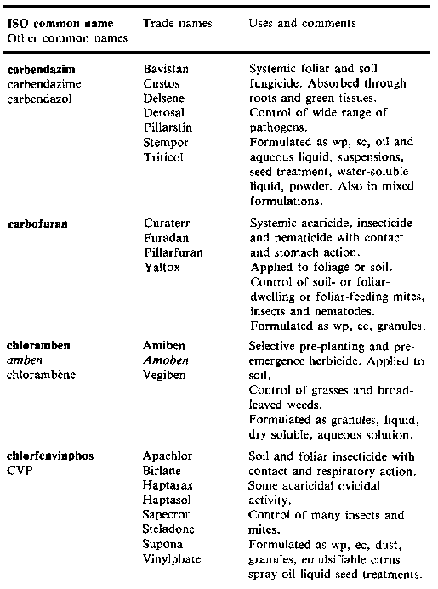
Table part III

Table part IV
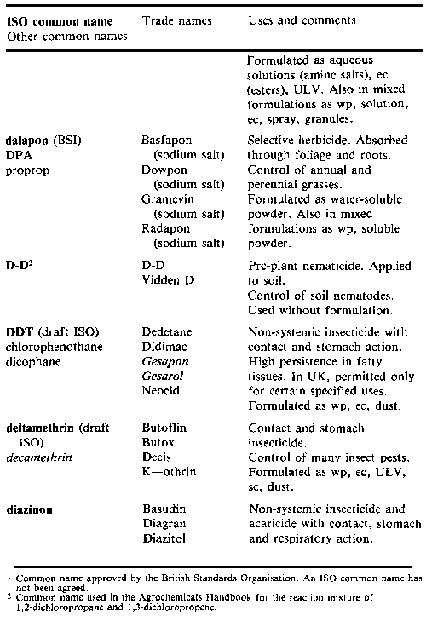
Table part V
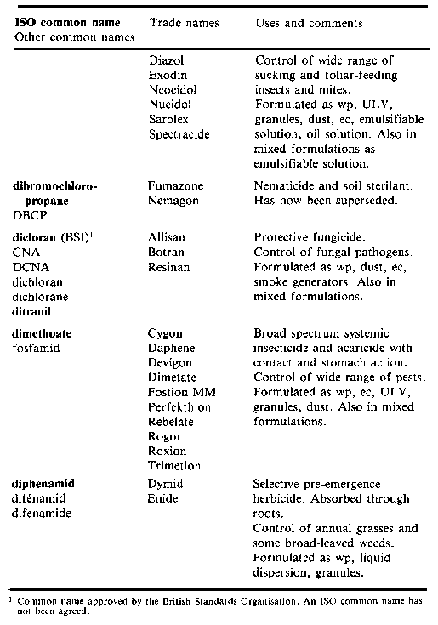
Table part VI

Table part VII

Table part VIII

Table part IX

Table part X
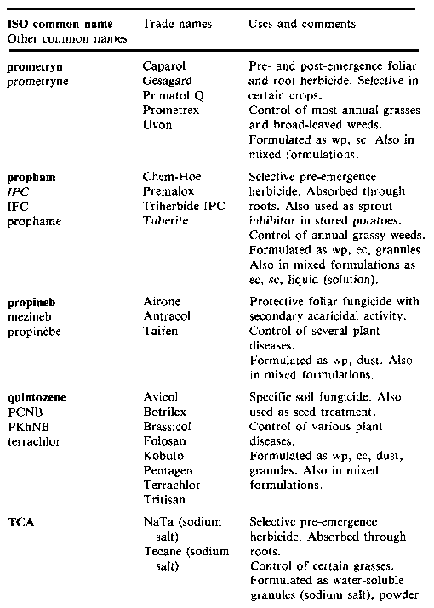
Table part XI

Table part
XII
D. Index of trivial names
(Other than the common name used for the title of entries)

Index part I

Index part II

Index part III

Index part IV

Index part V
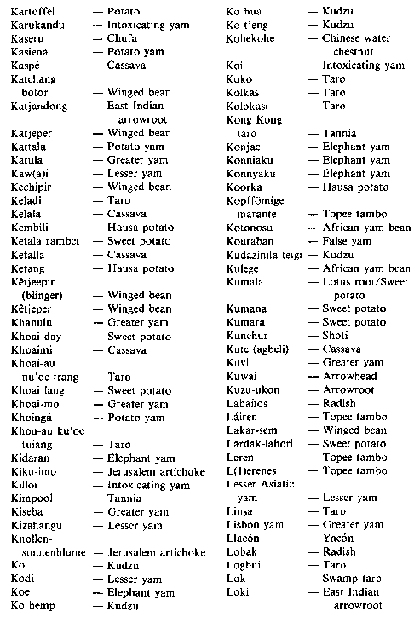
Index part VI

Index part VII
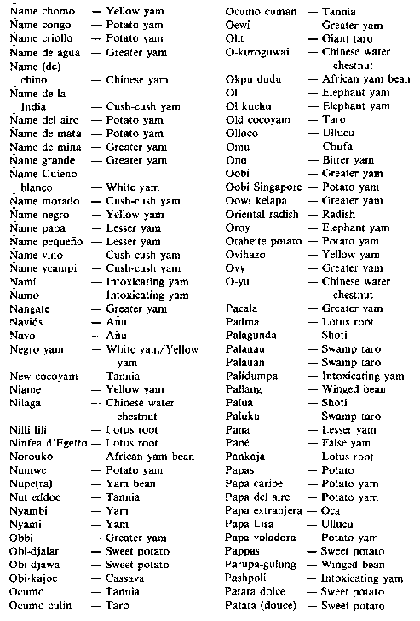
Index part VIII
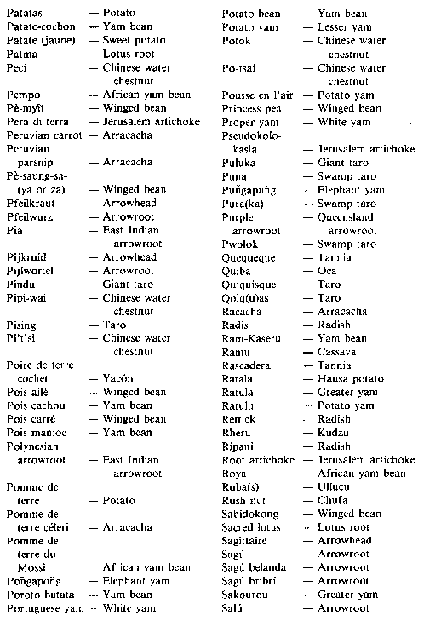
Index part IX
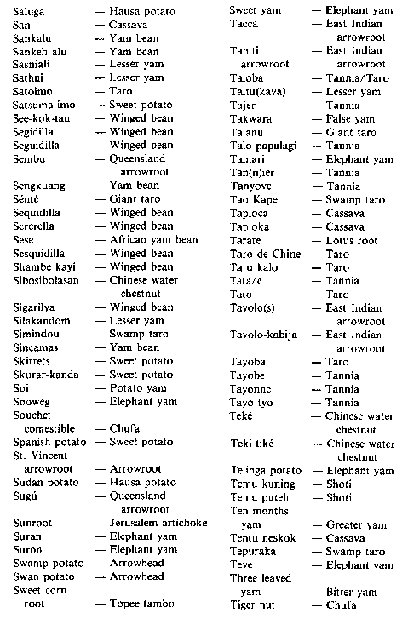
Index part X

Index part XI

Index part XII
Printed for Her Majesty's Stationery Office by Hobbs the
Printers of Southampton
(3202/85) Dd8304964 3/87
G3371