 |
| ||||||||||||||||||||||||||||||||||||||||||||||||||||||||||||||||||||||||||||||||||||||||||||||||||||||||||||||||||||||||||||||||||||||||||||||||||||||||||||||||||||||||||||||||||||||||||||||||||||||||||||||||||||||||||||||||||||||||||||||||||||||||||||||||||||||||||||||||||||||||||||||||||||||||||||||||||||||||||||||||||||||||||||||||||||||||||||||||||||||||||||||||||||||||||||||||||||||||||||||||||||||||||||||||||||||||||||||||||||||||||||||||||||||||||||||||||||||||||||||||||||||||||||||||||||||||||||||||||||||||||||||||||||||||||||||||||||||||||||||||||||||||||||||||||||||||||||||||||||||||||||||||||||||||||||||||||||||||||||||||||||||||||||||||||||||||||||||||||||||||||||||||||||||||||||||||||||||||||||||||||||||||||||||||||||||||||||||||||||||||||||||||||||||||||||||||||||||||||||||||||||||||||


|
| ||||||||||||||||||||||||||||||||||||||||||||||||||||||||||||||||||
From the charter of the United Nations University
ARTICLE I
Purposes and structure
- The United Nations University shall be an international community of scholars, engaged in research, post-graduate training and dissemination of knowledge in furtherance of the purposes and principles of the Charter of the United Nations. In achieving its stated objectives, it shall function under the joint sponsorship of the United Nations and the United Nations Educational, Scientific and Cultural Organization (hereinafter referred to as UNESCO), through a central programming and co-ordinating body and a network of research and post-graduate training centres and programmes located in the developed and developing countries.
- The University shall devote its work to research into the pressing global problems of human survival, development and welfare that are the concern of the United Nations and its agencies, with due attention to the social sciences and the humanities as well as natural sciences, pure and applied.
- The research programmes of the institutions of the University shall include, among other subjects, coexistence between peoples having different cultures, languages and social systems; peaceful relations between States and the maintenance of peace and security; human rights; economic and social change and development; the environment and the proper use of resources; basic scientific research and the application of the results of science and technology in the interests of development; and universal human values related to the improvement of the quality of life.
- The University shall disseminate the knowledge gained in its activities to the United Nations and its agencies, to scholars and to the public, in order to increase dynamic interaction in the world-wide community of learning and research.
- The University and all those who work in it shall act in accordance with the spirit of the provisions of the Charter of the United Nations and the Constitution of UNESCO and with the fundamental principles of contemporary international law.
- The University shall have as a central objective of its research and training centres and programmes the continuing growth of vigorous academic and scientific communities everywhere and particularly in the developing countries, devoted to their vital needs in the fields of learning and research within the framework of the aims assigned to those centres and programmes in the present Charter. It shall endeavour to alleviate the intellectual isolation of persons in such communities in the developing countries which might otherwise become a reason for their moving to developed countries.
- In its post-graduate training the University shall assist scholars, especially young scholars, to participate in research in order to increase their capability to contribute to the extension, application and diffusion of knowledge. The University may also undertake the training of persons who will serve in international or national technical assistance programmes, particularly in regard to an interdisciplinary approach to the problems with which they will be called upon to deal.
ARTICLE ll
Academic freedom and autonomy
- The University shall enjoy autonomy within the framework of the United Nations. It shall also enjoy the academic freedom required for the achievement of its objectives, with particular reference to the choice of subjects and methods of research and training, the selection of persons and institutions to share in its tasks, and freedom of expression. The University shall decide freely on the use of the financial resources allocated for the execution of its functions ....
|
| ||||||||||||||||||||||||||||||||||||||||||||||||||||||||||||||||||
Preface
A Workshop on Organic Residues in Rural Communities was convened in Denpasar, Bali, Indonesia, 11-12 December 1979, under the auspices of the Indonesian Government Institute of Sciences (LIPI), the Government of the Netherlands, and the United Nations University. Its purpose was to discuss ways and means in which unused organic residues in rural areas of developing countries could be best utilized and turned to human benefit. The workshop generated recommendations for concrete research and development projects to be undertaken in Indonesia.
In total, 52 participants attended the workshop: 24 from Indonesia and 28 from abroad. The foreign participants came from Australia (2), Fiji (1), France (1), India (2), Japan (2), Malaysia (1), the Netherlands (7), the Philippines (3), Sri Lanka (1), Sweden (1), Tanzania (1), Thailand (1), the United States (1), Unesco (1), and the United Nations University (3). Of the Indonesian participants, 10 represented universities and 14 government research institutions.
The meeting was organized in the form of plenary and working group sessions. A general description of bioconversion activities within the programme of the United Nations University was given, followed by the presentation of a number of papers on various aspects of bioconversion. A general discussion was held at the end of each session of the plenary. There were 17 scientific papers presented in these four plenary sessions, covering the importance of residues for various purposes, the agicultural residues available, and the current ways of using them. Summaries of the panel discussions are printed here along with the papers for each session.
After the presentation of all papers, the working group meeting discussed and formulated possible research and development project proposals. Originally, it was planned to have three working groups, to discuss fibrous wastes, carbohydrate residues, and other residues. Because of the obvious interest among the participants, a fourth group on biogas was also formed. These working groups discussed proposals for research and development projects that could be funded by sponsoring bodies. The recommendations of the three initial working groups are summarized and a fuller report of the group on biogas is given at the end of this book. A small team then formulated follow-up actions and research and development proposals for bilateral co-operation between Indonesia and the Netherlands.
We are grateful to the United Nations University, the Government of the Netherlands, the Office of the State Minister for Research and Technology, the Ministry of Agriculture, the Ministry of Education and Culture, the provincial government of Bali, and all others who have contributed to the workshop, for all of their efforts and support to make this gathering possible.
The Indonesian Institute of Sciences
|
| ||||||||||||||||||||||||||||||||||||||||||||||||||||||||||||||||||
Opening address
H. Tb. Bachtiar Rifai
Chairman, Indonesian Institute of Sciences
In this gathering you will review the situation of organic residues in Indonesia as well as in other countries to assess the availability and avenues of utilization of these residues and their effects on the environment.
Among the economic features of such a country as Indonesia and perhaps the countries of some of our foreign guests are a high population growth rate and agricultural production. The effort to produce food for the growing population inevitably generates enormous quantities of organic residues that are not utilized or, at best, are under-utilized. Some of these residues are exerting a strain on the environment.
Another feature of countries like ours is the inadequate development of secondary and tertiary industries. Whether the secondary commodity is used or not depends entirely on economic and social constraints. There must be an economic incentive to utilize these residues, even though they are pollutants, and the necessity to abate that pollution should already be an economic incentive. In Indonesia the inadequate use of these residues is due either to their wide dispersal among small production centres - which creates collection and transportation problems - or simply to a lack of the necessary technological information and skill. Serious efforts should be made to find economical ways to utilize these residues. If this can be done beneficially, they will no longer be wastes, but become new resources to add to our existing, limited ones. In this respect, use of residues means better resource utilization.
These residues are cheap, abundant, and renewable. To deal with them we need to build a multidisciplinary venture impinging on all aspects of the economic life of the community. The basis for their utilization is their chemical composition. This includes recognition of the components that could make the residue valuable, e.g., the carbon to nitrogen ratio, or appropriate nutrients, vitamins, and growth factors. Analysis of inert fractions is also very important because they may change the physical characteristics of the residue and affect its use. Detailed information on the characteristics of the residue will determine the appropriate and environmentally sound technology that should be employed to prepare it for use.
There is no one best approach to organic residue utilization. In each and every situation, possible alternatives need to be evaluated in order to choose the most suitable technology to achieve the desired environmental, economic, and social objectives.
|
| ||||||||||||||||||||||||||||||||||||||||||||||||||||||
The Use of Organic Residues in Rural Communities (UNU, 1983, 177 p.)
Residues of importance as potential animal feeds in Indonesia
A. Djajanegara and M. Rangkuti
Animal Husbandry Research Institute, Agency for Agricultural Research and
Development, Ministry of Agriculture, Ciawi, Bogor, Indonesia
Introduction
Background
Current animal
industries
Potentially useful by-products
and wastes in Indonesia
Overview of
potentially useful residues in Indonesia
Conclusion
Introduction
A detailed description identifying the specific by-products or waste materials in Indonesia that could be used for animal feeds, with or without processing, should preferably be based on a survey. The survey should then aim to quantify, describe, and determine the quality of each potential by-product or waste and place it in proper perspective as to amount available, location, and possible problems that might be associated with its application.
The typical small land holders in Indonesia generally use almost all agricultural residues they generate, and an improved export marketing system has provided an outlet for those by-products not used on the farm. There are times, however - such as just after harvest - when the residues are in excess of the farmers' needs and disposal becomes a problem. Proper processing could turn these by-products into an asset, particularly in the feeding of animals. This paper presents a broad view of potentially useful byproducts and wastes that might be used as animal feeds in Indonesia.
Background
The Republic of Indonesia lies within the tropical zone (between 6�N and 11�S latitude) and consists of a spread of water dotted with islands in an area as large as the whole of Europe. The average yearround temperature is 28� C (23�-35� C), and humidity is high except in the cooler, mountainous area. Rainfall is heavier in the west than in the east, averaging 4,000 mm per year in Bogor (West Java) and only 60 mm per year in the Nusa Tenggara Islands, The population is now about 135 million, with a 2.3 per cent yearly growth rate.
The GNP in 1978 was US$850 million, with agriculture accounting for about half of this amount. Unfortunately, there are few processing centres for agricultural products, so much of the food raised is exported. Because of uneven distribution in local production, this often means that some areas have food shortages. This is exacerbated by an unbalanced distribution of population, with 60 to 70 per cent of the people living in Java, which makes up only 6 per cent of the total land area of Indonesia. This means that any extension of agriculture in Java is limited by land constraints. Furthermore, 75 per cent of all Indonesian livestock is raised in Java.
Except on a few dairy farms and beef cattle ranches, animals are raised in small numbers (one to five head of cattle or five to ten sheep per farmer). There are some medium-sized cattle ranches in Sulawesi and on the Nusa Tenggara Islands. Only 10 per cent of all poultry is raised on medium-sized poultry farms; the rest is family owned.
Rice is by far the main staple crop and occupies the largest agricultural area. Most food is produced by small land-holders who individually sell any excess produce to nearby markets. Most of Indonesian land is dominated by forests, with agriculture covering only 6 per cent of the total land area. Constraints to land ownership and the resulting small-farm system means that small-scale agricultural production is the rule. For this reason, agricultural wastes and by-products are few and widely dispersed, so that collecting enough to make it economically feasible to process it for use as feed will require many farmers to work co-operatively.
Current animal industries
Fish comprises most of the animal protein in the Indonesian diet because it is cheap. Beef and poultry are also consumed; pork is not as popular. Fresh dairy products are not readily available because the cows are raised only in the mountainous areas of East, Central, and West Java. The government is expanding the beef and poultry industries through schemes (BlMAs and PUTP) that provide credit and some technical input for small-scale production.
Cattle. Most of the 10 million head of cattle and buffaloes in Indonesia are in Java and Madura, and are generally kept as draught animals or as investments. Farmers do not usually feed their cattle protein concentrates. Grass and agricultural by-products and wastes are the main feed supplies; the latter are used to the extent that a farmer can produce or find them near his farm. These cattle are therefore sold when the farmer needs money, and no particular live weight is attained before they are taken to market. Old and unused animals are the ones slaughtered at abattoirs. The domestic price of beef is at present around Rp 2,500/kg (US$4) in cities and is not related to quality.
Pigs. The raising of pigs in Indonesia is restricted to certain areas. Data from 1978 showed a population of 4 million pigs, of which 1.3 million are concentrated in North Sumatra and around 1 million in Bali and the Nusa Tenggara Islands. The major limiting factor in expanding pig development (besides feed supply) is religion. The pig competes with humans for the limited amount of grains available; therefore, another source of feed is required. Most pigs are kept as scavengers rather than on a commercial basis.
Poultry. Like pigs, poultry require a high-protein feed; however, "kampung" chickens (estimated at around 97.5 million in 1976) are all kept as scavengers. Kampung hens produce about 30 to 40 per cent of all eggs consumed in Indonesia, and an estimated 80 per cent of all poultry meat is supplied by these birds. The preference for the kampung chicken and its abundant numbers ensure the primary place of this bird over broilers and better-laying breeds for many years to come. The poultry industry is growing, although not as fast as in other ASEAN countries.
Indonesia's duck population is the largest in the ASEAN region (15.2 million in 1976). Duck eggs are widely consumed, often in salted form, but there is little demand for duck meat. In Java ducks are generally kept in small flocks of 40 and are allowed to graze in the paddy fields that supply them with small fish, snails, etc. for their protein needs. The feeding system for ducks in Alabio (South Kalimantan) is more advanced and is based on sago, rice bran, water snails, fish, and coconut pressmeal. These ducks also have a higher laying capacity than the Javanese ducks.
Potentially useful by-products and wastes in Indonesia
Agricultural By-products and Wastes
Rice, as the largest crop, has a potential by-product in the form of rice straw. A common practice in East Java is to burn this straw in the field and return the ash to the soil, whereas in West Java the straw is left in the field and ploughed in later during cultivation. The use of rice straw for animal feed is already practiced, although not maximally. The yield is about 2.3 tons of dry matter per hectare, and production varies all over Indonesia. Several rice mills are in operation in Java, generally in the vicinity of the large cities, and there are also mills on the other islands. Products such as rice bran, rice polishings, and hulls are available in various quantities, depending on how much the mills produce. Rice bran (dedak) and rice polishings (bekatul) are used as feed for poultry, pigs, and some dairy cattle because they are relatively cheap and do not require processing. Recently, doubts have arisen concerning their value for animal feed because of a high phytate and phosphorus content. The main drawback to using rice milling by-products is that mills are widely scattered and it is difficult to collect them continuously from many mills in large quantities, thus making central treatment impractical. For instance, a rice bran oil factory in Krawang (near Jakarta) is at the moment not operating because of a lack of a fresh supply of bran.
Except in some areas such as Lampung and South Sumatra, corn (maize), like rice, is generally produced in small quantities by individual farmers. Corn stover (about six tons of dry matter per hectare) is already fed to cattle, but is not used if there is no livestock near the place of harvest. Corn cobs are generally burned.
Sweet potatoes and cassava are also commonly grown in rural areas. Their leaves are fed to cattle, sheep, or goats. Sweet potato and cassava have no waste products of any significance because their byproducts are known to the farmer as good-quality roughages. Cassava is primarily a food and export commodity, and no waste is available in large quantities. The export price determines the amount of cassava available for local use. The potential production of the leaves is, however, about 1 ton of dry matter per hectare for cassava and about 1.5 tons of dry matter per hectare for sweet potatoes.
Legume straw from peanuts, soybeans, mung beans, bush beans, and other beans is not wasted in Indonesia, but its nutritive value could be increased by better drying methods. The decreasing number of livestock in rural areas may result in some accumulation of legume straw. The yield of peanut and soybean straw is approximately 2.7 tons of dry matter per hectare.
Banana trees are found all over Indonesia, but banana plantations are rare. The stems and leaves, containing about 80 per cent of the total weight, are not usually fed to cattle, except in Timor during the dry season. They are used to supply water to the animals, with Leucaena leaves as the major source of protein. Leucaena is also often used as a cover crop for young plants on coffee plantations, but there are indications that in future it will not be used for this purpose because its growth is difficult to control. The high mimosine content is a limiting factor to its use as feed, and the new low-mimosine Leucaena from Peru is more promising. It has been introduced to Indonesia but is still not widely used.
Heretofore the availability of rubber seeds has been overlooked, and they are now collected by hand. Considering the large rubber plantations in Indonesia, this by product is worth looking into as an animal feed. However, the raw seeds are unpalatable and can cause diarrhoea in animals.
Animal Industry By-products and Wastes
The abattoirs located in large cities are the main source of animal wastes. Rumen contents and manure are the major residues, and in Java some abattoirs slaughter 250 head per day. The wastes are generally used as fertilizer. Hooves and horns are both exported and used as raw materials for handcrafted items, as are the bones. Animal blood, although not completely collected at the abattoirs, provides a protein source for human consumption after the application of simple processing treatment. Blood meal is also available in the market as animal feed. Organs such as the gall bladder, pancreas, thyroid, uterus, etc. are wasted but could be useful for the production of hormones. No gut residue is available from abattoirs.
Manure is the main waste product from the pig and poultry industries. Of the 95 million or so birds in Indonesia, fewer than 10 per cent are raised commercially in units ranging from 200 to 1,000 birds per farm. There is no indication of available feather meal, and recycling of poultry manure to feed ruminants is in the initial stages. In the pig industry, conversion of waste to biogas is practiced, but is limited to a few medium- and large-sized pig farms. The majority of pigs in Indonesia are raised in small numbers as scavengers.
Fishing industry residues are often abundant in fish markets. Unsold fish are generally preserved by salting and sold for human consumption; they are relatively cheap and serve as a major protein source in the daily diets of most people. But fish meal is also produced by a drying process using the free solar energy source of the tropics. Small fish-meal operations exist in Java and South Sumatra. Fish trimmings, heads, intestines, and trash fish are sometimes available and often appear to be wasted or infficiently preserved. This is largely because fishing is scattered over a wide area and ice is not available in remote areas for preserving small, local catches. The possibility of ensiling these after either microbial or acid preservation is promising.
Industrial By-products
There are many coconut plantations in Indonesia, but waste is not available. The stems are used as building material in the rural areas. Copra is collected, dried, and sent to coconut oil factories that produce coconut oil cake as a by-product. This is already used as a feed for animal production, but over two-thirds of Indonesia's production is exported. The protein content is 17 to 20 per cent, with an energy value of 2.5 kcal ME/g dry matter. On occasions the capacity of the factories to extract the oil may be overloaded, so the oil cakes can vary widely in oil/fat content.
Peanut oil cake is also available as a by-product from this oil extraction industry and is also an animal feed. This by-product, in the form of fermented peanut, has a market for human consumption. Palm kernel oil industries exist in Java and Sumatra, but 90 per cent of the palm kernel oil cake is at present exported, leaving no residue in Indonesia.
Wheat milling by-products. Although all wheat is imported, substantial quantities of bran and pollard are available. There are only two companies (in Jakarta and Bali) with a production close to 0.5 million tons annually. The nutritional value of bran is well known; however, again, 95 per cent of the total by-product is exported.
There are 19 small-scale and 3 large-scale fruit canning industries in Java, Sumatra, and Sulawesi, but no information is available on the waste potential from these canning operations.
A by-product from the forestry industry that might be used is sawdust There are about 29 million ha of forestland with a capacity of 43 million m� of logs per annum. The big saw mills are located in Kalimantan and Sumatra, but unfortunately in areas carrying few livestock. About 10 percent of the total wood residue in a saw mill is sawdust, and about 54 percent is total waste (trimmings, chips, etc.). These percentages depend on the type of wood, type of saw, etc. The use of sawdust for animal feed is not practiced, and these products are at present used mostly as raw materials for building materials such as hard-board. In the plywood industry, about 0.7 to 1 per cent of the total by-product is sawdust and 6.5 per cent plywood trimmings with a total recovery of only 39 to 40 per cent.
Sugar cane provides a potentially useful waste, and the increasing demand for sugar will increase the size of sugar plantations. These, in turn, will produce more tops. About 150,000 hectares of land are at present planted with sugar cane, and about 16 tons of top material per hectare are available at harvest. Sugar cane top composition is: 6 per cent crude protein, 37.4 per cent crude fibre, 42 per cent nitrogenfree extract, 2.4 per cent fat, and 29.4 per cent dry matter.
Bagasse, available after extraction of cane juice, is at present not efficiently used. It is available in large quantities, concentrated to some degree near sugar factories. Some of this material is used in the paper industry, but most is used as a cheap energy source for people who live near sugar factories. Molasses is a high-energy feed for animals that is at present fed only to horses. Most of it is used for alcohol production.
Others
Alang-alang grass (Imperata cylindrica Beauv.) has been shown to have at least the same nutritive value as elephant grass (Pennisetum purpureum) when cut at 30-day intervals. Its cultivation for feed is not recommended, however, and its present use is as roofing material for houses in rural areas. The rest of it is burned off. Alang-alang grass covers an estimated 20 million ha, and this is increasing because of shifting cultivation practices over the years. It might have some value as a feed and at the same time this might help to control the spread of the grass.
Although Indonesia is an oil-producing country, oil residues are not at present available. This is because Indonesia exports crude oil instead of refined oil, and therefore no refinery from which hydrocarbon fractions could be obtained is operating. Costs of single-cell protein production from oil residues are unattractive at present, but might become more feasible under certain circumstances at some future date.
Material known as "pasar" waste - consisting of anything from cellulose to plastic and metal scraps - is generated primarily in urban areas and is constantly accumulating. Recycling has been investigated but is not yet being carried out; separation of heavy metals is a problem. Its disposal is essentially a problem of urban sanitation. It does not seem possible to convert it into animal feed, and, even if it were, the process would have little relevance to rural community conditions.
Overview of potentially useful residues in Indonesia
The potential as animal feed materials of the by-products and wastes we have discussed can be fulfilled only if they meet the following criteria:
- They must be present in amounts large enough to justify the capital investment necessary to make them suitable for use.
- The by-product or waste must be such that only the minimum amount of process ing of a type amenable to village technology is required to improve its value as animal feed.
- The by-product or waste should be located in an area reasonably close to the point of final use, and the material should be gathered in a concentrated amount or be easily capable of collection with existing equipment.
- The product resulting from treatment of the residue must be accepted by local farmers and acceptable to their animals.
Given these considerations, the major by-products and wastes that might have a potential and be worth looking into are:
- Rice/corn straw. The production of rice and corn will not decrease in the future; on the contrary, it will increase so more straw will become available. The 8.3 million hectares under cultivation for rice will produce 8.3 x 2 million tons of straw. The main constraint will be collection of the material.
- Sugar cane. The tops and bagasse are not being used at present and generally are burned. The high lignin content is a challenge, and the development of a method to upgrade bagasse as a digestible fibre source or as a substrate for single-cell protein production would be useful.
- Rubber seed. Although at present not used, this product has potential as a feed material. It is easily gathered and is rich in carbohydrates. Work should be carried out to determine and remove the factor(s) responsible for its unpalatability and adverse gastro-intestinal effects.
- Wood. Sawdust also has a potential as feed and is concentrated at saw mills located in Kalimantan.
- Pig and poultry waste. Waste from these animals as manure in the animal industry itself is always available. The collection and recycling of these materials for feed or their use for the production of biogas is possible.
Conclusion
Most of the residues available in Indonesia are already used, although not efficiently. Research to increase their digestibility and nutritive value is important, because these products are at present fed "as is" and have a low feeding value for animals. The major residues that will have a feed potential in the future are presented, as these have potential use as animal feeds because they are not in competition with products for direct human consumption.
|
| ||||||||||||||||||||||||||||||||||||||||||||||||||||||
The Use of Organic Residues in Rural Communities (UNU, 1983, 177 p.)
Major agricultural crop residues in Indonesia and their potential as raw materials for bioconversion
S. Saono and D. Sastrapradja
National Biological Institute, Indonesian Institute of Sciences, Jakarta,
Indonesia Introduction
Present
status of agricultural residues
The
prospects for intensifying and expanding the use of agricultural residues as raw
materials for bioconversion
Major constraints hindering the use of agricultural residues as
raw materials for bioconversion
Conclusions
Bibliography
Introduction
Agricultural production increased significantly during the first and second five-year development plans (Repelita I and 11) in Indonesia. This increase was due more to improvements in the technology of plantgrowing (i.e., the application of mineral fertilizers, the introduction of high-yielding varieties, the adoption of strict plant protection, and the introduction of new planting techniques) than to improvements in post-harvest technology (i.e., handling, storage, and processing of the harvest). As a consequence of this lopsided attention, a significant portion of the harvest has not been efficiently utilized. Because these under-used residues contain considerable amounts of carbohydrates, proteins, lipids, vitamins, and minerals, it is imperative that ways be found to use them. Otherwise they will be wasted and their potential benefits lost.
This paper presents a brief overview on the present status of agricultural residues, their utilization, the prospect for intensifying and expanding their uses as raw materials for bioconversion, and the constraints to be overcome in order to achieve that objective.
In this paper, the following definitions are used:
- residues, the end-products of production that have not been salvaged or recycled. Their economic value is less than the cost of collection and transformation for use.
- bioconversion, conversion of organic materials with the help of micro-organisms.
Present status of agricultural residues
Rice
Rice (Oriza saliva) is the staple food of Indonesia. It is widely cultivated in the country on wet as well as on dry lands, particularly on the six major islands and island groups: Java-Madura, Sumatra, Sulawesi, Bali-Nusa Tenggara, Kalimantan, and Maluku-lrian Jaya, in that order of importance. Its cultivation and processing are labour-intensive and require a large capital input. Therefore, it is not surprising that more than 60 per cent of the total paddy produced in 1976 (approximately 30 million tons) originated from Java-Madura, the most densely populated as well as the most developed and fertile islands in Indonesia.
Because of the magnitude of the harvest and the fact that the method of harvesting and post-harvest processing is largely manual, paddy production generates a huge amount of residues. These consist of straw or stalks, husks or hulls, and bran. The total amount of straw generated in 1976 was about 37.5 million tons; of husks, approximately 6.8 million tons; and of bran, about 3 million tons.
The bulk of the straw is left rotting in the field, sometimes after burning, or is ploughed back into the soil as a conditioner and organic fertilizer. A large proportion of the straw is also used as cattle bedding and feed. As a feed it contains approximately 66 per cent dry matter, 3.4 per cent crude protein, 0.73 per cent digestible protein, and 38.1 per cent total digestible nutrients. A significant quantity of the straw also serves as raw material for board and paper manufacturing. Straw is an excellent substrate for the cultivation of paddy straw mushrooms (Volvariella volvacea). This is widely practiced in West Central Java as a home industry. Under favourable conditions, a yield of 6 per cent is quite usual.
Some of the rice husks are used for fuel. Some of the ash generated is used as washing powder, but the bulk is wasted. Most of the husks around large rice mills, however, are also wasted. In some areas, significant quantities of husks serve as a component of cattle feed. The husk has a quality comparable to that of straw because it contains 91 per cent dry matter, with 3.8 per cent crude protein,1.2 per cent digestible protein, and 19.55 per cent total digestible nutrients.
Although a significant amount of the bran is used as a component of cattle and chicken feed, a larger proportion is not used as it should be. As feed, it contains about 90 per cent dry matter, 10.3 per cent crude protein, and 6.78 per cent digestible protein.
Maize
Maize (Zea mays) is the second staple for many Indonesians, particularly those in Madura, Nusa Tenggara, and Sulawesi. It is mainly cultivated on dry lands in a multiple cropping system. Compared to rice, its cultivation and processing demand less labour and capital input. Major producing islands are in the following order of importance: Java-Madura, Sulawesi, Bali-Nusa Tenggara, Sumatra, Maluku-lrian Jaya, and Kalimantan. Total production in 1976 amounted to more than 2.5 million tons, the bulk of which (about 71 per cent) came from Java-Madura.
Most harvesting and post-harvest processing of maize are still manual operations that generate a large amount of residues, including stalks, husks, skins, cobs, pressed cake, and bran. It is estimated that stalk production per hectare is between two and four tons. Thus, the total quantity of stalks generated in 1976 was between 4 and 8 million tons. The husks, skins, and cobs produced as the result of separating the grains amounted to 1.7,0.34, and 2 million tons,.
Most of the stalks, husks, and skins are left to rot or ploughed back into the soil as a conditioner and an organic fertilizer. A significant proportion of the stalks - particularly the fresh, young ones - are used as green fodder. Stalks have relatively good feed nutritive values, containing about 21 per cent dry matter,1.7 per cent crude protein,1.1 per cent digestible protein, and 16.3 per cent total digestible nutrients. Dried stalks are often used as fuel.
Some of the husks and skin trimmings are also fed to cattle. In fact, they have better feed nutritive values than those of fresh stalks, because they contain higher digestible protein (18.1 vs.1.1 per cent) and higher total digestible nutrients (67.2 vs.16.3 per cent).
A by-product of the oil extraction process is presscake. With its content of 18.1 per cent digestible protein and 74.1 per cent total digestible nutrients, it has a feed nutritive value comparable to that of the whole grain.
Cassava
Cassava (Manihot utilissima) is an important food crop, particularly in places where the soil is relatively poor or in times of food scarcity. It is also an important export commodity in the form of pellets and chips. The plant is widely cultivated in the country either as a monoculture or in a multiple-cropping system. It does not need special attention or large capital input. Major producing islands are in the following order of importance: Java-Madura, Bali-Nusa Tenggara, Sumatra, Sulawesi, Kalimantan, and Maluku-lrian Jaya. Total production in 1976 was around 12 million tons, 73 per cent of which came from Java-Madura.
Since only the roots are collected, harvesting cassava yields large quantities of residue in the form of woody stems, leaves, and soft plant parts. If a mature cassava plant consists of 50 per cent roofs, 30 per cent woody stems, and 20 per cent soft plant parts and leaves, the total residues generated at harvest time in 1976 alone amounted to 7.2 million tons of woody stems and 4.8 million tons of soft parts and leaves.
The roots are usually further processed into pellets, chips, or tapioca flour. The processing generates residues as peels and tapioca flour wastes. The total quantity of peels produced in 1976 was approximately 2.4 million tons. Since only about 10 per cent of total cassava production is processed into flour, the flour wastes generated in 1976 were approximately 0.27 million tons.
Most of the woody stems are generally burned as fuel, while the soft plant parts and leaves - particularly those of non-toxic varieties - are fed to cattle or left on the soil as a conditioner and fertilizer. A significant amount is also used as green fodder, which has good feed values, containing 26 per cent dry matter, 23.1 per cent crude protein, and 13.86 per cent digestible crude protein.
Significant proportions of the peels are fed to cattle, and contain about 5.3 per cent crude protein, 20.9 per cent crude fibre, 1.6 per cent ether extracts, 65.7 per cent nitrogen-free extract, and 6.1 per cent ash. Most of the peels, however, are not used.
The bulk of the flour waste is used as a component of feedstuff. It contains about 90.3 per cent dry matter, 5.6 per cent crude protein, and 3.73 per cent digestible protein. A small amount is also used as a component for the preparation of traditional fermented foods such as oncom (fermented peanut presscake) and tempeh.
Soybeans
Soybeans (Glycine max) are one of the important crops of Indonesia, serving as the raw material of many soybean-based traditional fermented and non-fermented foods, such as tempeh, kecap, taoco, and tahu. It is usually planted in monoculture in rotation with rice. In places with low rainfall, multiple cropping of soybeans with other crops is commonly practiced. Compared to rice, soybean cultivation requires less attention and capital input. Total production in 1976 was about 500,000 tons. The largest share came from Java-Madura, followed successively by Bali-Nusa Tenggara, Sumatra, Sulawesi, Kalimantan, and Maluku - Irian Jaya.
Harvesting and separating the seeds from the pods generate residues in the form of straw and shells. Total straw production in 1976 was about 550,000 tons, while that of shells was approximately 50,000 tons. Significant amounts of residues are produced as the result of processing soybeans into foods. In tempeh preparation, for example, about 28 per cent of the raw material is wasted. Approximately the same proportion (27.4 per cent) is wasted in tabu (soy curd) production. If, in 1973 alone, tempeh and tahu production amounted to 18,000 tons, then the total residues generated amounted to approximately 5,000 tons. No information is available regarding the proportion of residues generated in kecap preparation, but, considering that in 1973 more than 5.5 million litres of kecap were produced, there is no question that the amount of residues is considerable.
The dry straw and shells are usually burned as fuel or left on the field and ploughed back into the soil as a conditioner and fertilizer. The young plant parts and leaves, however, are fed to cattle as green fodder. They have good nutritive value, containing 27.9 per cent dry matter, 24.7 per cent crude protein, and 12.53 per cent digestible crude protein.
No information is available on the use of the bulk of tempeh residues, but in some parts of Java a small proportion of solid residue is used as one of the raw materials for the preparation of second-class tempeh and kecap In the case of tahu residues, the solid portion is usually fed to pigs as a feed component. It contains 22.84 per cent protein, 7.27 per cent fat, 65.42 per cent carbon, and 4.47 per cent ash. The liquid portion is usually discharged into the sewers, causing a considerable pollution problem.
Groundnuts
Groundnuts (Arachis hypogaea) are the second important crop among the pulses in Indonesia. They are widely used as an ingredient of many Indonesian foods and also as a source of vegetable oil. As in the case of soybeans, they are usually planted in monoculture in rotation with rice, while in places with low rainfall they are part of a multiple-crop system. Their cultivation requires about the same amount of labour and capital input needed for soybean production. Total production in 1976 amounted to 300,000 tons, the largest proportion of which (74.54 per cent) came from Java-Madura. Other producing islands are in the following order of importance: Sumatra, Sulawesi, Bali-Nusa Tenggara, Kalimantan, and Maluku-lrian Jaya.
The residues from groundnut production are mainly generated at harvest and during separation of the seeds from the pods, i.e., stems and shells. In 1976 alone a total of about 330,000 tons of stems and 9,900 tons of shells resulted from harvesting and processing. Moreover, oil-extraction processing of the seeds also generates residues in the form of presscake. If about 50 per cent of the total production is used for oil production, then the cake generated in 1976 amounted to about 120,000 tons.
The stems and leaves are mostly fed to cattle as green fodder or as plant meal. In both forms they have relatively good nutritive values. Green fodder contains 17.6 per cent dry matter, 19.9 per cent crude protein, and 13.08 per cent digestible crude protein, whereas plant meal contains 88 per cent dry matter and 16.6 per cent crude protein. Stems that are not suitable for feed are usually left on the field and ploughed into the soil as a conditioner and fertilizer. The dry shells are commonly burned as fuel.
The bulk of the presscake is utilized as an ingredient of feed. It contains 90.15 per cent dry matter, 44.9 per cent crude protein, and 41.32 per cent digestible protein. A significant amount of high-quality presscake constitutes the main ingredient in oncom (fermented groundnut presscake) preparation.
Coconuts
Indonesia is the second largest producer of coconuts (Cocos nucifera) in the world after the Philippines, and copra is one of the more important export commodities. Coconuts grow extensively in the country, covering an area of not less than 2 million hectares. Major producing islands are Sulawesi, Maluku-lrian Jaya, and Bali-Nusa Tenggara. Total production in 1976 was about 3,483 million nuts, or the equivalent of about 6.6 million tons of unhusked nuts and 1.4 million tons of copra.
Coconut is a general-purpose fruit, as practically all parts of it are usable. Husks, coir dust, and shells are the residues after the shelled nut has been obtained. In the preparation of copra from shelled nuts, additional residue is generated in the form of liquid Finally, as the result of oil extraction from copra, coconut presscake is obtained. The amounts of the respective residues in 1976 were approximately as follows: husks, 2.2 million tons, consisting of 1.5 million tons of coir dust and 0.7 million tons of fibre and outer rind; shells, 0.4 million tons; liquid, 0.7 million tons; presscake, 0.4 million tons.
Most of the husks are wasted, but a significant quantity are used for mats and matting, floor coverings, brushes, strong ropes, etc. The shells usually serve as fuel for drying copra. In recent years there has been some interest in using shells to produce activated charcoal. Practically all of the liquid is wasted, and in many cope-producing centres it causes a serious pollution problem. In some places in Java the presscake is consumed as a side dish, but the majority serves as a feed ingredient. It has relatively good feed nutritive values, containing 91 per cent dry matter, 21.3 per cent crude protein, and 18.2 per cent digestible crude protein.
Oil Palm
Oil palm (Elaeis guineensis) is an important export commodity for Indonesia. It is mostly planted on large plantations in Sumatra. In 1976 alone it covered 179,000 hectares, with a total production of about 433,000 tons of oil.
Harvesting the fruit and the oil-extracting process generate considerable amounts of residues as empty stalks, fibres, pulp (pericarps), shells, and cake. The amounts of the respective residues generated in 1976 were approximately: empty stalks, 0.6 million tons; fibre, 0.2 million tons; pulp, 0.8 million tons; shells, 0.3 million tons; cake, 0.6 million tons. Most of the empty stalks, pulp, fibre, and shells are burned as fuel in the factory. The cake generally serves as an ingredient in cattle feed.
Sugar Cane
Although Indonesia is no longer an exporter of cane sugar, sugar cane (Saccharum officinarum) still is an important crop in the country. It is mostly planted on large plantations in Java. In recent years, however, new plantations have been started in Sumatra and Sulawesi, while sugar cane planting by small-holders has also been expanding. In 1976 the planted area covered about 0.2 million hectares. Total refined sugar production in the same year was about 1.3 million tons, with 1 million tons produced by the estates and 0.3 million tons by small-holders.
Cane sugar production generates a large amount of residues, both at the time of harvesting and during the sugar-extracting process. At harvest the main residues are cane tops, while those associated with sugar extraction are molasses, bagasse, and pith. Residues in 1976 amounted to about 3.4 million tons of cane tops, 0.6 million tons of molasses, 3.3 million tons of bagasse, and 1.1 million tons of pith.
Fresh cane tops are commonly used as green fodder. They contain 2.7 per cent digestible protein and 45.7 per cent total digestible nutrients. The dry tops and leaves, however, are left on the soil and (sometimes after burning) ploughed back into it as a conditioner and fertilizer. Large amounts of the bagasse and pith are used as fuels in the factory. They are also important as raw materials for the production of board and paper, but the amount used is not large.
Most of the molasses is exported. Only a small proportion of it is fermented into alcohol domestically, and a still smaller proportion serves as a component of cattle feed. Molasses has a relatively good feed value, containing 74.7 per cent dry matter, 6.5 per cent crude protein, and 3.7 per cent digestible protein.
Rubber
Indonesia is one of the major rubber producers in the world. The plant (Hevea brasiliensis) is widely cultivated in Sumatra, Kalimantan, and Java, on big plantations as well as in small-holdings. In 1976 the area planted was about 2.3 million hectares, producing aporoximately 0.8 million tons of dry rubber.
Latex contains about 4 per cent non-rubber constituents, most of which are in the serum fraction. During latex processing, the serum fraction is washed away. These non-rubber components are protein (1 per cent w/w), lipids (1 per cent w/w), carbohydrates - mostly quebrachitol (1 per cent w/w), inorganic salts - largely phosphates, K, Mg, Na, Ca, Fe, and Cu (0.5 per cent w/w), among others. Except for the lipids, most of the carbohydrates, inorganic salts, and 67 per cent of the latex proteins are in the serum. Thus, approximately 3.5 per cent of the latex is washed away during rubber processing. Assuming dry rubber production in 1976 was about 0.8 million tons (the equivalent of about 2.5 million tons of latex), the non-rubber constituents wasted would have amounted to 17,000 tons of proteins, 25,000 tons of carbohydrates, and 12,000 tons of inorganic salts. They are usually discharged into open streams, thus causing a serious pollution problem.
Coffee
Coffee (Coffea robusta) is one of the most important export commodities of Indonesia. Throughout Asia, only India's coffee production exceeds that of Indonesia. It is cultivated particularly in the highlands of Java and Sumatra. In 1976 the planted area was about 0.4 million hectares, producing about 185,000 tons of dry beans.
Coffee processing generates residues in the form of pulp or husk, hull, and bean. These represent approximately 78, 6, and 16 per cent of the berry. Thus, the residues generated in 1976 amounted to about 309,000 tons of fresh pulp and 24,000 tons of fresh hulls.
No information is available on the use of these residues, but it has been reported that the pulp has a relatively good feed value, containing 91.8 per cent dry matter, 9.2 per cent protein, 3.4 per cent digestible crude protein, and 42.2 per cent total digestible nutrients.
Forestry Products
The importance of forestry products as export commodities is exceeded only by petroleum. In 1977, wood exports totalled more than 15.8 million tons, with a value of US$951.2 million. Tropical forest covers much of Indonesia. In 1976 it covered more than 122 million hectares, producing approximately 16.3 million m� of wood. This consisted of 14.6 million m� of logs and 1.7 million m� of boards. More than 65 per cent of the total came from Kalimantan, about 22.9 per cent from Sumatra, and the remaining 12.1 per cent from the other islands.
Logging and wood processing generate a considerable number of residues in the form of logging wastes, defective logs, sawdust, edgings, slabs, and trimmings. In 1976, logging trees with a diameter larger than 30 cm generated more than 3.1 million m� logging wastes and 1.7 million m� defective logs. Processing the logs in saw mills generated more than 0.37 million m� sawdust, 0.9 million m� edgings and slabs, and 0.61 million m� trimmings. Practically all of the logging debris is left in the forests. This is also the case with the bulk of wood-processing residues, except for an insignificant amount that is burned as fuel.
Livestock
The important domesticated animals in Indonesia include cattle, buffaloes, horses, goats, sheep, pigs, and poultry (chickens and ducks). The total livestock population in 1976 was about 108 million. More than 58 per cent of the animals were in Java-Madura, 21 per cent were in Sumatra, and the remaining 21 per cent were on the other islands.
No information is available on the residues of slaughterhouses in Indonesia, but there are data on the manure produced by these animals. The total annual production of fresh manure is approximately as follows (in kilograms per head): cattle, 5,400; horses, 2,700; pigs, 1,500; sheep and goats, 500; and poultry, 13.
Except for human wastes, most manures are used as organic fertilizers. Only recently has there been an increased interest in using manure as a raw material for biogas production. This practice is still very limited, however.
The prospects for intensifying and expanding the use of agricultural residues as raw materials for bioconversion
Traditional Fermented Foods
Traditional fermented foods such as tempeh, oncom, tape, kecap, and taoco are widely consumed in Indonesia. With the exception of oncom and tape, most of these products are based on whole soybeans. Tape is fermented cassava or glutinous rice, whereas oncom is a fermented peanut/groundnut presscake or solid residue of tahu.
Besides improving the nutritive value, attractiveness, and taste of the raw material, microbial fermentation, in some cases, also extends the shelf-life and reduces the toxic substances present in the basic ingredients.
Owing to the high price of the raw materials commonly used in traditional food fermentation and the abundance of agricultural residues in Indonesia, it would apparently be more economical to utilize certain residues as substitutes for some of the raw materials. These residues may be used singly (e.g., solid waste of tabu for black oncom preparation), or in combination (e.g., a combination of peanut presscake, solid waste of tahu, and solid waste of tapioca flour for red oncom preparation). A number of residues that deserve to be studied further as raw materials for traditional fermented foods are: peanut presscake, coconut presscake, cononut liquid, and the solid residues of tahu, tapioca flour, and tempeh.
As most traditional fermented foods are manufactured on a small scale as home industries using relatively simple techniques and non-sterile conditions, the quality of the end-product often varies from batch to batch or from time to time. Thus, appropriate microbial cultures as well as reliable and appropriate techniques should be developed if a product with a uniform quality is desired.
Animal Feed
As outlined in the preceding section, fresh residues from a number of crops (e.g., maize, cassava, soybeans, groundnuts, and sugar cane) have relatively good feed values.
Because of their seasonal availability there are times of surplus or deficit in supplies of these residues. It is desirable, of course, to have enough available year-round. This probably can be realized by conserving excess fresh residues at harvest time as silage. By this means, not only could residues be kept much longer but their feed value would also be improved. Silage of fresh maize stalks and leaves, for instance, contains higher levels of crude protein (1.9 vs. 1.7 per cent) and total digestible nutrients (18.3 vs. 16.3 per cent) than the fresh material, while its digestible protein content remains the same.
Making silage from agricultural residues has not been extensively practiced in Indonesia. However, considering the abundance and varieties of residues, as well as the fact that most of the livestock is raised on Java and Madura, the time has come to pay more attention to this important aspect of animal husbandry.
Of the many residues, the following deserve particular attention: rice straw, fresh maize stems and leaves, young cassava stems and fresh leaves, fresh soybean stems and leaves, fresh groundnut stems and leaves, sugar cane tops, and fresh coffee pulp. Because these residues are widely dispersed, the silage-making technique should be simple and appropriate for implementation by small farmers.
The presscakes resulting from oil extraction of groundnuts, coconuts, and oil palm seeds also deserve further study as animal feed supplements.
Mushroom Cultivation on Agricultural Residues
Volvariella volvacea is probably the most suitable type of mushroom for cultivation in Indonesia. It has been grown here for a long time, largely on paddy straw, and a yield of 6 per cent is not unusual. Studies that have been conducted in many Asian countries show that V. volvacea grows well on:
- paddy straw, giving a yield of 4.6 per cent,
- oil palm pericarp waste, with a 4.7 per cent yield,
- cotton waste, with a 28.7 per cent yield,
- sugar cane waste, with a 12.4 per cent yield.
In order to maximize the use of available agricultural residues, the most appropriate technique and substrate for a particular environment should be selected. Of the many residues, attention should be given especially to paddy straw, oil palm pericarp, dry maize stems and leaves, sugar cane bagasse, dry soybean shells, dry peanut shells, coconut husks, and sawdust.
Biogas Practically any agricultural residues can be utilized as raw materials for biogas production under suitable conditions provided that the C/N ratio is correct. Most of the principles and technical aspects of biogas production are known. In fact, a number of prototypes of biogas generators were developed in Indonesia and are operating in some places on Java. The main factors hampering the wider use of biogas at present are economic rather than technical.
Organic Fertilizer
As discussed earlier, the bulk of many agricultural residues is left on the field or ploughed back into the soil as a conditioner and fertilizer. In certain soils, the incorporation of fresh residues, particularly those with a high C/N ratio, may result in severe nitrogen immobilization. Therefore, it would be much safer if residues such as rice straw, dry maize stems, sugar cane bagasse, and others with a high C/N ratio were composted first, before being incorporated into the soil as fertilizer.
Most of the principles and technical aspects for composting agricultural residues are known. However, some technical problems in conducting efficient small-scale composting under tropical conditions remain to be solved, such as the minimum size of the pile, the rate of aerating it, the size of the particles, the amount of watering, the effect of residue composition, simple criteria for determining the maturity of the compost, etc.
Owing to the scattered distribution and seasonal availability of the residues, small-scale composting will probably be more economical than a large-scale operation. For example, a number of composting plants have been built in Medan and Surabaya, but there seem to be many obstacles to operating them economically.
Single-Cell Protein (SCP)
Although it probably will not be economical to carry out large-scale SCP production under present conditions in Indonesia, the abundance of raw materials such as molasses, rubber serum, coconut liquid, and liquid waste from cassava flour extraction could justify the initiation of research on a laboratory scale. Some problems that deserve to be studied are the selection of active thermo-tolerant strains of microorganisms, optimal conditions for fermenting the different residues, the appropriate scale of production, the technique for separating the end-product, etc.
Should SCP production eventually be realized in Indonesia, the plants should preferably be located near the source of the raw material. Thus, if molasses is used as the substrate, the plant should be located near or at a sugar refinery. The production scale should also be adjusted to existing facilities, and the micro-organisms should be thermo-tolerant in order to minimize energy consumption for cooling the fermentors. In this way, production costs could be kept as low as possible.
Major constraints hindering the use of agricultural residues as raw materials for bioconversion
Constraints vary with the residues, but, for the most part, they include the lack of economic incentives, assured markets, capital, and managerial initiative. The technology is usually available, but because of the seasonal availability and dispersed distribution of most of the residues, some adjustments will be required to process smaller quantities of residues under tropical conditions. Thus, there is a need for conducting research to adapt technologies for the most appropriate small-scale processing of residues.
Conclusions
Agricultural crop residues are abundant both in kind and quantity. Currently, most of them are wasted on the fields or ploughed back into the soil as conditioners and organic fertilizers. Because of their relatively good feed values, some are also used as animal feed. A much smaller quantity, through bioconversion, serves as raw material for some traditional fermented foods, as well as substrates for mushroom cultivation. However, considerable amounts of copra and rubber-processing residues, e.g., coconut liquid and rubber serum, are still discharged into the environment, causing a serious pollution problem. Because of the lack of economic incentives, capital, managerial initiatives, and, in some cases, suitable technology, progress in wider use of residues is much slower than it would be if there were no such constraints.
Bibliography
ASEAN (Association of South-East Asian Nations). ASEAN Project on Soybean and Protein-Rich Food: Indonesian Progress Report of Research Activities, January-May 1976. National Institute for Chemistry, Bandung, Indonesia, 1976.
Bhushan, B. Agricultural Residues and Their Utilization in Some Countries of South and South East Asia. Residues Utilization - Management of Agricultural and Agro-industrial Wastes, industry Sector Seminars. FAO, Rome, 1977.
Chicco, C.F., and T.A. Shultz. "Utilization of Agro-industrial By products in Latin America," Animal Production and Health Paper No. 4, pp. 125-146. FAO, Rome, 1977.
FAO. Technical Conversion factors for Agricultural Commodities. FAO, Rome, 1972.
_____ Construction Materials, Paper and Paperboard from Agricultural Residues, Residues Utilization - Management of Agricultural and Agro-industrial Wastes, Industry Sector Seminars. FAO, Rome, 1977.
_____ . Agricultural Residues: Quantitative Survey. Agricultural Services Bulletin. FAO, Rome,
1979.
Hedger, J,N,, and T. Basuki. Mushroom Cultivation in Indonesia: Preliminary Report. In press.
Indonesia, Central Bureau of Statistics. Statistical Pocketbook on Indonesia, 1977/1978. 1978.
John, C.K. "Non-rubber Constituents of Hevea Latex and Their Possible Utilisation." In W.R. Stanton, ea., Waste Recovery by Micro-organisms, pp. 110-117. Ministry of Education, Kuala Lumpur, Malaysia, 1972.
Lim, W.C. "Mushroom Cultivation: An Agrotechnology for Rural Development." Technology for Rural Development, Regional Conference, Kuala Lumpur, Malaysia, 24-29 April 1978.
National Research Council. Methane Generation for Human, Animal and Agricultural Wastes. National Academy of Sciences, Washington, D.C., USA, 1977.
_________. Postharvest Food Losses in Developing Countries. National Academy of Sciences, Washington, D.C., USA, 1978.
PANS. Pest Control in Rice. PANS Manual No. 311. 1970.
Problems and Opportunities in Management of Combustible Solid Wastes. International Res. Technol. Corp. 1973.
Rachmen, O., and S. Karnasudirdja. Limbah kilang penggergajian di Kalimantan Selatan den Kalimantan Timur [Sawmill waste in South and East Kalimantan]. Lap. LPHH [Forest Products Research Institute report] No. 116. 1978.
Roestamsjah. Proses pembuatan tabu. Lap, Penel. Protein LKN. 1976.
Saono, S. "Microbes as a Potential Food Source in Indonesia." Bio. Indon., 1: 39-52 11975).
Sastrodimedjo, R.S., and S.R. Simarmata. Limba eksploitasi pada beberapa perusahaan pengusahaan hutan di Indonesia [Logging waste at several forest companies in Indonesia] . Lap. LPHH [Forest Products Research Institute report] No, 120. 1978.
Stahel, G. In N.Y. Botan. Garden,47: 285-29611946).
Stout, B.A., and T.L. Loudon. Energy from Organic Residues. Residues Utilization - Management of Agricultural and Agro-industrial Wastes, Industry Sector Seminars. FAO, Rome, 1977.
Tropical Products Institute. Oils and Oilseeds. Crop and Product Digest No. 1. TPI, London, 1971.
____. Foot Crops. Crop and Product Digest No, 2. TPI, London, 1973.
|
| ||||||||||||||||||||||||||||||||||||||||||||||||||||||||||||||||||||||||||||||||||||||||||||||||||||||||||||||||||||||||||||||||||||||||||||||||||||||||||||||||||||||||||||||
The Use of Organic Residues in Rural Communities (UNU, 1983, 177 p.)
Discussion I
The importance of agricultural residues as potentially useful feed materials is not in question. There are, however, other factors to be considered in assessing the extent to which this potential could be realized. One is the distribution of the residues. Could small quantities in scattered locations be transported easily or economically enough to justify their processing? It is evident that any method of treating them will have to be within the technical competence of the rural communities, but, to be accepted, it would also need to be in harmony with the social structure.
Certain residues are already being used in Indonesia, as discussed in papers that follow. Processing of residues, particularly microbial processing, can introduce problems of nutritional and toxicological acceptability. No hard and fast rules could be laid down as to how these should be dealt with. Various options are open, and the choice will depend on prevailing circumstances.
The utilization of agricultural by-products and wastes in Indonesia
M. Rangkuti and A. Djajanegara
Animal Husbandry Research Institute, Agency for Agricultural Research and Development, Ministry of Agriculture, Ciawi, Bogor, Indonesia
Introduction
The utilization of
some agricultural by-products
The value of
some agricultural by-products
Future
research objectives
References
Introduction
Crop residues occur fairly generally in the rural areas of Indonesia, but their potential for animal feeding is often not fully exploited. This has important consequences because they form a significant part of the animals' feed. Livestock on the small farm is usually kept for draught purposes or as an investment. In either case, its value is diminished if it is not adequately fed. It is possible to increase the nutritive value of certain of these residues, thus improving livestock productivity.
Research to date has concentrated on determining biological value of residues as they occur rather than on methods of increasing this value. Attempts to improve the nutritional quality of fibrous residues have been confined mainly to physical treatments such as grinding. There is a need to explore and, where possible, apply other methods of treatment if their potential value as animal feed is to be realized more fully.
The utilization of some agricultural by-products
On the basis of a survey carried out in Indonesia on the availability of agricultural by-products to meet the feed requirement of ruminants in particular, measurements were made in some of the islands of the amounts actually used for this purpose. Sampling was carried out at the farmer's level and the supply of any material that was included in the ration was measured. Production was measured during harvest-time at two different periods in a year and then averaged over the year.
The dry matter (DM) production of agricultural by-products that are generally fed to animals is shown in table 1. This is the average DM production of the total available by-products of the plants harvested and left in the field. The main product is not included. Replanting material is also subtracted, hence it could be regarded as the net available DM from one hectare of each agricultural by-product. Their proximate analysis was also carried out on samples taken at harvest and sent to the laboratory. Applying these figures, the total digestible nutrients were calculated and are shown in table 1.
Of the agricultural by-products, corn straw gave the higher yield of total digestible nutrients (TDN) per hectare. The average levels at which the various residues were used in feeds were determined. From these figures the total amounts used were calculated. These were compared with the total quantities produced in the different islands
Although Java is the most densely populated island and the one with the most livestock, not all of the residues produced there are used. One reason for this is that the areas of livestock production do not always coincide with those in which the residues occur. Consequently, while some areas may use all the residues produced and may need even more, other areas may not use their by-products at all.
In the islands outside Java, the distribution of animals within the agricultural system is more even, and agricultural production is also small relative to animal need. There are areas where these by-products are in excess but the animal population is small. The inefficient use of by-products in some areas could be altered to provide a potential supply to other areas where residues are already totally utilized.
TABLE 1. Production and Utilization of Agricultural By-products and Wastes in Indonesia
|
Production (tons/ha) |
Percentage Useda | ||||||
|
DMb |
TDNc |
Java |
Sumatra |
Kalimanan |
Sulawesi |
Other islands | |
|
Rice straw |
2.31 |
0.96 |
30 |
40 |
50 |
50 |
60 |
|
Corn straw |
6.02 |
2.74 |
50 |
75 |
75 |
75 |
75 |
|
Cassava leaves |
1.04 |
0.15 |
50 |
75 |
75 |
75 |
75 |
|
Sweet potato leaves |
1.50 |
0.17 |
40 |
80 |
100 |
100 |
100 |
|
Peanut straw |
2.70 |
1.07 |
40 |
80 |
100 |
100 |
100 |
|
Soybean straw |
2.67 |
1.03 |
40 |
80 |
100 |
100 |
100 |
a. Values indicate the percentage of the total supply on each island which is
put to use.
b. DM = dry matter.
c (TDN) = total digestible nutrients.
The size of any centralized unit designed to increase the nutritive value of residues should be in line with the total availability and continuity of supply of agricultural by-products or wastes.
The value of some agricultural by-products
The nutritive value of agricultural by-products has been measured by various workers. Little or no work has been done to increase their nutritive value by chemical treatment. Chemical composition varied among laboratories and samples. Biological evaluation has been carried out by feeding these materials to animals, usually with the addition of a concentrate supplement. These materials are regarded as low nutritive value feedstuffs, hence the need for the supplementary ration so as to meet the animals' nutritional requirements.
Rice Straw
Rice straw is the main agricultural by-product because rice is the principal staple crop in Indonesia. Rice straw is always available and could be increased in quantity or used more efficiently. The DM and energy content of rice straw is shown in table 1. Its chemical composition varies among samples (table 2), but it is a low-protein, high-fibre material. Sudomo et al. (1) have shown the digestibility of the crude protein of rice straw to be around 30.7 per cent.
The amount of rice straw used in animal rations varies among regions, and Mas Datta et al. (2) have reported up to 58.5 per cent rice straw in daily rations for cattle in the village of Situraja (SumedangWest Java), whereas Sukanto et al. (3) reported the inclusion of the straw at a level of about 37.5 per cent in cattle rations in Playen (Yogjakarta). In Bali rice straw is not generally included in cattle rations. In the rainy season the amount used in feed was only about 2 per cent (4), and even in the dry season its use was not increased. Tahyan et al. have suggested that rice straw could replace up to 25 per cent of "native grass" in feed for sheep (5).
Our results show that buffaloes of 200 kg live weight would consume 15 kg rice straw per day if given ad libitum, but this is not a sufficient intake to meet requirements.
Corn Straw
Corn straw is the second agricultural by-product obtained in rural areas. The yield in DM and (TDN) and the percentage used are shown in table 1. The yields of various components of maize are: grains, 35 per cent; husk and skins, 30 per cent; cobs, 30 per cent; and skin trimmings, 5 per cent. About 6.2 tons of DM per hectare from corn straw are produced during harvest-time. The soft stalks are generally fed to animals, while the tougher parts are composted or burned. The ash is then ploughed into the land. The chemical constituents of corn straw are: cellulose, 40 per cent; pentosans, 25 per cent; and lignin, 35 per cent. It has been used for paper production or to make various types of board.
TABLE 2. Proximate Analysis of Some Agricultural BY-products (Percentage Dry Matter)
|
Source |
Dry Matter |
Crude Protein |
Crude Fibre |
Ether Extract |
Nitrogen-Free Extract |
Ash |
Calcium |
Phosphorus | |
| Rice straw | LPP | - | 3.93 | 33.00 | 0.87 | 39.77 | 22.44 | - | - |
| Sv | - | 3.92 | 26.51 | 1.95 | 40.03 | 22.01 | 0.42 | 0.40 | |
| Toha | - | 2.51 | 46.50 | 0.55 | 34.20 | 18.20 | - | - | |
| Corn straw | Sv | - | 10.51 | 29.48 | 2.94 | 36.62 | 13.34 | 0.38 | 0.50 |
| Lubis | - | 3.3 | 20.20 | 0.70 | 31.40 | 4.4 | 0.18 | 0.36 | |
| Cassava leaves | 20.35 | 8.95 | 30.92 | 1.46 | 47.93 | 10.74 | 0.67 | 0.36 | - |
| Peanut straw | Sv | - | 13.10 | - | 2.62 | - | 20.54 | - | - |
| Sugar cane tops | 27.92 | 5.65 | 35.83 | 1.44 | 49.32 | 7.77 | - | - | - |
Corn cobs have short fibres and might be a good feed for ruminants. When cobs are used for fattening cattle, the addition of a suitable concentrate mixture is necessary. With a concentrate mixture of approximately 16.6 per cent crude protein (consisting of fish meal and soybean meal as major protein sources), an average daily gain of 813 9 per head for Onggole cross-breeds and 648 9 per head for Madura cattle was obtained (6). Corn straw fed to cattle with a mixture of urea and molasses could only supply enough nutrients for maintenance.
Cassava Leaves
Few studies on cassava leaves have been made. The young leaves are collected and sold for human consumption, and some are also fed to animals. The stems are generally used as replanting material or, when in excess, as an energy source.
Rice Bran
Large quantities of rice bran are used for livestock feed in all locally produced concentrates at a level of up to 20-25 per cent. Up to 5 kg rice bran per day are also fed to dairy cows, and it is often used for pig and poultry feed. It is estimated that 80 per cent of the total rice bran production is used for animal feeding, leaving 20 per cent for human use.
Sugar Cane
In sugar cane plantation regions, cane tops represent a potential source of forage for ruminants. Such feed has 6 per cent crude protein, 37.4 per cent crude fibre, 41.9 per cent nitrogen-free extract, and 2.4 per cent ether extract with a dry matter content of 29.3 per cent.
Sugar cane tops have been fed to cattle in or near sugar cane regions in Central and East Java, although their biological value was not determined before use. Cane tops increased the feed intake and growth rate of weaned Bali cattle to a greater degree than when the animals were fed elephant grass (Pennisetum purpureum). Feed conversion efficiency was improved in the ration with sugar cane tops (table 3).
Poultry Litter
Until recently, poultry litter has been used in Indonesia as a fertilizer, not as a feed ingredient, though its use in feeds has now started. The litter is composed of poultry manure mixed with feathers, spilt feed, and bedding material that may be chaff, sawdust, chopped straw, or hay. It has the following average compostion: dry matter, 88.3 per cent; crude protein, 14.2 per cent; crude fibre, 20.2 per cent; ether extract, 0:8 per cent; calcium, 11.5 per cent; and phosphorus, 0.54 per cent.
At one time it was feared that the drugs used in poultry feed would inhibit the activity of rumen micro organisms if the litter were fed to cattle, but this does not seem to be so. It has been shown that up to 60 per cent of the concentrate ration of dairy heifers can be replaced by a mixture of poultry litter and rice bran without adverse effects on rate of growth or state of health.
For lactating dairy cows, rice bran could be replaced by poultry litter in an amount equal to 45 per cent of the total intake. This had no adverse effect on the average daily milk yield; however, there was a tendency for milk output to decrease when higher replacement levels were used.
Remarks
By-products from agriculture are generally used in Indonesia in the state in which they occur, there being little or no attempt made to increase their nutritive value by applying the knowledge already available to do so.
There is a need for more research on the nutritive value of a number of agricultural residues and on methods of increasing the efficiency with which they are used by various types of livestock.
The problem remains in certain areas that the localities in which crops are produced do not coincide with those in which livestock are raised.
TABLE 3. Feed Intake, Feed Conversion Efficiency, and Live-Weight Gain of Weaned Bali Cattle Fed Rations Containing Elephant Grass or Sugar Cane Tops for Four Weeks
|
Elephant Grass |
Sugar Cane Tops | |
|
Feed intake (kg/day) | ||
|
dry matter (DM) |
2.6 |
3.4 |
|
organic master (OM) |
2.3 |
2.9 |
|
Feed conversion efficiency | ||
|
DM required/leg gain |
13.1 |
11.2 |
|
OM required/kg gain |
11.4 |
9.8 |
|
Live-weight gain, 4-week total (kg) |
4.7 |
7.1 |
Source: Lembaga Penelitian Peternakan, Bogor, Indonesia.
Future research objectives
- A more detailed knowledge of the composition of organic residues is needed.
- The most appropriate methods for increasing their nutritive value for different classes of livestock should be investigated. These may involve physical, chemical, or microbial treatments either singly or in combination.
- The methods adopted must be suitable for use by rural communities or individual farmers.
- Their effectiveness and limitations must be determined and demonstrated to those who will use them.
- If no appropriate method for producing a feed material emerges for a particular residue, consideration should be given to its potential as a substrate for biogas production.
- The technologies developed must be transferred to the villages and to the farmer, due regard being paid to the socio-economic problems that will be encountered in doing so.
References
1. Sudomo et al., "Nilai makanan limbah pertanian untuk ruminansia," Seminar penelitian den hasil penelitian penunjang pengembangan peternakan tradisional (1979).
2. Mas Datta et al., "Kualitas den juantitas ransum tradisional pada peternakan sapi potong," Seminar penelitian den hasil penelitian penunjang pengembangan peternakan tradisional (1979).
3. Sukanto et al., "Status gizi sapi-sapi induk di Playen den Cangkringan, Jogyakarta," Seminar penelitian den hasil penelitian penunjang pengembangan peternakan tradisional (1979).
4. Sudana et al., "Makanan sapi Bali waktu musim hujan," Seminar penelitian den hasil penelitian penunjang pengembangan peternakan tradisional (1979).
5. Tahyan, U., et al., "Pengaruh penggantian rumpus lapangan segar dengan jerami padi kering dalam ransum terhadap pertumbuhan domba," Seminar penelitian den hasil penelitian penunjang pengembangan peternakan tradisional (1979).
6. Rangkuti et al., Bulletin Lembaga Penelitian Peternakan (1973).
7. Toha Sutardi, "Intensitas pencernaan pada kerbau," Proceedings Seminar Ruminansia, Bogor, Indonesia (1978).
Bioconversion of rice straw into improved fodder for cattle
Preliminary treatments
The
present investigation
Usha George and T.K. Ghose
Biochemical Engineering Research Centre, Indian Institute of Technology, Hauz Khas, New Delhi, India
The 38.6 million hectares of Indian agricultural land under rice cultivation in 1977 yielded 42.8 million tons of grain (1) and, as by-products, about 81 million tons of agricultural residues - namely, 66 million tons of rice straw and 15 million tons of husks. The cellulosic and hemicellulosic components of these residues (cf. table 1) are potentially available for saccharification or bioconversion to microbial biomass as an improved feed supplement. Research into the use of these residues is being conducted in our laboratory.
In developed countries these residues are disposed of mostly by burning, but now, there being increased interest in recycling these materials that are available in such large amounts, attention is turning toward making better use of them. The traditional uses of rice husks in India have exploited their calorific and abrasive qualities, and they are now being considered for the prediction of good-quality construction materials, while rice straw finds use as fuel, thatch, packing material, and as cattle feed (3; 4).
TABLE 1. Average Composition of Rice Straw and Rice Husk
|
Composition (%) | ||
|
Constituent | ||
|
Rice strawa |
Rice huskb | |
|
Cellulose |
43 |
35 |
|
Hemicellulose |
25 |
25 |
|
Lignin |
12 |
20 |
|
Crude protein (N x 6.25) |
3-4 |
3 |
|
Ash |
16-17 (silica 83%) |
17 (silica 94%) |
a. Linko (2).
b. NCST (3).
TABLE 2. Energy and Protein Requirements of Cattle and Availability in Rice Husk and Straw
|
Requirement |
Availability | |||||
|
(Amdult main tenance) |
Calf |
Pregnant cow |
Lactating cow |
Per/kg rice husk |
Per/krrice straw | |
| Digestible energy (x 103 kcal/day) | 7.5-12.4 | 7.5-22.9 | 10.5-20.6 | 16.5-49.9 | 1.2B | 1.97 |
| Digestible crude protein (g/day) | 110-150 | 250-410 | 30-260 | 240 - 1,660 | 239 | - |
a. Adapted from Cuthbertson (6)
b. Ranjhan (5).
Forty-two per cent of the adult cattle in India, employed primarily for draught power, are fed and maintained almost entirely on rice straw; it is also fed to cattle of other age groups with supplements. Quite a number of studies are being carried out in India on the use of other vegetable wastes as feed supolements (5). It is therefore of interest to compare the energy and protein requirements of cattle with the energy and protein available in rice straw (table 2). It is evident that both straw and husk, if untreated or unsupplemented, are not of adequate quality even as maintenance rations. The poor nutritive value results from the resistance of these materials to enzymatic attack by rumen microorganisms. This resistance can be correlated to ( i ) the degree of lignification (7; 8), (ii) the crystallinity of the cellulosic component (9; 10), and (iii) the high silica content (11). In addition, the abrasive quality of rice husks makes ingestion of untreated materials dangerous. Treatment of these materials before feeding to animals is essential.
Preliminary treatments
Non-biological treatments have been used to render straws and other lignocellulosic materials more digestible for cattle (12; 13), or more susceptible to microbial or enzymatic attack (12). Briefly, physical treatments include: (i) size reduction, which increases the surface area of cellulosic and lignocellulosic residues, decreases the crystallinity (14; 15), and therefore increases the susceptibility to chemical action (16) or enzymatic attack (fig.1) (10; 14); ( ii ) moist heat treatment, resulting in thermal hydrolysis and caramelization of sugars (17); (iii) ultraviolet, gamma, or electron irradiation, which lowers the degree of polymerization of cellulose and lignin and partially disrupts the lignocellulosic complex (8). Generally, however, these methods are energyintensive and uneconomical on a large scale.

FIG. 1. Relationship between Lignin Content and
In Vitro Digestibility for NaOH-Treated Hardwoods
Chemical treatments, particularly NaOH treatment, have been used successfully (8; 16; 18). These include the use of (i) alkali and (ii) oxidizing agents such as SO2, NaClO2 (or ClO2 ), H2O2, O3, etc. The alkali causes swelling and separation of the cellulose, partial removal of lignin, lowering of the crystallinity of the cellulosic fraction, and partial hydrolysis of the hemicellulose (8; 18). Hot alkali removes a larger portion of the lignin as well as the hemicellulose (Biochemical Engineering Research Centre [BERC], Indian Institute of Technology, Delhi, unpublished data), but such a treatment appears to increase the crystallinity of the cellulose (19). Oxidizing agents act by disruption of bonds in the lignocellulosic complex and within the cellusosic fraction (8).
The present investigation
TABLE 3. Yields of Microbial Protein Derived from Lignocellulosic Materials
|
Substrate |
Treatment |
Organisms |
Maximum Protein Yield (%) |
|
Rice straw |
alkali |
Cellulomonas sp. and Alcaligenes faecalis |
20a |
|
Paper mill waste fibre |
- |
S. pulverulentum |
13.8b |
|
Barley straw |
alkali |
T. reesei |
25.8c |
|
Sawdust |
acid |
Ch. cellulolyticum |
21d |
|
Sawdust |
- |
Ch. cellulolyticum |
22.2e |
|
Bleached kraft pulp |
- |
Ch. cellulolyticum |
21.2e |
|
Wheat straw |
alkali |
Cochliobolus specifier and other fungi |
13.9f |
|
Rice straw and potato peelings |
- |
S. pulverulentum |
12.5g |
a. Han (20)
b. Eriksson and Larsson (21).
c. Peitersen (22).
d. Moo-Young et al. (23).
e. Pamment et al, (24).
f. Chalal et al.
(25).
g. Ghose, George, and Selvam, unpublished data (BERC, 1979)
Chemical treatment has also been used to render lignocelluiosic materials susceptible to microbial attack (table 3). Work is being done in our laboratory to develop a low-technology process for the conversion of rice straw to improved fodder. It is particularly useful and highly desirable to use such a fodder in Indian villages. A lignocellulosic fungus strain of Sporotrichum pulverulentum, with a well-defined enzymatic capacity (26; 27) and having a favourable amino acid composition of its potential biomass (26; 28), was chosen for this preliminary work.
The effect of mild chemical treatments on protein production of S. pulverulentum grown on rice straw was studied. The treatment and growth conditions are shown in table 4 and the results in table 5. Very poor growth (mostly in the form of spores) and production of protein were observed. Another series of experiments was conducted, therefore, to study the effect of a supplementary carbon source (cane molasses) and slightly different preliminary treatments on protein production by S. pulverulentum. The treatments were similar to those shown in table 4 with some modifications. Instead of the "dry" caustic treatment, as reported by Wilson and Pigden (18), a partially de-lignified straw was prepared by autoclaving 10 9 of straw with 3 9 NaOH in 100 ml of water for one hour. Following the treatments, the caustic or acid was removed by washing until the wash water was neutral. The medium used contained 0.1 g cane molasses, 0.1 9 (NH4)2SO4 per 10 ml distilled water, 2 9 straw, and 10 ml medium in a 250 ml Erlenmeyer flask inoculated for five days at 37 C. Three flasks and one control were used for each treatment. In addition, protein production by an Aspergillus sp. isolated from rice straw was also studied in the same manner. The results are shown in table 6.
TABLE 4. Treatment of Rice Straw and Growth Conditions for Protein Production ( Kjeldahl ) by Sporotrichum pulverulentum
| Treatment | |||
|
1a |
2b |
3 | |
|
Chemical |
NaOH |
NaOH |
H2SO4 |
|
g chemical /100 g straw |
6 |
6 |
1.6 |
|
Ratio of water to straw |
1:4 |
6:1 |
3:1 |
|
Incubation |
30 C, 24 h |
100�C, 15 min |
100� C, 30 min |
|
pH adjustment |
washing |
washing |
5 % NH3 |
|
Final pH |
pH 7 |
pH 7 |
pH 4.5-5.0 |
|
Nutrients | |||
|
(g/40 ml water/20 g straw) | |||
|
(NH4)2SO4 |
1.2 |
1.2 |
- |
|
KH2PO4 |
0.75 |
0.75 |
0.75 |
|
MgSO4,7H2O |
0.12 |
0.12 |
0.12 |
|
Inoculum |
mycelial fragments of S. pulverulentum | ||
|
Incubation |
37�C, 7 days | ||
a. Wilson and Pigder (18).
b. Han and Callihan (29).
TABLE 5. Effect of Various Treatments of Rice Straw on Protein Production by S. pulverulentum
|
Mg Protein (N x 6.25)/g Straw | ||
| Treatment | ||
|
Uninoculated |
Inoculated | |
|
control | ||
|
Untreated |
26 |
28 |
|
NaOH (spray),0.06 g/g strew |
25 |
27 |
|
NaOH (100� C), 0.06 g/g straw |
32 |
33 |
|
H2SO4 (100�C), 0.016 g/g straw |
22 |
29 |
TABLE 6. Effect of Treatment of Rice Straw on Protein Production by Aspergillus sp. and S. pulverulentum with Molasses as Supplementary Carbon Source
|
Treatment |
Mg Protein (N x 6.25)/9 | |||
|
Aspergillus sp. |
S. pulverulentum | |||
|
Uninoculated control |
Inoculated straw |
Uninoculated control |
Inoculated straw | |
| Untreated | 35 | 47 | 33 | 58 |
| NaOH (100 C), 0.06 9/9 straw | 45 | 49 | 36 | 67 |
| NaOH (120 C), 0.3 9/9 straw | 25 | 39 | 32 | 66 |
| H2 SO4 (100 C), 0.016 9/9 straw | 36 | 44 | 32 | 64 |
Aspergillus sp. produced little protein and further studies with this organism were suspended. S. pulverulentum did show a little increase in protein, even in untreated straw. There was little difference in protein production in the straw following different types of preliminary treatments, and not enough increase over untreasted straw was observed to justify the higher cost
Further studies were conducted with untreated straw. The effect of starch and potato peelings or an infusion from potato peelings (10 g peelings, 50 ml distilled water, boiled for 30 minutes) was explored. These experiments were performed in a manner similar to those using molasses, but with the substitution of 0.1 g starch or potato peelings for molasses. In the case of the infusion, 0.1 g (NH4)2SO4 was added to 10 ml infusion and no other carbon source was used. The results are shown in table 7. The results obtained with potato peelings are probably due to the increased nitrogen content and perhaps to the presence of some growth factors.
TABLE 7. Effect of Starch, Potato Peelings, and Potato Peeling Infusion on Protein Production by S. pulverulentum in Rice Straw
|
Mg Protein/g Straw (Dry) | ||
| Supplement | ||
|
Uninoculated control |
Inoculated | |
|
Starch, 0.1 g/g straw |
30 |
84 |
|
Potato peelings, 0.1 g/g strew |
62 |
125 |
|
Infusion,a 5ml/g straw |
54 |
88 |
BERC, unpublished data.
a. Prepared by boiling 10 g peelings with 50 ml
distilled water for 30 minutes.
The protein yields obtained by certain investigators on lignocellulosic material are shown in table 3. Clearly, our protein yields are lower than those reported by others, but the fact that we have been using simple or no preliminary treatment and much simpler media (25) and yet obtaining enrichment of rice straw appears most encouraging. We have plans to screen several organisms with a view to ascertaining their ability to grow on untreated rice straw either singly or in mixed culture. We are hoping (on the basis of more recent data not reported here) to be able to develop a simple, inexpensive process for the bioconversion of rice straw into improved cattle fodder.
References
1. India, Ministry of Information and Broadcasting, India: A Reference Manual, 1977-1978 (New Delhi).
2. M. Linko, in Adv. Biochem. Eng., 5: 2511977).
3. NCST, Utilization and Recycling of Agricultural Wastes/By-products: A Country Report (New Delhi, 1974).
4. D.H. Grist, Rice, 5th ed. (Longmans, London, 1975), pp. 432-448.
5. S.K. Ranjhan, Animal Nutrition and Feeding Practices in India (Vikas Publishing House, New Delhi, 1977).
6. D. Cuthhertson, "Nutrient Requirements for Farm Livestock: 2. Ruminants," in D. Cuthbertson, ea., Nutrition of Animals of Agricultural Importance, part 2 (Pergamon Press, Oxford, UK, 1969), Pp. 883920.
7. W.C. Feist, A.J. Baker, and H. Tarkow, in J. Animal Sci., 30: 832 (1970).
8. M.A. Millet, A.J. Baker, and L.D, Slatter, in Biotech. Bioeng., 20: 107 (1978).
9. E.B, Cowling, in Biotech. Bioeng. Symp., 5:163 (1975).
10. T. Sasaki, T. Tanaka, N. Nanbu, Y. Sato, and K. Kainuma, in Biotech. Bioeng., 21: 1031 (1979).
11. P.J. van Soest and L,H.P. Jones, in J. Dairy Sci., 51: 1664 (1968).
12. Y.W. Han, in Adv. Appl. Microbial., 23: 119 (1978).
13. M.G. Jackson, Treating Rice Straw for Animal Feed ( FAO, Rome, 19781.
14. T.K. Ghose and J.A. Kostick, in Adv. Chem. Ser., 95: 415 (1969).
15. J. Nystrom, in Biotech. Bioeng. Symp., 5: 221 (1975).
16. Y.W. Han, W.P. Chen, and T.R. Miles, in Biotech. Bioeng., 20: 567 ( 1978).
17. N. Nesse, J. Wallick, and J,M, Harper, in Biotech, Bioeng., 19: 323 (1977).
18. R.K. Wilson and W.J. Pigden, in Canad. J. Animal Sci., 44: 122 (1966).
19. M. Tanaka, M. Taniguchi, T. Morita, R. Matsuno, and T. Kamibuko, in J Ferment, Technol., 57: 186 (1979).
20. Y.W. Han, in Appl. Microbiol., 29: 510 (1974).
21. K.-E. Eriksson and K. Larsson, in Biotech. Bioeng., 17: 327 (1975).
22. N. Peitersen, in Biotech. Bioeng., 17: 129 (1975).
23. M. Moo-Young et al., in Biotech. Bioeng., 20: 107 (1978).
24. N. Pamment et ah, in Biotech. Bioeng., 20: 1735 (1978).
25. I.D.S, Chalal, M. Moo-Young, and G.S. Dhillon, in Canad. J. Microbiol., 25: 793 (19791.
26. B. von Hofsten, "Cultivation of a Thermotolerant Basidiomycete," in G.G. Birch, K.J. Parker, and J.T. Worgan, eds, Food from Waste (Applied Science Publishers, London, 1976).
27. K-E. Eriksson, in Biotech. Bioeng., 20: 317 (1978).
28. B. von Hofsten and A.L. Ryden, in Biotech. Bioeng., 17: 1183 (1975),
29. Y.W. Han and C.D. Callihan, in Appl. Microbiol., 27: 159 (1974).
The use of fibrous residues in South Asia
M.C.N. Jayasuriya
Department of Animal Husbandry, Faculty of Agriculture, University of Peradeniya, Peradeniya, Sri Lanka
Introduction
Chemical
composition
Methods of treating cereal
straw
Feeding value of alkali-treated
straw
The economic feasibility of feeding
alkali-treated straw
Present use of
fibrous residues in India and Sri Lanka
References
Introduction
Crop residues and other agricultural by-products once categorized as wastes have become major components of livestock feed in many Asian countries. The rapid increase in their use has been due to several factors, such as increasing demand for food, greater pressure for agricultural land use, rising cost of better-quality feed, pollution problems due to waste disposal, and the realization of the wasting of enormous quantitites of potential sources of carbohydrates.
With the possibility that world food production may not keep pace with the rapidly expanding population, ruminants in the future will have to use more and more of these fibrous wastes, particularly straws, stovers, and grain mill offals that are available in large quantities.
Of the world annual production of between 2,000 and 3,000 million tons of straws and stovers, Asia produces over 800 million tons, of which about 60 per cent is rice straw, the rest coming from other cereals. Asia produces over 300 million tons of rice straw alone - 90 per cent of the total world production.
India, one of the South Asian countries that uses straw as a major source of roughage for livestock because cultivated green fodder is not available, produces nearly 200 million tons of rice and wheat straw annually. Sri Lanka produces about 2 million tons of rice straw.
Agricultural by-products have many uses in Asia. In Sri Lanka a large proportion of the harvested rice straw is used in the paper industry. In 1978 its two major paper factories used around 47,000 tons of rice straw. Apart from the small quantity of straw used for the feeding and bedding of cattle and buffaloes, most of the straw produced in Sri Lanka is either ploughed in or burned directly on the field. Burning adds a considerable amount of ash to the soil and improves its fertility. Cereal straws are often used for thatching houses in Asian countries. Straw is also a good packing material. Many farmers use straw and stubble as a mulch.
TABLE 1. Chemical Composition of Some Fibrous Residues as Determined by Fibre Analysis Methoda
|
Cell Content |
Well (% of dry) matter) |
Hemi- celluloses |
Cellulose |
Lignin |
Silica | |
| Rice straw | 21 | 79 | 26 | 33 | 7 | 13 |
| Barley straw | 19 | 81 | 27 | 44 | 7b | 3c |
| Wheat straw | 20 | 80 | 36 | 39 | 10 | 6 |
| Oat straw | 27 | 73 | 16 | 41 | 11b | 3c |
| Sorghum stover | 26 | 74 | 30 | 31 | 11 | 3 |
| Sugar cane bagasse | 18 | 82 | 29 | 40 | 13 | 2 |
a. Method of H,K. Goering and P.J. van Soest, in Forage Fiber Analysis,
Agriculture Handbook (US Dept. of Agriculture, Washington, D.C., 1970), cited in
Jackson (1).
b. Acid detergent lignin; the other figures in this column are
permanganate lignin values.
c. Estimated by
subtraction.
Chemical composition
Agricultural by-products are in general poor in nutritive value because of poor and resultant low intake, digestibility although they are used as energy feeds. Cell wall accounts for 70 to 80 per dry matter; cellulose content varies cent of their from 30 to 45 per cent (table 1). The digestible energy intake of such diets is usually not more than 100 kcal/kg livestock on wt0.75 per day, which often is sufficient only for maintenance (1)
Rice straw, the major agricultural by-product of South Asia, is high in lignin and silica. Both these components play an important role in reducing the digestibility of straw. The crude protein content of rice straw is generally between 3 and 5 per cent of the dry matter. Any crop residue with less than 8 per cent crude protein is considered inadequate as a livestock feed because it is unlikely that such residues, without supplementation, could sustain nitrogen balance in an animal. A further deficiency in most fibrous material, especially in rice straw, is the low content of calcium and phosphorus, and probably of trace elements (table 2).
The composition of residues varies with variety, location, and the cultural practices employed in growing the crop from which they are obtained. If the full potential of agricultural residues available in vast quantities throughout Asia is to be realized, it is apparent that some type of treatment before feeding them to livestock should be considered.
TABLE 2. Average Chemical Composition of Rice Straw Compared with That of Alfalfa Hay
| Rice Straw | Alfalfa Hay | |
| Digestible energy (kcal/kg) | 1.9 | 2.5 |
| Crude protein (%) | 4.5 | 17.0 |
| Crude fibre (%) | 35 0 | 27.0 |
| Ether extract (%) | 1.5 | 2.0 |
| Lignin (%) | 4,5 | 6.5 |
| Cellulose (%) | 34.0 | 24.0 |
| Nitrogen-free extract (%) | 42.0 | 40.0 |
| Total digestible nutrients (%) | 43.0 | 57.0 |
| Ash (%) | 16.5 | 10.0 |
| Silica (%) | 14.0 | 1.5 |
| Calcium (%) | 0.19 | 1.3 |
| Phosphorus (%) | 0.10 | 0.23 |
| Potassium (%) | 1.2 | 1.50 |
| Magnesium (%) | 0.11 | 0.33 |
| Sulphur (%) | 0.10 | 0.30 |
| Cobalt (mg/kg) | 0.05 | 0.09 |
| Copper (mg/kg) | 5.0 | 14.0 |
| Manganese (mg/kg) | 400 | 30 |
Source: Clawson et al. (2).
A number of physical, biological, and chemical methods of treatment have been described. Their aim has been to increase digestibility and voluntary consumption, thereby increasing the intake of digestible energy (DE). The treated material is often enriched with nitrogen and mineral supplements in order to make it more complete nutritionally. Some of these methods will be described, the emphasis being placed on chemical methods of treatment. Cereal straws will be considered because they form the major agricultural by-product of South Asia.
Methods of treating cereal straw
Physical Methods
There are two main physical methods of treatment: grinding and pressure-cooking.
Grinding increases the voluntary intake of straw with or without an increase in digestibility, but it often leads to an increase in DE intake. Jackson ( 1 ) quoted an increase of up to 30 per cent in DE by grinding.
Pressure-cooking can increase digestibility, but is generally costly. It may merit further study as an industrial process. Both these physical methods are less effective than alkali treatment.
Soaking of straw in water before feeding is being practiced in many parts of India. It helps to remove soluble oxalate. Though the digestibility of the fibre is depressed, one to two hours of soaking increases voluntary consumption (3).
Biological Methods
Attempts have been made to decompose lignin by microbial and enzymatic means to increase digestibility of lignocellulosic material. Organisms that degrade cellulose and hemicelluloses are of no use, since they deplete the straw of valuable nutrients that the animal itself can digest. Large increases in in vitro digestibility have been recorded by employing white rot fungi, but farm-scale treatment methods have yet to be designed, and feeding trials with animals must be conducted to evaluate the usefulness and practicality of this method of treatment.
Chemical Methods
Attempts to increase the feeding value of poor-quality roughages date back to the early 1900s, when Kellner and K�her in Germany observed that, after sodium sulphite treatment in the paper-making industry, straw pulp was highly digestible (88 per cent) for cattle. Further developments led to the Beckmann method of treatment that had application in Germany for some years beginning in 1921. It is recorded that since the Second World War more than 2 million tons of straw have been treated by this method in Norway alone. Since the early 1960s there has been a revival of interest in straw treatment and several methods of this have been developed. They vary in cost of treatment, effectiveness, and suitability under different conditions.
Many chemicals have been tested, but sodium hydroxide has been found to be the most effective. The effect of sodium hydroxide is to dissolve lignin, silica, and hemicelluloses. Cellulose is not dissolved. The degree of solubilization of cell wall material increases with higher concentrations of the alkali (table 3). Either "wet" or "dry" methods of alkali treatment can be applied to straw.
Wet Methods
TABLE 3. Effect of Varying Levels of Sodium Hydroxide on Cell Wall Material of Wheat Straw (Grams per 100 Grams of Original Untreated Straw Dry Matter)
|
Treatment (9 NaOH/100 9 straw dry matter) |
Cell Wall |
Cellulose celluloses |
Hemi |
Lignin |
Silica |
| 0 | 74.7 | 36.3 | 24.4 | 7.9 | 5.2 |
| 1 | 71.7 | 37.8 | 21.1 | 6.7 | 4.6 |
| 2 | 70.8 | 36.8 | 21.6 | 6.4 | 4.4 |
| 3 | 69.9 | 38.0 | 20.6 | 5.9 | 4.2 |
| 4 | 68.1 | 36.8 | 18.8 | 5.7 | 4.2 |
| 6 | 68.8 | 38.6 | 19.2 | 5.5 | 4.2 |
| 10 | 66.6 | 38.9 | 17.9 | 5.2 | 3.7 |
| 15 | 61.9 | 39.5 | 12.9 | 4.8 | 3.3 |
| 25 | 59.8 | 38.9 | 10.8 | 4.6 | 3.3 |
Source: Sharma (4).
Beckmann method. Straw is soaked in 10 or more litres of a 1.5 per cent NaOH solution per kilogram of straw (12-15 kg NaOH/100 kg straw in a volume of 800 1,000 litres of water) and washed in a closed system with extra water after an appropriate period of soaking (18-20 hours). In this way a wet straw is produced with a sodium content of 2 per cent. The method increases the organic matter digestibility by about 20 percentage units for the expenditure of 4-6 kg NaOH/100 kg straw. Straw treated by this method has been fed to livestock on farms in Norway for the past 40 years. One-third to one-half of the total roughage requirement (15-20 kg/day) is given as treated straw. This method, however, has the following disadvantages:
- it requires a large quantity of NaOH; about 8 kg of NaOH are used for every 100 kg of straw;
- a large volume of water is required - a total of about 50 litres per kilogram of straw for treatment and washing;
- 20 to 25 per cent of the original dry matter is lost because of leaching;
- it creates a pollution problem because wash water has to be discarded.
Torgrimsby method (modified Beckmann method). In view of the pollution problem created by the Beckmann method, Torgrimsby in 1971 suggested a closed system in which the amount of water added to the system is equal to the amount of water removed in the treated straw. The method was further developed by Wethje in 1975, and the straw treated by this method is now being evaluated by the Agricultural University of Norway. The easiest way to visualize the Torgrimsby method is to follow the daily sequence on a small-scale farm. Three tanks are needed, each with an attached drain board. Tank A contains 1,000 litres of a 1.5 per cent NaOH solution in which 100 kg of straw, in bundles or bales, are soaked. The first washing tank, B. is twice as long as A and contains 2,000 litres of water. The second washing tank, C, the same size as A, contains 1,000 litres of water.
| Step | Time | Operation |
| 1 | 07.00 | Remove treated straw from A and place on board to drain. This straw was placed in A the day before at 12:00 noon. |
| 2 | 08.00 | Remove drained treated straw from board and place in B. Place fresh (dry) straw (100 kg) in B as well. |
| 3 | 12.00 | Make up NaOH concentration of A by adding 4 kg NaOH. Remove fresh straw from B and place in A. Remove treated straw from B and place on board to drain. |
| 4 | 13.00 | Remove treated straw from board and place in C. |
| 5 | 16.00 | Remove treated straw from C and place on board to drain. |
| 6 | 17.00 | Transfer 300 litres of water from C to B to make up the volume of the latter (100 kg fresh straw removed 300 litres of water earlier). |
| 7 | 18.00 | Wash treated straw on drain board of C with 300 litres of fresh water by pouring over the straw. This runs into C, making up its volume. The treated straw is now ready |
Straw treated by the Torgrimsby method has a dry matter content of about 20 per cent and a sodium content of about 2 per cent. In vitro dry matter digestibility is about 70 per cent, an increase of 32 per cent over the untreated digestibility of 38 per cent (5). The method has the following advantages:
- it uses less NaOH than the Beckmann method;
- it uses less water than the Beckmann method;
- dry matter loss is reduced;
- there is no pollution problem because it is a closed system.
It appears to be ideal for small-scale farms in Asia unless field trials prove otherwise.
Dry Methods
Spray treatment. With a view to eliminating the disadvantages of the Beckmann method, Wilson and Pigden (6) evolved a dry process of treatment in which straw is treated with a small volume of concentrated solution of NaOH. The straw is sprayed or sprinkled with the NaOH while being mixed. Research has shown that 4 to 6 kg of NaOH dissolved in 200 litres of water is adequate to wet 100 kg of straw. The quantity of solution required is less (100-120 litres) if a pressure sprayer is used. In a small-scale operation for feeding a few animals, one worker could apply the NaOH solution using a sprinkling can while another turns the straw with a fork. The efficiency of treatment would be less when using a sprinkling can because of poor wetting of straw.
For treating large batches of straw, a screw auger with spray nozzles inside it could be used quite effectively. Another possibility is a horizontal mixer with an overhead spraying device. Both these simple pieces of machinery could be worked either manually or with farm power.
Straw treated in this way is moist and has a pleasant yellow colour and a pleasing odour. Treated straw has a pH of 10 to 11. Animals eat this straw readily, often 20 to 30 per cent more than untreated straw. Digestibility is often increased by 10 to 15 percentage units. Sodium content increases by approximately 0.6 percentage units for every kilogram of NaOH per 100 kg of straw added. When treated with 4 kg NaOH/100 kg straw, the titratable alkalinity is equivalent to 0.5 kg NaOH.
Bulk treatment and stacking. One way to increase the effectiveness of the alkali is to heat the treated straw to a temperature of 80 to 90 C. A practical way of doing this would be to spray the straw with the minimum amount of sodium hydroxide solution and stack the damp, treated straw (10-20 litres per 100 kg straw). If the stack is big enough (3-4 tons), the treated straw will heat up to a temperature of 80 to 90 C. The heating is caused by the chemical reactions between the NaOH and straw. The temperature reaches a peak during the first 3 days and then declines for another 15 days or so to ambient temperature. As a result of heating, moisture evaporates, leaving the straw sufficiently dry for storage. The stack must be made at a well-ventilated site and must not be covered. The initial moisture content of straw should not exceed 17 per cent before treatment.
Though this method looks attractive, it may not be suitable for small-scale farm situations, because a specially designed straw treater is required for the proper penetration of NaOH in a small volume of water (10-20 litres per 100 kg straw). (Such a machine has been produced in Denmark and has shown good results.) The digestibility of straw treated by this method is increased by 10 to 15 percentage units.
Bulk treatment and ensiling. Alkali spray-treated straw can be ensiled satisfactorily for up to one year. There is no microbial fermentation, and the straw remains stable because of its high pH. The optimum requirement of moisture in the final product for satisfactory ensiling may vary according to climatic conditions. Trials in Sri Lanka (Jayasuriya and Somasunderam, 1979, unpublished data) have shown that a moisture content of 55 per cent after treatment is ideal for ensiling treated straw under tropical conditions.
After six months, the treated material (4 per cent w/w) had an in vitro organic matter digestibility of 65 per cent (untreated digestibility 43 per cent). Only about 6 per cent of the straw developed moulds. The pH of the treated straw remained between 9 and 10, and the ensiled straw had a pleasant odour. Trials in the United Kingdom (Owen, personal communication) have shown that 40 per cent moisture in the final product is more suitable for ensiling straw in temperate climates.
Ensiling of straw can also be done with calcium hydroxide. If straw is spray-treated with calcium hydroxide and fed to animals on the same day or the day after, it has little or no effect on digestibility. In fact, we recorded a slight depression in in vitro digestibility with calcium hydroxide, possibly because of its low solubility. Trials have shown that calcium hydroxide can be as effective as NaOH if the treated straw is ensiled for five to six months. This, in fact, could be an answer to achieving a more economical method of straw treatment.
The optimum level of alkali for treating straw has varied from experiment to experiment. It appears that the level of alkali required is different for different roughages, diets, and animals. In general, however, digestibility and voluntary intake increase proportionately up to 3-6 kg NaOH/100 kg straw. In Sri Lanka (7), we found that for paddy straws the optimum level of treatment was around 4 kg/100 kg straw, although there were slight differences among varieties. Evidence also suggests that the optimum level of NaOH may vary with the amount of concentrate supplement given to animals. With high amounts of concentrates in the diet, the digestibility of treated and untreated straw often becomes the same. Under such circumstances, high levels of alkali - e.g., 8 kg/100 kg straw - appear to be beneficial, as the high alkalinity of the straw can counteract the fall of rumen pH and ensure favourable conditions for the activity of cellulolytic micro-organisms.
Ammonia Treatment
Treatment of straw and other roughages with ammonia (gas or solution) has great appeal because (i) it does not leave residual alkali as NaOH, and (ii) it increases the nitrogen content of the material by 0.8 to 1.0 percentage unit.
The standard method of ammonia treatment is not practical under most farm conditions in South Asia. Ammonia should be easily available at low cost with suitable facilities for transport and storage. Furthermore, ammonia application should be carried out by trained personnel.
Methods based on ammonia released from urea have been suggested as suitable for our conditions. One such method is now being evaluated by M.G. Jackson at the College of Agriculture, G.B. Pant University of Agriculture and Technology, in India. Chopped wheat straw is sprayed with a urea solution using a sprinkling can so that the final product has a moisture content of 30 per cent. The treated straw is ensiled immediately. Laboratory trials have shown that after three weeks of ensiling with 4 per cent (w/w) urea, straw digestibility increased by 10 to 12 percentage units (from 53 per cent to 63-65 per cent). An in vivo trial with growing calves is now under way.
Urea treatment seems to increase the dry matter intake by 40 to 50 per cent. The treated material has a pleasing yellow colour and is highly palatable for the animals. The ensiled material has to be exposed to air for one to two hours before feeding to rid it of excess ammonia.
Feeding value of alkali-treated straw
Alkali-treated straw can replace hay and silage in the diet of ruminants if the difference in the protein content between the treated straw and the hay or silage can be made good with an appropriate supplement. In Asia, where straws are widely used as a livestock feed, alkali treatment with supplemental nitrogen and minerals could boost productivity more economically than the feeding of cereal-based concentrate supplements. Results of many experiments have shown the possibilities in this direction.
As early as 1968, Donefer showed the digestible energy intake of sheep could be increased from 84 to 188 kcal/kg wt0.75 by alkali treatment (8 per cent w/w) of oat straw supplemented with 2.5 per cent urea. Many feeding trials in South Asia have clearly indicated that weight gain in growing cattle and buffaloes can be increased by 0.2 to 0.3 kg/day by feeding treated straw supplemented with nitrogen. Trials by Pitchchiah in India have shown that treated straw can effectively extend the limited quantities of high-quality fodder. Our trials (8) have also indicated that, by treatment with 4 per cent (w/w) NaOH, the feed value of rice straw can be made equivalent to that of a medium- to high-quality fodder. The few trials that have been done with milch animals suggest that alkali-treated straw can be successfully incorporated even into the diets of high-yielding cows without altering the milk yield or milk composition. There is much evidence to indicate that, in general, alkali treatment increases the feed value of low-quality roughages.
Urea is an accepted source of non-protein nitrogen (NPN) for ruminants. Feeding trials in Sri Lanka (9) and elsewhere have clearly shown that urea is a suitable source of NPN for supplementing alkalitreated straw. Urea levels up to 2-2.5 per cent of the dietary dry matter have resulted in increased digestibility and greater voluntary consumption of dry matter. Non-traditional industrial by-products high in protein could also play a major role in making alkali-treated straw more complete nutritionally. Spent tea leaf (STL), a by-product of the instant tea industry in Sri Lanka, contains 30 per cent crude protein in the dry matter. Trials have shown that STL (about 7 per cent of the total dry matter intake) can be satisfactorily used as a nitrogen supplement for NaOH-treated rice straw (Jayasuriya, 1979, unpublished data). It appears to be just as good as urea as a source of nitrogen.
High levels of concentrate - levels greater than 30 per cent - should not accompany alkali-treated straw diets. Such levels appear to lower the digestibility of the treated straw, and therefore no benefit can be derived from treating straw used such diets.
The pH of treated straw is generally around 10, and every 1 per cent of the alkali used in the treatment increases the sodium content of the straw by about 0.6 percentage unit on a dry-matter basis. While the animal's body does have mechanisms to deal with high-sodium and high-pH feeds, an intake of high levels of alkali-treated material could lead to a certain degree of physiological stress. At lower levels of treatment (4 per cent and below) the stress is more or less avoided.
Extra sodium ingested is almost entirely excreted in the urine, and blood serum sodium levels are not increased. Milk composition is not affected. Animals often drink more water and excrete larger volumes of urine, but no apparent ill effects have been recorded.
The economic feasibility of feeding alkali-treated straw
Cost analyses have been done on data from many feeding trials conducted in various countries to assess the feasibility of feeding alkali-treated straws to ruminants. It is claimed that in Europe substitution of treated straw for hay or silage may be profitable, especially if the straw has no value other than the cost of collecting it from the field and treating it on the farm.
Trials in India have shown that feeding alkali-treated straw can result in substantial gain in terms of feed cost per kilogram gain in live weight and early maturity of animals (table 4).
TABLE 4. The Effect of Dry Treatment of Wheat Straw on the Performance of Dairy Heifers Fed a Wheat Straw-Berseem Diet
|
Untreated Straw |
Treated Strawa | |
|
Dry matter intake (g/kg wt0.75 ) |
109 |
109 |
|
Organic matter digestibility (%) |
59 |
67 |
|
Live weight gain (kg) |
0.49 |
0.64 |
|
Daily feed cost (Rs/animal) |
1.70 |
2.13 |
|
Feed cost/gain (Rs) |
3.47 |
3.33 |
|
Days to gain 100 kg |
204 |
156 |
Source: Naik and Singh, 1977, cited in Jackson (5).
a. Spray-treated
with 9 kg NaOH/100 kg straw.
In Sri Lanka, because of the high cost of NaOH, feeding treated straw under normal conditions may not be profitable. However, during periods of scarcity of good-quality fodder, treated straw could be of considerable value, especially in saving animals from starvation and death.
It is now felt that the rising cost of NaOH may curtail the use of NaOH-treated straw in ruminant diets in many farm situations. Time is now being devoted to a search for cheaper methods of treatment. Ensiling straw with calcium hydroxide and the use of ammonia released by urea have given promising results under experimental conditions. More information is required before these methods can be applied in the field.
Another hindrance in the use of treated straw, as with any new product, is the lack of sufficient information, in physical and economic terms, on the benefit of alkali treatment under real farming conditions at the village level. Animal husbandry in South Asia is more of a family affair in the village; very few large-scale farms are found in these countries. Therefore, the use of treated straw has to be demonstrated with the farmer's animals. Although the economics are favourable, alkali treatment of straw has not been adopted by many farmers in India because it has not been sufficiently demonstrated on farms to convince farmers of its usefulness.
Present use of fibrous residues in India and Sri Lanka
India. The livestock industry in India is mainly geared to produce milk and farm power. Because of the present export policy and high population density, only about 7 per cent of the total cultivated land is devoted to forage crops. Extraction and milling offals are limited in relation to the number of bovine animals. Of the 20 million tons of offal produced annually, about 2 million tons are exported. Thus, the availability of concentrate feed per animal is in the order of 0.2 kg/day. Statistics show that, excluding grazing, dry roughage - mainly wheat and rice straws - constitutes over 50 per cent of the total forage fed to cattle and buffaloes in India (10). This trend will have to continue as higher inputs of high-quality feeds such as forage and concentrate will not be available for future improvement in livestock production. Suitable treatment of straws and other fibrous residues supplemented with nitrogen and minerals will no doubt play an important role in the future of the animal industry in India.
Sri Lanka. Approximately 2 million tons of rice straw are produced annually in Sri Lanka as a by-product of the grain industry. Very little is currently used in the feeding of livestock. Much of the straw is not harvested but is ploughed in or burned directly on the field. Most of the harvested straw (but only 2 to 3 per cent of the total) produced in the northern, central, and southern parts of the island is used in the paper industry. At present it appears to be more profitable to supply the paper industry than to feed livestock, especially when green fodder is available in abundance during rainy seasons. However, with the completion of the diversion scheme of the largest river in the country within the next few years, many uncultivated areas of the country will come under the plough for rice production. This will increase straw production many-fold. Thus, there is a tremendous potential for upgraded straw as a livestock feed in Sri Lanka in the future.
References
1. M.G. Jackson, "The Alkali Treatment of Straws" (review article), Animal Feed Sci. Technol., 2: 105 (1977).
2. W.J. Clawson, W.N. Garrett, and S. Richards, Microbial Utilization of Straw: A Review (California Agric. Ext. Serv. Publ. MA-1, 1970).
3, M.L. Chaturvedi, U.B. Singh, and S.K. Ranjhan, "Effect of Feeding Water-Soaked and Dry Wheat Straw on Feed Intake, Digestibility of Nutrients, VFA Production in Growing Zebu and Buffalo Calves,"J. Agric. Sci., 80: 393 (1973).
4. S.D. Sharma, "A Study of Roughage Silica Solubility" lM.Sc. thesis, G.B, Pant University, Pantnagar, India, 1974).
5, M.G. Jackson, Treating Straw for Animal Feeding, Animal Production and Health Paper No. 10 (FAO, Rome, 1978).
6. R,K. Wilson and W.J. Pigden, "Effect of NaOH Treatment on the Utilization of Wheat Straw and Poplar Wood by Rumen Microorganisma," Canad. J. Animal Sci., 44: 122(1964).
7. M.C.N. Jayasuriya, "Sodium Hydroxide Treatment of Rice Straw to Improve Its Nutritive Value for Ruminants," Trop. Agric. (Trinidad), 56: 75 (1979).
8. M.C.N. Jayasuriya, "Alkali Treatment of Paddy Straw: Effect of Energy and NPN Supplementation on Digestibility and Intake by Sheep," J. Nat Sci. Council, Sri Lanka, 1 980.
9. M.C.N. Jayasuriya, "Urea as a Source of NPN for Ruminants: 11. Effect of Urea as a Source of NPN on Digestibility and Voluntary Intake of Sheep Fed Alkali-Treated Rice Straw," J. Nat. Sci. Council, Sri Lanka, 1980.
10. V.N. Amble, V.V.R. Murthy, K.V, Sathe, and B.B.P.S. Goel, "Milk Production in Bovines in India and Their Feed Availability," Indian J. Vet Sci. Animal Husb., 35: 221 (1965).
Protein enrichment of starchy substrates by solid-state fermentation
J.C. Senez
Laboratoire de Chimie Bact�rienne - CNRS, Marseilles, France
M. Raimbault and F. Deschamps
Centre de Recherche IRCHA, Vert-le-Petit,
France
Introduction
Technical
aspects
Summary
References
Introduction
In spite of current economic constraints, large-scale industrial production of single-cell proteins (SCP) will undoubtedly soon develop in the industrialized countries of Western Europe, Japan, and the USSR, for whom new protein sources are becoming an absolute and urgent necessity. A priori, one would expect the SCP industry to provide a decisive contribution to the problem of hunger in the Third World. In this regard, however, there are several major obstacles.
To be economically viable, an SCP production unit should have a minimal capacity of at least 100,000 tons per year, corresponding to a capital cost of US$50 to 70 million. On the other hand, a plant producing 100,000 tons of SCP from paraffins would require an equal supply of substrate and should thus be associated with an oil refinery having a minimal capacity of about 3 to 5 million tons of crude oil per year. Similar considerations apply to the production of SCP from natural gas or methanol. Such facilities are obviously absent in most non-oil-producing developing countries of Asia, Africa, and Latin America. Moreover, these countries may not have a potential market or an appropriate transportation and distribution network for the commercialization of 100,000 tons of SCP per year.
Clearly, those countries that cannot now import food or feeds because of currency shortage will also not be able to import industrial SCP from abroad. Consequently, it is of utmost importance for them to develop their own protein resources. In addition to hydrocarbons and methanol, a wide variety of raw materials potentially usable for SCP production might be considered. However, most of them are too high in cost to be economically competitive or are available in quantities too low for protein production on a really significant scale. Among the substrates suitable with respect to cost and supply, special emphasis is usually given to cellulosic materials, but, at the moment, the many attempts made in this direction have not been notably successful, the main difficulty being the lack of cellulolytic organisms with an adequate growth rate.
In contrast, starchy materials - more specifically cassava in the tropical regions, or potatoes in more temperate climates - are of obvious interest, both because of their high productivity per hectare, and their excellent rate of conversion to biomass by a great number of fast-growing micro-organisms.
In order to be economically competitive, the production of protein from starch should not be undertaken by classical fermentation in liquid medium, under aseptic conditions, followed by biomass separation and drying. As in the case of SCP production from paraffins and methanol, optimal use of such sophisticated technology would require a minimal production well over the potential market of most developing countries, and would result in high investment and operation costs. Moreover, in the developing countries, the collection, transportation, and storage of large quantities of raw materials would lead to major difficulties.
Given these considerations, a quite different approach is suggested, consisting of protein enrichment of starchy material by a simplified technology that can be applied at the farm or village level, and that will thus simultaneously combine the cultivation of raw material, its conversion into protein, and its direct use for animal feeds. Economically, the decisive advantage of such an integrated approach is that it prevents intermediary profit-taking and speculation that would inevitably develop if either the raw material or the product were commercialized.
To be workable at the rural level, a protein enrichment process should not require aseptic conditions and should be performed in a single operation. Additionally, the final product must be sufficiently rich in protein to be utilizable as such, without a secondary concentration step. This last requisite entails a biotechnological difficulty that has been responsible for the failure of many previous attempts to achieve direct protein enrichment of starchy materials. In a mash of raw material dense enough to be used directly for animal feeding, the major problem is to maintain aerobic conditions and oxygen transfer efficiency so as to prevent anaerobic contamination of the culture.
Tempeh and many other food preparations obtained by solid-state fermentation of soybeans or other materials with filamentous fungi (1-3) are traditionally used in various parts of Asia and Africa, but they do not increase the protein content of the initial materials. On the other hand, procedures for direct protein enrichment of cassava by liquid (4; 5) or solid-state (6) fermentation have been described. However, protein enrichment by the solid technique did not exceed 3 to 4 per cent, and therefore was insufficient for use as a complete feedstuff. The liquid process with fungi presented technical or sanitary problems.
A new procedure for solid-state fermentation (7) fulfilling the above specifications was developed in France. A preliminary report of this technique was presented at the Fifth International Conference on the Global Impacts of Applied Microbiology (81.
Technical aspects
Laboratory Investigations
The principle of this new procedure is based on the homogeneous distribution of spores and mineral salts in the mass of starchy substrate. The preparation of a porous, granulated material with adequate pH, temperature, and moisture content is essential to ensure good aeration and rapid growth of mycelium within the mass.
TABLE 1. Protein Enrichment of Cassava by Solid-State Fermentation
| Initial substrate | |
|
Cassava floura |
100g |
|
SO4(NH4)2 |
9g |
|
Urea |
2.7g |
|
PO4KH2 |
5g |
|
Water |
100-120 ml |
|
Optimal growth conditions | |
|
Temperature |
35�-40�C |
|
Initial pH |
3.5 |
|
Inoculum, spores/g flour |
2 x 10⁷ |
|
Incubation time |
30 hr |
|
Composition of the product | |
|
Proteinb |
18-20 % |
|
Residual sugarsc |
25-30 % |
|
Waterd |
68 % |
a. Carbohydrates, 90 per cent; protein, 2 per cent; water 8-9 per cent.
b. Percentage of the dried product, determined by the Lowry method.
c.
Percentage of the dried product, determined by enzymatic hydrolysis
(lamyloglucosidase) and Somogyi-Nelson titration.
d. Percentage of the wet
product.
TABLE 2. Protein Enrichment of Various Raw Materials
|
Initial Composition |
Final Product | |||
|
Protein |
Carbo hydrate |
Protein |
Carbo-hydrate | |
| Cassava | 2.5 | 90 | 10 | 30 |
| Banana | 6.4 | 80 | 20 | 25 |
| Banana waste | 6.5 | 72 | 17 | 33 |
| Potato | 5.0 | 90 | 20 | 35 |
| Potato waste | 5.0 | 65 | 1 8 | 28 |
All results in percentage of the dried material.
Thus, the coarsely ground raw material, with 30 to 35 per cent moisture, is maintained at 70 to 80 for 10 to 15 minutes by gently steaming to gelatinize the starch granules. After cooling to 40 C, the preparation is mixed with water containing the inoculum (spores), the nitrogen sources (ammonium sulphate and urea), and potassium phosphate, to a 55 per cent moisture content. By means of mechanical stirring, the inoculated substrate spontaneously takes the form of well-separated and uniform granules of about 2 to 3 mm in diameter.
General conditions for protein enrichment of cassava or other starchy materials are summarized in table 1. This method has already been worked out with a variety of starchy materials, namely cassava, whole potatoes, potato wastes from industrial fecula works, and banana refuse. The results are reported in table 2, showing that, after 30 hours of incubation, one obtains a product containing an average of 20 per cent true protein, measured by the Lowry methods, and 25 per cent residual reducing sugars. The rate of conversion of carbohydrates to protein is 20 to 25 per cent.
Up to now, experiments have been performed with a selected strain of Aspergillus niger having high amylolytic activity and suitable amino acid composition. However, it should be pointed out that many other filamentous fungi, particularly among strains traditionally used in Asia for producing fermented foods for human consumption, were successfully tested by this technique. This method does not require aseptic conditions, because selective growth of the mould results from acidic pH, low moisture content, and heavy spore inoculation. Microscopic examination of the products indicates that all spores germinate after six to eight hours, and during the growing phase all the mycelia develop. At the end of the fermentation no spores could be observed. Bacteriological controls of fermented products indicate neither pathogens nor significant development of anaerobic bacteria. The aerobic microflora remain at the same level during the first 20 hours, at which time the number of aerobic bacteria quickly decreases.
Experimental Pilot-Scale Studies
The laboratory results led to the design of new equipment for this solid-state fermentation process (9). All the operations were conducted in a commercial bread making blender modified for that purpose.
Steaming or aeration was done by passing steam or air through the perforated bottom of the tank. A control system using conventional probes was designed to keep suitable pH, moisture, and temperature by stirring the product and spraying it with water or mineral solutions. This control system was monitored by a temperature sensor; as soon as the temperature reached the desired point, pH, temperature, and regulation time could be monitored by a simple check of growth rate and harvest-time.
With the organism now used, the optimal temperature is 40 C, but the same growth takes place at temperatures from 30 to 45 C without a significant change in the final protein yield. The initial moisture content is critical, the optimum being 55 per cent. During the course of fermentation, the water content is progressively increased to a final value of 70 to 75 per cent. The kinetics of a fermentation using potato waste are reported in figure 1, showing the production of protein, reducing sugars, and water content as well as the pH of the preparation. The curve marked by crosses is of special interest, since it shows that during a total incubation time of 30 hours the monitored devices for mechanical stirring and spraying had to operate for only five hours, thus demonstrating the excellent efficiency of the cooling device. Additionally, it corresponds to a remarkably low expenditure of power, a fact of obvious importance with regard to the production cost of solid-state fermentation, thus making it economically feasible at the village level in tropical regions.
Currently, the studies on this solid fermentation process are being actively developed in France by the Office de la Recherche Scientifique et Technique Outre-Mer and the Institut National de Recherche Chimique Appliqu�e in close collaboration with industry for utilization of potato wastes. The scaling-up of the process to a fermentor unit of 1,200-litre capacity (see photograph) is in progress. This equipment, which is expected to be operative in the coming months, will be used for large-scale nutritional and toxicological testing on target animals (pigs and poultry), for further improvements in substrate preparation and growth conditions, and, finally, for the determination of actual investment and operation costs. It is intended that the experiment will be extended to the setting up of trial production units in tropical Asia and Africa, in order to adapt the procedure to local climatic and agroeconomic conditions.
Agro-economic Perspectives

FIG. 1. Solid-State Fermentation of Potato Waste
As already pointed out, the two main sources of starch potentially available for protein enrichment are cassava in tropical countries and potatoes in temperate climates. Protein enrichment of cassava is of special interest in those semi-arid regions of Latin America and Africa where climatic conditions are not suitable for the cultivation of soybeans or other proteinrich feeds.
The productivity of cassava per hectare varies widely from one region to another, depending on climatic and agro-technological conditions. From about 16 tons (harvested weight) per hectare in north-eastern Brazil, the yield can be easily increased by the use of fertilizers and improved cultivation practices to 40 and even 60 tons per hectare. Other advantages of cassava are low production costs, easy storage in the ground for several months, and high calorie content for animal feeding.
TABLE 3. Agro-economic Prospects of Cassava Compared with Soybeans
|
Productivity of raw material and protein | |||
|
Cassava |
Soybeansa | ||
|
Raw material (tons/ha) |
40 |
1.8b | |
|
Moisture content (%) |
70 |
- | |
|
Protein (tons/ha) |
1.8c |
0.6 | |
|
Conversion into animal product (pigs)d | |||
|
Alimentary conversion rate |
3:1 | ||
|
Protein consumption | |||
|
birth to weaninge |
11.3 kg | ||
|
weaning to slaughterf |
25.5 kg | ||
|
totalg |
36.8 kg | ||
|
Overall agro-economic prospects | |||
|
Ratio of protein productivity per ha of | |||
|
protein-enriched cassava to soybeans |
ca. 3:1 | ||
|
Number of pigs that can be fed with protein | |||
|
from 1 ha cassava, with solid-state | |||
|
fermentation |
ca. 50 |
a. 34 per cent protein.
b. Data from US Department of Agriculture.
c.
Based on 20 per cent protein enrichment, with 25 per cent loss of dry matter
during fermentation.
d. From ref. 10.
e. 70 days; + 25 kg diet with 15
per cent protein.
f. 130 days; + 85 kg; diet with 10 per cent protein.
g. 200 days; 110 kg.
On the basis of a productivity of 40 tons per hectare and 20 per cent protein enrichment via solid-state fermentation, cassava or potatoes may provide 1.8 tons of protein per hectare, i.e., the supply required for feeding 50 pigs (table 3). This is about three times the quantity of protein per hectare provided by soybean cultivation in the United States. The crop-yield and protein productivity per hectare of other protein sources conventionally used for animal feeding are shown in table 4.
From October 1978 prices and from data on average yields of agricultural products, one can compare the gross product per hectare of corn, wheat, soybeans, and protein-enriched cassava. Actually, in the case of cassava, the value of the residual sugars (35 per cent, dry weight) should increase the gross product figure. On the other hand, for a rural community combining the production of raw material with protein enrichment and direct use for animal feeding, the real gross product should be estimated, not from the commercial value of protein, but from the value of the feedstock produced. Moreover, as already pointed out, one of the major agro-economic advantages of protein-enriched cassava is that it allows feedstock production in regions where no other suitable source of conventional feed protein is available.
TABLE 4. Optimal Productivity of Protein-Rich Feeds
|
Protein Content | |||
|
Total Yield (tons/ha) |
% |
Tons/ha | |
|
Soybeans |
1.8 |
34 |
0.6 |
|
Rapeseed |
3.0 |
23.3 |
0.7 |
|
Sunflower |
2.5 |
22 |
0.6 |
|
Horse beans |
3.2 |
28 |
0.9 |
|
Peas |
3.0 |
25 |
0.75 |
|
Protein-enriched cassava |
9.0a |
20 |
1.8 |
a. 40 tons per hectare of cassava, with 70 per cent moisture content, 25 per cent lost during fermentation, dry weight
Obviously, to be economically competitive, the process of protein enrichment by solid-state fermentation depends ultimately on the investment and production cost of the process. It would be premature to give a truly accurate estimate in this regard until information is obtained from pilot operations at the farm level. However, in the present state of technological development it can be assumed that the process will prove to be valuable.
Summary
Protein enrichment of starchy materials destined for direct animal feeding was achieved by a simple, cheap, and non-aseptic process of solid-state fermentation applicable at the farm or village level. The process provides feedstuffs containing up to 20 per cent protein and 35 per cent residual sugars derived from cassava, banana refuse, potatoes, and other substrates potentially available in tropical or temperate climates. On the basis of 40 tons productivity (harvest weight) per hectare, cassava and potatoes could thus provide three times more protein than soybeans and compete favourably with the cultivation of corn, wheat, and soybeans.
References
1. C.W. Hesseltine, "A Millennium of Fungi, Food and Fermentation," Mycologia, 57: 149-197 11965).
2. A. Martinelli and C.W. Hesseltine, "Tempeh Fermentation," Food Technol., 18: 167-171 (1964).
3. W.D. Gray, "The Use of Fungi in Food and in Food Processing," Critical Review in Food Technology (Chemical Rubber Co.), 1: 225-329 (1970).
4. A.E. Reade and K.F, Gregory, "High Temperature Production of Protein-Enriched Feed from Cassava by Fungi," Appl. Microbiol., 30: 897-90411975).
5. K.F. Gregory, A.E. Reade, G.L. Khor, J.C. Alexander, J.H. Lumsden, and G. Losos, "Conversion of Carbohydrates to Protein by High Temperature Fungi," Food Technol., 30: 30-35 1 1 976).
6. E.J. Brook, W.R. Stanton, and A. Wallbridge, "Fermentation Methods for Protein Enrichment of Cassava," Biotechnol. Bioeng., 11: 1271-1284 (1969).
7. M. Raimbault and J.C. Germon, "Proc�d� d'Enrichissement en Prot�ines de Produits Comestibles Solides," Pat. B.F. No. 76.06.677, 9 Mar. 1976.
8. M. Raimbault, F. Deschamps, F. Meyer, and J.C. Senez, "Direct Protein Enrichement of Starchy Products by Fungai Solid Fermentation" (paper presented to the 5th international Conference on the Global Impacts of Applied Microbiology, Bangkok, Thailand, 21-26 Nov. 1 977),
9. F. Deschamps and F. Meyer, "Nouveau Fermenteur pour Milieux Solides," Pat B.F. No. 79.02.625,1 Feb. 1979.
10. C.A. Shacklady, in H. Goonelle de Pontanel, ea., Proteins from Hydrocarbons (Academic Press, New York, 1973), pp. 115-128.
|
| ||||||||||||||||||||||||||||||||||||||||||||||||||||||||||||||||||||||||||||||||||||||||||||||||||||||||||||||||||||||||||||||||||||||||||||||||||||||||||||||||||||||||||||||||||||||||||||||||||||||||||||||||||||||||||||||||||||||||||||||||||||||||||||||||||||||||||||||||||||
The Use of Organic Residues in Rural Communities (UNU, 1983, 177 p.)
Discussion II
The first question to be answered, as far as the microbial treatment of lignocellulose is concerned, is: What is the aim of the treatment? It is possible to produce biomass, biogas, or ethanol. The emphasis at this conference seemed to be on biomass production, but it must be admitted that some of the methods proposed do not seem very practical. One chemical treatment before inoculation with a lignin-degrading organism was criticized as using an unnecessarily high concentration of sodium hydroxide, a statement that was disputed but without agreement being reached.
Fermentation in submerged cultures was not favoured for use under rural conditions, and a recommendation was made that surface culture, the so called "solid substrate" technology, should receive more attention. It was suggested that this method should be tried under field conditions. There was also a comment that time is being lost in transferring technology to the villages because of the insistence of research workers on perfecting every factor in the laboratory before taking a process into the field. Much of this work may have little relevance to rural situations where it would not be possible to apply the same constraints as in the laboratory. It was also suggested that, in selecting organisms, it would be advisable first to find out from existing published work what is known of their pathogenic or toxic characteristics.
The chemical treatment of straw offers various possibilities. Sodium hydroxide is very effective in increasing the digestibility of straw, and considerable work has been done on its use. However, its cost, the energy needed to make it, and its polluting effect on the environment all render it unsuitable in the long term for straw treatment in developing countries. Initial results from the use of urea are promising, those from calcium hydroxide less so, but a combination of the two would be worth investigating. It was again emphasized that the reagents and processes that might be suitable in industrialized, temperate-zone countries are not necessarily the best in rural areas of the tropical and sub-tropical countries.
Mini-fermentation technology to produce single-cell protein from molasses
Ir Ign. Suharto
National Institute for Chemistry, Indonesian Institute of
Sciences, Bandung, Indonesia
Ir S. Redyowati B.
Faculty of Engineering, University of Gadjah Mada,
Yogyakarta,
Indonesia
Introduction
Indonesia is an archipelago of 13,367 islands with a total land area of about 1,907,950 square kilometres. A major problem is how to transport and distribute food commodities from one island to another.
The population of Indonesia in 1978 was about 140 million, and the net population growth rate is about 2.2 per cent per year. About 80 per cent of the population lives in rural areas and represents mostly lowincome groups. Some 70 per cent of the population lives in Java and Madura, which make up only 7 per cent of the total land area. Kalimantan, Sulawesi, and Sumatra make up 28, 10, and 25 per cent of the total land area, respectively, and are used as transmigration areas for people from Java. The intensity of agricultural land use in Java and Madura is about 0.07 hectares per person.
The third five-year development plan (Repelita lll) covers the period 1 April 1979 to 31 March 1984. According to the general pattern of long-term national development, as stated in Repelita lll, the priority of national development is still focused on the agricultural sector. A more intensive agricultural system in Indonesia will bring economic advantages, but it will also increase the problem of food processing, particularly within the rural areas and the new transmigration areas where people still tend to live in traditional ways.
Single-cell protein as a possibility for improving the protein supply
In Repelita lll, the protein supply and demand pattern is a problem because of the population growth rate. This increases the requirement for protein and better-quality foods in general. As a consequence, "better-quality foods" implies increased quantities of animal protein.
On the supply side, plant protein is not sufficient to supply total requirements, although the opening-up of new transmigration areas has been adding to food crop production. One way to improve the supply of animal protein for human consumption is to increase the production of animal feedstuffs.
Animal feed production at present is based on fish waste and plant protein sources, but because of their relatively high cost it is necessary to seek others. The new sources must (a) have a high nutritional value, (b) not be competitive with food for human consumption, (c) be economically feasible, and (d) be locally available.
It is possible to introduce single-cell protein (SCP) for animal feeding. Its production will use renewable resources and waste sources such as molasses. SCP can minimize the use of fish waste, soybean cake, peanut cake, etc. for animal feeds. This has been shown in poultry feeding trials.
Average feed consumption by one bird is 100 9 per day. In 1979, the total number of birds was 7,500, needing a total of 750,000 kg feed per day. About 10 per cent of poultry feed is from fish or soybean cake or rice bran, which means that 27,375,000 kg per year of fish, soybean cake, or rice bran could be saved if these materials were replaced by SCP, as shown in table 1. High-grade protein is supplied by some types of single cell micro-organisms.
Raw materials
TABLE 1. Quantities of Present Sources of Protein in Feeds for Various Animals That Could Be Saved by Partial Replacement with Single-Cell Protein
|
SCP in Compound Feed (kg/ton) |
Replaced Protein Source |
% of Total Feed Protein Contributed by SCP | ||
|
Source |
Quantuty (kg/ton) | |||
| Broilers | 100 | SBM | 182 | 36 |
| Laying hens | 80 | SBM | 145 | 38 |
| Turkeys | 50 | FM | 62 | 18 |
| Pigs | 100 | SBM | 182 | 50 |
| Veal calves | 50 | SMP | 114 | 17 |
| Trout | 250 | FM | 308 | 44 |
Source: Or. Dimmling, Unde GmbH, Dortmund, FRG.
a. SBM = soybean meal; FM = fish meal; SMP = skim-milk powder.
Agro-industrial wastes, particularly molasses and sugar syrup, are available in Indonesia. The current status of sugar production in Indonesian factories is increasing not only in quality but also in quantity. In the past ten years, 56 sugar cane factories have processed 12 million tons of cane per year into 1.4 million tons of cane sugar and 480,000 tons of molasses. In Repelita 111, the government has launched a mini-technology for sugar cane factories that are spread throughout such islands as Sumatra, Kalimantan, and Sulawesi.
Three mini-technologies for sugar cane factories have already been set up in Aceh, West Sumatra, and Kalimantan. The capacity of each factory is 2,000 tons per year. The target of this plan is to establish about 200 mini sugar factories. The private sector plans to erect seven mini sugar factories outside Java. One of the aims of the mini sugar factories is to create a model in order to encourage the private sector to erect more factories of a similar kind.
It is clear that the higher the total cane sugar production, the higher the total availability of molasses. The production of SCP from molasses by using mini-fermentation technology is relevant to rural development and particularly to increasing per capita income. Some considerations in the selection of molasses as a raw material are (i) its year-round availability, contributing to the development of mediumand small scale industries throughout Indonesia, (ii) its potential for helping maintain the efforts of lowincome farmers and decreasing unemployment in rural communities, and (iii) the encouragement these factors may be expected to give to an increase in the spontaneous and regular flow of transmigrants from Java to other islands.
The objectives of this project are:
- to study the properties of micro-organisms that are not pathogenic or toxic and have high protein and carbohydrate contents, a rapid growth rate, etc.;
- to study on the laboratory research scale optimum conditions of fermentation, product recovery, safety, improvement of products, etc.;
- to study kinetic analysis of SCP fermentation;
- to study and evaluate the pilot plant for SCP production from molasses;
- to scale up SCP production from the pilot-plant to the commercial scale;
- to carry out field trials of this SCP with broilers, layers, pigs, cattle, fish, etc.
Justification of the Project
Feed is a relatively high-cost item in the production of meat, fresh milk, eggs, and broilers. One way to solve this problem is to develop and implement the use of SCP for animal feeding. SCP can replace some of the usual protein sources in feedstuffs; soybean meal, fish meal, or skim-milk powder will be replaced by SCP with an equivalent amount of protein.
SCPs have some advantages, such as that yeasts can easily be controlled genetically and their protein content is higher than that in conventional feedstuffs. A most important characteristic of these SCPs is their high protein content, ranging from 40 to 80 per cent of their dry weight on a crude protein basis.
The process, which has been in use for several years, is basically an aerobic fermentation, followed by recovery of the cells. The stoichiometry of SCP processes is:
Carbohydrate/yeast
1.68 CH2O + 0.19 NH3 + 0.68 O2 - 10
{CH17O0,5N0,19 ash} cells
+ 0.17
CO2 +1.14 H2O + 80,000
calories
Proposed work programme
The proposed work programme consists of the following.
1. Laboratory research on SCP from molasses to provide a more quantitative basis for future requirements:
- chemical analysis of molasses and products,
- selection of strains of micro-organisms,
- optimum conditions of the fermentation process,
- kinetic analysis of the fermentation product,
- oxygen transfer and uptake by micro-organisms in aerobic fermentation,
- media storage, cell separation, cell drying, and extraction of valuable components from SCP.
2. Establishment of a pilot or prototype plant, provided with all essential production elements including quality control, to facilitate:
- training of scientific manpower,
- scaling-up to commercial plant,
- field trials of SCP products for birds, fish, pigs, cattle, etc.
Approach and methodology
In preliminary research activities on the production of SCP, the scale of operation should be considered first, as this will be influenced by the capacity of the pilot plant and commercial scale in the future. The end-product of fermentation technology will be mini-fermentation technology, in terms of simple prodcedure, simple equipment, and low cost.
The capacity of commercial scale production is planned to be about 1,000 tons per year, using molasses as a raw material substrate. BY comparison, mini sugar factories in Indonesia were designed for a capacity of 2,000 tons of sugar per year. According to this information, the following is the sequence of capacity at each stage.
- The capacity of the commercial plant will be 1,000 tons of SCP per year, 3.3 tons or (3,300 kg) per day.
- The capacity of the pilot plant will be 100 tons of SCP per year, or 334 kg per day.
- The capacity of laboratory activities related to the scaling-up process will be 34 kg of SCP per day. This is possible by using six fermentors (4- to 8-litre capacity each).
Laboratory Research on SCP from Molasses
In preliminary research on bioconversion of molasses to SCP, some aspects of the necessary conditions for SCP production from molasses must be studied (pH range, temperature, mean molasses content, reproduction time, specific growth rate, cell density, productivity, yield, oxygen uptake, kinetic analysis, heat of fermentation, nutrient solution, essential amino acid content, energy and utilities required, selection of the best strains of micro-organisms, etc.). All of the variables must be correlated with the SCP product so that the data obtained can be used to set up the pilot plant.
On the laboratory scale, 2 per cent molasses is used as a substrate with a nutrient solution added. This substrate is then fermented with Fleischmann's active dry yeast in a special fermentor with a capacity of about 4 to 8 litres; its working capacity is 4 litres. The inoculum used is 20 per cent substrate and the temperature is 30� � 0.5�C. Other parameters will be adjusted from a control panel. Fermentation time is ten hours.
The number of cells per litre and the oxygen absorption rate during fermentation can be calculated. The specific growth rate can be calculated using this equation:
X = X0Ekt where
X = total cells at t hour, k =
specific growth rate
X0 = total cells at t
t = fermentation
time
At an agitation rate of 325 rpm, the total number of cells will increase exponentially and will attain equilibrium after eight hours of fermentation. At the higher rate of 490 rpm, the total number of cells will attain equilibrium after seven hours of fermentation. This might be the result of the autocatalysis of cells. Further laboratory development will take place after the joint proposal on feed from agricultural and agro-industrial wastes has been approved.
Estimated cost of the programme
| Research and development will require a budget for: | |
| - equipment (six fermentors with
4- to 8-litre capacity, laminar
flow cabinet, spray drier, extraction unit, digital analytical balance, centrifuge, paramagnetic oxygen analyser, digital pH meter, etc.) | US$400,000 |
| - chemicals and supplies | 150,000 |
| - salaries | 150,000 |
| - miscellaneous | 200,000 |
| Total (for three years) | US$900,000 |
| The investment required for SCP production with a capacity of 100 tons per year, or 334 kg per day, will be: | |
| - quoted equipment | US$450,000 |
| - estimated equipment installation cost | 50,000 |
| - piping | 50,000 |
| - instrumentation with some automatic controls | 75,000 |
| - auxiliaries (e.g., electric and steam power) | 75,000 |
| - buildings | 200,000 |
| - maintenance | 40 000 |
| - utilities | 100,000 |
| - engineering and construction fees | 50,000 |
| - salaries | 120,000 |
| - operation costs | 120,000 |
| - contingency | 170,000 |
| Total (for three years) | US$1,500,000 |
Summary
The demand for and supply of protein are not in balance, nor is the supply adequate for Indonesia's total population of about 140 million (1978), especially when considering the net population growth rate of 2.2 per cent per year and the difficulties of transportation in the archipelago.
To improve the supply of animal protein for human consumption it is necessary to increase the production of animal feedstuffs. SCP from molasses can replace some of the usual protein sources in feedstuffs. The availability of molasses is at least 480,000 tons per year, and this is increasing because mini sugar factories are operating on the islands outside Java. These experiments are to study the optimum conditions of fermentation and to set up a pilot plant and field trials for SCP production. A pilot plant will be set up to process 100 tons per year, the duration of the project will be three years, and the cost of the programmes for research and development and a pilot plant will be US$900,000 and US$1,500,000, respectively. The plant will be located in Bandung.
Bibliography
Anggorodi, R. "Penghematan Bahan Makanan Berprotein Tinggi dengan Ragi Hidro Karbon dalam Ransum Ternak." Jakarta, Indonesia, 1979.
Coursey, D.G. Cassava as Food: Toxicity and Technology. Tropical Products Institute, London, 1973.
"Engineering of Unconventional Protein Production." Chem. Eng. Progress, Symposium Series, 93:65 (1969).
Indonesian Institute of Engineers. Food Policy in Indonesia. 1979.
John, C.K, "Recycling of Agro-industrial Wastes." Science and Technology Seminar, Kuala Lumpur, Malaysia, 1978.
MacLennan, D.G. "Single-Cell Protein." PACE, April 1974, pp. 13-17,
Proceedings of the Second Poultry Science and Industry Seminar. Ciawi, Bogor, Indonesia, 1979.
Rogers, P.L. "Single-Cell Protein from Agricultural and Industrial Waste." Unpublished paper, University of New South Wales, Sydney, Australia.
Vilbrant, F.C. Chemical Engineering: Plant Design. McGraw-Hill Book Company, London, 1959.
Current status and utilization of carbohydrate residues in Indonesia
Ir Ign. Suharto
National Institute for Chemistry, Indonesian Institute of
Sciences, Bandung,
Indonesia
Introduction
The third five-year development plan (Repelita lll, 1979-1984) aims to increase the prosperity of the Indonesian people and lay down a firm foundation for future development. It will be necessary to strike a balance between the agricultural and industrial sectors to ensure economic growth and a more equitable distribution of income between rural inhabitants and city dwellers. The tendency for the poor to become poorer and the rich to get richer is one that needs to be redressed in the interests not only of the people themselves but also of national stability.
The economic growth envisaged during Repelita lll is still based on the agricultural and agro-industrial sectors. About 80 per cent of the 140 million population of Indonesia lives in rural areas, and both rural and city dwellers depend on agriculture for their incomes. But economic growth alone is not the final solution: it must be accompanied by parallel social development. There are important differences in social, political, and cultural influences between rural and city areas, some of which are as follows:
|
Rural areas |
City areas |
|
- lack of science and technology |
advanced science and technology |
|
- lack of trained management |
no lack of trained management |
|
- adequate natural resources |
no natural resources |
|
- protein-calorie malnutrition (PCM) |
low incidence of PCM |
|
- plentiful land area |
no land area |
|
- adequate manpower |
adequate scientific manpower |
|
- little political power |
strong political power |
Commodity trading is mainly in the hands of city people. The rural inhabitants tend to preserve their traditional way of life and remain in the low-income group, many existing below the poverty line. One way of improving their standard of living is to convert their farm residues into more valuable materials for which there is a use and a demand. In effect, this means increasing the value of residues as animal feeds.
Java comprises only 7 per cent of the total land surface but supports 88 million 163 per cent) of the 140 million people in Indonesia, with a consequent pressure on the land available for agriculture. On the other hand, outside Java the population density is comparatively low and agricultural land is plentiful. It should therefore be feasible to increase production to satisfy the demand for both food for people and animal feed.
General objectives
Many Indonesian farmers have only small agricultural holdings. To increase their incomes they will have to make greater use of crop residues to increase the quantity and quality of animal production. Residues occur at all stages of production, storage, and marketing. These are often wasted or used inefficiently. In either case, their potential value as animal feed is not fully realized.
As well as the effect on farmers' incomes of locally produced animal feed material, an increase in domestic feed production is important in other respects. These are:
- a reduction in the amount of foreign exchange needed to import feed;
- the strategic advantage of greater self-sufficiency in animal feed production:
- the ability to build up buffer stocks of animal feed against emergency situations;
- the need to increase animal production by improving animal nutritional status.
However, to obtain these advantages other factors must be taken into account, such as the availability and continuity of supply of the various types of residues and the cost of converting them into better-quality feed materials.
In summary, therefore, the general objectives of projects for increasing the use of agricultural residues are to:
- increase meat, milk, and egg production as well as the animal population;
- improve the standard of living and prosperity of farmers and other low-income groups in rural areas;
- ensure a more equitable distribution of the national income and reduce the gap between rich and poor;
- create and encourage private sector participation in the animal feedstuffs industry,
Main agro-industrial by-products
Most agro-industrial by-products are derived from oil palm, tapioca, and sugar cane production. The oil palm industry produces about 270,000 tons of palm oil each year. The by-products include about 1 million tons of liquid effluents, 270,000 tons of empty bunches, 100,000 tons of pericarp fibre, 160,000 tons of shells, and 80,000 tons of palm kernel cake. The cake is used in formulated animal feeds. The palm oil sludge may have a potential use in animal feed.
Over 110 million tons of tapioca meal are produced annually, but only a small amount is available for animal feeding. The sugar cane industry produces 4 million tons of bagasse, 400,000 tons of press mud, and the same amount of molasses. The latter can be used as such in animal feeds or form the substrate for single-cell protein manufacture.
Other agro-industrial residues include rice bran, fodder yeast, coconut press cake, sago meal and waste, soy sauce, soybean curd, and dairy plant wastes. All of these have a use, or a potential for use, in animal feeds. However, more research is needed to evaluate the nutritional characteristics of these materials and their suitability for different types of livestock. Other factors that require investigation are any possible toxicological properties and the effects of processing and handling on bacterial and mycotoxin contamination.
The total feed requirement of livestock in Indonesia, according to Nell and Rollinson, is:
- forage, 108,507,000 tons,
- low-quality concentrates, 1,825,000 tons,
- high-quality concentrates, 206,000 tons.
The percentages of these required in Java are 52.6, 38.0, and 55.1, respectively.
Development strategy
As has been stated earlier, the main objective is to become, as nearly as possible, self-sufficient in animal feed production by making better use of the organic residues that are available.
Small-scale fermentation processes have been practiced for some years in Indonesia and are generally known to the farmers. When successful they may have advantages over chemical processes because they need little capital investment to establish and maintain them. For these reasons it may be better to place more emphasis on the development of biological rather than chemical treatment of residues.
The application of fermentation technology would be aimed at preserving feed from spoilage and increasing its nutritional value. This, in turn, would require research and training in biotechnology and in the nutritional and toxicological evaluation of these products.
Whereas this aspect would be the responsibility of institutes or university departments competent to undertake the work, the technology of producing the feed materials would have to be capable of application at the rural level.
Ideally, the whole system of the development of suitable technology, its transfer to rural areas, and the evaluation and application of the resulting feed materials, should be contained within the national policy for development. To achieve this, planning for the future will need to provide the following for the agricultural sector:
- the means to study a systems approach to feed and nutrition policies; this should include the definition and analysis of alternative strategies;
- facilities for training in feed production and animal nutrition;
- equipment for research in chemistry and microbiology, the study of rural development, farm management, and agricultural economics.
Conclusions
The third five-year plan (Repelita lll) is intended to increase the general prosperity of Indonesia and to ensure a more equitable distribution of the national income. A major factor in this will be development of the agricultural sector, particularly in the area of using organic residues for animal feeding more effectively.
Both biological and chemical processes will be developed for this purpose. The nutritional and, where necessary, the toxicological characteristics of products resulting from these processes must be evaluated.
The processes themselves must be capable of application in rural areas on either a community or individual farm scale.
These developments and the facilities needed to carry them out should be seen in the general context of national development in which a balance is required in technical, social, economic, and political influence between city and rural areas.
An interdisciplinary approach to the problems is necessary, as is co-operation with both national and international scientific bodies,
Bioconversion of carbohydrate residues in Thailand
Malee Sundhagul and Poonsook Atthasampunna Bangkok Microbiological Resources
Centre (MIRCEN), Thailand Institute of Scientific and Technological Research,
Bangkok, Thailand Introduction
The
present status of bioconversion of carbohydrate residues in
Thailand
Application of bioconversion of
carbohydrate residues
Introduction
Thailand, like many other developing countries in South-East Asia, is an agricultural country and, as such, produces several hundred million tons of agricultural products annually. Of this vast amount of vegetables, fruits, fish, meat, and other raw materials used for various kinds of edible and agroindustrial products, some millions of tons are wasted each year. These waste problems become pollutants causing increasing environmental problems. In the ASEAN region alone, for instance, it has been estimated that 30 million tons of rice grain are produced each year. This is accompanied by 140 million tons of straw, 13 million tons of husks, and 2 million tons of bran.
Considering similarly large quantities of other commodities, such as cassava, maize, and sugar cane, tremendous resources of organic raw materials are potentially available for conversion into useful products - the common "F" products: food, fuel, fertilizer, and fibre. Among many means of converting these waste materials - mechanical, chemical, and biological - bioconversion (particularly microbiological) seems to be the most suitable for Thailand, and probably for other tropical developing countries as well.
The vast reservoir of genetic resources of micro-organisms is increasingly being tapped and harnessed for its potential for the detoxification of wastes, the purification of polluted waste effluents, the traditional fermentation of foods and feeds, the production of vitamins and vaccines, the microbial fixation of nitrogen, and the production of biogas as fuel from manure.
The present paper describes the status of bioconversion of organic residues, with particular emphasis on carbohydrate residues.
The present status of bioconversion of carbohydrate residues in Thailand
Sources of Carbohydrate Residues
For the purpose of this discussion, it is proposed to categorize carbohydrate residues into three types: cellulosic, starchy, and sugary. In practice, cellulosic residues are mainly lignocellulosic and sometimes include starchy and/or sugary components. The following are major waste materials under each of these categories with high potential for bioconversion:
- cellulosic: rice straw, rice husks, corn stalks, corn cobs, bagasse, cane filter cake (mud), kenaf (Hibiscus cannabinus) stalks, animal manure, pineapple peels;
- starchy: cassava meal (residue), cassava effluent;
- sugary: molasses, distillery slops, pulp waste liquor, coconut water (juice).
Current Traditional Practices
Industries in Thailand have increasingly been recovering residues and wastes from raw materials and plant waste material as by-products in an attempt to reduce pollution problems as well as to minimize production costs for major food items. Cassava residues from starch factories have been recovered for animal feed, and fermentation broth from monosodium glutamate (MSG) factories is used as flavouring for sauces. However, here we will discuss only those methods currently practiced at the rural level with potential application in other areas.
In Thailand, as in other agricultural countries, cellulose is the most abundant organic waste. Consisting chemically of long chains of glucose, it is easily hydrolysed by cellulase enzymes normally produced by bacteria in ruminants. Therefore, one of the most common uses of cellulosic wastes has been as animal feed.
Non-cellulosic carbohydrate residues, such as starch in cassava and sugar-containing residues (molasses), are generally used as feeds for non-ruminants, i.e., pigs and poultry. Broken rice rejected in the milling process, barley, maize, and cassava meal are commonly used as feeds in Thailand. The use of these residues may be considered a form of bioconversion in common practice throughout the world.
Where cellulosic materials have high lignin components, digestion by animals is minimal. In such cases, a small amount of fermentable carbohydrates such as corn meal or molasses is added to produce silage, thus ensuring rapid fermentation. Silage making normally serves as one of the effective means of conserving high-moisture products for animal feed. Corn (maize) silage is most common in Thailand, and cassava is being used increasingly.
Many crop residues are deficient in protein and minerals. It is therefore not uncommon for farmers to add products such as urea and minerals at the time of ensiling.
Fermentation of carbohydrate residues for human consumption is negligible in Thailand. Small amounts of fermentable carbohydrates are sometimes used as adjuncts to ensure rapid fermentation of other easily perishable protein food, such as pork (fermented sour pork), fish (fermented sweet fish, or pla chao), etc.
Biogas production in Thailand has not received adequate attention. Recently, some attempts have been made to promote this type of bioconversion.
Current Research and Development Activities
There has been increasing interest in the productive utilization of agricultural and agro-industrial residues throughout the world.
International. Recently, the US National Academy of Sciences convened a panel of experts from different parts of the world with the objective of producing a document on the current status of utilization of organic waste materials to produce foods, fuel, and fertilizer. In December 1979, UNEP convened a meeting of policy makers and administrators on the subject of waste utilization as a followup of the previous consultative meeting of experts on this subject.
Regional. An ASEAN regional co-operative project has recently been launched by the ASEAN Subcommittee on Protein aimed at better utilization of food crop wastes. The emphases are on converting food waste into acceptable food, followed by making them suitable for animal feed, and as potential alternative sources of energy.
National. Several research and development programmes and projects are being carried out by universities and research institutions in Thailand. Those specifically involving carbohydrate raw materials are as follows:
- anaerobic digestion (and biogas production) of distillery slops,
- microbial preservation of bagasse for pulp production,
- single-cell protein (SCP) production from pineapple waste,
- protein enrichment of cassava residue,
- microbial fertilizer (Rhizobium) from cane filter cake.
Application of bioconversion of carbohydrate residues
In applying knowledge of converting residues into useful by-products, several factors must be taken into consideration in order to ensure successful implementation. The four major factors are technical, economic, socio-cultural, and, finally, political - all, in most cases, interrelated.
Technological Considerations
Biological conversion or bioconversion of carbohydrate residues in Thailand mainly involves traditional fermentation processes that rely on natural inoculation of successive fermentation using part of a previous batch as the inoculum for the following batch. At a more sophisticated level of fermentation technology, pure inoculum is normally used. Fermentation technology has long been used to preserve easily perishable food materials and to produce a variety of foods and feeds.
To help strengthen the efforts to promote conservation, distribution (preservation), and environmentally sound management of available natural resources in Thailand and other South-East Asian countries, the Government of Thailand has established the Bangkok MIRCEN, which serves as a local centre for the conservation of microorganisms of economic and environmental significance, and for disseminating information relating to fermentation technology, particularly in the areas of food/feed fermentation and waste recycling.
At present, several technologies for converting carbohydrate residues into useful and value-added byproducts are known throughout the world and within the South-East Asian region. For village-scale technology, experience in Thailand reveals that those available now are adequate. The problem is how to create awareness among technologists and how to effectively transfer those technologies to the grassroots level for implementation. Information exchange, effective promotion, and support - particularly from the government - are considered most important.
Economic Considerations
In general, the adoption and implementation of bioconversion technology will depend largely upon the economic feasibility of integrating these practices into existing agricultural and agro-industrial residue management schemes. In most cases of rural agricultural and agro-industrial operations, collection of residues in a large enough quantity to be economical to process is a major problem. Transportation adds to raw material costs and leads to problems such as need for adequate storage facilities and deterioration in quality. In many instances, transportation facilities are not adequate.
Where recovery or treatment of residues is necessary largely for environmental reasons, potential economic benefit is rarely realized. In such cases, it is anticipated that at least operating costs can be recovered.
A survey was conducted in Thailand to identify socio-economic issues surrounding the practical feasibility of wide-scale promotion of biogas generation. It was found that most farmers were generally aware of the technology, but economics were the primary concern. They were found to be understandably conservative regarding additional capital expenditure. This attitude is also true among industrial entrepreneurs in the country, with the exception of those operating joint ventures with foreign counterparts.
Socio-cultural Considerations
The adaptation of new technologies to existing socio-cultural and economic systems has always been a complex process. The issues are more serious among villagers in rural areas with little or no education. In a survey to promote biogas generation from combined human and animal wastes, several people viewed the approach and proposed technology as unethical. Several others interviewed would not utilize biogas generated from pig manure, and many would not handle the manure.
Political Considerations
Political decisions and government measures are sometimes necessary in promoting the adoption and implementation of waste utilization schemes. This is particularly true in the area of waste treatment to solve pollution problems where economic benefits are not the primary objective.
Conclusions
Maximum and proper utilization of farm and agro-industrial wastes will inevitably result in better environmental management and additional income-generating sources, thus improving the quality of life for the rural poor. Improvement in agricultural productivity by using spent compost in the soil, thereby minimizing reliance on expensive inorganic fertilizers, will increase availability of foods and feeds, etc.
Support and encouragement by the policy makers, planners, educators, and implementors are necessary to help realize the above-mentioned goals.
In the coming decades, Thailand, as well as many other developing countries in the region with an abundant supply of agricultural raw materials, will rely significantly on beneficial microbes in their bioconversion efforts to meet the crises precipitated in food, fuel, environmental and other socioeconomic sectors.
Use of carbohydrate residues in Malaysia
R.l. Hutagalung
Department of Animal Sciences, University Pertanian
Malaysia, Serdang, Selangor, Malaysia
Introduction-2
Carbohydrate
residues available
References
Introduction
The dwindling food and feed reserves in the world have increased interest in the exploitation of carbohydrate residues that at present largely go to waste and are a pollution hazard. Within the past decade fresh impetus has been given to the serious study of these carbohydrate residues as substrates for the production of protein enriched foods or feeds through microbial fermentation. Part of this impetus has stemmed from wider recognition of malnutrition in the developing countries and efforts to combat it. At the same time, with the ever-increasing seriousness of the waste problems from the processing of food and natural carbohydrate sources, the production of microbial protein from these wastes and by-products could be a profitable way of overcoming this difficulty.
Carbohydrate residues are available in large quantities in many parts of South-East Asia. Some of these residues have been used as substrates to grow micro-organisms, and their nutritive value has been documented (1).
In Malaysia, as in many of her neighbouring countries, there are increasing needs for protein sources. Protein consumption has been reported to be about 45 g/day/person and to consist of not more than 17 g of animal protein. Efforts have been made to increase animal protein sources, such as meat from poultry and beef. However, with the high cost of imported concentrated feeds, especially of protein, meat production will eventually become economically unattractive.
Realizing these facts, considerable research has been conducted in Malaysia within the past ten years - and is currently being intensified - to maximize the use of various agro-industrial wastes, including those of carbohydrate residues, for useful animal feed and thus, indirectly, for food.
This paper presents the broad outline of the current work done in Malaysia on the use of carbohydrate residues, and the advances made toward the realization of finished products for large-scale application.
Carbohydrate residues available
R.I. Hutagalung
Department of Animal Sciences, University Pertanian
Malaysia, Serdang, Selangor, Malaysia
Introduction-2
Carbohydrate
residues available
References
References
1. W.R. Stanton and A. Wallbridge, "Fermented Food Process," Process. Biochem., 4: 45-51 (1969).
2. B.H. Webb, R.l. Hutagalung, and S.T. Cheam, "New Developments in Palm Oil Waste Treatment," Proc, Agro-industrial Wastes Symposium, Kuala Lumpur, Malaysia, 19-20 Sept. 1975 (BRIM), pp.191-202.
3. B.H. Webb. R.l. Hutagalung, and S.T. Cheam, "Palm Oil Waste as Animal Feed: Processing and Utilization," in W. Earp and W. Newall, eds., International Developments in Palm Oil (Inc. Soc. Pltrs., Kuala Lumpur, Malaysia, 1976), pp.125-145.
4. R.l. Hutagalung, C.C. Chang, S. Jalaludin, and B.H. Webb, "Evaluation of Agricultural Products and BYproducts as Animal Feeds: IV. The Value of Processed Oil Palm Sludge for Chicks," Malay. Agric. Res., 4: 53-60 11975).
5. R.l. Hutagalung, B.H. Webb, and S.T. Cheam, "Potential of Palm Oil Mill Effluent as Animal Feed" (20th Annual General Meeting and Conference of the Malaysian Veterinary Association, Petaling Jaya, Malaysia, 25-27 Oct.1975),
6. R.l. Hutagalung and P.H. Tan, "Utilization of Nutritionally Improved Cassava by Nutrient Supplementation and Microbial Enrichment in Poultry and Pigs," in Proc. Fourth Symposium Internat. Soc. Trop. Root Crops (Cali. Colombia, 1 976), pp. 255-262.
7. R.l. Hutagalung, "Non-traditional Feedingstuffs for Livestock," in C. Devendra and R.l. Hutagalung, eds., Feedingstuffs for Livestock in South East Asia (MSAP, Kuala Lumpur, Malaysia, 1978), pp. 259-288.
8. S. Muttamara and N,C. Thanh, "Production of Feedingstuffs from Waste Waters," in C. Devendra and R.l. Hutagalung, eds., Feedingstuffs for Livestock in South East Asia (MSAP, Kuala Lumpur, Malaysia, 1978), pp. 245-258.
9. C.K. John, "A Medium for Isolation and Cultivation of Hevea Latex Bacteria," d. Rubber Res. Inst Malay., 20: 285-289 ( 1968).
10. C.K. John, "Studies on Some Gelling Properties of Hevea Latex Serum," J. Rubber Res. Inst. Malay., 23: 317-326 (1973).
11. P.R. Kulkarni, "Recovery of Algae Grown on Rubber Effluents," in W.R. Stanton, ea., Waste Recovery by Micro-organisms (Ministry of Education, Kuala Lumpur, Malaysia, 1972), pp. 118128.
12. R.N. Muthurajah, C.K. John, and H. Lee, "Development on the Treatment of Effluent from New Process SMR Factories," Proc. Rubber Res. Inst. Malay. Pltrs. Conference (Kuala Lumpur, Malaysia, 1973), pp. 402-411.
13. C.K. John, "Non-rubber Constituents of Hevea Latex and Their Possible Utilisation," in W.R. Stanton, ea., Waste Recovery by Micro-organisms (Ministry of Education, Kuala Lumpur, Malaysia, 1972), pp. 110117.
14. C.K. John, "Agro-industrial Wastes and Their Utilisation in Malaysia," in W.R. Stanton and E.J, DaSilva, eds., GIAM V Global Impacts of Applied Microbiology (UNEP/Unesco/lCRO Panel of Microbiology Secretariat, Kuala Lumpur, Malaysia, 1978), pp.148-155,
15. J.S. Lowe, "Bowl Sludge as a Fertilizer," Pltrs. Bull. Rubber Res Inst. Malay., 96: 91 -98 (1968).
16. E. Pusparajah, G. Haridas, N.K. Soong, and P. Zeid, "Utilisation of Effluent and Bowl Sludge from Natural Rubber Processing," in Proc. Agro-indust. Wastes Symposium I BRIM, Kuala Lumpur, Malaysia, 1975), pp.170-177.
17. P,H. Tan, K.R. Pillai, and D.J. Barry, "Possible Utilization of Rubber Factory Effluent on Cropland," in Proc. Internat. Rubber Conf. (BRIM, Kuala Lumpur, Malaysia, 1975).
18. N. Diokno-Palo, "Vinegar Production from Sugared Coconut Water," in W.R. Stanton, ea., Waste Recovery by Micro-organisms (Ministry of Education, Kuala Lumpur, Malaysia, 1972), pp.103-106.
19. P.M. Jayatissa, E.E. Jeya Raj, A.S. L. Tirimanna, and U.M. Senanayake, "Utilisation of Waste Coconut Water to Obtain a Potable Spirit," in W.R. Stanton, ea., Waste Recovery by Microorganisms (Ministry of Education, Kuala Lumpur, Malaysia, 1972), pp.107-109.
20. R. Satchuthananthavale and V. Satchuthananthavale, "Biological Coagulation of Latex," Ouart. J. Rubber Res. Inst. Ceylon, 48: 147-153 (1971).
21. R.l. Hutagalung, B.H. Webb, and S. Jalaludin, "Evaluation of Agricultural Products and Byproducts as Animal Feeds: I. The Nutritive Value of Pineapple Bran for Chicks," Malay. Agric. Res, 2:3947 (1973).
22. R.l. Hutagalung and T.W. Chey, "Evaluation of Agricultural Products and By-products as Animal Feeds," in Proc. Conf. Malay Food Self-sufficiency (UMAGA, Malaysia, 1976), pp. 261 -272.
23. F.S, Kwan, R.l. Hutagalung, and M.l. Djafar, "Evaluation of Chemically Treated Pineapple Silage for Goats," in C. Devendra and R.l. Hutagalung, eds., Feedingstuffs for Livestock in South East Asia (MSAP, Kuala Lumpur, Malaysia, 1978), pp. 86-88.
24, A. Kamari, A.Z. Idrus, and Z. Merican, "Waste Problems in the Pineapple Industry," in Proc. Agroindustrial Wastes Symposium (BRIM, Kuala Lumpur, Malaysia, 1975), pp. 203-212.
25. C.W. Hesseltine, "A Millennium of Fungi, Food and Fermentation," Mycologia, 57: 149-197 (1965).
26. C.K. John, "Biological Coagulation of Hevea Latex Using Waste Carbohydrate Substance," J. Rubber Res. Inst. Malay., 19: 286-290 (1966),
27. A.J. Nell and D.H.L. Rollinson, "The Requirement and Availability of Livestock Feed in Indonesia," in Supporting Livestock Planning (working paper of UNDP/FAO Project/lNS/ 72/009,1974),
28. H.K. Lim, "Fodders and Feedingstuffs in Malaysia," Malay. Agric. J., 46: 63-149 (1967).
29. V.F. Hew, "Problematic Aspects of Carbohydrate Source Used for Pigs in Malaysia," in C. Devendra and R.l. Hutagalung, eds., Feedingstuffs for Livestock in South East Asia (MSAP, Kuala Lumpur, 1978), pp.117-190.
30. B.L. Nestel, "World Animal Production and Feed Supplies," in Proc. Conference on Animal Feeds of Tropical and Subtropical Origin (Tropical Products Institute, London, 1975), pp. 15-21.
31. M. Grace, Processing of Cassava, Agricultural Services Bulletin No. 8 (FAO, Rome,1971).
32. W.D. Gray and M.O, Abou-el-seoud, "Fungal Protein for Food and Feeds: I I I. Manioc as a Potential Crude Raw Material for Tropical Areas," Econ. Bot., 20: 251-255 (1966).
33. K. F. Gregory, A.E. Reade, G. L. Khor, J.C. Alexander, J.H, Lumsden, and G. Losos, "Conversion of Carbohydrates to Protein by High Temperature Fungi," Food Technol., 30: 30-35 (1976).
34. R.l, Mateles and S.R. Tannenbaum, eds., Single-Cell Protein (MIT Press, Cambridge, Mass., USA, and London, 1968).
35. R. Kihlberg, "The Microbe as a Source of Food," Ann. Rev. Microbiol., 26: 427-466 (1972).
36. J.T. Worgan, "World Supplies of Proteins from Unconventional Sources," in J.W.G. Porter and B.A. Rolls, eds., Proteins in Human Nutrition (Academic Press, New York, 1973), pp. 47-74.
37. J.T. Worgan, "Protein Production by Micro-organisms from Carbohydrate Substrates," in J.G.W. Jones, ea., The Biological Efficiency of Protein Production (Cambridge University Press, Cambridge, UK, 1973), pp. 339-361.
38. J.T. Worgan, "The Efficiency of Technological Systems of Food Production," in A.N. Duckham and J.W.G. Jones, eds., Food Production and Consumption (North-Holland Publishing Co., Amsterdam, Netherlands, 1976), pp. 216-229.
39. F. Nartey, "Aflatoxins of Aspergillus flavus Grown on Cassava," Physiol. Plantarum, 19: 818-822 (1966).
40, E.J. Brook, W.R. Stanton, and A. Wallbridge, "Fermentation Methods for Protein Enrichment of Cassava, "Biotechnol. Bioeng., 11: 1271-1284 (1979),
41. J. Strasser, J.A. Abbott, and R.F. Battery, "Process Enriches Cassava with Protein," Food Eng., 42: 112-116 (1970).
42. A. Spicer, "Protein Production by Micro-fungi," Trop. Sci., 13: 239-250 11971).
43. A. Spicer, "Proteins from Carbohydrates," Chem. Brit., 9: 100-103 11973).
44. A.E. Reade, and K.F. Gregory, "High-Temperature Production of Protein-Enriched Feed from Cassava Fungi," Appl. Microbial., 30: 897-904 (1975)
45. G.L. Khor, J.C. Alexander, J. Santos-Nu�ez, A.E. Reade, and K.F. Gregory, "Nutritive Value of Thermo-tolerant Fungi Grown on Cassava," J. Inst. Canad. Sci. Technol. Aliment., 9: 139-143 11976).
46. G.L. Khor, J.C. Alexander, J.H. Lumsden, and G.J. Losos, "Safety Evaluation of Aspergillus fumigatus Grown on Cassava for Use as an Animal Feed," Canad. J. Comp. Med., 41: 428-434 (1977),
47. H.Y. Yeang, "Protein Enrichment of Tapioca by Fermentation" (unpublished report, University of Malaya, Kuala Lumpur, Malaysia, 1973).
48. W.E. Trevelyan, "The Enrichment of Cassava with Protein by Moist-Solid Fermentation," Trop. Sci.. 16: 179-194 (1974).
49. C.C. Chah, C.W. Carlson, G. Semeniuk, US. Palmer, and C.W. Hesseltine, "Further Investigation and Identification of Growth Promoting Effects of Fungus-Fermented Soybeans for Broilers," Poultry Sci., 55: 975-981 11976).
50, P.H. Tan, Nutritional and Safety Evaluation of Fermented Cassava as Animal Feed (thesis, University of Malaya, Kuala Lumpur, Malaysia, 1977),
Production of microbial protein for feed from banana rejects
Mary Arlene P. Saquido, Verma A. Cayabyab, and Flordeliz R. Uyenco
Natural Science Research Center, University of the Philippines, Quezon City,
Philippines Introduction
Review of
the literature
Materials and
methods
Direct enzymatic
fermentation
Introduction
One of our major scientific and technological advances has been in the area of harnessing the activities of micro-organisms. For years it has been known that numerous kinds of yeasts, fungi, and bacteria have a direct relation, either favourable or unfavourable, to operations such as brewing, wine-making, and cheese-making. These have emerged from small-scale or family arts to the present industrial scale. Only in the past few decades, however, have the advantages of exploiting microbial activity been fully appreciated, owing to advances in biochemistry,
One of the most recent applications of micro-organisms is in the search for additional sources of protein. The increasing world population results in a rising demand for protein for both human and animal consumption. The demand for protein is certain to become serious with overexploitation of the sea and the use of most of the available arable land as the rapid growth in population continues. We are therefore faced with the problem of finding new sources of protein that will not require agricultural land or costly and tedious means of production. The escalating prices of traditional protein ingredients for animal feeds - animal and plant proteins such as fish, meat, and soybean meals - have intensified the problem.
Micro-organisms as a source of protein are one solution to this problem. The single cell of a microorganism is a perfect protein factory. Under controlled conditions in a fermentor, the culture of single cells can effect a highly efficient transformation of simple substances into protein. Land use is negligible and the gain in time is great, because of the fast rate of reproduction by micro-organisms, Emil Mrak of Davis, California, has pointed out that a 1,000 lb steer can yield 1 lb of new protein per day, and 1,000 lb of soybeans can yield 80 lb of new protein per day, but the corresponding figure for 1,000 lb of yeast is 50 tons per day (1).
TABLE 1. Macromolecular Composition and General Properties of Micro-organisms
|
Bacteria |
Yeast |
Fungi |
Algae | |
| Doubling time (hours) Crude protein | 1-3 | 2-6 | 5-12 | 6-24 |
| (% dry cell weight) | 40-80 | 40-60 | 30-45 | 40-50 |
| Nucleic acids (%) | 8-20 | 5-15 | 6-13 | 45-51 |
| Carbohydrates and fats (%) | 10-30 | 10-40 | 10-45 | 34.6-45 |
| Ash content (%) | 4-10 | 4-10 | 4-10 | 5-8 |
| Temperature range (�C) | 22-55 | 25-40 | 25-50 | 25-32 |
| pH range | 5-7 | 3-5 | 6-8 | 6.9-9.6 |
a. Percentage G.
Interest in microbial protein production is increased because micro-organisms can utilize waste materials that cause pollution problems and are sanitary hazards. Agricultural waste is a renewable resource of great variety and potential. In recent years the use of wastes like bagasse, rice straw, rice hulls, manure, and starchy residues as substrates for growing microbes has been studied. If the use of these materials is industrially developed, a vast bulk of them could be rendered economically useful, and this would help control pollution and eliminate some waste-disposal problems as well.
Protein of microbial origin, called single-cell protein (SCP), or microbial protein, can be derived from a variety of micro-organisms, both unicellular and multicellular - namely, bacteria, yeasts, fungi, or microscopic algae. The macromolecular composition and general properties of these organisms are shown in table 1. These potentially important food substances are not pure proteins but are, rather, dehydrated cells consisting of mixtures of proteins, lipids, carbohydrates, nucleic acids and a variety of other non-protein nitrogenous compounds, vitamins, and inorganic compounds. Microbial protein is a nontraditional protein, it is not a palatable, desirable food and must be incorporated directly or indirectly into other foods.
Review of the literature
The use of waste products, specifically agricultural wastes such as rice straw, manure, and bagasse, has been the object of current studies on microbial protein production. Dunlap (2) stated that an agricultural waste, to be a useful substrate for production of microbial protein, must meet the following criteria: it should be non-toxic, abundant, totally regenerable, non-exotic, and cheap, and able to support rapid growth and multiplication of the organisms resulting in a biomass of high quality.
Rejects of Cavendish bananas (Muse cavendishii Lamb.), also locally known as tumok in the Philippines, constitute one of the major agricultural wastes in areas where this variety of banana is farmed for export. The Philippines is one of the top ten banana producing countries in the world (3). In 1975 alone, a total of 406,927 kg of the Cavendish variety, valued at US$35.25 million, were exported (4). This variety is grown and intensively cultivated in southern Mindanao. It has been reported that the yearly banana export constitutes only about 80 to 90 per cent of the total produce from about 22,000 hectares of land in Davao planted with this variety intended for export (5). The remaining 10 to 20 per cent is rejected because the size does not meet export standards. Aside from their wide use as dessert fruit, the rejected bananas may be used in cakes, muffins, soup, fried chips, or flower bud vinegar and in many other ways. The rejects are also used as animal feed (3), but most of them are simply thrown away, posing a sanitary hazard. Therefore, studies on the use of banana rejects for production of microbial proteins for feeds were begun.
Different methods of converting starch wastes into useful products are shown in figure 1. There are two major processes: chemical conversion of the substrate by treatment with dilute acid in the presence of heat (A), and enzymatic hydrolysis, either through the direct action of selected groups of fungi and yeasts or through the use of highly active commercial enzyme preparations (B). In either case, the starch is hydrolysed into lower saccharides, predominantly glucose, which in turn are used either as raw material for chemical industries or as substrates for micro-organisms in the production of microbial proteins for human or animal consumption. Both of these processes are two-step reactions; i.e., the hydrolysis of the substrate is an entirely different step from the propagation of microbial cells or the chemical process. The present study is directed towards the improvement of the fermentation process involving the overall transformation of the starch to biomass through a one-step reaction (C) instead of the traditional two-step reaction.

FIG. 1. Utilization of Starch Wastes
Yeast is currently the most commonly used organism in the production of biomass, probably because it is already accepted both in the human food and animal feed industries (6). Yeast-based processes are the farthest advanced towards commercial production, followed by bacterial processes (7).
Yeasts have many convenient characteristics, such as the ability to use a wide variety of substrates such as hexoses, pentoses, and hydrocarbons (8; 9); susceptibility to induced and genetic variation (10), ability to flocculate (11); and high nutritional value (12; 13). However, attention has often been drawn to the fact that yeasts appear to be deficient in essential sulphur amino acids (14; 15). Nevertheless, this deficiency can be corrected by the addition of synthetic methionine, as shown in several studies done by Ya�ez et al. (12) and Harris et al. (16).
Until recently, the yeast most commonly employed has been Candida utilis grown on molasses (17) and sulphite liquor (18), but other species have been used successfully with various substrates such as methanol (19), whey (20), and hydrocarbons (21; 22). A study of Candida utilis grown on rye grass straw hydrolysate by continuous fermentation was reported by Han and Anderson in 1974 (23). In that study, the workers obtained cell densities of about 4 g/litre of medium. In North America some 25 per cent of sulphite liquor solids are made into yeast, representing a production of about 50,000 tons per year. The present use is mainly for animal feed supplements, the normal recommendation for mixed poultry feed being about 50 lb dried yeast per ton of feed. A factory in Taiwan produces food yeast from cane sugar molasses with a daily capacity of 40 tons of dried yeast (24).
A limited number of bacterial species have been grown specifically for food purposes, Recently, these organisms have been used extensively for SCP production on hydrocarbons such as petroleum, gas oils, and alkanes. Cellulomonas and Alcaligenes faecalis have been used in symbiotic fermentation studies using cellulose substrates (25-27). Although bacteria have a slight advantage over the other microorganisms as a food source because of their higher growth rates and relatively higher protein content and sulphur-containing amino acids (28), they have been objected to because of their size, which makes harvesting difficult without the use of flocculants or thickeners (29).
Algae processes are still short of full-scale development because they are limited by the requirements for light over a major portion of the year and for a continuous supply of CO2 or other carbon source 17). In Taiwan, however, plants for the production of Chlorella feeds using methane generated from manure are now in operation.
The production of fungal protein is far behind; it has not been scaled up to commercial level yet (6). Fungal proteins have not been considered for industrial SCP processes until recently, when studies on their potential as SCP proved that they exhibit growth rates comparable to those of yeasts and that crude protein contents in excess of 50 per cent can be achieved. Fungi have the ability to provide form and texture (30), and hence can be harvested with ease; also, the cost of production may be reduced. Like algae, fungi generally have low nucleic acid content, and accordingly, the dangers of kidney stones and gout are not great even without processing the biomass to lower nucleic acid content (7). Another advantage is that microfungi can prosper on a variety of carbohydrates, although growth rates vary considerably with different substrates (31).
Most species of fungi produce a range of carbohydrate-hydrolysing enzymes (31), but the amounts of the enzymes vary enormously between different organisms and more particularly between strains. Aspergillus niger reportedly produces large amounts of alpha-amylase and alpha-(1,6)-glucosidase, but less cellulase. Only a few fungal species exhibit problems of sucrose assimilation (or inversion}, and growth rates on these carbohydrates are usually similar to rates on glucose. Since carbohydrates are the main carbon sources of organisms, it would be reasonable to predict that fungal growth and yeast growth on bananas, which are largely composed of carbohydrates, would be substantial.
A comparison of the protein composition of micro-organisms and traditional sources of protein shows that microbial proteins are comparable to animal and plant proteins. Although it has been customary to regard animal proteins as nutritionally superior to vegetable proteins (including microbial protein), investigations have shown that many plant proteins in appropriate mixtures with one another, or with small quantities of animal protein, have a high biological value.
Many feeding trials have been carried out in animals with yeast and other microorganisms to assess their value as a source of protein and vitamins. The majority of animal feeds consist essentially of three components - in descending order of magnitude, cereals, high-protein ingredients, and mineral/vitamin/drug supplements (32). SCP is evaluated in terms of its ability to replace one or more of the high-protein sources in existing feeds (soybean, fish, meat, and blood meals and poultry offals) wholly or in part. Shacklady (32) reports that the normal protein requirement of laying and breeding hens is met when yeast at a dietary level of 12 to 14 per cent forms the sole high-protein source. Yeast also performed well in rations for turkeys at levels of up to 10 per cent of the total diet. Pigs were fed for five successive generations with yeast SCP replacing 10 per cent of the protein requirement with good results, and yeast SCP has been used successfully as the sole high-protein source in the rations of young beef animals.
Roberts (33) showed that Escherichia coli grown in aerated culture on a simple medium and heat dried was a very good protein supplement for rats and chicks. Micro" fungal proteins, when used at levels of 10.5, 21.0, and 42.0 per cent for feeding rats and chicks, showed results comparable to those obtained in animals fed casein (34).
The economic feasibility of any SCP process depends on its being able to produce a protein feed supplement of comparable quality and at a competitive price with alternative protein feed supplements such as soybean meal or fish meal. In the economic analysis of small-scale SCP processes from wastes, several factors have to be considered. Substrate costs can probably be minimal and in some cases may be considered negative, such as definite costs involved in the use of acid hydrolysis in the conversion of cellulose to glucose. Capital costs of the process can be reduced if low-technology procedures are used. In the Philippines, where extensive supplies of cellulosic and carbohydrate wastes are available, operating costs can also be reduced because of lower labour costs,
On the other hand, considerable costs may be involved in the collection of waste materials from food factories or agricultural feedlots located far from the SCP plant. Low-technology fermentation probably will produce SCP that is of a more variable composition than that produced by high-technology (controlled) fermentations using well-defined substrates, as practiced in developed countries. Extensive toxicological and acceptability tests will have to be performed before the product is approved for sale, and it is likely to command a lower price in the market.
A number of processing industries in South-East Asia release effluents that are rich in fermentable substrates, and this has raised interest in SCP production. Microbial upgrading of solid wastes is becoming increasingly attractive in view of stricter environmental regulations and the unacceptability of alternative treatment methods. Although it is still too early to come up with any detailed feasibility studies, it is evident that local markets for protein feed supplements do exist to replace the currently imported soybean and fish meals. The exploitation of our agricultural wastes for microbial protein production will greatly minimize, if not eliminate, the immense cost of waste pollution control.
Materials and methods
Substrate
Ripe and unripe Cavendish bananas in slurry form, used as substrate for fermentation, were prepared as follows: A known weight of bananas (whole fruit including peels) was chopped into small pieces and pureed with distilled water in a blender to make a slurry with a banana-to-water ratio of 1:3. The following supplements were added: (NH4)2SO4, 4 g/litre KH2PO4, 2 g/litre; MgSO4, 1 g/litre; and calcium pantothenate, 4.5 mg/litre. The pH of the slurry was between 4.5 and 4.9.
The Organisms
Four strains of Aspergillus niger (UPCC 3701, 3026, 3450, and 3809), two strains of Aspergillus foetidus (UPCC 3702 and 3448), and mixed cultures of Endomycopsis fibuligera (UPCC 2407) with Candida utilis (UPCC 2074) and of A. foetidus (UPCC 3448) with A. niger (UPCC 3809) were used as test organisms. Fungi were maintained on Ozapek Dox agar slants and yeasts on yeast malt agar slants at 29� to 30�C. These organisms were obtained from the culture collection of the University of the Philippines Natural Research Center.
Preparation of the Inoculum
Primary Inoculum
A.niger and A. foetidus were cultivated on Ozapek Dox agar slants, while E. fibuligera and C. utilis were cultivated on yeast malt agar slants. After three or four days of incubation at 29 to 30 C, spore suspensions of the organisms were transferred aseptically to bottles containing the supplemented substrate solidified with agar. This was done to acclimatize the organisms to the substrate. The inoculated bottles were incubated at 29� to 30�C for three or four days. The spore suspension prepared from these bottles was used as the primary inoculum.
Secondary Inoculum
The secondary inoculum was prepared by adding 5 ml of the primary inoculum to 10 ml of sterile banana slurry in a 500-ml Erlenmeyer flask, which was then shaken for 24 hours. After that, 60 ml of sterile medium was added, and shaking was continued for another 24 hours. Then 80 ml of fresh, sterile substrate was added, to make up a total volume of 150 ml, and the flask was again shaken for 24 hours The resulting culture was used as inoculum.
For succeeding fermentation runs, to minimize the time lag between runs, the inoculum was prepared by inoculating 150 ml of substrate with 10 to 15 ml of primary inoculum and shaking it for 24 hours. For fermentations on a larger scale, the inoculum was scaled up correspondingly.
Batch Culture Fermentation
Fermentation was carried out for 24 hours in a 5-litre reactor vessel (Marubishi Ltd., Japan) with a working volume of 2.5 litres. The pH was maintained at between 4.0 and 5.0 by automatic addition of NH4OH. Air flow rate was controlled from 0.5 to 5.0 litres/min, and agitation speed was regulated from 200 to 600 rpm to maintain the dissolved oxygen concentration above 1 ppm. Changes in pH, sugar concentration, and biomass concentration were noted at regular intervals (every four hours). Foam was controlled by the automatic addition of an antifoaming agent, while temperature was maintained at approximately 30�C.
Fermentation runs were carried out on a larger scale in a 14-litre Microferm fermentor (New Brunswick Sci. Co., USA) with a working volume of 7 litres. It has automatic pH, dissolved oxygen, temperature, and foam control. Maximum air flow rate values of 16 litres/min and agitation speeds up to 1,000 rpm can be attained. A 10 per cent v/v inoculum size was used.
Analytical Procedure
A 10 ml portion of every sample taken was centrifuged. The supernatant was collected and analysed for sugar content by means of the Somogyi-Nelson method of reducing. sugar determination (35; 36). The volume of residue was noted, and this was washed three times with 0.9 per cent saline solution and dried to constant weight at 60� to 80�C in a vacuum oven in aluminium foil boxes previously dried to constant weight. The dried samples were analysed for their crude protein content by the micro-Kjeldahl method (37).
Results and Discussion
The main pulp of the Cavendish banana contains a considerable amount of carbohydrates, mostly starch and reducing sugars, but is low in protein. The peels have a crude fibre content of 2.08 per cent (unripe) and 1.93 per cent (ripe). The extremely large reserves of polysaccharides make the banana rejects a potential source of SCP.
Two methods were proposed for using the banana rejects (fig. 2). The first involves treating the bananas with dilute acid in an autoclave, which results in the breakdown of starch and cellulosic materials into simple sugars. The hydrolysate obtained is used as substrate for SCP production, giving rise to a product consisting wholly of fungal mycelia or yeast cells. The second method is the direct enzymatic fermentation by selected fungi and yeasts of slurry prepared from the bananas. The product obtained in this method consists of yeast cells or fungal mycelia plus unhydrolysed banana residues. All of the investigations carried out made use of the whole banana fruit (pulp and peel), as it would not be economical if only the pulp or the peels were used.
Acid Hydrolysis
Studies on the acid hydrolysis of bananas were conducted. The effects of several factors, namely, acid concentration, banana-to-water ratio, and time (duration) of hydrolysis, on sugar yield were studied. Hydrolysis was carried out at 121�C because results of studies done in our laboratory on the acid hydrolysis of rice straw 138) as well as those reported in the literature (24) showed that the yield of sugar at this temperature was 30 per cent higher than the yield at 100�C at all the acid concentrations used

FIG. 2. Use of Banana Wastes for the Production
of Single-Cell Protein (SCP) by Microbial Processes
Results show that maximum reducing-sugar yield (as glucose) from dried, unripe bananas was obtained when banana diluted with water to a 1:2 ratio was treated with 4 per cent H2SO4 for 30 minutes, or with 2 per cent H2SO4 for 1 hour at 121�C. Dried, ripe bananas had lower sugar yields when subjected to the same conditions of hydrolysis. This is because starch is converted to simpler sugars as the banana ripens, and acid hydrolysis of the ripe banana results in further degradation of these sugars to produce furfural and other degradation products that could be inhibitory to microbial growth. Hence, ripe bananas do not need to be hydrolysed in order to prevent the production of toxic by-products. Much of the reducing sugars present in ripe bananas can be directly used by micro-organisms for SCP production.
TABLE 2. Fermentation Data on Some Yeasts and Fungi Grown on Banana Slurry by the Batch Culture Method
|
Protein Content (N x 6.25) of Product (%) |
Crude Crude Protein Yield (g/ml) (%) |
Conversion of Sub strafe to Crude Protein | ||
| Aspergillus niger (UPCC 3450) | ripe | 19.25 | 0.0048 | 17.20 |
| unripe | 28.02 | 0.0065 | 15.82 | |
| A. niger (UPCC 3026) | ripe | 30.67 | 0.0076 | 32.90 |
| unripe | 19.88 | 0.0046 | 15.23 | |
| A. niger (UPCC 3701) | ripe | 27.51 | 0.0085 | 40.43 |
| unripe | 22.25 | 0.0054 | 21.01 | |
| A. niger (UPCC 3809) | ripe | 25.31 | 0.0065 | 26.29 |
| unripe | 23.85 | 0.0066 | 19.41 | |
| A. foetidus (UPCC 3448) | ripe | 27.83 | 0.0083 | 45.11 |
| unripe | 20.88 | 0.0055 | 14.82 | |
| A. foetidus (UPCC 3702) | ripe | 26.58 | 0.0063 | 31.50 |
| unripe | 21.75 | 0.0050 | 13.89 | |
| Endomycopsis fibuligera | ||||
| (UPCC 2407) and Candida | ripe | 30.08 | 0.0070 | 24.05 |
| utilis (UPCC 2074) | unripe | 30.26 | 0.0076 | 16.02 |
| A. foetidus (UPCC 3448) | ripe | 41.30 | 0.0082 | 57.85 |
| and A. niger (UPCC 3809) | unripe | 32.09 | 0. 0080 | 31.36 |
a. Average values of several fermentation runs.
Studies on acid hydrolysis were later abandoned because this process does not appear to be economically feasible. Considering the amount of acid, heat, water, and time required for the process, this method is an expensive step in the production of SCP. Thus, the emphasis in the present research project is confined to direct enzymatic fermentation by micro-organisms.
Direct enzymatic fermentation
One phase of this research that is being investigated is concurrent enzymatic starch hydrolysis and yeast cell multiplication through the use of a mixed culture. This process would be cheaper than starch hydrolysis by acid followed by yeast propagation and is accomplished by inoculating the banana slurry with equal volumes of Endomycopsis fibuligera, a mycelial yeast that produces an amylase capable of breaking down starch into glucose, and Candida utilis, a known food yeast that cannot use starch directly but can use glucose.
Growth of these organisms on unripe banana substrate increased the crude protein content of the final product (yeast cells and unhydrolysed banana residues) to an average value of 30.26 per cent. On ripe bananas, average final crude protein content was 30.08 per cent. The fermentation data are shown in table 2. The relevant equations are:
protein yield =[% crude protein]/100 x product yield (final dry weight)
conversion efficiency = [protein yield] / initial dry weight x 100
During fermentation, considerable weight loss is observed with unripe banana substrate, while there is a slight decrease in dry weight when ripe bananas are used.
Dry weight measurements, however, cannot be used to follow the growth of the organisms since the samples are a mixture of microbial cells and unhydrolysed banana residues that cannot be separated. The behaviour of dry weight measurements can be interpreted in terms of a balance between microbial growth, which tends to increase dry weight, and hydrolysis of the banana slurry, which tends to decrease dry weight of the product, The final product is lower in dry weight because of incomplete conversion to microbial cells of the hydrolysed banana substrate. Part of it is metabolized to other products such as CO2 and residual sugars or is converted to energy (as ATP), which is required for hydrolysis.
On both ripe and unripe bananas, reducing-sugar concentration in the supernatant remains very low (less than 0.003 g/ml) throughout the fermentation period (fig. 3). This is because C. utilis immediately utilizes the sugars released by E. fibuligera from the banana substrate.

Fig, 3. Fermentation Patterns of a Mixed Culture
of Endomycopsis fibuligera (UPCC 2047) and Candida utilis (UPCC 2074) on Ripe
and Unripe Banana Slurry. A: On ripe bananas. B: On unripe bananas.
^ = reducing-sugar concentration (as glucose, g/ml).
� = dry weight.
Two other organisms used mixed culture are A. niger 3809 and A. foetidus 3448. A. niger is known to produce large amounts of amylases and also cellulases; A. foetidus produces only small amounts of amylases; and both can use glucose equally well. In contrast to the mixed culture of two yeasts, reducing sugar is found to accumulate in the medium. When unripe bananas are used, rapid enzymatic hydrolysis occurs during the initial growth phase (fig. 4B). Sugar concentration increases rapidly during the first 12 hours (0.0002 to 0.0167 g/ml, or an 80-fold increase), which is accompanied by a sharp decline in dry weight. Dry weight then increases with time with a corresponding decrease in sugar concentration.
In the case of ripe bananas, despite the high concentration of sugar initially present (0.0242 9/ml), slight hydrolysis still occurs during the first eight hours, causing the sugar concentration to increase to 0.0292 g/ml with a corresponding decrease in dry weight (fig. 4A). This may mean that the enzymes are not inhibited at this sugar level. Rapid utilization of the sugar follows, accompanied by an increase in dry weight. Accumulation of sugar in the medium is not surprising, as both organisms are amylase-producing.

FIG. 4. Fermentation Patterns of a Mixed Culture
of Aspergillus niger (UPCC 3809) and A. foetidus (UPCC 3448) on Ripe and Unripe
Banana Slurry. A: On ripe bananas.
B: On unripe bananas.
^ = reducing-sugar concentration (as glucose, g/ml).
� = dry weight.
The second phase under investigation is the direct fermentation of bananas into microbial protein by one organism alone. Different isolates of A. niger and A. foetidus were used in this study. Results are shown in table 2.
When A. niger 3809 is used alone, final dry weight is lower for both ripe and unripe bananas, although the same changes in dry weight during fermentation are observed as in the mixed culture of the two fungi (fig. 5A and B). The same general behaviour of reducing sugar in the medium is also observed, With ripe bananas, two peaks are observed, one at 4 and the other at 12 hours. However, the increase in sugar concentration is small (0.0355 to 0.0412 and 0.0380 g/ml). In the case of unripe bananas, the peak is reached 8 hours after inoculation (0.0052 to 0.0165 g/ml, representing a threefold increase in sugar concentration), with a smaller peak at 16 hours (0.0093 g/ml).
When A. foetidus 3448 is used alone on ripe bananas, a very slight peak in sugar concentration appears after 4 hours (0.0178 to 0.0201 g/ml) accompanied by a slight decrease in dry weight (fig. 5C and D). In the case of unripe bananas, final dry weight is lower, with the dry weight changing gradually during the fermentation, as shown by a smooth, rounded curve, and the peak in sugar concentration occurring only after 20 hours (0.0053 to 0.0101 g/mg, or a twofold increase), which probably indicates slow hydrolysis of the banana. This confirms an earlier statement that the amylase of A. foetidus 3448 is weaker than that of A. niger 3809.

FIG. 5. Fermentation Patterns of Single-Organism
Cultures of Aspergillus niger (UPCC 3809) and A. foetidus (UPCC 3448 and 3702)
on Ripe and Unripe
Banana Slurry.
A: A. niger 3809; ripe.
B: A. niger 3809; unripe.
C: A. foetidus 3448; ripe.
D: A. foetidus 3448;
unripe.
E: A. foetidus 3702; ripe
F: A. foetidus 3702;
unripe
^ = reducing-sugar concentration (as glucose, g/ml).
� = dry
weight.

FIG. 6. Fermentation Patterns of Single-Organism
Cultures of Aspergillus niger (UPCC 3701, 3450, 3026) on Ripe and Unripe Banana
Slurry.
A: A. niger 3701; ripe.
B: A. niger 3701; unripe.
C: A. niger 3450; ripe.
D: A. niger 3450; unripe.
E:
A. niger 3026; ripe.
F: A. niger 3026; unripe.
^ =
reducing-sugar concentration (as glucose, g/ml).
� = dry weight.
We can conclude that the use of A. foetidus 3448 and A. niger 3809 in combination is better than using either one alone, because the crude protein content of the final product and the efficiency of conversion of substrate to protein is higher when the mixed culture is used, whether with ripe or unripe bananas.
A. foetidus 3702 behaves in a similar manner to A. foetidus 3448 on both ripe and unripe bananas (fig. 5E and F). There is very slight hydrolysis of the substrate, indicated by the absence of sharp peaks in reducing-sugar concentration in the medium. A. foetidus 3448 may even be slightly better than A. foetidus 3702 because more sugar accumulates in the medium when the former is used. It has also been observed that the crude protein content of the products and conversion efficiency of the two organisms are similar,
When the three remaining strains of A. niger (3701, 3450, and 3026) are compared, final dry weight is higher than the initial weight on ripe bananas for A. niger 3701, lower for A. niger 3450, and approximately the same for A. niger 3026 (fig. 6). A. niger 3026 produces the highest peak in reducingsugar concentration after 8 hours (0.0465 to 0.2789 g/ml, for a sixfold increase), while the dry weight hardly changes. For A. niger 3701, a small peak occurs at 8 hours, with the dry weight surprisingly reaching a peak at this point also. This may be attributed to sampling error With A. niger 3450, a rapid decline in sugar concentration prior to the occurrence of a peak that is lower than the initial value is accompanied by a decrease in dry weight.
Two peaks in sugar concentration are always observed, a large peak during the initial growth phase and a smaller peak after most of the sugar has been used up. This may be attributed to increased activity of the starch-hydrolysing enzymes when the sugar concentration drops to a low level or to decreased growth rate of an organism that has probably reached the stationary phase while enzyme activity remains the same, leading to accumulation of the released sugar in the medium. This is not observed with A. niger 3809.
On unripe bananas, the final dry weight is lower for all three organisms. No appreciable peaks in sugar concentration are observed, indicating that the hydrolysis taking place is just enough to support microbial growth. A. niger 3809 may have stronger amylase activity on this substrate, since more sugar is released Into the medium (0.0052 to 0.165 g/ml).
When the crude protein content of the final product and conversion efficiency are compared, growth on ripe bananas generally produces higher values than on unripe bananas. A. niger 3701 has the highest average crude protein content on ripe bananas (27.51 per cent). The value for A. niger 3026 was taken from one fermentation run only and so cannot be interpreted as the highest. A. niger 3701 also has the highest conversion efficiency. On unripe bananas, A. niger 3450 has the highest protein content, but A. niger 3701 has the highest conversion efficiency.
For all the fermentation runs performed, the final product is almost always lower in dry weight than the starting material when unripe banana slurry is used as substrate. In some cases, reduction in weight of more than 50 per cent is observed. In the case of ripe bananas, final dry weight may be higher or lower. In contrast to the mixed culture of yeasts, accumulation of reducing sugar in the supernatant is always observed sometime during the fermentation when fungi are used. This drops to low levels as the fermentation continues.
A mixed culture of A. foetidus 3448 with A. niger 3809 appears to be the best on ripe and unripe bananas, followed by a single culture of A. niger 3701 and a mixed culture of E. fibuligera 2047 with C. utilis 2074. However, definite conclusions cannot be drawn until a more direct measurement of starch utilization has been carried out. A method of starch analysis is being studied, and we hope analyses can be completed in the near future. An indirect method of following microbial growth - analysis of the protein content during fermentation - is also being studied. Relative nutritive values of the different types of microbial protein produced cannot be compared at present because analyses of the amino acid contents and toxicological tests have yet to be carried out.
Results of this research so far have demonstrated the possibility of growing fungi and yeasts on banana waste with relatively high crude protein content. However, it is not comparable to that of current protein sources such as plant proteins and commercial animal feeds (e.g., soy meal, 45 to 50 per cent; fish meal 60 to 65 per cent). It has also been shown that no preliminary chemical treatment is necessary as long as the appropriate organisms are used. Further studies will be conducted in an attempt to increase the protein content and conversion efficiency.
References
1. R. Acker, "Global Impacts of Applied Microbiology," ASM News, 44: 102-104 11978).
2. C.E. Dunlap, "Production of Single-Cell Protein from Insoluble Agricultural Wastes by Mesophiles," in S.R. Tannenbaum and D.l.C. Wang, eds,, Single-Cell Protein ll (MIT Press, Cambridge, Mass,, USA, and London, 1975), pp. 244-262.
3. J.C. Trinidad, "The Philippines Is Still Asia's Banana King," The Republic, 1 (23): 5 (1977).
4. J.L. Castro, "Banana, Country's Sixth Biggest Export Product," The Times Journal, 4: 78 11976).
5. R.L. Locsin, "Cavendish Bananas Are Suitable for Ketchup," Business Day, 8: 54 11974).
6. F.K, Imrie and A.J. Vlitos, "Production of Fungal Protein from Carob (Ceratonia siliqua L.)," in S.R. Tannenbaum and D.l.C. Wang, eds., Single-Cell Protein II (MIT Press, Cambridge, Mass., USA, and London, 1975), pp. 223-243.
7. E.S. Lipinsky and J.H. Litchfieid, "Single-Cell Protein in Perspective," Food Technol., 2815): 16 (1974).
8. H. Suamalainen and E. Cura, in A.H. Rose and J.S. Harrison, The Yeasts [Academic Press, London and New York, 1971), pp. 3-60.
9. M. Kanazawa, "The Production of Yeast from n Paraffins," in S.R. Tannenbaum and D.l.C. Wang, eds., Single-Cell Protein II (M IT Press, Cambridge, USA, and London 1975), pp. 438453.
10. H. Heslot, "Some Genetic Aspects of Petroleum Yeasts" [Paper presented at Unesco/UNEP/ ICRO Regional Microbiology Training Course, Bangkok, Thailand, 26 March-18 April, 19761.
11.T.P. Labuza, "Cell Collection: Recovery and Drying for SCP Manufacture," in S.R. Tannenbaum and D.l.C. Wang, eds., Single-Cell Protein ll (MIT Press, Cambridge, Mass., USA, and London, 1975), pp. 69104.
12. E. Ya�ez, D. Ballester, N. Fernandez, V. Gattos, and F. M�nckeberg, "Chemical Composition of C utilis and the Biological Quality of the Yeast Protein," J. Sci. Food Agric., 23: 581-586 (1972).
13. R. Bressani, "The Use of Yeast in Human Foods," in R.l. Mateles and S.R. Tannenbaum, eds., SingleCell Protein (MIT Press, Cambridge, Mass., USA, and London, 1968), pp. 90-121.
14. J.T. Worgan, in J.G.W. Jones, ea., The Biological Efficiency of Protein Production (Cambridge University Press, Cambridge, UK, 1973), pp. 339-361.
15. G.E.N. Nelson, R.F. Anderson, R.A. Rhode, M.C. Shekleton, and H.H. Hall, "Lysine, Methionine, and Tryptophan Content of Microorganisms: II. Yeasts," Appl. Microbiol., 8: 179-182 (1960).
16. E.E. Harris, M.A. Hannan, and R.R. Marquardt, "Production of Food Yeast from Wood Hydrolysates: Nutrient Requirements," Ind. Eng. Chem., 40 (11): 2068-2072 (1948).
17. E.R. Dawson, "The Cultivation and Propagation of Bakers Yeast," Chem. Ind., 793-797 1952).
18. G.C. Innskeep, A.J. Wiley, J,M. Holdenberg, and L.P. Hughes, "Food Yeast from Sulfite Liquor," Ind, Eng. Chem., 43: 1702 (1951).
19. T. Oki, K. Kuono, A. Kitai, and A. Ozaki, "New Yeasts Capable of Assimilating Methanol," J. Gen. Appl. Microbiol., 18: 295-305 (1972).
20. V.E. Graham, D.C. Gibson, H.W. Dlemmer, and J.M. Naylon, "Increasing the Food Value of Whey by Yeast Fermentation," Canad. J. Tech., 31: 85-109 (1953).
21. K. Yamada, J. Takahashi, Y. Kawabata, T. Okada, and T. Onihara, "SCP from Yeast and Bacteria Grown on Hydrocarbons," in R.l. Mateles and S.R. Tannenbaum, eds., Single-Cell Protein (MIT Press, Cambridge, Mass., USA, and London, 1968), pp. 193-207.
22. A. Champagnat, C. Vernet, B. Laine, and J. Filosa, "Biosynthesis of Protein-Vitamin Concentrates from Petroleum," Nature, 197: 13 (1963).
23. Y.W. Han and A.W. Anderson, "The Problem of Rice Straw Waste: A Possible Feed Through Fermentation," Econ. Bot., 28 (3): 338-344 (1974).
24. C. Rainbow and A.H. Rose, eds., Biochemistry of Industrial Microorganisms (Academic Press, London and New York, 1963).
25. V.R. Srinivasan and M.B. Fleenor, "Fermentative and Enzymatic Aspects of Cellulose Degradation," in Developments of Industrial Microbiology (American Institute of Biological Sciences, Washington, D.C., USA, 1972), pp. 47-53.
26. Y.W. Han and V.R. Srinivasan, "Isolation and Characterization of a Cellulose Utilizing Bacterium, " Appl. Microbiol., 14: 1140 (1968) .
27. Y.W. Han and V.R. Srinivasan, "Purification and Characterization of Beta-Glucosidase of A. faecales," J. Bacteriol., 100: 1355 (1969).
28. H.J. Bunker, "Sources of Single-Cell Protein: Perspective and Prospect," in R.l. Mateles and S.R. Tannenbaum, eds., Single-Cell Protein (M IT Press, Cambridge, Mass., USA, and London, 1 968), pp. 6778.
29. R. Dabbah, "Protein from Microorganisms," Food Technol., 24 (6): 35 (1970).
30. A.E. Humphrey, "Product Outlook and Technical Feasibility of SCP," in S.R. Tannenbaum and D.l.C. Wang, eds., Single-Cell Protein ll (MIT Press, Cambridge, Mass. USA, and London, 1 975), pp. 1-23.
31. C. Anderson, J. Longton, C. Maddix, G.W. Scammell, and G.L. Solomons, "The Growth of Microfungi on Carbohydrates," in S.R. Tannenbaum and D.l.C. Wang, eds., Single-Cell Protein II /MIT Press, Cambridge, Mass., USA, and London, 1975), pp. 314-329.
32. C.A. Shacklady, "Value of SCP for Animals," in S.R. Tannenbaum and D.l.C. Wang, eds,, Single-Cell Protein ll (MIT Press, Cambridge, Mass., USA, and London, 1975), pp. 489-504.
33. L.P. Roberts,Naturo (London) 165:494 (1950).
34. I.F. Duthie, "Animal Feeding Trials with a Microfungal Protein," in S.R. Tannenbaum and D.l.C. Wang, eds. Single-Cell Protein 11 (MIT Press, Cambridge, Mass., USA, and London, 1975), pp. 505544.
35. J. Somogyi, "Notes on Sugar Determination," J. Biol. Chem., 195: 19-32 (1952).
36. N. Nelson, "A Photometric Adaptation of the Somogyi Method for the Determination of Glucose," J. Biol. Chem., 153: 375-380 (1944).
37. C.H. Perrin, "Rapid Modified Procedure for Determination of Kjeldahl Nitrogen," Analyt Chem., 25 (6): 968-971 (1953).
38. V.A. Cayabyab, "Growth Characteristics of Candida utilis var. thermophila and Candida tropicalis on Rice Straw Acid Hydrolysis in Batch Cultures" (M.S. thesis, Department of Botany, University of the Philippines, Quezon City, Philippines, 1976).
Potential alternative energy sources in the South Pacific
References
A model of bioconversion of aquacultural residues for aquaculture
Introduction
Materials and methods
Results and discussion
Conclusions
References-1
M.K. Jogia
University of the South Pacific, Suva, Fiji
Like most developing countries throughout the world, Fiji is feeling the pinch of the energy crisis with increasing shortages and rising prices of one of the modern sources of energy, fossil fuels. Alternative sources of energy in developing countries in the South Pacific need to be investigated. What is needed is a source that would be economically viable, easily accessible, and inexhaustible for a reasonable period of time. For countries such as Fiji, where there is considerable emphasis on farming in the rural areas, utilization of natural products (e.g., sugar cane, cassava, wood) for energy resources should be encouraged if the factors involved in processing them are favourable.
In 1977, total fuel consumption in Fiji was about 760,000 tons, or 1,280 kg per person, 50 per cent of which was imported commercial fuel and the remainder indigenous, non-commercial (1). Industry (mostly sugar processing) accounted for about half of all energy use, with one quarter used for transportation and the other quarter for business and domestic purposes. Commercial energy consumption was 30 per cent electric and 70 per cent non-electric. Nearly all of the transport energy and 90 per cent of the electricity generated were obtained from petroleum fuels. Table 1 illustrates the sources of energy, and table 2 the use of these sources by the different sectors of the community (1).
The Government of Fiji, itself concerned about the consequences of further increases in the price of oil, let alone the possibility of not being able to purchase it at any price, has initiated a team of consultants to conduct a feasibility study on the production of ethanol from cassava. Incidently, the governments of Papua New Guinea and the Solomon Islands have also carried out a similar study. The terms of reference for the Fiji study include consideration of small-scale production: "to investigate as a special case the feasibility of cassava-based ethanol production on a small scale (5 ha crop or less) on remote islands for use in electricity generation and outboard motors .. ." (2).
TABLE 1. Estimated Gross Energy Consumption, Fiji, 1977
|
Quantity |
Energ |
Total |
% | |
|
(million kg) |
(1,000 |
(1010 Btu) | ||
| Petroleum fuels | 218 | 44.3 | 966 | 46.5 |
| Liquid petroleum gas | 2 | 48.0 | 10 | 0.5 |
| Coal | 23 | 25.8 | 59 | 2.8 |
| Bagasse (dry) | 350 | 18.7 | 655 | 31.5 |
| Wood (oven dry) | 208 | 18.6 | 387 | 18.7 |
| Total | 2,077 | 100.0 |
a. Calculated on the basis of an average consumption of 350 kg/person (urban,
80 kg/person x 37.3 per cent, and rural, 510 kg/person x 62,7 per cent), and a
mid-1977 population of 595,000.
b. About 760,000 tons coal equivalent.
TABLE 2. Percentages of Gross Energy Consumption by Sector and Fuel Type, 1977
|
Imported Fuel |
Local Fuel |
Total | |||
|
Petroleum |
Coal |
Bagasse |
Wood | ||
| Industrial | 10.3 | 2.8 | 31.5 | - | 44.6 |
| Transport | 24.7 | - | - | - | 24.7 |
| Household, including subsistence level | 6.2 | - | - | 18.6 | 24.8 |
| Commercial,government, and miscellaneous | 5.8 | - | - | 0.1 | 5.9 |
| Total | 47.0 | 2.8 | 31.5 | 18.7 | 100.0 |
Considering that there is a significant amount of fertile virgin land available not only in Fiji but in neighbouring countries as well (e.g., the Solomon Islands, the New Hebrides) that could be cultivated, it would be beneficial not only to the members of the rural community, but to the country as a whole, if it were practical to use cassava as an alternative source of energy. Cassava is relatively easy to grow, the villagers know how to plant it, and it does not take years for a crop to be ready for harvest.
It has been reported that the content of starch in cassava varies over the year (3). Perhaps local crops could be studied to determine the amounts of starch in cassava over a period of time.
The Fiji Sugar Corporation is also investigating the extraction of ethanol from sugar cane juice, although the possibility of using molasses had been considered earlier (4).
In determining the development of a plant to produce ethanol from either sugar cane or cassava, or both, the Government of Fiji would also have to consider that there is undeveloped land available in most of the outer islands of Fiji, and this may tend to indicate that a cassava-processsing plant would be in Fiji's best interests, although initially it may not be as economical as a sugar cane factory. It should also be noted that conditions with regard to availability of land, terrain, etc., differ throughout the 11 countries represented by the University of the South Pacific; thus, while it might be favourable to establish a cassava plant in Fiji, it would not be so in Tuvalu, for example.
The source of energy that has been used extensively over the years by the rural communities in the regional countries has been wood (5). The net fuel wood resource in Fiji in 1980 was conservatively estimated as 463 tons of coal equivalent, which is triple previous use and 17 per cent above commercial energy consumption (6). As an alternative source of energy, a wood-based system to produce a combustible gas (producer gas, wood gas) for stationary engines could be developed to complement liquid fuel from alcohol.
Current research on energy in the Department of Chemistry at the University of the South Pacific has been concentrated on the formation of biogas. The anaerobic digestion of a mixture of field grasses (mainly Axonopus compressus, Eleusine indica, and Digitaria longiflora), water hyacinths (Eichhornia crassipes), and seaweeds (Gracaleria, Verrucosa, and Sargassum) has been investigated as a potential input supplement for biogas digesters currently in operation in Fiji and elsewhere in the South Pacific (7).
In conclusion, it is noted that alternative sources of energy in the South Pacific can be obtained from sugar cane, cassava, and wood. However, taking into account the socio-economic factors involved, it may not be possible to single out any one source as the only choice.
References
1. P. Johnston, at the Seminar on Woods as an Alternative Energy Resource, University of the South Pacific, Suva, Fiji, 3-4 July 1978.
2. Terms of Reference for Ethanol Study, as approved by Cabinet Sub-committee, Fiji Government.
3. V. Yang, W.N. Milfont, Jr., A. Scigliano, C.O. Massa, S. Sresnewsky, and S.C. Trinidade, "Casava Fuel Alcohol in Brazil," in Proceedings of the 12th Intersociety Energy Engineering Conference (19771,1 : 4453.
4. South Pacific Island Business News, October 1979, p. 7,
5. S. Siwatibau, A Survey of Domestic Rural Energy, Energy Use and Potential in Fiji, report to the Fiji Government and the international Development Research Centre (IDRC), Ottawa, Canada (University of the South Pacific, Suva, Fiji, 1978).
6. P. Johnston, A Preliminary Study of Fuel Wood for Rural Electrification in Fiji (Commonwealth Regional Consultive Group on Energy, New Delhi, India, 1978).
7. R.K. Solly, The Production of Biogas from Water Hyacinth (Commonwealth Science Council/ United Nations Environment Programme, New Delhi, India, 1978).
A model of bioconversion of aquacultural residues for aquaculture
H. Hirata and S. Yamasaki
Kagoshima University, Kagoshima,
Japan
Introduction
This paper will describe an attempt to maintain a steady-state zooplankton community in a feedback culture system. A transparent, round, 550-litre tank connected to a 150-litre zigzag stream unit was used for multi-species culture of Brachionus plicatilis and Tigriopus japonicus. The water in the system was recirculated about 20 times per day by air-lift pumps. The animals were fed frozen baker's yeast daily, and faeces were removed from the bottom of the stream and transferred into a sludge activator. Marine chlorella cultured in the sludge were then fed back to the zooplankton. Approximately 10 to 20 per cent of the animals were harvested each day of the 480-day experiment. The relative proportion of B. plicatilis and T. japonicus in the community was maintained at a steady-state ratio of 82:18 by body volume. The proportion of nauplii, copepodites, and adults of T. japonicus was also constant during the culture period at a ratio of 28:47:25. The food conversion efficiency was calculated to be 26.7 per cent.
Recently, because of rapid development of mass production of zooplankton as food for cultured fish and prawn larvae, two serious ecological problems have emerged: energy loss in feeding and water pollution from excretion 11-3). For example, about 10 kcal of yeast must be fed to produce 1 kcal of rotifers by culturing (4); thus, about 90 per cent of the energy source is lost. Also, rotifers produce large amounts of faeces, causing gradual pollution of the culture medium. This type of water pollution is becoming common. Self-purification is carried out smoothly in natural sea water but is almost impossible in an accumulation microcosm because of over-biodeposition by the cultured animals. Therefore, supplements must be added to promote the energy flow (5).
Our experiment was conducted to determine how to maintain a steady-state zooplankton community in an accumulation microcosm by a feedback culture system. Steady-state zooplankton communities have also been studied by some other microcosm researchers (6-11). The idea of the feedback system was initiated in about 1930 and has been developed in the field of electronic circuits (12). Since the term "feedback" is convenient, it has been used in several scientific fields, e.g., biochemistry, nerve physiology, and ecosystem research (13). The feedback system discussed here refers to feeding and excretion, then excretion to feeding again to regulate the energy flow in the system.
Materials and methods
Figure 1 is a flow chart of the feedback culture system. Baker's yeast is fed to zooplankton; organic matter from the faeces and the uneaten food is mineralized by bacteria into inorganic nutrients for algae; then the algae are fed to the zooplankton. Marine zooplankton organisms, Brachionus plicatilis and Tigriopus japonicus, were cultured together as the consumers. Microalgae, Chlorella sp. (probably Chlorella saccharophila var. saccharophila, as reported by Tsukada and co-workers [14] ) and Nitzschia spp., and macro-algae, Enteromorpha intestinalis, were cultured as the producers at the beginning of the experiment. Ten to 15 species of marine bacteria that grew naturally in the tanks acted as decomposers.

FIG 1. Feedback Culture Systems: (a)
Mono-feedback System, and (b) Multifeedback System. The monotype system is used
for the culture of rotifers, which are herbivorous. The more complicated
multi-type system is suitable for carnivorous animals. A-1, herbivorous animals;
A-2, carnivorous animals; B-1 and B2, decomposers; C-1 and C-2, algae reproduced
by excess nutrients in the culture system.

FIG. 2. Process of the Rotifer Culture in the
Feedback System. Biodeposits and water are reused for chlorella culture as
by-product nutrients.
Two round polycarbonate tanks were used for the zooplankton culture: tank A for the feedback experiment and tank B for batch culture. Tank A was connected to a 150-litre zigzag stream unit, but tank B was not (fig 2). The water in tank A was recirculated to the stream unit by an air-lift pump at a rate of about 20 times per day, resulting in a water current in the stream of approximately 1 m/mint The feedback producer, marine chlorella, was cultured in two 60-litre transparent tanks used alternately at two-day intervals. Every three or four days the faeces and uneaten food were siphoned from the bottom of the stream unit and transferred to the decomposer tank (modified from Fujiwara et al. [15] ).
Water removed from tank A after harvesting of the zooplankton and from the decomposer tank was transferred to the chlorella culture tanks. Macro-algae (E. intestinalis) were grown, together with the zooplankton, in the zigzag stream unit.
The experiments were conducted for 480 days, from 12 March 1976 to 4 July 1977, under laboratory conditions. Water temperatures ranged from 16.4� to 30.5�C and were maintained within tolerable limits by electric heaters that came on when the temperature fell below 17�C. In addition to natural illumination, white-beam fluorescent lamps (eight 40-watt and sixteen 20-watt lamps) were used to maintain a 15-hour light and 9-hour dark photo-period (16).
During the first 30 days, 552 g of activated sludge composed of soycake particles and dried yeast (17), 608 g of heads and bony parts of fish, 60 g of marine chlorella, 18 g of diatoms, and 308 g of baker's yeast were supplied to tank A and to the stream unit. After the fifty-fourth day of culture, 30 g of wet weight marine chlorella reproduced in the chlorella culture tanks was also supplied to the zooplankton daily as feedback food. The zooplankton population density, pH, and phosphate content were measured each morning before feeding. Special caution was taken to control the zooplankton density within a range of 50 to 100 individuals per millilitre by harvesting.
Results and discussion
Population Density of B. plicatilis in the Feedback Culture
Seasonal variations of the zooplankton population density are shown in figure 3; figure 4 shows the algal feedback rate; and water temperature, pH and PO4-P content are given in figure 5. Figure 6 shows algal productivity. The feedback rates were calculated as amount of chlorella fed times 100 divided by total food input ( kcal ).

FIG. 3. Population Densities of Zooplankton
throughout the Culture Experiment in the Feedback Culture System

FIG. 4. Chlorella Feedback Rate - Calculated as
the Amount of Chlorella Fed Multiplied by 100 and Divided by the Total Food
Supplied (kcal)

FIG. 5. The Culture Medium in the Feedback
Culture System.
A: pH.
B: water temperature.
C: Phosphate content.
The initial B. plicatilis population density was only 3.7 individuals per millilitre, but it increased about tenfold during the first month of culture. Population density was maintained at about 45/ml from day 30 to day 70 by daily harvesting. Beginning at day 70, when chlorella was fed back to the animals and E. intestinalis started to grow in the stream unit (fig. 4), the B. plicatilis population density increased to 60 to 65/ml. The density was then maintained at 57 to 65/ml until day 185. Thereafter the density fluctuated from about 50 to 75/ml through the winter season (days 195 to 365) because of the lower temperature (16� to 24� C).
After 365 days of culture, the B. plicatilis population density was increased by more feeding and less harvesting to about 100 individuals per millilitre as a trial. The density decreased gradually, however, to 40 to 50/ml during the last four months when the growth rate of algae decreased from about 700 to 200 kcal/day and PO4-P contents in the water increased from 2 to 5 mg/litre at the same time (see fig.6). On the basis of these results, we estimated that the optimum population density of B. plicatilis for maintaining a steady state in this system is 59.8 � 5.4 individuals per millilitre.

FIG. 6. Total Amount of Algae Harvested (kcal)
and Dissolved Phosphate Content during the Last Half of the Experiment
Population Density of T. japonicus in the Feedback Culture
The population density of T. japonicus was about 25 per cent that of B. plicatilis. The initial density of T. japonicus was only 1.1 individuals per millilitre; this was the lowest level in the experiment. The greatest density was 21.2/ml, observed on day 335. The density ranged from 6 to 17, averaging about 11/ml throughout the culture period. Fluctuations in T. japonicus population density followed a pattern similar to that of B. plicatilis, with the peak density occurring approximately 10 to 20 days later. The population density of B. plicatilis increased rapidly at approximately day 75, whereas T. japonicus density peaked near day 95 (fig. 3).
Population densities of T. japonicus nauplii were closely related to the amount of chlorella fed back, but were not related to the growth of E. intestinalis. The reverse was true for the copepodites of T. japonicus; i.e., they were affected by the growth of E. intestinalis but not by the amount of chlorella fed back. The adult T. japonicus population density was not affected by either of these factors, but was affected by the reproduction rate of B. plicatilis. This may be a result of the different feeding habits of T. japonicus in each developing stage (18).
Food Conversion Efficiencies
Efficiencies of food conversion in the feedback system are shown in figure 7. Two methods were used to calculate the rates - Z conversion:
[ zooplankton harvest x 100] / total food supplied
and Z+E conversion:
[ total zooplankton and E. intestinalis harvested x 100 ] / total food supplied

FIG. 7. Food Conversion Efficiencies during the
Experiment, Calculated by Different Methods (see text)
All the data presented here come from measurement of caloric contents of materials by bomb calorimetry.
The Z conversion efficiency was only 5.2 per cent between days 11 and 20 of the experiment. It increased to 23.2 per cent between days 141 and 150 (fig. 7), and thereafter varied between 23.0 and 27.2 per cent. An interesting result was also observed for the Z+E conversion efficiency. Harvesting of E. intestinalis began on day 80, and the Z+E conversion efficiency increased gradually from 16.4 per cent at the first harvesting to 60.1 per cent between days 400 and 410. Thus, the total Z+E food conversion efficiency was 57.7 per cent.
Composition of the Zooplankton Community in Feedback and Batch Culture Tanks
The B. plicatilis and T. japonicus proportions of the zooplankton community, by body volume, are given in figure 8. Variations in the density proportions of each develop mental stage - nauplius, copepodite, and adult - of T. japonicus, in numbers of individuals per millilitre, are shown in figure 9. The balance between the two zooplankton species was maintained in a steady state throughout the 480-day culture experiment in the feedback system; i.e., the dominant species was always B. plicatilis (82.2 per cent), and T. japonicus made up only 16.8 per cent of the community. The highest ratio of B. plicatilis to T. japonicus was 92:8 on days 121 to 130, and the lowest was 68:32 on days 391 to 400.
The average proportions of T. japonicus developmental stages (nauplii:copepodites: adults) in the feedback culture system were constant at 28:47:25 throughout most of the 480-day experiment (fig. 9). During the last five months of the culture period, however, the copepodites gradually became dominant, and the proportion during the final ten days (days 471 to 480) was 18:66:16 (nauplius:copepodite:adult).
The succession of the zooplankton community in the feedback and batch culture tanks differs greatly (fig. 8). At the beginning of the experiment, the composition of the zooplankton population was approximately 50 per cent B. plicatilis and 50 per cent T. japonicus in the feedback system. The respective percentages were 98 and 2 in the batch culture tank because of a difference in the density during initial inoculation. Approximately 20 days after inoculation, the proportions were the same in both systems (82 per cent B. plicatilis and 18 per cent T. japonicus). This density was maintained until the end of the experiment in the feedback culture system (see fig. 8). The proportion of B. plicatilis in the batch culture tank decreased, however, after day 90, and all the zooplankton in the control tank disappeared after day 120.
The PO4-P contents of the culture water at day 120 were 2.4 mg/litre in the feedback and 5.1 mg/litre in the batch culture tank. The excess nutrients in the feedback system were used by the algae, marine chlorella, and E. intestinalis.

FIG. 8. Composition of the Zooplankton Community
(Percentages of Tigriopus japonicus and Brachionus plicatilis). A: In the batch
culture system. B: In the feedback culture system.

FIG. 9. Relative Proportions of the Different
Developmental Stages - Nauplius, Copepodite, and Adult - in the Composition of
the Tigriopus japonicus
Population
Conclusions
Comparison of the results from the feedback and batch (the traditional method) culture systems of zooplankton shows the very significant role of producers (Chlorella and E. intestinalis) and decomposers in maintaining a steady state in an ecosystem. Throughout 480 days of culture, with almost no change of culture medium, the population of both B. plicatilis and T. japonicus was maintained in the feedback culture system. It is significant that the zooplankton in the batch culture tank totally disappeared after only 120 days of culture. A stable zooplankton community was maintained in the feedback system for the duration of the culture period, whereas the batch culture had deteriorated by day 90 (fig. 8).
At day 120 the inorganic phosphate content was only 2.4 mg/litre in the feedback culture system, whereas that of the batch culture was 5.1 mg/litre (figure 5). This indicates that successful mineralization of organic wastes and their subsequent utilization by algae were responsible for maintaining a favourable water quality in the feedback system.
The food conversion efficiency in the feedback system was 25.6 per cent for the duration of culture; this is much higher than that reported by other investigators (4, 19). The high conversion efficiency was a result of the feedback culture, since about 20 per cent of the total food supplied to the zooplankton was chlorella. This means that the recycling of energy in the feedback culture system gives a food saving of 20 per cent. It might be suggested, therefore, that the feedback culture system acted to purify water and to conserve energy.
The harvesting effect is also important in maintaining a steady state in the feedback culture. The results of our experiment suggest that it is possible to maintain a steady-state zooplankton population for long periods of time by harvesting in a feedback system. We hope to develop a simpler and more efficient feedback system for conservation in accumulation microcosms.
References
1. H. Hirata, "Zooplankton Cultivation and Prawn Seed-Production in an Artificial Ecosystem," Helgol. Wiss Meeresunters, 30: 230 (1977).
2. H. Hirata, "Principle of Feedback Culture System and Its Developmental Experiment," Yoshoku, 15 (1): 34 (1978).
3. H. Hirata, "Seed-Production of Prawn, Penaeus japonicus, with Reference to Application of Active Sludge Method," Food Ind. (Tokyo), 21 110): 29 (1978).
4. K. Fukusho, 0. Hare, and J. Yoshio, "Mass Production of Rotifer Fed Chlorella and Yeast in Large Tanks," Aquaculture, 24: 96 (1976).
5. O. Kinne, ea., Cultivation of Marine Organisms: Water Quality Management and Technology in Marine Ecology (John Wiley & Sons, New York, 1976), 3, part 1: 19-300.
6. R.J. Conover, "Cultivation of Plankton Populations," Helgol. Wiss. Meeresunters, 21: 401 ( 1970).
7. R.J. Conover and E.D.S. Corner, "Respiration and Nitrogen Excretion by Some Marine Zooplankton in Relation to Their Life Cycles," J. Mar, Biol. Assoc., (UK), 48: 49 (1 968).
8. Y. Kurihara, "Studies of 'Succession' in a Microcosm," Sci. Rep. Tohoku Univ., fourth series, 37:161 (1978).
9. Y. Kurihara, "Studies of the Interaction in a Microcosm," Sci. Rep. Tohoku Univ., fourth series, 37: 178 (1978).
10. J. Ringelberg, "Properties of an Aquatic Micro-ecosystem: 11. Steady-State Phenomena in the Autotrophic Subsystem," Helgol. Wiss. Meeresunters, 30:134 (1977).
11. J. Ringelberg and K, Kesting, "Properties of an Aquatic Micro-ecosystem: I. General Introduction to the Prototypes," Arch. Hydrobiol, 83: 1 (1978).
12. S. Inoue, M. Kotani, F. Tamamushi, and K, Toyama, Dictionary for Physics and Chemistry, 6th ed. (Iwanami Shoten, Tokyo, 1958), p.1132.
13. T. Yamada et al., Biological Dictionary, 2nd ed. (Iwanami Shoten, Tokyo, 1977).
14. O. Tsukada, T. Kawahara, and H. Takeda, "Good Growth of Chlorella saccharophilia on the Basis of Dry Weight Under NaCI Hypertonic Condition," Bull. Japan Soc. Sci. Fish., 40: 1007 (1974).
15. M. Fujiwara, Y. Itokawa, N. Sakuyama, T. Nakata, M. Kimura, and Y. Nishino, "A Method of Biological Purification of Waste Materials from Hospitals," in K. Arima, ea., Report on Purification of Environment by Microorganisms (Faculty of Agriculture, Tokyo University, 1975), pp. 178-179.
16. H. Hirata, "Preliminary Report on the Photoperiodic Acclimation for Growth of Chlorella Cells in Synchronized Culture," Mem. Fac. Fish. Kagoshima University (Kagoshima, Japan) 24: 1 (1975).
17. H. Hirata, A. Kanazawa, T. Yamamidori, and K. Yasuda, "Preliminary Studies on Sludgezation of SoyCake Particles and Yeasts," Mem. Fac. Fish., Kagoshima University (Kagoshima, Japan). 22:107 (1973).
18. H. Hanaoka, "Cultivation of Three Species of Pelagic Micro-crustacean Plankton," Nihon Purankuton Gakkaiho, 20: 19 (1973).
19. Y. Tanaka, "Tracing of Bio-deposits by Fish Culture," in Seawater Fish Culture and Self-Pollution, ed. Japanese Society of Scientific Fisheries (Koseisya Koseikaku Co., Tokyo, 1977), 21: 42-50.
|
| ||||||||||||||||||||||||||||||||||||||||||||||||||||||||||||||||||||||||||||||||||||||||||||||||||||||||||||||||||||||||||||||||||||||||||||||||||||||||||||||||||||||||||||||||||||||||||||||||||||||||||||||||||||||||||||||
The Use of Organic Residues in Rural Communities (UNU, 1983, 177 p.)
Discussion III
The assumption that cassava or its residues could be used in bioconversion processes to make animal feed is not well founded. Surprisingly little waste is available from cassava production and, in any event, cassava's main use in South-East Asia is for direct human consumption.
Microbiar treatments of cassava are known and practiced at the village level, but as a means of enriching the cassava with protein for human use. If significant surpluses become available it will be necessary to decide what to do with them. Cassava could be used to produce food, feed, or fuel according to what is required. If calories alone are needed for food or feed, there is no need for enrichment processes. The need will arise if protein production is the objective.
Cassava leaves were mentioned as possible feed ingredients. There is a danger in using them without some form of treatment to decompose the cyanogenetic glucosides they contain. One method is to allow them to ferment naturally, another is to inoculate them with a fungal preparation. Both methods are said to reduce the HCN content of the leaves to 5 per cent of that originally present, leaving less than 50 mg per kg in the final product. This is considered a safe level for use in feeds.
It did not escape notice that more than 2 million tons of cassava are being exported each year from South-East Asia to Europe to be used in animal feeds. The suggestion was made that this could be used in South-East Asia for protein enrichment and thus reduce soybean imports.
The use of molasses as a substrate for single-cell protein production was thought to be unsuitable for village conditions because of the equipment needed to harvest the SCP. On the other hand, it was felt that enriching the molasses with protein by growing an organism on it and using the total biomass could be feasible. It is, of course, possible to use molasses for the production of power alcohol, but this is not always encouraged by the authorities because alcohol can be put to purposes other than fuel.
The Philippine work on banana rejects excited considerable interest, not least in the manner of getting the technology into the villages. This is done by collaboration between the research team, farmers' cooperatives, and an organization called BLISS (Bagong Lipunan Integrated Sites and Services; bagong lipunan means "new society")
The problems of handling agro-industrial wastes were discussed. It was felt that these could, in practice, be solved only by research and development work in the industries themselves.
A general comment, applicable to all fermentation processes, concerned the upsetting of the ecological balance of micro-organisms in the vicinity of operations where there could be a build-up of substrate in and on the equipment being used. In order to detect and control a concentration of spores that could be toxigenic, a regular screening of the microbial population is advisable. This could be done by the team that had developed the process or by other suitably qualified persons.
Utilization of trash fish and fish wastes in Indonesia
Utilization
Production of fish
silage
The nutritional value of fish
silage
Proposal for further
research
References
I. Putu Kompiang
Ciawi, Bogor, Indonesia
The total amounts of fish wastes and trash fish available in Indonesia are not recorded in official fisheries statistics. However, the estimated minimum amount in 1976 was 450,000 tons. Unfortunately, only relatively small quantities are produced at each landing port.
Trash fish are found only in areas where there is shrimp trawling, such as in the Arafuru Sea, the Java Sea, and the Indian Ocean. Fish wastes are produced as byproducts of processing plants. ln 1978, 63,000 tons of frozen shrimp were exported, but the percentage of wastes that came from shrimp culture or from fishing in the open sea was not recorded. It is also not known how much of the total waste is supplied by small-scale traditional fishermen, who generally utilize the by-catch themselves, and how much comes from the larger trawlers. The ratio of shrimp to trash fish is generally very low, being about 1:5 during the season and as low as 1:20 in the off-season. It has been estimated that a minimum of 200,000 tons of trash fish per Year is returned to the sea as a result of shrimping in the Arafuru Sea, and 27,000 tons per year in Central Java, of which 600 tons is by fishing boats from Tegal. Most of this trash fish is dumped into the sea because the fishermen prefer to keep space available for possible large catches of shrimp.
In addition to trash fish, large gluts occur at times from the sardine industry in the Bali Strait. Mechanization of the boats and recent introduction of purse seining has resulted in greatly increased catches. During the heavy fishing season, which usually lasts for at least 30 days, the daily surplus is about 150 tons, giving a total excess of 5,000 tons.
Fish wastes are mainly produced at scattered processing plants. The estimated waste from the canning factory at Muncar, East Java, is 1,600 tons per year, and from Bali, 450 tons per year. Wastes consisting of gills and guts from the fish-freezing plant in Menado, North Sulawesi, amount to about 1,000 tons per year.
Wastes from shrimp-processing plants amount to 8,000-10,000 tons per year, and from frog-processing plants, 7,000 tons per year. As a result of mishandling there are also wastes at all landing ports. Lack of ice for preservation, and transport difficulties are the main causes of this loss. It has been estimated that 15 per cent of the catch, or 200,000 tons per year, is wasted in this way.
Utilization
The Ministry of Agriculture has strongly emphasized that fish should be used directly for human consumption. Fish-meal production for livestock feeding should therefore be restricted to the use of fish wastes. Unfortunately, this is often not possible due to daily and/or seasonal variations in the size of the catch, transport difficulties, and/or inadequate processing facilities. Thus, complete utilization of fish resources is rarely possible in the tropics.
As a consequence of these seasonal and day-to-day fluctuations and the availability of only small quantities of waste fish and fish wastes at any one location, the production of fish meal is usually commercially unattractive. In spite of this, there are some small, cottage industry fish meal plants. Their operations are not efficient and there is no drying equipment. The fish is boiled or steamed and then pressed. The presscake is sun-dried and the press liquid (stickwater) is discarded. Up to 40 per cent of the protein is lost (table 1); if the raw material is not fresh, as is often the case, the loss is even greater. Stickwater disposal also creates environmental problems. The cheapest way of drying the presscake is in the open sun. Drying is often difficult, particularly in the wet season, so local fish meal is often of poor quality. The moisture content of these meals is generally above 10 per cent, with some samples as high as 17 per cent (table 2). The protein concentration is variable, ranging from 31 to 51 per cent. Good fish meal should have less than 12 per cent moisture to prevent the growth of moulds and should contain not less than 50 per cent protein.
TABLE 1. Percentage of Presscake from Boiled, Fresh, and By-catch Fish
|
% | |
|
Wet weight |
42.5 |
|
Dry weight |
73.5 |
|
Protein |
61.5 |
|
Lipid |
8.55 |
|
Ash |
8.95 |
Press-liquid percentage composition equals 100 minus presscake percentage.
TABLE 2. Chemical Composition of Indonesian Fish Meals
|
Sample No. |
Moisture |
Protein |
Lipid |
Ca |
P |
| 1 | 13.6 | 31.1 | 7.6 | 5.2 | 2.3 |
| 2 | 1 7.2 | 45.0 | 3.7 | 5.9 | 3.0 |
| 3 | 15.3 | 51.2 | 4.7 | 5.1 | 2.6 |
| 4 | 13.7 | 50.5 | 4.2 | 5.7 | 2.4 |
| 5 | 1 5.0 | 45.5 | 3.7 | 7.5 | 3.0 |
| 6 | 8.0 | 54.9 | 4.9 | 7.5 | 3.1 |
| 7 | 1 5.0 | 42.3 | 7.3 | 5.4 | 2.8 |
In some areas, trash fish wastes and frog wastes are fed directly to ducks. In North Sulawesi, fish wastes are used mainly as fertilizer. A fermented fish sauce, locally known as bakasang, is produced from fish guts. Some fish and shrimp wastes are used in fish paste.
Production of fish silage
The poultry industry in Indonesia is growing rapidly (table 3). Fish meal and soybean meal are the main sources of protein for poultry feed, but the supply is inadequate and some feed must be imported. A cheap and effective method of preserving fish wastes and trash fish would benefit Indonesia.
Following an FAO feasibility study in 1976, a group was set up to investigate the use of trash fish as fish silage for animal feed. Fish silage has many advantages: (i) the process is virtually independent of scale; (ii) the technology is simple; (iii) the capital required is small, even for large-scale production; (iv) effluent and odour problems are reduced; (v) production is independent of weather; (vi) silage can be produced aboard ships, so trash fish do not require chilled storage, and (vii) the ensiling process is rapid in tropical climates.
TABLE 3. Population and Production of Indonesian Poultry
|
1973 |
1976 |
Average Annual Increase (%) | |
|
Population (millions) | |||
|
Village chickens |
82 |
97 |
6 |
|
Commercial chickens |
2 |
5 |
32 |
|
Ducks |
11 |
15 |
11 |
|
Production (thousand tons) | |||
|
Poultry meat |
64 |
78 |
7 |
|
Eggs from | |||
|
village chickens |
15 |
18 |
6 |
|
commercial chickens |
14 |
31 |
32 |
|
ducks |
47 |
64 |
11 |
Some disadvantages should also be considered: (i) silage is a bulky product that causes storage and transportation difficulties; (ii) many tropical fish have a high oil content (e.g., Bali Strait sardines contain up to 25 per cent oil), which complicates the use of silage and may give an oily taint to the flesh of animals consuming it.
Fish silage can be prepared by adding minerals or organic acids (chemical silage), or by microbial fermentation supported by the addition of carbohydrate (biological silage). I have used both methods successfully and have evaluated their nutritional value. Formic acid and propionic acids were used for the production of chemical silage. Three per cent (w/v) of a 50:50 mixture of formic acid and propionic acid recommended by Gildberg and Raa (2) was needed, probably because of the high buffering capacity of our fish.
The addition of propionic acid prevents the growth of mould. This preservative action was maintained when the silage was mixed with a carbohydrate carrier. Moist mixtures of equal amounts of silage and cassava or corn remained free from moulds for at least three months at room temperature (30�C). Without the addition of propionic acid, the moist mixture usually became mouldy, bacterial growth caused a pH increase, and putrefaction followed within a few weeks (3).
Chemical silage was found to be very stable, and storage for 21 days caused no significant change in the relative concentrations of the amino acids, although there was 1.3 per cent amino nitrogen loss through ammonia production.
TABLE 4. The pH Value of Biological Fish Silage in Indonesia
|
Fish/Molasses Ratio |
Fermantation Period (Days) | ||||
|
0 |
3 |
7 |
14 |
21 | |
| 20:1 | 6.9 | 5.0 | 5.5 | - | - |
| 10:1 | 6.8 | 4.6 | 4.5 | 4.5 | 4.8 |
| 6.7:1 | 6.7 | 4.5 | 4.3 | 4.4 | 4.4 |
| 5:1 | 6.6 | 4.4 | 4.3 | 4.3 | 4.3 |
Figures are averages of six observations.
TABLE 5. Chemical Composition of Chemical and Biological Fish Silages after 21 Days of Storage
|
Moisture |
Protein |
Soluble protein |
NH3-N |
pH | |
| Chemical stager | 62.5 | 18.0 | 81.3 | 1.4 | 3.6 |
| Biological silage | |||||
| 10:1 molasses (w/w) | 64.0 | 17.2 | 25.6 | 16.0 | 4.76 |
| 6.7:1 molasses (w/w) | 63.2 | 17.3 | 24.9 | 11.6 | 4.40 |
| 5:1 molasses (w/w) | 63.0 | 14.7 | 25.7 | 14.8 | 4.33 |
a. Percentage of total protein.
b. Percentage of total nitrogen as
ammonia.
c. 100 kg fish: 1 5 litres formic acid: 1.5 litres propionic acid.
Biological silage was prepared by natural fermentation after adding molasses to the minced fish. The minimum ratio of fish to molasses for a stable silage is 10:1 (table 4); however, a ratio of 10:1.5 is recommended. After six months in storage, the silage was organoleptically stable and had a fresh, acid smell. As with the chemical silage, ammonia is produced during storage; after 21 days 10 per cent of the total nitrogen is ammonia, similar to the level found by Rydin (personal communication). The compositions of chemical and biological silage are shown in table 5.
The nutritional value of fish silage
The nutritional value of chemical silage when fed to pigs (4) and to common carp (5) was the same as that of the fish-meal control. Similar results have been reported by other workers. However, when chickens in Indonesia were fed at a high level (23 per cent dry silage) compared with usual fish meal diets, the nutritional value was inferior to that of fish meal (table 6). The factors that inhibit the growth of chickens fed chemical silage may be associated with the lipid fraction (3).
TABLE 6. Performance of Chicks Fed Fish Silage (One-Week-Old Chicks Fed for Three Weeks)
| Treatment | Weight Gain (g/3 weeks) | g Feed/g Gain |
| Fish meal (23 %) | 554a | 1.75b |
| Chemical silage (23 %) | 364c | 1.96a |
| Biological silage (23 %) | 462b | 1.90a |
a, b, and c indicate significant differences (p < 0.05).
The nutritional value of biological silage, even though inferior to fish meal, was significantly better than that of chemical silage. This is difficult to explain, but it has been reported that some antibiotics and B group vitamins are produced during microbial fermentation (6-8). When biological silage was used at normal levels (8 per cent dry silage in the ration), the body weight gain and feed efficiency were similar to results from fish-meal feeding (9).
Proposal for further research
The Indo-Pacific Fishery Council has suggested that the core research on fish silage in the region should be concentrated in Indonesia. The proposed research includes: (i) production of bulk quantities of fish silage, (ii) incorporation of silage into livestock feed, and (iii) modification of trawlers for silage production.
We are currently studying the production of chemical silage and the use of other locally available acids. Since there are trawlers dumping large quantities of waste fish, the technical and economic feasibility of producing silage on board fishing vessels should be evaluated.
Other carbohydrate sources, such as rice bran or cassava waste, should also be investigated for the production of biological silage. Cassava waste is being studied at the Department of Microbiology, Institute of Technology, Bandung. At present, it appears that biological silage will be more difficult to prepare than chemical silage on board ships. However, as the nutritional value of biological silage is greater than that of chemical silage, research on biological silage should be continued using on-shore fish wastes.
Studies to improve the nutritional quality of all silage should be continued.
References
1. J. Sumner, Proceedings of the Indo-Pacific Fishery Council Working Party on Fish Technology and Marketing. Colombo, Sri Lanka, 1976 (FT/76/4).
2. A. Gildberg and J. Raa, in J. Sci. Food Agric., 28: 647-653 11977).
3. I.P. Kompiang, R. Arifudin, and J. Raa, in Proceedings of the International Conference on Fish Science and Technology, Aberdeen, Scotland, UK, 1979.
4. L. Batubara and M. Ranguti, in Proceedings of the Indo-Pacific Fishery Council Working Party Meeting on Fish Technology and Marketing and Workshop on Fish Silage, Jakarta, Indonesia, 17-21 Sept. 1979.
5. D. Hidayat and D. Roestami, in Proceedings of the Indo-Pacific Fishery Council Working Party Meeting on Fish Technology and Marketing and Workshop on Fish Silage, Jakarta, Indonesia 17-21 Sept. 1979.
6. H.C. de Klerk and l.N. Coetzee, Nature, 192: 340 (1961).
7. P. Reeves, Molecular Biology, Biochemistry and Biophysics, vol. 2: The Bacteriocins (Springer Verlag, Berlin and New York, 1972).
8. S. Lindgren and G. Cleustrand, in Swedish J. Agric. Res., 8: 61-66 (1978).
9. I.P. Kompiang, Yushadi, and D. Cressell, in Proceedings of the Indo-Pacific Fishery Council Working Party Meeting on Fish Technology and Marketing and Workshop on Fish Silage, Jakarta, Indonesia 17-21 Sept.1979.
A new approach to reaching rural areas with biotechnology
Romeo V. Alicbusan
Microbiological Research Department, National
Institute of Science and Technology, Manila, Philippines
Introduction
A new approach to industrialization
Farm modules
Advantages and disadvantages
Bibliography
Processes in biotechnology transfer to rural communities
Communication of technology and its demystification
In situ development and local participation
Processes in transferring biotechnology to rural communities
Introduction-3
Biotechnologies appropriate for rural communities
How biotechnology transfer might function
Conclusions
References
Introduction
Beginning in 1974, the National Institute of Science and Technology (NIST) has intensified the outreach programme aimed at development of rural communities in the Philippines. Biotechnological food preservation and production activities are being conducted in the country's 13 regions. The objective is to teach biotechnology to interested individuals and for them to use the knowledge for their own domestic needs. They are also expected to develop home and cottage industries using locally available raw materials
Considering the total land area of 300,700 sq km, divided into 7,100 islands with a population of 47 million and 111 linguistic, cultural, and racial groups, the outreach programme during the past five or so years has hardly penetrated the target sector of society.
It is lamentable that, in spite of significant numbers of available low-cost technologies developed in various government agencies, including NIST, relevant information seldom reaches rural communities. Lack of a better mechanism for spreading these technologies, coupled with political, social, cultural, and economic constraints, is the primary reason for this shortcoming.
Rural communities are basically agricultural, with a large number of tenant farmers. Per capita income is usually 18 to 20 per cent lower than the national average, which affects literacy. Fifteen per cent of the rural population is illiterate compared with 2 per cent in the urban sector. lt has been estimated that 70 to 75 per cent of unemployed labourers are in the rural sector. With limited land resources coupled with high illiteracy, increased productivity can only be achieved through the combined inputs of money, land, fertilizers, labour, planting materials, better handling and marketing of produce, and low-cost technologies. There are many problems in the rural communities, but their potential for development cannot be ignored.
A new approach to industrialization
To develop an industry such as mushroom production, there must be available capital, an abundant supply of raw materials, manpower, technology, a sufficient and constant volume of the product, and an efficient marketing system. Considering these important components of industrialization, one of the best approaches to encourage private entrepreneurs to become involved in such a project is to prepare a feasibility study for them. In the feasibility study, the amount of capital needed, the pay-back period, and the return on investment - including the projection of activities shown in figure 1 - would probably be convincing enough for enterprising people to engage in business.
From the schematic diagram of operation (fig. 2), it can be seen that there are two types of farming - corporate and community - each employing two methods of production - the indoor and outdoor systems. The corporation must adopt the whole scheme in order to reach the required volume of production with lower investment in a relatively short period of time.
First, the corporation engages in its own corporate farming, adopting both indoor and outdoor methods. The reason for this is to maximize the use of bedding materials and space. The production cycle in both cases is 22 days, but outdoor production is started at least 22 days before the indoor one. When production from the outdoor beds has been completed, 30 per cent of the spent substrate is then put inside the growing house, steamed, spawned, and given the necessary care to grow mushrooms inside the growing houses. The indoor method requires a quarter of the space the outdoor type demands.
Another reason for corporate farming is to have a sure source of mushrooms in the event that community production should fall short of the target volume because of inclement weather or other reasons. Also, a corporate plantation shows contract farmers that the corporation is not totally dependent on them, otherwise farmers might force unacceptable terms on the corporation and business could not prosper.
In preparation for the establishment of a mushroom industry in communities, illustrated hand-outs in both English and the vernacular are given to selected university graduates who are trained by the research and development staff in the different aspects of mushroom production.
Farm modules
Before the establishment of demonstration farm modules, preliminary studies were made, Surveys were conducted on the available resources in a pre-determined area with regard to manpower, economic conditions in the village, availability of raw materials for mushroom beds, water supply, political organizations, the market potential of the town, as well as the people's aspirations. Questionnaires were prepared and filled out in co-operation with community inhabitants. The data were collated and analysed and a final decision was made as to whether or not a farm module would be appropriate.
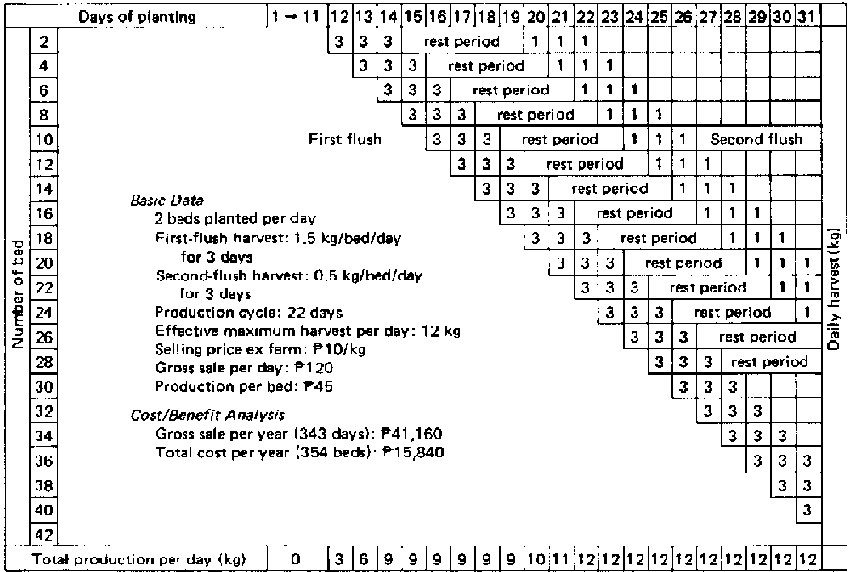
FIG. 1. Mushroom Farm Module Operation and
Cost/Benefit Analysis
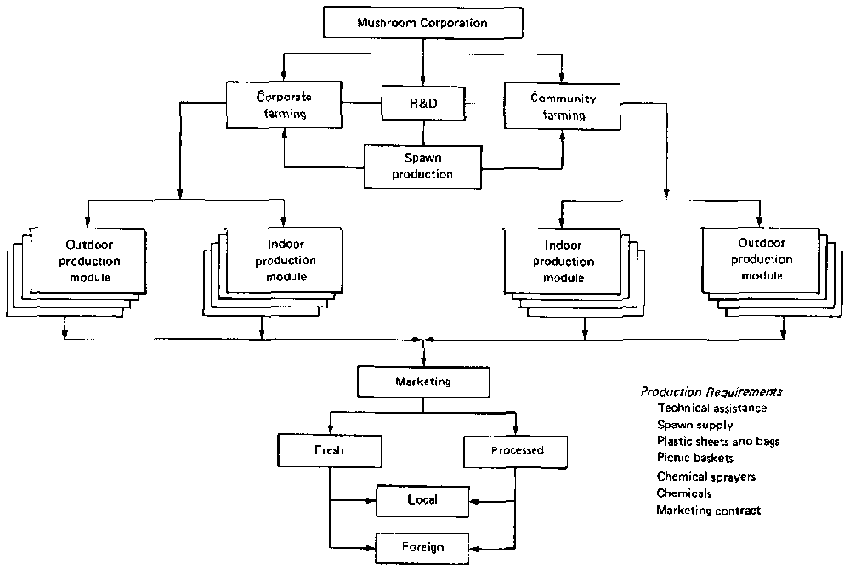
FIG. 2. Mushroom Enterprise Operations
The corporation rented an area for a farm demonstration module and selected two villagers to work on the farm as employees of the corporation. This demonstration module became the show-window of lowcost technology for mushroom production and subsequently intensified interest among the villagers. It is the aim of the corporation to sustain the interest generated by providing some inputs that the farmers could pay for from their produce.
Planting two mushroom beds a day for a total of 44 beds in a 22-day production cycle would give an income of P1,500 to P2,000 (US$205 to $273) per month. This level of income is comparable to that of senior researchers at NIST.
Farm modules are open to the public. Charts of the economics of production are reporoduced and distributed free to interested farmers. Those desiring to set up their own farm modules are accepted for training only after payment of a P200 fee. They have to work on the farm without pay but are given free food. While training, they have to learn the rudiments of running the farm. The training lasts for two weeks - long enough for the trainees to see the results of their work.
The rationale for exacting a training fee is, first, to discourage the obviously curious, and, second, to make the trainees take their work more seriously and learn the techniques in a relatively shorter period. It has been a common experience in the transfer of technology that most things given free are not seriously regarded by the recipients even if they are for their own benefit.
When the training is complete, and farmers have signified their intention to develop their own mushroom farms, a contract is signed between the corporation and the farmers. The corporation sends its technicians to extend technical assistance in siting, laying out the farm, preparing an operational plan, and initial planting of the beds. The corporation supplies the spawn, plastic sheets, chemicals, and sprayers on credit. Payment for these items is deducted from the income from the mushroom harvest. Under this arrangement, the farmer merely provides the lot, bedding materials, and labour. The corporation buys the produce on the farms at a previously agreed upon price.
Mushroom contract farmers who continuously engage in mushroom production for six months without any financial obligation to the corporation receive back their training fee of P200 without interest. By this time, the farmers have already saved enough money to buy all the supplies needed on the farm.
As the contract farmers acquire more experience in operating a farm module of 44 effective beds, they can develop other modules, using their own resources. No new modules, however, can be set up without prior clearance from the corporation. This is necessary in order to prepare the necessary production inputs - i.e., mushroom spawn, plastic sheets, chemicals, etc. - coming from the corporation, and also to prepare the market for additional harvest.
Technical problems in mushroom production are referred to the corporation for immediate solution through roving technicians or letters. Problems beyond the competence of the corporation's research and development staff are relayed to government research institutions for rapid disposition.
Initial production in corporate community farming, which is understandably limited, is usually given away free to political and civic leaders of the village and to other people. This system is part of the effort of the corporation to educate people on the palatability of the product.
Mushrooms are picked at the right stage. Picking is usually done at three-hour intervals. The harvests are cleaned of soil and bedding debris, graded according to size, and packed in 1 kg perforated plastic bags. To keep the mushrooms fresh at the button stage, packages are placed inside styropore baskets with crushed ice. The ice is contained in waterproof plastic bags to avoid wetting the mushrooms. The low temperature preserves the mushrooms fresh for 48 hours.
The corporation obtains the mushrooms from the farms for centralized marketing in urban food markets. Farm modules in the outlying areas of metropolitan districts are assigned to sell fresh mushrooms. Farmers in far-away places that require more than three hours' travel one way are told to dry the mushrooms.
Knowing the financial status of some contract farmers, the corporation adopts a cash-and-carry basis for transaction. To maintain the quality of the products, a grading system is introduced with corresponding prices.
This method of biotechnological transfer to rural communities was recently adopted by a newly formed corporation dealing in mushroom production in the Philippines.
Advantages and disadvantages
Advantages
- The common financial problems of rural communities are partly solved because the corporation can extend some production inputs on credit.
- The supply of mushroom spawn (spore), which is one of the major contraints encountered by mushroom-growers, is solved by the corporation.
- Marketing problems associated with a highly perishable product like mushrooms are solved because the corporation buys all the product right on the farms.
- Technical assistance to mushroom-producers can be extended with more dispatch than by government departments.
- The involvement of rural communities provides job opportunities, better utilization of agricultural wastes, and, in turn, the corporation reaches the desired volume of production in a shorter period of time with less expense.
Disadvantages
- Not all interested individuals can be given the opportunity to engage in mushroom production because of some limitations in economically obtainable sources of bedding materials.
- The quality of the produce is rather hard to maintain due to varying conditions of growth in different mushroom communities.
- The type of management varies from place to place because problems obtaining in one mushroomgrowing community are not necessarily the same in others, hence a case-to-case basis is needed for problem-solving.
- Owing to several factors affecting production, the target yield is not usually attained. This is primarily because of lack of sufficient experience by the farmers. An unstable volume of production has an adverse effect on the marketing system.
More advantages and disadvantages will be encountered in the future. This is to be expected because of the biological nature of the business. It is comforting, however, that early indications from five mushroom-producing communities suggest that this novel approach is feasible.
Bibliography
Alichusan, R,V. "Mushroom Production Technology for Rural Development." In Bioconversion of Organic Residues for Rural Communities (IPWN-1 /UNUP-43), pp. 99-104. United Nations University, Tokyo, 1979.
____. "Countryside Development through Optimized Utilization of Resources with Appropriate Technologies." Lecture delivered during Unesco Regional Training Course, Bandung, Indonesia, 8-24 Jan. 1979.
____. "Profile of Philippine Resources and Technology Diffusion Efforts for Their Utilization." Paper submitted to UNU-sponsored workshop, Philippines, 1978.
____. "Community Development Is the Answer to the Present Economic Crisis." Paper read on 39th Foundation Day, San Pablo City, Philippines, 7 May 1979.
Processes in biotechnology transfer to rural communities
C.V. Seshadri
Shri A.M.M. Muragappa Chettiar Research Centre, Madras,
India
The notes presented here are from the Indian experience in transferring biotechnology to rural communities. The lessons to be drawn from these notes have to be translated to suit use locale, i.e., specific factors in other areas. In fact, this is true even for widely separated areas in India. In a sense, then, this suggests why technology transfer is seldom a technological process. We shall examine why this is so and point out the means-to improve the situation.
Communication of technology and its demystification
Technology has to be communicated to rural people who make no distinction between work and leisure, who have been practicing some form of biotechnology for hundreds of years, and who have no margin for failures. To such people technology is usually transmitted on two false premises: (a) it is an end, not a means, and (b) the know-how is more important than the know-what and the know-when. One can recognize that these premises have led to many wrong decisions in developing countries, and we shall not elaborate on this in detail other than to give some examples. To communicate properly the right priorities in technology and to explain them clearly to rural communities, the best scientific talent has to be constantly available in the rural milieu where the technology is to be practiced. This means that the scientist must live there. Three examples will help illustrate the point:
- The farmers need irrigation water. "Let us build a big power plant to supply them with electricity." This is a typical example of a technology's becoming an end in itself, not a means. Very little thought is given to transmission losses, fuel shortages, pollution, unequal water-table lowering, etc.
- The farmer wants a biogas plant. There is no point in worrying him about the microbiology of the process or about trying to reach maximum efficiency of gas generation. He should be told, however, what sort of return he can expect according to different circumstances.
- The farmer needs more information. "Let us get him some from published sources." This kind of attitude completely begs the question that science is transferred by reprints and technology by people.
In situ development and local participation
Usually even the simplest technology, when practiced at a rural level, needs adaptation to local conditions. For example, when considering a biogas plant, one may not find a good valve for miles and so will have to substitute a reconditioned local one. Thus, the development process invariably involves local innovation. This development is essential to the proper flowering of technology. In fact, the occurrence of errors and their correction, all taking place in front of the village, is helpful in giving people selfconfidence. This naturally leads to the question of local participation. Unless people see that things are fabricated and processed locally, the technology is difficult to transfer. Development in situ eliminates the problem of technology transfer.
In demonstrating the experience of transferring technology to rural areas two case studies are presented which have been prepared for teaching purposes. These case studies are backed up by detailed notes and calculations that are submitted to students and are also accompanied by a slide presentation.
Biogas Plants
Currently available biogas designs are very expensive, even though there is a considerable government subsidy. Therefore, the effort in transferring this technology has been to make low-cost designs available. Consider the following factors:
| Materials needed | Availability and associated factors |
| - Bricks | Very expensive and deliveries uncertain |
| - Steel plate | Unavailable in village areas and impossible to weld |
| - Steel rods | Available in nearby townships |
| - Cement | Available but of uncertain quality |
| - Lime | Freely available |
| - Pipe fittings | Available in townships |
| - Sand, stones, etc. | Available |
| - Plastic sheets | Available in townships |
| - Lumber | Available |
| - Masonry, carpentry, and skills | Available |
The choice of materials, skills, and machines has to be matched to the village habitat. The design methodology and design calculations for two types of biogas plants are discussed in detail in notes given to the students.
Algal Culture at the Village Level
The aim of this teaching programme has been to maximize protein output per unit of land and water. For this algae cultures via photosynthesis offer the best solution. The lecture is accompanied by about 30 slides and roughly 20 pages of detailed notes. Some of the highlights of the programme are as follows:
- It is best if you can identify a local filamentous species that is easily harvestable and of high food value. Otherwise an international species has to be obtained. Harvesting is a very expensive step for single-celled species.
- A central laboratory to maintain healthy, if not axenic, cultures is necessary. Also, laboratory instrumentation is necessary to monitor pH, contamination, etc. At the rural level, some skill transfer is called for to keep cultures healthy and to follow the necessary procedures.
- The technology of making small ponds and filtration devices is explained.
- Solar driers or cookers to subject the harvested algal slurry to temperatures up to 100�C are required.
- The medium for culturing algae must be adapted to local conditions.
- Techniques for using the algal dry mass are explained.
Processes in transferring biotechnology to rural communities
P. L. Rogers and R.J. Pagan
School of Biological Technology, University
of New South Wales, Sydney,
Australia
Introduction
The transfer of technology to rural communities in a way that will benefit their neediest members is one of the major challenges of our generation. The problem is how to translate technologies that we have available into suitable forms for village use and to promote them for the rural poor. A low standard of living seems to breed mistrust of outsiders and promote conservatism (1). The rural poor cannot afford to take risks; newness means unreliability; poverty saps energies and narrows the horizons of the possible.
Experience has demonstrated that uncritical technology transfer is likely to benefit only a minority rather than to improve the lot of the larger community (2). It is fundamental to be aware of the sociological structure, educational level, and cultural orientation of a particular community in order to bring about effective and equitable technology transfer (3; 4).
Any consideration of technology transfer to rural communities should begin by identifying the fundamental needs and aspirations of their people. Questions should then be asked as to how technology transfer might assist in meeting these needs. Some of the needs are very basic: food, shelter, clothing, medical services, land ownership, employment. Others, such as education and the need to make full use of all the natural resources available to the community, reflect rising aspirations and the desire to improve living standards and distribute benefits more widely.
Technological innovations can assist in meeting some of these needs and aspirations, and some form of technology transfer is clearly desirable for many communities. Well-planned and identifiable programmes designed for a particular country and region are necessary, as highlighted by recommendations from the UN Conference on Science and Technology for Development (UNCSTAD) in Vienna.
The development of a technology to meet particular needs may arise in a number of ways: (a) the reviving of old techniques previously used within the community; (b) the adaptation/improvement of existing (indigenous) methods; (c) the acceptance of and adaptation of modern technology; (d) the development of new techniques relevant to a particular situation.
The concept of "appropriate technology" is useful when considering which techniques are likely to be adopted by a rural community. Appropriate technology may be defined in terms that emphasize smallness, simplicity, and low capital costs; it provides work-places with minimum capital investment. The implanted technology is likely to be more complex and efficient than traditional technologies, but simple enough for village labourers. It must be designed to provide knowledge, training, machinery, and employment at prices and levels that can be assimilated by the simplest of communities.
Programmes of technology transfer (or, more appropriately, "technological innovations at village level") require planning at the national level but implementation at regional and village levels. The education of key village personnel in the new methods will play a vital role in such programmes, as has been illustrated by the Saemaul ("new village") movement in Korea. The village should also be educated in the benefits of such programmes and encouraged to develop innovative methods for other areas of need within the rural community.
Biotechnologies appropriate for rural communities
Biotechnology in its broadest sense is concerned with processes or process steps in which biological agents are used. Processes involving micro-organisms fall within this category, and are of major interest in the present discussion. Areas of biotechnology relevant to rural communities can be identified as: (a! bioconversion of lignocellulosic and carbohydrate wastes to provide energy, and to provide food and feed; (b) simple wastewater treatment; and (c) upgrading of foods and beverages produced by fermentation of indigenous raw materials. As the present workshop is concerned with bioconversion, our discussion will focus on this.
The following raw materials may be available to rural communities for bioconversion through fermentation:
- sugars: sugar cane, sugar beets, molasses, fruit, whey, pineapple wastes, coconut water, coffee wastes, etc.;
- starches: cereals (wheat, maize, barley, rice, sorghum), cassava, potatoes;
- cellulose: rice straw, wheat straw, packaging materials, animal manure, wood residues, bagasse from sugar milling.
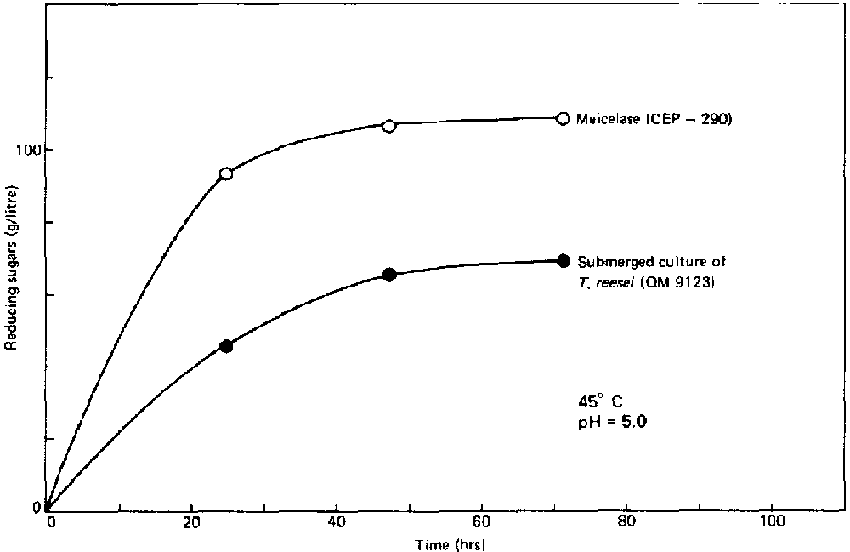
FIG 1. Enzymatic Conversion of Delignified Rice
Straw to Sugars (ref. 5)
Conversion of Cellulose and Starch to Sugars for Fermentation
Although organisms exist that can degrade cellulose and starch directly, the most efficient way to convert these substrates into yeast (single-cell protein) or ethanol (as a liquid fuel supplement) is first to convert the cellulose and starch to sugars. Acid hydrolysis can be used, but enzymatic processes are proving increasingly attractive. Such processes are shown in figures 1 and 2. The kinetics of cellulose conversion by two different enzymes for delignified rice straw are illustrated in figure 1 (5). The kinetics of starch hydrolysis using a two-step enzymatic process are shown in figure 2. A heat-stable enzyme such as Termamyl (Novo) will liquefy the starch at 80� to 90 following cooking. After a period of one to two hours, amyloglucosidase is added (60� C; pH = 4.5) to saccharify the resultant dextrins and oligosaccharides to produce fermentable sugars.
The data illustrate the rates of hydrolysis that can be achieved with commercial enzyme preparations. At the village level, rather than purchasing commercial enzymes, simple barley malt, raggi, or koji-type processes could be developed.
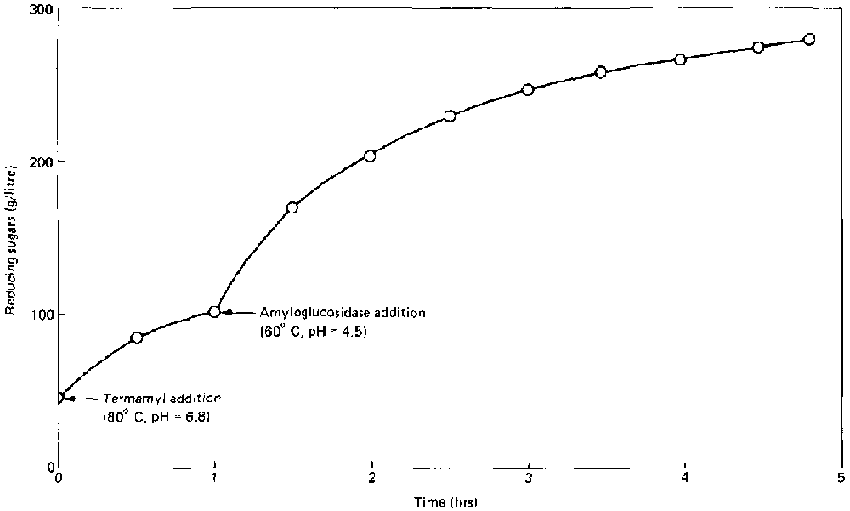
FIG. 2. Enzymatic Conversion of 30 Per Cent
Starch Slurry to Sugars Using Two Enzyme Processes
Ethanol Fermentation and Yeast Growth
Ethanol fermentation and yeast growth on various carbohydrates have been selected for discussion here, as other papers are concerned with low-technology processes for algal biomass, fermented foods, and methane production.
Fermentation ethanol from indigenous raw materials is likely to provide significant quantities of liquid fuel in the future. Already Brazil, the United States, and the Philippines have embarked on programmes to convert agricultural crops (e.g., sugar cane, sugar beets, cassava) into ethanol. In Australia, a number of rural communities growing sugar cane, sugar beets, and wheat are evaluating the production of fermentation ethanol to meet local fuel needs. Similar situations apply in New Guinea, Fiji, and the South Pacific islands, many of which have abundant supplies of carbohydrates but no oil.
In the same way that methane is generated by anaerobic digestion in rural communities (e,g., India, China) to meet some local energy needs, fermentation ethanol could be produced in small-scale processes to supplement the available liquid fuels. Ethanol can be blended with petrol in proportions of 1 to 20 per cent and no major engine modifications are required. Higher ethanol blends are being tested with motor vehicles and farm machinery.
Yeasts are traditionally used for fermentation, although recent research in our laboratories on an organism used in making tropical alcoholic beverages (tuak in Indonesia) has shown considerable promise. In figure 3 the kinetics of ethanol production for Zymomonas mobilis on 25 per cent glucose are compared with Saccharomyces carlsbergensis (uvarum), a yeast selected for its sugar and ethanol tolerance and ability to flocculate. Although yeasts are probably the most suitable for small-scale batch fermentations, Z. mobilis has specific rates of ethanol production and glucose uptake two to three times higher than yeasts and would be advantageous for high-productivity continuous fermentations (6).
Within the farming community in Australia, simple, low-cost processes are currently being developed for the conversion of farm wastes and substandard grains into fermentation ethanol. They depend on grinding or sprouting the grains, followed by cooking and enzyme addition. This is then followed by a yeast fermentation to produce 8 to 9 per cent w/v ethanol and distillation to 96 per cent ethanol suitable for blending. The distillation is achieved either through a wood-fired still or a solar still using radiant energy. It is evident that such a process could be adapted fairly readily to rural communities elsewhere.
Modifications to low-technology situations include the use of local barley malt, raggi, or koji preparations to replace commercial enzymes, and the use of various nutrient sources, such as paddysoak water, to provide nitrogen and minerals (7). The design of simple fermentors, such as tower fermentors that concentrate the yeast by internal recycle (8-10), and the development of low-cost materials (plastics, fibreglass) for the fermentor and holding tanks minimize the capital costs.
The residual yeast produced in the fermentation is also likely to be of value as a protein-enriched supplement for animal feed. It could be concentrated to a slurry by solar drying for easier addition to animal feed.
Traditional Enzyme Preparation
The conversion of starches to yeast-fermentable carbohydrates may be accomplished in several ways. Malting is the common practice in brewing with cereal grains. The use of a variety of moulds is common in preparing many Oriental foods. Koji, the best known, is a general term for moulded masses of cereals or soybeans. These materials serve as a source of enzymes, and in some cases as an inoculum. There are a number of types of koji, depending on their use, but Aspergillus oryzae is the mould generally used. A specific koji is prepared for each type of product in order to produce the proper mixture of amylolytic, proteolytic, and lipolytic enzymes, Raggi and Java yeast are used in Indonesia and consist of rice flour containing fungi, yeast, and bacteria. Certain strains of Mucor, Rhizopus, and other moulds have been isolated from these preparations 111).
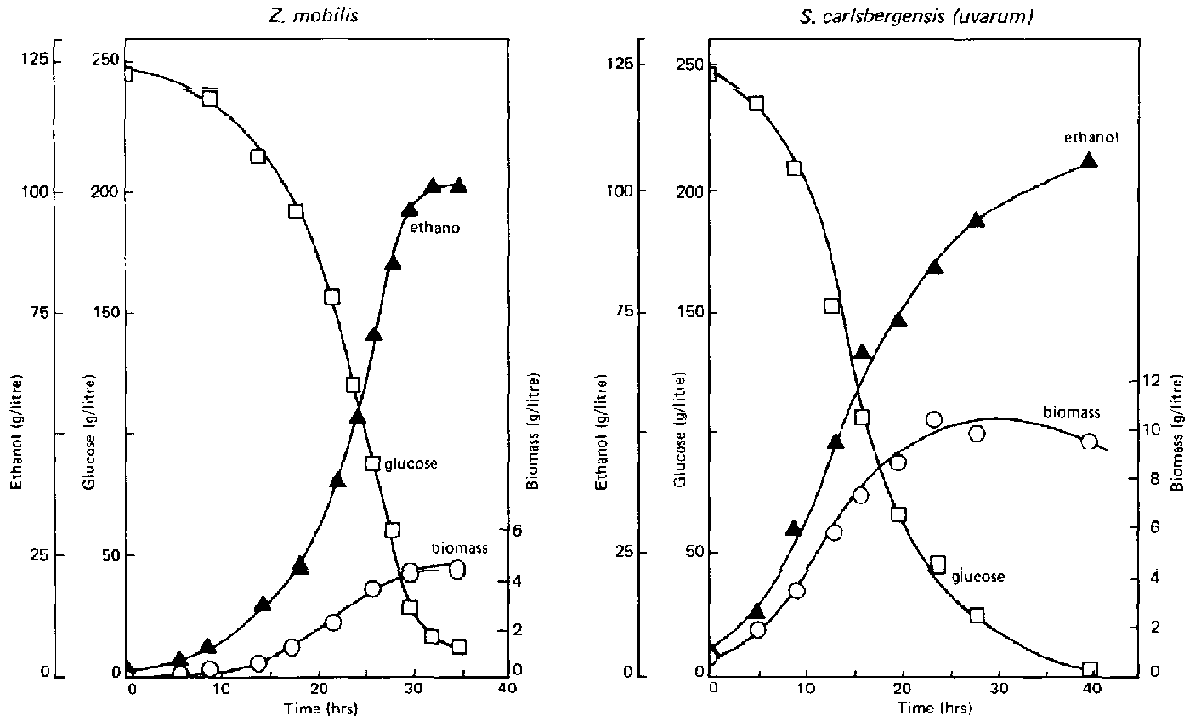
FIG. 3. Production of Ethanol from 25 Per Cent
Glucose Using Zymomonas mobilis and Saccharomyces carlsbergensis (uvarum )
The development of small-scale equipment for solid substrate fermentations, such as would be involved in traditional enzyme production, is discussed in detail by Hesseltine (12; 13),
As outlined earlier, the village-level manufacture of malting enzymes, koji, or raggi should be encouraged in order to supplant the need for commercial enzymes for starch hydrolysis.
How biotechnology transfer might function
Once a particular project that involves a fermentation process at village level or within a rural community has been identified, it is clear that an effective educational programme is fundamental for its success. Key personnel within a community need to be trained both in the new techniques and in the likely benefits, Such people will then disseminate information within their community. Close liaison and cooperation should be maintained with policy-makers and scientists at centralized tertiary institutions
Facilitating biotechnology transfer within the South-East Asian region are a group of young scientists who have been trained in the adaptation of fermentation processes to regional needs. This has come about through the very successful operation of a regional microbiology network established following a Unesco meeting on Regional Co-operation in Basic Sciences in South-East Asia held in Tokyo in 1974. There have been a number of training courses related to nutritional and environmental problems and the effective use of natural resources (listed in the Annex below).
The problem that remains is to translate this knowledge to the village level and to research techniques for scale-down of fermentation processes. Seshadri (14) points out that two requirements need to be met for widespread propagation of bioconversion methods: {a) cheap fermenter designs, and (b) culture or inoculum banks to supply starter cultures. Encouragement to villagers to produce their own source of enzymes, using traditional methods, could be added.
Conclusions
The dramatic and continuing interest in "appropriate technology," founded on Schumacher's ideas and idealism, has focused on the village and the rural poor as prime targets for technological innovation. The technology need not be radiacally new or different to have immediate and far-reaching effects on lifestyle, morale, and living standards of a community.
Biotechnology in a primitive form - fermentation of alcoholic beverages (e.g., tuak), preservation of foodstuffs (e.g., tempeh) - has always been carried out in villages. Modern biotechnology can, given suitable agricultural residues or effluents from processing agricultural materials adjacent to a rural community, lead to a significant and valuable upgrading of either protein or energy content. This is especially relevant in these days of unstable oil prices and high levels of inflation.
Although the economics of production may be favourable, it is evident that strong governmental support is required. As illustrated by the US Department of Energy report "Alcohol Fuels: Policy Review" (June 1979), stimulation of private-sector, small-scale ethanol production from agricultural residues will require a number of government incentives, including low-cost loans, research and development grants, excise tax exemption, and so on. It is not unreasonable to consider that similar incentives will be required to stimulate biotechnology transfer within South-East Asia and elsewhere
Besides fiscal intervention from the government, technology resource pools specifically designed to transfer information on products and processes to villagers should be set up both within and among various countries. These information networks must be designed to provide technological data quickly, efficiently and with minimum cost to both the user and the government, and, of paramount importance, any new technology must be seen by the people who will use it as something both trustworthy and beneficial.
Annex: Training Courses Related to Biotechnology within the Regional Microbiology Network for SouthEast Asia (Sponsored by Unesco, UNEP, and ICRO)
Conservation and use of micro-organisms for waste recovery and indigenous fermentations - Bandung, Indonesia, August 1974.
Microbial protein production from natural and waste products - Bangkok, Thailand, April 1976.
The role of microbiology in the management and control of the environment - Manila, Philippines, November 1976.
The role of micro-organisms in waste recovery, fermentation, and environmental management - Singapore, November 1977.
Environmental management - biological waste treatment and by-product utilization - Seoul, Korea, July 1978.
Training courses in applied microbiology and fermentation technology (sponsored by the Government of Japan) - Osaka, Japan, 1974-1979.
References
1. P. Devitt, in Internatl. Devel. Rev., 2011): 16 119781.
2. E. Schumacher, in Futurist, 11: 93 (1977).
3. G.S. Ramaswamy, in Internatl. Devel. Rev., 18 (2): 7 (1976).
4. R. Darling, in Internatl. Devel. Rev., 19 (4): 27 (1977).
5. N. Toyama and K. Ogawa, in T.K. Ghose, ea., Symposium on Bioconversion of Cellulosic Substances into Energy, Chemicals and Microbial Protein (Indian Institute of Technology, New Delhi, 1978).
6. P.L. Rogers, Kye Joon Lee, and D.E. Tribe, in Biotechnology Letters, 1 (4): 165 (1979).
7. K. Bose and T.K. Ghose, in Process Biochemistry, 8 (2): 23 (1973).
8. F.K.E. Imrie and R.N. Greenshields, in Proceedings of the 4th International Conference, GIAM (S�o Paula, Brazil, 1973).
9. S.J. Pirt, Principles of Microbe and Cell Cultivation (Blackwell Scientific Publications, Oxford, U K, 1975), pp. 45-48.
10. F.K.E. Imrie and R.C. Righelato, in G.C. Birch, ea., Food from Waste (Applied Science Publishers, London, 1976), P. 79.
11. C.S. Pederson, Microbiology of Food Fermentations (Avi Publishing Corporation, Westport, Conn., USA, 1971).
12. C.W. Hesseltine, in Process Biochemistry, 12 (6): 24 (1977).
13. C.W. Hesseltine, in Process Biochemistry, 1 2 (9): 29 (1977),
14. C.V. Seshadri, Analysis of Bioconversion Systems at the Village Level, Monograph Series on Engineering of Photosynthetic Systems (Shri A M.M, Murugappa Chettiar Research Centre, Madras, India, 1978).
Problems and possibilities of introducing appropriate technology
Doeke C. Faber
Centre for World Food Studies, Amsterdam, Netherlands
Introduction
The traditional
farmer
The failure of change and the role
of government
Small farmers and
appropriate technology
The role of
science
Concluding
remarks
References
Introduction
In recent years, the alarming number of people who suffer from malnutrition has created an awareness of the ever-increasing importance of producing more food. The problem, however, is not solely one of an overall physical food shortage, but also one of the existence of extreme poverty where effective demand is non-existent. In other words, millions of people lack the purchasing power to satisfy even their most elementary needs, such as food, shelter, and health care. It is well known that this problem is most severe in the developing countries. To be even more specific, the most seriously affected people are typically the rural labourers, the landless, and the small traditional farmers. This group of people must subsist on the production of the small home plot and, more importantly, on the irregular, seasonal employment offered by the larger farmers. Because wages are usually a fixed share of the total production, it follows that in bad years, when yields are low, wages will also be low. Moreover, as mechanization progresses, less employment can be offered. Thus, even though total production may increase, the incomes of the landless and small farmers may decline. Therefore, one cannot ignore the burden of these people, as it appears that they will become the direct victims of the continuing development of the commercialized sector of agriculture, resulting in a worsening distribution of income within agriculture.
Yet there is another reason why they deserve our attention. For it is this very large group of peasants who will be the commercial farmers of tomorrow. It is the task of national governments to allocate sufficient resources for creating an environment in which the traditional peasant can employ himself and improve his standard of living through increased production and higher income. For such an effort to be successful, the limited ceiling of present expectations of the peasants must be raised. Governments must aid in this process by providing adequate extension services, reducing risk through guaranteed intervention prices, stimulating the development and introduction of appropriate technology, etc. Only by actively pursuing development and bringing about necessary changes will the landless and small farmers be provided an incentive to shed their traditional image.
This paper will briefly examine some of the problems that may hamper the rapid development of traditional agriculture. Even though everyone recognizes the need for change, governments and other institutions may not have provided the necessary prerequisites for the change to occur. Some of the prerequisites are discussed below. Finally, the role of research and technology development is examined, as is the need for a multidisciplinary approach to solve the "appropriate" technology problem.
The traditional farmer
Ted W. Schultz, the recent Nobel laureate in economics, once wrote, "The man who farms as his forefathers did cannot produce much food no matter how rich the land or how hard he works" (1). This statement represents the problem in a nutshell. It means that there is little hope for the hundreds of millions of peasants who try to scratch a living from the face of the earth with almost bare hands. Conversely, it implies that a farmer who has access to, and applies the most recent knowledge of, technology for agriculture or raising livestock produces an abundance of food even if the land is poor. In fact, what Schultz says is that the latter kind of farmer not only produces enough for his family, but for perhaps 50 more people. It goes without saying that these SO people, whose production effort has been replaced by that of the single farmer, can now be employed more productively elsewhere in the economy, The difference between traditional and commercial farming is that the former type of agriculture is based on factors of production that have been used by farmers for many generations, while the latter has typically applied new techniques and modern non-farm inputs as they became available.
As the traditional farmer will be the centre of our discussions, it will be useful to sketch his position against the background of perceived failure by those who have tried to bring about change. Schultz's statement, though bold, has been supported by empirical evidence (1, ch. 6). It is contended that the traditional farmer cannot, within the means available to him, increase his production. However, it is not only the means available, but also the frame of mind the traditional farmer is in. For many generations the farmer has perceived his future possibilities to be very limited, and at times his expectations appeared to vanish into a bottomless pit. For the peasant to be successful in altering the courses of action open to him, his level of expectations must be raised. But, unless he has a sufficient desire to improve his standard of living by exerting himself, he cannot be expected to show much interest in applying new techniques or modern inputs. To break this vicious circle an extensive education and extension programme must be launched to lay out clearly the opportunities open to him. However, not all depends on future expectations.
For any entrepreneur to apply new methods or inputs, especially something radiacally different from the tried and trusted, a number of ancillary conditions must be fulfilled. For the situation of the traditional farmer, Schultz has postulated at least four reasons that may point to a lack of success in the efforts to modernize traditional agriculture (4).
- Extension programmes as designed in the 1950s and 1960s have failed because they were based on the assumption that peasant farmers were inefficient. It was noted earlier that the traditional farmer is not inefficient but that he merely labours under the restraints of traditional agriculture.
- Extension education and credit programmes were often based on the assumption that the traditional farmer or peasant did not save and invest enough, nor did he use the optimum amount of credit. The truth, however, is that there were insufficient opportunities to invest within the confines of traditional agriculture.
- New agricultural programmes have attempted to induce farmers to use new agricultural techniques or apply modern inputs, only to learn that these modern gadgets were simply not profitable or productive enough to make it worthwhile for the farmer to use them.
- In most instances where farmers do not respond to applying modern inputs to raise production, no really profitable or rewarding new agricultural inputs have been developed, produced, or supplied cheaply enough and at the right time to make it worthwhile. This lack of incentive may well be the main cause of the problems currently experienced by the traditional farmers in the developing countries. Fortunately, a few success stories can be mentioned: Mexico, South Korea, Taiwan, and India. These cases are sufficiently known and we will not refer to them further.
The failure of change and the role of government
The peasant as defined above has not been converted into a commercial entrepreneur even after 30 years of intensive effort and millions of dollars. This should quickly drive home the point that the conversion process is not one of money and time alone. Indeed, those two conditions may be necessary, but they are not sufficient. The other condition that must be fulfilled is that the process of change must be understood by the "changers." This process will only acquire momentum if an environment has been created in which the process can sustain itself.
Governments have had a significant role in frustrating the development effort. To speed the process of change, governments have often taken over the job of entrepreneurship and have been "far from efficient" in doing so (5). Schultz goes on to say that" government seriously constrains the entrepreneurship of farmers and farm housewives, thereby reducing the efficiency of agriculture and the standard of living of farm families" (5). To transform traditional agriculture into a modernized agricultural sector, adjustments at all levels within the enterprise are called for to take full advantage of new and better opportunities. Two conditions must be satisfied before this can be realized: (a) the decision-making process must remain on the farm; (b) governments must create a friendly environment for change.
The first condition should not cause unsurmountable problems. The decision-making process belongs to the individual owner of resources. Each decision-maker will, in his environment and within his perceived expectation, make decisions as to how to allocate his resources. He will unknowingly, but almost perfectly, equate the marginal value of products from the resource with the marginal cost of the resource. It is, however, the second condition that requires change. One may wonder why today we can only point to a few success stories where economic change has brought about increased agricultural productivity and improved farm well-being; for example, the wheat farmers in Mexico and India, or the rice farmers in South Korea, Japan, or Taiwan. Unfortunately, such stories remain very rare, because governments neglect to create an environment conducive to change. The small peasant is not to blame, he does not resist change or desist from work, but he merely does not find the "alternatives" among his possibilities. There is no adequate incentive for him to take a risk.
Government policy-makers must base their decisions and policies on the behaviour of farmers. Note that the subsistence farmer may react differently from commercial farmers to economic stimulants. It is therefore advisable to devise a policy for agriculture that differentiates between beneficiaries in matters such as subsidy and tax policies, input prices differences, or quantity allocations. Farmers, in making decisions about allocating resources, etc., calculate expected cost (including their measure of risk) and expected returns. Weighing one against the other results in economic incentive. The optimum economic incentive then brings about optimum allocation of resources, resulting in maximum production that will clear the market at prices that take the best advantage of consumer demand (5). The question remains, why does government treat agriculture as it does? There are many arguments to answer this question. To mention a few:
- Urban masses, although numerically a minority, are much better organized and have secured much more political clout than have their rural counterparts.
- Agriculture is usually considered a backward sector. It is only looked upon as a useful labour and food resource.
- Primary agricultural export products are usually subject to very erratic price behaviour, causing problems with the balance of payments. Many developing countries have chosen the industrialization model, where industrialization (really urban development) will act as the flywheel for overall development. Low food prices would be a requirement for low wages, and agriculture can supply food at low prices because of the "excess" labour in the rural sector.
These arguments should never be a reason to undervalue agriculture as is now the case. They will only be counterproductive in the long run.
Small farmers and appropriate technology
Since the 1960s, technology has made a great impact on the economic growth process, Especially in the developing countries, newly developed knowledge and the application of new techniques have clearly benefited various sectors of their economies. In particular, improvements have come from the development of hybrid seeds, biocides, inorganic fertilizers, and better communication systems.
However, during the 1970s there was a growing concern about the "apparent incongruities between the goals of the developing countries, their labour supply conditions and other resource endowments, and the technologies these countries were importing" (6). One can distinguish between new and old technologies by looking, for example, at the amount of labour used per unit of output, or the amount or quality of input per unit of output (e.g., hybrid seed). The introduction of some technologies produces adverse effects for a community, region, or country. For example, a new technology may have adverse consequences for the rate of employment, or, alternatively, it may affect the socio-economic relations within a community. The consequences of technological change are therefore not always positive.
It can easily be shown that a technology that supplants labourers directly affects the welfare of the landless and traditional farmer. Less employment means less income and results in the desolate situation of poverty, hunger, and malnutrition. Moreover, the socio-economic system as a whole is affected by such a development. The interdependencies between the landless and small farmers on one side and the larger, commercial farmers on the other are disturbed. No longer does the large farmer depend on labour supplied by the landless, and thus no longer can the landless labourer depend on work (food) provided by the larger farmer. Economically such a situation makes no sense, for as long as there is "surplus" labour, its opportunity cost is zero, which translates into very low wages. Yet farmers do mechanize because of management and hiring problems or because of time constraints, or for other noneconomic reasons. The consequences of a disturbed socio-economic system cannot always be foreseen. Policy-makers should pay close attention to the possible side effects of newly introduced changes. There is no way to escape the fact that every new technology has within it the inherent danger of disturbing a stable socio-economic structure. This may, however, not always be a reason not to go ahead with planned development.
So far, we have interpreted "change" as either higher expectations or higher output prices, etc. Given the fact that most traditional farmers have very little chance to increase the area under cultivation (especially in South-East Asia), another opportunity for increasing production is to raise yields, assuming that the government provides the necessary incentive. This yield-increasing technology can be realized by re-evaluating the plant production process. Farmers must turn their attention to on farm inputs rather than non-farm inputs (e.g., fertilizer, pesticides, etc.). A number of new methods have been developed to increase production in ways that permit the traditional farmer to work within the means available to him; for instance using legumes as an inter-row crop, better use of cow dung, improved management skill, new tillage techniques to make available more of the soil nutrients, etc. In this manner the farmer will realize higher yields and thus more revenue, without incurring large costs or drastically different techniques.
If change can be brought about in this manner, then we have made a case for different technologies for various farm sizes or structures. Appropriate technology means just this: appropriate not only in terms of advancement, but also in terms of feasibility (or acceptance) within the target group, or in terms of working on constraints that appear to be most limiting in a given situation.
Unfortunately, appropriate technology as defined above is not yet recognized as a possible solution to the problem. The National Research Council (6) states that "there is little evidence to suggest that major research efforts to find efficient 'intermediate' technologies for small-scale village-level production would either be markedly successful or contribute substantially to development." It could be argued that this statement only holds if total production must be increased regardless of the producer. More likely, however, "intermediate" technologies have been applied or even developed on such a small scale that no meaningful statement can be made about them. The gist of this paper is that, in the first place, the welfare of the landless and traditional peasants must be improved, not necessarily the welfare of all farmers. Indeed, the primary goal is to increase incomes for the lowest farm-income groups, and appropriate technology must be made available to them.
The role of science
In developing and introducing new technologies, explicit decisions have been taken by some individuals, groups, or governments - decisions such as technologies for what, for whom, and where. Such decisions often come about after a need is recognized. Thus, once it is realized that it is necessary to improve the overall food situation, but in particular the situation of landless labourers and the peasants, research interests are directed to this problem by means of allocating funds.
Unfortunately, so far very little has been done in the area of agricultural technology development at the village level. A village technology can be defined as one that complements the growing of crops. As holdings are of different sizes and farmers have different quantities of resources available to them, different factor input combinations will be Used, such as the man/land ratio or man/capital ratio. Therefore, again, a case can be made for a different technology for different sized farms. It must be stressed, however, that by developing tailor-made village technologies, dynamic relationships between the social classes must be understood and taken into account if the exercise is to be meaningful. Murray has found that a village properly administered has a much higher chance of succeeding in undertaking new projects, even though it may be poorly endowed, than a village that experiences social disruptions (3).
Also, no research effort, no matter how well designed and carried out, will be spared a limited life if the results are conceived as unsatisfactory by those who finally apply a new technology. It is for this reason that increasingly projects are being developed by multidisciplinary teams of researchers, including engineers and social scientists.
Finally, a last remark about the role of government. To the degree that agriculture or particular crops are under-valued by governments, it is of direct consequence for the amount of research funds directed toward those crops or that sector. Because, as with all economic projects, the rate of return is all-important, funds will always be channelled into the most profitable enterprises.
Concluding remarks
It is clear from present worldwide efforts that agriculture needs to boost its output to at least abate the hunger and malnutrition experienced by millions of people. By directing efforts toward the traditional farmers and landless labourers, two problems could be solved at the same time.
References
1. T.W. Schultz, Transforming Traditional Agriculture (Yale University Press, New Haven, Conn. USA, 1964).
2. K. Nair, Blossoms in the Dust (Duckworth Ltd., London, 1961), p. 190.
3. C. A. Murray, A Behavioural Study of Rural Modernization: Social and Economic Change in Thai Villages (Praeger Publishers, London, 1977), p, 101.
4. T.W. Schultz, "Economic Growth from Traditional Agriculture," chap. 1 in T. Shukla, ea., Economics of Underdeveloped Agriculture (Vora and Co., Ltd., Publishers, Bombay, India, 1 969).
5. T.W. Schultz, "Economics and Politics in Agriculture," chap, 1 in T.W. Schultz, ea., Distortions of Agricultural lncentives (Indiana University Press, Bloomington, Ind., USA, 1978).
6. National Research Council, Appropriate Technologies for Developing Countries (National Academy of Sciences, Washington, D.C., USA, 1977), p. vii.
|
| ||||||||||||||||||||||||
The Use of Organic Residues in Rural Communities (UNU, 1983, 177 p.)
Discussion IV
Recommendations of the working groups
The transfer of technology suitable for application at the village level is essential for the maximum use of organic residues. With special reference to ethanol production, the questions concerned the feasibility of distillation, the market potential, and the stability of microbial cultures under village conditions.
Solar heating is the system of choice for distillation; the equipment is not expensive. Ethanol has a market for mixing with motor gasoline as "gasohol" and can also be blended to give satisfactory performance in machinery on the farm.
The Unesco/lCRO Panel on Microbiology has set up centres (MlRCENs) specializing in maintaining standardized pure or mixed cultures that are of interest for fermentation processes in rural areas of developing countries. The focal point is the Microbiological Data Bank in Brisbane, and culture collections are now in Bangkok, Bogor, Cairo, Manila, Nairobi, and Porto Alegre. Dr. Da Silva of Unesco is willing to give further information about the MlRCENs to those interested.
Mushroom production was discussed, and although those described all grow in tropical conditions (38 C), some grow at 15 to 22 C and so are suitable for higher altitudes, The spent compost is a good material for biogas production and is now being evaluated as a feed for ruminant animals. In the mushroomgrowing areas in the Philippines, as much as 85 per cent of the available organic residues is used.
A question was asked about the ability of the mushrooms to degrade the polyphenolic components of straw and their capacity to resist contamination by pathogens in open air cultivation. In reply it was said that the species used in the Philippines seems to degrade lignin quite extensively. Success in cultivation depends on the quality of the spawn: it must be highly viable and resistant to attack by other organisms.
Several participants from different countries were critical of what they called bureaucratic red tape at both central and regional government levels. They considered this to be one of the main barriers to getting new systems and technology into the villages.
It was agreed, however, that if a new technology could be shown to be more profitable than existing practice it would be adopted by the farmer. The only way of convincing him is to prove it by practical demonstration. Technology cannot be transferred on the basis of a theoretical discussion.
Recommendations of the working groups
The three initial working groups made recommendations for a number of research and development projects, as follows:
Working Group 1. Fibrous Residues (T.K. Chose, Chairman; R.V. Alicbusan, Rapport�ur)
Two projects were proposed. One was on the chemical treatment of rice straw for use in the feed of ruminant animals. The other was on mushroom production on lignocellulosic wastes as a community-based industry.
Working Group 2. Carbohydrate-Rich Residues (Djoko Moeljohardjo, Chairman; Verma A. Cayabyab, Rapporteur)
Projects were proposed on four types of residue, as shown in table 1.
Working Group 3. Other Residues (C.V. Seshadri, Chairman; F.R. Uyenco, Rapporteur)
Two projects were proposed:
Biogas from animal manure. It is recommended that ten community-based biogas plants be set up in rural communities based on substrates consisting of animal manure. Kitchen waste can be added as a method of augmenting gas supply and as a pollution prevention measure. It is felt that the community-sized plant will be quite acceptable locally through co-operatives who will then share the gas and fertilizer. Envisaged cost: US$400,000 for three years.
Trash fish and fish waste utilization. It is recommended that trash fish and fish waste utilization be taken up as a useful residue for development work. Two pathways are recommended: (a) fish ensilage for animal feeding supplements, and (b) fish waste utilization to manufacture human food supplements, e.g., fish bars. Both of these could form part of one project. Work on the former could be undertaken at five locations. The part of the project concerned with food for human consumption should be carefully evaluated at one central location and then extended to rural communities. A by-product of this process could be fish bones for fertilizer. Envisaged cost: US$400,000 for three years.
TABLE 1. Proposed Projects on the Utilizations of Carbohydrate-Rich Residues
|
Purpose of |
Type of |
Type of |
Problems in | |
|
Utilization |
Product |
Technology |
Development | |
| Molasses | animal feed | biomass (+ alcohol) mixed with fodder | fermentation (separation) | selection of micro organisms (thermophile) |
| Soybean curd/why | human and animal consumption | fermented food/feed | fermentation | stability, safety of the product |
| Cassava | human and animal consumption | protein- enriched food/feed | solid, semi-solid fermentation | stability, safety of the product |
| Banana rejects | human and animal consumption | protein- enriched food/feed | solid, semi-solid fermentation | limited to specific areas, e.g. the Philippines |
|
| ||||||||||||||||||||||||
The Use of Organic Residues in Rural Communities (UNU, 1983, 177 p.)
Special working group on biogas
Report of the session on biogas
In introducing the session on biogas, the Chairman, C.G. Hed�n, emphasized the positive aspects of biogas technology: employment and establishment as an alternative source of energy. On the other hand, the need for more research and development on the microbiological, technological, and ecological costbenefit analyses cannot be denied. Special attention was given to the aspect of gross energy requirement, which hitherto has been glossed over in the enthusiastic implementation and promotion of biogas technology. In highlighting the areas for discussion, Hed�n dealt with the energy requirements of the process, the engineering aspects (e.g., stirring), and the different types of construction and insulating materials. Integration of biogas technology into rural development schemes was another area specifically mentioned on account of the immediate, multiple associated benefits that result from such integration.
A.A. Lyamchai described the rationale behind the promotion of biogas technology, particularly in the rural areas of Tanzania. Tanzania, with an agrarian tradition, is ideally suited to use agricultural residues for the production of feed, fertilizer, and fuel as a result of biogas technology implementation.
The national programme started in 1975 following collaboration with the Khadi Village Industries Commission in Bombay, India. The experience resulting from such collaboration was described. Since then several local innovations have been tried successfully.
SIDO has technicians who provide on-the-spot training and help to get rid of bottlenecks Constraints were also emphasized, e.g., climatic considerations, lack of accessories locally, etc. A 3 m� plant costs US$750, which is outside the reach of many rural people. Other major contraints are the cost of the installation, operation, and maintenance of biogas plants. Lack of technical experts and servicing personnel constitute a serious drawback. Various problems of digester construction and use of materials were described: an Indian design used steel for the digester, which, of course, is very expensive; a Chinese design using earth materials has been tried, which is cheap but allows leakage of effluent; and a Tanzanian design built with oil drums has proved not to be durable.
E.J. Da Silva gave a brief resume of biogas technology that has been promoted by a number of agencies. He stressed the need for integrated biogas farming systems and cited examples in the Philippines and Brazil. In addition, he also emphasized a point that has often been glossed over, viz., social acceptability and psychological prejudice to the deployment of certain resource materials. He also pointed out that the trend is now towards the use of bag digesters.
C.V. Seshadri dealt with the experiences in the laboratory versus those at on-site locations. He provided more details on the "red earth" bag that is used by Chinese scientists. The advantage of this bag is that it is UV-resistant. Seshadri stressed the importance of integration, e.g., biogas to run diesel engines and small pumps. He emphasized the fuel-food combination of the overall system. For example, fertilizer is an important constituent of the multi-component system. He reiterated the necessity of initiating appropriate measures to ensure social acceptability.
T.K. Chose provided more information on the technological aspects of biogas production. He also cited the example of a school in India that has run for a number of years on biogas produced from dung. In stressing productivity as a major problem, he highlighted some of the major bottle-necks, e.g., temperature fluctuations, choice of suitable substrates, concomitant gases occurring with CH4 generation, and efficiency of digestion of raw materials, etc.
C.G. Hed�n pointed out the need for thermophilic digestion as a means of destroying pathogens.
In the discussion that followed, a number of speakers made suggestions, and both sought and provided clarifications. These were taken into consideration in the following statement.
Statement of the Working Group on Biogas
Considering the significance of rural biogas production as a means of ensuring efficient combustion in heating processes that can improve food digestibility and water safety, and also the potential of digestion to convert potentially hazardous materials into a useful nitrogen and trace-element fertilizer, the biogas group:
- Regards biogas production as an important element in strategies to lift the levels of health and selfreliance in agricultural communities, particularly wherever large amounts of dung are generated;
- Regards digestion as a key function within integrated bioconversion systems where it can be combined with a variety of other technologies that, in some instances, can achieve substantial synergistic effects on the level of nutrition;
- Believes that biogas technology, applied at the village level, has not been used as it could be; it is suitable for an international effort aimed at systematic research and information exchange.
In particular, the group recommends:
- That emphasis be given to the choice of suitable construction materials commensurate with the existing economic infrastructure (bricks, clay, etc.) in the development of simple, small-scale, rural units;
- That systems for efficient temperature control based on solar energy and heat accumulation be developed;
- That cheap and simple devices for stirring based on locally available resources be considered;
- That the possibility to optimize acidification and gas production steps be studied in simple equipment, and methods to achieve stability be developed;
- That the fate of pathogens is evaluated in the type of simple, small-scale units that might be appropriate for village use;
- That the gas yield and productivity of various substrates and residues be studied.
Notes on biogas systems and biotechnology transfer techniques
The following references will help in understanding the state of the art of biogas technology in India, China, and, to some extent, South-East Asia. The first reference is highly recommended for its detailed engineering analysis.
- "Studies in Biogas Technology." In Indian Academy of Sciences Proceedings "C," vol. 2, part 3, pp. 357-393. Indian Academy of Sciences, Bangalore 560 006, India, 1979.
- "Biogas Technology in the Third World." International Development Research Centre, Box 8500, Ottawa, Canada K1G 3H9, 1978.
- "Compost Fertilizer and Biogas 'Production' from Human and Farm Wastes in the PRC." International Development Research Centre, Box 8500, Ottawa, Canada K1G 3H9, 1978.
- MCRC Technical Notes, no 1. Murugappa Chettiar Research Centre, Madras, India, 1977.
A biogas plant can be divided into three parts: digester, inlet and outlet slurry pits, and gas holder. Construction requirements include digging and earth removal, masonry work, mechanical work, and supervision (until self-reliance is achieved). A central consideration in plant design should be to aim to rely as far as possible on local materials and to use as little welding and as few advanced machine operations as possible.
Two design concepts will be considered here. The first, an Indian design described by the Murugappa Chettiar Research Centre (MCRC), uses a conventional digester and a balloon gas holder; the balloon material has to be bought. The second is a modified Chinese design using bricks, steel rods, lime mortar, cement, and steel pipe for the gas outlet. All the biogas plants are working satisfactorily. The first one described under concept 1 has worked for over two years with only one cleaning.
Concept 1
The Annex below gives details on how to calculate the parameters for sizing a biogas plant. Figure 1 shows a conventional KVIC (Khadi Village Industries Commission) digester for four cows. The inlet and outlet pipes are of cement and lead in from slurry pits made of brick and cement.
The plant is a hybrid between the floating gas holder and the Chinese rigid-roof designs. The vinyl balloon is partially flexible and results in slight movement of the gas holder. However, it also relies on the hydraulic head of the slurry pits to equalize forces inside and outside the digester. The water seal helps to prevent leakage from below the balloon and maintains a positive pressure of about 25 cm of water gauge.

FIG. 1. Biogas Plant. (1) Digestion chamber, (2)
dividing wall, (3) geodesic dome, (4) heat-sealed PVC gas holder, (5) water
sealing, (6) inlet pipe for slurry, (7) outlet pipe for slurry, (8) mixing pit
(80 x 80 x 40 cm), (9) gas outlet, (10) nylon cord, (11) hooks. All dimensions
in millimetres.
The balloon is fixed to a geodesic dome of wood and steel whose perimeter is immersed in the water seal. The balloon, made of heat-welded PVC panels, is tied inside the geodetic frame and is folded outside under the bottom of the frame. The original design for this structure involved hub joints requiring welding and precision carpentry (fig. 2A and B), both usually unavailable in villages. In an improved, simplified design, the hubs are just 6-mm steel rods bent into a ring shape, and PVC pipe or bamboo rods (exactly drilled) form the struts (fig. 2C-E). A geodesic structure of this simplified design was built in half a day in the village. The balloon was just a whole sheet of PVC or polyethylene film that was neither heat-sealed nor welded. The cost of this dome and balloon was about one-tenth that of the first unit.
Concept 2

FIG. 2. Two Types of Hub Assembly. A: Six-strut
welded hub. B: Template for welded hubs. C: 6 mm steel rod bent into a ring,
approximately 100 mm in diameter, for simplified hub. D: 25 mm PVC pipe (or
bamboo) struts threaded onto the ring, and the ring tied with wire. E:
Five-element hub and strut assembly.
A modified Chinese biogas plant (fig. 3) was made to handle the output of three cows. The modification was that the slurry and effluent pits were mounted on top of the plant to (a) eliminate leakage and (b) simplify the slab design. Three roof slabs were cast with 8-mm steel reinforcement, and two of them were covered with slurry pits. The third (openable for inspection) was loaded with clay and sand to hold it down and prevent leakage. The digester was made in square cross-section (see ref. 1), and the ratio of height to depth was 1:1. It was constructed of brick and lime mortar. The exit gas pipe was sealed in an inclined position to recover condensation. There was a low partition to separate inlet and outlet.
Annex: Calculations for KVIC Biogas Plant
Water hyacinths, other aquatic weeds, and algae can be digested anaerobically to produce biogas. We have constructed one biogas plant and are experimenting with other designs. The plant has two parts: a digester section and a gas holder.

FIG. 3. Chinese Biogas Plant Design
The digester is of standard KIVC design, consisting of a cylindrical underground chamber using 23-cm (9 in.) brick walls and a concrete floor. It has two standard 10-cm (4 in.) cement household pipes for the inlet and outlet. A feed trough, slurry pit, and soaking pit for the digested slurry are provided. Figure 1 shows the details. The only departure from the standard design is provision of a water trough to hold the gas holder (as explained below).
The gas holder consists of a geodesic dome made of wood, to which a vinyl balloon is secured. The balloon is made of heat-sealed vinyl fabric available on the market. The whole assembly sits inside a water trough that serves two purposes: it prevents gas leakage through the water seal if filled with 20 to 30 cm of water, and it helps to anchor the balloon. Hooks around the gas dome also help to secure the structure so that it does not blow off under pressure. The dome struts and hubs were made as shown in figure 2A and B.
| Design of Biogas Plant | |
| Number of cows | 4 |
| Assuming 1 cow produces | 10 kg of dung/day |
| Amount of dung produced by 4 cows | 40 kg |
| Amount of gas produced by 1 kg of dung | 0.05 m� |
| Amount of gas produced by 40 kg of dung | 2 m� |
| Daily requirement of gas for cooking and lighting | |
| for 1 person | 0.5 to 0.6 m� |
| 2 m� of gas per day will provide cooking and lighting for | 2/ 0.6 to 2/0.5
= 3 or 4 persons |
The volume of the fermentation well should be at least 30 times as large as the daily input. Since manure is usually retained in the fermentation well for about six weeks, it is desirable for the well to be about 45 times the volume of the daily input.
| Using a 1:1 ratio of cow dung and water: | |
| Daily input of cow dung | 40 kg |
| Daily input of water | 40 kg |
| Total input | 80 kg |
| Volume of the well required | |
| (45 times the daily input) | 80 x 45 = 3,600 kg |
| 100 kg of dung and water occupy | 1 m� |
| 3,600 kg of dung and water occupy | 3.6 m� |
| Digester tank capacity required | 3.6 m� |
The gas holder volume should be enough for 60 to 70 per cent of one day's production.
| 70 % of 2 m� gas | [70 x 2] /100 = 1.4 m� |
| Digester tank capacity | 3.6 m� |
| Gas holder capacity required | 1.4 m� |
Size of the Digestion Tank
Assume 1.75 m as the internal diameter of the digestion tank.
| The depth required will be | 1.5 m |
| Using a 20 cm thick wall, the external diameter will be | 1.75+0.2+0.2m = 2.15 m |
Size of the Gas Holder
A hemispherical PVC balloon is used as the gas collecter.
| Assuming diameter of the dome to be | 1.9 m |
| Volume of the dome (half sphere) | 1.795 m� |
| Design of Dome to Support the Gas Holder | |
| Type | 2
frequency dome,
Class I, |
| Method I | |
| Diameter of dome | 1.95 m |
| Radius of dome | 0.975 m = 38.38 in. |
| Length of struts (including hubs) | |
| Long struts | radius of dome x 0.618
= 23.75 in. |
| Short struts | radius of dome x 0.5465
= 21 in. |
| Distance from centre of hub to centre of hole at end of strut | 2.75 in. |
| Length from centres of holes at each end of strut to ends of strut | 1.5 in. |
| Actual length of long struts | 23.75 in. - (2 x 2.75 in.) |
| + (2 x 1.5 in.) = 21.25 in. | |
| Hole-to-hole distance | 18.25 in. |
| Actual length of short struts | 21 in. - (2 x 2.75 in.)
+ (2 x 1.5 in.) = 18.5 in. |
| Hole-to-hole distance | 15.5 in. |
| Number of long struts required | 35 |
| Number of short struts required | 30 |
| Number of five-element hubs required | 6 |
| Number of six-element hubs required | 20 |